
 Ask ChatGPT


 Here & Now Anytime
28 Oct 2026 · 23m · 4 chapters
The episode examines two things: (1) who funds the most expensive U.S. election ever, and (2) why CDC leadership is resigning amid politicization, plus a Halloween costume segment.
Brendan Glavin, Director of Insights at OpenSecrets (tracks money in politics); Dr. Dimitri Daskalakis, former senior CDC official, now Chief Medical Officer at Callen-Lorde Community Health Center; plus The Costumer stylist McKenna Kelly and employee Percy Brunel Lestrange (costume store since 1917).
over $11B spent on ads; billionaire “dark money” drives super PACs after Citizens United/SpeechNow; crypto, AI, and pro-Israel groups dominate; some ads come from 501(c)(4) nonprofits that don’t disclose donors. Examples: Elon Musk $400M+; Bloomberg $100M+ expected; Bear Shake umbrella funding ads for both Aisha Wahab and John Husted; late money shifting to races like NY-21 (Stefanik). CDC segment claims: resignations reflect political control; office of director now has 20+ political appointees; reduced CDC messaging harms public trust during measles/Ebola threats.
Written by AI. May contain mistakes.
Exploration of funding sources and the implications of dark money in U.S. elections.
“Today on the show, we'll hear from a doctor who quit his government job last year amid the ongoing wave of resignations at the Centers for Disease Control and Prevention.”
Analysis of political ads and the strategic spending of campaign donations.
“And their primary purpose is supposed to be social welfare and not getting involved in politics.”
Explore how the CDC has changed and the impact of political influence on public health messaging.
“We did reach out to the CDC for comment.”
Get inspired with creative DIY costume ideas and the joy of dressing up.
“I understand you're both wearing costumes today.”

Get the gist, explore an idea or ask about something said.
 Claude
On Here & Now Anytime, what are the key points of this episode?
Searching your listeningAutomatic transcript. May contain errors.
0:00Dr. Jennifer Shuford: This message comes from Rosetta Stone. Rosetta Stone is designed to make language learning intuitive. It mimics how people naturally acquire speech as children, helping users read, write, and think in a second language. More at rosettastone.com. WBUR Podcasts, Boston.
0:22Dr. Demetre Daskalakis: It's hard to make a decision as a voter about how you feel about a candidate when you don't know who's actually supporting them and what their motivations are.
0:33Dr. Jennifer Shuford: Who's behind the dark money in the most expensive election ever?
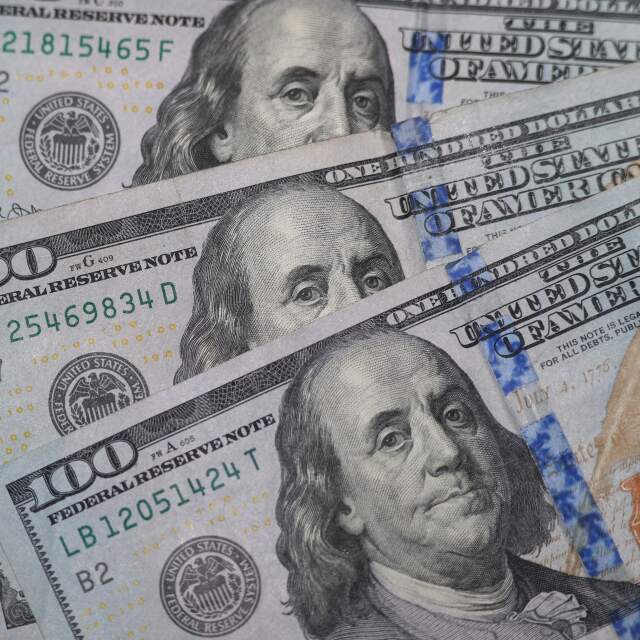
0:47Dr. Jennifer Shuford: It's Wednesday, October 28th, and this is Here and Now, Anytime from NPR and WVUR. I'm Chris Bentley. Today on the show, we'll hear from a doctor who quit his government job last year amid the ongoing wave of resignations at the Centers for Disease Control and Prevention. Also, still looking for a Halloween costume? We might be able to help. Costumes let me step into another person's shoes for a little bit of time and have fun. Tips from The Costumer, coming up in about 15 minutes. But first, the midterm elections, wrapping up on Tuesday, are the most expensive in American history. The firm Ad Impact says more than$11 billion have already been spent on ads alone.
1:37Dr. Jennifer Shuford: Most of it is coming from a small number of very rich people, representing some specific interests from the crypto industry to the pro-Israel lobby. Elon Musk alone has spent more than$400 million on this election cycle, making him the single largest individual political donor in the country. But he's not the only one. Brendan Glavin tracks money in politics for the group Open Secrets. He told Scott Tong, billionaires are flooding the system with dark money.
2:08Dr. Demetre Daskalakis: Well, they're mostly, you know, billionaires. You know, and aside from Musk, he's not the only one. You have the Ulines who have been donors for a long time. You have Michael Bloomberg, who has recently came out. He's jumping into the fray at the last minute, and you expect he'll give over$100 million. dollars. There's organizations associated with George Soros, which have been giving money this cycle. And the cohort of donors who are giving like over a million dollars has just grown so substantially over the last couple cycles.
2:42Brendan Glavin: And how do you explain that? Is this connected to that Citizens United Supreme Court ruling from 2010? Right.
2:48Dr. Demetre Daskalakis: In 2010, we had Citizens United and SpeechNow, the two court cases, which essentially allowed for the creation of what we call super PACs, which is, these are organizations or committees that have no, there's no contribution limits associated with them.
3:04Brendan Glavin: And just to understand in many cases, these mega donors, wealthy individuals are giving to these super PACs. Yeah.
3:09Dr. Demetre Daskalakis: Right. The super PACs are almost entirely funded by these mega donors. You know, there was a lot of focus on with these court cases on corporate spending, union spending, and corporations and unions are allowed to give the super PACs, and they do. But the bulk of the money is coming from these very wealthy individuals.
3:29Brendan Glavin: How about industries, special interest groups? What big groups giving large amounts of money are you watching this cycle?
3:37Dr. Demetre Daskalakis: Aside from your ideological groups, your basic Republican or Democratic-focused groups, there's three big industries that have been really active this cycle, crypto, AI, and the pro-Israel lobby, which, you know, APAC and its affiliated super PACs. Those three groups, industries have really dominated going through the primaries and also into, in some cases, into the general election.
4:05Brendan Glavin: Well, let's skew up a couple ads to what you just described that may surprise people. We're going to listen to the first one is for California Democrat Aisha Wahab. She's running for re-election for the House of Representatives.
4:18Dr. Demetre Daskalakis: California Democrats stand with Dr. Aisha Wahab for Congress. Aisha will take on Wall Street to bring down housing costs. Okay.
4:27Brendan Glavin: Now, the second one we're going to hear now is for Republican Senator John Husted's re-election in Ohio.
4:33Dr. Demetre Daskalakis: Now, Husted is laser focused on affordability, delivering the biggest tax cut in Ohio history.
4:39Brendan Glavin: OK, so one for a Democrat, one for a Republican. They each come from these nice sounding groups, protect progress, defend American jobs. But I understand these groups are actually connected.
4:53Dr. Demetre Daskalakis: Exactly. Both of these groups fall underneath one umbrella group, which is called Bear Shake. It's funded by crypto interests. some crypto companies and some individuals who are involved in the crypto industry as well.
5:11Brendan Glavin: Why would a crypto industry money in one case support the Democrat and in another case support the Republican? What's the strategy here?
5:17Dr. Demetre Daskalakis: Well, one of the interesting things about the industry spending we've seen as soon as with crypto and you also see it with AI is where most of the time these groups that are spending in this way, we're running ads directly supporting opposing candidates, they're almost always very focused left or right. But these industry groups, they are very focused just on how does this person stand on the issue? And party affiliation doesn't necessarily play into it. And the way they've set up their structure, as you said, they have these two different groups that are under this umbrella. And one group generally focus on democratic races, another group focus on Republican races or supporting or opposing on either side.
5:59Dr. Demetre Daskalakis: So their total goal is about the issue and not our Democrats winning, our Republicans winning.
6:06Brendan Glavin: So in this case, we have these organizations that are behind the ads. And I gather sometimes we know where the money is coming from. But in some cases, you know, this ad brought to you by Sunny Skies. It always sounds very nice. Do we always know the source of
6:25Dr. Demetre Daskalakis: the money. If it's a super PAC, they have to file reports with the Federal Election Commission detailing who their donors were. But there are a lot of cases where it turns out that the donor is maybe a dark money group, which is a group where, for instance, a 501c4, which is a type of nonprofit group, they file with the IRS and they're not required to disclose who their donors are. So it's a growing issue where a lot of money being spent in these elections and people don't know who's behind all the ads that are trying to influence them. And it's hard to make a decision as a voter about how you feel about a candidate when you don't know who's actually supporting them and what their motivations are and what do they stand to gain out of the election.
7:20Brendan Glavin: And why is the system this way? It seems, as you're describing, if I'm a donor to a donor group, I can stay unnamed, undisclosed. Why does the system allow this? it's a very good question why do we allow this it's all you know legal under it has to do with
7:38Dr. Demetre Daskalakis: non-profit law there's history and a very good reasons why non-profits do not have to disclose their donors but what was not necessarily anticipated within that is that people traditionally think of non-profits as maybe your local food pantry or something like that But what has happened to the system now is you have these nonprofits and C4s are allowed to be involved in politics as part of their charter, but they're supposed to be social welfare organizations. And their primary purpose is supposed to be social welfare and not getting involved in politics. So what we've seen now is that it's essentially become a loophole in the system where these political actors have co-opted these C4 groups and turned them into election political actors in the election.
8:28Brendan Glavin: I see. And let me ask about kind of the money coming in late. We're a few days away from the midterm elections now. As you've said, some of the money is coming from big individual donors, Michael Bloomberg, Elon Musk. Where does that late money tend to go?
8:44Dr. Demetre Daskalakis: So that money right now is going into groups. There's super PACs that are affiliated with the leadership in Congress on each side. And that's where a lot of that money is flowing now. And then they're spending it in these tight races. A lot of the Musk money is flowing into Texas for sure. We've seen record spending in the Texas Senate race. And then we're also seeing movement around, we hear a lot with Republicans now, perhaps races they thought were going to be competitive, and now they're not. So they're taking that money out and moving it into other places. So what we've seen in recent days in the race New York 21, which is the Elise Stefanik seat to replace her, that was not expected to be competitive at all.
9:30Dr. Demetre Daskalakis: And now we're seeing just in the last couple of weeks, well over$2 million pour into that race. So you see a lot of that at the last second where these groups are very strategic. And if they feel like their money is not being spent efficiently in one race, they're going to pull that money out and they're going to move it somewhere else and spend it.
9:50Brendan Glavin: That's Brendan Glavin, Director of Insights at Open Secrets, an independent nonprofit tracking money in American politics. Brendan, thanks very much.
9:58Dr. Demetre Daskalakis: All right. Thank you.
10:06Dr. Jennifer Shuford: Coming up next, doctors are jumping ship at the CDC. The latest is the chief medical officer, who is resigning just four months after President Trump tapped her to help steady the agency. Why are so many officials leaving, and what does it mean for public health? Peter O'Dowd has that story after the break.
10:35Brendan Glavin: Stay tuned for the following announcements and messages from our sponsors.
10:39Dr. Jennifer Shuford: This message comes from IXL. The first few weeks back at school set the tone for the rest of the year. IXL is designed to help kids build confidence and get up to speed fast. Covering pre-K through 12th grade, IXL offers personalized interactive practice in math, language arts, and science. One subscription covers everything for all the kids in your home. Receive an exclusive 20 % discount on an IXL membership at IXL.com slash NPR.
11:08Brendan Glavin: This message comes from Angie. When it comes to home projects, it matters who you hire. Angie has been helping homeowners find skilled pros to get their home projects done well for over 30 years. Angie's nationwide network has experts in everything from landscaping to roofing and more. Read verified reviews, see photos of past work, and request and compare quotes to find your best price all in one place. Download the free Angie app today or visit Angie.com. That's A-N-G-I dot com.
11:43Dr. Jennifer Shuford: Another top official is leaving the Centers for Disease Control and Prevention. Deputy Director Jennifer Shuford is stepping down four months after President Trump appointed her to the job. In a statement to NPR, Shuford said she wants to spend more time with family. It's been a difficult time for a public health agency that's struggled with job cuts, a measles outbreak, and blowback over vaccine guidelines. Dr. Dimitri Daskalakis was the CDC's top immunization official until he resigned last year. Doctor, welcome.
12:13Brendan Glavin: Thanks, Peter. Thanks for having me.
12:15Dr. Jennifer Shuford: Were you surprised by the departure of Dr. Shuford just four months into her tenure at the CDC?
12:20Brendan Glavin: Frankly, I'm not surprised. I worked with Dr. Shuford when I was the head of the National Center for Immunization and Respiratory Diseases when she was in Texas as the state health official. And she is an excellent infectious disease doctor and a very strong public health leader. So I was more surprised that she joined the CDC, given the current environment. Less surprised.
12:43Dr. Jennifer Shuford: She was praised during her time in Texas for the way she handled the measles outbreak there. She was also a proponent of childhood vaccines in that job. What does the CDC lose by losing her?
12:54Brendan Glavin: I mean, I think she is the only qualified person in the office of the director. I think that the director does have qualifications, but seemingly is not being really allowed to speak or actually interact on very important topics. So when I think about who's left in the office of the director, it's a lot of political operatives. And I think Jen was really, Dr. Shuford, was, I think, the last one in there that, in my opinion, was strong from the perspective of actual public health chops.
13:23Dr. Jennifer Shuford: The current director, CDC director, Dr. Erica Schwartz, still in the job. Are you saying you don't have faith in her to do it?
13:30Brendan Glavin: I mean, I don't have faith in her ability to, you know, be a fully realized public health professional. That plane is hijacked. And I hope that she is not one of the hijackers. But either way, it seems as if, you know, we're not seeing from the CDC the communication that we're used to seeing. We're not seeing the science that we're used to seeing. And we're seeing things like, you know, promotion of vaccines to pregnant people that don't actually mention the word vaccine. So, you know, this is not what I would expect of a CDC director. I would expect a lot more.
14:03Dr. Jennifer Shuford: We did reach out to the CDC for comment. I haven't heard back yet. Dr. Shuford says she wants to spend more time with family. But this is just the latest high profile departure of what has become, as you've pointed out already, a very politicized agency. How much and how specifically has the CDC changed in recent years?
14:22Brendan Glavin: Yeah, when you think about, let's start with the office of the director, it was often one or two political appointees and then career scientists. So right now there are over 20 political appointees there and very few, if none, from the perspective of career scientists. So that is a very big change. I think the other thing is that CDC routinely leans forward when it needs to message. So, you know, thinking about some of the outbreaks that we've seen, you know, with the cryptosporidiosis outbreak that we had earlier in the year, I think it's shocking that we didn't really hear that much from CDC.
15:02Brendan Glavin: When you think about measles, we're not hearing things from the CDC every day or every week. When I was there for measles, when I was there for bird flu, we would have press availabilities almost every week so that we could be very transparent about what's happening and also give the press and the public the opportunity to hear from us directly.
15:21Dr. Jennifer Shuford: So this is not the same thing that I know. Do you think, are those political reasons that we're not hearing from the CDC, or is it because apparently 2 ,000 staff members have lost their jobs since 2025?
15:33Brendan Glavin: You know, I think that there's a couple of reasons. I mean, I hazard a guess that a lot of this is political. I think that the desire to not have a CDC voice out there and a science voice out there really makes it easier for the forces internal to HHS to continue to destroy CDC. So I think that this is strategic.
15:53Dr. Jennifer Shuford: What are the real world consequences of what we're talking about? There's a measles outbreak here in this country, an Ebola outbreak in Africa.
16:02Brendan Glavin: Yeah, no, I think the reality is that the narrative goes wild if there's not a public health voice that people can trust. And so CDC, though not perfect, has been very good at leaning forward and communicating about what we know and what we don't know so that there is an anchor around which people can understand some of the health challenges that are facing the country. Without that anchor, things keep mushrooming. Stories go out of control. It is confusing to public health officials and also confusing to people.
16:35Dr. Jennifer Shuford: What about for state and local governments, which have traditionally relied on expertise from the CDC?
16:41Brendan Glavin: Yeah, I mean, I think one of the things that we're seeing is the state and local governments are banding together in regional organizations because they have to really fend for themselves. A lot of the messaging that we traditionally saw from the CDC has really waned. And, you know, that means that folks are on their own. The reality is not every state is the same. Some are very resourced to do public health and some aren't. So that means that the haves are able to communicate very effectively and the have-nots are sometimes stuck looking for some sort of source that they can trust.
17:12Dr. Jennifer Shuford: Again, we did reach out to the CDC for comment. We haven't heard back. We would be happy to do an interview with the CDC. Dr. Dimitri Daskalakis, a former senior CDC official, now chief medical officer at Callen-Lorde Community Health Center in New York City. Doctor, thanks so much for your expertise. We appreciate it. Thank you very much. Have a great day.
17:41Brendan Glavin: Stay tuned for the following announcements and messages from our sponsors.
17:45Dr. Jennifer Shuford: Halloween is on Saturday. Do you know which you're going to be? If not, never fear. McKenna Kelly is going to help you out. She's a stylist at The Costumer. The company has been making costumes in Schenectady, New York, since 1917. Percy Brunel Lestrange also works at the store, and the two of them spoke to Peter O'Dowd. Lestrange, wasn't that a wizard in Harry Potter? It is. So that's so fitting. I understand you're both wearing costumes today. McKenna, what do you have on?
18:19Brendan Glavin: So it is a Victorian style ball gown with a hot pink silk satin bodice. And it's got some matching hair flowers in hot pink and purple. It was designed by one of my co-workers for the character Meadow Larkin in Newsies. She has a very elaborate, very over-the-top ball look. So I thought I would show it off since my co-worker Jenna did such a great job putting it together.
18:46Dr. Jennifer Shuford: Percy, what about you? So I went a little simpler. I'm wearing one of our vintage Inverness coats. And I put on a top hat with rabbit ears attached to bring in the Wonderland aspect. of the costume. Listen, I know that lots of people are on a budget this Halloween. Inflation is really high. How do you suggest people keep costs low when they're putting together their Halloween costume? I always ask when a customer comes in, what's your budget? What are you looking to spend? And we go from there. Because my take is, what's on the package is a suggestion. It's not always what's going to come out.
19:32Dr. Jennifer Shuford: Like my favorite thing to ask people, what do you have at home? What can we build on to get you into the costume that you want? Yeah. McKenna, how do you keep costs down?
19:42Brendan Glavin: My area is really focused on the rental. So we do have a set price point. It is$75 for most of our costumes, but that gets you a totally unique look. Like the dress I'm wearing,$75 can be a little high for some people, but it does get you something that no one else has. We will also alter it to fit your body. You get as many accessories as you want. So if you want like a super elaborate look, but you don't want to spend hundreds of dollars, then you can get something for 75. It's going to fit you perfectly. And you don't have to worry about breaking the bank if you want to, you know, keep just going further with the look.
20:20Brendan Glavin: Add capes, chokers, masks, canes, whatever accessories you need.
20:25Dr. Jennifer Shuford: McKenna, what about folks who are making a costume at home? Um, what, what do you recommend people do if they're panicking at this very moment?
20:33Brendan Glavin: So, um, if you have any old clothes that, um, you don't mind messing up, um, then you can really easily do like a zombie or like a ghost or something by taking like a plain white shirt or skirt or something like that. You can dye it with tea or coffee or watered down paint and just, you know, let it dry, take a blow dryer to it to make it stained and kind of ratty looking. Um, you can customize hats. Um, if you have any, I had a black hat that I needed to make look kind of like a Gothic funerary look. So I got a black wide brim hat, uh, tied the brim down with ribbons to make it look like a bonnet and hot glued some black flowers on it.
21:14Brendan Glavin: I spent$0 and came out with a hat that looked fantastic for the event that I was going to.
21:21Dr. Jennifer Shuford: What's the best homemade costume you've ever seen.
21:25Brendan Glavin: I saw one that was really creative online the other day. They did Pearl from SpongeBob. And for her head, they took a gray mesh laundry basket that has those rounded curves at the bottom. And they wore that horizontally on their head to give it the whale head. And they put some eyes on the sides and did little like pink fabric lips on the end. So they had the big head, but it was lightweight and they could still see through it. That was like a tier creativity.
21:55Dr. Jennifer Shuford: Yeah. I saw that picture too. It was great. It sounds great for people who don't have kids. Pearl crabs is the sperm whale on SpongeBob, the cheerleading sperm whale. Now, before we let you go, when it comes to costumes, I get stressed out. I don't know what to do. And I just forego them all together every Halloween. Why do both of you still get excited about dressing up in different costumes. I mean, what is it that sort of sparks that fire in you? I've been in theater for 21 years. Costumes let me step into another person's shoes for a little bit of time and have fun.
22:33Brendan Glavin: My mom always sewed my Halloween costumes growing up. I have a very vivid memory of her making me a Sailor Moon costume when I was in kindergarten, and it was just the best feeling. There's something really satisfying about seeing a design, no matter how wild, and then being able to say, I did that. And, you know, no one else looks like this. No one else looks like me. It's really empowering. Even just like sourcing the pieces and looking to see how you can customize the look with things that you find at Goodwill or, you know, at thrift shops or at garage sales. It's a really fun high.
23:08Dr. Jennifer Shuford: Yeah. McKenna Percy, happy Halloween. Thank you. You too.
23:13Brendan Glavin: Happy Halloween.
23:22Dr. Jennifer Shuford: That's it for the show today. Here and now, anytime comes from NPR and WBUR Boston. Today's stories were produced by Jill Ryan, Lynn Manningon, and Thomas Danielian. Our editors were Todd Munt, Mikaela Rodriguez, and Michael Scotto. Technical direction from Caleb Green and James Trout. Our theme music is by Mike Moschetto, Max Liebman, and me, Chris Bentley. Our digital producers are Alison Hagen and Grace Griffin. And here and now's executive producer is Alan Price. Thanks for listening. We'll be back with you tomorrow.


