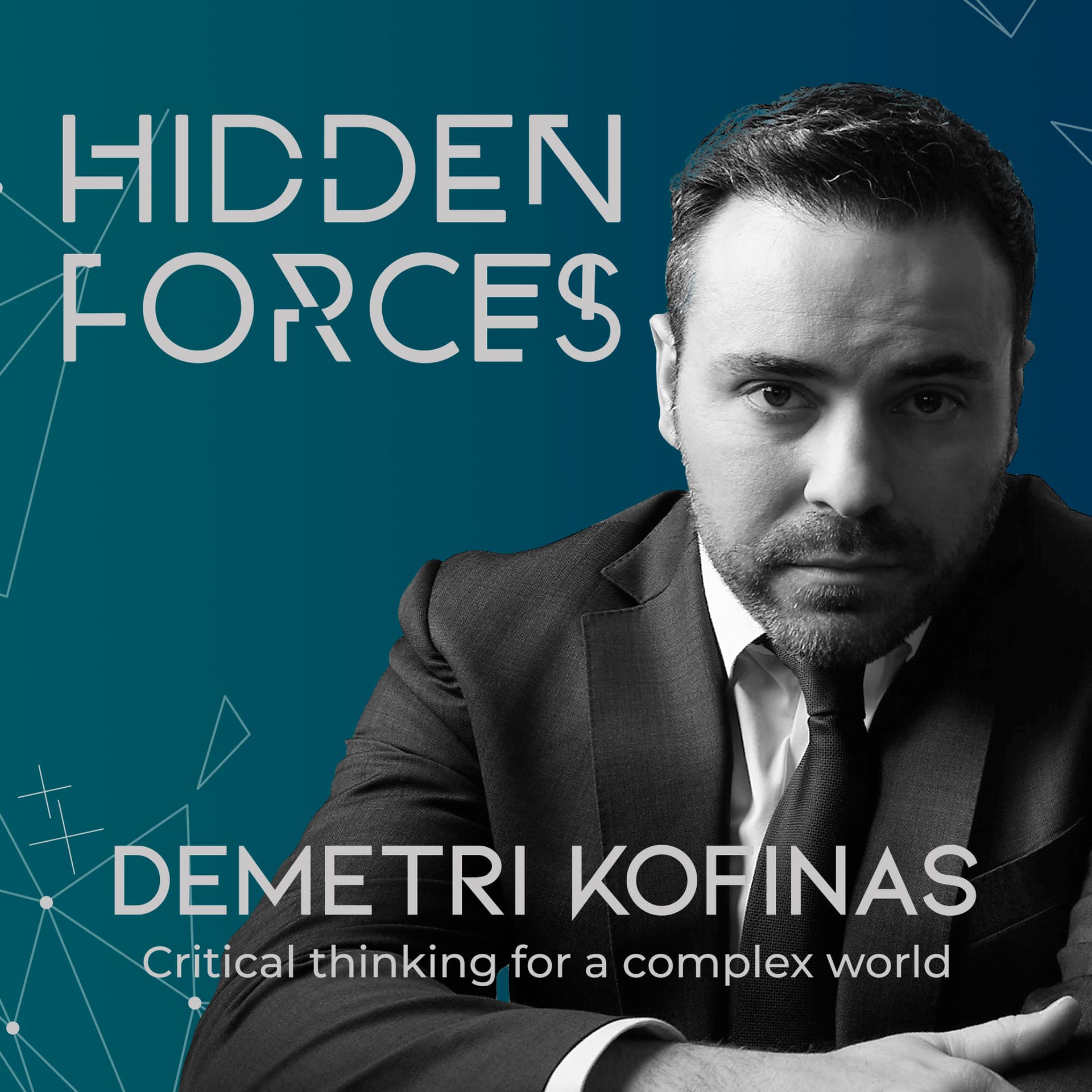
In short
How post–Cold War optimism (“end of history”) collapsed into today’s fractured, combative politics, driven by Western unilateralism and missed opportunities—especially NATO enlargement, the Iraq War, and Libya—followed by the 2008 financial crisis and later conflicts.
Guest
Ian Shapiro, professor of political science and global affairs at Yale University; born in Johannesburg, South Africa; studied in London and the US; earned a PhD and JD at Yale; teaches in Yale’s Jackson School and political science department. Focuses on political science/political history hybrid work and regime change.
Key claims
The core driver was unilateralism: refusal to refashion post–Cold War institutions with Russia, plus later disregard for UN authorization. NATO expansion and minimal investment in Russia helped accelerate “gangster capitalism” and oligarch rule. 9/11 response and the Iraq invasion shattered the rules-based order; Libya’s “Responsibility to Protect” was cynically used to topple Gaddafi, leaving a failed state. The 2008 crisis shattered elite legitimacy through bailouts and hypocrisy, fueling populist zero-sum politics.
Notable examples
NATO bombing of Yugoslavia (1999) without Security Council authorization; Iraq (2003) and Afghanistan’s failed approach; Libya (2011) and R2P; Russia-Georgia/Ukraine NATO debates; ISIS growth after Iraq; Greenspan’s “stunned disbelief” during the financial crisis.
Written by AI. May contain mistakes. Listen to the episode to check what was said.
Chapters
Tap a time to open that second in VOThe Rise and Fall of Post-Cold War Optimism
0:45 to 2:31
Discussion on the optimism following the Cold War and its quick decline.
“very international institutions that it claimed to support, while simultaneously expanding the scope of its military alliances and operations in the face of a collapsing post-Soviet empire.”
The Rise and Fall of Post-Cold War Optimism
2:47 to 3:16
Discussion on the optimism following the Cold War and its quick decline.
“Community, which includes Q &A calls with guests, discounted access to third-party research and analysis, and in-person events like our intimate dinners and weekend retreats, you can also do that on our subscriber page.”
Ian Shapiro's Background and Teaching
3:33 to 5:29
Ian Shapiro shares his background and his work at Yale University.
“I don't remember how I came across your book.”
Contingency in Politics and Lessons from History
5:29 to 11:18
Exploration of what led to the current political climate from the Cold War era.
“Well, political science is the social science.”
Unilateralism and Its Consequences
11:18 to 14:00
Ian discusses the concept of unilateralism and its impact on international relations.
“So I appreciate that summation of the book's agenda.”
The Missed Opportunities of the 1990s
14:00 to 16:30
Learn about the strategic mistakes made in the post-Cold War era regarding Russia.
“And so Nixon, among others, comes along at the end of the Cold War and says, this is what we should be doing with Russia.”
The Consequences of NATO Enlargement
16:30 to 23:00
Explore the ramifications of NATO's expansion and its impact on U.S.-Russia relations.
“of the history that you tell in the book.”
American Unilateralism and Its Implications
23:00 to 26:55
Understand how American unilateral actions, such as the bombing of Yugoslavia, shaped global politics.
“He was really a domestic politics president.”
Teaching History to a New Generation
26:55 to 28:00
Discover the challenges of educating students born after the Cold War about its historical context and significance.
“Before I ask you any other question, I'm curious what the perspective is of your students who all now at this point were born after this period.”
The Devane Lectures: Bridging Generational Gaps
28:00 to 30:23
Discover how a Yale professor uses historical video to connect students with the past.
“So I'm curious what that conversation is like when you have it with them.”
Show all 17 chapters
Understanding Generational Perspectives on History
30:23 to 34:05
Explore how different generations relate to historical events and their impacts on current politics.
“Do you find, I mean, this is the other thing, not to belabor this point, and we'll move on.”
The Aftermath of 9/11: A Shift in Global Politics
34:05 to 35:50
Learn how the 9/11 attacks reshaped U.S. foreign policy and international relations.
“rise of this hard right anti-immigrant populism.”
The Iraq War and Its Consequences
35:50 to 38:05
Discuss the ramifications of the Iraq War on global security and U.S. military strategy.
“We could have gone off to al-Qaeda and ignored the regime in Kabul, which in fact, at that time, had considerable disagreements with the Taliban.”
Bush Administration's Foreign Policy Decisions
38:05 to 42:00
Examine how the Bush administration's choices post-9/11 led to long-term consequences.
“Afghanistan takes 20 years for us to get out of there.”
Neoconservative Agenda and Foreign Policy
42:00 to 46:05
Explore the neoconservative influence on U.S. foreign policy post-9/11.
“We've got plenty of problems at home to deal with.”
NATO Expansion and Geopolitical Tensions
46:05 to 48:55
Discuss NATO expansion and the geopolitical ramifications in Eastern Europe.
“And they completely run the show at least until 2006, when the Iraq war is just turning into an absolute catastrophe.”
The Impact of Financial Crises on Global Order
48:55 to 53:39
Analyze how the Iraq War and the global financial crisis reshaped international trust and politics.
“Because again, in my popular retelling, it's the Iraq war is the first real collapse of the rules-based international order, which broke the international consensus that undergirded American empire.”
Transcript
Automatic transcript. May contain errors.0:00Demetri Kofinas:What's up, everybody? My name is Demetri Kofinas, and you're listening to Hidden Forces, a podcast that inspires investors, entrepreneurs, and everyday citizens to challenge consensus narratives and learn how to think critically about the systems of power shaping our world. My guest in this episode of Hidden Forces is Ian Shapiro, professor of political science and global affairs at Yale University, whose new book, After the Fall, explores how and why the widespread optimism of the post-Cold War era gave way so quickly to the fractured and combative politics of today. We begin the first hour of this conversation exploring how the United States, throughout key moments in the 1990s and early 2000s, chose to act alone, repeatedly and in defiance of the very international institutions that it claimed to support, while simultaneously expanding the scope of its military alliances and operations in the face of a collapsing post-Soviet empire.
0:59Demetri Kofinas:We focus in particular on the decision to enlarge NATO eastward, the failure to invest in Russia's transition, a decision that helped give rise to gangster capitalism and the oligarchs, and the NATO bombing of Yugoslavia as the first major unilateral military action taken without Security Council authorization. We then turn to the 9-11 attacks and the unilateral invasion of Iraq as the seminal moment in which the consensus supporting the international rules-based order was shattered, followed by the 2008 financial crisis and its aftermath, which did the same for the legitimacy of the elite consensus that had governed countries throughout the Western world since the onset of the Cold War.
1:41Demetri Kofinas:The second hour begins with the 2011 intervention in Libya, and the doctrine known as the Responsibility to Protect, which Ian argues was cynically invoked to topple Gaddafi and the West's own economic interests, leaving behind a failed state and further discrediting the very international norms and institutions it was meant to advance. From there, we trace the fallout across the Middle East and Europe, including in Syria and Ukraine that has led us to the present moment. We spend the balance of that hour laying out the nature of the world that we now inhabit, and why Ian believes that the most consequential choices facing the democratic world and the global economy lie in whether mainstream parties can deliver an industrial policy and a model of inclusive growth capable of addressing the grievances and economic insecurities of the populist era.
2:31Demetri Kofinas:If you want access to all of this conversation, go to hiddenforces.io slash subscribe and join our premium feed, which you can listen to on your mobile device using your favorite podcast app, just like you're listening to this episode right now. If you want to join in on the conversation, become a member of the Hidden Forces Genius Community, which includes Q &A calls with guests, discounted access to third-party research and analysis, and in-person events like our intimate dinners and weekend retreats, you can also do that on our subscriber page. And if you still have questions, feel free to send an email to info at hiddenforces.io, and I or someone from our team will get right back to you.
3:14Demetri Kofinas:And with that, please enjoy this historical retrospective about one of the most consequential periods in global history, what we learn from the failures of its leaders to seize the moment, and where we go from here with my guest, Ian Shapiro.
3:32Demetri Kofinas:Ian Shapiro, welcome to Hidden Forces. Thanks for having me. It's awesome having you on the show. I don't remember how I came across your book. It was sent to me, either by your publisher or by someone who read it. And once I started reading through, maybe probably just the very beginning of it, I knew it was a book I wanted to review and to have you on the podcast, because the book is largely a historical treatise on what went wrong. Well, what happened, and then there's a subjective interpretation that what happened didn't need to happen. And I think that's also an important observation of the book with respect to the end of the Cold War, the 1990s and the early 2000s, a subject that we have explored on this podcast on many episodes, and I've talked about it many times.
4:24Demetri Kofinas:So that's what we're going to talk about today. Before we get into that conversation, I'd love to learn a little bit more about you. I know you were born in Johannesburg, South Africa. You studied in London and in the United States. So tell me a little bit about you and what your background is and what you teach at Yale. Sure. I was born in South Africa, as you said. I left South Africa in 1972 and went to the UK, where I lived for most of the 70s, the run up to the Thatcher era. And then I left the UK in 78 and came to the US, did a PhD and a JD at Yale, PhD in political science, and was hired there in 1984.
5:09So I've been teaching at Yale now for 42 years, terrifying thought. And I'm a professor of political science and global affairs there. So I teach both in the Jackson School of Global Affairs and the political science department.
5:27Demetri Kofinas:What is the difference between political science and political history? Well, political science is the social science. They're looking for causal explanations of things. They tend to use quantitative methods a lot and modeling, whereas historians tend to give narrative accounts from how we got from X to Y. There's a lot of overlap, in fact, but it's more a difference in emphasis. Political scientists are looking more for law-like generalizations. I think historians are looking for depth of understanding. This book tries to be a hybrid of those two things. What is it that led you to the field of political science in the first place?
6:09Well, I grew up at the height of apartheid in South Africa. When I left in 72, it looked like the country was heading for a civil war or a military coup or something. What no one predicted was that there would be a peaceful negotiated transition to a democratic order. And that's what ultimately happened. So that, you know, immediately when I sort of came of age thinking about politics, I wanted to understand the role of contingency in politics. How could, you know, such unexpected things happen? Did we know why such things happened? And so that sort of was a natural magnet, if you'd like, to get me into the study of politics, particularly the politics of regime change, the sort of politics of the fundamentals of regimes, as opposed to sort of day-to-day politics.
7:04Demetri Kofinas:So I mentioned to you before we began recording that I normally write out a lot of questions for interviews. I don't necessarily go off of them all, but it's a helpful exercise. In this case, I've really only written one question, which is the question to begin the interview. And then I was hoping to just explore this past, which is entirely a period that I've lived through. I'm 45 years old. I went to college beginning in 2000. I wasn't old enough to really remember the fall of the Berlin Wall. In fact, my first memory of the fall of the Berlin Wall was actually when Zach Morris's dad in Saved by the Bell came back to visit him with a piece of the wall in his hand.
7:46Demetri Kofinas:And I'd heard about the fall of the Berlin Wall. I remember seeing a Time Magazine cover of the Gulf War. I remember some conversations about how people were worried that it was going to be another Vietnam. But I still lived through this period. And so I have not only studied it, I've lived it in real tight. And I think it's something that is not only worth reflecting on, but also it's important for younger people who haven't lived through it to be able to to learn about it. So I'm going to begin by taking an excerpt from the very first chapter of your book titled The End of the End of History, which is of course an allusion to Francis Fukuyama's epoch defining phrase.
8:25Demetri Kofinas:And you begin with the following. The explosion of virulent politics across much of the democratic world since 2016 stands in stunning contrast to the widespread optimism that prevailed a quarter century earlier. Then the Soviet Union was collapsing. The Cold War was ending. The stagnation of the 1970s and the industrial strife of the 1980s were in the rearview mirror. Economists were debating whether the fine-tuning expertise of central bankers had rendered the business cycle obsolete. The trifecta of deregulation, privatization, and free trade, christened neoliberalism at home, and the Washington consensus abroad reigned supreme.
9:06Demetri Kofinas:The United Nations had authorized a multinational force to expel Iraq from Kuwait, signaling the advent of a new global order. Democracy was on the march in Eastern Europe, Latin America, and much of Asia. Long stalled peace negotiations in Northern Ireland and the Middle East were moving forward after decades of bloody gridlock. Amazingly, a peaceful transition was unfolding even in apartheid South Africa. Surviving communist regimes in China and Vietnam, who were adopting capitalism with the zeal of converts and angling for membership in the World Trade Organization and other international bodies.
9:42Demetri Kofinas:Russia would soon join the G7, turning it into the G8. Francis Fukuyama became a celebrity for declaring that the end of history had arrived. And then you go on to give an accounting of what happened in the years since then, everything from the shock therapy visited on the former Soviet Union, the NATO bombing of Yugoslavia, the 9-11 attacks, the invasion of Iraq, the 08 financial crisis, the various Russian invasions of Georgia, occupation of Crimea, and subsequent invasion of Ukraine, the intervention in Libya, the Syrian civil war, the COVID-19 pandemic, and the ongoing war against Iran, to say nothing about the breakdown of relations between the US and China and the denigration of US multilateral institutions and alliance structures.
10:30Demetri Kofinas:And then you end this germatic opening by asking, how did we get from there to here? How could the widespread optimism that prevailed when the Berlin Wall came down give way so quickly to politics whose closest historical parallels are to the 1930s when fascism and communism obliterated democracies and took the world beyond the brink of catastrophe? Was it inevitable? Or did political and economic leaders make decisions that produced our reality, or at least made it much more likely? If the latter, what can we learn from studying those choices and the foregone opportunities from attending to the paths not taken?
11:14Demetri Kofinas:Those questions are what motivates this book. Let's start with the first question, Ian. how did we get from there to here? What is the story that you would tell to me and to our audience about how the Soviet Union fell, leaving the United States standing as the most powerful country in the history of the world, to where we find ourselves now, more than three decades later, in a world that feels increasingly like it's coming apart, and where the end of history that Francis Fukuyama foretold feels like it was only a dream. So I appreciate that summation of the book's agenda. It is, I'd say, it's how did we get from there to here?
11:54What were the paths not taken? And I want to emphasize it's not a 2020 hindsight book. I really make the case that there were serious people inside and outside of government advocating that we not do certain things that we ended up doing and that we do things that we ended up not doing. So, you know, that's partly why it's a historical book, because I really want to go back into the world as it appeared to the players at the time. And I think if you said, how did we get from there to here? If I were to reduce the argument of the book to one word, it would be unilateralism, by which I I mean somewhat different things in international affairs and in domestic affairs.
12:39In international affairs, it was the refusal, starting with the first Bush administration, but then the Clinton administration as well, and the second Bush administration, the rejection of the idea that the international structures that had prevailed in global politics throughout the Cold War could be radically refashioned in the post-Cult War. Most obviously, there were arguments that NATO should be radically rethought and perhaps even replaced from people as different as Francois Mitterrand, Hans-George Genscher, Germany, and many people also within the US who were strongly, George Kennan, Sam Nunn, many others who were strongly opposed to growing NATO into Eastern Europe, rather than focusing on the big prize, which was refashioning relationships with Russia in the wake of the collapse of the Soviet Union.
13:40Even as unlikely a figure as Richard Nixon said, the lesson he had to learn is what we did after World War II with Germany and Japan. When we created a Marshall Plan, we folded them into the new international security structures. We incorporated them into the emerging economic relationships. And Harry Truman and George Marshall did that because they didn't want to repeat the mistakes that had been made after World War I, when a vanquished adversary, namely in Germany, had been so badly treated and was widely blamed, or Tsai settlement was widely blamed for making the rise of Hitler so much more likely.
14:23They said, let's not do that. And so Nixon, among others, comes along at the end of the Cold War and says, this is what we should be doing with Russia. Never mind the East Europeans, they can wait. They're not in any imminent danger. What we need to do is make huge investments in the post-Soviet reality, help them create a modern diversified economy that will support democratic institutions, really negotiate our major arms deals, and incorporate them also into the post-Cold War international security structures. And they wanted to do it. Yeltsin was desperate to do it, as I detail in the book.
15:05And indeed, although Yeltsin's relationship with the Clinton administration deteriorated in the second hump of the 1990s, throughout which we eked out dribbles of aid to Russia. They staggered from, they were a basket case for the whole 90s, till in 98, they eventually went to the IMF to get bailed out. But when Putin came in in 2000, again, for the first three years of his presidency, he was angling to join NATO, he was angling to join the EU, and people as different as, you know, But Rusconi was former Prime Minister John Major. In addition, it wasn't just Richard Nixon. They were all saying this is the way to go.
15:48And instead, we, as I detail, we blew that off and we expanded NATO into Eastern Europe, steadily closer and closer to Russia's borders. And by 2008, when we were openly talking about adding Georgia and Ukraine, that completed the alienation of Putin. And he went in a very different direction. He may have done that anyway, but we made it more or less inevitable that any Russian leader would have gone down that path. So it was a huge missed opportunity. George Cannon called it the most faithful misjudgment of the post-Cold War.
16:27Demetri Kofinas:And I think he was spot on. So that's the first half of the history that you tell in the book. The other half is what happened in the 2000s, namely the war in Iraq, as well as the intervention in Libya. Let's just sit a bit longer with the 1990s here. What would you identify as being the most glaring, obvious mistakes? I mean, so you talked about NATO enlargement, for example, but be more specific. What exactly, was it the first enlargement? Was it subsequent enlargements? Was it the fact that NATO existed at all, that it should have been disbanded. How do you think about what the mistake was in that case?
17:05Well, I think either it should have been disbanded or Russia should have been included from the beginning. I think either one of those two would have completely transformed Western relationships with the former Soviet Union. The incorporation of East Germany was more or less unstoppable because it happened, the unification of Germany was so rapid that it sort of bypassed the debate. But the big mistake, I'd say, was twofold. It rapidly became clear to the Clinton administration that there was a tension between adding the East European countries and adding Russia, because the East European countries felt threatened by the Russians, and the Russians saw expanding NATO into Eastern Europe as threatening them.
17:50And so there was a kind of a fork in the road. And so actually General Shalakosvili came up with a great temporizing device to head that off, where they said they created something called the Partnership for Peace. And the idea was anyone who wanted eventual NATO membership would need to join that. And then we would see how it goes. Nobody knew what was going to happen anyway. The world was very unstable. And so we'll see if we can cooperate through this new institution in dealing with the issues that arise, the most pressing of which was the collapse of the former Yugoslavia into civil war. And Yeltsin said, great, you know, and the Eastern Europeans were kind of grumbling because they said, no, we want to join NATO now.
18:37But it was working. And this was a way of sort of kicking the can down the road and just waiting to see how things develop. And then what happened was Newt Gingrich led the Republicans to the first takeover of Congress in 40 years in 1994, which completely spooked Clinton. And then as now we had swing states and his advisors pointed out there were large numbers of Polish, Hungarian and Czech Americans in Wisconsin, Michigan and Pennsylvania. And they were lobbying to join NATO. and so he jumped off the fence and got behind that. And you can see why he would have done that. He was very spooked.
19:21It was very important for him for the 96 re-election. But the big mistake was after he was re-elected in 96, and that issue essentially was off the table, that he carried on regardless. And so in 97 is when the big invitations are being issued, and eventually those three countries are added in 1999. So that was the one piece of it, dealing with the - Poland. Hungary and the Czech Republic. The Czech Republic in Hungary. Yeah. Joined in 99. That's one of the last things the Clinton administration does. The other thing was completely ignoring the arguments of people like Nixon saying, we must make a massive investment in the new Russia.
20:03Instead, they dribble out aid to him. And the key moment is in 1996, because what's happening in Russia, because the economy is performing so badly, is that Yeltsin is getting steadily more unpopular, and the communists are in danger of becoming a resurgency. And it looks very likely that they'll actually beat him in the 1996 Duma elections. And so he's desperately trying to get the Americans to stop talking about NATO enlargement and to invest in the Russian economy, and they do neither. And so what does he end up doing? He goes to the oligarchs. And this massively accelerates Russ's transition into gangster capitalism, because they come up with all of these schemes, like the loans for shares scheme, where basically they give him money and bail him out in return for collateral in former state agencies, state enterprises, which when he can't repay them, they then take.
21:10And they grease the skids of all kinds of corrupt privatizations. And so it's kind of off to the races in producing this economy that becomes completely dominated by the oligarchs until shell actually until Putin takes them on in 2000. He wants to get rid of Yeltsin's oligarchs and put in his own, but that coming later. So I think the twin choices to ignore the big agenda of treating a vanquished Russia like we had treated a vanquished Germany in 1945, and the gratuitous expansion of NATO, which really starts us down the road to the new Cold War. And then that goes into overdrive in 2004, when George W.
21:58Bush adds seven countries, mostly as a quid pro quo for their having supported his coalition of the willing to destroy Iraq the previous year. And then it's really off to races.
22:11Demetri Kofinas:So my question is, what was the reason that the Clinton administration not only chose to go down the path of NATO enlargement, but didn't seek to institute something akin to a Marshall Plan in the aftermath of the USSR's collapse in order to further the likelihood that Russia's foray into democracy and market capitalism would take hold. Was it institutional inertia among the Cold Warriors? Was it domestic politics did it reflect an underestimation of how weak the Russian economy was or how unprepared its people were for the introduction of a market economy? Or was it all of those things and more?
22:56Well, I think Clinton had a very different agenda. He was really a domestic politics president. For reasons I talk about elsewhere in the book, he thought his job was to really pay down the deficit of the debt that Reagan had run up. Now, one of the ironies of our era is Republicans talk about cutting debts and deficits while growing them, while Democrats end up cutting them. So he did not want to spend any political capital convincing Congress to invest big time in Russia. And then he was, as I said, he felt very vulnerable because it wasn't just the swing voters. He had Madeleine Albright, who's a Czech American, pushing for the Czech Republic.
23:41He had Brzezinski, who wasn't actually in the administration, but he was hovering around, sort of throwing spitballs at the Partnership for Peace and pushing for Poland. The Europeans wanted Albania and Romania to join for their own reasons. And the Europeans have become a very different agenda we can go into if you want. So it was kind of the path of least resistance. And I think they felt empowered. As I said at the end of that chapter, the principal reason they went down this path was because they could. They knew the Russians couldn't stop them. But it was only going to be a question of time before the Russians would eventually get back on their feet, which they do off about 2003, when Putin has prepaid most of their debt, built up a$160 billion rainy day fund.
24:32And they were quite insulated when the financial crisis hit because they had gotten their house in order. He had completely reorganized their tax system and so on. And so by the time Russia was in a position to do something about it, we had gone way down this path. And so they did it because they could get away with it and basically because nobody could stop them.
24:54Demetri Kofinas:What about, you take some time to discuss the NATO bombing of Yugoslavia in the book. Why was that important? It was important because they were constantly saying to Yeltsin, why do you get so anxious about NATO? It's not a, you know, NATO is a defensive alliance. It's not a threat to you. Just stop worrying about NATO. You know, we're giving these East Europeans, you know, suspenders and a belt, but we're not threatening you and so on. You know, NATO is going to evolve into some kind of benign force for international stability. The problem with, you know, their bombing Yugoslavia, this was the Kosovo Albanians that were being attacked by the Serbs in mid-1999, was twofold.
25:45One, first of all, no NATO country was threatened by this, you know, what was going on in Kosovo. So it wasn't a defensive action. And secondly, it wasn't authorized by the Security Council. They didn't go to the Security Council because they knew that Russia, which was a Serb ally, and China would have vetoed it. So it was essentially the first big unilateral action that they just took. They just did it. And so this was the final nail in the coffin in their relations with Yeltsin, who's hugely unpopular in Russia. And it was a sort of, you know, putting down a marker that we are the US and the Western powers are going to act unilaterally in the world when we think it's appropriate, regardless of the fact that we're not threatened here, and regardless of the fact that there's no international authorization for it.
26:39So I think it was the thin end of the wedge for American unilateralism that then goes into overdrive with the war on terror and all that still in the future, the war on terror, George Bush's invasion of Iraq, what we did in Libya. And so these are all unilateral, the West essentially behaving as though we are hegemonic and you need to just accept it. Before I ask you any other question, I'm curious what the perspective is of your students who all
27:11Demetri Kofinas:now at this point were born after this period. When they're learning about this past, first of all, how well do they already know it? Are they largely ignorant about it? And what is their reaction when you tell them about what the 1990s was like? Because we haven't even really talked about that here. We've talked about some of the facts and the key events, but we haven't really tried to capture the optimism that pervaded capitals around the Western world and the sense of safety that persisted within these countries around the future, the possibility of nuclear war. Yeah, there was conversation of loose nukes and material leaving the Soviet Union, but so many of the anxieties and concerns that pervaded talk about international relations were dissipating during this time.
27:57Demetri Kofinas:And the talk was all about the United Nations, internationalism, international rules and laws, et cetera. So I'm curious what that conversation is like when you have it with them. So that's a great question. And it gets into what got me into writing this book in the first place, because in 2019, the Yale president asked me to give something called the Devane Lectures at Yale. And the Devane Lectures are unusual in being both a regular Yale course for undergraduates and a course that's open to the general public. And so I did them on, I called it Power and Politics in Today's World. And, you know, I walked into the first class and there were about 160 Yale undergraduates, you know, people, you know, in their late teens.
Read the full transcript
28:44And then about 100 people with gray hair from the community who had, you know, clearly lived through all of this. And so I saw it as a challenge on the front that you're exactly what you're talking about. And so what I did, and I know you've watched some of these lectures on YouTube, I created these lectures and I think they were an hour and a quarter lecture. There's 26 of them. So more than most people would probably want at this point. But at least a third of them consist of video that I put together from the time. So for the elderly people, it was a trip down memory lane. But for the young people, it was a way to try and make it vivid.
29:24And fortunately for me, they filmed all 26 of those lectures and put them up on YouTube and they went viral. I think they've had like over 8 million hits now. And so that was how I tried to square that circle pedagogically was to use a huge amount of contemporaneous video of how things were being perceived at the time by the players, both to remind the people my age for who, you know, we lived through it all, as you said, but also to make it real for the students. And when I teach it now, I still, I mean, I have all this video now, so I always use the video because otherwise, yeah, you know, 1989 for somebody who was born, you know, in 2004, 1989 is no different than the Civil War.
30:14I mean, it's all in the history books, right? So that was the way in which I tried to make it vivid and present for the students.
30:23Demetri Kofinas:Do you find, I mean, this is the other thing, not to belabor this point, and we'll move on. But as I was saying to you, I think I said this to you before we turn on the microphone, or maybe I mentioned it during the recording as well, that in 2000, when I went to college, the analogous period, had I read a book at this time, would have been the period from the early 1960s through to that day, to 2000. And I remember what it was like when I would think about or watch movies referencing the counterculture or the 1960s or the Vietnam era protests or the gas lines in the 1970s. And it seemed not only like a distant history, but also unrelatable.
31:03Demetri Kofinas:Like the 1960s and protesting the Vietnam War, like the idea of a draft just seemed unrelatable. And I wonder, and this might that be a fair question or one that you can answer, but I wonder, is there a similar reaction among your students that they find this history unrelatable? How different really is this history that we've lived through to the history of today from a feeling standpoint for people? I think it's huge. And it relates to the second half of my book, which deals with domestic politics. Because I think that the people who basically in the new century, I mean, if you take the median age of a millennial voter, you know, they were of a Gen Z voter, let's say they were born in 2004.
31:44And they have grown up in an era of much slower growth, much greater economic insecurity. You know, when they were four years old, probably one or both of their parents were under extreme stress from the financial crisis. When COVID hit, They were in high school. Probably another parent lost a job. When 2004 comes along, they are still 18 years from being the median age of a first-time home buyer. So they've grown up in a much more constrained world than the period of very high economic growth where everybody in these countries was large numbers of people were upwardly mobile. People were getting more secure.
32:31And, you know, so it's been a much more challenging era for the generation that have come of age in the last two decades than the generation who grew up in the post-war period. And I think, as I argue in the book, that's one of the reasons that they're much more susceptible to seeing the world in zero-sum terms. You know, I think part of the appeal of somebody like Trump is that he's got a relentlessly zero-sum view of the world. If we are supporting European security, we're being ripped off. If there's a trade deficit with China, we're being ripped off. If we're spending money in Ukraine, unless they're giving us minerals, we're being ripped off.
33:13If a Mexican comes into America and gets a job, it's a job that an American is losing. This is a zero-sum worldview view that resonates with people who have lived through a lot of economic contraction and stress. There was a very different world in the decades after the Second World War, where economic growth was high, opportunities were expanding, people were doing better than their parents' generation. And so, you know, we're dealing with a very different reality. And I think that, you know, Now, you bring up one sort of imaginative deficit that this generation can't perceive what it was like for the previous generation.
33:53But I think there's another imaginative deficit, which is that my generation has failed to perceive what it's like experientially for this generation, for the Gen Z generation. And I think that's why many in my generation have been so flummoxed and blindsided by the rise of this hard right anti-immigrant populism. that plays into a zero-fum worldview. So we all have our own imaginative deficits as well.
34:23Demetri Kofinas:So Putin takes power at the turn of the millennium. And not long after that, the 9-11 attacks happen, and the world changes in some ways forever. I mean, they told us this in real time. This was the narrative that Washington pushed. In some ways, it was a disservice because not everything had really changed all that much, and it was used as a way to push forward new programs and take away civil liberties. Understandably, in some cases, as a reaction to the attacks, the insecurity people felt, the political incentives of politicians. But then those attacks were used to justify a preemptive, or what they called then a preventive invasion of Iraq, the toppling of Saddam Hussein and the supposed institution of democratic norms and institutions that would take hold, which never did obviously.
35:14Demetri Kofinas:And in my popular telling, it's really the invasion of Iraq that broke the international system. Your point about NATO, the NATO bombardment of Yugoslavia is important, but there were ways that you could justify that. It was in NATO's backyard. It was in Europe. It was a humanitarian disaster. We were just getting our legs underneath us. We're still trying to figure out what was going on. The Soviet Union had just fallen. But Iraq was a different world, and it was in a different part of the world. And we went ahead in anyway, despite the fact that the United Nations Security Council didn't authorize it.
35:46Demetri Kofinas:Talk to me a little bit about that history at the turn of the millennium. Well, it was one data point in the global war on terror. I mean, as I argue in the book, this kind of unilateralism really gets started in our response to 9-11 itself, because the path not taken there was, as generals on the ground were arguing at the time, we didn't need to topple the Taliban. We could have gone off to al-Qaeda and ignored the regime in Kabul, which in fact, at that time, had considerable disagreements with the Taliban. And Omar had been trying to kick them out of his country for the preceding year and a half, precisely because they were running terrorist operations in Africa out of his country.
36:30And he was trying to get recognition for his country internationally. Only three countries in the world had recognized his regime, one of which was Saudi Arabia. And Saudi Arabia was, you know, the main target of bin Laden. He wanted to topple the Saudi regime. So they were not locked at the hip at all. And there were people on the ground, generals on the ground, saying, just ignore the regime in Kabul and we will go after Al Qaeda. We didn't do that. We toppled the regime, created a failed state, didn't manage to go after Al Qaeda. And then, you know, they escaped to Pakistan and start reconstituting themselves.
37:12And then you get the alliance between Al Qaeda and the Taliban, which becomes, you know, central to the resurgence. So it was kind of the gang that couldn't shoot straight and everything we did made it worse. But it was, that's when Bush announces in 2002, his global war on terror, we're going to act unilaterally, we're going to have coalitions of the willing, never mind alliances, never mind the UN, if you're not with us, you're with the terrorists. And then they take that agenda into Iraq. And so we have, you know, these two disastrously expensive wars in that drag on in Afghanistan and Iraq, create a failed state in Iraq as well.
37:56Two years after we leave Iraq, ISIS is controlling 40 % of the country. And likewise, the resurgence of the Taliban in Afghanistan takes 20 years for us to get out of there. And it's a war that achieves basically nothing. And those two wars alone cost more than$4.3 trillion. The global war on terror by 2020 had cost about$8 trillion. So this is, you know, I think you're right to say, you know, Kosovo was chump change compared to these things. But it sort of reminds me of Hemingway's line about how he went bankrupt, you know, first gradually, then suddenly, because I think Kosovo is the thin end of the wedge where you start saying for us to act unilaterally is okay.
38:45And then the wedge goes in Afghanistan, Iraq, and in an even more extreme way by the time we get to Trump.
38:54Demetri Kofinas:Now, did you look back at all at your writings, what you were writing and saying at that time? Do you remember what your position was, what your thoughts were? Yeah. In 2004, I was asked to give a talk at the Yale Club of Japan. And I sent some topics to them. And they said, we don't like any of these topics. this was September of 2004, we want you to talk about what this Kerry administration's foreign policy is going to be. I ended up giving a talk about why there wasn't going to be a Kerry administration, because you can't beat something with nothing. And there was no democratic alternative to the Bush doctrine.
39:34And I'd subsequently published that in a book called Containment. And I was certainly not alone. There were other people saying, you know, this unilateralism is really going to come back to bite us as it subsequently had.
39:47Demetri Kofinas:I remember that at that time, if anyone dared mention, I mean, it was such a difficult time to be outspoken against US foreign policy. Remember, everyone was wearing lapel, pin, flags, American flags, the journalists on the news networks. If you even suggested that America was an empire that was just not really conceivable to people. I mean, all you needed to say was, who attacked us? Al-Qaeda attacked us. Let's go get Al-Qaeda. What we ended up doing was the ambition that we had in Afghanistan was matched only by the extent to which we under-resourced it because we decided instead of, the generals on the ground at the time said it would take about 3 ,000 to 5 ,000 special forces, which were in the region at the time, and that there would be sufficient to go after Al-Qaeda.
40:47And instead, what did we do? We said, no, we want to topple the Taliban regime. And how did we do it? We did it by getting behind what had been the losing side in a civil war, namely the Northern Alliance, people who had been in the government before and were hugely corrupt and didn't have much legitimacy. If you're going to get behind the losing side in a civil war, you might want to ask yourself, why are they losing? And we didn't do that. And so we basically created a puppet regime that was never going to have legitimacy. And so it was just so kind of ham-fisted. But I don't think anyone needed to criticize American foreign policy to the extent of saying we shouldn't be going after the people who did the 9-11 attacks on the country.
41:36We should really have gone after them instead of getting into this kind of panic scattershot, attacking regime after regime, to just make it a little bit more granular for a minute. When Bush comes in in 2000, George W. Bush, the foreign policy in the Bush administration is really actually divided because there are the, you know, he himself ran on saying, I'm not interested in nation building. He was kind of an isolationist. I'm not interested in nation building. We've got plenty of problems at home to deal with. That is big tax cutting agenda, all of that, you know. And there were neocons, people like Wolfowitz and the vice president, Cheney, and his administration, but they were on the fringes.
42:22And, you know, he wasn't listening to them. And after 9-11, they seize the moment and they completely take over the foreign policy of the administration. And that's when, you know, I think he panics. And they see their moment because that group had been pushing, you know, they had pushed the Congress to adopt the Iraq Liberation Act in 1998, which was, you know, advocating the toppling of Iraq, the Saddam Hussein regime. and they get into the driver's seat and they don't let go. That's why I think it really was a path not taken. Somebody with more critical acumen and spine than George W. Bush could have stood up to those people and said, no, we're going after the Taliban.
43:09Could have said, no, you haven't shown us that Iraq has anything to do with 9-11. They made up all these spurious connections, none of which turned out to be accurate. And the leadership of the CIA was saying at the time, this is nonsense. So it's not like you had to take on the proposition that the US had to respond. And by the way, nobody was opposing us doing that. Putin was supportive, the Chinese were supportive, even Gaddafi was offering to share intelligence on Al-Qaeda. It wasn't like it was going to be heavy lifting to do that.
43:49Demetri Kofinas:Many of those members of that administration from Rumsfeld to Cheney to Wolfowitz to Richard Pearl were signatories. I think Pearl was also a signatory of the project for a new American century. So they were, I mean, I think that what was certainly lost to the time and I think still lost or not framed this way is that that administration was what we saw in Iraq and what we saw in Afghanistan and the war on terror was a framework for empire building. It was, I think, they saw lost opportunities in the Clinton administration and they wanted to use the fall of the Soviet Union to actualize a form of American empire.
44:31Demetri Kofinas:Would you agree with that? Yeah, that was the neoconservative agenda. They backed Clinton into signing the Iraq Liberation Act after the Monocro Lipsky scandal when he was on the defensive, but he never funded it. He never did anything. I mean, it wasn't his agenda and you did right, but what was the neoconservative agenda? It was the belief that you could, first of all, you could create democracies at the point of a gun and that the democracies you create will be pro-American. Both those assumptions turn out to be false. It's much harder to create democracies than they thought. I go through the political science of that in some depth in the book.
45:15What is required to really create a democracy in a defeated country is very hard and very expensive. We did it in Germany and Japan after World War II. It's almost never been done anywhere else. And we spent, by today's dollars, trillions doing it. So it's really hard. And you also don't have any guarantee once you create a democracy that it's going to be a pro-American. So the neocon agenda, that was the neocon agenda. And as I said, if they were, you're dead right, they thought that the Clinton administration was throwing sand in the wheels of it. And George Herbert Walker Bush hadn't been interested in it.
45:55And when his son comes in, they're largely fringe players in his administration until 9-11. And that's when they take over the administration. And they completely run the show at least until 2006, when the Iraq war is just turning into an absolute catastrophe. And finally, Condi Rice and others say you've just got to get Rumsfeld out of there and totally rethink all of this, and which he does.
46:25Demetri Kofinas:So the next round of NATO enlargement was 2004 when we had Bulgaria, Romania, Slovakia, Slovenia, and the Baltic states join. And then shortly after that, am I wrong? Or was it that before? So the very first is East Germany, obviously. Yes. In 2009, you get - Poland, Czechoslovakia, Hungary. And then in 2004, they had seven countries, including the Baltics. And that was basically a quid pro quo because six of those countries signed on to his invasion of Iraq the previous year, at least nominally. And there is a kind of comment that they included Slovenia because they thought that it had signed on and then it turned out they didn't.
47:11But they thought they were rewarding all of these countries. So those were the next, those seven. And that's when the Baltics were included. And then none were included for a while. But in 2006 and 2007, they start talking about Georgia and Ukraine. And that's when Putin says, absolutely not.
47:31Demetri Kofinas:And he delivers that famous speech at the Munich Security Conference. In 2007. How important was that speech? Well, it was his saying, you know, you cannot, this will be seen in Russia as a hostile act against us. And there's just no way we're going to be able to accept it. And the Bush administration steams on regardless. Bush goes to Kiev and makes a speech in early 2008 saying, no, we, you know, we think Georgia and Ukraine should join NATO. Then you have the Bucharest summit a few months later, where they announced that Ukraine and Georgia are going to be given membership application action plans, membership action plan, which is a sort of, you know, the logistical, providing the logistical basis for NATO.
48:20And that, and, you know, four months later, Putin goes into Georgia.
48:25Demetri Kofinas:And then we have the, well, and the Georgia was August of 2009, wasn't it, if I remember correctly. And there was that famous video footage of Slakashvili eating his own tie on national television. He looked like he was in pure disbelief and in panic. Yeah. But they had been told, nobody who studied the region was in the nice surprise. So then we had the, and again, this is August. So the financial crisis was literally, it had already begun, but it showed up dramatically in financial markets. And so talk to me a little bit about the role of a global financial crisis. Because again, in my popular retelling, it's the Iraq war is the first real collapse of the rules-based international order, which broke the international consensus that undergirded American empire.
49:12Demetri Kofinas:And then the global financial crisis collapsed it from the inside. Huge inflection point, I think, both in geopolitics and in domestic politics. In geopolitics, it's an inflection point because the bloom is off the rose for the proposition that the Washington consensus is the only game in town and the Americans know how to run the world economy and all of that. Suddenly, the Western financial elites are completely blindsided by this. Even a month before the collapse, you have Greenspan and others saying US economy is in fine shape and so forth. And then there's this giant catastrophe. None of their tools work.
49:56Greenspan goes before a committee in the Senate and says, I stand before you in stunned disbelief. And what do they do? They reach for the Keynesian tools they've been denouncing for decades. They pour trillions into recapitalizing the banks, bailing out the elites and so forth. And that has domestic implications, which we can get to. But in terms of geopolitics, which is where we are now, I think it's the end of the perception that the US is running the global economy. That's when we start to see real assertion of the Belt and Road Initiative. We start hearing about the Beijing consensus. The Chinese are starting to see these Confucian Institutes all over the developing world.
50:42And developing countries think they don't have to accept the American rules of economic engagement anymore. So I think it really is an inflection point there. And then I think also in domestic politics, because for decades, people have been told this neoliberal troika of deregulation, free trade, and privatization is the only thing, you know, as Margaret Thatcher said, Tina, there is no alternative. And suddenly, their legitimacy to claim this is suspect. And I think that's when you, particularly when they respond in this way that subsequently is revealed to be very hypocritical in that they bail out the banks, they bail out their friends, they pay bonuses for AIG, then they pay all the credit default swaps to Goldman, and yet they continue imposing austerity on everyone else.
51:38And so there's a kind of shifting tectonic plate in democratic politics that a lot of those elites don't realize is happening, eventually comes back to bite.
51:50Demetri Kofinas:Yeah. So two things there that you said that I want to emphasize, then I'll move us to the second hour, Ian. The first is, I'm so glad you mentioned the hypocrisy, because I think it's that hypocrisy, both in the case of Iraq and the attitude of we're building multilateralism, where we support international institutions, international laws, except when they don't suit us, in which case we don't care, they don't exist. And the same thing happened in the 2008 crisis. Supposedly there were all these rules, regulations, laws, but none of those things mattered when it came to the people in positions of power.
52:28Demetri Kofinas:When the banks collapsed, Goldman still had a chance to give out, what was it? Something like an average of$600 ,000 per employee in bonuses in the midst of the crisis. It was in the millions. It was more than 600 ,000. No, I mean on average per employee, I think it was 600 ,000. Obviously, there were people that were getting millions of bonuses and we learned about John Thane's golden toilet and everything else. But I think it was that hypocrisy that shattered, again, we went from shattering the international consensus. So basically, are we actually building international institutions that we believe?
53:04Demetri Kofinas:Are we trying to build international norms and international rules and laws? Or in fact, do they not really exist because the strongest player in the system doesn't abide by them? And the same thing was revealed to be true during the financial crisis, which is we have laws and rules and norms of behavior, but none of those things matter if someone in power is in a position to suffer under them, in which case we just disregard them entirely. And I think those two events were seminal in breaching trust and also effectively creating a cleaving within American society that left certain people feeling like they could no longer trust or believe in the system.
53:40Demetri Kofinas:And it feels like that cynicism has been building up and it's ultimately what led to the election of Donald Trump in 2016. So I want to spend the second hour of the conversation filling out some of the rest of this timeline, including the important intervention in Libya, which is often lost, but also very, very important. And then we'll have a chance to get into the election of Donald Trump, the COVID-19 pandemic, the second invasion of Ukraine, and the ongoing war in Iran and the Middle East and the closure of the Strait of Hormuz, and kind of where we find ourselves today. For anyone new to the program, Hidden Forces is listener supported.
54:14Demetri Kofinas:We don't accept advertisers or commercial sponsors. The entire show is funded from top to bottom by listeners like you. If you want to access the second hour of today's conversation with Ian, head over to hiddenforces.io slash subscribe and sign up to one of our three content tiers. All subscribers gain access to our premium feed, which you can use to listen to the rest of today's conversation on your mobile device using your favorite podcast app, just like you're listening to this episode right now. Ian, stick around. We're going to move the second hour of our conversation onto the premium feed.
54:47Demetri Kofinas:If you want to listen in on the rest of today's conversation, head over to hiddenforces.io slash subscribe and join our premium feed. If you want to join in on the conversation and become a member of the Hidden Forces Genius Community, you can also do that through our subscriber page. Today's episode was produced by me and edited by Stylianos Nicolaou. For more episodes, you can check out our website at hiddenforces.io. You can follow me on Twitter at Kofinas, and you can email me at info at hiddenforces.io. As always, thanks for listening. We'll see you next time.
From the publisher
In Episode 485 of Hidden Forces, Demetri Kofinas speaks with Yale political scientist Ian Shapiro—author of After the Fall—about how the widespread optimism of the post–Cold War era gave way so rapidly to the fractured, combative politics of today, why American unilateralism hollowed out the very international institutions the US claimed to champion, and what it will take for mainstream democratic parties to recover their legitimacy in the populist era.
The first hour traces the critical decisions of the 1990s and early 2000s that Ian believes set this unraveling in motion: the choice to enlarge NATO eastward and invest meaningfully in Russia's post-Soviet transition, and the NATO bombing of Yugoslavia as the first major military action taken without UN Security Council authorization. They then turn to the unilateral invasion of Iraq as the seminal rupture in the international rules-based order, followed by the 2008 financial crisis and its aftermath, which delivered a parallel blow to the elite consensus that had governed Western countries since the onset of the Cold War.
The second hour opens with the 2011 intervention in Libya and the doctrine of the responsibility to protect, which Shapiro argues was cynically deployed to topple Muammar Gaddafi, leaving behind a failed state and further discrediting the international norms it was meant to uphold. From there, they trace the cascading fallout across the Middle East and Europe—through Syria and Ukraine—to the present moment, before turning to the central political question of the age: whether mainstream parties can deliver an industrial policy and a model of inclusive growth capable of addressing the economic grievances and insecurities driving the populist revolt across the democratic world.
Subscribe to our premium content—including our premium feed, episode transcripts, and Intelligence Reports—by visiting HiddenForces.io/subscribe.
If you'd like to join the conversation and become a member of the Hidden Forces Genius community—with benefits like Q&A calls with guests, exclusive research and analysis, in-person events, and dinners—you can also sign up on our subscriber page at HiddenForces.io/subscribe.
If you enjoyed today's episode of Hidden Forces, please support the show by:
-
Subscribing on Apple Podcasts, YouTube, Spotify, Stitcher, SoundCloud, CastBox, or via our RSS Feed
-
Writing us a review on Apple Podcasts & Spotify
-
Join our mailing list at https://hiddenforces.io/newsletter/
Producer & Host: Demetri Kofinas
Editor & Engineer: Stylianos Nicolaou
Subscribe and support the podcast at https://hiddenforces.io.
Join the conversation on Facebook, Instagram, and Twitter at @hiddenforcespod
Follow Demetri on Twitter at @Kofinas
Episode Recorded on 06/25/2026