In short
Hidden Forces episode with Yaroslav Trofimov on whether rumors of an imminent Russian attack on NATO are credible, what form it could take, and how Ukraine’s internal politics, Western unity, and US-China dynamics shape the next phase of the war.
Guest background
Yaroslav Trofimov is Chief Foreign Affairs Correspondent for The Wall Street Journal (since 2018). He has covered the Ukraine war, US-Russia relations, the Middle East, and China. Ukrainian-born; left Ukraine in 1990. Previously based in Baghdad after the US invasion and lived in Kabul for over five years covering Afghanistan.
Key claims
Russia may be “probing” NATO’s Article 5 via limited Baltic or hybrid strikes to split US-Europe resolve. A window of risk could be within 1–2 years. Putin’s long-term aim is to redraw Europe’s security architecture by defeating Ukraine; ceasefires would likely be violated and would require Ukraine to be defenseless. Ukraine’s resistance is driven by existential survival and historical trauma.
Notable examples
CIA Director John Ratcliffe’s reported leaked Moscow trip; Russian drone attack on a German airport (Leipzig/Halle); “Suwalki gap” scenario; Ukraine’s “Operation Spiderweb” deep strikes; Zelensky cabinet shakeups tied to anti-corruption investigations and protests.
Written by AI. May contain mistakes. Listen to the episode to check what was said.
Chapters
Tap a time to open that second in VOUnderstanding the Ukraine War
0:45 to 2:25
Discussion of the ongoing war in Ukraine and its broader implications.
“Yeroslav and I begin our conversation by trying to make sense of the war, its origins, its stakes, and the prospects for its near-term conclusion.”
Yaroslav's Background and Perspective
2:25 to 4:23
Yaroslav Trofimov shares his journey and insights as a Ukrainian journalist.
“You can also do that on our subscriber page.”
Objectivity in War Reporting
4:23 to 7:17
Exploration of the challenges of maintaining objectivity while covering the war.
“I used to live in Kabul and for more than five years covering the war in Afghanistan.”
Apportioning Blame in US-Russia Relations
7:17 to 11:25
Analyzing the complexities of blame in the context of the Russia-Ukraine conflict.
“The apportionment of blame has been a hot topic of discussion in America since the onset of the war.”
The Calculations Behind the Invasion
11:25 to 13:32
Discussion on the decisions leading to Russia's invasion of Ukraine.
“Had Washington's tone and its tendency to moralize, especially in the administrations preceding Trump, put countries like Russia and China on the defensive and serve to further alienate them from the West?”
The Global Impact of the Ukraine War
13:32 to 14:00
Understanding why non-affected nations should care about the Ukraine conflict.
“And we, with enough strength, will be able to achieve our results through the old-fashioned conquest.”
The Threat of Russian Aggression in Europe
14:00 to 15:00
Explores the lack of safe areas in Europe from potential Russian attacks.
“Well, again, this is a question that implies that there are countries that are not under threat in the long term.”
Putin's Expansionist Goals
15:00 to 16:00
Discusses Putin's desire to reshape European security and control.
“government in 2021 before the full-scale war began.”
Russia's Alliances and Military Collaborations
16:00 to 17:20
Examines Russia's alliances with North Korea and Iran and their implications.
“and redraw the rules under which the world operates.”
Fears of Escalation and NATO's Response
17:20 to 18:20
Highlights European fears of Russian escalation and the implications for NATO.
“and his Russian counterparts, head of the FSB, the SVR intelligence services.”
Show all 24 chapters
CIA Director's Mission to Moscow
18:20 to 20:10
Details the purpose and context of the CIA director's trip to Moscow amid rising tensions.
“because Moscow is kind of stuck in this war of attrition and needs a way out of it and this escalation could be a way out of it.”
Russia's Military Strategy and Capabilities
20:10 to 22:30
Analyzes Russia's military capabilities and potential strategies for further incursions.
“But that also depends on his perception of how that war is going.”
The Strategic Importance of Ukraine
22:30 to 24:10
Discusses why Ukraine is pivotal for Russia's greater ambitions in Europe.
“Do you feel like we are in a window similar to that which preceded the 2022 invasion of Ukraine, where no one expected it, they simply didn't think that he would do it, and yet he went ahead and did it?”
Putin's Objectives and Potential Ceasefires
24:10 to 27:30
Explores Putin's demands for a resolution and the conditions for a ceasefire.
“It's already doing things that could kill people.”
Ukraine's Current State of Defense
27:30 to 28:00
Examines the state of Ukraine's military and morale as the war continues.
“Well, I think he could possibly be forced into a temporary ceasefire.”
Russian Demands on Ukraine's Military
28:00 to 28:37
Learn about Russia's demands to limit Ukraine's military capabilities and assistance.
“So they want a cap on the Ukrainian military size, on the sort of weapons they have, and above all, they want to end Western military supplies, Western military assistance to Ukraine.”
Political Turmoil in Ukraine
28:38 to 29:29
Explore the recent political changes in Ukraine, including key dismissals and protests.
“its ability to defend itself and continue the war, et cetera.”
Investigative Actions and Corruption
29:30 to 33:09
Delve into the implications of Ukraine's anti-corruption investigations surrounding Zelensky and his allies.
“How does the commander-in-chief's dismissal tie into Federov's firing?”
Understanding Ukrainian Corruption
33:10 to 36:32
Understand the nuances of corruption in Ukraine and its impact on public perception and aid.
“current one, Mikhail Drapati, who was in his 40s and who was very, very popular among the troops.”
The Resilience of the Ukrainian People
36:33 to 37:44
Learn about the historical context contributing to Ukraine's resistance against invasion.
“on the American right, You know, this was used a lot as an excuse to cut American aid to Ukraine.”
Existential Fight for Survival
37:45 to 41:28
Discover the motivations driving Ukrainians to fight for their existence against Russian aggression.
“The Ukrainians know from the history of Ukraine what happens when the Russians take over.”
Experiences in a War Zone
41:29 to 42:00
Hear firsthand accounts of being in Ukraine during the invasion and the changes witnessed.
“it's a war of extermination, trying to exterminate them as a separate people, which, you know, it's not about a piece of land in Donbass here and there or town.”
Experiencing the Invasion: A Personal Account
42:00 to 46:50
Yaroslav Trofimov shares his experiences and feelings during the Russian invasion of Ukraine.
“I will fight as long as it takes so that he doesn't have to fight.”
Geopolitical Implications of the Conflict
46:50 to 48:42
Discussion on Western strategic objectives and the global implications of the Ukraine conflict.
“like to begin with a discussion about Western strategic objectives, which have been complicated by the schism that has emerged between Washington and Europe's capitals under this administration in particular.”
Transcript
Automatic transcript. May contain errors.0:00Demetri Kofinas:What's up, everybody? My name is Demetri Kofinas, and you're listening to Hidden Forces, a podcast that inspires investors, entrepreneurs, and everyday citizens to challenge consensus narratives and learn how to think critically about the systems of power shaping our world. My guest in this episode of Hidden Forces is Yaroslav Trofimov, the Chief Foreign Affairs Correspondent for The Wall Street Journal, who has written extensively on the Ukraine war, US-Russia relations, the Middle East, China, and other related topics. By the time this episode is over, you will have an updated understanding of the state of the war that is still raging in Ukraine, including recent speculation around CIA Director John Ratcliffe's visit to Moscow, whether Russia is in a position to expand the conflict through a direct confrontation with NATO, how the war against Iran has altered Russia's calculus, and why US-China relations serve as the critical strategic backdrop for forecasting the fallout for Europe, the US, and Asia's largest economies over the next few years.
1:02Demetri Kofinas:Yeroslav and I begin our conversation by trying to make sense of the war, its origins, its stakes, and the prospects for its near-term conclusion. We assess claims related to the CIA director's recent trip to Moscow, the form that any potential Russian attack on NATO could take, and what the Europeans can do to try and stop it. We also discussed the political turmoil surrounding a recent shakeup in President Zelensky's cabinet, claims of corruption, and whether Western countries can be expected to continue supporting Ukraine in the face of a declining popularity for the war and mounting popular resistance movements being led by Europe's far-right parties.
1:38Demetri Kofinas:In the second hour, we turn to an examination of Western strategic thinking and the widening schism between Washington and Europe's largest capitals. We discuss why Yaroslav believes the West's difficulties begin with a flawed diagnosis of the war based on the comforting assumption that this is a fight over territory in the Donbas rather than a contest over the future of Europe, how the collapse of trust in legacy media is shaping public opinion on the continent, the ideological sympathy many on the right field toward Moscow, the strategic consequences of the breakdown in relations between Washington and much of the rest of the world, the nature and limits of China's support for Russia, how the war against Iran is reshaping the strategic battlefield, and how all of these variables could reshape the international system in the next five years.
2:25Demetri Kofinas:If you want access to all of this conversation, go to hiddenforces.io slash subscribe and join our premium feed, which you can listen to on your mobile device using your favorite podcast app, just like you're listening right now. If you want to join in on the conversation and become a member of the Hidden Forces Genius Community, which includes Q &A calls with guests, discounted access to third-party research and analysis, and in-person events like our intimate dinners and weekend retreats. You can also do that on our subscriber page. And if you still have questions, feel free to send an email to info at hiddenforces.io and I or someone from our team will get right back to you.
3:06Demetri Kofinas:And with that, please enjoy this extraordinarily timely an important conversation with my guest, Yaroslav Trofimov.
3:19Demetri Kofinas:Yaroslav Trofimov, welcome to Hidden Forces. Great to be on the show. It's great to have you on. I've been reading your articles in the Wall Street Journal for many years. You are, for those who don't know, the foreign correspondent for the Wall Street Journal. How many years have you been in that position? Well, I actually joined the journal in the 20th century, in 1999. and so it's been a long ride with the journal and this current position that I have, which is the chief foreign affairs correspondent, it's been since I believe 2018. You know, by saying the 20th century as opposed to 1999, it makes you sound much older than you are.
3:54Demetri Kofinas:I like that and older and more experienced. So before we start, Yaroslav, I'd love to learn a little bit more about you. Tell me a little bit about your life and career and you're also Ukrainian. What has it been like to cover this war as someone who comes from this country? Well, you know, I left Ukraine in 1990. And so I left the country when it was still a Soviet Union. And I spent most of my career as a journalist and as a writer covering other people's wars. So, you know, I was based in Baghdad shortly after the US invasion. I used to live in Kabul and for more than five years covering the war in Afghanistan.
4:29And so really, I only came back full time to Ukraine as a correspondent ahead of the Russian invasion, the full-scale Russian invasion in 2022. And it was difficult psychologically because no one likes covering a war in a city where one is born, where every memory of a childhood is associated with the streets. But also in a way, it made it easier for me because I could understand the details, the nuances of the languages, of the culture, of how people are reacting, pretty much better than I did in Iraq or in Afghanistan or in other wars that I covered. Now, I think I also took much greater risks in Ukraine because I felt like because of this advantage that I had, I had an extra mission to convey what's going on on the front lines, to convey what is happening to the civilians who were bearing the brunt of the Russian attacks.
5:23and to explain this war to readers around the world in ways that relate to their lives. So I was trying to make it seem as unexotic as possible, to throw the parallels so that everyone, every reader could recognize themselves in a situation in which the Ukrainians found themselves overnight, and Ukrainians most of whom had not experienced war up until that time.
5:46Demetri Kofinas:You know, I had a similar conversation with military analyst Michael Kaufman, because he's from Ukraine. and one of the questions I asked him that I want to ask you is how do you remain objective and do you think objectivity is something that should be pursued in your specific coverage of this war? Well, Mike is a good friend and is a tremendous analyst and I think we have to make a distinction between honesty and objectivity. We have to be honest. We have to report on what we see and despite our biases and our desires and our maybe conscious or unconscious rooting for one on the other side in the war, but we are paid to be honest.
6:28We're paid to call it the way it is. Now, at the same time, we are humans and we are looking at a conflict in which there is a country that invaded and a country that was invaded, a country that is a victim and a country that is a perpetrator. and I think you have to call it that way. If you see a brawl on the street where a big man is attacking an old lady, you cannot be equidistant from both because you see who's in the right and who's in the wrong. So that's, I think, the challenge of balancing your intellectual honesty with an emotional component of your work because clearly in this war and in some other wars to a different extent, there is a right and there is a wrong.
7:17Demetri Kofinas:The apportionment of blame has been a hot topic of discussion in America since the onset of the war. And the two camps in the dialogue within Western countries have fallen on the side of either Russia was acting in its defense against NATO enlargement, European Union encroachment, et cetera, or Russia was morally wrong in invading Ukraine as the aggressor state. I don't think anyone really blames Ukraine so much beyond simply maybe arguing that they were a pawn in America's larger strategic game. Is it useful, do you think, to, is it a useful exercise to try and apportion blame for the state of US-Russia relations and for who actually is responsible for the war that we find ourselves in, do you think?
8:06Well, I think it's very useful. It's also useful to consider that it's not just But the US and Russia, it's also about Ukraine, which has agency, much greater agency, as we have learned in the last four and a half years in this war than many people imagined when the conflicts broke out. I think, again, we're going back to the fact that, you know, this was an invasion of a country that had done nothing to threaten its much bigger neighbor. And this was an invasion couched in ideological language and explained by President Putin before the conflict began. And if you remember, he published in the summer of 2021 this lengthy historical work called On the Historical Unity of the Russians and the Ukrainians, of the Russian and Ukrainian peoples, in which he argued that there is no such thing as an independent, sovereign Ukrainian nation or culture, and that we are all the same, and therefore Ukraine can only exist in the shadow of Russia.
9:01And, you know, it's always tempting to excuse things and to bring in geopolitical reasons, NATO, European Union expansion, maybe. But the core of the argument in Russia is that Ukraine should not exist because Ukraine is Russia. And everything else is garnished to the side of that.
9:24Demetri Kofinas:So what about the state of US-Russia relations? Do you think it was inevitable that the two largest and most militarily powerful nations on earth would return to a state of mutual antagonism? And I just want to caveat when I say the two most militarily powerful nations, I mean, at the end of the Cold War, one could argue now that China is more powerful militarily than Russia, but that's sort of besides the point. My real question has to do with inevitability. Was it inevitable, do you think? I mean, it is about the course of Russian political development and Russian statehood. At some point, Russia had a fork in the road in the early 2000s, in the early years of President Putin, where it could decide either to build itself as a democratic European power, a big power, but still the one that respected the commitments it had made to recognize the borders of its neighbors and their independence or to rebuild the empire.
10:26And President Putin famously said at the time that he considered the collapse of the Soviet Union to be the greatest geopolitical catastrophe of the 20th century, bigger than the Holocaust. And so he set out to rebuild this lost glory of the empire. He keeps comparing himself to Peter the Great, the Russian emperor who built St. Petersburg, his hometown, and then conquered vast lands around what is now Russia. And so I don't think there was anything inevitable about this. There was a different path available to Russia, but it chose not to undertake it. Now, we could also talk about the hubris of American empire and the forever wars of the early 20th century.
11:06But I think at the end of the day, this denies Russia the agency that it has. It was the choice of the Russian people and the Russian government under President Putin to invade first Georgia in 2008, and then to go after Ukraine in 2014, and then with a full-scale invasion of 2022.
11:24Demetri Kofinas:I've heard you say that to the West, to the Washington consensus really, that negotiations and dialogue are seen as a reward for countries that are behaving well, and that this has generated a lot of resentment in countries like China and Russia over the years. Had Washington's tone and its tendency to moralize, especially in the administrations preceding Trump, put countries like Russia and China on the defensive and serve to further alienate them from the West? And can we apportion some of the blame for the state of relations to this, what has been perceived by China and Russia as hypocrisy and grandstanding on the part of Washington?
12:10Well, you know, all the big powers are hypocritical. It's not like Russia and China are not hypocritical. I think that comes up with the territory. I think the fundamental problem is that Russia, because it's led by people who grew up in the Soviet times, still thinks of itself as a great power, the global power, not unlike the Soviet Union and equal to the United States, but just doesn't have neither the economy nor the global cloud, nor frankly the military to be comparable. And I think the invasion of Ukraine was part of this effort to restore this might that is long gone and probably can never come back, the demographic, the economy decline of the Russian Federation today.
12:52Now, yes, of course, you know, the West was triumphalist after the end of the Cold War. And, you know, if you recall all these proclamations about how history has ended. and a lot of this talk about democracy and human rights, sometimes it was, you know, honest and sometimes it was not. Sometimes it was to cover up geopolitical interests and, you know, interests of national security, whatever. But I don't think we can take away the fact that it was Russia that made the decisions. And, you know, it's not a child that can be offended by them moralizing. It made the decisions based on very hard calculations, some of which proved to be wrong with the invasion of Ukraine.
13:31And the calculation was that the West is weak. It is our moment. And we, with enough strength, will be able to achieve our results through the old-fashioned conquest.
13:44Demetri Kofinas:So let's bring it back to the present. Why should people who are not directly impacted by the war in Ukraine, and here I mean citizens of countries that are not in any serious danger of ever being attacked or occupied by Russia, why should these people care about what's happening in Ukraine? Well, again, this is a question that implies that there are countries that are not under threat in the long term. I think, first of all, we have to look at the fact that the range of modern weapons has changed dramatically. And there are no safe areas anywhere in Europe, for example, from Russian attacks, be it conventional or nuclear for that matter.
14:21People in Europe definitely understand in most countries. I mean, obviously, it depends where in Europe, but very much so in Northern and Eastern Europe, but also in France and the UK. that Ukraine is only the first step. Ukraine to Vladimir Putin was an obstacle. He planned to conquer it in a couple of days, maybe a couple of weeks. And then his real goal was to redraw what he calls the European security architecture. And that meant a restoration of a great deal of Russian control over decision-making, over the economies, over the military strategies on the European continent. And that was the Russian offer that was put out in the meeting with the U.S.
15:03government in 2021 before the full-scale war began. At the same time, we are seeing that Russia is increasingly aligned. Well, it has a formal alliance now with North Korea. So there is a railway from Pyongyang all the way to the Ukrainian border that has ferrets, soldiers, and missiles and troops. It is collaborating very closely with Iran. And obviously, all these three countries are extremely dependent on Chinese economic and technological support. And the fear among many Western military commanders is that in case of China getting involved into a hot conflict with the U.S. or its allies in the Pacific, it will make sure that the others in this axis of autocracies will simultaneously engage in military activities to stretch.
15:49and they keep the ability of the Western democracies to defend themselves. So I think we're talking about a global alliance in Eurasia of which Russia is part. And the goal of that alliance is to redraw them out of the world and redraw the rules under which the world operates. And on top of these rules has been the preeminence of the United States in setting up the rules of the international system in the last 81 years since the end of the Second World War.
16:16Demetri Kofinas:So CIA director John Ratcliffe recently made a secretive unannounced trip to Moscow, which appears to have been leaked to CBS News, which broke the story. The Wall Street Journal subsequently published the story arguing that Ratcliffe had been sent by Trump to warn Putin against launching a limited assault on a NATO country. There are those like our recent guest, Carlo Mazala, who wrote If Russia Wins, that are concerned that Putin could try to test Article 5 with a limited incursion or attack on an allied country in the next few years, something that was recently reaffirmed by reporting in the Wall Street Journal about US intelligence revising their own forecasts about attacks, ranging from a cyber attack to small-scale land incursion.
17:08Demetri Kofinas:How much credibility do you assign to these explanations put forward by the Wall Street Journal and others about the reasons behind the director's trip? Well, I don't have any personal intelligence on what went in the room between the CIA director and his Russian counterparts, head of the FSB, the SVR intelligence services. But it's clear that But this visit came against the backdrop of mounting fears in Europe about Russia choosing to escalate the conflict because it's stuck on the battlefield in Ukraine and needs a way of forcing Europe to cut its support for Ukraine that's vital for Ukrainians' ability to continue resisting the Russian military operations.
17:52And yes, there are very, very serious fears that I hear personally from top military officials in Europe, top security officials, about either the possibility of Russia testing Article 5 of NATO and trying for incursion in the Baltic states or somewhere else, or launching hybrid or not so hybrid attacks by drones, by missiles on targets in Europe that are involved in the Ukrainian war effort. and there is a sense that there is growing desperation in Moscow because Moscow is kind of stuck in this war of attrition and needs a way out of it and this escalation could be a way out of it. Now, I think there is also this understanding after so many times that President Trump had said that he doesn't care about Europe, that Europe is a bunch of freeloaders that didn't help with the war in Iran and so I think it would have made a lot of sense for Director Radcliffe to go to Moscow and to convey to the Russians that basically, look, you may have heard all those things on television, but make no mistake, if you invade Lithuania or Estonia or Finland, the US will be there.
18:59And to dissuade them from misreading American politics and American determination. Do we know if he briefed Putin directly or if he briefed his briefers? Well, we don't have any confirmation that he met with President Putin. Probably didn't. I don't know if he maybe have had some exchanges on the phone. But he had met the director of the external intelligence service of Russia and the director of the domestic internal intelligence service of Russia, both of whom are quite close to President Putin. If you remember the last time that a CIA director visited Moscow in late 2021, it was Director Bill Burns.
19:38With a very similar warning, do not invade Ukraine, Vladimir Putin also chose not to meet him. So he spoke with Putin at the time, but only via telephone on sort of a classified internal line on which they could discuss sensitive issues.
19:53Demetri Kofinas:The reason that I asked you whether he met with Putin or if he met with Naryshkin or whoever else is because, and this strikes at the heart of the question of perception. So one could argue that Putin isn't really in a great position to open another front of this war when he still hasn't been able to close the one he's currently fighting in Ukraine. But that also depends on his perception of how that war is going. And so I suppose there are a few questions here. Let's start with the first one. Do you think he's objectively in a position to open another front of this war? And what do we know about his perception of how that war is going and the condition of the Russian military?
20:35I think absolutely he is in a position to open another limited front. We're not talking about sending tanks and cross the plains of Poland and Germany all the way to Paris. We're talking about an operation probably in the Baltic states, you know, maybe trying to close the Suwalki gap, which is a very narrow strip of land. And the Russian military is totally able to do that, or at least attempt to do that with very limited forces. You know, the fact of the matter is that the Russian military and the Ukrainian military right now are the only two military forces in the world with extensive experience in fighting a modern drone-dominated infantry campaign.
21:14Nobody else can do it. We have seen all these stories about how Ukrainian drone teams, you know, 20 guys with drones were defeating entire NATO battalions. That's great. But the problem is that the Russians have the same capability. So So 20 Russians could also defeat a native infantry battalion that is not trained in modern drone warfare. And the goal of the Russian Federation is very clear. It is to split the U.S. from its European allies and to split European allies from each other. So, you know, I wrote about a war game that was carried out late, late last year, sort of modeling a Russian invasion of Lithuania.
21:52and in that war game in which senior German and other officials participated, it turned out that not even Poland sent troops to help Lithuania, let alone Germany, because the Russians were able to move quickly and to dissuade the Allies from coming in in the absence of a very strong American response, which is one of the calculations being made in Moscow. So I think the risk is real. I think everyone I speak to in European capitals is telling me that the risk has grown. And the window of opportunity for Russia, the most dangerous moment for the West, is probably in the next year, two years, sort of the final period of President Trump's term.
22:31Demetri Kofinas:Do you feel like we are in a window similar to that which preceded the 2022 invasion of Ukraine, where no one expected it, they simply didn't think that he would do it, and yet he went ahead and did it? Is that something that resonates with you? it's similar in some ways and others it isn't because back then and there was very clear evidence of troop buildup everybody could see more than a hundred thousand troops ostensibly for war games but still gathering around the borders of ukraine and belarusian in russia we're not seeing that now so we're not seeing any material preparations for invasion of the baltic states and any such conventional invasion is probably not the next step on this collation matter, if you're looking at it from Russia, because other means still remain at Russia's disposal.
23:20Russia is watching the public opinion in Europe. It's watching how people are tired of the war, how scared they are of potential Russian attacks. And if the Russian goal right now is to prevent European nations from funding the Ukrainian economy and the Ukrainian war efforts, providing logistics and military support to the Ukrainian military, then one of the scenarios that is being increasingly discussed by Western security services and militaries is that Russia might try to launch a limited strike on some of these warehouses, be it in Poland or maybe in Romania, perhaps with drones that the trophy Ukrainian drones that had been captured and repurposed, perhaps directly with missiles in a very limited strike and then see what happens, whether there will be a reaction, whether NATO will be split, whether the US will come in to the rescue.
24:09And probe, because it's already doing kinetic things. It's already doing things that could kill people. This armed drone attack on Ukrainian plane in the German airport of Leipzig Halle, you know, that could have killed people. It did not kill people because the drone didn't function properly. But it shows that the risk level of Russia is rising and rising very steadily. And they are probing, probing for the limits of when and how the West will react. And they're so far not encountering any serious reaction unless there was something that Director Ratcliffe told his Russian counterparts when he was in Moscow and wouldn't know about.
24:47Demetri Kofinas:So earlier you mentioned Putin's desire to reset the strategic architecture of Europe. How much would something like we're describing today be motivated by long-term strategic objectives like those versus more immediate tactical objectives to gain leverage in a more imminent negotiation ending the current war? Well, I think it's all connected, right? So President Putin cannot redraw the strategic balance of power in Europe unless he first turns Ukraine to a vassal state one way or another. So a hostile, viable, armed Ukraine with the capability for long-range strikes into the heart of Russia on the way to Siberia, that would be a major obstacle to growing Russian power over Europe.
25:40But again, if Ukraine were to be beaten to submission, then that would serve as a model for the other European countries and that would look very carefully what happened to Ukraine. And perhaps some would say, okay, well, our only choice now is to accommodate Russia because we don't want to be bombed. We don't want our cities to be in a blackout. And we already see this rise of pro-Russian politicians in so many of these countries, you know, in Slovakia. You know, the whole secret behind Viktor Orban's victories until recently was precisely that, the desire to accommodate Russia. Okay, his government eventually lost elections because he just couldn't deliver any prosperity at home.
26:20But I think the sense of fear of Russia, should it win the war in Ukraine, is powering a lot of political movements on the eastern side of Europe.
Read the full transcript
26:31Demetri Kofinas:What would you say Putin needs to actually end this war? And under what terms could an end to the war be negotiated? I think when it comes to Putin, nothing short of a collapse of an independent Ukrainian state will be enough for him. And I think that's a reality that's recognized on both sides of the frontier. I remember I talked to the former Ukrainian foreign minister, and the formulation that he had was, this war will end either with the end of Ukraine or with the end of the Russian imperial project. And I think that's a correct assessment. That's interesting. So, Kiev must fall in order for Putin to end the prosecution of the war.
27:11Demetri Kofinas:Is it possible that he may seek an intermediate cessation to the conflict under false pretenses, negotiating something that is politically palatable with the long-term objective of betraying the agreement? So I suppose the question would be, what is the minimally politically palatable outcome that Putin needs, even if his long-term objective is to end Ukrainian sovereignty? Well, I think he could possibly be forced into a temporary ceasefire. A ceasefire that you rightly say he will violate later, like he did violate the other two ceasefires that were signed with him, the Minsk-1 and Minsk-2 agreements back in 2014 and 15.
27:53But in any of these agreements, if you look at the Russian demands, it's not just about land. What they want is to limit the ability of the Ukrainian state to defend itself. So they want a cap on the Ukrainian military size, on the sort of weapons they have, and above all, they want to end Western military supplies, Western military assistance to Ukraine. Basically, they want to render Ukraine defenseless. And this has been the key demand of the Russian state ever since the stocks began very early in the war in 2022. Because what they want is a Ukraine that's not just neutral. They want a Ukraine that is neutered and that is unable to resist in the next phase of the war that would come.
28:32a year or five, maybe 10 down the line.
28:35Demetri Kofinas:So let's switch the discussion or the focus to Ukraine for a moment here so we can understand the state of the country, its morale, its ability to defend itself and continue the war, et cetera. Last month, Zelensky dismissed his defense minister. And the individual described as the chief architect of Ukraine's drone warfare program, Mikhailo Fedorov, which sparked weeks of protests, calls for wartime elections, including by Fedorov himself, and seems to have led to the subsequent dismissal of the commander-in-chief of Ukraine's armed forces and the firing of one of Zelensky's top aides after her house was raided by what have since been described as anti-corruption authorities.
29:18Demetri Kofinas:Why was Fedorov dismissed, who I should also mention is now seeking US investment for a Defense Technology Fund that will reportedly be focused on building and managing companies to develop new weapons. Why was he dismissed? How does the commander-in-chief's dismissal tie into Federov's firing? And what is the broader context we need in order to understand the significance of these decisions? The calls for elections, claims of corruption in Ukraine, and what's happening specifically within Zelensky's own cabinet at this time? Yeah, it's a very good question, and it's a complex picture to describe.
29:57Let me try to unpack it for you. So first of all, there was a clear conflict between the defense minister, Mihaly Fedorov, who's in his 30s, and the then commander of the Ukrainian Armed Forces, General Alexander Sirsky, who was almost 60, who was a product of the Soviet military, of the Soviet education, and was accused by many junior commanders, more junior commanders, of basically trying to turn the Ukrainian military, whose strength was this ability to innovate, to be different, to be independent-minded, into a small version of the Russian army. And initially, President Zelensky chose to fire the minister, Mikhail Fedorov, because he was, after all, reliant on General Sersky.
30:42But after this protest began, and they were pretty small protests, but they were protested by influential people in Kiev, the elite of the Ukrainian society, that he could not ignore. Because Ukrainian presidents have learned that they cannot ignore street protests in Kiev because at the end of the day, especially now when there are no elections, the legitimacy of a president like Zelensky relies on support of the street. So if there are street protests against him, that can end really bad really quickly. And so he acquiesced to the demands of these protesters. He fired the commander of the military.
31:18He appointed a new defense minister who's actually quite liked by most Ukrainians, including the protesters. He's a veteran of the intelligence services who was responsible for some of the most daring attacks on Russian targets deep inside Russia, including this famous Operation Spiderweb that destroyed several Russian strategic bombers all the way up to Siberia. and all of this came at the backdrop of an investigation or series of investigations that are being carried out by an independent anti-corruption authority in Ukraine and it's truly independent. It's independent of the president. There's nothing he can do to limit these investigations and they have their own separate court.
31:58And that's one of the characteristics of Ukraine that yes, there is corruption. I mean, any country at war has corruption but there is also a free press And there is this investigative authority that has the power to go all the way to the administration of the president and detain basically his deputy chief of staff, who was caught on videotapes, basically conspiring to channel money from a state bank to pay for a bail of another official who was also arrested by these anti-corruption investigators, the former minister of justice. and if you remember what happened a year ago when all these investigations began President Zelensky tried to change legislation so he got his lawmakers in parliament to vote for new laws that brought this anti-corruption authority under his own leadership so giving him some say in how they behave and within a week the protest in the streets and the legislation had to be rolled back and the independence of this agency persevered and I think it's probably unique that There are not very many countries in the world where a president can do nothing to stop investigations under his closest allies and people who work for him.
33:09And so that's a good thing, I think, for Ukrainian democracy at the end of the day, that both this investigation is going ahead and that the protests, okay, they didn't bring back the Minister of Defense, but they succeeded in replacing the commander of the military with another general, the current one, Mikhail Drapati, who was in his 40s and who was very, very popular among the troops. What do we need to understand about the nature of Ukrainian corruption, especially among those in and around Zelensky's orbit, the extent of that corruption, and importantly, the political purpose it serves, including the purpose it serves
33:45Demetri Kofinas:for Zelensky himself? Well, so there were a few very rich Ukrainians who were involved with Zdeninsky and involved in his private company before he became president in 2019. His production company that made the TV series that made him famous. And they were caught on tapes by this investigative authority discussing illicit payments, discussing kickbacks, and some of them from the defense production by Ukraine. and some of the top leaders have fled the country and are now in Israel and others are in investigation. So how big it is, it's, we're talking about millions and millions of dollars, but we're not talking about considering just how much Ukraine is spending on the war and how much its backers in Europe are spending on the war.
34:37These are not the amounts that make a difference to the course of the war, but these are the amounts that raised a lot of anger in Ukraine. And a lot of these people were close to Zelensky personally. And so the irritation that many Ukrainians have is that, okay, he was perhaps not profiting from this himself, but he was certainly trying to shield from justice his friends.
35:00Demetri Kofinas:Well, that's the thing I'm trying to understand though, because this is widely talked about, at least on the center right in the United States. And it's not clear to what degree Zelensky is involved, to what degree his involvement reflects his desire for personal enrichment, or to what degree his involvement reveals something about the nature of political coalition making within Ukraine. And that's what I'm trying to understand. And the numbers that are thrown around, I've seen, are significant. At least that's how it's presented. Well, so, I mean, nothing implicates directly President Zelensky.
35:36The investigative authorities have not accused him of anything, have not published any proof or evidence implicating him personally. On the other hand, they are also not allowed to investigate and indict a sitting president. They can go after anyone else. And they did go after the chief of staff, Andrea Monk, who's been detained and spent a few nights in jail on bail and is now out on bail awaiting a trial.
36:05It's very easy to weaponize corruption charges and saying, okay, well, they're stealing money in Ukraine and therefore we should not be helping them. It is true that there is corruption in Ukraine. It's also true that, you know, the Ukraine is fighting its war of survival and existential war. And the vast majority of people involving this are not corrupt and are doing the best to resist the invasion and to protect the security of Europe. Now, speaking about the discourse on the American right, You know, this was used a lot as an excuse to cut American aid to Ukraine. Well, aid has been cut now.
36:41There's no, American taxpayers are not funding Ukrainian corruption if it exists where it exists anymore. And so I'm not sure why this would still be a talking point.
36:53Demetri Kofinas:I think it's still brought up. Of course, there was the legacy story around Biden and his position on the board of Burisma. And again, it's described as though there's something uniquely significant about Ukraine's and the Ukrainian brand of corruption that's different from other forms of political corruption. It's funny because as you were talking about how he can't be prosecuted, I just kept thinking, wow, I feel like we have the same problem in America that they have over there in Ukraine. Well, I would argue it's a much bigger problem because in America, not just the president cannot be prosecuted, but everyone else, the attorney general works for the president.
37:33Whereas in Ukraine, you have this independent system that does not work for the president and goes after the people in the closest inner circle of the president and puts them in jail.
37:43Demetri Kofinas:What do we need to understand about Ukrainians and why they continue to resist this invasion? Well, I think what choice do they have? The Ukrainians know from the history of Ukraine what happens when the Russians take over. I wrote an entire novel a couple of years ago, No Country for Love, based on my own family history and the life of my grandmother, who lived through some of the darkest periods of the 20th century in Ukraine. If you remember the Ukrainian history, the Ukrainian language used to be outlawed. It was illegal to print books in Ukrainian in the 19th century. in the 20th century we had this man-made famine in the 1930s that killed several million Ukrainians entire chunks of the countryside were emptied out of people, cannibalism had become commonplace for a few months and then you had the horrors of World War II and the wholesale destruction before and after of the entire flower of the Ukrainian culture elite, you know, the writers the poets, the artists, you know They're all wiped out by the Soviet system.
38:50And it's only in the last 35 years that Ukraine has rediscovered its past, 35 years of independence. You know, all these Ukrainian writers that are taught to Ukrainian school children right now, I didn't know about their existence when I was a child because they were wiped out from collective memory. The books were not available anywhere. Nobody knew about them. Russia almost succeeded in destroying this idea of Ukrainian nationhood, Ukrainian culture. And if you look at what happens now, when Russian military unit takes over a Ukrainian town, one of the first things they do is they send a bulldozer to destroy the monument to the victims of this famine of the 1930s because they want to destroy the historical memory.
39:33If you look at the official discourse on Russian television, they're talking about re-educating the Ukrainians to make them into Russians, make them forget everything about their culture. And this is the memory of every Ukrainian, because all the Ukrainians around today, they're all descendant from people who survived this migraine of history in the 1930s and 40s and 50s, and who have carried in them this historical trauma of survival. And they're saying never again. And I think that explains why, despite all the odds, despite all the casualties, the destruction of cities, the privations, you name it, you know, hundreds of thousands were killed, maybe more.
40:14Still, Ukrainians keep resisting because they know that whatever will come instead will be worse, will be more tragic. And that's what the history has taught them. And that's kind of hard to understand to people outside of Ukraine, in part because they're not very familiar with just how tragic the history of Ukraine is.
40:33Demetri Kofinas:There's a dialogue in No Country for Love where the protagonist, Deborah Rosenbaum, is speaking with her mother and says, and I'm paraphrasing now that I've realized that the good ones die and I don't want to die, so I want to become bad because only the bad survive. What was the inspiration for that dialogue and where do you see evidence of that? Do you see evidence of that in today's conflict? Well, I think it's a conclusion a lot of Ukrainians have made. They're saying, okay, you know what? We need to survive and we'll do anything it takes to survive. We will not allow the Russians to roll over and destroy our country again.
41:13And we are seeing it now with the ability of the Ukrainians to strike deep inside Russia, to repay the Russian state and frankly, the Russian people with the same currency that they are receiving. And it's a war of existence. I mean, as the Ukrainians see it on the Russian side, it's a war of extermination, trying to exterminate them as a separate people, which, you know, it's not about a piece of land in Donbass here and there or town. It's about the very existence, the existence of their children. And one refrain here very often when I talk to Ukrainian commanders or soldiers, some of whom are in the 40s and the 30s, some of them in the 50s.
41:55And several of them told me, look, I have a kid. He's five, he's six, he's 10 years old. I will fight as long as it takes so that he doesn't have to fight. So I believe you were actually in Ukraine on February 24th. Is that correct? That's correct, yes. I came to Ukraine in January of 2022, and I stayed pretty much a year and a half.
42:16Demetri Kofinas:What was that like? In other words, what is it like to be in a country that is under invasion? I had a very strange feeling because I have been in similar situations before elsewhere. Just the previous year, I was in Kabul and Afghanistan, and one day, the president was touring the city and vowing to defend it against the enemies. And the next day by lunchtime, the Taliban were already in my hotel in Kabul. You know, I've been to Tripoli, I've been to Baghdad after they had fallen. And so I had this experience of how everything changes overnight and how the impossible becomes possible, sadly, or not sadly, depending on the circumstances, but how the entire paradigm of existence just flips.
43:03But for people in Ukraine, it was very hard to believe in that. I remember talking to them, to my friends, talking to people on the street, even the night before the full-scale invasion, they were like, no way, it's not going to happen. How can it happen? It's not going to be in Kiev. Maybe there's something in Donbass, but the idea that there'll be this massive conventional war, the bloodiest war Europe has known in more than 80 years, that was really hard to stomach for people. When it began, we never knew, we had no idea how it would actually begin. I think we expected the Russians to be much more competent.
43:40I didn't expect that mobile phone networks would continue working, for example. We're bracing for a blackout. But then it was a sense of personal insult and injury. I remember walking on one of the main streets in Kiev, was completely empty. You know, wearing a flag jacket, wearing a helmet, listening to the thought of artillery, the whooshing of the missiles flying, and thinking that, how dare they? I felt personally offended and insulted. Why? This is my city, my home. Why are these missiles flying here? And so, yeah, psychologically, it was quite difficult.
44:16Demetri Kofinas:Now, of course, Russia's first incursion into Ukraine happened in 2014. And so, there had already been a war that was raging in the Donbass for almost a decade. So, to some degree, Ukrainians had already adjusted to a new reality of war before the 2022 invasion, but this was still a significant escalation that brought the war home to everyone in the country. In your experience, how quickly do people adjust to such new realities and how quickly did this happen in Ukraine? It takes time. It takes time. And I remember that in Ukraine and Kyiv, the first three, four days, everything has shut down.
44:56You know, people were fleeing. People were, if not fleeing themselves, they were driving their families to safety and then coming back to fight. There was nowhere to eat. All the restaurants are closed. There was nowhere to get, even a sandwich. The only food available driving around were hot dogs at gas stations. That was literally the only food we ate for several days. But then, you know, people did adjust and things reopened and they realized, because people had no experience with wars, so they didn't know what is incoming, what is outgoing, what can kill you, what cannot kill you. What time people adjust, just like in Syria or in Iraq or in Afghanistan, in the most dangerous places, eventually there were places to get a kebab and have a tea.
45:37But I think going back to the beginning of your question, the war in Donbass was far away from people in Kiev. It is far away. It takes more than 10 hours by train to get there. It was seen as something on this distant borderland that didn't really affect that much the life of most people. You know, there was no violence in Kiev itself or in Lviv and most other major cities. But on the other hand, the flip side is that in the eight years between the initial hostilities of 2014 and the full-scale invasion, the Ukrainian army had an experience of fighting there. Ukrainian volunteers had created an agile fighting force, and half a million Ukrainians had gone through this fighting with the Russians and had learned not to fear the Russians.
46:26And I think the psychological notion that, you know, we had fought them in Donbass, we know what they look like, we know how to fight, we can deal with this, is the reason why Ukraine didn't crumble in the first days of the war, the way Putin had expected it to crumble, whereas frankly, everybody else in the West expected it to crumble.
46:44Demetri Kofinas:So, Yaroslav, I'd like to move us onto the second hour of our conversation, where I'd like to begin with a discussion about Western strategic objectives, which have been complicated by the schism that has emerged between Washington and Europe's capitals under this administration in particular. So it seems that the default position is now for those countries in Europe that are most invested in preventing Russian victory to do as much as they can to bolster Kiev. And in practice, this has really meant trying to convince their local populations that investing in Ukraine's government is a worthwhile use of their nation's capital and resources, which has become more difficult in the face of the success of opposition parties like the AFD in Germany or Marie Le Pen's party in France.
47:36Demetri Kofinas:So I think part of that conversation should also include a discussion about the politics in Europe and the US, Western support for the war writ large, and how much longer that support can be counted on. I'd also like to broaden the scope of the discussion to include China and how this conflict fits into the larger geostrategic competition between Beijing and Washington, how the war in Iran has impacted Washington's own support of the war in Ukraine, as well as how the war in Iran is being seen in Beijing and Moscow, and what this war, this war between Russia and Ukraine and the innovation we've seen on the Ukrainian battlefield can tell us about the future of warfare and what Western countries should be preparing for.
48:27Demetri Kofinas:For anyone new to the program, Hidden Forces is listener supported. We don't accept advertisers or commercial sponsors. The entire show is funded from top to bottom by listeners like you. If you want access to the second hour of today's conversation with Yaroslav, head over to hiddenforces.io slash subscribe and sign up to one of our three content tiers. All subscribers gain access to our premium feed, so you can listen to the rest of this conversation on your mobile device using your favorite podcast app, just like you're listening to this episode right now. Yair Aslov, stick around. We're going to move the second hour of our conversation onto the premium feed.
49:07Demetri Kofinas:If you want to listen in on the rest of today's conversation, head over to hiddenforces.io slash subscribe and join our premium feed. If you want to join in on the conversation and become a member of the Hidden Forces Genius community, You can also do that through our subscriber page. Today's episode was produced by me and edited by Stylianos Nicolaou. For more episodes, you can check out our website at hiddenforces.io. You can follow me on Twitter at Kofinas, and you can email me at info at hiddenforces.io. As always, thanks for listening. We'll see you next time.
From the publisher
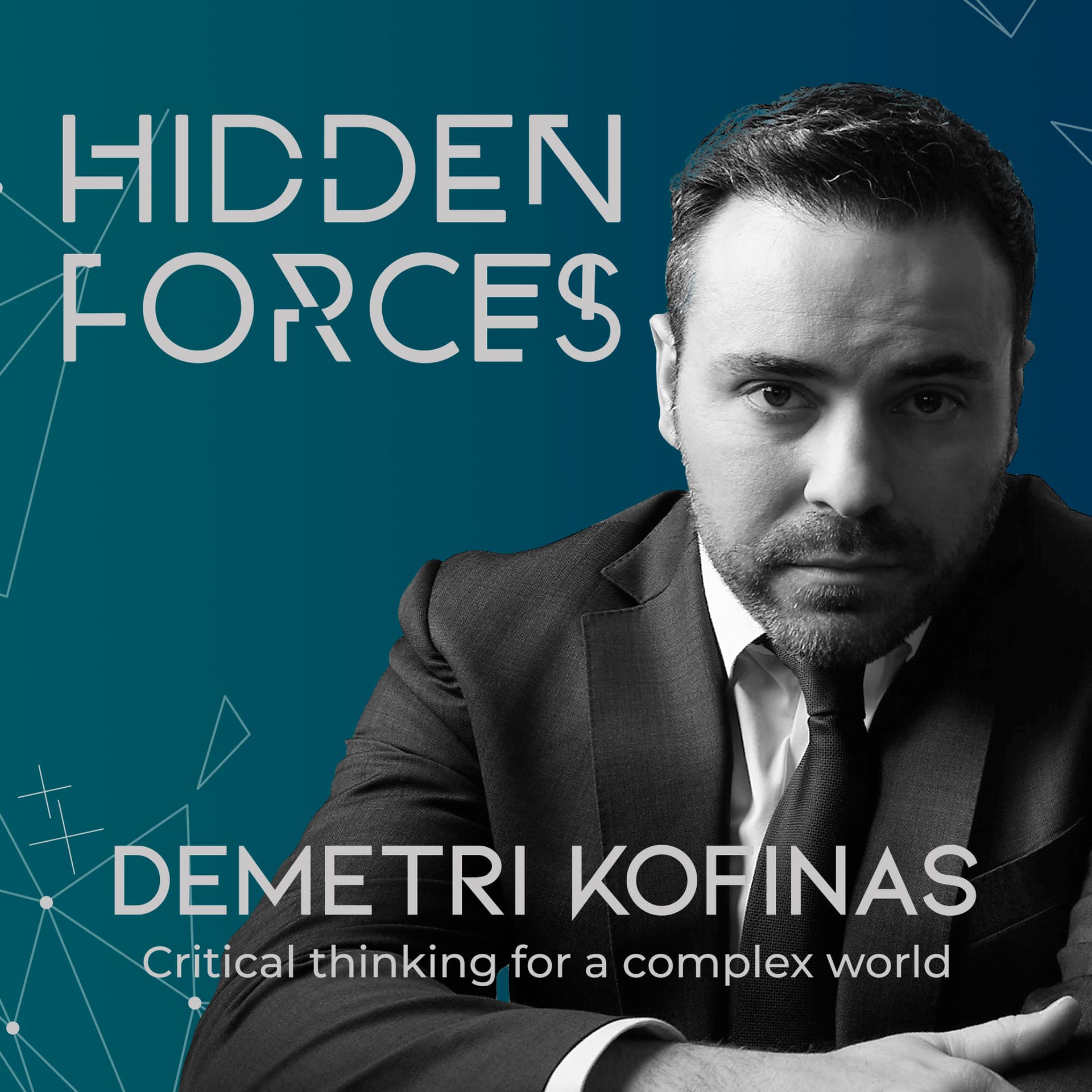
In Episode 496 of Hidden Forces, Demetri Kofinas speaks with Yaroslav Trofimov, Ukrainian-born chief foreign affairs correspondent for The Wall Street Journal and author of Our Enemies Will Vanish, about the Russia-Ukraine war, CIA director John Ratcliffe's recent visit to Moscow, and the growing risk that Russia will escalate beyond Ukraine's borders to test NATO's Article 5, how America's entanglement in the Middle East has depleted Western missile reserves and emboldened the Kremlin, turmoil inside Zelensky's government, China's role in prolonging a war it wants neither side to win, and the deepening fracture in the transatlantic alliance.
Yaroslav and Demetri begin their conversation by trying to make sense of the war — its origins, its stakes, and the prospects for its near-term conclusion. They assess claims related to the CIA director's recent trip to Moscow, the form that any potential Russian attack on NATO could take, and what the Europeans can do to try to stop it. They also discuss the political turmoil surrounding a recent shakeup in President Zelensky's cabinet, claims of corruption, and whether Western countries can be expected to continue supporting Ukraine amid declining public support for the war and mounting political resistance movements led by Europe's far-right parties.
The second hour examines Western strategic thinking and the widening schism between Washington and the capitals of Europe's largest countries. They discuss why Yaroslav believes the West's difficulties begin with a flawed diagnosis of the war based on the comforting assumption that this is a fight over territory in the Donbas rather than a contest over the future of Europe, the ideological sympathy many on the right feel toward Moscow, the nature and limits of China's support for Russia, how the war against Iran is reshaping the strategic battlefield by consuming Washington's attention and roughly half of US Patriot and THAAD interceptor reserves while bolstering Russian oil revenues, the implications for Taiwan and US allies in the Pacific, and why Europe increasingly views America not merely as an unreliable ally but as a potential strategic threat—a shift that may have mortally wounded the transatlantic relationship as it has existed since the end of World War II.
Subscribe to our premium content—including our premium feed, episode transcripts, and Intelligence Reports—by visiting HiddenForces.io/subscribe.
If you'd like to join the conversation and become a member of the Hidden Forces Genius community—with benefits like Q&A calls with guests, exclusive research and analysis, in-person events, and dinners—you can also sign up on our subscriber page at HiddenForces.io/subscribe.
If you enjoyed today's episode of Hidden Forces, please support the show by:
-
Subscribing on Apple Podcasts, YouTube, Spotify, Stitcher, SoundCloud, CastBox, or via our RSS Feed
-
Writing us a review on Apple Podcasts & Spotify
-
Join our mailing list at https://hiddenforces.io/newsletter/
Producer & Host: Demetri Kofinas
Editor & Engineer: Stylianos Nicolaou
Subscribe and support the podcast at https://hiddenforces.io.
Join the conversation on Facebook, Instagram, and Twitter at @hiddenforcespod
Follow Demetri on Twitter at @Kofinas
Episode Recorded on 09/02/2026