In short
Hidden Forces episode with Iranian foreign-policy expert Hamidreza Azizi analyzing “Operation Epic Fury” and the emerging US-Iran Memorandum of Understanding (MOU) that follows a ceasefire, plus regional consequences for Israel, the Gulf, and China.
Guest background
Hamidreza Azizi is an expert on Iranian foreign policy and author of The Axis of Resistance, Iran, Israel, and the Struggle for the Middle East.
Key claims
- Iran turned a US/Israel expectation of quick victory into a war of attrition, using attacks on US infrastructure and Israel and “effective closure”/disruption of the Strait of Hormuz to impose costs.
- Iran’s leadership structure shifted after Supreme Leader Ali Khamenei’s assassination toward a security/IRGC-centered decision core; Azizi argues this is not “regime change” but a change in how power is organized.
- The MOU is short and ambiguous; it clearly commits to ending the war and reopening Hormuz to commercial shipping within 30 days, while most nuclear details are deferred.
- Nuclear weaponization debates persist in Iran; Azizi says technical limits and intelligence exposure keep weaponization from being immediate, and Hormuz leverage may be seen as partial deterrence.
- Hezbollah’s role is pivotal and destabilizing; linking Lebanon to the US-Iran framework creates major risks if Israel acts independently.
Notable examples
- Iran’s retaliation against Israel for strikes in Lebanon (first time, per Azizi, Iran struck Israel in response to a third-party territory attack).
- JCPOA comparison: Azizi says the MOU differs by being broader than nuclear-only and lacks JCPOA’s detailed centrifuge/inspection steps.
- Gulf workaround: Saudi and UAE pipelines bypassing Hormuz (Saudi ~5 mbpd; UAE also affected).
Written by AI. May contain mistakes. Listen to the episode to check what was said.
Chapters
Tap a time to open that second in VOContext of the Current Situation in Iran
0:45 to 3:10
The hosts discuss the context of the conversation surrounding Operation Epic Fury and the geopolitical landscape.
“The second hour turns to the broader regional and geopolitical consequences of what has transpired over the last few months.”
Transformation of Iran's Leadership
3:10 to 8:00
Hamidreza explains the transformation in Iran's leadership structure post-assassination of key figures and its implications for peace.
“Hamidreza Azizi, welcome back to Hidden Forces.”
Impact of Military Dominance on Iranian Politics
8:00 to 12:20
Discussion on how military dominance and the IRGC's influence have reshaped Iran's political landscape and foreign policy.
“So after him, and also after some heavyweights like Ali Larijani, for example, were also removed during the US and Israeli strikes, the system started to coalesce somehow around its security core.”
Regime Change and Future Prospects
12:20 to 14:00
Hamidreza argues that the changes in Iran’s leadership can be seen as a regime change and discusses future implications.
“People went to the streets in support of the opposition figure, Mir Hossein Mousavi at the time.”
The Current State of Iran's Leadership
14:00 to 16:44
Explore how the war has transformed Iran's leadership dynamics and power structure.
“And on the other hand, of course, him being a cleric, basically keeping that part as well.”
Details of the MOU and Its Implications
16:44 to 20:16
Understand the key points of the Memorandum of Understanding and its potential impact.
“But let's just fast forward a second to the actual MOU and clarify what we know in terms of the details associated with the document that's going to be signed in person in Geneva on Friday.”
Nuclear Weapons and Deterrence Strategies
20:16 to 24:33
Discuss the implications of Iran's nuclear strategy and its relationship with regional power.
“So this is my impression from the text that is available right now.”
The Role of the Strait of Hormuz and Regional Dynamics
24:33 to 28:03
Analyze the strategic importance of the Strait of Hormuz and its impact on Iran's foreign relations.
“And it's really played a significant role in helping us end the war in our terms somehow.”
Understanding the Axis of Resistance
28:03 to 30:00
Explore the dynamics between Iran, the Houthis, and Saudi Arabia in regional conflicts.
“They started their coordination with the Iran network in 2015.”
The JCPOA and Its Implications
30:00 to 34:15
Discuss the differences between the JCPOA and the new MOU regarding Iran's nuclear program.
“writings on China's role in Central Asia.”
Show all 14 chapters
Iran's Nuclear Commitments and Economic Incentives
34:15 to 37:08
Investigate Iran's potential commitments and the economic incentives in the new agreement.
“because I simply don't know about the details of the centrifuge.”
Lebanon's Role in US-Iran Negotiations
37:08 to 42:01
Analyze how Lebanon's involvement complicates US-Iran negotiations and regional security.
“But it's still, when it comes to nuclear, it's going to be, if finalized, it's going to be much stricter than the JCPOA, I believe.”
Iran's Military Strategy and Regional Dynamics
42:01 to 46:38
Explore Iran's evolving military strategy and the regional implications of its assertiveness.
“war, they, I mean, they started by, for example, targeting the U.S.”
The Costs of War and Economic Implications for Iran
46:39 to 51:49
Understand the economic toll of the conflict on Iran and its impact on negotiations.
“But we haven't heard as much, in my opinion, about what it has lost.”
Transcript
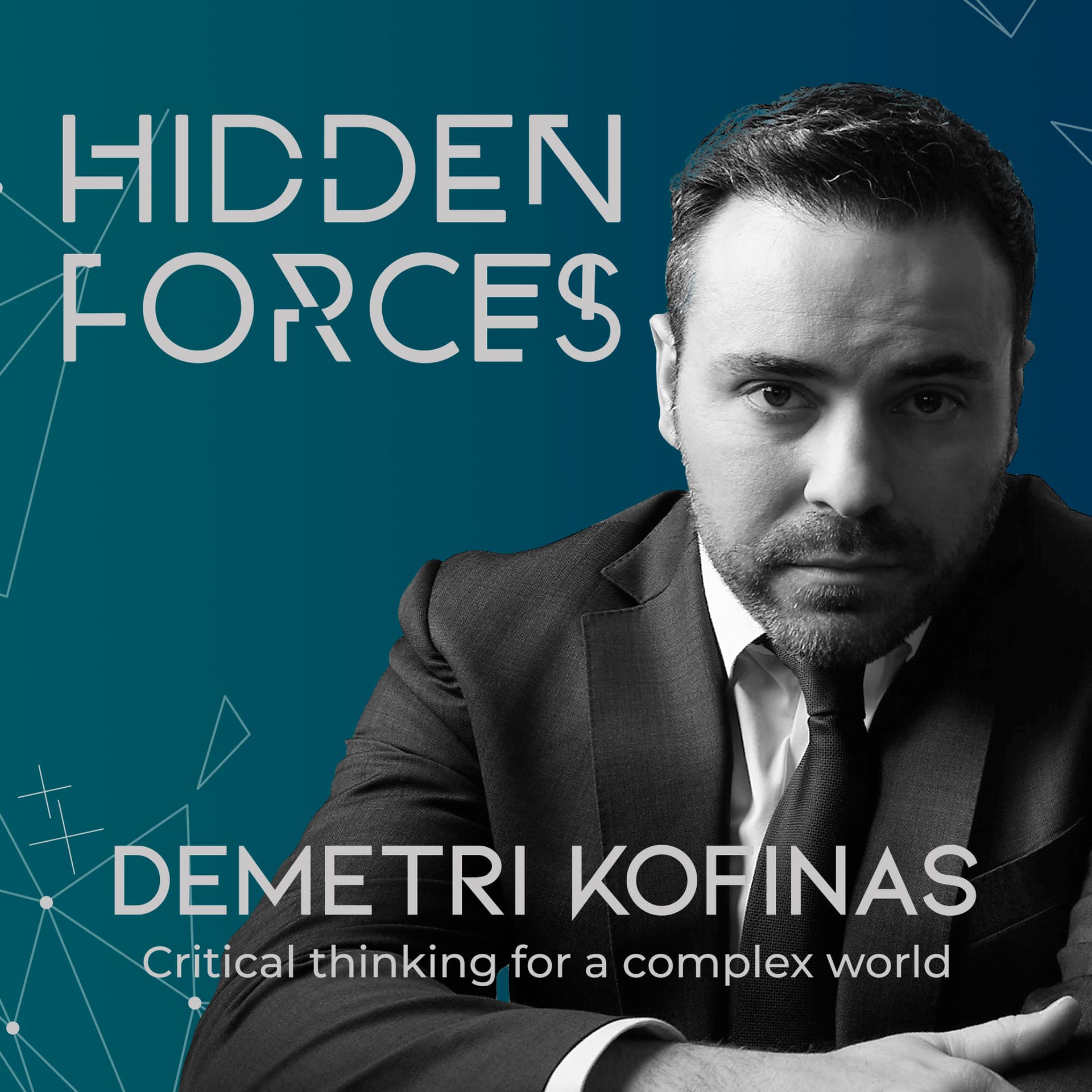
Automatic transcript. May contain errors.0:00Demetri Kofinas:What's up, everybody? My name is Demetri Kofinas, and you're listening to Hidden Forces, a podcast that inspires investors, entrepreneurs, and everyday citizens to challenge consensus narratives and learn how to think critically about the systems of power shaping our world. My guest in this episode of Hidden Forces is Hamidreza Azizi, an expert on Iranian foreign policy and the author of The Axis of Resistance, Iran, Israel, and the Struggle for the Middle East. We spent the first hour of our conversation today picking up where Hamidreza and I left off when he was last on the podcast, only a few weeks into the commencement of Operation Epic Fury.
0:40Demetri Kofinas:We discussed the transformation of Iran's governance structure following the assassination of its supreme leader, Ali Khamenei, the contours of the Memorandum of Understanding signed between the United States and Iran, and how it compares to the JCPOA signed by Obama in 2015, the question of whether Iran still needs a nuclear weapon at all, or whether demonstrated control over the Strait of Hormuz has become its functional equivalent, the role of Hezbollah in Lebanon as the most volatile variable in any lasting peace arrangement, and an honest accounting of what Iran has lost in this war, and why those losses, not just its leverage, are what have driven Tehran to the negotiating table.
1:22Demetri Kofinas:The second hour turns to the broader regional and geopolitical consequences of what has transpired over the last few months. We deepen our discussion about the changing nature of the Iranian regime and what that means for its relationship with the United States and other countries in the region, before moving to a series of conversations about Israel, the Gulf states, Saudi Arabia, and China. We discuss Netanyahu's political future, the future of the U.S.-Israeli alliance, the implications for Saudi Arabia and other Gulf states, along with their financial inflows, and their attractiveness as destinations for wealthy expats and human capital, and conclude with a discussion about China, its ambitions across its Western horizon, and whether a peace agreement between the U.S.
2:06Demetri Kofinas:and Iran is truly a strategic defeat for the United States, or if in fact it may herald a new era of political and geostrategic realignment in the Middle East that could prove to be more stabilizing and less violent than what we have learned to live with in recent decades. If you want access to all of this conversation, go to hiddenforces.io slash subscribe and join our premium feed, which you can listen to on your mobile device using your favorite podcast app, just like you're listening to this episode right now. If you want to join in on the conversation, become a member of the Hidden Forces Genius Community, which includes Q &A calls with guests, discounted access to their party research and analysis, and in-person events like our intimate dinners and weekend retreats, you can also do that on our subscriber page.
2:53Demetri Kofinas:If you still have questions, feel free to send an email to info at hiddenforces.io, and I, or someone from our team, will get right back to you. And with that, please enjoy this incredibly comprehensive and timely conversation with my guest, Hamidreza Azizi.
3:15Demetri Kofinas:Hamidreza Azizi, welcome back to Hidden Forces. Thank you for inviting me again. It's a pleasure to join you. I'm excited to have you back on the program. So I'd like to begin this conversation by broadening the context to include our last discussion when you were first on the podcast, which was almost three weeks into the commencement of Operation Epic Fury, and which came three weeks before Trump, some may remember, announced that he had achieved total and complete victory following the ceasefire deal with Iran that immediately fell apart and which led to a seemingly unending series of dubious and contradictory statements from the White House about the imminence of a new deal and all sorts of other confusing statements.
4:01Demetri Kofinas:At that time, Iran was still targeting Gulf infrastructure, including US military bases, signaling its commitment to fighting what appeared at that time, at least to be an open-ended war of attrition. Looking back on that conversation in the context of everything that has transpired over the last three months, how did your expectations then match up with how negotiations have progressed since and the way in which this war of attrition has unfolded? Well, I think the counters of what we have seen over the past few weeks after the cessation of active warfare and during the ceasefire was already evidence when we were discussing, because I remember that we discussed the reasons actually for the start of the war and the expectations on the side of the US and Israel of a very quick and decisive victory.
4:58But three weeks into the war, it was, I think, already clear that things were going differently and not as expected by President Trump and also Benjamin Netanyahu. So I think Iran managed to somehow eventually turn it into a war of attrition in which not only through targeting the U.S. military infrastructure in the region and also through attacks on Israel itself, especially in the second half of the war, but also through the effective closure of the strait-of-war most to impose costs on the U.S. that eventually led to the ceasefire. And now to the memorandum of our understanding, that was initially signed electronically and is going to be signed on Friday.
5:51So this mismatch, I think, between the initial expectations of initiators of the war and the realities on the ground and the actual capabilities of Iran, I think, was already clear. So this is how I remember our conversation. And I think that's only proven to be the case since then.
6:13Demetri Kofinas:So just again, to remind people of the context, this was when the United States was actively engaged in taking out just layers upon layers of Iranian leadership. Of course, they took out the Supreme Leader to initiate the Operation Epic Fury on February 28th. At that time, you raised doubts about whether there was anyone left in the Islamic Republic with the political authority and standing to negotiate a durable settlement. that would be accepted by all the relevant factions holding power within the country. Has anything changed within Iran's leadership structure since then that makes the prospects of peace more likely today, in your view?
6:51I think the whole structure changed. So back then we were discussing about the individuals within the system. What eventually transpired was somehow the transformation of the system itself. And I have discussed this at length in an article I wrote last month for the Time magazine. And to put it in a nutshell, actually, a system which was very much vertical and hierarchical under Ali Khamenei, the former Supreme Leader, in which the Islamic Republic indeed had some institutions like quasi-democratic institutions, and like the parliament, like the institution, like the Supreme National Security Council.
7:35But everything, all the decisions, especially on strategic matters like war, peace, nuclear diplomacy, etc., would have to go through the Supreme Leader and have his endorsement. So he had the veto power. And also, importantly, he was the final arbiter in the disputes that could arise between different parts of the government and the political system. So after him, and also after some heavyweights like Ali Larijani, for example, were also removed during the US and Israeli strikes, the system started to coalesce somehow around its security core. And what we are seeing right now is a leadership that is very much military security oriented.
8:24I hesitate to call it a military system, for example, because it's different than a military junta, for example, you know, as we know, kind of in the standard sense of the word. There are people who are close to the Revolutionary Guards, former commanders, including, by the way, the current chief negotiator and the parliament speaker, Mohamed Baghal-Ghalibov, but also the current commander-in-chief of the IRGC. And some people like the Chief Justice Fulham Hussain Mohseni Ajayi, who's also from within the security establishment. And the new Supreme Leader, Moshna wa Khamenei, is one among the few, I think.
9:02He doesn't have the same authority, neither in terms of political influence nor religious acceptance within the critical circles that his father has. So in that sense, in a way, making a strategic decision within the system takes time. And that was the reason, for example, that it took a lot of back and forth and a lot of mediated diplomacy until we reached what we have Roy Snowden and Morando understanding. But one can argue that because it has the support of the core elements of the system, especially the powerful IRGC, I mean, we can expect that it's going to hold, at least as far as Iran is concerned.
9:44And we have already seen signs of that. If you compare the current memorandum, and I must say that it is very initial, it is only the starting point, not the end point. But if you compare it with the 2015 nuclear deal, the JCPOA, the IRGC actually was the party at the time that was somehow trying to disrupt this. It was partly out of the factional rivalry with the so-called moderate camp led by former President Afghanistan Rouhani. On the other hand, out of this kind of rigid, ideological and at the same time, strategic considerations of confrontation with the United States. But this time, so far in the past couple of days since the announcement of the Memorandum of Understanding, the Deputy Commander of IRGC on Political Affairs, for example, and then Katamul Anbiya Central Headquarters, which is in charge of coordinating Iranian armed forces, then the head of the Vots Force, and the commander of the IRGC Airspace Force, all of them have come out either directly or basically backing the diplomatic team.
10:52So these are the developments that we have seen. So people within the system seem to be kind of in agreement right now that this is the best path forward, not necessarily that it's going to be eventually quite successful, but consensus within the system means that at least there's clarity how they should proceed.
11:11Demetri Kofinas:So actually, my next question was going to be what has created the conditions for the signing of this recently agreed upon MOU. But more specifically, I want to clarify because it sounds like the leadership changes as a result of this war of attrition and the, in some cases, targeted assassinations, many cases, of elements of both the Islamic Republic's leadership as well as the IRGC's leadership. It seems that that has also played a role in creating the conditions for this latest MOU on the Iranian side. Is that fair to clarify? Absolutely. Look, this transformation within the Islamic Republic, the way from clerical dominance and towards more RGC dominance or military security dominance was already underway.
12:03I would say at least since 2009, since the Green Movement protests, which were, to give some context, the protests which was triggered by the rigid elections that kind of, you know, allowed Mahoud Ahmadinejad, the former president, to stay in power for the second time. People went to the streets in support of the opposition figure, Mir Hossein Mousavi at the time. Anyway, at that time already, people started speaking a sort of an IRGC coup. I mean, a coup d 'etat maybe is not the best word to describe it, but in the sense of, you know, gradually, or as my colleague Ali Al-Sona puts it, a creeping coup by the IRGC that, you know, took shape over almost two decades, more than two decades.
12:50It was more or less what actually happened. So the security establishments around the IRGC started somehow to increase not only their political power, but also increasingly economic power. They started to dominate foreign policy as well. And the election, or I would say selection, of Erdogan Raisi was a turning point here in 2021, which tilted the balance completely toward the IRGC. Raisi himself was a cleric, but he was rather a weak figure, again, endorsed by Ali Khamenei on one hand and the security establishment on the other. Anyway, fast forward to this war, Ali Khamenei himself was the figure who was playing the balancing role between these two pillars.
13:39On the one hand, he himself had sort of cultivated the IRGC in its current form as a main pillar of his rule. And at the end of the day, we shouldn't forget that even as even the name suggests, it is the guardians of the Islamic revolution. So created for this very purpose of supporting the regime and kind of helping the regime survive. And on the other hand, of course, him being a cleric, basically keeping that part as well. So his removal paved the way somehow for a quick takeover by that very security establishment which was quite entrenched within the system. Mostafa Khamenei is himself a cleric, but he is better known for his network within the IRGC and the kind of security system.
14:33So it was somehow an opportunity that they took in order to finalize and formalize what was already going on. So in an ironic way, I would say the war contributed to this transformation and this kind of the state of affairs that we are seeing at the moment.
14:53Demetri Kofinas:Can any of what has transpired here be described as regime change? I have to call it a regime change because at the end of the day, all the people who are now within the kind of, you know, leadership, let's say, or the people who are core decision makers, they are the same people who've been within the system, you know, holding very senior positions for decades. decades. Like Teh Khalifa, for example, he's been almost everywhere within the system, from the commander of the IRGC's Airspace Force, to the commander of the police, to the mayor of Tehran capital, to the Speaker of Parliament. He ran four times, if I'm not mistaken, for president, failed each time.
15:40But now he is basically one of the key decision makers. So is the case of Ahmad Wahidi, the current IRGC commander-in-chief, he was actually the first commander of the votes force, the one that is known more about Soleimani, but he was established by this guy. So when I'm saying that these people have somehow been expounding their power within the system and have shifted this balance away from clerical system towards the military, it indicates a shift in the nature of the system or the regime and not a regime change, because a regime change would be totally different. I mean, it is still authoritarian, even more than before, still close in terms of the circle of the elites in power.
16:27The only thing, as I said, is transition from a more vertical decision-making system at the top to a more horizontal one. That's the way describe it.
16:38Demetri Kofinas:So we'll have a chance to dig into much more detail with respect to the changes that have taken place within Iran. But let's just fast forward a second to the actual MOU and clarify what we know in terms of the details associated with the document that's going to be signed in person in Geneva on Friday. They already signed a digital copy, but both sides will be meeting in a couple of days. And again, I don't know if I mentioned this, but we're recording this on Wednesday, June 17th. What do we know about what has been discussed, the contours of any potential deal, and what has been primarily agreed to?
17:12I saw that CNN has published the text of the MOU earlier today. And it is actually the same text that I saw on Friday, even before the announcement of the agreements in some Iranian sources, like on social media, and then also some of the media published the counters of it. So both texts are kind of word by word similar. So my impression is that it is going to be the final one. So it's kind of 14 articles in this text. It is a short one, as Vice President J. DeWant said, one page or one page and a half, something like that. It starts by expressing commitments by both sides of a permanent end to the war and refusal to resort to the threat of war or use of force against each other in the future, respecting each other's sovereignty, territorial integrity, etc.
18:13Then there are some provisions about the lifting of U.S. naval blockade, which has been their ceasefire actually and during the ceasefire. And on the Iran side, the Iranians are committing to reopen the Strait of Hormons to commercial shipping within a window of 30 days. There are some provisions about negotiations, future negotiations regarding the Iranian nuclear program, also lifting of sanctions and so on. And there is a 60-day window, which is mentioned in the text as a period, which starts by the official signing of the documents in which the two sides are going to negotiate the details, including sanctions removal, including the details of Iranian nuclear concessions.
19:04And then eventually, Article 14 says that the final deal that's going to come out of this is going to be ratified at the UN Security Council as a binding resolution. But what I can see in this text is that the only actual commitments by both sides that can be understood from this is the sort of removal of this double blockade that's been there. So that is the only thing that is clearly sort of mentioned in this. Other than that, almost everything is just some general understandings. And that's why I think it is called the Morando understanding. And the details of each of them is going to be determined in the future negotiations.
19:53So it is broad enough for both sides, I think, to be able to claim victory. but it is at the same time ambiguous enough and potentially leave room for misunderstandings, miscalculations, and eventually a kind of failure to reach any actual final comprehensive agreement. So this is my impression from the text that is available right now.
20:21Demetri Kofinas:Yeah, that's another line of inquiry that I wanted to follow, which is essentially how seriously should we take these talks and the commitment to work out a potential deal along the preliminary terms outlined in this MOU. But before we discuss any of that, let's go back to the nuclear question. Because when we last spoke, you raised the possibility that the war had actually increased Iran's incentives to acquire a nuclear weapon, and you weren't alone in that, both because it demonstrated the very real costs associated with not having a nuclear deterrent, and also because their strategy of staying just below the nuclear threshold of breakout was treated by the US and Israel as being indistinguishable from trying to urgently develop a nuclear weapon, miniaturize it, and turn into a warhead that could be used to strike the US or attack any of its interests in the region.
21:17Demetri Kofinas:So my question for you is, does the leverage that Iran has to close the strait demonstrate to its leadership that it no longer really needs to obtain a nuclear weapon because a threatened closure of the strait is a more economical, less complicated and safer equivalent of nuclear deterrence with most of the benefits associated and none of the costs. There's debates ongoing in Iran between the experts and observers close to the government, which I think is kind of a reflection also of different trends in terms of thinking within the leadership. And it has to do with both elements of your question.
22:01First, about whether this war has actually necessitated or sort of proved the importance of acquiring nuclear weapon for Iran. And second, whether the Strait of Hormones actually can be a replacement for nuclear deterrence. So on the first question, since we spoke, I see kind of growing voices within Iran's strategic community, not at the official level. That's an important distinction. But within Iran's strategic community, those people whose thinking is believed to be impactful on the leadership's sort of approach. As I said, there's growing voices advocating for the development of a nuclear weapon.
22:45And despite some counter arguments, for example, that look, Israel has nuclear weapons, but we managed to target Israel rather successfully. And, you know, it didn't deter us. I mean, the Iranians from attacking Israel and so on and so forth. But they say, at least having nuclear weapons would guarantee that there's not going to be an existential threat to the system and to the country. And they refer to two things. First, obviously, the killing of the Supreme Leader. I see this kind of quite often, you know, comparing this, for example, I mean, comparing Iran to North Korea, to Russia. Can you imagine, for example, even in a scenario of a fierce war between Russia and the United States or North Korea and the United States that the US would target the leadership of Russia, for example, Putin or Kim Jong-un?
23:32Why? Because they have nuclear weapons. So these are the arguments that are already there. But the thing is, when it comes to the actual capabilities and when it comes to the technical assessment of what Iran has. And again, here we only can refer to the open source data and the sort of reports provided by IAEA, so long as they had access to the sites on the ground and also intelligence assessment by US and Israel. Iran doesn't have the infrastructure for weaponization at the moment, like at least quick weaponization, and also the kind of intelligence cover that would guarantee that if they decide to break out towards nuclear weapons, it's going to be undetectable.
24:16So these things, I think, are among the factors that make the leadership kind of more cautious and still pushing them towards thinking and seeing the nuclear program more as a leverage than an actual means for deterrence. And here, of course, comes the question of the straight up or most. So I think what has prevented the Iranian leadership from going towards the weaponization past is more the due factors that I mentioned, the lack of proper infrastructure and also intelligence exposure than the leverage that they have achieved in the Strait of Ormos. Because again, the arguments within the Iranian debates regarding the Straits of War was that, of course, we found this very important, very significant leverage that we always had actually given our geography, what we weren't aware of.
25:11And it's really played a significant role in helping us end the war in our terms somehow. But still, this leverage can gradually be weakened. And even if not rendered irrelevant, at least less significant in the future. And I think they have a point here because, look, already Saudi Arabia and the UAE have pipelines that bypass the Strait of Ormos, right? Each of them being able to ship at least 5 million barrels of oil per day. Saudi Arabia did this throughout the war and the chiefs fire. For UAE, it was more difficult because Iran continued its strikes against UAE. So there is a kind of a consensus on the argument that the Straits was the single most important leverage that Iran had in this war, but there is much less consensus on whether the same leverage can be used if there is a war in, say, like 10 years, 20 years, or something like that.
26:21Demetri Kofinas:So does that also imply that Iran remains just as, if not more, incentivized to maintain its acts of resistance, including its backing of the Houthis, if the solution for the Saudis and the Emiratis to an Iranian closure of the Strait of Hormuz is to divert more of their exports through the Red Sea? First of all, one thing I think which became clear, it was clear to me, so many people before the war as well. But this war, and especially the way that Iran treated Hezbollah and the Lebanon issue, what it proved was that this relationship, the relationship between Iran and many of these groups cannot really be described as patron-proxy relationship.
27:03Because in a patron-proxy relationship, you don't enter into a war to support your proxies, the proxies to fight for you. This was exactly the opposite of what happened just a couple of weeks ago when Iran decided to fire missiles toward Israel in retaliation for Israeli strikes on Dakhir in southern Beirut and threatened to do that again on the same day that the memorandum of understanding was eventually announced. Regardless of how successful Al-Fresh was or not, the strategic message was that at least as far as Iran is concerned, these groups are seen as allies. And when it comes to the Hussis, it's actually more so because the Hussis don't even have the same ideological affinity as Allah has with Iran or some of the Iraqi Shia factions have.
27:52I mean, the Zaidi face that the Hussis have is considered to be, you know, kind of a branch of Shiism, but it's not exactly the same as the 12-ish Shiism as Iran has. And also, look, when it comes to this concept of the axis of resistance, the network of Iranian partners and proxies, the Hussies are kind of late comers. They started their coordination with the Iran network in 2015. So in that sense, it very much, and here's my point, when it comes to the Red Sea dynamics, it's very much kind of affected by the dynamics between the Hussies and Saudi Arabia as much as it is, if not more. as the Iran-Saudi dynamics, for example, or the Iranian consideration.
28:37So there were already reports that Saudi Arabia was in close contact, not only with Iran, but also with the Hussies, offering them even assistance in order to dissuade them from closing the Red Sea and Bab al-Manda so that Saudi Arabia could do its business. I still do believe that in a scenario of the resumption of the war, like the full-scale war. And if Iran actually asked the Houthis to disrupt the Bab al-Mandav and the Ratsyat, at least partially, they would do that for their own ideological and also strategic considerations. But that didn't happen because Iran concluded that they could do it on their own, based on their sort of own control over the Straits of Hormuz.
Read the full transcript
29:25But again, the right-sea dynamics, of course, are also going to be important, but with these caveats that it's going to be about more than just Iran itself and other actors are there to play different roles depending on the circumstances.
29:43Demetri Kofinas:So just a few more questions about the MOU before we proceed to a more in-depth discussion about the changing nature of the Iranian regime, as well as the implications for Israel, the Gulf States, Saudi Arabia, and China, which I know you have some informed opinions about given your writings on China's role in Central Asia. How does what is being discussed now compare to what was agreed upon originally in the joint comprehensive plan of action that Trump unilaterally withdrew from in 2018 and which served as the basis of his primary criticism about the state of US-Iranian relations and what he sought to change in the course of the last two years, and especially with Operation Epic Fury?
30:26So first of all, regarding the kind of criticism of the Obama administration that the JCPOA basically provided billions or hundreds of billions of cash to Iran, there's a fallacy here that we need to be aware of. What the deal actually did, I mean, there was actually sanctions relief, but it was about unfreezing Iran's own funds, which was frozen due to the sanctions, both the unilateral US sanctions and also the international sanctions. So the distinction matters. Why? Because now the exact same provisions are mentioned in this Novorando understanding. Parts of Iranian frozen funds are going to be released.
31:07So that's important. Neither under Obama nor now under Trump. And I emphasize this so that there wouldn't be any misunderstanding that I'm taking these sides, you know, comparing to that one. Under neither of these administrations, at least so far, there has been any arrangements or any agreements of transferring U.S. money to Iran. So that's an important distinction here. Second, when it comes to the details of the documents, and again, keeping in mind that what we have right now is a memorando understanding, it's going to be just a first step towards a broader deal in the very pessimistic scenario.
31:54There are some similarities, there are some differences. The main difference is that this agreement, the current MOU, is about more than just a nuclear program. JCPOA was strictly about the arena nuclear program, the details of it, Iran's timetables about the lifting of restrictions and also step-by-step sanctions removal, everything that had to do with the nuclear program, nuclear-related activities, nuclear-related sanctions. This one, as I said, it starts by a commitment of refusal to resort to force or a threat of force or something. So again, in the very optimistic scenario that this deal becomes finalized, it's going to be about much more than the nuclear program.
32:43It can be, again, I really don't think it's going to happen for the reasons that we can discuss, But it can potentially be a stepping stone for a transformed relationship between Iran and the United States. And then when it comes to the actual, so that's about the scope of it. It's bigger than just the nuclear program. It also has to do with the international shipping and everything. Then about the actual details of the nuclear program. So look, as you mentioned, the JCPOA was negotiated over a course of more than four years. And there was every single detail about the number of centrifuges, the type of the centrifuges, the time that each generation of centrifuges could or could not come to the enrichment circle.
33:35Or I don't know, like the actual steps that Iran should take in terms of granting access, for example, and this or that facility to the IAEA inspectors. It was a very, very detailed deal.
33:49Demetri Kofinas:And the Obama administration, if I remember correctly, went to great lengths to explain those details to the public. They thought they were important, not just for the deal itself, but also for their ability to sell it. Yeah, absolutely. I mean, even for me at the time, when I looked at the text of the JCPOA, which was kind of quite extensive, you know, I, as an expert on international security and Iran's foreign policy, I only reviewed those parts about the outline of the steps on the Iranian side and the sanctions removal, etc., because I simply don't know about the details of the centrifuge.
34:23It was very technical. Now, none of the details related to the commitments on the Iranian side regarding the nuclear program, nor the actual mechanisms for the sanctions removal, for example, this kind of step-by-step mechanism. None of these, you can see in the current MOU, it's a kind of promise by both sides that Iran should take steps to clarify if the stockpile of highly enriched uranium and also the future of its nuclear program and so on and so forth. And then the United States will also remove sanctions and allow Iran access to its funds and things like that. So in a way, I was framed as compared to the JCPOA, the outline of the bill that is presented in this MOU is going to be something like more for more.
35:17When you say more for more, you mean the Iranians give more in return for more? Exactly. What I'm going to say doesn't exist in the text itself, but this is something that I've seen and I've heard from various sources speaking about this. So Iran is going to commit to stopping enrichment for a certain period of time. That period of time is still undecided. So on the U.S. side, there was a demand for 20 years or at least 15 years. The Iranians were saying 10 years. But in any case, this is something that didn't exist under the JCPI. Under the JCPI, since day one, Iran was allowed to enrich at 3.6 % enrichment level.
35:58So Iran is going to stop enrichment for a certain period of time and also dilute its highly enriched uranium, probably increase inspections, more sort of intensive measures to make sure that it's not going to break out towards a weaponization. And then there's going to be no path toward weaponization. And on the U.S. side, there are notions in the text itself that should the deal be finalized, the United States is going to remove not only the secondary sanctions, but even the primary sanctions and also the kind of investment fund that is green-lighted by the United States to help Iran rebuild its economy.
36:44President Trump says there's going to be no U.S. money in it. We don't know. But in any case, there's more economic incentives, financial incentives for Iran. And in exchange, Iran is supposed to take more serious, or better to say, kind of to make more commitments regarding this nuclear program. It's still far from President Trump's longstanding demand that Iran's nuclear program be dismantled. But it's still, when it comes to nuclear, it's going to be, if finalized, it's going to be much stricter than the JCPOA, I believe.
37:21Demetri Kofinas:So Iran has insisted on linking Lebanon to any deal that strikes with the United States, which is obviously a major security concern for Israel. How does this dimension of the conflict and the persistent threat that Hezbollah poses to Israel through its operational presence in Lebanon, as we've already discussed in the course of this conversation, threaten the viability of whatever is ultimately agreed to? Which also brings in the larger question of what role does Israel really have in the course of these negotiations and in terms of being in a position to undermine any peace agreement that the U.S.
38:03Demetri Kofinas:and Iran ultimately come to? That's, I think, the most complicated part of the MOU and also the part that has the biggest potential for kind of disrupting this whole thing. Not Israel itself, but the insistence to link these two sort of arenas together, Lebanon and Iran. And actually, it was the day before yesterday, if I'm not mistaken, that the Iranian spokesperson for Iran's foreign ministry went even further saying that this war had four parties. On the one side, it was us, like Iran, and Hezbollah, and on the other side, the US and Israel. So any arrangement, any kind of an agreement is going to be binding for Israel as well, and that the Islamic Republic won't accept excuses that Israel is going to, you know, act independently and so on and so forth.
39:03So on the one hand, the very fact that Iran managed to include Lebanon, or in this case, its partner, Hezbollah, in a deal with the United States, and also on the ground, sort of trying to validate its red line of Israeli attack on Hezbollah being met with Iranian response, that can be seen as a success, right? a kind of affirmation of Iran's renewed sort of original status in the sense that it can -
39:35Demetri Kofinas:Just to be clear for listeners, you're referring to a recent retaliation by Iran on Israel in response to Israeli attacks in Lebanon going after Hezbollah. And as I understand it, that was the first time that the Iranians had ever struck Israel in response to Israel striking a third-party territory and not Iran itself. Yeah. Yeah, absolutely. Which you think was also meant to signal their commitment to the Lebanese issue. To signal their commitment and also to sort of a signal that Iran is now a more assertive, more influential regional power even compared to before the war and also more sort of ready to take risks in support of its own interests and also interests of its allies.
40:19Demetri Kofinas:Is it also fair to say that an important dynamic that has flipped since February 28th is that leading up to February 28th, it seemed that the Israelis and the Americans were the ones that had escalation dominance, and the Iranians were the ones that were constantly looking for off-ramps. Since February 28th, it seems the opposite has occurred, and it is the United States that has been looking for an off-ramp, and the Iranians, in part, have facilitated that by constantly being willing to escalate, that the gloves were essentially taken off in Tehran. Yeah. That's true. That's true. Because, look, I don't remember clearly if we discussed this or not, but just to mention, in the Iranian narrative, actually, one of the reasons or kind of one of the calculations that the United States and Israel had when they decided to initiate this war was that Iran is very much weakened and also it bows under pressure.
41:15And the reason they say is not because we didn't have the material capabilities, we did have our missile program, we did have our drones, we did have everything. It was the lack of kind of, how to say, political will to resort to those in order to clarify our red lines to the adversary. So in the view of, especially the current Iranian leadership, which, as I said, more security military oriented, more hardline on the strategic matters, it was the Iranian cautious that kind of led to a misunderstanding on the U.S. and Israeli side that eventually led to this war. So now they are even more risk-taking than even during the war.
42:00During the war, they, I mean, they started by, for example, targeting the U.S. military bases in the region and also Israel, et cetera. But now they are going one step ahead, right? As you mentioned, That was the first time that even as the ceasefire between Iran and the United States was holding, and even as there was no active warfare between Iran and Israel, Iran decided to respond to Israel for an attack on Lebanon. So the red line is now far ahead from Iranian borders. So this is the kind of a new equilibrium, in their words, that they wanted to establish. But anyway, going back to the provisions within the MOU related to Lebanon.
42:42So on the one hand, the very fact that Lebanon was eventually included and the text speaks of Iran and the United States together with their allies committing to end the war permanently and on all fronts, including Lebanon. So this is the text of the memorandum of understanding. So it can be, as I said, enterprise, Iran's assertiveness, sort of eventually bringing some concrete outcomes for Iran. And now Iran formalizing its status as a regional power. But it comes with serious risk. And the most important risk is that if Israel decides to do it alone, even without the endorsement or support or coordination of the United States, if they decide that, as actually Israeli officials, including Vladimir Netanyahu, also their defense minister, Israel Katz and others have indicated, They decide that the security of the state of Israel and its interests necessitates continued operations in Lebanon.
43:55It necessitates, for example, not retreating from southern Lebanon and things like that. So what exactly Iran is going to do? Is Iran going to see this as a breach of the Rondo understanding and forget about all the other benefits of the deal? and just go back to fighting or to target Israel, what exactly it wants to do. This is one thing. And another thing is that by bringing the Lebanon issue and also trying to connect Israel to this framework with the United States, the Islamic Republic is somehow de facto recognizing Israel as a negotiating party. So which is the case now here? You don't recognize the existence of the state of Israel, but at the same time, you want Israel to be coming to certain arrangements that you have made with the United States.
44:58So how do you want to explain and also sort of solve this contradiction? So there are inherent contradictions in this that can eventually lead to the collapse of the whole arrangements. Because as I said, just look at Syria, for example. Look, President Ahmad al-Shara has a very good relationship with Trump at the personal level. Trump has praised him as a powerful leader, or I don't remember the exact words. And he has also indicated that he is interested in fostering better relations with the United States, with the West in general. But then look at the status quo, current status quo in southern Syria.
45:40Israel is still there. Parts of the Syrian territory beyond the Golan Heights are under Israeli occupation. And there's nothing that the Syrian government can do, and there's nothing that the United States can actually do to force Israel to abandon those places, because they see them as their security zone. So these are the very important matters that maybe don't catch the eye when you first look at the text. but can eventually be quite decisive in the face of this agreement.
46:14Demetri Kofinas:So one more question before we move it to the second hour, where we're also going to talk quite a bit about Israel and the political dilemma that they face, not just the security dimension and the security challenges, but the political dimensions, which I think have changed significantly for Israel, as well as the opportunities for China and whether Beijing will use this opportunity to exert more influence, not just in Iran, but over the region. You know, we've heard a lot about how Iran has gained leverage as a result of this conflict or discovered the leverage it has through its ability to escalate and exact economic pain on the United States through the closure of the strait and the impairment of critical infrastructure in the Gulf.
46:57Demetri Kofinas:But we haven't heard as much, in my opinion, about what it has lost. What, in your view, is important to mention there? And then I have one more question about the implications of what Iran has suffered for its willingness or lack thereof to return to a war of attrition and the prospects that these talks do in fact lead to a more sustained period of relative peace in the region. Look, I think the most important elements when speaking about the Iranian failures or viciousness is the lack of proper deterrence. Look, they, again, they managed to impose a lot of costs, not just on the US, but the global economy were closing the Strait of Hormuz.
47:45That is correct. They managed to literally destroy some of the US spaces, especially in Kuwait, for example. So US spaces in the region. That is also correct. They managed to impose serious costs and caused a lot of damage to Israel itself. That is also correct. But assuming that, just imagine that, you know, the war restarts today. It's going to be almost as easy for the United States and Israel to establish air dominance over Iranian skies as they did on February 28th. So the very fact that the new Supreme Leader of the country has not been seen, has not been heard, and he's been in hiding since day one, is quite telling about the current state of affairs.
48:36And this is not me saying this as someone sitting outside of the country. This is a criticism raised by pro-government experts inside the country. I remember one of them, you know, in the state TV, saying that, kind of criticizing the situation and the lack of deterrence. He was actually favoring the establishment of nuclear deterrence. But he was saying, look, we are not a militia whose leader would be in hiding for months or years or something. We need our leaders to come out and start governing the country. So it shows the weaknesses in terms of the huge estimates, let's say, that exist between Iran on the one side and Israel.
49:18And of course, on that matter, the United States on the other side. But more important than that, maybe in terms of long-term implications, even if we assume that there's not going to be any war again anytime soon, the state of economy, according to the Iranian government's own estimate, the cost of reconstruction amounts to something like$270 billion. And at the same time, the damage caused by the war and a lot of side effects like, you know, the almost total collapse of the digital economy as a result of the internet blackouts. house, and the loss of opportunities in the construction sector, in many other structural areas, has now led to an inflation above 80%, which is unprecedented in Iran in the past few decades.
50:14So the Iranians are somehow used to double digits inflation for years and decades, but this is unprecedented. And again, today, I mean, these are, again, the government's own estimate, which always has to be taken with a grain of salt. Usually the actual situation is worse than what the official statistics suggest. There was an assessment survey actually referred to by the Iranian Interior Ministry saying that around 60 % of the Iranian population are kind of not able to sort of manage their economic affairs if the war continues. So these are the reasons actually that Iran has eventually agreed to come to the table.
51:00It is not as one-sided as some people are trying to present it, like Iran coming out of this victorious, et cetera. Yes, when you are on the defense side, when you are faced with an offensive initiated actually by the world's greatest superpower, the very fact that you have survived, and not only as a country, but also as a political system, that is sort of a victory. That's true from a strategic point of view. But on the other side, so if you were victorious, if everything was as rosy as is depicted by some people, why would Iran actually come to the table and agree to abandon its nuclear program for sanctions relief?
51:45So there is a need on both sides to end this war. That's the way I that looks great.
51:50Demetri Kofinas:I'm very glad that you stated that. This is exactly why I asked the question this way, because I think there's a, especially among hawks, there's a view that the US by agreeing to move forward in these negotiations, it's putting itself in this position where oil begins to flow again through the strait. And then we are heavily incentivized not to bomb the Iranians or re-engage in hostilities because now we don't want to go back to the flow being cut off and Trump has elections, but it's not like the Iranians haven't suffered as a result of this. They've suffered more, significantly more, and they have every incentive from that standpoint to want to negotiate.
52:26Demetri Kofinas:So I just think while I'm quite sanguine about the prospects for peace, I think that they're not necessarily as bad as some people might suggest. So that's why I asked the question. I'm going to move us to the second hour, Hamid Reza. And as I said, I want to finish our discussion about the changing nature of the Iranian regime and the political consensus governing the country as well as how this war has changed the region's status quo and how those changes should inform our forecasts. I'm also very interested in discussing what this means for Israel, whether some of Trump's latest comments and Israel's exclusion from the latest talks in particular shows Israel that the US can no longer be counted on as a strategic partner in the Middle East, and what this means for the emergence of a new regional order as Israel seeks to counterbalance itself against its rivals in the region.
53:20Demetri Kofinas:The economic consequences for Saudi Arabia and the Gulf states are also top of mind, not just for their export economy, but for their efforts to make themselves a prime destination for people and capital. And importantly, how China factors into all of this, whether a new era of cooperation between Beijing and Tehran lies ahead as Iran's foreign minister recently said, and what this means in practice for China's role within the greater Middle East, and if it will seek to either fill a vacuum left by Washington or serve as a counterbalancer to a US that countries in the region increasingly view as unreliable.
54:04Demetri Kofinas:For anyone new to the program, Hidden Forces is listener supported. We don't accept advertisers or commercial sponsors. The entire show is funded from top to bottom by listeners like you. If you want to access the second hour of today's conversation with Hamid Reza, head over to hiddenforces.io slash subscribe and sign up to one of our three content tiers. All subscribers gain access to our premium feed, which you can use to listen to the rest of today's conversation on your mobile device using your favorite podcast app, just like you're listening to this episode right now. Hamidreza, stick around.
54:38Demetri Kofinas:We're going to move the second hour of our conversation onto the premium feed. If you want to listen in on the rest of today's conversation, head over to hiddenforces.io slash subscribe and join our premium feed. If you want to join in on the conversation and become a member of the Hidden Forces Genius Community, you can also do that through our subscriber page. Today's episode was produced by me and edited by Stylianos Nicolaou. For more episodes, you can check out our website at hiddenforces.io. You can follow me on Twitter at Kofinas, and you can email me at info at hiddenforces.io. As always, thanks for listening.
55:20Demetri Kofinas:We'll see you next time.
From the publisher
In Episode 483 of Hidden Forces, Demetri Kofinas speaks with Hamidreza Azizi — expert on Iranian foreign policy and international security, and author of The Axis of Resistance: Iran, Israel, and the Struggle for the Middle East — about the evolution of the US-Israeli war against Iran since the early weeks of Operation Epic Fury, the contours of the emerging peace process, and the broader transformation of the Middle Eastern order in its wake.
The first hour picks up from Azizi's previous appearance and traces how the war has developed: the transformation of Iran's leadership following the assassination of Ali Khamenei and the consolidation of power within the IRGC, the memorandum of understanding signed between the US and Iran, whether Iran's demonstrated control over the Strait of Hormuz has negated its need for a nuclear weapon, the role of Hezbollah and Lebanon as the most volatile variable in any lasting peace arrangement, and an honest accounting of what Iran has lost — and why those losses, not just its leverage, are driving Tehran to the negotiating table.
The second hour turns to the broader regional and geopolitical consequences of the conflict. They examine whether the Islamic Republic's ruling mandate has fundamentally shifted and what that means for its relationship with the United States going forward, how Netanyahu faces elections with a war record that looks nothing like the total victory he promised, and how Trump's willingness to negotiate with Iran without Israeli participation has forced a reckoning with the limits of that alliance. They also discuss what a new Middle Eastern order looks like in the face of a potential US strategic withdrawal or retrenchment — defined less by competing visions than by fluid, transactional balance-of-power dynamics — before closing with China: what Iran's foreign minister's recent comments about a new era of cooperation between Beijing and Tehran mean in practice, how China's behavior during the war signals a qualitative shift in its strategic calculus, and what three scenarios could cause the current peace process to collapse before a comprehensive deal is reached.
Subscribe to our premium content—including our premium feed, episode transcripts, and Intelligence Reports—by visiting HiddenForces.io/subscribe.
If you'd like to join the conversation and become a member of the Hidden Forces Genius community—with benefits like Q&A calls with guests, exclusive research and analysis, in-person events, and dinners—you can also sign up on our subscriber page at HiddenForces.io/subscribe.
If you enjoyed today's episode of Hidden Forces, please support the show by:
-
Subscribing on Apple Podcasts, YouTube, Spotify, Stitcher, SoundCloud, CastBox, or via our RSS Feed
-
Writing us a review on Apple Podcasts & Spotify
-
Join our mailing list at https://hiddenforces.io/newsletter/
Producer & Host: Demetri Kofinas
Editor & Engineer: Stylianos Nicolaou
Subscribe and support the podcast at https://hiddenforces.io.
Join the conversation on Facebook, Instagram, and Twitter at @hiddenforcespod
Follow Demetri on Twitter at @Kofinas
Episode Recorded on 06/17/2026