In short
Tim Wu argues that “platform power” has become the dominant economic force, shifting the internet from an open, innovation-friendly ecosystem to an extraction model that weaponizes user attention and data. He links this to political/media dysfunction and to failures in sectors like healthcare and housing, and discusses remedies ranging from antitrust to transparency rules and alternative platform business models.
Guest backgrounds
Tim Wu is a Columbia Law School professor (law, science, and technology), author of major tech-power history books, and former White House special assistant on technology and competition policy. He coined “net neutrality” and previously wrote about internet power (e.g., Master Switch).
Key claims
Platforms match buyers/sellers and reduce information/trust problems, but modern platforms monetize by controlling bottlenecks and extracting value; competition collapsed (e.g., Google/Waze). Platforms act like editors via ranking/amplification while claiming neutrality.
Notable examples
June 11, 2013 Google’s Waze acquisition; net neutrality’s original infrastructure-equality goal; Amazon marketplace fee squeezing and private-label competition; Minitel’s failure to evolve; social-media engagement optimization; potential “digital public square” via publicly funded alternatives to Meta/X.
Written by AI. May contain mistakes. Listen to the episode to check what was said.
Chapters
Tap a time to open that second in VOImpact of Platform Power on Society
1:08 to 2:28
Tim Wu discusses the rise of platform power and its effects on various sectors and democracy.
Impact of Platform Power on Society
2:35 to 2:56
Tim Wu discusses the rise of platform power and its effects on various sectors and democracy.
“just like you're listening to this episode right now.”
Transition to Tim Wu's Insights
2:56 to 3:20
Demetri continues the conversation with Tim Wu, reflecting on past encounters.
“You can also do that on our subscriber page.”
The Age of Extraction: Concept and Context
3:20 to 4:32
Tim discusses his new book 'The Age of Extraction' and its thematic connections to his previous works.
“Finally, Tim, I had to stalk you and hound you down for a decade.”
Historical Context of Platform Power
4:32 to 5:18
Tim reflects on the historical evolution of technology's intersection with power.
“Yes, I appreciate that you've read the other books and have that perspective.”
The Dream of the Internet: Past vs. Present
5:18 to 7:23
Tim shares his nostalgic views on the early internet and contrasts it with today's reality.
“books, oftentimes those are from my records and I read the PDFs because it's easier to highlight and stuff like that.”
Defining Net Neutrality and Its Evolution
7:23 to 11:27
Tim explains the principles of net neutrality and its implications for platform power.
“I'm kind of like one of these aging bands that's still playing their hit song or something like that.”
The Economics of Platform Power
11:27 to 13:48
Tim elaborates on how platforms have gained economic power and their role as intermediaries.
“So we'll have a chance to talk about AT &T and the Bell system a bit later perhaps, as well as possibly IBM and how that is an example of the waxing and the waning of platform power.”
Introduction to Platform Power
14:00 to 14:48
Discussing the essence and economics of platform power in the modern era.
“the Windows operating system and that moment in the mid 90s where they had a chance to basically run away with the entire ecosystem and then the internet and Netscape and the browser got in the middle of it.”
Functions of Platforms
14:48 to 22:12
Exploring the four challenges platforms address and their economic significance.
“So historically, most platforms were neutral and And in some ways, couldn't help being so.”
Show all 19 chapters
The 2013 Turning Point
22:12 to 24:18
Analyzing the moment in 2013 when competition in tech shifted dramatically.
“Yeah, I think it's telling that we all agree that somewhere in the early 2010s, something went off the rails.”
User-Generated Content vs. Edited Content
24:18 to 28:00
Discussing the evolution of content creation and the role of platforms as editors.
“This was an antitrust party of all places.”
The Hybrid of Platform and Media Company
28:00 to 31:22
Explore how tech platforms have evolved into a blend of media and ad companies.
“You know, what is even sticking with this platform model, what are we going to make sure people see?”
Consequences of Social Media's Impact
31:22 to 34:01
Discuss the societal damage and economic implications of social media platforms.
“And you're talking about social media right now.”
The Content Creation Challenge
34:01 to 38:45
Examine the evolution of content creation in the age of AI and saturation.
“I've written about this recently as well in some newsletters or housing.”
The Future of Platforms and AI
38:45 to 42:01
Investigate the potential impact of AI on tech platforms and user participation.
“in a position to absorb it and their minds can only take in so much information.”
The Future of AI and Platforms
42:01 to 44:18
Explore how AI might disrupt the current platform model and its implications.
“And I think one of the greatest questions of our time is whether AI fortifies the platform model or challenges and maybe destroys it.”
Behavioral Algorithms and Their Impact
44:19 to 45:20
Discussion on behavioral algorithms' effects on human productivity and economic contribution.
“Skinner in the book, because so many of these behavioral algorithms treat humans in this basic scheme of stimulus response.”
The Path Forward: Innovations and Policy
45:21 to 46:08
Anticipating future innovations and public policy changes to improve platform systems.
“what comes next, both from a public policy and marketplace innovation standpoint, what can we expect to see in the coming years?”
Transcript
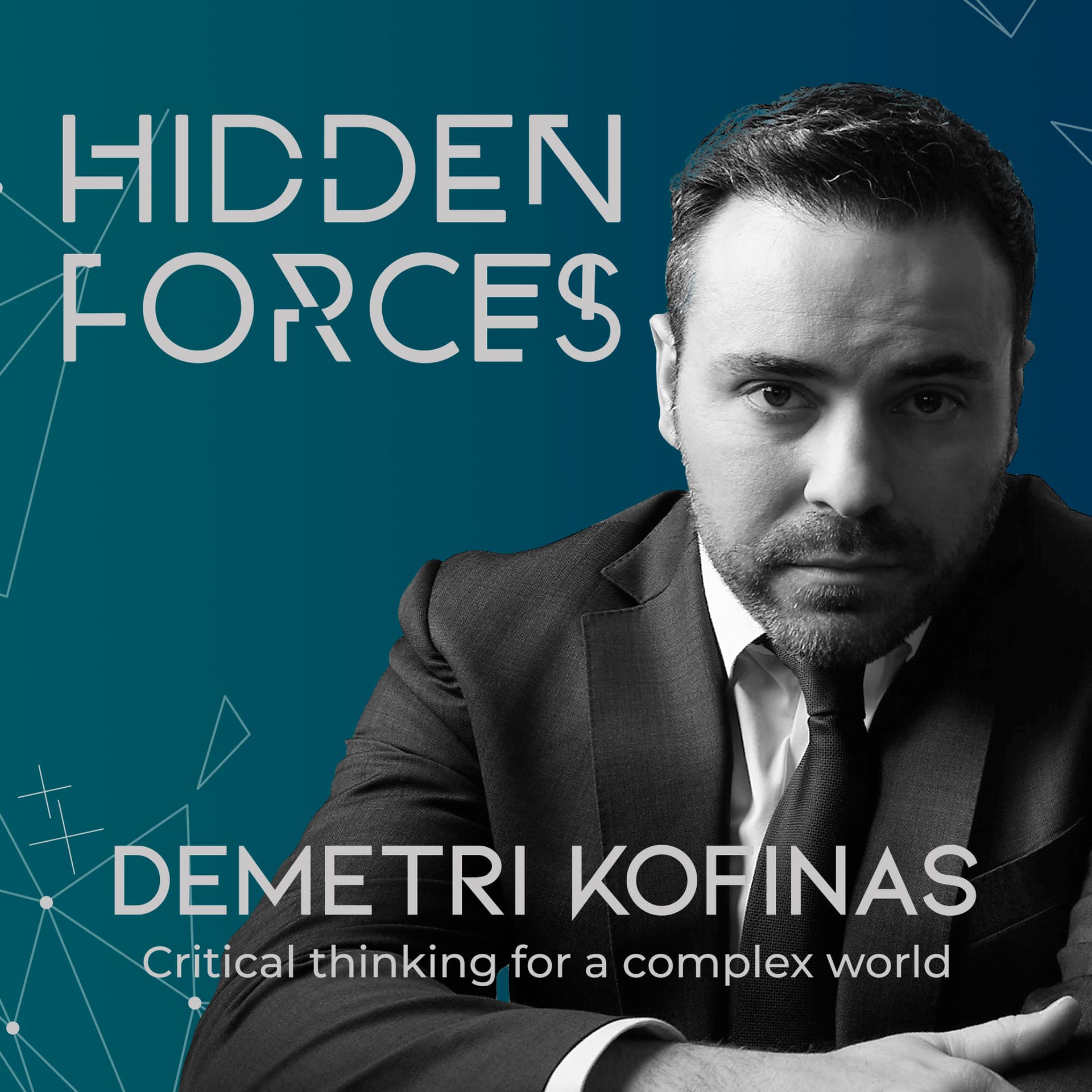
Automatic transcript. May contain errors.0:00Demetri Kofinas:What's up, everybody? My name is Demetri Kofinas, and you're listening to Hidden Forces, a podcast that inspires investors, entrepreneurs, and everyday citizens to challenge consensus narratives and learn how to think critically about the systems of power shaping our world. My guest on this episode of Hidden Forces is Tim Wu. Tim is a professor of law, science, and technology at Columbia Law School. He's the author of several influential books on the history and intersection of technology and power, and worked in the White House as special assistant to the president for technology and competition policy.
0:37Demetri Kofinas:He joins me today to put all of that experience to work in an incredibly important and timely conversation about his latest book, The Age of Extraction, which explores how the rise of platform power has become the defining economic event of our time, why it's responsible for much of the current dysfunction, from politics and media, to housing and healthcare, and what we can do to take back control of the internet and create an economy that works for everybody, not just those at the very top. He announced by the first hour of this conversation, discussing how platform power has become the central form of economic control in our era, why the internet went from being a free wheeling and optimistic ecosystem of entrepreneurship and creativity, to one whose business models of extraction dominated today, and how platforms have been weaponized against their users in order to capture and extract economic value rather than create it.
1:32Demetri Kofinas:The second hour is devoted to a discussion about the plethora of readily available solutions to our current predicament, like antitrust enforcement, line of business restrictions, utility rules and caps, mandated transparency of the platform's objective functions, and the need for alternative business models that don't treat human users like industrial farm animals to be milked and sheared until every exploitable moment of their attention has been harvested and exhausted. We discuss why the failure of democracy to address obvious economic problems makes the appeal of authoritarianism more attractive, examine the breakdown of healthcare delivery services resulting from platform extraction, and consider whether a publicly funded alternative to large social media platforms like Meta and X could serve the function of a digital public square by improving our public discourse rather than corrupting it.
2:26Demetri Kofinas:If you want access to all of this conversation, go to hiddenforces.io slash subscribe and join our premium feed, which you can listen to on your mobile device using your favorite podcast app, just like you're listening to this episode right now. If you want to join in on the conversation, and become a member of the Hidden Forces Genius Community, which includes Q &A calls with guests, discounted access to third-party research and analysis, and in-person events like our intimate dinners and weekend retreats. You can also do that on our subscriber page. And if you still have questions, feel free to send an email to info at hiddenforces.io.
3:05Demetri Kofinas:And I or someone from our team will get right back to you. And with that, please enjoy this incredibly important and timely conversation with my guest, Tim Wu.
3:20Demetri Kofinas:Tim Wu, welcome to Hidden Forces. Great to be here. Finally, Tim, I had to stalk you and hound you down for a decade. We met 10 years ago almost. And I remember I came up to you, I just started my podcast, actually it was about nine years ago, it was 2017. And I had already read the master switch and I don't think the attention merchants had come out yet. I think they came out a year later. And I remember coming up to you, and this was still a time where podcasts weren't really necessarily a serious medium. I mean, there were serious people doing podcasts, but really hit or miss. So who is this guy showing up at this conference?
3:57Demetri Kofinas:And he's saying, well, you come on my podcast. And I had so many conversations like that. And you kind of looked at me a bit askance. And I remember pressing the issue and then realizing that that was going to be a failing strategy because then that was a signal that I was desperate. So finally, after 10 years of establishing myself, I'm able to get you on the show and it's well worth it because you're out with a new book. The book is titled The Age of Extraction. And it feels like this is kind of, in some sense, it almost feels like a merger of the master switch and the attention merchants. Where does this book fit in, in terms of like the canon of stuff you've published in the past?
4:32Tim Wu:Yes, I appreciate that you've read the other books and have that perspective. I thought of it as the third in the trilogy. I have wanted through those books to try to chronicle the main moving pieces in the information industries over the last 150 years. Now, that's a pretty big mission. And obviously, it's not like a comprehensive history of every company of the last 150 years, but like the big moving picture. And I thought But the piece that was missing from attention merchants and from Master Switch was this puzzle of platform power and the ascendance of the platforms and how that came to be and where it goes from here.
5:14Tim Wu:So that's this, it's kind of a part three.
5:16Demetri Kofinas:So I just noticed this morning, because I actually, even though I have the physical books, oftentimes those are from my records and I read the PDFs because it's easier to highlight and stuff like that. I see that Karen Howe reviewed your book. She'd also been on the podcast. And I was going to observe that in fact, this feels like a book that falls in the category of a Karen Howe, of a Shoshana Zuboff, where it's, yes, technology features in the book, but it's not really a book about technology. Do you feel like that's a fair description of the construct in which the book falls?
5:46Tim Wu:Yes. In a sense, I feel that's like all my books. And I guess I say that partially based on my time in Silicon Valley, where I felt that, you know, there was always this internal narrative of Silicon Valley that nothing we do is like anything else that has ever happened in the universe. And we are, you know, not subject to the rules of gravity, you know, like the rules that have shaped companies and fortunes. And so I think that's right. I have always felt, I mean, Master Switch is sort of about how the internet revolution is not entirely different than the radio revolution and other film and the telephone, previous big revolutions.
6:33Tim Wu:And I think similarly, the platform power, in my view, is the most important form of economic power in our times, but also not something entirely new. Yeah.
6:47Demetri Kofinas:I'd actually put Tim O 'Reilly in that category also, who has also been on this podcast. aren't you the guy, speaking of Tim O 'Reilly, because Tim O 'Reilly came up with Web 2.0 as a catchphrase, weren't you the guy that came up with net neutrality? Wasn't that your term?
6:59Tim Wu:That was my term. Yeah, that was my term, almost by accident as a young person just publishing the right paper at the right time. I mean, all that stuff is like - Does it make you feel old? I think my daughters do more to make me feel old, but I guess so. I mean, it was back in Colorado at the conference where I first did the paper and I was like, wow, that's 20 years ago. I'm kind of like one of these aging bands that's still playing their hit song or something like that. Except for, frankly, I did move on at some point about 15 years ago.
7:31Demetri Kofinas:Yeah. Because I had a conversation with Douglas Rushkoff also recently. And I feel like all of you guys, and Karen too, because I feel some sympathy with this. We have a sense of what the internet was. And in the blink of an eye, what we remember the internet as, this kind of freewheeling, creative, open, permissive, experimental medium, has come to feel not just stale, but I was actually reflecting recently that just Twitter specifically feels like a prison yard that we all keep going back to over and over again because we can't seem to overcome the switching costs to move to a beautiful public park or a beautiful Italian piazza.
8:16Tim Wu:I mean, it's totally like, you ever see that movie, The Beach, where it's like some paradise that a bunch of people discover and things go off. I mean, part of this book, and this is like another reflection on how it relates to the other books, was an effort to write about my own kind of optimism and frankly, you know, Kool-Aid drinking in the 90s and early thousands. I mean, I was totally into this stuff. I mean, frankly, from the 80s on just to date myself, you know, I ran like a bulletin board system in the 80s and like logging in to, you know, other bullet boards, getting on the internet. I got the internet in the late 80s.
8:59Tim Wu:You know, it was blowing my mind. And if you found younger me and woke me up and said, what's going to save humanity? I would have been obviously the internet because it's going to do everything for everyone. So yeah, the big question in my book in a sense is what happened to the dream of the 90s and the idea everything was going to become great.
9:20Demetri Kofinas:Well, it seems to me, so maybe you should also tell our listeners what net neutrality was in principle at that time and distinguish between what it is in spirit. Because I feel like one of the key realizations that people seem to have missed about net neutrality is that the concept should have extended to the platform. The concept of the idea of net neutrality should not simply have been about the bits and the physical traffic across the network. And what has seemed to have occurred in the course of the last several decades and since you came up with that term is that the concern of centralization at the point of the infrastructure and the actual traffic, internet traffic became choked at the level of software with the platforms.
10:00Tim Wu:Yes, I think that's exactly right and an astute observation. So let me say, so net neutrality was the principle, frankly, that really began in the 70s that suggested that the internet infrastructure is essential infrastructure and it needs to treat all the traffic equally and not like discriminate based on, you know, the type of application or, you know, the identity of the sender. So what that meant in practice was very important for innovation and basically the initial freedom of the web. It meant that like, even though your stuff was going over, you know, the cable company's wires or their coax cable, you could still run video and not have the cable company be like, nope, I'm sorry.
10:47Tim Wu:Video is ours. Or even more, at the very beginning, it was all about the Bell monopoly and AT &T and people starting businesses that ran over their wires and preventing AT &T from saying, wait, you can't do that. That doesn't fit our business model or we don't agree with it or like that stuff that people won't like. So it was an essential guarantee of freedom. And, you know, to take your point about the platforms, the infrastructure was kind of obvious that they should pass stuff over their wires. the platforms have become essential and that's kind of the point of the book. I think we all rely on them and the idea they have just no rules whatsoever, how they treat stuff is my mind a little crazy.
11:27Demetri Kofinas:So we'll have a chance to talk about AT &T and the Bell system a bit later perhaps, as well as possibly IBM and how that is an example of the waxing and the waning of platform power. But I actually want to take a quote from your book that I really liked as a jumping off one for my next question. You write, quote, the transformation of the economy to one in which platform power has become central in tech and other industries show signs of being the signal economic event of the last half century. That seems like a pretty important observation. What do you mean by that?
11:59Tim Wu:So I think that power is a defining feature of human existence and our relationships with others. I think we're more familiar with political power expressed through government actions, but that economic power over the last 150 years has become equally important. And the reason I said that the rise of platform power may be the most important development over the last 50 years is I think the source of economic power has changed. If we go back, let's say 200 years ago, it was very clear to people like Adam Smith and and everyone writing in the era that land and agriculture was economic power. It was very clear.
12:44Tim Wu:What you can produce with land is economic power. And it's expressed in gold, but it comes from land. Over the 20th century, things changed, late 19th, early 20th century, and industrial power controls the means of production. Karl Marx's stuff, the stuff he was obsessed with, became obviously the dominant form of power. And if you think about like mid-century United States, you know, producing battleships and becoming the superpower, just as an example, that productive power clearly ruled the roost. And I think the last 50 years or so, and I got to give Bill Gates some credit, I guess, for pioneering this.
13:24Tim Wu:The tech firms in particular figured out that you could control even manufacturing almost everything by being the platform and controlling what happens in the essential bottlenecks of the infrastructural state. And so that is why I described the sort of self-awareness of the importance of platform power as the most important development in the last 50 years.
13:47Demetri Kofinas:So for people that are interested in learning a bit more about your example of Bill Gates, I encourage them to go listen to an episode I did with Brian McCullough years ago on the history of the internet. And we actually spent quite a bit of time discussing Bill Gates and the Windows operating system and that moment in the mid 90s where they had a chance to basically run away with the entire ecosystem and then the internet and Netscape and the browser got in the middle of it. So what are the economics exactly of platform power? How is it that platforms have become so powerful in the modern era and what is the source of their leverage?
14:25Tim Wu:Yeah. So a platform, your listeners probably roughly know what a platform, but I think maybe it's useful to define what a platform business is. It's a business that matches parties for transactional purposes. So any business that is in the business of putting buyers and sellers together, listeners and speakers, they are the essence, the ultimate intermediary, I guess you'd put it, for any economic transactions. So historically, most platforms were neutral and And in some ways, couldn't help being so. I mean, if you think of, I don't know, like Main Street as a platform, I mean, it does bring buyers and sellers together, stores.
15:09Tim Wu:They're not really able to cultivate or control what happens. It's a street. It's a dumb pipe. Let's put it that way. The economic power that has arisen over the last 40 years or so, 30 years or so, comes out of the ability to control what is catalyzed on the platform and to take money from both parties and other valuable assets in the process of doing so. And that is the basic business model of almost every one of the world's most wealthy companies at this point, at some level or another being the middleman to all the transactions.
15:52Demetri Kofinas:So let's dig into those a bit more. You actually identify four specific challenges in the book that platforms address. One of them is matching, which I think people can pretty much understand. Another one is the asymmetries of information and trust that they solve for. Another one is distributing economies of scale across a broad range of economic entities and agents, which we're kind of hinting at with respect to Main Street. I mean, I'm just thinking of a good example. You're downtown right now, even though you teach at Columbia. 8th Street, I used to go to NYU. 8th Street used to be a street where you would just go and all you would find is like shoe stores because it was just natural that shoe stores would conglomerate around other shoe stores.
16:29Demetri Kofinas:And then the customers would just go to that area and they would shop around and they would find what they want. And then the other one is flexible infrastructure that can consistently facilitate disruptive innovations. So basically like, public infrastructure is a good example, like highway systems and things like this. Can you walk me through how each of these fit together in this concept of the platform in more detail.
16:50Tim Wu:Yeah, thanks for that summary. And let me, I guess, preface this by saying, even though maybe you've spoken about it in alarming terms, platforms are extraordinarily important for economic growth and innovation and so forth. So to add a little more to what you said, so the fundamental function of a platform is matching. So that is bringing together transactional parties. And that's true of any platform in history. If you go back to ancient Greek Agora or something, the marketplaces in ancient Greece or in Rome, city squares, they play a function of being a place where people come together. The difference today is that the matchmaking capacities are much more sophisticated.
17:41Tim Wu:You have search engines, You have algorithmic and artificial intelligence matching. You have a lot more information, which is the second thing. So any kind of economic transaction relies on adequate information. Among other things, you want to know that the product you're buying is of reasonable quality. You don't want to feel you're getting fooled. And if you really don't trust a market, people don't buy. And one of the major things platforms do is provide all the kinds of information you need to actually buy things. In this case, probably the most successful example are the stock markets, which, you know, give people enough comfort that they're willing to buy, which basically a piece of paper that supposedly says you own part of a company.
18:23Tim Wu:There's a lot of steps that happen in that before people are willing to buy. And the fact that, you know, companies are forced to cough up so much information has played a huge role in those transactions. But it's true for almost everything. And I mean, think about your own buying. you know, have you ever not bought something because you're not sure about what's going on with it and then like read a whole bunch of reviews or, you know, testimonials or whatever online or in a marketplace and felt like, you know, maybe I can go with this. And I think that's a very important function. The third function that I discuss in the book, and I got to say, there's more than way of cutting this, but the third function is a little more subtle, but I think really important, which is the idea that a platform makes it possible for a much broader number of entities, and I mean here big, small, whatever, to be in the market.
19:20Tim Wu:So if you go back to ancient times, one of the things about a platform is it allowed small farmers who had agricultural surplus to bring them to market and sell. And in our time, what it allows is for companies that are not entirely integrated to sell and without buying their own distribution channel. It's kind of a leveler. And that is one of, I think, the original reasons that everyone was so excited about the internet was the idea that you didn't have to have a huge setup in your own distribution company and a record label to get your songs to people for musicians, for example. Small sellers could sell on eBay or Amazon.
19:58Tim Wu:So that's the idea that enables the small to be effective. And I think a really important one. And the last and final point about platforms, particularly well-designed neutral platforms, is that they can be future-proof, is that they can survive changes and in fact facilitate changes in technology. And this is a subtle point, but in the book, I discussed an example of a failure to be future-proof as a platform. And that's the French example of the Minitel. I don't know if everyone realizes this, but not unlike in the Monty Python movie. The French got there first and had a kind of a predecessor of the internet way before anyone else did.
20:40Tim Wu:But the problem is, is they made it specific to the technologies of the 90s and it never evolved. The best platforms evolve as the technology on top of them evolves. We mentioned Main Street as a kind of platform. You know, the stores on Main Street 100 years ago, maybe we're selling buggy wicks and maybe typewriters or whatever. And, you know, today the stores are selling things like cell phone repair and around us is a lot of cannabis stores opening up. Whatever it is, things change and the platform can adapt. And I think that's a very facilitative function. So you put these all together and you just have a giant pile of economic efficiencies, benefits that make platforms the central of any economy, and indeed the center of our economy.
21:26Tim Wu:And the question is, what happens with that power?
21:29Demetri Kofinas:So when I asked you earlier about the 90s, or I reflected on it in my conversations with people like Rushkoff and O 'Reilly and others, the subtext was, of course, what went wrong?
21:39Tim Wu:Yeah.
21:40Demetri Kofinas:When I reflect on that question, I oftentimes fall back on the date that sticks out in my mind is 2014. And I usually tell a story that combines ubiquitous connectivity through mobile and social media. You come down close to those dates, somewhere between 2012 and 2013. You actually give a specific date of June 11th, 2013 as the symbolic day when everything went wrong. Tell me your story. What happened on June 11th and how does that symbolic event speak to the sources of the problem and how we got here in your view?
22:12Tim Wu:Yeah, I think it's telling that we all agree that somewhere in the early 2010s, something went off the rails. And from my perspective, competition was supposed to be the thing that kept the internet limber and forced companies to stay good. That, however, was the day that Google bought Waze and managed to consummate the merger without any challenge from the antitrust authorities. Now, you know, there's this thing called a merger to monopoly, which is supposed to be illegal under the antitrust laws to companies combining to create a monopoly. And if you think about Google Maps and Waze, you know, they even back then were basically the only shows in town.
Read the full transcript
23:00Tim Wu:And I think Apple had some kind of product, but it wasn't highly used. And, you know, moving back a little bit, Waze, which originally was called Free Map Israel or something, had this kind of, I don't want to say new age, but very like Web 2.0 or maybe collective vision of how it was going to do mapping. It was all going to be about, you know, user contributions and it's like the people's map. And, you know, it's kind of like to be technical, like Linux to Unix, if that if that lands at all, you know, it's going to be totally different in how it was run. And it looked like it was going to be a real contest between, you know, Waze and Maps or maybe Waze would be bought by somebody to anchor some kind of alternative ecosystem.
23:45Tim Wu:But then one day Google just bought them. and you know so there are two things there number one like okay so now we're back to as opposed to like competitive you know ideas of the future and what's going to happen instead we have like old school john rockefeller techniques so you just buy your competitors that's number one and number two the fecklessness of government in this area was really extraordinary as i say in the book, I once found a staffer and asked what happened. This was an antitrust party of all places. And she said the boss had the following theory, which was that Google is what you use when you want to figure out where you are, and Waze is what you use when you want to figure out where you're going.
24:30Tim Wu:So they aren't actually competitors in her view. And that kind of intellectual bankruptcy captured the era and, to my mind, epitomized our failure to hold the companies to account and force them to compete with each other in a serious way.
24:45Demetri Kofinas:So this reminds me of that era of user-generated content, UGC. Yeah. And it wasn't just in things like Wikipedia or Maps. It was also true in content. When YouTube launched, it launched off the back of user-generated content. And for a period of time, there were many people, myself included, that thought that the future would be user-generated content. But what we found was actually, and this is not a failure of the marketplace, it just reflects consumer choice. It turns out people didn't want user-generated content as much as they wanted highly edited, gate-kept content. They wanted professionally published services, which I think, not to derail us, but maybe we'll have a chance to discuss this, which I think does speak to...
25:32Demetri Kofinas:It's like this interesting line that the platforms look to walk, which is that they're increasingly acting as editors or actually full-blown editors. I mean, they completely control. In fact, they make more editorial choices, I would argue, than the New York Times editorial board or any of the journalists at the New York Times. And yet they claim to be independent, objective, just service providers. They're not putting their thumbs on the scale. So actually, maybe you can speak to that a little bit because that seems to be one of the central challenges in thinking through this stuff. The Twitter file is another great example.
26:09Demetri Kofinas:There was all this outrage about how the government, understandably, that the government was involved. But the larger question was never addressed, which is that a handful of private actors are controlling all the distribution of information. And it's not just about suppression or censorship. It's also about amplification. It's about everything. So is there also, do you think, just fundamentally a lack of understanding by the public about just how captured our speech is?
26:36Tim Wu:Yes. I think you put your finger on this as well. So going back to the original vision, in the 90s, the vision was, well, in the 80s, it was like the Usenet chat. And then in the 90s, it's like the AOL chat room. These are all very dated references. But the basic idea is that the main platforms, I say that because when some of the laws were written in this area, the basic idea is you'd have these open and free discussion forums. And that was the idea of what the internet was. And it was all going to be about people spontaneously talking about what they wanted to talk about and so on and so forth.
27:13Tim Wu:And at some point, and I agree with you, and I think the 2010s is when it really became most serious. The major tech companies went from being, I guess, neutral platforms and became much more like media companies. But they did it in a different way, which is as opposed to like the New York Times does. I mean, the New York Times meets every day, you know, the editors and they decide, okay, what's going to be on the first page? And like, what are we going to run at all? The difference was, and I think you can speak to this too, that, well, first of all, it's like they have a million journalists.
27:57Tim Wu:But second of all, it's like, okay, what are we going to emphasize and de-emphasize? You know, what is even sticking with this platform model, what are we going to make sure people see? How much is that going to be tied to who they are? And so there's this way of taking control of what the message and the flavor of the platform is, yet without without being like a traditional editor. And I think that's what they became. They became the strange hybrid of a platform and a media company. And I agree with you, the takeover of that role really changed this whole idea of user-generated content.
28:36Demetri Kofinas:And further to the point, I'm reminded again, I'm just going to go with these things that just pop into my mind. I remember an interview, a joint interview that Bill Gates and Steve Jobs gave years ago. I don't remember who was interviewing them, but the conversation converged at some point around taste and Jobs' conceded observation that essentially Bill Gates and Windows just didn't have any taste. Microsoft didn't have any taste. And I feel like that's also true in this case, which is that at the end of the day, these platforms have no taste. They view the platforms and the content that's distributed through that as basically the conduit through which to stuff people with paid advertising and grow their revenues by matching advertisers with people that might potentially buy their crap.
29:21Demetri Kofinas:And that's basically what the whole thing has become. It's just become a way of selling ads and nothing else. Yeah.
29:27Tim Wu:I mean, I agree with that. I think you can go either in two directions. One, you are like the original idea and you truly are just an open internet. Maybe the closest to that right now is Reddit, I guess. I mean, I'm not saying Reddit doesn't sell ads, but it's kind of, I don't know how many subreddits they have, but a lot.
29:45Demetri Kofinas:But also selling ads as banner ads or whatever pop-ups is totally different than what these platforms are doing.
29:51Tim Wu:Yes. And then other than that, if you're going to curate, just in terms of having good taste, if you're going to curate, then maybe you want a fully curated product that at least has some dignity. But we're kind of stuck in the middle pretending to be a platform. But as you said, basically taking people's worst instincts and throwing the back at them and trying to get them like honed in on their worst fears. And this is the attention merchants, but basically feeding on the lowest human emotions of all kinds as a business model is like not been the greatest thing for either the internet or our civilization.
30:28Demetri Kofinas:So, you know, I'm sure that there are people out there, I've heard of these people. I actually don't know any of them personally that I think these platforms are great. They like the way they are. Those people might be happy addicts like Kurt Cobain or something, just careening towards their demise. But for those of us who feel like things have gotten worse, my question is, does it matter? I mean, does it matter that people's experience? And when I say, does it matter, I don't mean in a cosmic sense. I mean, from a consumer choice point of view, does it matter at the end of the day? Will there be consequences is first beginning just at the market level, like is there a tipping point where people just check out and the model no longer works?
31:08Demetri Kofinas:And then two, is there a point at which the public discontent grows so large that it becomes a whipping boy for politicians and then regulatory changes become inevitable?
31:17Tim Wu:I mean, I think it depends if we're talking about social media or platform power more generally. So maybe I'll... And you're talking about social media right now. You're right.
31:24Demetri Kofinas:I'm talking about social media and I would throw YouTube in there as well, but platform power extends to things like Amazon and stuff like that. So take that question however you like.
31:31Tim Wu:No, I mean, I'll talk about social media first. I mean, I think much of the damage has been done with social media and we should have, you know, it is a good example of where we just kind of let everything fly out on a belief, which many of us held that if you just sort of let chaos rule, something good will, which I sometimes think is the right answer. But frankly, I mean, this is the subject of attention merchants, a business model, as I said, that feeds on the deepest, darkest emotions that people have, feeds on our worst tendencies, tries to generate addiction, tries to feed, it just is not going to be good for civilization.
32:13Tim Wu:And, you know, we're in the United States, just sticking here. I mean, we're so divided, such terrible people say terrible things about each other. It's just hard to be proud of what we've become. I think the damage is done, you know, and I don't think it, hopefully it doesn't matter where you are politically or ideologically. I mean, you can't think this is what you think a good civilization looks like. So I think that damage is already done. In terms of, if I can turn to platform power, if you will let me go there. I mean, I think the subtle, but then increasingly obvious ways in which platforms dominate the economy and take more and more from every other industry and are copied by industries contributes to a different sort of problem.
33:00Tim Wu:So it's less about just having a failed civilized and more about economic inequality, anger about monopolization, a sense of unfairness, economic insecurity, which historically has tended to lead to a lot of instability in extreme versions, leads to revolutions and war. So I think we've marched pretty far down that path. It's not only the tech platforms. I think we have an economy that has centralized wealth in finance and tech, in particular, and made a lot of other people very resentful about that fact. And I think our politics reflects it. And as I say in the book, if you don't manage to start addressing those kinds of problems, the result, we've seen it in so many other countries, Russia, Germany, the result is increasingly unstable politics.
33:53Tim Wu:So that's a little bit going beyond like, I'm annoyed at Twitter and more into like, yeah.
33:59Demetri Kofinas:So actually, I do want to explore those things because not only do you go in depth with case studies like Amazon in the book, but also stuff like the healthcare system where we've seen all of these private equity rollups that have destroyed private practices that we've all experienced. I've written about this recently as well in some newsletters or housing. So we're going to get to that, but let me rage a bit more about social media as a content creator. Yeah, go for it. Because reading your book gave me cause to think about this a bit more deeply, And it sort of combines the forces of artificial intelligence into this conversation or merges them.
34:33Demetri Kofinas:So as a content creator, my time in this business, not making money for a long time, I wasn't making any money when I started my first blog in 2006, but this goes back two decades now, speaking of feeling old. And I remember that when I started, the same economics that held for content creation held for the broader software industry. It was the zero marginal cost economy. There was no additional cost to gaining additional readers. The cost was all up front in writing and publishing the information. And that has essentially been the model. And it's been coupled largely with advertising. On this show, I like to go to a subscriber model, but for the most part, it's been advertising.
35:17Demetri Kofinas:And even with subscription models, the same economics, some of those core economics, certainly on the cost side, hold. I feel increasingly like, because I've been seeing this recently with the adoption of large language models, that there's a tsunami of content heading toward me. And this isn't just true. At first, you would expect it to see this on the kind of low level crap content out there. But I even see this with folks who are very smart and are able to reproduce smart content by training LLMs on having their voice. So that there's stuff actually now that I might want to read that I don't even have time to read.
35:57Demetri Kofinas:And so I'm just curious if you've thought about this at all. In other words, this problem of just, there's just too much information so that even in theory, if all the information you exposed to was interesting, there would be so much of it that you experience a kind of attention paralysis. And I wonder if you think that there are implications for the business logic of the zero marginal cost economy leading to a kind of breakdown in a sense.
36:22Tim Wu:Yes. And by that, just let me be sure I understand what you're saying. Because you're saying the zero marginal cost of content creation, software creation, both of which are information, both of which can be replicated at almost zero cost.
36:35Demetri Kofinas:Right.
36:35Tim Wu:You're saying that non-human actors are better positioned to take advantage of that.
36:39Demetri Kofinas:So I'm saying two, thank you for asking for clarification. I'm saying two things. First of all, I absolutely believe that the non-human angle actually aligns really well with your Amazon case study. So let's take that for a second. Like in the Amazon case study, you explore how independent retailers selling on Amazon marketplace eventually got squeezed to death on fees. At first, they were able to make a viable living. It was a great model, but eventually they either got squeezed to death because the costs kept growing, all these hidden fees, like when you're checking out at a hotel. Or Amazon launched independent brands, their own brands that competed directly with these and put them out of business.
37:13Demetri Kofinas:Dude, this is the model for the vast majority of influencers on these central platforms. AI is going to push all these influencers out of business. Why? Again, because most of the content creators, interestingly enough, evolved basically to align their content with the objective function of the platform. And they just became basically conduits for ads. And so those people are going to be replaced right away. So I think actually that is one interesting observation, which is it'd be the mass levels of unemployment in the influencer economy, which I'm not pulling out any small violins for those people.
37:47Demetri Kofinas:But then the other observation I was trying to make, and thank you for asking for clarification, is that I know smart people. A good example is a friend of mine who recently started sending me these 20 page papers of his thoughts that were produced by AI by him having spent all this time training in on the corpus of tweets and other things that he's published. And he was sending these to me and they looked very interesting and I wanted to read them. And even if we assumed that they were done perfectly and they were all very interesting, I just didn't have time. I was so overwhelmed by the amount of content.
38:17Demetri Kofinas:And so what I was basically getting as that up until now, the economics of content creation have really been about how do you just get more stuff out there because the platform's rewarded you. That's certainly the case in podcasting. The fact that we publish once a week is something that's actually a negative for this show because we get down rank on visibility. But at what point if it becomes so easy to produce content, and even if we could theoretically assume that all that content was great, where does it all break down? Because at the end of the day, individual human beings have to be in a position to absorb it and their minds can only take in so much information.
38:51Demetri Kofinas:So it seems like there's a breaking point here somehow.
38:53Tim Wu:No, I agree. I mean, I think that one of the questions that I think it will animate the next 20 years are like, what are the real scarcities in our time? I think economics and all of human behavior is driven by scarcity. And sorry to get really big picture, but if you're talking 200 years ago, people don't have enough food to eat or whatever. And that's like the competition for material resources is kind of the primary one. And human labor and the ability to manufacture things, another giant scarcity. And when you innovate around, you invent things, you eliminate other scarcities, it all comes down to time.
39:43Tim Wu:This is just like physics. Like it's really hard. The fact is 24 hours is what we got. You know, it doesn't matter who you are, rich or poor, you know, the week, the day does not expand. I guess you can do without some sleep, but there's only so much of that you can do. And so the limiting factor in almost everything with humans as the, you know, assuming we are still the economic units we're talking about is time. And in that sense, the quality of the content being produced, if a human has to absorb it or read it, that is becoming everything. And frankly, I think the platforms understood this well 10 years ago and have tried everything they can to capture the sort of last resource, which is time.
40:30Tim Wu:And like, I mean, how much time do you spend on the major platforms versus other entities? companies, that's, we can tell where the future lies. Now, to their credit, they're like one of the few companies that really managed to grab some time in our era. And that shows you where
40:47Demetri Kofinas:the competition really is. So I love this. What a great transition. These platforms optimize for engagement and also time spent on platform. And I don't know if you directly connect this observation of the book, but you do talk about economies of scale tipping into diseconomies of scale. And that's where monopoly power becomes so important because now there's no more incremental profit to be gained by expanding your product offering or increasing quality. At this point, you're basically using coercion to extract. And again, the name of your book is The Age of Extraction, to extract profits from your users, and in this case, the internet, who you treat like cattle.
41:29Demetri Kofinas:And it seems to me that we may be reaching a tipping point where the juice is no longer worth the squeeze, or rather that the users of these platforms find these experiences so awful that they independently begin to drop off and no longer voluntarily participate in the marketplace because the incentives are so broken. Does that seem like a plausible hypothesis to you?
41:51Tim Wu:I mean, it is plausible if I were like betting on AI as, you know, the successor to the tech platforms. And I think one of the greatest questions of our time is whether AI fortifies the platform model or challenges and maybe destroys it. If I were betting on AI, it would be that no one's going to spend time on platforms anymore because of the sheer magnitude of junk there. And what they'll want is an AI to find them the stuff they want on the platform. Now, the weird part about that is, you know, the platforms rely on, you were saying, on user-generated content or people being active on them. And so if that's what AIs are harvesting, somehow the model is going to collapse.
42:43Tim Wu:In fact, there's literature called model collapse on just this problem. But I think it is a clear and present danger in the book. And as you've sort of described, I see their business model over the last seven years, maybe 10 years has having evolved away from trying to sort of offer anything like a product and more a model, not unlike a casino, where the whole idea is you just keep people there. You know, you know, time is the most precious resource. And you know, the more people are on your platform, you'll get something off them, whether it's assets, whether it's data, whether it's advertising revenue, whether it's fee revenue, you just want to keep people there and who cares what they're doing.
43:27Tim Wu:And, you know, for a long time, like reading other people's ideas or looking at other people's pictures, I mean, that's been a pretty good model buying things on a giant marketplace. But I think they think the platforms think it's vulnerable. I think the heavy investments in things like sports or movie studios shows that, you know, in a sense, it's almost like a casino where they want to have restaurants where people go and hang out for a while or movie theaters. Like there's a sense you got to do more to keep people on the platforms. But this is a slightly meandering. But I think that is the game right now.
44:04Tim Wu:Now, who has the most loyalty of the most people? And that's obviously a number to be significant and is measured in hundreds of millions of people. And that has become the contest for economic supremacy in our time.
44:18Demetri Kofinas:Just a quick observation, then I'm going to move us to the second hour. I'm pretty sure you talk about B.F. Skinner in the book, because so many of these behavioral algorithms treat humans in this basic scheme of stimulus response. And there have been subsequent research studies that I've read about, one of which comes to mind where they put electrodes in the mouse's brain and basically whenever it hit a certain switch, it released dopamine and the things just hit the switch until they die. And it feels like we've set up a model where it's so extractive that it's creating people who are less productive, less able to meaningfully contribute to a human economy.
44:56Demetri Kofinas:And so it cannibalize itself. It tips the very resource that it depends on into ecological collapse. And it feels to me like one way or the other, whether it's the business model breaking down or the internet platform experience itself becoming so unlivable that people voluntarily choose to drop off or reject the program, that's something we'll have to change. And so what I'm very interested in speaking with you about in the second hour, Tim, is what comes next, both from a public policy and marketplace innovation standpoint, what can we expect to see in the coming years? What are some of the very simple but powerful innovations that could fundamentally disrupt and improve this broken system?
45:39Demetri Kofinas:And how can some of these changes apply not just to the technological platforms that we've spent quite a bit of time talking about so far today, but also the platform model in general in places like, for example, healthcare and housing, which you also explore in the book. For anyone new to the program, Hidden Forces is listener supported. We don't accept advertisers or commercial sponsors. The entire show is funded from top to bottom by listeners like you. If you want access to the second hour of today's conversation with Tim Wu, head over to hiddenforces.io slash subscribe and sign up to one of our three content tiers.
46:14Demetri Kofinas:All subscribers gain access to our premium feed, which you can use to listen to the rest of today's conversation on your mobile device using your favorite podcast app, just like you're listening to this episode right now. Tim, stick around. We're going to move the rest of our conversation onto the premium feed. If you want to listen in on the rest of today's conversation, head over to hiddenforces.io slash subscribe and join our premium feed. If you want to join in on the conversation and become a member of the Hidden Forces Genius community, You can also do that through our subscriber page. Today's episode was produced by me and edited by Stylianos Nicolaou.
46:53Demetri Kofinas:For more episodes, you can check out our website at hiddenforces.io. You can follow me on Twitter at Kofinas, and you can email me at info at hiddenforces.io. As always, thanks for listening. We'll see you next time.
From the publisher
In Episode 463 of Hidden Forces, Demetri Kofinas speaks with media and technology historian Tim Wu about how the rise of platform power has become the defining economic event of our time, why it's responsible for much of the current dysfunction (from politics and media to housing and healthcare), and what we can do about it.
Wu and Kofinas spend the first hour of their conversation discussing how platform power has become the central form of economic control in our era, why the Internet went from being a free-wheeling and optimistic ecosystem of entrepreneurship and creativity to one whose business models of extraction dominate it today, and how platforms have been weaponized against their users in order to capture and extract economic value rather than create it.
The second hour is devoted to a discussion about the plethora of readily available solutions to our current predicament, like antitrust enforcement, "line of business" restrictions, utility rules and caps, mandated transparency of platform objective functions, and the need for alternative business models that don't treat human users like industrial farm animals to be milked and sheared until every exploitable moment of their attention has been harvested and exhausted.
They discuss why the failure of democracy to address obvious economic problems makes the appeal of authoritarianism more attractive, examine the breakdown of healthcare delivery services resulting from platform extraction, and consider whether a publicly funded alternative to large social media platforms like Meta and X could serve the function of a digital public square by improving our public discourse rather than corrupting it.
Subscribe to our premium content—including our premium feed, episode transcripts, and Intelligence Reports—by visiting HiddenForces.io/subscribe.
If you'd like to join the conversation and become a member of the Hidden Forces Genius community—with benefits like Q&A calls with guests, exclusive research and analysis, in-person events, and dinners—you can also sign up on our subscriber page at HiddenForces.io/subscribe.
If you enjoyed today's episode of Hidden Forces, please support the show by:
-
Subscribing on Apple Podcasts, YouTube, Spotify, Stitcher, SoundCloud, CastBox, or via our RSS Feed
-
Writing us a review on Apple Podcasts & Spotify
-
Join our mailing list at https://hiddenforces.io/newsletter/
Producer & Host: Demetri Kofinas
Editor & Engineer: Stylianos Nicolaou
Subscribe and support the podcast at https://hiddenforces.io.
Join the conversation on Facebook, Instagram, and Twitter at @hiddenforcespod
Follow Demetri on Twitter at @Kofinas
Episode Recorded on 02/09/2026