In short
Kamran Bahari argues that Trump’s announced 20-point Middle East “peace plan” and a Gaza ceasefire are the start of a new regional security order built on regional “burden sharing,” after two years of escalating Israel-Iran conflict and the weakening/rollback of Iran’s proxy network.
Guest backgrounds
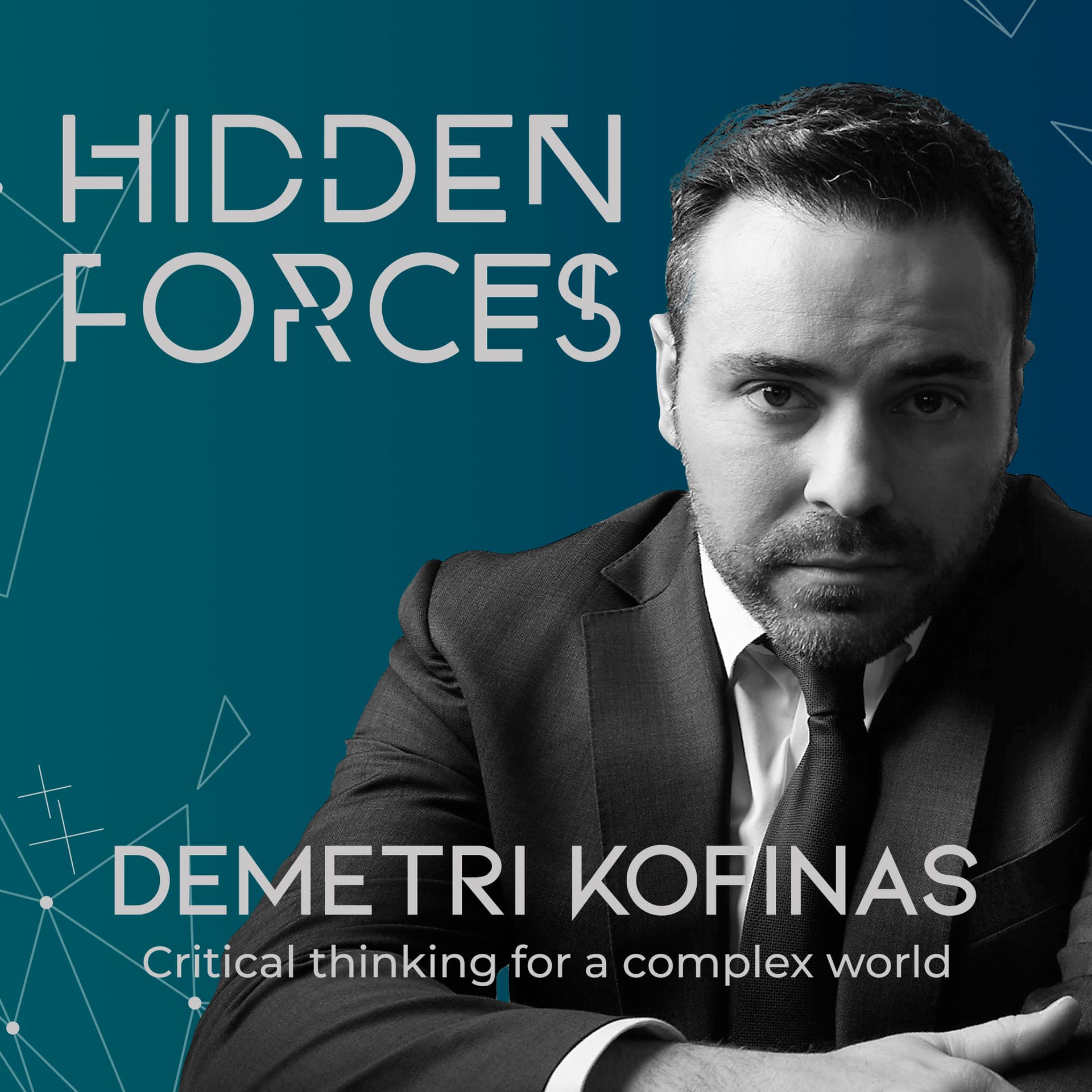
Kamran Bahari is a geopolitical analyst and forecaster; senior director at the New Lines Institute for Strategy and Policy. He previously served at the US State Department and consulted for the World Bank.
Key claims
- Hamas’ Oct 7 attacks derailed a Saudi-Israel normalization track and were intended to prevent the region from becoming “strategically inert.”
- Israel’s campaign against Hezbollah (including pager/walkie-talkie attacks) triggered a chain reaction: Hezbollah degradation, Assad’s collapse, and Iran’s reduced influence in the Levant.
- Iran’s “paper tiger” conventional weakness was masked by real proxy capabilities; once those were degraded, Iran became more risk-averse and more likely to seek understandings.
- The US/Israel strikes on Iran’s nuclear program (including later strikes on Fordow and Natanz) had both physical and psychological effects, complicating any Iranian nuclear testing.
Notable examples
- Israel striking the Iranian embassy in Damascus; Iran’s first direct missile/drone barrage on Israel.
- Israel’s strikes on Hezbollah leadership; Nasrallah killed; Assad regime collapse in December.
- US involvement in taking out Iran’s nuclear facilities during a 12-day Israel-Iran war.
- Israel’s one-off airstrike on Qatar targeting Hamas political leadership, followed by Netanyahu’s apology call from the White House.
- Proposed Arab-Muslim stabilization force for Gaza (Egypt leading; troop contributions including Azerbaijan, Pakistan, Indonesia mentioned) coordinating with the IDF and handling DDR/disarmament/reintegration; long Gulf-funded reconstruction and expectations for a Palestinian political entity within a decade.
Written by AI. May contain mistakes. Listen to the episode to check what was said.
Chapters
Tap a time to open that second in VOContext of Middle East Transformation
0:45 to 3:10
Discussion on the geopolitical dynamics in the Middle East, especially Israel's position.
“and how Hamas' attacks could serve as a catalyst for the remaking of the modern Middle East.”
Hamas Attacks and Regional Repercussions
3:10 to 8:35
Exploration of the implications of Hamas' attacks on Israel and subsequent military actions.
“The second hour of today's conversation was originally made available to Hidden Forces premium subscribers only.”
Shift in U.S. Policy and Regional Power Dynamics
8:35 to 14:00
Analysis of the U.S. strategy shift and the evolving security architecture in the Middle East.
“So what came from that is obviously this was the largest, if you will, assault, terrorist assault on Israel in history.”
Collapse of the Assad Regime and Regional Implications
14:00 to 16:41
Learn how the fall of the Assad regime reshaped Middle Eastern geopolitics.
“against the regime, because they're looking at this as a historic opportunity.”
The Attack on Qatar and Its Diplomatic Fallout
16:41 to 18:54
Understand the significance of Israel's attack on Hamas leaders in Qatar.
“So I want to actually dig into some of the things you said there, some of which I'd totally forgotten about.”
The 20-Point Plan and Regional Cooperation
18:54 to 22:47
Explore the implications of the 20-point plan on Middle Eastern stability.
“So what was necessary was some sort of a concession from Israel.”
Iran's Nuclear Capabilities and Regional Security
22:47 to 28:00
Delve into the effects of recent military actions on Iran's nuclear ambitions.
“IDF begins to withdraw from large parts of Gaza and as Hamas stands down.”
Iran's Strategic Calculus Post-Conflict
28:00 to 30:25
Explore how Iran's internal and external conflicts have reshaped its strategic decisions post-war.
“What it did is it had a psychological effect on the regime, that even if you have facilities that are not known to the world, do you really want to take the chance?”
Evolution of Iran's Political Landscape
30:25 to 33:59
Understand the shift from theocracy to military rule in Iran and its implications.
“One of the things that's fascinating is what's happened to Iran.”
Impact of Israeli Actions on Iranian Power
33:59 to 36:33
Analyze how Israeli military actions have affected Iran's regional power dynamics.
“In other words, you don't wait for the Supreme Leader to physically die and then move, appoint a successor.”
Show all 36 chapters
Iran: Paper Tiger or Real Threat?
36:33 to 41:10
Debate whether Iran's military capabilities were overstated and how their true power has been revealed.
“you go after Iran directly, Iran has a gun pointed to your head called Hezbollah.”
New Realities in Middle Eastern Politics
41:10 to 42:00
Examine the shift in risk tolerance among regional players and its impact on future conflicts.
“It seems that risk tolerances in general have changed and in so doing established new realities.”
The Impact of October 7th on Regional Stability
42:00 to 44:16
Exploring whether Israel would have been better off without the October 7th attacks and the implications for regional relations.
“Would the Israelis have been better off or would the Islamic Republic, Hamas, Hezbollah always have been a thorn in the side of regional stability and would have inevitably needed to have been dealt with?”
Challenges of the Abraham Accords Post-Conflict
44:16 to 46:54
Discussing the complexities and the potential costs for Israel in pursuing the Abraham Accords after the October 7th conflict.
“And so this entire architecture is there.”
Shifting Global Sentiments Towards Israel
46:54 to 49:54
Analyzing how changing global perceptions and support for Palestine affect Israel's political landscape.
“And that's exactly what has happened, is that you have emerged as the preeminent military power capable of projecting force well beyond your borders, you being Israel.”
The Feasibility of a Two-State Solution
49:54 to 52:53
Examining the current Israeli sentiment on the two-state solution and the implications of ongoing conflicts.
“like Tom Friedman in the New York Times talk about this endlessly.”
Israeli Attitudes Towards Palestinians Post-Conflict
52:53 to 56:00
Discussing the varying opinions among Israelis regarding Palestinians and the potential for ethnic cleansing in the aftermath of violence.
“And so this force will be working with the IDF.”
The Challenges of Military Rule in Gaza
56:00 to 1:00:42
Explores the difficulties and implications of imposing military rule in Gaza, including political rifts and humanitarian concerns.
“the Palestinians and claim Gaza for themselves and settle it and populate it.”
Debating the Future of the Middle East
1:00:42 to 1:02:32
Discusses the potential new security order in the Middle East and America's role in shaping the future dynamics.
“the new stable order can develop there, led by countries that are, if not American allies, certainly amenable to American interests and to American power.”
Connecting with the Premium Feed
1:02:32 to 1:03:04
Encourages listeners to connect with the premium podcast feed for automatic episode downloads.
“For everyone listening, please make sure you've connected the premium feed to your favorite podcast application, so the episodes are downloaded automatically to your phone whenever we publish.”
Delving Deeper into Palestinian Statehood
1:03:04 to 1:10:00
Wraps up discussions on Palestinian statehood, the humanitarian crisis in Gaza, and the complexities of peace negotiations.
“Let's see which one of these topics that I mentioned that I want to tackle first.”
The Path to a Palestinian Entity
1:10:00 to 1:11:17
Discussion on the potential establishment of a Palestinian entity and its complexities.
“Could be fully sovereign, could be autonomous, semi-autonomous, those are details.”
U.S. Foreign Policy Recalibration
1:11:17 to 1:13:43
Analysis of the U.S.'s changing role and responsibilities in global politics.
“It's going to be something people aren't just yet talking about it, and naturally, because they don't know what it would look like.”
The Clash of Political Expectations
1:13:43 to 1:15:53
Exploration of domestic political imperatives driving U.S. foreign policy decisions.
“America First is just the slogan, is just the way in which this administration and the Republican Party has articulated its vision.”
Trump's Consequential Leadership
1:15:53 to 1:17:24
Discussion on Trump's impact on U.S. foreign policy and his political acumen.
“And from an American point of view, we didn't sign up for this forever.”
Turkey's Strategic Positioning
1:17:24 to 1:20:04
Examination of Turkey's advantageous position in a multipolar world.
“You said something along the lines of, wasn't it you that said something like that Trump will be seen as one of the most successful presidents of the last, I don't know how many decades or so?”
Opportunities and Challenges for Turkey
1:20:04 to 1:24:03
Discussion on Turkey's potential benefits and economic challenges in the changing geopolitical landscape.
“It's got, among countries in the world today, which have all sorts of bad demographics, Turkey is a rare exception.”
Turkey's Economic Challenges and Regional Strategy
1:24:03 to 1:26:27
Explore Turkey's economic struggles and its strategic partnerships in the Middle East.
“So there is opportunity all around Turkey, but Turkey's economy has a long way to go.”
Political Constraints Facing Turkey
1:26:27 to 1:27:32
Discuss the internal and external political constraints on Turkey's leadership and ambitions.
“Some constraints are internal, as I mentioned, economic and financial.”
Kurdish Aspirations and Turkey's Response
1:27:32 to 1:28:59
Delve into the Kurdish quest for autonomy and Turkey's stance on this issue.
“They also have to sort out this issue with the Kurds, and it'll have to be sorted out, not just at home, but in Syria and of course, Iraq, because this is sort of that Venn diagram of Kurdish majority areas.”
The Rise of Anti-Semitic Sentiments
1:28:59 to 1:31:39
Analyze the growing anti-Semitic sentiments in American political discourse.
“I think that the Turks have sort of basically walked away from that strategy.”
Social Media's Role in Political Divisions
1:31:39 to 1:34:28
Examine how social media influences political narratives and divides.
“And it's hard to suss out who sort of is a good faith actor on this front and who isn't, because a lot of it is also opportunism.”
Infotainment and Its Impact on Public Discourse
1:34:28 to 1:38:01
Consider the implications of infotainment on understanding complex issues.
“And that's because both sides are experiencing totally different realities with totally different contexts in which they're getting information.”
Understanding the Information Challenge
1:38:01 to 1:40:50
Explore the struggle of navigating today's polarized information landscape and the need for empathetic analysis.
“I mean, even if you look at academia, I mean, it's very polarized.”
The Role of Meaningful Conversations
1:40:51 to 1:42:52
Discuss how podcasts can serve as sanctuaries for thoughtful dialogue amidst a fast-paced media environment.
“And at that very small scale, we're trying to make a difference, trying to teach tradecraft.”
Connecting with Kamran Bokhari
1:42:53 to 1:43:50
Kamran shares his social media presence and writing contributions, inviting listeners to follow his work.
“So on that note, Kamran, this was great.”
Transcript
Automatic transcript. May contain errors.0:00Demetri Kofinas:What's up, everybody? My name is Demetri Kofinas, and you're listening to Hidden Forces, a podcast that inspires investors, entrepreneurs, and everyday citizens that challenge consensus narratives and learn how to think critically about the systems of power shaping our world. My guest in this episode of Hidden Forces is geopolitical analyst and forecaster, Kamran Bahari. Kamran is the senior director at the New Lines Institute for Strategy and Policy, and has served at the US State Department and as a senior consultant with the World Bank. He first came on this podcast in the days after the October 7th attacks to help us understand the wider war taking place between the US, Israel, and Iran at a time when few were talking about it, and how Hamas' attacks could serve as a catalyst for the remaking of the modern Middle East.
0:51Demetri Kofinas:In his subsequent appearances, he has provided us with important context for understanding U.S., Israeli, and Iranian strategic aims and limitations, and the interests and constraints of other states in the region, including Saudi Arabia, Syria, and Turkey. For all intents and purposes, Israel has won its war against the Islamic Republic of Iran, having decimated both its conventional and unconventional forces and revealed it to its proxies, affiliates, and supporters in the region, and even to its own people, as a weak and tottering power. With the initiation of the Trump administration's recently announced 20-point peace plan and the cessation of hostilities in the Gaza Strip, we may be seeing the beginning of a new security order taking shape in the Middle East, one that relies more on regional stakeholders, allowing the United States to reduce its direct exposure and the commitment of U.S.
1:43Demetri Kofinas:forces, while still maintaining influence over the region's politics. Kamar and I spend the first hour of our conversation today recapping the Middle East's transformation over the last two years. We revisit Israel's systematic campaign against Hezbollah's leadership, the subsequent collapse of the Assad regime, and the consequences of U.S. strategic strikes attacks on Iran's nuclear facilities. We also discussed the diplomatic fallout of Israel's most recent attacks in Qatar, Prime Minister Netanyahu's subsequent apology call from the White House, and Washington's push for an international stabilization force in Gaza, led by regional stakeholders.
2:19Demetri Kofinas:The second hour turns to what a new regional security architecture could look like and how U.S. strategy is shifting from direct management to burden sharing among regional powers like Turkey, Saudi Arabia, and Israel. We then explore the practical consequences of this new security arrangement for Gaza, including a discussion about an Arab-Muslim stabilization force, governance over Palestinian territories, and a long reconstruction financed by Gulf international donors, while level-setting expectations for the constitution of an independent Palestinian political entity over the next decade. We assess which country most stands to gain from Iran's retreat and the decimation of its proxies, and close with a frank discussion about America's polarized media ecosystem and the strong anti-Israeli and anti-Semitic sentiments being expressed on both the American left and right.
3:10Demetri Kofinas:The second hour of today's conversation was originally made available to Hidden Forces premium subscribers only. If you want access to the transcripts and intelligence reports for this and other episodes, which include summary sections with key takeaways, ways, you can access those by subscribing to our super nerd tier at hiddenforces.io slash subscribe. If you want to join in on the conversation and become a member of the Hidden Forces Genius Community, which includes Q &A calls with guests, discounted access to third-party research and analysis, and in-person events like our intimate dinners and weekend retreats, you can also do that on our subscriber page.
3:47Demetri Kofinas:And if you still have questions, feel free to send an email to info at hiddenforces.io, and I or someone from our team will get right back to you. And with that, please enjoy this timely and important conversation with my guest, Kamran Bahari.
4:08Demetri Kofinas:Kamran Bahari, welcome back to Hidden Forces. Thanks so much, Dimitri. It's great to be back. It's always a pleasure to be with you on the show. It's great having you on, Kamran. We do these conversations every so often. We stay in touch all the time. You and I text now. I'd say we've become friends over the years. And so the WhatsApp channel is always open. I always hit you up when I have questions, especially as they relate to the Middle East, but not only to the Middle East. But most of today's conversation is going to have to do with the Middle East, prompted by the recent initiated peace discussions between Israel and and the Arab neighbors and part of this coalition to try to stabilize the situation in Gaza and maybe develop a new security order in the Middle East.
4:53Demetri Kofinas:You were first on this podcast two years ago. In fact, it was, I believe it was October 13th that we recorded an episode, less than a week after the October 7th attacks, and we released it immediately. So it was about a week after the attacks that we released the episode. and everyone was understandably at that time focused on the attacks in Israel by Hamas and expected Israeli appraisals and countermeasures. And so the focus was really the Israeli-Palestinian conflict, which has been going on for decades, as you know. But you told a very different story in that episode, one that began and ended with Iran.
5:30Demetri Kofinas:And this is a narrative arc that we followed through multiple subsequent appearances of yours on the podcast as Israel has relentlessly prosecuted its war against Iran, its proxies, and its affiliates across the Middle East and inside Iran's own borders. Before we get into today's conversation about the ongoing peace negotiations and this very important, I think, larger frame of a potential new security order in the Middle East and what that means for US policy in the region, how it fits into the Trump doctrine of becoming more of an offshore balancer than actually being directly involved, whether it's the NATO theater, whether it's Asia, whether it's the Middle East, I'd love to do a recap of the key points or key moments in this conflict and how the region has been transformed over the last two years.
6:14Demetri Kofinas:Maybe the best opening question to ask you is, can you just remind us? Because even I, we were talking about this earlier, even I have forgotten just how much things have changed in the last year. Where did things stand in the Middle East, specifically with respect to Israel's place in it on October 6th. Great starting point, Dimitri. And look, it simply put, the Middle East on October 6th was a very different region than what it is today, than what it became over the course of the past two years. What we had was the big event or the main event or the main driver at the time were the negotiations between Saudi Arabia and Israel.
7:01Both Crown Prince Mohammed bin Salman and Israeli Prime Minister Benjamin Netanyahu gave media interviews, I would say like a couple of weeks before the attacks on October 7th, saying that we're very close to reaching an agreement, a normalization agreement, in keeping with the framework that the Trump administration 1.0 had laid out in the form of the Abraham Accords. It was one thing for the United Arab Emirates, Bahrain, Morocco, and Sudan to join the Abraham Accords. But the real prize was getting Saudi Arabia to do that. And we were moving towards that. And there was this idea that I think the stumbling block was, and if I'm paraphrasing the crown prince accurately, is that he said he needed something for the Palestinians from the Israeli prime minister.
7:58And then that was sort of the level of conversation. That was sort of where the discussion was. Obviously, everything got torpedoed with the attacks. And as I said at the time, when I first came on your show two years ago, this was done purposefully by Hamas because if it didn't, then it would become strategically inert, if you will, for a lack of better term. Likewise, the entire agenda of Iran for the region would have been hit by a big blow. So it was imperative that they, from their point of view, that they derail this process and they successfully did. So what came from that is obviously this was the largest, if you will, assault, terrorist assault on Israel in history.
8:49250 people abducted, some 1 ,200 dead. I mean, the scale and the size of the attack and the MO used was nothing like what we've seen before. So Israel responded in a very, very aggressive manner. And so you have that. And I would say by the time 2023 ended, the story had kind of started to shift to, okay, Hamas did the attack, but then you have thousands of Palestinians getting killed. And that created an international uproar or began to create an international uproar. And as months rolled on, as 2024 moved along, we had that death toll increase. And this was huge pressure on the then Biden administration to try and get a ceasefire.
9:42There was some ceasefire, and I don't recall the exact dates. I would say somewhere in March, roughly, there was a temporary ceasefire in exchange for release of some of the hostages. And then that ceasefire broke down. And by the time, if you will, spring rolled on, actually moved beyond spring into the summer, the war had become much more wider. And what's interesting is that the media and everybody else who was talking about it kept saying, hey, something needs to be done about this conflict in Gaza because it threatens to spill into a regional war. People were saying that, not realizing that we had a regional war going on.
10:27By April, Israel had struck the Iranian embassy in Damascus, where several top Islamic Revolutionary Guards Corps commanders, regional commanders for Syria and the Levant, were having a meeting and they were killed. And so that then prompted the first ever direct missile drone barrage on the part of Iran against Israel. That was the first time Iran directly assaulted. And we entered a new paradigm. The whole idea of the proxies, that Iran would act by proxy and not get itself directly involved militarily in a conventional kinetic sense, we left that world behind. And so you see then this escalation.
11:13Now, meanwhile, Israel also saw that there is a coordinated attempt on the part of Iran. So October 7, you have the Hamas attack. October 8, you have Hezbollah begin to fire missiles on northern Israel. And it led to several thousand, tens of thousands of people depopulating the northern areas in Israel. And that was an unacceptable military situation for Israel. So Israel had to go after Hezbollah while it was still going after Hamas. So the war was already widening. And then within a few weeks, I'm going to guess, I'm going to say by November, early November of 2023, you had the Houthis start to strike or interdict international shipping in the Red Sea in response or in solidarity with Hamas and the Palestinian people.
12:05So you have a multi-front war picking up, and then you have Israel and the IDF conducting strikes in Syria. And if I'm not wrong, and if I recall correctly, there were a few strikes in Iraq as well on pro-Iranian Shiite militias there. But we saw that now the war became direct. And I think, if I recall correctly, by the summer, we had a situation where Israel had penetrated the entire network of the top leadership of Hezbollah. We had the pager walkie-talkie attacks, and that really rattled Hezbollah. And then there were successive waves of airstrikes on multiple levels of senior military and political leadership.
12:55By the fall, the top leader of Hezbollah, Hassan Nasrallah, who led the group since the 90s, he was killed in an Israeli airstrike along with others, his successor as well. And so this war is expanding. And then, of course, Iran sends another barrage of round two of that airstrike or the missile and drone barrage against Israel. When Hezbollah was falling, I mean, I remember writing something, I say, maybe in May or June, I wrote a piece saying that if Hezbollah is weakening, and it was becoming clear that they were on the defensive now, they were no longer on the offensive. Then I said that, well, this has implications for the Assad regime.
13:42And I predicted, I think it was again, May or June, I wrote in a piece that, hey, look, if Hezbollah is forced to look inward, he cannot support the Assad regime. And what will happen is the rebels, the Sunni rebels against the Syrian regime, who are ensconced in the northwestern province of Idlib, backed by Turkey, would begin to move against the regime, because they're looking at this as a historic opportunity. And lo and behold, that's exactly what happened after Nasrallah's death. And by December, I would say 9th or 8th of December, you literally saw the collapse of the Assad regime. And of course, there were retaliatory strikes by Israel limited on Iran in late 2024.
14:27But the Assad regime falling was a complete game changer. Iran's influence in the Levant had collapsed, and Turkey was filling the vacuum. And that brought Turkey and Israel at loggerheads over the future of Syria. Fast forward to June of this year, you had the direct war between Israel and Iran, the 12-day war in early June, during which there was one particular operation in which the United States took out the Fordow and Natanz facilities, the nuclear facilities with strategic bombers. And so what you now have to sum it all up is Iran's influence is gone. It's limited now to the, you know, it's on the defensive even in Iraq with its, you know, Shiite proxies, both political parties in the government and militias and to the Houthis.
15:23And the Houthis suffered as well, although their capabilities have not been significantly degraded. At least that's what the evidence suggests. But Turkey is now playing a big role. In the meantime, Saudi Arabia has come to the fore. And we saw the recognition of the government led by Ahmad al-Shara, who is the new president of Syria and formerly head of the Syrian branch of al-Qaeda. We had the president go to Saudi Arabia, meet with the crown prince, meet with the Turkish leader, meet with the Qatari Amir and UAE, and during which he also met with the Syrian leader as well. So we're now seeing the makings of a new architecture.
16:02But the war wasn't ending. Gaza was still in a battle space. And that was the struggle of how do you secure the hostages and at the same time bring an end to the war, because that's the imperative of the president. And then finally, in just the last few weeks, we had that. And in between, we also had the unprecedented, I would call one-off airstrike by Israel on Qatar, where they tried to target the political leadership of Hamas. So it's been a tumultuous two years. And this region is, there was no order to begin with. It's always been an imbalance of power in the region. But right now, the Trump administration is trying to bring together as part of this 20-point plan for an architecture, not just for Gaza, but also a balance of power mechanism because the US imperative is to retrench and leave regional security and stability primary role to the regional stakeholders.
17:00Demetri Kofinas:Man, what a great synopsis. So I want to actually dig into some of the things you said there, some of which I'd totally forgotten about. I literally forgot that the United States bombed those two nuclear facilities. So I want to ask you a question about that. There's just so much happened, man. You can't keep bombs. I know, dude. So much, so much happened. So let's start at the end of what you said and kind of walk backwards. The attack on Qatar, was that an important moment that contributed to this recent push for peace? That in other words, when the Israelis took the initiative to attack Hamas representatives or negotiators in another sovereign country in the Middle East, that that sort of led to a diplomatic crisis and Washington ended up pushing Israel and Netanyahu to come to the table and begin to work towards some kind of resolution?
17:46I would say so. I would say that one can argue that the Netanyahu government overplayed its hand. A, it was not successful in taking out the political leadership. B, it created an extremely difficult situation for the United States, where Israel is an ally and so is Qatar, the regional headquarters of US Central Command, the combatant command for the Middle East and South and Central Asia, is in Qatar at Al-Udayd Air Base. And so this was a really tight or, if you will, awkward situation for the United States. But I think what the White House did was turn this sort of moment of crisis into an opportunity.
18:31It provided the president with the leverage to press the Netanyahu government that, hey, look, this has to end and it can't continue. And we need you to agree to a settlement, if you will. The question was, okay, will the hostages be returned? And then of course, if you're Qatar, you just can't go back to the table, back to the mediation after the attack. So what was necessary was some sort of a concession from Israel. And we saw that in the form of the phone call that the Israeli prime minister made from the White House sitting next to the president. And there were photographs of the president holding the phone while the prime minister of Israel was reading from a paper.
19:20and he was on the phone and offering his apology to the Qatri leadership, the Amir of Qatar, Sheikh Tameen. And the Qatris got part of what they wanted, but it was insufficient. So their point of view is we don't need just an apology, we need a bit more. And that bit more, I think, really aligned with what the president of the United States wanted, which is an end to the conflict. Because after that, the big question was that, okay, for everybody, is that, hey, if Qatar can be struck by Israel, so who's next? The Turks are wondering whether we're next. The Saudis are wondering. And mind you, the Saudis took that opportunity to roll out something that they had already been working on, which is the strategic mutual defense agreement with Pakistan, where an attack on one is an attack on both.
20:13And they each agreed to come to the aid in the event of an external aggression. So you see all these things happening. And from the president's point of view, this isn't getting dicey. Here I am trying to build, put out the fire in Gaza, bring an end to the war there. I'm trying to bring an end to the war in Ukraine, not having much luck. Midterms are coming. My polls are sliding. This can't continue. And so I think that attack on Qatar provided the president with the leverage to basically force Netanyahu's hand and say, you've come as far as you could. After this, I had to speculate the conversation was as follows that, look, you've defeated Hamas.
20:59You've defeated Hezbollah. The Assad regime is gone. Iran has been weakened. Its nuclear program has been set back. You've achieved a lot. You know, you reach the peak and now you're in danger of basically weakening your position. And the first mistake is the attack on Qatar. So stop it right here and it will become very difficult. Because if you notice in the United States, it's not just the support base of the Democrats or the people on the left and the far left who are screaming out against, what's been happening in Gaza, you also have a split within the Republican Party, particularly the MAGA base, where people are questioning this support for Israel.
21:40So the president is under pressure. This is becoming intolerable. This isn't something like a war at a distance. This is affecting the United States, particularly the president. So he has to step in. And I think what he did is he skillfully maneuvered and basically got his negotiators, Steve Witkoff, and his son-in-law, Jared Kushner, to on one hand deal with Hamas, and on the other hand, focus on the... I think he personally focused on dealing with the Israeli prime minister. So that's where I think he brought up this thing. But it wasn't just... It isn't a bilateral or a three-way thing, because you had seven or eight Arab Muslim countries also involved.
22:21The Turks and the Saudis are the big stakeholders, but you also saw six other countries come together before he announced the 20-point plan. And those include countries as far out as Azerbaijan, Pakistan, and Indonesia, which now, according to the reports, are going to be the ones contributing the most forces to this international stabilization force that's going to provide for security as the IDF begins to withdraw from large parts of Gaza and as Hamas stands down. In fact, it'll be the job of this task force to make sure there's DDR, disarmament, demobilization, and reintegration of those fighters to the extent that it is possible.
23:04In other words, disarming Hamas is also a responsibility for the international stabilization force. All right.
23:12Demetri Kofinas:So I just want to highlight something you said about the anti-Jewish, anti-Israel, and in some corners, anti-Semitic sentiment that has percolated in American society, not just on the American left, but on the American right. I think that's something that's worth exploring at some point in this conversation if we have time. I still want to get to a few things you said in your opening summation. Let's just talk about the attacks on the nuclear facilities real quick. At the time that this happened, I feel like the immediate consensus was that this was really just for show. There wasn't much that the United States could do by just bombing those facilities to prevent progress on nuclear development within Iran.
23:54Demetri Kofinas:At this point, is that narrative still true? What do we know about how effective those attacks were in setting back Iran's nuclear program? And where do things stand? Because I haven't heard much talk at all about Iranian nuclear ambitions since then. So you raised a really good question because we have to talk about Iran. We have to talk about how Iran has been affected, both in terms of its ability to project power and influence in the region, but also in terms of the domestic situation with this regime. But let's begin with its sort of nuclear capabilities. I would say by all accounts, it does seem that the nuclear program between the Israeli strikes, now mind you that initially the Israelis struck at air defenses.
24:47It did not target the nuclear facilities in the initial days of the assault, but it targeted senior leadership, IRGC largely, and took out probably in the first 24 to 36 hours, it took out most of the key figures of the IRGC.
25:06Demetri Kofinas:Aggressive bombing, including bombing apartment buildings within Tehran. Exactly. Precision bombing that really took out, they had really, really slick intelligence. And so that was extraordinary intelligence capability that was demonstrated. They also took out nuclear scientists, but they didn't touch nuclear facilities. But that came much later, and I forget what date it was. It was 12 days. I want to guess it was probably like the seventh or the eighth day when they actually began that. And that was coordinated with the United States in the sense that the Israelis didn't have the capability, the strategic bomber capability to take out the main facility in Fordow, which was 100 feet underneath a mountain.
25:52And so it required capability, the massive ordnance penetrator, munition, and of course, strategic bombing capability that Israel did not have. So you saw, I think it was like seven B2s that flew from Missouri covertly and struck the three facilities, the Fordow, the big one, Natanz, and then I think Isfahan as well. So we saw that. And I think what has happened is that the known facilities have been seriously degraded and destroyed. The question is, what do we not know about? Does Iran have some facilities that are not known facilities? Because they've been added for a long time, and we can't assume at all that they don't have some other facilities that the world aware of.
26:48And so Israel has the best intelligence as it has demonstrated through this 12 day war and before, but you could have excellent intelligence and still not know the whole nuclear sector of Iran fully mapped out. It's not possible. And the United States intelligence isn't as good as the Israeli intelligence. So there's always this question, but this was an incredible move on the part of the president to use a very targeted precision bombing using the strategic bombers. Basically, this administration showed that what was deemed as anathema, the unthinkable, is possible. And you go in, you do not get involved in a war.
27:33You go in, you strike, you come out, and it's over with. So this was feared by successive administrations, even though they threatened, going all the way back to the Bush administration. Then Obama, and even under Trump 1.0, it was being threatened. But we didn't see the administration at the time, the president, moving towards that sort of decision. And then, of course, the Biden administration didn't want to do it either. So this was incredible. What it did is it had a psychological effect on the regime, that even if you have facilities that are not known to the world, do you really want to take the chance?
28:17And let's say you had a capability to do a test of some sort, a small test where you test a device and you basically join the North Korean club, where you now have a bomb of sorts, a bomb-making capability of sorts. You don't have a delivery system, but you have a bomb-making capability. That's what a nuclear test does. If you do that, does that make you the target of another wave of attacks? Is it worth doing that? At a time when the regime is going through a very difficult transition at home, its leadership, the people who are calling the shots, the IRGC, has been severely degraded. and the rise of the regular armed forces versus the IRGC.
29:04So you're an unprecedented, undiscovered country. Do you really want to do that? I think that's the message that is going to stay with the Iranians because they can't assume that the worst is over, that now after this war, we're not going to be a target of future attacks. They can't assume that. And I think that's part of the holdup in the negotiations that have been taking place since the end of the war. You get hints in the media about, hey, there are talks taking place. And then you also get some evidence to say that they're not making progress. The president of the United States, speaking in the Israeli parliament just a few days ago, said he wants to make a deal with Iran and he's working on it.
Read the full transcript
29:49But we don't really know that. But from the Iranian point of view, you now have a situation where the 12-day war, you'd lost your proxies and the proxy network in 2024. In 2025, you had an assault on your own country. After all of that, I think that this has weakened Iran to where it now has no choice but to reach some form of an understanding settlement with the United States to reduce tensions and move away from further potential conflict.
30:24Demetri Kofinas:Man, this is so fascinating. One of the things that's fascinating is what's happened to Iran. So during the Obama administration, part of the Obama doctrine was summed up as don't do stupid stuff. I think actually Obama said that in an interview with Jeffrey Goldberg during the Atlantic or something like that, I think. That's where it came out. Trump has not taken that approach. Trump has been much more of a gambler. And it seems that those gambles have largely worked out. And in the case of Iran, it seems, and tell me if you agree with this, it seems that one of the major important changes in the Middle East vis-a-vis the US and Israeli relationship to Iran is that Iran itself has altered its risk calculus.
31:03Demetri Kofinas:It has altered its conception of what it can continue to get away with and has become much more risk averse in the last two years. Is that an accurate statement? It is. And I would sort of take that even further. I would say that the Israeli military action and the strategic bombing of the nuclear facilities on the part of the United States, in addition to the loss of its regional proxy network, has really accelerated what was already going on inside Iran. I wrote a report for the New Lines Institute about evolutionary regime change in Iran, and this was published in April of 2024, that the theocracy is giving way to military rule, and the military rule also has a question mark because there are two militaries.
31:52So how does the IRGC and the regular armed forces, they get along? You and I have talked about this in detail in the past. But I think that process has been accelerated. I think these losses have accelerated that. So for example, it's something to actually examine in detail, and no one person can do it, is the decision of the Israelis to limit its targeting of military leadership to the IRGC and not the regular armed forces. It's almost as if they knew of this rift and they weakened one side, enabling the other to come to the fore, taking advantage of a national crisis to come to the fore. So I think that that has reshaped Iran from the inside.
32:42So there've been so many things that we deemed unthinkable over the decades, as far as the Middle East, as chaotic as the Middle East has always been. There were certain things that were deemed unthinkable. Nobody thought Hezbollah would be neutralized. Nobody thought the Assad regime would fall, especially after it won the civil war in 2016. And nobody thought that Iran would be attacked, its nuclear facilities would be decimated, its leadership would be decimated. and nobody thought that Hamas would have been militarily weakened. So many unthinkables have happened. I mean, even the Houthi behavior and the US and allied strikes on Yemen and the Israeli strikes on Yemen that are, by the way, long distance for a small country, a small air force compared to the United States.
33:28So there are many unthinkables that have come to pass. And one of them is what is going to happen to Iran. Iran is now in a very difficult position where it needs to get to the other side of an internal transition that was happening regardless of the regional conflict and the war with Israel and the bombing of the nuclear facilities by the United States. So now that process has been further complicated. And from what I'm hearing is that there are efforts to front load the succession. In other words, you don't wait for the Supreme Leader to physically die and then move, appoint a successor. They're trying to do it ahead of time because they're worried about unintended consequences and domestic unrest.
34:19You have to understand the public is, until Iran got attacked, the public always thought that they hated the regime. A good majority of the people hated the regime, but they always thought that this regime was powerful. What destroyed that perception was the way in which the Israelis came in and for 12 days literally had air superiority over Iran's skies, and they were attacking at impunity with the other side not being able to do much other than sending in missiles and drones to strike at Israel that were qualitatively inferior in a military sense. So that's really reshaped the calculus, or at least the public perception that, oh my God, this regime isn't that tough anymore, or some would say it was never, and we were under an illusion.
35:18And then there is, even amongst the support base of the regime, there are those who are now questioning this entire strategy led by the IRGC of focusing so heavily on the region while keeping the political economy at home in dismal conditions. And people are now questioning, why did we spend all this money only to get attacked? So this is a failure of strategy. It's an indictment of the leadership. And the regime and its stakeholders are worried, even the regular armed forces who who do not see eye to eye on many things with the IRGC and the clergy, they are also worried now that we've been left this mess to deal with.
36:01How do we shepherd this Islamic Republic to the other side where we get to the other side in one piece and not have any further destabilization of the country?
36:12Demetri Kofinas:So is it fair to say that, first of all, I don't know if we can pick one strategic victory that the Israelis had, but is it fair to say that the strategic victory against Hezbollah, including the beeper and walkie-talkie attacks, was the most significant in degrading Iranian power? And I have a follow-up to that question, but would you answer yes to that question? Absolutely. Because for the longest time, the worry of Israeli strategic planners was that if you go after Iran directly, Iran has a gun pointed to your head called Hezbollah. You have to neutralize Hezbollah before you go after Iran directly.
36:49And it was a question of Israeli capabilities in terms of how much capability do they have to wage war at that distance. And so the first order of business was get rid of Hezbollah. Hezbollah neutralized, then set off a chain reaction. Assad fell, and then the Israelis realized now we have the ability to go in and take the war to the Iranian home front.
37:16Demetri Kofinas:So the follow-up question is, how much did the last two years, and in particular Israeli actions supported by the United States, degrade Iranian power? And how much did they just expose that Iran was largely a paper tiger? Because I was thinking about this question before I asked it. And my initial impulse was to say, it largely exposed Iran as a paper tiger. But then that really diminishes the significance of some of these strategic victories, like the victory against Hezbollah. So how would you answer that question? How much of this was just exposing that Iran really never was as powerful as we all thought, and that fake it till you make it sort of collapsed, and all of a sudden the alliance structure fell apart, and all of that projected power, which was built on false expectations, collapsed?
38:07Demetri Kofinas:And how much of it was actually like real power projection capabilities were degraded, in some cases destroyed? And that's why Iran is in the condition it's in today. So look, what was the whole purpose? What was the rationale behind creating this large proxy network? The reality was that conventionally, Iran was a paper tiger. Iran did not have offensive conventional military capabilities. To project power, you need an air force. They did not have an air force. They were under sanctions. Nobody sold them weapons. They had some jets that they purchased from Russia, but it wasn't a whole lot. They developed ballistic and cruise missile capability, but they were never tested before this conflict.
38:53And nobody knew, even many of them were not very accurate. In other words, it's not conventionally, yes, it was a paper tiger. And in order to sort of mask that reality, if you will, camouflage that reality and work around it, the Iranians built this proxy network that they would project power through militias in Iraq, through Hezbollah, through the Houthis, through Hamas, through the Assad regime, and through their own presence, with advisors and a certain limited number of fighters. And I mean, the whole civil war in Syria allowed the Iranians to essentially turn that country into a vassal state for the Islamic Republic.
39:39So in that sense, those were real capabilities. Because if you can attack Israel, and we've seen the 2006 war between Israel and Hezbollah, it ended in a stalemate. And who gave Hezbollah all these capabilities? It was the Iranians. Of course, enabled by the Syrian regime. But you get my point that these were real capabilities. Hamas's capabilities also, to a very large extent, came from Iran. The Houthis are at a distance, but they still can strike from time to time. And you don't want them to sort of enterprise to continue to develop these capabilities over time. And Houthis become another Hezbollah only at the intersection of the Arabian and Red Sea.
40:28And so there is that. And then you have this Shia-dominated state in Iraq where you have literally an army of militias. So some people have called it thousands of Hezbollahs inside Iraq. So these capabilities were real and they were threatening. They were not as threatening to the United States. They were threatening to Saudi Arabia. They were threatening to the UAE. And most importantly, they were threatening to Israel. So those capabilities were real. Having eliminated those capabilities, then what remained was the paper tiger. Do you see what I'm trying to say? Mm-hmm.
41:08Demetri Kofinas:Yeah, no, I do. And actually, the way I would describe it in thinking this through, because this doesn't just apply to Israel and Iran and the Middle East, I think it applies to the world writ large, especially as it pertains to the United States as having been the once global hegemon and now having entered a world that is more multipolar. It seems that risk tolerances in general have changed and in so doing established new realities. Because Israel's risk colonists changed after October 7th. The Israeli leadership basically took the position that we're no longer willing to accept this threat.
41:41Demetri Kofinas:Living with this threat is something we're no longer willing to deal with. And so we're going to confront it head on, and we're going to establish a new equilibrium. And I think that that is something that we have seen not just in the Middle East, we've seen it also in the case of Russia's decision to invade Ukraine. And I think we're going to continue to see it as we move from a previous global security order and equilibrium to a new one. I think that's part of the story. So following on that, and if we put aside for a moment the costs that the Israelis themselves have endured over the last two years, would they have been better off in your view if October 7th had never happened and relations with Saudi Arabia had been normalized?
42:22Demetri Kofinas:If we continue to go along the path towards forming what Netanyahu called, I think, in September at the UN, was it where he said this, that he was on the verge of an historic peace and the Israelis and the Saudis did normalize relations. Would the Israelis have been better off or would the Islamic Republic, Hamas, Hezbollah always have been a thorn in the side of regional stability and would have inevitably needed to have been dealt with? And so actually the Israelis are not just better off, but actually they did the rest of the countries in the Middle East a favor as well as a result of the October 7th attacks?
43:00So that is an excellent question. And I think that the answer is a bit complicated. So let's play both scenarios out. And let's say that October 7th never happened. So if you game that out and assuming everything else remained constant, you would reach a deal with Saudi Arabia that would have potentially brought in other countries as well. So then you have allies as Israel. You have Saudi, you would have had Pakistan. I know that the Azerbaijanis want to be, and I've written on this, part of the Abraham Accords as well. The Kazakhs wanted to be part of the Abraham Accord. The Indonesians, there would have been some sort of normalization of relationship with Turkey, even though they have full diplomatic relations, but their relations have become hostile at least since the late 2000s.
43:57And so this would have been one sort of, if you will, strategic atmosphere in the region. But does it address the problem that the actual military threats that Israel had. So Hamas would still be there. Okay. There's no war. They're there. There is still Hezbollah. The Iranians are intact. Assad regime is still there. The Houthis are there. And so this entire architecture is there. So I think that at some point it was inevitable.
44:34Demetri Kofinas:It would have been built on an unstable foundation. The foundation would not have been addressed. Exactly. So that's great. Having that Abraham Accord with Saudi Arabia and including other countries in it, in the broader Muslim world, but it doesn't solve the immediate problem because Iran is still there. Mind you that I just said earlier that the collapse of the Assad regime is huge because it basically pushed out the Iranians from Syria and allowed the Turks to come in. Had this not happened, the Turks would have been at the margins of Syria along the northern border. Which presents a new problem for the Israelis.
45:15It's a new problem for the Israelis, but we're talking about the old problem that now no longer exists. But in that timeline, had October 7 not happened, you would still, I would argue, would have had to deal with this at some point in time. Now, let's talk about the current timeline, mind, the real one. In the real one, you've done with it, but there's a cost that Israel has incurred. It has made the Abraham Accords far more difficult. I mean, the president himself acknowledged that when he went to Saudi Arabia and said, I would love for you to join the Abraham Accords. In fact, he recently said it again like last week.
45:53Demetri Kofinas:Can we just for a moment, can we just put some tangible boundaries around what we mean when we say the Abraham Accords? What would it mean to have been part of the Abraham Accords that is meaningfully different from what we're going to end up getting as a result of this current peace process? An excellent question. You read my mind and I was going there. So let me finish my thought and get to that point. So it's an astute observation, Dimitri. So now going back to pre-October 7 reality is not possible. In other words, Saudi Arabia, now that the war has ended, cannot just simply, after a brief period of cooling off period, go back and talk to the Israelis and pick up the pieces where they left off on October 6th.
46:33So that's not happening, because the death toll and devastation and displacement of Palestinians and just the whole international mood has shifted. There's just no way that the Saudis can do that. And so that's the cost that Israel has incurred. So it is defeated. And I wrote a piece, I think it was in October, November, actually, of 2023 called Israel's Pirek Victory or some such title, where I said that it will win the military conflict, but it would come at a high cost. I predicted it. And that's exactly what has happened, is that you have emerged as the preeminent military power capable of projecting force well beyond your borders, you being Israel.
47:18But what you've lost is, and this is something not my opinion, this is something that the President of the United States has articulated as well. as most recently in an interview with the Daily Caller, where he has said that Israel has won militarily, but it's lost the world. I'm paraphrasing here, but this is what the president said. So there is that cost of going down this route. Now, let me come to your other point.
47:45Demetri Kofinas:Which, by the way, I genuinely question how meaningful that actually is. I have been of the mind that while the outrage and the popular opinion and backlash against Israel has been very real. My limited time on this earth has taught me that that kind of stuff doesn't necessarily have lasting consequences, that tangible changes on the ground and dynamics of power are far more important. I agree with you generally, but I would also add that we've never seen this level of support for a Palestinian state from the West. So you have Canada, UK, France, and Australia, all saying that it's symbolic, but it's still something.
48:36Right. But that's not necessarily bad for Israel. Well, it depends who you talk to in Israel. It's a complicated thing. I think that what has happened is that we've seen that. And then, of course, what matters for Israel is the mood in the United States. And as we discussed earlier, the mood on a bipartisan level has turned against Israel because of - Yeah, big time, big time.
49:01Demetri Kofinas:And that's actually something I definitely want to explore in the second hour. For those who follow the Tucker Carlson's of the world, the Marjorie Greene Taylor's, I mean, these are people you would not expect to be so critical of Israel. And obviously, they are framing it from an America first point of view that, hey, what's in it for us? But you add that to other viewpoints on the right, then you go to the left, you go to the far left, and you add all of that up, you aggregate it. So there is a sizable population. And in fact, I think there are some polls out there that say well above 60 % of people have an unfavorable view of what Israel did in Gaza.
49:43And so that is a cost. And this is something that many Israelis have vocalized. You see articles in foreign affairs, and you see people like Tom Friedman in the New York Times talk about this endlessly. And so this is also something that is there, but your point taken that the ground realities matter.
50:05Demetri Kofinas:I think it also, there's a Venn diagram overlap between the immigration conversation and conversations about what does it mean to be an American and what's in America's interests and the anti-Israel, anti-Jewish, anti-Zionist, anti-Semitic coalition that has emerged. But we'll get into that in the second hour. So go ahead with your answer, Kamran. Look, if you are being pressed to allow for a Palestinian state, it is a strategic problem for you. The strategic problem is as follows. And today it's Israel because Israel controls that piece of geopolitical real estate that is called Israel. And historically, it's called Palestine.
50:45But it's a very narrow strip of land. And you can get from going from east to west or the other way around, you get from one side of Israel at its widest width in like two hours or so, maybe a little under. And so what October 7 did is basically heighten that concern, reinforce that view that we are vulnerable. We don't have strategic depth. And the West Bank is another issue. And we can get into the details of that and discuss. What I'm trying to say is this makes the two-state solution very, very difficult. And this is a, you know, last I checked, and, you know, maybe the polls are going to shift now that the war has come to an end and the hostages have been released.
51:30But there is a clear majority of people in Israel who are apprehensive about a Palestinian state, to say the least. And then there are those who are deeply opposed for ideological reasons, for strategic reasons and whatnot. But at the very least, there are a large number of people who agree that a Palestinian state, because Hamas is militarily weakened, politically weakened, but it's a social movement, it's still out there, and it can regrow, it can regenerate itself. You have Fatah in the West Bank and the Palestinian Authority that's also not reliable. And then everything that has happened in Gaza has left scars on the Palestinians.
52:11How they manifest in public attitudes towards Israel is something on the minds of Israeli national security planners. So what I'm trying to say is that it's unlikely that we're going to see sort of like a two-state solution, even though there is growing pressure anytime soon. Now, I'm not making sort of a categorical forecast here, but I'm just saying for the foreseeable future. Now, coming to the point of what happens with this timeline. So now you have an Arab Muslim task force, which will include the Saudis, which will include the Turks. I read today in the Times of Israel, just before I came on your show, that Egypt is officially going to lead this international stabilization force and other countries will be contributing forces.
52:57And so this force will be working with the IDF. So the Egyptians and the Jordanians have diplomatic relations with Israel. They have a history of dealing with the Israelis. So this isn't new for them. But for countries like Saudi Arabia, for countries like Pakistan, and there's a question mark, I mean, I saw somewhere as well that the Israelis are not comfortable with having Turkish troops in Gaza. And so regardless of what the permutation and combination looks like, the Saudis and the Pakistanis, hence the Saudi mutual defense agreement that they signed, are going to be working with the idea.
53:31You can't have a task force called the ISF catering for security in Gaza and not working and coordinating with the IDF. So what it does is it creates a working relationship. Now, I'm assuming many things. Things don't go wrong. They don't shoot at each other, et cetera, et cetera. No untoward incident happens. But if this plan is to work, then at some point at the end of that process, you will have a de facto sort of normalized for all intents and purposes relationship. You just won't have an Abraham Accord. And therefore that Abraham Accord, as you said earlier, becomes kind of like moot because on the ground, you are working with the Israelis.
54:15Demetri Kofinas:Yeah. So we have a lot to get to in the second hour. So I want to move us into it. But I have one, please answer this as succinctly as you can. One very quick question. And that has to do with what we know about Israeli sentiment with respect to the, generally speaking, the Palestinians, but obviously the big issue is what to do with the Palestinians in Gaza. What percentage of Israelis would you say, based on what you've seen polling? I know there's been polling here and there's a lot of also anecdotal evidence, just been speaking to Israelis. What percentage of Israelis would actually want in their ideal scenario to see the ethnic cleansing of Gaza and would not really be content with anything other than that?
55:01I would say that that... Is still a minority.
55:06Demetri Kofinas:But how much of a minority? It's difficult to put numbers up. It seems that the attacks on October 7th, two years ago, dramatically increased the number of Israelis that basically wanted a quote final solution. That they were tired of dealing with Palestinians on their borders and they were very quick to dehumanize them and to do whatever it took, including turning away to see them just go. go into the sea, go to Egypt, go wherever, die, but just no longer be there? Look, that's difficult to gauge with any degree of accuracy. So what do we have? What pieces of evidence do we have to be able to gauge that?
55:46Again, it's not going to be perfect. So let's just start from the far right. The far right and their bunch of parties over there that are part of this coalition and their broader ecosystem in society, obviously would like to expel the Palestinians and claim Gaza for themselves and settle it and populate it. Okay. So let's start from that side and let's work our way towards the middle and then to the left. We also know another piece of evidence that what we do know for a fact is that, and this is one of the reasons why one of the pressure points on the prime minister of Israel, to which he agreed, because of which he agreed to the president on this deal, is that he has had a rift, an increasing rift with his security establishment.
56:35The head of the IDF, the head of the Mossad are both unreported to have disagreed on many things. So the head of the IDF, this is a man who he appointed because his predecessor, it wasn't working out with him. So the guy who he appointed came back and had the same problem with the prime minister, which is that, do you want us to impose military rule in Gaza? What will that take? And there were some estimates and some reports being thrown out that it could run into the billions annually to basically impose a military rule. Because you can't push them into the sea. That's just sort of one of those things people say.
57:10It's not really possible.
57:12Demetri Kofinas:Yeah, it's physically impossible. You'd have to have bulldozers and bulldozing people into the sea. They're not going to go into the sea. And you're assuming nobody's going to come stop you. And there are no consequences for that. And then the other option is to push these people into Egypt, and Egypt doesn't want them. Egypt has made a very clear categorically, very defiantly said, look, we're not going to allow for this. We're not going to stand for this. And then the president of the United States has said, we're not going to see an occupation of Gaza. We're not going to see an annexation of the West Bank.
57:42Demetri Kofinas:So starvation pretty much and people dying because they can't find enough food. And obviously, this peace plan also addresses that problem. But the Israeli military, the Israeli security forces, that security sector, the intelligence community, is the one that has to make it happen. If this is a desire on the part of a large number of Israeli voters, then who will do it? It will be the security forces. The security forces know how difficult it is. They don't want any part of this. There are professionals, officers, and bureaucrats and whatnot. They are civil servants and military officers who have to make it happen.
58:22They're not ideological in that sense, necessarily as the voter or as the political leadership is. And so they are far more pragmatic about this reality that, yeah, we don't want a Palestinian state. We all agree because that's a threat. We want to neutralize Hamas, but this is overkill. And this is in the current climate where the public mood in the world has turned against Israel, criticism is at an all-time high. You don't want to do this. So I'm looking at these pieces of evidence and I'm saying, and I'm not counting the left yet, and I don't know how many people are still on the left and how many people are in the center, pragmatic people in the center.
59:05So I'm going by these anecdotal pieces of evidence and saying, or bits and pieces, not anecdotal, but bits and pieces, and trying to put the puzzle together. And to me, it seems like, yes, there are a lot of people who don't want a Palestinian state. Ideally, they would not want to have this problem. but the people who are supporting, who are actively supporting that let's just get rid of the Palestinians, I still think they're a minority. I could be wrong.
59:35Demetri Kofinas:No, I mean, it's a good point. And the other sort of relevant question, but I'm not going to ask it for you, Karma, because I should know better than to ask you for a simple answer, because I wanted a quick answer. We ended up going for 10 minutes. The question that follows from that is how much was this really just a kind of emotional bloodlust revenge response, response, and how much of it was a sober decision that we can solve the problem in Gaza through ethnic cleansing. That's not a question for you to answer. I'm going to throw out some topics that I want to address in the second hour, and maybe there are a couple other ones that I missed or that we'll get into.
1:00:09Demetri Kofinas:One is I really want to dig into what this new security order could look like. This to me is the biggest story of all. When I say this new security order, I mean the new security architecture, America's role in the region? Which powers are the biggest winners out of this? In other words, who actually has benefited the most from Israel's war with Iran? I don't know that it's Israel. It could be Turkey. And so to have a conversation really about what does that mean? What does the future of the Middle East look like from that perspective? Is it also ultimately in America's best interest or not? It certainly could turn out to be an incredible boon for the United States if in fact the new stable order can develop there, led by countries that are, if not American allies, certainly amenable to American interests and to American power.
1:00:53Demetri Kofinas:I don't know to what degree we'll have a chance or we should even discuss what life in Gaza looks like. That's, I think, in some sense, pretty obvious just from the pictures. And beyond that, it's hard for us to empathize. But to the extent that it's relevant to this larger conversation about whether or not we can actually achieve peace once and for all between the Israelis and the Palestinians and some kind of semi-autonomous or autonomous Palestinian state. I think that would be an interesting conversation to have. I think this is not so much a topic, but I think it's a framing that I want people to keep in mind as we move into the second hour.
1:01:26Demetri Kofinas:My hope is that from this conversation and from other conversations we've had on the show, Kamran, but especially this one, people can finally disabuse themselves of this framework that lots of people have had in their heads for decades, which is that one of the central framings of power and conflict in the Middle East is religious, Jews versus Arabs. And I think what we're seeing in this new security architecture and this potential for peace is actually much more conventional notions of national interest are going to be playing a role here. And you can see that in the Saudis' willingness to do business with the Israelis and so on.
1:02:06Demetri Kofinas:And then the last thing is this the rise of the anti-Israel, anti-Jewish, anti-Zionist, and anti-Semitic coalition, and what that means for not just American politics, but also for the long-term viability of the Israeli-US relationship and how much the Israelis can actually bank on the Americans on a go forward to help secure their situation in the Middle East and also use that as leverage in their relationship with other countries and non-state actors. For everyone listening, please make sure you've connected the premium feed to your favorite podcast application, so the episodes are downloaded automatically to your phone whenever we publish.
1:02:43Demetri Kofinas:If you haven't or need help doing it, please email my team at info at hiddenforces.io, and we can walk you through it or even jump on a call to help you directly. And now, on to the second hour of my conversation with Kamran Bihari.
1:03:04Demetri Kofinas:All right, Kamran, welcome back. Let's see which one of these topics that I mentioned that I want to tackle first. Maybe we can just wrap up the conversation about a Palestinian state first since we talked about it in the first hour. Because as we've talked about, and as people have seen, life in Gaza is like, it looks like, I don't know, I don't want to make the comparison of Dresden because I don't know enough about... I mean, I guess I know. I mean, I know about the firebombing of Dresden. I know the reports that people were cooked alive like lobsters in their basement from the water heating from the fires.
1:03:36Demetri Kofinas:I don't know if it's a fair comparison or not, but the point is that life in Gaza seems largely unlivable. The hospitals have been destroyed, the schools, the homes. There are no neighborhoods to return to. So where do people even go? They kind of seem to have to live like refugees. So what are we even talking about here? when we talk about a Palestinian peace, an Israeli-Palestinian peace and a Palestinian state, and that doesn't even begin to address the rise in settler violence and the unauthorized settlement buildouts that have happened since October 7th, which I think there's been a 60 % increase from what existed prior to the onset of the war.
1:04:13Demetri Kofinas:So is this just wishful thinking is basically my question? I think it's not wishful thinking as much as it is aspirational for those who care about the fate of the Palestinians. And this is sort of becoming a popular sort of point of view or a popular sentiment around the world. So a lot of people cannot sort of imagine the roadmap. It's difficult. So when you say, how do you treat it? You say, okay, the Palestinian conditions are horrible. So people say, okay, let's get them some food. Let's get them water. Let's get them medical attention. Let's the first order of business, shelter. And then shelter goes into sort of, okay, temporary shelter or permanent.
1:05:01Permanent means there's going to be a lot of demolition that needs to be done before you can rebuild. That's a long process. So people stop there. And who's going to pay for it? And who's going to pay for it? So apparently the World Bank will be involved. Apparently, donor nations in both the, you know, amongst the Gulf rich Arab states and the international community are expected to chip in. But it's a long road ahead. And we have another shattered state much larger in the neighborhood, Syria. Syrian reconstruction is out there. So it's going to be competing for money. And so people just want the suffering to end, which is a natural response.
1:05:38And I think it's the human response. It's the moral response. but then that allows us to sort of get ahead of ourselves. So then from there, we sort of say, okay, but there needs to be a Palestinian state. Sure. And that's absolutely a Palestinian state as a concept. There's nothing wrong with that. In fact, it is what should happen. And most people would agree that they should have it in an ideal circumstance. How do you get there is the challenge. How do you actually operationalize that concept as a challenge? So if I had to sort of put it succinctly, and then we can come back and pick it apart, I think there are stages here.
1:06:23The first order of business is security. So this Arab Muslim task force called the ISF will have to provide for security. It'll have to disarm Hamas. We have to deal with what is the political future of Hamas. We have to also talk about the West Bank and the Palestinian Authority. What kind of governance structure will there be? There has to be reconstruction. In the meantime, there has to be some temporary respite for the Palestinians in terms of basic essentials that we just listed. And then when you have so many cooks in the kitchen, keep in mind that what this administration has done is basically said to the Arab Muslim stakeholders is for decades, you've been demanding from the United States that we bring about a two states.
1:07:17solution. And every single administration, since it was first sort of this idea first began, going back to, I would say, the Bush 41 administration, would say to you, yes, this is what we will do. If I'm allowed to speak cynically, don't ask us when this will happen, but we're working on it and will eventually happen. Bear with us. This president has told the Saudis and the Turks and the Qataris and the Egyptians and the Jordanians and everybody else that, look, I got to be honest with you. This is not something the United States can do. This is beyond our capability. Previous administrations didn't want to say it.
1:07:57I have no qualms. I'm going to say it. Okay. This is not our job. This is your job. You've never taken responsibility for this. You've always leaned on us. So now as we are unfolding a new geo strategy for not just this region, but the globe in which regional stakeholders, allied and partner nations, take the lead for security and stability and prosperity in their respective regions, with the United States playing a secondary role, then it's incumbent on you to take the lead. And from the president's point of view, this is his own. One of the things is that the president, and this is the weakness of this administration, is they're not able to articulate their policy outlook in a very sort of coherent fashion.
1:08:50So the president says things, then you have to sort of people like me try to make sense of it, looking at imperatives and constraints. And then there are others who will speak like spokespersons for the White House and the State Department and whatnot. And then everybody else is making statements and we put it together and say, okay, so that's what this means. But the reality, if you make sense of everything, there is a plan. The plan is that you guys take ownership of this. So the Abraham Accord is not just, oh, come kiss and make up. It's about if you want a Palestinian state, we understand you need a Palestinian, you need to address the Palestinian conflict before you can normalize with Israel.
1:09:30But there's no way for us to sort of magically make this happen. You guys have to talk to each other. So how you sort of sign the Abraham Accords is immaterial. How do we get to the signing? Because we think of accords and treaties in terms of how people, different actors come together and agree, and there's that signing ceremony. That's immaterial. What is more important is you are saying we will normalize, but we need a solution to the Palestinian problem, ideally a Palestinian state. Could be fully sovereign, could be autonomous, semi-autonomous, those are details. But you have to work it out with Israel.
1:10:11So I think that that was a theory until the Gaza war or until the demand for the ceasefire for the Gaza war. Now, at least eight Muslim countries that sat around the table with the president of the United States have committed themselves to this process. So what we're going to see is not some normalization of relationship. It'll be every day there's going to be a conversation between the Israelis and these countries, these stakeholders. They're going to be working together to deal with Gaza. When you're dealing with Gaza, you're going to have to talk about the West Bank. You're going to have to deal with the Palestinian Authority.
1:10:47It has to be reformed. What I'm saying to you is we are looking easily at a decade-long process before we can see something of a Palestinian entity. And I will leave it at that because I can't speak beyond that. I can't say it'll be a Palestinian state. I can't say it's going to be autonomous. I can't say what it will look like. But it does seem there is a consensus that there has to be a Palestinian entity of sorts. Otherwise, why is the president of the United States saying, I will not allow them to annex the West Bank? I will not allow them to occupy Gaza. It makes no sense. What is this, a gray zone?
1:11:25It's not. It's going to be something people aren't just yet talking about it, and naturally, because they don't know what it would look like.
1:11:32Demetri Kofinas:So we talked about how important the reassessment of risk tolerances has been to the creation of this new equilibrium. It seems that equally importantly has been the realignment of incentives, because it's not like the US was just doing people a favor by taking ownership over the Israeli-Palestinian peace process, the United States gained leverage by taking on more of these responsibilities. And its conception of its role, the leverage it had over the Europeans by providing security in the Middle East, by patrolling ship lanes, this gave it leverage not just with the Europeans, but throughout global commerce, also changed.
1:12:16Demetri Kofinas:So it feels like, again, this brings us back to this also this larger story, which is that a lot of this is being driven by Washington and by the changing global order and by what Washington is willing or unwilling to continue to do in the formulation of its foreign policy, informed largely by changes in domestic politics. Would you agree with that statement? Absolutely. I don't think the United States is going into isolation mode. I don't think that the United States is saying we're ceding global leadership. I don't see that happening. I mean, this is great for sort of talk shows and political conversations and polemical discourse, but strategically speaking, this isn't happening.
1:12:57What is happening is recalibration. The heavy lifting that the United States has been doing since the end of World War II has had a cost, okay? And that cost is not something that is sustainable for the United States, given the way the world has changed. And it's not even necessary to police at that level anymore. Europe is very prosperous. Russia is not the Soviet Union. There is the China challenge. It is not so, in my opinion, militarily a big challenge just yet, but it is an economic and technological challenge. The situation in the Middle East is something we don't have a permanent solution for.
1:13:37Are we going to pull out the Fifth Fleet from Bahrain and the base at Al-Odeid? No, I don't think so. I just think that the United States is saying, how can we manage this world by reducing costs, being more effective and efficient about it, both from a cost point of view and a burden point of view? You know, we need burden sharing. And that's what the logic is. This is how this administration, and I would say, you know, even some previous administrations know that although their conception was not so, if you will, detailed, have said that, look, you know, this is what the American public wants.
1:14:17America First is just the slogan, is just the way in which this administration and the Republican Party has articulated its vision. It can be seen as a label, but it is representative of a bipartisan sentiment in the United States where the left is saying, why do we have to play global cop? And they're opposed to that. The same thing is now being said on the right for, well, we need infrastructure in this country. We need jobs in this country. We need healthcare in this country. Education is unaffordable in this country for a large number of Americans. Why are we doing all these things as if it's still the 50s and the 60s and the 70s and the 80s?
1:15:05The Soviet Union collapsed in the early 90s. And so we haven't adjusted to that new reality in which there is a European Union. The Soviet Union is gone. Russia is a threat, but it's not the threat that the Soviets were. China is here now. There was no China back then. We have other middle powers rising like India and Turkey and Poland and Mexico. And so there has to be a better way to do this. So I think that this, when you apply it to every single region, and then there is sort of this global sort of what I call, people are mortified. What? The United States is not going to be leading the world?
1:15:49That just throws the whole world into chaos. And from an American point of view, we didn't sign up for this forever. And so it's a clash of expectations and what the American public is willing to allow its government to do. At the end of the day, it is a democracy, and you can trace every single decision that this administration or a previous administration has done to some domestic political imperative, that they have made a promise. What is going to fly with their support base? I mean, the president right now is looking at the midterms. He doesn't want to lose the House or the Senate. So he has to address what people have elected him for.
1:16:34So I guess we are in a world where the reality is not what it used to be, and the old order is gone. A new order isn't here is something I wrote about back in February. And we're in that funny interregnum and it's only natural. I mean, Trump is such an astute political operator.
1:16:56Demetri Kofinas:It is just wild to see how he has... When you take a broad look over the last 10 years and look at how he has navigated political crises, moments, opportunities, and also his instinct for the cinematic and the dramatic and what sells politically. And his ability also to just sort of just glide through any kind of controversy or scandal is just absolutely remarkable. And I wonder, I mean, you had said this in a podcast. You said something along the lines of, wasn't it you that said something like that Trump will be seen as one of the most successful presidents of the last, I don't know how many decades or so?
1:17:36Demetri Kofinas:You said something like that. Do you remember what it was that you said? I don't think I said that. Most consequential or something. Yeah. What I said was consequential. I didn't say he was going to be successful because it's difficult to say that with any degree of honesty because nobody's capable of making that determination just yet. But I did say he was going to be consequential. And what I tried to say in a previous podcast with you was, don't expect the president because he only has four years. Okay. His first term was neither here nor there. and there were lots of issues. But in this, if you just take this term, it's not enough to be able to bring about that new strategy for managing the world.
1:18:19But what he is doing is very consequential, which is tearing down the old strategy. And that's what I was referring to when I said he was consequential in the sense that he is saying, this isn't working, let's throw it out. And this takes a certain degree of political courage and risk, because the old adage is, if it's not broken, don't fix it. And I will modify this, say, even if it's broken, don't fix it because it's too risky. So people continue along. And that's what we've seen. The world changed in 1991. How many administrations have come and gone since then? Nobody thought that it was time to recalibrate.
1:18:59Yes, there were ideas of sequestration of the Department of Defense, former Department of Defense, now called the Department of War. There were those sort of micro level moves. But at a grand strategy level, I think this is the first sort of attempt to say the old ways of doing things does not work. And we don't have a plan for the new way of doing things. We're working on it. And that's just reality. I mean, look, people, groups, nations make things up as they go along.
1:19:34Demetri Kofinas:So I have long felt that, and I'm not alone. I mean, saying I'm not alone is actually not the right way of putting it. I'm informed by a lot of smart people like you in coming to these conclusions. But I have long felt, and we've devoted many episodes of the podcast over the years to this, that Turkey is sort of best positioned to benefit from this changing world, from the American unipolar world of the 90s and early 2000s to a more multipolar world. It's got, among countries in the world today, which have all sorts of bad demographics, Turkey is a rare exception. It has great, on a relative term, demographics.
1:20:12Demetri Kofinas:It has strategic depth. It has an industrial base, and it also straddles East and West, making it a consequential player. Do you agree that Turkey is going to ultimately be the biggest beneficiary from the changes that we're seeing today and from this new security architecture, or could it be a different country? Could it be the Saudis? Could it be the Chinese? Could it be the Israelis? And what is your view on this? Great question. I would say Turkey is best placed because of the geopolitical real estate that it occupies. I mean, it is the successor, the Republic of Turkey is the successor to the Ottoman Empire.
1:20:49A lot of it is, what does your geography, demography, resources equation look like? To be able to sort of say how successful you will be. It's not a guarantee, but it's a starting point. It is a must have, but then you need other things to add onto it to be able to prosper as a nation and to be influential in your strategic environment. you look at what's happening all around Turkey. The Russians are weakening. If there's one thing that everybody can agree on is that - Really?
1:21:23Demetri Kofinas:I don't know. I don't know if the American right agrees with you on that. I mean, is there pockets of the American right that think Russia is just winning in general? Well, I don't know what winning looks like. Winning has a cost. We can't talk about these things in absolute terms. I'm just going by a simple idea that they, and we all expected this without exception. And I'm not aware of any exception to the idea that we thought this war would be over in a week back in 2022. Here we are three and a half years later, approaching fourth year now. We're approaching the fourth anniversary come February.
1:21:56And all Putin has is 20%.
1:21:59Demetri Kofinas:According to the latest - Yeah, you don't win a war by fighting a prolonged war with a below replacement level of fertility rate. That's not a winning strategy. Exactly. And what costs to your economy? And so we can go into those details, but Russia's footprint is receding in its strategic environment. Look, Azerbaijan would not be behaving the way it is. The Turks would not be behaving the way they are in the South Caucasus. The Central Asian states would not be behaving. China would not be investing and filling that vacuum in Central Asia. That is, the Russians are leaving behind if Russia was still very powerful.
1:22:38And so there's an opening to Turkey's northern flank, the Black Sea Basin and whatnot. You're also seeing sort of the devolution of the European Union in slow motion. There is now chaos. So we talked about the US telling the Middle Eastern countries, guys, you got to figure this out. We've already said that to the Europeans. And in fact, to the Europeans, there's evidence to suggest that previous administrations dating back to the late 90s, have been saying quietly that there will come a period in time when the appetite for the American public to continue to provide for security for Europe will just not be there.
1:23:18I mean, this former Secretary of Defense, Bob Gates, is on record of saying this, or at least he's been reported to say this, when he was Secretary of Defense.
1:23:26Demetri Kofinas:Under both Bush and Obama. Yeah. And so the Europeans are also realizing this, and the Europeans, we've seen Brexit, and we know that the German-French sort of competition is there. But in the meantime, the war in Ukraine has created other actors such as Poland. Poland is rising as well. Poland is emerging as a player. Poland is trying to work with Turkey as well. So there's an opening in Europe and then the Western Balkans is always this place that the Turks are sort of eyeing. The weakening of Iran from the Middle East has created an opening for the Turks. So there is opportunity all around Turkey, but Turkey's economy has a long way to go.
1:24:12It made some poor decisions over the last past decade, maybe perhaps a little more, that led to very high inflation in the country. They're trying to bring it under control. It's not as bad as 75, 80 % that it used to be a few years ago, but it's still pretty high. I think it's like 35 or 40%. And so they have a long way to go to deal with it. They need investments as well. So this is why the tag team with the Saudis in Syria. You bring the money, we bring the strategic heft, and we have a plan for the future. And the Saudis don't want to be relieved by the weakening of Iran only to be worried about, oh my God, now the Turks are going to dominate this Arab majority region.
1:24:56Meanwhile, Israel is very concerned about its northern flank as to what will happen under this new Syrian regime in the making. And we see sort of that the Israelis make military moves, intelligence moves, and they're worried that for the first time, you have a state that is emerging that is backed by a bigger state in the region. So going back to your point that, hey, Turkey gaining in Syria is not really good for Israel from Israel. It has to threaten them. And it does. And then you apply these. So I told you about the opportunities. I also told you about sort of, you can talk about their imperatives, but let's more important conversation is not what the Turks want, is what they can have.
1:25:40And that's a function of constraints. So you have to work with the Saudis. You have to work with this task force in Gaza. You have a problem with Greece that you haven't sorted out. You have to work with the Europeans as the Americans are saying, you are the primary movers and shakers. We're going into a secondary role. So you have to sort that out. You have a very sort of, you know, you're trying to take advantage of Russia's weakening, but you have a close relationship with Russia at the same time. You have to balance that. China is dominating Central Asia far more faster than the Turks. So you have that challenge as well.
1:26:16And then you have to see what happens to Iran. You know, and Iran, if it reaches an understanding with the United States in the years to come, will be on the pathway to rehabilitation. Now, Iran may not be the Islamic Republic. It may give up these sort of radical ambitions, but it sees itself as a great power and it's not going to just sit by and it's quite worried about what's happened on its northern flank with the weakening of Armenia and the empowerment of Azerbaijan backed by the Turks. So Turkey has lots of constraints. Some constraints are internal, as I mentioned, economic and financial.
1:26:53We also have to see what happens to... Aradoghan has been in power -
1:26:56Demetri Kofinas:And largely self-imposed, we should add. Yes. Those internal constraints. We have to see what happens to this Erdogan regime that's been in place for 22 years. Erdogan is getting old. His best days are behind him. The opposition has been gaining ground at the municipal level. And we've seen indications that the ruling party is threatened by rival candidates. Didn't his party recently lose the, what was like a year ago, the Istanbul elections? Yes, the mayoralities, the municipality elections, the CHP, the main opposition party gained ground. So we need to see what happens. There is inertia or there's a drag internally, both economically and politically.
1:27:37They also have to sort out this issue with the Kurds, and it'll have to be sorted out, not just at home, but in Syria and of course, Iraq, because this is sort of that Venn diagram of Kurdish majority areas.
1:27:50Demetri Kofinas:Do you think they ultimately get their own state or is that just not going to happen because it's too much of a threat to Turkey? I don't think any state, I don't think it's just Turkey. I don't think any state is willing to tolerate losing territory to the Kurds. I think the best case scenario for the Kurds in Syria is something like in Iraq, where you have an autonomous region, you run your own show in your region, and you have a stake in the central government. So I think that that's what's going to happen. And then, yes, the US retrenchment allows for regional players like Turkey to come to the fore.
1:28:23But what you really can do depends on your locability.
1:28:27Demetri Kofinas:Does Turkey have any natural allies? And if so, who might those be? So there are some natural allies, like the Azerbaijanis are natural allies. Then there are allies that are distant in Central Asia, in South Asia. Pakistan is an ally, but Pakistan is also an ally of the Saudis. The Turks have improved relations with the Arab states after they had very bad ties during the Arab Spring uprising when Turkey was backing all these Muslim Brotherhood factions who were coming to the fore in the wake of mass unrest. I think that the Turks have sort of basically walked away from that strategy. Qatar is a big ally.
1:29:09I think relations with the United States are only going to improve because what Turkey does is a function of what happens around it. And of course, its own capabilities. But whenever a power, a middle power starts to move towards great power, it's largely because the other powers in the strategic environment, one or many of them have begun to weaken. And so how do you fill that vacuum is something that we're going to just have to watch.
1:29:40Demetri Kofinas:Fantastic. So one last question. This is not necessarily your area of expertise. I wouldn't say it's mine though, as someone that's been in the media for a long time and as an observer of various cultural issues or arguments, it's not something that I don't have an opinion on. And that has to do with this sort of like, again, coalition of anti-Israel, anti-Zionist, anti-Jewish and anti-Semitic sort of sentiments that we've seen growing, especially on the American right. I mean, the flavor on the American left, yes, again, you've got all those different versions of the sort of anti-Jewish sentiment on the left, but what has largely sort of unified them, I think historically has been a sense of victim and perpetrator, David versus Goliath, underdog sort of sentiments and the desire to back the downtrodden Palestinians.
1:30:36Demetri Kofinas:That I think has been the general unifying theme on the left. On the American right, the unifying theme seems to be this sense that America has been taken over by globalists. It has been invaded by immigrants. Its national interests have been usurped by these folks, these internationalists, of whom the Jews form a very sort of coherent scapegoat and historically speaking, end quote, Jewish power. And so that age old vector, which I would call antisemitic or put in the category of antisemitic or anti-Jewish is definitely growing on the American right. But then of course, there's also very, I think, more legitimate or sober critiques of the Jewish lobby or the Israel lobby in the United States and to what degree does American foreign policy in the Middle East reflect raw US national interest and how much of it is actually just the lobbying efforts of the Israel lobby.
1:31:41Demetri Kofinas:And it's hard to suss out who sort of is a good faith actor on this front and who isn't, because a lot of it is also opportunism. Because again, this seems to resonate so deeply with a big chunk of the new realigned American right base. So that's a sort of combination of left and right. Because you see with like Candace Owens, I think you see it in part with Tucker Carlson. You see it a lot with other folks. I'm curious, one, do you actually agree with that framing? Because as I was enunciating it, I was like, eh, that's pretty good framing. Do you agree with that? And kind of where do you think this goes?
1:32:18Demetri Kofinas:Like how much of this, does this eventually land somewhere substantive or does it just sort of persist for a while as a kind of free floating scapegoat sentiment that serves political purposes on the American right. I just want to, before I say anything on the topic, I just want to say that I am myself uncomfortable and unqualified to speak on this topic, as you rightly pointed out, largely because it's shrouded in so much polemicism. And it's hard to have an honest conversation because people are so charged one way or the other. And then there are nuances. So to look at the right and the left framing, I think that the right is divided as well.
1:33:03On the right, there are those who are still very much pro-Israel, and there are those who are questioning US-Israeli relationship. So there is a division there. It's hard to tell. Are these two camps? Is there a middle ground?
1:33:19Demetri Kofinas:It's also hard to tell in the age of social media, like what percentage of that base actually has the sort of Jewish conspiracy narrative in their head versus it's largely people that have a sober good faith critique of US policy in the Middle East and the US-Israeli relationship. And that's largely taken out of context because of the way information comes at us. And that also speaks to something else, which we're both unqualified, though I actually do talk about this quite a bit on the show, which is like social media. I was watching a recent clip of Joe Rogan, which I used to enjoy watching Joe Rogan on occasion.
1:33:58Demetri Kofinas:Now I enjoy far less. I find the content gotten really dumbed down, where he has really just the epitome of non-experts on to talk about stuff that neither of them really knows about. But he had someone on, I think his name was Andrew Schultz. I can't remember. He's a comedian. And this guy Schultz made such an astute observation about essentially social media. And I feel like we dance around this topic. We've been dancing around it for years, which is social media itself. Let's put aside the topics. Let's put aside what's going on in the world. Just the filtering mechanism, the logic of surveillance capitalism, the way that we acquire information, the way it's presented to us, I think is the single biggest force driving these conversations, driving the discord and everything else.
1:34:47Demetri Kofinas:And he used the example of Charlie Kirk's assassination and the fact that this is a good example where you've got people on the left who feel a certain way and think you're crazy for thinking differently about what this person is, what he's said, and people on the right feeling the exact opposite. And that's because both sides are experiencing totally different realities with totally different contexts in which they're getting information. And I think this is another great example of it, which is like, I might be watching a clip of Tucker Carlson talking about Israel or Israeli power in Congress.
1:35:20Demetri Kofinas:And I might be thinking, man, that sounds pretty antisemitic, but maybe I'm missing the entire context or I'm coming with a certain bias. And I just think that the situation there has gotten so toxic and the autonomy of the algorithms in driving the debate based on their own incentive structure that's entirely commercial or almost entirely commercial is itself sort of perpetuating the scapegoating mechanism that is very new. When I say new, it's new in my personal experience. There have been obviously waves of antisemitism in America, but I think it's kind of scary. And I can sympathize with American Jews who look at what's going on and are like, this is like the worst it's ever been from a sort of anti-Semitic point of view in America in our lifetimes.
1:36:09Yeah. Look, I mean, you've hinted at so many different pieces of the problem or drivers of the problem. So A, I think that both the left and the right are sufficiently fragmented. So there are very few spaces that one can say, well, this is a dominant view. And so there are nuances and those get lost because of the social media. And then what I think is the infotainment industry, where the information that is being generated or produced is not for analysis.
1:36:45Demetri Kofinas:It's so for entertainment, man. It is all infotainment. And then the algorithms that you refer to are creating ecosystems and sub-ecosystems where only certain views get to you. And where it's also impossible, literally impossible to have any kind of nuanced conversation, which is the only conversation that's meaningful to have on this particular topic. So that people are discovering all of a sudden some errant facts about this 100-year conflict, and they use those to build an understanding. And they're missing like basically the entire picture. So totally decontextualized learning experience, which again, we're so out of our skis here, Cameron, and I don't want to test the audience's patience, but I think one of the huge opportunities, and I'm a big believer in this, I mean, through this podcast and I think other initiatives will be in the United States, how do we build new vectors of learning and continuing education that address the deep ignorance of the current media environment that it produces?
1:37:48I mean, look, what I'm going to say is volume of information being produced is growing exponentially, publicly available. At the same time, the ability of human minds to A, process that, and then B, make sense of it is declining rapidly because of the skill sets that we are... I mean, even if you look at academia, I mean, it's very polarized. It swings in one direction, the left. You could say the same thing for the media, largely speaking, and then combine those two and that's your intelligentsia right there. So we are looking at things through partisan lenses. And I think what's happening right now is a revolt against that, is a revolt by people who've seen the rise of a certain class of people with certain ideas.
1:38:40And then it sort of gets filtered through the politics of the country and you have what you have in front of us. I don't particularly watch comedy shows, but I recently had the opportunity to sort of listen to Jimmy Kimmel because of that whole controversy. And I was listening to him and I'm saying, this is infotainment by definition. I mean, You are picking topics and you're talking in a certain way and without even trying to understand those who you're trying to criticize. I guess what I'm trying to say here, Dimitri, is we live in a world where there's very little empathy and much less empathetic analysis.
1:39:24Demetri Kofinas:100 % and also interest in understanding. Exactly. Real understanding. There's no desire. We're very comfortable in our different ecosystems. And just sort of the number of people, people have been asking me, hey, you should have your own podcast. And I look at that and I say, yeah, that's a good idea, but there's just so many others out there. And what would happen? I mean, would I just sort of add to the problem? I don't want to make it worse. I mean, And if I do something like that, I'd like to be able to make a difference. I'd like to be able to sort of set myself apart and say, hey, you know, is there an appetite for sober conversations where we're not sort of going at each other, where we have some basic rules of engagement and we say, okay, can we actually have a serious conversation?
1:40:19So I don't know. I mean, these are kind of things that are, again, way outside my league of expertise. I focus on a very narrow area, but these are things that bother me. And then I'm just concerned at the future and the future generations. What will be their skillset when people who are now in high school and college will be on the workforce? And what will that world look like? It really bothers me. I guess what I'm trying to say here is that I have been thinking about this At the New Lines Institute, we have a grad program of student fellows focused on strategy and policy. And at that very small scale, we're trying to make a difference, trying to teach tradecraft.
1:41:04We're trying to get away from partisanship, get away from ideology, and look at the world not as how we want it to be, but for what it really is. I really believe that if you want to make a difference, you first need to know what is happening and what will likely happen before you can talk about what ought to happen. If your starting point is the normative, then you just made the situation even worse because you're not even sure of what's happening. And it's hard. I do this for a living and I can tell you that I'm always struggling, constantly struggling to understand it. Do I have all the facts right?
1:41:43Do I understand this well? I mean, because of the explosion of sources of information. So this is the challenge of our time. This is the challenge of the decades to come, and it'll be information. How do we manage information? How do we process it? How do we make sense of it as a species?
1:42:01Demetri Kofinas:100%, man. And I'm actually excited for the progress that you and I are going to make. I think there's an opportunity, speaking for me personally, in the years to come to really make inroads in this area, whether it's from sort of bespoke stuff on my end, or whether there's more that I can do on a mass market level to help improve the way that people educate themselves on contemporary issues. The world is changing so rapidly, and these conversations are a sanctuary, I think. And in some sense, I think we also are building and feeding and stocking an army of thinkers with this podcast. And maybe that's giving us too much credit.
1:42:37Demetri Kofinas:We have identified and are feeding along with other people, this collective of folks who have found refuge in this pocket of the world where meaningful, substantive conversations are actually happening and where your days are not spent just going from one 10-second video to the next, looking for rage bait garbage to fill your broken brain. So on that note, Kamran, this was great. I mean, I love this conversation. I hope that listeners enjoyed it as well. Where can people follow you on Twitter and give out a way for people to contact you or follow your work? I'm on LinkedIn. I'm on Twitter. It's just my name on Twitter, and it's just my name on LinkedIn.
1:43:18I'm on Facebook as well, but I don't use it that often, but those are the two between LinkedIn and Twitter. And I write a weekly column for Geopolitical Futures. I'm a contributor there in addition to my day job at the New Lines Institute. And I've also become a columnist for Forbes, although those are sort of less frequent pieces that I write. But yeah, I mean, and I write in other places like the National Interest and other well-known outlets. So I guess Google me.
1:43:49Demetri Kofinas:Fantastic. Thank you so much for coming on, Cameron. Thanks so much. If you enjoyed listening to today's episode and want to join in on the conversation by becoming a member of the Hidden Forces Genius Community, which includes Q &A calls with guests, access to special research and analysis, in-person events and dinners. You can do that at hiddenforces.io slash subscribe. And if you still have questions, feel free to send an email to info at hiddenforces.io and I or someone from our team will get right back to you. Today's episode was produced by me and edited by Stiliano Nicolaou. For more episodes, you can check out our website at hiddenforces.io.
1:44:32Demetri Kofinas:You can follow me on Twitter at Kofinas, and you can email me at info at hiddenforces.io. As always, thanks for listening. We'll see you next time.
From the publisher
In Episode 446 of Hidden Forces, Demetri Kofinas speaks with geopolitical analyst and forecaster Kamran Bokhari about Trump's 20-point Gaza peace plan and the new security order taking shape in the Middle East.
Kamran first appeared on Hidden Forces in the days following the October 7th attacks to discuss the wider war unfolding between the U.S., Israel, and Iran, and how Hamas's attacks could serve as a catalyst for the remaking of the modern Middle East. In his subsequent appearances, he has provided critical context for understanding U.S., Israeli, and Iranian strategic aims and limitations, as well as the interests and constraints of other states in the region, including Saudi Arabia, Syria, and Turkey.
For all intents and purposes, Israel has won its war against the Islamic Republic of Iran. It has decimated both its conventional and unconventional forces and revealed to its proxies, affiliates, and supporters across the region—and even to its own people—that Iran is a weak and tottering power. With the initiation of Trump's 20-point Gaza peace plan and the cessation of hostilities in the Gaza Strip, we may be witnessing the emergence of a new security order in the Middle East—one that relies more on regional stakeholders, allowing the United States to reduce its direct exposure and the commitment of U.S. forces while still maintaining influence over regional politics.
Kamran and Demetri spend the first hour of their conversation recapping the Middle East's transformation over the last two years. They revisit Israel's systematic campaign against Hezbollah's leadership, the subsequent collapse of the Assad regime, and the consequences of the U.S.'s strategic strikes on Iran's known nuclear facilities. They also discuss the diplomatic fallout from Israel's recent attacks in Qatar, Prime Minister Netanyahu's subsequent apology call from the White House, and Washington's push for an international stabilization force in Gaza led by regional partners.
The second hour turns to what a new regional security architecture could look like and how U.S. strategy is shifting from direct management to burden-sharing among regional powers such as Turkey, Saudi Arabia, and Israel. They explore the practical implications of this emerging arrangement for Gaza—including discussions about an Arab-Muslim stabilization force, governance over the Palestinian territories, and a long reconstruction financed by Gulf and international donors—while setting realistic expectations for the creation of an independent Palestinian political entity over the next decade.
They conclude by assessing which countries stand to gain the most from Iran's retreat and the decimation of its proxies, closing with a frank discussion about America's polarized media ecosystem and the growing anti-Israel and antisemitic sentiments being expressed on both the American left and right.
Subscribe to our premium content—including our premium feed, episode transcripts, and Intelligence Reports—by visiting HiddenForces.io/subscribe.
If you'd like to join the conversation and become a member of the Hidden Forces Genius community—with benefits like Q&A calls with guests, exclusive research and analysis, in-person events, and dinners—you can also sign up on our subscriber page at HiddenForces.io/subscribe.
If you enjoyed today's episode of Hidden Forces, please support the show by:
-
Subscribing on Apple Podcasts, YouTube, Spotify, Stitcher, SoundCloud, CastBox, or via our RSS Feed
-
Writing us a review on Apple Podcasts & Spotify
-
Joining our mailing list at https://hiddenforces.io/newsletter/
Producer & Host: Demetri Kofinas
Editor & Engineer: Stylianos Nicolaou
Subscribe and support the podcast at https://hiddenforces.io.
Join the conversation on Facebook, Instagram, and Twitter at @hiddenforcespod
Follow Demetri on Twitter at @Kofinas
Episode Recorded on 10/20/2025