In short
Carlo Masala argues Europe must prepare to “go it alone” because Russia may test NATO’s Article 5 with limited incursions, especially if Americans doubt their commitment. He builds a political scenario in his book If Russia Wins, centered on a Russian seizure of Estonia’s Narva (and control of a nearby island), meant to force NATO to decide whether to escalate.
Guest background
Carlo Masala is a political scientist, professor of international politics at Bundeswehr University Munich, and author of If Russia Wins.
Key claims
Russia’s strategic goal is to destroy NATO and push U.S. forces out of Europe; it needn’t invade fully—only “put NATO on a test.” He links this to declining deterrence, NATO cohesion problems, and Russia/China alignment that distracts the U.S. from Europe.
Notable examples
Narva as a “soft underbelly” via Russian-speaking minorities (analogized to Donbass 2014); a “remilitarization of the Rhineland” style limited move; Baltic cable cuts, fires, drone incursions, and assassination attempts as “low-threshold” intimidation; Russia’s 2021/2022 demands to reverse the post-1997 security architecture; and China’s support for Russia (technology for drones, buying oil).
Written by AI. May contain mistakes. Listen to the episode to check what was said.
Chapters
Tap a time to open that second in VOThe Scenario of Russian Incursion
0:45 to 2:51
Discussion of Carlo Masala's book outlining a hypothetical Russian invasion scenario in Estonia.
“he puts forward in his book, that of a limited Russian incursion into the Estonian city of Narva.”
Motivations Behind the Scenario
2:51 to 3:40
Exploration of the reasons for Russia's potential actions against NATO member states.
“Your book has been making the rounds and it was recommended to be by a number of people.”
Soft Underbellies and Strategic Weaknesses
3:40 to 5:46
Analysis of NATO's vulnerabilities and how Russia might exploit them.
“Okay, I have to start with the reason why I wrote this scenario.”
Implications of the Narva Scenario
5:46 to 8:44
Discussion of the consequences for NATO and international security if Russia tests NATO's resolve.
“And then I was looking, where are basically NATO's soft underbellies?”
Historical Parallels and Future Risks
8:44 to 14:00
Connecting historical events to current geopolitical tensions and potential future scenarios.
“So I certainly encourage people to read the book.”
The Rhineland Strategy and NATO's Inaction
14:00 to 15:00
Explore the implications of NATO's inaction in response to Russian military movements.
“basically immediately withdraw from the Rhineland.”
The Scenario of Distraction and Eastern Flank
15:00 to 18:10
Understand the scenarios of distraction for NATO and the implications for Eastern Europe.
“from Africa to the Mediterranean coast, putting them on boats to be sent to Europe.”
Diplomatic Maneuverings Over Narva
18:10 to 20:30
Learn about the diplomatic exchanges between Russia and the US regarding Narva.
“In the last chapter of the book, there is a call between the new Russian president and the Chinese president.”
NATO's Internal Divisions and Article 5
20:30 to 23:10
Examine the divisions within NATO regarding responses to aggression in Narva.
“Because we know from the regime, it's the regime who has this kind of neo-imperial ambition.”
Leadership Change in Russia and Its Implications
23:10 to 27:00
Discuss the narrative of leadership change in Russia and its significance for Western perceptions.
“about its European security architecture.”
Show all 20 chapters
The Nature of Russian Imperial Ambitions
27:00 to 28:00
Delve into the historical context of Russia's imperial ambitions and its political landscape.
“These were among the people around Putin and the hardliners, accusing Putin being too soft in the way he was waging the war against Ukraine.”
The Implications of Political Changes in Russia
28:00 to 29:20
Discusses how a shift in Russian political leadership could impact NATO and U.S. relations.
“Putting aside all the other ways in which something like that would be bad, it's also important to recognize the points that you made.”
U.S. Commitment to NATO: A Crucial Factor
29:20 to 30:55
Examines the importance of U.S. military support for NATO in deterring Russian aggression.
“defend itself against any Russian aggression because there is a huge capability gap.”
The Strategic Dynamics of China and Russia
30:55 to 37:20
Explores the collaboration between China and Russia in undermining U.S. influence globally.
“and with this change of government came also a change in the leadership of our external intelligence service.”
Russia's Low Threshold Warfare
37:20 to 41:40
Analyzes Russia's use of hybrid and low threshold warfare tactics against Europe.
“This goes even so far that, you know, they deliver technology the Russians do use in their drone production.”
NATO's Current Vulnerabilities
41:40 to 42:00
Contemplates the potential risks to NATO amidst perceived weaknesses and historical analogies.
NATO's Relevance and Russia's Strategy
42:00 to 45:33
Discussion on NATO's perceived decline and Russia's motivations regarding Ukraine.
“that Article 5 is no longer anything European NATO countries do believe in.”
Understanding Putin's Justifications
45:33 to 49:54
Examining Putin's historical claims and the legitimacy of Russia's concerns.
“other, being provoked by the US or NATO's policy of enlargement.”
Future of European Defense Without the U.S.
49:54 to 52:08
Exploring Europe's ability to defend itself amidst shifting political dynamics.
“By not playing tough on Russia after 2014, after the annexation of Crimea and after they started the war in the Donbass, showed to Putin that he can get away with those things.”
Future of European Defense Without the U.S.
52:44 to 52:56
Exploring Europe's ability to defend itself amidst shifting political dynamics.
“genius community, you can also do that through our subscriber page.”
Transcript
Automatic transcript. May contain errors.0:00Demetri Kofinas:What's up, everybody? My name is Demetri Kofinas, and you're listening to Hidden Forces, a podcast that inspires investors, entrepreneurs, and everyday citizens to challenge consensus narratives and learn how to think critically about the systems of power shaping our world. My guest in this episode of Hidden Forces is Carlo Masala, a political scientist, a professor of international politics at the Bundeswehr University, Munich, and the author of the book If Russia Wins, which makes the urgent case for European national rearmament and the need to deter near-term threats of Russian incursions into NATO member countries and protect European governments and nations from Russian political domination.
0:43Demetri Kofinas:Carlo and I spend the first hour of this conversation detailing the scenario that he puts forward in his book, that of a limited Russian incursion into the Estonian city of Narva. We explore why Karlo thinks that Russia might attempt such an operation, the similarities to and differences from the approach Russia took in Ukraine in 2014, whether NATO's Article 5 commitment would hold in such a scenario, and whether the gradual erosion and eventual destruction of the NATO alliance is the ultimate goal of the Russian Federation, irrespective of who is in office, be that Putin or his successor. The second hour is devoted to a conversation about Europe's defense challenges in the face of declining American commitments to NATO, the material and financial constraints European nations face in strengthening their deterrent capabilities in the absence of such a commitment, the advantages and disadvantages of Russia's conventional and unconventional forces, and the deeper crisis of identity and purpose afflicting Western democracies.
1:41Demetri Kofinas:We discuss the immigration debate, culture wars, and the failure of leadership in the context of European politics, and what ordinary citizens can do to defend democratic systems in the face of threats, both external and those emanating from within. If you want access to all of this conversation, go to hiddenforces.io slash subscribe and join our premium feed, which you can listen to on your mobile device using your favorite podcast app, just like you're listening to this episode right now. If you want to join in on the conversation and become a member of the Hidden Forces Genius Community, which includes Q &A calls with guests, discounted access to third-party research and analysis, and in-person events like our intimate dinners and weekend retreats.
2:24Demetri Kofinas:You can also do that on our subscriber page. If you still have questions, feel free to send an email to info at hiddenforces.io, and I or someone from our team will get right back to you. And with that, please enjoy this timely and important conversation about NATO and the future of Europe with my guest, Carlo Mazala.
2:51Demetri Kofinas:Carlo Mazala, welcome to Hidden Forces. Thanks for having me on your program. I'm excited to have you on. Your book has been making the rounds and it was recommended to be by a number of people. I finished reading it over the weekend and I'm very excited to speak with you about it today. The book is titled, If Russia Wins, and it opens with a very specific scenario that takes place in the future on March 27th, 2028, where Russian forces invade Estonia's largest city with a population of 57 ,000 and also take control of a sparsely populated Estonian island. Walk us through the scenario that you lay out in the book.
3:31Demetri Kofinas:Why did you choose to write it? And what made you choose this particular country and this sequence of events as your thought experiment? Okay, I have to start with the reason why I wrote this scenario. And this goes back to summer 2024. In summer 2024, almost every military intelligence service in Europe published their assessment that Russia might have an army by 2029, which is big enough and strong enough to attack a NATO member state. And then, of course, a debate started here in Europe, partly also in the US, but mostly here in Europe, where critics made two points. The first one was, why should Russia be so stupid to attack NATO?
4:19Because NATO is far superior in its military capabilities than the Russians are. And the second argument was, look at the Russian forces in Ukraine. They have so many difficulties. How can you think that, you know, even the Russian political and military elite might think that they have a real chance in fighting NATO. So this was the debate we had in summer 2024. And at that time, I was thinking, you know, maybe this is not the right way to think about how Russia might attack a NATO country. Because what is Russia's goal? And Russia's goal is actually to destroy NATO and to make sure that US forces are out of Europe, because then this is what the Russian political and military elite things.
5:05They are able to dominate part of the European landmass again, politically and economically. So this led me to the thought to achieve this goal. Is it really necessary to attack a NATO country full fledgly, meaning, you know, six tank divisions breaking through the Belarus-Polish border with the aim to conquer Warsaw? And I thought, no, it's not necessary. I mean, the Russians just have to put NATO on a test and to see whether NATO is willing to invoke Article 5. And the best thing they can do is they can do some, let's say, minor incursion into a NATO territory. And then I was looking, where are basically NATO's soft underbellies?
5:52And this goes back to, you know, the Second World War, where Churchill was looking for the soft underbellies of the Nazis. And he found the soft underbelly in Sicily. So that's the reason why they drove in through Sicily to basically liberate the rest of Europe. And if you look basically at the map and in various NATO countries, you have a couple of soft underbellies. You have an island which belongs to Norway, Svalberg, for instance, where there are small Russian settlements. You have Gotland, which is a Swedish island, but you have also a couple, four cities actually, two in Norway, one in Estonia and one in Lithuania, which are close to the Russian border, which have a Russian-speaking minority and even some people who are still Russian citizens.
6:43And these kind of cities with a Russian-speaking minority or even Russian citizens or people who have a dual citizenship, one of them is Russian, usually provide the Russians with a perfect narrative to invade. This is what we saw in the Donbass in 2014, because then the Russians can make the argument that the rights of their minorities are oppressed in the respective countries and that they have to do something in order to protect their minorities abroad. And so you have Narva in Estonia, you have another city in Lithuania, and I choose Narva as an example. So sometimes people think that this scenario is a prognosis and that I say they will go into Narva.
7:31But that's not the point. Narva is just to illustrate something we know from the Russians. Could have taken place also in these two Norwegian cities where there is a Russian-speaking minority or in Lithuania. But I just choose Narva basically as an example for how the Russians might look at the possibility to put NATO on a test. This is the basic scenario. And then, of course, I mean, the Russians would make the scenario. I don't want to reveal too many things because still I want people to read the book. And then the Russians would basically go around NATO countries and especially to the United States and would say, are you really willing to risk a major conventional confrontation, which always includes a nuclear dimension for the liberation of this tiny place in Estonia?
8:20And this will put NATO on a test because NATO then has to decide whether they invoke Article 5 and they try to liberate, by all means necessary, this Russian-occupied city, or whether some NATO countries think it's not worse. Let's use a phrase which we know from the First World War, that it's not worse to die for Narva. And this is basically the scenario. So it's a political scenario rather than a military scenario.
8:47Demetri Kofinas:So I certainly encourage people to read the book. It's a very short book. You can read this book in a few hours really, if you're committed. So I would love to at least give them some sense of what the scenario is that you've put forward, because I also want to run some counterfactuals by you, because in fact, this is a contested area. Contested is the wrong word, but the Narva River crossing is an area that has seen incursions by Russian forces before. and so Estonians are on high alert on a regular basis, the Estonian army, in how to deal with this. So this is not actually, while the scenario itself is fictitious, it is by no means implausible.
9:23Demetri Kofinas:So just do me a favor and share with us what details you can about what you've put forward in the book so that both people can get a sense of what they're about to read and also more importantly for this discussion to lay the foundation for a further series of questions that delve into this topic. Yeah. So basically the book starts with the end of the war against Ukraine. I call it the Peace of Geneva because there is a treaty signed in Geneva between the Russians and the Ukrainians mediated by the US and some Europeans, which basically gives Russia whatever they claim they want to have. So Russia gets the territory it is occupying, Russia gets or mostly demilitarize Ukraine, rest of Ukraine, which will have no hard security guarantees, neither by the Europeans nor by the US.
10:10The current government or the president has to resign. They go into a phase of new elections and the Russians are trying to meddle into these kind of elections. But mainly also there is no economic perspective for the rest of Ukraine. So people are starting to leave the country. And the point is that this will be perceived by the Russians as a victory. And this encouraged them to go even further. So in my scenario, Putin as a Russian president resigns and a new guy comes in, which is someone who comes from the financial sector, wasn't in politics before, young, smart guy, and he starts a charm offensive vis-a-vis, let's say, Europe and the US, making clear that he's not ready to negotiate anything about the occupied territories in Ukraine, but he wants to normalize relations with the West.
11:06And he puts forward proposal after proposal, which basically leads in Europe to a situation where European leaders, as well as public opinion, is not quite sure whether this is guy is just a better looking Putin or really represent a kind of new approach in Russian foreign policy. And the consequence is that all these attempts we've seen over the past couple of years, two years, to rearm Europe, to establish some kind of deterrence with regard to Russia is put on a hold because European political leaders want to test and want to see basically who is this guy. is he really a new approach in Russian foreign policy or not?
11:52Demetri Kofinas:Some combination of wishful thinking and also appealing to a public that is war-weary and also wants the benefit of closer economic integration with Russia. Yeah, and definitely in all of the European societies, then a debate starts that if this guy represents something new in Russia, then why should we continue with all the efforts to rearm, then basically we should, you know, look for closer cooperation with Russia. While in Russia, it is very clear that actually this president, this new president wants to continue this kind of neo-imperial policy we see from Russia since a couple of years. So he gets all his closest advisors and top military guys together and says, find me a way where we can basically continue with the policy of my predecessor.
12:46And then they started discussing about various options. They are very sure that invading a NATO country full-fledgedly would not lead to the desired results. And then the chief of the Russian army comes up with a historical analogy. And the historical analogy is the so-called remilitarization of the Rhineland. And for those who are not familiar with that, this is a situation in 1936. The Versailles Treaty, I mean the treaty which was signed basically after the end of the First World War, did forbid Germany to have a permanent military presence in the Rhineland, which is part of Germany. Because the French were adamantly against this and supported by Great Britain in that.
13:33So it was written into the Versailles Treaty. When the Nazis came into power, they started a debate with the leadership of the Wehrmacht, how to basically test the French and the British resolve in confronting Nazi Germany. And they came up with the idea of sending the Wehrmacht into the Rhineland, fully knowing that if France, and this was the decision, that if France and Great Britain would react, they would basically immediately withdraw from the Rhineland. But at the end, it turned out that neither France nor Great Britain did react in any way. So the Wehrmacht stayed in the Rhineland. And this basically is the scenario they developed then for their political ambitions, which is you basically go into a small part of a NATO area.
14:25You stay there. You ask NATO actually if they're really willing to have a major conventional escalation with the Russian armed forces and the nuclear dimension included to that for the liberation of such a city. If NATO would react, if NATO were to react, they would immediately withdraw on their own territory. But if NATO doesn't react, then they would stay and NATO would be dead. That's basically the scenario. What is important for the book is that the attack on Narva doesn't start in Narva. Actually, it starts with Russian paramilitary units in Africa in pushing basically people from Africa to the Mediterranean coast, putting them on boats to be sent to Europe.
15:12Because if you live in Europe, you know that one of the major issues at the moment is irregular migration into the European Union, especially from Africa. So if you have such a wave of migrants trying to get into the European Union, then Europe would be completely focused on preventing these migrants from entering the European Union. So Europe is going to be distracted from, let's say, the Eastern flank. The same thing happens in my scenario with a little bit of help from the Chinese who start basically some kind of quarrel with the Vietnamese of a small archipelago in the South China Sea. Because you as Americans, you know that whenever something happens in the South China Sea, the reaction of every US administration is at least to send a carrier group over to deter the aggressor from doing even more.
16:04So even the US to a certain extent is distracted from the eastern flank of NATO and focused on the South China Sea. And this basically provides the space for the Russians to move into Narva. This is what they do in my scenario. And then basically the whole political process starts. Then you have a couple of scenes where basically, you know, how the US is debating internally what kind of possibilities they have in order basically to get the Russians out of Narva. The same thing happens in Europe. And the Russians are countering this by sending out their diplomats. And especially one scene is, I think, very crucial in my book, is a meeting between the Russian ambassador to the United Nations, who is sent to the White House to meet the US National Security Advisor to have a talk about, you know, Narva.
16:54And in this talk, the US National Security Advisor basically is pressing the Russian ambassador on the issue what Russia is willing to do in order to defend Narva, because the Russians make it very clear it's about this city, it's about the protection of their minority, they have no intention even to go further. And in this conversation, in this chat, the ambassador, the Russian ambassador and the US National Security Advisor they have, the Russian ambassador makes it very clear that Russia is willing to protect Narva by all means necessary, which also means the use of nuclear weapons. Yeah. And then actually in the third step, you have the NATO meeting, which is the center of my scenario, where actually you see a split in NATO member states.
17:44There are some member states who see this as, you know, an attack on NATO's territory and they want to push back. They want to basically react. And you have a couple of countries who are very reluctant to engage in order to defend Narva. So at the end of this NATO meeting, NATO doesn't invoke Article 5, which basically means NATO will not react to that as a whole. And then I think I just say something about the last chapter of the book. In the last chapter of the book, there is a call between the new Russian president and the Chinese president. And it's a very small chapter. I mean, it's half of a page or something like that.
18:25And the dialogue basically is as follows. The Russian president says to the Chinese president, you know, things are moving faster than they did over the past century. and the Chinese president answers by saying yes and we are in the driving seat or we are driving that and what sounds like a made-up dialogue by me is exactly the dialogue Putin and Xi had a year and a half ago at Sochi when they basically had a bilateral meeting so at a certain point they had a break they went out on the balcony with their delegations and there was a kind of hot mic which recorded exactly this kind of conversation.
19:05Putin said to C, history is moving faster than the past 100 years and C answered to Putin, yes, and we are in the driving seat. So that's basically
19:15Demetri Kofinas:the end of my scenario. Okay. I have a lot of questions. Thank you so much. First of all, do we know whose mic it was that was turned on during that conversation? Well, I would have to go back into my files. I don't know. I don't know if it was ever... I'm just curious, because I'm also skeptical. If it was If it was someone from the Chinese delegation, I would expect that it done an error, but I wouldn't have been surprised if someone on the Russian side had kept it hot on purpose. So let's go through a number of my questions. First of all, let's talk a little bit about your choice and your decision to replace Putin by this younger charismatic leader.
19:48Demetri Kofinas:Why did you decide to engage in a leadership transition ahead of this incursion? Why was that important for you? Was it to demonstrate that the Russian threat extends beyond Putin? I mean, there are three arguments why I changed basically a Russian president. One is it's very simple to make the book more readable and to have some kind of surprise element for the reader. The second thing is, and you alluded already to that, that if you look at Russia, we tend to call this war Putin's war. And we tend to overlook that this is basically Russia's war because it's the regime who has this kind of neo-imperial ambition.
20:27So if Putin will be dead by tomorrow, he will be replaced by someone else who probably would continue the same kind of policy. Because we know from the regime, it's the regime who has this kind of neo-imperial ambition. And the third thing is I wanted basically older readers like I am, you know, having this kind of new Russian president who basically confuses Europe and the US is exactly what we had in the mid 80s. in the mid 80s when Gorbachev came into power, actually Europe and the US, I mean the Reagan administration and our administrations, they were split on whether Gorbachev is something like a better looking Brezhnev, I mean his predecessor, or whether he represents really something new in Soviet foreign policy.
21:15And I needed that to basically get to the point, which is something I'm really concerned of, that if the war is over, basically we will slow down in our efforts to deter Russia because we will have this kind of mood in the societies as well as in politics to say now the Russians got what they wanted in Ukraine and that's it. They won't pose any further threat to European stability and security.
21:47Demetri Kofinas:So I definitely think it's a good strategy to assume the worst in order to prepare yourself as best as possible in this case to deter potential Russian aggression. But I do want to dig a bit deeper into some of these assumptions that you make about Russia's goal. You said its goal is to destroy NATO. And also that the regime beyond Putin, that the Russian, I suppose the the ruling consensus within Russia has imperial ambitions. Why do you proceed with these assumptions? I mean, first of all, the first assumption that Russia wants to destroy NATO is something the Russians are clearly telling us.
22:25If you go back, for instance, to the letter, I mean, the letter was written by Lavrov, but of course it was Putin's letter, on the 17th of December 2021 to Washington. And a similar letter was sent the day after to Brussels, NATO headquarters, where they laid out their demands in order not to invade into Ukraine. One demand and the most important was that they wanted to talk to the US about actually the European security architecture, meaning they wanted US forces out of large parts of Middle and Eastern Europe, as well as the Balkans. Some even say they want US forces out of Kosovo, but I'm not quite sure about that.
23:05But this is basically which they wrote in a letter. And since then, when Putin or someone else, Lavrov, Peskov, whoever, talks about ending this war, they make very clear that they want to talk to the U.S. about its European security architecture. So usually the Russians let the U.S. know that they're not that much willing to talk about Ukraine because they have this maximalist demands which they want to see fulfilled. But they want to engage in a dialogue about reversing the European security architecture. And what is written in this letter of 2021 is to the status of 1997. Now, 1997 was two years before the first enlargement of NATO.
23:53The first enlargement was Poland, Hungary, and the Czech Republic. And the Russians know that, you know, I mean, NATO will not kick out these countries out of NATO. But what the Russians do mean is no American troops and installations, you know, in those member countries who came after 1997 into NATO. And if you ask yourself, why is this the case? I mean, why do they want American troops out of Middle and Eastern Europe? that's a precondition for them to dominate parts of this land mass again politically and economically. I don't think personally I do not believe that Russia's ambition is to recreate the Soviet Union especially not when it comes to territory.
24:37I mean it's not that I think that the Russians want to integrate the Baltic countries and the other countries into their territory and have this kind of new Soviet Union but and you can go back to the Yeltsin area I I mean, after 1991, when the Soviet Union collapsed and there was this first democratic government in Russia, even Yeltsin wanted to have the control over these areas. I mean, we know that there was a meeting between Clinton and Yeltsin in 1993, where Yeltsin basically said, give us the Baltics and Central and Eastern Europe. We had the first national security strategy of the Russian Federation.
25:17I don't remember, 1993, I think was it too, where basically they called this whole area there near abroad where they have special interests. So this is something which is not, you know, part of Putin's and the regime's ideology. This goes even back to the Yeltsin area. And you can even extend this to the Soviet Union because the first proposal in 58 by the Polish, then Polish foreign minister Rapaki, calling on the Western Europeans to engage in some kind of diplomatic effort to create a kind of European security architecture, was calling for a European security architecture ranging from Vladivostok to Lisbon.
26:02San Francisco and Vancouver were missing in this proposal. So because even the Soviet Union knew that dominating Europe is only possible if you don't have any American influence in Europe. So that's my point. There is this inherent imperial, neo-imperial aim in Russia. And even with the current government, they're telling us this. And I could even give you more nitty-gritty details. There is a Lithuanian politician who basically was expelled from Lithuania because he was accused of being a Russian spy who lives now somewhere in Russia. He recently wrote a book and his main argument is actually there is no state Lithuania and the Lithuanian language doesn't even exist.
26:50And surprisingly, who wrote the foreword for this book, it was Lavrov. So which gives you some kind of official label, you know, for this kind of revisionist policies. So secondly, replacing Putin. um i'm i'm not a russian expert so i lack a lot of insights in in russian inner debates but i talk to a lot of russian experts i know and i would even say in my field of expertise which is more security defense and security policy and military stuff if you look at the war there was only one clash in russia with regard to this war and this was not among people who said that this war is stupid, you know, and doesn't bring anything to us.
27:38These were among the people around Putin and the hardliners, accusing Putin being too soft in the way he was waging the war against Ukraine. So actually the only opposition we became aware of was an even more nationalistic opposition than the current regime is. So therefore, you know, my assumption is If there is a change of politicians in Russia, we might even get people who are more hardcore with regard to Russia's goals and what the Russians want to achieve in foreign and security policy than the current leadership is.
28:19Demetri Kofinas:And it's actually a great point because a lot of commentators in the United States, whether we're talking about Russia, whether we're talking about Turkey, because this also applies to Turkey as well, where you have a significant contingent of hardliners who push Erdogan to the right, there's an expectation that if the leader leaves or if there's a collapse or a coup or something that somehow this is good for the United States. Putting aside all the other ways in which something like that would be bad, it's also important to recognize the points that you made. So I think there'll be opportunities to challenge some of these assumptions even further as we move along, but I want to clarify a few other assumptions that you put forward.
Read the full transcript
28:55Demetri Kofinas:One of them, one of the preconditions for this scenario is a withdrawal of American support for NATO. Yeah. How much does the scenario depend on this, on a US withdrawal from NATO or a reduction of its commitments, even if they aren't necessarily explicit, but a loss of confidence in American leadership? It's crucial. I mean, right now and in the foreseeable future, a Europe which can't rely on a US engagement in Europe, I mean a military engagement, won't be able to defend itself against any Russian aggression because there is a huge capability gap. and a lot of things which are crucial for defending against a large-scale aggression, be it by Russia or by someone else, but Russia is the obvious candidate for this right now at the moment, would be extremely difficult without U.S.
29:48support. So U.S. being committed to NATO in both areas, conventionally and nuclear, is the precondition for Europe being able to defend itself and for NATO being able to deter the Russians. If there is the perception in Moscow that the U.S. is no longer committed to NATO and especially not committed to defend actively together with Europe, then the chances will increase that Russia might seize the opportunity. And I give you one example, which I found very striking. I told you that by summer, you know, 2024, all these military intelligence services came up and said, you know, by 2029, the Russians will have an army, which if politically wanted, is able to attack a NATO country.
30:40And all these assessments were, of course, based on, I mean, what they had as sources in terms of how many tanks do the Russians produce, how many ballistic missiles and cruise missiles and so on and so forth. At the beginning of this year, we had a change of government in Germany. and with this change of government came also a change in the leadership of our external intelligence service. And the outgoing guy who was not sacked because he's now ambassador to the Vatican. So he wasn't sacked because they didn't like him. It was just because he was already for six years head of the external security service and they thought change might be good.
31:21But this guy, in interviews he did before he left this position, said, we have indications, which is far more than, you know, we know how many tanks they produce and how many ballistic missiles. We have indications that there are circles in Moscow who do not believe in Article 5 any longer. And they would like to test it. So, you know, what is the threat? You need to know the actor, that he has the capabilities and the intentions. and we know the actor, we know his capabilities. And now we have some indications that some circles, he wasn't very specific which kind of circles, but they even, you know, have the perception that if they would attack NATO, not full-fledgly, but in the way I wrote it in the scenario, that NATO is not going to invoke Article 5.
32:11And this, of course, I mean, if you have this kind of perception, this opens a window of opportunity to do it.
32:17Demetri Kofinas:So, how important is this multi-domain strategy that you talked about earlier, where in addition to the Russians conducting incursions into neighboring territories like Estonia, the Chinese are also participating in trying to distract the Americans by getting them to send carriers into the South China Sea by instigating a crisis over some disputed territory, in this case with the Philippines over the second Thomas Scholl. In other words, how much do you buy into this idea that there is a willingness between Moscow and Beijing to collaborate and coordinate their military engagements in a joint effort to degrade America's deterrent in Europe, and more generally speaking, with the overarching goal of hastening the decline and diminishment of American power?
33:10If you talk about degrading American capabilities in Europe, the Russians and the Chinese do have different goals because the Russians would like the Americans out of Europe. The Chinese are not that much in favor of that because if the Americans are out of Europe, they can focus entirely on Asia Pacific, which of course for the Chinese is no good news. So from a Chinese perspective, this ongoing war is the best thing that can happen to them because it ties down the US partly with their capabilities in Europe. Do you think that's also true for what's going on in the Middle East? Well, yeah, definitely.
33:50Wherever the US is distracted from the Indo-Pacific or Asia, this is something the Chinese do support actively, the distraction, because they're afraid that And of course, I mean, if you look at the national security strategy of the US, the focus is Indo-Pacific, is Asia. I mean, Western Hemisphere, but then next, preventing China from becoming a regional hegemone in Asia.
34:15Demetri Kofinas:It's interesting you say that, and not to take us too far afield, but it's interesting because this has actually been a source of debate in the US. And in fact, most of the public commentary around the national security strategy has suggested that this is the United States doubling down on the Western hemisphere and essentially ceding Asia to China, where in fact, the document doesn't read like that at all. No, absolutely not. I think the only legitimate criticism that I can think of is that the document doesn't mean anything because Trump can say whatever he wants and maybe it doesn't actually reflect the intentions of the administration.
34:46Demetri Kofinas:However, the document I think is pretty clear to your point. What they're saying is we're going to lock down the Western hemisphere, and then we're going to deny China hegemony over Asia. Absolutely. This is how I read the national security strategy too. I mean, it's explicitly stated. It's stated something like the independence of Taiwan is very crucial, which means nothing else than China doesn't get what we claim for us, an own backyard. And at the same time though, again, and I want you to go back to where you were before, but just to throw this out and maybe we can explore it later. The one just major curiosity in terms of how this administration has approached its foreign policy is the way it has dealt with its allies.
35:28Demetri Kofinas:And so this idea, if you're running a containment strategy on China, there is so much that doesn't make sense. And many people will try and explain this by saying, well, this is Trump's way of showing tough love. This is his way of forcing the Europeans to spend more on collective defense in order to make the American aligned structure, NATO, and America's participation in NATO more sustainable. That would be great if that's true. I still think that there are things that don't make sense, but maybe that's something we can explore. But please go back to where you were. I had originally asked you a question about this multi-domain strategy, and you were explaining how you feel, what exactly is in China's best interest and the extent to which this partnership is an active collaboration to degrade America's ability to project power and the boundaries of American empire?
36:15I mean, it's an active collaboration in that sense that both do agree that US strength is the biggest impediment for them to achieve their own foreign and security goals. If you read every document the Chinese and the Russians basically had or agreed over the past three years, if you read the declarations of the BRICS countries, I mean, this is an organization, loose organization, which is dominated mainly by China, but also the Russians have a big role in there. The U.S., what they perceive as the U.S. dominance politically, economically, and militarily over the globe is the biggest threat to their own foreign policy goals.
36:59And thereby, they both do agree that, you know, degrading the U.S. or basically contributing to the demise of U.S. as a global actor is what they both have in common. So, I think, I mean, we see already the collaboration. I mean, China is the biggest supporter of Russia when it comes to the war. This goes even so far that, you know, they deliver technology the Russians do use in their drone production. The Chinese are basically buying Russian oil, which helps the Russian economy surviving and even, you know, having money for financing the war. So China is Russia's biggest ally. China had also good relations with Ukraine in terms of trade.
37:46But if you ask yourself, why is China supporting Russia in their attempts to waging this war? This is because this war helps China to prevent that the US is focusing on Asia. As long as the war goes on, the US will, I mean, probably not with the Trump administration, we will see in the upcoming weeks and months. But so far, as long as the war was going on, the US was partly tied down, bogged down in Europe, not being able to focus entirely on the Indo-Pacific and Asia. All right.
38:19Demetri Kofinas:So let's talk a little bit about low threshold warfare. And actually, I want to suggest an episode that I did several years ago. In fact, I think we recorded it right as the pandemic was beginning to show up in the United States in early 2020. And it was with David Kilcullen, and the book was The Dragons and the Snakes. And there's a section there on China, but there's also a really useful section on Russia and what he calls liminal warfare, which is essentially low threshold warfare. And we've actually seen Russian sabotage operations across Europe today. We've seen the Baltic cable cuts. We've seen warehouse fires, assassination attempts.
38:58Demetri Kofinas:How does the reality of Russia's low threshold warfare or liminal warfare, as David referred to in that book that I mentioned, compare to what you describe in your scenario? And how much is this aspect of the scenario not really conjecture or hypothetical, but actually what we're seeing today? I mean, first of all, I would say the Russians are waging right now two wars. The one is with kinetic means in Ukraine, and the other one is with non-kinetic means against most of the European societies. And this kind of what many people call hybrid warfare, you call it low threshold warfare, mainly is also to intimidate governments and to deter politicians as well as public opinion from, in this case, supporting Ukraine.
39:57because as you mentioned i mean we've seen you know that companies which are connected to the production of material which goes to ukraine went up in flames yeah we had an assassination attempt which luckily was discovered very early against in germany against one of our leading managers or CEOs of one of the armaments companies. We see this with the cables in the Baltic Sea, drone incursion into Poland, fighter jets who are violating the Estonian airspace, for instance, for 17 minutes. So these are all things which basically aim at deterring governments from doing certain things the Russians don't want them to do, from basically showing the public the public how defenseless their governments are.
40:52I mean, look at the whole drone thing which is going on in a lot of European countries. Drones in Copenhagen at the airport where the airport had to be shut down. Drones in Germany where the airport had to be shut down. Drones over military installations to spy on them. And so far, no government was able to protect these kinds of installations against the drone incursion because we neglected this whole drone warfare and anti-drone warfare for a long time, which gives the population the feeling that the state can't protect you. I think we are moving even closer to the scenario that I described than I would have thought a year and a half ago when I wrote this book.
41:39Because what is happening now, and this is the difference between my scenario and the reality that right now I'm asking myself whether Russia really needs to put NATO on a test or whether the current development, especially with Greenland, has damaged NATO already to such an extent that Article 5 is no longer anything European NATO countries do believe in. If they have the biggest alliance partner who is threatening other partners with the use of force to basically take some part of the territory. So, you know, I mean, what I was anticipating that the Russians are putting NATO on a test to see how do the Americans react, how do the Europeans react.
42:25Right now, maybe the Russians look at NATO and what I told you about our external security chief, you know, and that circles in Moscow are thinking NATO is already dead. So, we can move into Narva without even thinking about the risk that NATO will invoke Article 5, because this is not going to happen anyway.
42:49Demetri Kofinas:So, let's talk about that scenario a bit more. The analogy again that you brought up, which was the invasion by Hitler in 1936, or invasion, the reacquisition of the Rhineland in 1936, that's otherwise known as the remilitarization of the Rhineland, specifically because this was the industrial heartland of Europe and the Nazis needed it if they wanted to rebuild their military and their capacity to conduct war against European states. The Narva River Valley doesn't have the same significance. So, the significance would be simply to destroy NATO as a defensive alliance. But then the question is, how much is there to be gained by the Russians for taking these types of risks, given the limited reward?
43:35I think from a Russian perspective, it would be a huge reward if NATO would collapse over this question. As I said, you know, the Russians know that the only chance they have to basically penetrate, dominate their forefield is if the U.S. is not there. As long as the U.S. is the protector of most of these countries in between, you know, let's say the Eastern border of Germany and the Western border of Belarus or Russia, they have a hard time in dominating this near abroad, as they called it. But without the US, it's much easier. So the gains of destroying NATO would be huge for Russia.
44:20Demetri Kofinas:So this has been an ongoing debate. And it's the people that fall along one side or another of the debate are predictably politically oftentimes motivated or politically situated. There's a political bias in terms of what people say on this matter. And the matter that I'm speaking of is whether or not the United States provoked Russia's invasion of Ukraine and whether the Russians have a legitimate beef with the Americans and the Europeans for NATO enlargement. And so the real question that I want to pose to you is, how do we mediate between what Russia perceives to be its legitimate national security concerns vis-a-vis NATO, and the legitimate national security concerns that the Europeans have when faced with the potential of a revisionist Russia?
45:11Demetri Kofinas:How do we find a middle ground when the very things that each side claims it's doing in its own defense are the things that incite the concerns and the escalatory behavior of the other side? Well, I would start by questioning the assumption some of my colleagues, and I know the US debate also quite well, are putting forward that this Ukraine war has been, in one way or the other, being provoked by the US or NATO's policy of enlargement. For two reasons. The one is, and This luckily was published a couple of weeks ago where two protocols of talks Vladimir Putin had. One was George Bush. I mean, the son, not the father.
46:01George W. Bush. Yeah, exactly. George W. Bush. And the other one was Clinton, I think. In both cases, Putin made the point that NATO should not enlarge to Ukraine. And George W. Bush asked Putin why. And Putin answered not with security arguments. Putin answered by saying, because Ukraine is not a state. So the point is this whole war was motivated. And this is what Putin wrote in 2021, I think, in this journal.
46:34Demetri Kofinas:It's also quite frankly, what he suggested really, the totality of all his statements to that famous interview with Tucker Carlson that he gave suggested the exact same thing. At no point did he really make the argument that it was a threat. The reason for Russia to wage this war is not because NATO was about to get close to the Russian borders. I mean, I worked for NATO for five years, from 2003 to 2007. I saw the whole run-up to the Bucharest summit in 2008. And with the exception of the George W. Bush administration, no one wanted the Ukrainians becoming a member of NATO. And that was the reason why the Germans and the French basically objected the US pressure of including in 2008, already including Ukraine and Georgia as members of NATO.
47:28Demetri Kofinas:Wasn't that, I mean, the guidance that we were going to eventually bring Ukraine into NATO, of all the things that one could point to, that seems to have been the single stupidest thing that we could have done. Suggest that Ukraine was on the path to becoming part of NATO, but in fact was not part of NATO and therefore not covered by Article 5. Yeah, exactly. Exactly. And since 2008 up to 2024, there was no progress in bringing Ukraine closer to NATO. They did a lot of things within the framework of the NATO-Ukrainian partnership, But the argument that actually Putin did some kind of, yeah, let's say preemptive war because Ukraine was about to become a NATO member is completely made up.
48:15There is no empirical evidence for this. No empirical evidence for this. And Putin himself, I mean, he told Clinton, he told George W. Bush, he wrote it in 2021. And since then he repeated it. For him, the Ukrainians, this is no state in its own right. And the people who think are Ukrainians are completely misled. He calls themselves Russians with a funny accent or a strange accent. From his perspective, these are Russians and they should be brought back into the motherland.
48:49Demetri Kofinas:Is it possible that the truth lies somewhere in between, that it wasn't NATO, the alliance structure that militarily threatened Putin, but the westernization of Ukraine that represented the threat. And so talking about how Ukraine was going to eventually become part of NATO and conversations that suggested that it may eventually become part of the European Union were themselves the threat. And what would have been a more intelligent foreign policy would have been not to talk about the eventual entry of Ukraine into NATO, NATO, because that was essentially inciting potential Russian aggression without the deterrence of Article 5.
49:28Well, yeah, but once you had the statement in 2008, and that's the funny thing about NATO, once they agree on something, they carry this on forever. I mean, then in every communique, of course, I mean, point 48 was that Ukraine and Georgia one day will become a member of NATO. So, but I think, you know, the stupidity was and the wrong policy was actually, and now we're going back to history and, you know, lessons you learn from history. By not playing tough on Russia after 2014, after the annexation of Crimea and after they started the war in the Donbass, showed to Putin that he can get away with those things.
50:09because what happened after the annexation of Crimea, of course, there were sanctions, but at the same time, you know, Nord Stream 2 was signed. So actually he did something violating international law and he got rewarded with a huge economic project. And this creates, of course, the impression that you can get away with those things. And even in 2022, I mean, he didn't expect that, you know, the Europeans and the Americans became so united for a couple of years in supporting Ukraine. He was expecting basically that he could get away with a quick military victory and that actually at the end of the day, everyone would accept this as a kind of fait accompli.
50:49Demetri Kofinas:So Carlo, there are a number of things that I want to discuss in the second hour, chief among them being the broader defense implications for Europe of what appears to be a growing consensus, certainly on the American right led by Donald Trump and his MAGA coalition, that Americans are done with Europe, that they no longer are prepared to defend it and are equally tired of paying to protect it. So in other words, can Europe exist? Can it provide for its collective defense without the United States? What would that require? And are we seeing any evidence of it in European capitals? And I think this will be a great opportunity to discuss the political fatigue we've seen in Europe as well, as we enter the fourth year of the war in Ukraine, and as right right-wing parties campaigning on many of the domestic concerns of their country citizens at the expense of these larger geopolitical arguments about deterring Russian aggression continue to gain momentum.
51:43Demetri Kofinas:How does that challenge efforts at sustaining a European security architecture in America's absence? And what exactly is at stake here for the Europeans and for the Americans in Europe? For anyone new to the program, Hidden Forces is listener supported. We don't accept advertisers or commercial sponsors. The entire show is funded from top to bottom by listeners like you. If you want access to the second hour of today's conversation with Carlo, head over to hiddenforces.io slash subscribe and sign up to one of our three content tiers. All subscribers get access to our premium feed, which you can use to listen to the rest of today's conversation on your mobile device using your favorite podcast app, just like you're listening to this episode right now.
52:28Demetri Kofinas:Carlos, stick around. We're going to move the second hour of our conversation onto the premium feed. If you want to listen in on the rest of today's conversation, head over to hiddenforces.io slash subscribe and join our premium feed. If you want to join in on the conversation and become a member of the Hidden Forces genius community, you can also do that through our subscriber page. Today's episode was produced by me and edited by Stylianos Nicolaou. For more episodes, you can check out our website at hiddenforces.io. You can follow me on Twitter at Kofinas, and you can email me at info at hiddenforces.io.
53:09Demetri Kofinas:As always, thanks for listening. We'll see you next time.
From the publisher
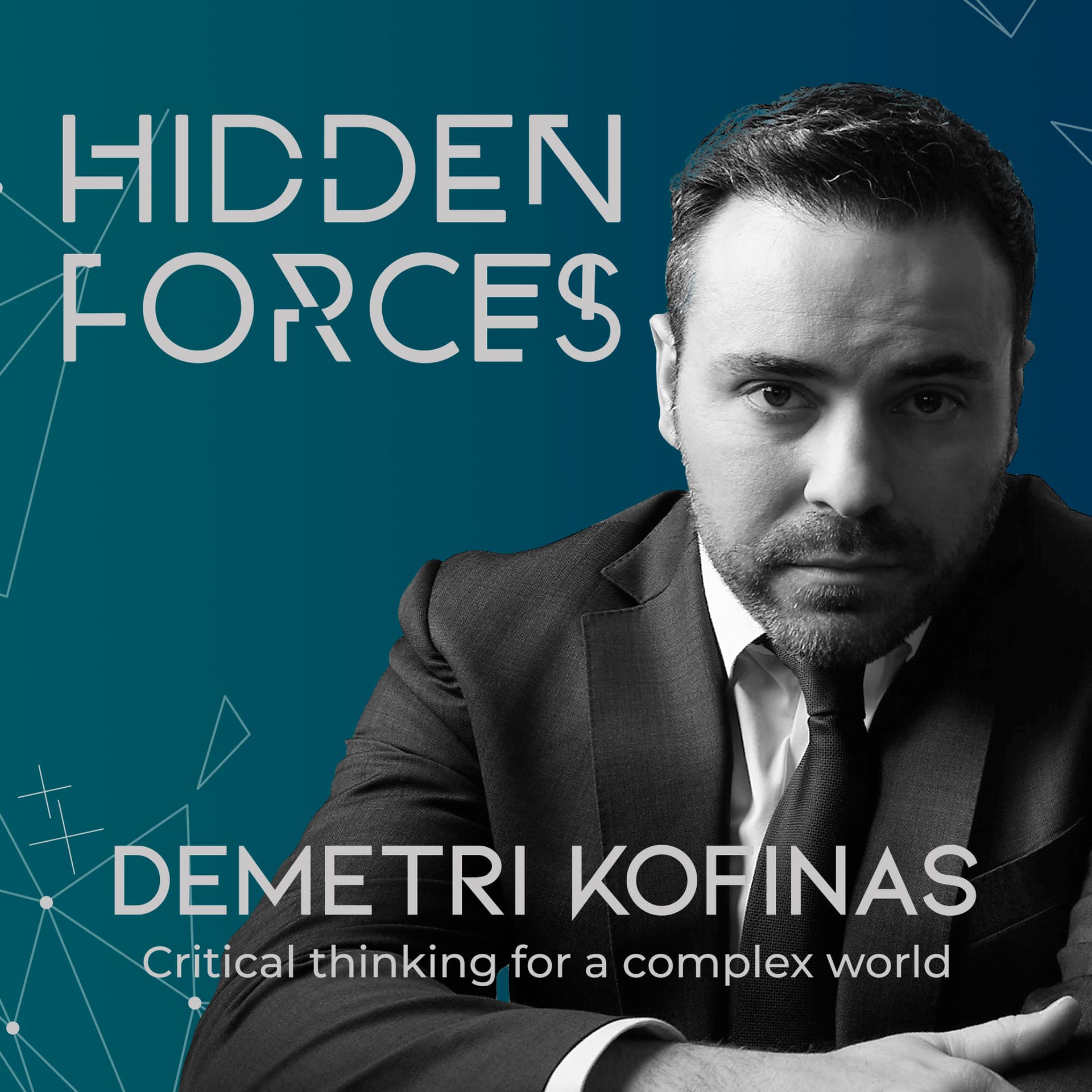
In Episode 460 of Hidden Forces, Demetri Kofinas speaks with Professor of International Politics at the Bundeswehr University Munich, Carlo Masala, whose book "If Russia Wins," makes the case for European national rearmament and the urgent need to deter near-term Russian threats against NATO member countries in the absence of American leadership.
Masala and Kofinas spend the first hour of their conversation detailing the scenario Calro puts forward in his book—a limited Russian incursion into the Estonian city of Narva. They explore why Carlo thinks that Russia might attempt such an operation, the similarities to and differences from the approach Russia took in Ukraine in 2014, whether NATO's Article 5 commitment would hold in such a scenario, and whether the gradual erosion and eventual destruction of the NATO alliance is the ultimate goal of the Russian Federation, irrespective of who is in office.
The second hour is devoted to a conversation about:
-
Europe's defense challenges in the face of a declining American commitment to NATO
-
The material and financial constraints European nations face in strengthening their deterrence
-
The advantages and disadvantages of Russia's conventional and unconventional forces
-
The deeper crisis of identity and purpose afflicting Western democracies.
They discuss the immigration debate, culture wars, the failure of democratic leadership in the context of European politics, and what ordinary citizens can do to defend democratic systems in the face of threats, both external and internal.
Subscribe to our premium content—including our premium feed, episode transcripts, and Intelligence Reports—by visiting HiddenForces.io/subscribe.
If you'd like to join the conversation and become a member of the Hidden Forces Genius community—with benefits like Q&A calls with guests, exclusive research and analysis, in-person events, and dinners—you can also sign up on our subscriber page at HiddenForces.io/subscribe.
If you enjoyed today's episode of Hidden Forces, please support the show by:
-
Subscribing on Apple Podcasts, YouTube, Spotify, Stitcher, SoundCloud, CastBox, or via our RSS Feed
-
Writing us a review on Apple Podcasts & Spotify
-
Joining our mailing list at https://hiddenforces.io/newsletter/
Producer & Host: Demetri Kofinas
Editor & Engineer: Stylianos Nicolaou
Subscribe and support the podcast at https://hiddenforces.io.
Join the conversation on Facebook, Instagram, and Twitter at @hiddenforcespod
Follow Demetri on Twitter at @Kofinas
Episode Recorded on 01/22/2026