In short
Why Miami’s “billionaire boom” accelerated since 2000, what Miami should do next, and what bottlenecks could slow migration; plus discussion of politics/communication and Saudi-U.S. diplomacy.
Guest backgrounds
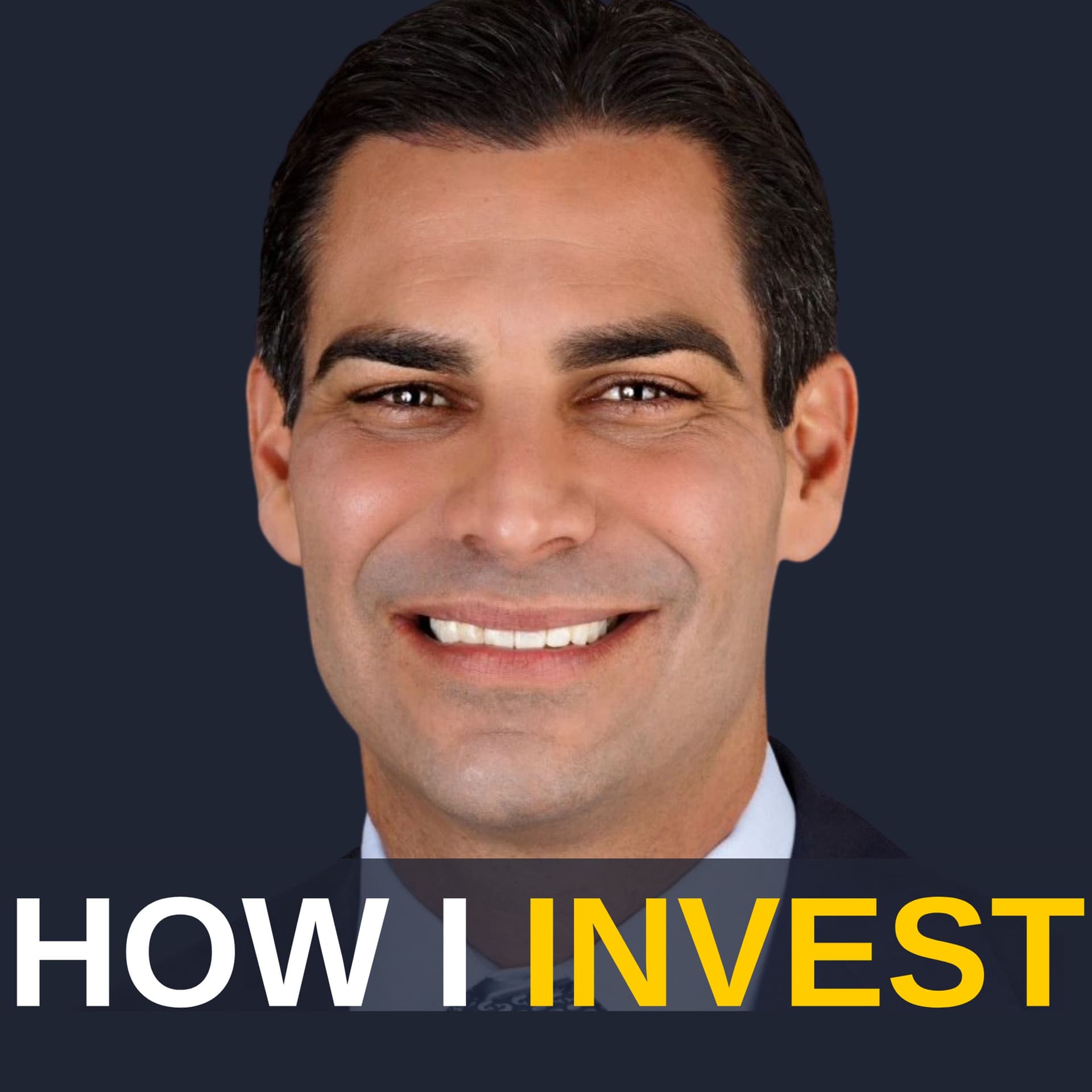
Francis Suarez, born-and-raised Miami; former mayor (7.5 years) who says he led pro-growth, pro-business policies and built an MLS stadium; also discusses his father Javier Suarez’s political career. David (host) asks questions.
Key claims
Miami’s migration surge is driven by COVID-era openness vs other cities’ closures, remote work, favorable federal tax changes (SALТ deduction going away), and a pro-growth “How can we help?” attitude toward big tech. Next “quantum opportunity” is the Nov 4 New York election; a socialist/anti-Jewish-leaning outcome would push Jewish and wealthy movers toward Miami. Main bottleneck is school capacity; he cites zoning changes for “as-of-right” school siting. Housing prices rise as demand byproduct.
Notable examples
Amazon rejected in NYC HU2; California told Elon Musk “F off”; bringing MLS and building an unsubsidized stadium; attracting firms managing ~$12T in assets; claims lowest unemployment and lowest homeless rate in 11 years.
Written by AI. May contain mistakes. Listen to the episode to check what was said.
Chapters
Tap a time to open that second in VOFactors Behind Miami's Growth
0:45 to 3:32
Exploration of the factors driving Miami's growth, including tax policy and remote work.
“I can point to projects or specific wins like bringing an MLS team to Miami, right?”
Upcoming Opportunities for Miami
3:32 to 5:51
Discussion on future opportunities for Miami related to political changes in New York.
“And I didn't know what it was going to be.”
Addressing Bottlenecks for New Residents
5:51 to 7:01
Identification of major bottlenecks for potential migrants and solutions being implemented.
“to move to Miami, but, and insert the reason, these are kind of the bottlenecks for your next quantum leap that would maybe keep you from there.”
The Mayor's Perspective on Challenges
7:01 to 10:51
Reflections on Miami's challenges and the complexities of urban governance.
“I think the number, the way I would like to answer the question a little differently is this.”
The Evolution of Communication in Politics
10:51 to 13:50
Insights on how communication strategies have changed for political campaigns over time.
“I was actually, interestingly, watching somebody was circulating the other day an interview that they did of my father at a Miami playoff game in 1992 in the Miami arena.”
Modern Communication Challenges
14:00 to 18:07
Discusses the complexities of modern communication and the need for proficiency in various formats.
“I think the paradox of modern communication is there's the 15 second clip and a two hour clip and almost nothing in the middle.”
Saudi Arabia and US Relations
18:07 to 19:59
Explores potential collaboration opportunities between Saudi Arabia and the United States.
“I mean, we staged our troops during the Kuwait-Iraq war in Saudi Arabia.”
Reflections on a Historic Trip
19:59 to 22:37
Shares personal experiences from a trip to Saudi Arabia with Trump, emphasizing the diplomatic significance.
“not the only mayor in America, not the only mayor, you know, in Florida, the only mayor in the world there was very special for me.”
Trump's Diplomatic Skills
22:37 to 26:04
Analyzes Trump's unique skills that contribute to his effectiveness in diplomacy, referencing his background.
“This is the former president of the United States.”
Trump's Evolution and Resilience
26:04 to 28:00
Discusses the perceived changes in Trump after his first term, reflecting on his resilience and experience.
“I don't typically flaunt my credentials, but one of my master's in psychology from Harvard and looking at President Trump from far away, I've never met him.”
Show all 15 chapters
Reflection on Political Resilience
28:00 to 30:26
Explore the journey of maintaining relevance in politics post-election.
“He didn't let people put him in the coffin, literally, figuratively, you know, judicially in all kinds of ways.”
Lessons from Mistakes and Personal Growth
30:26 to 33:13
Discuss the importance of mistakes as learning opportunities and personal growth.
“I now have all this purpose that I need to fulfill.”
Embracing the Unknown Future
33:13 to 36:18
Learn about the value of keeping an open mind towards future possibilities.
“And I think the lesson is that succeeding, you know, doesn't always, it's not always the best thing for you.”
Navigating Pain and Learning
36:18 to 37:16
Understand how to embrace challenges and learn from painful experiences.
“To quote Alex Sermozzi, failure is the feedback.”
Closing Thoughts and Future Connections
37:16 to 38:05
Wrap up the conversation with personal connections and future plans.
“And let's see how quickly we can come out from the other side.”
Transcript
Automatic transcript. May contain errors.0:00We've had this incredible influx of migration from high-tax states like New York, Bezos, Carl Icahn, Ken Griffin. How do you build on this momentum? You have to take advantage of the quantum opportunities. When you think about how we took this quantum leap, there were four major factors that conspired to come together. We were open while other cities were closed. Remote work. We're doing a podcast remotely. So this phenomenon of remote work certainly benefited Miami. Obviously, tax policy, federal tax policy, which was the salt deduction going away, favored Miami. You know, our attitude was pro-growth, pro-business.
0:36What's the next one? I didn't know what it was going to be. And that's now becoming very evident to me what it's going to be. Reflecting back on your seven and a half years as mayor, what accomplishments are you most proud of? I can point to projects or specific wins like bringing an MLS team to Miami, right? and building an unsubsidized stadium that's going to generate billions of dollars in revenue and now has some of the best soccer players in the world in Leo Messi, Jordi Alba, Busquets, and others. Or I can talk about the ecosystem of Miami after the how can I help moment, where we created an ecosystem where we attracted companies that managed$12 trillion in assets that's coming to our ecosystem, where we have the lowest unemployment in America, where we have the highest wage growth in America, where we have the lowest homeless rate in 11 years.
1:29It was never about putting numbers on a board, right? It was always about the humans, the human beings, the citizens, your city, the image of your city and how it affects each one intimately that you really cared about. And so it was never really about the specific things. It was really more about doing a good job and working hard. You've had this incredible influx of migration from high-tax states like New York. And you mentioned Bezos, also Carl Icahn, Ken Griffin famously moved from Illinois. You've gotten this very elite part of the network. How do you build on this momentum and get the next tier?
2:07Maybe not the deck of billionaires, maybe not even the billionaires, but either the entrepreneurs that have had a couple of successes or maybe even just getting started in their 20s and 30s. You have to take advantage of the macro opportunities, right? Or the quantum opportunities, right? What are those? When you think about how we took this quantum leap since 2000, right? There were three or four major factors that conspired to come together, but we took advantage of them. What were the major factors? COVID, right? We were relatively open while other cities were relatively closed. Remote work.
2:40You know, you could come and be in a place like this, right, behind me. And what we're doing right now is remote, right? We're doing a podcast remotely, right? So this phenomenon of remote work certainly benefited Miami. And I think, obviously, tax policy. We talked about tax policy, right? The federal tax policy, which was the soft deduction going away, significantly favored Miami. And then I think the fourth thing was attitude. You know, our attitude was pro-growth, pro-business, while other cities like New York famously rejected Amazon after winning the HU2 prize. California famously told Elon Musk, F off, and he said message receive and left.
3:19Right. So our attitude was, you want to move Silicon Valley to Miami? How can we help? Right. We had the completely different attitude. So that was one major macro moment, one major quantum opportunity that we took full advantage of. what's the next one? And I didn't know what it was going to be. And that's now becoming very evident to me what it's going to be. It's going to be on November 4th of this year. And that is the election in New York. That will be our next quantum opportunity. If New York elects a socialist, communist, socialist, whatever you want to call it, government is a solver of all problems, politician, it will become another massive opportunity for Miami.
3:59One, for people from the Jewish community who feel that the incoming potential mayor is antagonistic to the Jewish community or has made statements that are antagonistic to the Jewish community. Miami is the safest place on the planet for Jews to live and the most welcoming. And we embrace that. We love that. We will continue to shout it from the mountaintop. So for us, that's a competitive advantage for us. And secondly, if you're going to continue to go in the opposite direction and tax the wealthy, right, and continue to burden people with more taxes, people are just going to be fed up and they're going to say, that's it.
4:37If you happen to be in both those categories, wealthy and Jewish, I mean, it's like, there's going to be a massive, you know, there's like a Venn diagram, you know, overlap there. And, you know, I think, so I think whoever becomes the next mayor of Miami, because this will literally happen as I'm, you know, evolving out really. And I'm going to do it right between now and the election, right? I'm going to certainly do it, but whoever becomes the next mayor needs to pick up the baton and really run with it. And, and, and that's how I'm 47. I'll be 48 in October. That's how Miami will have another decade of runway and success.
5:15Right. And so I firmly believe that I believe that cities at some level are a competition for talent and capital, right? We want to be what we call the capital of capital. And that's human capital and actual capital, right? Money, financial capital, so that we can build companies and scale companies, right? That's how you do it. So we think we can do that in this generation. But without a doubt, you have to be intentional. You have to put your foot down on the accelerator when the opportunity presents itself. And I think this November will be one of those moments. A lot of people say, I'd love to to move to Miami, but, and insert the reason, these are kind of the bottlenecks for your next quantum leap that would maybe keep you from there.
6:01What are some of those bottlenecks? What are you doing to address them? I'm going to answer this question in two ways, because I want to talk about something that's slightly different, but related. So let's talk first about the question as you asked it, right, which is someone who wants to move to Miami, what is the bottleneck that they will often articulate? Almost universally, that bottleneck, particularly if they're coming from wealthy areas of the country, is educational opportunities, schools, right? I can't get my kid in to name the school. There's just a capacity issue. There's too much demand and not enough capacity.
6:40So that's something we're going to have to deal with in the short run. I've done all kinds of things from the zoning perspective in the city to basically make it as liberal as possible to be able to have a school in our city zoned at what they call as of right without you having to go back to government, ask for additional permission. So that's probably the number one thing. I think the number, the way I would like to answer the question a little differently is this. And I notice sometimes in the comments when I speak long form, you know, podcast. and I'll talk about, you know, first of all, I stole all of Miami's virtues.
7:16That's my job. I'm the mayor, right? Born and raised in Miami. Born and raised. I don't know. Sometimes I feel like sometimes I don't know what my residents expect. They expect me to come out on a show and talk bad about my city. That's not going to happen, right? Like I'm the mayor. I was born here. I love this place. I think the world of it. I'm not blind to the fact that we're not perfect. I don't think there's any city in the world that's perfect. There's no city in America that's perfect. You know, we and by the way, in our imperfections, if you will, are often common defects that all cities confront.
7:50So it's not that and we may have it at a little bit greater scale than others. And I'll give you an example of one, which is, you know, housing prices or, you know, the fact that we become expensive. Number one. Yeah, I think we are. We've become more expensive. There's no doubt about it. And, you know, and it's almost like, you know, sad when I have somebody criticize me and say, you know, the mayor, all your policies, everything you've done, you've made Miami more expensive. And the answer is, well, first of all, of course, I haven't wanted to make Miami more expensive. That's not the goal, right?
8:19The goal is to make Miami the best city in the world. That's the goal. The byproduct of making Miami the best city in the world is that we're more expensive, right? Because demand drives prices, right? So if people want to go there, right? And so they don't want to be in Columbia for the reasons that we mentioned, unfortunately, or if they don't want to be in New York because of the reasons that we mentioned, They're going to come to mind. So, yeah, I mean, could we do better? Of course we could do better. Any city could do better. Every city could do better. Right. And I think every mayor. And again, this is like not a Republican Democrat thing.
8:51I think every mayor in America, regardless of their party, is striving to do the best that they can and create the best city that they can. So, yes, we do have problems. I'm not sitting here and telling you we don't have problems. But I'm never going to increase taxes or increase homelessness or increase crime or increase the things that will make our city less attractive to reduce costs. Your father, Javier Suarez, just announced his candidacy for mayor. He was mayor when you were a child in 1985. What advice, if he asked you, what advice would you give to how to run a successful campaign in 2025?
9:28I thought about this question. You know, one of your staff members has shared this question with me. I think it was a good question for me to think about and contemplate rather than just answer. And I'm reminded of Jeb Bush's presidential campaign, his last one, right, where there's only one where he ran for president. And, you know, he had been a great governor. And he had taken a long time off from being governor to running for president. and you could tell right you could tell in his performance and I think and by the way I'm a huge Jeb Bush fan so if he's if you watch this please Jeb you know I don't mean this in a bad way I love you uh I think I think he would admit it um and in fairness to him you know politics in today's day and age has become like an MMA fight right and and politics in my dad's time in the 80s and And actually, my dad was he was mayor in the 80s, but he was a county commissioner way more recently.
10:28So like in fairness to him, he was a county commissioner as of like a few years ago. But between the 80s and 90s and now it used to be boxing and now it's like MMA. Right. And like it's far more, you know, sort of nasty on the one hand. And I think the second part of it is that you really have to understand communications in a different way. I was actually, interestingly, watching somebody was circulating the other day an interview that they did of my father at a Miami playoff game in 1992 in the Miami arena. And I was watching him do the interview and he did a great job in the interview. You know, and I think about him today and I think about, you know, all these podcasts and all these different alternative ways to get your message out.
11:19Right. And I think the advice I would give him is is to try to do your very best to understand the world of communication, because it is different today than it was even 10 years ago when he was a county commissioner or a few years ago as a county commissioner. Then it was even, you know, obviously in the 80s and 90s when he was mayor. So I think to me, that's the most radical difference. I have, for example, I'm blessed to have a social media channel. We just hit the 160 ,000-person followers threshold on Instagram. So I think as mayor, I'm probably one of the highest social media followings in the country.
11:58But the beauty of that is it's a direct – I look at it as direct-to-consumer. right like I can say whatever I want to say directly right and the other thing I thought about it yesterday or the other day which was I think is really cool is when I reflect on my mayoral team and my kids so so again I'm gonna go back to the example I just used of watching my dad do an interview in the Miami arena 1992 I once in a while I get to see an interview of his or a speech cut up or whatever, or, you know, it's very rare. My kids are going to have, and they're a little younger than I was when my dad was mayor.
12:36My kids are going to have a very comprehensive chronology of my mayoral team because we have documented it in social media, right? Like, and it's all positive, which is beautiful because it's some way it's going to be not a hundred percent telling of everything right because obviously when we're telling our story we're telling the best version of it and I'm not saying we're ever being disingenuous we're not as a matter of fact part of the problem with present-day media and part of the reason why you know podcasts are so prevalent like you said the long-form conversation is so important is because you can be your authentic self there's no filters nobody's filtering me right like no one's editing me no I get to just talk and for better or for worse.
13:20And so I think the beauty of my social media is it's going to tell the story of my morality. And it's a positive story and it's going to be a positive thing because it's going to be it's me the one telling the story. Right. It's like it reminds me of a famous Winston Churchill quote where he says, you know, that history will be good to me because I intend to write it. And so, you know, and so in a sense, it reminds me of another saying, which is if you're not telling your story, somebody else will and you're not going to like their version of it. Right. And so another one that I use a lot. So it's it's it's our social media is our ability to tell our story, what we've accomplished, what we've done, what we do every day, three times, four times a week, five times a week.
13:59And it will bring back to me incredible memories of the work that we've done for 16 years now. I think the paradox of modern communication is there's the 15 second clip and a two hour clip and almost nothing in the middle. And you have to be proficient in both. to there's so much more there's there's a two-minute story right every day every night on television there's the print there's you know there's blogs there's uh print uh internet sites then there's you know then there's a three-minute five-minute seven-minute segment segments in um cable right like when you go on fox or cnn or msnbc or whatever those those tend to fall into that category so you just have to be good at all of them you know you have to be good at communicating period.
14:47And that means, you know, oftentimes condensing what you want to say, simplifying an idea, you know, finding a way to connect, which is always so hard for your empathy to shine through and your sincerity. So it's hard. I spoke to a friend in the Trump administration. He said, you're still the favorite to be the ambassador to Saudi Arabia. Obviously, I'm guessing you can't comment on that. But if you take a step back and look at the relationship between the kingdom and the United States, what are some low hanging fruits for collaboration? How do we become better allies with Saudi Arabia? I don't know if it's low.
15:26And you're right, I won't comment on it. But I don't know if it's low hanging fruit or not. But I think left to be done and should have been done under Trump, one, and would have been done if Trump would have been reelected, and my personal belief is the extension of the Abraham Accords to Saudi Arabia. I think that would have been, and that probably is priority number one under the Trump administration. Obviously, they have a lot on their plate. They're dealing with the Russia, Ukraine war. They're dealing with what's going on in Gaza. They're dealing with Iran. Right. So they are they are they're busy.
16:03They're very busy. And then they're dealing with the domestic issues that they have. So they've been very busy and they've been, in my humble opinion, extremely effective. They've got a very effective team. Marco Rubio is a great secretary of state. Steve Wyckoff is an incredible Middle East envoy of peace. I mean, what he's done with hostages, what he's you know, he's become a pinch hitter for all kinds of different conflicts. So they have a great team. I think one of the biggest, biggest strengths of Trump administration number two is who they've chosen. You know, and even in the case of Marco, he's now not just Secretary of State, but he's National Security Advisor.
16:39Right. I mean, there's a lot of good stuff that they're doing. And so so I think that's one. I think I think Saudi has positioned itself very intelligently over the last couple of administrations. Right. Even in the Biden administration where they didn't let the Biden administration really bully them on increasing oil production in advance of the midterms. Right. On having to deal with the fact that Biden called him a pariah, then wanted to do a fist bump with with MBS. Right. So it was just a lot of challenges there. And I think Saudi managed it well. They did their their deal with Iran through China, which I think put the U.S.
17:20on notice. It's like, hey, you're not the only game in town if you're not going to become a strong ally and help us in our national defense and help us on some issues of our priority. You know, the sale of raw materials, even nuclear material. You know, there are other there are other players in the game. Right. And so I think they've been very smart. But I do think to your point, David, I think that there's a lot of opportunity for collaboration. I mean, we were hosting Saudi hosted talks between Russia and Ukraine that the U.S. led, right, in terms of ending the war. I think there's a great natural affinity.
17:54Saudi Arabia wants to be aligned with the United States, right, from everything that we know about the long history and the long partnership and, you know, being an ally for so many, many years. I mean, we staged our troops during the Kuwait-Iraq war in Saudi Arabia. created a lot of, it's part of what birthed Al-Qaeda, right? As Al-Qaeda was birthed in part out of anger, resentment for the fact that Saudi cooperated and collaborated so much with the United States, right? So, and we're both super aligned with, and so is Israel, with the eradication of Islamic extremism, right? Which is something that has created all kinds of problems throughout the world, but certainly in the Middle East.
18:39And so I think those are multiple bases for collaboration. As you look at Saudi's 2030 plan, right, and how they want to grow as a country from a population of about 35 to 60, they want to almost double their population. For them to do that, I think there's going to have to be a tourism increase significantly. They're going to have to continue along their path that they've been on, right, of making internal changes that have been very successful and have led to the people seeing Saudi differently. And I think that the United States is going to play a big role in that. Right. And I think the United States investment, United States infrastructure in terms of construction companies, et cetera, are going to continue to do more business in Saudi.
19:25And so will other parts of the region. You were part of the famous trip with Trump to Saudi. What were some of your takeaways from that trip? And what was it like being on the ground in Saudi Arabia? It was one of the most incredible moments of my life. There's a picture where I'm with Trump on the left and MBS, His Royal Highness, the Crown Prince on the right. And I got to share a few private moments with him. And it was surreal. I mean, it was surreal to be there and to be the only mirror in the world. not the only mayor in America, not the only mayor, you know, in Florida, the only mayor in the world there was very special for me.
20:07And I think it highlights not me so much because it highlights what Miami is and what Miami can be in the conversation of, you know, these worldwide issues. Being on the ground there, seeing the convening power of the president and the crown prince, right? Like you had the most incredible people in the world, top 50, top 100 people in the world there. And they're all there. Right. They're all there and want to be there. And we're all like little kids at some level. Right. Because it's giddy to be with all these incredible people and to be with these incredible world leaders. Right. It's a surreal moment.
20:43And I think it takes your breath away, no matter who you are. I shared a car ride with Jensen Huang, like just going from one place to the other. And I'm like, what am I doing? Like, this is crazy. You know. And again, we had a nice conversation in the car, but it's just like it's those kinds of surreal things. Right. So just really, really interesting for the country. I think it was a masterclass for the president. I have to give him a lot of credit. He came in there. He lifted the sanctions on Syria on the basis of the Crown Prince's recommendations. You know, he had a very successful economic trip, you know, because it was there in UAE and also in Qatar.
21:26And so I think it was a world, you know, sort of a masterclass in diplomacy for the president and one of his many, many, many successful foreign policy victories in a very short period of time. You're one of many people that ran against Trump in the last election cycle. You got to know him really well. As you mentioned, you were the only mayor invited. You've built a relationship with him over time. What makes him so good at his diplomatic role? And what skill sets does he have that translate to being a great diplomat? He has a lot. I'll tell you. So I'll tell you this. I don't look at it as I ran against him.
22:07I look at it as I ran in the same election as he did, right? Like I had my own vision. I had my own ideas. and I had my own theory of the case as to why I was the best person. I don't really run against anybody. I'm running because I thought I was the best. Having said that, when I dropped out of the race, he was the first person that called me. The first person to call me. So there was a ton of candidates. I forget what the number was. At one point, I know it was like 11 or maybe even 15. He was the first person to call me. This is the former president of the United States. The first person to call me.
22:40so I think that humility and awareness and obviously has a great team right because obviously you know I'm sure his team also told him like hey this guy's dropping out you know you should you should call the humility the awareness the hard work to say I want to be first I'm going to be first I'm going to make sure nobody gets ahead of me I think that's one I think number two
23:08traditional politicians are not always great negotiators because they don't necessarily have to negotiate for a living. I think one of the things that Trump and the president and I have in common is we both came from the real estate industry. You know, we both cut our teeth in the private sector. I can give you a, you know, I'm not trying to throw DeSantis under the bus, but The governor was a JAG officer. He was a congressman. He was a governor. So he had three public sector roles consecutively. I spent my entire career in the private sector. Even as a public sector actor, I was able to work.
23:48So I work for a living. I don't rely on my public sector salary. And so I understand what it's like to make a payroll. I was in a small business. I understand what it's like to meet numbers, quarterly numbers. And, you know, and every day is a day of pressure because every day you have to produce. Right. And when you produce well, you get rewarded. And when you don't, you pay the consequence. Right. So I think the president has demonstrated that he knows how to negotiate and use leverage and use the country's economic and military might as a leverage tool. Right. When he said to Colombia, to go back to Colombia as an example, that he was not going to allow certain diplomats to come to Miami or to come to the U.S.
24:40Right. And he shut that down in addition to increasing the tariffs. I mean, it was a master class. I mean, he got Mexico's president, newly elected, to agree to put more troops on the border. Right. And the border has essentially stabilized since the president became president. Right. From all accounts. No one, even Democrats, I don't think are disputing the fact that the border has been essentially closed. Right. So, I mean, he has really, and then I think the third thing is, you know, and I can certainly attest to this on a personal level. His team today is significantly better than the prior administration's team.
25:21I mean, significantly better. I mean, these are people who are incredibly accomplished in the private sector, most of which have built billion dollar businesses in one generation. versus ideologues, academics, and people who were not even A players under the prior Democratic President's administration. So you're talking about a huge difference in talent, huge difference. And so when you have a very talented guy, and then your starting five, let's say, are super talented, you have a talented coach and a talented starting five versus guys that shouldn't even be in the pros, you know it's just a huge performance differential and that's what you're seeing he's already accomplished his his economic plan right the beautiful bill and now we'll see what other things legislatively he has in mind I think he's got a very clear runway and if he continues to stack up wins in advance of the midterm he can do something no president has done in a long time which is hopefully keep control of both houses of Congress so he can continue to execute on his agenda.
26:29I don't typically flaunt my credentials, but one of my master's in psychology from Harvard and looking at President Trump from far away, I've never met him. It seems like he's dramatically a different person from his first term. It's almost like two different people. A, have you seen that? And B, what do you attribute to that? I have seen that. so i'll answer it in two or three different ways he's probably a different person a because first of all they tried to indict him and they tried to kill him so i mean and he survived both of those things right so i think psychologically you know as a as a as a harvard psychologist i think you would say that there's a tremendous amount of potential trauma there right and if you survive those things, you are enlightened at some level, right?
Read the full transcript
27:16Because you realize A, the fragility of life and the fragility of your freedom. And B, you know, at some level, you have a sense of confidence that, hey, if I survive this, what is God trying to tell me? Or what is like, you know, so I think that's part of it. The B part, I don't think he gets enough credit for, which is he has a lot more experience right like he has a lot more experience and I would say two things and I heard I think it was Eric Trump talking about this or maybe it was Donnie talking I might have been Donnie talking about this on Fox just yesterday or the day before and he was focusing on the four years that they were out of office and I think people discredit the experience that he got in those four years as well in other words you get four years to do things and you get four years to contemplate what you did right or wrong and then another four years to do things and I actually think it's interesting having that four-year hiatus in a way is actually quite good because it gives you a lot of time to reflect obviously you have to fight tooth and nail to stay relevant because typically when you lose in a re-election you're gone like I've never seen I mean I don't think I've ever seen anybody politically just rebound like that the way he did He stayed relevant.
28:35He didn't let people put him in the coffin, literally, figuratively, you know, judicially in all kinds of ways. Right. Because it wasn't just judicial and it wasn't just literal. Right. It was also figuratively because, again, most of the time when you lose, you're forgotten. Like next day, like in your politics, you lose, you're done. Like, good luck trying to climb that mountain again. But he found a way to stay relevant and by endorsements, by keeping himself as the standard bearer of the party. and none of us could get him off that mountain. I mean, we all ran, right? We all ran with a view that we were the best candidate.
29:08And obviously the people thought otherwise, right? People thought he's the best candidate. So I think he's changed in a lot of different ways. I think he's always been charismatic, but I think he's more, he seems to be calmer. He seems to be a little bit more rest assured, more confident, if that's even possible at your age, to actually become more confident. He was a TV star and obviously a personality for many, many, many, many years. And, you know, it's nothing to be the president of the United States. That's a whole other ballgame. So he was president. He was former president. So he was in that sort of limelight for a while.
29:43And I think he grew into it and he got accustomed to it. And I think he now understands and appreciates what it means to be presidential and why it's important. And I think, you know, maybe he didn't have that nuance at the beginning. I think paradoxically going through a near death experience can both give you clarity. It's both very humbling and empowering. It both like brings you like takes away your ego, but also says, and I still survive. Now let me go do what I'm here to do. So it empowers you as well. It gives you a sense that it can be taken from you at any moment, but it also fills you with purpose because it wasn't taken away.
30:26I now have all this purpose that I need to fulfill. And it gives you drive and energy and confidence, as you said. Going back now almost 16 years ago when you had just turned 32 and started as a civil servant in Miami, what advice would you have given a younger Francis at that time that would have either accelerated your success or helped you avoid mistakes?
30:54I'm gonna gonna answer this question a little differently but I will I will answer the question and then I'm gonna I'm gonna sort of pivot a little bit what I would have told a younger Francis is not to put limits on himself right I think I think when I was younger and maybe people would be surprised to hear this. I lacked a lot of self-confidence, even though I was a public official at 32. I was still along. I was still in my journey of knowing who I was. And I was still in my journey of feeling comfortable in my own skin and sort of like the self-confidence journey. And I think maybe that would surprise some people to know.
31:36I actually, this is going to sound counterintuitive, what I'm going to say. I actually would not give myself any advice to avoid mistakes. I'm going to explain to you why. I think mistakes are probably the best learning tool that a person has. So if you avoid mistakes, you don't have that, you don't learn, right? So, yeah, could I have said, hey, I've learned what the mistakes are. I'm going in the DeLorean back to the future, right? Back. And I'm going to tell you what the mistakes are so you don't make mistakes. You know, I don't know what other mistakes that would have made me make, right? Because that would have potentially, let's say I didn't make those mistakes.
32:16Would those learning lessons that humbled me and made me better and stronger, would they be replaced with hubris? Right? Because I didn't make the mistake. And then create and cause other bigger mistakes. Like, I don't know. So I remember when I was told initially that I had made the debate stage when I was running for president and then later informed that I was not, in fact, going to make the debate stage. And I remember very, very clearly I was in Milwaukee in advance of that debate. And we had like Airbnb to house and I was in the backyard. And I remember vividly walking in the backyard and thinking, you know, God has a reason for this.
33:02You know, what would have happened had I gone to the debate? Would I have made a mistake that sounded foolish? I'm embarrassed myself, embarrassed my city. Who knows? I mean, you just don't know. What is God protecting me from? there's a great poem and I've been citing it a lot lately it's it's called If by Rudyard Kipling right and he I don't know if you have you have you read the poem no you gotta read it uh that's your homework very very short poem so I love it and it's it's a father telling his son you know what it is to be a man and and one of the lessons is to treat victory and defeat as the same imposters, right?
33:39And I think the lesson is that succeeding, you know, doesn't always, it's not always the best thing for you. And losing is also not the worst thing for you, right? Sometimes you learn a lot from losing and sometimes you're at your strongest when you're at your weakest because people want to help you. And when you're at your strongest, you're actually your weakest because people are jealous of you, resentful of you, you know what I mean? And they're like, look at that guy. He's got it all. Like, like, can't wait for him to stumble. Right. Or, or trying to precipitate your stumble. So I, I, I know it's a lot of kind of counterintuitive advice and maybe people might think it's gobbledygook or whatever, but that's my life view.
34:22Right. Um, you know, other than that, um, you know, I would, I would probably tell my younger yourself, it's going to be okay. Don't worry about it. It's all going to work out. And I do work with a mindfulness coach. I've been working with him for a little over a year. And one of the exercises is we just look back five years, right? And he said, if you look back five years, you know, could you have predicted what was going to happen in your life in five years? And I told him, absolutely not. I said to him, as a matter of fact, if God himself would have come down and said to me, hey, you get to write the next five years of your life.
35:03I'm going to pretend that I'm a genie now, right? God's going to convert himself into a genie. And you get to rub the lamp and select what you're going to do for the next five years. I don't think I could have come up with something as fantastic as what actually happened. I don't think it would have been even my realm of thinking, of possibility. Do you think I ever would have thought that as a mayor of Miami, I was going to be the president of the U.S. Conference of Mayors or that I was going to one day be in front of the President of the United States and the Crown Prince of Saudi Arabia, having a conversation with them as if they were my friends, you know, that would never have occurred to me.
35:36It would not even occur to me, right, to put that into the genie lamp. So, you know, I just think that that's a testament to how great God is, and it's a testament to not limiting yourself, which is something I talked about before, and it's a testament to having faith and embracing the unknown of the future, right? The fact that there is an unknown future, because I know we talk about goals and goals are important because they set the course for your action. So I'm not sitting here and telling you not to have goals or anything. But I also want you to be open to what the future has for you, because it may be better than even you think.
36:14It may be better than even these impossible goals that you might set. To quote Alex Sermozzi, failure is the feedback. People think sometimes in order to succeed, I need to deal with this rejection and these issues. But that is actually the feedback. It's not something that comes with success. It is how you get to success. And it's impossible to disentangle it. And I think the older you get, the more you embrace the pain that comes from that, right? Like at some time when you're young, you're like, why is this happening to me? This is terrible. This sucks. You know what I mean? Like, I don't want to lose or I don't want to whatever.
36:50And the learning process that comes from that is more gradual, more painful, and maybe takes longer. When you get older, you start to see it happening. You're like, okay, I'm about to get my butt kicked. And I see it happening. And I know that it's okay. I know it's going to be over eventually. I know that it's going to be painful for a period of time. And I know that I'm going to learn from it. So just let's get to it. Let's get to the process. Let's just get going. And let's see how quickly we can come out from the other side. Coming full circle, you're the reason that I originally moved to Miami.
37:24I met my now wife as of last Saturday and moved to New York, but she wanted me to make sure this morning to tell you we have a place in Park West that holds 300 people. You're very welcome. We don't use it enough. You're very welcome to use it for whatever purposes. So please come visit us in our neighborhood or New York City. And thanks so much for spending time and looking forward to catching up in person. Thank you, David. I wish you and your wife the best, the happiest future and success. And certainly when I'm in New York, I'll look you guys up. Thank you so much. You got it. Thanks for listening to my conversation.
38:01If you enjoyed this episode, please share with a friend. This helps us grow. Also provides the very best feedback when we review the episode's analytics. Thank you for your support.
From the publisher
I had the chance to talk with Francis X. Suarez, the 43rd Mayor of Miami, about how his "open-for-business" leadership transformed the city into a global tech and finance hub. We unpack Miami’s “quantum opportunity,” the practical growing pains—housing, schools, transit—and the civic strategy behind international diplomacy and major sports deals. We also explore his run as President of the U.S. Conference of Mayors and his reflections on leadership, resilience, and embracing failure.