
In short
How AI will affect financial markets and the broader economy, with emphasis on AI search infrastructure, AI agents in enterprises, and investment/fund strategy.
Guests
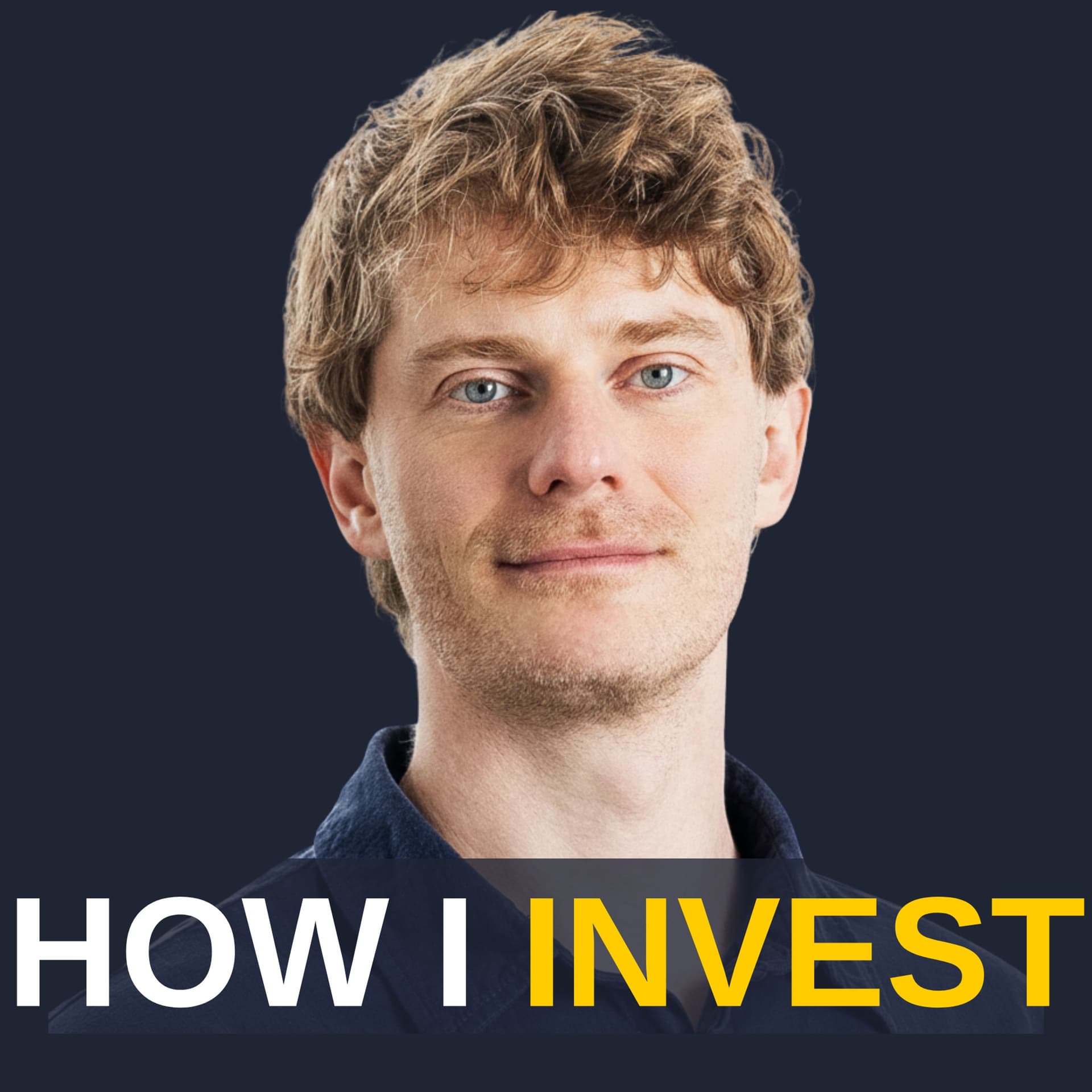
Richard (co-founder/CEO of U.com; described as an AI search engine founder and a highly cited NLP researcher). He also runs AIX Ventures, a $250M AI-focused venture fund investing in AI+X.
Guest backgrounds
U.com filed patents for language models and search before ChatGPT; claims partnerships with OpenAI and that U.com powers GPTOSS’s default search backend. AIX Ventures invests in seed rounds (e.g., Perplexity, Weights & Biases, WhisperFlow, Winsurf, Harvey, Hacking Face).
Key claims
Marginal cost of intelligence trends toward zero; AI adoption widens productivity gaps; “agency” becomes more important than hourly pay; AI agents will disrupt many knowledge jobs; regulation should target real high-risk applications, not “intelligence” broadly.
Notable examples
outperforming OpenAI deep research agents via more data/search infrastructure; enterprise uses include coding (Windsurf), legal research (Harvey), architecture automation (Iloka), AI local journalism; biotech example: Parallel Bio using AI with FDA-approved organoid testing.
Written by AI. May contain mistakes. Listen to the episode to check what was said.
Chapters
Tap a time to open that second in VOExploring U.com and AI Superiority
0:45 to 1:46
Discussion on U.com, its patents, and how it competes with OpenAI for accuracy.
“and search infrastructure backend is how you get any agent to move above the slop that LMs often produce, above the sort of average mediocre outputs.”
The Impact of AI on Enterprises
1:46 to 2:59
Insights into how enterprises utilize AI for efficiency and problem-solving.
“if your AI that writes code for you also can look up the most recent issues on GitHub and the web and so on.”
Marginal Cost of Intelligence Going Down
2:59 to 4:40
Discussion on the implications of reducing intelligence costs and its societal impact.
“as they transitioned away from having to just work on farming to finding new kinds of jobs, like have to learn new skills.”
Historical Perspectives and Future Adaptations
4:40 to 6:24
Analogy of workforce changes from the industrial revolution to AI and job adaptations.
“And then you can see that over the next few years and decades, all of us will have personal tutors for our kids that are actually good, that really keep track of what the kid understands.”
Future Predictions on AI Accessibility
6:24 to 7:57
Predictions on how AI will democratize access to services previously available to the wealthy.
“But I believe that the largest GDP driver for developed economies in the world will be AI.”
Current Trends in AI Agents
7:57 to 9:46
Examination of the current state and future potential of AI agents in the economy.
“There are a lot of painstaking slow work.”
Investing in AI: Principles and Strategies
9:46 to 12:06
Insights into the investment strategies and principles for AI companies.
“all these different examples from architecture to legal healthcare.”
The Need for AI Regulation
15:26 to 18:15
Discussion on the hype surrounding AI, its potential impacts, and the necessity for regulation.
“Like some people think, oh, I could kill all of humanity.”
Investing in AI: Timing and Data Importance
18:15 to 24:11
Exploration of the investment landscape in AI and the significance of available data.
“And world where if you don't even engage with AI, then you'll certainly fall behind.”
Understanding AGI and Superintelligence
24:11 to 27:26
Insights into the development of AGI and superintelligence and their implications.
“The paperclip example is a great one for failure of prompt engineering and reward engineering, ultimately.”
Show all 15 chapters
The Future of Education in AI
27:26 to 28:00
Discussion on the future learning paths for students in the age of AI.
“Yes, the code might become obsolete, but how do you think how you construct this reward prompting, these new jobs that will come out?”
The Concept of an AI Economist
28:00 to 28:24
Learn about the innovative idea of AI economists and their impact on various fields.
“so many more areas, medicine, but even history and philosophy, all of these areas will be impacted by computer science and AI.”
Richard's Passion for AI and Future Projects
28:24 to 29:10
Discover Richard's latest book and his thoughts on developing superintelligent AI.
“You're running one of the hottest AI startups.”
The Value of Hard Work and Personal Wellbeing
29:10 to 29:59
Understand Richard's perspective on balancing hard work with health and wellbeing.
“I don't have that many more other hobbies.”
Encouraging Agency and Constructive Optimism
29:59 to 30:42
Explore the importance of agency and optimism in personal and professional growth.
“So I don't know if I have any, like don't do things you've done, but maybe I could have been have even more constructive optimism even earlier.”
Transcript
Automatic transcript. May contain errors.0:00We'll get into some of the interesting investing that you do later on, but your full-time job is your co-founder and CEO of U.com, which is a unicorn. And it's an AI search engine that's more accurate than ChatGPT. Tell me about that and how could that be that a$1.5 billion company is more accurate than OpenAI? Yeah, so you can obviously not do that across the board, but you can focus on particular areas. And U.com actually filed a patent for LMs and search a few months before ChatGPT came out. We've been at this for a very long time. We're also very happy partners with OpenAI. GPTOSS uses the U.com search backend as its default.
0:36We also work with OpenAI models. In deep research in particular, the best research is done when you have the most amount of data. And so having the right data and search infrastructure backend is how you get any agent to move above the slop that LMs often produce, above the sort of average mediocre outputs. The best way to do that is by giving it more data. And so that is part of how we were able, in a bunch of different evaluations and benchmarks, outperform the deep research agents of OpenAI. And every day you're working with enterprises solving very hairy issues with AI. What are some case studies in how enterprise is using AI and how does that translate downstream to revenue and cost for enterprise companies?
1:19So we have a very broad range of different customers from very, very large consumer companies that make hundreds of millions of API calls or more a month, all the way to legal companies, AI legal companies that use us for research for their agents. and we have companies like Windsurf that use us for their coding agents. All of the different agents and LMs out there in the world benefit from a good AI search infrastructure. And so, you know, you're more efficient as a programmer if your AI that writes code for you also can look up the most recent issues on GitHub and the web and so on. The last time we chatted, you mentioned that the marginal cost of intelligence will go to zero.
1:59When do you see that happening? What are the second order effects of it? There will always be, of course, like sort of electricity and compute on top of it. But then we're seeing this already now. You know, it's really incredible how much knowledge is at our fingertips. And it's not just at our fingertips for us to have to consume it, but it will be summarized and explained now for us based on what the internet comes back with. And so you think that will change humanity pretty significantly. I think the way, you know, in the early pre-industrial revolution, like 150 years ago, over 90 % of people worked in agriculture.
2:33The fact that we can now build machines that do the work of 90 % of all living people and do it more productively meant we have an abundance of more food, right? Like we don't have to all spend our daily lives thinking about how to create more food and wheat and so on. It's mostly automated. And only 5 % of people now work in that field. Did 90 % become unemployed? No. And that's what a lot of people are worried about. but that 90 % of humanity, as they transitioned away from having to just work on farming to finding new kinds of jobs, like have to learn new skills. And was that transition tough?
3:07And can there be, you know, support systems for it? Absolutely. And so I think as intelligence gets cheaper and cheaper, that will also allow humans to do a lot more different things. I think just like before, there's sort of sort of lump of labor fallacy that a lot of people have thinking there's a fixed amount of labor. And once AI takes it away or a tractor takes it away, then it will never be, you know, it'll never be recoverable. and there won't be new jobs. I think interestingly enough, humans are baseline creatures. We always adapt to whatever it's our baseline. And then we want a little bit more.
3:35Most people want a little bit more after that baseline. And so the same thing we'll see with AI. A lot of jobs that were very repetitive but required some intelligence but weren't that creative, those will all get automated for AI. And what ultimately will become more and more important is agency. A lot of people lack agency. They just kind of want to be told what to do. Not too much, but just enough to not have to worry about what the day and the year and the decade will bring. So when you have agency to really say, wow, I can now create something. I want to create more outputs of this kind. You love AI.
4:11I think in the future, if you're thinking mostly about, I'm going to get paid by the hour, no matter how much output I produce, then you don't really love AI. Because AI will change those equations in many ways. And so there are so many more ramifications I could talk about the future and how AI will impact it than the marginal cost of intelligence going down will impact it. Every field, every facet, ultimately, maybe one last trick that I use to try to predict that future is to look at what goods and services only wealthy people have currently access to. And then especially considering those that are bottlenecked on intelligence.
4:43And then you can see that over the next few years and decades, all of us will have personal tutors for our kids that are actually good, that really keep track of what the kid understands. No one can afford that right now. With AI, we will. None of normal people can afford a personal healthcare team that keeps track of all the things and then gives you a very personalized, highly researched with all the latest up-to-date data on how to live as healthy and as long as possible. Most people don't have a personal assistant and can't afford one. Also, just logically enough, there are six billion people if everyone wants to have a personal assistant or need 12 billion people, I think obviously doesn't work.
5:15And so I think that is another capability that will just be our baseline the way one hours is our kind of baseline for most people now in the developed world. And AI will bring us that. It's going to be quite exciting. AI agents were supposed to be the big rage in 2025, and this was to be the year of AI agents. Do you see 2026 finally being the year that AI agents have a big effect on the economy. Yeah, it's really interesting. A lot of people overestimate. I see AI is kind of struggling. A lot of people are like, it's black, it's like overhyped and nothing like it's just kind of bubble burst.
5:49And the other people are like, oh, it's going to change everything. And next year we have 20 % higher GDP. And it's the truth as always is somewhere in the gray middle, it doesn't create as many fun, buzzy headlines. But the reality is that AI is already changing different industries. And we're seeing that like if you were an illustrator, that has one style and that style is fairly common in the world and can be trained on the internet, AI has disrupted that entire field. Now, the illustrator industry is not as big as the movie industry or the music industry is, for instance. They don't have as many strong copyrights as the music industry.
6:22And so we don't see as much sort of disruption in terms of overall GDP. But I believe that the largest GDP driver for developed economies in the world will be AI. I don't think it'll be 10 % for now in the internet or electricity and so on. It takes usually years to really get into every industry, every company and so on to adopt it. And we'll see that with AI too. But what we are seeing certainly now is that the people and the organizations that use AI and really lean in are slowly starting to pull away from the people and organizations that don't. And if you work in any kind of job that requires intellectual work, which is, you know, more and more jobs in the future as physical automation has already happened, you will not be able to say, I'm not good with this agent thing in five years from now.
7:11Just like right now, if you work in a high paid job, you cannot say I'm not good with this Internet thing or I'm not good with this computer thing. That used to be a thing that maybe 20, 30 years ago you could say and people like, OK, whatever, you know, I'll just use a tax machine or something like you just can't say that anymore if you want to be taken seriously in the workplace. And I think that agents are an obvious one. Why? Because you're just so much more productive with it. And we're seeing this in companies, like in our customers. What are some early use cases for AI agents that you see being deployed in enterprises today?
7:39Windserve is a customer of ours for programming. Programming is a massive application we see in the enterprise in a lot of different places. Legal work, Harvey is a customer, so like automating more and more legal work. There's a lot of interesting investments that we're making also at AIX Ventures in AI and legal tech. We see companies like Iloka that automate architecture and design for architecture firms. There are a lot of painstaking slow work. We see consumer apps obviously changing a lot and giving us answers more quickly. We see journalism being massively disrupted on both sides. People don't read the original news as much anymore, but also journalists are becoming more productive.
8:20And you can now have an AI journalist in almost every little town and city that takes in data from different places and then writes like articles for just that, you know, 5 ,000 person town the way you couldn't do without AI. So, yeah, we're seeing it in almost every industry. Full circle back to the local newspapers. We had local news and then we had the Internet. Now it's AI local news. Yeah. Besides running you.com, which I mentioned recently raised at a one half billion dollar valuation, you also have a 250 million dollar AI fund. Tell me about that fund. AIX Ventures was really exciting. Started sort of from my angel investing and has since really grown with an incredible team.
8:58We've been very fortunate to invest in a bunch of companies in their seed rounds like Hacking Face, Perplexity, Weights and Biases, Flow, like Whisper Flow that changes how people interact and talk to their phones and their computers. That helps how doctors keep notes. You know, it's such a frustrating job. Imagine you're a doctor. You really want to work with patients and you spend 20, 30, 50 % of your time typing up notes and working on some computer system to keep it up to date because you have to do that for reimbursement and so on. Ambience and others help automate that massively. Invested early in Winsurf, which is improving AI coding and many other edible unicorn companies run a lot.
9:36So yeah, we're mostly focused on the AI plus X. What is that X? It's again, different apps, consumer apps. It's some of that infrastructure that AI needs like Hugging Face, all these different examples from architecture to legal healthcare. I think bio is also an incredibly exciting space right now. Tech bio really will be changed massively because of AI. What essentially calculus did for physics, AI will do for biology. It's the right language, the right way of thinking about large-scale complex systems. And so from first principles, we're very excited about it. Do you think that's inevitable?
10:13A lot of people in biotech believe that it's just different systems and that's naive to plug in AI into something like biology. I think that's very wrong. We're seeing it. We're seeing very interesting companies, companies like Parallel Bio that use AI to build and track organoids and have full FDA approval to essentially test immunotherapy treatments and drugs in these organoids instead of in live animals. It's just incredible. There are millions of animal lives will be saved. And times to get through FDA will be cut down by years with this one company. So the impact is there. It's undeniable.
10:55And it'll just get bigger and bigger. How do you go about deciding what to invest in your fund, given AI is evolving so quickly? What are your first principles for investing? In the early stage, you really have to look at the team a lot, just like the intellectual the horsepower of the founders, their willingness to work, to grind, to not give up. Running a startup, starting a company is a huge emotional roller coaster. Someday you think you're the next biggest thing in place or company in your space. And another day you think maybe it's all dead and it's not going to work out. And you have to just work super duper hard.
11:28And so we look at strong founders that have that sort of not giving up attitude and are really smart and working the right things. It's always a balance between stubbornness and adaptability. I mentioned you founded your first company in 2014. Obviously, you've gotten through a lot of highs and lows, and especially within AI. Has it been easier for you to stay even guild, or is it still very, very bipolar days? Humans are definitely, you know, sort of baseline creatures. So if your average day is pretty crazy, you get used to crazy days a little bit. Also, you know, with Vue.com, like we're now making a large amount of revenue.
12:02We're growing very well. We're growing our sales team. So it's a little bit less like, oh, this will go completely to zero. I think those days are kind of over. But, you know, you can still be very excited and there's certainly still deals that you're pushing for and so on. And sometimes you win some deals and we don't lose too many deals, but sometimes we lose deals. And that's really frustrating, too. There's still ups and downs, but they're slightly smaller for sure. And yeah, you do get used to it. So come back to your question. Like, so the founders, then the founding team is what you look at to make sure the dynamics between the team work out well.
12:30Then we look at the overall technical risk for AI companies. We have kind of a big selection bias, like people who pretend they can solve the world with AI don't come to us because we know we can look through those and know what's actually realistic right now and what isn't. But you want to also not be too obvious on the technology and on the risk side and upside. You look at the risk of the industry, especially in healthcare and biotech. And then we look at kind of first principles of like, where's the world going? I love predicting the future at a surprisingly decent hit rate on predicting various things.
13:06And I love kind of enabling founders to build that future in sort of an optimistic and constructive way. How would you describe your ability to predict the future? Often it's first principles like what can be done, what people would benefit from, what are goods and services, again, that only a few people have access to, but more people would love to have access to. That's one. And then when it comes to AI, it's like which ones of these are bottlenecked on intelligence. And then, you know, having a deep understanding of what the technology can actually do. And in some cases, doing the actual research to push it forward certainly helps.
13:45I remember a famous management consultant went to a state telling them to prepare for 4 million third graders. And I said, it's absolutely impossible, but there was 4 million kindergartners. All you have to believe was that these kindergartners would age and become third graders. Sometimes first principles thinking is just kind of the obvious if you just ignore all the noise around what people's preconceptions are about a certain topic. When you want more, you start your business with Northwest Registered Agent. They give you access to thousands of free guides, tools, and legal forms to help you launch and protect your business all in one place.
14:16With Northwest, you're not just forming an LLC, you're building your complete business identity. from what customers see to what they don't see, like operating agreements, meeting minutes, and compliance paperwork. You get more privacy, more guidance, and more free resources to grow the right way. Northwest has been helping founders and entrepreneurs for nearly 30 years. They're the largest registered agent LLC service in the US with over 1 ,500 corporate guides, real people who know your local laws and help you every step of the way. What I love is how fast you can build your business identity with their free resources.
14:47You can access thousands of forms, step-by-step guides, and even lawyer-drafted operating agreements and bylaws without even creating an account. Northwest makes life easy for business owners. They don't just help you from your company. They give you the tools you need after you form it. And with Northwest, privacy is automatic. They never sell your data because privacy by default is their pledge. Don't pay hundreds or thousands of dollars for what you could get from Northwest for free. Visit northwestregisteredagent.com slash invest free and start using free resources to build something amazing.
15:19Get more with Northwest Registered Agent at northwestregisteredagent.com slash invest free. It's certainly a lot of noise again. There's so much hype on both sides. Like some people think, oh, I could kill all of humanity. And no one can ever give me a realistic scenario where that actually is the case. And eventually they go down to like, well, it could hurt some people. And we're like, yeah, we should definitely regulate it when it actually is applied to real people in like the FDA, you know, for food and drug issues. and we have FDA trials and we have FDA approvals or in self-driving cars, right?
15:49Certainly there should be regulated and so on. So the more real and impactful AI applications become, the more we can and should regulate them. But some people get ahead of their skis and just say, oh, we need to regulate intelligence. And I'm like, oh, that sounds pretty dangerous. You know, you don't want to regulate math, regulate intelligence, regulate. Like European Union has so many like really unfortunate regulations and laws and taxation ideas that destroy their entire AI sort of economy me before it couldn't even start. If you look at crypto as analogy to AI in terms of the evolution of the space, first you had obviously the currencies, then you have the infrastructure, then you have the apps.
16:24Is that how you look at investing in AI and that there are certain layers of the value chain that have to develop first? Or do you just invest in kind of best ideas with the most ambitious team? The best ideas and ambitious teams look exactly at what is the right time. I often say as a researcher, if you're right and ahead of your time, you're called a visionary. As a startup founder, if you're right, but ahead of your time, your company is just dead because people don't know or don't want your product yet or something is not quite ready yet for really mass disruption. And so I think we are looking at what data, for instance, is available.
16:58It's a very easy way to predict where I will have a lot of impact is looking at where is there a lot of data or can data be very cheaply and efficiently collected in a space. And then you will know that that space can be more likely disrupted than those spaces that aren't. So I'll give you a silly example to some degree, like plump. No one really collects a lot of data on how a plumber is crawling in some, you know, below a house space to fix the pipe. And so there won't be any AI plumbers anytime soon. And, you know, like at some point that physical labor will be so much more expensive than digital labor that then it makes sense to really get humanoids to really work that can crawl into spaces that previously humans were also able to get into and do physical labor and roofing and tiling and plumbing and whatnot.
17:42But there's a weird future where the prices of that might go up, up, up until it makes economic sense to automate it. You're competing not only on the US scale, but also worldwide. And you see this geopolitical rivalry between China and US and AI. Where do you think that plays out? And what are the upstream battles that are being held to determine who wins the AI race? Anyone who actually participates in the AI race will benefit from it. I don't know if there will be like a single winner. I don't think it's a winner take all market, but it's certainly a non-player lose a lot market, right? And world where if you don't even engage with AI, then you'll certainly fall behind.
18:21Yeah, it's not a zero-sum game. Overall in human productivity and progress, that is mostly pushed forward by AI now. I do think China has some structural advantages of just hyper competitiveness. It's so brutal and so competitive in China as a business. A lot of folks aren't able to do regulatory capture the way we see in the US. In more places, you see a lot more competition. China is and has been for the last three decades very, very good at taking ideas from the West and then making them cheaper, producing them at scale. And we're seeing the same thing first with trains and cars and now also with AI models.
19:03Once these ideas are out there, China is very, very good at making things more efficient. We'll continue to see that. We haven't seen many super exciting, extremely novel ideas that really change the field out of China. And maybe that is part of what they're not as well set up for, like complete failure that is likely if you try something extremely novel and out there kind of out of the box thinking is more acceptable in Silicon Valley, for instance, but also not everywhere else in the Western world. Countries and places that allow for some failure to be recoverable in your career are more conducive, like Silicon Valley, more conducive to people trying out different things.
19:45China has less of that. And so that is the fact that the US pulls in a lot of amazing people from all over the world that want to build that future and that want to come to Silicon Valley and sort of have this constructive optimism, I'd call. is unparalleled in the world. And that will continue to be a big driving factor for the US. I mentioned earlier in the podcast, you're one of the most cited NLP researcher, I think, 230 ,000 citations. When do you think that we will achieve AGI and ASI, which is advanced general intelligence, advanced superintelligence? I sometimes don't even call artificial superintelligence artificial, because there is no superintelligence, natural or artificial.
20:24So So we can kind of drop the A from superintelligence. I used to be more cautious. I actually now think that depending on how you define AGI, we're already there. These models are quite general. They can write you a poem and then they can tell you about your medical results. And then they can talk to you about the Macedonian Empire and Alexander the Great. And it's pretty general and it's pretty incredible. To get to superintelligence, you need a couple of different things. you need to have either domains that you can simulate or domains where you can verify all the outputs. I'll give you some examples.
20:59Any game you can simulate quite easily is obviously solvable to a superhuman capability by AI. So we'll see these pockets of superintelligence already emerging. I was never that surprised that an AI will eventually play a game that it can infinitely sample from and infinitely play better than a human. But there's certainly... Because it's kind of locked constraints And so it's able to constantly simulate without needing even outside data. Then you just collect training data. You're like, I tried this. Was this good? Yes, no. And so if you can get into any state where like you try something and then you get feedback on was this good, yes or no, then you can be, I can now infinitely try things like not infinitely, but you know, millions or billions of times.
21:39And so in a game like chess or go, where you can like simulate everything perfectly, you have full information of everything. You can now try billions and billions of moves until you gain that intuition of like, what is a good move or not. And so that is an example where AI is already super intelligent. Now where it gets interesting is the real world isn't, you cannot simulate it. And if you go out and you try to make some money or have a job and get a salary or something, no one will tell you like this particular action just now made you more money. In some places you can, in finance, you can, in math, you actually can, like proving things in math, you can get the feedback of like, yes, every step here was provably correct.
22:15And so you got to the right place. So math will get majorly disrupted. And another really beautiful domain is programming. And a lot of people like to say software is eating the world, like to say AI is eating software. So as we can build verifiable programs with AI, that will disrupt the entire digital economy in very exciting ways. You're known as an AI optimist. What's the down case? AI is only as good as the people, the policies, the infrastructure, and the data that influence it. AI is kind of like an only use technology, right? It's like a hammer or the internet. The internet can be used for wonderful things and communicate with the world and be connected to everyone and learn about things.
22:52But it can also be used to share horrific content of people getting tortured. There's all kinds of horrible things you can do on the internet. And we need to regulate those things. We need to regulate really bad things from happening. And there are other industries, again, that need to be regulated with and without AI. Edison is another one. We don't want some crazy drugs or an AI neurosurgeon to just like practice and get its reinforcement signal in my brain, you know, while it's figuring things out. Like you need to regulate those industries because there's a huge downside risk. Personally, also military applications are kind of scary, right?
23:26Like you don't want to have super intelligence kind of given the objectives and the goals of murdering people. I think, you know, that's a really terrible way to think about efficiency. And so those are areas that we definitely need to regulate because they have real downside risk. I think one of the most realistic negative scenarios is probably in biology, where we don't want to create like some super virus or something. And instead, we should, you know, work on creating some super vaccines that actually work the way like traditional vaccines work. So, you know, don't get people sick and keep them healthy.
Read the full transcript
23:59And why do you discount PDOOM or existential risk of AI? There's many different versions of this. There's a paperclip problem, which is if you tell AI to create paperclips, it'll turn the entire world into a paperclip. But there's other edge cases. Why do you discount that? And how do you look at that risk? It's really interesting. The paperclip example is a great one for failure of prompt engineering and reward engineering, ultimately. I think that will be a new kind of job, right? And you can already see this now. Like we'll have in the next few years, AI agents for your enterprise where you say, get my CSAT score to be higher in my service department.
24:33Just go make it higher, right? In the AI, if it has access to a huge amount of actions and different kinds of things it can do, just be like, okay, easy. I'll just create a million bots. They all call and then they give me a five out of five rating on my CSAT score. And then boom, I just improved your CSAT score. But you're like, that's not what I meant. That was, I guess I have the wrong reward, right? So as I'll give you, I'll give you a better reward. It has to be done with real people. Then the AI will say, okay, real people maximize C-set score, boom. The easiest way, I just give a$10 ,000 gift certificate to everyone after the call, and then boom, you get five out of five, perfect C-set score.
25:03That is another example of a very poorly thought out reward. And so if you're this stupid to give an AI that is super intelligent, the reward to only maximize paperclips, then you're just really, really dumb. And you probably wouldn't be given access to billions of dollars worth of compute to actually accomplish something. And so you just have to be realistic. And as the technology gets better and better and could eventually have these like real life ramifications, people will also get better and better at defining their rewards properly. And that will be one of the many new kinds of jobs that are going to come into existence in the world.
25:38That's the first problem of the paperclubs. The second one is at some point, the AI also gets smarter itself enough so to question rewards and to question a context. And so if you really think an AI is somehow smart enough to be able to destroy all of humanity, get access to all the physical resources to build paperclips, but then at the same time, think she's dumb enough or is dumb enough to not realize that if no one is there to buy a paperclip, you don't need to build paperclips in the first place. You kind of assume this very weird type of intelligence that is both ultra brilliant and ultra stupid at the same time.
26:15And I think that's also a very unlikely scenario. or like basically zero. People ask me almost on a weekly basis, I have a son or daughter in college, what should they be learning? Used to be computer science was the answer. Now maybe it's the most subject to disruption. What's the best way to think about what the next generation of students and people early in their profession should be learning? Computer science is still one of the best things to study. I disagree there with some other people that I otherwise respect a lot. I think if you understand the basics of computer science, that means you understand the basics of logic and math.
26:48We know that training AI with programming improves its reasoning capabilities. Why? Because same thing happens for people. Like when we learn how to program, it improves our reasoning capabilities. And then this whole technology becomes less magic and more like a program, a piece of code, something that you have control over, you have agency over, you can actually modify and make better and improve in different ways that you think is valuable to humanity. And so I'm still a big fan of computer science. I think computer science should be kind of like math and physics in high school. Every high school should learn or should teach its skills to program.
27:23People take it literally. It's a way of thinking versus writing this code. Yes, the code might become obsolete, but how do you think how you construct this reward prompting, these new jobs that will come out? You still need the same skill set. That's exactly right. And then I would probably recommend people to combine computer science with another passion, another applied field of application. where AI can have an impact. That can be biology, it can be chemistry, it can be physics, it can be economics. Right now we're making economic policy based on like oversimplified linear models that obviously are wrong and incredibly so.
28:01And so we published this paper called an AI economist where you can build sophisticated simulations where you actually deal with AI actors that adapt to your policy, that try to circumvent your policy, that then are intelligent themselves the way people are intelligent when they interact in the economy. so many more areas, medicine, but even history and philosophy, all of these areas will be impacted by computer science and AI. $250 million venture fund. You're running one of the hottest AI startups. You're doing AI econometrics. What do you do for fun? I just finished a book on AI that I was writing.
28:40It's called The Eureka Machine by AI for Science. I think that is really incredible. It would be a good super intelligence if all it does is create some memes and answer our emails. Our average intelligence can already do that for the most part. But in scientific sort of frontier, there's still so much more to go. And so I'm thinking right now a lot about ways and actually starting another organization to really think about recursive self-improving super intelligence that can eventually not just improve itself, but then also improve our understanding of science and the world. So So that's really it.
29:11I don't have that many more other hobbies. I used to paramotor a lot. I love paramotoring, but I just don't get quite enough time anymore for it. I did get a couple of days this year where I got in the air in between work. But yeah, paramotoring is a beautiful hobby. It's surprisingly not as popular as it could be, despite enabling you to see the world from the most incredible vantage points. If you could go back to 2014 before you started Metamind, what's one piece of timeless advice you would have given a younger Richard that would have either helped you accelerate your career helped you avoid causing mistakes?
29:41Work as hard as you can until your health and your both mental and physical health kind of cannot take it anymore. And then you have to tone it down a little bit. So I've been doing that for a long time and certainly during the phases where I was most productive. That's how I operated. And I think that's generally good advice. I'm pretty happy where I am. So I don't know if I have any, like don't do things you've done, but maybe I could have been have even more constructive optimism even earlier. You know, we invented problems engineering, but didn't scale it. So now is the time to, you know, have exciting ideas and really scale it.
30:13And I think the biggest thing we need to teach our kids outside of being intelligent is to develop a certain amount of agency that they can, quote unquote, just do things. Like there are a lot of things where you're like, that seems impossible, but actually it can be done. And sometimes you have to be in the right place at the right time. I was very fortunate, eventually gotten into Stanford after multiple rejections and eventually got, you know, through Stanford into Silicon Valley and then be surrounded also by other people who have this constructive optimism that is still in a positive way infectious and allow you to think bigger.
30:47Richard, thanks so much for jumping on the podcast. Looking forward to sitting down soon. Thanks for having me. That's it for today's episode of How to Invest. If you're a GP with over 1 billion in AUM and thinking about long-term strategic partners to support your growth, we'd love to connect. Please email me at david at weisbergcapital.com.
From the publisher
What happens when the marginal cost of intelligence approaches zero?
David Weisburd speaks with Richard Socher about building U.com, the evolution of AI search and agents, and why infrastructure—not hype—will determine AI’s real economic impact. Richard shares a first-principles view on where AI creates value, how enterprises are deploying agents today, and what long-term shifts in labor, productivity, and education may follow.