In short
Podcast Episode Summary: E314 - How Endowments Actually Think About Risk
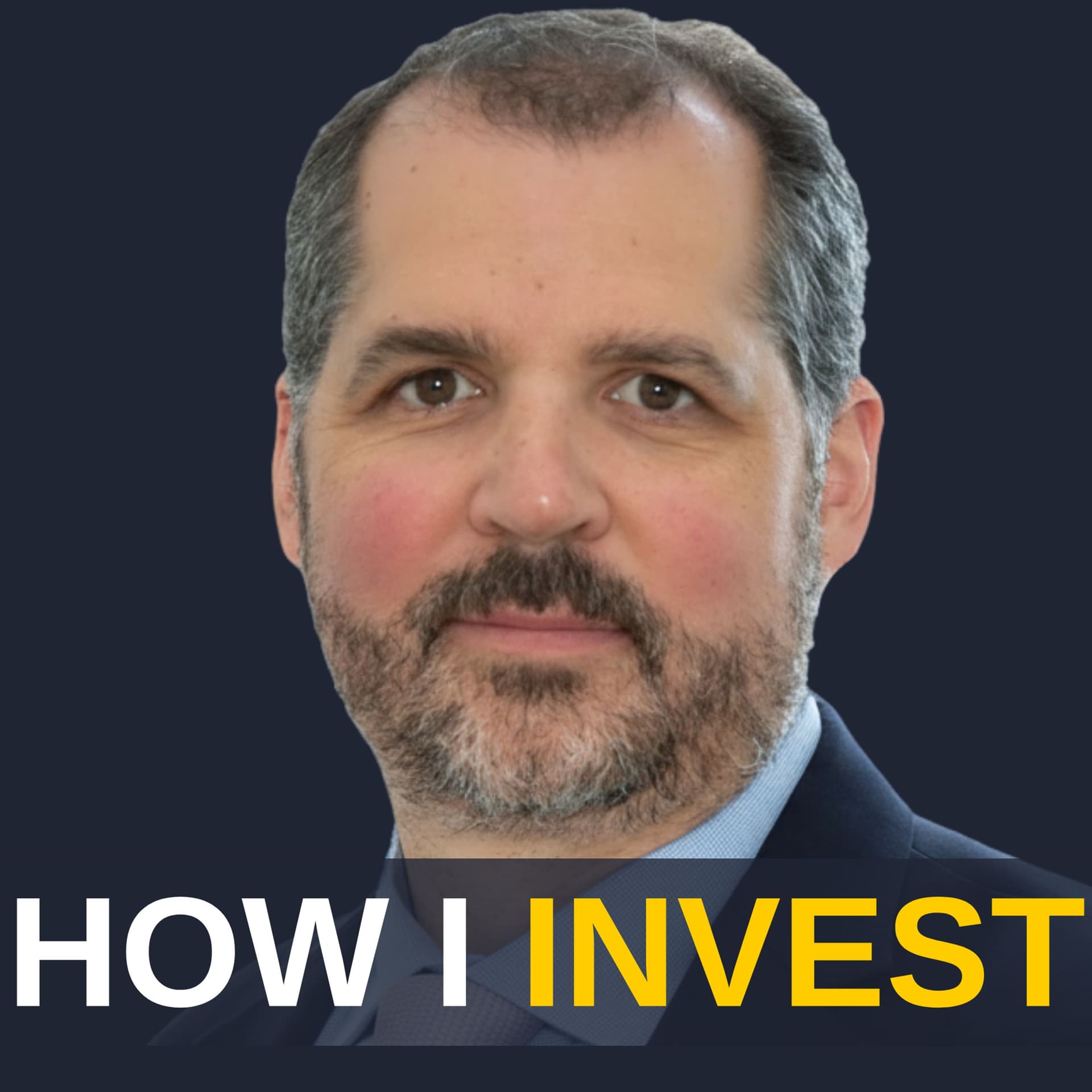
Podcast Overview Title: How I Invest with David Weisburd Episode: E314: How Endowments Actually Think About Risk Guest: Roger Vincent, Founder and CIO of Summation Capital Focus: Portfolio construction, co-investing, fee alignment in private equity, and the rationale behind risk management strategies employed by endowments.
Key Themes and Discussions
- Importance of Portfolio Construction
- Experience at Cornell: Roger Vincent managed a multi-billion-dollar portfolio and emphasizes the critical role of portfolio construction in achieving investment returns.
- Diversity of Private Equity (PE):
- PE encompasses various strategies from venture capital to buyouts.
- Appropriate combination can yield returns greater than the sum of individual investments.
- Misconceptions Around Diversification
- Common Misbelief: Many believe that achieving higher returns necessitates higher risk and concentration.
- Reality Check: Proper diversification within a PE portfolio can enhance expected returns while managing risks.
- The Private Equity Fee Structure
- Current State: The private equity industry has not adapted to low-cost structures seen in public markets (like ETFs).
- Fee Structures: The traditional 2-and-20 fee structure persists, with elite endowments leveraging co-investments to mitigate fee drag.
- Alpha vs. Beta: Discussed the distinction between returns attributed to skill (alpha) versus market exposure (beta), underscoring that investors should not be paying for beta.
- Incentive Alignment in Investment Management
- Allocator's Incentives: The alignment between asset owners (endowments) and their allocators is crucial.
- Benchmarking: Endowments assess performance relative to market benchmarks to ensure accountability for exceeding expected returns.
- Co-Investments and Their Strategic Use
- Utilizing Co-Investments:
- Increasingly used by sophisticated investors to lower overall fee exposure.
- Requires a careful balance to ensure expertise in the areas of direct investment.
- Risks of Co-Investing: While potentially lucrative, many face challenges without sufficient expertise; Roger highlights the importance of sticking to known strengths.
- Portfolio Construction Techniques
- Venture Capital Challenges: Differentiating between stages (early vs. late-stage) is crucial for effective investment.
- Behavioral Finance Considerations: Emphasizes the need for systematic approaches to co-investing to remove emotional biases from investment decisions.
- Innovations at Summation Capital
- Company Mission: Summation Capital aims to democratize access to high-quality private equity strategies typically reserved for elite endowments.
- Unique Fee Structure: Charges carry only on alpha over a public benchmark, avoiding traditional fee pitfalls.
- Differentiating Family Office Portfolios
- Comparative Analysis: Family offices often lack the diversification found in large endowments.
- Misconceptions on Diversification: Roger argues that a well-structured diversified portfolio does not equate to underperformance (de-worsification).
- Concluding Insights
- Roger emphasizes the need for institutional investors to avoid "double diversification," where fees are paid for both allocators and diversified GPs simultaneously.
- Highlighting the balance between specialization and diversification in successful portfolio management.
Key Takeaways
- Effective portfolio construction is foundational to achieving superior investment returns.
- Co-investments can significantly reduce fees but require expertise and careful execution.
- Incentives and alignment between allocators and asset owners are paramount for successful investing.
- Large endowments benefit from deep diversification, which family offices often struggle to replicate.
Final Thoughts The conversation reveals a nuanced understanding of the complexities involved in private equity investing, particularly how sophisticated endowments navigate risks and construct portfolios. Roger Vincent's insights provide valuable lessons for both institutional and individual investors seeking to optimize their investment strategies.
Written by AI. May contain mistakes. Listen to the episode to check what was said.
Chapters
Tap a time to open that second in VOLessons from Portfolio Construction
0:45 to 2:27
David discusses the importance of portfolio construction and its impact on investment returns.
“And how you put those together in a way where the whole is more than the sum of the parts is really critical.”
Understanding Asset Classes and Their Roles
2:27 to 5:05
Exploration of how different asset classes, especially venture capital, fit into a diversified portfolio.
“And exposure to beta has more or less become a zero-cost basis with index funds and ETFs.”
Private Equity Fee Structures
5:05 to 8:00
Discussion on the fee structures in private equity and why they remain sticky despite market changes.
“Check it out for yourself at alpha-cents.com slash how I invest.”
Evaluating Performance and Incentives
9:18 to 12:33
David explains how performance is evaluated in private equity and the importance of incentives in aligning interests.
“Where I will tell you the industry really is, is that the most sophisticated investors are doing some level of co-investing with their existing managers to average down that fee load.”
Co-Investments Strategy
12:33 to 14:01
Exploration of how endowments utilize co-investments to reduce fees and improve returns.
“If you've been considering futures trading, now might be the time to take a closer look.”
Understanding Risk Tolerance in Asset Management
14:52 to 17:00
Explore how asset owners manage risk and seek returns in their investments.
“And so the vast majority of asset owners don't have the risk tolerance to go and be entrepreneurs or they've already been an entrepreneur.”
Co-Investment Strategies in Venture Capital
17:01 to 20:13
Discover the intricacies of co-investing in venture capital and its challenges.
“And so nobody's going out and syndicating a seed or a pre-seed investment opportunity because the check is already very small.”
Building an Endowment-Style Portfolio
20:14 to 22:36
Learn about the advantages of constructing well-diversified investment portfolios.
“These are very deep skills and the relationships that you have to have in the industry are deep relationships.”
Overcoming Misconceptions in Diversification
22:37 to 25:55
Gain insights into the true benefits of diversification in investment strategies.
“So now you're going to get to many dozens of managers, you know, hundreds of funds and thousands of portfolio companies.”
Aligning Incentives in Private Equity
25:56 to 27:52
Understand how performance-based compensation structures function in private equity.
“two different people twice for the same thing.”
Transcript
Automatic transcript. May contain errors.0:00David Weisburd:You spent many years at the Cornell Endowment managing two and a half billion dollars at the time and generating some pretty spectacular results. What did that teach you about investing?
0:09Roger Vincent:I was at the Cornell Endowment for about 12 years. I left in 2024, so I got to invest there throughout an extended cycle, through a cycle. What I really learned about that experience was how important portfolio construction is to investment returns. And I think it's an area that people have under-invested in, under-spent time thinking about. And there's just a lot of value that investors can get by focusing on how they construct the portfolio that their asset classes are made of.
0:42David Weisburd:Why is portfolio construction such an underrated thing?
0:46Roger Vincent:Just taking the one asset class that I really spent my time on, which is private equity, which we think of as everything from early stage venture capital to growth equity to buyouts around the world, there's an incredible diversity of ways to generate the types of returns that are attractive to us as investors. And how you put those together in a way where the whole is more than the sum of the parts is really critical.
1:12David Weisburd:What are some examples of some assets that play a very specific role that complement the rest of private equity portfolios?
1:21Roger Vincent:Venture capital is a great example. Over long time horizons, venture capital has produced the best returns. And that's at the median level. It also has produced the best opportunity for outperformance by selecting first quartile managers. But it does this with a lot of cyclicality. And so if you make an entire portfolio out of nothing but venture capital, it may have characteristics in terms of highs and lows and lack of cash distributions that aren't tolerable for most asset owners. The most common misnomer is that you either have to sacrifice returns to get diversification that protects you from uncertainty to come.
2:06Roger Vincent:And so I tend to find that most investors feel like there's a trade-off there. If they want to generate high returns, they need to be highly concentrated and take all the risk associated with that. And if they want to de-risk and be more broadly exposed, that comes at the expense of higher returns.
2:26David Weisburd:Last time we chatted, we had this interesting conversation about the public markets. And exposure to beta has more or less become a zero-cost basis with index funds and ETFs. But that hasn't happened in the private markets. Why is that?
2:39Roger Vincent:Why didn't the private equity industry keep up with the times? It's hard to say. There are a lot of examples in financial markets of fee structures being a lot stickier than people think they should be. I would guess that in private equity, one of the reasons is it's been somewhat insulated from competitive pressures because of this large secular growth that we've seen in the asset class. And so as it's gone from this very niche part of the market to this very significant part of complex, large institutional portfolios, that growth has led to demand for products that probably has enabled people to survive with stale fee structures.
3:22David Weisburd:There's this constant product innovation. People are willing to pay for new products. Professor Steve Kaplan has done numerous studies on this, that private equity buyout and venture capital has alpha roughly three to 500 basis points net of fees. So the whole argument from the GP side is, yes, you're paying a lot, but you're actually on a net basis. You're still getting your 300 to 500 basis points a year. One of the hardest things of investing is seeing what's shifting before everyone else does. For decades, only the largest hedge funds could afford extensive channel research programs to spot inflection points before earnings.
3:55David Weisburd:and to stay ahead of consensus. Meanwhile, smaller funds have been forced to cobble together ad hoc channel intelligence or rely on stale reports from sell-side shops. But channel checks are no longer a luxury. They're becoming table stakes for the industry. The challenges has always been scale, speed, and consistency. That's where AlphaSense comes in. AlphaSense is redefining channel research. Instead of static point-in-time reports, AlphaSense channel checks delivers a continuously refreshed view of demand, pricing, and competitive dynamics powered by interviews with real operators, suppliers, distributors, and channel partners across the value chain.
4:31David Weisburd:Thousands of consistent channel conversations every month deliver clean, comparable signals, helping investors spot inflection points weeks before they show up in earnings or consensus estimates. The best part, these proprietary channel checks integrate directly into AlphaSense's research platform trusted by 75 % of the world's hedge funds with access to over 500 million premium sources. From company filings and brokerage research to news, trade journals, and more than 240 ,000 expert call transcripts. That context turns raw signal into conviction. The first to see wins, the rest follow. Check it out for yourself at alpha-cents.com slash how I invest.
5:10Roger Vincent:You know, Professor Kaplan's work has been incredibly influential in the endowment world. It was influential on how I thought about investing at Cornell. How he measures out performance has really become the industry standard and has been a great new tool that we've had at our disposal. And so, yes, the industry does, on average, generate alpha. That doesn't mean that people should be paying for the part of the returns that is not the alpha, and that's the beta.
5:39David Weisburd:One of the interesting things about the allocator world is the incentives for allocators. Tell me about what those incentives are and maybe how they sometimes diverge with the underlying pool of capital.
5:53Roger Vincent:Incentives are incredibly important. I often say if there's only one word that one needs to describe my style of investor or what I think is the most important word in investing, it's alignment. And so how you set up incentives either creates that alignment or creates that misalignment. And I'm just going to be a little bit more specific. Anybody who invests in private equity who's not a GP is allocating. And so that allocator might be an endowment. That allocator might be a fund of funds. That allocator might be a high net worth individual that's picking funds themselves or picking direct investments themselves.
6:29Roger Vincent:They're allocating on their own behalf. They're both the asset owner and the allocator. So endowments are really interesting because they've been allocating to private equity probably as a group longer than just about any other group of asset owners. And they've been doing it in a greater scale. I would say they've achieved greater sophistication than anybody else. And one of the things that the endowment allocators have done, which is really unique and impactful, is they've set up better alignment with their allocation teams. In my experience, certainly at Cornell, but also knowing how many and my peers operate, the way they incentivize the team is relative to benchmark performance.
7:14Roger Vincent:And so their view is that everybody should be accountable to a benchmark of what one would expect to achieve in their asset class. You know, typically this is an investable passive way of accessing something quite similar. And that the only real value that that allocation team is bringing is outperformance over that benchmark.
7:37David Weisburd:Do you think that's the right way to approach it? Shouldn't it make sense to benchmark private equity against other private equity funds? Why benchmark against public indices?
7:46Roger Vincent:Well, the deeper answer is we're going to evaluate performance of a private equity portfolio about 25 different ways. And we're going to use each one of those evaluations for a different purpose. So yes, we are evaluating the performance of the private equity portfolio against other private portfolios. We're assessing each individual fund against other individual funds of their same style in vintage year and a core tiling exercise. But for compensation, the philosophy is that you want to pick something that represents your cost of capital. And most endowments are really just very sophisticated 60-40 portfolios, where about 60 % of the allocation is to equity exposure.
8:32Roger Vincent:And if the team weren't there and they wanted to run essentially the same portfolio, they would just put that 60 points in liquid passive beta. And so the active choice that is being made by the asset owner, the institution, is to go hire a bunch of allocators, have them take what was a passive and liquid asset, make it active and illiquid, and in that hope to generate excess performance.
9:01David Weisburd:How do endowments like Cornell and other IVs leverage co-investments to their advantage?
9:07Roger Vincent:You see a number of institutions, but certainly not all, applying some level of co-investment to their portfolios. And this could be direct investments or co-investments alongside an existing manager. Where I will tell you the industry really is, is that the most sophisticated investors are doing some level of co-investing with their existing managers to average down that fee load. And so rather than the industry coming off the two and 20 fee structure and saying maybe today it should be one and a half and 15, it's really, for the most part, sticking to two and 20, but allowing its larger, more sophisticated investors to achieve an all in lower fee burden if they take the time and the effort to go and co-invest.
9:55Roger Vincent:So there's a lot of people out there that are paying, you know, rack rate and then a number of more sophisticated players out there that are using this tool to to average those fees down. And so it's a really great tool to have. Some people are probably taking it a little too far. And, you know, the question I would ask them is, are you really, you know, the best investor in the world in all of these different little pockets of the market such that you can go and eliminate that fee by doing it yourself? Or are you going to be better off working with the world's best investor in that area and paying them the fees?
10:33Roger Vincent:And we were able to generate significant outperformance at Cornell, predominantly just working with the people that we thought were the best investors in that market.
10:44David Weisburd:I've spoken with hundreds of family offices that tried to do direct, maybe a couple hundred. A couple edge cases have worked. Almost all have failed. In other words, what's worse than two and 20 is paying 100 % of your investment into mistakes. The couple that have worked have very much stuck to their knitting. They had a manufacturing company. They would do direct investing into manufacturing plants. They had an oil rig. They would direct invest into oil rigs. In a case where they could not only assess, but they had the right to win against other private equity funds and other pools of capital in that very much category.
11:19David Weisburd:That's the only case that I've seen that has worked over time.
11:23Roger Vincent:That completely makes sense to me. I could see that people, if they really had an area of expertise, could invest there successfully. the problem is that most people don't have expertise in everything. And so if that's your only strategy of investing, you're going to have very poor diversification. And so I think of there as being a spectrum that people can be on depending on what kind of return they're trying to achieve. If you are an endowment, let's just say you're in the rich category, we want to stay rich category. And so the strategy that the endowments are following is designed to get the highest expected return with the lowest variance of potential outcomes.
12:09Roger Vincent:And so the diversification, the portfolio construction that we engage in is intended to do this, to increase the expected returns, but to constrain both tails, but particularly the left tail. At the full other extreme, if you want to make money, you know, the best way to do this is to be concentrated. And it's no surprise that the richest people in the world are the entrepreneurs who make all of their money by investing in a single company.
12:39David Weisburd:If you've been considering futures trading, now might be the time to take a closer look. The futures markets have seen increased activity recently and Plus500 Futures offers a straightforward entry point. The platform provides access to major instruments including the S &P 500, NASDAQ, Bitcoin, natural gas, and other key markets across equity indices, energy, metals, forex, and crypto. Their interface is designed for accessibility. You can monitor and execute trades from your phone with a$100 minimum deposit. it. Once your account is open, potential trades can be executed in two clicks. For those who prefer to practice first, Plus500 offers an unlimited demo account with full charting and analytical tools.
13:18David Weisburd:No risk involved while you familiarize yourself with the platform. The company has been operating in a trading space for over 20 years. Download the Plus500 app. Trading and futures involves the risk of loss. This is not suitable for everyone. Not all applicants will qualify. When you want more, you start your business with Northwest registered agent. They give you access to thousands of free guides, tools, and legal forms to help you launch and protect your business all in one place. With Northwest, you're not just forming an LLC, you're building your complete business identity from what customers see to what they don't see, like operating agreements, meeting minutes, and compliance paperwork.
13:53David Weisburd:You get more privacy, more guidance, and more free resources to grow the right way. Northwest has been helping founders and entrepreneurs for nearly 30 years. They're the largest registered agent LLC service in the US with over 1 ,500 corporate guides, real people who know your local laws and help you every step of the way. What I love is how fast you can build your business identity with their free resources. You can access thousands of forms, step-by-step guides, and even lawyer-drafted operating agreements and bylaws without even creating an account. Northwest makes life easy for business owners.
14:24David Weisburd:They don't just help you from your company. They give you the tools you need after you form it. And with Northwest, privacy is automatic. They never sell your data because privacy by default is their pledge. Don't pay hundreds or thousands of dollars for what you could get from Northwest for free. Visit northwestregisteredagent.com slash invest free and start using free resources to build something amazing. Get more with Northwest Registered Agent at northwestregisteredagent.com slash invest free.
14:52Roger Vincent:And so the vast majority of asset owners don't have the risk tolerance to go and be entrepreneurs or they've already been an entrepreneur. They've made their money that way. And now there's somewhere along this spectrum where they maybe have some tolerance for concentrated risk to keep growing that wealth. But they probably have some portion of their wealth that they want to make sure is being managed in the more endowment style where they're getting the best return possible, but really keeping a very careful eye on risks that can be diversified in a way.
15:25David Weisburd:And co-investment is an art in and of itself. I'd argue it's a little bit easier in buyout than venture capital. How does one become an elite co-investor when it comes to investing into venture capital co-invest?
15:40Roger Vincent:That's a really interesting question. The perspective I bring on it is before I was at Cornell, I was a GP. And so I've actually spent the majority of my career still at this point, having served as a GP, doing deals, syndicating, co-invest. And so I understand quite a few of the things that GPs are thinking about when they are syndicating something. And there's a lot of value that the co-investor can bring to the table other than the capital. And one of them is certainty and clarity and predictability. And so when we co-invest, we have a process that we think is rigorous, but very easy for the GP to work with.
16:26Roger Vincent:And so a problem a lot of family offices have is they're under-resourced and maybe they're new to this and they're not as easy to be capital partners with from the perspective of the GP. Your question on venture capital is a difficult problem for anybody to solve. The thing about venture capital is there's just a very big difference between early-stage venture capital and late-stage venture capital, just to pick two extremes. And most of the co-investing that one will see in venture capital is going to be at the late stage. That's when big dollars are being raised. And so nobody's going out and syndicating a seed or a pre-seed investment opportunity because the check is already very small.
17:10Roger Vincent:And so one of the problems which people have if they want to co-invest in venture capital is that they have to think about what stage they're going to get exposure to relative to what stage they're trying to get exposure to. And so there's that challenge. The other challenge is the power law. I think at this point, everybody really understands that there's a very long right tail to venture capital returns. And if you don't happen to have exposure to a piece of that right tail, the expected return in venture capital can be very low. And so again, this comes down to portfolio construction, you have to make sure that you are making enough co-investments and you're getting enough venture capital exposure that something is very likely to be in that right tail.
17:59Roger Vincent:You're going to have a big winner in there. So being able to do this at a very high volume is critical to getting the returns that you're hoping to get.
18:11David Weisburd:In that vein, you might have two investments. One, your foot is an ice hot water 10x. The other one is ice cold. It's a zero. On average, you should feel like it's a 5x, but it feels either very cold or very hot. Are there structural ways that institutional investors get around the variance of co-investments? And what are some best practices for that?
18:34Roger Vincent:You're bringing up a great broader topic, which is behavioral finance. And I think that the institutional approach that I learned at Cornell really tries to take some of the emotion out of private equity. And so one approach that most endowments are following, certainly I follow, is to be more systematic about your co-investing. And we're trying to build a larger portfolio of co-investments. We're really trying to capture that 600 basis points of fee saving without introducing additional risk into the portfolio. And so if you only do this once, you're introducing a lot of risk. the situation is fairly binary.
Read the full transcript
19:19Roger Vincent:You're probably going to lose all your money. You're coldfoot. Maybe you're going to make a lot of your money, but you've just turned the whole situation into a bit of a coin flip. What we want to do is make sure that we're doing enough of these. We don't have to get that out of shape if one of them doesn't work. If they're enough there and we're doing them in a way that is rigorous with some of the best investors in the world, we'll get our fair share of winners. And at the end of the day, what do we expect to achieve? We expect to achieve similar returns to what we would have gotten with the funds, but 600 basis points higher because of the fee savings.
19:57Roger Vincent:And if you go and look at the academic research on co-investing in private equity, what you will find is the rigorous analyses show that it outperforms by almost precisely that amount, the fee savings.
20:13David Weisburd:you've now taken all the insights that you had from cornell earlier in your career as a gp and started summation capital a couple years ago what does summation capital do
20:25Roger Vincent:summation really tries to take private equity and make it accessible to people who don't want to do it themselves and what does that mean it means having somebody who is professional at operating this style of a portfolio, professional at underwriting managers, professional at constructing that portfolio in the right way. These are very deep skills and the relationships that you have to have in the industry are deep relationships. Most people don't have them and they take a very long time to generate. So I didn't think that everybody who wanted to have good exposure to private equity needed to reinvent the wheel on this.
21:08Roger Vincent:So what we're doing is making that endowment style of private equity available to a much broader set of asset owners. We do this by generally following the investment strategy that I implemented at Cornell and is very similar to what you would find at any large, sophisticated endowment. But then we innovated in a couple of ways that the market hasn't seen before. And we innovated to get the alignment right. We innovated to get rid of fees that were really detractive to returns. And we innovated to make the product simple to use. And when people can't do that, what I find too often is they go for second choices.
21:51Roger Vincent:They go for very poorly constructed portfolios, like you alluded to before.
21:56David Weisburd:And you construct endowment style portfolios. What does that mean? What's the practical difference between that versus a typical family office portfolio?
22:04Roger Vincent:I don't think most people appreciate how much diversification is in a large, well-constructed portfolio. So the data shows that your average large endowment, I'm talking about endowments with more than$5 billion, something like 50 to 75 GPs in it. Take that number, multiply it by three or four to get to the number of funds that you might be managing because these are typically long-term relationships. where you're going to be in multiple funds over time with each of these managers. And then each of those funds has underlying, multiple underlying portfolio companies. So now you're going to get to many dozens of managers, you know, hundreds of funds and thousands of portfolio companies.
22:48Roger Vincent:Very few families and other asset owners that I've ever come across are able to achieve or even understand the benefits of achieving that level of diversification. And if they did understand it, their ability to go and implement it would be pretty constrained.
23:06David Weisburd:Some would call that de-worsification, meaning you're just getting to beta. Why is that not over-diversification?
23:15Roger Vincent:I love that you asked this question because I get it a lot. I think this really goes to the crux of the misunderstanding. And we think that that level of diversification doesn't drive returns towards the media. and actually increases your expected return. And one of the analogies I give to use, you know, use to give this is, I'll come at it a couple of different ways. When I was coming up in the investment world and when I was learning about investing, even before I was actively investing, there were really two philosophies on how to invest. One, I credit to John Bogle, who said, look, don't try and beat the market.
23:56Roger Vincent:Just try and keep your fees low. take the index. And so that's, you know, that's full diversification in the context of liquid equities. And the other, I really credit to Warren Buffett. And he said, look, put all your eggs in one basket and watch it like a hawk. And you had to somewhat choose between one of these two philosophies. And the view, I think, as you're expressing it is a little bit like if you're not taking the Warren Buffett approach, then you're automatically just going towards the beta of the market. Now, first, let me say that the beta of private equity is not a bad return. As Steve Kaplan showed, there's pretty reliable performance there over liquid equity markets.
24:34Roger Vincent:And over long periods of time, hundreds of basis points can really add up into a meaningful difference of outcomes. What I discovered at Cornell was, and really worked on, was a third philosophy. And this is what I call to gather a bunch of hawks who are each watching their own nest like a mother hawk, you know, like a hawk and watch them like a mother hawk. And so that's really what we're trying to do. We don't disagree that being specialized and being focused and even being concentrated is a benefit. We think it's a benefit at the GP level. And that's the power of what the endowments are doing is they're getting the benefit of that specialist and that expert in net segment of the market.
25:16Roger Vincent:And they're getting the benefit of the broad diversification by spending the time to do the work to build these types of complicated portfolios.
25:26David Weisburd:It seems like the sin that a lot of institutional investors make is they double diversify. What you don't want is you don't want spikiness on a portfolio construction level, but people equate those two things and they end up making sure that every single manager kind of hits this 2 to 2.5 expand. And the way to accomplish that is to never take any guess, to just be beta and everything.
25:47Roger Vincent:That's absolutely right. And essentially, if you're paying your allocator to do diversification for you, and then you're also paying a GP to run a massively diversified portfolio, you just pay two different people twice for the same thing.
26:04David Weisburd:Yeah, Silicon Valley has roughly a 50 % success rate in terms of figuring out the next great wave. But if you had invested in every single trend, you'd have done extremely well, but you would have been wrong 50 % of the time. It's sort of a paradox. For summation capital, you've aligned incentives in a unique way. Tell me about that. And how do you measure your own performance?
26:27Roger Vincent:It's unique in the financial world, in the financial markets. It's completely standard in the endowment world. So as I already said, I, like pretty much everybody, if not everybody in the endowment world, was primarily compensated based on performance, but relative outperformance against a reasonable benchmark. And so for most of the time I was at Cornell, I had to outperform liquid equities to justify that I created value and to be able to make a case for receiving performance compensation. This became my standard way of thinking that this was the right way to compensate people? Why else are we locking up our liquidity, arguably taking greater risk in private markets other than to outperform what we could get quite easily for free in liquid equity markets?
27:19Roger Vincent:I went looking for that fee structure in an investable product. This was a number of years ago. And I was shocked to realize that to my knowledge, this was back then, but it's also today, there's not a private equity fund. There's not a private equity fund of funds. There's not a private equity advisory firm. There's not a private equity bank, a focused bank that will enable you to get private equity exposure. This is anywhere in the world in the history of the asset class where you can put even a portion, if not primarily pay them on the performance of alpha.
28:02David Weisburd:So Roger, love what you're doing. This has been an absolute masterclass. Thanks so much for jumping on.
28:08Roger Vincent:Thank you, David. It's been a fun conversation.
28:11David Weisburd:That's it for today's episode of How to Invest. If this conversation gave you new insights or ideas, do me a quick favor. Share with one person in your network who'd find it valuable or leave a short review wherever you listen. This helps more investors discover the show and keeps us bringing you these conversations week after week. Thank you for your continued support.
From the publisher
If private equity generates alpha, why are investors still paying for beta?
In this episode, I sit down with Roger Vincent, Founder and CIO of Summation Capital, to break down portfolio construction, co-investing, and fee alignment in private equity. After more than a decade leading Cornell University’s multi-billion-dollar private equity portfolio, Roger shares why diversification in PE actually increases expected return, how elite endowments use co-investments to systematically reduce fee drag, and why most allocators are misaligned with the capital they steward. We also unpack Summation’s industry-first structure—charging carry only on alpha over a public benchmark and offsetting fees through a no-fee, no-carry co-investment program.