In short
Podcast Summary: How $70 Billion Gets Allocated During Market Chaos
Podcast Title: How I Invest with David Weisburd Episode Title: E322: How $70 Billion Gets Allocated During Market Chaos Guest: Jennifer Mink, President of Investment Performance Services
Episode Overview In this episode, David Weisburd interviews Jennifer Mink, who leads Investment Performance Services (IPS), an investment consulting firm managing approximately $70 billion in assets. The discussion focuses on how Taft-Hartley pension plans navigate long-term investing strategies, particularly during market volatility.
---
Key Concepts and Discussions
- Asset Allocation Modeling
- Goal: IPS builds portfolios to help clients achieve investment targets while maintaining liquidity for ongoing benefits.
- Diversification: Incorporating asset classes with higher standard deviations (e.g., alternative investments) can reduce overall portfolio risk due to lower correlation with traditional asset classes.
- Education and Client Engagement
- Investor Education: IPS emphasizes the importance of educating clients on investment strategies and their implications for both risk and return.
- Risk Perception: Investors often misjudge the risk associated with certain investments; understanding correlation between assets is crucial.
- Common Investor Mistakes
- Double Diversification: Clients often diversify both at the fund level and portfolio level, missing the opportunity for greater risk-adjusted returns by focusing on fewer, more volatile assets.
- Emotional Investing: The need for a robust understanding of investment theses is highlighted to mitigate emotional decision-making during market downturns.
- Market Dynamics and Rapid Changes
- Proactive Rebalancing: The importance of reallocating assets during significant downturns (e.g., 2020 pandemic) was discussed, illustrating the benefits of timely actions.
- Investment Trends: The episode touched on the evolving nature of the investment landscape and the necessity for investment managers to adapt to rapid market changes.
- Challenges of Managing a Large Fund
- Scaling Difficulties: Managing significant assets (e.g., $70 billion) requires structured processes and disciplined research methodologies.
- Staffing Issues: Post-COVID hiring challenges impact the ability to find committed professionals willing to uphold the firm’s mission.
---
Insights on Taft-Hartley Pension Plans
- Capital and Commitment
- The Taft-Hartley sector represents a $700 billion market that is often underestimated.
- Jennifer shares personal insights from her Taft-Hartley family background, emphasizing the real-world impact of retirement funding on union workers.
- Investment Strategy and Risk Management
- Fiduciary Responsibility: Emphasis on ERISA fiduciary standards and the importance of responsible contractor policies in investment decisions.
- Emerging Managers: The approach to assessing and tracking emerging managers over several fund vintages prior to committing capital.
---
Conclusion and Call to Action Jennifer Mink highlights the significant opportunity for investors to engage with the Taft-Hartley market, stressing the need for education and understanding of this often-overlooked capital pool. The episode concludes with encouragement to share insights and promote awareness about the importance of Taft-Hartley funds in the broader investment landscape.
---
Key Takeaways
- Asset allocation models that include diverse asset classes can mitigate risk.
- Continuous client education is vital for successful investment strategies.
- The Taft-Hartley market offers substantial potential that warrants further exploration and understanding.
- The importance of adapting to market changes and being proactive in investment strategies can lead to better outcomes during periods of volatility.
---
This summary encapsulates the crucial insights shared in the episode, providing a comprehensive overview of the discussion and the strategic implications for investors in the Taft-Hartley space.
Written by AI. May contain mistakes. Listen to the episode to check what was said.
Chapters
Tap a time to open that second in VOAsset Allocation and Its Benefits
0:45 to 2:30
Discussion on how asset allocation can increase returns while reducing volatility.
“So we look at that as a true benefit to diversification.”
Examples of Alternative Investments
2:30 to 4:30
Exploration of how alternative investments can lower overall portfolio volatility.
“Some things on their own sound scary, especially if you're not familiar with it.”
Common Investor Mistakes
4:30 to 7:00
Identifying two key mistakes investors make regarding diversification and portfolio management.
“Is this something that you're messaging ahead of a downturn or is it possible to get people to act hyper rationally during a downturn?”
The Importance of Education in Investing
7:00 to 10:00
Emphasizing the need for investor education and understanding market dynamics.
“So it's not like at the beginning of the year, we're setting a goal to go out and bring in X amount of assets or have X amount of clients.”
Proactive Strategies During Market Downturns
10:00 to 13:00
Discussing strategies for rebalancing portfolios during market downturns, with references to past market events.
“our research team, we have a pretty strong network that we use for public managers, but more for private managers.”
Diligence and Manager Evaluation
13:00 to 14:01
How the firm conducts diligence on investment managers and the criteria used for selection.
“Well, how do we know that that is the right criteria and that we're screening for the right things?”
Evaluating Fund Managers and Market Trends
17:06 to 23:08
Explore key factors for assessing fund managers and current market dynamics.
“Said another way, you're really over those three vintages.”
Insights on the Taft-Hartley Market
23:08 to 28:00
Gain insights into the Taft-Hartley market and its significance in finance.
“You've been in your seat for nearly 23 years.”
Navigating Challenges as a Woman in Business
28:00 to 29:40
Learn about the unique challenges and advantages women face in a male-dominated industry.
“Work ethic and personal commitment don't always translate into new business and people liking you.”
Understanding the Taft-Hartley Funds
29:40 to 30:14
Gain insights into the Taft-Hartley funds and their significance in the investment landscape.
“on the Taft-Hartley funds, which is crazy, and to my detriment, it's a$700 billion industry.”
Transcript
Automatic transcript. May contain errors.0:00David Weisburd:So you're president of Investment Performance Services, which has roughly$70 billion in assets under advisement. When we last chatted, you mentioned that you guys are able to increase your returns while decreasing volatility. That caught me by surprise. How are you able to accomplish that?
0:18Jennifer Mink:So one of the things that we do for our clients is asset allocation modeling. So we are building portfolios for them to help them not only reach their investment goals, but to have ample liquidity to pay their ongoing benefits. So when we do that asset allocation modeling, a lot of times what we're able to do is take an asset class that maybe has a higher standard deviation. When we add that to the investment portfolio, it actually decreases the overall risk and volatility of the total portfolio. So we look at that as a true benefit to diversification.
0:52David Weisburd:Give me an example of that.
0:53Jennifer Mink:A good example would be alternative investments. So many clients have a lot of experience with public markets. But as we start looking at some more exotic asset classes, private asset classes like infrastructure, private equity, when we look at the standard deviation of some of those investments relative to, say, an investment-grade bond portfolio, when we add that to the portfolio, it actually decreases the overall volatility of the portfolio simply by having that lower correlation. That's a very important factor. So we try to educate our clients about that, about asset class correlation. And sometimes having more things in the portfolio is less risky than only having a few, what we would call safer, less volatile investments.
1:38David Weisburd:There's two different mistakes that investors oftentimes make. One is, I would just call it double diversification. So they diversify on both the fund level and on their portfolio level, where sometimes the best portfolios actually have spiky assets. So think of it as a venture fund that might return a 5, 7x, but once in a while might even lose a little money, might be a 0.8x. People are so focused on making sure that that fund is super diversified, where they really want to be diversified on a portfolio level. And then second mistake to your point is something could be risky on its own or something could even be crazy to put in a lot of money on its own.
2:19David Weisburd:But if you're hedging against it, which we'll talk about later, it's not actually as risky on a portfolio level, even though if you just invested into that one asset, you'd basically be a crazy person.
2:31Jennifer Mink:Some things on their own sound scary, especially if you're not familiar with it. One of the things that we're a huge advocate is education. So we We are trying to educate our clients on anything that we are recommending. So we're the investment professionals. They have different day jobs during the day. We're big in the tapped Hartley trade marketplace. So we really have a responsibility to educate them on kind of what it is that we're recommending and then illustrate how it impacts their portfolio in both the return and risk standpoint.
3:03David Weisburd:It's so underrated to understand and be rooted in a thesis. example I like to give is Bitcoin. Let's say you were lucky enough to invest at$10 a Bitcoin in 2011. That sounds great. But if you had no fundamental view on the Bitcoin, you might have sold at 70. You certainly would have sold at$150. And then today it's approaching$100 ,000. So knowing not only when to buy, which is kind of what all the media is about, and that's what Everyone wants to know, like, what should I buy? What should I buy? Understanding the fundamental thesis behind it helps you not only not sell early when it's down, you could revisit the thesis and ask yourself the fundamental question, is this noise in the market or has something fundamentally changed?
3:50Jennifer Mink:That's really, I think, where emotion comes into play. So if somebody is not understanding why they have an investment and kind of what the ups and downs may be through that investment cycle, there's a lot of emotion that comes in, certainly when assets are doing well, everybody's happy, they're making money. But certainly when there is a downturn, sometimes you can get some panic. So again, that's where the education comes into play. And also our partnership to be a good steward of capital of really trying to be contrarian and not selling when things are down and actually adding more money when things are down and doubling down on what we think is a good idea over the long term.
4:31David Weisburd:Is this something that you're messaging ahead of a downturn or is it possible to get people to act hyper rationally during a downturn?
4:42Jennifer Mink:It's trying to get ahead of it and then working through it. So I think a perfect example would be 2020. So that snapped back in the market that happened very, very quickly. So we had the whole world closed during the month of April. Our offices, like everybody else's office, was closed. I was still coming into the office every day. We still had portfolios to oversee and we had communication to get out. During that month, we were writing memos to clients, talking to them about adding more money to the equity market to try to rebalance because the dip was so severe. It was almost like 2008 going into 2009.
5:21Jennifer Mink:So 2008, we had a dip of in public markets, 40 percent within the first six months of 2009, the S &P was down another 26%. So you had to rebalance. You were out of compliance with your policy. And it's really trying to hold the feet to the fire to put money in when your emotions are telling you not to. So we were very proactive in 2020, in the second quarter, to rebalance specifically to equities. And then I think we all know how quickly that snapped back. It was a little of a surprise how quickly it did start to come back. But our clients that were proactive and took the recommendations, their portfolios performed the best that year.
6:03David Weisburd:What gets easier when you're investing$70 billion?
6:08Jennifer Mink:What gets easier? I think it's really about the structure of the company. So this year, 2026, IPS, we're actually celebrating the 40th anniversary of our firm. So over those four decades, we've had pretty steady growth over that time period. So with that growth comes structure. We have very disciplined procedures, especially when it comes to our research. We can apply that whether we're a$7 billion firm, a$70 billion firm, or$170 billion firm. What we look for and what we like in terms of managers and asset classes doesn't really depend on our size.
6:50David Weisburd:When you have$70 billion, what gets harder?
6:56Jennifer Mink:I would say managing the growth of the firm. We don't have specific mandates in terms of our size. So it's not like at the beginning of the year, we're setting a goal to go out and bring in X amount of assets or have X amount of clients. Our goal isn't to be the largest Tap Hartley Consulting Firm, we really want to be the best consulting firm. We work with almost 200 unions nationwide, and that is representing working men and women in all 50 states. So as we continue to grow, it's extremely important to us to hire people who are not only committed to our clients and our mission, but who are willing to show up every day to really get the job done.
7:42Jennifer Mink:And we've found that post-COVID, it's getting harder and harder to find people who are willing to do that.
7:49David Weisburd:One of the hardest things of investing is seeing what's shifting before everyone else does. For decades, only the largest hedge funds could afford extensive channel research programs to spot inflection points before earnings and to stay ahead of consensus. Meanwhile, smaller funds have been forced to cobble together ad hoc channel intelligence or rely on stale reports from sell-side shops. But channel checks are no longer a luxury. They're becoming table stakes for the industry. The challenges have always been scale, speed, and consistency. That's where AlphaSense comes in. AlphaSense is redefining channel research.
8:22David Weisburd:Instead of static point-in-time reports, AlphaSense channel checks delivers a continuously refreshed view of demand, pricing, and competitive dynamics powered by interviews with real operators, suppliers, distributors, and channel partners across the value chain. Thousands of consistent channel conversations every month deliver clean, comparable signals, helping investors spot inflection points weeks before they show up in earnings or consensus estimates. The best part, these proprietary channel checks integrate directly into AlphaSense's research platform trusted by 75 % of the world's top hedge funds with access to over 500 million premium sources.
8:58David Weisburd:From company filings and brokerage research to news, trade journals, and more than 240 ,000 expert call transcripts. That context turns raw signal into conviction. The first to see wins, the rest follow. Check it out for yourself at alpha-sense.com slash how I invest. Nearly three-fourths of your managers beat their benchmarks and you diligence three to 400 managers a year. How in the world do you diligence so many managers and have such a high hit rate?
9:29Jennifer Mink:I talked to you earlier about our structure. I mean, that is our number one thing that clients hire us for. So a benefit fund is going to hire an investment consultant for access to investment ideas and to investment managers. We have a dedicated research team. So they are utilizing primarily databases for most of our public market investment managers, looking at the tenure and experience of not only the consultants at our firm, but within our research team, we have a pretty strong network that we use for public managers, but more for private managers. You know, a firm that's been in business for 40 years and overseeing 70 billion in assets, we have a very good reputation in the industry.
10:16Jennifer Mink:So a lot of times firms are calling us and it's our job to answer those calls. So I get probably two to three emails a day from investment managers who are curious about either our firm, a specific client, or they're just trying to raise money. And somehow we showed up on their radar. So we have some conversations with them. When you're doing about a thousand diligence meetings, averaging that over a three-year period, there's a lot of hustle involved with that.
10:49David Weisburd:How do you look at emerging managers? Is it a subset of the overall portfolio? Do you have a program or do you just track them until they they're on a third, fourth, fifth vintage?
11:00Jennifer Mink:We really track them. Being a steward of somebody else's capital and serving as a fiduciary, it's very difficult to say, OK, let me take somebody else's money and try this new idea with this team that's unproven and doesn't have a track record. If we see something we like or it could be an investment philosophy that's coming down from our investment committee that we want to start tracking and looking at. That's, you're exactly right. We're going to follow that manager through maybe one, two, three vintages of a fund. Typically by a fund four, we're going to be comfortable to start deploying assets.
11:38David Weisburd:What exactly are you looking for in the first three funds that makes you really excited when they come out for a fund four?
11:43Jennifer Mink:We want to look at the stability of the team in terms of capital calls. How much are they deploying, how quickly are we getting invested? What is the turnaround looking like? Are we getting distributions back? Are the returns looking kind of what we thought they were? Is the investment philosophy in line with what they said it was going to be? No big hiccups in terms of legal or regulatory issues, stability at the firm, no change in ownership, and just really looking for consistency. And if I had to pick one word to describe IPS, it would be consistent. We're consistent in our business. We've been doing this for 40 years.
12:22Jennifer Mink:This is the only thing we do. The only thing we do is investment consulting. We're dedicated to the Taft-Hartley marketplace. We've been very institutionally focused. We're just very consistent in what we're looking for. You mentioned earlier about three quarters of our managers beating their benchmarks. You know, that's not an easy thing to do. And we know this because we actually track it. So for all of our public fund managers, you know, not only do we evaluate the performance of investment managers, we actually evaluate the performance of ourselves and we do that through our research. So I mentioned earlier, we have the structure in place and we have this criteria that we apply to both public and private managers.
13:04Jennifer Mink:Well, how do we know that that is the right criteria and that we're screening for the right things? Well, we have to go back and then we have to do a look back and see how did those managers that that criteria led us to actually perform over different market cycles? So not only up markets, but we look at down markets and how did they perform in 2022? and then that's how we're getting that consistency ratio. That consistency ratio is telling us that what we're looking for in our screening is leading us to really top tier, best in class managers.
13:36David Weisburd:When you want more, you start your business with Northwest Registered Agent. They give you access to thousands of free guides, tools, and legal forms to help you launch and protect your business all in one place. With Northwest, you're not just forming an LLC, you're building your complete business identity from what customers see to what they don't see, like operating agreements, meeting minutes, and compliance paperwork, you get more privacy, more guidance, and more free resources to grow the right way. Northwest has been helping founders and entrepreneurs for nearly 30 years. They're the largest registered agent LLC service in the US with over 1 ,500 corporate guides, real people who know your local laws and help you every step of the way.
14:13David Weisburd:What I love is how fast you can build your business identity with their free resources. You can access thousands of forms, step-by-step guides, and even lawyer-drafted operating agreements and bylaws without even creating an account. Northwest makes life easy for business owners. They don't just help you from your company. They give you the tools you need after you form it. And with Northwest, privacy is automatic. They never sell your data because privacy by default is their pledge. Don't pay hundreds or thousands of dollars for what you could get from Northwest for free. Visit northwestregisteredagent.com slash invest free and start using free resources to build something amazing.
14:49David Weisburd:Get more with Northwest Registered Agent at northwestregisteredagent.com slash invest free. When you want more, you start your business with Northwest Registered Agent. They give you access to thousands of free guides, tools, and legal forms to help you launch and protect your business all in one place. With Northwest, you're not just forming an LLC, you're building your complete business identity from what customers see to what they don't see, like operating agreements, meeting minutes, and compliance paperwork. You get more privacy, more guidance, and more free resources to grow the right way.
15:20David Weisburd:Northwest has been helping founders and entrepreneurs for nearly 30 years. They're the largest registered agent LLC service in the US with over 1500 corporate guides, real people who know your local laws and help you every step of the way. What I love is how fast you can build your business identity with their free resources. You can access thousands of forms, step-by-step guides, and even lawyer drafted operating agreements and bylaws without even creating an account. Northwest makes life easy for business owners. They don't just help you from your company. They give you the tools you need after you form it.
15:50David Weisburd:And with Northwest, privacy is automatic. They never sell your data because privacy by default is their pledge. Don't pay hundreds or thousands of dollars for what you could get from Northwest for free. Visit northwestregisteredagent.com slash invest free and start using free resources to build something amazing. Get more with Northwest Registered Agent at northwestregisteredagent.com slash invest free. Let's be honest, subscriptions out of fast. streaming services, apps, memberships you forgot you even signed up for, and canceling them is usually a pain. That's where Experian subscription cancellation comes in.
16:27David Weisburd:Experian can take the pain out of canceling subscriptions by handling it for you. You just keep the ones you want and put money back in your pocket. Over 200 subscriptions are cancelable. You can also save money by letting Experian negotiate the rates on your bills. They'll keep an eye out for new deals and saving opportunities and negotiate directly with your provider on your behalf. And the best part, you keep 100 % of your savings. Get started with Experian app today. Results will vary. Not all bills or subscriptions are eligible. Savings not guaranteed. Paid memberships with a connected payment account required.
17:05David Weisburd:See experian.com for details. Said another way, you're really over those three vintages. You have a chance to stress test that team. Talk to me about these foot faults or yellow or red flags. What don't you want to see that a manager would do in the first three vintages?
17:22Jennifer Mink:Within those first three vintages, you know, we're really looking for the consistency. So looking for that return, seeing if there's any turnover in the team. So a lot of times if a new team is getting started, is everybody sticking with it? Is anybody leaving? Any changes in fees? Are the fees consistent with what they were supposed to be? Are they meeting their hurdle rates? Are they meeting their benchmarks? So we're just really looking for what they said they were going to do and have they been able to do it? One of the things that we're faced with right now is just slow distributions coming out of private equity.
18:00Jennifer Mink:We do run private equity pacing analysis every year. Every client who has private equity, we're doing a model out in terms of where are we in distributions and capital calls. And when do we need to commit more money? The problem we're running into right now is as we're having the next vintage launch, we've not gotten enough money back in distributions, whether it's from that manager or other managers, to really start redeploying more capital into the space.
18:27David Weisburd:I have Alex Ambrose from Allocator Training Institute, and they had done some benchmarking. The original Yale model, there was roughly 24 % DPI per year. 2024 was 9%, 2025 was 9%. So the model as it's made to work is broken today.
18:44Jennifer Mink:That's what we're seeing. So last year, most of our searches were into infrastructure. So as I said, we were big in private equity in 21, 22, not as much in 23, 24. 24, we were doing a little bit more in private credit. And then last year, we were leaning very heavily into infrastructure.
19:07David Weisburd:One of the most underrated things in alternatives, I believe is this concept of structural alpha. It's become this buzzword. It means many different things. Sometimes it means tax. Sometimes it means literally a specific structure. One underutilized form of structural alpha is when managers create funds specifically for different types of LPs. I had the CIO of the doctor's company, T.C. Wilson, and he talked about how insurance companies need funds to have certain kind of structures. And if more people would structure those funds in that way, there would be a big pool of capital. Do you see the same thing in Taft-Hartley funds in that managers could, if managers went out of their way to structure their funds in certain ways, they could better partner with somebody like yourself?
Read the full transcript
19:57Jennifer Mink:What we look for really with all of our managers, but in particular with our private managers, is we're looking for that ERISA fiduciary acceptance. So that for a lot of people that don't know a lot about ERISA, that is almost like a non-starter. So unless you're willing to be an ERISA fiduciary, have that in your legal documents, or you're able to do that via a side letter, that is going to be a door that's going to be closed for you if you're not willing to do that. So that's kind of like the first key to get into the door with TAP-Hartley. So you need structure of fund that at least has some sort of level of ERISA considerations.
20:37Jennifer Mink:The second thing is having a responsible contractor policy. So this is extremely important. This is something that we look for in all of our diligence, especially with real assets. So for real estate and for infrastructure, that RCP, there's two main elements to that. Number one is really looking to have terms in the documents that are going to have some assurance of the use of union labor. The second part of an RCP is what's referred to as a neutrality clause. And what that is, it's having language in there that asset operators are going to honor the right of workers to organize. So without having a full understanding of how the union marketplace works, some of those things, again, we're going back to like, this sounds scary.
21:28Jennifer Mink:I don't know if I want to do it. But if you want to work in the Taft-Hartley space, if you want to get those Taft-Hartley dollars, these are really the two things that you're going to need. That ERISA language as well as the responsible contractor policy. policy. Now, when we had an earlier conversation, David, and I was talking about this marketplace a little bit, I think you made a comment of, you know, do you feel like some of the things that you're doing result in adverse selection? So now you're not including some good managers because you're being so stringent. And I think my answer to that was, I don't think that we are.
22:03Jennifer Mink:If we get a question on two or three, which is, what is ERISA? I don't know what that is. And I've never heard the term RCP before, that's not a, okay, thank you, bye, we hang up. We're willing to work with the manager. We're going to explain what that is and really educate them on it. Because if it's a manager that we like, or it's a thesis or something that we are interested in, we're going to tell them, this is what you need to do. And if you do those things, come back to us, come back to us. And sometimes they'll come back to us with the RCP and they're like, can you look at this? Is this kind of like, what is working in the marketplace?
22:39Jennifer Mink:So we've been able to work with a lot of managers to educate them. So not only are we educating our clients, but we're educating private market managers that really don't understand the space to understand how you can raise money in the space. Anytime you have a big pool of capital, you could change governance and change the market in a way that doesn't have to result in adverse selection, as long as it's
23:02David Weisburd:a big pool, a big enough pool of capital. The market's efficient, the market starts to coalesce around these pools of capital. You've been in your seat for nearly 23 years. What surprised you the most?
23:14Jennifer Mink:I've been very focused on the Taft Hartley market for my whole career. And I think one of the things that surprises me the most is the way that a lot of people outside of the market, or even in the industry, may underestimate that market. How much money is there? How committed the trustees are to doing the right thing.
23:38David Weisburd:I did the research prior to the interview. It's roughly$700 billion in these types of funds. And you are the first guest that's ever talked about it.
23:50Jennifer Mink:I'm happy to be the first guest to talk about Taft-Hartley. I grew up in a Taft-Hartley family. So my father is a retired electrician. So he's living on his pension. Most of my family are in labor union, police, fire, my sister's in a teacher's union. So I know firsthand how important it is to get it right. And that's why I'm just so committed to what we're doing at IPS. What's compounded exponentially in your career?
24:19David Weisburd:And what's kind of just grown linearly where every time you do it over and over, it's about as hard as it was before?
24:26Jennifer Mink:I'd say one of the things that's compounded exponentially is really how quickly the markets move and how much you have to stay on top of everything. You know, when I look at when I started in this business over 20 years ago, kind of hedge funds were the new thing on the horizon for institutional investors. I did a lot of public speaking about hedge funds. It was like a it was almost like a dirty word. If you were I used to equate it to like yelling fire in a theater or shark if you were at the beach, like you said the word hedge fund and people got very, very nervous about it. Now it's something that people have in their portfolio and you just kind of look at how quickly new products or ideas continue to come into the market and just keeping pace with that.
25:14Jennifer Mink:I just went over what we've been doing over the past couple of years. And, you know, our largest searches over the past five years have all been in alternative investments. So again, the infrastructure, the private equity, the private credit, opportunistic credit, all of these new facets and areas for investing portfolios have become much more complex. One of the things that I think that we're really good at is not investing in certain things. So everybody always talks about, you know, what they invest in and what their clients are in and what made money that year. There's a lot of things that we've looked at over the years that were a hard no for us.
25:51Jennifer Mink:You know, we're never chasing the hot dot, the high beta, the high volatility investment, things that utilize a lot of leverage. We've never invested in portable alpha. We don't do risk parity. We've stayed away from 13030 strategies. You know, we've educated our clients on all of those. Those are topics that we brought to our clients to educate them on because they're going to conferences and they're hearing about this. And if they're a large fund, they're getting calls from investment managers. You should be invested in this. Let me come talk to you about it. And then our job is to say, let me explain to you what that is and why we think this is a horrible idea for your fund.
26:31David Weisburd:I'm old enough to remember when hedge funds were actually hedged. That's the original. And over the last couple of weeks, I got to interview the 23-year CIO of CalSTRS, Chris Ailman and the former CIO of UTIMCO, Britt Harris, and they share the same philosophy, which is Wall Street's always pushing new products in order to charge new fees. And it's always extremely compelling because Wall Street has some of the top marketers in the world. And sometimes good investing is saying no to those. And sometimes it's truly having beta in a space, which isn't something that anyone ever wants to admit, but sometimes beta is the right way to access an asset class.
27:14Jennifer Mink:We have a saying that sometimes the best investment you make is the one you avoid.
27:19David Weisburd:If you could go back to 1998, when you had just finished your MBA, what is one piece of advice you would have given a younger Jennifer that would have either accelerated your career or helped you avoid costly mistakes?
27:29Jennifer Mink:That's a good question. I mean, fortunately, I haven't had any costly mistakes. I was raised in an environment where, you know, a strong work ethic and doing the right thing mattered. and I got to where I am by doing that, by working hard and always doing what was right. That's not to say I didn't have some bumps along the road, but I feel like things like that only make you stronger. You have to learn from some of your mistakes. But looking back, I think the one piece of advice that I would give myself is to not take business personally. You know, business is business. Work ethic and personal commitment don't always translate into new business and people liking you.
28:08Jennifer Mink:and as a woman in a male-dominated business, I think it took me some time to really figure that out. I would say after 25 years in this business, the one thing I've learned is if people aren't talking about you, then you're probably not doing anything important.
28:23David Weisburd:Certainly in the 90s and 2000s, there was a lot of challenges with being a woman in the space. What are some advantages and what was some wind at your back that helped you as a female in the industry?
28:35Jennifer Mink:The advantages of being a woman in the space is a lot of times people may underestimate you. And women in general are extremely meticulous and have an attention to detail that I think men do not have. So I always think it's fun when people want to underestimate me because I'm going to be fully prepared. I've done my homework. I'm going to show up. I'm going to be ready to go. I'm ready to compete.
29:06David Weisburd:I've seen my wife, Jessica, she's absolute savant at dealing in high end real estate, which is still largely dominated by men and her ability to read the room and deal with men's ego and get everybody to go in the direction that she wants them to go. But to do it with classes, something just a male could not do. Sometimes I'm in these rooms. I'm like, there's nothing I could have said that could have closed the deal like she did.
29:32Jennifer Mink:Maybe we have a level of patience and understanding that we can then execute on that.
29:38David Weisburd:Well, Jennifer, as I mentioned, this first podcast on the Taft-Hartley funds, which is crazy, and to my detriment, it's a$700 billion industry. Before this episode, I looked up venture, the entire venture asset class, according to NVCA, was$1.25 trillion. So it's more than half of the entire venture. So just to give people context, and more people need to learn about it, more people should educate themselves. So thanks so much for jumping on and helping educate me and the audience.
30:06Jennifer Mink:I appreciate being your first yes and being able to educate your audience about it and really promote what's happening in the TapTartley space. It's important stuff.
30:15David Weisburd:Thank you, Jennifer.
30:16Jennifer Mink:Thank you for having me.
30:19David Weisburd:That's it for today's episode of How to Invest. If this conversation gave you new insights or ideas, do me a quick favor. Share with one person in your network who'd find it valuable or leave a short review wherever you listen. This helps more investors discover the show and keeps us bringing you these conversations week after week. Thank you for your continued support.
From the publisher
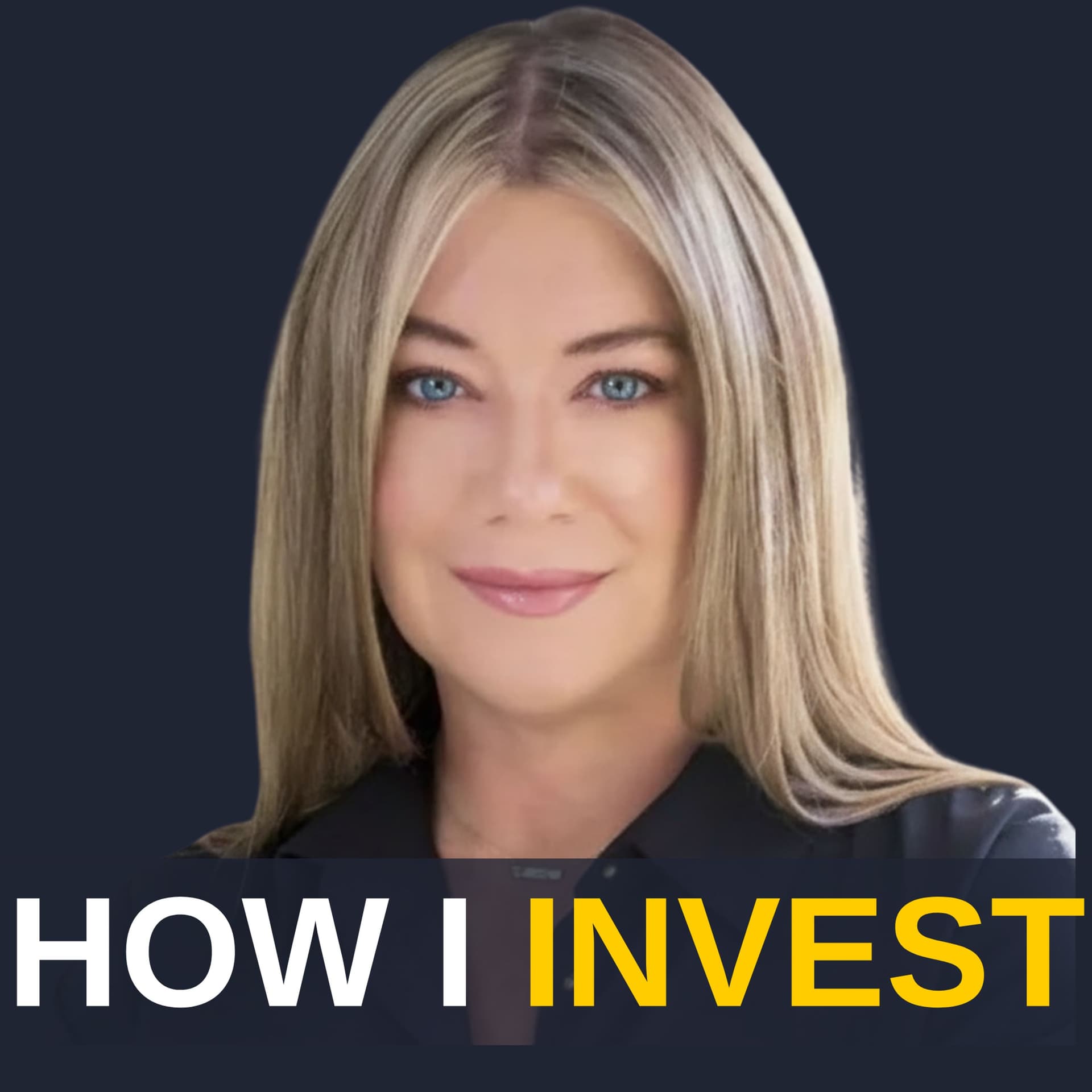
What if one of the most overlooked $700 billion pools of capital in the U.S. is quietly shaping private markets?
In this episode, I sit down with Jennifer Mink, President of Investment Performance Services, an investment consulting firm overseeing roughly $70 billion in assets under advisement, to discuss how Taft-Hartley pension plans approach long-term investing. Jennifer shares how IPS designs portfolios that balance public and private markets, using disciplined asset allocation and diversification to improve overall portfolio efficiency and manage risk across market cycles.