Ask ChatGPT
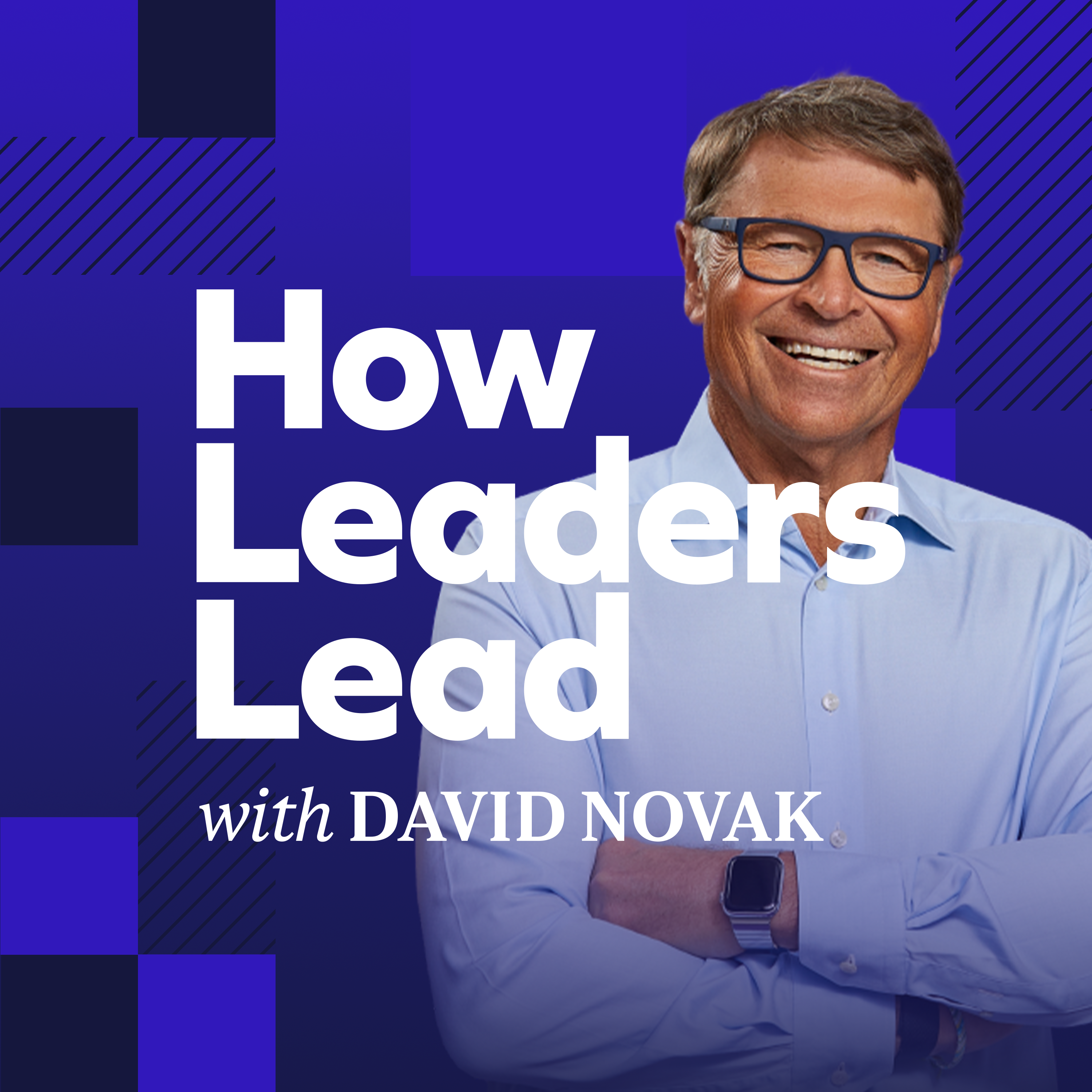
 How Leaders Lead with David Novak
29 Oct 2026 · 1h 2m · 29 chapters
David Rogier (MasterClass CEO) explains how MasterClass delivers “world’s best teachers” via high-production online courses, and how leadership, curiosity, and learning from failure drive the company. He covers recruiting celebrity instructors, testing the idea before launch, building a craft of teaching/production, and leadership practices like 360 feedback and a weekly “failure email.” He also discusses how AI is changing skills needed to thrive (specialists must be top 1%; generalists must learn fast and broaden).
David Rogier is co-founder and CEO of MasterClass. He previously worked in venture capital. He was raised partly by a grandmother who escaped the Nazis; he credits education as lasting leverage. He has a personal history of stuttering and later learned to normalize failure.
MasterClass’s mission is access to top teachers everywhere. High production quality matters because education should feel like entertainment. Risky ideas can work if they’re calculated and aligned with what higher-ups need. Leaders must update mental models using feedback.
Steph Curry’s motivation (“wish it existed when I was growing up”); a funnel of rainwater drenched an instructor during a shoot; early “fake website” and test classes (with his parents) before raising ~$5M; James Patterson’s first class; “point out any squirrels” meeting rule; weekly failure email; AI/University of Chicago Booth/OpenAI mini business school; examples of leadership lessons from Serena Williams, Martin Scorsese, Chris Voss, Ray Dalio, Martha Stewart.
Written by AI. May contain mistakes.
David Rogier shares his experience meeting Steph Curry and the impact of his insights.
“You know, you spent the last decade around some of the most accomplished people in the world.”
Discussion on leadership skills learned from Coach K and their application.
“Well, what's the funniest thing, David, that ever happened to you on a set?”
David Rogier recounts the inception and vision for Masterclass.
“He tells these, these stories of, you know, trying to lead, you know, some of the best athletes in the world yet.”
Rogier explains how he validated his Masterclass idea before launching.
“You know, there's so much that I want to dig into here.”
David shares the challenges faced during the launch of Masterclass.
“And I understand that before you started Masterclass, you really tested the idea and you created a fake website.”
Learn how David Rogier secured James Patterson for MasterClass.
“And, you know, one of the things you couldn't test is, could you get these, you know, great instructors, these big instructors.”
Discover the dynamics of influence within corporate hierarchies.
“is determining who the person is we actually have to influence.”
Explore strategies for effectively pitching ideas to higher-ups.
“you talk about the bigger things that the company can do and then I think that demonstrates your potential.”
Uncover methods for connecting with high-profile instructors.
“And now you want to get the top people in the world to come, you know, come teach, be your instructors.”
Understand how even top talents can struggle with self-doubt.
“That's been very hard to get him to, he still hasn't said yes.”
Learn about the decision-making process behind MasterClass' production values.
“Be sure to stay tuned to the very end of the episode.”
Learn how MasterClass creates engaging content with top talent and collaboration.
“You know, how do you, you know, how did you, You get people to say things or teach things that they didn't prior to have the words for.”
Discover the principles behind MasterClass's successful business model and subscription strategy.
“The business model had to work not only for the business to be successful, but for the impact that we wanted.”
Understand the challenges and learning journey of becoming a CEO over time.
“because people love those and those are very popular.”
Explore how feedback shaped effective decision-making in leadership roles.
“So I get to hear insights from people below me about how I'm doing.”
Hear about the importance of discussing failures and learning from them in a professional setting.
“And what are you working on now, David, to sharpen your axe?”
Examine how the pandemic altered consumer demand for educational content.
“Yeah, I learned that from Spanx entrepreneur Sarah Blakely.”
Identify the essential skills required to succeed in a rapidly changing job market.
“Pre-pandemic, people wanted to learn for the sake of learning.”
Learn about the importance of specializing or generalizing in today's job market.
“If you were going to describe that concisely, what do you have to have today?”
Discover how AI is transforming work and the strategic landscape.
“And the only way that you can achieve those is AI.”
Understand the value of seeking diverse perspectives for decision-making.
“And so like trying both from an operator side and academic side.”
Explore how leaders can blend analytics and intuition in decision-making.
“Like I know we have advisors and friends and people I work with who I know will have an extreme point of view on something.”
Get quick insights into David Rogier's personal preferences and beliefs.
“and I want to have some more with my lightning round of questions.”
Learn how leadership principles apply at home and affect work dynamics.
“both for Masterclass and you personally?”
Discover how great ideas stem from understanding consumer desires.
“You're making the world a better place by, you know, giving people the education they could never, ever have conceived from the very best people in the world.”
Learn how persistence can lead to success in leadership and business.
“I mean, he is a persistent leader and he has to be in the business that he's in.”
Explore the fine line between being persistent and becoming annoying in sales.
“The other thing is he didn't know anything about everything it took to really build this business.”
Understand the importance of adapting leadership strategies in changing times.
“David, the final theme that I'd love to that I love your take on is what we have to do as leaders to change with the times.”
Discover essential takeaways for leaders to thrive in a dynamic environment.
“And I think the best leaders have a healthy dissatisfaction with the status quo.”

Get the gist, explore an idea or ask about something said.
 Claude
On How Leaders Lead with David Novak, what are the key points of this episode?
Searching your listeningAutomatic transcript. May contain errors.
0:00David Novak: Friends, hello and welcome to another episode of How Leaders Lead with David Novak. Today's guest is David Rogier. He's the co-founder and CEO of Masterclass. David's built his company around one big idea. Everyone deserves access to the world's best teachers. Today, Masterclass lets people everywhere learn from icons like Serena Williams, Martin Scorsese, Gordon Ramsay, and over 200 others. But what I love about David's story is that while he built a company around learning, he's had to keep learning and reinventing right alongside it. That includes learning from his mistakes and getting curious about them, which is exactly what you'll learn about in this conversation.
0:39David Novak: Enjoy this conversation with David Novak and David Rochier, and I will see you at the debrief.
0:50David Novak: You know, you spent the last decade around some of the most accomplished people in the world. Who's the one instructor you were most nervous to meet? Tell me that story. I was really nervous to meet Steph Curry. Steph Curry, for anybody who's not a sports fan, is one of the best basketball NBA players of all time, probably the best shooter of all time. And he was one of our first instructors. I wanted to make sure that he came back after the first day to keep the film. And I really wanted to ask him, you know, why did he decide to do this? I mean, he had different shoe deals for$200 million, plus his max NBA contract, probably another$200 million.
1:37So it definitely was not money. But I didn't want to ask him before the shooting finished, because I didn't want him to have any second thoughts about why is he here. And so at the end of the shoot, I asked him, And he says, you know, I wish this existed when I was growing up. If Michael Jordan had a class, I would have taken it. And I thought that was just, that was a better answer than I would have ever thought of, right? But it was somebody really putting themselves in the shoes of other people and wanting to be able to learn from the best and trying to give people a shot at something that he wished existed.
2:15David Novak: Yeah. And what's really cool about that is it really highlights the noble cause of the company that you created, right? I think so, too. I think so, too. Yeah. That's awesome. Well, what's the funniest thing, David, that ever happened to you on a set? Okay. I will not share who because I don't want to embarrass anybody. But we were filming one high-profile person, and we took a lunch break. And it was a warm, nice day outside, so everybody went outside to eat lunch. the day before it had rained a lot. So we put out a bunch of like tents above the lunch area so that in case of it rained, you know, again, we weren't sure.
2:56It wasn't going to get everybody wet. And he finishes lunch and he's walking back. And just as he's walking back, a gust of wind comes. All the water from the night before, we didn't know, was like on one of these tents, like on top. And the wind moved it. So like the tarp moved a little bit. So all of a sudden it became a funnel and all the water is starting to come off. It comes off in one spot. But there was one person who just happened to be walking by that spot. And it was the instructor. And he just got drenched. It was like gallons and gallons of water just poured all over him. Nobody else is wet.
3:43Just him. and it was funny but you also don't want to laugh because he's clearly you know he just got soaked but it was also but yeah so it was horrible luck we did have a change of clothes it was fine but you know on the inside I was laughing too and I'm sure this guy's not used to that happening it's not I felt very bad for him and I was very scared but also like that's insane yeah that's
4:12David Novak: life too. You know, you know, uh, this podcast, as you well know, it's all about leadership and, uh, you know, of all the people that you've worked with, who taught you the most about leadership? First person comes to mind is coach K. He tells these, these stories of, you know, trying to lead, you know, some of the best athletes in the world yet. But they're very relatable to everything that we do every day. So everything from any team he has, he has them sit and establish what are their values going to be? What are their rules of operating going to be? And he's doing this with a Kobe Bryant and a LeBron James.
4:59And he shows you how he does it. And it was just, you realize if he can do that and it works with the best in the world, like there's no reason why I shouldn't be doing those exact same things.
5:15David Novak: Have you been able to translate what you learned from him into your own business? Oh my God, of course. Trying to think of examples. I mean, we now before any big function, we'll sit down with the whole team and be like, here are rules of how we are going to operate over the next day or something. And it could be everything from, I mean, these are our own rules, but like one rule we have is point out any squirrels. What we mean by a squirrel is like when somebody, and sometimes that's me, goes off topic. So they're in a discussion and they almost like start being like, and they start like going down a different thread that isn't tied back to what we're actually trying to solve or do.
5:59So everybody has permission to say squirrel, which is code word for whoever's talking like, you sure you're going off topic and off agenda here, right? And so we all agree to that. And so then when somebody does it, it's not offensive. They are doing what you've asked them to, right? So yeah, that's one example.
6:21David Novak: Yeah, I love that example. Well, I like pointing out the squirrel because it's so, you know, it just conjures up an image in your mind and it's easily relatable and it's fun. You know, it's a nice way to tell somebody, let's get back on track. You know, there's so much that I want to dig into here. And I'd like to start at the beginning, David. You know, what's the story of how Masterclass came to be? I was working in venture capital, investing. I went to my boss one day and said, hey, I want to quit. I want to go start something. He goes, what do you want to start? And I said, I don't know. And he wrote me a check for a little under half a million, told me to go think of an idea.
7:01I was shocked.
7:02David Novak: How did you feel? I mean, just, you know, have somebody write a check and say, just go think of an idea. Well, you know, go back to that moment. What did you feel? Terrified. I knew it was a once-in-a-lifetime chance. But you can't complain about it to anybody because nobody's giving you any empathy for that. And I know this is going to sound weird, David, but it became actually a little bit of a dark time in my life because I felt that immense pressure. And for the first time in my life, I didn't have any constraints. I didn't have structure. But somebody gave me really great advice. She said, choose something that even if it fails, you would be proud of it.
7:43That was a great constraint. I thought long and hard, and I was raised in part by my grandmother who escaped the Nazis in World War II. Her family did not. Most of her family did not. And she instilled in me that education is the only thing that someone can't take away from you. And I realized if I got this one shot, I want to try to make something that other people can't take away from somebody. And so I want to make it possible for anybody in the world to learn from the very best. And that sort of was, you know, part of the thinking process in creating a masterclass.
8:21David Novak: You know, it's interesting because you demonstrate a couple of things right there. You know, one is just accountability. You know, you've been given this$500 ,000. You're accountable for it. Now you want to deliver on it. And the other is, you know, wanting to make a lasting impact. You know, wanting to do something that really will make a difference in the world, you know, which is tremendous. But getting to that$500 ,000 check, what do you think you as a leader had demonstrated to your boss that he would actually write you that check? I think trust had been built. I think he saw how I thought, how I worked.
8:59I was a student of his a little bit in grad school. He was like a visiting professor or something. I worked for I worked directly for him for a while he says that all great entrepreneurs I forgot the word he uses have like a cognitive dysfunction of some sort forgot the exact word he is and there's all different ones you know what's interesting about is there are things that you could say like are wrong about you but also this is what causes the strength So mine of his, I think he has five of these. Mine is probably personal exceptionalism, which is the belief that I can do things that other people say is impossible.
9:44It's not that I can do those things. It's that I believe I can do those things. You know, trying to get the best in the world to actually teach, I'm sure I wasn't the first person to have this idea, but everybody's like, this is impossible. How are we going to get a, you know, Serena Williams, a Gordon Ramsey, a Christina Aguilera, a Martin Scorsese to actually do an online class? But to me, I was like, why wouldn't they do it? Right? Like it was just so, and so, you know, like I'm going to figure it out. And so I think that's probably one, you know, channel the wrong way. You waste a lot of time.
10:23Channel the right way and you have a chance to build something cool and special.
10:26David Novak: I love that personal exceptionalism. And I understand that before you started Masterclass, you really tested the idea and you created a fake website. Tell us that story. Yeah, I really believe that you can test core assumptions to most ideas before ever making a significant investment. And part of how to do that is you got to break down what actually are the one to two to maybe three things that your business actually has to do to be a success. The hardest part is picking what those one, two or three things are. Because it's easy when you're doing a new project that's going to be as an entrepreneur or, you know, if you lead a big project inside an organization, what actually is going to drive that outcome?
11:25It's different for everything. But for masterclass, it was going to be, number one, can I sign the best in the world to actually teach? Number two, am I able to make a good class with them? And then three, are people going to buy it? and so I broke those up almost into a science experiment and I got that you know trick from Roy from somebody named Roy Bahat who's an early investor who's awesome and so I broke them into parts okay number one can I get the best in the world to teach probably can't test that it's going to be really hard to test but that one I'm just going to have to like grind out to see if I can get them.
12:08So one, I can't really test. Number two, can I make a great class with them? Well, you could say, hey, well, you can't do that until you sign with them. But actually, no, it's not true. I can make, I can figure out if I can make great stuff. So we did test classes with my mom and dad. We filmed somebody else and we made a class with them and we try to sell it. And you just try to see both from a creative process, could I make something that was good? And my dad at the time was a divorce lawyer. So we made a little thing with him about that. And it wasn't even to sell, just to see if I could make something good.
12:42And then the third one was, am I able to sell it? Well, I don't need a class from the celebrities to sell it. I can probably do some sort of surveys and polling, or I can create a website with a class I've actually filmed and try to see if I can get people to buy it. And as long as I have some way to index that back to, if I get 100 people to buy this, This other celebrity one, I'm confident I can get 1 ,000 people to buy it or however the math works. That's how we raised another$5 million before launching was because I was able to break this up into chunks and prove, A, that I'm reducing the risk.
13:21And I'm also showing investors that this is how I think about things. And I think in a world of AI, this becomes even easier to do.
13:27David Novak: So you launched this, Feb. So did you check the boxes or as many of the boxes as you thought you needed to check to go forward? Obviously, you did. Yes, I did. And then we launched. I figured it was going to be a big launch day. I've been working on this for a couple of years. Press was big. And I don't know, something like$10 ,000 in sales. And I was like, for our first day with all this press, it only gets us$10 ,000. I'm screwed. like that's not that's not enough and that's a big day so the next day is we want to be five thousand or three thousand dollars and um i actually went home and i cried i'm not like a big crier and uh i called my mom and dad and i was like what am i going to say to all these people i convinced to teach like and they said i have to fake it until i make it and you obviously faked it pretty well because now you have a hell of a success.
14:25David Novak: And, you know, one of the things you couldn't test is, could you get these, you know, great instructors, these big instructors. So tell us about the first big instructor that you landed and how you got them to believe in your idea. Because it sounds like you're almost like the Ted Lasso of education here, you know? I'll take that. I didn't know it at the time, but there is craft to it. So I'll share like how I did it, but then I'm going to, then I'll share what I think the craft now I've tried to build or hone. So early on, I just sent a cold email to everybody I could. You think in the business world, if somebody can intro you to somebody, the person will talk to you.
15:05The entertainment world is designed to not allow that to actually happen and occur. So I sent cold, I sent cold emails. Almost everybody said no. One of the first people who said yes, or was interested in hearing the pitch was the speaking agent who claimed to be the speaking agent of James Patterson, the author. He's bestselling author in the world. And so he said he's open to hearing the pitch. I was so excited. We prepped, we pitched, didn't hear back, pinged him after a couple of days, what's going on? And he goes, James says no. I was like, oh, like, why? Any feedback? And they're like, he wants a million dollars.
15:43I was like, well, I only raised half a million. So like, I can't do that. And, you know, it just went dark. Then a couple of weeks go by and I get a call on my cell phone from a number I don't know. But at the time you pick those calls up still. And the guy on the phone goes, hello, this is James Patterson. And I was very unsmooth, David. And I was like, the author? And he's like, yeah. I was like, I'm surprised to hear from you. He's like, I'm a surprising guy. And I was like, sure. Okay. How can I help you? He's like, well, I saw your proposal. It's the timing works. because I'm very interested.
16:14I'm like, sorry, I'm very confused right now. I spoke to your speaking agent a little while ago, and he said that you passed. And he asked who the guy is, and I told him the person's name, and he goes, I don't know who that is. And I was like, what? I was like, I don't even understand the scam. Why would a guy pretend to be your agent and say no? If he's going to pretend being your agent, he should say yes. And then in my head, I was like, how do I know this is really James Patterson? I don't know what Jim Carison sounds like. I know what he writes like. I don't know what he sounds like. But he gave me the name of his law firm, his big law firm, that actually was him.
16:49So that was the first class that we ever shot was with James. However, I think there's a craft to this. And I think there's a craft that's undertaught. And the craft is about how do you influence people above you? I think the first thing that we get wrong is thinking about is determining who the person is we actually have to influence. So I think one of the biggest myths in corporate America is that your boss determines what your raise is or if you get a promotion. It's not true. It's your boss's boss. Your boss's boss actually decides in my own experience. So then what you really got to do is actually figure out how to get your boss's boss to be okay with it.
17:42and I think that is actually figuring out what is it that they care about they actually don't care about I'd argue how hard you work how good your work is they care are you making them look good now you might have to work hard to make them look good but if you start thinking about it like that it's a very different your job at work isn't to do the best work your job at work is to figure out what is your boss's boss needs and wants and to do that well. Now, David, I'm going to turn this back onto you. What are your thoughts on this as somebody who's employed many more folks than I have ever employed?
18:21David Novak: Well, I definitely feel that you're right. I think in most cases, certainly in the corporate world, you work for somebody that's your coach, but not everybody works for the CEO, So you got to move up the ladder. And, you know, I think the art of that is to take a broader view to the organization. You know, it's that you're not just worried about your little widget that you happen to do in your piece of the company. You have a much bigger lens, OK, that you convey. and so you come in, you show people that you, when you get that opportunity to be with the boss's boss or people that are higher up in the organization, you talk about the bigger things that the company can do and then I think that demonstrates your potential.
19:08Can I push you on one of the things you said? Sure. I have found myself in some of my early jobs, here's your thoughts. I was doing things that I thought added value and I think do, but small things, I was filling gaps and things and I realized at least that the places I worked and the people I worked for is that while maybe it was helping the organization, it wasn't helping them. And so adding value had to be about making your boss's boss look good, not just helping the organization. Thoughts, reactions?
19:41David Novak: I agree with you. I mean, my only point is, is that taking the broader view, showing people that you think about the entire organization. If you have people working for you and they come in and they get the opportunity to be in front of you. And all they do is talk about what they do without giving you three or four ideas on how you could take masterclass to the next level. In my opinion, and what I teach is you're, you're, you're really missing a huge opportunity. I agree with you. I agree with you. I agree with you. And I think there is a, there's an art of what ideas you actually pitch them.
20:15So I have found, I think the hot, the higher you go, it depends on the organization some people to hire you go are used to getting their butt kissed a lot and so they actually respond best to is ideas that don't do that so there was one senior person I was meeting with at another company and I felt he was losing interest in our conversation I wanted something from him so I said I took a high risk bet I said if you continue down the path you're on I think your business is screwed I think you are going to die and all of a sudden he's like what and I was like I think what you need to do are these two three things and he pauses for a second and he goes yes that's what I've been talking about yes now it was a high risk move.
21:13But I knew the things that he was pushing on. I had a strong point of view on it. And it was a calculated risk, but it could have also failed in a spectacular way. But that was, I think, sometimes you're going to have to take those risks. It depends how important it is to stand out in a conversation. If you're at a company and you love your job and you're walking by the CEO and you get to say hi, I probably wouldn't take a high risk bet. Yeah.
21:37David Novak: Well, you know, you got to find your moments. And I think we all look for that. But But here you are, you're starting up masterclass. You got this really great idea. And now you want to get the top people in the world to come, you know, come teach, be your instructors. And these top people, you know better than me. I mean, they have layers of protection around them. I mean, it's hard to break through the clutter and to get on their agenda. They're very difficult to reach. You know, who was the hardest for you to reach when you think back of the instructors? And how did you make it happen? Okay.
22:11David Novak: You know, I'm really curious, you know, what you're learning on how to get to these people that nobody else can get to. Because I think people coming up in companies, there are people they'd like to meet, you know, and there's people they'd like to learn from, but they're kind of afraid to get in there and get that, you know, get that door open. How did you get the door open? So the entertainment world, which is a little different in the tech world, business world, but I think the principles are the same. They have people around them. In the entertainment world, they have five people. An agent, a manager, a PR person, someone who has a business manager, and then like a spouse.
22:50Five people. All five people want to convince you that they are access to that person. But only one of them actually is. but they all want to sell you that it's them because that is how they get their own power. So you got to figure out who is the right person, and you got to figure out what is it that they want. What they want isn't the same thing as the principal person. What they want is probably look good in front of the other person, but not hurt the brand risk of that person. So you got to change your pitch of how you're going to not only get them to like you and want to work with you, but how you get them to trust you and how you're going to not be a high-risk thing for them to do.
23:35That's a very different conversation than once you get to the actual person. I think what makes the person hard to get to, usually it's not hard to get to somebody on their team. It's hard to get somebody on their team who will engage with you. So like I remember there was one person really wanted, got to his agent, and this is very rare, but I thought an amazing agent. He goes, look, for this type of project, I'm not the point. person. You really need to go in through this other person. That was an amazing agent to me because he wasn't afraid to say, look, in this one area, I don't have that influence, but here's somebody else who does.
24:15That is very rare. I'll tell you people that we still want that have been very hard. I would like to get a class with Stephen King. We've been trying for 10 years. That's been very hard to get him to, he still hasn't said yes. Um, I would love a class from Oprah. Still haven't convinced her to do it.
24:41David Novak: So what's the biggest barrier you have to overcome? Now that like we have the status we're at, it's not to get on the phone with someone on their team or something, it's not even them. It's convincing them that this is something that they're going to want to do that they're that they are going to enjoy to do. I think some people, you know, they're hesitant to teach, they feel like they've already said a lot. They, it's not a financial thing, right? It's like, am I going to want to do this? I think you're able to do things to help. So for example, sometimes we'll bring on a filmmaker to help make the class that they love and have worked with before.
25:20Or, you know, the interviewer will be somebody who they love. You know, you try to say, Hey, how can I make this enjoyable and experience that you feel comfortable with? Some people, it's amazing. The best in the world don't still have imposter syndrome and don't think they're their best in the world. So I've had somebody with, you know, who is clearly top three in the world or something say, I don't think I have anything to actually teach. And you're like, wait, what? Right. And, and this wasn't the person trying to seek praise. I think they really had imposter syndrome because one thing you realize once you interact with the best in the world is they are still trying to improve.
25:55They're still trying to grow. They all have this mindset of like, I'm not there yet, which, you know, to me was insane because, you know, they are so impressive.
26:04David Novak: Hello, friends. I hope you're loving this conversation. Be sure to stay tuned to the very end of the episode. As always, David and I are going to debrief some of the concepts that he talks about with this week's guest. So stay tuned to the very end and I will see you soon. You figured out, obviously, how to get the talent. But one of the things that I've been impressed with Masterclass is your production quality is so high. And, you know, did you have a production background? Or, you know, how did you go? What was your decision-making process to take the high road on production quality? And how did you learn how to do it?
26:41We shot our first ones with some friends and stuff like this. And it just looked really bad. like it just feels horrible and so we asked him for advice and we got connected to bill guten tag he's an oscar-winning film director and we got you know connected with him and so excited just get advice like how do we find crews how do we do this and he's like you're not gonna have me shoot it and you're like what he's like this sounds fun i'll do it you're like, you'll do it? And so he actually shot our first classes. So he definitely helped us figure out what that bar was. The decision to do it, that was very intentional.
27:25That was, there's tons of online classes out there in the world. This is 12 years ago, but they all look like crap. Why? Because most of them put a webcam in the back of a classroom. Why does education need to look so bad? Why can't education look as good as a movie I watch on Netflix? Like, you know, we got asked a lot in the beginning, you know, are you education or are you entertainment? I'm like, that's a false choice. The best education is also entertaining. It was a very conscious choice.
27:54David Novak: And so you get this high talent to come in and they're going to be in instructors, but they're not, they've never taught before. You know, how do you, you know, how did you, You get people to say things or teach things that they didn't prior to have the words for. I mean, that takes a lot of time. We do tons of research and work to figure out what people think they want to learn from that person. We talk to other experts in the field about what thing is that person's mastery. The instructor then comes with a list of things that they wish somebody had taught them. And then it's a collaboration, ultimately up to the instructor.
28:32but it's a collaboration to figure that out. And then we film it. We have an interviewer on set. So we're constantly trying to push the person and pull stuff out. We then edit it and then we test it and we put in front of things. And one, going back to our first shoot, I remember how James Patterson opens his classes. Hi, I'm Stephen King. And I was like, James, that's not funny. He's like, it's funny. I'm like, I just don't think it is. He's like, it's funny. We test it. People watch more when you include that joke. And so then it was about us learning what makes a compelling class, what makes somebody learn, what makes somebody stick with it.
29:14And then that became part of our process. And so now it's a honed craft of knowing just from how users behave and what they like and do not like what things actually work best.
29:27David Novak: Now, so you bring in the top talent. You have world-class production qualities, which is very expensive to create. It's expensive to get top talent as well. How does your business model work? And how did you think that through as a leader? The business model had to work not only for the business to be successful, but for the impact that we wanted. You know, in the beginning, we were doing much more, you know, depends on the instructor. But, I mean, you have to make sure that you can sell more than it costs you, right? I know that sounds very obvious, but like, I think lots of companies try to do all this fancy math to like, you know, it's going to be worthwhile in 10 years.
30:07But we're like, no, like it has to pay back way faster than that. Otherwise, it's not going to work. So when you have that as your guide, like we only spend on marketing if the marketing is profitable from very early on. So I think we just had some guidelines and rules in place on how we operate. and then I mean how the business works is you have a you know now it's a subscription and so you have to make classes that are so compelling and good but not only are they going to attract brand new people every year but those people are going to want to stay are going to want to stay around and that works quite that works quite well next thing we said is our students have been asking us, they want more depth.
30:57But I didn't want to replace the existing classes because people love those and those are very popular. So we said, hey, in the last year, we launched a certificate program, which is with, you know, we're always about learning from the best in the world. So with individuals, now it's organizations. So you can learn how to lead with the Navy SEALs, right? And they are making the class with us. So we did that. That is doing fantastically well. And then we launched a couple months ago a mini business school type thing. And it's in collaboration with the University of Chicago Booth and OpenAI. And it's how to lead and operate in an AI world.
31:40And that, you know, we opened with 500 slots. Over 29 ,000 people have applied for that first group. That's done phenomenally. So now, you know, we are expanding it. But it has to make sense on a per unit basis. Otherwise, it's not really a business. You found Masterclass. You get the success and you become a CEO of this company that you've created.
32:06David Novak: You know, tell us about the process that you've had to go through to learn how to be a CEO. The job changes every couple of months and nobody tells you when or how. You know, I remember early on, you know, when it was a team of five people, we would all brainstorm and share ideas. And I would sometimes instigate and think of some crazy ideas. And then we had, you know, a team, you know, once it got a little increased size, let's say 50 people, and I'd do that. And then people would start to take those ideas and like start to make them. I'm like, no, no, no, no, I was just brainstorming. That was a horrible idea.
32:38And I learned I had to change how I talked and thought. I think I try to create some systems and processes to make sure I'm constantly going to learn and grow. We do, you know, 360s all the time. So I get to hear insights from people below me about how I'm doing. I think one thing I've learned from our instructors is they always ask for notes and feedback. And I really try to do that. And not just ask, but also watch and see what happens. We built an internal tool that we've now let people use that listens in on your Zoom calls and gives you notes on how you did on things you care about. How are you on empathy?
33:18How are you on question asking? Things like that. Therapy I'm in, which I find helps a lot. It's openness to it. So I remember I was told in the 360 that I'm indecisive. This was a couple years back. And I was very hurt by that. I was very scared by that, if I'm honest, because I thought a CEO can't be indecisive. And I thought about it and I was like, I have a point of view on lots of things. Like, why do they think I'm indecisive? I talked to, I think my therapist or my executive coach and I asked them, and they said, David, how we experience you is very decisive. Like, that's interesting. Like, I would dig in more.
34:06So I went back to the team and I was like, hey, I heard this feedback that you share with me. I want to be responsive to it. What are some examples so I can know? And they share these examples, David. and what was amazing about these examples was to them, they were examples of me being decisive. I wasn't making a decision. I wasn't making a call. They share the examples. I realized in that time, I didn't even know that they were asking me to make a decision. So it wasn't that like I was asked to make a decision and I wasn't making one. It was like, I didn't even know I was being asked. And so somebody would ask me for what my thoughts are on the thing.
34:42And I thought they just want my thoughts. And I was like, well, if I was in your studio, I would think about this and this. to them, they were actually asking me to make a call. So I just didn't know that. So then I changed my process and my, how I work with DM. I was like, every meeting I'd be like, Hey, what are the decisions that we want to make today in this meeting? Cause I just wasn't aware of it. And all of a sudden they would list a few and I was like, Oh, okay, great. And I'd make sure by the end of the meeting, you know, I'm going to call them. And then all of a sudden the next one, he's like how David is, is very, very deep.
35:09He's very quick on decisions. He makes answers. It's huge improvement. I was like, it wasn't even a capability gap. It was like an awareness gap.
35:18David Novak: That's a great example. And what are you working on now, David, to sharpen your axe? You've learned how to demonstrate to your team you're decisive. What are you working on now? AI is fundamentally making shifts in how we operate, how work is done, how roles are done. And I think it has made all of our executives get much more into the weeds of stuff. in part because now some things are easier and faster to just do on your own because there's a transaction cost to give all the context and explain it to somebody else but that's not a sustainable thing but I can't just hand it off so I'm trying to figure out how I develop and grow people who are earlier in their careers have a broader skill set I think the reason why executives are doing more individual contributor work is because they are generalists and have breadth because executives have seen a lot, but we now need those skills in junior roles.
36:14So I'm trying to figure out how I can best train, coach, and give opportunity to these folks so that they can become a generalist.
36:24David Novak: You know, with a front row seat to some of the greatest minds in the world, you know, leaders in their specific categories, I just, you know, I can't help myself. I want to do just a quick round here, and I want to give you a name. And then I'd like you to share with us what the biggest leadership lesson you learned from each of these people. Let's start with, you mentioned earlier, Serena Williams. Knowing the fancy names of things does not mean that you know anything. It's about, can you actually do it? Martin Scorsese. An understanding of history breeds appreciation. Chris Voss in negotiation.
37:07David Novak: Just ask questions. Ray Dalio in investing. Understanding the past is a huge advantage in the future. Martha Stewart. Then I can grind a lot more than I am doing now. Great. All right, I want to shift gears here and I want to take you back a little bit further. and you've talked openly in many places about growing up with a stutter. You know, what's the biggest thing that experience taught you about yourself? To not be able to express yourself, it's very frustrating. To be teased and figure out how to be okay. That my parents taught me that you're only, you know, you're only a victim until you decide how to respond.
37:54And if you don't want it to let it stop you, it doesn't have to.
37:59David Novak: And great insights there. And one thing that you've demonstrated over time, and you live it every day, is I know you're someone who's always learning. And I was really intrigued when I found out that you actually write a weekly failure email. Tell us about that. Yeah, I learned that from Spanx entrepreneur Sarah Blakely. Her dad, every dinner, would always ask him what they failed at today. So we send out a regular email to the whole company about things that have gone well and then things that we failed at and learned from. And the first time we did that, I got an email from somebody on the team that the thing failed out and like, how could you write this?
38:44And I was like, it's not, isn't a bad thing. And then I made sure the next one I sent was about something I failed at. So like people would like, I'm not trying to pick on people. And you just normalize it. And then all of a sudden, like people now, like it was always, it was easy to get things like wins of the week. It was very hard to get things that failed the week. People don't want to share it. But like now we just get them because people are like, yeah, you know, I tried this and it did not work. Right. But like part of it is becoming okay with that and learning from that. Like if you're always right, you aren't pushing enough.
39:17You aren't trying enough new stuff. And then in that process, you just become, we're taught so much in life to seek praise. And how do you get praises by doing what the person wants and being right. That's great if you want to be an employee at a company. If you want to be an entrepreneur, you got to start learning how to do things that other people think are dumb or are impossible. and that is like a change in your ego and your mindset that like hey i'm not seeking everybody's praise but i'm thinking i'm i'm now trying to have impact and so when you try to maximize your impact you want to know what stuff you're doing isn't working so that you can be like okay i just
39:59David Novak: learned a lot then this thing that won yeah and and uh you know you've built this brand and it's become you've already talked about how you're broadening to a certain extent but it's become I'm predominantly well-known for one thing, long-form online courses from the world's leading experts. You know, what are you learning about how people want to consume today content on education? Where are you taking the brand? Totally changed. Pre-pandemic, people wanted to learn for the sake of learning. I love to learn. I just want to do it. And the pandemic, all of a sudden said, I would like an 18-hour, eight-week course on bread making.
40:47I have a lot of time. I want a new hobby. After the pandemic, if you said, hey, I have this 18-hour course on bread making, they're like, are you crazy? I might not have a job in a week. I don't have time for that. And so what we've seen, it's definitely a rise of, I'm nervous about my career. The world feels unstable. I don't want to be left behind. I need to take care of myself and my family. So we've seen a big increase in demand for business classes, of course, AI classes, but also personal health. So a lot more of those we've seen. And then a lot more people feel, and I think it's right, the skill set you need to survive and thrive is changing.
41:31And if you don't have that skill set, your job is at risk. And if you get laid off because of a mass displacement, historical evidence is not very kind to you. Your lifetime income drops by about 20%. Your mortality rate in that next year is twice as high.
41:58David Novak: So what skill set do you have to have, David, to survive and thrive today? If you were going to describe that concisely, what do you have to have today? There are two different tracks that you can do to thrive today. One track is a specialist track. Track, which means, but the specialist track, because the bar has been raised, because AI can let anybody do almost anything, at least in an okay bar. So if you're going to be a copywriter, engineer, you can argue if engineer is a specialist or not. But if you're going to be a specialist, you've got to be in the top 1 % of that specialty. Everybody else should be a generalist.
42:40And a generalist to me means now you've got to do more than the one job that you had before. If you were an engineer before, you now have to be a product person and an engineer. Or if you're a backend engineer before, you now need to be a full stack engineer plus something on the product or on the design side. Same thing on marketing. If you were a brand strategist before, you can't do that anymore. Now you've got to be able to make stuff too. And so it's a generalist skill set or if it's a specialist, it's top 1%. On the generalist skill set side, you need a couple things. One is the ability to learn incredibly fast.
43:16Two is the openness and the self-awareness to understand what things you don't know. And then three is you've got to be able to learn things that are outside your one area. You've got to be good enough to be able to do two or three things. And the only way that you can achieve those is AI. So if you don't use the tools and you don't know the tools, you aren't using them every day to do more than just like a search, for your own sake, please start to learn it.
43:48David Novak: And I want to talk about that because you've mentioned, you know, that you're offering instruction on AI now, masterclass on that. I mean, give us a little bit more depth on exactly what you're doing there and what the real value would be for the aspiring leader. Work is changing and almost every part of it. moats that we know about on the strategy side are disappearing.
44:22I mean, just one of the news recently, Adobe has been a great business for a very long time. It makes a whole suite of products on Photoshop, on Premiere, Somebody just created an open-sourced version of all Adobe SKUs using AI tools. So now you can use, if I was Adobe a year ago, I would have thought, hey, people are going to crouch in our space, but we have invested decades into our product offerings. Now with AI tools, you can do everything you can that you could have done with them, and it's free. Like that moat is gone. So you've got to learn as both an operator, an entrepreneur, a leader, an executive, how strategy is changing.
45:16So we have a whole section that where we teach that. And we teach it both on the academic side from some of the top experts on strategy at the University of Chicago Booth, but also people like the former CEO and chief, the former CEO of TikTok. Right? And so like trying both from an operator side and academic side. Another way that you got to learn is one of the things you learn in almost every business school is negotiation. It's an important skill. It's not the only negotiation skill you need to know now. Most, I would not say most, a lot of negotiations happening right now in the world are not person to person anymore.
45:57It's person to agent or agent to agent. there's a whole different skill and craft of agent to agent negotiate of negotiation. And if you don't know how to train your agent to negotiate or how to defend against another agent, you will lose a lot of money. And so these are things that we now teach.
46:24David Novak: That's exciting stuff, you know, and I also understand that when you're wrestling with a hard decision, you intentionally seek exactly two perspectives, two opinions. You don't want three. You just want two and no more. Why two? I got it wrong in the beginning. I would ask everybody for their opinion and thought. And then I spent more time swirling trying to figure out what to do. For really hard decisions, I like talking to people now who have extreme points of view. because what I'm not asking them for is advice what to make to make the call. What I'm asking for is what are the pieces on the board I don't see?
47:05So talking to people with extreme points of view, they'll share something where you're probably not going to agree with them. Be like, I didn't even think of that. Like that was a dimension I didn't even know existed. And so I like talking to those people because it just, then I know the full range of options. So you'll talk to more than two people on bigger decisions. Oh, no, it's usually two. It's usually two. Like I know we have advisors and friends and people I work with who I know will have an extreme point of view on something. And usually you can guess, let's say it's a brand decision I'm trying to make, something that's gonna impact the brand.
47:41I'll talk to somebody who I think has a very refined taste on brand. And I know that she's gonna have a very strong point of view. I'll talk to somebody else who maybe I know will say, brand isn't as important as everybody thinks it is. It's just about paid marketing. and I'll call and ask him. And like, you know, I usually don't agree with either of them, but I now know where my bounds are. How do you make the decision?
48:03David Novak: I mean, are you just all, are you a, do you make 90 % of your decisions on gut? How analytical are you? Analytical decisions are the easiest decisions because those, like if the data is clear, then it's really easy, right? Like the hardest decisions are the ones where like the analytics aren't clear. there's incomplete information i wouldn't say gut i think it's either like you know you try to hone that on past experience or trusting somebody else who has a good past experience on it i think one thing we rarely do is update our mental models of how we make decisions some of the best people at this actually are poker players because poker players every round get get feedback on their gut calls and decisions.
48:52As CEOs, you don't always, always get that. But I try to keep myself honest. So, you know, we will make decisions on what classes we're going to go out with. Well, every week, what we look at is what classes have done well, and which aren't how they done. And the reason why I like looking at that is like, okay, I was really bullish on this class, it underperformed wait, why? And then I try to like, I'm not just trying to forget that, like, I'm trying to update. Okay, what is it that that one did right or wrong? And what you know, do that? So I think there's certain decisions where my intuition now trained after 10 years is pretty good.
49:25There's other ones where somebody else in the company has a way better intuition than I do. And so I just trust them.
49:30David Novak: You know, this has been so much fun, David, and I want to have some more with my lightning round of questions. So are you ready for this? Let's go. What three words would your team use to describe you? Accessible, caring, and I think probably demanding. If you could be one person for a day beside yourself, who would it be? Frank Stella, the artist. What's a habit that you've had that's been instrumental to the success you've had? I'm curious. The masterclass you wish you could make with someone who's no longer alive? Let's go with the Wright Brothers. What's something you've been curious about lately that has absolutely nothing to do with work?
50:14at an airport. When you go wash your hands in a restroom, the water for me is always scolding hot. And I was been trying to figure out why.
50:24David Novak: The one thing you do just for you. Brazilian Jew Jitsu. Beside your family and friends, what's your most prized possession? There's a few pictures that like are ingrained in my head. There's one of my grandma, myself, at my high school graduation. And then one of my wife and I, after we got engaged. If I turned on the audio system in your car, what would I hear? Nothing. All right, we're out of the lightning round. I got a few more questions. I'll let you go here. How do you think about leadership at home, David? I think we think we learned a lot at work about how to do home too. I mean, we talk about our goals, we talk about our plans.
51:10we're honest on our communication, on our feedback side. I think we try to bring a lot of the things we learned at work to our relationship and to our household, you know, studying, you know, our kids still young, but, you know, trying to set clear expectations about things and yeah.
51:26David Novak: Has become being a dad, you know, has that, has that changed the way you lead at work? I care less about things that aren't important. What's your unfinished, David, when you think about it, both for Masterclass and you personally? I think at some point I want to write a book. Would you start out and say I'm Stephen King? I am Michael Lewis. Somewhere in the nonfiction, like Michael Lewis with Malcolm Gladwell, you know, mixed in a little bit of Aaron Sorkin's write, write, write, his ability to write. Yeah, somewhere there. Fantastic. I look forward to reading that one. And last question here.
52:10David Novak: What's one piece of advice you'd give to anyone who wants to be a better leader? Already questioning if an employee isn't doing a good job. They are not doing a good job. And you just have to get the guts to have the honest discussion with them and probably make the move. All right. Thank you very much. And, you know, I really appreciate you taking the time. This has been a really fascinating discussion and congratulations on all the success. I mean, you're making a big difference in the world. You're making the world a better place by, you know, giving people the education they could never, ever have conceived from the very best people in the world.
52:49David Novak: So, you know, hats off to you. Thank you so much. I really appreciate that.
52:59David Novak: David Novak. David Rochier has a pretty cool freaking job. I mean, he gets to learn from experts in every single industry and every area of expertise. I mean, he's got to just have so much fun doing what he does. Yeah, absolutely. He's met so many fascinating people from James Patterson to, you know, Serena Williams to you name it. I mean, he's met them all and he's gotten them all to teach, which is amazing because many of these people never taught in their life, you know, but he's turned them into amazing teachers and people love the content and you know he's helping people learn all around the world do you think if you watch Steph Curry's master class you would be able to ball like him I don't know if I could ball like him but I might be able to shoot like him no just kidding I love it hey that's on the record and you know what was great about what was great about that uh in all seriousness was is that Steph Curry wanted to do the master class because he wishes that he could have learned from somebody like himself when he was coming up and trying to learn how to shoot.
54:07David Novak: And I think that's great. And, you know, I think that the desire that people have to help others by sharing their learning is really manifested in what you see with Masterclass. Well, David, that's a great segue into this first kind of key theme that I want to break down even more. And the theme is this, great ideas are rooted in what people want. I mean, you just talked about Steph Curry agreeing to do a masterclass course because it's what he wished he had when he was younger. And I think David Rochier has really just answered that in an excellent way. Talk a little bit more about that concept.
54:49David Novak: Yeah. I mean, you're not going to build a business by creating something that people don't want. You know, it's got to be rooted in what people perceive that they need and know that they need. And, you know, I think people want to get better in so many things. And if you want to get better at something, why not learn from the best? And that's what I think Masterclass has captured. And that was the power and the genius of the original idea that this guy took$500 ,000 that was given to him to go create a business and turn it into one heck of a business that I think so many people admire. It's so true, David.
55:33David Novak: And I think too, it speaks to solving a problem that consumers have. Maybe in this case, it's more of a need, but you're never going to build a successful business if you don't solve a need that many, many people have. And so it's so interesting how he kind of came to this idea and has built this business around it. The second theme that felt very consistent to me throughout this conversation is that David is the type of leader who overcomes obstacles. I mean, he is a persistent leader and he has to be in the business that he's in. Talk a little bit, David, about what leaders can learn from his persistence.
56:11David Novak: Well, just think about what he had to do. He had to get, you know, the best of the best at their profession to teach. Many of them aren't teachers. and all of them are extremely busy, and all of them have a cadre of people around them to protect them from being sold to or, you know, how do you penetrate this shield, this wall that's out there for the most talented people in the world to reach them? And, you know, he was extremely persistent in trying to figure out who he had to get to know that would be the influencer that could open up the door to get him an audience with a Steph Curry, okay, with a James Patterson, with a Serena Williams.
57:08David Novak: But he figured it out, and it wasn't always easy. It wasn't the easiest thing to do, but he kept at it until he figured out how to unlock the door so he could get an audience with someone that would give him the opportunity to absolutely make a sale. And this guy did it. The other thing is he didn't know anything about everything it took to really build this business. How do you bring in these high-profile people? You know, how do you produce high quality? But he learned it all. And he had to overcome all those obstacles and be persistent. And speaking of persistency, his first day of sales was$10 ,000.
57:48David Novak: and he went home and cried. Now he's built this multi-million dollar business. I mean, it's because he just didn't give up. He's got a lot of courage and a lot of courage of his conviction and that showed. Is there a balance, David, between being persistent and getting annoying? Like speaking to when David had to approach these high profile people, like when do you know when to stop being persistent because you've crossed the line into being annoying? I never really worried about being annoying, you know, because you got one job to do and that's to really make the sale. And, you know, if you're annoying, so be it.
58:24David Novak: I'd rather be annoying and get an opportunity than not be annoyed at all. You know, so that's how I looked at it. David, the final theme that I'd love to that I love your take on is what we have to do as leaders to change with the times. It's certainly something that David has had to do with Masterclass. So what would you say to leaders about the need to be able to do that? Just think what he did. I mean, you know, they had enormous success with long-form content and COVID when everybody had a lot of time to learn. But, you know, so they spent hours learning how to perfect the perfect recipe. And then once COVID ended, people would get back to work and there's even less time for long-form content.
59:10David Novak: and now everything is in bite size. And then AI takes off. And now what he's doing is he's evolving his content to really help people learn from the experts in the AI world. And so he's got his antenna out there to understand what's going on, how things are changing, how things are evolving, and then making sure that his company does the same thing to rise to the occasion and the changes that are happening out there. It also highlights the importance of just staying current with your consumers because he could have not done that and continued making these long form courses and paid for it in the end because people stopped listening and watching long form courses.
59:52David Novak: So I think it also highlights just the need to stay really current and present with your consumer and understand, in this case, how they actually want to consume content. Yeah. And I think the best leaders have a healthy dissatisfaction with the status quo. They know things are changing. And they're not accepting that this is the way how it's been and this is the way how it's always going to be. They're always turning over that new rock that's going to open up a new avenue for growth. And especially today with, you know, the AI boom and people are making multi-million dollars overnight, it seems.
1:00:26David Novak: It's more important than ever to make that part of your practice. That being staying up to date with how your consumers are engaging with your products and service and adjusting what you need to to stay current with that. So, Kula, I really think there are three things that, you know, I take away, among others, from this episode. One is that great, great ideas are rooted in what people really, really want and need. Number two, you got to overcome the obstacles and you got to be persistent. if you're going to pursue an idea or make something happen that is really important and big in the world and to you.
1:01:03And the third thing is, boy, you've got to be on top of what's happening
1:01:07David Novak: every single day and change with the times. And understand where the puck's going, if you want to use that Wayne Gretzky, the famous hockey player's phrase. And take your business there before it's too late. Well, David, thanks so much for another episode of How Leaders Lead. And thanks to David Rochier for spending some time on the show with us today. And to our listeners, of course, thank you for tuning in. We will see you next week.
You might expect the founder and CEO of MasterClass to be a curious guy. And you’d be right.
David Rogier soaks up insights all the time from people like Serena Williams, James Patterson, Gordon Ramsay, and over 200 other world-class talents who’ve created courses for his online learning platform.
But he’s just as eager to learn from mistakes, which can be really hard to do. Because failure stings, and our instinct is to get defensive when things go wrong. But if you’re willing to get curious instead, you can actually solve problems, grow as a leader, and make a real impact.
This episode is for you if:
You want tips for influencing important people (including your boss’s boss)
You’re trying to create a culture where people learn from their mistakes
You get anxious any time you have to hear feedback about yourself
You want to know what Coach K, Martha Stewart, and Martin Scorsese taught David about leadership
Take your learning further. Get proven leadership advice from these (free!) resources:
The How Leaders Lead App: A vast library of 90-second leadership lessons to stay sharp on the go
Daily Insight Emails: One small (but powerful!) leadership principle to focus on each day
Whichever you choose, you can be sure you’ll get the trusted leadership advice you need to advance your career, develop your team, and grow your business.