Ask ChatGPT
 How to Decorate
20 Oct 2026 · 55m · 29 chapters
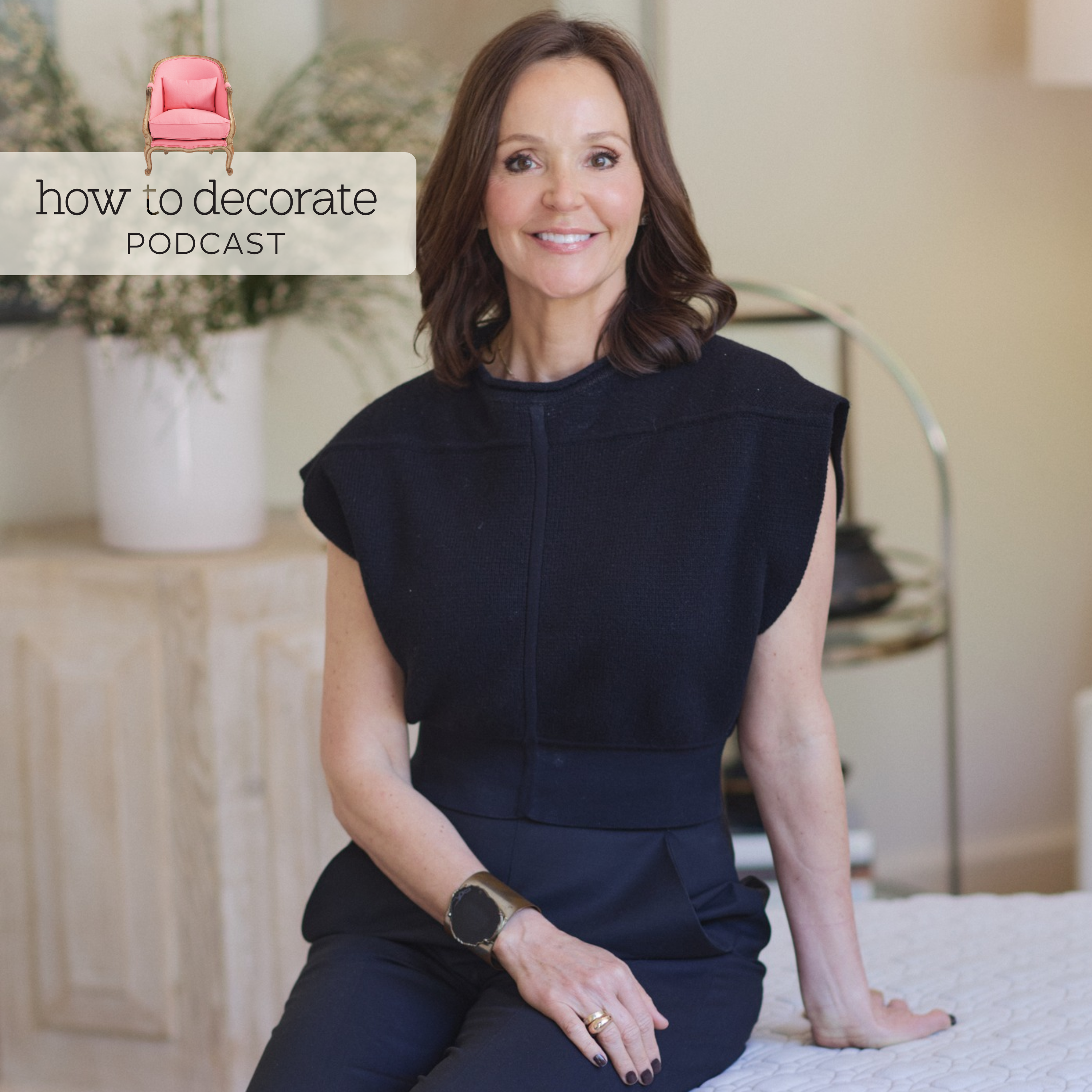
Elizabeth Lawrence (partner at Williams Lawrence) discusses her first book, Decoration (co-written with Bunny Williams, published this month). The book is a collection of essays meant to inspire rather than function as a direct how-to, drawing on their firm’s broad range of modern and traditional projects.
decorate with pieces that “stand on their own” (from antiques to modern artisan work), but balance them with rest, clean lines, and especially good scale and floor plans; art should not be chosen to match the room—art is personal and should be placed for meaning, scale, and preservation needs; tactile materials and paper/print matter—slow down and feel what you bring into a space.
Elizabeth Lawrence, partner at Williams Lawrence; Bunny Williams, her co-author/partner (also the firm’s established designer/author).
a living room using oversized, brightly colored wall art flanking a fireplace; reframing and using flea-market finds; gallery walls enhanced with wall brackets, jars, plates, and carved sculptural pieces; a “trout wall” in Sun Valley, Idaho; recurring design items like slipper chairs, chair-and-ottoman combos, hurricanes with candles, and embroidered chair backs; a jar-shattering story repaired so perfectly it was invisible.
Written by AI. May contain mistakes.
Discussion of Elizabeth's new book co-authored with Bunny Williams.
“Okay, so today we are joined by Elizabeth Lawrence, partner at Williams Lawrence, here to talk about her new book that she's written in collaboration with her partner, Bunny Williams.”
Elizabeth shares the creative process and inspiration for their book.
“Big fan of the show, so I feel the pressure.”
Discussion on the tactile nature of the book's design and the reading experience.
“It's, you know, the cover is, of course, you know, you can't see this unless you're watching our video, but it almost has like a linen, you know, textured cover.”
Elizabeth shares the challenges and joys of writing her first book alongside Bunny.
“And, you know, it's a really enjoyable experience.”
Discussion on the importance of unique items in decoration and how they tell stories.
“We had done the layout, and then we had been talking about what we wanted to write about.”
Exploring how to combine unique decorative pieces without creating chaos.
“There need if you have something heavily, you know, heavily carved end table, maybe you have like a more clean, modern coffee table.”
Discussion on the impact of large art pieces in room design and scale dynamics.
“You end up finding another place for it.”
Learn how to creatively use scale in interior design to enhance spaces.
“And then not just one piece, but two pieces.”
Discover the importance of incorporating artwork into design and its impact on a room's feel.
“And this client is very well versed in what this artwork is in the art world and really taught me some things about art.”
Understand how to educate clients on optimal art placement within their homes.
“And so there was there was discussion about where we were going to put these.”
Explore how personal connections to art influence design choices and emotional impact.
“But you remember there's a person behind that, not just the designer.”
Learn why art should not simply match the room but resonate with personal meaning.
“to match the art, the art to match the room.”
Discuss the emotional and investment aspects of choosing art for the home.
“and not just like be consumed by the colors of the room.”
Discover where to find unique art pieces and the charm of mixing different styles.
“And so, you know, when things start to look all the same, that's when it's a little boring.”
Understand the impact framing has on artwork and how it can transform a piece.
“In that instance, when you're maybe finding something antique or at a garage sale or something, are you often reframing it?”
Learn techniques for designing engaging gallery walls in various interiors.
“And, you know, it doesn't have to be expensive either.”
Explore how wall brackets can add dimension and interest to art displays.
“Because it is something that, you know, you kind of see over and over again, but in multiple, you know, ways.”
Discover unique ways to display plates and create visual interest in spaces.
“Yeah, it also gives some symmetry because often a gallery wall is very, you know, it's very asymmetrical in different sizes.”
Learn about a chic trout wall project that reflects client interests and creativity.
“of fish that's so chic so that is a project that is in sun valley idaho and um it is along a trout stream and so um bunny found those in an antique shop and she said i know immediately where these should go.”
Explore the many uses and benefits of slipper chairs in home design.
“Why is it something our listeners should look out for and maybe incorporate into their spaces?”
Understand the importance of having a chair and ottoman combination for comfort and functionality.
“And so that's why it goes back to the whole thing.”
Discover how hurricanes can enhance decor and provide ambiance in spaces.
“Like beautiful, big hurricane with a taper candle in it.”
Learn about the significance of decorative dining chair backs in interior design.
“So he just goes in his apartment, click, click, turns them all on at night.”
Hear about the importance of recognizing artisans and their craftsmanship in design projects.
“I thought, was this section about the artisans you work with.”
Discover the dynamics of working with artisans and the creative process involved.
“And it was just really fun to be able to give them the recognition that they so deserve.”
Learn about the challenges and fears designers face when commissioning work.
“you're like, okay, I think this is going to work.”
Discover a dramatic tale about a broken jar and the process of restoration.
“But actually, I can do you one better, you know.”
Engage with a quirky dilemma about a taxidermied bear and its placement.
“Seeing a giant jar on a pedestal, that is immediately what I think of with two kids.”
Explore light-hearted suggestions for handling quirky home decor challenges.
“to the side of the umbrella stand or I'd almost play up that jump scare factor.”

Get the gist, explore an idea or ask about something said.
 Claude
On How to Decorate, what are the key points of this episode?
Searching your listeningAutomatic transcript. May contain errors.
0:01Elizabeth Lawrence: Welcome to How to Decorate from Ballard Designs, a weekly podcast all about the trials and triumphs of decorating and redecorating your home. I'm Caroline. I'm on the marketing team. And I'm Taryn, and I'm a product designer. I'm Liz. I head of the creative team. We're your hosts. Join the expert team at Ballard Designs for tips, tricks, and tales from interior designers, stylists, and other talents in the design world.
0:22Bunny Williams: Plus, we'll answer your decorating dilemmas at the end of each episode. We love answering your questions, so don't forget to email us at podcast at Ballardesigns.net. Now on with the show.
0:33Elizabeth Lawrence: Okay, so today we are joined by Elizabeth Lawrence, partner at Williams Lawrence, here to talk about her new book that she's written in collaboration with her partner, Bunny Williams. It's called Decoration, and it is all about your work at the firm and the beautiful projects that y 'all have been working on. It is a collection of essays, and it is out this month. So, Elizabeth, welcome back to the show. Thank you so much for having me. It's so great to be back.
1:04Bunny Williams: Big fan of the show, so I feel the pressure.
1:08Elizabeth Lawrence: Well, this book is like a tome. It is a—it is—it is—and I actually—I would love to start just with—this is your first book. You've obviously written it in partnership with Bunny, but she's written many books before. So I was curious, what was the inspiration for the book? And, you know, how were you thinking about it differently from some of her other projects, her book projects, you know, in setting it apart?
1:39Bunny Williams: Right. Well, so, you know, Bunny said she wasn't going to do another book. It did not take long to convince her. She loves a project. And so when we started talking about this book, we wanted it to be something different. Obviously, she's done a lot of books. And so we didn't necessarily think it needed to be a very direct how-to. There's some books we have in our office that Bunny's had for a long time. It's a collection of old French books, and they're called Decoration. And they span so many different styles, different rooms. And we really wanted to show off that work as well. We wanted to show that our work is vast.
2:20Bunny Williams: and we didn't want to do the book by project. We wanted to kind of find the similarities between some of our more modern things, our traditional things, the country, the city, and really hope that people will walk away from this book inspired. You may not love everything, but maybe there's something you take from it. And we hope people will keep coming back to it and referring to it. And so, you know, and then Bunny said to me, I write all my books and I said, okay, challenge accepted. So I got to writing with her. So it was great.
2:56Elizabeth Lawrence: I love the tactile nature of the book. It's, you know, the cover is, of course, you know, you can't see this unless you're watching our video, but it almost has like a linen, you know, textured cover. The pages sort of vary between matte cardstock and gloss. And And it just really makes the experience of reading the book so, you know, it's so enjoyable, of course, but then also reinforces some of the decorating thoughts you have in the book about the importance of touching and feeling the items you're bringing into a room, the importance of bringing texture into a room. And I love how you sort of reiterated that with the physical nature of the book.
3:41Elizabeth Lawrence: Was that intentional? Was that, you know, where did that design choice come from?
3:46Bunny Williams: Yeah, I mean, that was definitely intentional. It was also wanting to just do something different than the other books. And the other thing is, is you open this book and there's just so many photos. And it's, you know, it's kind of like when you have a really rich dessert and you're consuming all these things. We wanted the outside, you know, we debated a lot about a photo on the outside. And so, you know, we really pressed for not having a photo because we wanted there to be a little bit of a rest. And then you open into this other world and, you know, can explore all these different things. So, yes, that was all intentional.
4:23Bunny Williams: Bunny has always loved the use of different papers from she did it in her last book. And so we wanted to continue that theme because it does. It gives a different texture. It gives a different experience. You know, we're so and I'm guilty of this myself, you know, we're also in our phones nowadays. And so we were really trying to remind people of like the beauty of paper and the beauty of print. Right. And so and those moments and slowing down. And so hopefully this will do that.
4:53Elizabeth Lawrence: Yeah, this is definitely one that I'll want to go back to with coffee and just quiet. And, you know, it's a really enjoyable experience. Well, okay, let's, there's so many places that I want to go. I don't know, Taryn, if you want to jump in, but. I just wanted to ask about, because you, Elizabeth, this being kind of your first book and you wrote it, like, how did that feel?
5:18Bunny Williams: Well, it felt uncomfortable at first. You know, I grew up loving to write in school, you know, those kind of things, but I hadn't really written in a long time. So it was uncomfortable to, you know, you have these ideas, you put them on paper, you're reading them back to yourself, you're going, ah, is this, am I getting across what I want to get across? But then I got into a groove and I really enjoyed it. And, you know, and it's it's wild to see my name on, you know, the cover. And I've had friends send me pictures of it as they see it in bookstores. And that's that's pretty cool. You know.
5:58Elizabeth Lawrence: that's really cool i i just can't even imagine again you have such an you're so talented with design that that's why i'm like it's not fair that you also can eloquently put together what to say to well you know i mean it's i mean as i said it was
6:15Bunny Williams: difficult it was um you know it i i also think i'm such a believer that there's things that come across us you know our path in life that are like the next challenge right so this kind of felt like the next challenge. I was like, OK, here we go. You know, I mean, Bunny threw down the gauntlet. She was like, you can get a writer if you want to. And I was like, I can't get a writer. You're writing. No. Yeah. Yeah. And it was great because we did not we didn't really read each other's writings until after we had not submitted them to the editor, but we had kind of we kind of put them in a dropbox and then we were able to read each other's.
6:51Bunny Williams: And that was great, too, because I didn't want to be in my head about what she was writing, as she has done this so often. And I wanted to make sure I was getting my thoughts across and not feeling intimidated by what her writing process might be.
7:07Elizabeth Lawrence: That's really fun. Do you know what rooms are going to be featured when you start writing?
7:12Bunny Williams: Yes, we had the layout of the book. We had done the layout, and then we had been talking about what we wanted to write about. And so, yeah.
7:22Elizabeth Lawrence: It's fun to see, you know, reading them side by side, your essays with bunnies, because they're definitely themes that you both touch on and sort of echo one another. And so it's clear what a great partnership you have, just because y 'all are in sync in that way. So it's funny that you wrote them separately. There's so many parts of the book I would love to touch on. One of the first things that really stood out to me is you were talking about, you know, of course, furniture shopping, and that's a real theme in the book, antiques and how to find them and how to know what's good and training your eye.
7:59Elizabeth Lawrence: And one of the things you said was that items should stand on their own. I loved that thought because, you know, it is so evident in some of the products, maybe the bunnies designed for Ballard even, where they have these very special details, very unique, you know, leg or a shape. And I wonder if you could walk us through that, because I think some of our listeners might think that there are places in their room or pieces in their room that should be quiet and maybe just be simple. And, you know, in this phrase, items should stand on their own, there's a real specialness to every single piece.
8:44Elizabeth Lawrence: So how do you have pieces that are so special, but then bring them together in a way that doesn't feel chaotic and really blends? I wonder if you could walk us through that.
8:54Bunny Williams: Yeah. Well, you know, I mean, it's interesting because it's something Bunny and I talk a lot about is that, you know, you don't just want to decorate with color and fabrics. You know, it's sometimes the pieces in the room for some people are the last thing they think about. And we, Bunny and I, both love this idea of the thrill of the hunt and finding these pieces and making sure that, you know, the pieces stand out and hold their own in the room. But it's also, I mean, for us, when we find something that's like just beautifully carved or has a wonderful finish or, you know, something by a young new artisan who's making a modern coffee table and it's something we've never seen before, there's just true magic in that, right?
9:42Bunny Williams: And true delights. And what that brings to your room is amazing. And, you know, and they tell a story. Antiques obviously tell a story, but the modern pieces we use tell a story, you know, about the craftsmen and the, you know, the materials being used and even about, you know, maybe why our clients have were gravitated to themselves and why they chose them and what it means for them. So, So, you know, we talk about this a lot and we talk about, you know, finding these things and training your eye to be able to find them and constantly looking. You know, it's easy to just, you know, kind of go out into the world and pick and choose, but to be, you know, to be really deliberate about it and to buy the things that, you know, get your soul going.
10:36Bunny Williams: Right. Right. But it's also obviously you don't want a room to just be like one crazy, amazing piece after the next. You know, there needs to be some rest. There needs to be some clean lines. There need if you have something heavily, you know, heavily carved end table, maybe you have like a more clean, modern coffee table. And so that's another big element of all of this. It's that mix. And and some of that's instinctual. Um, some of that is, you know, again, the part of the book about training your eye and looking at things and, um, and, and some of that is really about scale and scaling things in and making sure, you know, something's not oversized for the room or undersized.
11:19Bunny Williams: So there's all these elements that, you know, we always say we don't feel there are too many rules you can break. You can't break, you know, you can break rules all the time in interior design. But the rule of scale and the rule of a good floor plan are the two that you should really stick with. And if you start with a really good floor plan, that is your roadmap. And that tells you what, you know, you've scaled everything and that tells you what size everything should be. And so then when you find these beautiful pieces, you can start to, you know, piece that together.
11:51Elizabeth Lawrence: The challenge of having a floor plan and then needing to go find antiques to fit the sizes in that floor plan is so overwhelming to me. So when you're out, when you are out looking for antique pieces, like do you have like practically speaking, how do you do you have a list on your phone? Do you have a what? How are you making sure that you're finding pieces that are really fitting the floor plan that you've built?
12:17Bunny Williams: Yeah, no, I mean, we have shopping lists that we're going out with with, you know, we have in our mind, you know, we're very visual. So everyone in our office, you know, kind of can close our eyes and see those floor plans. But there's a list, you know, there's and there's a size range, right? There's not a perfect size. Or there's a, oh, you know what? This table's fabulous. It's a little bit bigger. So maybe the other table is smaller or maybe we up the scale of the chair next to it. Right? So it's fluid. It's changing. But the one thing that I remember very early on in my career, Bunny saying was, when you're shopping, if there's something you love, take a tear sheet on it, take a picture on it.
12:57Bunny Williams: Because it may not work in that moment. Maybe it works in another project. Maybe it's not exactly what you're looking for. But if you're constantly looking for the things that you love and that are beautiful, I don't know, there's just something about the universe. You end up finding another place for it. I want to bump back to scale a little bit because I feel like between you and Bunny, like there is a masterclass in there. There is one living room that I'm looking at in your book, in your section, that has these beautiful, very simple white sofas, which in developing a floor plan, they would normally be probably the biggest things in the room.
13:41Bunny Williams: But when you look at this room, your eyes kind of skims past them and goes to these really large, beautiful, brightly colored artworks that fill the entire wall on either side of a fireplace. And like, that is such a bold and incredible move to go with art that fills the entire wall. And then not just one piece, but two pieces. So I feel like that's definitely a varsity move on playing with scale, you know, and then everything else feels good within that. But so if we start with a floor plan and then break the rules with something even bigger than what's in your floor plan, how do you go, what's your thinking behind doing that kind of move?
14:37Bunny Williams: Well, in that particular project, I know which one you're talking about, this client happened to have amazing artwork, which not all clients come with, right? And this client is very well versed in what this artwork is in the art world and really taught me some things about art. You know, art unto itself is a whole other career and something that you have to constantly be studying. So, you know, came with these amazing, beautiful pieces and, you know, the walls are neutral, the sofas are neutral and they are big and they do. But they also help like make the ceilings feel higher. And so there was there was discussion about where we were going to put these.
15:23Bunny Williams: One was added later, actually, because when you have a client who is a big art collector, they're constantly collecting, right? There's a new one every day and then you're moving things around. So you also have to be open to that and be thinking about, you know, where's the best place for those things. And that sometimes, not with this client, but with some clients you end up, you know, some clients have this amazing piece of art and it's tiny and they want to put it over the fireplace. And you're like, yes, I know this is a name and this is amazing, but this is not the best place for it. And actually, it would really be wonderful over here mixed with something else.
16:00Bunny Williams: And so, you know, it's about also having those discussions with your client and being able to educate them on the why. because yes there are things we know but you really have to be able to communicate with your client and tell them why and then when you were picking the accessories within that space too it seems like you were pulling some ideas that were happening in the artwork into some of the the pieces like there's just like there's like an arabesque side table that kind of speaks to you know a moreish quality in one of the artworks or yeah do you know that's interesting i think that was more um that's more again listening to the client and what they like um and then that all kind of coming together um and that i feel like that's great that you see that because you know that is every client's different a lot of times you know i i will look at other designers work and I go, oh, and then I, you know, and you're like, I love that.
17:01Bunny Williams: I'm not sure about that. But you remember there's a person behind that, not just the designer. There's the client and there's the things they love. And when you start thinking, when you start looking at rooms that way, you see those personal connections.
17:14Elizabeth Lawrence: I had a question about art because there was a part part in the book that you were speaking to not wanting the art to match the room and that it would do a disservice to the art, I think is what you said. And I apologize. I can't remember that if that was a quote from one of your essays or bunnies, but walk us through that. Cause I do imagine that might be counterintuitive to some of our listeners where they think, okay, I, I should have, I should pick the painting that's going to work with maybe the other colors I'm using or work with the rug or whatever. So walk us through why and why that is the case and then how you're placing things.
17:52Elizabeth Lawrence: Is it size? Is it, you know, theme, et cetera? Yeah.
17:56Bunny Williams: So I think it's something Bunny and I both say about not wanting the room to match the art, the art to match the room. And that's really, you know, that, I mean, sometimes it does just because there's something amazing the client has that ends up working, you know, and, you know, or the client just loves one particular color and is buying their art, you know. But it's, you know, It's just that art is not, art is decorative, but also art is so personal, right? It's something you may love, I may not, I may not respond to. And so it's not about choosing something that's just going to look great in the space.
18:37Bunny Williams: It's also about choosing something that has the right meaning for the space. And sometimes, quite frankly, too, with art, it's about choosing something, you know, if the room gets a lot of light, you know, we're not going to put a work on paper in that room. You know, it's more likely a painting. We're probably not going to do a photograph in that room. You know, you're always trying to think about the best way to take care of the art. But really, you know, a lot of times it's about scale and it's about the connection that a client has to a piece. I've just been finishing up an apartment for a client who I've done a lot of projects on.
19:10Bunny Williams: And she has a lot of, you know, emotional connections to her art and what she has purchased over the years. and she's moved to a totally different kind of place than she used to be. And she started to realize that maybe some of this art doesn't work in her new home and that she was emotionally in a different place when she was buying this. And so she's gonna change it up a little bit with the art. So, you know, there's a lot of things that go into that, but I also think it's fun to have the art be different and not just like be consumed by the colors of the room.
19:45Elizabeth Lawrence: So it's such a, like you said, it's such a personal thing that it's, I think it can be really daunting for people because they, you know, in many cases it's an investment. And I think you, unlike maybe a sofa, people worry that art is either good or bad. And so they, you know, it's easy to overthink it in which you wouldn't, you wouldn't be like, someone's going to judge my feelings about my sofa. It's more, you know.
20:17Bunny Williams: You're so right. I mean, people are going to judge art. There are people out there. That's what they're doing. And, you know, and that's also why sometimes I, you know, I was just having this discussion earlier today with someone about how personal it is and that, you know, and clients come with things that they've that have been in their family for generations. And that's wonderful. Or someone in their family made or, you know, something really responded to them. So, I mean, I think we need to all be a little kinder to each other and just remember that, you know, and then I think you have to have, you know, you have to buy the things you love.
20:53Bunny Williams: You're going to live with them, right? At the end of the day, it's your home. You should buy the things you love. And I hope that people will look at this book, and Bunny and I have talked about this, that they will look at it and they will say, oh, I love that thing. And that gives me the courage to go do that thing. It doesn't have to look like my friends or my neighbors, right? because that's the amazing spice of life that there are so many different things out there and we're all so different. And so, you know, when things start to look all the same, that's when it's a little boring. So I, you know, we hope that, you know, as I said, people may not love everything in the book, but I hope that people will be inspired to find what they do love and really go for it.
21:39Elizabeth Lawrence: Where are your favorite places to buy art?
21:42Bunny Williams: Oh, boy. Well, I... Sorry, I didn't know that was a tricky question. No, I mean, that's tough because, I mean, I'm not a serious art collector like my clients are. You know, that's a whole nother price level. And often, you know, the kind of art we're buying for clients are not collector pieces. You know, maybe it's the thing for the back hall or it's the thing for a guest room. So, you know, I love finding things at antique shops, flea markets, and mixing those things up. I love mixing things of different scale, different mediums. Over the years, I have, you know, I have a wonderful painting that was my grandparents that I love that's in my apartment.
22:30Bunny Williams: And it is paired with a drawing I bought. It was one of the first things I bought that I could really afford when I became a designer. there was a little kind of print shop going print shop kind of antique shop going out of business and they were having a sale and there was this wonderful kind of modern drawing and so I like finding things like that and I think you know I think if people are bold enough to go out there and be and buy things they love in those places you know in the flea market the garage sale whatever whatever.
23:06Elizabeth Lawrence: In that instance, when you're maybe finding something antique or at a garage sale or something, are you often reframing it? And then what is sort of your thought on framing? Because there was a great section where you talk about, you know, having a great framers or great furniture refinishers, like having a great tailor. But I was wondering if there are certain sort of, you know, treatments or frames that you kind of go back to over and over again.
23:32Bunny Williams: I mean, we have a great framer. I often reframe things. It's amazing how a piece can be changed by reframing it. And sometimes a client will come to me and say, oh, I have this piece. I don't really like it. I think I'm going to get rid of it. And I'm like, well, do you not like the frame? Because I like it. I just don't like the frame. Maybe the frame's really heavy or dark. And they say, oh, yeah. And then we reframe it and they love it. So, yes, it's, you know, we have a great frame where we work with in Long Island City that we go to a lot. But it's also really fun if you can find an old frame, you know, with a little bit of patina.
24:13Bunny Williams: And sometimes it is removing those really old, heavy, carved frames and putting something a little bit simpler on it. But some of the old frames have a beautiful, you know, kind of silvery patina on them or, you know, a faded gold to them. And so, yes, but I mean, I believe in good framing and I love going to the framer and playing with the frames. And, you know, it doesn't have to be expensive either. We did a client's daughter needed some things and we went to FrameBridge and had a great time. But mixing it up and doing different kinds of frames.
24:57Elizabeth Lawrence: There's something about that frame wall at the framer that's just so full of possibilities. It is.
25:04Bunny Williams: Sometimes there's, you know, we can't take a client there. There's too many choices.
25:37Yeah, yeah.
25:38Elizabeth Lawrence: each customer and like how different their home is um you guys have really done such a great job and even you were just talking frames and i was like yeah so many of these walls you guys have somehow made all the frames go together and i think that's just magic they're all different most of the time um i do love the gallery walls that y 'all put together in williams lawrence i I mean, you know, there's and there's a real three-dimensional element to it, which I love. And, you know, obviously a wall bracket is all all the time. So talk to us about mixing art and the wall bracket. What do you love about it?
26:21Elizabeth Lawrence: Because it is something that, you know, you kind of see over and over again, but in multiple, you know, ways. Right. With pottery, with on its own in a gallery, et cetera.
26:34Bunny Williams: Yeah, you know, love a bracket, love to mix it with art and put things on it, especially when doing a very large gallery wall. And there's a project in there where there's one very large gallery wall. And that was the client's directive. You know, it was like, I just want to put all my art on this double height room. And so, you know, laying all of that out is time consuming and there has to be a plan. And so, you know, we're laying this out and we said we have to add some brackets and some jars and, you know, break it up a little bit and add a little bit more, you know, add a little bit of interest in something different.
27:17Bunny Williams: We also added some, a few carved wood sculptural pieces to the wall. You know, but it is a specific look, right? It is, it's not for everybody. And, but, you know, again, a client that was collecting a lot of art and wanted it all together.
27:38Elizabeth Lawrence: Is it the three-dimensional element of the wall bracket that you love? Like, what does it do, I guess, for the wall?
27:47Bunny Williams: Yeah, I mean, it is definitely the three-dimensional wall bracket. You know, the three-dimensional quality of the wall bracket is something we love. But to be able to add something else, to put a jar on it, to put a sculpture. Yeah, it also gives some symmetry because often a gallery wall is very, you know, it's very asymmetrical in different sizes. And sometimes it gives a grounding, you know, to do a pair. uh yeah there's one photo you have with five wall brackets with plates on them and then plates above and plates below and i know that we keep seeing plates on the wall in you know kind of trending in so many different areas this is so beautiful and it's so grounds this entire collection of plates um i'm hoping that we can share that photo with because it's it's so great but the brackets really draw your eye through the room.
28:46Bunny Williams: You know, it's also a great way to display plates. Like, you know, you can just hang the plate on the wall, but it's, there's, you know, it gives it a little bit more dimension on the bracket. And then to mix it with some prints, right? It makes it all a little bit more interesting. So, yeah, I mean, and we're always searching for, you know, new brackets and things to do with them. And sometimes we find them and we paint them, we refinish them. You know, it goes back to that, talking about having a great refinisher, you know. We just, I just did a bathroom with a whole bunch of brackets with, I had found these birds at auction, all these ceramic birds.
29:27Bunny Williams: And so it's a powder room and we got all these brackets and hung them all over the walls on these brackets, these birds. And the birds are all different and all different colors. And, you know, everyone wants to go use the bird powder room now.
29:38Elizabeth Lawrence: so yeah okay or what about the trout wall because the trout wall i was like i've never seen a wall
29:46Bunny Williams: of fish that's so chic so that is a project that is in sun valley idaho and um it is along a trout stream and so um bunny found those in an antique shop and she said i know immediately where these should go. And he's there, you know, the clients, they fish, you know, when they're when they're out there, they just go walk out the door and go fish. So that's amazing. And they loved it. And that's that's goes back to the whole thing of like the hunt that we talk about. When you are constantly out there looking, you find things like this that create these amazing moments and things that, you know, peak, you know, that go go with the client's interests and that they respond to.
30:34Bunny Williams: And really, I mean, you know, all of our homes should reflect our personality, right? And we're very big on that, that our clients should live in their homes. And so that, yeah, that trout wall is pretty cool.
30:47Elizabeth Lawrence: I love how, like, it's almost bordering on theme. You know, like, you've obviously done it in an incredibly chic and beautiful way, But it is a little bit, you know, kitschy, I guess. And I love that because it doesn't take itself too seriously and it's a little bit of fun because it's in this very chic room that's not, you know, theme everywhere. It's just like a little bit of touch. Exactly. Exactly.
31:16Bunny Williams: And it's in, you know, it's in the TV billiard room. So it's like it's probably more acceptable there than the living room. Right.
31:23Elizabeth Lawrence: There were a few other things other than the brackets that are recurring maybe loves or maybe useful things that I kept seeing over and over again. I was wondering if you could just kind of go one by one and tell us what's so great about it. Why is it something our listeners should look out for and maybe incorporate into their spaces? One of them was a slipper chair, you know, whether that was like a real upholstered one or just something a little daintier. But what's so great about a slipper chair?
31:52Bunny Williams: I mean, a slipper chair is great. It serves a lot of purposes. You can put it by a bed and stack your books on it. You can put it by a bed and put your bathrobe on it. You can put it by your bed and your dog could get up on the bed a little bit easier. You can put it by a bathtub and put your towels in your robe and sit on it to, you know, put your lotion on. We often do them in a bathroom and cover them in a terrycloth towel or an indoor outdoor fabric. You know, they're great to have in a living room to, you know, pull up. But they can go anywhere. That's the great thing. They're a slipper chair.
32:28Bunny Williams: And it's even better if you can find one with a little bit of character because that's a place, you know, that it can be a little quirky. And even be covered in a quirky fabric. You know, think about the way you're upholstering things. And, you know, it could be covered because they're small. You maybe find, you know, a vintage textile that can go on it.
32:48Elizabeth Lawrence: We get a lot of questions from people saying, you know, I'm buying my first or I haven't bought a first house in an apartment and I want to buy things that I'll have for a long time, but I don't know what it is because I'm not in my forever space. That seems like a great thing maybe to buy early on in your adulthood where maybe in your first apartment it's in your living room and then later it, you know, goes to your bathroom, like you said. Exactly.
33:17Bunny Williams: And if you are starting out in an apartment, it is those smaller things that sometimes really serve a great purpose that move with you through life. And I always love that when I meet a new client, they'll say, I had this in my first apartment or my mother had this in her first apartment. And so that's why it goes back to the whole thing. If you buy what you love, it will go with you and hopefully go with the next generation.
33:46Elizabeth Lawrence: Okay, what about just a roll arm chair with an ottoman attached? So, or not attached, but, you know, like a pair, not a set. What would you call it? Like a combo? Like a chair and ottoman together? Chair and ottoman together. Yes, yes, yes. They go together. They go together. Well, like upholstered in the same thing. And, you know, a lot of times they're sort of at an angle in the room. What does that do in a room to, is it the flow? Is it just the comfiness?
34:15Bunny Williams: like well I think you know when you when we do a room we don't want it to look like an upholstery showroom right so there need to be different types of seating and for practical reasons as well right so you know someone may come in and be okay flopping down in a deep sofa but someone else you know interior designers we all have some back problems and things we're dealing with you know may want to sit in a more upright chair or someone who's a little bit older might not want to sit in that sofa or you're wearing a skirt and you don't want to flop into that deep sofa. So you've got the deep sofa, you know, you have more an upright chair.
34:51Bunny Williams: And my goodness, a chair in Ottoman, like that's where you sit to read and maybe take a nap. You know, we have a big chair in Ottoman in our living room and it's where I sit with my three-year-old daughter and it's great. It's big. She can sit on my lap. We both sit there together. We have the, you know, leather basket with all the books next to it. And so, So, yeah, and there's always a reading lamp next to it, usually, and a drinks table because we know Bunny loves her drinks tables. So you can put your wine or your coffee and you can stay there for hours under a blanket. And, yeah, really, everyone needs one.
35:28Elizabeth Lawrence: Yeah. It's sort of like the chaise before, or like the chaise on the sectional before there was a chaise on a sectional. It was like the best scene. Yeah. Okay, what about hurricanes? Like beautiful, big hurricane with a taper candle in it. Oh, my gosh. So many pairs of those throughout the book.
35:47Bunny Williams: Yeah. Well, you know, I mean, I think Bunny Williams and John Roselli really have done that, right? Like they have made us all just embrace the hurricane. And so, but the other thing about them is they give scale, right? They give a little bit height to a coffee table. They give scale to a dining table. and, you know, they're decorative, but they add scale, they add interest. People love hurricanes. I mean, I feel like they come to us sometimes requesting them. And also, isn't candlelight amazing? And now that now we have battery operated candles with a remote. I mean, you can, you know, we have we have someone here in our office who's worked here a long time and he's a big part of our office and he lives by candlelight basically.
36:39Bunny Williams: So, you know, he and he's got the remote ones now. So he just goes in his apartment, click, click, turns them all on at night. And I'm not sure he's reading by candlelight. But, you know, there's something really we love that that sense of lighting. And, you know, it goes back to also what we talk about with lighting, about putting things on dimmers. And so the hurricanes kind of add to that.
37:00Elizabeth Lawrence: If I had already had one on my wish list and reading this definitely like kind of bumped it up there a little bit. It was like, gotta find a good one. You mean two, right? Of course. Yes. I'm sorry. I just wanted to confirm.
37:17Elizabeth Lawrence: Another one that I feel is such a, this is a Bunny Williams kind of signature is the outback of a dining chair being somehow decorative. Like no matter what, it never, like you've either embroidered it, you've added a monogram, something special.
37:35Bunny Williams: Well, you see that part more than you see any other part of it, right? You see the back of the dining chair more than you see, you know, when you're walking by the room, when you're walking through the room, when people come in to sit down at the dining table, that's what they see. You know, and we spend all this time picking these beautiful fabrics for the front of the chairs that people end up sitting on, right? Not looking at. So, yeah, we're big on that. We love a custom embroidery on the outside back. But, you know, you don't have to do a custom embroidery. We also do a lot of, you know, very thin, a little thin ticking stripe or a small check.
38:09Bunny Williams: But this is where, you know, this is where the details start to come in. And this is where it starts to feel a little bit more custom. And as I said, it doesn't have to be super expensive, you know, but it's, you've got to think about those things for sure.
38:26Elizabeth Lawrence: That reminds me, one of the most fun parts of the book I I thought, was this section about the artisans you work with. And I was just curious, you know, you clearly have great relationships with many people who make custom pieces for you, but what was the conversation like asking them, okay, well, we'd like to come photograph your space. What was the, how did that come about?
38:50Bunny Williams: Well, you know, that was one thing we were, we felt really strongly about. And it's something we think we haven't really seen much of, But these are people who are so important to us. And some of it is, you know, we're losing some of these artisans and some of these craftspeople. And we can't do what we do without them. And so, you know, we said we wanted to do this. And everybody said, yes, please come. You know, I think they were really excited to be, you know, to have someone come and take their picture. And all the people in the workrooms were like, oh, you know, because they see the final product.
39:30Bunny Williams: Right. They see the thing before it leaves their showroom or their workroom or or they you know, they're on site painting when all the craziness and the dust is happening. And then maybe they see a finished photo at some point or something published. But like they're never part of that. You know, who are the, this isn't just, you know, something that happens. There's a lot that goes into it. And so they said, yes, sure, please come. And it was really fun. And, you know, we went there, Bunny and I went too. And it was just really fun to be able to give them the recognition that they so deserve.
40:11Bunny Williams: uh and um you know i also think you know as a interior designer you don't want to gatekeep on your your people um you know you want to share them you want to um you want other people to use them um it's it's only what makes everyone better and um and helps to keep you know these these people going and their businesses and all the people who work for them so it's a big part of that and you know it's funny i was talking to one of them after he'd seen his photo in the book and And I was like, what'd you think? And he was just like, he was like, I didn't want to have my photo taken. But thank you, because I've just realized, like, you've always made us a big part of your projects.
40:49Bunny Williams: But this is just like such a warm and next step. And so it was a bit fun.
40:54Elizabeth Lawrence: I also just think their workspaces are so interesting.
40:58Bunny Williams: Yeah, there's like one photo of all the like, like arm shapes that things from the upholstery workroom. I'm like, let's blow that up. That is like a piece of modern art. It's very cool. Right. Right.
41:09Elizabeth Lawrence: I guess this is your embroidering and like, is it old sewing?
41:14Bunny Williams: Oh, it's all the old sewing machines. Old sewing machines. Yeah.
41:16Elizabeth Lawrence: And it's so cool.
41:18Bunny Williams: No, I'm like, I want to blow one of them up and put them in my apartment. I just think they're amazing.
41:23Elizabeth Lawrence: Okay. But was a part of you like, okay, when people start calling you, you've got to prioritize our projects first.
41:29Bunny Williams: I mean, obviously. Obviously. I mean, but, you know, it's like, but it's, you know, it's too, the other thing that we talk about in that section is how to work with the artisans and how to have those conversations and how to push them for more samples and how, when you collaborate with someone and when you can communicate and you can listen to each other, just really cool things happen.
41:53Elizabeth Lawrence: Do you ever, I mean, obviously you have great relationships with these people, but do you ever, like, I guess, is there ever a nervousness or an anxiety around creating something that doesn't exist to where you're like, okay, I think this is going to work.
42:12Bunny Williams: Yeah.
42:12Elizabeth Lawrence: I'm excited for this to work and the possibility, but it's, there's an element of unknown. For sure.
42:19Bunny Williams: For sure. And that is, I mean, it is scary. And sometimes in the middle of the process, before you have what the final thing is going to be, you go, I don't know, I hope this, you know. And so that's why also I talk about in the book a lot, like you really have to, as a designer, get to a point where you're comfortable enough to speak up if you think it's not working. And so you have to you sometimes have to go back and push them and say, yeah, it's not it's not what I'm envisioning. Because, I mean, it's it's like the way we all see blue differently. Right. We're all seeing things differently.
42:53Bunny Williams: We're always thinking we're thinking about things differently. And so you have to you have to be able to go back and push it. And, you know, and that's something I learned very early on from Bunny. I remember going to a workroom, a refinisher, and he was doing some wood tone. And she was like, no, no, no. And she took the wood stain and she got the brushes and she's mixing it. And she said, like this, I want it like this. And I thought, OK, here we go. You know, and actually your artisans most of the time appreciate that because they're like, yeah, tell me, tell me what you want. Oh, yeah, I can do that.
43:28Bunny Williams: Or or they go, yeah, I can do that. But actually, I can do you one better, you know. So that's really fun.
43:38Elizabeth Lawrence: I have gotten something commissioned before and hated it. And I think that is something. Oh, no. And so I think, well, you know, I mean, I think everyone who probably has commissioned something, like there is that fear.
43:53Bunny Williams: Yes. And so that's what I, you know, there's always an element of that where you're like,
43:58Elizabeth Lawrence: this is going to go terribly wrong. Yeah.
44:00Bunny Williams: I wish I could say that's never happened, but yeah, it has happened. And, And, you know, you have to try to figure out how to fix things. I mean, I do say as an interior designer, you're constantly just trying to figure out how to fix a lot of things.
44:12Elizabeth Lawrence: And so, yeah, it does happen. That's a great section in the book, too. There's a fun story I'll tell about a jar that shattered.
44:21Bunny Williams: Yes. Yes. We were, oh boy, we were in this house with these limestone floors. And I all of a sudden heard this very loud crash. and I came from the back of the house and I looked around and I was like, and Bunny came from another corner of the house and she said, what happened? I said, I don't know. And I went down a little hallway and there was a mover standing there shaking, holding half of this very large lacquered jar. And I mean, he looked like he'd gone white. And we don't know if there had been a hairline fracture before because he was holding part of it. If he hit something, we don't know how it actually happened, but half of the thing was on the floor in like 4 million pieces.
45:04Bunny Williams: And, you know, there was a lot of like scrambling of like, oh, what has happened? The client was like, oh, you know, and the client and her husband had just purchased this pair. It was a pair together. So I sat there and I picked up every tiny little piece, every shard of lacquer that had stuck to the wall when the thing had exploded onto the floor and put it in plastic baggies. But, you know, this is when you have great craftspeople. So we brought it back to New York. There was someone we have worked with and we knew, you know, we were pretty confident. And she did. I mean, it took her a while.
45:40Bunny Williams: But, you know, these things are three feet tall. And she put it back together and we sent it back down and they sat together on a pair of pedestals side by side. And you couldn't tell. I couldn't tell. I didn't like I couldn't tell. I don't remember which one it was. And when we went to photograph the project, I told this story to the photographer and he goes, oh, my, I can't. I said, I know this thing was in a million pieces. And we have now moved these to so many different houses for this client. And it's great. I mean, I'm about to move them into a new project for this client. So I'm just, you know, every time I'm like, let's just hope nothing else happens to them.
46:18Bunny Williams: But, yeah.
46:19Elizabeth Lawrence: I'm not going to lie. Seeing a giant jar on a pedestal, that is immediately what I think of with two kids. I'm like, oh, this.
46:25Bunny Williams: Yeah, no, you can't have that with children.
46:27Elizabeth Lawrence: Yeah.
46:27Bunny Williams: Yeah, no, no.
46:28Elizabeth Lawrence: Or the jar on the bracket. I'm like, oh, I don't want to stand under it. No, no, no, no, no. Okay, well, we do have a decorating dilemma, so I'd love to get to it. And I'm sorry, Elizabeth, we gave you a real doozy.
46:42Elizabeth Lawrence: Dear Ballard Design Steep, my husband went bear hunting with his dad three years ago. He came back from the trip elated and said it was a great new memory that he was able to shoot a bear with his father. About nine months later, my father-in-law came to visit and hand a limber the taxidermied bear mount. The torso of the bear, as you can see, is mounted on a plastic gray boulder, reaching out like it's going to jump off the wall at you. Just like the ones at the Bass Pro Shop or Cabela's, the plastic boulder is also adorned with dead leaves to contribute to the design aesthetic. My husband and I have disagreed for the past three years about what to do with this bear, and I do not want it to be hung in the house, as that is not the decorating style that I currently have in our home.
47:15Elizabeth Lawrence: He, however, said it was very expensive to have mounted and represents a great memory, and I've done all the rest of the decorating so he can have his pick of where to put the bear. He also mentioned that it must be hung in an air-conditioned space to protect the fur from deteriorating, so the garage and our outdoor shed were not possible locations. He suggested either our master closet or the guest bedroom. Talk about a jump scare. Oh my gosh. I have included a photo of the poor bear bus below that has been sitting on the floor for three years. Can you help me decide whether where is the best place to hang this bear and have it fit in with a simplistic southwestern leaning decorating style terracotta clay pots, Navajo print rugs, et cetera.
47:52Elizabeth Lawrence: Sincerely, Sadie the Bear Wrangler. Oh, my gosh. Oh, my gosh. Wow. Yeah.
48:00Bunny Williams: Sadie. Oh, OK. Well, so I just want to say that, well, this is the world. if we have a husband, we all live with these things. My husband has some choice things. We don't have a bear, but there are some choice things I have convinced him to put into storage. So if that is not something that you can do, you know, I do think that men need maybe their own space. And if there was maybe a man cave, this would be a great place to put this bear. But if that is not the case, I would almost play up the jump scare thing and tuck it in a corner somewhere, make it a funny surprise, you know, make it a make it a around the corner.
48:48Bunny Williams: Oh, there's, you know, or, you know, in an unexpected place like, you know, by the back door behind, you know, to the side of the umbrella stand or I'd almost play up that jump scare factor. I kind of love that. Because otherwise it's just sitting there.
49:12Elizabeth Lawrence: Maybe not in the guest bedroom, though.
49:14Bunny Williams: No, definitely not the guest bedroom. I don't think that's fair. You might have some guests who wouldn't sleep. But then again, you know, some people don't want their guests to stay very long and that might help. So, I mean, maybe she needs to think about those things. but wow that is I mean geez we all have something it's very funny I posted on my Instagram stories one day something of my husband's that I was convincing him to put in storage and the amount of women who wrote me back and said oh I'll give you know I'll do you even one better we have x
49:44Elizabeth Lawrence: I you know um I don't know men I do like the idea of being playful with it right like don't Don't take it too seriously. But also, you can't banish it because, you know, you have to give some love to their things as well. You do.
50:05Bunny Williams: You do. I mean, that is the thing. You do live with this person and it is also their home. So, yeah, I would I would just play it up a little bit.
50:15Elizabeth Lawrence: Yeah.
50:16Bunny Williams: Because then, you know, then like, you know, the people come over, they leave and they go, oh, my gosh, you know, we saw this house. We were at my friend's house and there's this bear.
50:24Elizabeth Lawrence: Yeah. And pick up decoration because you might get a kick out of the trout wall that we were referring to. Obviously, the trouts are, you know, a little different. They're wood carvings, correct? They're wood carvings, yes. But, you know, I think there's some good, like, line of a theme there. Yes, it's true.
50:44Bunny Williams: It's true.
50:45Elizabeth Lawrence: Elizabeth, thank you so much. Tell everyone where they can find you, follow you, and obviously pick up your book. Yes.
50:50Bunny Williams: So you can get our book on Amazon and it's with Rizzoli. You can follow me at Elizabeth M. Lawrence or the design firm at Williams Lawrence. And I'm having a great time. And so come follow us and see what we're doing.
51:08Elizabeth Lawrence: It's just such a pleasure. It's, like I said, such a beautiful book, so tactile, such a great one to pick up if you've got a quiet morning with some coffee or any other time.
51:18Bunny Williams: Well, thank you so much for talking to me about it and telling the world about it. We're really excited.
51:27Elizabeth Lawrence: And that's our show. You can find all of the show notes on our blog, howtodecorate.com slash podcast. To send in a decorating dilemma, email your questions to podcast at ballarddesigns.net so we can help you with your space. And of course, be sure to follow us on social media at Valor Designs.
51:41Bunny Williams: Don't forget to subscribe wherever you get your podcasts so you never miss an episode. And please leave us a review. We'd love to hear your feedback.
51:48Elizabeth Lawrence: Until next time, happy decorating.
Elizabeth Lawrence, partner at the interior design firm Williams Lawrence, joins the podcast to discuss her first book, Decoration, co-authored with her partner Bunny Williams. The book functions as a collection of essays that groups rooms by stylistic similarities rather than presenting individual projects, drawing inspiration from vintage French design books. To encourage readers to slow down and step away from screens, the physical book features a photo-free, linen-textured cover and pages that alternate between matte cardstock and gloss finishes.
Rules of Scale and Floor Plans: While Lawrence believes most interior design rules can be broken, scale and a solid floor plan are the two non-negotiable exceptions. A strong floor plan serves as a roadmap that dictates the proper scale of the room's pieces, allowing you to confidently mix heavily carved antiques with clean, modern lines.
Shopping for Antiques: When out shopping, it is best to take a photo or a tear sheet of an item you love, even if it does not fit your current project, because you will likely find a place for it in the future.
Approaching Art: Art should be chosen for its personal meaning rather than simply to match a room's color palette. Artwork must be placed thoughtfully based on scale and medium, such as keeping delicate works on paper out of brightly lit spaces. Additionally, swapping out a heavy or dark frame for something simpler can completely transform a piece you thought you disliked.
Wall Brackets: Adding wall brackets to a gallery wall provides three-dimensional interest and breaks up the flatness of frames. Brackets can hold jars, plates, or sculptures, and they often add grounding symmetry to an otherwise asymmetrical layout.
Slipper Chairs: Small slipper chairs are versatile pieces that transition easily from a first apartment to a forever home. They can be placed in bedrooms for stacking books, covered in terry cloth for a bathroom, or used as supplemental seating in living rooms.
Chair and Ottoman Pairings: Pairing an upright chair with an ottoman creates a dedicated reading spot. This combination also provides a practical alternative seating option for guests who might struggle to get out of a deep sofa.
Hurricanes: A signature of Bunny Williams and John Rosselli, large hurricanes add necessary height and scale to coffee tables and dining tables. They also provide atmospheric candlelight, which can easily be achieved with modern remote-controlled, battery-operated candles.
Dining Chair Details: Because the outside back of a dining chair is the first thing you see when entering a room, Lawrence recommends embellishing it with custom embroidery, a ticking stripe, or a small check pattern.
Celebrating Artisans: Decoration features photography highlighting the chaotic, dusty workspaces of the craftspeople, painters, and upholsterers who make the designs possible. Lawrence notes that clear communication and pushing for custom samples lead to the best collaborations, citing one instance where a trusted artisan seamlessly reconstructed a three-foot lacquered jar that had shattered on a limestone floor.
You can purchase Decoration by Bunny Williams and Elizabeth Lawrence on Amazon via Rizzoli, and you can keep up with Lawrence's work on Instagram at @elizabethmlawrence and @williamslawrence.
What is one unusual antique or piece of art you have kept an eye on, even if you do not currently have the perfect spot for it?
Learn more about your ad choices. Visit megaphone.fm/adchoices