 How To Fail With Elizabeth Day
18 Nov 2026 · 49m

 Add vo to ChatGPT or Claude to ask about everything you hear
vo listened to this episode to put together the overview and transcript, so there may be the odd mistake.
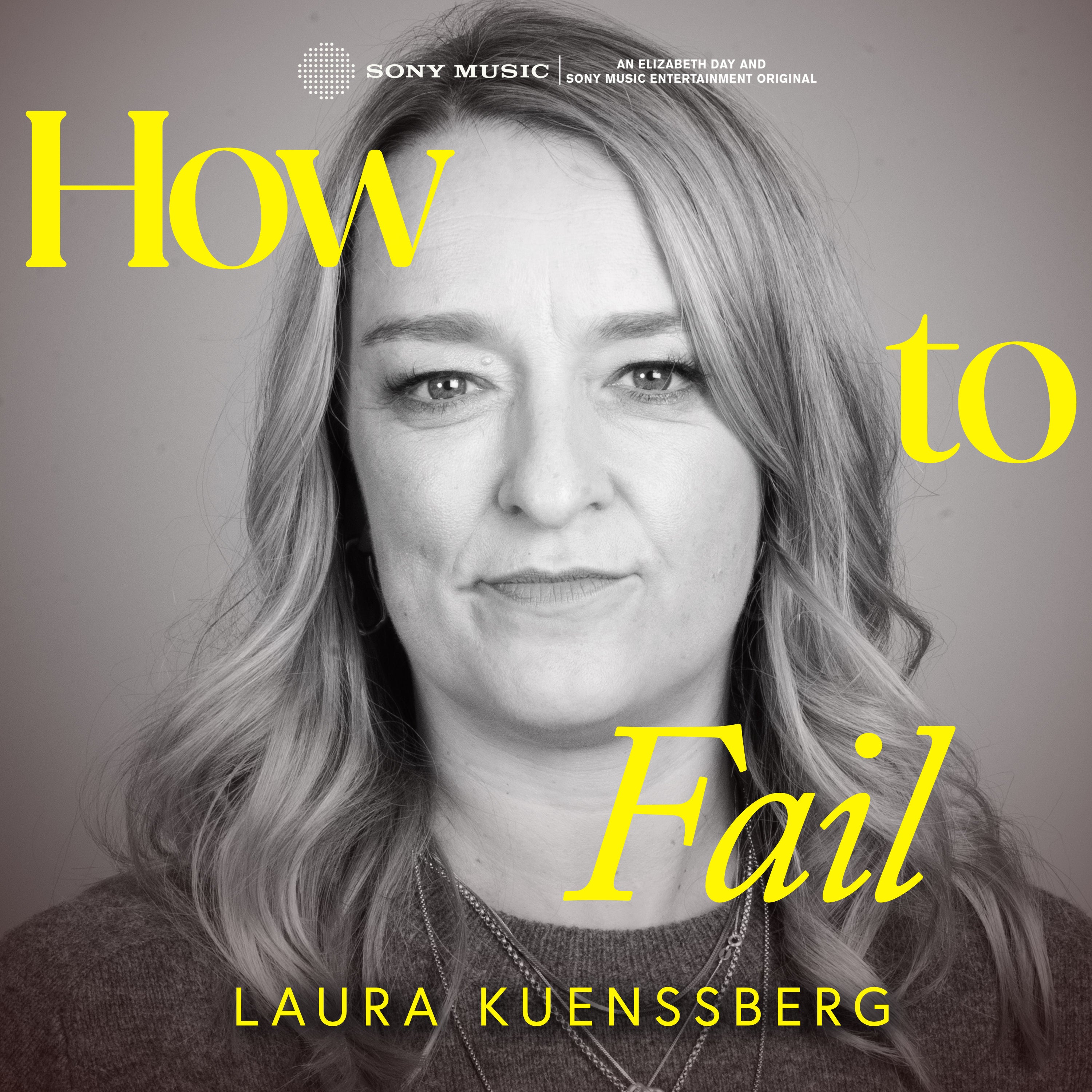
Laura Kuenssberg (BBC political editor and interviewer) discusses “How to Fail” through three public mishaps and what they taught her about professionalism, vulnerability, and holding politicians accountable in a divisive, social-media-driven media environment.
Laura Kuenssberg is an Italy-born, Glasgow-raised BBC journalist (trainee in 2000; chief political correspondent in 2009; first female political editor in 2015). She presents Sunday with Laura Kuenssberg, the Newscast podcast, and has made documentaries and interviewed major world leaders. Elizabeth Day hosts How to Fail.
Journalists must be a “vessel for the public,” not friends with politicians; failures can become learning moments; online abuse and threats require coping strategies; politicians increasingly avoid answering by disputing the question’s premise; audiences can tell when questions are dodged.
Boris Johnson’s text revealing her full interview plan (interview cancelled); security due to crowd harassment and a Times front-page photo; a skirt wardrobe malfunction at Chequers patched with gaffer tape; interviewing Arnold Schwarzenegger and President Zelensky; a near-misstep with Nicola Sturgeon’s emotional topic (“Do you still love him?”).
0:00Took my phone out of the pocket. There's a message there from Boris Johnson. Dear Laura, unfortunately you've sent me your entire interview plan. I couldn't believe that I had done something so stupid. Then I realised literally my skirt is completely bust at the back. Basically, my butt's hanging out. And the question sort of floated up in my head to say, do you still love him? Hello and welcome to How to Fail with me, Elizabeth Day. This is the podcast that believes you are not a failure simply because you fail. The true test of character is in how you respond. Before we get started on this episode, please do remember to like, follow and subscribe so that you never miss a single conversation.
0:53One of the things I hear a lot from listeners is how tiring it can be when your mind just doesn't settle. And I can only imagine this feels even heavier with intrusive thoughts. It's that quiet sense of being worn down by something you never asked for and never wanted, but just can't seem to switch off. If you struggle with this, I want to tell you about NoCD, because it's a resource that genuinely helps people. NoCD provides specialised treatment for OCD. And what I appreciate about their approach is how human it feels. You're matched with a licensed therapist trained in ERP therapy. That's exposure and response prevention.
1:31And over time, you learn skills that help your OCD symptoms become manageable so you can live more of the life you want to live. If you're struggling with OCD or unrelenting intrusive thoughts, NoCD can help. Book a free 50-minute call to get started at learn.nocd.com slash fail. One of the things we talk about a lot on how to fail is how difficult it can be to take that first step and starting a business is no exception. With Black Friday approaching, it's a great time to turn an idea into reality. Shopify makes launching an online store easier with ready-made themes and AI-powered tools, including Sidekick, its AI assistant, which helps you set up your shop and plan promotions without needing coding skills.
2:18Whether you're exploring a new venture or finally acting on an idea you've had for years, Shopify gives you the tools and support to get started with confidence and make the most of the busy shopping season. If you're ready to launch your business before Black Friday, go to shopify.co.uk slash fail to start your free trial. That's shopify.co.uk slash fail. Go to shopify.co.uk slash fail today to hear your first... Not much is known about Laura Kunzberg, despite her near constant presence on our screens. And that's just how she likes it. For almost all her working life, she has been employed by the BBC and scrupulously hidebound by its political impartiality.
3:05As early as 2010, Kunzberg's presence on the Beeb was so ubiquitous that the commentator David Aranovich coined the term Kunzberger vision. But what we do know about her can be summarised like this. She was born in Italy, one of three children, raised in Glasgow and graduated with a first-class history degree from Edinburgh University. She joined the BBC as a trainee in 2000. Nine years later, she was chief political correspondent. After a stint at ITV, Kunzberg returned to the BBC in 2015 to become the corporation's first female political editor. She now presents the flagship interview program Sunday with Laura Koonsberg, the award-winning podcast Newscast, and has made several critically acclaimed documentaries.
3:53Her headline-making interviews with prime ministers, presidents, and the odd member of the royal family demonstrate Koonsberg's incisive ability to hold powerful figures to account and to communicate clearly the complex, fast-moving developments in today's news landscape. Her new book, Pay Attention, brings her decades of experience to the fore to explore stark political truths. With chapters on Nigel Farage, the financial crisis, and Brexit, Koonsberg offers a rallying call to both voters and politicians to pay more attention to each other. While taking care never to centre herself, Koonsberg readily admits that you do get used to being at the centre of things.
4:39Addicted is the wrong word, but she adds, everybody who does this is, to some extent, a news junkie. Laura Koonsberg, welcome to High to Fail. Thank you. It's so nice to be here. I'm very excited to be in your lovely hutch. I love the word hot. Yeah, it's nice. It feels really cosy in here, which is making me feel dangerously relaxed. Bad news for me, good news for you. I'm glad you're feeling relaxed because I'm not. Because I know I need to bring my A++++ game to interview one of the great interviewers. Well, that's very kind of you to see. And now, first time writer, we'll get onto the book in a second.
5:21But that idea of being not quite addicted, but dangerously obsessed with news. Sure. Yeah, I think, I mean, I think we all are. What's that phrase that is popular now? Always on. Yes. In a way, we're all living our lives like that, aren't we? We're always after what's the next thing, what's the next thing. I think also, you know, when you're a journalist, things happen so fast that you have to be always on. And it's not a really super healthy way of living your life over the long term, to be honest. But when you have the opportunity and the sort of golden ticket, as I have done to see the things that I've been able to see and meet the people I've been able to meet.
5:58It's just so fascinating, right? And it's such a privilege. And when you're right in the heart of something, you kind of just want more. You know, there's one of my colleagues in the newsroom who sort of jokes about the kind of adrenaline of news. And it's like, just get it in my veins. It's like you always want to know more. You want to know more. You want to understand more. You want to hear more. I don't know if it's an addiction, but news junkie is a nicer way of putting it, even though it's a grim metaphor. Yeah, you're, you're adrenalized by it. Can you remember the first news story that ever fascinated you when you were a kid growing up in Glasgow?
6:32That's a great question. I mean, I grew up certainly in a house where the news was kind of on, you know, we had the, had the news program on, I think it was normally Radio 4 on, like at the breakfast table and there were newspapers in the house. Nobody in my family worked in the news. I'm not from a family of, of journalists at all, But it was definitely an upbringing where people would sort of talk about ideas and argue and were kind of encouraged to sort of get into debates. In terms of the first news story, I remember the Falklands War. So I remember Mrs. Thatcher being prime minister. And I think probably for quite a lot of women about my age, I think it was a big deal, actually, that the first prime minister I remember was a woman.
7:12And she was a controversial and a divisive woman. And I grew up in Glasgow where she was largely not a popular woman. But I remember that, you know, very strong sort of dominant or her critics would say domineering figure. Maybe the fault was that. It's a great question. I haven't thought about that in specific detail. I had exactly the same thing with Thatcher, that strong female in a position of power. And I remember also Kate Aidy on the BBC. Because we're the same, such a legend. We're the same generation. And seeing these strong women, no matter what Thatcher's politics were, there was something so meaningful about seeing a woman do stuff.
7:50Hugely. And, you know, I remember seeing Kennedy reporting in Chattamon Square. Yes, me too. Growing up in the 80s, if you were a little girl in the 80s, you saw some of these absolute trailblazers as big presences in your life. Yeah. One of the many things I appreciated about your book is that, as I say in the introduction, you talk about current political issues, prime ministers, Farage, reform. A few of them. Yeah. I know you do make a joke about saying that when you started writing the book, you could not have conceived that there'd be yet another prime minister in charge by the end of it.
8:24For sure. And that was one of the things that was really nerve wracking about it was like, when do I actually have to press send? because there might be another leader along any minute and then, oh God, I'll have to write another chapter. And I did have to do another chapter at the last minute about Andy Burnham and what that was like when he walked into number 10. One of the things that I appreciated was that you start every chapter with a public voice, as in a voice from a member of the public. In the back of your mind, with every interview you do, you're thinking of that person in the street.
8:53100%. You know, politicians only exist because they're there representing all of us. and things sometimes go wrong when they forget that my first three years I think it was my explicit job was to cover politics not in Westminster yes my explicit job was find out about what I purposely call small p politics which is whether you've got a decent gp whether your kids can get a job whether or not your potholes are being fixed things that are huge us in our lives rather than capital P politics, which is, you know, MP Chumley Warner has got into trouble over a disagreement with MP Biggins Smythe or whatever, you know, or what's happening on a wet Wednesday in that debate about the Transport Select Committee's latest report, you know, those things that frankly turn off a lot of members of the public.
9:40So yeah, every chapter has got a quote from a focus group because members of the public tell this country's story far better than anyone else can. Before we get on to your failures, you've interviewed so many extraordinary people over the last two decades. Who's been the most fun to interview? Arnold Schwarzenegger is really fun to interview. I've interviewed him. He's really fun, isn't he? He's fun to tease. And he's also slightly kind of wacky. Yeah. I mean, there are some things where you just have a sort of chill down your spine, right? So interviewing President Zelensky He's just a sort of incredible thing to be able to do.
10:19Is he very charismatic? Yeah, hugely. You know that way when sometimes really famous people, like actors or someone, they'll come in the room and they're really tiny. Yeah. And they're like, wow, they're really small. Yeah. Zelensky is tiny. Okay. But hugely charismatic. And he sort of comes through, surrounded by, for very good reason, these massive Ukrainian security guards, like men, mountains. And then in the middle, there's this little guy. And you can tell he was a performer before he was a politician, right? We sort of forget that now. This war in Ukraine has been going on for nearly five years.
10:52But he was a stand-up before he became a politician. He's a real showman, but a showman, obviously, as the world has seen, a showman with real steel. And that's an amazing thing to be able to, you know, to sit down with him. And also, I interviewed his wife in Kiev twice, and she's incredible. Do you listen back or watch back your interviews and think, oh, why didn't I ask that? Yeah, all the time. Do you? Okay, good. That's all. All the time. I mean, not that you should, but I wonder if all interviews do that. Well, it's interesting, isn't it? Because it's meant to be good for you and good to help you improve if you sit and like watch what you're doing.
11:28And I do sort of deliberately watch my Sunday show, right? Because you think, how could we make it better TV, right? How would it be better for the audience? It's a very familiar feeling to me sometimes to watch back an interview or be looking at the transcript in order to edit it or think what we would call the top lines as journalists. What are the most important bits that we're going to pick out? And think, oh, for the love of God, why didn't I ask that? Or why didn't I press them on this? Sometimes as well, there's a question that you almost ask. And then you think, oh, I can't quite go there.
12:01Because you're scared. No, not scared. you might just think it's is maybe too much yeah there was an interesting moment i see you're nodding because you're thinking oh she's going to tell me something good here i know it's so difficult this is lovely um sometimes there's a question where you might just think you're going to be more personal and it might just feel wrong and i recently one of the big interviews we did this year was to sit down with Nicola Sturgeon. You know, she's a fascinating, tough politician. And everybody knows this terrible thing happened to her husband, who's now in jail for embezzling £400 ,000 from the SNP, which was the party he was the boss of and she was the leader of.
12:49And she sat down to do an interview with us to talk about her response to that. And it was obviously massively emotional for her. Essentially, her top line for using that concept was that she was being hammered for crimes that she didn't commit. And at the end of our interview, and it had been emotional, it had been intense, and we were at time, we'd done our allotted half an hour or whatever it was, and the question sort of floated up in my head to say, do you still love him? Oh, such a good question. And I didn't. And I just thought, sometimes you just think, you know what, and now I'm talking about it publicly, and I hope that doesn't make her cross.
13:28I don't think it will. it just felt unnecessary I suppose that does happen but then when I was watching after I was like oh maybe I should have done maybe I should have done because it's the human question what I do genuinely always try to come back to is if you're watching at home in a lovely big pink squashy seat what's the thing you might shout at the telly that's what we're there for you know you're there to try and learn things and you're there to try and find things out for the people who are watching or listening or reading or whatever so well put thank you and what the people listening and watching this at home will want to know laura kinsberg is about your first failure oh my god well i've had so many that narrowing it down was quite difficult and i have to say that you're such a class act and you're so brilliant at what you do that you've basically interviewed yourself because you've written these incredibly precise and brilliant mini essays about each failure so thank you so much can you just read them out and then I don't have to have the humiliation of actually having to go through them.
14:28The first one is in 2024. Yes. When you were due to interview Boris Johnson who had just quit as prime minister. Tell us what happened. Okay so Boris Johnson who obviously had interviewed lots of times had had to go as prime minister because essentially his party had had enough of him and off he went into the sunset and he didn't do interviews or do a sort of what we would call an accountability moment, right? He just went off in disgrace, booted out by his party, even though he'd had all the success that he'd had. What then sort of ensues in journalism is then there's like a competition over who's going to get the interview.
15:09Who's going to get the first moment? Anyway, long story short, I got the interview and he'd got his book was coming out. But the point for me was it was the first time to sit down with him and hold him accountable for all the things that went wrong. and of course at the BBC we'd done all this prep we had this great thing you know there were even like lovely trails of the programme all ready to go and the whole thing it was going to be a half hour prime time programme prime time interview and on the day before the interview great interview plan done all the research location looks fantastic got all the best crew all brilliant I was walking up Regent Street took my phone out of the pocket there's a message there from Boris Johnson And I thought, oh, well, maybe it's just say, oh, all OK.
15:55Or, you know, what time do we have to be there or whatever? And before we go on, it is normal for journalists to have politicians' mobile phone numbers, right? That's not a way. And in the book, I talk quite a lot about the relationships between politicians. And you're not their friends, you're not their mates, but obviously you have to talk to them in order to find things out. So I thought, well, maybe it's just confirming tomorrow. Open the message. And essentially it says, I could read it out to you, but I'm not going to. I'm going to put myself through that abject humiliation. Dear Laura, unfortunately, you've sent me your entire interview plan, all your pushbacks, all your notes and suggested points of research.
16:32And under these circumstances, I don't think that we can do the interview. At least he told you. Yes. And I thought I was going to be sick in the street. I mean, I literally, you know, that way when something goes so wrong, you really have a physical reaction. you know that your stomach just like drops i was like oh i couldn't believe that i had done something so stupid oh you poor thing that's such a horrible feeling it was and i was then trying to like phone my boss for my producer and my i remember my hands were shaking like so much i couldn't even do the photos like oh no i'm like it was horrific so then we had this sort of like crisis power going oh my god what we're gonna do is there any way we can salvage this no of course there's no we can salvage this because when you have an interview obviously you know you've thought through I'm going to ask about this they might say that how do I prove this point what's the argument and Boris Johnson being Boris Johnson and his message back to me he'd also like gone through all the things and said well I was wrong about this and quite quickly actually just came to the conclusion we had to just get it out there immediately and I had to just front it up myself and say myself on social media rather than put out a sort of formal BBC statement saying with regret for technical reasons, the interview cannot go ahead.
17:46And I just put it out there. It was awful. What was the response you were most afraid of getting? Because of the era when I was political editor, there has always been a lot of chaff and nonsense about me being mates with politicians and me, oh, I was at some of the party gate parties. I mean, just complete rubbish on the internet about me being close to this politician or that politician from all sides, right? So this is a, so I suppose I was a bit worried that there might be some of the, oh, well, they're mates anyway. She must always send him her questions kind of thing. And for the avoidance of doubt, we do not send questions to people.
18:29You do not agree things like that. It's just not what we do in news. So I suppose I was a bit worried about that. I also just felt really gutted and sorry because I had my lovely, lovely colleagues. You know, we'd worked really hard on it. The weird thing was, actually, you know what, it turned into one of those moments where you think that was an absolute calamity. But nearly everyone was really lovely. And I had all these messages from people saying, oh, my God, I did that one time where I sent my mother-in-law the message that I meant for my husband about how she's an old shrew or whatever.
19:02And people in the end were really lovely about it. Well, I wonder as well, because you're so good at what you do and you're so competent and because you work for the BBC, therefore you have to live impartiality. Yeah, yeah. That maybe there was something about your humanity in that moment that really spoke to people. Yeah. And there's nothing wrong with showing a bit of vulnerability. It's just as a news reporter, that's not what it's about, right? You're there as a vessel for the public. You have to be strong and clear and articulate and, you know, never drop a word and never get anything wrong.
19:39You know, if your whole reason for being is being accurate and being clear, you're not meant to mess up. In the end, it was quite a sort of warming experience because you know what? Actually, most people are really lovely. Who got the interview in the end? I think it was Tom Bradbury at ITV. How annoying. Well, obviously, we were all able to watch it and go, oh, ours would have been so much better. Look at that set. It's nothing like our beautiful location was going to be or my white silk shirt and I was going to be the angel of truth. You mentioned that you have come under a lot of scrutiny and flack for allegedly being too close to various politicians from every side.
20:24From all of them, yeah. You've also faced horrendous online abuse. Yeah. And you write in the book about a particular period when Jeremy Corbyn was leader of the Labour Party, when you had to have personal security. Yeah. How do you cope with that on a personal level that must be so difficult to go through? It's really weird looking back at this because I was working in America in 2008 and I covered that first Obama campaign, which was an amazing experience. and journalists and politicians were starting to use Twitter then and I was like oh my god this is like revolutionary we have to get in on this so I came back and then said to the baby look I really think we've got to get in on this platform because eyeballs are going there this is starting to become a thing and it's a news source and it's somewhere we should be putting information as well it took about six months to get the BBC to agree that I could be BBC Laura Kay and it was a big deal because it was the first time really that the BBC was going to endorse one of its journalists putting reporting on a platform that wasn't ours right much of it turned really nasty over a period of time but my solution to that was just to stop looking at it so the reasons really and I haven't really talked about this before but I do in the book because it felt it would have been wrong not to include it the reason I ended up with security was actually because of what was happening in real life it was because at a couple of events in particular uh i'd been either you know chased around by people in a crowd or on one occasion surrounded by a group of five or six guys who were kind of pushing and shoving and jostling and screaming and shouting in my face for i was a liar and when i had to like run away somebody leaked it to the paper and it ends up on the front page of the Times, a picture of me at a party conference with a security guard.
22:13I'm going to say this in the book, on the front page of the Times, some people might have thought that my lovely producer of many years, who's a great guy called Paul Twinn, his family was hugely entertained that people thought he might have been like the kind of hot ex-Marine security guard in the picture on the front page of the Times. But yeah, it was the real life thing that meant we ended up having security on a couple of occasions and it's grim right yeah it was really grim but we didn't have a choice and I think one of the things about how to fail is you just keep going right you don't have a choice I've had an amazing an amazingly privileged job in terms of where I've been able to go who I've been able to meet what I've been able to done and to do that you know public services to do something that I really believe in.
23:08So through all that time, it's like, well, we've got to do the news today. So someone might have just sent me a horrible message online or someone might have just screamed at me, you effing bitch or whatever in the street. But I've got to do the six o 'clock news in half an hour. And there's going to be three and a half, four million people watching that who really want to know whether or not we're going to leave the European Union or whatever it is so my personal upset about this that or the other that's nowhere near the top of the list also I had a great team lovely colleagues many of whom became really great friends and actually you know when when you're having a hard time that's kind of what gets you through isn't it although I'm thinking it makes me think of one day on the last day almost the last day of the 29 general election camp 2019 election campaign I just remember everyone was so tired of been on the trail I remember one it was like the last day and we were about to do the six and I remember actually we were editing in a hotel room which is not an unusual thing because you're you know going all over the country I remember actually I got under the duvet with my laptop in the hotel room and I remember just sitting there like guys really not sure that I can do this anymore like have some crisps have a cup of tea and then it was fine and then like 10 minutes later like yes and tonight here we are you know days until the nation decides blah blah blah but it was a nice thick duvet I do remember.
24:33I've reached a stage in my life where comfort is a non-negotiable specifically when it comes to things like bras and if like me you've always assumed that proper support has to come with an underwire digging into your ribs by the end of the day then let me introduce you to Honey Love's Crossover Bra. What genuinely surprised me is that it's wireless but still incredibly supportive. It stays comfortably in place throughout the day, gives great shape and lift and I don't find myself constantly adjusting it. The fabric is beautifully soft and it feels like one of those rare products that actually delivers on its promises.
25:10Honey Love is an independent female-founded brand and their best-selling crossover bra is setting a new standard for wireless comfort and support. Treat yourself to the most advanced bra on the market. Use our exclusive link to save 20 % at honeylove.com slash fail. That's honeylove.com slash fail. After you check out, they'll ask where you heard about them. Please support our show and tell them we sent you. Experience the new standard in comfort and support with Honeylove. As much as I love giving presents at Christmas, I think what most of us really want is more time with the people we love.
25:52Life gets busy, families live in different places, and it's not always possible to be together as often as we'd like. That's one of the reasons I love Aura Frames. It's a beautiful digital photo frame that helps you stay connected to friends and family by sharing special moments as they happen. Your camera roll, like mine, is probably full of photos of your loved ones and probably full of photos that they would love to see, but which never quite make it beyond the family group chat. With Aura, those memories can become part of someone's everyday life. Feel closer this Christmas with Aura Frames.
26:29Aura is the number one digital frame loved by millions of families and their Black Friday, Cyber Monday deal is the best of the year. For a limited time, visit auraframes.co.uk and get up to£40 off select frames, plus an additional£5 off your order with the promo code FAIL. That's Aura, A-U-R-A, frames.co.uk, promo code FAIL. Support the show by mentioning us at checkout. Terms and conditions apply. One thing I've learned is that the small things can make everyday life feel a lot easier. And for me, good cookware is one of them. I've been using Hexclad and what I really love is that it combines the durability of stainless steel with the convenience of non-stick.
27:15It makes cooking feel simpler and the clean-up afterwards is refreshingly easy. With Christmas just around the corner and plenty of meals to cook and people to host, it's exactly the sort of kitchen upgrade that actually gets used every day. Hexclad is also dishwasher safe, oven safe, up to 480 degrees Celsius and comes with a lifetime warranty. Right now, Hexclad is running its biggest sale of the year with savings of up to£589 off. And for anything that isn't already on sale, listeners can get 15 % off with our link. For a limited time, Hexclad is having the biggest sale of the year. Head to hexclad.co.uk slash fail and save up to£589.
28:00that's hexclad h-e-x-c-l-a-d dot co dot uk slash fail for up to£589 off support our show and let them know we sent you were your family worried about you I mean I know you say in your acknowledgments the book that very sadly your dad has passed away yes but I imagine for parents yeah and maybe your husband that's a difficult thing to see your husband it's horrible I didn't become a journalist to make friends when I became a journalist and it expects to need security in the UK. I'm not asking anyone for sympathy, really not. And this is not the same as what colleagues experience who work in war zones or journalists in countries where there isn't a free press and countries where journalists get locked up.
28:49But the reason I've written about it and I'm talking about it openly for the first time is because that is something that has changed in our culture of how we talk to each other in this country. And I want people to think about that, stop and think about that. And it's partly because of what social media and how everybody knows this. You say something online that you wouldn't dare say to someone in the street. But now maybe people do say things to each other in the street. How politicians talk about immigration now verbally is completely transformed and different to how it was 20 years ago when politicians were so careful that they wouldn't say anything that might offend people.
29:32Now, lots of them will lean into things that they know might offend people, or they might even tell them they're wrong to be offended. Whether that's how Reform or Restore talk about immigration, or whether it's how like Zach Polanski and the Greens talk about antisemitism, they would say, oh, it's not controversial to say that. Knowing very well that lots of people might think, well, no, that's really controversial to me. And that's a big change. That's kind of the reason why I've talked about it because I think you know if you'd said 20 years ago that British journalists covering like boring old Westminster might have a bodyguard you just thought you were off your rocker yeah you say that you didn't become a journalist to make friends however some politicians have tried to be very very friendly with you do we see the seamless link there it was very very nicely done nicely done and you write in the book about several different episodes and you do it so brilliantly and it's sort of funny and wry without throwing anyone under the bus yes but about this former government minister who you think maybe invited you potentially for a threesome yeah and look i can say that i've never actually i've never put myself in that real situation so i don't know if that was what was going on right i can't say well it was just like that other time i will briefly picture the scene for people but it's not unusual for journalists to have meetings with politicians, sometimes in hotel rooms, because people travel for work.
30:51If you're at a party conference, everyone's there, but you would normally expect an advisor, someone who works for them to be there in the room. And you would not like go and see a hangout with a government minister in a hotel room on your own. But it's not an unusual thing. It's something I'd done lots of times. On that particular night, this particular person had said, oh, let's have a catch up at some point. Oh, after 10 o 'clock or whatever it was, works for me. I was like, fine, fine i'll have time the news yeah because if you think about it right because the 10 o 'clock news is on at 10 and then if you have a chance of then getting some face time face time i say carefully not any other kind of time face time with a politician you take it because that's what you need you know talking to people's how you find stuff out um so you said okay can meet up fine no problem okay that's fine send the room number whatever and i just blithely assumed that the team would be there so i go along knock at the door uh opens the door some sharp buttons undone i'm like oh go into the room their partner's there not their special advisor or press secretary or whatever and i just thought this doesn't feel right so i left really very quickly now there was no explicit offer but it didn't feel right you were reading the room i was reading the room And I may be wrong, which is one of the reasons.
32:11And I'm never going to say who it was. So because I don't think it's fair. And the reason it's in the book is because I'm trying to explain to people about the, you know, blurry lines in Westminster. And I put in a funny way, I'm trying to make the argument that it's important that journalists do spend time with politicians because you have to know them. So you know what's going on. But it's very important that you're not personally close to them. But weird things do happen. And I'm afraid also there's just too many occasions where particularly young women have talked to me about some of the really awful experiences that they've had.
32:50So some of the stories I tell in the book about, you know, getting texts from people saying, oh, you look really lovely on the news tonight. You're just thinking, oh, just that's a bit creepy. Or being kissed on the head. Yeah, that's weird. So this is a male politician every time he saw you kiss your head. Yeah, really. Where on the head? Like there. Okay, so you're pointing to a bit. yeah top of your forehead yeah just really weird like who does that i don't think well this isn't sinister because you know it's not in polite company to give people a double their kiss or whatever like that's a normal thing uh if it's somebody you've met lots of times and you might have had coffee with them and you might have had a you might have had lunch with them and their press secretary or something so social greetings are not weird but that's just a weird thing yes But if you say, actually, I'd rather that you didn't do that, then how's that perceived?
33:42I totally understand what you're saying. And again, because we're similar ages, I can remember countless occasions when I first went into newspapers, still very male dominated, still smoking in the office, one computer hooked up to the internet. And there were many moments looking back now in hindsight with what we've learned through the Me Too movement. There were very many inappropriate exchanges, but so much of who we were as women at that stage was about mitigating male fury. You know, I know someone who works for a very senior minister, this is going back quite some time, but who once asked them to run their bath where they were working late, again, in a hotel, which, again, perfectly normal to work late in a hotel.
34:35But it's just weird. Politics is also such a human business, though, right? And political parties are sort of like big dysfunctional families, right? They all, you know, they hate each other. They love each other. They marry each other. They have affairs with each other. they all fall out, they all fall back in. Their lines are all very blurred with each other. And there are lots of, you know, stories like this that I've covered where you might have had a male politician say, but I had absolutely no intention. I'm terribly, I didn't realize at all that it wasn't okay that I put my hand on her knee.
35:04Maybe you should have known that. And then in 2026, you really should know that. Let's get onto your second failure. Okay. Out of the world of Westminster, into the world of mopeds. So this is when you were trying to learn how to ride a moped. I was trying to be cool. My other half, who's amazing, it was like, yeah, Vespa's cool. Totally knew he was doing amazing, brilliant. So I'm like, do you have to have lessons? No, no, no. It's so easy. You don't need a lesson. I'm like, OK, we should do this thing called CBT, compulsory basic training, I think. Go off to a playground in Vauxhall in South London.
35:44basically like little kids everyone's sort of given a high viz and a little very on a moped that's about as powerful as a hairdryer there was suddenly you know okay you have to practice braking or whatever i just got it completely wrong i think i put the throttle and the brake on at the same time and it skidded and i went over the front of the handlebars with my little high viz on landed dramatically on my wrist squealed embarrassingly obviously like four year old and ended up in Annie. And that was the end of my Vespa dreams of buzzing around looking cool in Soho on a Saturday morning. Although I did that on the back of my other half's Vespa.
36:23So that was still quite cool. So much to unpack here. Before we do, I feel like I should declare something like in the register. Do you have a Vespa? Because you're very cool. Not anymore. But I did exactly the same phase when I first moved to London. I had a silver a grey Vespa. Oh my God. But Laura, I didn't even do CBD. I just, because I had a driver's license. It was just assumed that you're right. It was assumed that you could ride it. You could just do it. And I couldn't. I was a liability. I just couldn't. No, but you could, I mean, presumably you did actually manage to drive around London.
36:55I couldn't even drive in a playground. So this was just terrible and humiliating. What do you think it taught you? Because I imagine you're, you know, first class history degree from Henry University, trainee at the BBC. highly competent puts in the work what did this teach you about failing? I have always believed actually and I'm someone who would boringly say well you put the effort in and you get the reward out and in a funny way it sounds silly but I think it was actually quite an important junction in a way that sounds ridiculous when it was me falling off a scooter in a playground in Vauxhall but a kind of moment would go actually I'm not going to be able to do everything I I really spectacularly couldn't do that very simple thing that lots of people are able to do.
37:41But I think it was kind of important. And you go, do you know what? Actually, that's all right. I can go on the back of my husband's bike and that'll still be quite fun. We can still go to Soho on a Saturday morning. And maybe sometimes I need someone to help me. Oh, interesting. And do you think now you're better at asking for help if you need it? Yeah, I'm maybe not great at that. And I think that's another thing as we talk about it. I think it's another possible aspect of growing up as a young woman in the era that we did. Yes. Right? You can do it all. You have to do it all. Do not show that you might not be capable.
38:25Because you're walking into a room where people think you're not capable. So you have to like massively overcompensate. 100%. But the truth is, actually, as my mum used to say, is you can have it all, but probably not all at the same time. Yeah.
38:41On Kermit and Mayer's Take This Week, what's coming up, Mark? I'll be reviewing these films in Take One, Fjord, How to Rob a Bank and Ebenezer, which brings us to our very special guest. Yes, who is Rupert Grint, who is one of the stars of that film playing Bob Cratchit. Plus the top dad jokes in the world in Evergreen Chuckle Fountain, the laughter lift. Don't sound so disappointed. Lots of chat around the films you're watching in cinema in the box office top 10. Shelly Jensen was about to retire early after selling her veterinary practice for millions. But a moment of vulnerability became a way to take away her rights.
39:18Don't you see how destroyed I am as a person? Her husband fought to save her before Shelly lost her freedom forever. This is a life or death matter. My wife's life is at From Sony Music Entertainment and Novel, this is Free Shelley Jensen. Available now on The Benj. Your final failure. Yes. You've written to me as the skirt, exclamation mark. Tell us about the skirt. Okay, so again, picture the scene, a very, very hot day in 2018. We're at Chequers, which is the Prime Minister's fantasy country house. We're in the grounds, we're at this press conference, it's about 35 degrees. so hot we're all sitting out in the sun waiting for Donald Trump and Theresa May to arrive and that moment where we'll all be able to ask questions of them and all the rest and I'm you know prepping or on the phone or whatever with my producer and sort of at the same moment suddenly realized literally my skirt is completely bust at the back basically my butt's hanging out there's no other way of saying this this was like my trusty black skirt that I'd worn again and again and again and we've all got one right um I'm thinking okay so in a few minutes uh the president of the United States is going to be here the prime minister of the UK is going to be here I'm going to be in the front row with the journalist that's going to be shown all around the world not least because the day before he'd been really rude about Theresa May or he'd been very flattering about Boris Johnson that was front page news that day and all the rest there was huge interest and I had had a very bad wardrobe malfunction so what the hell were we going to do so i remember for some reason we had this like picnic blanket or something i remember sitting down on the grass on a blanket like while we were going what i'm going to do what i'm going to do what we're going to do because we've got to do the news right yeah you can't go oh sorry i'm going to go to h &m and and sort out my skirt so my great producer and one of my great mates uh managed to fortunately this skirt was black we located black gaffer tape that big thick camera tape and literally she sort of trussed me up with gaffer tape round and round well it was kind of it was a sort of like cunning patch sort of thing yeah and put me back together and then for the rest of the day in this boiling boiling hot I cannot tell you how hot it was I was like kind of inching around with this skirt patched up by gaffer tape was this the press conference or was it a different one where Donald Trump replied to you saying what that's your question no this was his first press conference in the White House.
41:50I cannot tell you how nerve-wracking that was because he'd just been elected, this hugely controversial guy. There was a lot of disquiet in the UK across the political spectrum about some of the things he'd said before about abortion, about Muslims, about NATO, the Defence Alliance. And you don't know at a press conference like that as well if you're going to get a question or not. So again, that's a big kind of who's going to get it, who's going to get it. And I did get one, but I remember I literally I thought I was going to talk about that moment. I thought I was going to be sick on my shoes.
42:24And I stood up and I did my question. And before I got to the end, he said, well, that's your question. Turns to the prime minister and says, there goes that relationship.
42:34And it was just it was completely surreal. And again, that again, how many prominent politicians push back and treat members of the press now is something else. that's completely changed in the last 20 years. It's just completely changed. And part of their shtick is to kind of take us on. It's a distraction tactic. And it's one of the things that's become more possible with the changes in the media because they can post whatever they like without having to talk to a journalist who might ask them difficult questions. They can have their own TV station. They can have their own YouTube channel. Those things per se, in isolation, like there's nothing wrong with that.
43:14But I think we all need to be aware of that. So when you're looking at stuff on your phone, and you see a clip, you don't know if that is a clip where you or me has asked a politician a difficult question and they're giving an answer. Or you don't know if it's a clip of them saying, hey, I promise if you turn the taps on with me, only milk and honey will flow out. Clip, Bosch in everybody's feeds. And there's loads that's really exciting about the new different media environment, like the kind of thing that we're doing here today. but when it comes to politicians there's a lot we really have got to be aware of what you can trust and what you can't trust yes because that's at the core of whether or not we can make good decisions about our country I'm not quite sure how I got there after the skirt it was great it was great we'll come back to the skirt in a second but you do you make the point in the book which was so well thought through and I hadn't thought of it myself this way that there are certain politicians in this divisive media landscape who instead of answering the question will dispute the premise of it.
44:20Yeah, what's a rotary? Exactly. And Nigel Farage, Zach Polanski, one might put in that bracket. And you're so right that that is a current trend. That we all need to question the people who are questioning the questioners. If what I'm doing is trying to get an answer that for, as a result of lots of work and research and all the rest, me and my team have worked out is the thing that if you're watching at home, this is how we're really going to try and get this bit of information from you, for you. If the politician then basically says, well, push off, I'm not going to go anywhere near that. What about them?
44:58You know, I talk about it in the book. You're almost like, well, you've got a complete brass neck even asking me that. Or I don't think that's relevant. I don't think people care about that. And they will assert that it's not important. and that's really interesting, or they'll just say, I don't think that's controversial. And you think, well, it is. Or even actually, you know, Kemi Baynock did it this week, this weekend she was on the program and she said, well, I'd reject the premise of your question. And you go, okay, well, I'm still going to ask it. And the point is then not to be, it still exists.
45:29Yeah. And the point is not to be knocked off course. You have to at least, even if they won't answer it, what you're doing is you're revealing to the audience, you're showing everybody watching that they're not answering you. and people can see that although I once said that to Theresa May I said people will know that you've just refused to answer the same or you've said the same thing three four times she looked so cross she was so cross but some you know we all know it right so yeah something I find myself saying actually on air quite often is I think people listening at home might that might make people scream at the tv or I think everyone can hear that you're not answering the question back to the skirt yes as you rightly point out there is a visual aspect to what you do and as a woman in front of the camera I imagine that there are plenty of double standards inherent in that yes what other examples do you have of that I mean when I was training the thing that we were kind of taught I suppose we were taught is the main thing is just don't be a distraction right so if you're doing the news don't be a distraction so you know don't turn up in a with a an amazing décolletage, don't turn up in a cocktail dress, don't turn up in a dirty pair of jeans.
46:37Even though it's interesting, there's a difference between men and women. We were talking about this yesterday, actually, after the show with some of the guests. Even microphone packs are basically designed for men because men who are going on the telly traditionally would have had a suit on. They probably had an inside pocket. You put the mic pack on the inside pocket and you've got a lapel to put the microphone on. Well, if you're wearing a jumpsuit, that doesn't work very well. Right. Or studio floors might have levels going up and down it was once suggested to me well you shouldn't really wear heels because actually the different levels on the floors and there's kind of holes in the floor now that was a health and safety thing but I was like I'm gonna wear heels well the health and safety then you might end up in all sorts of thinking well I think as an adult like I can take that risk that and I remain victim of a fever dream where I fall over on my butt in this Sunday morning studio because of insisting on wearing even small heels you can though sometimes use it to your advantage and i think it's one of the very few advantages that make that is easier as a woman working in the news is that you can wear bright colors and if there's a big press pack and the politician is like blinking or whoever it is is looking at these like swarm hordes of people huddling around all screaming questions if you're the one that's wearing bright red or you're the one that's wearing bright green or something they're more likely actually i've seen it happen so many times they're more likely to look because they're kind of going and then they see you and they go oh Laura Theresa Mayles used to do it because she was going to go oh oh Laura and if you've just got a sea of grey or a trench coat you know reporters in their old masks you can use that to your advantage wow yeah we need more male political correspondents wearing Cerise suits don't we well that's the other thing is you get a kind of oh they were both wearing the same thing wherever nobody ever goes oh I can't believe those two men were both wearing navy suits right imagine that the outrage were you accused of getting your cleavage out when Paxman left I was yeah I was actually I was and I'd forgotten about that so I was working at Newsnight at the time and Jeremy Paxman Emily Maitlis and Kirsty Wark and sometimes me we sort of shared presenting duties on Newsnight so I was there I can't remember I had a made up title I was at their chief report something I can't remember and then when it was announced that Jeremy was leaving yes somebody delightfully wrote oh yes Kunzberg's being shown more cleavage of late or something like that I mean that was about 2015 I don't know if someone would write that now they probably probably would probably I don't know but it's something that you always have to think about I guess yeah and you have to think about how you look and you know I actually as it happens I love clothes I absolutely love clothes but I don't like buying clothes for work because it feels like a pressure because you're thinking oh god what's going to work what's the angle going to be what's the color don't wear white because the lights don't like it and it's like look this is a first world problem i am not complaining poor me it's so hard to choose outfits for the studio or my tv show but how you look as part of it and you can make it fun and you can make it joyful and maybe a bit playful um and it does it does matter and you have to think quite carefully about it.
49:47Yes. Yeah. Particularly now. And I have to say that you are, I think, the only guest we have ever had on Right to Fail who came with an outfit change because you are so thoughtful. You had looked at the studio and examined which colours might work. And the other thing that I want to say before I draw this interview to a close is that you have said in interviews how important other women in this profession have been to you. Yes. And how there is a real sisterhood, as much as the patriarchy might like us to believe that we're all rivals. Yeah. And I want to say to you, thank you, because you reached out in the very early days of How to Fail, and you sent me a message on Twitter, as it was then, and you were so supportive.
50:27Good. And kind. And I think that's just the measure of who you are as a person. So I wanted to say thank you and get that on the record. That's so nice. But before we drop to a close, I genuinely mean it. as part of the research this interview this deeply intimidating interview where there's not that much about you out there which I know is how you like it but what there is out there is a wiki feet rating now do you know what wiki feet is? No I don't and I'm feeling very alarmed it's when they rate people's feet who happen to be in the public eye foot fetishists to be quite honest okay you get a rating out of five okay anything over four is absolutely amazing.
51:09I have something, it's really embarrassing. It's like a 3.5. Do you want to know what your rating is? I don't know. 4.26, which is absolutely amazing, Laura Kunzberg. So you're nailing that as well. Oh my God. You're a deeply competent foot haver. Well, I'm happy that I'm, well, I was going to say I'm happy that I'm making foot fetishes happy. I don't think I should say that. I think that breaks BBC impartiality rules. I am alarmed. All fetishists are equal. God! I'm deeply alarmed, but I'm glad that, I mean, if you're going to put that in there, that you're not going to reveal to me that I'm at the bottom of the list.
51:50Not at all. You're very high up there. God almighty. You've got a legion of fans and admirers, and I am one of them, not your feet, but all of you. Thank you so much for coming on How To Fail. It's been a huge pleasure. And yeah, thank you for being here and for such a lovely conversation.
You might know Laura Kuenssberg as the BBC’s first female political editor, the presenter of Sunday with Laura Kuenssberg, or a familiar voice on Newscast. Having spent decades holding politicians to account, she is one of the most recognisable faces in British journalism. But for someone so often on our screens, Laura rarely puts herself at the centre of the story. Her new book, Pay Attention, draws on her years of reporting to explore the relationship between politicians and the public, and why we need to listen more closely to each other.
In this conversation, Laura shares the stomach-dropping moment she accidentally sent Boris Johnson her entire interview plan; the abuse and intimidation that led to her needing personal security and the double standards women face in front of the camera. Laura also opens up about learning she *can’t* actually do everything, the importance of asking for help and a wardrobe malfunction in front of world leaders that was rescued…with gaffer tape.
IN THIS EPISODE
00:00 - Welcome & Introduction
02:54 - Laura Kuenssberg Joins Elizabeth
04:10 - "Pay Attention": Why Politics Still Matters
07:55 - The High-Stakes World of Political Interviews
11:00 - Failure 1: The Boris Johnson Briefing Leak ("My Heart Hit the Floor")
17:15 - Public Scrutiny: "You Can't Let the Noise Define You"
22:37 - Sponsor Break
23:48 - Failure 2: Failing to Ride a Moped ("Complete Road Chaos")
31:15 - Navigating Criticism & Impartiality at the BBC
37:25 - Failure 3: The Wardrobe Malfunction ("A Total On-Air Nightmare")
43:00 - What Failure Teaches Us ("Survival Is Its Own Success")
45:50 - Final Reflections
46:48 - Outro
KEY QUESTIONS ANSWERED IN THIS EPISODE
What happened when Laura accidentally sent Boris Johnson her entire interview plan?
How do you recover from a professional mistake in the public eye?
Why did Laura Kuenssberg need personal security while reporting on British politics?
How do you hold powerful people accountable when they refuse to answer your questions?
Where should journalists draw the line between knowing politicians and becoming their friends?
What double standards do women face?
How do you accept that you can’t do everything - and learn to ask for help?
💬 QUOTES TO REMEMBER:
“I didn’t become a journalist to make friends.”
“There’s nothing wrong with showing a bit of vulnerability.”
“Actually, I’m not gonna be able to do everything.”
🔗 LINKS + MENTIONS:
Laura’s book, Pay Attention, is available now
Join the How To Fail community: www.howtofail.supportingcast.fm/#content
Elizabeth’s Substack: www.theelizabethday.substack.com
📚 WANT MORE?
Mo Gawdat (2022) - swap.fm/l/xg1simb4t2cTTqO3ZBE9
💌 LOVE THIS EPISODE?
Subscribe on Spotify, Apple or wherever you get your podcasts
Leave a 5⭐ review – it helps more people discover these stories
👋 Follow How To Fail & Elizabeth:
Instagram: @elizabday
TikTok: @howtofailpod
Podcast Instagram: @howtofailpod
Website: www.elizabethday.org
Elizabeth and Laura answer listener questions in our subscriber series, Failing with Friends. Join our community of subscribers here: https://lnk.to/7i0moR
Have a failure you’re trying to work through for Elizabeth to discuss? Click here to get in touch: askhowtofail.com
Production & Post Production Coordinator: Eric Ryan
Engineer: Matias Torres
Assistant Producer: Shania Manderson
Senior Producer: Hannah Talbot
Executive Producer: Alex Lawless
How to Fail is an Elizabeth Day and Sony Music Entertainment Production.
Find more great podcasts from Sony Music Entertainment at sonymusic.com/podcasts
To bring your brand to life in this podcast, email podcastadsales@sonymusic.com
Learn more about your ad choices. Visit podcastchoices.com/adchoices
Scan the code with your iPhone camera
Listen in the app.