In short
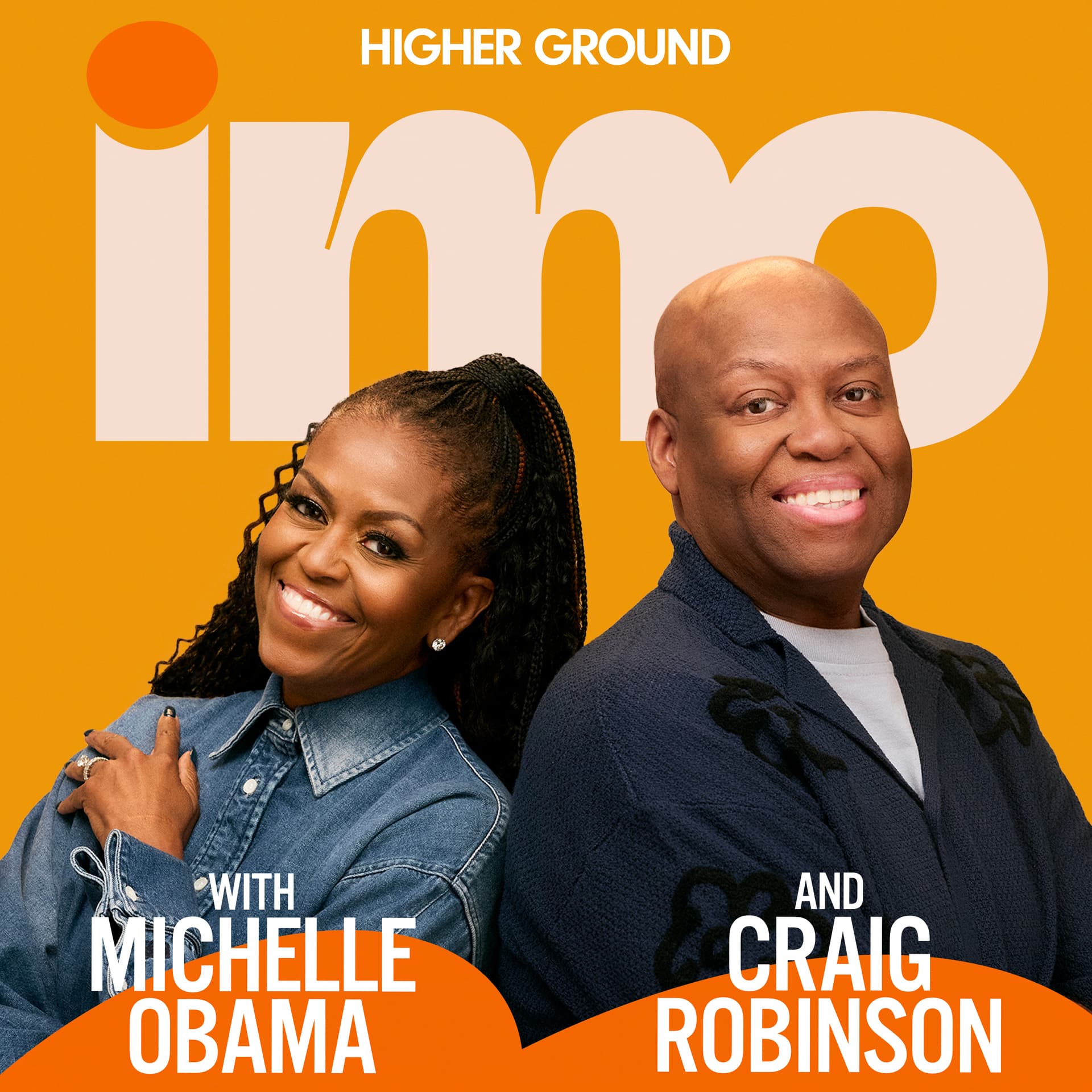
IMO Live in London with Michelle Obama and her brother Craig Robinson, flipping the usual format to interview each other about “swerving” through life—staying flexible, taking brave career pivots, and building optionality through experiences and supportive relationships.
Guest backgrounds
Michelle Obama is former First Lady and co-founder of Higher Ground; she previously worked in law and government/public service. Craig Robinson is a former pro basketball player (Philadelphia 76ers draft; played in Manchester), later worked in finance/investment banking, then coaching (including NBA front office and coaching roles), and is a podcast host.
Key claims
Bravery comes from getting used to trying; life choices improve when you slow down for real experiences (gap years). Money matters, but “golden handcuffs” can trap people—living smaller can preserve freedom. Big decisions require a strong team, not solo judgment. Parents should hand kids their lives early (confidence, autonomy, room for their voices).
Notable examples
Craig’s swerves from basketball to finance to coaching (pay cuts, NBA front office) and leaving finance for coaching at Northwestern; Michelle’s shift from law to government after realizing she didn’t like law, influenced by meeting Barack Obama. They also discuss imposter syndrome, vulnerability on podcasts, and London experiences (Nelson, changing of the guards, Greenwich).
Written by AI. May contain mistakes. Listen to the episode to check what was said.
Chapters
Tap a time to open that second in VOEmbracing Bravery in Life
0:00 to 0:35
Learn about the concept of bravery and how it shapes life choices.
“Bravery makes you brave to try anything at any age.”
The Purpose of IMO Podcast
1:01 to 2:51
Discussion about the goals and themes of the IMO podcast.
“And we hope that by sharing our stories and experiences, we might help someone facing similar challenges, or at the very least to give folks a little boost throughout their day.”
Introducing the Unique Format
2:51 to 4:36
Michelle and Craig explain the special format of the episode.
“So today, Craig and I are going to try something a little different.”
Craig's Career Journey
4:36 to 7:10
Craig shares his unconventional career path and experiences.
“And a lot of them are wondering, how did you guys get from the south side of Chicago, from a working class background to sitting here and doing all the things that we've done over the course of our lives.”
Michelle's Transitions and Lessons
7:10 to 12:00
Michelle discusses her career transitions and the lessons learned.
“What kinds of things did you think about?”
Balancing Dreams and Reality
12:00 to 14:03
Exploration of the pressures of career choices and personal decisions.
“I mean, because here you were at Princeton and there's the pressure, especially in your class, your year.”
The Value of Education and Options
14:03 to 15:06
Explore how education provides options and opportunities, especially for marginalized communities.
“are options and the ability to try things, which he didn't get a chance to do.”
The Value of Education and Options
15:12 to 18:09
Explore how education provides options and opportunities, especially for marginalized communities.
“Mish, I've been thinking about how overwhelming big life decisions can feel these days between the endless stream of information, social media, and that constant FOMO the kids talk about?”
The Pressure of Parental Expectations
18:15 to 22:31
Discussion on the challenges faced by children due to parental pressures and expectations.
“I have to, we have to take a moment, just give tribute to our parents.”
Learning Independence from Parents
22:31 to 26:04
How parental guidance can foster independence and decision-making skills in children.
“Well, let me just say a couple of things.”
Show all 25 chapters
Advocating for Yourself and Finding Passion
26:04 to 28:00
The importance of self-advocacy and pursuing passions despite fears and obstacles.
“trying to curate their kids' experiences, and ours was just not.”
Choosing Passion Over Money
28:00 to 33:30
Learn about the importance of pursuing what you love over financial gain.
“But he wasn't an unhappy disabled person.”
Choosing Passion Over Money
35:26 to 38:15
Learn about the importance of pursuing what you love over financial gain.
“a company committed to helping people move forward and live fully.”
The Journey of Swerving in Life
38:29 to 42:01
Explore the personal stories of overcoming fears and making life changes.
“And what was going on in my life at the time was that dad had just died.”
Living Smaller for Financial Freedom
42:01 to 45:56
Michelle and Craig discuss the importance of financial freedom and living within one's means.
“Look, look, you know, the thing is, is that it comes along the way, right?”
The Courage to Embrace Change
45:57 to 49:03
They explore how their life experiences prepared them for new ventures like podcasting.
“You know, I think it's that that courageous thing.”
The Team Behind the Podcast
49:04 to 52:55
Craig shares insights on the collaborative nature of podcasting and his journey.
“But, you know, one of the pivots I took in between working in the NBA, working in college basketball, working in the NBA, I worked at ESPN, which is a sports channel.”
The Team Behind the Podcast
54:49 to 55:43
Craig shares insights on the collaborative nature of podcasting and his journey.
“you just start to get the sneaking sense of I'm missing something.”
The Team Behind the Podcast
55:51 to 57:34
Craig shares insights on the collaborative nature of podcasting and his journey.
“Cut your wireless bill to 15 bucks a month at mintmobile.com slash IMO.”
The Team Behind the Podcast
57:37 to 57:56
Craig shares insights on the collaborative nature of podcasting and his journey.
“to get 70 % off your welcome kit when you subscribe today.”
Navigating Life's Challenges
58:11 to 1:04:08
Michelle and Craig discuss the challenges of their careers and family life.
“You know, I just think the pace, we stack up a lot of interviews at once because he works and there are other commitments.”
Embracing the Third Act
1:04:08 to 1:10:02
Exploration of life transitions and the importance of making mindful choices.
“of the way and be prepared to step out of the way so that the next generation really can sit in these seats.”
Reflection on Career Connections
1:10:02 to 1:10:54
Michelle discusses the importance of relationships in one's career.
“Everything we've done, I hope people say they were good at what they did so that we got the support and the encouragement to go to the next place, even if you didn't like the job.”
Transition to Lightning Round
1:10:54 to 1:11:13
The hosts prepare to engage in a fun lightning round of questions.
“This is something our team loves for us to do, which I'm like, okay, I don't know whether this is going to be fun for you.”
Fast Money Lightning Round
1:11:13 to 1:16:12
Michelle and Craig engage in a light-hearted quiz about British favorites.
“This is, we want to end on a bit of a lighter note.”
Transcript
Automatic transcript. May contain errors.0:00Bravery makes you brave to try anything at any age. And I think for me, I've just gotten used to, okay, we're going to do this. I mean, I lived in the White House. I was the first lady. That wasn't my plan. I had no training for that. Wasn't my idea. It was not. But we figured it out. If I can be first lady, I can do a podcast with my brother.
0:34This episode of IMO is brought to you by Progressive Insurance. Hello, South by Southwest London. How y 'all doing?
0:46Craig and I, we are thrilled to be here with all of you. A little over a year ago, we launched our podcast IMO with Michelle Obama and Craig Robinson, my big brother, if you had me. But we launched it in South by Southwest Austin And that was also the first time we did a live event And we had so much fun, we thought we'd do it again here in London But just to give you a sense of IMO, what we do It provides a space for vulnerable and revealing conversations With some pretty amazing guests Some of whom are friends of mine Mostly her friends And we talk about everything, love, friendship, family, careers, you name it, we've been there.
1:36And we hope that by sharing our stories and experiences, we might help someone facing similar challenges, or at the very least to give folks a little boost throughout their day. And there aren't always clear answers. One of the things we say is that there's no one way to live this thing called life, but one thing that we do believe strongly is that connections can help. And that's really why we started Higher Ground Production, me and the guy Barack Obama. You've heard of him, my husband. We wanted to build a platform of programming that brings people together to explore different ideas and perspectives on how to get through life.
2:24And we are incredibly excited by several new podcasts that are joining the Higher Ground family. Talk Easy, which is a cool program. Let me say this. Two Young Sisters talking about culture. Stories from a Stranger, just to name a few. Shows that lift up a range of new voices and new ideas and hopefully help people feel just a little less lonely. So today, Craig and I are going to try something a little different. We usually have a guest, but we cut them out of the action. So we're going to flip the script and we're going to interview each other. You should be frightened. So I'm not frightened, of course.
3:15But what do you guys think of that? Just me and him talking. But first of all, Craig Robinson, how are you doing? I'm doing really, really well. I have not seen you in a couple of weeks talk to you. I know. So one of the fun things about doing this podcast is that we get to spend a lot of time together. And we used to only talk to each other on the phone because we lived far apart. And now we see each other all the time, but don't talk on the phone because we're like, let's save that for the show. But for anyone who's read any of my books or heard me speak, I talk a lot about the power of swerving through life and careers, being able to remain flexible and open to changes.
4:05And I learned a lot of swerving from my husband. He has set me off on a path where I've had to adjust. So he was my first swerve teacher, but one of my best role models in swerving is my big brother, Craig. because his career path, as well as mine, is anything but traditional. We've done a lot of swerving throughout our lives. And so we're going to talk about how we got where we are, because that's one of the questions that we get often from people who are trying to figure out their careers, who are trying to figure out life. And a lot of them are wondering, how did you guys get from the south side of Chicago, from a working class background to sitting here and doing all the things that we've done over the course of our lives.
4:52So, Craig, I want to start with you. Okay. Just so that people get a little sense of your career trajectory, can you give folks a brief sense of what you've been doing in life to this point? Sure, I will. First of all, thank you all for being here. It's really exciting to be here. and you should know I used to live in Manchester. How about that? Yes. I played basketball for what was then called the Manchester Giants. It was the start of my pro career and the real beginning to the swerve because when I was in college, I'm old enough where I didn't go to college to be a basketball player. I enjoy playing, but I never thought I could be a professional and then I got drafted by the Philadelphia 76ers.
5:42And next thing you know, I was trying out for that team. And when I got cut from that team, I came to Manchester and played. And I lived in Manchester for two seasons. I came to visit one year. That was my first trip to England. Yeah, that was your first trip to England. And then while I was here, our team did pretty well. and I thought, you know, I could be a basketball coach. And I went back to visit Mish at Princeton and to see my old basketball coach. And I said to him, coach, I figured out what I want to do. And I said, I want to be a coach. And he was like, you don't want to be a coach. I'll tell you when to be a coach.
6:27Go get a job somewhere and coach later. And that's when I started my trip into finance. And I've worked in finance, investment banking for quite some time. And then after 14 years, I switched back into coaching. That's when I started my coaching career. And I did that for another 14 or so years. And then I worked in the NBA in the front office, the National Basketball Association. And I did that for about five years. And then now I work at the Coaches Association as well as I'm a podcast host now. So that's a lot of swerving. It's a lot. It's a lot. How did you think about who you wanted to be when you grew up?
7:15How did you process it? What kinds of things did you think about? So I processed it by the people and things I was around. right so my early role models were my parents my mom and my dad my mom was a housewife and my dad worked for the city of Chicago and then the other people around me were uncles and aunts and they worked as you know policemen city workers educators so I always thought that that would be what I'd end up doing. Because that's one of the things about figuring out who you want to be. You know, there's no way we're taught that. You know, we just start making up things out of thin air.
8:03I know I used to say when I was 10 years old that I wanted to be a pediatrician. Yep. But that's because I like kids. I mean, you base things off of things like that. And then when I was in Princeton and I was a had to figure out what to do next I was like I don't like math um I read I like to talk a lot so I'll apply to law school I mean that's how I picked going to law school because there's really no way that we teach young people you know as they're growing up well certainly how to think about it not 40 years ago 40 years ago we're old y 'all 40 years ago it was sort of go to college and then most of our parents and friends of parents didn't go to college so it was like go to college and get a better job than what we got and that's that's sort of what we did but but mish you've you've had your share of transitions um can you tell the folks what you learned from your transitions well um you know did some I tried to do the traditional checking the box thing because I was good at that you know I was a good student I understood that if you got good grades you went to college from college if you don't know what you're doing you go to grad school and I could check the boxes I was good at that I could achieve in that way but if that wasn't enough because I had didn't have any experiences, you know?
9:39I mean, I had summer jobs, babysat, did all that sort of stuff, but when I got to the law firm, and I worked at a big corporate firm in Chicago, what you were supposed to do after Harvard Law School, and I got to that firm, great firm, and I realized, oh my god, I don't like law. I don't like it at all. It wasn't even close. I was born. And thank you to all the lawyers. I mean, no shade, but, you know, it just wasn't for me. And I realized I didn't know anything about the law. I didn't have parents in the law. I'd never clerked. I didn't, you know, only in my summer associate experiences, but that was very different because they were courting you during that time and not giving you real work.
10:26So one of the things that I learned through the transition is that gaining experiences are more important than I thought they were. Because back then in college, we just went straight through. And now I know that I encouraged Malia and Sasha, and I encourage a lot of young people, do not go straight through. Don't be afraid to slow it down and have some experiences. If I were to do it again from college to law school or grad school, I would have done a gap year or two. And you were kind of leading the way. I mean, quite frankly, your time in Manchester playing European pro ball was kind of like a really cool gap year where you got some experiences just being out in the world and working and learning about what you liked, what you were good at, not just what you were able to do well, because that's all I did.
11:24I just pursued something that I could do well. And I didn't know anything about passion or purpose. And the truth is, I didn't know what other careers were out there other than the traditional careers. You grow up, you can be a doctor, you can be a lawyer, you can be an engineer. There are like six things. And here I'm at Princeton, Harvard, and in my mind, I only know six things I can be. And I think a lot of young people are limited because you got to get out in the world to see what else is out there. So that's one thing I learned. Was your decision to go pro scary for you? I mean, because here you were at Princeton and there's the pressure, especially in your class, your year.
12:13We graduated, you were 83, I was 85. Economically, the country was doing great, you know, and if you got out of college, a good school with a degree, you were going to make money. You could pretty much write your own ticket, which I know is not the same now, at least where we live in our country. Was it scary for you to sort of see your peers going into finance and all those things while you were going to take this interesting leap into professional basketball? And how did you think about that decision? So probably not how most of you think I would have thought about it because it was scarier for mom.
13:02Our mom. Our mom was like, why on earth would you go all the way over there just to play basketball? And it wasn't scary for me because as I progressed in the sport and got better, it was a dream that, oh, okay, maybe I can play professionally, so I wanted to go try it. And it's a tribute to my parents that they never held us back because of their own fear. so as scared as my mom was they both were like all right go go and do it now's the time to do it so it was not a hard decision for me to make at that time secondly because mom and dad encouraged us to go to a place like Princeton as opposed to going someplace else where you could get a good education, my dad always emphasized that one of the things you get from a good education are options and the ability to try things, which he didn't get a chance to do.
14:19You know, when you're a black man from the south side of Chicago growing up in the 50s and the 60s, you got the post office, the army, you know, you have certain things that you're allowed to do. You don't get to travel to be a basketball player or work at Morgan Stanley or some other bank. So I felt really comfortable and it helped that I came to England where everybody spoke English just about. And really, really friendly, really friendly. So I have to mention that.
15:06This episode is brought to you by Progressive Insurance, a company committed to helping people move forward and live fully. Mish, I've been thinking about how overwhelming big life decisions can feel these days between the endless stream of information, social media, and that constant FOMO the kids talk about? Do you feel like people are overthinking things more than they used to? Or is it just harder to make a choice when we have so many options? No, I think it's a little bit of both. I think with so much information coming in, we just have so much more to process. And there's only so much the human brain can take in.
15:48Um, and, and then, yeah, we feel inundated with choices. We feel like there are too many options. Um, so yeah, I agree. I think it's a little bit of both. I feel that. I feel that. With your public image, how do you tune all that out and actually make the big calls? Are you relying on a gut feeling or is it more about leaning on the people you trust? Well, there's a lot of gut that goes into it. You just get used to making hard decisions. You start to trust your instincts, but most importantly is having a strong team. Learning to let go that I can't make every big decision by myself and I shouldn't.
16:30So I surround myself with really smart people that I can count on. I let go of a lot and trust that they're going to do their job and bring me the information that I need to do my job. So I've just learned that it's, you know, it's no victory for me to do these things alone, making these big decisions alone. As the kids say, facts. For me, knowing I have a solid circle to talk things through is usually what helps me get clarity. Progressive knows that big decisions at any stage of life can feel daunting. That's why having the right support and resources makes all the difference. Progressive's Up Payment Program falls under their broader Open the House initiative, a multi-year effort focused on helping more people achieve home ownership.
17:20Right now, they're expanding the Up Payment Program, offering up to$13 ,500 each in down payment assistance to at least 200 eligible first-time buyers. They've already committed more than$16 million since 2024 to help make home ownership more accessible. At the end of the day, Progressive wants people to feel seen and as individuals whose needs matter. Because this is your life, and it should be taken seriously. Learn more about the UpPayment Program and Progressive's commitment to first-time homebuyers at progressive.com slash openthehouse, where homebuyers can access more housing resources and support to empower them in their housing journey.
18:15I have to, we have to take a moment, just give tribute to our parents. you know they're they were uniquely gifted in pushing us to do things that they wouldn't do themselves and sometimes you know we're parents now and you know the hardest thing in the world to do is to let your kids try hard things you know I think a lot of people wind up picking careers because they feel the pressure of parents wanting them to do something that feels safe and Secure. A story that I tell often is during the Becoming Book Tour, I would do a lot of things in colleges, and I was sitting with a set of seniors who were graduating from Spelman College at a historically black school in the south in Atlanta.
19:06And this group of girls, they were about to graduate, they were excited but incredibly frightened about the next step because they were sort of like me. They had box checked their way to a college degree. And now once they were done, you know, because you don't learn this, is that once you get through with the box checking, the things you're supposed to do, you're still faced with figuring your life out. And nobody kind of told them that. So they, like many young people, hit senior year and is like, how do I figure this out? And this one year girl said, my father wants me to go to law school. And she's like, but I just don't want to go.
19:44And she was in tears because her father, who was probably like our dad, just wanted her to be safe. He didn't know that a law degree costs$70 ,000 a year. He didn't realize that she was going to come out of that degree with so much debt that she would be limited in making choices about what she wanted to do because she'd have to pay down that debt. And so I explained to her your dad wants the best for you because he's scared But he has no idea what you're facing Because we don't know what our kids are facing we being us We still can't relate to what our sons and daughters are going to face. It's a different market It's a different situation And so I find even with my girls today that I have to step back and not try to push them to where I want them to go.
20:36I have to trust that they know their own market and can make certain decisions. Our parents were way ahead of the curve on that. And I say that because I know that there are kids who are trying to follow the dreams of their parents, sometimes to their own detriment. There are parents out there that are really trying to push their kids to do a certain thing because it feels safe. and part of life, part of this thing called life is creating the optionality, you know, getting the best foundation you can get, which we both did by going to good schools and then, you know, developing some skills along the way.
21:20I mean, I didn't regret going to law school because taught me how to write, how to think, how to communicate. It gave me a level of confidence to just be able to go in any place and figure anything out, right? Those are the skills that were more important to everything that I do in the years ahead than simply just learning the black letter law. So I think that our parents unknowingly, probably more knowingly, they kind of knew that and so they let us they let us try hard things and let me tell you when you when you've been working at a corporate law firm where where I started working at Sidley in Austin I was making more money than both mom and dad combined so you imagine how they felt when I walked up to them to say hey I don't like this career doesn't give me passion and purpose and I'm going to leave and do something else, right?
22:25And to have them both say, all right, we trust you. Give it a try. Well, let me just say a couple of things. One, she didn't learn how to think at law school. She could always think. Oh, thank you, little boy. she has been this personality since she was three or four years old so and she didn't learn how to write there either because you all should know that my little sister used to write these wonderful short stories that entertained our family and you think i'm talking about like Jane ran to the market no these were intricate stories that were mysteries and funny and filled with livelihood so she's being a little bit modest but my Harvard did teach me something It didn't teach you that much.
23:24It didn't teach you that much. So how would you say our parents prepared us to be brave enough to do the kinds of things that you're talking about? I always, you know, I think about the fact that they taught us how to think for ourselves early and to own our lives early. And by early, I do mean four and five. I mean, I talk about this. Our mother, once we started kindergarten, gave us alarm clocks and said, this is how you work it. You're in school now. It's your education, not mine. This is kindergarten, y 'all. And she's like, you know, learn to wake yourself up because no one should have to wrestle you out of bed to build your own life.
24:21That was day one. And it wasn't like we were shocked or scared. We were like, yeah, give me the alarm clock. Yeah, look at us. You know, so a lot of what mom and dad did was hand us our lives early in appropriate ways, right? It wasn't like my mom was asleep in bed while we were going to school, you know. She was up, but she wasn't going to come and be like, you awake, you awake. She'd wait for that alarm. And it's like, okay, let's see how you do it. And then she sent me off to kindergarten by myself around the corner. I was like, lady, I'm five. She's like, you can do it. But the beauty of our parents handing us our lives, it was them showing us that they had confidence in our choices.
25:15And sometimes we tend to do the opposite. it, if we helicopter a bit too much, if we're trying too hard to prevent our kids from failing or feeling fear, you know, what tends to happen is that you're kind of signaling to them that you can't do this without me, you know. And our parents were like, no, you can do this. This is just life and everybody does it and you're pretty smart kids so you'll figure it out and that came to everything from working out situations with teachers that were unfair you know clashes with friends and that's very different from how people parent today you know everybody's trying to curate their kids' experiences, and ours was just not.
26:10I mean, our parents did not feel like our lives were theirs to manage or to make better or worse. I mean, look, we had food on the table and lots of love and lots of attention, but like some parents I know, they weren't riding on our highs and lows you know our A's our grades were our grades you know our failures were our failures they were there to help pick us up and add a boy and push you right back out there we could talk about anything but we were required to figure things out and go to them for counsel but not for intervention and so you know you leave home having practiced those skills and you start thinking at a very young age there isn't anything I can't figure out I got this you know and I think that what about you no I everything you said the the one thing I'll I'll say to you folks is our parents always had room for our voices at an early age at the kitchen table when we had meals we were expected or we were allowed to voice our opinions and that was really important at an early age and and to Misha's point about advocating for learning how to advocate for yourself.
27:42My dad, who was disabled, I'm sure everybody, those of you who have read my sister's book know all the stories, but he walked with a limp that got progressively worse as we got older. And we found out he had MS. But he wasn't an unhappy disabled person. And he always talked to me about finding something you'd love doing and it won't be work. And he did that at an early age. So I was getting it hammered into me. Let me figure out what it is that I love doing. And again, I said this earlier, our parents never let their fears get in the way. I remember going to my first basketball tournament when I was 12 years old to Poplar Bluff, Kentucky in a van with a coach who was 19 years old.
28:46And my mom was like, yeah, go ahead. And then I found out that she was so nervous that my dad had to comfort her and remind her that I'll be back in a few days, but it's not the sort of helicoptering that you see today.
29:10When you decided to get off the basketball track and go into finance and then leave, talk about how scary that was and how risky that was and why it was so for you. Yeah. So that was the scary point, because I took a job in finance when I came back from playing basketball solely because it was the place you could make the most money. Growing up poor like we did, I was like, all right, I'm going to use this Princeton degree and I'm going to get the job that I can get and get paid. right and I was doing that and I was off on my way uh as you remember on the partnership track and it was time for me to move to New York or maybe even London this was back when Morgan Stanley first moved to Canary Wharf over there now I haven't been back in 40 years but I know a lot about it um and you he was living you were living large yeah my brother had the red Porsche yeah That I was in when his former wife crashed it.
30:21It wasn't, you know, it was a fender bender, but she was picking me up from the airport and somebody ran into her and she ran into somebody. And all we were doing was sitting in that Porsche going, oh, man. So he was he was Mr. Corporate. He was he was a finance bro. But what I realized in that is that because, you know, when you grow up poor, you think money fixes everything. Right. And I learned now that my ex-wife, it wasn't the means to happiness. And so I'm making this money and doing well and my life doesn't feel like it's where it's supposed to be. And it's because I'm not doing something I love.
31:08And so I get this opportunity from my old basketball assistant coach gets the job at Northwestern University, which is in Chicago. And he offers me a job as an assistant coach. Now, you can imagine being an assistant coach as opposed to being a bond trader on Wall Street. It's about a tenth of the salary. And I was really, really nervous about making the change. So I talked to Misha about it. What was I doing at the time? Where was I in life? You had already gotten out of the law. You had already decided to take a chance. And a pay cut. So here's the two of us going to our parents. We're going to make less money, each of us.
31:58Every step we take is less money. Our parents are just like, okay. so so one story for you i i can't pull the trigger on this job because i've got an eight-year-old and a four-year-old and i'm thinking to myself as i told you their lives their lifestyle is going to change and so i talked to them both and i said i brought them together and i said you know daddy's getting a new job he's going to be a basketball coach and they both looked at me like this and my eight-year-old said does this mean that your office is a gym and I said yes it does not quite it's next to a gym and my four-year-old daughter said they have a pool there and it was at that point that I realized I was worried about the wrong things.
33:00I was worried about their lives changing and they could care less. They just wanted to spend time with me. So, um, that allowed me to make that swerve, which was nerve wracking. Um, but again, my mom said, listen, I get it. You got custody of the kids. You have to have a place to say, come move back home. You can pay rent when you can. And I just started over again. And what the lesson I learned from that is there's a couple. One is money ain't the best thing all the time. And two is if you're not afraid to start over, you can, you can do anything. And I just started over and it couldn't have, I couldn't have made a better choice.
34:01I just got back from London. We taped an IMO live show. I had a little bit of downtime, so I explored. I did this Airbnb experience while I was there, a walking tour around the city, and it was one of those things where you learn something every five minutes. We hit Trafalgar Square and got the full story on Vice Admiral Horatio Nelson. We caught the changing of the guards. We walked through Ben Franklin's actual house, made it out to Greenwich, the literal center of time. And the city was already buzzing, getting ready for the King's ceremonial birthday celebration outside Buckingham Palace. Oh, and random fact I couldn't stop thinking about, those stripes on American Navy uniforms, direct nod to the British Royal Navy.
Read the full transcript
34:48Yep. Now here's the thing that got me. London was packed for this conference. And I'm thinking, if you live in a city that draws big events like this, you could be making real money those weekends. That's the whole thing about Airbnb. When people list their homes, it lets travelers like me actually live like a local. So if you've got travel coming up, think about listing your space. Your home might be worth more than you think. Find out how much at airbnb.com slash host. This episode is brought to you by Progressive Insurance, a company committed to helping people move forward and live fully. Mish, what is one of the biggest swings or leaps of faith you've taken professionally or otherwise?
35:38I've had a lot of big swings. I mean, you know, me leaving my job at the law firm where I was making a ton of money in corporate law and deciding to go and work in government and public service where it cut my salary in half. And I remember how guilty I felt for going to mom and dad and even expressing an interest to do something that I cared about rather than something that would make the absolute most money. I mean, at the time I was making my salary was more than both mom and dad's salary combined. I remember the first time I ever bought a house, one of the biggest leaps you ever take. I was really intimidated by the whole process.
36:20Progressive understands the hurdles first-time homebuyers are facing, including housing affordability challenges and a lack of straightforward education that could make the homebuying process feel less intimidating. Progressive's Open the House initiative is committed to breaking down these barriers and making first times a little easier. Since 2024, Progressive has committed more than$16 million towards making the dream of home ownership more achievable. This includes a$3.5 million investment this year towards the UP Payment, Progressive's down payment assistant program aimed at first-time homebuyers.
37:03Learn more about the UP Payment program and Progressive's commitment to first-time homebuyers at progressive.com slash open the house, where homebuyers can discover more about housing challenges and access resources and support. Extremely proud to say that I finally found the finishing touch for my patio and it was less than$150 on Wayfair. So Kelly and I had the chairs, we had the table, but the outdoor space was still missing something. Then I was browsing Wayfair and found the Malaya Herringbone Outdoor Rug. It's got this really clean brown and tan herringbone pattern, which brings the whole area together.
37:45They had it in other colors as well, like navy blue, gray, and green. I might go ahead and add one of those to the cart too. I'll never get over the feeling of opening up something from Wayfair and just being blown away by the quality. The rug is going to truly stand the test of time. If you come over to our house and compliment a piece, there's a good chance we snagged it on Wayfair. I always go to them first because you can't beat the price and quality. Ready to upgrade your home for way less? Head to Wayfair.com right now to shop all things home and get your space ready for less. That's W-A-Y-F-A-I-R dot com.
38:26Wayfair, every style, every home. To empower them in their housing journey.
38:36yeah the one thing about swerving is that it gets easier over time you know that first leap is the hardest mine was when I left law and um decided that I you know and I had to figure out then if not a lawyer who do I want to be um and I had to start over and figuring that out I had to start that process. And what was going on in my life at the time was that dad had just died. And one of my best friends from college died suddenly of lymphoma. And I mean by suddenly, she was diagnosed in December and died in May. And this was a young, healthy, beautiful girl. And it made me stop and think, oh my God, life is short.
39:24And it is unpredictable. And nothing is really guaranteed. And if I were to die tomorrow, is this where I want to be on the 47th floor of a corporate firm working for corporate clients, looking at my, I could see the neighborhood where I came from, from my fancy office, but I wasn't connected to it. I was like, is this who I want to be? Have I even thought about it? Or was I just checking boxes? And I thought, and I also met Barack Obama at the time, who was the master swerver, because he did the opposite of everything you were supposed to do. He had been a community organizer. He had, you know, he went back to law, not because he wanted to do the corporate firm thing, but because he thought it would give him tools to help the community.
40:13He had no interest in Supreme Court clerkships, even though he was the president of the Harvard Law Review, and that was the path. So I was meeting other people who were showing me different ways of making decisions in life. And we started dating and he was like, if you don't want to do the law, leap now. I got you. We're going to be okay. And so I left to work in the city, to work in city government. I was an assistant to the mayor, then was in economic development um and with every move I just realized that I was walking more into my into my reality into my truth you know not being in sort of a sterile environment but being in the grit and the the scrum of of of city work and helping people and that that is what got me up every day feeling really excited.
41:14And nobody taught me that or teaches young people that in college. You know, nobody teaches you even the process of figuring that out for yourself. And that was an eye opener. But once I did that first leap, the others were easier, you know, because number one, I had freed myself from the financial belief in the same way that Craig did. It took us longer to pay down our loans, but we were able to pay them down. And I hope this isn't so disheartening to people that we're saying money doesn't matter, that people are leaving.
41:56They're like, wait a minute, money doesn't matter? It's like, I'm out of here. We're in the wrong seminar. I don't agree. But it doesn't.
42:13Look, look, you know, the thing is, is that it comes along the way, right? Like, we're both doing well, you know, but I try to talk to young people about one thing we learned with IMO, one of our guests, favorite guests was Dave Chappelle, and he said something about because he lives in a little town yellow springs ohio in the middle of nowhere it's his little dot of blue and a lot of red um and that's where he grew up his parents were professors at antioch college which is a small college in that town i mean it's a farm town um and i don't we're like we went and visited um because we did the interview out there we did another live out there and we had an amazing time dave chapelle is one of the smartest people on the planet and funny is all get out yeah you can clap for that one for that it was good um but when i asked why because once he became himself he moved back bought a farm has raised his family on this farm and one of the questions was why why here and he said i wanted to have the financial freedom to be courageous and I was like ooh ooh bars bars you know and that's a truth I think Craig is talking about which what I would say to young people I say to my girls live smaller than you need to you know um I know look I saw your face girl what you do you got loans it's not too late It's not too late.
43:54Because I wasn't living small either. He had a Porsche. I had a Saab. That was the first thing we got with nice cars when we got these big fancy firms. Big house. Big houses, all of that. It was just, and it wasn't happiness. But living small financially allows you to stay free of the golden handcuffs. Because that was the thing I saw in my firm. I was figuring this out. I would talk to junior associates, senior associates, and people were there, not across the board, but folks were there because they got used to the money. And everybody had a mortgage or this or that. And that led them to just stay, just let me just make partner and let me just do this because now I'm living up to the salary that I'm making, right?
44:50I didn't want to be stuck making choices in life because of the money. So I tell my daughters, get used to living smaller than you need to so that you can do the things you want to do when they present themselves. And then you can build from anywhere. And Craig, you know, one thing a lot of people didn't realize that you knew was that there is a hierarchy, even financially, even in coaching. that you start out as an assistant coach or working with kids, but if you make your way to Division I coaching, they make ridiculous money. It's way too much money that you were making as a coach. But... On another note.
45:37The first leap is the hardest, and keep yourself financially as free as you can. So how much of our journey do you think prepared us to be podcast hosts together? None of it. No. You know, I think it's that that courageous thing. Right. The feeling that, OK, I guess we can do this because we did all these other things that the bravery makes you brave to try anything at any age. And I think for me, I've just gotten used to, okay, we're going to do this. I mean, I lived in the White House. I was the first lady. That wasn't my plan. I had no training for that. Wasn't my idea. Was not. But we figured it out.
46:34I figured if I can be first lady, I can do a podcast with my brother.
46:41but I think the staying courageous and curious and open you know and and vulnerable and willing to share I think the one thing that I learned through my journey was like a lot of people just don't tell young folks stuff I mean it's like why is so much of life a secret you know why are we pretending like I got it I got it you know and nobody's got it nobody knows what they're doing um and so I've kind of offered a lot of my experiences up really is kind of like I feel like I have a responsibility having had opportunities and exposure and to to have sat at every powerful table there is. I have seen it all.
47:33Every table, I've been at it. And I feel like it's my job to come down from the mountain and be like, y 'all, this is the mole. It's not all that because there's so many people like me, like you, women, minorities, folks who aren't supposed to be at these tables because they are sitting around thinking that they're imposters. You know, imposter syndrome. I've never heard a white man talk about imposter syndrome. I haven't met, I haven't met one who has felt it. I'm just wondering if you guys know what we're talking about when we talk about imposter syndrome. This feeling that you don't belong at the powerful table you're sitting in.
48:16Y 'all were like nope never felt it never felt it um but it's you know i think my honesty and vulnerability the kind of conversations we have in podcasting that's a good i think it's a good space to share some of these experiences so that we demystify all of life all of it you know marriage raising kids what was hard IVF let's talk about it let's talk about it so that people aren't growing up unaware of like some obvious things and mistakes and so I think you have to be willing to be vulnerable right to be in the space of podcasting and I think my life has has has prepared me for that what about you I'm only in this because our team asked me to do it to get her to do it it is true it is true i wasn't i you know i was like i don't i don't need it i i i'm half joking no no it is true they were like your brother will do it with you i was like oh really so craig i love my brother i do oh and that's sweet he's my big brother but pivoting to this pivoting to this was easy for me.
49:38But, you know, one of the pivots I took in between working in the NBA, working in college basketball, working in the NBA, I worked at ESPN, which is a sports channel. I forgot all about that. See, he swerved so much. I totally forgot about your broadcasting experience. She was busy in the White House. Yeah, that's right. That's what we were doing. Stuff like that. So it wasn't something that I had planned to do, but it was one of those things where my agent was like, don't go back into coaching right away. Why don't you go work on TV and just think about it? And I did that. And my wife says that we're doing this podcast.
50:16His second wife, by the way. But yeah, my second wife. Well, we want to clarify that. We're honest. Remember he got divorced before the Porsche? My sister and my second wife get along really well. I got along with your first wife too. We crashed a Porsche together. Yeah, I'm still mad about that. But she says it's because I just like talking to people, which is true. You know, what's really been interesting about this pivot is that I've been able to sort of culminate all the experiences I've had throughout my life and then use them philanthropically. Because as Mish said early in her introduction, you know, we get questions from our listeners and then can impart some opinions to try and help them.
51:17And being philanthropic with our experiences is such a wonderful feeling. And people have been so gracious. You know, you go through the airport. it. I'm still coaching my kids in basketball tournaments. People come up to me all the time and say how much they love the show. So that's been really good. The second thing is, and I don't think we talk about this enough, because I'm used to being on teams, you know, having been a player and then gone and worked at, you know, when you think about bond trading, it's very individualistic. so for a big part of my life I was sort of a sole survivor out there and then I got back into sports and it's back with a team you know working on this podcast is like having a whole new team in a completely different genre than I've been comfortable in so I'm like the rookie on the team again I mean we've got you know our staff is peppered through here and in the back they really are the ones who make this show for us.
52:27They get our guests. They help produce us. And it just is a really neat feeling. And every time we get together, it's like a reunion. And so this has really been a pivot that's been a whole lot of fun. And it's really nice to hang out with my little sister again. And the most remarkable thing is because I know how you guys look up to her. That's how our guests are. Well, some of you do. Right? Maybe. And it is mind-boggling to me. Mind-boggling. I mean, you know, sometimes people get so emotional, and I'm just, like, shaking my head, like... Her?
53:21No, but it's been really fun.
53:30This message is a paid partnership with Apple Card. You know, I like keeping things simple, and that's exactly what Apple Card does. When you use Apple Card with Apple Pay, you can earn up to 3 % unlimited daily cash back on every purchase you make, no matter where you shop. And let's talk about fees because, honestly, nobody likes those, which is why Apple Card doesn't have any. No annual, foreign transaction, or late fees. No fees, period. Plus, when it comes to security, you can shop with peace of mind knowing Apple Card is built with the advanced security of Apple Pay, including Face ID and Touch ID, so you're the only one who can use it.
54:14Apply in the Wallet app on your iPhone today. Subject to credit approval, variable APRs for Apple Card range from 17.49 % to 27.74 % based on credit worthiness. Rates as of January 1st, 2026. Existing customers can view their variable APR in the Wallet app or at card.apple.com. Apple Card issued by Goldman Sachs Bank USA, Salt Lake City branch. Terms and more at AppleCard.com. Sometimes when you're choosing a wireless plan and they've got a million documents to look over, you just start to get the sneaking sense of I'm missing something. Like there's a catch buried in there. That's why Mint Mobile looked at everything people hate about wireless and basically said, let's not do that.
55:06No gimmicks, no gotchas. With Mint, you get premium wireless starting at just$15 a month. Every plan comes with high-speed data, unlimited talk and text, all delivered on the nation's largest 5G network. Best of all, you can keep the phone you already love, keep your number, and choose a 3-, 6-, or 12-month plan. All flexibility, all transparency, none of the nonsense of overpriced wireless. I have so many friends who use Mint Mobile and love it. I think they called it, and I quote, a breath of fresh air. To get your new wireless plan for just 15 bucks a month, go to mintmobile.com slash IMO. That's mintmobile.com slash IMO.
55:54Cut your wireless bill to 15 bucks a month at mintmobile.com slash IMO. That's it. There's no catch. Upfront payment of$45 for three months,$90 for six months, or$180 for 12 months. Plan required. $15 per month equivalent. Taxes and fees extra. Initial plan term only. Greater than 50 gigabytes may slow when the network is busy. Includes up to a 20 gigabyte hotspot. Capable device required. Availability, speed. You know what amazes me? the amount of energy people have for their dogs. You can be at a family gathering and within five minutes, everyone's pulling out pictures, sharing stories, and comparing notes on their pets.
56:43My family is definitely guilty of that. We're all pet lovers across the board, so we can appreciate it when a brand can match our level of intensity. Ollie is a dog food and wellness brand that is done with the one-size-fits-all approach. Ollie's recipes are made with real ingredients created by chefs and informed by vet nutritionists. What I really like is that everything starts with your dog and their specific needs. When you sign up, Ollie builds a personalized meal plan with ingredients that support better digestion, energy, skin health, and more. Even better, Ollie offers health tracking in their app so you can keep up with your pup's health and see the difference the food is making in their life.
57:31Get ready for both you and your pup to be obsessed. Head to ollie.com slash IMO. Tell them all about your dog and use code IMO to get 70 % off your welcome kit when you subscribe today. Plus, it's risk-free with their obsession guarantee. That's O-L-L-I-E dot com slash I-M-O and enter code I-M-O to get 70 % off your first box. Ollie, feed the obsession. And coverage varies. See MintMobile.com.
58:10What's been the most challenging part for you? You know, I just think the pace, we stack up a lot of interviews at once because he works and there are other commitments. So it's just doing. You notice how she said he works and then other commitments. Well, he's got a real J-O-B in a traditional sense. And I'm just rambling around the country doing stuff. But I have more control over my schedule than he does. so we you know it's it's doing the work to be prepared for your guests whoever it is I mean the one thing I've learned in college one of the skills that I've brought along the way that has helped me as first lady is is just preparing you know just being ready for whatever job you're doing and I tend to over prepare so I think it's really trying to make sure I know enough about every guest about every aspect of them so that I can forget about any notes and then be engaged in the conversation when it happens so it's like talking to a friend that I've known all the time and I can remember oh you said this one thing talk more about that or get into that um you know it's sometimes it's work to make things look effortless um and so just making that time is one thing that takes up a little more time than I thought.
59:39But it's good. For me, the most challenging thing is keeping up with my sister's wardrobe. That's hard. You're doing okay. Look at his socks, though. He doesn't know that he should steam his jackets before he comes out, but we're working on it. We're working on it. Nobody can see the back. Yeah. Spoken like a boy, a non-fashion boy. No, for me, it is keeping up with pop culture is hard, you know, because. Which is just regular conversation, right? You know, I mean, pop culture, if it's not basketball. That's not true. You know, it just can't be all sports. You know, you got to know what the Real Housewives are up to.
1:00:27You've got to know. And I don't know what the Real Housewives are up to. I don't. So he's left out of a lot of conversations on the podcast, y 'all. But we've talked about, you know, this third act. And you guys are young out there. There are a lot of young faces, but I think there'll be some people here who understand, you know, that next, that what for me, and I do say this, is probably my last chapter. I mean, from a career standpoint, don't look like that. I am 62 years old, and you're older. I'm 64, yeah. 64, 62. Our grandparents, we could be grandparents, but we are not. If we had sat down for a few minutes, we could be grandparents.
1:01:22It's true, yeah, yeah. if we had slowed down a minute. But I do think I have been trying to be very mindful in this next chapter. And I get my staff all upset when I say this. And we just lost our mom. And one of the things that mom said, and our mom was very practical about life and all things. And she's like i don't want to live to forever old people need to die and get i mean these are her words it's like we don't know what we're talking about we need to keep moving on and i'm just going to be fine when i get get older and you know she's been dropping dead for 20 years she's like i'm gonna be dead and you need to be able to get yourself together with me not here i mean she's telling this and this and we're 10 years old and I'm like mom this is scary but when she was sick and getting worse she was with me for about a winter and it was clear that she wasn't uh that this was she might not recover from this um and so we you know fortunately had some time to kind of all come to grips with the fact that mom wasn't going to be here forever and even with her jaded and stoic approach to things.
1:02:44I was sitting with her on the couch and we were watching TV and we'd just come back from a doctor's appointment, didn't get great news. And we were watching Judge Judy as we often do, as she did. And she just looked over at me and said, wow, that was quick. And I was like, what are you talking about, mom? And she said, life. and I was like and she said nothing else um you know like even this cynical sort of stoic woman felt like you know when you're living a good life it's fast um and I I felt like that in our lives when you're busy and moving I mean these this last we've been out of the White House for 10 years and I swear it went like that.
1:03:28And most people, my daughters will be 28 and 25 this year. I mean, so my thing is like this next chapter, I want to be mindful about it so that it doesn't just slip away. I want to be clear about how I'm spending my time, how much of it I'm giving away to others, what I'm choosing to do, how it makes me feel, how the choices that I make are now going to be for me, not for my husband, not for my kids, not for the country, not for the world, because this is it. And at some point, it's important for us, our generation, to step out of the way and be prepared to step out of the way so that the next generation really can sit in these seats.
1:04:21So that means that this is our, you know, this is our third act. I don't know, how do you think about your third act, Craig? Well, I wasn't thinking of it as a third act until everybody started talking about it. Third act. No, it's all the more important to reiterate what I was saying about finding something you love to do because it's not easy to do. It's not easy to find, I should say. And we have been really fortunate in being able to do a lot of things. But my sister always reminds me, she said on one of our episodes, she said, you know we only have about 19 summers left which is a lot of summers but it is 19 we're 62 when you think about it that's not many that's not many but it's you know so i want to start counting so i don't lose track yeah yeah i don't want to waste a summer doing something silly it's like dag one of my summers just went to doing something silly so this now i'm counting part of our lives and just we just taking more control over it and being able to to spend it together and our families are getting together way more often now it's just you know if if i could impart any opinions or advice to you is don't sleep on this third act because they're that you know at this age we are not the same as our parents were we are vibrant and lively and can still run around a little bit we're cool she's cooler than i am but we're cool so it is just embrace the third act is what i'm saying because uh the fun doesn't have to stop and the learning doesn't have to stop and you know people talk about they throw around this lifelong learner um term it's true the one of the best parts about doing this is that my brain has been re-energized.
1:06:50I'm learning something every single time we sit together with one of our guests. And to the young people out there too, because like all of this is earned and has to be earned. And so, you know, it's important to know that there was a process for us to get here. And, you know, and that process takes time. And it takes some level of investment. Because even though we swerved, one of the things I know you and I did was that wherever we were at the time, we put 120 % in what we were doing. And none of it was a waste. And that's what I want young people to understand that every experience, everyone, the bad boss, the boring assistant job, the job that you thought you weren't appreciated, the one that didn't give you the assignment you wanted when you wanted it, all of that is learning.
1:07:57It's learning to be resilient. It's like one thing that's important to learn is how to do something you don't like to do and be good at it. You know, I think a lot of young people, they want to just, now they want to do what I want to do and what I'm good at. You got to earn that, you know? You got to earn, you know, carrying some bags and having some tough times and having people treat you unfairly, right? And not giving you the raise when you think you deserve it, you know? There's character building that comes that gets you ready down the line for, Or being your own manager, being your own leader.
1:08:38So one of the things that a lot of our guests say that are good at what they do is that they are more enamored with the process than the outcome. And so I would say to young people, enjoy, learn to enjoy the process. whatever your process is because it's that's where you develop the skills that then lead you to the things that you want to want to do you know the process of developing programs in the white house it takes time it took a level of persistence there was a whole lot of backlash was i prepared for it was barack prepared for it heck yeah we were from all the other things that we had done, it all leads up to being ready for the thing you don't even know that you're going to do.
1:09:34So I want young people to be a little more patient in the process. You don't have to start counting your summers yet. You know, you got a lot of them. And that's the other thing I learned. Life is long. I mean, we have had between us, we've had dozens and dozens of careers. You know, It's like the ability to remake yourself is there. If you're good at what you do, and that's another reason to work hard is because you leave your job well, you can go to the next one. Everything we've done, I hope people say they were good at what they did so that we got the support and the encouragement to go to the next place, even if you didn't like the job.
1:10:16I worked hard at Sidley in Austin. I had great relationships with those partners. they're still in my life some of those people back when I was 26 years old are still people who respect me now and that's the kind of investment that I think everybody here young people early in their careers wants to be thinking about making what are these people whether I like them are not going to say about me in 10 20 years what are they going to remember about what I left behind. But it's the process. I don't have too much more to add. All right, well then, it is time for... We've covered a lot of ground. This is something our team loves for us to do, which I'm like, okay, I don't know whether this is going to be fun for you.
1:11:12Yeah, see, my sister's a curmudgeon. I can be. This is, we want to end on a bit of a lighter note. And our team has written up some fast money lightning round questions. Oh, do I, I think I lost mine. That's okay. I'm prepared. I didn't do that on purpose, Crystal. Yes, you did. I swear, I swear. So we're going to do some fast rounds to each other, or maybe I'll do them for both of us. Where's my card? Lost our cards. Wait. But we're going to name some British favorites and see which ones are our favorite. Oh, here I found them. You ready? Okay. Yeah. All right. So I'll go first. Okay. Sausage roll or fish and chips?
1:11:56Fish and chips. I had a plate. Got in late 1030. Fish and chips waiting. Vinegar, tartar sauce. Best thing. Best thing. I mean, it's always smacks. Fish and chips. All right. Great. I'm fish and chips. American biscuits or British biscuits? Okay. Depends on. Uh-oh. It depends on what I'm doing. But British biscuits are cookies. And American biscuits are bread. So I'm going British biscuits. Really? Okay. All right. I know what I'm talking about. They still sell Jaffa cookies around here? Jaffa? Yeah. Ah. Okay, little Mr. Manchester. you're next you asked me tea or coffee uh tea although i had a cappuccino because i've just come back from australia so i'm like i'm holding up i needed coffee today Okay.
1:13:00Marmite, beloved delicacy or edible prank? Edible prank. What is it? It's like Vegemite. What is that? It's like a spread, right? What is it? What is in it? It's like yeast spread. It's a yeast spread. Why are you all eating yeast? What is going on here? And who was the first yeast eater? Who tried that? It's actually good for your gut. What do you know? All right, here. Pub at 2 p.m. on a Tuesday? Concerning or community building? I don't think there's any problem with 2 p.m. pub. I mean, assuming you got your work done and it's not happening every day. Oh, it's just Tuesday. Yeah, yeah, that's fine.
1:14:03That's fine.
1:14:07What's a spotted dick? I really, what is it? What is that? I don't know what that is. Did you? What is it? A pudding. Like a cake. Okay. Is it good? Is it delicious? Is it like Marmite? Oh, no, it isn't. Okay. Is it yeast again? That's why I don't know about it. It's not delicious. I thought you knew. Okay. Big Ben or the London Eye? Uh-oh. Is there a right answer to this? No. There is. Okay. Let me guess what it should be. Big Ben's been around longer. It's a historical feature, whereas the London Eye is a ride. Is that pretty much... So you should care about the history and not the ride. Although the ride sounds fun.
1:15:02It's a Ferris wheel, right? Yes, it is. The London Eye is a Ferris wheel. It's a ride. Yeah, yeah. All right. Okay, you can only listen to one for the rest of your life, Elton John or Paul McCartney. Oh, so yeah, that's a hard one, right? But let me tell you, Elton John was my mom's favorite artist. And for her funeral, he re-recorded, was it Candle in the Wind? One of her favorite songs for her. Oh, and love Paul. Hey, Paul, we're coming for you. Okay, we're running out of time, so we'll do one more. Okay, you do it. Favorite British word? Bloody brilliant. I love it. Like, I keep intending to use brilliant, like, but I forget because I'm American and we don't have beautiful language.
1:16:03And bloody is worse than the F word. Is it really? No. No, it's not. It used to be when I lived here, it was worse. No. I think the fact that anything can be brilliant, it's just brilliant. Like this time with you all, brilliant. Brilliant.
1:16:28All right. London, thank you guys so much. It has been a treat. It's good to be back. We love you all. Thank you. and to my big brother, Craig Robinson. Thank you all.
From the publisher
Live from South by Southwest in London, Michelle and Craig flip the script and interview each other! In a vulnerable and revealing conversation, they discuss their journeys through Chicago's South Side, law school, the Oval Office and share what they’ve learned about one another while working together. Plus, a lightning round of questions on beloved British traditions!
Have a question you want answered? Write to us at imopod.com.
See Privacy Policy at https://art19.com/privacy and California Privacy Notice at https://art19.com/privacy#do-not-sell-my-info.