In short
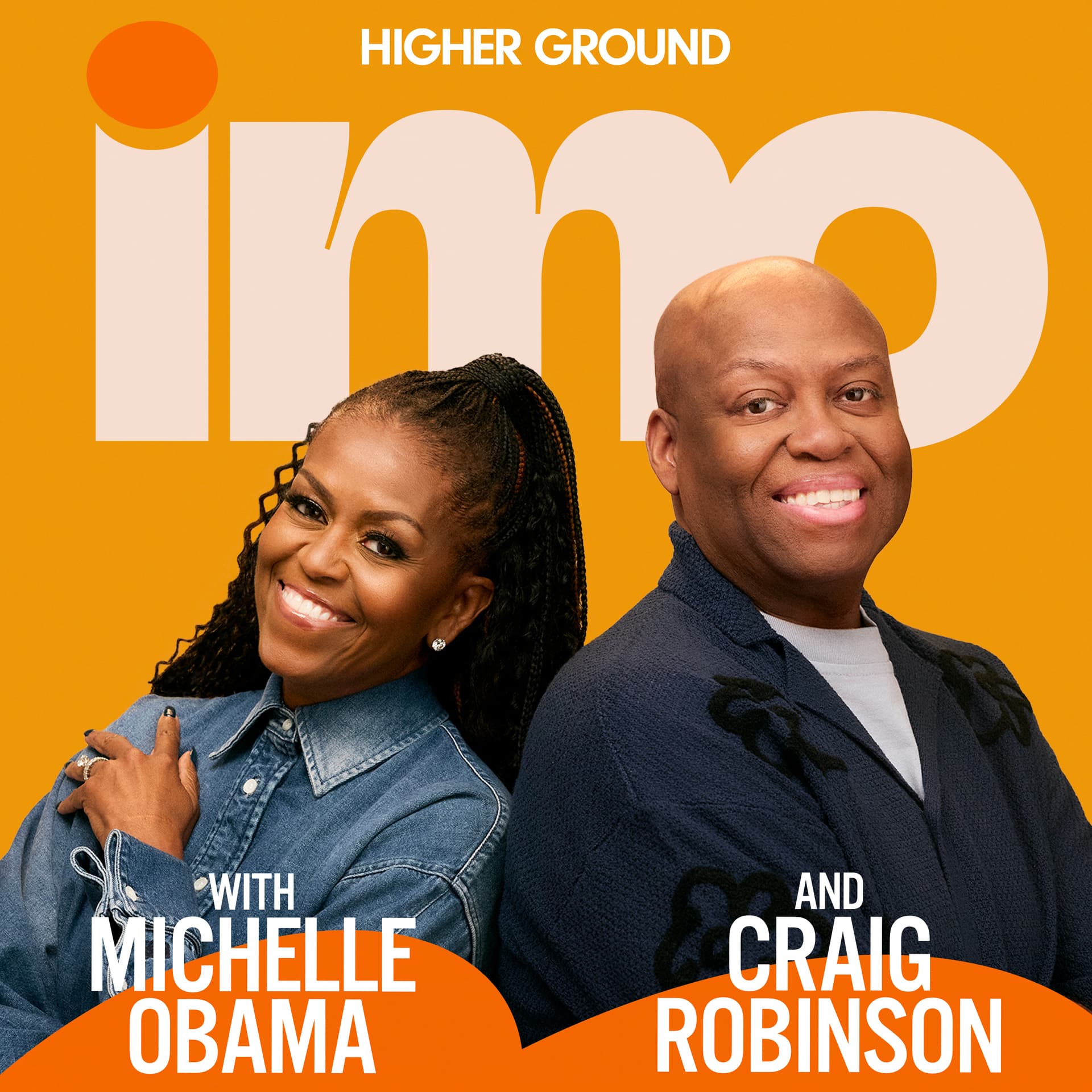
Podcast Episode Notes: IMO with Michelle Obama and Craig Robinson Featuring Spike Lee
Episode Overview
- Title: Put in the Work with Spike Lee
- Description: This episode features legendary filmmaker Spike Lee discussing his new film *Highest 2 Lowest*, how his childhood shaped his art, behind-the-scenes stories from his iconic films, and his favorite New York sports stories. Michelle Obama and Craig Robinson engage with Spike and uncover a personal connection between their lives.
Key Participants
- Michelle Obama: Former First Lady of the United States and co-host of the podcast.
- Craig Robinson: Michelle's brother and co-host.
- Spike Lee: Academy Award-winning director and filmmaker known for revolutionizing modern Black filmmaking.
Episode Highlights
Warm-Up Conversation
- Michelle and Craig share personal updates about their lives, including Craig's travels with kids for summer basketball.
- A discussion about Craig's positive experience staying at an Airbnb, emphasizing communal experiences and hospitality.
Introduction of Spike Lee
- Spike Lee is introduced as a groundbreaking filmmaker with a background from Morehouse College and NYU's Tisch School of Arts.
- His latest film, *Highest to Lowest*, is streaming on Apple TV+.
Spike Lee's Personal Stories
- Spike shares a humorous origin story of meeting his wife, Tanya, during a Congressional Black Caucus event, highlighting their connection.
- Michelle recounts her first date with Barack Obama, referencing Spike's film *Do the Right Thing* as a pivotal moment for them.
Conversation about Film and Influence
- Spike discusses his journey into filmmaking, sparked by a childhood interest in movies and a pivotal moment when he received a Super 8 camera from a friend.
- He elaborates on the importance of storytelling in films, illustrating how his childhood experiences shaped his cinematic themes.
Insights on the Film Industry
- Spike addresses the challenges of making original content in Hollywood, emphasizing the tendency of studios to favor predictable, safe projects over innovative storytelling.
- The discussion touches on the impact of AI on creative industries, with Spike expressing concerns about machines replacing human creativity.
Audience Engagement
- The episode includes a listener question from Tori in D.C., who struggles with defining her impactful career path. Michelle and Spike encourage her to explore different avenues and emphasize the importance of patience in personal growth.
Closing Remarks
- Michelle and Craig thank Spike for joining and discuss the release of *Highest to Lowest*, highlighting its cast and themes.
- Spike emphasizes the necessity of hard work in any endeavor, encapsulating his philosophy on crafting meaningful art.
Key Takeaways
- Personal Connections: The importance of interpersonal relationships in forming creative partnerships.
- Creative Process: Spike's belief that genuine human experience and storytelling cannot be replaced by AI or machines.
- Career Development: The value of exploring multiple paths and embracing patience in seeking fulfillment and impact.
Final Thoughts This episode of *IMO* offers an engaging blend of humor, personal anecdotes, and insightful commentary on the film industry and life’s challenges. Spike Lee's candidness about his journey and his views on creativity resonate with listeners, providing both inspiration and practical advice.
For more information or to submit questions, visit [imopod.com](http://imopod.com).
Written by AI. May contain mistakes. Listen to the episode to check what was said.
Transcript
Automatic transcript. May contain errors.0:00I have something called, I don't have this dyslexia. Ask something else. What is that? Just slip it. Should be slipping.
0:13You've been setting that up.
0:21This episode is brought to you by Kologuard and Chase Holm Lending. Well, hello. Craig Robinson. Michelle Obama, how are you? In my opinion, I am delighted to be here. That's cute. I am so happy to see you in your bright yellow. Yeah, I got a little yellow. I got a little sparkle going on. Yeah. It's like, yeah, I think, yeah, I felt like dressing up for our guests today. Yeah. What's been going on with you? Not much. I've been, actually, I've been on the road with the kids for summer hoops. So there's been a little bit more than usual, but loving my time popping in to say hi to you and a couple of guests.
1:09So really excited. You know, you're in quickly like I am traveling and I'm staying at this Airbnb in Georgetown. and it's really neat. But you know what's really neat other than being able to walk around the neighborhood and get a coffee or get something to eat and everything's in walking distance, even our dinner last night. But the host lives nearby and he was kind enough to come by and say hello and offer and give me a tour of the spot. It was really neat. And we've been so busy, I haven't been able to take him up on it. But I will do that the next time I'm here because I think I'll stay here again.
2:02Well, that's kind of the, that experience, when we think about when we had Brian Chesky on, who's the founder and CEO of Airbnb. It sounds like your experience is more along the lines of what, how he initially envisioned the Airbnb experience. that you would actually stay in the home of someone and kind of get to know them. Yeah. Right? It's more communal. More communal. And I think this is the first time you've met the host. This is. This is. And so, you know what? It feels less transactional. It was really, really nice. And I would encourage owners to do that. Yeah. Well, shout out to the Airbnb host in Georgetown who's looking after my big brother.
2:55Thank you for making him feel at home. So we got a good conversation planned for this episode. We do. We do. This is not only going to be good, it's going to be a fun conversation. I'm really looking forward to it. Spike Lee is an Academy Award-winning director, producer, writer, actor, and author who helped revolutionize modern Black filmmaking. He's a graduate of Morehouse College and New York University's Tisch School of Arts, where he is a tenured professor of film and artistic director. His newest film is Highest to Lowest, streaming now on Apple TV+. And you and I both got to preview it.
3:43We get to talk to him about that. I can't wait to talk to him. It's a great project. Yeah, so without any further ado, Mr. Spike Lee. The one, the only, in the flesh, on the Spike. Sis. Love you, sweetie. Love you, love you. Brother man, brother man. Thank you for this. What's up? No, what happened? So, Thank you for... Well, we concocted this visit just a couple of days ago because Spike and Tanya came over. We were having a little meal. A little something, something, something. A little something, something like we do in the vineyard because I love Spike, but I love Tanya even more. Probably a little...
4:25Yeah, she's a little... You should. I understand. You should understand because Tanya's the real star. Yeah, she's... Beautiful, smart. You start wondering, how'd you do that, Spike? Tell her, you had some gaming back in the day. We just met each other in time, stop. Okay, all right. So tell us the origin story. Well, I was in for the Congressional Black Caucus weekend. Okay. And I was there to show a couple scenes from Malcolm X. I had a date. Oh. So as I was going to the restroom and she was going to the restroom,
5:16we saw each other. Okay. Where was your date? She said, I could go to the ministry with me. you left her in her chair it's like you wait here no I said I have to go to the restroom so we paused and looked at each other and so I got up there and you know gave a little speech and we showed the clip people love the film Denzel Washington Denzel is Malcolm come on now and so night went on and I was looking for time to rest the night, but it was time to go. So I'm going down the escalator with my date that night. And she's going up the escalator. So I said, I got to the bottom. We looked at each other.
6:18It was like this. truly ships passing yeah it wasn't no goo goo eyes nothing like that but it was just a look so I got to the bottom of the of the elevator on the escalator I said you know what I forgot my Monk Blanc pen oh
6:42you lied no he acted he's an actor he didn't lie this is a Monk Blanc You know how much that can cost back then? That type of money.
6:56And we exchange numbers. And the rest is history, herstory. Okay. I never heard that story. I like that story. Now I got to get her version of it. I'm going to do that when we get back to the vineyard. That's beautiful. Spike is my brother. we've gotten to know each other. Over the years. Over the years. And real getting to know, you know? And I don't like to say on behalf of Kai and I, we're on the island and we get an invitation from our peoples, our folks, and we're like, we're going. Yeah. So we concocted this episode visit over dinner. Yes. We were talking about the new film, which we'll get into.
7:49Can I just jump real quick? Please. Can we talk about your first date? Well, you know. Because who hasn't heard about this first date? This is another reason, another thing that connects us, the Obamas deeply, to the Lees and to Spike in particular. When I see Barack, I say, good thing you made that movie. No, good thing you say we're going to see Driving with Daisy. All right, that was the wrong move. My sister here, driving a daisy. It's like, excuse me. Excuse me. Well, as the story goes, I wasn't real clear that it was appropriate for me to date my husband, right? Because we worked in the same place.
8:38Right. You know, we probably won a handful of black folks. But he was persistent. And he said, you know, who cares what these folks think? You know, we want to go out. We should just give it a shot. So I acquiesced. And he planned a beautiful day. Didn't even know. It was sort of one of those dates that go on and on. Started with lovely time spent at the Art Institute. You know, he was showing all his sides. You know, his cultural, artistic side. He was bringing it. He was macking. That's the word. You know, walking slowly as he, you know, noticed things in the Monet and the this and the that.
9:17And then we had lunch in the courtyard in the Art Institute. And if you know Chicago, it's one magnificent mile. So down Michigan Avenue from the Art Institute is on the south end. We strolled all the way north, walking, talking all the way. You know, the evening starts, the day is starting to unfold. I'm starting to see new sides of him. I'm starting to look at him a different way. I think we had dinner at Lake Point Tower, which is further down. lovely sky view, so nice restaurant, good food. And then he says we should take in a movie, do the right thing. Had just come out. It was the first weekend.
9:57And if anybody knows anything about Spike Lee and his movies, they were a happening. They still are a happening. And so do the right thing was a thing you had to see. and the fact that this brother was hit to the fact that we needed to see it on its opening night. It was impressive. So we watched the movie. It was phenomenal. Did Rookie do the right thing? He did. He did the right thing. Throwing the garbage can through Sal's favorite pizza in the window?
10:36But then after, because Do the Right Thing is the kind of movie that after you watch it, You got to talk about it, you know? I mean, now you find out, you know, I found out his character, you know? Did he see what I see? Did he have the feelings that I felt? Did he get what I got out of the movie? So we talked for hours after the movie like everyone would tend to do. And I would say that that date probably sealed the deal. It wasn't Drive-Mistro Daisy, right? It was not Drive-Mistro Daisy. A Caddy Board winner. Yes. Best picture. driver's seat. No, that didn't do it. It was Spike Lee's joint. Thank you, Spike, for this.
11:17No, thank you, thank you, thank you, thank you. I like it. Spike is like, I want to hear that story again. That's the first time I ever heard it from my sister. Is it? I read about it. Oh. Yes, we have it. But wasn't it last summer, the two summers ago, you gave us the sign? The street sign. Yeah, the street sign. which was we got this is you know this is like you know fancy friends because you gave us a do the right thing street sign got renamed do the right thing we got a sign that is signed by Spike Lee it's in the house in the vineyard thank you for that Spike is a thoughtful person and I haven't known him as long as you have But I will tell our audience that when we had dinner together at your house on the Vineyard, Spike found out from my wife that our two youngest kids, Austin and Aaron, were big Knicks fans and Spike Lee fans.
12:20And the funny thing is, and everybody who's our age is going to laugh at this, they weren't old enough to watch your movies yet at that time. I hope not. He said, I hope not. But you remember what you said? He was like, they can watch Crooklyn. that's the one that's the one they can watch Cricklin that's it and you were he was as protective of them as we were and he made the movies that was what was funny but you I don't know if you remember this but you and well I'm jumping around here the funny part is they only know you as a Knicks super fan that's your claim to fame that was your claim to fame to them so when they heard they were coming over to dinner and they were excited.
13:07So what does Spike do? He takes a stroll with them in your backyard about 75 yards down and back and you can see Spike. One's on one side, one's on the other. And who's doing all the talking? Spike. And then you see the guy saying something and you see... We're all wondering what are those three talking about? How old were they at that time? So this was how many years ago? Three years ago? I don't know. So they were probably 12 and 10. Is there 15 and 13 now? Yeah, yeah. They can see Krippler. But they're almost at the point, thanks to Malia, she wants them to see some R-rated stuff. That wasn't me.
13:52I know it wasn't you. They're older now. But they're older now. They're older now. But my point is, you are a generous soul. because... And kids are very important to you. I mean, anytime there are young people in our presence, Spike, you will go... You bird's eye to the young people. Now, Tanya says that's because you are a big old kid yourself. Oh, she's... She said more than that.
14:28Spike, you are crazy. We've been married 30 years We've been married Oh man, I'm going to get you out of trouble Spike, what's your favorite film that you have made? Or do you have a favorite? I know you probably get this all the time but we've never talked about this I wonder if I could turn your question around Please
15:02This back-to-school season, spend less on your kids with Amazon. You know, Mish, I've had such fond memories of our kids' first day of school. And I'm just thinking back to when we would get them ready and go shopping for school supplies and how excited they got over a new t-shirt. I know, right, right. A new pair of shorts. New pencils. Oh, man. All the excitement over decorating their lockers. Lockers. One of the things that I used to do in preparation for school, because our summers in the White House got pretty exciting. I mean, it was usually when we did an international trip because the girls were away.
15:42So summers were fun. It was camp. And I found that a couple of years, they weren't mentally ready to get back to school because they were having so much fun. Right. Right. So I started employing a strategy that fun had to stop two weeks before school started. Oh, me. So that they would be no fun, nothing planned, just bored. So that by the end of that two weeks, they would be begging me to go to school. So I learned that strategy because if it's fun up until the end, they're like, why would we want summer to stop? That's tough. And when we were growing up, we were always ready for school because summers would drag on forever.
16:23Yeah, because even when we went to day camp, that ended in the end of July. So August was like— You had dead space. You had to figure out your own playing. Well, I tell you, these kids have really been spoiled with vacations and all this great stuff. But I really look forward to back to school and the excitement. At our house now, it's more about what day you get your hair cut. You've got to get the fresh cut close enough to the start of school so that it's still fresh. And for us this year, it's going to be a tough one because it's the weekend of Labor Day. So those fresh haircuts are going to be like four or five days old by the time they get to school.
17:08And then there was just the back-to-school shopping, which I must say I cannot relate to because as First Lady, it was very hard for me to do the back-to-school shopping with the motorcade and police and all of that. I remember when we used to run around to a million different stores chasing down spiral notebooks, lunchboxes, calculators. Now with Amazon, everything you could ever need can be purchased from anywhere you are. You can be on vacation, a sports field, and get all of it delivered fast right to your doorstep. One click, no stress. And with Amazon's low back-to-school prices, you can spend less on your kids.
17:51who could ask for anything more
17:59when people come up total strangers come up to me more people say Crooklyn than any other film yeah wow more than The Right Thing more than Malcolm X it's just that family yeah that's the film people love not just Blackpools it's just that family yeah and Delroy played my father I don't think we would have played my mother and so my mother had to be the tough cop because my father was like, daddy, can you jump off the window? Oh yeah, go ahead, but just don't hurt yourself. So she was forced to be the cop and so we grew up sometimes like not liking our mother because she and us do nothing. I'm old as a five.
18:48We were crazy. Yeah. We were just, wow, Brooklyn kids. And my mother had to be a disciplinarian because otherwise it would not have been good. And so I feel bad like we saw all of us. Our mother is a bad sheriff. Yeah. Because she wouldn't let us do nothing. And so you mad at her and she's holding it down for everybody. Holding it down. Hold it down. Yeah. So that's why I think people think Crookman. These are total strangers. They name them all. It says, my favorite is Crookman. And not just black folks, too. Did you always know that you wanted to go to be a filmmaker? No, that came late. I just went to the movies.
19:39Yeah. Well, I went to the movies. I mean, this is screaming. I mean, this is like the early 60s. So, you know what I tell you? What did I say? Film chose me. Cinema chose me. It wasn't, I didn't choose cinema. How so? Summer of 1977. One of the most infamous summers in New York's history. And I had a friend. Her name is Vietta Johnson. Smart. Do you wish? Did she go to Princeton? Yes. Let me tell the story. Let me tell the story. Okay. So Vieta and I grew up together. Okay. And went to Stuyvesant. The top high school. Yeah, Stuyvesant High School. Yeah. Broken Tech was on the block of my offices.
20:29Stuyvesant and science. Yeah. And so she was always smart. And that summer, New York City was broke. There's a famous front page of Daily News. Ford, the city dropped dead. That's President Ford. So I came home for the summer. and there were no summer jobs. So I wanted to come make some money so I could have some fresh clothes going back to school in the fall. And that summer, all we would do is play sports, you know, stickball, stoopball, stuff like that. And this day changed my life. There's no BS. I went to Civietta. She lived in a university house on the other side of Fort Green Park. Rang the bus, said, come on up.
21:17so she's studying for some tests SAT where it was so we're sitting in her living room and there's a box this is a true story this day changed my life I said what's in that box she said oh it's a Super 8 camera my father gave me I don't want it I said what's the other box it's the cartridges for the Super 8 you can have it your father gave it to you he gave it to me but I'm going to be a doctor right yeah she was studying for some L.S.A.T. whatever it was and so now I had something to do for the summer wow how old were you I was so 77 oh yeah you had to be she had to be a junior 20 years old I was born 57 so now I had something to do so I spent the whole summer filming wow and that summer was a summer to the blackout uh huh So when it happened, my father drove me around to see my fellow, while we were Puerto Ricans, and my brothers and sisters looting.
22:24I had it all. Driving cars, Cadillacs out through the wind. I mean, so I come back. So you're in the middle of the looting, catching it all. Yes. So I come back to school for my junior year, and I declare my major, mass communications. Morales didn't have that, but Clark is across the street. Yeah, yeah. So I would declare myself mass communications, mass communications, which is film, TV, print journalism, and radio. Okay. And this teacher helped, her name is still Dr. Herb Eichelberger. I told him about this footage I have. He said, you should make a documentary. He encouraged me. On days where he didn't have to work, he would come in and open up the office, the center for film.
23:13so I made this the film was called Last Hustle in Brooklyn homage to Last Hustle in Paris Brando anyway no that no that stuff in that Brando but I made the film worked on it first the spring semester I showed my class and that I got a response so then and there I said I'm gonna be a filmmaker wow so I was focused yeah graduate Morehouse I want to go to film school. I apply to the three best film schools. USC.
23:51AFI, American Film Institute. NYU. At that time, they get into AFI and USC. You had to get an astronomical score on GRE. I did not get the astronomical score. NYU, all you had to do was submit or create a portfolio. Oh, and you had your documentary. Wow. First of all, at that time, I didn't even have my driver's license. So it would have been crazy being in L.A. Mm-hmm. But now I'm a typical New Yorker. I know, really. That's how I thought it was. It's like, what was I thinking? I was like, wait a minute, aren't you? I got a driver's license because Tanya said, I'm tired of driving New Yorker.
24:26Driving you around. Yeah, yeah. You just barely get there, right? Well, we don't need a driver's license in New York. Typical New Yorker. So USC is out. So... Came to NYU. Ang Lee and Ernest Dickerson were in my class. Ernest shot all my stuff. Ang Lee was in your class. Yeah. Ernest from Howard. So right away, Morals from Howard, we were like. Yeah. So Ernest shot all my stuff. My thesis film was a film called Joe's Bedside Bar. We cut heads. Won a Stuart Academy Award. Then later, Ernest shot for me together. She's going to have it. School days, do the right thing, more better blues. Jungle Fever, and Malcolm X.
25:14Man. All because Vietta gave you her father's camera. You know? That was not an accident. That was not some happenstance. That was God, Allah, whatever you want to call it. All right, so crazy connection. Vietta Johnson was one of my brother's first girlfriends at Princeton. Did she run track then? She ran track. I've never said it publicly. please. Uh-huh. Ever. Hey, Vietta, by the way. I've never even told Vietta that. Uh-huh. Oh, she doesn't know? She never knew I liked her. Do you like Vietta? Everybody liked her. Everybody liked her. I didn't like her. I liked it. You liked it. You liked it.
26:00You liked it. Well, that was Craig's girlfriend. See, that's why y 'all like each other. I liked it. Black boys in Puerto Rico. That's Rosie Perez. I liked it. I liked it. That's crazy. And then, what happened? With Vieira? You tried to get in your business. It didn't work out. It didn't work out. She dropped me. But that's okay. He was young. He was a younger. Kendrick Spirits. I was too young for her. He was a freshman. You know where she's from, right? Yeah. Where? Brooklyn. The People's Republic of Brooklyn. That might have been a little, little, little, little, little reach. Well, I'm glad we shared that because Vieta should know.
26:47I know that. She should know that story. Yeah. But I think about that, you know, life, it go this way. That's right. That way. You knocked on her door. That day. No, rang the bell. Yes, rang the bell. If her father did not give her that Super 8 camera, I wouldn't be here. You wouldn't be here. Or if she was interested in the camera herself, you wouldn't be here. And she, Vieta, did become a doctor. So she was very clear. Yes. Yeah. I mean, life, I think about this one. I'm like, that's crazy. That's like, God damn. That's crazy. Well, it's a good thing you were good at it.
27:28so um you've had a a pretty you know um steady team throughout your yes your your film career i mean you see the credits you know you see your same crew your photographer your you know is that your good luck charm uh do you you know is that is that normal in filmmaking that you People have those long, long relationships. Film after film. You know that this is relationships. That can be part of film. Sport teams. Yeah. You know, so it's people you're comfortable with. And that you can flow with. And people that, here's an important thing. That you trust their opinions. Yeah. Am I right or wrong?
Read the full transcript
28:20You're right. because you wrote with some Mama Luke's. Okay, Mama Luke's. Let's explain that for the people. It's Italian American. My family was the first family to move into Cobble Hill because I was born in Atlanta. When we moved in Cobble Hill, Brooklyn, it was stone. We were the first black family. And so I began to think about Deuteronomy and Jungle Fever came from being a child. and a predominantly Italian-American neighbor. So, Mama Luke. Mama Luke. It's not... You don't want to be a Mama Luke. So, when you trust someone, you know they have your best, one of the best for you. So, they're not going to tell you some crazy stuff.
29:13Now, somebody's opinion you don't respect, you're not going to listen to them. because you don't know where that's coming from. Right, right. And we all know in this room. In the room. In the world, you're taking some advice or something and then say,
29:36But when you're surrounded by people who want you to be the best you can be, you can trust them. And we've all seen teams, guys that get along and it comes on the court. Now, I was at game seven. May 1970. Which game is this? Fill me in. The Knicks first world championship. Okay. It's like, which game is this? I'm sorry, fellas. I'm talking about a team. Coach, Red Holtzman. Yes. Starting five. Okay. Willis Reed. Dave DeBusha. All right. Bill Bradley. Dick Barnett recently passed away. This was before I even knew basketball existed, but thank you. That's the team. Off the bench, Cassie Russell.
30:29Yeah. Dave Stolz. Mike Reardon. I was at that game. Okay. My father's lawyer had season tickets, and he promised me if there was a game seven, you can go. And it's the Willis Reed game. Willis Reed, game five, got hurt. He didn't play game six. And I've been to Super Bowls, World Cups, World Series. I've never heard a noise, crowd noise. It was loud when Willis, when he dragged his leg out, that noise. The teams, both teams were doing their layup line. The entire Laker team froze. turned around. So Willis Reed dragged his leg. What happened to his leg? Well, he had hurt his leg in game five and didn't come out to warm up with the rest of the team.
31:25So the Lakers were thinking, okay, great. Willis Reed's not playing game seven. We're in good shape. But he came out late. Okay. And I can't even imagine the sound of the crowd. The garden is. Yeah. I mean, you know, when it's packed. We're talking about three of the all-time greatest Willis Reed. So this is one of your famous sports analogies that gets us back to team. See what I have to deal with here? This is what I have to deal with. Sports is in every... I know that's what you think, Spike and Craig. Sports is in Mahatma Ali, Jackie Robinson. We go on and on. But then you got to know the game.
32:03It's like, nah, it took me five minutes to figure out, well, what happened to his leg? I want to say to the listeners, please forgive me because I have something called, I don't have dyslexia. I have something else. What is that? The slip here. Should be slipping.
32:26You've been setting that up. That was a good one. I knew that was. It's also called broken knees too. Dyslip here. Dyslip here. I'm generally good. I can keep us on course, you know. But the zero. I'm turning my best way. I had some sleep last night. I mean, shoot. But let's talk about highest to lowest. Yes, please. When I was in film school, NYU graded film school, I was introduced to Japanese cinema. The giant of Japanese cinema. Our producer, Dan, is losing his mind that you even brought this up. He's a cinephile nerdy. He's a cinephile. And Spike Lee. And we were just talking about, well, you do know that this was a...
33:15Kurosawa. Kurosawa. And I'm like, no, I did not. So he's so happy. Please continue. In film school, NYU, in graduate film school, you introduced a lot of international cinema. And Rashomon really made an effect on me. in this film there's a murder and a rape and characters each speak on it in fact that's where the term comes where different people see the same thing so that was a kernel for She's Gotta Have It where Noah's three boyfriend and her address speak to the camera and say what their stories are left to the audience. Yeah. To feel what happens. Who do you want to believe? Yeah. And this film is not a remake.
34:14It's a reinterpretation of the great film by the great Japanese filmmaker, Kirikosawa, High and Low. So we flipped this so it's, our title is called Highest to Lowest. But as a nod to Prince, we used the number two instead of what's going on. Nice. I didn't know that when I was watching it. Okay. And I'm blessed to have work with my brother, Denzel Wash. Yeah, yeah. He gives a performance. We are blessed that you're working with your brother, Denzel.
34:57You know, as some of our listeners may have seen, my brother-in-law, your husband, joined us on the show a few weeks back and had an interesting opinion that ketchup is just for kids. But here at IMO, our opinion is that ketchup is for everyone. And honestly, it has to be Heinz. Mish, I would say that IMO is a pro-ketchup podcast. Without a doubt. We believe in ketchup here at IMO and in life in general. But despite what my husband said, ketchup exists in our household everywhere. Yeah. What are some of the ways you guys use ketchup? Well, there's the basic potato, french fry, ketchup dip thing.
35:47I mean, it's always there. the girls, you know, before they eat can even start their meal. The question is always, where's the ketchup? Yeah. Especially with fries because it's a rare fry that you can get away with just salt and pepper. Yeah. And having a little bit of that tomato-y, rich flavor. Vine ripen. You know? And, you know, it gives it a little substance, you know? It's not dripping down your fry. And then barbecues. Yes. I was going to say grilling. you have to have ketchup for your burger. And I'm not even offended if I'm grilling and people put ketchup on their burger. You can dip it or you can have it on there.
36:27I'm not offended. I'm not offended. And I'm from Chicago. I'm not offended if you put it on your hot dog. You know, and that's a question. Are you a pour or are you a dipper? Because people have a certain opinion about ketchup. Some people want one application. Other people want a bite, a dip, a dip, a bite. Like, do you have a preference? My preference, it depends on what I'm eating. So if I'm eating a hamburger, I like to dip my hamburger into the ketchup. Got it. I love, because I want a bite of ketchup with my hamburger. But if I have a brat or a Polish, or I want to have it along the length of the brat.
37:08I can picture that. Oh, and that just reminds me, even though my kids aren't young, as a mother of little kids, ketchup was an important source of vegetable intake, especially when it came to broccoli. I mean, you know, look, you want your kids to get their vegetables in. And let me tell you, ketchup is an excellent vegetable delivery system. Absolutely. We got a lot of broccoli down just with a little Heinz ketchup dip. Made the girls happy. I was happy. Kids were happy. Veggies were eaten. Life goes on. And at the end of the day, it has to be Heinz.
37:58And it's kind of sad because this might be the last film that we're doing. and he's talked about retiring. Every time I read an article, he's retiring, he's doing another movie. So who knows? So I said today, I'm going to say, I'm going to stop saying that this is my last film with Denzel. I thought I said, I got to stop saying that. Yeah, you don't know. Because if you keep saying that, it's going to make that happen. Yeah, that's right. And Denzel, he said, oh, that'll spike it. I said it was, but you think it's so, so Denzel, I'm going to stop saying that. Okay. In order. Mo' Better Blues. Yeah.
38:37Malcolm X. He Got Game. Inside Man. And here's the crazy thing. Both Dental and I did not know 18 years had gone past between Inside Man and I was lost. We both. Just, time just went. Yeah. I wouldn't have thought that either. We didn't know. We were shot. We had like 18 years? But because inside, man feels fresh. I mean, it's a standout. I mean, it's on the top of everyone's favorite Spike movies. So it feels like it just happened. And you haven't aged, not a second. Mine right. Except for your slipology or whatever it is. I might need a movie operator. But it has been, all jokes aside, it's been a gift to work with Denzel.
39:41And added plus, he has season tickets for the Lakers. You are so silly. So when this special comes out, I look over the Knicks. I got this right. And then the way it is now, a lot of times, what they're doing now is like, the stop teams doing travel. The Knicks are playing the Clippers like, back to back. So I know the owner. Well, it sounds like you made the movie schedule around the basketball schedule spike, and I wouldn't be surprised. Let me tell you this. when we were rolling with we had a game and the day the night we're shooting people normally go home at 5 o 'clock it's like early call time they know if we're shooting on a game day you are crazy you are crazy What's it like to direct Denzel?
40:50What makes that partnership special to you? He knows what he's doing. He knows what he wants. He doesn't need 20 takes. Yeah. Wow. But also, he listens to notes. He's not too big for that. When you're great, I'm not going to tell Denzel. well can you move a little I mean look if there's a note I tell him but I'm not in this area like blah blah blah let's do his thing now actors aren't that level and I'm not doing what I want to do that's a different story and Denzel people don't understand his improvisation is so great you think that stuff is written and it's not it's like right there and it's the perfect thing you needed but it's not in the script and when he gets actor on his level and they start going back on improv.
42:16It was ASAP Rocky also. ASAP. I keep telling people. His performance. Don't sleep on ASAP. No, no. He showed up. ASAP and Denzel. That's like a heavyweight fight. He's not a heavyweight lightweight. Toe to toe. Yeah.
42:39He's been in several films. He's been in several films. So this is not his first film. He was fun to work with. Here's the thing. Denzel is such a powerful actor. I've seen actors like, Wilt. Yeah, yeah. It's a lot to work against. I mean, you've seen his work. You've seen him. You know what he is. Then you're like, I'm going to see when Denzel was like, yeah, it's like being at practice with Jordan. Come on now. You know what I'm saying? Oh, Lord, here we go. More basketball. This is not Sports Talk Radio, man. Like, oh, my God. Yeah, yeah, yeah. It's Vinny from Brooklyn. What's one of the Yankees now?
43:23Yeah, they stink. What else is new? Hey, we got 27 rings, so don't start. Okay, back to ASAP. Oh, my God. You two are exhausting. I was just getting into hearing about ASAP
43:49ASAP he was like something else he was like I got testicles too yeah yeah oh that scene with him in the recording studio I know don't want to give it away for the listeners you know what's great about that Denzel wants because if he's in a scene and he's killing the other person like that's killing the scene so he wants and then here's the thing even before I was asked through this film people have always said A$AP looks like Denzel's son have you ever I've heard that I've heard people say that now I have to look for it because I didn't notice it when we were watching the film people say that to me for years and so that adds another layer thank you for that word another layer because then on a subconscious level this is a father son thing it's a father son so you add a layer upon layer that just makes that lists the whole Yeah.
45:07Film out. Now, in addition to Denzel, I mean, you have given so many black actors and so many actors, period, because of that team. Can't leave out Rosie. Can't leave out Rosie. Can't leave out Rosie. It's just been amazing how you've been so conscious about, you know, especially with Ozzy Davis, Ruby Dee. I mean, you kept a lot of really amazing actors in the zeitgeist, you know, so that generation. You just made me think of something. What's that? Harry Belafonte. My father played with Harry Belafonte. And every time he would see me spike, do you have to use Ozzy Areson? Can't Ozzy just let me get one?
46:00And Ozzy's, excuse me. and I heard Mr. Belafonte. You had to call him Mr. Belafonte. His last film was Black Klansman. You know, his health is not good. So I didn't know until that morning when we used to come to the set. So I had a backup. We had stashed away. Wow, really? I'm not sure who it was, but in the hotel. I told the cast, this day before, I said, You come to work, dress your Sunday best. Have you ever been on a film set? Like this set. We're bumming. Much like here. No, I'm just kidding. Anyway. When the car rolled up, everybody said, all right, he's coming. Everybody was out there.
46:58And when he got out of the car, people lost their minds. Wow, I can only imagine. That was a great grin. For years he was saying, Spike, you had that? And you've got it. Can Ozzy get arrested for it? Just give me a minute. And you did it. And we got him in for his last film. That's great. You did it. But your latest film, while there may not be a direct message, that last scene with Denzel and ASAP, there is a statement about the industry, the music industry, and sort of, you know, I don't want to give away a twist, but there's a cynicism about the way young people today use social media, how that affects the creative process.
47:57Can you speak a little bit about how you feel about sort of where things are, how filmmaking has changed, how the creative process is being impacted?
48:10The thing that scares me, AI with arts. Now, all right, AI for this and that, but when it comes to being writing scripts, TV shows, I'm not with that. because I don't think in my opinion you cannot duplicate human beings my opinion a machine writing
48:50I'm thinking AI music plays books it's call me old fashioned just for the audience yeah okay sorry my bad
49:10I just think that there's some things that are sacred as human beings that
49:21the arts I have a problem with that. How do you see it in the classroom? Because you're still, you're teaching. Yeah, but they don't have to write papers for that. Okay. But scripts? Yeah, I read their scripts. I can tell they're not. You can tell. Yeah, I can tell. Uh-huh. But, I don't have exams. Yeah, yeah, got it. But people, it's the students who are losing out. Mm-hmm. Because they're not. And we know, look, at this table, we all know and we learned this many many times because we didn't get to where we are if it wasn't that you have to put the work in W-E-R-K
50:10see just when I think I love this solo just when I think you know you gotta put the work in yeah you right you think you're getting over but you're cheating yourself. That's right. And as parents, we've told our children, no, you can't. There's another one. You can't fake the funk. Well, that one, yeah. So Spike, hold on. I'm sorry. Whoa, whoa, whoa. Yes, my sister. Oh, yes. I like that. All right. Why you bogarting? Yeah. Why you violating? Ooh, ooh. It might as well be the same. It might as well be the same here as it is everywhere. Go ahead, your highness. Oh, now I forgot what I was going to ask.
50:59That's it, Scott. All right, what are you going to ask? I was just going to ask, what does it take now to get thoughtful, original, brave films made in Hollywood? Oh, okay, that was close to what I was going to ask. Oh, wow, what do you know? All right, so it worked out. It worked out for me anyway. It's getting harder and harder. Yeah, yeah. Because the powers that be, they're just looking at the bottom line. I know this personally. There are fewer and fewer people in those positions, the gatekeepers, that are willing to produce different types of material, more challenging type of material, and not what they think is a guaranteed thing.
51:59But in this, there's nothing that's guaranteed. And it's just tougher. I mean, I have some friends that are in the music industry. these labels are dropping people or firing people left and right. So I think there's something that's not just the industry of film but across the board. People are just... Everybody wants the same type. They want a category. They want a guarantee. But the audience is there. But they're not the audience. That's that's the frustrating thing. I mean, it's like, you know, you have conversations with some of the decision makers and they swear, swear that the audiences don't exist.
52:48You know that the numbers bear it out. But that if that can't be possible, you know, that some of the one could argue that some of the drop in box office is because there's just not enough variety. It's the same thing. Yeah, it's the same thing. I mean, if I don't like action, if I don't like Marvel, if that just doesn't happen to be my thing, what am I going to the movie for? And if you get out of the habit of going to the movie because you just assume there's nothing there for you. Or you're going to stream. Yeah, that's the pattern. But I want to see a little bit of everything. I want to see love stories.
53:30I want to see all kinds of faces. I want to see women leads. I want to see stories about coming of age. All of that. And that's why the present universal pictures, when I did Do the Right Thing, Tom Pollack, when we were talking about, oh, Hollywood doesn't take the chance they used to, Tom Pollack is a hero to me. he was everybody in Hollywood told him not to make do the right thing that black folks would come out of the theater rioting there was tremendous tremendous pressure on him he just did a film called Last Temptation of Christ that Martin Squaredes Facey directed he had death threats after that film he had to have armed guards with him and his family and on top of that comes do the right thing right yeah it was courageous for him to go ahead and make do the right thing at the last temptation of Christ where him and his family was a potential danger and we had to The world premiere, the world premiere, I think, was in Cannes.
55:03And right then, this was caused riots, I mean. But he stood behind the film. And I don't think there are too many people who are ahead of studios today. That would do that. That would do that. So I'm going to love to. Yeah, yeah. My brother Tom, because he, people within Universal, his boss, the industry, the press, they said this film would make black folks run amok. And he thought otherwise. Yeah. But those, very few of those people. Few and far between, yeah. Yeah. In an industry now like that. They exist. But the algorithm sometimes, it plays too big of a role. Well, speaking of helping folks and generational assistance, we have a thing here on IMO where we get a question from one of our listeners.
56:18And this happens to be from one of our listeners in D.C. Okay, right. Tori from D.C. has got a question for us.
56:32This episode of IMO is sponsored by Chase Home Lending, committed to supporting you all the way home with smart digital home buying tools and resources. Chase Home Lending is dedicated to helping individuals and families achieve their dream of home ownership. They offer expert guidance throughout the home buying journey, helping customers navigate the process with confidence. This brings me back to a time when we grew up living upstairs from my aunt in a two-family home that she owned and we rented. And it was a wonderful time, but being a renter, we had to be extremely careful of what we did.
57:12For example, we had to be quiet at a certain time. We couldn't play on the front lawn. My sister couldn't have a dog. And we didn't realize the importance of being a homeowner until we got late in life. We always would talk to our dad about why we don't own a home, and he talked about being house poor. Little did we know that home ownership was a great way to build equity. My sister and I ended up buying our own homes later in life, and we used that to help pay for our kids' college. And that is a way where home ownership can lead to future success. Chase Home Lending offers personalized support, expert knowledge, and access to valuable resources, helping homebuyers navigate the complexities of getting a mortgage.
58:05Their guidance ensures buyers find a financial fit and make informed decisions. Visit chase.com slash start to see how Chase can support your homeownership journey. Member FDIC, equal housing opportunity. This episode of IMO is brought to you by Cologuard, a non-invasive colon cancer screening test. Currently, the American Cancer Society recommends that if you are at average risk, you should begin screening for colon cancer at age 45. There are an estimated 60 million adults age 45 plus in America who are not up to date with their colon cancer screening. So we need to change that by spreading the word about another option.
58:50The Cologuard test can help you put your health first and feel more in control of your colon cancer screening process. This easy-to-use screening test is delivered right to your door and allows you to collect the sample comfortably at home, on your own schedule. The sample is shipped back to the lab for testing and results are available within 8 to 10 days. It's simple, but the best part about the Cologuard test is that it allows you to start screening for colon cancer without all the hassle of preparing for a colonoscopy. So you don't have to prep the day before. And by prep, you know I mean fasting and drinking all that liquid.
59:34You get to skip the stress of having to request off work, go under anesthesia, get a ride home, and all the other hassles that come with an invasive procedure. And in addition to its convenience, Cologuard is also affordable. Most insured patients find they pay nothing out of pocket. With zero downtime, no special preparation, and a screening test that's delivered right to your door, let's start prioritizing our health. So, if you're 45 or older and at average risk, ask your healthcare provider about screening for colon cancer with the Coligard test. You can also request a ColoGuard prescription today at coloGuard.com slash podcast.
1:00:23The ColoGuard test is intended to screen adults 45 and older at average risk for colorectal cancer. Do not use a ColoGuard test if you have had adenomas, have inflammatory bowel disease and certain hereditary syndromes, or a personal or family history of colorectal cancer. The Cologuard test is not a replacement for a colonoscopy in high-risk patients. Cologuard test performance in adults ages 45 to 49 is estimated based on a large clinical study of patients 50 and older. False positives and false negatives can occur. Cologuard is available by prescription only. Did you know the average bottle of water contains 240 ,000 tiny particles of plastic?
1:01:11And with recent research finding microplastics in our bodies and our blood, it's time to pass on plastic and get a water filter that actually works. Say goodbye to microplastics in your family's drinking water with LifeStraw Home. It's the only water dispenser that filters over 30 contaminants, including bacteria, PFAS, and microplastics, while making your water taste better. And it has a stylish modern design that you'll want to show off on your counter or your fridge. I know we do. And because it holds 18 cups, you can fill cups, water bottles, and more without needing to refill all the time.
1:01:56We have a really active family, and water is a big part of our recovery. Knowing we could be exposing ourselves to microplastics is troubling, and it's also disheartening. That's why we take steps with eating cleaner, composting, and local sourcing to live a healthy lifestyle. Although we live near a good water source, we use our LifeStraw Home water filter all the time. Cooking, refilling bottles as we talked about, and everyday hydration. It really makes a difference. In addition, for every product sold, a child in need receives a year of safe water. More than 11 million have to date. Use code HIGHERGROUND for 25 % off of your first purchase of a Lifestraw home product at lifestraw.com.
1:02:45And say goodbye to microplastics forever. This episode of IMO is brought to you in part by understood.org. If you're a parent of a child with ADHD, dyslexia, or any learning difference, and especially if you're navigating special education as a parent of color, you know it can feel like a maze. There's a podcast from understood.org called Opportunity Gap that's here to help. It's hosted by Julian Saavedra. And in every episode, he talks with special ed teachers, child psychologists, and other experts. They break down things like how to navigate the IEP process, what accommodations your child is entitled to, and how to build a strong relationship with your child's teachers.
1:03:35I checked out the Opportunity Gap myself, and what stood out to me was how practical and empowering it is. It's a resource that really meets families where they are. It also provides tools to help families build confidence in navigating the challenges of children who learn differently. To listen, just search Opportunity Gap in your podcast app. That's Opportunity Gap. This back-to-school season, spend less on your kids with Amazon. I remember when my wife Kelly and I would be running around to a million different stores, chasing down spiral notebooks, lunchboxes, and that one specific calculator that somehow every math teacher requires.
1:04:22And look, I love my kids, but I do not love fighting over the last pack of highlighters in a crowded store at 7 p.m. on a Tuesday. That's why I love Amazon. Amazon has everything for back to school. Backpacks, pencils, clothes, snacks, and even those dry erase markers the teachers secretly hoard. All delivered fast, right to my doorstep. One click, no stress, boom. And the best part, I can shop from my couch. With my now 15-year-old and 13-year-old, I grab their school supply list and I'm all set. Now, instead of running around town stressed out, I get to actually spend the last days of summer with my kids.
1:05:13We're doing movie nights, bike rides, and even, dare I say, back-to-school fashion shows in the living room. Parents, do yourself a favor. Go to Amazon. Get your back-to-school checklist done in like five minutes while saving a few bucks. So remember, with Amazon's low back-to-school prices, just spend less on your kids. because every dollar you don't spend on them is a dollar you haven't spent on them.
1:05:53Hi, Michelle and Craig. My name is Tori and I'm a 41-year-old paralegal in D.C. While I'm not able to have children, I've built a life focused on service, purpose, and growth. From 2019 to 2020, my husband and I fostered refugee children, which deeply shaped how I view my role in the world. I'm currently considering law school while also thinking about how to mentor and uplift others in the paralegal field. My questions are, how do you decide which path will allow you to have the greatest impact, especially when you're torn between multiple good ones? How do you cope with the feeling that you're not fully living up to your potential, even when you're doing meaningful work?
1:06:35I get another word. That's a humdinger. That's a humdinger. We've gotten. That's deep. That's a humdinger. It is. It's a humdinger. We've talked about this before in other conversations, but I don't know when you talk to your kids, because our kids are all in their late 20s, early 30s-ish. Seems like a lot of young people in that age group are struggling in that way. They're wondering, you know, should they be doing more? have they chosen the right path? I find myself having conversations with young people about having the patience to sit with where you are and find the meaning with what you're doing at the moment.
1:07:27All impact isn't big. All meaningful impact isn't big. Tori is fostering refugee kids. It sounds like there's a lot of stuff going on in Tori's life right now where she's having a lot of impact. Being a good neighbor, have an impact with the people who are right in your amidst the people you have responsibility for, that is big impact, you know? And that to me is enough. What's bigger than that? What is bigger than that? What is bigger than that? It feels like she's trying to figure out how to build a legacy. And I just, you know, I like what you're saying about being patient, but I think she needs some direction.
1:08:19And if I were to give her some direction, I would say to her, Try different things. The right idea will eventually come to you. But in the meantime, you're doing some wonderful things by fostering refugee kids. And maybe the how-to is how does, maybe Tori is trying to figure out how does she explore different paths? I mean, a lot of kids don't have networks, a lot of young people. You get into one profession and it's hard to figure out how to get to another or even explore. I know when I came out of law school, thought I wanted to be a lawyer, worked at a big firm, did all those things, only to find out after two years, my feeling was like, no, this ain't it.
1:09:07So how do I pivot? How did I figure out how to pivot? And it was something as simple as, you know, I had to think about who I might want to be. So there's some work that Tori has to do on her own. I mean, she's got to kind of dig deep and ask herself questions. Both of you, this question. I'm glad I was born when I was born. To be a kid today? Yeah. All this, it's just. Seems like there are too many choices. Not just choices, but when you get choices, you got 500 channels to go on. Yeah. You know what I mean? Just. Yeah. It's just, I mean, I'm just. No, it's true. March 21st, day of spring, 1957.
1:09:54Yeah, yeah, yeah. Because I know Cornish was simpler back then, but it was just like bananas. I mean, good God. And Spike, I don't know if you find this with the students you teach, but I hear this in young athletes. I hear it in young artists too. Everybody wants to be impactful right away. And that's unrealistic. It's unrealistic. And it gets back to what you were saying when we were talking a little bit about filmmaking is you got to put in the W.E.R.K.
1:10:34That was too good. That was too good. Leave me with the stuff that's messed up. Don't, don't, don't. You say we want. Stay don't. Right. But what are you telling your students when they come to you and they want to be Spike Lee right now rather than, you know? Well, they don't say they want to be me. You know, Spielberg is going to say, but what I do is that if this is what you want to do, you got to be serious about it. And you may read that stuff, but there's no things overnight success. Because a lot of people, they say that, but they want to leave out that, you know, they were giving blood to eat, donating blood to eat.
1:11:28So they leave that out. They'll tell you the back story, the dark side. The back story. And this is even more important. I tell my students, first day of class, I hope you are here. because this is what you want to do the rest of your life. Because you want to, because this makes you happy. Because if you have a job, occupation, that you love, that's a home run. That's a three-pointer. That's an 80-yard field goal. Oh, good Lord.
1:12:14That's our America. Yeah. Because when you have occupation that you love, you don't need to hit the alarm four times to get up. You do that when you hit a job you hate. When I'm shooting a film, I don't have an alarm. I know I got to be on the set at 6 a.m. I know when I need to put my skinny black ass to bed so I get sleep so I can wake up and do the job I love like we can tell Spike loves what he does the minute he walks in you know yeah but you ain't seen me in the Nick game though well actually I have I have it's rough you know what yeah will you be my guest I will this season I will don't waste that on her oh don't even take me nah
1:13:14I would be honored to be your guest at the garden have me back please I would love it thank you yeah yeah and give a last plug for the film what do you want to tell the people the new joint the new joint the new joint is highest to lowest starring Denzel Washington Jeffrey Wright A cast ASAP Rocky Yeah, it is A cast Wendell Pierce Streaming on Apple September 5th Apple TV Plus Yes, yes You see how the slippage doesn't happen when it comes to you know It's like pull up dates and whatnot I'd be like Spike and he he's not gonna know when the film drops It's like, nope not when it comes to the thing he loves There is no slippage I love you Spike Thank you for this.
1:14:10We'll see you back at the ranch.
From the publisher
On this very special episode of IMO, legendary filmmaker Spike Lee joins the podcast to discuss his new film Highest 2 Lowest. He shares how his childhood shaped his art, behind-the-scenes stories of Do the Right Thing and BlacKkKlansman, and his favoriteNew York sports stories. Plus, Michelle and Craig discover a very small world (and highly influential) connection with Spike.
Have a question you want answered? Write to us at imopod.com.
See Privacy Policy at https://art19.com/privacy and California Privacy Notice at https://art19.com/privacy#do-not-sell-my-info.