Ask ChatGPT
 In Good Company with Nicolai Tangen
22 May 2024 · 34m
Written by AI. May contain mistakes.

Get the gist, explore an idea or ask about something said.
 Claude
On In Good Company with Nicolai Tangen, what are the key points of this episode?
Searching your listeningAutomatic transcript. May contain errors.
0:00Hi, everybody, and welcome to the podcast in good company. Now, when I started in finance 30 years ago, one of the first companies I met was Atlas Copco in Stockholm. And wow, what a company. I've been following them closely ever since, and they just never seem to stop surprising on the positive side. And one of the things that is driving this is the unique corporate culture, the way they basically produce some of the best CEOs in the world. And today we are really lucky because we have Mats Ramström joining us, who is now stepping down as a CEO. So now that he is no longer the CEO, he can tell us all about it.
0:36Very welcome, Mats. Thank you so much.
0:47Just want to kick off first. How would you describe the corporate culture at Atlas? I think it's a competitive edge for the company. It's not so tangible what it's all about, But we are trying really to set high standards for ourselves. Not so difficult, really. But we're talking about respect for people, showing up on time, prepared, take ownership. And we have this new excuses culture where you actually need to deliver. So the decentralized, we are recognized for that. That we give a lot of freedom to people, but we also give them a lot of accountability to get the job done. And to build that culture, you need to trust people.
1:38And we normally say that the one that is closest to the problem or the opportunity is also closest to the solution. So we work a lot on that to make sure that we don't need to escalate a lot in the organization. And then I think the customer focus that we should really bring tangible values to our customers. And otherwise, it might not be worth doing as we spend a lot of time on that. We talk about raising red flags when we see things going in the wrong way, that that is absolutely OK. and I had this job interview the other day and the person I interviewed finalized the interview by saying, she said to me then, sorry for this, but she said, you cannot bullshit your way to the top of this company.
2:25You need to deliver. And I think that summarizes a little bit what we are trying to accomplish here with the decentralized organization that people actually are accountable to deliver results or making changes that we continuously improve. So Mats, when we met in Stockholm, Tom, you said one of the things at Atlas is that there is always a better way. And I remember I met the CFO a long time ago and he said, you know what? You come into our leader group meetings and even when things are really well, you get the impression that we are just about to go bust. Because we are focusing in always on just how we can improve things.
2:58So how do you create this kind of relentless pursuit of improvement in the organization? what is this this one saying by one of our owners i think it's good the only tradition worth keeping is the one of change we talk about that is always a better way and it's really embedded in the in the culture and sometimes we might be too critical but they always ask us the question can we do this in a better way so we really really encourage people curiosity don't be afraid of change and we use these three horizons to make sure that we really look for we are present what can we do short term but then we talk midterm but also we talk in the future and that's very much linked to the global trends what do we need to explore to understand this in a better way and then the financial performance is extremely transparent So it seems like you put numbers on everything in order to make everybody accountable.
4:03Just tell me about that process. no but we are as i see it at least quite a high performance oriented company and it might sound scary to many but i think high performance people like that and the way for us to do that in the decentralized model is to give the trust but at the same time every month we do up to 600 profit and loss and balance sheets so we knew really to benchmark in between we knew when to call to congratulate someone for a fantastic job but we also call to see if we can support to to improve the business and everything is measured against what we call a mission which is the assignment you get when you get a new job so with the authority the decentralized it comes with a very clear responsibility and accountability for for the result as well so So that's how we do it.
5:00You cannot really hide in Atlas Coco anywhere. Tell me about this mission. I thought that was really interesting. We don't have that, right? But when you get a job at Atlas, you basically set a three-year target. How does this work? No, but let's assume that I would hire you in a position for something. And then we as a group, we believe that maybe what is the full potential plan for this financially? Should we change the way we go to market? Is their products missing? So we set kind of a little bit of a framework. We say, well, this is what comes with the job. But I think the interesting part is the vision, which we say is then that the one that's been employed in this position gather his team to say, how do we accomplish this?
5:44What kind of resources do we need? How do we get it done? And we call it a full potential plan. And then they counter with this and say, well, if you want this, you know, I need these resources. I need a little bit more of that. We need to help me out with competence in this area. So it becomes a very friendly handshake where both have been part of developing the plan. And as you said, it's normally between three to five years. So I think it's short enough to be very tangible, but maybe long enough to be visionary and some stretch goals there. and we believe that it creates not just a focus on the results but it creates a focus on the right activities to drive the result and activities must come before the result comes so we are kind of trying to create a common view on the activity that needs to happen and in the same way you put your management team and the employee in the same boat and say well this is what we agreed upon this is what we are going to try to do so sometimes we have success and sometimes we fail and then we change.
6:48But I think that togetherness, that we have built this plan together has been very important for feeling that I own this plan. So when you fail at Atlas, what happens? I mean, we can discuss about failure. And if someone takes an initiative, I think business and risk goes hand in hand. You need to take new initiatives to try different things. And if it comes with the best intentions, In other cases, it doesn't succeed in the way we hoped for. Is it really a mistake or is it a learning? And we tend to believe it's more about learning. We don't want to repeat the mistakes, but do we want to penalize someone for trying?
7:31I don't think that creates a good culture. So for us, it's not so much a mistake. It's learning. We move on. We try something new. But we will not penalize people for being ambitious and trying things because we need those actions. How do you share the mistakes across the organization? We are quite open, actually. We meet between general managers. We meet between divisional presidents. And the best sessions we have is normally when we share success and things that we could have done better internally. And people are not afraid of sharing since we have this culture that we need to move forward all the time.
8:11So there's kind of an openness between them. And we are trying to build this, even if you're kind of a big company, we're trying to build the networks between people so that they can reach out without me knowing and learn from each other as well. Mats, what's the biggest mistake you have made at Atlas? Wow.
8:34It's patience, I think. I'm very brought up in the Swedish way that you give a second chance, which I think is a good thing. But sometimes they say that patience is considered to be virtue, but maybe hurry up should be one instead. The one thing I think that we might end up with soon, and you can connect. I was thinking about it the other day that you can connect on Teams or you can connect on Zoom. And I think it's a fantastic tool where you can reach out to anywhere, anywhere in the world. but if we use those tools not to meet each other then i think that would be probably my biggest mistake um because i think that culture innovation happens in this these meetings where people actually get together and so i try to say well these are the good things with these new tools don't stop traveling don't stop meeting with people don't stop you know sharing so for me I spend a lot of time still to travel to make sure that people meet and arrange things that people meet and I think that could be a challenge if you stop meeting with people
9:53Now how do you celebrate success at Atlas? Sometimes we don't stop and celebrate we are kind of hard on ourselves but yes, we do try to stop. And last year we celebrated 150 years and I think that was a fantastic event. We could see throughout history how we have constantly changed. But the cool thing with the celebration was that we spent almost all time looking into the future and making sure that we really understand the opportunities going forward. This was just after the COVID years and we really put the company in front of being industrial but also being a technology company linked to sustainability and some of the megatrends we see.
10:42This concept of celebration is quite interesting. I saw an interview with a tennis player, Federer, and they asked him, how do you celebrate? He said, well, when I was young, I never celebrated anything. I just, if I won a match, later on that day, I was back on the court and started to train for the next one. But now, when I'm a bit older, if I win something big, I will actually take the evening off have a glass of champagne with my wife we should really learn from him he's a fantastic place absolutely now moving on to kind of career progression what do you look for when you hire people? myself I've always been triggered by finding people that are curious the culture fit is important and don't you like to meet people that are passionate whatever you do i like that it also helps you when you meet with customers and the willingness to learn to continue to learn new things i think has been extremely important and then the basics for us is everyone has a customer so you need to understand how you create value for your internal customer or for your external customers so experiences comes with the age normally you can say but i think it can be really accelerated um the one thing that i get a lot of questions is the work-life balance and i'm not so comfortable with that question and and the reason being that it sounds almost like work is something negative and and the balance and the spare time is is is the positive part of it and And for me, the work I've done over the many years, if I wouldn't enjoy the work part, if I wouldn't feel passionate about that and that gives me energy, maybe I'm in the wrong job.
12:38So for me, you need to, of course, there needs to be space for other things in life. But I think it's important also to feel that you stepped into something, you believe it's fun, it's passionate. And if you lose energy every day, then you should look for something else. So maybe when I get that question too early in an interview, maybe I start to hesitate a little bit what's important. We had Elon Musk on the podcast recently, and he talked about the ultra hard culture where you work 100 hours and so on for a period of two years. Now, how much do you work? um i mean the higher up you go the more you think then you actually do physical work so um i try to be always available um i don't count the hours i mean normally say that we work until we are successful i i don't demand people to you know work 80 hours a week but uh i do demand that we are successful.
13:42So that's what I don't really measure time in that sense. I mean, you can work a lot of hours by getting nothing done. So I think the result counts and people can find different ways of being successful. So for me, it's not the hours, it's the result. A lot of the hiring you do is internal hires. What are the pros and cons on this? um yeah the experience that we get with an internal hire and knowing customers internally or externally i think puts a foundation for success um all that said though that we could miss out on on new ideas of course uh diverse experience so we do hire externally as well but maybe it is 85 15 so but what we do get is this really good understanding and then we open up all jobs with exception of mine to what we call an internal job market so you need to drive your career yourself you need to find what path you want to take and and therefore we get people everyone knows they have an opportunity i think that's a very good thing instead of that the job has been promised to someone else.
15:03You can always apply, but you need to show the drive and the success to actually be qualified to get to the next level. But we do both. But we do see that our customers are getting more and more. They want expertise and knowledge. So it takes a few years to build up the competence that we need. You are keen to get young people into big roles. How do you make sure that that happens? um yeah i do um i believe that people have much greater potential than they think themselves sometimes uh so if someone is passionate and drive and they're willing to learn i'm i'm willing to give them a chance um i became a general manager when i was 33 so someone gave me that trust and i want to pay that forward to the next generation and and so far it's not so much about age it's more about the competence and the drive and we are willing to help if someone is has a shortcoming in some way if it's finance or sales whatever it might be so we we can always help out but i also like to work with people that has that drive and energy and likewise the other way around is I don't think that's so engaging with someone that has a lot of competence but have a negative view on a lot of things so I really like to promote people that has the drive and how do you see that a young person is ready for a big role I mean at the end of the day for us you're you're you're judged by your results so that you are ready for a new bigger role it's normal that you have done very well for yourself in the present role we do not do career planning but we do help people with the gaps if they say well i like to move into this position this is my ambition then we have internal external trainings that can help them out to make sure that they have the experience that they can actually apply for the for the next role how do you work with mentorship we do we do for special categories we trying to help people then to have a mentor it could both be internal and external and i think the mentors ruling many many times it's just to to help them believe in themselves that they are ready for for the next step on the other side isn't a good leader isn't a good leader a mentor almost every day and i think that's even better if we can have good leadership on a daily base to people of course i understand there are things you want don't want to bring up with your boss maybe that you need a mentor for but we use both but i'm really trying to have a coaching culture from from our leadership so that our team is available to the employees on on on the daily base and i think that's even more important and the mentorship program is it's decentralized it could be both it could be a region that runs it and we normally try to go between the business areas so they get exposed to other leaders it could also be external program that someone wants help with something then we can help them to find someone outside the group but normally it's regional and we don't do so many group programs but we are eager then to you know network between the divisions and the business side so they get to new business and other people as well.
18:46Mats moving on to leadership you mentioned that Atlas Copco is 150 years old and the incredible stat here is that you've had only 12 CEOs during 150 years. True. They can hardly be a company in Europe with that kind of with those kind of numbers, right? With that kind of duration of leadership. It's just incredible. What explains this? When we talk about good leadership, we're talking about creating sustainable results. And I think the important part is sustainable. that we do something that is really, really good for our customers that comes to the benefit for our employees, of course, society, but also then the shareholders.
19:42But we always start in that order. So I think sustainable results is one of the more important things. And the older I grew and higher up I get in the organization, you realize that leadership is a lot about actually making other pieces. not so much about yourself it's about making other people see their full potential executing on their full potential to really be there to ask the questions and try to figure out how you can get people to the next level so i think it's a lot about the people caring about people making sure that they get the resources and the ability then to to reach their full potential and i think that also with the 23 division and four business areas all divisional presidents have the you know the full value chain so they can practice just like a ceo and everything from r &d to sales and logistics and i think that's a way of building talents in the organization as well but good leadership for me is really to surround yourself with talent and maybe the talent you don't have yourself to build that diverse team and i think as a team you can be very very successful and that's what we are trying to to do in atlas coco how has your leadership style developed with experience and age well it's a good question since i had my last management meeting last week and since my management team they had at dinner then we had some speeches and if i summarize that what came out of it.
21:17Some of them I'm proud of, some I'm not so proud of. But they also, they said that they felt that I always stand behind the people and the promises that I made to them. That's one of the things that they always said that, okay, you do that, you all back us up. So I think that is one of the key things that they liked about it. really changing the company from industrial to to be more of a technology company has been another key for them that they can see that which I think is really really good I think that is also how we position ourselves for the future and to be linked to the good macro trends then on the less positive side I think they also said that I'm a little bit too stubborn and too straightforward sometimes.
22:15So I need still to work on that. We also talked a little bit about the setting high standards and focusing on the results. So I think it's been, that was the feedback I got. And I recognize a lot of these things and appreciate that they were so honest with me as well to bring up the things that I could do better. The straight talking, how does that work when you're a global company and you have different cultures in different parts of the world? I mean, it's not everywhere you can be a straight talker. For me, it started with when I was fairly young, I had to let someone go. And I talked to this person and I said, well, due to these reasons, I have to let you go.
23:04It was one of my toughest discussions when I was at a young age. and the person was not angry but he left the day back the day after he came back into me and said you know i'm not so upset with you maths but i'm very upset with my previous bosses and my colleagues that they have not brought this up to me before and i do realize that in in some part that honesty and being straightforward is an honest way to help people actually to improve performance. So from that day on, I promised myself at least to be very straight when I see something that's good or something that I think could improve, more or less to give people an opportunity to improve.
23:51And when I started 2017 with the group, I was a little bit afraid that I came from industrial technologies. And then the compressor was the biggest business area. we had vacuum and also power technique then and i felt well okay so how will my way of doing things be accepted but when i started to meet our people around the world i realized that the atascoku culture is so strong so it's almost you know as strong as the local culture with some adaptation but it was really easy to feel at home and and focus on on a lot of things that we discussed in the beginning. So for me, it's been fairly easy actually to be straightforward and the culture is the important part that brings us, the glue that brings us together independently of where we're from, independent of gender or religion.
24:45I think that is the thing for us. The Scandinavian leadership model is quite consensus driven. How does that work? for me it's been like i normally say to people that swedes i take us as an example then and say that okay it will take a little bit time until we get to the decision i will listen to you all but just to be clear at the end of the day i will take the decision but i think consensus takes a little bit more time until you make your decision but then on the other side then everyone is on board they understand why we do things and then execution in a decent right organization works much better i think if you have the other way it's more top down that the leader takes the decision without people understanding the reasons then you need to explain the reasons when you actually started the process so maybe i don't think there is a winner among these two ways of approaching things but i think you either you gain speed in the beginning or you gain speed in the execution And I think we are, I mean, you could say that we are a Swedish head office company, but we are not so Swedish in the way we do things.
25:54It's fairly direct and it's very, very international to think we do things. Do you think there's something happening in the world and the way we live and work and think, which makes the Scandinavian leadership model more advantageous? for me it's been independently i love sports and when i see strong teams being built i think you engage people i think that's a way in the scandinavian part that we engage them we ask them questions even if they might not have the key knowledge they they are asked they feel that they are part of something bigger and so for me it's always been an upside to that to engage people, making sure, say hello, have respectful people, always return phone calls, etc.
26:43It doesn't matter. Everyone is important. If you're in this organisation, you're important, otherwise you wouldn't be here. So for me, that way of engaging people have been fantastic. I just steal from sports, how they can see how they build their teams and how they engage people. I love that. You mentioned returning calls. When we met in Sweden, you talked about some rule of thumb that you have an atlas. How quickly do you return calls? And we normally say that we should return phone calls within two hours and all mails within 24 hours. Sometimes you can say, well, I will not be able to get to your mail today.
27:20I will respond tomorrow. But we are eager that the people standing in front of the customers know that they will get an answer. Because otherwise it could be that, yes, I've seen your mail, but I don't have an answer. So I have not returned your phone call. But at least you need to be there, need to be present. And that is a very simple but extremely good way to make sure that you have the speed in the organization. And you know when to expect someone to return a phone call or a mail. I think the returning of calls and mails is so interesting. You know, if you return an email within one minute, it can be one sentence and people are impressed that you are so quick.
27:58Like if you return, you know, in 24 hours, it needs to be a paragraph. And if you are like three days, it needs to be a page. And so you save a lot of time by being quick. That's a good insight, I think. Good. Do you think there is a trade-off between empathy and execution? Not at all, no. Why? I think you need it to be able to execute quickly. You need to know your people. you cannot manage anyone people in the same way you really need to understand what the situation they are what competence they have and take advantage of their strength making sure that that is part of the execution so not at all I think everyone in a high performance company I had this excellent interview with the one of our new presidents and I tried to explain to him that okay in this job we're going to expect this and that and that and he's been with the company for quite a number of years and he just looked at me and said you know that's the reason why i'm in this company i like this and i'm like yeah good point so i know i don't think there's a conflict there now you are moving on to become a board member of abb which by the way now has a norwegian CEO, interestingly.
29:22But what does it take to make a good board? What is a good board for you? When I look at my board, I like when they're leaning forward. They're challenging me. Is there a better way to do things? They share their experience. They're available between the meetings to me. They respond quickly to things that I like to discuss. They have the experience of things that I need. And sometimes they're a difficult decision and you need to bounce that off with someone. I've been very lucky with my chairman. We have always had a very good connection. I think we speak on, at least on the weekly base. But the other thing is that they stay out of the operational things, which I find also that there's a very clear line between the giving advice, you're helping, but you're the one executing.
30:13You're the one executing on the strategy. I do present the strategy for them. of course and they say we'd like this part but they challenge so for me it's been that clear line between what what's my responsibility and the responsibility and that i can take advantage of the experience that they have but i think we should have boards that are leaning forward that understands the business that has time to you know visit our sites to understand what we do and that's the exact intention for me now and i already have a program with abb that i'm going to visit sites and countries to understand the business because I don't want to be just using my present experience.
30:51I need to understand what they do and how they accomplish value for their customers. So for me, it's been a very good balance with the board I have had in Nathas Koko. Is it important that board members have industry knowledge? I think you need both in the board. People with industry knowledge, financial knowledge, so on so forth but the one thing that i've been thinking about to to run and our company the 172 billion internal where it's difficult for me as the ceo just to understand all the applications and all the products so you cannot expect that from from a board member but to have the experience to be able to without telling me or anyone else just saying have you thought about this what do do about pricing and it's i think that experience is very valuable to me um that's the way i see it should board members be shareholders absolutely why yeah i think they they are part of the future of the company uh we have a commitment to our shareholders uh and i think they should be on that journey with us and let's show that they are engaged in the company.
32:10Now, you have one big shareholder, the Wallenberg Group, which has been instrumental in developing Atlas and a lot of other very fine Swedish companies. What is the advantage of having a big long-term shareholder? As I mentioned in between then that in my case, I have a Påke Wallenberg and Johan Foschel on my board representing the big owner investor. I think they have 17%. And of course, to be able to have a long-term owner with a long-term interest in the company makes it possible to make investments in R &D that will pay off in a few years, to build new facilities, to do things more long-term that is needed to be successful.
32:58And they see it more like when we sell it 150 years. So what do we do the coming 150 years? Then they have knowledge about the company. They're very good sounding board in between meetings. They can say, okay, if we look at these acquisitions, for example, we really support that. This is where we're heading. So for me, it's been very good to have someone that is solid long-term and also there to help and give advice. Well, Mats, it's been incredibly useful. A lot of fantastic advice here. And we look forward to following the progress for the next 150 years as well. Thank you. Thank you so much.
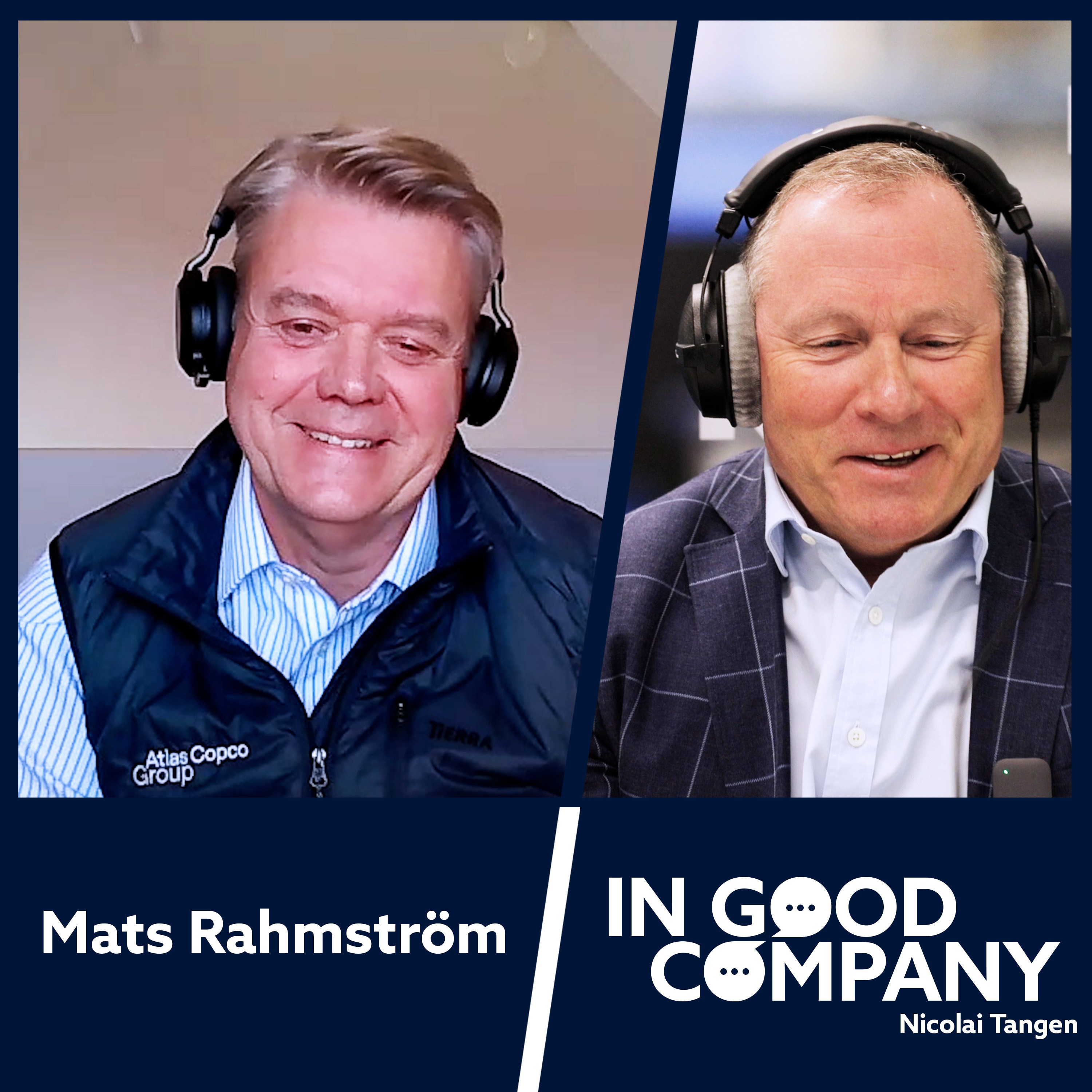
Why does the Swedish company Atlas Copco produce some of the best CEOs in the world? After 7 years in charge, Mats Rahmström has now stepped down as CEO. In this episode, he talks to Nicolai about excellent leadership, the unique corporate culture at Atlas Copco, his biggest mistake, high expectations for employees and how to maintain speed in the organization. Tune in!
The production team for this episode includes PLAN-B's Pål Huuse and Niklas Figenschau Johansen. Background research was conducted by Isabelle Karlsson with input from portfolio manager Martin Prozesky.
Hosted on Acast. See acast.com/privacy for more information.