
 Ask ChatGPT


 In Good Company with Nicolai Tangen
29 Oct 2025 · 40m
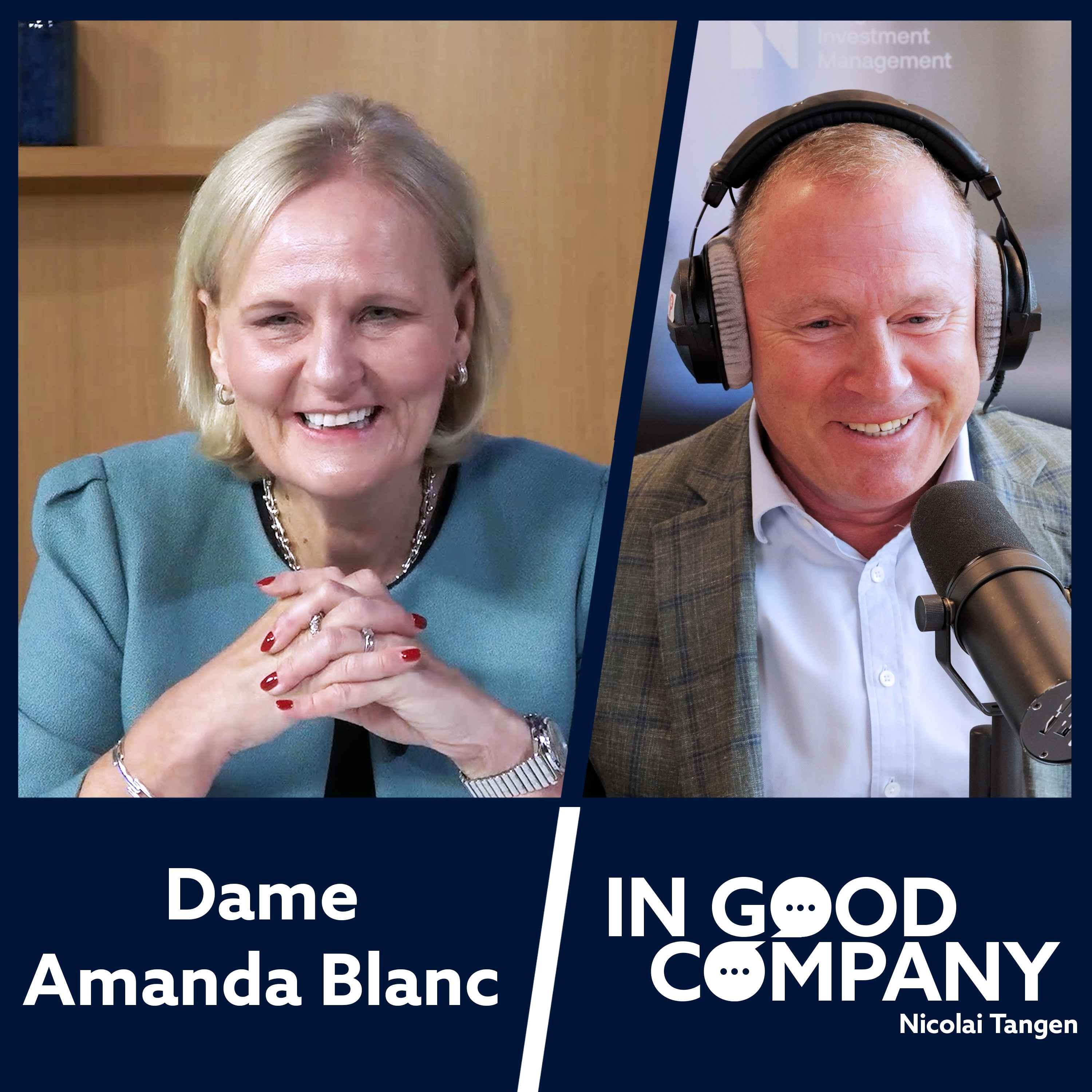
In this insightful episode, Nicolai Tangen interviews Dame Amanda Blanc about her transformative leadership at Aviva since her appointment in July 2020. Amanda discusses strategic changes, the impact of AI, climate risks, and the importance of leadership principles in the insurance industry.
Written by AI. May contain mistakes.

Get the gist, explore an idea or ask about something said.
 Claude
On In Good Company with Nicolai Tangen, what are the key points of this episode?
Searching your listeningAutomatic transcript. May contain errors.
0:00Hi everybody, I'm Nikolaj Tengen, the CEO of the Norwegian Soren Wealth Fund, and today we are in really good company with Amanda Blank, the CEO of Britain's leading insurance company, Aviva. Now, this is the kind of company that insures your home, your car, and helps you save for retirement. They serve 25 million people globally and 21 million people in the UK alone. Amanda took over in July 2020 and has led what is described as a complete transformation. And we're going to hear all about it. So, Amanda, wonderful to have you on the podcast. Thanks, Nicolai. Really, really great to see you.
0:48Just briefly before we start, what does Aviva actually do in short? Oh, right, in short. Well, I mean, basically, it protects people, it protects businesses from bad things that can happen. And also, it looks after people in their hour of need and when they want to do things like retire. So, you know, we say with you today for a better tomorrow. That's our purpose. And I suppose that encapsulates everything that we do. Now, you're both an insurer and a major investor. Can you explain that dual role? Yeah. So obviously, as an insurer, we have a big balance sheet, so over 400 billion pounds. And so we need to put those assets to really, really good use.
1:30And we do that by investing. We're a big investor in the UK. So we're a big believer in the UK. So we invest in UK infrastructure, in UK gilts, I mean, also in private assets. But we also invest in corporate debt and in other things. So I think it's about getting the best return over a very long period for our shareholders and obviously also for our customers. When you compare Aviva with other insurance companies, what is it that makes you special? Well, I think for us, what makes us special, first of all, of course... Apart, of course, from having a wonderful CEO. Oh, no, no, no, no. But I mean, I think it is about the people that work for Aviva.
2:07They make a really big difference. If you think about an insurance company, it doesn't really sell anything tangible like a handbag or a pair of shoes. It basically sells a promise to pay. And so I think, you know, that makes us special. But really, if you think about what's our USP, it is being diversified. We will basically take you from your junior savings account, your junior ISA at a very young age to your equity release mortgage when, you know, but when you're thinking about your later stages of your life and everything in between. And there are very, very few. There are no insurers in the UK that do that.
2:40And there are very few insurers now across the world that do that. Now, you and I, we've been in the jobs for pretty much exactly the same time, five years. Now, you've totally transformed Aviva. What are the key decisions that you have made? So I think the key decisions came with actually within the first month. So I was in a fortunate position of being on the board for six months before I became the CEO. And really, the big decision was around focusing the portfolio. If I looked at Aviva, and we had positions all across the world, but we didn't have scale positions. And coming from the background of working at AXA for much of my career, working with Henri Descartes, one of his big mantras was, you need to be top three in the market that you're in, in order to be able to influence and to get the benefits of scale in that market.
3:24So we took decisions very early on about focusing the portfolio. We sold eight businesses for eight billion pounds within the first sort of 12 to 24 months. And by doing that, we were able to meet our second objective, which is about delevering the organization, also returning some money to shareholders. And actually, what was good was by selling off those businesses where we didn't have scale positions, we basically showed the strength of the core business in the UK, Ireland and Canada. And all, you know, all the real benefits of being scale players in our market really started to shine through.
3:58Amanda, it's quite a luxury to be on the board six months before you take over as CEO. So, were you sitting there with a piece of paper? It's just like, I'm going to change this. I'm going to change that. No, I mean, no, it wasn't like that at all. So I started in December 2019. And obviously, then we went straight into COVID. And we appointed a new chair. And then the CEO stepped down. And so there was a real opportunity. And of course, as you're sitting on the board, and I'd been an executive for a long time before that, you're always looking at it with an angle of, what would I do? What could I do differently?
4:36And, you know, I really felt that by making some real decisive decisions around the portfolio, that to me was obvious. You know, everything in my DNA was telling me that that was the right thing to do. And then you saw the sort of, you know, 20 million customers or probably wasn't as many at that point, the real opportunity to sort of connect all of the benefits through the customer proposition. And I felt that that was something really compelling. But yeah, it was, it's always very frustrating, isn't it? When you haven't got your hands on something, you want to sort of be able to do it. What was the biggest challenge in this transformation?
5:06So, I mean, COVID was a big challenge because obviously, you know, effectively I was running the operation where there were a few of us in our old building in St. Helens in the city, basically, you know, making decisions and using Teams calls and everything else. So that was a blessing and a curse. I mean, it was difficult in that I like to be out in the business. You like to see what's going on. But at the same time, it also meant you could really focus your attention, you could really get things done. So I think that was a challenge. And then, of course, there's the culture of the organization.
5:35You know, people were used, it was quite slow in terms of this decision making. So, you know, there was sort of, you know, increasing the pace. And then look, I think thirdly, being absolutely honest, and by the way, thank you for being a shareholder in Aviva. You know, it was the investor confidence. You know, when I was speaking to investors, they were basically saying, really, you know, Aviva's been a big disappointment. We've sort of had three dividend cuts between 2010 and 2020. Why would we invest? You know, what's different? And so it was really, you know, making sure that we were able to tell that equity story.
6:11You know, I somehow think it was easier to make change during COVID than if COVID hadn't been there. Because, you know, people were not in the office all the time. They couldn't talk to all their colleagues all the time. And so in terms of corporate culture, I probably think it was a bit easier to change. Well, I mean, I don't think that's untrue. I think that the problem was if you like to physically sort of sit with people and listen to them and understand what's going on, which I do, I had to find new ways of doing that. So, you know, jumping into Teams calls, doing sort of virtual town halls, getting a sense of the organization that way, in a way you had to trust a different instinct.
6:48So I do genuinely think that in terms of decision making, COVID was definitely beneficial because you could really just crack through things. particularly if you think about selling businesses. Previously, you'd have had to jump on planes, go and meet people, whereas in this instance, you were basically having team meetings, moving on, getting documents agreed, getting decisions taken. That was definitely easier. Talking about decisions, you bought DirectLine for£3.7 billion. Why was that important for you to do? Yeah, so I think when we looked at our position in the UK, We had scale positions across most of our product lines, but we looked at the opportunity as a customer-focused business in the retail home and motor book.
7:34And we really thought, actually, when we looked at DirectLine, genuinely, we felt that we could run that business better because we had scale, because we had the ability to invest in technology, because we had the ability to use digital and the AI transformation that we'd already undertaken. and we could reuse that, we felt that we actually could deliver a better return for shareholders by running that business ourselves. And so, you know, as you would expect, we did look at a number of other alternatives at the time, but the actual benefits of the expense synergies, the capital synergies and the customer benefits, they sort of all came together and it became a no-brainer, really.
8:12And so, yeah, last November, December, we made the bid and we completed the deal in the of July this year. Some insurance companies focus in on one product line whilst you cover the whole spectrum. What are the advantages of doing that? So I think in 2020, a lot of people said to me, you know, monoline businesses are the way forward. You know, effectively Aviva is trying to do too much. Diversified businesses, you know, they don't work anymore. I felt very differently from that. You know, for one thing, having all of the customer data and having the customer through their life cycle felt to me important.
8:49But genuinely, the diversification benefits for capital are significant when you have various lines of business. And I think what we have seen over the last five years is diversified businesses have actually done better. And if we think about investment, so if we think about the investment that will come with generative AI, you know, being able to spread that across 20 product lines and not just have to invest it in one or two definitely makes a big difference. So, you know, I think that people think very differently today about diversified businesses than they did maybe five years ago. Now, you have experiences from other insurance companies too, right?
9:24You've been at Zurich and AXA before Aviva. What have you taken from those companies into Aviva? So I think, I mean, you definitely take something from every organization that you work in. I mean, actually, Aviva is quite an emotional one for me. It's actually started in Commercial Union, which was a founding company of Aviva. So, you know, in many respects, I rendered it up in the same company as I started with. But I worked for most of my career, if we count it in year terms, with AXA, you know, for two different periods. And I learned a huge amount from that, you know, the benefit of running a global business, a diversified business.
9:57And I think the opportunity to work with, I think, one of the best leaders, which was Henri Ducasse. I mean, he certainly was. He transformed AXA. You know, he made that into a really huge company. And then Thomas has obviously taken it from strength to strength. But I think the ability to work with great leaders, to understand, you know, what they do that makes an organization great. I think that was really important to me. Do insurance companies attract a certain type of people? I don't know. People say that. I mean, how should I put it? Well, just put it the way you want to put it. Yeah, I mean, people who study actuarial sciences are not like, what should we say, you know, rock and roll type people, are they?
10:45Well, I mean, look, so what should I say to that? Well, first of all, I'm a history graduate. I know. So, you know, I mean, so I think I sort of break the mold of that. I mean, if I look around my ex-co, we've got all sorts of different people with different degrees, different talent. I actually think that people do not understand what an insurance company does. You know, we started off by talking about it. But in essence, you can be in marketing. You can be an actuary. You can be an accountant. You can be in sales. You can be in underwriting. You can be in claims. You can be in supply chain. You know, literally an insurance company does everything.
11:19And so when I'm out talking to school kids about insurance, you know, I try to say it's not about the motor insurance adverts that you see on TV. There's a huge amount more to it than that. And when I look at the people at Aviva, you know, they come from all different backgrounds, different social mobilities. But people are really excited about insurance today, Nikolai. I think because if you think about the world that we're operating in, digital and data, I mean, insurers have more data, probably the most other organizations in the world. If we think about somebody's pension, somebody's home insurance, somebody's car insurance, and then connecting all of that data together, we're able to attract really talented data scientists and then really talented digital people who can sort of put that together in propositions for customers.
12:08But do you think people in Aviva are more like people at Zurich and AXA than they are compared to people in, let's say, GSK, Diageo, BP? I don't know. I mean, look, I think definitely insurance is a different business. I think you're not selling an actual physical product. So you're not manufacturing anything in essence. So I think you do attract, you know, there is more, I guess, you see, you've got a lot more intellectual power in that, you know, you've got a lot of people that really need to think deeply. But we've also got a lot of people here who really care passionately about customers. And I think that's no different to people in GSK and BP and all of those other companies.
12:52Definitely the things we do are different. But actually, underneath it, people are genuinely the same, aren't they? You know, they come into work, they want to do a great job for their customers, for the organization that they work in. And actually, sometimes I think we can sort of label people that they are this type of person or this type of person. But actually, they're really not underneath it. They really just want to do a good job. Yeah. No, I share that. I share that positive attitude. What are the most important regulatory pressures you are facing? What kind of regulatory pressures are irritating you a bit?
13:25Ah, I mean, it's really interesting because obviously having gone through the direct line deal this year, we've actually had huge support from all of the regulatory authorities. I mean, I know that you don't hear CEOs saying that very often. But if we think about the PRA, the FCA, the CMA, you know, to be able to get those three approvals within six months, you know, that was really quite an achievement. And I think it showed some of the regulatory, you know, power coming through or some of the changes in the regulatory attitude coming through. But look, you know, if I think about the last number of years, we've had big changes in terms of our solvency UK rules.
14:02You know, this was the post-Brexit. Eventually, we get to what the new solvency rules are. I think those have been positive for insurance companies. From an FCA perspective, the sort of conduct regulator, I think we have had some challenges. You know, we've had challenges around the implementation of new consumer duty. It's been, I think, a lot more expensive than everybody thought it was going to be. It's been a lot more bureaucratic than everybody thought it was going to be. But I think we're through the end of that now. But I do think that we've definitely seen a change in attitude from the regulator.
14:33Some of the most recent announcements around encouraging people to take advice, because only 9 % of people in the UK actually take advice when it comes to their sort of retirement. You know, the regulator realizes that maybe some of the previous things that they had done had stopped people from taking advice. We've now got more rules being consulted on that will help with that. Look, I'm an optimist, and I feel that some of these changes are going to make a positive difference for customers and a positive difference for, you know, the way that we operate the business. How do you read the health of the UK consumer now?
15:08So, look, I think the health of the UK consumer, if I think about our experience, you know, so we have the biggest wealth platform, over 200 billion pounds of assets. So we're a big workplace pension provider and a big, you know, people save onto the advisor platform. I think for our customers, we have seen really good resilience. I mean, there is also obviously the benefit that insurance is the last thing that people will sort of drop if they're in a sort of in a challenged environment. But we are not taking cause into the contact centre of people saying we can't afford our insurance. Can you can you help us?
15:44We were during periods of COVID seeing some of that, but we're not seeing that today. But I think in essence, though, if we think about us as we are mass market, you still have this issue in the UK that there are lots of people that don't own cars, that are in a desperate situation. And we see that through the work that we do in our social action. So the work that we do with the Citizens Advice Bureau, the work that we do with Money Advice Service. There, what we see is that people who don't save, who don't have money to save, and those people who don't save into a pension, they are struggling.
16:21But they have always been struggling. And I think what we're trying to do there is to really help them to think about how they can manage their lives better. How do you get people to save more for retirement? Well, I think there's a number of things. I think, first of all, understanding in schools. People need to understand that. Today, if you are going to retire, you're not going to have a defined benefit pension. you're only going to have a defined contribution pension. And in the UK, 15 million people will not be able to retire well. So I think getting that education, it needs to start young.
16:53And then I think it needs to carry on through their working life. I think the government can help with that, Nicolai. If I think about things like auto-enrollment age, bring the age down from 22 to 18, where you start saving, and increase the contribution from what it is today at 8 % to 12%. These are things that we know will make a difference. So I think it's a combination of taking individual responsibility. Employers can help with education. Definitely, you know, the government can help with policy. So I think it's a combination of all of those things. And then I think encouraging investors to think about not just sort of taking the default pension fund and just investing in the safest assets, but thinking about investing in things like private assets that over the longer term will give a better return.
17:44moving on to some of the changes we're seeing just now how is ai changing the insurance business oh my gosh massively i mean if i think about aviva um you know we we've got about 150 use cases on on ai i mean look we are very big users of ai so if we think about our motor pricing we've been using ai for over 10 years machine learning and like 98 of our retail products are priced using AI. So, for instance, if I'm 18 years old and I buy a new Ferrari, I pay a high price, right? Yeah. I mean, you probably would struggle to ensure that, isn't it? I think an 18-year-old driving a Ferrari, I mean, is that really responsible?
18:24I don't know, you know. But, yeah, I mean, we've been using all of data and machine learning for a very, very long time. If you think about how competitive and dynamic the UK market is, Everybody's sort of constantly using different models to get to your best pricing point. But if I think about some of the more exciting things, you know, in our claims world, for example, previously a customer would have been on calling us to check where a claim is in the process. They'd have got through to a handler. A handler would have taken details from them, looked through all the screens of all the different systems.
18:56today we've basically used AI models to predict the likely reason why the customer is calling so that when the customer gets through on the call, they're basically speaking to a handler who can say, I can see where you are in the claims process. They've done all the fraud checks using AI models and they can basically help the customer with the claim rather than spending the first 5-10 minutes of the call taking all of the details. So I think that that use case can apply to very many products. And so that combination, I think insurance is perfectly set to take real advantage of AI. How is climate changing the insurance business?
19:35Well, I mean, look, I think David Attenborough has recently said something that the climate is sending out distress signals to the world. And if we think about our business in Canada last year, we had six cat events within in about four weeks. Ket event being catastrophe, right? Sorry, being a catastrophe event. Sorry, talking in my insurance jargon. Good that you knew. Fantastic. You know, so essentially you had wildfires, you had hailstorms, you had flooding, all within, you know, the period of four weeks. So that obviously affects insurers because we have to price for that and we have to be able to model that.
20:15We have to manage our exposures and we have to really think about the zones in which we can underwrite and the capacity to which we can underwrite. So effectively, it matters a lot to us. Climate is really, really important to us. And mitigating some of that climate change is really part of what we do. And then if we think of us as an investor, we have climate tech funds in our Aviva Investors business. That's about offering, I guess, investment to those companies we're trying to help with mitigating that. So climate tech investments. So I think it matters a lot. Yet politicians in part of the world don't think it's happening.
20:52No, no, I appreciate that. And I appreciate also that, you know, maybe the transition is going to happen in a different way than perhaps we anticipated it would in 2019, 2020, when I think everybody was incredibly gung-ho. You know, people were not driving, people were not flying because of COVID. And therefore, everybody thought the transition was going to be extremely quick, right? I think now we have a different view. We have much more focus on energy security. but irrespective the transition will happen at some point i think the question is just when and the question is ensuring that you know companies countries businesses people do start thinking about how they can mitigate some of the impacts of climate change on them i don't think that changes what are the type of risks you will you will no longer ensure so because of the climate well i think to some extent the uk has struggled with flooding So, for example, if we think about flooding, and this was a 10, 15 year ago issue in the UK, lots and lots of flooding events and people were finding that they could not get insurance.
21:57And that is because houses were being built on floodplains or being built in areas where biodiversity had been sort of, you know, trees had been taken away. So rivers were flooding. So I think the flooding is some of the areas where we struggle in certain areas because of the almost inevitability of flooding happening to be able to ensure that. And, you know, so in the UK, we have a scheme called floodry, which is a sort of insurer government backed scheme to provide insurance for those areas. But not interestingly for houses built after I can't remember the exact date, but I think it's 2001, because then at that point it was known.
22:32So I think those are the areas where you have to really think about that. And then you have to obviously manage your exposure in other areas to say, you know, for some risks, you know, we're not going to insure the first hundred thousand if you think it's a business or something like in certain areas. So that customers take some of that risk themselves. You know, I use always a great example that when I was working at AXA, there were quite a lot of flooding events in the Cambria area. We had a lot of customers there. and people would rebuild their houses and they'd be rebuilding their kitchens for the third time.
23:05But they'd still be putting in the wrong flooring. They'd still be putting in wooden kitchen units and they'd still be putting plug points down on the floor. And you'd say you have to rebuild better so that you can recover more quickly. And so I think encouraging that is also really important.
23:28Moving on to leadership. What is good leadership to you? Well, first of all, I think listening as much as talking, being able to communicate really well, quick and decisive decision making, but really importantly, good follow through on that decision making. And what's the best way to follow through? Because you have been, some people call you the execution queen. What does good follow-up and good execution imply? How do you get there? So many times you see, I don't know about you, you must see it all the time. You hear leadership presentations and you hear strategies and people say, I've got this great strategy.
24:16And you look at the slides and you think, oh, yeah, that sounds really, really good. And then, you know, you sort of look back five years later and go, I wonder what happened with that, you know. And I think strategy is great. execution is better um so you know i think you can if you execute well on a sort of 80 their strategy you would probably do better than you have you have a hundred percent brilliant strategy and don't follow through on the execution what does it mean it means you know having very clear objectives for absolutely everybody in the business from me to the you know to every single person in the contact center so that there's a real flow through just can everybody connect with what the principle and focus objectives of the business are.
24:56Regular monitoring of the performance. So, you know, with my CFO, Charlotte Jones, I mean, she's phenomenal. You know, we have great performance management meetings with the business, regular reviews. Are you doing what you said you were going to do? If not, why? What has changed? What do we need to do differently to get to a better outcome? I think that constant review, really caring. So I talked to you about customer. we say the customers are heart of the business are all the actions therefore in the business around the customer we start every exco with a with a with a you know complaint or a compliment from customers we do customer closeness sessions listening to our customers at an exco level at a board level so i think it's just making sure that your actions match your words i mean it doesn't sound that difficult and yet i see so many organizations that don't do that how do you motivate people?
25:47Well, I think success is a big motivator, you know, showing them that in small bits. So at the beginning, the motivation at Aviva was basically giving them the confidence that I believed that we could do this. And then by starting to do some of the actions to show that actually I was serious about this, that's very motivating for people. If they see that they're working for an organization that is doing what it said it's going to do, that's highly motivating. People care about customers, really focusing on that. People care about leadership, their own development, their own careers. Are we focused on those things?
26:23Are we taking them seriously? And then really empathizing, understanding the issues that they're dealing with. If we think of, you know, the contact centers, you'd often go to the contact centers and you'd sit with people and they'd say, you know, I'm trying to phone this number, connect this call. Nobody answers. Nobody listens. Actually taking that problem away and solving it, I think that's really, really motivating for people. They think, oh, right, okay, we've got leaders who are going to do what they say. That's great. I like that. You had your first leadership position when you were 29.
26:57No, you are more than 29 now. Not much.
27:04How has your leadership style changed with age? Oh, I think I use the expression every day is a school day. And I think your leadership style does change. I mean, there are things that are the same, that ability to communicate, that desire to communicate, to simplify the story. I think that is the same. But you learn so much, you know, you learn so much about, for example, you know, the way you connect your team, select your teams. You know, I think at the age of 29, you might take a little longer to make a people decision, even though you sort of know the right decision to make, but you might take a little bit longer.
27:41Today, I think you have to, you trust your judgment a lot more quickly. You've seen the movie run before and you're like, yeah, I've seen this movie run. This movie doesn't end well. Let's make a decision, you know, early on. I think those are the things you learn. And I think also that ability to just step back, you know, and trust the team around you. You are much, I'm much more empowering today than I would have been then. You know, I think you can identify brilliant people. You want brilliant people working for you. You're not in any way threatened by that. And you just let them get on with it.
28:15I think that's different to when you were 29. You probably would have, you thought about it a little bit differently then. You're also known for your kind of direct communication style. Now, it's not something we normally think of when we think about, you know, the UK, where people are incredibly polite and nice, right? So how do you communicate in a direct manner in a society where it's not very common? But I think you can be nice and be direct. So, you know, I don't believe in being horrible. I mean, I just don't think you get anywhere by being nasty or horrible. Effectively, when I give feedback or when we are talking about things here, I always say, you know, we have to be honest.
29:00but we have to do it in a nice way. So be polite, do it nicely, but be honest. There's no point in pretending that something isn't an issue if it is an issue. So I genuinely feel that, you know, when I have one-to-ones with my team every month, and they have one-to-ones with their team, and we are constantly saying, okay, what did we do well? And what could we do better? And I think in framing the conversation like that, you know, you always know there's going to be, you know, something something good but but also something where we can we can we can work on our development for the future so i think you can do it in a nice way you can do it with a smile on your face um you can you can but you but you but you do honestly like if you're running around the houses trying to get a message through it takes an awful long time it's very exhausting and people don't understand and so they definitely appreciate you being more direct
29:54some um personal reflections you are one of the ceos who are the most vocal about gender balance um why is that important for you well i mean i mean so first of all i would say i was asked by the government to be the women in finance champion in 2020 and and we are we are We are part of that movement in Norway, by the way. You are. Now, as far as the women in finance was concerned, what was clear was that, you know, there was a problem, there is a problem with women in financial services in the UK, which the government actually recognised about 10 years ago and set up the Women in Finance Charter.
30:32and then they you know obviously they have been trying to improve the number of women in financial services roles because the belief is was that by having more diversity around the table you get you ultimately get better decisions now i think about that that in diversity in its broadest form but certainly you know it will also apply to to gender and so we've been working really really hard with the government with other financial services firms to broaden the the accessibility of insurance, of banking, of investment banking to women. And it is by broadening that accessibility, I think, that we can bring a more diverse workforce in.
31:11Partly because of this work, you were appointed a Dame in January 24. What, and for the listeners who don't know, it's kind of the equivalent of being knighted, right, for women? And it's a huge thing, right? Yes. In the English society. What did it mean for you personally? Well, first of all, you know, I was born in the Rhonda Valley in South Wales in the UK. Both of my grandparents were minors. I went to a comprehensive school and I started at Commercial Union as a graduate trainee, not knowing even really what insurance was or thinking about it. So to end up with a damehood, which actually was for contributions to business, for contributions to climate and for contributions to gender, for those three things, I mean, it meant the world to me, obviously.
32:09It was a really phenomenal day for me and my family and, you know, my mom and my dad had passed away at that point. And I just know he would have been so proud of that. but to just think that you can come from where I came from to that was just amazing and I don't take that for granted at all and I do think that for somebody like me when I go out to schools and speak to the kids and I'll go back to schools, I do something called Speakers for Schools when I go back to schools like the school that I went to for kids to be able to see that you can make it in business from the position that I came from, I think that's really important too.
32:55I saw a piece of research once which said that if you were knighted or appointed a dame, the results of the company deteriorated afterwards because people thought more about society and saw themselves a bit more as a state person and therefore were more hesitant, for instance, to lay off people. Do you think there is a kernel of truth in that? No. I mean, I don't think any differently to how I thought before. I mean, I don't actually use the title in the office or at all. I mean, you know, it will get used if I go to dinners by other people, but I don't do that. If people call me Dame Amanda, I will say, please don't call me that.
33:37Call me Amanda. That's my name. And I do think that, you know, it hasn't one iota changed. And if you look at the performance of Aviva, you know, last year, it was better than the performance of Aviva the year before. and we will continue to make the tough decisions as we'll have to make as we go through the integration of Direct Line and Aviva over the coming months. You know, decisions still need to be taken and it hasn't in one way changed my approach. Now, you often talk about the fact that you are from Wales and on this wonderful programme, Desert Island, you even played the national, you know...
34:13The Welsh national anthem. Absolutely. What does it mean to be Welsh? I mean, I'm incredibly proud of being Welsh. So, you know, Wales is a very small country, you know, three, four million people, which has actually, if I think about, you know, what has happened to it, you know, there's been no investment really. Mining was the key industry and obviously the mines were closed quite rightly. You know, I mean, the way it was done was probably not the way I would have done it, but they were closed in the 1980s. and nothing ever replaced it. And so I think, you know, being Welsh and coming from that background, that does mean a lot to me.
34:54I'm very, very proud of it. I mean, obviously, you know, very proud of rugby, very proud of music, the things that Welsh people are very proud of, but also proud of just the era that I came from and my background, what my parents achieved and, you know, what my grandparents achieved. Do you think it's a driving force in you? I think what is the driving force is that coming from that background and seeing what happened to that community and knowing that nothing replaced the work that was taken away, there is always in me that I will do better for myself than that because I can. Definitely, that is a driving force.
35:42When I saw what was done to a lot of people there and still today, you know, my mum still lives. in the Ronda Valley and I go back there regularly and you see that it still has not recovered, that is definitely a driving force, yes. You played a lot of instruments when you were younger. What's the function of music in your life? I mean, so I played the piano and the clarinet and, of course, like all Good Welsh people, I sang in the local chapel and in the choir. I think music is just a real escape. I love all sorts of music. You know, yesterday I was listening to Chapel Rowan and Sabrina Carpenter, and then I can be also listening to musicals.
36:22I'm going to see Hamilton on Friday. I just think that music is really important to me. I love it. In many respects, it's a leveler. Some of the most talented musicians, you know, just have that real gift. I don't have the real gift. I had to work hard at it. But I really respect it as a talent that people have. so and there was always music on in our house always you know my mum even today the first thing she does when she gets up at five o 'clock in the morning is she will stick on you know usually a bunch of opera or or you know music songs from the musicals or whatever she'll still have music on the whole day you have a social media channel about your shoes what is that about that was nothing to do with me i have to say that was about 10 12 years ago and we had there's an insurance conference in Manchester called Bieber.
37:15And we were on our way to this conference. And I like wearing different types of shoes. And one of my team when I was at AXA said, I think we should create a social media account for your shoes, Amanda. And I was like, oh, right. Yeah, okay. Next thing I knew, they had this account. And it would basically follow my shoes around the conference, you know, the different shoes. And then, of course, it became a bit of a thing. But yes, it's just a bit of fun. Good. What do you read? um so look i used to read loads and loads of novels business books today i'm i'm more of a podcast listener i have to say including your very own good podcast i must have listened now to about 15 or 20 of them but i think that listening to the podcast it's a way of sort of you know finding out what's going on so rest is politics um i i really like that where you're sort of listening, you're listening to the debates.
38:09At the same time, as you can sometimes be doing something else, I can be on the treadmill, or I can be on my bike or doing something else. So I think it's quite an efficient use of time. So I really love that. Lastly, we got many thousand young listeners. What is your best advice to young people? Well, first of all, I think, build up your resilience. I think it's tough for young people today. If we think about, you know, know, the constant feedback, you know, whether it's climate or the transition, the changing workforce with generative AI, I think they're going to need to be really resilient.
38:45So they should really think about things that they can do to build their resilience. And then the second thing I would say is like, take the opportunities that are given to you. There's so many times that people overthink things, you know, sometimes things will work out and sometimes they will not, but take opportunities because you just never know where they're going to end up with. So singing, try musical instruments, try different sports. Just take those real opportunities and you just never know what might happen. Well, Amanda, you're a wonderful example of somebody who's taken all the opportunities and really made so much out of it.
39:20It's been a real pleasure talking to you. Thank you, Nicola. Real pleasure talking to you too. Thank you.
In this episode of In Good Company, Nicolai Tangen sits down with Dame Amanda Blanc, CEO of Aviva, Britain's largest insurer, to unpack a remarkable corporate turnaround. Since becoming CEO during the pandemic, Amanda has refocused Aviva's portfolio, sold off non-core businesses, and made the landmark acquisition of Direct Line. She explains how AI is reshaping insurance, why climate change is a defining challenge for the industry, and what it takes to restore investor confidence after years of challenges. Beyond business, Amanda shares her views on leadership, execution, and building resilience, as well as her advocacy for gender balance in finance. From growing up in the Rhondda Valley of South Wales to being appointed a Dame and leading Britain's largest insurer, her story is one of decisive leadership and determination. Tune in for an insightful conversation!
In Good Company is hosted by Nicolai Tangen, CEO of Norges Bank Investment Management. New full episodes every Wednesday, and don't miss our Highlight episodes every Friday.
The production team for this episode includes Isabelle Karlsson and PLAN-B's Niklas Figenschau Johansen, Sebastian Langvik-Hansen and Pål Huuse. Background research was conducted by Une Solheim.
Hosted on Acast. See acast.com/privacy for more information.


