Ask ChatGPT
 In Good Company with Nicolai Tangen
26 Mar 2025 · 42m
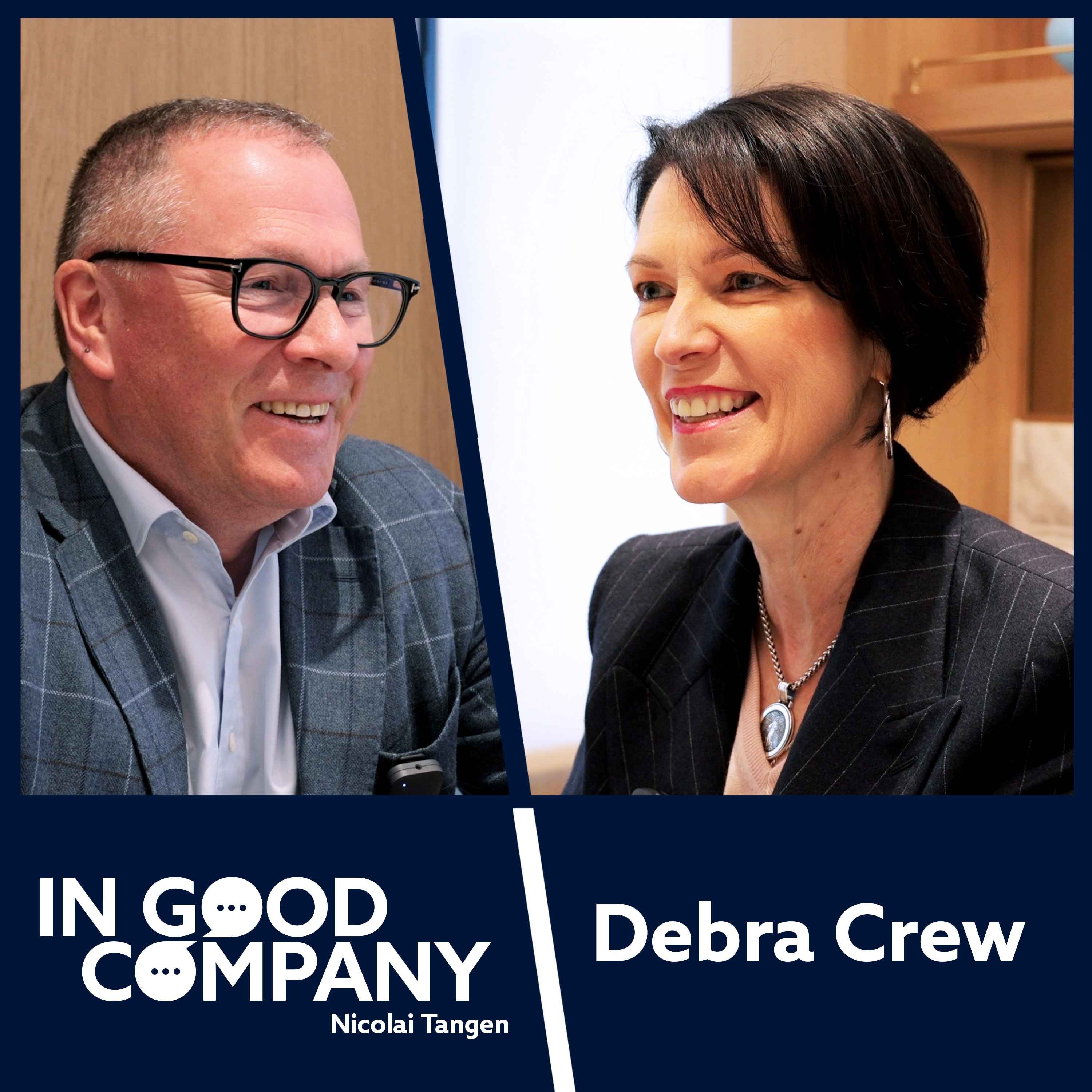
In this episode, Nicolai Tangen interviews Debra Crew, the CEO of Diageo, discussing the evolving landscape of the spirits industry. They explore emerging consumer trends, Diageo’s brand strategies, and how cultural shifts are driving change within the company.
Written by AI. May contain mistakes.

Get the gist, explore an idea or ask about something said.
 Claude
On In Good Company with Nicolai Tangen, what are the key points of this episode?
Searching your listeningAutomatic transcript. May contain errors.
0:00Hi everyone, I'm Nikolaj Tangen, the CEO of the Norwegian Sohwan Wealth Fund, and today I'm here with Debra Kru, the CEO of Diageo. Now, Diageo, one of the most successful brand builders in the world, they have a portfolio which includes things like Smirnoff, Guinness, Baileys, Johnny Walker, lots of great tequila brands and Tanqueray in the gin sector. We own 2.2 % of the company, equivalent to$1.3 billion. Pleasure to have you here. It's great to be here. Thanks.
0:37Deborah, what's happening in the spirits industry just now? First of all, we see a really long runway for growth in beverage alcohol, and particularly in spirits. And, you know, total beverage alcohol has been growing consistently for 20 plus years. And alcohol is a percent of discretionary spending and percent of consumer kind of discretionary wallets. It's quite modest. It's less than 2%. And that's been very consistent over time. No doubt right now, the industry is quite challenged. And it's challenged because of the cyclical kind of economic pressures. The inflationary, the prolonged inflation that consumers are having to navigate has compressed that kind of discretionary wallet.
1:25And that's really impacting the volumes of the industry. That being said, people forget just how resilient the industry is. And so, you know, we do see this. It's cyclical. It's going to come back. And this resilience can really be explained because of the kind of underlying structural drivers of demand that really give us tailwinds. Or if we look at some of the things which are happening just now, are young people drinking less than before? So what we're seeing is, so Gen Z are expressing that they prefer to moderate. That being said, the actual behavior, what we're seeing in behavior is more of what we would call zebra striping, which is, you know, I go into a bar, I order a Guinness first, I'm still out with my friends.
2:19And so the next thing I'm going to order is a Guinness zero zero. That's how I'm moderating. But at the same time, I'm staying very much within Guinness. I'm staying in the moment. I still feel like I'm part of it. And so we're actually seeing that Gen Z behavior, you know, they're not moderating as much as what, you know, people think. So they drink like every other alcoholic, non-alcoholic drink. Yeah. Clearly, my friends are not Gen Z then. Well, and they're also, they're coming into spirits faster. So the other thing that we're really experiencing is that while maybe overall they are moderating through some behaviors, they're actually coming into spirits faster.
3:02And that's because of drinks like RTDs. They're coming into tequila faster because they're drinking spirits with food. So it's one of those that we see it as much of an opportunity as we see it as a headwind. The other thing going on is lifestyle. So that's what you're kind of getting at is this moderation area. So, but I'll start by saying, first of all, socializing and kind of that, the social dynamics that unite us and the local nuances of that. Socializing is a big part of what brings us together. How much of your sales would be in, you know, in restaurants, bars, and how much would be at home?
3:42So that's one of the trends we should talk about, because what we're seeing is actually more occasions. We're seeing an expansion of these socializing occasions coming, and they're quite diversified now. It used to be a lot of restaurants and bars, but now you see more and more socializing occurring at home. They're smaller. It's kind of a smaller setting. There's maybe fewer, you know, it's more informal setting, but we are seeing more occasions coming home. And that's not just a COVID trend. We've been seeing this trend for a long time. COVID clearly kind of made home its fortress. But that is a big part of what we're also seeing a rise of what we call the third spaces.
4:21So what that is, is you're not in a bar, you're not at home, but maybe you're out at a sports kind of arena or you're at a festival. This is big for kind of Gen Zs. They're out and about. When they are consuming alcohol, they're often out in these third spaces. And so what we're seeing in the industry is there's more formats and sizes. and, you know, this is like rise of RTDs and some of this that you're seeing is all the industry really capturing those occasions. And that's another big kind of tailwind for us. But if you take these two things, so one, young people drink less. How significant is that?
4:57Yeah, so let's talk about moderation for a second, because it's not just we've been tracking this trend for quite some time. We call it mindful consumption. um so i talked about how value has been consistently growing in beverage alcohol for a long time within that though and by the way popularity has not waned it's actually been quite strong 70 % of households participate in that's been a pretty steady trend as well but volume per caps actually peaked in 2012 and then they've been slightly but steadily kind of declining really since 2012 now what I mean by slight, it would be like from 2012 till now, it's like a bottle of wine.
5:34So it is slight, but it is coming down. And we've seen that moderating trend for a long time. So we drink less but more expensive stuff. Yeah. And actually, that's exactly what we say. We say people want to drink better, not more. And we've set our whole growth strategy really around that about, and by the way, spirits underneath of that, the per caps have held in quite, quite good, it because spirits is gaining from beer and wine. We're gaining in like food occasions and some of this that you wouldn't have seen before. That's kind of a space for wine and beer. What about some of the health trends and the anti-obesity drugs and so on?
6:10How is that impacting you? Yeah, you know, we're not seeing that as separate and distinct from those moderating trends that we've been seeing, you know. So look, supposedly 15 million Americans at any given time are now on these, or at least trying, you know, these type of weight loss drugs. And perhaps they're on for other reasons as well, other health reasons. But we're not seeing that trend line break. So while people are being more mindful about what they're consuming, we're not seeing that as kind of this separate kind of break in that, in the overall trend. Are you seeing big differences between geographies?
6:48Is the trend in Europe very different from Asia? You know, I mean, not really. I would say this is more of a developed market phenomenon. And so that is where we're, you know, where we're seeing that, you know, we do see these trends do tend to go around the world. And I would say in general, we are seeing kind of premiumizing and people thinking more about, you know, what they're what they're consuming. Talking of which, is the legalization of Mariana having an impact on drink consumption? Well, you know, we're not really seeing that either. It's kind of a different occasion. You know, this comes back to our occasions are more these social occasions that we talked about where you tend to be like.
7:27So socializing 86 % of the time when you're having a drink, you're having it in the company of others. So those are bigger occasions for us really than quite often cannabis and some of this, which has been legal now for some quite some time in several states in the U.S. And we're not really seeing, once again, a distinct break in sort of the trends that we've been seeing for quite some time. Now, how does this impact the way you market and brand your products? Yeah, so we, like I said, we have grounded all of our strategy and growth strategies really within the spirits, gaining occasions from beer and wine.
8:05So expanding our spirits occasions and premiumizing. So our portfolio is oriented more toward premium now. So almost 62 % of our portfolio is sort of premium plus. And that compares to the industry average of kind of being like 35%. So over time, we've actually divested kind of some of our more value brands. And we've actually invested in things like you mentioned our tequila brands earlier. Those are kind of ultra premium priced. So we've reoriented our portfolio to more premiumization. And then from a marketing standpoint, there's six trends that we've kind of said we want to lead and shape.
8:48So not surprisingly, moderation is one. So we've gone out, we've acquired some non-out kind of spirit brands. So Ritual in the U.S. is one of those. Convenience. So this is sort of these RTDs. And if you're out in these third spaces, what are you doing? It's luxury. So we're still seeing luxury as being, you know, we're going to see by 2028, almost a quarter of the category we think will be in these kind of more super premium plus priced products. So luxury is a part. With food, so you may go, what is this? You know, I'm a Texan. So the best thing with Mexican food is a margarita. It's not beer or wine.
9:29So those are the types of things we're going after. What do you have with your steak? I would have whiskey for sure. Okay, good. A good smoky, like Isla whiskey. By the way, what is your favorite drink? So, you know, I love all of the children. Yeah, but not in the same glass at the same time. Yeah, no, no, no, no. I'm a big tequila fan. I'm a Texan. So, you know, so Don Julio 1942. But I'm also a big, I like a Petey Scotch. So I like our Johnny Walker Black. I like our Lagavulin. You know, in the summer, I like a good gin and tonic. I like a good tangerine tonic. Pretty flexible. Pretty flexible.
10:14Now, I should ask you what your favorite drink is. Well, I'm actually a bit more of a wine drinker. But if I were to hit one of your products, it would probably be the gin and tonic. Does it matter if you're like traveling or? Mainly, that would be summer. Summer. But not very often. That's your summer, but not very often. Okay. Well, we got to work on you. Totally. Totally. Anytime. Tariffs. Yes. Well, I mean, look, we're in 180 countries and we're a big importer and exporter. And so clearly we loved free trade. You know, however, honestly, over time, we have dealt with a lot of duties and tariffs and, you know, disruptions.
10:54So we take a long view of these things and we look at it and say, you know, we've we certainly can navigate through the any of these things, you know. And I mean, look, there's been tariffs and high duties on scotch for years, as an example, going from Scotland into India. They're short-term disruptive, no doubt. And it's probably the uncertainty that's the hardest thing to plan for is when you don't, you know, it's hard to mitigate those until you know exactly what those are going to look like. So, you know, we're clearly staying very close on all of it. And, you know, but we see that from a long run, we can absolutely mitigate those things.
11:30We know what to do. you know it's just really more of just navigating through the short run and you know how do we how do we mitigate that when you buy brands i mean you bought for instance uh tequila brand from george clooney i think you paid a billion dollars so yes well done him uh when when do you when you buy well done us it's been a great brand for us win-win um but when you when you buy a brand and when you build it and how, you know, what are the considerations here? Yeah, I mean, you know, look, we do have, you know, we've got$13 billion brands. We're number one or number two in many of these categories.
12:10So I really love our portfolio. You know, that being said, you know, we do look for spaces where we don't have maybe a stronger brand or a brand, because we also are across price tiers as well. You know, so that can be important as well, where sometimes we don't feel like, you know, we have a premium enough brand or like in the non-AWC space, our most recent acquisition in Ritual in the U.S., we had Seedlip that we took. It was a big brand for us in the U.K. that was non-AWC. But in, you know, in the U.S., this Ritual, Seedlip is kind of more in the gin space, I would say. And, you know, Ritual had a brand that kind of spanned across as a tequila alternative, a gin alternative, a whiskey alternative, etc.
12:58And so that has been the number one. We felt like we didn't have anything that could go there. So we went out and acquired that. Likewise, we dispose of brands. Some of our disposals that we've done in India, we disposed of kind of our value and popular kind of price point because we just see a long-term premiumization there. And that part of the portfolio represented a lot of volume, but it wasn't necessarily set to drive growth for the future. So acquisition-wise, we kind of look for where we don't have. But quite honestly, most spaces we can really go after with our brands. And we've got a consumer choice framework that helps us.
13:37It actually looks at these socializing trends. It looks at across, we've got 37 markets that we track, like 220 million occasions that we're taking a look at what they're drinking, who they're with, how they're drinking, because it's look at socializing as well as what they're doing. And how do you use that analytics? Yeah. So you have all this incredible data. And we probably should inject here that you have your background from the intelligence service. So you are really into data. I am into data. I love data. And I love it because it really helps us do precision marketing. And when you get that right, when you get the right brand at the right time, you know, to the right person.
14:22I mean, that experience, it elevates the whole experience. And that's what we're trying to do. We're trying to elevate these moments for consumers. So you have 220 million data points. I mean, what do you do? What do we do with that? That helps us in deploying. For one, it helps us see the best opportunities. We marry that up with the best brands. We make sure that we are, you know, marketing within that occasion and serve up the best serve options for people. It just helps us be much more precise about where to go. And especially in these type of moments where it's quite volatile and you do have consumers under pressure, being able, when we get this right, consumers are willing to spend money because they see value and that they're getting great quality, exactly what they want.
15:09So let's take an example here. So Johnny Walker. Yeah. You have different types of Johnny Walker at different price points. Yes. So how does this architecture work? How do you think about it? I mean, Johnny Walker... So the most expensive Johnny Walker, what is that? Yeah, well, we just launched the vault. Did you see this? So this, we launched, this is going to be a customized Johnny Walker blend for you. It's 50 ,000 pounds for that privilege. So it is at the tippy top, but it is a personalized experience around Johnny Walker. and you get to go to Princess Street in Edinburgh and we will craft this for you.
15:47And so we've, you know, this is a very special experience in and of itself. So we have all the way of that, all the way to, you know, a Johnny Walker red, which depending upon the market that you're in. And in between you've got blue and black. We've got black, we've got blue, we've got green and gold, we've got double black. It really spans. And I have to say, I've been around marketing for a long time. probably one of the most unique brands in the world because we span all of that credibly. How much more profitable is the expensive version versus the cheap version? We have great margins across scotch.
16:24And part of it is, you know, look, you know, it's how you make scotch. So remember for Johnny Walker Black, if you want to be selling that 10 years from now, you better have put it in a barrel two years ago. So it's a 12-year-old scotch. And we have quite a competitive mode around that because we're very good at blending and distilling, we're very good at maturing, we're very good at bottling, we're very good at getting this out around the world. So our margins across scotch are very good, whether we're selling it... Because remember, Johnny Walker Red is not in a barrel for 12 years. It's in a barrel for much less time.
17:08So therefore, all of these prices kind of correspond to what we've put into the product. I think that's interesting. So in the past, when I studied this industry, you kind of differentiate between white spirits and brown spirits. White spirit, you go from a potato to cash in one week, right? Right. You can go, I mean, you can make a lot of guy in one week, right? Although you can. From nothing. Well, it's the brown spirits you need to sell and age, and you have no sales whilst you do this. So you need to have pretty deep pockets, right? Yeah, and these are very different businesses. But you take something like tequila, which is both a white and a dark spirit.
17:48But in tequila, you're spending seven years with the blue agave plant, and then you age it. So Reposado is one of our fastest-growing kind of Don Julio's right now. And that's actually aged, you know, at least six months. So that process, if you think about from the seed all the way to, you know, that's, so even within white spirits now, you've got a range of things going on around aging, particularly on tequila, if you think about it that way. Although Reposado does start to get into more of the dark spirits. It's one of the reasons we're excited about tequila is because it goes from white to dark.
18:28It goes across occasions, daytime, nighttime, you know, because dark spirits, you tend to consume those in certain occasions. So whiskeys, rums, you tend to consume those in certain occasions. And then likewise, you know, for white spirits, you know, those are daytime occasions a lot. Although you have a good nightclub cocktails too. So it is quite interesting, this expansion of occasions and where we're seeing drinks and how versatile Spirits is. How loyal are we to our brands? How loyal? Yeah. We're very loyal. You mean what kind of loyalty we see from consumers? Yeah, I mean, let's say now I'm into one type of drink.
19:09Do I always drink the same thing? Consumers drink in repertoires, for sure. And particularly, I was listing some of the trends we go after. there's a whole trend around exploration and experiences that we see people wanting to try new things. And so quite often, it's the reason on trade in the industry is so important. Often people go with what bartenders recommend or what they see on a menu. Often people will go in and not really know what they're going to purchase until they get sort of inspired by something. And that's, you know, like I said, the versatility of spirits is one of the things that gives us a great long runway for growth.
19:46What's the one brand you would love to have which you haven't got? I don't know if I'm going to answer that. Because you're going to buy it soon, right? I was going to say, you don't want to prepare anyone. Do you think about it like a portfolio, like we think about the portfolio of companies we own? Do you think about your brands like that? Well, we do. I mean, because this comes back to you want to be quite precise in your marketing. So we have kind of the consumer choice framework to where we see, like as we're expanding tequila around the world, we see certain markets that we think are ready, more or less ready for that, right?
20:20But we also have a market growth framework as well that we look at markets that same way of just, in general, taking a look at the market and the, you know, the tax, the regulatory, the profitability that we can get out of the market. And we make those type of strategic allocations up front as well to say, you know, look, there's certain bets you're placing for 10 years from now. You know, you look at we just opened up Yun Tuo, which is our Chinese whiskey distillery. You know, these are these are 10 year bets that you're doing in something like that compared to, you know, we know that in the next, you know, couple of years, we're seeing a lot more opportunity in some of the developed markets.
21:03because we're seeing kind of faster recovery potentially coming out of some of those markets in some of those areas.
21:14Switching gear here a bit, corporate culture. What's the corporate culture like in the idea? So if I can start to work, what are the kind of things I would observe? Yeah, well, we always say, we've got 30 ,000 brand builders, whether you're in supply, marketing, finance, HR, everyone is quite focused on our brands and building our brands. People love the history. We have a lot of passion around our brands. And so if you look at our… You've kind of got a bar on each floor here, right, Nelly? We do. And a shop in the basement. It's not on each floor, but we do have more than one bar in the office.
21:49So, yeah. So, I mean, people love it. But we've got four values that are very much, I think, help describe our culture. We're passionate about consumers and customers. value each other. We're a very collaborative culture, proud of what we do. I think we're very proud not only of our brands, but also things that we do in the community, you know, around sustainability, you know, et cetera. And then there is one value that, so actually when I came in as COO and then was announced that I would be CEO, I actually went out to a bunch of our senior leaders, not the executive team, but a couple layers down and asked them to help me sort of assess our culture and values in various markets and across functions around the world in an effort to kind of reignite and sort of strengthen the culture.
22:39And there was one value that as they looked at, we had a value called be the best, which sounds great on the surface. And there's many great things about it, but it was creating a bit of a culture of perfection. If it wasn't the best, bad news didn't travel as fast. When you think about wanting to, So consumers move fast today. It's kind of a volatile world. Needing speed and agility in the culture, we felt like be the best was undermining us. So we actually changed that to be better. And subsequently rolled out behind some behaviors that would help us. So we called them behavioral dial-ups. How would we be better from a cultural standpoint?
23:20So it was about being externally focused. Collaborating, but we put the word efficiently behind it. So continuing to collaborate, but having only the right people in the room instead of having to gain agreement from a cast of thousands before you would do something. Act decisively was part of it as well. Experimenting and learning. Have you seen changes on the back of this? We have. It's difficult to change corporate culture. It is. But we've changed. What was great about it, though, I will say, is this didn't come from me pushing this out or the executive team. This actually came from across our organization.
24:01This is what they wanted to change. And that it's taking some of the best of be the best, but also injecting kind of learning and continuous improvement in it. So, like, we've changed some of our global processes, like innovation, where, you know, we had kind of the classic five kind of stage innovation. that particularly for things that are less risk we've gotten that down to two it's only two stages and it's we've really cut down on the number of people that have to weigh in it's helping us get innovation out faster so how much how much faster do you launch new products now do you think well in that compared to the old we we were able to take out almost a year from some of our processes i mean that tells you something because some of these take longer you know when you're doing a big kind of breakthrough innovation.
24:48It's one thing. But if you're doing, we had that same process for almost everything. And so therefore, you know, that's allowed us to take that out. We're also failing faster and learning because this comes back to you don't have to be, not everything will work. And if we can fail fast and sort of learn from it and adapt, and actually we celebrate some of those now, you know, it's like, this isn't working and here's what we learned from it and we're moving on. Tell me something that didn't work, a launch that didn't work, which was just like a total fiasco. We just had, because we just had a meeting on this and we celebrated it much like, if you've heard of, you know, Dia de los Muertos, the Day of the Dead, you celebrate those things that you've killed.
25:29And so, you know, we've got a ready to drink margarita that we had a brand on it, a straw, that it was just kind of, it just didn't work. And so it was, you know, there was a poem read out about it, what went wrong. And then we all thanked it for what it had done for us. And we were moving on, you know, and we had, you know, there was kind of a scroll of these that we have, but it's, you know, it was quite a great way. This was at our senior leader meeting that we could sort of celebrate that we're out there experimenting and learning and moving on. And by the way, we've got a great, we're launching Casamigos ready to drink in a can.
26:09And we've learned a lot from the prior launch. And it enables you to just move on. Have you had any big surprises on the upside? And the reason I'm asking you, I read this book about this drink which scored unbelievably badly on taste. And it was then launched at a very high price in small cans and is now one of the biggest sellers in the world. It's Red Bull. Yeah. I mean, the tasting notes were just unbelievably bad. Yeah. And so it's kind of shocking that it's taken the world, right? Have you had any big surprises where you thought this is not going to particularly work and then suddenly bang?
26:48Yeah. I mean, look, I think it's interesting because what you do have is a lot of times there are things that when we launch it, I think will do better or worse. And so you do get surprised sometimes, something that you think is going to do really well, and then it just doesn't get the uptake and then vice versa. I'm trying to think if there's anything that I've kind of seen lately that has really surprised me. I think quite often one of the most important things is to get things right kind of end to end. And so sometimes it is about getting the system behind it. It's about getting great brand work out to explain what it is.
27:32You know, I think I've been surprised by just how well things like, you know, Reposado's doing. Not that Reposado tequila isn't great, but it's just, it's been amazing how this has all of a sudden taken over kind of the world, even more so than like Añejo, which actually has aged a little bit longer and kind of has, you know, what in my opinion is a little bit smoother tasting note. but you know but that seems to be the one that's really hitting it for consumers so i think sometimes you can't you just can't judge what is what is going to be really amazing although there will be people that will say i know exactly why and so you know a lot of times you have brand champions within this the system that kind of you know keep plugging through um you know we're launching right now we've got a a captain morgan um sweet chili lime oh you know so that's quite an aggressive kind of different taste.
28:28But we developed it with Gen Zs. And so, you know, I don't even in many ways, I'm thinking I don't even know how to think about that, right? I'm possibly too old to judge. Smirnoff Tamarindo is another good one where we, this has actually taken over the world. And this is one that the Mexico team launched a long time ago. I remember when it was coming into the US, the US was kind of going, well, we'll do it as a limited time offer and we'll see. And then over time, that ended up being a real favorite. It's one of the best flavors on Smirnoff. So you do get surprised for sure. Now, some people are kind of old timers in their companies.
29:06You have experiences from a lot of other consumer goods companies, right? You've been in Kraft, Nestle, PepsiCo. How do you weigh the positives and negatives of having a lot of experience versus being in one company the whole time? Yeah, I mean, I think, you know, we always look and I, you know, this is a unique industry. And so it is it is very important that you have kind of deep industry knowledge in many ways. It's also a very local industry. So it's very important. Like it used to be when we would go around the world expanding our brands, it was like kind of expats on the move. Over time, we're seeing if great brands get built with local activation and resonating within culture.
29:47And so having local knowledge is important. And so over time, we always want to make sure that we've injected enough local kind of experience as well, even if they've had to come from outside the industry to kind of build that. So we kind of have like a combination of deep spirits experience, local knowledge, and then also bringing in new capability. I do think, you know, as you come in from sometimes other companies, there's things that other companies are doing that you can kind of inject into the culture here. Tell me something that you have brought from your past history into Georgia. Yeah, I think, look, you know, from working at places like Pepsi and, you know, our new CFO is from Coke.
30:27You know, one of the things that's really popular right now are smaller sizes. Smaller sizes in the industry used to be thought of as kind of only, you know, these are like, think about things like the airline bottles, you know, these 50 mls or like a 375. So kind of half the size of a normal bottle of spirits. Those are driving the growth in the U.S. right now. In fact, you know, and they're being driven on premium brands. So because the industry used to think about this as a value size, we didn't put our premium brands in this. Now we've got 1942, Don Julio, and these little 50 MLS. These are so popular.
31:07I mean, they have to put them behind the, usually behind the cash register. Yeah, that's because they're easy to steal, right? Well, but still, they're not stealing the other 50 MLS. It is just, and these are not inexpensive. But they've captured, for one, it's capturing this moment of it's a pressured wallet, right? And sometimes you only have a certain amount of cash. but it's also you know look you may pay 15 even up to almost 20 for this but you know but people look at that and go hey it's it's got some cachet it's you know it's cute you can dip it over in a in a bottle so everybody knows what you're drinking you know that you so some of these type of things but of course pepsi and coke have been doing these various sizes for a long time and i think you know it's those types of things that you know sometimes having those injection of other ideas, you need to understand, of course, the norms and sort of what's happening underneath of it.
32:05But, you know, we have found if you do it well, you don't want to take, you know, you don't want to cheapen these brands in any way. But if you still merchandise them well, if they're in a nice glass bottle, it's actually meeting consumers' needs right now.
32:22What's your leadership style like? Yeah, I mean, I always think it's hard to describe your own leadership style. But I mean, if I asked your colleagues. Yeah, I think, look, I, you know, one of the things that I learned, so my first kind of job out of college, I was, I was in the army. And so very different environment. But I think it has kind of frankly informed a lot about how I think about leadership. You know, when, when I took my first job in the army, you know, you walk in, you're a, you're a brand new lieutenant. Everybody knows more about everything than what you do. And all of a sudden, you figure out really quickly that it's really not about you at all.
33:02It's actually about making the team better. And so it's about how do you get people at their best? How do you get the team really working? In the business world, when you come in, you tend to get promoted because you do something really well. And then all of a sudden, you're supervising people now that are doing that same thing. So you kind of get functional expertise first. I do always think about kind of leadership first and making sure that what am I doing to get the best out of the team and to maximize the team. And so I am, you know, quite focused on that. And it's just always been part of, you know, how I think it should be done.
33:39And so, you know, that's why, you know, when you ask me the question about what do we look, you know, as we're hiring people or, you know, all of those types of things, I try to think about that team dynamic. It's not just one individual, you know, it is about the team. Do you think there's a difference between American leadership style and European leadership style? I mean, yes and no. I mean, you know, there are some universal truths, I think, about what people are looking for in a leader. You know, I think, you know, people want, you know, what I'm seeing is more generational differences than I'm seeing sort of geographic differences.
34:16I think I'm seeing from younger folks, they want more time with you. And they really want to, you know, like, I felt like coming up, I kind of wanted my boss to leave me alone, you know. And now you see much more of, you know, it's always sort of our younger folks that will ask the first questions in a meeting, you know, they, you know, they want to get, they want to get to know you much more and in a much more intimate way. I think it's social media. You know, they're used to just consuming and knowing a lot about a person. And so, you know, that's probably a bigger difference that I'm seeing versus geographic.
34:57Do people dare to give you proper feedback? Oh, yeah. I always look at feedback as being, you know, like, look, they're just trying to help you, you know. So you go into a meeting, you go into an investor meeting, as an example, and they're like, you know, I would have said it this way versus that. Or, you know, so quite kind of that more in the moment kind of feedback or that was really good. I think next time if you hear, you know, people are always nice about how they say it to the boss. You know, you might want to say this or that. So it's, it's, but, you know, a lot of times as a leader, you have to ask for it.
35:31Sure. You know, some people don't feel as comfortable just kind of putting it out there. But I do always try to ask for it. And I try to, you know, when I come out of something or, you know, even I'll tell you last week before our senior leader meeting, you know, I always try to test some of the messages to go, is this what people are thinking about? Just to make sure, you know, you land your message right. When you look back at your career, what are some of the moments which were kind of life changing for you? you know, probably the most recent one was even to kind of come back in, you know, so I had been CEO at Ronald's American and British American Tobacco Bought Us.
36:12And so I had left kind of being an executive and I was doing non-exec kind of board work. I was doing PE work. And then I got on the Diageo board and through various conversations, you know, now in hindsight, I recognize, you know, Ivan and Javier both were trying to prod me into perhaps coming back as an exec. You know, it was a big decision. I had to unwind a lot of things that I, you know, you've set up board work and you're involved in various, you know, PE type of, you know, roles. And so backing out from that and then, you know, coming back into an exec and really kind of taking a step back, right?
36:56Because I had been a CEO. And so then, you know, coming in, you know, I was president of North America. And so really kind of backing up. But I felt it was important because this is a different industry and you got to get to learn the industry. Right. And so did you have any mentors who helped you? Absolutely. What's the key to good mentorship? Yeah, I think, and I've had a lot of different mentors through my life that I've used at various times. The mentor that I'm using a lot right now, so Susan Cameron, who I followed at Reynolds, was an incredibly successful CEO and helped me make that CEO transition.
37:41And then, you know, unfortunately, because I, you know, I didn't get a transition with Ivan, really. It was great to have her to kind of lean on a bit, you know, as I was navigating through, you know, that kind of CEO transition. I think in a mentor, it's been helpful to have somebody who really knows me and kind of knows, you know, so to your point, if people don't often get feedback, you know, Or to have someone who will give you messages that maybe others won't give you is really important. And then I love people with experience. Javier, our chairman or ex-chairman now, knows the industry really well.
38:28And so he is one that no doubt I'm going to go to lunch with and continue to pick his brain on things. So I think when they can provide you sort of things that you don't know or make you think about things in a new way, but also know you well enough to know how you need to hear it and receive it, I think is important.
38:52When do you wake up in the morning? When do I wake up? Depends on what time. I travel a lot. So sometimes the hours are ridiculous. I'm still, I like to work out first thing in the morning. So I tend to kind of get up early to be able to do that before I go unless I'm taking a really early plane and then I don't work out. So do you work out most days? I try to do at least four times a week. I think it's a great way to, you know, manage kind of stress. And I tend to it's good thinking time, actually. I like, you know, I run. So it's quite solitary and you're kind of in your own head. And how do you relax?
39:31I like to read and I read for fun. I don't read terribly sophisticated books. This is fiction. This is fun. You know, it really is more of an escape almost. So, and then, you know, I like, I mean, look, I, you know, I do like to sort of travel and see things. It's hard when you're traveling for work. You know, sometimes you go into a market and you're like, I could have been anywhere. You know, I was just in a hotel. So I do try to see things along the way that, you know, if I can, you know, when I was in China, I went to go see, you know, the Panda Reserve, you know, like, I like to, you know, take a moment to really enjoy, you know, the world and what's out there.
40:09What kind of advice would you give to young people? Yeah, you know, I've been, I recognize I'm really fortunate in that I, my mom and dad, you know, I was raised to kind of think I could do anything. I mean, it was like all possibilities were open. And I know a lot of people don't have that, you know, so I feel quite privileged in that. That being said, I know when I, you know, I think as a kid and growing up and, you know, I always gravitated towards things I was just sort of naturally good at. And then when I went into the army, all of a sudden I was asked to do a lot of things I didn't know how to do.
40:46And quite frankly, I was terrible at it first. I wasn't very athletic at the time. I certainly didn't know how to shoot anything. I didn't, you know, like these were very different tasks. But on the other side of that, ultimately I learned, I got pretty decent at it. And so that gives you an incredible amount of confidence and sort of resilience. So you know you're a good shooter. I actually am a really good shot. It's a surprise, but I am. But it is one of those things that I think the amount of resilience and confidence that that has given me later in life of like, And so I always tell people, try new things.
41:26Try things that kind of scare you a little bit because you're going to surprise yourself more often than not and get beyond that. And I think that can be an incredible source of confidence and grit, which I think is really important in this world. Well, Debra, it's been great having you on. Should we hit the bar and try out some new things? Absolutely. I need to get you to try something beyond wine. Wonderful. Thank you so much. Thank you. Thanks. Thanks. Thank you.
Are our drinking habits changing? In this episode, Nicolai Tangen sits down with Debra Crew, CEO of Diageo, to explore the shifting landscape of the spirits industry. They discuss emerging consumer trends, including how Gen Z is embracing “zebra striping”—switching between alcoholic and non-alcoholic drinks while socializing. Debra shares insights into Diageo’s world-renowned brands, from Guinness and Johnnie Walker to Smirnoff and Don Julio, and explains how the company stays ahead of trends by closely studying consumer behavior across the globe. The conversation also covers Diageo's cultural evolution from a pursuit of perfection to embracing a "fail fast and learn" mindset.
In Good Company is hosted by Nicolai Tangen, CEO of Norges Bank Investment Management. New full episodes every Wednesday, and don't miss our Highlight episodes every Friday.
The production team for this episode includes Isabelle Karlsson and PLAN-B's Niklas Figenschau Johansen, Sebastian Langvik-Hansen and Pål Huuse. Background research was conducted by Sara Arnesen.
Hosted on Acast. See acast.com/privacy for more information.