
 Ask ChatGPT


 In Good Company with Nicolai Tangen
1 Apr 2026 · 48m · 25 chapters
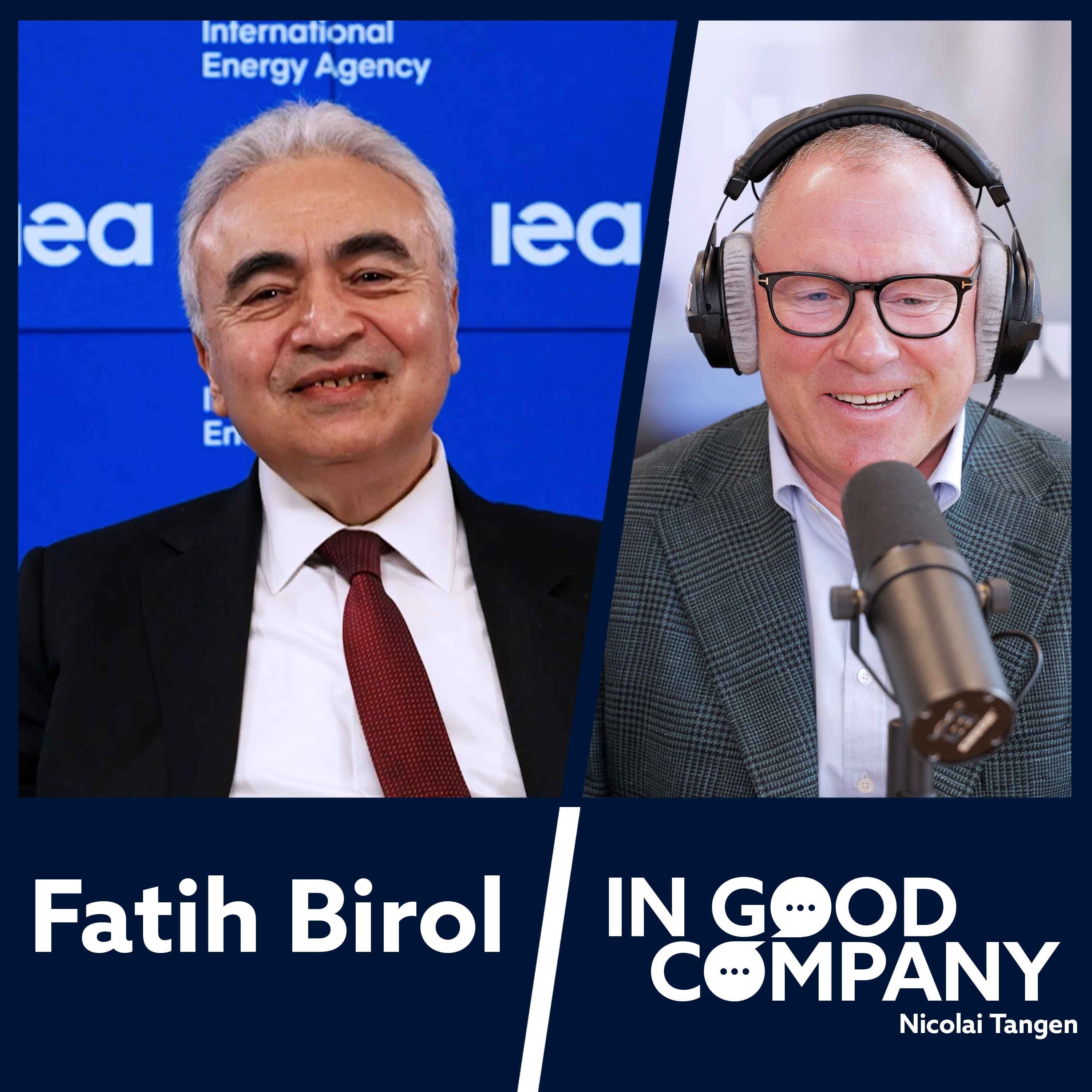
IEA Executive Director Fatih Birol argues the Middle East crisis is being underestimated and could trigger the biggest global energy security disruption in history, driven by oil/gas losses, damaged energy assets, and the vulnerability of the Strait of Hormuz. He also outlines how the crisis may accelerate electrification, nuclear, renewables with batteries, and possibly coal, while warning Europe’s grid buildout and cyber security are key risks.
Dr. Fatih Birol, Executive Director of the International Energy Agency (intergovernmental energy policy organization). Background includes prior chief economist role at the IEA and long-running work on energy market analysis and technology/scenario work.
Current losses exceed past crises (e.g., oil ~12 mb/d; gas losses higher than the 2022 Russia cut). The “single most important solution” is opening the Strait of Hormuz. IEA’s 400 million barrel release reduces pain but isn’t a cure. Europe’s energy prices (2–3x US) threaten industrial competitiveness and require targeted, temporary subsidies.
jet fuel/diesel shortages; Europe buying spot LNG as Middle East supply is constrained; Iraq’s oil-revenue dependence; past 1970s responses (nuclear buildout, fuel-efficiency standards, North Sea expansion); AI/data centers needing 24/7 electricity.
Written by AI. May contain mistakes.
Fatih Birol discusses the underestimation of the energy crisis's impact on the global economy.
“We work for the government's public institution.”
Birol explains the measures being taken to address the energy crisis and the importance of opening the Strait of Hormuz.
“I think I was very happy that many governments understood how serious it is.”
Discussion on how emerging and developing countries will be most affected by rising energy costs.
“the IEA is taking, all the governments are taking, are important.”
Birol highlights potential inflation spikes and energy rationing in developing countries due to the crisis.
“The countries that are importing oil and gas and their economies, especially now starting with Asia.”
Birol critiques European responses to the energy crisis and emphasizes the need for targeted support.
“This is the single most important issue.”
Discussion on the feasibility of maintaining restrictions on Russian gas amidst the energy crisis.
“are based on the marginal cost of natural gas prices, electricity prices will go up.”
Discussing the potential political implications of high energy prices in Europe.
“which is not my professional occupation, but I have to say this.”
Examining the technical and economic challenges of resuming Russian gas supplies to Europe.
“Do you think that's realistic if this continues into the next winter?”
Exploring the changing dynamics and reputational challenges within the LNG market.
“oil prices and with this high oil prices we have now, Russian gas will be also expensive.”
Analyzing how the energy crisis affects different Middle Eastern countries and their economies.
“So I think gas industry has to work hard in order to prove that they are still reliable, they are, they will be affordable, and they are flexible.”
Discussing worst-case scenarios arising from geopolitical tensions and their economic implications.
“I think the Middle East countries did suffer, will suffer.”
Exploring potential long-term changes in energy production and consumption patterns.
“the state of Hormuz continues to be closed and this may well lead to major damage on the global economy.”
Discussing the transition to electrification and the resilience of energy systems.
“but there will be some long-term structural reactions to this issue in the crisis, in the energy world.”
Examining the need for investment in energy grids to support the growing demand for electricity.
“So as we electrify everything, are we building more vulnerable systems or more resilient systems?”
Analyzing the implications of the current crisis on global coal demand, particularly in China.
“And they have to facilitate, simplify the licensing and permitting processes.”
Exploration of the difficulties in building and maintaining electricity grids globally.
“The difficult part is now we are not coping with as the world, not only Europe, as the world is building grids.”
Discussion on Europe's over-reliance on gas, reduction of nuclear power, and loss of solar technology leadership.
“Nicola, for Europe, I think we made in Europe three historically strategic mistakes.”
Insights on the importance of battery technology for Europe's energy future and its competitiveness.
“in terms of our economic security and I would say foreign policy.”
The ongoing shift to electric vehicles and its implications for the automotive industry.
“And I think this will be a good thing for European economic security and competitiveness.”
Analysis of how high electricity prices impact Europe's industrial competitiveness and future strategies.
“And if they still want to be part of the competition globally, the future is electric.”
Exploring the link between artificial intelligence and energy consumption in data centers.
“I should also mention this because there is a, I'm sure you know, as a major investor, there is a lot of Europe bashing, Europe pessimism.”
Discussion about the importance of data in making accurate energy projections and the organization's approach.
“One is the technology, the soft part of the thing.”
Explore the speaker's insights on fossil fuel production and energy demand predictions.
“If we are wrong, we say we were wrong, we change it.”
Discuss the importance of Norway in energy security and climate change efforts.
“But if you want to go this way, these are the results and these are the consequences.”
Learn about the parallels between the IEA's work and the Norwegian football team Bode Glimt.
“If there were many Norweys, the station today we are in would be less problematic than it is now.”

Get the gist, explore an idea or ask about something said.
 Claude
On In Good Company with Nicolai Tangen, what are the key points of this episode?
Searching your listeningAutomatic transcript. May contain errors.
0:00Hi everybody and welcome to In Good Company. I'm Nicolai Tangen, the CEO of the Norwegian Sovereign Wealth Fund and today we have a tremendous guest, Dr. Fatih Birol, Executive Director of the International Energy Agency. And wow, what a topical podcast this is going to be. So a big welcome, Fatih. Thank you very much, Nicolai.
0:31Now, you have warned that markets and politicians are still underestimating the consequences of the crisis in the Middle East. What are they getting wrong? You know, Nikolai, we are an intergovernmental organization. We work for the government's public institution. after the war has started, since there are many market-related dynamics, I told my colleagues and myself, three weeks we didn't make any public statement with the newspapers, with the journalists, even though we received, as usual, lots and lots of requests, except for I made a statement about the oil release of the IEA, this other story.
1:17But I saw that the decision makers, governments in Europe but around the world didn't understand how big the problem is and can be not for the energy sector but for the global economy. So it is the reason I decided, I think it was a week ago or so, to come up with some numbers, make the people understand that this is a serious issue for all of us. And the way to deal with this is, first, we recognize what a big problem it is. And I tried to describe what the problem is. And I think it was, in my view, a good move that it gave a big drive to policymakers to discuss more intensely about the situation.
2:07You've said that it's the greatest global energy security threat in history and bigger than 73 and so on. Just what metrics are you looking at? so you know we have many energy crisis unfortunately but when you look at the last couple of decades three of them stand one of them the 73 oil crisis, 79 oil crisis and 2022 Russia invasion of Ukraine and gas so when you look at the oil crisis 73, 79 2009, in both of them, we lost each about 5 million barrels per day of oil. So 5 plus 5, it is about 10. And we all know that this oil crisis led to global recession in many countries, developing countries, foreign debt spiral they fell into.
3:09and today, as it stands now, we lost 12 million barrels per day. So more than two of these oil prices put together. In terms of natural gas, when Russia cut the gas, we lost around 75 BCM of gas and now the amount of gas we lost now is higher than the Russian gas crisis, which means the current crisis is more than all these three crises put together. Plus, if I may, in addition to this oil and gas, there are many vital commodities, very important for the global economy, petrochemicals, fertilizers, helium, sulfur, they are very important for the global supply chains. And this comes on top of that.
4:09If I say one more thing, we are following the damages on the assets, energy assets in the region. And according to our database, 40 key assets have been damaged. Some of them are light, but some of them are severe and very severe. It will take some time to get back. So it is the reason, looking at these numbers, metrics, as you say, I decided to make statements to make the people understand that we are heading towards a major, major disruption and the biggest in the history up to now. How will this pan out going forward? I think I was very happy that many governments understood how serious it is.
5:04And I was very happy to see that the countries are now taking measures. The G7, G20, the Europeans, Japanese. I was last week with the Japanese Prime Minister Takehichi and the day before with the Prime Minister Albanese in Australia. Asia hit the worst for the time being, but it will come to Europe and elsewhere. So countries are now aware of the problem and we are discussing how to tackle this situation best. Of course, Nikolai, I should tell you that the measures we are taking, the IEA is taking, all the governments are taking, are important. But the single most important solution is opening up the Strait of Hormuz.
5:59Now, the Strait hasn't been closed totally, right? It's just open for friends. Now, what do you do when these choke points are treated like this? I think it is one of the vulnerabilities of the global energy system, both for oil and gas. And we are trying to look at other alternatives. One of them was, you may know that on 11th of March, I announced that the we released 400 million bottles of oil to the markets, both crude oil and products. As soon as it was heard, prices went down by$18. But of course, afterwards, there were many statements here and there. It rebounded. We have suggested many governments to take some demand-side measures.
7:00It is not easy, but it is very important, such as working from home in some cases, in some cases reducing the speed limits for cars and others. And I believe there is a need for, in some cases, some additional measures to support financially, especially the vulnerable parts of the population. But if I tell you one thing, Nikolai, We talk about Europe, a lot in the newspapers, Japan, I don't know, Australia, Korea, elsewhere. But the biggest problem today I see is the emerging developing countries. They are hit the worst. The countries that are importing oil and gas and their economies, especially now starting with Asia.
7:55and it will come, of course, very soon to Africa, Latin America and elsewhere. This is my biggest worry. How long time will it take before the effects of this is really filtering through to higher inflation? I don't know when you are releasing this podcast, but the next month... In two days, we are fast tracking this. You are really hot, Fatih, so this is coming out straight away. Okay. In April, April will be much worse than March. Why? I explain to you. Because in March, there were already some cargos, both oil and gas, already left before the war, the Middle East, and they are still coming to the ports, coming to the countries, and they are still bringing oil or LNG and others.
8:58And in March, we have already benefited from this. But in April, there is nothing. So it means, even the modest estimates we have now, Now, the loss of oil in April will be twice the loss of oil in March. On top of that, you have the LNG and others. So it will come through the inflation, and then I think it will cut the economic growth in many countries. And especially in emerging and developing countries where they don't have the hard currencies, they may be even bigger difficult and we may well see Nikolaj in many countries the rationing of energy may be coming soon. The 400 million barrels that you released it's roughly 20 % of reserves right when what would it take for you to recommend further releases?
10:00so we are assessing the market on a daily if not hourly basis 24 7 if we think there is a need crude or product we may well intervene I will make a suggestion to governments in that direction the biggest problem today is the lack of jet fuel and diesel these are the main challenges and we are seeing it already in Asia but soon it comes to, I think in April, it will come to Europe or maybe beginning of May and therefore I am assessing the situation with my colleagues and when the time is ripe I will make the decision to make a suggestion to the government. Is there a point where these drawdowns go from being stabilizing to destabilizing?
11:01I think currently it is stabilizing. But as I said, this is only, I mean, this is 400 million barrels is the largest we ever made in the history. It is two times more than, for example, when Russia invaded Ukraine as a result of this crisis. But I have to be very honest, Nikolai, this is only helping to reduce the pain. It will not set a cure. The cure is opening up the state of hormones. This is the single most important issue. We are just helping to reduce the pain and gaining some time, maybe in other words, if I may say so. But I don't claim that this will be a solution, our stock release.
11:50What do you think about European governments which subsidize energy bills for its citizens? I think if it is done in a targeted way and in a temporary way, this may well be a solution. You know what is the problem in Europe? There are many problems in Europe, but one of the problems is because of this. Now, first of all, Europe was, I talk with many government leaders around the world, but I think Europe, how do you say, reflects, was a bit slower than the others. It is an Asia issue. It is a Middle East issue. No, no, no. energy markets are global come on, energy markets are global so the first issue is Europeans needed to understand, the governments that it's a major issue coming to Europe very soon so we had to shake up the European governments and what is happening in Europe is that the gas Europe is buying a lot of gas from the spot markets and today the Asian governments Asian buyers since they cannot have the LNG coming from the Middle East, they are jumping on the sport markets.
13:13It is where Europe normally gets. So therefore the prices of gas is going up in Europe. And since the European electricity prices are based on the marginal cost of natural gas prices, electricity prices will go up. So we will have in Europe high gas prices and high electricity prices. And therefore, I think it is, in my view, it is important that the governments in Europe do support the vulnerable parts of the population, targeted support, but a temporary one. What I'm afraid is, Nikolai, maybe just making one step on the politics, which is not my professional occupation, but I have to say this.
14:07What I'm afraid in Europe is that this high energy prices may give a fertile ground for extreme political thinking to abuse just before some of the important elections going to happen in Europe. So just a side remark, but I think it is important to register here. You've urged European governments not to ease restrictions on Russian gas, right? Yeah. Do you think that's realistic if this continues into the next winter? I think for three reasons, as I told them. first one is technically it is not almost not possible so the Nord Stream 1 there was a sabotage and it is technically not intact Nord Stream 2 didn't get the licensing yet from Germans the others are too small economically the Russian gas was mainly indexed oil prices and with this high oil prices we have now, Russian gas will be also expensive.
15:28And the third, and in my view, maybe the most important one, I am telling this, Nikolai, since almost 25 years, I was a chief economist before in this organization. I'm saying since that time, over-relangible Russia was a big mistake. We made this mistake. We paid for it. But one time it's a mistake. If you make it second time, it's not a mistake. LNG was part of the solution last time. Now it's kind of part of the problem. How is the dynamics of the LNG market changing? I think the LNG is in general, the gas industry may suffer a bit of a reputational damage. Why I'm saying this is that the gas is presented, and rightly so, is a reliable, affordable, and flexible option.
16:27But now, 2022, Russia, gas, and now today, in my view, may cast a long shadow on the gas industry. So I think gas industry has to work hard in order to prove that they are still reliable, they are, they will be affordable, and they are flexible. I think a few countries' fuels may lose some credit, some image from what happened, and the gas industry may suffer. I don't know if it's temporary or not, but I see this happening. Of course, when we look at the structural terms, There will be some others who can win from this crisis in the long term. And in my personal view, this may well reshape the global energy markets in the next years to come.
17:49In IEA, you don't really publish forecasts any longer. You talk about different scenarios, right? If you were to look at first the best case scenario for the Middle East, what does it look like? I think the Middle East countries did suffer, will suffer. And when I say Middle East, I may maybe make a distinction between countries like Iraq, Lebanon, and Bahrain. They will hit the most. The other countries, Saudi Arabia, the Gulf countries, Emirates, Kuwait, they will recover quickly. Let me just tell you Iraq, for example. In Iraq, 90 percent of the government revenues come from selling oil. And today, Iraq revenues came to very, very low levels.
18:55And with these government revenues, they pay the salaries of the people working there and the pensions. It's about 15 million people. So an Iraq to recover will be much more difficult than the Saudis or the Emirates will recover. So there is a gas industry in general. Middle East countries need to make a lot of effort to regain their reputation as a reliable supplier. and this may take some time, but they did some wonders in magic in the past and they may make it again. But I would definitely distinguish the countries with the lower capacity such as Iraq vis -à-vis the others. What does the worst case scenario look like here?
19:49I think the worst case scenario is the state of Hormuz continues to be closed and this may well lead to major damage on the global economy. And this damage might be the worst for the emerging and developing countries, which has nothing to do with this problem, creating this problem. They are not a part of this problem, this way or another, but they may suffer the most. This is, for me, the worst case. Remember the 1970s, many countries fell into the foreign debt spiral. And this had many implications, economic, political, social implications. I am more worried at that front. But I hope this will never be the case before too long, state of hormones starts to run and we can start to recover.
20:54But again, Nikolai, we have to also think worldwide. We are taking some short-term measures we will take, but there will be some long-term structural reactions to this issue in the crisis, in the energy world. Tell us about them, right? because we could see changes in the renewables, nuclear and so on. But could you just lay out what do you think will be the changes? It is too early to give very specific things. But what I think is when I look at the 1970s, I look at these things very carefully. There were at least three important, many changes, but three important changes. One, nuclear power.
21:46Nuclear power, there was a big wave of, as a response to oil crisis, big wave of nuclear built, about 170 gigawatts. And this is about the 40 % of the nuclear power plants we have today were built as a response to the oil crisis in Europe, in Japan, Korea, US, Canada, and elsewhere. This was number one. Number two, in the car industry. Before the 1970s, a car, an average car, needed about 20 liters to drive 100 kilometers. But afterwards, fuel efficiency standards came as a response to this crisis. And very soon, it was 10 liters you need to use for 100 kilometers. It was half. The third one was related to also, of course, Norway and other countries, domestic production, the North Sea.
22:48The biggest growth in the North Sea came as a response to this oil crisis because of the higher prices, and the governments gave tax incentives and the licensing very speed. So at least three things happened. And this time, what I expect is, of course, very generally, Again, I said four years ago, in fact, that the nuclear is going to make a comeback, and this comeback will be even stronger, nuclear, both traditional and small model reactors. Second, I expect, especially in Asia, the electrification transportation sector, this will come. And I also expect the renewables will be growing with batteries even faster.
23:37In addition to those, I wouldn't be surprised, in some cases, temporary, in some cases, even longer term, coal may make a big push in China, in Indonesia, in India as a response to high natural gas prices. So these are some areas that we may think is a response to this crisis. More nuclear, electrification, transportation sector, faster renewables, and maybe coal and other domestic energy production.
24:20Well, let's unpack each of these. So as we electrify everything, are we building more vulnerable systems or more resilient systems? So it depends on how you do it, because if you make an electrification of the energy systems, we will still use oil and gas many years to come. But I don't know if you heard, Nicola, I'm saying since almost one and a half years, we are entering the age of electricity because electricity demand is growing two times faster than the total energy demand. It is coming the AI, the data centers, drivers, the electric cars and everything. We need to build grids, resilient grids around the world.
25:14But this would mean one of my worries is the increasing number of cyber attacks and the power systems that we have to be careful because the world is becoming a dangerous place and the energy system is unfortunately at the target of many bad actors in the world. What do you think is the biggest systemic risk in the electrified energy system? One thing is a more innocent one. government failure, not having enough grids. Because last year, the world built huge amount of renewables, added huge amount of renewables in the grids. But four times of these renewables, which were added to the grids, and our electric system was waiting idle because there were not enough grid capacity.
26:15They finished the solar panel, but they don't have any grids. This is one risk I see and one problem. The other problem, in addition to grid problem, is, as I mentioned, the cyber security, cyber attacks on the grids. This is my very, and our numbers show that they are both in terms of the intensity and in terms of their frequency, they are increasing. We bought 25 percent of, you know, one of the grid operators in Germany. What would it take to attract more capital into this sector? I think you have to work. Of course, I don't talk about any company, but I think if we want grids and grids-related investment to be stronger, there is a need for governments to see the need and make it attractive for the investors.
27:16And currently, or in the last few years, unfortunately, governments didn't, the governments give a push to building renewables or power plants, but they forgot that we need grids to bring this electricity from this power plants to the household, to the industry. It is time for them, but if the government takes it seriously, they have to put the investment framework to make it attractive for the investors. And they have to facilitate, simplify the licensing and permitting processes. These two things would be needed. I've seen numbers which indicates electricity demand up 40 % by 2035. How much can the infrastructure actually cope with?
28:00I think the issues today, unlike we taught or the world taught in the past, the issue is not building power plants because solar, wind or gas or whatever you build is not so difficult. The difficult part is now we are not coping with as the world, not only Europe, as the world is building grids. This is the Achilles heel of the age of electricity, in my view. You also mentioned coal. What is the coal scenario? look like? The coal scenario is, I mean, the coal scenario means, in fact, China scenario, because about 55 % of the coal today is used in China, 45 % everybody else put together, and coal demand was more or less flat in the last few years, and we were expecting to be flat and slightly going down.
28:53But with this crisis we are in, I wouldn't be surprised if we see an uptick in the coal use around the world, starting with China, but also other parts of the world. In the United States, we see the coal uses rebounding, and I wouldn't be surprised, even in European countries, in this rather urgent situation, countries would make use of their coal reserves. And then on nuclear, Europe has spent two decades building down its nuclear capacity. I mean, how big mistake has that been? Nicola, for Europe, I think we made in Europe three historically strategic mistakes. And one of them was, I mentioned to you, over-reliance on one single country for a very important commodity, which is gas and Russia.
30:03The second one is the nuclear. In the end of 1990s, about one-third of the European electricity came from nuclear, and it is going down now about 15%. We turn our backs in Europe to nuclear power. So it was a historical mistake for me. Now, we are in every country, even in France. In France, when President Macron took to office, he had a coalition here, and the government program was bringing the nuclear share from 75 percent down to 50 percent. At that time, they asked me, the French newspapers, what do you think? I said, it is something like selling the Eiffel Tower to somebody else. I mean, this is because the national asset of France.
30:52Many countries made mistakes. So this was the second mistake. And third one is today, when you look at the world, Nikolai, which I am doing every day, 2025, of all power plants installed in the world, of all of them, 75 % was solar. And this is mainly now solar is manufactured in China. but 25 years ago it was Europe that started the solar panels building solar panels but then they dropped the ball and China took it over and now China is dominating the game so these three mistakes for Europe the reliance on Russia the turning our back to nuclear power and such important technologies like solar dropping the ball costed us a lot in terms of our competitiveness in terms of our economic security and I would say foreign policy.
31:49If you were to expand on that and also include Europe's market position in batteries, where CATL alone nearly has 40 % of the market, what do you think?
32:09Nikolai, it's the AIE. we build a major technology department and we follow about 600 technologies on a day-to-day basis. What is their market position, how much they are advanced, how economic they are, penetration, deployment. If you ask me, Fatih, choose one of them, you have a magic wand, you touch it and it becomes tomorrow economic and widely used around the world. Which one you choose? There are many of them, but I would choose batteries. Why batteries? Because it will change many things. It will change the renewable dynamics. It will change the dynamics of the transportation sector. But Europe is behind China today.
32:59But for the advanced batteries, there is a chance for Europe to come back. And I am in discussion with the European governments and I see that Europe is now looking at this option, the advanced new batteries technologies, to be one of the front runners. And I think this will be a good thing for European economic security and competitiveness. I mean, the technology advances in batteries, it's astonishing, right? Amazing. And AI, artificial intelligence, will help to accelerate this. So, electrical vehicles, Europe again had a good start. Now, the Western world is retrenching on ambitions here. What are going to be the implications?
34:00So, I will give you one number. Sorry if I give you too many numbers because I have many of data. So I am, this is just to, so five years ago, 5 % of all the cars sold in the world was electric. 5%, five years ago. And last year, it was 25 % of all the cars sold in the world is electric. This will go very quickly. This will go very quickly. It is, China is the leader, of course, by far. but European car manufacturers, of course, may have some time, need some flexibility for sure, but it is very clear for me, it is very clear for me, the transportation sector's future is electric. And what happened, coming back to the beginning of our discussion, Nikolai, what happened in Middle East, the war, in my view, will only accelerate this.
34:56But how and when Europe will follow this trend is under discussion. But I believe if the European companies want to be still leading companies in the world, And if they still want to be part of the competition globally, the future is electric. And I'm saying cars, but soon, if we make another podcast in two years of time, we will talk about trucks, electric trucks. It will come also very soon. I follow this very closely. China is making a lot of advancements here. So therefore, in my view, the future of transportation sector is electric in most part of the world. In some countries, it may be different in terms of combustion engines, maybe in some parts of North America, in Latin America.
36:01But globally, when I look at the biggest markets, Asia especially, including developing Asia, developing Asia, I think the electric cars will be penetrating the car markets even faster than it was before after this crisis. Now, if we add together everything we spoke about so far, so, you know, the gas, the oil, the nuclear, the batteries, the transmission, all these things, the end result is that European electricity prices are two to three times higher than the US and way higher than China, for instance. What are the implications for Europe as an industrial power? I think Europe's competitiveness is at stake.
36:56And I believe there are some legacy industries in Europe. that we, the European governments, need to support this way or another. But some of them may not be able to compete with the others, especially those very energy-intensive ones. Because from today to tomorrow, this price differential in terms of energy will not change. But Europe, on one hand, in my view, should support some of the selected important legacy industries, but at the same time should have a roadmap for tomorrow's industries and push them strongly. Tomorrow's industries ranging from the artificial intelligence to clean energy technologies and others.
37:56others. So we have two jobs to do in Europe, in my view. The legacy industry, which one we should stick, support and continue to be part of our economy. And the second one is that how we can foster and which of the tomorrow's technologies we can help, we should work on those lines. I believe I should also mention this because there is a, I'm sure you know, as a major investor, there is a lot of Europe bashing, Europe pessimism. I also think that Europe has very strong economic fundamentals. Being a 450 million single market, being a democracy, being a continent which attracts a lot of investments, exports, imports, trade, I think with the right policies in terms of the industrial policies, combined with the right energy policies, Europe can go through these difficult times.
39:02Just any reflection on the link between AI and electricity prices, and then back to AI. I guess AI demand is increasing energy prices, but at the same time, higher energy prices is really very, very important going forward in terms of the usage of AI. I mean, it's a huge input cost in the whole thing, right? Definitely. Nikolai, I don't know how much you know about IEA. We are, in fact, a modest, really modest organization. If you wish, we can talk about IEA. But we have chosen four years ago AI to be a key topic to focus. Why? Very simple. Because there is no AI without electricity. Cool stop.
39:51So one data center, just one medium-sized data center, consumes electricity as much as a town with 100 ,000 households and you need electricity 24-7. Okay? So, and there is a big race in AI. There are three big guys here, US, China, and Europe. There are other guys as well, but these are three big ones. And in my view, AI is perhaps the most consequential technological innovation of humanity up to now, my personal view. And who will win this race among these three will be determined by two factors. One is the technology, the soft part of the thing. And the second one is the availability and the price of electricity.
40:41Maybe I am an energy guy, I excite too much, but if you don't have a lot of electricity and if you don't have it cheap and if you don't have it quick, then you may be a bit behind your competitors. So the countries with a lot of electricity, cheap electricity, able to bring it to the data centers will be a few steps in front of the others. And I see that Europe has to work a lot in the second part. Technology is part okay, but also in the electricity part may be harder than the US and much harder than China.
41:27Fatih, you guys have got a lot of things right, but you got a couple of things quite wrong too, right? In particular, the speed of the clean energy transition. First of all, we got a lot of critics. This is our daily life from investors, from governments. Some people, unlike the opposite of what you said, that we are too optimistic when it comes to clean energy, and it is good to hear your balancing view from you saying that we were too pessimistic. So what we are doing is, Nikolai, we have different projects, different scenarios, and different options. And what we have said in the past, we were once, once we have 10 years ago we were rather conservative in terms of penetration of solar power China surprised everybody, it is not the word but China surprised everybody with their thing but except for that I think we got today's solar, wind, everything nuclear power, oil, gas everything just right, but we don't pretend to get everything right, we just put the data on the table.
42:39If we are wrong, we say we were wrong, we change it. If we are right, we don't underline too much. I tell my colleagues, I have a slogan, a motto, data always wins. Sometimes it takes some time, but at the end of the day, data always wins. We put the data and the facts on the table, the governments and the investors, industry to decide. What would you say about your predictions for fossil fuel production. How right have you been on those? Fossil fuel production, I mean, we were right in how the gas demand was. We were completely right on the oil front, for example. We said that oil demand will slow down because of the China slowing down, its economy and the penetration of electric cars.
43:28Coal, we said plateau, it is plateau. Renewables, we saw that renewables are growing very strongly. So it is the reason we, instead of making predictions, there are so many uncertains, we make different scenarios. If you go this way, this is the result and these are the consequences. But if you want to go this way, these are the results and these are the consequences. We have different projections and different options for the policymakers around the world. Now, Norway, of course, we made money from oil and gas, which is what we do in this fund, is to manage that for the next generations. Disregarding politics, just from a system perspective, should Norway continue to explore for more oil and gas?
44:18It is completely up to the Norwegian government and Norwegian people to decide. But I want to say a few things, because I don't know if you know, I know Norway a bit. I visit Norway a lot and I like the Norwegian energy people and I like also the Norwegian football, Bodeglimt. This is a team that is very similar to how I run the IEA, by the way. I can tell you more about this. So when I talk with my Norwegian friends, I have a lot of, I say that you feel so guilty for no reason. So you are a country which provides energy security. When Russia invaded Ukraine, Norway was there to support Europe.
45:04You are, in terms of climate change, Norway is one of the countries who has a very ambitious program. In terms of helping the developing countries, in terms of aid, Norway is there, and your prime minister, when I run a program on the clean cooking in Africa, he was there to support me. So I think Norway is doing a good job and also in domestic energy system is very clean and you have electric cars. You don't have to feel guilty. You have to be proud of what you do in the global energy security, European energy security, what you do, the climate change and what you do for helping the poor, including Africa around the world.
45:51So I would say I wish there were many Norweys around the world, to be honest with you, but there were not. They are not. If there were many Norweys, the station today we are in would be less problematic than it is now. And I said it before, I said it now. What are the similarities between Bode Glimt and IEA? Okay, there is one similarity and one not similarity. We are, I mean, you may think, IEA talks with the global world leaders, and when we make a report, you just mentioned, everybody talks about this. I mean, there are 18 reports like that. Nobody, there are not many interested in the others, but when is the report coming?
46:35What is the prediction? It is three or five. We are an organization with a core budget of 22 million euros. I mean, this is nothing, 22 million euros. and the other people making the projections and other work, 10 times, 20 times, 100 times more than us. With a very small budget, we made miracles in my view. Why? Because we have excellent teamwork. This is a similarity with Bodeglimt. And for the colleagues who don't know Bodeglimt, it's a Norwegian football team which wrote a history in my mind. And not the similarity, which is not similar, is that Bodo Glimt left in the Champions League. We are still the champion in the energy world.
47:23So this is a small difference there. Fatih, that's a great place to end. You are still the champion in the energy world. Hopefully that will continue for many years. And you're for sure doing a great job. Big thank you for taking the time. Thank you. Take care. you
Is the world facing the greatest energy security threat in history? Nicolai Tangen sits down with Dr. Fatih Birol, Executive Director of the International Energy Agency (IEA), for a timely and urgent conversation about global energy. They discuss why the Middle East crisis surpasses all previous energy shocks combined, what the release of 400 million barrels of strategic reserves can and cannot achieve, and Europe's three historic energy mistakes, from over-reliance on Russian gas to stepping back from nuclear power. Fatih also shares his conviction that the future of transportation is electric and why cheap electricity will determine who wins the AI race.
In Good Company is hosted by Nicolai Tangen, CEO of Norges Bank Investment Management. New full episodes every Wednesday, and don't miss our Highlight episodes every Friday.
The production team for this episode includes Isabelle Karlsson and PLAN-B's Niklas Figenschau Johansen, Sebastian Langvik-Hansen and Pål Huuse. Background research was conducted by Tobias Hyldmo and David Høysæther.
Hosted on Acast. See acast.com/privacy for more information.


