
 Ask ChatGPT


 In Good Company with Nicolai Tangen
18 Sep 2026 · 14m · 5 chapters
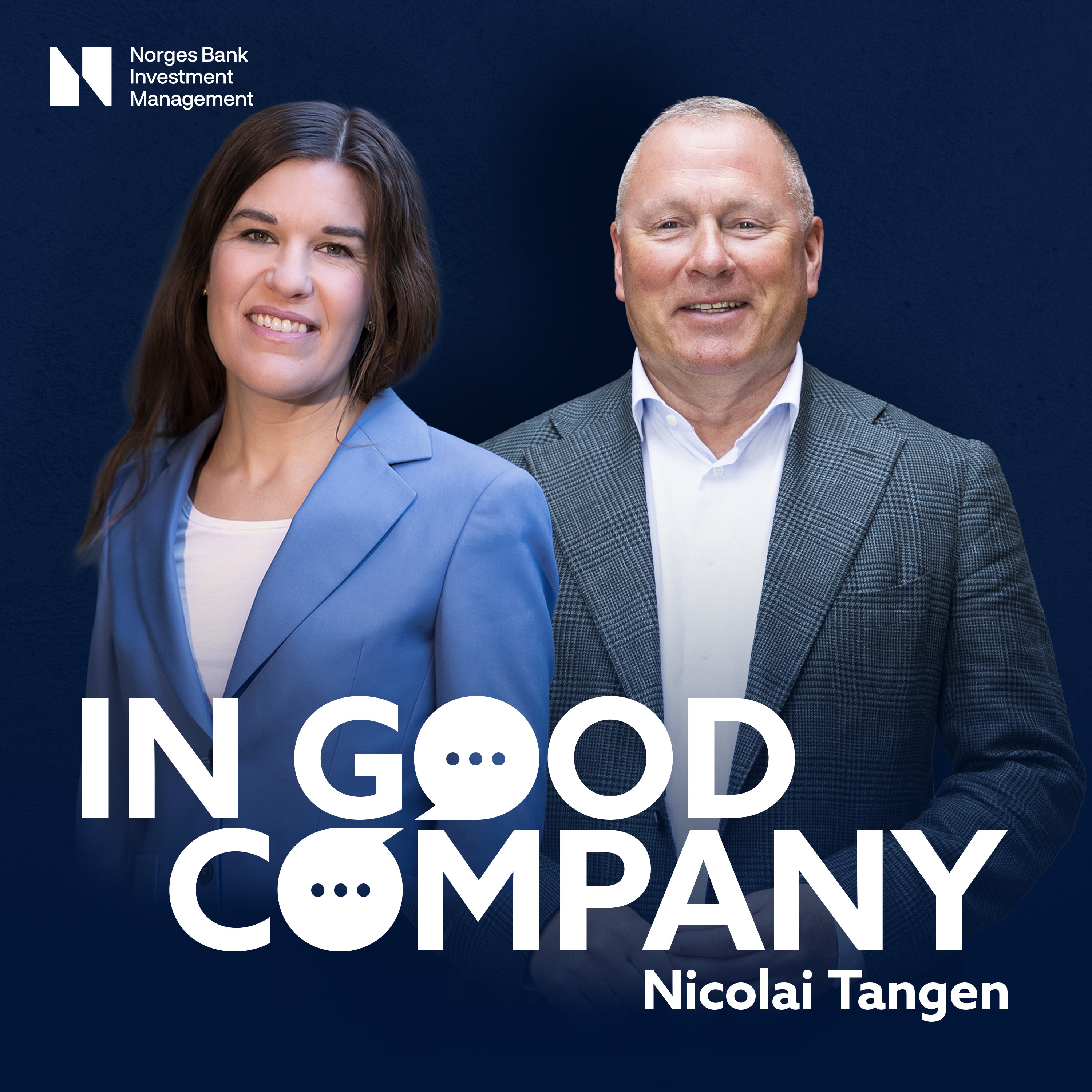
John McNeill’s “simplify → optimize → automate” playbook for business processes, plus a debate on whether leading AI labs should slow down AI model development.
John McNeill (process simplification guru; worked with Tesla and Lululemon; author of Algorithm). Marthe Skaar and Nicolai Tangen host.
question every requirement; delete unnecessary steps (but keep compliance/governance); simplify before automating because “AI on top of a bad process” is like “pouring cement”; accelerate speed and learn via rapid post-mortems/pilots; build a culture that allows mistakes.
SpaceX-style step deletion; Singapore’s high AI adoption (>60% individual AI use); Canada’s “Invest in Canada” red-tape cuts; AI slowdown voices including Anthropic’s Dario Amodei, alongside Altman and Musk.
Written by AI. May contain mistakes.
Discussion on John McNeill's principles of simplification and optimization in processes.
“You have to simplify everything, accelerate the speed and then automate at the end.”
Exploration of the importance of creating a culture that allows for mistakes in business.
“So, you know, I'm a big fan of abstract art where you reduce images down to its kind of smallest denominator.”
Analysis of recent discussions around the regulation of AI technologies and their implications.
“And then we have Altman and Musk also kind of shipping in here.”
Insights on Singapore's AI adoption and Canada's investment climate from recent travels.
“For instance, Singapore, where you are, and interesting to hear your view on that.”
Discussion on the challenges of making accurate predictions in financial markets and the importance of agility.
“and you call this the smartest friends you have.”

Get the gist, explore an idea or ask about something said.
 Claude
On In Good Company with Nicolai Tangen, what are the key points of this episode?
Searching your listeningAutomatic transcript. May contain errors.
0:00Hi everyone and welcome back to our Friday wrap-up. I'm still Marthe Skaar. I'm Nicolai Tangen. And this week I'm in Singapore and you're Nicolai, you're in? I'm in New York. So a bit of a time zone difference here.
0:22This week's episode featured John McNeill. Who is he, Nicolai? Well, he is one of the gurus when it comes to simplification of processes. He worked with Tesla, with Lululemon and so on. And I think the book he wrote called Algorithm is so powerful. And basically what he talks about is that you have to question absolutely everything that you do. You have to delete unnecessary steps. You have to simplify everything, accelerate the speed and then automate at the end. It's so important for so many companies, including us in the fund. Yeah, it's really fascinating. I have it in front of me. It has a very red cover.
1:03And the first thing that you addressed is you should question every requirement. But why is that so important in business? Because we just take so many things for granted. And there are so many stupid rules from prior times that we have just never questioned. and people just take it for given. There are so few people who just really try to push the barriers and get rid of unnecessary rules which are there for no reason. So really, really important starting point. And I think it also alludes back to what we talked about earlier about the younger and older companies, right? Where the youngers maybe don't have all this legacy and all these things.
1:43Second rule is delete every step. Well, you don't necessarily want to delete all the steps, but you certainly want to delete everything which is superfluous and unnecessary. Ideally, you want to delete so many steps that you delete one too many and then you have it to actually add it back. And that's something that also, you know, Elon Musk talks about in his book, the importance of doing that. That's what they've done in SpaceX. That's how they work in many different ways. Yeah, exactly. Because the rule is actually delete every step that is unnecessary. If you apply that to the fund, what type of step can be deleted and what can't?
2:22Well, that's what we are going through now. Of course, there are many steps that we have to have for compliance reasons, which are necessary for the governance structure and so on. But there are also things in terms of reporting frequency, how often you revalue assets such as real estate and so on, which we are questioning and which we are changing, which is basically simplifying what we do. Now, one of the things which is interesting is that when you get new people joining your firm, they oftentimes question things that you do. But within a month, they just take the rules for granted and then don't question them anymore.
2:58So important when new people join your firm that they keep a list of all the things that they think look very stupid and then that you basically get a rundown within a month. Yeah, so ask them for feedback within a month. Yeah. You do quite a lot of that. But okay, so it's simplify and optimize. And then at the end, it's automate. And he really talks about the importance of doing that last. And what can go wrong if you don't do it. Well, really important. Because when you automate, and sometimes when you put AI on top of things, it's like pouring cement on top of a process. And if the process is not simple enough, you just waste a lot of energy.
3:38So that's really, really important. Now, I think it's interesting because it's all kind of simplification thing and abstraction. It's something that I love, not only from business, but I like it in art too. So, you know, I'm a big fan of abstract art where you reduce images down to its kind of smallest denominator. And it can be so powerful and so beautiful. And I think the same goes for business. Signal the same things. Yeah. But how many companies do you think are jumping straight to automation now when you think about AI and everything and just adding AI to a bad process? It's a very common mistake that people do.
4:14I'm sure we do it some places too. But you just really, really have to work on all the steps first so that you don't lock in unnecessary complexities. I think that's really, really important. Now, before you automate, you also want to accelerate the speed. and you know the better something works the more you can speed up there was a racing driver I think it may have been Schumacher who said that you know for the perfect machine speed is a unifying force and there really is some truth to that we've talked about speed for the last two episodes as well like is speed the whole game now for sure it is important it it's something that's become clearer to me when you look at kind of the Chinese speed, the speed by which innovation happens.
5:02I think to be competitive now, speed is totally key. And then also, John, he talks a lot about like running post-mortem, so learning from mistakes. And you also, a couple of years ago, encouraged actually Norwegian businesses to do more mistakes so that they could learn from them. So like, how important is this part? well first of all it is important to create a corporate culture where you can make mistakes and you know in in our country we have a very big public sector where it's not allowed to make mistakes you are judged on not necessarily what you do but just by the fact that you don't make mistakes and it's it doesn't it holds back creativity it holds back innovation it's very very important to have room for making mistakes you have to have uh you know run pilots i mean this whole thing here that we're doing now is is a pilot we don't know whether it's going to be successful but if it's uh you know if it doesn't work we're just going to can it and stop it and no no big deal so create an environment where where people can can fail learn from them fast be extremely honest about what went wrong and what went right i think that's key to to improvement
6:24Okay, so moving on to talk about the fund and the markets, and we have to address one thing that certainly had been talked about in the newspapers and market last week, and that is Antropics' Dario Amadai, who wrote an essay calling for a slowdown when it comes to this new AI model coming out. And then we have Altman and Musk also kind of shipping in here. what's your reaction to what's been going on the last couple of weeks no i think it's uh extremely interesting of course the people you mentioned are really they have the best view into the future of these models and what they can do and so they see not only what they release now but also what's coming and the uh the speed of uh of improvement in this model have just accelerated as you have models which just improve themselves, right?
7:18And so that's taking the speed up. We've seen some examples of where some of these models have gone wrong. So I think it's a very healthy sign that some of the leading voices here are talking the same language. Now, it's very challenging to regulate this, partly because some of the people in charge don't particularly want to do it, Also because it's embedded in the various races we have within weapons, self-driving cars, medical research and so on. So it's kind of tough to hold yourself back when you compete with other superpowers. So it's a very complex situation, this. Yeah, yeah, yeah. Kind of have been linked into security as well.
8:02And that makes collaboration across country borders harder. and this is something that is noted by the Chinese the last week as well. But we were quite early on, we're coming up with a view on responsible AI, where we also address that we will closely follow the development of the regulation. We did that already in 2023 in E.coli. Yeah, we did. We talked about it in our expectation document. We say that it is the board's responsibility to make sure that these kind of things are happening in a responsible way. I do think it's pretty well taken care of in Europe. We for sure have a lot of regulation in the AI space, less so in other places.
8:45But I do think we are well taken care of that in Europe. I think also what we've seen over the last week or so is a bit more voices on the importance of adopting AI across society. Very important article in the FT. by Mario Draghi, who in a way says that we need to adopt it to keep our standard of living, because otherwise we cannot compete with Asia and the competing companies elsewhere in the world. Mark Carney mentioned the same in Canada. They're really deploying it across society. Some countries are good in doing that. For instance, Singapore, where you are, and interesting to hear your view on that.
9:32Yeah, so yeah, it's very impressive here. So Singapore actually ranked second in the world when it comes to individual AIU, so it's above 60%. I just saw that the global average is 18%, so certainly above that. But I think what is interesting in how high they got into that number, because it's not just individuals, It's also the government and it's a government from the program who pushes and are pulling into the company so that the same the companies can actually pull on the same resources and it's subsidized for them. So that means that it's strolled in across the workforce here and you certainly can see what's coming out of that.
10:15So it will be interesting to follow. But you mentioned Canada because you have been in Canada this week and the business forum. What have you been doing? Well, Mark Carney, the prime minister, basically made this Invest in Canada summit, invited the big capital owners across the world to come and listen to the investment case of Canada. And very, very impressive how during 15 months they are taking down red tape. They are getting speed up. They are making all types of regulatory approvals much simpler, taking down tax levels and so on. And so they are really welcoming foreign investors and doing that in a structured way.
11:04So that's, I would say that's really, really impressive to see. and people showed up and then of course we'll see what kind of deals come out of that. We have$75 billion invested in Canada so it's a big market for us. We are big owners of the big banks and so on but there are potentially interesting things to do also on the renewable infrastructure space where we have a mandate.
11:31Okay, moving into the last section here because Nikolaj, once a year You go into the mountains with a group of friends, and you call this the smartest friends you have. And then you say that you look into the future, and then you re-evaluate what you predicted last year. And this is what you did this weekend. Just down from the mountains, I mean, I spend a lot of time in the mountains generally during the weekends, but once a year we are a group of friends going up there. And we put on the tape recorder in the evening and we listened to what we predicted the prior year. And it's just so depressing.
12:13And I think many more people should actually look at what they predict and try to listen to the predictions a year later because it's just incredible. We talk about where are financial markets going, what's happening in the Middle East, what's happening with Ukraine, what's happening with the relationship between Europe and the US, US and China, all these kind of things. And wow, it's difficult to predict what's going on. And it's also difficult to predict what will financial markets do, given what's happening. It's just so complex. And in my mind, the only thing that matters now is just to be super agile, be optimistic, have a strong balance sheet, just be robust in everything you do in your procedures and so on.
13:00Because this world is just impossible to predict, but at the same time, so exciting. Yeah, and the reason why you're saying it's so depressive is because you're actually not that right. No, because we get so many things wrong. And in a way, you kind of think that's depressing. But at the same time, it's very, very humbling. And it's why it's so humbling to work in the financial sector. Now, cool thing on Sunday off to the West Coast of the US to meet with technology companies. We are meeting with a whole range in Seattle, San Francisco, Silicon Valley, and so on. But basically, I'm traveling this time with our business delivery teams and our AI team.
13:36So it is to just see how they program, how they structure data, you know, what's coming and how can we change the way we do things in the fun from a programming point of view and from a data structure point of view. So super exciting. And hey, look forward to sharing that next week. I do as well. Okay, great, Nikolai. Happy weekend. Happy weekend.
On this week's Friday Wrap-Up, Marthe Skaar calls in from Singapore to catch up with Nicolai Tangen, joining from New York, to break down his podcast conversation with John McNeill, author of “The Algorithm" and a leading voice on simplifying business processes. They discuss his rule to question every requirement before automating, and why speed has become a competitive necessity. The conversation also turns to the growing debate over AI safety, fueled by Anthropic's Dario Amodei's call to slow down development. Nicolai reflects on his trip to the Canada Investment Summit, and shares a humbling annual tradition with friends. Tune in!
Listen to In Good Company with John McNeil, author of “The Algorithm”: https://podcasts.apple.com/no/podcast/jon-mcneill-the-algorithm-behind-tesla-and-spacex/id1614211565?i=1000789947914
The Friday Wrap-Up is hosted by Marthe Skaar, Chief of Communications and External Relations, together with Nicolai Tangen, CEO of Norges Bank Investment Management, and produced by Isabelle Karlsson. New episodes of In Good Company air every Wednesday, with the Friday Wrap-Up following each week to break it all down.
Hosted on Acast. See acast.com/privacy for more information.


