
 Ask ChatGPT


 In Good Company with Nicolai Tangen
28 Aug 2026 · 13m · 7 chapters
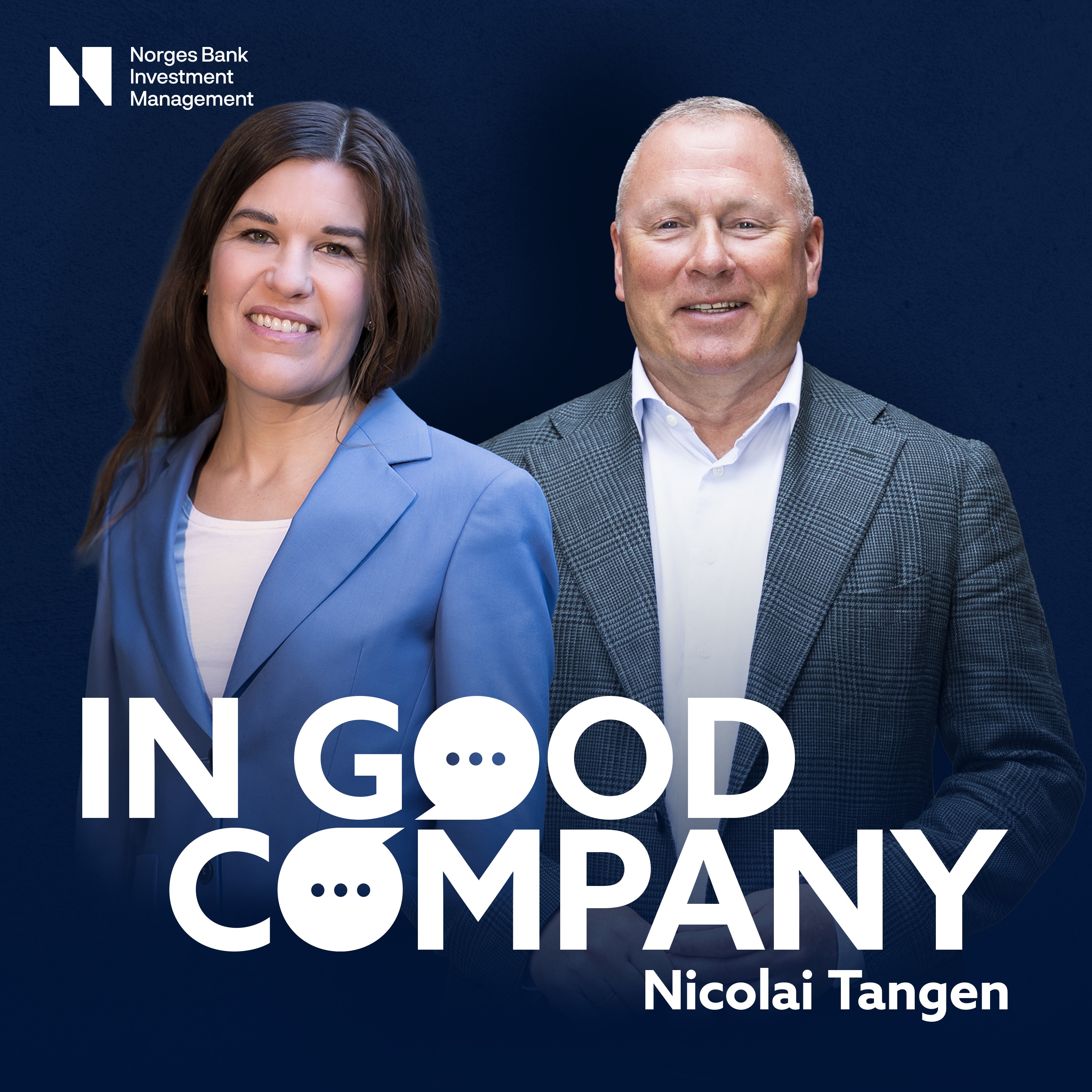
Friday wrap-up of In Good Company covering highlights from an interview with hedge fund legend Paul Marshall, plus reflections on the global AI race, AI’s impact on healthcare, IPO concentration, and internal fund practices (agents, hiring, stress, learning).
Marthe Skaar (Chief of Communication and External Relations, Norges Bank Investment Management) and Nicolai (co-host). Guest in the featured episode: Sir Paul Marshall, co-founder of Marshall Wace (1997), described as an early London hedge fund pioneer; also ran Arco Capital.
avoid hubris/arrogance; stay humble and willing to change your mind; AI investment can be tracked via internal token consumption to spot a “turning point” in growth.
Marshall Wace “TOPS” (broker-input + deep fundamental research); Moderna/Merck personalized cancer vaccine; IPO surge (SpaceX, potential OpenAI/Anthropic, Asia listings) and top-10 AI/tech concentration; agent factory using Claude; AI-based coding tests for hiring; stress managed via “charging stations” (forest, sailing, mushroom foraging).
Written by AI. May contain mistakes.
Discussion on Paul Marshall's significance and impact in the hedge fund industry.
“So this week's episode featured Sir Pearl Marshall, who co-funded Marshall Ways in 1997.”
Exploration of hubris in the asset management industry and its consequences.
“He's also written a book, 10 and a half lessons from experience.”
How AI is transforming investment strategies and operations in firms.
“But you have to not to be arrogant and you should be stubborn to a degree, but you need to change your mind.”
AI's transformative effects across various sectors, including healthcare.
“But let's start with talking about another sector that has been influenced by AI last week.”
Discussion on how AI is shaping hiring practices within the fund.
“And I think that's really the concerning thing here.”
Analysis of recent IPO trends and their implications for the market.
“It makes me so optimistic when I speak to all these brilliant young people, so it's good.”
Discussion on managing stress and lifelong learning as a key principle.
“I think it's important to find your charging stations, you know, so when the weekend comes, you basically know how to relax, you know what gives you energy, and that could be many things.”

Get the gist, explore an idea or ask about something said.
 Claude
On In Good Company with Nicolai Tangen, what are the key points of this episode?
Searching your listeningAutomatic transcript. May contain errors.
0:00Hi everyone and welcome to In Good Company. Oh, this was not a familiar voice. I'm Marthe Skaar, Chief of Communication and External Relations in Norges Bank Investment Management. But I'm not alone. No, I'm here too. Nicolai here. This is a new format for our Friday episode. So it's a short wrap-up for approximately 15 minutes where I sit down with Nicolai and we will cover the highlights of this week's episode. We will talk about what's been happening in the fund and the markets and then Maybe something a bit more personal at the end, Nikolai? Yeah, I think it should be a lot of fun.
0:43Okay, so here we go. So this week's episode featured Sir Pearl Marshall, who co-funded Marshall Ways in 1997. And it's one of the largest and most successful hedge funds in the world. If you haven't listened yet, we will talk about some of the highlights today. But please go and check out the full conversation. First, Nicolai, I want to start with, who is Paul Marshall to you? Well, Paul is one of the first people who started Hedge Fund in London. He started in 97. That was, I think, probably was number three. There were only Odie who started prior to that, and then Edgerton Capital, where I worked.
1:24So he was kind of one of the OGs, one of the original gangsters, you know? been very, very successful, grew the firm. I mean, it's really an extremely impressive setup, and you'll hear and understand more when you listen to the podcast. Yeah. And you also ran your own hedge fund, Arco Capital, before coming here. So what does Marshall Ways and the firm you run have in common? Well, Marshall Ways is known for what is called TOPS. It's a system where they get a lot of input from broker contacts and so on. But they also have a deep fundamental side. And that side is very much akin to what we were doing at AKO.
2:09Like deep fundamental analysis, meeting companies, doing the research. So quite similar in style. And talking about Tops. And of course, when you listen to the episode, you will hear more about what that is. But that's an alpha capture system. like listening to that what does it tell you about innovation well they have been very very strong on innovation it's a really data heavy company and i think it's quite interesting they are 700 people the same amount of people as we are in the fund they have 200 in tech and operations the same as we have so the same emphasis on ai learning feedback systems and so on as we try as we strive for here.
2:51He's also written a book, 10 and a half lessons from experience. Have you read it? Yes, I have. It's very good. It's, you know, it's a few years back now, but it's kind of the everlasting kind of theories about how you should avoid biases, how we tend to stick to our losers, how we sell the winners too early and all these kind of things. So a lot of common sense in a short and very readable book. I think it's quite fun actually because I did my master's degree on how to invest and when you use pattern recognition and when you use analysis. And of course, I never disclosed who I interviewed, but I did interview him for my master thesis.
3:35And so our history goes way back. Okay. But that also means that he has influenced your thinking as an investor. Of course, absolutely. I mean, you have to learn from the best and he's one of them. So what he also talked about was how firms often grow too hubristic and too big. And of course, he's focused in on the living return year after year. What are your thoughts on what he said and also like thinking about the fund that you're leading today? Yeah, no, hubris and arrogance leads to death of asset management companies. It's one of the most important things. And it is a very humiliating industry to work in because you are wrong so often.
4:22You know, if you get 53 % right, you are doing extremely well. But you have to not to be arrogant and you should be stubborn to a degree, but you need to change your mind. And I think if you are too, if you're too arrogant, you don't manage to change your mind. and arrogance is really the worst thing in this industry. So I would say all the really successful fund managers I meet are very, very humble people. With so much going on in the world, is this even more important than it used to be? I think so. But it's a very humbling environment because, I mean, it's so difficult to get it right. Yeah.
4:57He talked about AI and how they use it in the firm. What's your reaction to kind of like the scale of the change? No, I think we share that view, him and I. It's very clear. They are really onto that whole wave. We are doing a lot of the same things. They are creating agents. We just launched our agent factory. And already after a few weeks, we have 270 out of 700 people creating agents at Mbim. So very much the same thing. And I think what is also interesting is the way he thought about using internal data to really understand the acceleration of AI investments. Looking at the consumption of tokens internally in the firm, he thought that you could track that and potentially see some kind of turning point.
5:47And the turning point perhaps is when the rate of growth slows, like the second derivative of growth. When that slows down, we probably should reassess the investment levels in the AI sector. So now it sounds that we already have moved on to the markets and what's going on in the fund. So let's do that. But let's start with talking about another sector that has been influenced by AI last week. And that's Moderna and Merck that announced a personalized cancer vaccine. Incredible. AI is really helping research in so many domains. healthcare sector is one of the most important ones. This is a real breakthrough from Moderna.
6:37And just also putting in a little plug here that the CEO of Moderna is coming to our investment conference 27th of April next year. So that's an important one. That's an important one. But what does it tell you about how broad the AI wave really is? It's changing and impacting all areas, all industries, all geographies. It's just a matter of how quick you are. We speak to companies in, well, basically all over the world. And of course, we're seeing a great adoption in Asia, in China. We're seeing slower adoption in Europe. And I think that's really the concerning thing here. You referred to the agent factory that is built internally in the fund.
7:24That has happened in the last week, actually. Tell us a little bit more about that. Well, we have made it really, really simple for everybody to create agents. So in the past, you needed to have relatively advanced technical skills to make agents. Now it's really, really easy. You basically just go into Claude and you just by putting in text, say, can you make an agent which will do this and that? And there it is. So really democratizing the ability to create agents. and also in that interface we can follow up how much credits and token are used and so that's also a bit of that focus but another thing about AI that that you talked about in the podcast was was hiring and how it's kind of like reshaping how you think about hiring tell the listeners what you've done here in the fund how is it reshaping well it's hiring into it's changing hiring in that we are putting all the people we hire through AI tests and there's not like a simple test but you really need to understand code and it's more technical than just being able to kind of you know put in commands in claw it's a it's a way to screen for people who are really keen on using this as a tool, get more AI-able and agile people on board.
8:53I am also involved personally in recruitment of the graduates, so I just today interviewed 12 potential candidates for a graduate program. I love that. It makes me so optimistic when I speak to all these brilliant young people, so it's good. Lots of fun, right? Yeah. Okay. I have a graph in front of me. Yeah. It basically shows the combined value of the new companies that have been listed at the stock exchange in the US. Talk us through this graph. What does it tell us? This is the year of IPOs. We have huge IPOs coming. We had SpaceX earlier in the year, just before the summer. And we now have potentially Antropic.
9:38We have OpenAI. We have a lot of other companies coming. Ditto in Asia, a lot of new introductions. And so this is really fascinating. It does amplify what we have seen already, that there is this huge concentration of companies on the stock exchange. And it's interesting now the top 10 companies account for 25 % of the value of the fund. In the past, when you had top 10 companies accounting for a big proportion, then you had like one bank, one mining company, one retailer, and so on. now they're all tied into AI, which changes the risk profile. Yeah. Yeah. And most of these companies that are coming in have some sort of relation to AI or tech.
10:22So it's really driving up the value here. Yeah.
10:28Moving on to a bit more personal side. Yeah. because Paul he talks about stress and he claims that he handles it remarkably well and how he talks about it I believe him how do you handle stress well first of all I think it it helps to get a bit older because you've seen many things before so you know that you get more used to volatility and you can kind of use it as your friend when things sell off ideally you want to add to those positions. I think it's important to find your charging stations, you know, so when the weekend comes, you basically know how to relax, you know what gives you energy, and that could be many things.
11:11For me, it's being out in the forest or, you know, out sailing or, you know, mushroom foraging or whatever. But it's very important to identify what it is. Yeah. Okay, so out picking mushroom is a charging station for you. Yeah. Yeah, and also you like to take you wherever the wind blows. Absolutely. I do love sailing and I gather you have started sailing too. Well, yeah, we bought a sailboat two years ago with absolutely no skills. So that has been a true learning journey. But I agree with you. It's really nice to be out in nature and charge in that way, but also to learn something as an adult.
11:58And I know you're really into learning. How important is it to learn new things? I think that's totally key. And what we see actually here in the fund, there is this huge desire to learn. I think everybody's trying to learn. That's why people think it's fun with AI. I think the person who knows the most when he or she dies is one. It's not about accumulating wealth, it's accumulating knowledge. Okay, thank you, Nicolai. And in the next episode, I actually plan for a bit of a boomerang. Because you always ask all your guests about their biggest failure. So I will ask you. So now you can prepare.
12:37All right. I will do. Okay. Thank you. And happy weekend.
Introducing a brand-new podcast series: The Friday Wrap-Up! Tables have turned. Marthe Skaar, Chief of Communications and External Relations at NBIM, sits down with Nicolai Tangen, for a debrief on the latest podcast episode, news about the fund and the markets, and life behind the scenes. In this first edition, they revisit Nicolai's conversation with Sir Paul Marshall, co-founder of Marshall Wace, as Nicolai reflects on what he took away from it: why humility matters more than ever in asset management, and how Marshall's thinking on AI echoes his own. He also opens up on a more personal note, sharing what helps him recharge outside of work. Tune in!
Listen to In Good Company with Paul Marshall: https://podcasts.apple.com/no/podcast/sir-paul-marshall-why-markets-are-getting-more-competitive/id1614211565?i=1000785904913
The Friday Wrap-Up is hosted by Marthe Skaar, Chief of Communications and External Relations, together with Nicolai Tangen, CEO of Norges Bank Investment Management, and produced by Isabelle Karlsson. New episodes of In Good Company air every Wednesday, with the Friday Wrap-Up following each week to break it all down.
Hosted on Acast. See acast.com/privacy for more information.


