
 Ask ChatGPT


 In Good Company with Nicolai Tangen
9 Oct 2026 · 12m · 5 chapters
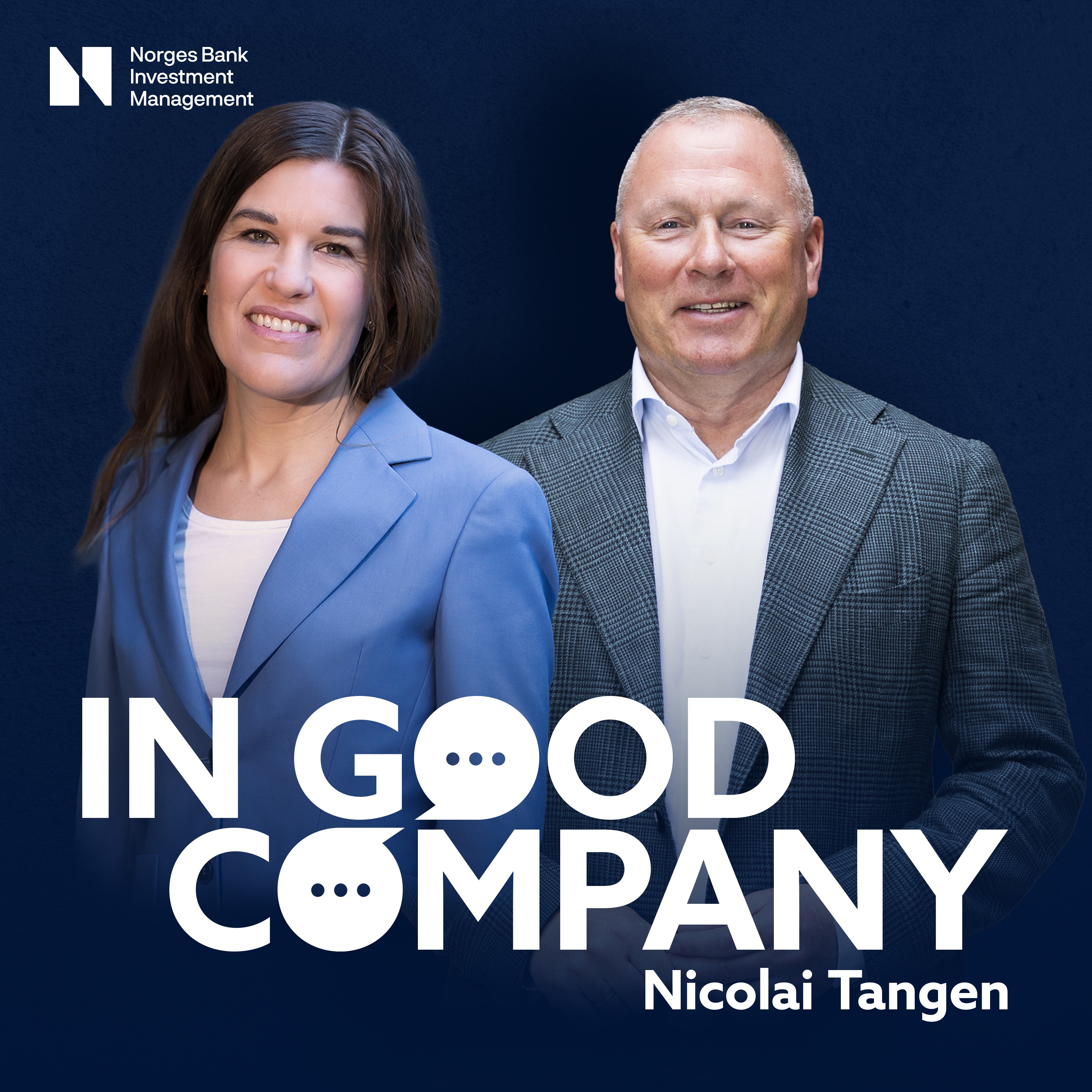
A Friday wrap-up episode combining (1) lessons from former boss John Armitage on investing and humility, and (2) a discussion of how shareholder rights have declined, especially via dual/multi-class voting in new IPOs. It also emphasizes gratitude as a performance and mindset practice.
John Armitage is the featured guest (former boss of Nicolai Tangen; boss for five years). Bill Bollinger is mentioned as Armitage’s colleague who helped back AKO Capital. No other guest is interviewed in this excerpt.
Armitage taught deep profit-and-loss analysis, focus on operating leverage, and portfolio construction for resilience. He looks for management admitting mistakes and has strong self-doubt. Shareholder rights have deteriorated as founders gain many votes per share, limiting shareholder influence over boards and accountability. Country/stock-exchange competition (e.g., Amsterdam) encourages weaker rules. Gratitude improves mindset/performance.
Armitage’s role as a major sell-side client who traveled across Scandinavia and involved Tangen in company meetings; AKO Capital’s founding support; IPOs with founder-controlled voting; the “permanent capital” debate versus liquidity needs.
Written by AI. May contain mistakes.
Discussion on John Armitage's impact as a mentor and boss.
“known in the investment world, but not so famous outside the investment world.”
Exploring how humility plays a role in successful investing.
“I think you find them in England more than other places, but he for sure is one of a kind.”
Insights on the changing landscape of investment and shareholder rights.
“And we've had some incredibly good ones, right?”
Analysis of the decline in shareholder rights and its implications.
“because it makes you less nervous about whether you actually are going to be in business tomorrow.”
Discussing the significance of gratitude in personal and professional life.
“I want to get a bit personal and talk about gratitude.”

Get the gist, explore an idea or ask about something said.
 Claude
On In Good Company with Nicolai Tangen, what are the key points of this episode?
Searching your listeningAutomatic transcript. May contain errors.
0:00Hi everyone and welcome back to our Friday Wrap Up. I'm Silmar Theskar. I'm Nicolai Tangen. And today we're going to talk about a very special episode. We're also going to talk about shareholder rights and we're going to talk about gratitude.
0:25attitude. This week's episode is trending. It's doing very strongly. What we do find is that some of these investment episodes are very strong. I'm not sure that there are so many great investment episodes out there. And then this person in particular, John Armitage, is extremely well known in the investment world, but not so famous outside the investment world. But it's really, really worth looking at. So please tune into the whole episode as well. And he's very special to you, of course, because he's your former boss. He is one of the most important people in my life, I would say next to my wife.
1:01He was my boss for five years. But before then, even he was important because when I was on the sell side, I worked as an analyst. He was my largest client. And so I traveled a lot with him across Scandinavia. I sat in on company meetings. So he was totally formative for me as an investor and me as an analyst and really taught me how to look at companies and how to analyze companies. Yeah. So give us a bit more details on that. What did he teach you? Well, first of all, he is very thorough. He is very good at asking questions. He is very curious. And I thought he was particularly good at looking at why companies are successful.
1:43Going through the profit and loss account in great detail, where is the growth coming from? How resilient is it? What are the drivers? And so he distilled the drivers of a company's profit and loss into its various components. And then he was very focused on what we call operation leverage. And that means how much of the incremental sales does a company actually capture in profits? And so that was kind of one of his key things to look at. And very, very important. Very few people know how to analyze it. Very few people understand just how important it is. So that was important. And then, of course, portfolio management, how you put together a portfolio of companies, which all have different drivers, right?
2:26So that if something happens in the world, your whole portfolio doesn't go down in flames. And so he's been super important. Now, that was important as a trainer. But then as a person, when I set up AKO, I couldn't have done it without him because you need a reference. You need somebody who is really voting for you, who is telling everybody else that I think this is going to be a success. You should back this guy with money. And without him and his colleague, he was called Bill Bollinger, there would have been no AKO capital. There would have been no me. There would have been for sure I would not have had this job.
3:01Why was he willing to do that for you? Because he's just a great guy. I mean, he's just like a total AAA guy. There are very few people like him. Very few people with that honor code. I think you find them in England more than other places, but he for sure is one of a kind. And he clearly believed in you. Well, that's at least what he said. He also, he reflects on that. He looks for management that admits their mistake. How do you spot that in a meeting? I think you do really look for that kind of humbleness because if you don't spot mistakes, if you don't look for mistakes, you are never going to improve.
3:33And it's very, very important. And when I interview graduates and other people, it's one of my most important questions. You know, what part of yourself are you trying to improve? And if people are not trying to improve anything, they are just no good. What are you trying to improve? Well, I'm constantly trying to improve both as a manager and a human being, I think. That's good. And then talking about that, because he also says that he wakes up every morning and then he wonders, will I ever be successful again? Yeah. He has a huge self-doubt. Now, I think you can be good without doubting the fundamental basis of your life and your profession.
4:13So I have to say, I don't wake up every morning and think I'm a total disaster and that I'm wondering whether I'm going to fail. I do think that hopefully things will be okay. No, he has got a huge self-doubt. And he questions everything. He questions his portfolio, his investments, just on a continuous basis. It's a stressful life. Yeah, but part of being an investor is also to fail, right? So you have experienced failure a lot when it comes to investing. Yeah. I actually think it's one of the common denominators of the great investors we've had on the podcast. And we've had some incredibly good ones, right?
4:52We've had many of the world-leading experts, the world-leading investors, and we have more in the pipeline as well. And I think the one thing they have in common, they are actually very humble. Very humble. Despite having been successful for a great many years, having made a lot of money, they generally are still very humble. And talk about being humble, because it for sure could be a humbling exercise these days to be an active manager. It's more face-to-face, information is more readily available. How should we think about that? No, I do think there is a possibility that the art of creating excess returns is becoming more difficult.
5:30because you have all the capital in the world. You have so many great brains. Everybody is chasing the same thing. And now with AI, you are arbitraging away probably many of the opportunities that we had in the past to create excess returns. So I do think it will be more difficult going forward. John also says that he doesn't want permanent capital in the fund, or at least not too much. He calls it a trap. What do you make of that? Well, I think that's an interesting discussion because most people would like to have permanent capital. We have quite permanent capital in the fund. And permanent capital means that nobody is just going to ask to get all the money back.
6:07If somebody can at any time ask to get the money back, you have to invest in more liquid situations because you may have to liquidate. And he thinks it's a good discipline to have to always think that you have to be able to liquidate positions, to change your mind and so on. There are other people who think differently. So we have an interview with Bill Ackman from Pershing Square coming up. It's not been released yet. He has, of course, wanted to have permanent capital and has created a vehicle where he can do that. So it is a discussion. I think on balance, it's better to have permanent capital than not, because it makes you less nervous about whether you actually are going to be in business tomorrow.
6:50So moving over to talk about the market and what's going on in the fund, because we quite recently published a view about shareholder rights. Of course, the world is constantly changing. So are the companies. John can sell them when he loses trust in a company. Can we? No, we can't really. We generally have to be invested in the companies for the long term. And the problem is that shareholder rights have deteriorated pretty sharply over the last few years. Shareholder rights, that is your ability to vote. It means that one share has got one vote. It means that you have the ability to sue a company and a board and so on.
7:27But what we have seen in particular with some of the new IPOs, the new companies which have come to the stock exchange, is that for the founder for instance, one share has got many, many votes. You have very few rights as a shareholder. There is no way you can impact the composition of the board. They can be, let's say, chair or board forever. And so these rights have deteriorated quite sharply in many countries in the world. And it's a combination of many things. One of them is competition between countries to get the listings between the various stock exchanges. In Europe, for instance, you have many people choosing Amsterdam because supposedly there are a bit fewer rules there than in some of the other instances.
8:07So to attract these companies and the listings, you have to kind of bend backwards a bit. And that is just negative for us as an investor. Yeah. Why is that negative for us as an investor? Well, because we really want to exercise our ownership rights. And probably it's going to be even more important going forward with a changed ethical framework. We really need to have these conversations with management. And we need to be able to vote and have influence. And that is being diminished. Yeah, it's the board we need to be able to hold accountable. Yeah.
8:45I want to get a bit personal and talk about gratitude. saying thank you because I know this is very important for you and I think this episode with John also really shows that and in the end you give quite a heartful thank you to him why did he do that well because he deserves it because if it hadn't been for him my life would have looked very different I think people are not good enough to who say thank you. And I've always been very careful thanking the people who've helped me in life, and there have been a lot of them. And I've always tried to keep them in touch with what I'm doing. I still know who got me my first summer job.
9:28I still keep them in touch. When I do new things, I basically go back to them and thank them for having done what they've done to me, because that was the start of something which has been very nice. and I have been surprised sometimes that people I have helped have not really you know properly thanked me and I just think it's it's not great and it's you shouldn't thank people just to just because it's the right thing to do but because it feels good you know it just feels good to thank people and so it's a it's a big thing for me the second thing is with gratitude I also have learned in one of the podcasts we've made that sports people who are grateful are actually doing better.
10:15It's great for performance even. I'm not quite sure why, but it's just something very positive for your mindset. I start every day now with a quick exercise where before I look at the phone or do emails, just look out in nature or out of the window and go through a little ritual where I am grateful for my health and the family and those type of things. And we just take all these things for granted until they are not there anymore. You have a bit of a zen moment in the morning. It's a zen moment. I do probably think there is more in the spiritual dimension than what I am currently exploring. And so it's something I will spend more time on as I get older.
11:00Interesting. But how do you call people or how do you stay in touch with them to say thank you? I just ping them, you know, email when I meet them. I always thank them again. Every time I see John, I thank him for, you know, having hired me in the first place. I know exactly who hired me to this job. I met actually with a previous central bank governor earlier in the week. And I thanked him again for having given me this job. So do you have any tips to our listeners? Should they thank someone this weekend? well you should thank of course everybody who's helped you just ping them they'd be they'd be surprised and they'd be very grateful and then of course you have to call your mom you have to call your mom every day good tip okay thank you Nikolai and to our listeners remember to listen to the episode with John Armitage and with that happy weekend happy weekend
12:00For more fic WhatsApp, www.tithee.org
This week's Friday Wrap-Up looks back at Nicolai Tangen's podcast conversation with John Armitage, his former boss and a man he calls one of the most important people in his life. Marthe and Nicolai discuss what Armitage taught him about analysing companies, why the best investors tend to be humble, and why Armitage calls permanent capital a trap. They also cover NBIM's recent view on the decline of shareholder rights, and why Nicolai says it matters for long-term investors like NBIM. Nicolai also opens up about why he thinks we should all say thank you more often, and the morning ritual he follows to stay grateful. Tune in!
Listen to In Good Company with John Armitage, co-founder and chief investment officer of Egerton Capital: https://podcasts.apple.com/no/podcast/john-armitage-how-he-invests-building-egerton-and/id1614211565?i=1000793578407
The Friday Wrap-Up is hosted by Marthe Skaar, Chief of Communications and External Relations, together with Nicolai Tangen, CEO of Norges Bank Investment Management. New episodes of In Good Company air every Wednesday, with the Friday Wrap-Up following each week to break it all down.
Hosted on Acast. See acast.com/privacy for more information.


