
 Ask ChatGPT


 In Good Company with Nicolai Tangen
2 Oct 2026 · 12m · 4 chapters
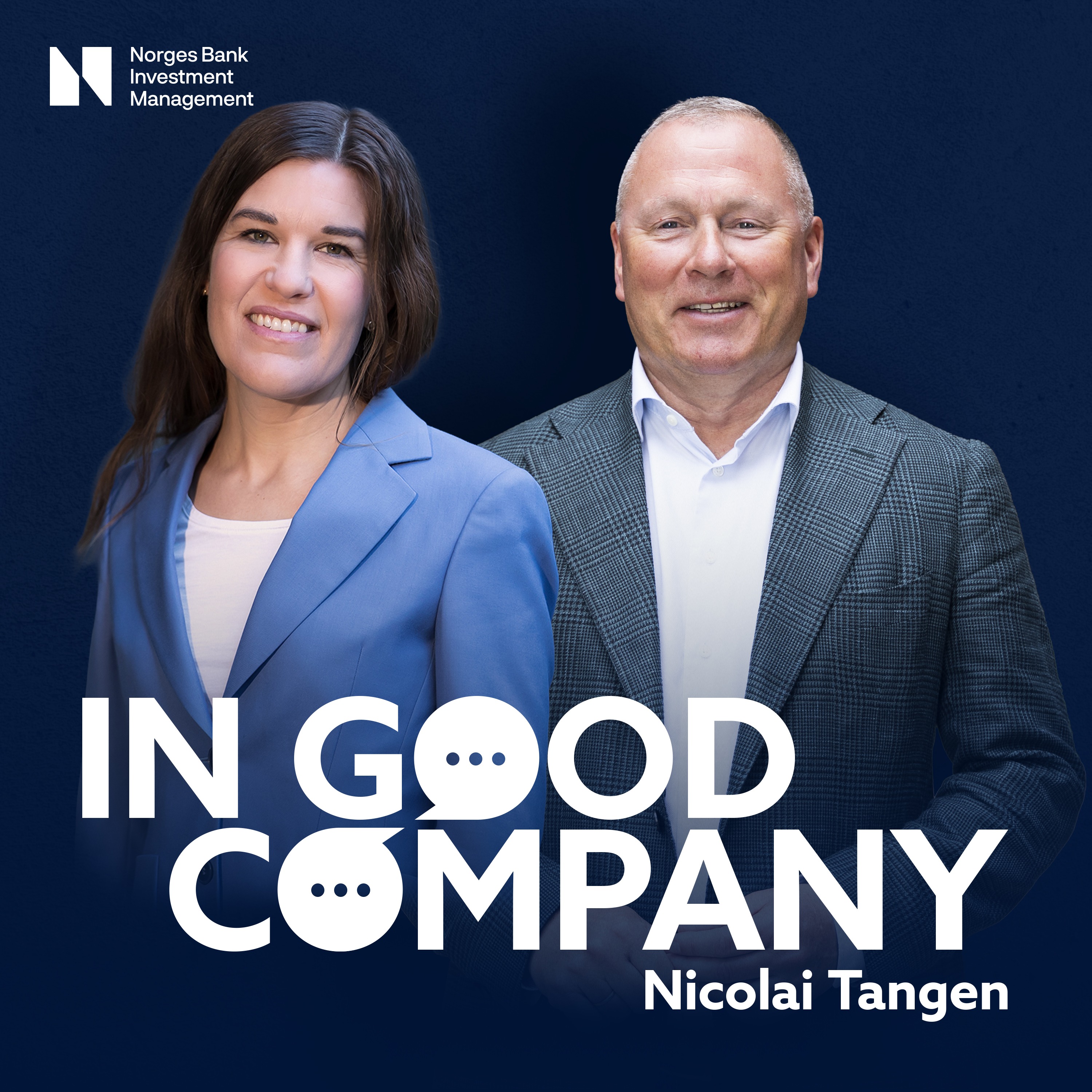
Humanoid robotics and self-driving cars, Horizon Robotics’ role in the automotive value chain, and a broader investor view of the AI/semiconductor supply chain; ends with book recommendations.
Kai Ju, founder and CEO of Horizon Robotics (supplies systems/chips for self-driving cars; embedded in car production data). Hosts: Marthe Skaar and Nicolai Tangen.
Self-driving taxis will replace much of the taxi industry; “hands-off/eyes-off/mind-off” autonomy is coming. Horizon should act like “Microsoft/Intel for robots,” not build cars. China’s clustered supply chain (“one village”) and overlapping robotics/EV ecosystems give China an edge in humanoid robotics. Chip value chain is highly concentrated (NVIDIA designs; ASML makes lithography tools; TSMC manufactures).
Waymo ride experience; elevator automation analogy; Taiwan as a geopolitical hotspot; AI investment backlash risk (possible $7–$9T in 4 years). Reading tip: Adam Grant’s “Vibe.”
Written by AI. May contain mistakes.
Discussion on Horizon Robotics' position in the self-driving car industry and the evolution of autonomous vehicles.
“And so it's one of these cool, relatively small companies, which not so many people know about, but which is totally key.”
Exploration of supply chains in the robotics and automotive industries, emphasizing the importance of clusters and data.
“And we never really think about these technology shifts.”
Analysis of the chip supply chain, market risks, and implications for investors focusing on Taiwan and AI investments.
“So you get these clusters, you see it in a lot of industries.”
Nicolai discusses his reading habits, the value of diverse literature, and recommends books for personal growth.
“Well, I don't think there is anything we can do about it because we are an investor, which is long-term, and we are invested in the market, and this is the way the market is developing.”

Get the gist, explore an idea or ask about something said.
 Claude
On In Good Company with Nicolai Tangen, what are the key points of this episode?
Searching your listeningAutomatic transcript. May contain errors.
0:00Hi everyone, and welcome back to our Friday wrap-up. I'm still Marthe Skaar. And I'm still Nicolai Tangen. And today we're in the same room, same time zone, so that's a good starting point for this podcast. And we will start about ships and the value chains. So I guess it's going to be all about ships today.
0:30This week's guest was Kai Ju, he's founder and CEO of Horizon Robotics. And let's start with the basic. Where does Horizon actually sit in the value chain when it comes to ships and self-driving cars? Well, it's instrumental in the self-driving cars business because basically they supply the systems and the chips behind a very, very large proportion of these self-driving cars. And so it's one of these cool, relatively small companies, which not so many people know about, but which is totally key. And they have a vast market share, both amongst the Chinese producers and also the Europeans. So they are really in the forefront here.
1:13Very, very exciting. And you also opened the episode by saying that 10 years ago, you assumed that self-driving cars would come out of Silicon Valley. and you have just been to Silicon Valley and you have talked to a lot of these Chinese car producers. What do you think about this now? No, I think it's really interesting because here, you know, we thought that perhaps Tesla would win this race. Then you are in San Francisco and you drive the Waymos and you just see that experience and how good it is. Of course, first time you're inside one of these cars is a bit scary. But the second trip, it's the most natural thing in the world.
1:50And the third trip you take with the taxi, you wonder why the heck there is a chauffeur there you know so this is changing very fast it's coming into more cities it's coming to uh london uh and eventually it will come to scandinavia even though it's a bit difficult because there's no conditions and so on and so you just need to uh to learn a bit more about it but this is going to take over the whole taxi industry i think then eventually you'll uh you change further and so now you have uh hands off uh coming up soon you have eyes off and then eventually you have uh mind off which means that you can sleep in the car and um you know just kind of program hey i want to go from a to b and you wake up in the other end and my is that going to be great would you sit in a car like that or sleep in a car totally totally i think it's much safer than uh being in a normal car and just imagine what you can spend your time doing You can read books, you can do all kinds of things.
2:47So great progress. Yeah, so it's all about freeing up time. And we never really think about these technology shifts. Now you take the elevator, it's the most natural thing in the world not to have an operator in the elevator, but at some stage you had a driver in each elevator and they did it for you. Then what happened was that you had the technology for a long period of time. You had a big strike. I think it was in the 40s, 30s, 40s. And given that strike, they just decided to kick them all out. And that was the end of drivers in the elevators. And now, you know, we do it ourselves. I think in 20 years, Sam, you're just going to wonder why we were sitting there and turning that wheel ourselves.
3:28Yeah, some car enthusiasts might disagree. But other than that, yeah. Okay, and talking of that, because he says that he will... Some of these companies we talked to, they will both design the ship and produce the car. But he says that he would never build a car. So he wants to be the Microsoft and Intel for robots with Horizon inside. What do you make of that choice? No, I think that's his choice. Some people want to be vertically integrated and do everything. Some people want to be specializing in what they do. You can see why they want to specialize because you need a lot of training data to get these ships to do the right work and function in the right way.
4:13And so perhaps that's a job enough in itself. And then as a cliffhanger to the episode, he calls it a terrible business. And what he means by that, it takes five to eight years before a ship makes money. and then he also says but sometimes terrible business makes a great business because few can get into the business yeah you're deeply embedded in the in the car production you have all the data you train the cars and so on and of course you need to have trained these really well because if you make an accident with a self-driving car it's perceived by the public to be even more serious than if it's like a normal dude who crashes yeah so the threshold here for security is extremely important.
4:56Yeah. And then he describes China's supply chain as a wonderland, where the whole country works like one village. What does that mean for everyone else? Well, I think it means that when you control an industry like the self-driving cars and the electrical vehicles, you have so many sub-suppliers and you create this kind of forest of suppliers, which mean that they are just mutually reinforcing what each other do. And it's very, very difficult to replicate. So you get these clusters, you see it in a lot of industries. And when you build these clusters, it's extremely powerful. Now, what I think is interesting with this cluster is that it's an overlapping cluster with the subsuppliers you need for robotics and humanoid robots, which are coming up.
5:50it's the same type of actuators it's the same type of sensors that you need you know you need kind of the visual sensors you need all these type of things and so i cannot see anybody else winning the humanoid robotics race than the chinese which is also so therefore it's also concerning that many countries have put the the electrical vehicles and the self-driving cars on on the back burner and prioritize the internal combustion engines, because that is going to mean that they will also lag behind in the next technology wave. So really fascinating.
6:33And moving over to talk about the fund and the markets, and I'm going to continue with ships and the value chain, because Horizon is just one link and one company in a much bigger chain. And I wonder if we now can just walk us through the chip supply chain. Of course, none of us are experts here. But as an investor, this is really important for us, who the big producers are. Let's do it like this. Okay, think of it as a big house. So you need an architect, you need a toolmaker, you need a builder, and somewhere to store things. So let's start with who the architects are. Okay, so big player here, of course, NVIDIA.
7:13they come up with the design for the most advanced chips, but you also have other people in that business. The toolmakers are, well, it is actually ASML in Holland. They make the lithography machines. And then these chips are produced by TSMC, the Taiwanese company. They are sold to the hyperscalers, and that's the value chain. So very few players, very concentrated. also with one geographical hotspot, which is Taiwan, which makes kind of the stock market quite interesting. Now, in the first half of the year, we had gains of 1 ,700 billion from mainly the chip makers. Now, a lot of that has been given back in the third quarter, in particular because the Korean producers have, kind of their share prices have come back a bit.
8:04But still, the concentration is very different than what it was in the past. You know, 10 biggest companies now, 25 % of the fund. And in the old days, the 10 biggest companies consisted of, you know, like one bank, one insurance company, one mining company, one retailer. Now they are all in the technology space. And so the thematic risk is also very different. So the size of the risk, the thematic concentration of the risk, and the geopolitical hotspot of the risk is now very different from what we've seen in the past. What can you do about that? Well, I don't think there is anything we can do about it because we are an investor, which is long-term, and we are invested in the market, and this is the way the market is developing.
8:49But what do you see as the biggest risk related to this value chain? Well, given that we talked about Taiwan, so of course a geopolitical event, which includes Taiwan, would be probably very negative. Yeah. And then in this value chain, you talked about Korea. I'm sorry, I should also point to one more risk. What we are seeing now, we are seeing a backlash against AI investments. The AI investments are huge. Some estimates for the next four years would be in the range of$7 to$9 trillion. Now, in comparison, the Norwegian Sovereign Wealth Fund is$2.3 trillion. So we are talking three to four times the size of the fund just in AI infrastructure spending needs.
9:32If there is a very significant backlash against this, which would then lead to much reduced investments, we think that could have a negative effect on financial markets. It's also interesting to see that a lot of this financing is debt financed and the magnitude is such that it also could influence interest rates generally. So there are some new elements here you know okay Nikolai so moving out into the last segment here you read a lot of books have you read anything interesting later yeah well I read constantly uh of course and uh I'm so lucky I'm on the financial times uh book award uh I'm a jury member in the financial times book award jury and so therefore I have to read a lot of these business books and we have uh the meeting coming up where we are making the long list into a short list.
10:29And so that's, of course, very exciting. But it is important to read all the time. Why is artificial intelligence so intelligent? Question to you. Because it stores a lot of data and reads everything. Because it's read everything. And so if we want to become more intelligent, we need to read a lot. What do we need to read? I think you want to read as much different type of literature as you can. You want to, of course, do some business books if you're interested in that. You want to do some psychology. You want to do history, geography. You want to read fiction just to improve your kind of fantasy and your creativity.
11:09And the more different things you read, the better it is. Some very clever people like Bill Gates, he goes away for a week with all types of different things to make connections between material which he didn't know existed. And so that's what we should be doing. And that's what I'm going to do this weekend. So to round off this section, do you have a tip for people what to read? Well, I've just been reading Adam Grant's new book called Vibe. It's about the power and importance of relationships in this technology age. And I thought it was very, very good. Highly recommended. One thing I think is also very important as a parent is to read to your kids.
11:47and recently we had a debate in Norway also that the kids don't read enough and I think that's a global phenomenon but read to them and read with them I think it's a great thing to do Absolutely Good place to end this one It is Have a great weekend Happy weekend
Back in Oslo this week, Marthe Skaar and Nicolai Tangen sit down together for a Friday Wrap-Up to talk about his podcast conversation with Dr. Kai Yu, founder and CEO of Horizon Robotics. They look at the role Horizon plays in the self-driving car industry, how China's tightly linked supplier networks create an edge that is hard to copy, and what a chip supply chain this concentrated means for risk in the fund and the markets. Nicolai also talks about why he reads constantly, and a book he thinks everyone should pick up. Tune in!
Listen to In Good Company with Dr. Kai Yu, founder and CEO of Horizon Robotics: https://podcasts.apple.com/no/podcast/horizon-robotics-ceo-car-chips-mind-off-driving-and/id1614211565?i=1000792303820
The Friday Wrap-Up is hosted by Marthe Skaar, Chief of Communications and External Relations, together with Nicolai Tangen, CEO of Norges Bank Investment Management, and produced by Isabelle Karlsson. New episodes of In Good Company air every Wednesday, with the Friday Wrap-Up following each week to break it all down.
Hosted on Acast. See acast.com/privacy for more information.


