
 Ask ChatGPT



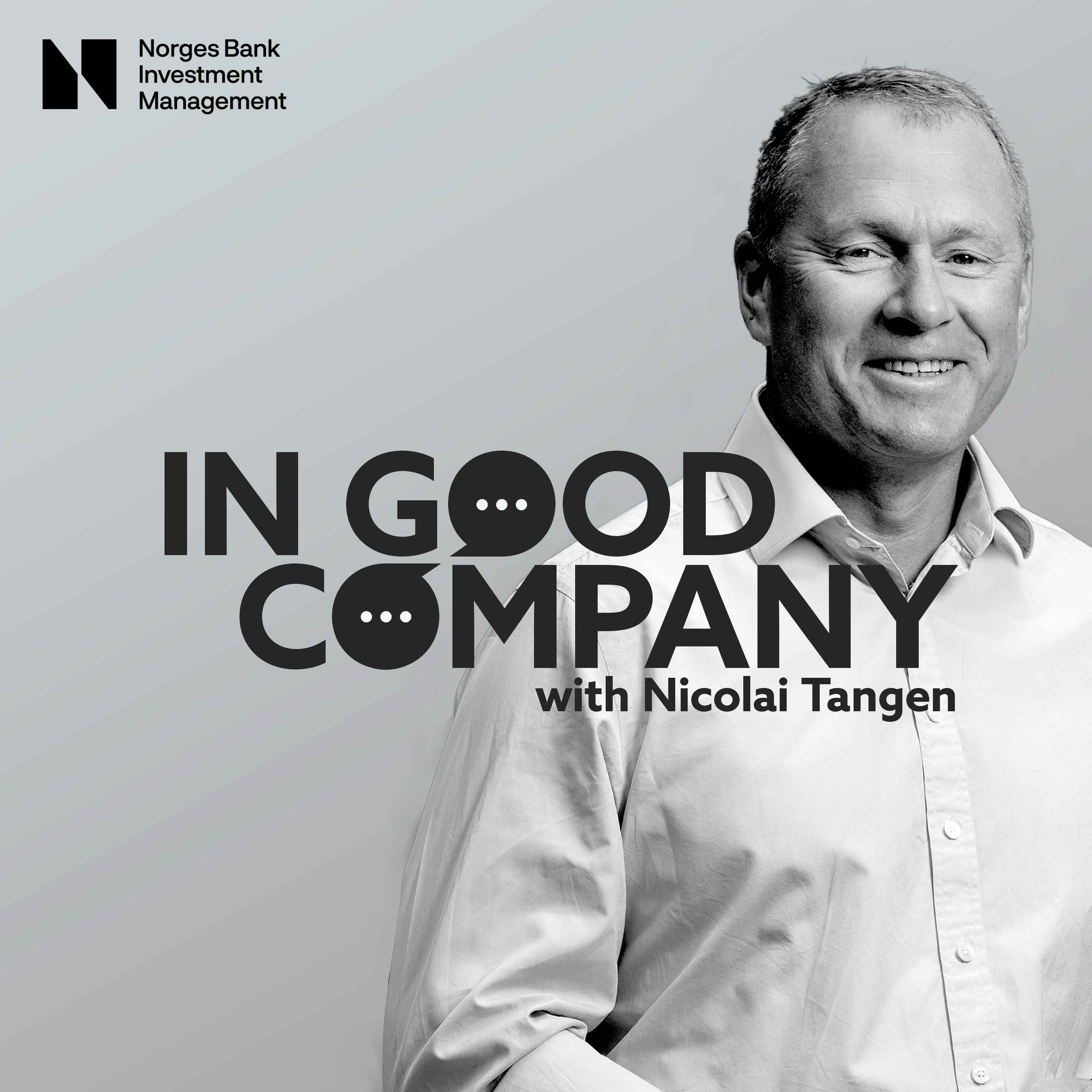
In this curated 10-minute episode of In Good Company, Nicolai Tangen, CEO of Norges Bank Investment Management, interviews legendary contrarian investor Anthony Bolton. The discussion centers around the principles of contrarian investing, the current market dynamics, and Bolton's investment strategies, particularly drawing from his extensive experience at Fidelity.
Written by AI. May contain mistakes.

Get the gist, explore an idea or ask about something said.
 Claude
On In Good Company with Nicolai Tangen, what are the key points of this episode?
Searching your listeningAutomatic transcript. May contain errors.
0:00Hi, everybody. Tune in to this short version of the podcast, which we do every Friday. For the long version, tune in on Wednesdays. hi everybody today we are in really good company because i'm here with anthony bolton and anthony bolton he is in a way in my mind the father of contrarian investing you know the best person i know to do the opposite of everybody else and my have you made a lot of money for fidelity over the years doing that so a warm welcome anthony thank you nicolai it's lovely to be here with you why can one make so much money by doing the opposite of other people i think because very few people are doing it.
0:37So it's almost by definition. And the trouble in the stock market, if you do what everyone else is doing, it will work for a while. But the more people who get on the bandwagon, eventually it bursts. And I think that's why it's important. My view of investing that popularity is risk. And conversely, unpopularity is opportunity. I'm not saying everything that's unpopular, therefore it is an opportunity. But I just early on, I wanted to look where other people weren't looking. And I always felt uncomfortable if I owned something that everyone else owned. Not many people feel that way. That's the point.
1:23That's why I think it works. So when you think about being contrarian, I mean, what is it? What does it entail? I think it entails, I think it's something in the personality that you feel comfortable about being different. I think most people are, they like the comfort of the crowd. They like to be reinforced. They like the people around them to be telling them, you know, what you're doing is good. It's what I'm doing and what everyone's doing. So I think there's something in the makeup of a contrarian that is really important. And it's very difficult to put my fingers on it because often my colleagues at Fidelity say, you know, how can I become a contrarian?
2:10And I think you need to start. I don't think everyone can do it, put it that way. So there has to be something inside you. And what is that? What is that something? It's so difficult to put one's finger on it. But it's the ability to back your own convictions, to be unemotional, and to be patient, I think, is part of it. Because often you're going to have to waste a bit. When you look at the stock market, what are the type of things you look at? How do you gauge the stock market's mood, for instance? What are the indicators? Okay, I was someone who would like to look at a whole amalgam of things.
2:51And I always say, look, what I looked at wasn't necessarily different from what most people, perhaps how I mixed it together. It's interesting. When I look at a stock, often the first thing I look at is the chart. I want to know, you know, the chart immediately tells me. So the chart being the stock price, right? The stock price. So I'm putting a chart in front of you. What are the things you look at? You know, am I early or late? is this a stock that's done well for a long time? You know, which probably means I'm late. Doesn't always mean I'm late, but probably. Is it a stock that hasn't done well?
3:26And those were the ones I particularly like, you know, to screen for because I'd look at them. Some of them were no good. You know, they're always going to be dogs, duds. But particularly if there was change, if there was change in the management or the portfolio of businesses that they were in, or the environment was changing for the better. Then I'd look, especially with UK companies, I'd look at the shareholder list. I found it's a very underrated thing to look at shareholder lists. And what I was looking for is, are the funds that I rate already owners of this company? This is particularly so in medium and smaller companies.
4:09And that was very much the heart of my approach. I mean, as the funds got bigger, I bought more big companies. But I think my greatest love was in medium and small companies because you could, if you did your work, you knew that you knew more on those companies than most people do. And what were the type of shareholders you would have? I mean, I can't, you know, I'm 10 years out of date from doing it or even longer. But there were certain funds that I rated and it was interesting, if I saw lots of them there then I knew I was late. They'd all discovered it before me. If I saw none of them there, I mean that might be a great sign or it might be just it's a terrible business and no one's ever going to buy this.
4:56Perhaps the best were maybe there was already one other fund that I rated and that sort of said well they've already picked this up and then, but it leaves lots of room for other people to come in later. How do you decide the entry into a contrarian position?
5:18It, as I say, there were the whole amalgam of things that I looked at and when I thought it was interesting, I would buy a position. But I'd normally start, it was normally at half a percent, So 50 bits type position in the company. And then as my conviction increased, I might go up to 100 and then up to 200. And then I have a few positions where I perhaps got up to 400. It was interesting. In the early days, I thought of everything. So 400, that's like 4 % of your portfolio. Yeah, of the portfolio. In the early days, I thought of everything absolutely. Because Because obviously, in the last 10 or in the last 20 years or so, one thinks much more in terms of relative positions than absolute positions.
6:03But that's how I did it. And I normally had, you know, a thesis on it. One of the things I particularly like were asymmetric returns. What does that mean? So stocks where I thought the downside was limited, but they might in certain circumstances have a lot of upside. So the upside and downside wasn't the same. In a lot of stocks, well, they might have a lot of upside, but they also can have a lot of downside. So the downside was protected by maybe a very strong balance sheet or a business with very good cash flows or whatever it is. But they had something like a drug discovery or they were drilling for oil or something that if they were lucky, this could make a huge difference to the valuation.
6:58How long can you be wrong before you change your mind? How stubborn are you? Well, that's an interesting thing. I think it's to do stubbornness versus conviction. You mustn't let conviction. I was always, one of my colleagues said, you know, they were on the edge of their seat with stocks. I think that's you have conviction, but you've got to be open to changing that. I think that's terribly important, so stubbornness. But it's a difficult business because, in my view, you can get by with luck for three years. I think over three years, It's skill, it's not luck. But anyone's record less than three years might purely be luck.
7:48Or the opposite, might be lack of luck. Yeah. Now, how do you know when you're wrong? How? I think it's keeping the open mind. I think keeping the open mind, look, you know, getting it right 55 % of the time is great. So 45 % of the time you're going to be wrong. So you've got to realize that this is a business where we're going to have a lot of times we're wrong. And you've just got to learn from it and move on. And one of the things I always say is the things that often differentiate the good managers from the bad managers is not the successes. It's not having the losers. I think if you can cut out your losers, that can take you from an average or better than average up to the top quartile.
8:50Just moving on to the market and how it's changed. So with all the passive money, the trend following and so on, just how have things changed in the market? I think it makes the trends go on longer. That's definitely the case. And it, you know, and the quality of the competition goes up the whole time. So it was easier to do it 20, 30 years ago when not everyone was visiting the companies. The amount of information wasn't there. The ability to process information has changed. But funny enough, you still get big anomalies. This is the fascinating thing. and almost the dumb money produces the anomalies at some times.
9:40And the trend goes on for longer. So it's a longer wait and people can't do the waiting, as it were. But it does change.
9:57Some people think the markets have become more efficient over time. People are much better. therefore the anomalies have disappeared. Well, no. In some ways, some of this creates new anomalies. So the correction comes later, but when it comes, it's bigger. Yeah.
We've curated a special 10-minute version of the podcast for those in a hurry.
Here you can listen to the full episode: https://podcasts.apple.com/no/podcast/the-mindset-of-a-contrarian-investor-anthony-bolton/id1614211565?i=1000715373598&l=nb
How can investors profit by going against the crowd? Nicolai Tangen sits down with legendary contrarian investor Anthony Bolton to discuss the art of thinking differently in financial markets. Drawing from his remarkable tenure at Fidelity, Bolton explains why popularity is risk and how the best investment opportunities often feel uncomfortable. The conversation explores why current market dynamics may be creating even bigger opportunities for contrarian investors, while Bolton shares his views on China, US tech stocks, and the future of markets.
In Good Company is hosted by Nicolai Tangen, CEO of Norges Bank Investment Management. New full episodes every Wednesday, and don't miss our Highlight episodes every Friday.
The production team for this episode includes Isabelle Karlsson and PLAN-B's Niklas Figenschau Johansen, Sebastian Langvik-Hansen and Pål Huuse.
Hosted on Acast. See acast.com/privacy for more information.


