
 Ask ChatGPT



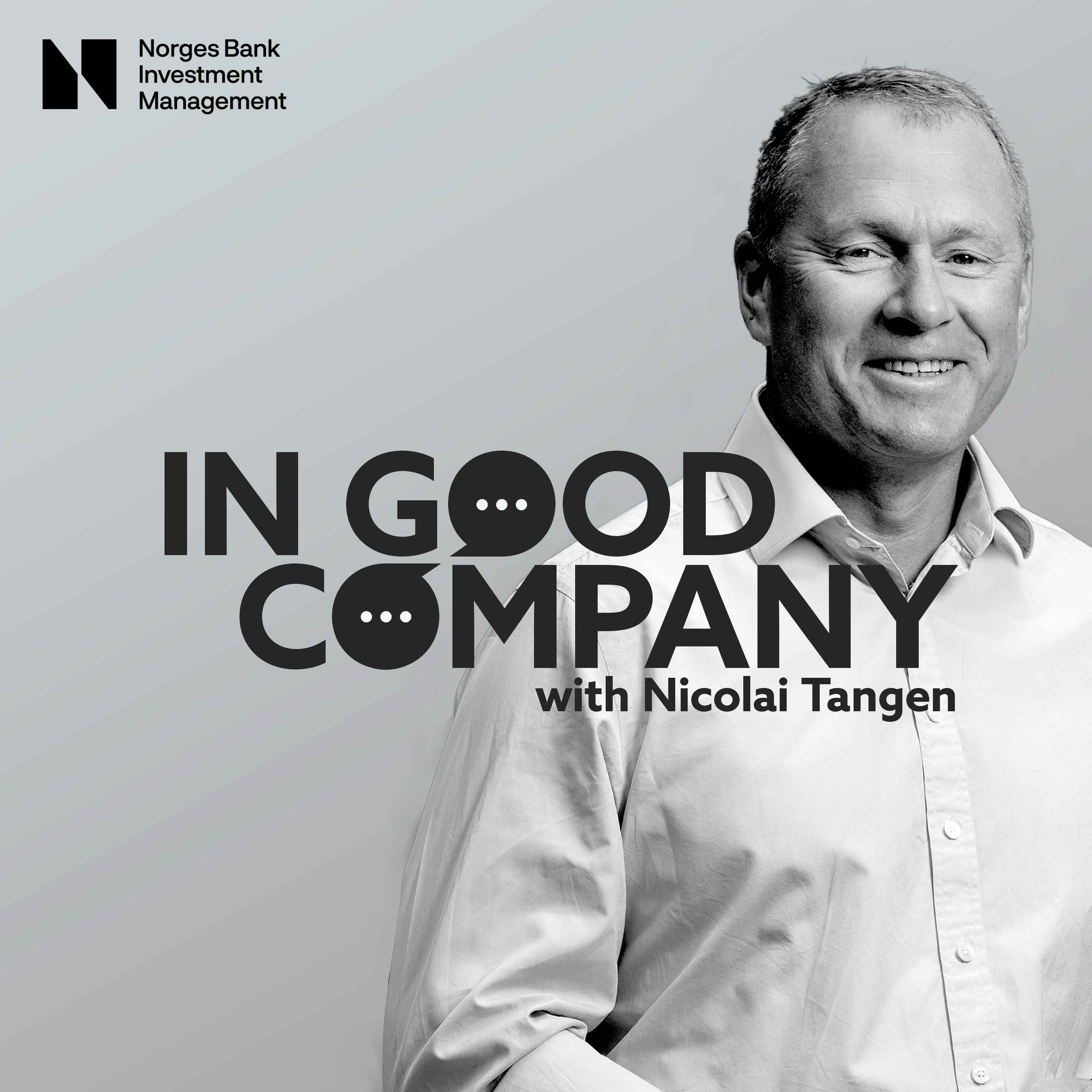
Host: Nicolai Tangen, CEO of Norges Bank Investment Management
This episode features a concise discussion with David Ricks, Chair and CEO of Eli Lilly, focusing on the company’s innovative work with weight reduction drugs and their implications in modern medicine.
Written by AI. May contain mistakes.

Get the gist, explore an idea or ask about something said.
 Claude
On In Good Company with Nicolai Tangen, what are the key points of this episode?
Searching your listeningAutomatic transcript. May contain errors.
0:00Hi, everybody. Tune in to this short version of the podcast, which we do every Friday. For the long version, tune in on Wednesdays. hi everybody i'm nicolai tangen the ceo of the norwegian someone wealth fund and today i am in particularly good company with david ricks the ceo of the pharma giant ella lily now ella lily is spearheading as you may know the weight reducing drug revolution we own more than one percent of the company totaling eight billion dollars big thanks for coming dave great to be with you. Now, the GLP-1 drugs sent shockwaves through the world, and now they seem to be curing everything from alcoholism to Alzheimer's.
0:42So why are these drugs so efficient? Yeah, well, it's certainly been an exciting time for the company, but also for medical science, because this is actually not a very new idea to stimulate GLP-1. Lily launched the first GLP-1 agonist in 2006, so almost 20 years ago. But it's, I think, a good example of how the technology in medicine works is that oftentimes we know the sort of the major theme, but making a molecule, making a medicine that behaves with properties that can achieve optimal outcomes takes time and effort. And we're now on our, really our third generation of these drugs with terzepatide, which is a dual acting.
1:26So it's GLP plus GIP, two different gut hormones. I think by making drugs that were flat and lasted a long time, and then we could dose a little higher, we've discovered that we are not just affecting blood sugar and other metabolism factors, but affecting probably the brain and the desire center. When you discovered it in 2005, 2006, it was more like a side effect, wasn't it? The weight reduction part. It was a positive side effect. In fact, the cover of our annual report in 2007 has a woman who took this medicine and she said, my diabetes is under control and I'm losing a little weight. People say I look better.
2:08So she noticed it from the beginning. It was not the design goal for that drug, Xenetide. It wasn't even the design goal for the follow-on to that, which was a weekly medicine called Trulicity or Dulaglutide. It was a design goal for trisepatide, which is these two actions for weight loss. And whether the weight loss itself has these broad effects, you mentioned dementia and Alzheimer's, and probably the effects there are more vascular, so similar to the cardiovascular benefits, probably reducing strokes and mini strokes. That needs to be proven, but those studies are getting done. or this desire center where these hormones, our stomach, our gut secretes after we eat, tell our brain that we're full and that that is also affecting alcohol consumption, cigarette smoking, other kind of hedonic behaviors humans have.
3:04So we're also studying those things because probably in modern society, the things that harm us most are our own behaviors. So the blue sky scenario here, 10 years from now, what could this drug do? Well, I think you can certainly see in our sites now, I think we have evidence from the last year that not only do you lose weight and for most people who are overweight or obese can get to a healthy body weight on terzepatide. We have more medicines coming, by the way. We could talk about that for people with even higher body weight or to be more scalable or more convenient. But I think we can easily say that weight management will become more like a choice than an affliction.
3:46And that's good. We can also say that we've learned in the last 15 months that major categories of downstream disease of obesity are affected by weight loss induced by these drugs. That seems obvious in hindsight, but it is a key question is not do you just affect the kind of the precondition, but actually also the disease. cardiovascular risk, which has been shown, kidney disease, now liver disease, et cetera. So that's important because those diseases make up about 40 % of healthcare costs in developed economies. So that's a blue sky scenario by itself. The trick there will be scaling, right?
4:27Because right now between Lilly and Novo Nordisk, we're maybe serving less than 20 million people on the planet. And there might be a billion people with overweight or obesity who are going to get these chronic diseases. How does AI help you or will help you? Yeah, it's already helping us in many ways. And I think I'm a really positive optimist about AI, not only in our sector, but in all sectors. On the drug discovery side, there's a lot of hype about companies that are forming and say, we'll just turn on a computer and write some code and we'll invent new drugs. I do not think we're close to that.
5:08That wet lab validation and having really strong data sets to make predictions is critical. More likely, AI and what we're using it for now is a much more granular tool to predict individual experiments. In some cases, don't even conduct them because we don't think they're worth it. the drug won't succeed and knocking things out earlier or enhancing experiments with synthetic data and enriching sort of how we look at those results. That's already happening now, but these are micro steps in drug development versus some sort of magic, um, turn on a machine and make it happen all at once. But that makes our scientists move faster and makes their, their, their, um, laboratory experience more valuable.
5:56And I think both those things are helping us today. How much easier is the whole process to do in the U.S. compared to Europe? Drug discovery and development? Yeah. It's not that different, actually, between the two markets. We have huge operations in Europe. As we do in the U.S., those are our two centers for both production and science, clinical trials as well as discovery. Probably more discovery in the U.S. and proportionally more clinical trials in Europe. The thing that's different is the market side. So the adoption of technology in Europe is super slow and in the US is quite a bit faster.
6:34And that's a problem for us in terms of our interest in the European continent because we are on the clock with our patent life. And if a meaningful part of that is absorbed with the government processes to get a drug approved and get it on formularies in countries and then go through procedures at the hospital level to get it used, it's really a waste for us, but also for patients who can't access the medicine. Moving on to pricing, what is the most difficult ethical dilemma you are facing when it comes to affordability versus profits? Yeah, I think we have many ethical dilemmas in our business because health is so personal and there is an ethos around universal healthcare.
7:22This is a core one. There are others too, I would say. But what is a fair return for an innovator? And I think there's brackets on that. One perspective, which had been pursued by the industry, we don't pursue, is that it's what the market will bear. I think that probably steps across ethical lines for many actors in the health system. And we actually don't pursue pricing that way. But you can imagine desperate people who need a medicine to survive. You can get into price points that are really exorbitant and maybe make a short-term return, but you'll probably be either legislated or sued out of business if you pursue that forever.
8:12Or, you know, there's on the other spectrum, there's a marginal cost plus. Take all your input costs, including research, and we'll add something to it. But I think that the risks that fails to account for the risks in our business, which are very significant compared to other established businesses. And the return on that risk, as you would know, needs to be substantial because things can go wrong. They don't go wrong quickly. So the problem we have in explaining that, Nikolai, is it just seems like everything's okay tomorrow and the next day and the next day. They go wrong slowly and then all of a sudden, and that's the patent cycle problem we've faced, right?
8:52So once a drug has been proven and is widely distributed and is helping millions of people, that's when those arguments come in of, oh, cost plus. But we wouldn't have had the thing to begin with because no one would have undertaken the risks to invent it. We pursue more of a value approach. What is the displacement of other costs in the healthcare system? Certainly we deserve credit for that. And then what is the value creation beyond that that can occur? For instance, with our weight loss drugs, there's emerging evidence that absenteeism drops in the workplace when people are on them. Maybe that's because reduced alcohol consumptions or other health factors.
9:31There's indirect things like joint and knee pain drop. So hip replacements and knee replacements are slowing in populations using our drugs. Well, we probably should get some credit for that as well. So our idea is that we capture some, not all, of the direct and indirect value we create during the patent period. And then we remind policymakers that one of the great gifts of our industry is that everything we pursue, everything we invent goes to zero for us and goes to infinity for society. because generic drugs are such a great deal for healthcare systems. We invented Prozac 40 years ago. It's a standard of care globally for treating major depressive disorder.
10:11It costs in major markets about four or five cents a day. It's virtually free. And I think that's a tremendous gift to society. We don't want credit for that directly, but we, I think, deserve more credit on patent because of that.
10:31Thank you.
We've curated a special 10-minute version of the podcast for those in a hurry.
Here you can listen to the full episode: https://podcasts.apple.com/no/podcast/eli-lilly-ceo-the-weight-loss-drug-revolution-ai-in/id1614211565?i=1000693848152&l=nb
Nicolai Tangen meets with David Ricks, Chair and CEO of Eli Lilly, for a discussion about the pharmaceutical giant's remarkable journey. At the forefront is Eli Lilly's breakthrough work with weight reduction drugs, which are showing promise far beyond their original purpose - from treating addiction to potentially impacting Alzheimer's. Ricks reveals how the company has revolutionized drug development by cutting traditional timelines in half, how it navigates global market challenges, and how it approaches drug pricing and innovation. A must-listen for anyone curious about the future of medicine!
In Good Company is hosted by Nicolai Tangen, CEO of Norges Bank Investment Management. New full episodes every Wednesday, and don't miss our Highlight episodes every Friday.
The production team for this episode includes Isabelle Karlsson and PLAN-B's Niklas Figenschau Johansen, Sebastian Langvik-Hansen and Pål Huuse. Background research was conducted by Kristian Haga.
Hosted on Acast. See acast.com/privacy for more information.


