
 Ask ChatGPT


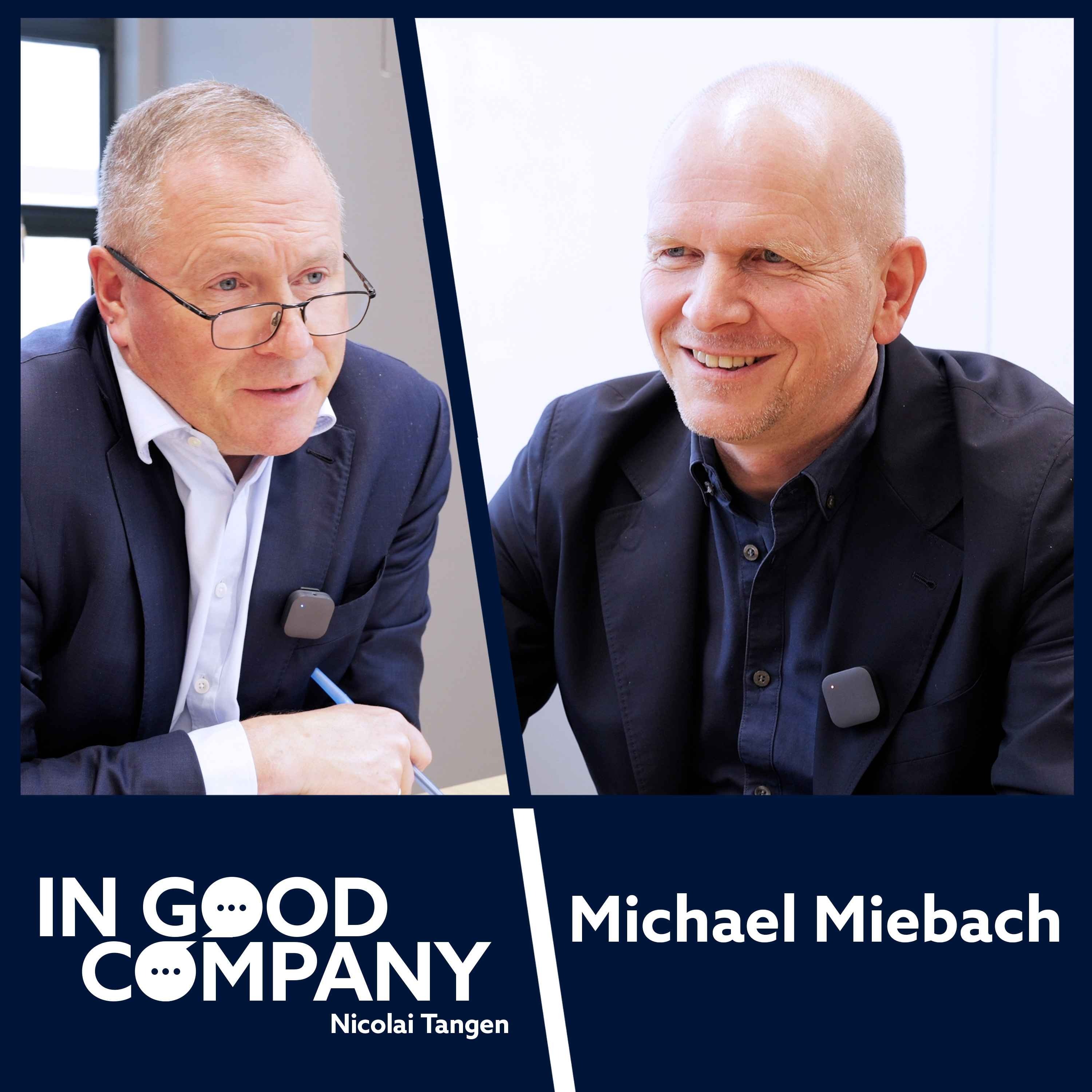
 In Good Company with Nicolai Tangen
15 Jan 2025 · 49m
Written by AI. May contain mistakes.

Get the gist, explore an idea or ask about something said.
 Claude
On In Good Company with Nicolai Tangen, what are the key points of this episode?
Searching your listeningAutomatic transcript. May contain errors.
0:01Hi, everyone. I'm Nikolaj Tengen, the CEO of the Norwegian So1 Wealth Fund. And today I'm thrilled to be joined by Michael Mierbach, the CEO of Mastercard. Now, Mastercard is one of the largest technology companies in the global payment space. And last year, I think you processed more than 140 billion transactions, totaling more than$9 trillion in payments volume. Wow. We own 1.3 % of the company, totaling more than$6 billion. So it's a pleasure to have you here. And I believe this is your first ever podcast. It is the first ever broadcast and it was 150 billion transactions. Wow. So even more.
0:38Even more.
0:48So Michael, how do you see the whole payment space developing over the next decade? Right. So the powerful trends at work in payment. The first one to talk about is now as our lives are digitizing is payments are becoming more digital. There's still a lot of payments that happen in cash. You look at developing economies, take Africa, Asia and so forth. And you won't believe it. There's also a lot of checks around. When I moved to the United States, you find a lot of checks. That's still also part of the reality. Then there's different kinds of spaces as in personal payments and business payments.
1:24And personal payments, you know, payments on the phone, biometrics, those things are becoming very, very common. If you go into a store, you just tap your card, for example, you tap your phone, it's also pretty common. That is not the reality in commercial payments. In commercial payments, things are a lot more clunky, and it's not as digitized and as intuitive. So with this as a landscape, progressing from different starting points, digitization, frictionless, all that progresses quite dramatically. Basically, technology is there today to do that so that in 10 years out from now, biometric authentication, no more passwords, you basically recognize, like your phone recognizes you today when you open it and the payment goes through.
2:06So 10 years. So now, you know, before I came here, I had a slice of pizza down at the Roma Pizza. Pretty good. Yeah, New York Pizza. Yep. Now, 10 years time, how will I pay for that? Most likely you will have possibly a personal device, but it's not a payment device. It would just be your phone or you don't even have a device. You basically just look into some sort of authentication camera or something that the pizza dealer has where it says, OK, it's Nikolai and it just goes through. You pay authenticating with your palm, with your face, with your eye. That is where I think things are going. The security is still there though in the background where it takes data that you have permission as a consumer to your bank for example and say I want for security reasons I allow you to use it and your facial data is then in the transaction but it's all tokenized.
2:59So it's only used for this one transaction at this one point so the personal data doesn't fly around in the internet or in government databases or so forth. And what's the role of MasterCard in this world without cards? Right. So what we do is we enable the transactions between different parties. For example, you have a credit card today. Credit card is issued by your bank. Now, the bank. And you travel to New York and you buy a slice of pizza with your Norwegian credit card. Who makes that? All the complexity in the middle work. That is us. We connect the bank to another bank here in the United States, to the merchant.
3:36And the circle closes. It's a pretty complex process, which we make very simple. and it happens in the background. There's only one of the many roles that we have. We do many other things. We keep the transaction safe. We enable a transaction. Let's say you have an airline card and you have airline miles that you might get for that. We facilitate those kind of services that come on top of that. It's on the personal payment side. Take a small business. A small business needs working capital. They want to get paid faster. So there's a set of payment solutions, card-based payment solutions that get the small business, their payment much faster than they otherwise would.
4:15So that helps those people. There's a wide range of things that we do across payments and payment-related services. What are digital currencies going to mean for you? Digital currencies, you know, the power of digital currencies lies in the underlying technology. If you think blockchain, for example, so if it's a blockchain-based digital currency, there is something called programmability. So if I pay you today, but we park the payment here in the middle and it's programmable and says if these five conditions are fulfilled, only then will the payment go to Nikolai. That is the kind of technology that blockchain is.
4:55So I think it's an enabler to make payments smarter, to facilitate easier processes that don't have to happen. And the back offices of a company to check, has this all been fulfilled? You can all program it and make it part of the payment. Now, there's other ideas around digital currencies. Take the digital euro, for example. So here's the European Central Bank that is advocating to have a digital euro. is basically central bank money in the hands of European Union citizens in Euroland. Different story, that's an alternative way to pay. You could pay with your MasterCard or you could pay with your digital euro.
5:36We generally like competition. That's good. We have a certain product. This is another product. It's not out there today. It's targeted to potentially pilot in 2026. So there's an element of competition. There's an element of betterment that can come out of this technology. We're quite heavily investing in it. And crypto? Crypto, you know today... Do you personally own cryptocurrencies? I don't, no. My son has invested, I think,$100 into blockchain. He's very happy today. He just called me the other day. But where does it meet MasterCard? It meets MasterCard as... it's like any other good or service.
6:20So what I mean with that is today you can use your MasterCard to buy anything that is legal. So that's what we facilitate over our network. Now, if you wanted to buy cryptocurrency, that's just another good. So we enable the on-ramp and the off-ramp into a cryptocurrency. So if I want to buy half a blockchain, then you can do that with your MasterCard. We obviously vet those cryptocurrencies, compliance standards, and things like that. But that's what we facilitate. but it's like buying anything else with your MasterCard as long as it's legal. Okay. Now, what part of the whole big tech, fintech innovation are you most worried about?
7:03What is the biggest threat to your business?
7:09So the space of fintech. So let's just talk about the landscape. Who's there? There's big tech. So take Apple, for example. FinTech, in a way. Take the startup space, somebody who comes up with a particular tool that is part of the broader financial ecosystem. And somewhere in between, you have the whole category of neobanks, digital-only banks that have just been born as a digital-only bank that are competing with existing banks. So that's the broad range. where we come across them is really mostly as a growth driver for the payment ecosystem. Because fintechs, the startups, the neobanks as well as big tech, are enabling digitized transactions in part of the world that were not digitized before.
8:07And it's kind of like a one plus one is three situation. So I'll give you a very specific example. With Apple, when the Apple Card launched and when Apple Pay launched, the idea of tokenization was born. And we worked together with Apple to tokenize card data to ensure that payments are more safe and more secure. That is now prevalent around the world. Like we do one billion transactions a month in tokenized transactions a month. So it's come from an idea to something very significant that drives more simple and more secure payments. therefore digitization advances. That's something that a company like that can do.
8:50On the startup side, what we're doing is we have one of the largest fintech incubators that are there. So fintechs come to us. We help them run their business because they have an idea as an entrepreneur, but they don't really want to think about payments or running a business. They want to turn their idea into reality. So we invite them into our StartPath incubator, and we work with them. Now the question about competition and threat. And Apple in theory could decide, because they're so large, to do payments themselves without us. And why don't they? Absolutely a possibility. The smaller ones, they're rather, I think they're introducing new capability, entrepreneurial thinking, creativity into the ecosystem that's fundamentally not a competitive threat, at least in early stage.
9:40But if they have a dramatically new technology, an idea that we miss, then that could be a problem, but that's medium to long term. But we engage them for exactly that reason. So we understand where is smart money going, where is new technology going, and so forth. The larger ones that have a large ecosystem, take an Amazon, take an Apple, and so forth. The main thinking that we have learned and appreciated working with them is move fast. They want to move very fast. As a global network as we are, we've traditionally not moved so fast because whatever we do has to work for everybody in our network.
10:17That is 27 ,000 banks around the world in 220 countries and territories. It has to work for Apple as well as the commercial bank XYZ in an Asian country. Very different approaches, very different speed and so forth. They want to move fast. So we started to learn how we can get the whole value chain and MasterCard to move equally fast over time. We're not quite there yet, but a lot of progress. If we hold them back, then the likelihood increases that they're looking for alternatives. But why don't they start on the road? So far, if you look in, they've been a fantastic partner and we have done Apple Bay together.
10:57We have done tap on phone together. We've done a whole range of things together that are in the existing ecosystem but not in their own closed loop environment. And one of the main things is always important to understand what is your partner, your strategic partner actually trying to do. What we see they're trying to do is this is a fantastic user experience and have the user use that as long as our solutions facilitate that within the phone within the iphone for example now that works take amazon and have you know one click experience in the marketplace for the longest time if payments start to add five clicks because they're just full of friction that's a problem we've invested as a company in frictionless security that happens in the background and it is not one-time passwords and so forth.
11:49We've just announced that by 2030, we will have no more one-time passwords, no more passwords. It's all going to be authentically authenticated payments, i.e. with your face. By 2030, and we're pushing the industry because we have a broader network, we can take everybody by the hand and say, we give you six years to figure it out, to get there, to advance to the next stage that we don't have to worry about these things. Large players like that, if the industry doesn't move and it's a bad user experience, I think they might have enough motivation to do their own thing. But that's exactly what we learned.
12:29It's why we love those partnerships. Okay. So you don't think it's a threat in the short term? No. What do you make of the buy now, pay later companies? I see Klarna is now listing the New York Stock Exchange, right? Yeah. IPO plans for the US have been registered and so forth. You know, buy now, pay later is an interesting phenomenon for many reasons. Positive. There might be people that might never use a card in their life. It's just not how they grew up, you know, young people. And this buy now, pay later idea, you take a loan for one particular use, that's good. Could be interesting from a borrowing perspective because you actually need the credit.
13:10So for all sorts of reasons, it's relevant. We looked at this when this first came up about two to three years ago. This is when the trend really kicked in with Klarna, with Affirm, with Afterpay. And we looked at these business models and we started to talk to our customers, for example, the banks. And the banks are saying, you know, this is an interesting way. If we were to build out our loan portfolio through transaction-tied lending, then our cost of acquisition is much lower because we don't have to find all these customers through a branch or another way to take a personal loan from us. It actually happens through the transaction.
13:51So it makes sense from a bank's perspective. So there was interest. And we said, well, great. How does Klarna, how do a firm grow their business? they go to large merchants and they offer this capability. It's a very good user experience. Meanwhile, it wasn't initially, but it's meanwhile. And we said, what can we solve that isn't solved in this? And what we can solve is scaling this up. If you deliver this capability through the MasterCard network to any merchant around the world and you have a bank, any bank on the other end of the transaction, that really drives scalability is exactly what we have done.
14:28So we took this to MasterCard installments, to market, I think last year and said, wherever MasterCard is available, if you want to buy now, pay later, you can take it. And ever since, the questions that we got from investors was, you know, isn't this the end of MasterCard? We said, well, we always consider that. But here's an answer, and that is we just make it available through the network, because the network can deliver any functionality, and that's what we put in. So it lives alongside the Clarnas of this world.
15:05In the payment space, where is Europe compared to the US? So, a few things to say. When I look pre-COVID, pre-pandemic, the digitization rate of particularly continental Europe was behind the United States. UK was a bit different at that time. It was still part of the EU.
15:31We saw fintech innovation, I think, across the pond and in similar ways. But overall, use of cash was higher in the United States. Use of cash is still higher in the United States than in Europe, but Europe has dramatically caught up. So if you look today, take my home country in Germany, there's a lot more digitization than was there three, four years ago. So catching up. So that's one distinction. The other distinction is the versatility. The range of choices and payments in Europe is higher than it is here in the United States. You have options. Go to Denmark. You can pay with mobile pay anywhere.
16:19QR code and you pay. My daughter lives in Copenhagen so whenever I go there I have a problem because as a visitor it actually doesn't work. For a tourist city like Copenhagen I think there's an issue that it somehow should be addressed. I think we should lean in on that. There is take go to Poland take Blick or BISM in Spain is the equivalent of mobile pay. It's mobile based payment solutions. you have various local equivalents of MasterCard, gyro and so forth, different card propositions that exist, but they generally only work in their respective country, despite the fact that it's the EU, but then it works in the Netherlands only, it works in Spain only.
17:05You have, obviously, you have MasterCard and Visa available and American Express, so greater versatility. I was recently in Brussels talking to the respective commissioner, and the question that set up the meeting was exactly your question. How do you compare Europe to the rest of the world? And I said, well, there is the most choice to the European consumer available. For us, it means a number of things. It means that in Europe, every capability that we have as a company and where we develop, we need to keep Europe in mind because there's more choice. So we want to make sure that our solution is as differentiated as possible and really gives the consumer in that array of choice the best reason to use our payment solution.
18:01That's the consumer as well as the customer, which is oftentimes the bank. So more diversity in choice, but more opportunity to continue to digitize, I think is probably the net answer to your question. Rest of the world, so Asia, Africa, China, what are the main trends and opportunities? If we take that landscape, it's interesting. It really comes down to the question of how does a market grow up in payments? You take China. So in China, what you see is, like in Europe, if you're in Oslo, you'd probably tap a card or use a phone. What you do in China is you scan a QR code. Entirely different.
18:48This has really not scaled anywhere else in the world like that. WeChat, Alipay. You see Alipay maybe in Europe at some airports where there's a lot of Chinese consumers traveling through. Why is that? Because it was and continues to be a protected environment. So it just grows up differently. It's like the biosphere of Australia looks entirely different like the rest of Asia. So it's the same for payment if you want to compare it like that. In Africa, yet again, a different starting point. It's also where in time are you? You have a highly digitized market in China. In Africa, it's not highly digitized yet.
19:31It's mainly because of infrastructure reasons and economic reasons. But now it's starting to accelerate quite significantly, and it takes yet again a different route. It doesn't take the route of legacy technology's leapfrogging, and it's going straight to mobile-based financial services. And this isn't the same mobile-based financial services I touched on earlier, like just a mobile-based payment. Everything is on the phone. And everything is on a phone like this, but also a really basic feature phone. So mobile-based financial services is the path that Africa takes, and that includes payments.
20:07And what do we know about that? Not much. I worked in Africa for 10 years, and I learned you've got to have the locally relevant solution. So what we decided to do is we obviously offer our standard solutions, but we invested in partnerships. So we're partnering with the large telcos. We just announced, it was earlier this year, a$200 million investment, MTN, which is the largest telecommunications mobile provider in Africa, to deliver, to spin off a mobile-based financial services business to drive solutions to consumers in all parts of the continents. Saving, paying, being paid as a small business, transferring money in and out, getting remittances from your relatives in Europe, etc.
20:54The whole range. So those are some examples on how the world looks very different. So when you look at your strategy going forward, how important are these acquisitions? and what are the type of things you want to buy? So we're very clear when it comes to acquisitions, what we want to do. So it always starts with the strategy, obvious thing to say, but it does start with the strategy, what do we want to do? We want to do a couple of things. We want to have the full range of payment solutions and we want to have a range of services that differentiate our payment solutions, either make them safer or smarter.
21:28That's broadly speaking our strategy. So we look to buy assets that we're not fast enough or good enough in building ourselves, either in the payment solution side or in the payment-related services. And where we then look is to say, okay, I can't build it fast enough. Then I want to start to look outside at the very specific areas that we have just highlighted did yesterday at our investor day that we had here in New York. We said we're looking in cybersecurity. We're going to look forward and say, where's the next threats? Where are the next threats coming from? And do we have the right kind of assets?
22:08Can we build them ourselves in a time of a very fast-moving cycle where the fraudsters coming up with new deals, they're using AI, they're using generative AI, so we can't be building something that takes a year to build. There's a company out there that already has that. We have just announced the plant, And the plant not yet approved acquisition of the world's number one threat intelligence company, Recorded Future. That was a good example. Everybody needs threat intelligence. Where is my next cybersecurity threat coming from? And we want to buy them. Where else are we looking? We're looking in the space of commercial payments.
22:42The outside of our conversation, I said commercial. These payments are clunky. They're not yet as digitized. So we're looking for assets and players that make this space a lot easier. You touched on some of these kind of activities which are outside the core payments, and you do quite a lot of things outside core payments, right? Yes. In your mind, what are the most important things that you offer clients? Right. So just put it in the context of the numbers when you say quite a lot of things, what this means is for us today, core payments is about 60 % of our revenue, and 40 % of our revenue is related to payments-related services.
23:22They're really in two categories, make the payment safer, cybersecurity related services. For example, what is that? It is at the moment of the transaction ensuring that this transaction is the one that should go through and it's not fraudulent. So you fraud score it. Is there a digital identity that it's from Nikolai or that it is going to Michael? Is it used on a device that you have been used before? Is the geolocation data telling you whether you actually can be in this place right now and all of that fraud scoring. One example. And just a bit more on that. So fraud, nearly$500 billion a year in global losses.
24:01How are you helping to reduce that? So this is a particularly important part of our business. We have invested$8 billion in the last five years into cybersecurity capability. and fraud is the core part of that. If we look at what fraud does to consumers in a rapidly digitizing world, once you're befrauded, you lose trust in digital solutions. You won't really participate in the same way. If you're a small business, it can be existential to you. So there's a whole range of reasons why this is devastating. It's rising. Now, we have a really preferred position because every value exchange that takes place in a digital fashion, we have an opportunity to put on a stop to what the fraudsters are doing.
24:51Building the tools, set during the transaction before, digital identity solutions. Is the person that's even attempting the transaction? Can we know? It is with 99 % surety it is you or me. Are the fraudsters moving faster than you? We invest so much money,$8 billion, to stay at one step ahead. And so far, so good. Okay. And AI will change this in what way? AI is enabling fraudsters to...
25:28You pull in additional data to find out where is the most vulnerable target that I can find. That is one thing that generative AI can do for a fraudster to say, all right, I'd pull in all the data, suck it up and say, all right, here's a set of transactions that are easier to go to than others. We can do the exact same thing. Now, it's important to know that for our business, we've been investing in AI for the last decade. We have been investing in generative AI for the last three years or so. What we do, for example, is today, with the help of generative AI, we're not only fraud scoring an existing transaction, we're able to predict in the same fashion I just described what a fraudster might do, we predict what is the next likely fraudulent transaction that's coming.
26:23Because you start to see there is out in the data lake that's out there, you can start to see there's indications, this card might be befrauded because it's been using in vulnerable places, et cetera, et cetera. Many indicators as such. So everybody is arming up and we will arm up faster. And because we have this network position with our customers, we have a lot of partners in the payment space. But even now beyond the payment space who lean on us and say, as a network, you have more data than anybody. You need to help us. This includes governments. When you look at all your data and data sets, I mean, nobody's got more than you in a way.
27:02Anything fun you can read out of these data sets? What are some of the kind of strange things that people do? I'll tell you fun. Let's just stick with artificial intelligence.
27:13So I'll give you two examples. The first is somewhere between fun and less annoyance. You book a trip. You want to go away for the weekend. And what do you do today? At least that's what I do today. So I talked to my wife. We decided we want to go away for the weekend. You look on Google about the destination. You find out about the restaurants. You try to figure out what's the transfer time from the airport, which airline, etc., and your Sunday is gone. But then you have a pretty decent trip. But the Sunday is gone. Today, you can do this in minutes. Provision data where I would make available as a consumer access to my loyalty accounts so it's clear which miles can be used to book the trip.
27:58There's obviously public data, what restaurant is good. open data, open table, credentials for access for reserving at a restaurant, etc. All of this data is there. The manual thing that I do, it can all be automated. So we put out shopping assistance now where we pull all this together and say, the data is there. We're playing in payments. We're playing in loyalty and so forth. So we have actually a preferred position to make this a lot easier. The trip will be fun, but it's less annoying than preparing it. What is even more fun is shopping assistance. So let's say you have been invited to a wedding.
28:36A wedding is in Bali. And the organizers, your friends, are saying the theme is white. So you need a white suit for a wedding in Bali. It needs to be linen because it's super hot there and so forth. How do you even buy that? Shopping assistance. I need a linen suit for a beach wedding in Bali. Natural language, engagement. and then you do this behind the scenes, the product choices come up. Was it AI who bought your current suit there? No, actually, no, that was just me going to an actual physical shop. I like to touch it. Michael, you guys saw yesterday. Well, you know, in pockets I try to be.
29:21But the last thing I want to say on this, this is actually, I'm not making this out, it's live, it's live with Michael Kors, We just put it out into the market as a first test. And I believe the world, the future of a world of a lot of assistance that consumers can easily use is going to be powerful.
29:45If we change tack a bit here, how do you define good leadership? The first thing that comes to mind is you have to have a vision where you want to go. Set a clear vision. Do you set the vision yourself? What do you do with your team? Or how do you get to the vision? Yeah, with the team, of course. But as a leader, I think having a fundamental idea of what you want to do and then start to iterate around that with kind of the best and brightest minds around it, including people who actually challenge the vision, I think is important. So clear vision is the first one. I think back to this question about how you set it, which is a great question, is as a leader to ensure in a fast-changing world, there's a lot of pressure points, technology is changing in a rapid space.
30:35We've seen more change than ever before. To have the right kind of team around a table that permanently challenges and hones the vision, really important. When, I believe you talked to RJ Banga before, when we did our leadership transition here at MasterCard, We announced a leadership change. FYI, just for the listeners, I.J. Bangar was your predecessor. Yes. He's now heading up the World Bank. He's now heading the World Bank. We announced a leadership transition on the 25th of February 2020. This was two weeks before the United States went into COVID lockdown. As a result of which, a month later, our revenue fell off a cliff because nobody went to a store any longer to pay.
31:21Now, back to the vision. The vision and the business model was clear, but it was significantly impaired for a period of time. And we needed a team around the table that was empowered, was willing to speak up, but it was all starting with everybody, including me, accepting. We don't have the answers. There is no playbook for a pandemic. I mean, you can't really reach in the shelf and say, okay, this is how we do that. So creating an atmosphere of psychological safety and ability for everybody to speak up, even if you don't have the answer. In today's business world, that might be common, but I felt this was important to really put that down.
32:10And with the employees, to step forward with humbleness and say to our employees, we don't know, but we'll figure it out together. Do you have some leadership principles that you follow? As a company, we felt we need to double down on exactly that. So what we did is a couple of years ago, we said, here's the kind of behaviors that we want to see at MasterCard. Move fast, grow together, create value. Very simple English. That's what we said. Is that a leadership principle? I'm not sure, but it's the kind of behaviors that we want to see and we want to reward at MasterCard. I think broader leadership principles, as you talk about it, decency, doing the right thing.
33:03That's something that's pretty deeply, even from the days that Ajay was the CEO here, deeply ingrained in kind of the veins of the company. I think that's been a pretty guiding principle. So anything from your private life or circumstances would you take with you into your leadership? Right. Yes. I was 13, so this takes you long back. When my parents said to me, asked me if I would like to be an exchange student. My father used to be one of the first exchange students from Germany to the United States back in the early 60s. and he loved it and they just asked if I wanted to do it. And at the age of 14, 15 actually, I went to the United States to do my senior high school year.
34:00Why is this forming irrelevant? Because of the following reason. The family that had made the decision to take an exchange student, living in Michigan, middle of the country, and was, you know, lovely, amazing, courageous decision. Really didn't travel anywhere before. Had some relatives in Florida, otherwise really no passport, not leaving the country. And suddenly there's this foreigner at the table, and what turned out, what I didn't know is, they were also really struggling to make ends meet financially. So growing up in middle class in Europe where everything just works and we never really had to worry about it to a scenario where everything I took for granted wasn't there any longer to be taken for granted.
34:52Dramatic change in perception and just relooking at life and just not taking things for granted. I think that's the conclusion. The fact that we sit here today, if I hadn't actually gone out, I might be just working in Germany today and do something entirely different than what I do today. I'm not judging it. One is better or the other. So that's one experience. The other experience is I worked close to 10 years in the Middle East and Africa. And it's the same thing. The same thing came. I had a concept of working in investment banking and corporate banking in Europe. And I came to Africa and none of what I knew made sense or worked or was a rule because there was no infrastructure.
35:41All the rules were off. It was just a different approach. Do you have a German leadership style, you think? Is there such a thing as a German leadership style? I don't think so, no. You don't think you have it or you don't think there is? I don't think there is. I'm not sure what that would be. I'd be curious what you think about that. No, I think it's pretty systematic. It's very systematic. It's very ordnung. There's more hierarchy in Germany than in many other countries. I think it might be very cliche. One can never generalize. But I'm certainly not a great friend of hierarchy. Because in the end, when I look for input...
36:17Clichés aren't normally there for a reason. That's true. That's true. But overall, I don't think that's actually the reality. Maybe I know a subset of people. Personally, I think it's really important when I look for input, when I look for input where we might go. Obviously, I talk to my team and I talk to our experts and all of that. But I hang out with some of our youngsters that we have just hired. This office here in particular in which we are, there's a lot of product and innovation focused people. A lot of folks who work in our technology function here in this office in Manhattan. And just wander the floors and sit down with them and ask them, what do you think?
37:00And if you're hierarchy oriented, you would work through your team and say, okay, give me all the input. I get a very different conversation going. Do you ever get angry? No, not really. Ever afraid? Yes. So I'm afraid of heights. Oh, yeah? But what about heights? Are you so high up in the organization now that that makes you worried? It's a very specific thing. I love the mountains. I hike. But in terms of work and challenges and so on, does that make you afraid? No.
37:43What's the MasterCard culture? Is there such a thing as a MasterCard culture? Yes, it's come back to those you asked about leadership principles and talked to you about move fast and create value and the grow together part. There's an element of this is what we want it to be, and a good part of that is already the reality. But I also mentioned the piece of doing the right thing. I really believe it's running deeply in this company. People do the right thing. So I think that sets us apart. We have, I think the grow together part also is really, really strong here. We have 125 offices and I think in 89 countries.
38:35It's a highly, it's a very, very global business. and for us to come together, which you have to do when you run a network business, if everybody has their own thing, then the solution for our customers will not be the same and then the network doesn't work. So grow together is essential. It's not only nice and helpful and good, but it's also essential for us for what we do and the willingness to take folks along and align and coordinate is very high. Why did we talk about move fast as well? Because you can be so focused on grow together that maybe you're too slow because you're trying to make compromises all day long and left and right.
39:20So we're trying to calibrate that a bit better. But I think fundamentally, working together, doing the right thing for our customers and growing together with our customers. This is interesting where a lot of people took that term and said, well, this is about us and our customers. We're very, very partnership oriented, which is really important. Earlier, we talked about competition. If you think about the value chain of payments today, it used to be maybe a merchant and a bank that was involved. Those were the key parties 10 years ago. Today, there's ISVs, PSPs, processors, fintechs, startups, neobanks.
39:56It is such a long value chain today. And the clarity with who is a competitor and who's a partner is completely blurred. If you don't have a partnership mindset, if you don't look for how to grow together, you're going to start to find that your customer set gets very, very narrow. Actually, I made exactly that point at the investor day yesterday, and we had some breakout sessions and a lot of questions on that. Because our investors look at, you're an investor, looking at where might be new competitors coming from. We look at them as potential competitors. We're hyper-paranoid about that. We're always looking for the partnership opportunity at the same time.
40:39Because somebody who has their own payment solution, that's fine. But it could be a dramatic opportunity for us to power their payment solution with our funding source as a MasterCard or with a set of services. Are there any other CEO there who you admire? I spend quite a bit of effort to go out and engage other CEOs. I find it fascinating to spend time together. People I spend time with are obviously our customers. I spend time with Jane. You spoke to Jane. I used to work at Citi for 14 years, so obviously that's what we do. For the listeners, Jane is the CEO of CitiBank. So customer CEOs, I take a lot of interest in going to the West Coast to some big tech folks.
41:33I regularly speak to those companies, Amazon, Microsoft, and so forth. And obviously formidable CEOs there. So I'm part of various circles like the Business Roundtable in the US here where the biggest companies are organized. and every quarter we meet and you walk the hall and everybody walks the hall and says, what are you saying? What about this? What about that? And I find it hugely important. It's also fun. So yes. You have something which is really unique. You have a foundation, the Mastercard Foundation, which is nearly, well, it's got assets of nearly or roughly$50 billion. So huge, right?
42:13Right. Now, I happen to know the chief investment officer, John Barker, who is excellent. But could you just tell us what does having such a foundation do to the people at MasterCard? So earlier I talked about doing the right thing and decency. When this company IPO'd in 2006, from previously being an association, it was the decision at the time to take 11 % of the stock at the IPO and put it into the foundation. That is the MasterCard Foundation today. At that time, it was also important to ensure the independence of that foundation. So it should have not been something that the company can decide at some point, well, we don't want to do this any longer.
43:06It was clear we wanted to do it. I wasn't even there at that time, and it's now there. We have them come to our board meetings once a year, but they run their strategy. And wherever payments and technologies evolved, obviously we talk to each other. They carry the brand, which is important. I was not too long ago at a hotel in Nairobi. And a gentleman helped me find the room. And we're walking down the hallway to the room, and he says to me, can I hug you? And I was like, why? But please. So he gave me a hug and says, I just wanted to tell you the foundation has helped my kids get into college and the first kids in the family that got into the college.
43:56So the foundation, they are focused on Africa and they're doing great work there on youth employment and so forth. But we keep it independent. Or they are independent, full stop. Now, the company has, meanwhile, put out the MasterCard Impact Fund, where this is closer to the company, where we put half a billion dollars into that to start with three, four years ago. and we start to fund activities that are in a longer range of use cases, financial inclusion oriented, where we pull people into the digital economy but with a use case that the company itself maybe wouldn't do. Do you think more companies should think this way?
44:50A lot of companies do. The partners that we have, oftentimes when we strike a strategic partnership with a bank, for example, the shared value piece is really hugely important. They ask us, what are you all doing to make a difference beyond your immediate P &L? We say, well, we're big on financial inclusion. We are big on supporting small business. We're big on diversity. and so forth. So it makes a big difference. Other companies are doing it. And I think it's fundamentally the right thing. The private sector has a huge role to play. The expectation, or rather the trust level that people around the world have in private sector versus the trust they show in government these days is high.
45:39So I think the responsibility is on our shoulders to step up. But at the same time, it's always important to keep in mind is what is the purpose of a corporation is to drive shareholder value and satisfy the customers. And I think we struck a nice balance because particularly for us, it's financial inclusion. We set a goal for one billion people that we will pull into the digital economy. And we set it in 2015 for half a billion. We renewed it in 2020. In the middle of COVID, we went out and said the next 500 million are we're committing to this right now. Because particularly in COVID, it was really important because all small business kind of fell off a cliff because they didn't have the digital capability to operate in a world where everybody was stuck at home.
46:25So we made that commitment. We're reaching that. So this is fundamentally, it's making a huge difference. Other companies finding their own sweet spot. So when we talk to our customers, they have particular relevance either in the community in which they operate and so forth. But there's always an intersection point. You find the like-minded partners. And that's been very good for us from a business sense. It's not only the right thing to do, it's smart business. Yeah. And Michael, last question here. What's your advice to young people? I was talking to our summer interns. It was July. I think it just came to an end.
47:07We have about 800 summer interns a year around the company all over. And I got that question from them. So I was like, what's your advice? I said, you know what? If you leave here and you left questions unanswered, what a waste is your opportunity now you you have permission to ask any question so you know for those young people let's say it's people that are look starting to take a new role um in in you know post studies and so forth use the opportunity of an internship to really nerd out ask what you ever wanted to do because that's that's the time where you can do that and that was the first piece of advice.
47:51The second piece of advice that I gave them is people walking around and say, well, follow your passion. Great idea. But if your passion doesn't really work, if you wanted to be in a corporate environment, for example, then that's great, but it's not always great. So I said, figure out where's the intersection point of what is your passion, what actually matters and what could you be good at? Bring that together. Be more purposeful about that. And that was a reasonable amount of debate on that point. I said, yeah, but I really like doing this. But well, if this is not that relevant, maybe you find a different balance between what you really love to do and what also makes a difference and matters because then you're likely to work on something that has impact.
48:45So those were two pieces of advice. And the last set is see if you can find a sponsor. There's a lot of mentorship around, but see if you can find a sponsor. Somebody really leans in for you and with you and isn't afraid to put your name on the table when it matters. Very good. That's very good advice. Big thanks for being here. And please keep up the good work. We are very happy shoulders. Thank you. Thank you very much. you
In this episode of In Good Company, Nicolai Tangen talks with Michael Miebach, CEO of Mastercard. Together, they explore the future of payments, from biometrics to digital currencies, and discuss how Mastercard is driving innovation and addressing challenges in the global payments landscape. Michael also provides insights into leadership, Mastercard’s culture, and its commitment to financial inclusion. Tune in!
In Good Company is hosted by Nicolai Tangen, CEO of Norges Bank Investment Management. New full episodes every Wednesday, and don't miss our Highlight episodes every Friday.
The production team for this episode includes Isabelle Karlsson and PLAN-B's Niklas Figenschau Johansen, Sebastian Langvik-Hansen and Pål Huuse. Background research was conducted by Sara Arnesen.
Hosted on Acast. See acast.com/privacy for more information.


