
 Ask ChatGPT


 In Good Company with Nicolai Tangen
17 Sep 2025 · 53m
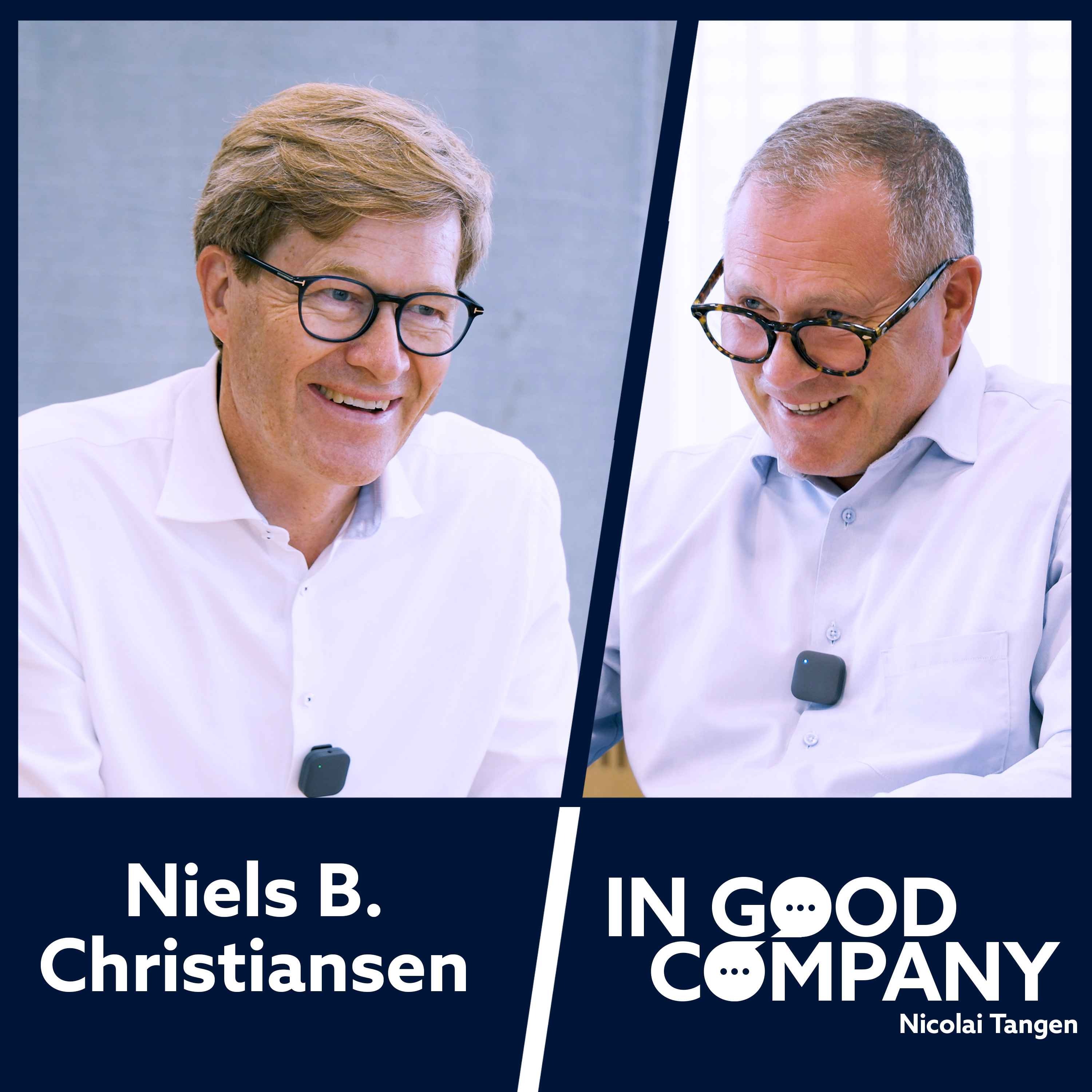
In this episode, Nicolai Tangen, CEO of Norges Bank Investment Management, interviews Niels B. Christiansen, the CEO of LEGO. They discuss LEGO's strategies in the competitive digital age, the importance of creativity in product design, and the company's family-owned culture. The episode highlights how LEGO continues to inspire future generations of builders through its timeless brick sets.
Written by AI. May contain mistakes.

Get the gist, explore an idea or ask about something said.
 Claude
On In Good Company with Nicolai Tangen, what are the key points of this episode?
Searching your listeningAutomatic transcript. May contain errors.
0:01Hi everyone, today we are exploring the building blocks of one of the world's most beloved brands, LEGO. And I'm here with Nils Kristiansen, who's led LEGO since 2017. And we are going to learn about their remarkable business model and what makes this company so special. So a warm welcome, Nils. Thank you very much.
0:27So I was on the train last weekend down from the Norwegian mountains, and I happened to sit next to this lady. And I was preparing for this podcast, and I asked her, hey, what do you want to ask the CEO of Lego? And then she went completely silent, and she said, if you meet the CEO of Lego, you have to thank him for having made my 16-year-old son interested in engineering. Fantastic. So on behalf of her and millions of others, thank you for what you have done. It's incredible. So let's just start. What does it really mean to inspire and develop the builders of tomorrow? Because that's what you say you're doing.
1:10Yeah, it of course takes the outset in children. And we believe that children are our role models in the way they do, the creative way they attack the world. And we know that we actually provide something that helps children acquire some of the skills they need to live in society. More basic skills than when we actually teach children in school. And I think what we learned over the years, that's very applicable to children, but it's actually applicable to all of us. Why do they love building things? Yeah, I guess it's about the creativity, I think, that's built into us people. I think everything from when we, back 5 ,000 years ago, we were making a hammer out of stone, where this desire and drive to create things, I think this is what Lego bricks provide.
1:56I learned a new expression today when I walked around in your factory. Clutch power. Yes. The way that bricks kind of fit together. There must be something very satisfactory with the clutch power. How important is the parent's influence? I mean, we were brought up with bricks. In what way does it go in generations, this? Yeah, it is important for the kids' part. It's less important for the adult part because we do sell to all consumers today. But for kids, adults are typically the best ambassador to bring the first Lego brick set in. We know that building together, adult and kid, is very developing and very exciting, actually, for both parties.
2:37So obviously, following that, there is a big advantage in the countries where, I mean, I guess you and I, being Scandinavians, have had the pleasure of playing with Lego bricks when we were children. That's not the case everywhere, particularly in Asia, in China, in India. It wasn't necessarily like that. So in some parts, you almost have parents as a natural ambassador. In other parts, we are building the brand as we go. And so there's a difference there, but it's super important. It's interesting when you said the lady you were sitting next to. I am probably one of the CEOs who gets most emails and letters from kids and parents.
3:16Just within the last 24 hours, I've had three thanking me for what we do, reminding them of what they did as kids and telling me how that has been fantastic for their children or grandchildren. And it's super rewarding. What does a brand, what does a Lego brand mean? What does it encompass? I mean, it encompasses our values in a sense. So there's a lot of creativity, there's imagination, there's kind of this, yeah, I consider it a medium, with which you can impress everything you want to do or express yourself in a different way. It's almost like something, it's like writing in a sense. You can use the Lego bricks for what you want to do.
3:59And the creation you make is your creation. It's not a Lego creation in that sense. So I think it allows for that. And the brand encompasses all that, I think. How many Lego bricks are there in the world now? Oh, that's a good question.
4:18somewhere I think between 500 billion and a thousand billion it's a big number yeah it's a big number um and the fun thing is when you get a new set you kind of add on what you already have so you have this kind of uh you know in a way it's a flywheel or a kind of a platform yeah exactly it is a platform I I consider Lego bricks actually being the ultimate platform or the ultimate modular system and i mean every company talking about how can we platformize things to make those more efficient they always use the lego bricks as the example for that so i think that that sits very deeply in our roots of course that everything we do better be optimized from a modularity point yeah now kids uh change the way they spend the time Just how does this digital addiction impact your business?
5:11I mean, it makes it harder to stay relevant. At the end of the day, we are actually, we consider ourselves competing for children's time. More than just competing as a toy. And you're right. I mean, children actually in many countries around the globe, they spend more time on school. They spend time on after school. whenever they're off that, they're typically on a tablet or a computer. And so it's just a harder game to stay relevant on that. We know then when kids really get into it, they get super excited. We know parents like it and we know all the important development criteria. You have to use your brain and your hand in a coordinated way to build these methodical skills, to build the right connections in the brain early on.
5:54We know that and I think we're just a prime tool for doing that. Do you think something has changed with children's fantasy and imagination? So far, not a lot, which is a positive, I think. And I also think we have to say that being on digital screens is not bad. It just cannot be the only thing you do. We typically see, if you do, do what you said before, you take this big bin of Lego bricks, you throw them on the floor, kids will build like you and I would build back then. It's not that different, which I think is quite encouraging. Yeah. But you also interact via the digital world with your Lego products, right?
6:37Yeah, we do. What kind of things do you do? If you think about competing for time, you want to be relevant. You cannot kind of be a Lego brand and then say we are only in the physical world because that's obviously you want to be where kids are and where consumers are. So we have games, we have Lego Play social media platforms, we have a lot of IP partners where we also work very heavily into digital because kids want that. But they expect, of course, a representation in digital of the Lego brand that is authentic to what it is. And that's our challenge to make sure we show up the right way with the right values, no matter whether it's in digital or physical.
7:16In your own product development, how do you foster creativity? I mean, that brings a smile to my face all the time because we are a super creative company. And if you get the opportunity to walk alongside the department we have of Lego designers. How many people do you have? I think we have around 600 designers. Oh, wow. And how do they go about figuring out what to make? Yeah, I mean, very different approaches because you would have everything from designers or trained designers to architects to engineers, all kinds of people. It's almost like it's, I mean, a Lego designer, that's something you really want to be.
7:57And you are really willing to lean into that. And people work for years to get to that skill. And if you're a Lego designer, you work in this town. So you work in this place in the middle of Jotland in Denmark because we have Lego designers nowhere else. Because this town is Billund in the middle of Denmark. And how many citizens have you got? Probably 10 ,000 in the town and 6 ,000 people working for us. No, but the point is just we have the designers together. So you really create this super creative atmosphere where they can work up along each other, where we can support them in the best possible way.
8:35I mean, they have access every day to every single Lego brick that exists in every single color. They have all kinds of systems supporting and they have this very creative environment that allows them to be creative. How do you create that environment? What does it take? I mean, there's a physical building part to that that needs to be exciting. And that's an area we're actually even moving further on. But it's also the freedom you give them. So if you get the right type of people and you allow them to be creative in what they do. So we don't control them much. We, I mean... It's a proper playground.
9:12It is. Every two weeks, they have a day where they can do exactly what they want to outside any program. We do have to get products out the door, but we need to allow them to all the time have their ideas come up and come out. So it's quite an exciting area to be in. And it's, yeah, it is very creative. And there's a lot of very creative people in the company. Where do good ideas come from generally in life? I mean, they can come from many, many places, but I think they get inspired by their own passions or their own type of building technique. Can also be inspired by us looking into what are the trends in the world.
9:49I mean, Formula One, we have a strategic partnership with Formula One. Yes, we've been in vehicles, but now suddenly that opens up a world for some designers. Or animals for kids. If you know you're into that, you can be creative around a theme, but you can also be openly creative. And the flowers we see on the table. I mean, that's an open creation. the first time I saw that, I wasn't even certain whether that would be a good idea or not. But that just came out of a designer. They tried it out and we said, okay, let's try it. And if it works, we'll do more. And if it doesn't, we would stop this in this case.
10:23Yeah, all I can say is check out the floral creations you had here, because I'm thinking about putting some in my office instead of the normal flowers. It's very cool. Now, you personally are involved and you are approving products and so on. Just how does this whole process work? Yeah, because it's interesting when you talk, I mean, you, maybe I start with saying every year we change 50 % of our product line. Yeah. And that's how many hundreds? That would be around 400 now, 450 products that have to come every year. Yeah. Not many companies change the product range every two years. No. So you can say we know better at any point in time than the creativity we are coming up with right now.
11:10So we talked about the creative side and kind of some of the things we do to allow them to be super creative. But the creative process, if you look at it from the idea to the product, is also quite structured. So we have, we call them P meetings. So we have a series of P meetings throughout the year where we bring a lot of people together, trying to figure out how do the ideas we have and the concepts we have, how do this play up against what are the trends in the world? Is it Formula One that's attractive? Is it Star Wars this year that's coming out with a new movie? What is it that would really drive attention?
11:44Is it Pokemon? Is it Super Mario? What are the things that are hot IPs or will be hot IPs one or two years out? Do you check with kids? We check with kids. We check a lot with kids. We check with adults. And then, of course, we have, given the strength of the brand, we have very strong corporations with a lot of brands and IPs out there. And that gives us also the privilege of having insights into what is coming. So if you know what the movie slates are that will be there the next year or two, you have a much better chance of hitting right on your prioritization. Are there some models you keep forever?
12:19Do you have some evergreens? Yes. What are they? What are they? Take an example of the Titanic. So we have the Titanic. You build that from several thousand bricks. You build everything in there and you close it down so only you know what's inside. It's kind of this size. So it's a big set. So it's more than a meter. Yeah. And that's something that, I mean, that's an evergreen. That will stay for a long, long time. I won't say it would not ever go out, but it's not something that goes in and out in a year or two, as most products would do. Yeah. Yeah. What's kind of the most complicated sets you have?
12:54How many pieces? 10 ,000 pieces. 10 ,000? Yeah. Wow. Is that the Star Wars city or something? Yeah, it would be a huge... No, it would be a Star Wars. Millennium Falcon would be a big one. The Colosseum would be a big one. The Eiffel Tower is a very big one. Titanic is a big one. So that would be, as you say, like a meter or a meter and a half high or really big constructions with a lot of bricks in them. In the old days, more boys than girls were into LEGO now that you have managed to change that a bit. Yeah, we've been very focused on being a brand for everybody, for both genders of kids, but also growing into teens and into adults.
13:33But you're right, we are much more balanced between boys and girls today.
13:42moving on to ownership and culture so lego is a family-owned company how does that impact the way you work yeah right we've been family-owned for for 90 93 years same family fourth generation yeah it it gives us an opportunity to take decisions with a slightly longer perspective so we can carry through some investment programs and we can also sometimes carry through smaller blips or hiccups in a quarter. So, I mean, if you want to be very creative, you want to take some chances and not everything pays out and you shouldn't panic if that happens. You need to be able to stand through that. I think we've had good examples of doing that and we are using that by actually also having quite a long perspective in some of our plans because we can sign up.
14:32We can sign up with an owner family for the longer term on some of those things. I think that's been the biggest advantage. You did go through a period, though, which was a bit more rocky. What happened then? I think we talked about the creative side. You can imagine with so many creative people running around, you can create a lot of complexity in very short term if you're not careful. I think we've had periods where the complexity had grown too much. And that, of course, makes it more difficult to execute in the right way and to control all things. So that's one of the things that we are all the time, or it also takes a lot of my focus, balancing between being creative, but also being very structured with an operating model that allows us to execute these many billions of bricks that we need to get out.
15:20and that all of these sets every year, all these launches that they hit just right and do, that actually is a balance between the two things. And if that gets out of balance, that typically creates problems for us. Yeah. How many years did you have problems for? We had in the around year 2000, I think there was a period of five or six or seven years, around 16, 17, it was kind of a two-year period where we lost momentum before we came back. And now you have really come back with a vengeance, right? So you've been growing close to 15 % for the last few years. Yeah. That's a very, very high growth rate in a pretty flat industry, right?
15:59Yes, exactly. How, what do you think is the fastest a company can grow in a kind of sensible way? Yeah. Well, it's a super good question because that's kind of the upper limit. Your question asking there is there a limit to how fast it makes sense to grow? On the other side, there's also a lower limit in the sense that in a business like ours, it's really a momentum business. If we can grow at a decent pace, we can afford to make all the forward-looking investments that will drive that again. I actually once had a consultant come in making more of an analytical exercise on what projects the growth.
16:37The best projector of high growth is that we grew fast the year before, which is interesting in the sense that momentum yields momentum. Well, I'm talking about Formula One. Schumacher said that for the perfect machine, speed is a unifying force or something along those lines. Yeah, but there's something to that. And I'm aware that actually puts that I'm eager to have the growth being at a good pace. But of course, I'm nervous if that growth gets to the point that it gets too high. So probably the 15 you mentioned, it's probably at the limit that I think a company like ours can sustain for the long term.
17:14And remember, we build all our products ourselves. So it's not like we can just source something more from somebody. It means factories. It means distribution centers. It means a setup that's quite big and growing faster than that. What's the risk to growing faster? Where does the risk come in? I think it comes from complexity growing too fast or us not being able to deliver the capacity to follow. because you need to build quite some square meters in manufacturing every year to sustain the 15 % and everything that goes with it. And it's hard. Maybe you can do it in a single year, but not year after year, I think.
17:53What are the challenges to scaling the culture? I think what we're learning is that, I mean, we sit in Bilon together here. We sit in our local campus. We have a lot of employees here. We have many who have been here for 20, 30, 40 years. So recruiting into this area, we could take a thousand people tomorrow and I would feel pretty certain that very fast they would get into the culture. Now, what we've also done is we created hubs in parts of the world where we wanted to put on new capabilities. An example is in Copenhagen. So we started out, opened an office and got between 300 and 400 digital experts into an office like that.
18:30That takes a little bit longer because you cannot mix them up with culture carriers that we have. So that takes a much stronger effort to do that. Similarly, when we start a factory in Vietnam, just green field, and we start by recruiting that. And we actually have a lot of emphasis on how do we do that? How do we bring people in who carries the culture? And how can we be very precise on that? But it's an ongoing focus to make sure that that happens. Because having a strong culture is only really valuable if you have it throughout. If you only have it in pockets, then I'm not sure it's so valuable.
19:04How do you deal with failure? I mean, when you are as creative as we are, we are creating failures. If you call it failure, I try not to call it failure in the sense because there's a strong... What do you call it? I don't have a good name for that, but we try very hard to not kind of make the failure thing a very negative thing. So we call it AAR, so the after action review, where we try to take the learnings out. So it's the kind of a failure. You don't want to repeat the failure. And at least you want to get out of the failure with a learning. No, you never want to repeat mistakes because there's so many to take from.
19:45Exactly. And it doesn't make, I mean, that's what hurts. If you see the same mistake happening twice, we actually had an example of this this year. That's when it really hurts. And that's when you look deeper. So what do you call it? AAR? After Action Review. Okay. How does that work? So it's a debrief, right? Yeah, it's a strong debrief that along a fixed model have to come out with what are the learnings we're taking and where do we apply those learnings. And what does a model look like for this? A model, I mean, basically there is a, around a certain project, there's a list of people you need to have in this review.
20:20You have to describe what happened and you have to be very specific on why. Why did we end up in this situation? What's the learning we take out of that so we can apply that across? I mean, sometimes out of what is a failure, you can actually tweak something. So do something slightly differently or adjust and you can bring it back on. Or out of that, you close it totally down and you conclude, I'm never going to do that again. And you go ahead to do something else. And it's really about not going on too long before that happens. And then you're really learning from it. How often do you do this?
20:56AARs? Oh, I would think there's probably one in the company every day. All right. But on big and small. So, I mean, the big ones, hopefully not that often. But, I mean, there will be significant things that we will learn from at least four times a year. At a certain scale, that would also be at my attention. What are some of the things you have learned, let's say, over the last year? Oh, there's many different things. We have those on products. we have been it's typically things that will go on for a while so we i mean we've been launching new themes back in the days of augmented reality so two or three or four years back we launched a new set called hidden site and it was uh it was quite fancy you had a you had your mobile phone you could uh you could have this building and suddenly you could bring in a live with ghosts that were flying and you can make things around that it was complicated we never really managed to bring that to big success not because necessarily the idea was not good but we We were not successful with that, and we had to sit down and say, what are the elements here that were wrong or we didn't do right?
22:01And is there also any positive learning we can take out of that? Or if you take sustainability, we were testing 600 materials to find materials that had less CO2, less fossil fuel, and were more mixed. And at one point, we actually proved that RPET, So recycled PET from PET bottles and so could be used into Lego bricks and could partly fulfill some of the very strong tolerances and the requirements we had. Now getting towards the actually doing it, we figured out it did not lower CO2. It brought a lot of other problems with it. And there were too many compromises on the quality of the brick or the sound of the brick or whatever.
22:45So we decided not to do it. that was considered I mean I had to deal with a lot of journalists around explaining why was that the right decision to do but I think we came out of it stronger and we're in a better situation today because we actually yeah we dared do it we dared bring it all the way to the finish line although we decided not to do it at the end I can see why you need to spend time on sustainability but on the other hand you know your plastic is kind of one of the few plastic things that we don't throw away you're right it's a durable kind of pleasure yes and for that I actually think we are the we're one of the best users of plastic you can think of for that reason you can have a brick for 40 years and it keeps getting in play you give it to your grandchildren or your children and it brings on and one of the requirements on our side is that we ensure this backward compatibility so you can buy a set tomorrow and you can bring it together with the set your grandparents bought and has probably been in the bathtub or outside in the sun and whatever.
23:54And the clutch power you talked about, it still works. So that, I think, is a fantastic use. That's a narrative we're trying to get out there, but it's not always that easy when you're in the big world of communication around plastic. How are you trying to reformulate the plastic to make it more environmentally friendly? Yeah, we're doing two things. I think the starting point is really making sure people understand the durability of the ligoplastic. That being said, there are two things that's in focus. One is that we would like to make it from more and more sustainable and recycled materials to the extent that is possible.
24:29And secondly, we would like to make sure that it doesn't end up in waste. Now, it doesn't today. But with the billions we talked about before of bricks out there, if there are people that wants to give the bricks back, it should not go to waste or in the garbage bin. then we would want to make sure we provide a system to bring that back. And we are having take-back solutions in quite a few markets today. But I think that's important. It's not a big deal because, as you said, people don't want to do that. But I don't want a situation where somebody wants to and we cannot do it. Now, the third thing is really that if you are into durable plastic and you want to run the argument that you just put forward in your question, then don't have single-use plastic around.
25:11So we have had a big undertaking to make sure that as a company, externally and internally, we got rid of single-use plastic. Because otherwise the durable plastic story is not a strong one. So now your bricks come in paper bags? Yes. Now you were one of the first companies to tie bonuses to emissions. How does this work? it's as you know with bonuses it's like you would like to incentivize an organization on what's good what we want to but you also would like to keep it as controllable as possible it's not i mean you and i don't like a bonus that we cannot influence obviously so i think that's been the bigger the bigger the bigger problem here so we focused in on mainly scope one and two so things that are in the company's own control.
26:02And we've checked on things that also had to measure on things that also matters from employees' point of view. Are you choosing your company car to be an electric vehicle or not? Or what choices are we also making internally? So most of the bonus at this point in time are on those kinds of things. Now, we have an ambition to very soon move to a broader and basically say, listen, if the overall ambition for the world is to get CO2 down, then that's also what we as employees would need to be successful with.
26:36Now let's travel from Billund to Asia. How important is China for LEGO's future? It's, I mean, if you have a basic mission of getting to every child in the world or getting to as many children in the world as possible, then China and India for that sake are very important market. So it's important. It's probably more important purpose and mission-wise than it is in pure commercials, if you look at it today. And that's part to some of what we touched on before, that we are building a brand, we are creating distribution and retail reach while we're also starting manufacturing. So there's a lot of investments into China to make that happen.
27:18So it is important. And we are quite successful in China right now, when we've been at it for the last 15 years, I would say, significantly. But if your question went on to say, how important is India? Then I would say, then we're probably 10 years back on that journey, and we have to start to do all these things. We're building a brand in a country that was not used to playing with Lego bricks. How do you do that? So here I am. I'm Danish. I have some bricks. And here we go to India. How do you start that? I can tell you what we did in China. We started out probably not unlike many companies, but we did focus on the bigger metropolitan areas.
27:56So it's like Beijing, it's Shanghai, maybe Hangzhou, some of the bigger places in China. And really, at the same time, started in more traditional brand campaign type thing. And then we opened retail stores. So we actually have quite a few retail stores in China that only has the Lego brand in them. because this opportunity to get into a store and get into the Lego universe and see that has been a very important way and it does better than a branding campaign for that sake. So you have to, I think, invest along several dimensions at the same time. And that's maybe an area where it's good to be family owned because that, I mean, it would be nicer if you could invest in brand building today and retail stores tomorrow and then product portfolio the day after.
28:45but you kind of do have to do it all for that to gel and actually work out. So that's what we've done in China. And then we have kind of taken it from the bigger cities now to Tier 2, to Tier 3, to Tier 4 cities, and that model we've replicated throughout China. How many Legoland parks have you got now around the world? No, we have 11. In China? Nope. Total. We have one in China, and we opened it actually a month ago in Shanghai. We're building another one in China. But we have 11 globally. Yeah. And how are they doing? I mean, they're doing well. And it's a way for us, of course, to give a different LEGO experience than building, than you get into the LEGO world.
29:31But you cannot have a LEGO land park in every small town. So in that sense, it becomes a little bit different than something you typically have to travel for. And then you've got more than 1 ,000 stores? we have more than a thousand stores 500 of those in china so so in that sense it's been back to your question how do you build brand stores have been very important in in the process of building a brand um what uh on the digital transformation just uh ai how do you benefit from that yeah i guess i'll just be honest to say ai is something we talk a lot about it's still early days in really reaping benefits.
30:12We actually think about AI in two different ways. On the one side, it's kind of, where can we make something more transformational? And if you look at our business, transformational is around, I mean, can we use it to foster creativity or to at least help our designers to spend even more of their time on creativity? I think that's something. Can you imagine an app that immediately built me a Lego castle and it would give you a proposal for how to do that and the building instruction or whatever? Now, that's probably a little bit out, but we have ways of using our technology to make designs more effective.
30:47We can code like everybody else, so the many software engineers we have, they can code faster. Those are things where you can say, here you get a real big increase. The other one is really day-to-day productivity for all of us. And I think we're probably like many other companies in that, that I believe over time we need to see productivity coming from that. And we're trying to figure out how do we do that in the broader scale by investing behind solace. We've been quite focused on protecting our data, our information, that we don't have models out there trained on Lego models or Lego-specific data.
31:29So in that sense, we've been trying to make sure we were well in control of the kind of the security and the IP and trademark things around that before we are now venturing into the things I talk to them.
31:46Moving on to your leadership, how would you describe your leadership style? I guess I'm somewhere, maybe that's a good mix of, I'm somewhere on two sides. I'm an engineer by training. So I mean, I used to invent stuff of technical nature. So I have kind of the creative side to me and I can get really excited about that. But I also have this kind of that it is not worth anything unless it really gets to fruition in a way and gets executed and there's processes behind. So I'm a little bit of both sides. I like to allow people the space to both be creative but also to make their own decisions. So as a leader, I try to be quite clear on the guardrails or the overall direction of what is we are trying to achieve in total.
32:39So that there is a certain, I mean, if there's good clarity on the overall direction, then more people or more leaders within the organization would feel comfortable making their own decision because they know what we're trying to achieve. And I believe in that decision power if it's there. And I think it's only really there if the frames are clear. Why is micromanagement so bad? I guess when it's bad, I think it's like you use one brain instead of many. But of course, if you just, and that's my point, if you just open up and say, okay, I empower everybody to do whatever they want to, then I can guarantee you an organization like this can run in a million different directions because we have so many creative people.
33:23So it's kind of this, how do you steer creativity? How do you steer also decision-making from many in the direction that you're trying to achieve by having a very similar line on where you are? So I think the org here will see me as very involved in strategic clarity and what we do, very involved in making sure that the operating model in the areas where we cannot go in many different directions is super, super clear. and then we actually execute along it. While over here on the creative side, I mean, every Friday they can do whatever they want. I mean, there's just different things, different ways of doing that and balancing that.
34:03I see that a lot as my role and I try to provide that. So we are the same age, right? So we're 59. Do you think Nils, age 30, would have recognized what you talk about now? No. No. I don't think so. No. I think, I mean... So could you talk about that development in leadership? I mean, if you go back, if I look back at my career, I just have had the privilege of being in different areas. I was running a smaller company back around, it was probably around 1999, 2000, 2001. We became the first company in the world to launch a Bluetooth product. Netcom. Netcom. because we had worked with Ericsson back then on some wireless technology.
34:49It failed, back to our discussion before. And upon that failure, we sat down and figured out why. And Ericsson actually went ahead from that failure and defined the Bluetooth protocol and said, listen, this is open for everybody. And then it was a race. We were the first ones. So all of the, if you think back, some of the mobile phones that had a headset that was without a wire, I can almost guarantee that. That was, the likelihood was very high, at least that we did that. And so I was really on the creative side and saw that. But I also learned from that journey of growing a company this fast.
35:23I mean, it was from a billion Danish kroner to three and a half billion Danish kroner in one or two or three years. And created some of the problems on the executional side of making it happen and making it sustainable. And that became different for the long term to keep that position because it happened so fast. and there was a lot of competition and coming out of that. Then I've had a long period with, I mean, at that point in time, the biggest industrial company in this country called Danfoss, where it was much more down to really understanding how would you manufacture the right way. Every single percentage of productivity you could get out was a competitive advantage on that and making sure how a very complex organization around the world got very excellent in execution around that stuff.
36:13and then my privileges so here i sit at the lego group and we are a beautiful combination of those two things what's the best leadership advice you ever got i'm not sure i got it as an advice but i but i made a choice at one point to go work for netcom actually because i saw i saw a ceo there that became my my boss that was uh quite different from myself i mean i'm analytical i've been a consultant early in my time. So I'm an engineer. I went to business school. So quite classical in many of those things. And he had this personal leadership capability. He could create this pioneer sense around something and engage people.
36:54And it was quite different. And we were in many ways not alike in that, but I learned a lot from him. If you were to boil down what it was he had, world was it? I think it was around how to lead people in the direction without being necessarily the most, without knowing the substance the deepest. So he was not a technical person, but he knew how to excite technical people and allow them the space to do that and still create this feeling of being together. It's very hard to boil it down to exactly what it is. But I tell you, I learned a lot in the three years I had with him. How do you make sure that you prioritize the most important things?
37:43Of course, it's going to be what I think are the most important things. So in that sense, that could be right or wrong. But I think there's a process of getting to that and be clear about that those things cannot be 20 things. They have to be fewer. However, I spend a lot of time with my team on making, it's typically a four-year plan. And that four-year plan is quite detailed and we are super aligned. And we continue until we are aligned in a way that it's quite easy to communicate these priorities. That allows, in our situation, a very good situation over those four years to actually execute up against that.
38:22Why four years? Normally, I would have thought three or five. Yeah, we started out with three. And if you do it three, it feels like you're in it all the time. If you do five, it feels like the fifth year is so far out, you don't know what happens. So I don't know that four is much better, but it turned out that four works pretty well for us. It also is like, you know, our product development cycle. I mean, in a couple of months, we will approve the 2027 product portfolio. So it's a two year horizon. And four years allows us two roles, if you want, within a period. So four years works well for us.
38:57But I think it has to be long enough that you can start initiatives and start to see some of the results. It needs to be short enough that it's not just a long-term vision. Our long-term vision goes to 2032 or even 2039, where our most active owner turns 60 years old. So we think about the brand. How should the brand look in 2039? And how do we make sure it is as strong as today? That's why we need to get in digital stronger and stuff. So we have different horizons, but the four-year horizon is a pretty well thought through, very also operationalized horizon. And that's probably why it shouldn't be too long.
39:36How do you prioritize your time? Have you got any particular tricks? Yeah, I often get told I have the most structured calendar in this country in that sense that we plan very far ahead. So I'm super structured from a creative point of view, a creative company point of view. So all meetings for 26, they sit. We know exactly in what cadence we have, we have what meetings. I honestly, Nikolai, I don't do this very often. I spend most of my time here. I don't go a lot to conferences. I don't... No, which is why we're honored to... No, that was not why I'm saying it. It's just like... I know you stay at Benatar.
40:15So I'm very hard on prioritizing what to do. I'm also internally very hard at prioritizing what meetings I'm in, in that sense. How do you choose them? I guess I choose them from everything it takes to create the surrounding we just talked about. Whether the strategy is clear or I mean, if there's an area that doesn't move or, you know, sometimes in an organization, there can be churn. that maybe there are departments that are not exactly the same opinion of needs to happen and it can just cycle in circles. Sometimes that needs to be brought up and kind of clarity created for one of the other things.
40:56I try to spot those when they're there and be part of that. But I try to let my team and their teams run with everything where I don't need to be in. How important is speed? It is important.
41:11I think it's quite important but it's kind of sometimes we say it makes sense to go slow to go fast so speed should not be misunderstood in the way that you shouldn't plan right or you cannot build some structure behind it sometimes you just have to move fast but sometimes in order for us to be far four years from now maybe we should be very very clear on what we need to do. One of my learnings and experiences over something, if you just jump into it and you just run, if six months later you sit with something that doesn't really move, then you haven't accomplished a lot. So it's not single mindly speed, but of course speed is important.
41:54The world is moving really fast. I read this book last weekend, and it talks about the research where they figured out the difference between the people who stand still on the moving walkways and the people who walk on the moving walkways. So if you stand still, you expect your average lifetime to be 74 years. If you walk, you think it's going to be 81. If you walk, you are generally happier and you're actually wealthier and you have more sex. It's interesting. I'm just happy that I think I always walk there. but no that's uh it's written by the new dean at the norwegian school of economics it's very interesting but you know it's also true that you can have something i mean you can have the best ideas in the world if you don't get them executed with some speed they may not be worth anything which is also why this you know your your strategy you can you can keep you can keep honing your strategy until it's 100%.
42:55But sometimes it's better that you execute something that is 80 % right with rigidly, then you wait too long and you try to optimize the last percentage. What's the key to execution power? I think it's a lot of it is clarity. And then I think just can you say steadfast the way you even as a CEO when it's not interesting you keep asking to it and you keep making sure that we're staying at it and you'd probably be surprised that a company like us that are very creative we are quite we're quite focused on getting productivity out every year we call it Partner for Productivity it's a global program and we crunch out significant significant productivity and Danish kroner every year.
43:48And I think everybody by now knows that productivity is what's paying for all the super exciting things we can do over and above. And without this, not that. And that is difficult. And that's something that, I mean, I think that you're very clear and you stay on it. I think that's important for the execution power. The other one is, of course, the clarity. I mean, we have an operating model in the factory that you had an opportunity to see today. I can tell you we have six factories right now around the globe. They look exactly the same. They operate exactly the same. So you can take an operator from here and bring the person to Czech Republic or Vietnam, and they can work there tomorrow.
44:31And that kind of rigidity, I think that gives you executional power as well, that there is very little doubt about what to do, or there's very little freedom to change that process tomorrow. and that's what we have on this side of the picture. What about simplicity? How important is it to make things simple? I mean, I have this... Because you simplified things quite a bit when you took over here, right? I have an anecdote from when I started, you know, when, I mean, I was also super humble coming into the Lego company, this brand, and how can you do that? And I came in and I think before arriving here, this is now almost eight years ago.
45:14And before arriving here, I thought I had ideas to what would it be and what should change. And a month into being here, I stood in the town hall and I literally talked about us having too many meetings, too many people in the meetings, too many meetings before there was a decision. I mean, things that you say, ah, is that now the most important thing a new CEO can bring to a company? but I think it was just super super important for us and I'm pushing this now that we I mean normally a leadership team would be sitting and they would have a lot of things on their agenda they would meet every month in day-long meetings and stuff like that and we've changed that we've kind of created subgroups of even my leadership team that we delegate we have now we call it commercial triangle it's the it's the chief commercial officer, the chief operating officer, and the chief marketing officer, they're together.
46:07They are, we've delegated to them to make all the decisions to make the wheel go every day on that. And only if they totally disagree or they don't know what to do, they can escalate. That goes down on all levels. It actually means that we as a leadership team, we meet one hour or one and a half hour every month and then four times a year for three days. That's it. The rest is being done in smaller teams and that has gone to the next level and they have also delegated in that sense. Now of course it means that you need to keep each other informed. It also means that they have to be pretty clear on overall what are we trying to move up against.
46:45But if you can simplify that and have fewer people involved in everything and more clarity around it, then you just gain speed. and you gain decision power throughout. And at the end of the day, you have more satisfied employees that spend more of the time delivering value and less time just negotiating with ourselves. Many companies lose speed and become slower and lazier, which is why a lot of companies don't survive in the long term. How do you avoid Lego becoming lazy and complacent? I think we had a little bit of a wake-up call in 2016-17 because I think it's exactly some of what happened.
47:27So I think the constant push on productivity
47:35and the push on relevance, I think those are the two things I would mention that we focus on. We need to stay relevant. And if we need to change things and do things to stay relevant, then we'll do it. And then we'll keep making sure that just because we are successful and make a lot of money, it's actually a big danger because you can easily get complacent or getting too efficient in all your processes and having too many people involved in everything. And that's something we need to actively fight because with values like we have of being caring and collaborative on a lot of stuff, I mean, why would I not invite another 10 people into the meeting so they also know about it and they feel good about that?
48:16That's not what we want. So I think as a leadership team, we constantly need to work with. There is just an inertia that wants to make that happen. And we need to stay out of that. Do you think it's a danger in Scandinavia where everything has to be, you know, consensus driven, anchored everywhere? Everybody should feel included. You're a rich company. Yes, I think it's a bigger danger. I do. I think this is exactly a bigger danger.
48:47Now, how do you relax? I, I've started to play golf and I thought that would be relaxing, but it's not when I'm out there, but it's different. Because you're too competitive. Yeah, I'm too competitive when I'm there. Yeah, which is annoying. I've always relaxed a lot. You know, working, working as a CEO, you know, we all put in many hours and, and I've, I've typically spent a lot of my free time with my family and my kids. So I did not have a lot of other things. I don't jump on a bicycle Saturday morning and then I return at mid-afternoon. I just don't do that. So I'm pretty good at relaxing.
49:30I want to be outside now playing golf. I'm with my family. So you can say it's boring, but I don't have three sports that I pull off. I practice, but only to keep fit. What do you read? I like reading stuff like Ken Follett or Danish Life Davison I like things that are a good story that is also realistic in a way that gets me thinking differently I put a big bucket of Lego brakes in front of you, what would you build? there's a high likelihood I would build a vehicle of some kind a car or a fantasy thing or a combination of a car and airplane or whatever but i think that will be it because you like to move and you like speed yeah and i like vehicles i like cars so um last question we got lots of young listeners what's the best advice you can give them now i think if you if you think over time the way as the way we develop as people i believe is by getting a challenge that's exactly big enough that we need to develop, but that's not bigger that we won't fail so miserably that we lose confidence.
50:47So I think for that sense, it's around following the interest or passions and trying to look for the next exciting opportunity or challenge within that and trying it out and learning from that. And, you know, I think we are better versions of ourselves if we work with something that we are fundamentally interested in. Doing that, you tend to perform better. You may be offered the next challenge. You can go on that. I think that's the way to go. And really, if we are also putting on now more like a career lens too, how do you, what would you do? then I would say, make sure you try different things.
51:32It's not a race in that sense. I think few people that end up being CEOs just had a straight line there. I mean, there are opportunities on the way that if you grab them, they will be interesting and it's never a straight line in that sense. It wasn't for me, I didn't plan it. But I jumped on some things that I thought was super interesting that fitted what I needed to do. And I think that, so that's what I would do, being a little bit more relaxed on the career planning, but being more focused on what is exciting. And then I think it will come. Now, you mentioned being a better version of yourself.
52:14I think Lego has made millions of people better versions of themselves. So just to go back to the lady on the train from the beginning, you know, big thanks. And what a fantastically interesting conversation. Thank you. Thank you very much.
How do you build bridges between generations? Nicolai Tangen sits down with Niels B. Christiansen, CEO of LEGO, to explore the building blocks of this remarkable Danish company. They discuss how LEGO competes for children's time in our digital age, the risks and rewards of rapid growth, and the unique advantages of being a family-owned business. Niels shares insights about fostering creativity in product design, learning from failure through 'After Action Reviews,' and how AI might transform the future of LEGO creation. The conversation also touches on the intergenerational magic that keeps LEGO bricks connecting families across decades, inspiring countless young minds to become tomorrow's builders and engineers. Tune in for an insightful conversation!
In Good Company is hosted by Nicolai Tangen, CEO of Norges Bank Investment Management. New full episodes every Wednesday, and don't miss our Highlight episodes every Friday.
The production team for this episode includes Isabelle Karlsson and PLAN-B's Niklas Figenschau Johansen, Sebastian Langvik-Hansen and Pål Huuse. Background research was conducted by David Høysæter and Oscar Hjelde.
Hosted on Acast. See acast.com/privacy for more information.


