Ask ChatGPT
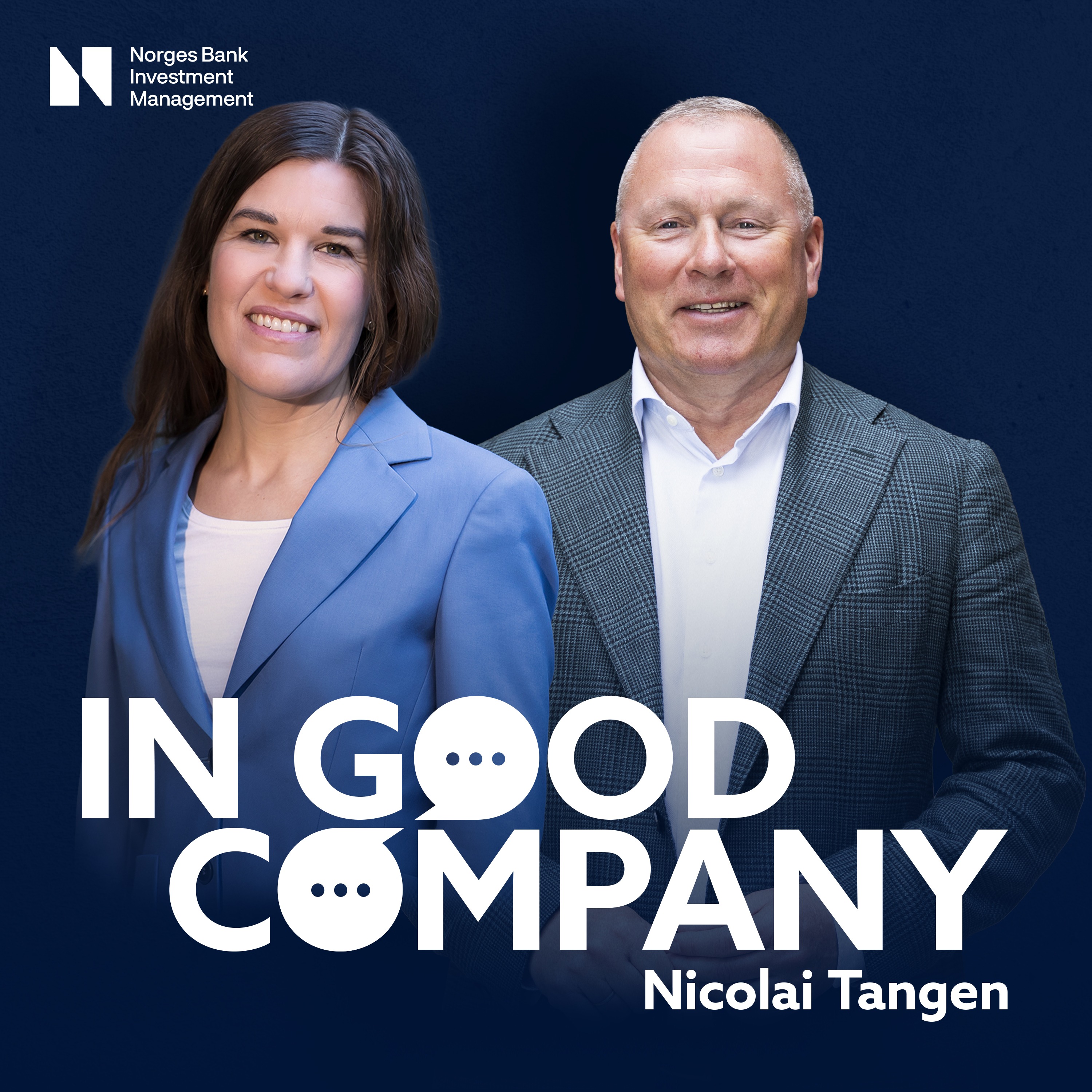
 In Good Company with Nicolai Tangen
28 May 2025 · 49m
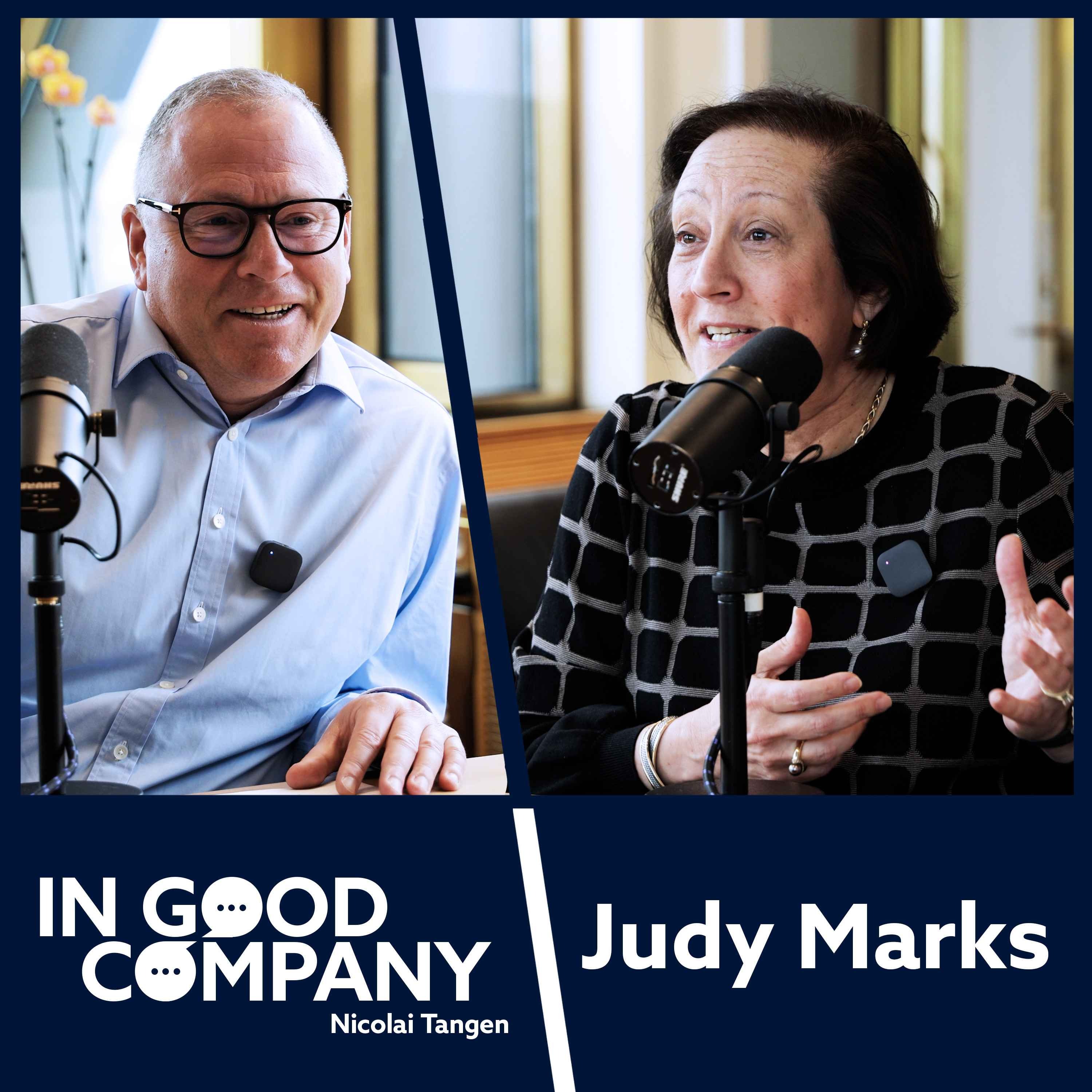
In this episode, Nicolai Tangen interviews Judy Marks, President and CEO of Otis, the world's leading elevator manufacturer. The conversation delves into the company's innovation, service excellence, and its pivotal role in global mobility, as well as Judy's leadership philosophy and the challenges faced during Otis's spin-off from United Technologies during COVID-19.
Written by AI. May contain mistakes.

Get the gist, explore an idea or ask about something said.
 Claude
On In Good Company with Nicolai Tangen, what are the key points of this episode?
Searching your listeningAutomatic transcript. May contain errors.
0:01Hi, everybody. I'm Nikolaj Tangen, the CEO of Norwegian Sovereign Wealth Fund. And today I'm in really good company with Judy Marks, who is the CEO and president of Otis. Now, Otis is an incredible company. It's a lifts and elevator company. And they move 2.4 billion people every day across 200 countries. Now, I think Judy's leadership is just like a standout example of innovation and people-first culture. And so, big welcome. Thanks, Nikolai. Great to be here in Oslo with you.
0:42So the first thing is, so now, Judy, we go into an elevator, right? You and I together, and you press, you know, fifth floor. How do you know that you're in a good elevator? Well, the first thing is, actually, as technology develops, hopefully you're going to press that floor before you ever get to the unit and the car itself. But to me, it's about ride quality. It's about safety. And it's about just the general passenger experience. And I think that passenger experience is going to be one of the many things that changes in the near future. What is a ride quality? What is that? Oh, it's something you feel.
1:20Yeah, you feel. But how do you feel? How do you, what do you feel? Oh, I think every person has a reaction. Is it smooth? Is it, does it bother my, does it bother my ears? How does it feel? It's a very personal experience. Should it accelerate a lot? Should it start with a bang? Should it start smoothly? What should it do? Well, the goal, and Nikolai, you know I'm an engineer. So the goal is the faster you can get to acceleration, the more people you can move safely and move quickly. And when I talk to customers, what they want is to use the least amount of space to move the most amount of people as efficiently and quickly as they can.
2:01Because if they're not using it for a hoistway for an elevator, they can rent it. They can sell that space, whether it's an apartment building or retail. So the goal is to accelerate and not stop at every floor. But it's a balance in terms of physiology. And it's a balance in terms of how fast you can actually move the people. But the reason we group people in a product where you push the floor before you ever get into the elevator and then it tells you which one to go, The reason we group them is to be able to have less stops and to accelerate more quickly and to move people more quickly. Should there be music in an elevator?
2:37I think there should be. And we were the first elevator that put music in many, many years ago. What's your favorite elevator music? Well, it's interesting. We actually believe elevators now can offer you to choose your music. All right. So I think it's up to anybody. But the original reason that music was put in elevators was when there used to be elevator attendants before they were autonomous. And so this was to settle people's fears who were used to having someone in there. So they felt more comfortable. They listened to calming music. And that's where elevator music came from. Oh, wow. Very interesting.
3:14Now, you are in a lot of iconic buildings around the world. What are you most proud of? Well, I'd have to go back to some of the buildings we've been in since the day they were built. We were the only U.S. or non-French company to be in the Eiffel Tower from day one. We're still modernizing and maintaining. We have full service on the Eiffel Tower, and it's truly iconic. Same with the Empire State Building. As that building went up in 13 months, it was the highest building in the world at the time, and it really stretched us technologically. we still are working for Tony Malkin and the Empire State Building.
3:50So he went up in 13 months? The whole Empire State Building was... How long time do you think it would have taken them today? A lot longer. Why? Labor was plentiful, regulations were not. Okay, so lots of people, no regulations. I think about as recent as last month I was transiting through Incheon, through the Incheon Terminal to the new terminal. And we've got our largest moving walkway there. It's over 130 meters long, one unit. So we do moving walkways, we do escalators, but iconic buildings, we have the Burj. We have the tallest building in the world. Now that'll change over time as buildings continue to rise.
4:33But it only matters to you for the building you use. So I can talk iconic, but it kind of only matters where you live and what you use. And as long as that's reliable and gets you where you need to be, you don't even think about the elevator. Well, regulations is an interesting thing, right? So they managed to rebuild Notre Dame in five years because they were told they didn't need to care about regulations. So it can have a big difference.
5:04Looking at the total market, so one of the fascinating things, I think, is just how few elevator companies there are. Yeah, it's very consolidated. Very consolidated, right? So you've got like, you've got Otis, Thyssen, Coney. Well, out of respect for my competitors. Schindler. And then there's four Japanese competitors and a few Chinese competitors. Yeah. So very few. On the OEM side. Why is it so consolidated? I think it's a variety of reasons. I think the single most important is the nature of the work we do. Life safety. High risk business in terms of both installations. I mean, we work at heights.
5:41But I think more importantly, the fact that we move people every day. And you think about just, you know, and you've heard me say this before, we can't train or control a single passenger, whether it's a rowdy group of football fans jumping up and down on an escalator or a group of college fraternity brothers who want to see how many people they can fit in an elevator. you know we we don't control that and yet everyone has to have a safe ride every time why do you make so much money why is this business so profitable well business is profitable and it's because of the service business so what happens is and and we do we do focus on this as a as a service-driven business model on a flywheel the beauty of our business is our product stays in place.
6:31It may move up and down. It may move diagonally. It may move a moving walkway, but it stays forever, which means you have the service, which is regulated. The regulation, Nikolai, is on the customer. So when you think about the fact that something has to have scheduled maintenance, for us, it's a subscription service. It's annual. We have many that go multiple years, but customers have to have that if they're going to get their unit inspected by the local government, local authorities and continue to use it. And if it doesn't pass the rate, they close it down, right? They close it down or they require repair.
7:06So the repair part of our business is part of our service business as well. It's a break-fix kind of business. These are electromechanical, becoming more digital, but elevators age just like any other equipment you have in your life, whether it's an appliance, whether it's a washing machine, and they need to be replaced. And in our case, they need to be replaced in place in a live building. And we call that modernization. And that's really the next big market. Service business itself, over 24 % in terms of margin. And it's a people business. It's where we've got 44 ,000 professional field mechanics who take care of that every day.
7:47That's why we're a service company. Now, you're very strong in particular regions, right? Countries, areas. us. Now, I wouldn't say you have kind of carved the world up amongst you, because of course you haven't. But you, for instance, are very strong in Spain. Tell us about the areas where you are particularly strong and why. Yeah, so I think, again, it gets back to density. We try and we don't measure or I don't challenge our team to be number one globally. I challenge them to be tops in their own markets. And we go to market, obviously, through four regions. And these regions all break down into operating units, operating areas, and eventually 1 ,400 branches.
8:29These 1 ,400 branches are small P &Ls. They each have strengths and weaknesses. But part of it is legacy in terms of where we are. We are a U.S. company. We were founded in Yonkers, New York in 1853. So our U.S. strength is strong. We're number one in that market. And And that's a very attractive market for us and one where we're very pleased with our results. Why are you not stronger in China? Well, so it's interesting. We got to China 40 years ago. We were one of the first American companies in. We started in Tianjin and spread throughout the country. But I think if you were now number three in China, we used to be number four when I first got here.
9:11I think if you look at the investments that were made in China between 2000 and 2015, we did not invest and expand to the same scale as some of our competitors under the former parent. I'm not revisiting that. I think it was just there was really strong growth, just not strong enough. But yeah, back to your other question. The Southern Europe is a very, very attractive business for us. you know we've got over a quarter of a million units in in spain alone and you think about density in europe where every building every building think of any city i look out here in oslo you know once you get past three stories uh there's at least one one lift in every in every building so tell me about the driver series because you got you got some really powerful long-term demographic drivers just what how do you see them yeah so so for a business that's been around, we'll go on 172 years in September, we still have these mega trends that get you excited and actually show room for growth.
10:20Urbanization remains. We've seen the urbanization. We pile them high. We high and dense. But if you think about emerging markets and even mature markets, people are still moving to cities. China alone, there's still another at least 250 million people that they want to move off the farms, raise out of poverty and move to urban areas. Southeast Asia, India is going through a tremendous amount of urbanization. But we're even seeing that the business is still growing even on the equipment side in Northern Europe and in the rest of the world. What is driving it here? The fact that we get older and can't manage to walk the stairs?
11:01That's the second trend, which is the aging population. I actually stopped talking about us getting older, and I use the term longevity. It sounds better for you and I. Totally. But if you think about the aging population and the demand needs, people want to stay in their homes as they age. We're seeing senior living pick up everywhere in terms of buildings. But But if we can add mobility to homes as we all age, people need that. And then the next step, which we already use and have proven in lots of buildings, is our ability to allow robots to operate elevators, which will then be humanoids who have the ability to control the elevator to come in and to be able to deliver services to people as they live longer.
11:55Now, you are a very important service business. What's the best service you have seen anywhere? What's the best service experience you have had? I would tell you our best service is in Japan. And it's an expectation there. It's an expectation of excellence. The code is higher. The requirements are higher from the customers. And it's not even in the sophistication of, of course, we have to have an earthquake sensor in every elevator due to the nature of the country and the needs. But there is an expectation of quality in Japan, not unique to our industry, but certainly in our industry. If we have an elevator breakdown in Japan and they have to call our Otis line, our helpline, for a request for a mechanic because our elevator stopped, our branch manager actually goes physically to see that customer to explain what happened, to apologize, and to make sure it doesn't happen again.
12:54That doesn't happen anywhere else in the world. Well, you know, it's so interesting because if you had asked me what's the best service experience I ever had, I would say it was in a Rio Can in Kyoto. A Rio Can is a guest house. And it was just unbelievable. And I remember in the guest book, it was signed by, I think it was one of the first Hiltons, you know. She said, this epitomizes what service should be all about. And it made such an impression on me, just the personality, you know, the way they handle you personally. So why, tell me, why is this specific to Japan? I think it's cultural expectation.
13:29I would tell you the other part of it, which... And, you know, they stood outside the guest house, and they waited until they couldn't see us anymore. You know, and it took us five minutes to walk down the street, and they were just standing there. Unbelievable. Yeah. The other part, though, is there's also a recognition in Japan of they are the largest, the most rapidly aging society. So there's planning in place, and how I would correlate that to our business is it's probably the most mature business we have in dealing with obsolescence of parts and of equipment. So there's just this mental mindset of thinking of everything in advance and then being extremely customer-focused.
14:07So are you trying to make Otis more of a Japanese company? I think there's... Mindset? Mindset, customer centricity, absolutely. We're the only non-Japanese player in Japan in our industry, and we've been there for a long time, over 70 years, I believe. And we've learned a lot from that. And we do rotate our leaders through there, especially the last, at least the leaders in my tenure, have all, at the top, have all been non-Japanese so they can experience it and then take it back to their country. But we share lessons learned amongst the group. But expectations, very high.
14:50What type of regulations are there for elevators? Oh, there's regulations that vary by city, by country, by parts of the world. Very specific, we call it code, very specific codes on safety standards, on limitations, on inspection regimes. We have some countries where the maintenance has to happen. It's regulated by schedule. Others where you have the control and it's unscheduled, but you have to meet the objectives. But if you go even in the U.S., I think our factory in Florence, South Carolina, builds to over 70 or 80 different codes just to support the U.S. and Canada. And what kind of moat does that provide you with?
15:36I mean, it's difficult. Tremendous. Tremendous. Which is why we haven't had, why we're so consolidated. First of all, you know, are customers going to trust a brand new brand? Again, you're trusting them with people's lives. But second, you have this moat that says there is no one global standard. There's no one global requirement. So for someone to enter and to truly hit larger than a one-city market takes a tremendous amount of knowledge, investment, risk management. And that's why I think it's so consolidated. Why do they never fall down? Elevators? Yeah. Well, there's a - Very rarely. I mean, you hardly hear about them.
16:14If you think about it, they just kind of hang there in a rope and then - Well, there is this thing called a counterweight. Right. And you can see them. We were in the Monk Museum yesterday, and it was not our elevator, but you could see the – it was glass, so you could see the counterweight moving as the elevator goes. But, I mean, in the Monk Museum, we saw pictures of angst. There's very little angst in your elevators, right? That's the goal, is no angst. No angst and no entrapments. But the entrapments do happen on occasion when power goes out, when there are issues. the elevator is it's safer to be in an elevator than fly in an airplane and you know how safe airplanes are again with so many people every day using it it's it's a proven technology but I think the biggest reason that that it's so safe is it's got it's got you know a multi-redundant safety system we call it the safety chain so there's there's three layers of safety which is why you never fall there's there's always a mechanical layer but there's you have a governor and you just have the ability with the safeties to make sure that people stop.
17:18Today's the future, and what we're seeing already today in some of our offerings is making sure that when you stop, even if it has to be an emergency, you actually stop at a landing so that people don't get caught between floors, which is the worst experience someone can have. A fire brigade will show up, and they have to break through a wall or something. So that's available. But the challenge, Nikolai, is we have elevators. The beautiful news is we've built reliable elevators. We have elevators that have been around 50, 70 years and more. I've been in some from the 1890s. So they get modernized.
17:53But again, as that technology gets applied, there's 22 million elevators and escalators in use every day. There's a lot of install base to get to, to continue to modernize and make things more technologically advanced. Why is it important to have the install base, to have a high density of install base? Well, it's all about productivity of your service fleet, right? So if you can, along a route, have the density where people don't have to travel and have as much nonproductive time, you have the ability to have more productive mechanics. And if you can give them the tools and technology to help them, that's even better.
18:29But it starts with a very basic algorithm on routing, which is kind of the math challenge that many of us had earlier in life. How do you develop a route? when you have that density, it gives you that ability to, you know, if a mechanic yesterday can handle 11, how do you get that same mechanic to handle 12 elevators in a day? And I use those numbers as just representative. It's nice to hear you talk about your 44 ,000 mechanics because you nearly get tears in your eyes. It's just clear to me that you love your mechanics. I do. And I hope they know that. Tell me about them. So it's an interesting business.
19:06It's a people business. And these mechanics are professionals. And I try to show them the respect they deserve. I don't use the word employees in our company. I use the word colleagues because I think it's respectful. But we have no business without our mechanics. And these 44 ,000 are dedicated. I call it a humble pride. They care about Otis. Many of them, their fathers worked for us as mechanics. It's very much a trade that gets passed down. The trades change quite a bit. It's not as mechanical. It's not as much lube and oil anymore. It's a lot more troubleshooting and digital. But there's still that mechanical need for people.
19:47And so we're calling on 44 ,000 mechanics who don't typically show up at an office ever or very rare. We'll do safety huddles. We'll do those at job sites. But these are people who work fairly independently but are part of our company. And as they succeed, we succeed. You even have a coin or a medal that you give some of them. I do. I have a, out of respect, I have a coin that I've made. It's my CEO coin. It's about this big. They're all numbered. And anytime I get to see a mechanic at a job site, I thank them. And I tell them they're the heart and soul of our company. And they are. Our growth is limited to our mechanics capabilities and the number of mechanics we have.
20:34We've added over 10 % of mechanics in the five years since we became independent. We're going to add, we added 2 ,000 last year. We'll add more this year. That's our growth limiter, believe it or not. That's our growth limiter. So in a world of AI, we're not shrinking. We're adding mechanics. Where did you get the idea of the coin? I mean, I've heard about that from the Army. Yeah, I was in the defense business earlier in my career, aerospace and defense. And I always found it meaningful. To me, it's more impactful, though, when you can do it in person and with a thank you. And it's only mechanics.
21:12The supervisors look at me and they're like, how about me? And I'm like, no, no, no, you're part of the management team. We reward you other ways. But it's just my way of saying thank you. And most of our mechanics are part of most of our labor is represented by collective bargaining all over the world. I know people tend to think of that as a Europe-centric thing. Obviously, we've worked councils across Europe, but our U.S. workforce is represented, our Korean workforce, our Japanese workforce. For us, it's the way we've always done business. We respect and work this way, and it works fine. Why don't more U.S.
21:48companies do it? Do. Work with the workforce this way. Yeah, I can't talk to that. Our relationship's strong. We have a multi-industry union and every job, whether it's installation or service in the U.S. and Canada, is done by our labor. Moving on to innovation, what are the most interesting innovations that you are seeing just now in the elevator industry? There's a few. I'd say the most interesting that will probably have the largest impact is in the world of connected elevators. So whether it's the IoT connection where we've got a million of our elevators connected, so we have a huge data lake so that we can do preventive and eventually prognostic maintenance, but be transparent.
22:31So IoT used to, so that's Internet of Things. Internet of Things. It's the equipment operation and everything being sent to us on a very pseudo real-time basis. I'll define it differently. You need information from a villa elevator a little differently than you need it from the Radisson Blue in terms of the periodicity of how often you get it. But it gives us tremendous information on the elevator, how it operates. And not only can our mechanic see that, our field mechanic, our Otis line help desk can see it and our customers can see it. And so we give them a dashboard so they can see the health status of their equipment.
23:13But I think where it's going to, I know where it's going to take us is our ability as we do scheduled maintenance to say, listen, this door operator that's moving the doors back and forth, we know at, I'll make up a number, at 15 ,000 uses, it's going to either need alignment or replacement. So when we're doing scheduled maintenance anyway and coming by to do all of our scheduled maintenance, we can either replace it or align it before it ever breaks. And that matters. That uptime matters to people because people only care about elevators when they're not working, as you and I know. That's when they look around and they're like, oh, yeah, I'm in an elevator and I have an issue or there's a block and I can't use the escalator.
23:57So for us, that uptime is absolutely critical. But that connected goes beyond our customers. So those are property managers, condominium, service customers. The connected is going to go to the passenger now. So we have apps on your phones where you can call the escalator from your apartment or the elevator before you ever get to it. So you actually make the call and it says, okay, it's here. We have many office buildings where as you pass through the access control, the turnstile to get in, the security to get in, it recognizes you and then it tells you where to go. And then we have certain clients where not only does it tell you where to go, but it knows if you're going to the eighth floor and you're the first person there, as you get there, it turns on the lights on the floor.
24:49So we're part of a building ecosystem. I like to think of us as the spine. But again, when we understand traffic, we have traffic flow for every building in the world. So it's a tremendous amount of data analytics that can help us, but maybe you want to choose your own music. The other thing, which maybe - I mean, now they go up and down. When will they start to go sideways? You know, I'm not sure that the sideways for an elevator is the best use of an elevator. There's other modes of transit that accomplish this, whether they're moving walkways, whether they're things you've been on in airports where you have, you know, moving vehicles.
25:30I just go back one last time to, and I've seen this now in our labs. So if you think as you age and you need to go to a doctor's office and you walk in the elevator and you don't recall, what is it? Is it 6.15? I don't know where I'm going. You can talk to the elevator and say, I need to see Dr. Smith. And it takes you where you need to go. So this passenger experience is going to continue to improve over time. and as technology improves. Fascinating.
26:05Moving on to leadership. So Otis came out of a conglomerate called United Technologies, and this happened during COVID. So pretty challenging, right? What did you learn from this? Yeah, so we were preparing the United Technologies board in November of 2018, decided that we were going to do a three-way spin. United Technologies would remain at that time. We would spin off as Otis and Carrier, the HVAC company, would spin off as well. And we had a 16-month window to complete this simultaneous to that, Nikolai. We were also, from an Otis perspective, returning to earnings growth. And that was our time to prove that we knew not just how to prepare to be an independent company, but to show that to the world.
26:48So we took 2019 to prove that, to prepare. And then we were at our investor day in February at the New York Stock Exchange and all excited for our equity roadshow at the end of March. And all of a sudden, the world changed pretty drastically. So we did the Equity Roadshow remote. And then we launched the company midnight on April 3rd, right in the middle of COVID. New York Stock Exchange was remote. Everything was remote. And we knew we had to go. We knew we were going to spin. We knew it was the right thing to do. We knew we were prepared. But as you think about April 3rd, closing the books for the first time, getting ready for your first earnings call, all of this first board meeting, being everything being remote.
27:36It took a tremendous amount of agility, resilience, and we were an essential service. So construction continued in parts of the world. And as COVID oscillated through parts of the world. And what we did is we took the lessons from China, which had already gone through that first burst in February and March, and quickly moved it around the world and said, here's how you get to customers. We had customers who absolutely needed us, hospitals, transit. And again, back to my respect for our field, they were out there every day in the middle of this coronavirus, going to hospitals to make sure that people could be taken care of.
28:17And that's kind of where you see this resonance with our mission. So we had to run a business, we had to lead, and we had to communicate. And I was on from an apartment and we were rebuilding our condominium and my husband and I were living in a small apartment. I was doing real time. He was my cinematographer and we were doing real time communication with the company from a very vacant place. As a matter of fact, my communications person would call me and she'd say, do you at least have a plant to put in the background or a piece of artwork? And I said, no, no, this is temporary. I said, this will make people listen to the message.
28:56So we rallied the team and not just got through it, but I would tell you we got ready to thrive and accelerate. And I remember at the end of the first year, I got the leadership team together and I said, okay, get ready to accelerate. And they said, Jude, we're in the middle of a black swan event. I mean, we've never faced anything like this. Our teams responded incredibly well. The service business held up well. It gave us that resilience. I did not lay off a single colleague during this time period. We all took cuts. We did whatever we had to because I knew we would come back. I didn't know when, but at Nikolai, I knew we'd come back.
29:36And so at the end of that first year, I said, get ready to accelerate. I said, because the race is going to start again on January 1st. We're a new company and we've got to come out of the gates strong. It's interesting how the companies who didn't lay off people came back so much stronger and we see it in so many industries. But when you, so a spin basically means that you split a company into several pieces, right? So you get your own identity and so on. And accountability. Totally. And that very often unleashes this incredible energy, right? So how did you see that in Otis? What did it mean to people to have their own kind of name on the door?
30:16Yeah, they loved it. And it's not on the door, right? Our mechanics wear it on the uniform. Why is it so important for people? I think it's people want to be part of something bigger. They want to understand purpose. They want to understand. And in our case, they resonate with how they keep the world moving. But I think they also want to be appreciated. And when you're part of a conglomerate, the earnings calls for the conglomerate, we were one line. We were one line in the releases. We were a one line segment. So there was very little visibility. And over time, you know, that accountability, if we had had a bad quarter, one of the other divisions made up for it.
30:58You don't have that. There's nowhere to hide. So that drive to make sure everything we were doing mattered. We were getting rid of initiatives that didn't matter. We weren't having to do things that were important to someone else, but maybe not to Otis. So that 100 % focus every day on discipline, on operating, and on what mattered is what shows in the results. It's interesting. They rally. It's interesting. There's a book called The Power of Us, and it's about who do you want to belong to and what does it mean to you? And so this is just an example of, you know, you belong to something which is a bit smaller, a bit more accountable and has a big effect.
31:46Now, you had been run inside United Technologies as a cash call, right? For, was it eight years, you didn't show earnings growth. Yeah. How do you think that felt for management to be run as a cash call? Yeah, so I was not there during most of that time, but there was clearly a view. And so we were acquired in 1976. So you think about the company formed in 1853. First time on the New York Stock Exchange was 1920. Ironically, 100 years before we went back, almost the same month. And over time, Otis's service business was strong. but post the GFC, we were out of sync with our pricing was much higher than - GFC financial crisis.
32:33Yeah, sorry, greater financial crisis.
32:38So as part of the parent, there were two metrics that people were incentivized on, profit and cash flow. And when you do that and you don't incentivize on growth in any organization, you can get to a point where you harvest a business. and Otis was being harvested. The cash flow greater than 1 % or 1.0 in terms of cash flow to net income. And we maintain that now. We're still doing it, which I'm proud of. But it threw off tremendous cash. And that cash went to the parent and the parent did the capital allocation, which is something we obviously do ourselves now. As part of that capital allocation, they had a very significant investment they wanted to make in other divisions.
33:23Instead of investing in the elevator business in China. In elevator business in China, service, I mean, our R &D as a percent of sales during some of those years, as Otis under the parent, was far less than 1%. Our CapEx was far less than 1%. So it was truly, it was, you know, even the IT systems were rather antiquated. But those were capital decisions that a conglomerate gets to make. So how have you, what have you, in terms of the corporate culture, what have you changed since you took over? Well, we've stayed true to who we are. We've focused on something we call our absolutes. Other people call this, you know, values.
34:06For us, values is an interesting term, but absolutes to us really sets the line that it's a go, no go. you have to do these to be part of our company. Safety was always an absolute at Otis. It needs to be. It's expanded from physical safety. Again, people working in dangerous situations, working at heights, exposed to electricity. We do have 17 manufacturing plants, but again, the majority of our workforce is in the field. So safety is critical. And I think what we've seen over the past few years is we've added to the physical well-being of safety to well-being in general. If our colleagues don't have their mind in their work, they can get hurt or even worse.
34:48So safety's first. Our second absolute is ethics. And for us, compliance is absolutely critical. But more importantly, doing the right thing, even when no one's looking, is critical, especially when you're working alone. And the last one, which we changed when I got there, It was controls, which I thought was interesting, but not something that all 72 ,000 colleagues could participate in. And to me, just quality was the right third absolute. So we focused on that. But we also created a culture where we want every voice to be heard. The best ideas come from inside the company, but they don't come from me.
35:28They don't come from a leadership team. They come from our team that's out with customers, whether they're sales, whether they're field. and we want to hear those. So we wanted every voice to be heard and we've created an environment where the voices are heard and every single one of our colleagues has not just the ability, but the responsibility to stop work if they don't think. Do people disagree with you inside the company? Absolutely. How do you deal with that? Most days, very well. Not always, I'll be honest. um you know i think it's are they often right oh yeah yeah they're closer to it they're closer to it um and and you know you it's i kind of think that if you'd have if you decide everything the company can never be better than you yeah if you have the combination of all the types of opinions you could create incredible things yeah it's amazing and um i i have a very easy email and a mobile number that most people have, whether they're inside the company or outside.
36:30I get customer complaints directly to me. I read all my own emails. Nobody filters anything. It doesn't go to another box. I think it's important to understand what's happening. But I think culture matters. And in our case, there's this, I called it humble pride, but there's this absolute absolute zealousness to make sure, especially with our mechanics, that things are put back right, that the elevator's back in operation as quick as possible. And sometimes they do this almost to an extreme where I'm like, that would be billable, guys. I know you want to get, can you at least record this for us so that we can capture it as well?
37:15But that's where, you again you just get these incredible ideas on well you know if we if we put something like this in the pit you know then then we can we can make sure or if we put a camera here or if we did or put a sensor here you know this this would help what uh what's the role of a CEO or roles roles yeah I think uh there I think the most the two most important roles in my mind are setting strategy. And that's pivotal. It's vision, mission, strategy, but it's absolutely about setting the strategy and making sure everyone understands it. And not only understands it, but they believe in it and they execute it.
38:00So setting it correctly is really important. In a long cycle business like ours, it matters because that strategy can last years and decades. It's risk management is a key factor. And today that these enterprise risks are less technical, are less operational, and are more about people and then factors that you have to deal with that you may not control at all. And then I think the last is just, in my case, I think it really is about getting to the core of what's important, customer centricity, driving that operational discipline without me being part of it, but instilling that what matters so that everyone understands every day what's important.
38:44How important is storytelling in this? Oh, I think storytelling is absolutely critical. I'm an engineer by background, but that's not how you talk to people. You talk to them with respect, but you have to context everything. And it's that context, whether it's with investors, whether it's with government officials, whether it's with the mechanics, whether it's a town hall. Before I came to see you earlier this week, I met with our team here in Oslo. About 20 people in the office. And if I could get to 20 people every day, I would to tell them, you know, here's what we're about. Here's how we're doing.
39:20And here's what we need to do to grow. And to thank them. You know, there's your storyteller some days, your cheerleader some days, because I think the CEO needs to be the optimist. And I am an optimist because you get to see more of the company and more of the business world than anyone else. And if you can synthesize that and tell that story about whether it's the megatrends, whether it's where we're going, whether it's how we're performing, or to just recognize your teams, it matters. Tell me about the importance of being an optimist. I mean, don't you think it's important to point out the bad stuff?
39:56Oh, yeah. Bad stuff's easy. I mean, as any leader, not just a CEO, but anybody listening to this, most days you're dealing with exceptions. Most people aren't dealing with routine as a leader. You're dealing with either the top end of things going right or the bottom end of things going wrong. So you come in every day and you forget about that 80%. You don't even deal with the 80 % in the middle, right? That's what process takes care of. That's what discipline takes care of. That's what organizations below you take care of. You're dealing with the top and the bottom. I think too many people focus on the problems of the day, which they're real.
40:35Too many people focus on, oh, we had this issue, so you're going to do issue resolution. You need to pull back and look at that top 10, too. It's not just the top 10 % of the people, but what's going right. And you have to paint the picture. And it's a valid picture. It's not like Monk. You have to paint that picture of what's possible. Because if you're a good leader, you have followership and people will trust you. But you have to build that trust, Nikolai. And that takes time and takes proof.
41:10Now, you're among a small handful of female leaders in industrial companies. How can you encourage more women to go into these traditionally male-dominated areas? Or does it not matter? I don't think it matters if you're a good leader. I've been 41 years, almost 42 now, almost 41 in industry. And I've always been in male-dominated industries. So to me, this is just my normal. I don't think I've experienced things different than if you're in retail or consumer packaged goods or telco. um this is there are problems to be solved there are businesses to be led and i would highly encourage women i mean we start very early in with stem programs with our made to move communities social program uh to drive this earlier in school i would tell anyone girl boy stay in math and science.
42:11I mean, you know, it's the only career you can actually at 10 to 12 years old, take yourself off an entire future career path, whether it be in STEM or something else by just getting off the math and science path. So I encourage everyone to do that. I do care about women having opportunities and they need to perform, but they can. And I don't understand how some companies or other organizations would not want access to half the world's talent. Oh, no, totally. And now, if you could not have the job in Otis, what would you do? Oh, you sound like my husband. What are you going to do next, Jude? Boy, that's a great question.
42:58I have always thought I'd love to be able to share what I've learned. To me, mentoring coaching is important. So some form of that, whether it's teaching, I think I would welcome doing that. Well, you'd be a great teacher. I'm sure you can teach at whatever business school you want. We'll see. But right now, you know, I don't think about that. I think about really where we can take the company. And it's not about me. It's an iconic brand, Nikolai, that we really want to make an iconic company. And to me, there's a nuance there in terms of how we perform, how we show up every day. But it's more than being an optimist.
43:40As I look at all the data, we have so much room in front of us to grow. I mean, it's almost a luxury to have the organic opportunities we have versus needing to get distracted inorganically versus needing to go into adjacent markets. And what's your inner drive? What is the drive you? Wow. I, I, I'm extremely competitive. I'm extremely impatient. Uh, hopefully some of those have, have, uh, gotten a little, little, little more softened over time, but not, not gone away. Is that a person you want to show? Uh, I, if it is, I don't know. Um, you know, just make a difference. Yeah. Make a difference.
44:28Um, and it is personal. It's very personal. I care very deeply. And when we don't perform to the level we should, I'm the first to admit it. I got on every quarter of the day after earnings, I talked to our top 500 leaders. And there was something that we missed this last quarter that we didn't do as well as we should have. Let's put it that way. And it will get addressed. But I was the first to say to these, you know, I own it. When do you wake up? I underestimated the impact of change and we'll deal with it. When do you wake up in the morning? I wake up early, around 5 a.m. most mornings. And what do you do when you wake up?
45:10First is be available and look at what's happened in Asia and Asia writ large, whether it's our Asia-Pacific business or China. My team there knows anytime after 5, they can quickly send a text if they need to talk to me. They try to give me kind of that freedom of sleep. Otherwise, it's such a global business. You'd never sleep. I'm a morning person, though. A few times a week, I go do a kind of high-intensity workout when I'm at least in the States, so hopefully home. I'm not home much because the only way to see this business is to be with it in the markets we're in. 80 % of our workforce is outside the U.S.
45:54because we're local. You'll see us in every town, every city. And part of my responsibility is to be there. So, and to be with our teams, be with our customers, be with the governments, and make sure we understand where the markets are heading. And again, be there to thank our teams. If you were stuck in a lift with a historic figure, who would it be? Well, I'm convinced, since I have a picture of him staring at me in my office, it would be Elijah Otis. Come on. Somebody else. Unrelated to the company. Unrelated to the company. Wow. That's a tough question. Who would it be? I think it would be, it would have to be maybe Ben Franklin, because I think of him as kind of the original innovator and yet someone who accomplished a lot in his life.
46:43And he has some incredible values. He did. And integrity. He did. And he had longevity. Totally. Maybe all of it works. Absolutely. How do you relax? I'm not good at relaxing and there's not a lot of time for it. What do you read if you? I try to read books on leadership. I try to read books on, and we need to all learn. If you have a CEO sitting across from you that doesn't think they're still in a learning mode, I would tell you then they're going to become stagnant. In today's world, there's just more to learn. Right now, I'm reading this book called Radical Uncertainty. And I probably wouldn't have read this before.
47:28I joke with, we were the other night together, and I said to Dina Friedman, the CEO of NASDAQ, I said, I thought we only got to experience one black swan as a CEO. So these are interesting times, but times of opportunity. This book is more focused on what uncertainty can be predicted and what can't. And, you know, as CEOs, we talk a lot about control what we can control. And I absolutely believe that. The question is defining what we can control. And what I'm trying to get out of this book is, is there more I can control that I just am not thinking about? Now, we've got tens of thousands of young people listening to this podcast.
48:06What advice would you give them? I'd give them the same advice I'd give myself at a younger age. You can do anything. um you know i think about just just how how fortunate i am every day uh to to be leading such an amazing business but to be able to have an impact um so i would tell them uh stay in math and science i would tell them whether you're going to be a business you know a business person or not i would tell them be true to your values understand your own personal values i think that's really critical. Where's the line that you won't cross? I would tell them, think about, especially a younger me, think about taking more risk at a younger age, but know the risk you're taking and have fun.
48:59I mean, that's what it's all about. Well, that's a list of very good pieces of advice. So a big thank you for, you know, moving us all around the world, you know, 2.4 billion people a day and for creating so much value for shareholders and also for being such a tremendous role model for leaders around the world. Thanks, Nikola. Thank you.
What does it take to lead a company that moves 2.4 billion people every day? In this episode, Nicolai Tangen sits down with Judy Marks, President and CEO of Otis, the world’s leading elevator manufacturer. Judy shares insights on innovation, service excellence, and the future of mobility, exploring how Otis is revolutionizing the elevator industry. They explore Otis's role in iconic buildings like the Eiffel Tower, the challenges of spinning off during COVID-19, and her leadership philosophy that supports the company’s 44,000 field mechanics. Tune in for an uplifting conversation about moving the world!
In Good Company is hosted by Nicolai Tangen, CEO of Norges Bank Investment Management. New full episodes every Wednesday, and don't miss our Highlight episodes every Friday.
The production team for this episode includes Isabelle Karlsson and PLAN-B's Niklas Figenschau Johansen, Sebastian Langvik-Hansen and Pål Huuse. Background research was conducted by Teodora Cowie.
Hosted on Acast. See acast.com/privacy for more information.