
 Ask ChatGPT


 In Good Company with Nicolai Tangen
9 Oct 2024 · 43m
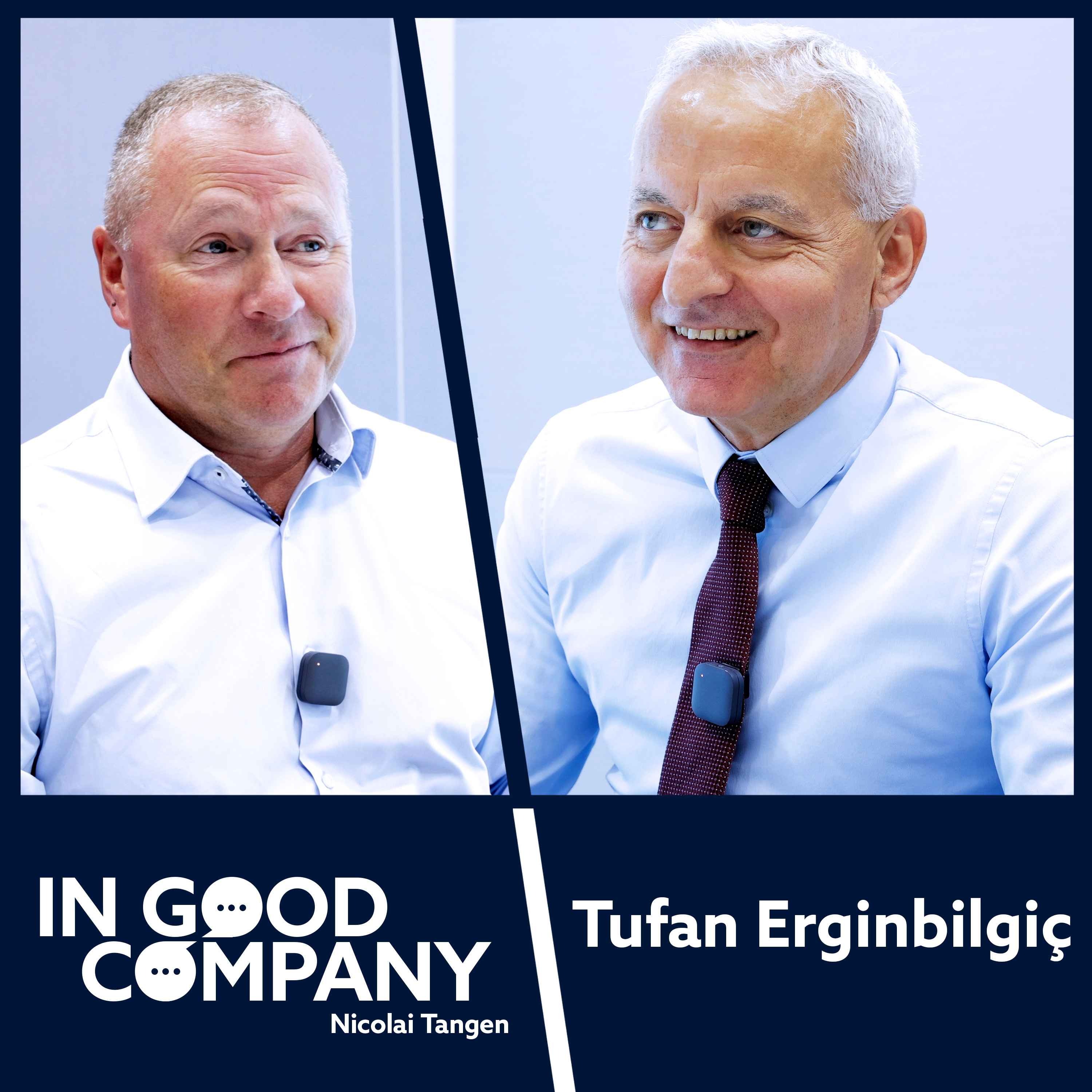
In this episode, Nicolai Tangen interviews Tufan Erginbilgic, the CEO of Rolls-Royce, who discusses his transformative leadership strategies since taking charge of the company in early 2023. With a robust background from BP, Tufan outlines his approach to revitalizing Rolls-Royce, focusing on long-term growth, company simplification, and cutting-edge technological investments.
Written by AI. May contain mistakes.

Get the gist, explore an idea or ask about something said.
 Claude
On In Good Company with Nicolai Tangen, what are the key points of this episode?
Searching your listeningAutomatic transcript. May contain errors.
0:00Hi, everybody. I'm Nikolaj Tangen, and today I'm in good company with Tufan, the CEO of Rolls Voice. And in the fun, we own 2.3 % of the company, totaling more than$1 billion. So big welcome to the fun.
0:22Now, when you took the job at Rawls, you called it a burning platform. Why were you so dramatic in kind of your opening statement? So, first of all, it was an internal meeting, I would say. So this is my third transformation, right? We may talk about what are the right pillars. I learned what pillars you want to have in place, sort of in transformations. One of the pillars is very important that actually you put the mirror up because most of the organizations which requires turnaround, they don't, nature of it, whole employee base is not anymore communicated where the company is. I think that town hall, what I did when I first came in, obviously I did lots of assessment of the business before I showed up.
1:26Then I got together with leadership because I wanted to get them on board. Then we had the big town hall to engage everybody else. In that town hall, it was one and a half hours. What I was doing early on, put the mirror up and then talk about the vision and how we are going to get there. How do people react? Actually, internally, people reacted. They found it very energizing. Of course, externally, you found the first 15 minutes of that on the news, which was saying Burning Platform. Normally, when I walk to the sort of work, I put my headphone and I listen to music or podcasts, something like that.
2:26I was actually like that in King's Cross Station. I was sort of walking with my headphone on. A lady approached me and said, are you Tufan? Next day, this is. I said, I took the headphone off. I said, yes. She said, that town hall was so energizing. When I read it, I thought, you know what? He's either going to turn it around or he's going to be out of there in a year. But you're still here. So that's all good. How did you prepare for the job? You say you made assessments before. How does one do that before one takes a job? So I do external assessment and internal assessment. So early September, I actually launched an external benchmarking, which took a couple of months, division by division.
3:22And I created a steering committee. I wasn't in the job. I invited all the division leaders to be in the steering committee because if they have disagreements while we are progressing the external benchmarking, they should be in the mix, right? So obviously CFO as well. So that was the steering committee. So between early September to November, we did external benchmarking. While this was happening, I was meeting with the teams to do my internal assessment. How many meetings did you have? Many, frankly, many. So I cannot, I don't count. Why is it important to meet so many people before you start?
4:12One of the things I actually did beyond internal assessment, I talked to top investors. So I actually met with them. and it was very clear that there was huge frustration out there. So it was very clear to me we needed to go into action. This wasn't going to be a honeymoon period. So therefore, that was my view, that actually we needed to go into action quickly. so therefore there is an ideal sequence of my pillars but I hardly end up with the ideal sequence in transformations because in this case I need to get go into action very quickly so circumstance always sort of you need to tailor it so then you come in here gen one what you do?
5:12Gem 1, when I came here, I came with very clear ideas. Because as an ET, I already met and we agreed actually late November as an executive leadership. We did until late November. Remember, they were part of the steering committee, etc. We did lots of work. So we knew what the agenda was. We came in. ET was obviously ET change, executive team change quite a bit. But at that time... You had set the team before you came. No, actually, that was the old team, mostly old team. I brought one or two new people by that time, two people actually. but mostly the previous team. But we were aligned. Then we actually, top 100 meeting we had, we got aligned with that, then went to the whole organization and that was the kickoff of transformation program.
6:31You had some priorities which you set pretty early. One was to refine the contracts and work on pricing. How do you do that? We've done lots of things. Everybody sort of focuses on contract negotiations because it is interesting for many people. Frankly, we came up with six levers as part of that. The investments we make and the risks we take, we don't enumerate them sufficiently in our pricing. Second thing is what is called LTSA contracts, these long-term contracts with airlines and so on. Our pricing, therefore, was not good there, and we had lots of big contracts with losses, if you like. So early on, sort of, we needed to deal with it for two reasons.
7:39For performance improvement reason, because I actually, again, we are not talking about the pillars, but normally I lead with strategy, then everything comes. But I was very clear that strategy was going to take six to nine months because the way I run strategy is very inclusive. I don't run it with a couple of people in a dark room. And how did we go about it? Your question, Nikolai? I really believe we are not a supplier. We are a partner. And that's how I step into these conversations. and most of them had operational issues with Reus-Reus then. So these are with the engines that you supply to the airlines.
8:33And just for the listener here, you supply half the engines to the world's wide-body planes. That's correct. That's an incredible market position. Yes. I think our delivery is 50%. Yes, there are only two players, as you know, in that market. So what do you do? I mean, every meeting is slightly different in some sense, very identical in the other sense. Because they all had operational issues. And I said, at the end, I acknowledge it. I'm going to make sure I'm on it and we can talk about it. But I also said, weak Royce Royce can only give you that. I'm investing one billion pounds in time on wing program.
9:25That's improving products. Our customers will benefit a lot, right? We are going to improve whole portfolio by 40%. That means a lot less disruption for our customers. I said, we Rolls Royce could do only this. Stronger Rolls Royce can be a better partner. But you are not negotiating with companies which print money, right? You are negotiating with airlines which are generally not doing well. So why would they want to give away a lot more money to you? I've been actually on both sides of the equation in my career. Sustainable partnerships only work and only become sustainable if they are mutually beneficial.
10:14Otherwise, they are not. I was in a very rich contract. So one day, after three years, four years, I don't remember, they came and said, sorry, enough is enough. If you want to take us to the court, take us to the court. We are not honoring this contract anymore. I didn't do that, by the way. So my whole point was actually let's rebalance this. And we did some early work. And we can also find win-win solutions. I didn't actually fudge the issue. I said we need to rebalance it. But we can, if we bring the teams together, find win-win solutions. So now that we made great progress, I look back. In every case, we found win-win solutions.
11:21And now you approve all pricing or you look at all contracts. Is that right? That's correct. You said that it was impossible to change things that people didn't think was possible to change. What are some of the other things that you have changed? I mean, in this company, we change everything effectively. And we renegotiated OE contracts as well. The big change in this, and it plays a significant role in my pillars, having a very granular strategy, which Royce-Royce didn't have. What do you mean? So it's detailed in terms of what you want to achieve? it is detailed in terms of participation and competitive strategy, where you are going to participate and you make lots of choices and how we are going to compete.
12:15That is so important because it becomes alignment tool because it aligns the whole organization. So I'm a huge believer in what you are saying here and we are doing the same in the fund, right? This kind of broad anchoring means that when you have decided something, it's easier to move. But this is a quite Scandinavian way of doing it, right? Where did you take it from? I learned by doing. I'm not Scandinavian, so I didn't get it from there. But my view, I use alignment, engagement, and performance management too. So I learned it. It is one of the key pillars in my transformations. How are you doing it?
13:03I do four things, right? I obviously tailor it, but four things. One is put the mirror up with a clear vision. People are very important. Leadership is even more important. I have fundamental belief good people make difference. And leadership has a big role in transformation because they need to deliver the goods at the same time lead the change rather than only delivery. I create the right leadership. So that meant we made lots of changes on the executive team. and then top 100, we call it CEO minus two, we change 50%, either new people or they change their positions. Who do you promote? What's the leadership skills you are looking for?
14:03I look at, obviously, they need to be capable in leading the business. I don't look at it's sort of loyal, etc. I don't look at that. I actually look at individual characteristics. And that's then my job to create a team out of it. I actually, I put together a sheet what I expect from them. I gave everybody first week even. People need to believe in extraordinary.
14:46In my previous life I was an analyst, uncovered Rolls-Royce and I met the person who ran it then, Warren East. He talked about permafrost as being the mid-level of the company. Really really really difficult to change. Why are you managing to change it? It's a mindset thing, right? It is more than mindset. Because I totally disagree if somebody is saying, I'm going to do team exercises, cultural change exercises, and cultural change. That's not my model. You need to put the right things in place. So granular strategy, most of the organizations don't. When they have it, they put it on the shelf.
15:43When I am building granular strategy, I am already thinking about strategy implementation. We have 17 strategic initiatives which will transform this company. 17. your performance manage that it is embedded in the organization because if you only want to run things with communication that's where the things stumble but if you actually get, I call it sweet spot aligned organization everybody knows their roles my 17 program because strategy is that granular Implementation is granular. Think about, I said, alignment, engagement, performance management tool. Let me, time on wing improvement is one of them.
16:36So let's say, Nicola, you are the time on wing leader. Just explain, time on wing? It is effectively improving our products so that durability of the products, we have reliability of our engines are very good. We are making this$1 billion improvement. And Ponce, actually. That's one program. One of the 17. I'm just giving you an example, right? So now you are the leader of it. It is my program. Now I told you the following. You matter, Nikola. In our transformation, you and your team matter. It is very engaging. Those people tend to be mid-managers because mid-level. I gave you something. You matter and go and engage this with your team.
17:34When you go to your team, you are saying, guys, here's what we can actually contribute in this transformation. That is so satisfying. In big organizations, if I am doing something in line with the culture, I let it go because culture will take care of it. If I am doing something against the culture and I want to change the culture, I performance manage very consistently. Then over time, that changes the culture. What part of the culture did you need to change? What are the most important cultural change? I made CEO judgment based on year-on-year improvement on that because I want people to think strategic progress.
18:30And our accelerated delivery has a lot to do with this. We can talk about it, Nikolai. But strategic progress is one. Then we came up with four behaviors that we are actually rolling out as we speak, right? Let me tell you. Safety first. We can talk about it. Doing the right things.
18:57And then making a difference. I'm going to remember. Keep it simple.
19:10What we see often in companies, and you probably saw that in BP too, right? When you work in a company where parts of the organization needs to be so super safe, it spills into the rest of the organization. So even places where you don't have to be super safe, you build super safe procedures. That's where I, obviously, I manage businesses with very high risk profile. In a way, it goes without saying that these engines need to take over and not stop me there, right? So it's imperative for everything you do. Absolutely. When you've been implementing this, how is it to work with the labor force and the unions and so on?
19:47I talked to you about 500 people were already included in strategy development. Therefore, I never had an issue. Oh, I have a strategy. Now I need to engage the organization. We were already aligned. Not to mention that 500 people's brains and experience actually improved the strategy, sort of quality of strategy. But actually, you are already aligned. Everybody knows, oh, we made lots of tough decisions. So, and union engagement. so that whatever we do here is pretty inclusive already rather than sort of let's do the things in dark room and then let's go and engage people. No, not like that. It's incredible how fast this has gone, right?
20:44You are now one year and nine months into your period here. How far are you on the transformation, you think? from the sort of results. You are absolutely right. Accelerated delivery. I think we front-end loaded the delivery. One day this year, I was reflecting on it because results delivery, how much of it, how much of the performance improvement we thought we were going to deliver was identical to two other transformations I did. That made me sort of think, hold on a minute, very different businesses, very different starting points, different people, et cetera, et cetera. How come? Here is my conclusion after that reflection.
21:40You change the mindset to strategic progress. you have very clear programs I talk about it owned by the people and then you go with pace and intensity who did you learn it from did you learn it at BP my learning process sort of is a little bit sort of different because I'm still learning by the way before I joined mobile in the U.S. after the school. I was actually, when I was doing PhD, I was teaching in Ohio State University and doing research on micro and macroeconomics. So I had this learning part of me. And when I throughout my career, so I always, whatever position I took, to cut it short, I read at least three books about it.
22:47And then you synthesize it. Those are textbooks, obviously. You synthesize it, you implement it, you learn more. Who are the best leaders you have learned from? I don't think there was one leader that I can actually say, but a little bit of sort of me completing the puzzle for myself, if you like, rather than copying one person. I say what I think. And that authentic bit is not about copying. it is me creating but learning from every occasion frankly I'm still learning I actually tell the team I learn a lot I mean authenticity I think is key we see the people who burn out are the people who are not authentic the people who try to be somebody else very very important how important is the board in this process?
23:51very important coming in and making an impact on a company like this is very special. That's why I'm here. In that, board has a big role because turnarounds don't happen by incremental actions. When you are making non-incremental actions, not everybody is happy. Internally or externally, by the way, you talk about burning platform, etc. etc. Board should be prepared to support you in the turnaround because you are going to be doing some of the things which will bring big change. And that means not everybody will like it at the beginning. I actually believe this is a transformation which will benefit all the stakeholders.
24:51But it's not about me. How it lands with them early on may be very different. Is it lonely to be the CEO? Yeah, but I mean, it is part of the job, right? I mean, that's how I see it. Do you think being the CEO is tougher now than it was five years ago, generally across companies? Yeah, probably. What is making it tougher to be the CEO these days? All the stakeholders understanding, frankly, and their awareness improved over years. So you need not only about sort of employees and investors. When you are running a company, you need to think about all the stakeholders. And not in this sense of like zeros.
25:39You need to embrace it in a way. Therefore, I said it early on, transformation is holistic. This is not restructuring, by the way. This is transformation. I define both of them very differently. And it will benefit all the stakeholders. The world is actually rapidly changing. I'm not sure it was that rapidly changing in the past. If I say two big trends I see in the world, energy transition and digital transformation, neither of them were at the level that they are right now 10 years ago. But the speed of change is different. And the impact, not only impact on your business, but how much opportunity they create also, how you are going to, is one.
26:38And stakeholders' awareness improved on the other hand. So the energy transition and the digitalization, how does that impact your largest division, the civil aerospace? Next 20 years on energy transition in commercial planes, I should say, will be about really more efficiency, i.e. fuel efficiency, and 100 % SAF compatible. That's sustainable aviation fuel, right? That's sustainable aviation fuel. We are the only company actually can say all of our engines compatible with 100 % sustainable aviation fuel. I know regulations don't do that, don't require it right now, but they are ready. World needs to incentivize SAF, especially what I call synthetic fuels.
27:43Why? Because today SAF, most of the people are talking about, is bio-based. But there isn't enough of it to decarbonize the whole aviation industry. Therefore, we need to incentivize synthetic fuels, i.e. from green hydrogen. With the conversion technology, you go to effectively SAF. How fast is this transition going? It's not very fast right now because it needs to be incentivized. I mean, reality is these technologies, by definition, especially early on, more expensive. Even biofuels is more expensive. As you know, many airlines, therefore, unless it is mandated, they don't use it because it creates competitive disadvantage for them, right?
28:41And synthetic fuels is even a little bit more expensive. But the benefit of it, you can scale up. So I'm not sure without policy support, they will actually scale up significantly. Hence my point about policy support.
29:07Talking about another change here, what are your plans for the narrow body market? First of all, that market is an interesting market, obviously. It's huge, right? It is big, growing. Wide body is also growing. But here are two things. In strategy presentation last year, we called it CMD. effectively I talk about we want to participate with a partnership why do we believe what are we bringing to the table so thinking about first of all next generation engine will be more fuel efficient and SAF compatible as I said Ultrafan is exactly that which is your technology This is our technology that we are working on.
30:04It is 10 % more efficient than the most efficient engine is out there. And we believe with that and what you can do in the whole aircraft, new aircraft, you can take that 10 % to 15%, which is significant. And it is 100 % SAF compatible. So that's one thing. Second thing is, our IPs on it, this is a geared structure. And one thing, Nikolai, I don't think there is any controversy around that in the industry. Next generation will be geared engine because of this efficiency requirement, if you like. and our IPs and how long they are positions us really well. And then the third thing is we really have some capability in this space that is respected by others.
31:11So those three things, I believe, bring us to the table. Talking about the table, so we are now seeing Boeing struggling with quality. We are seeing Airbus kind of struggling with producing enough volumes. When will we have a third credible player here? It may take a while. And who is it going to be, you think? I mean, Comac is working on it, as you know. That's a Chinese company. Yes, Chinese company. When do you think they'll have a good plane? I mean, they already have narrow body, as you know. They have a plane and narrow body today with GE engines. So that is already out there and they are scaling up.
32:01So in a way, they are already in the market in that sense. You are one of the leading companies in small modular reactors. Yes. Which is kind of a new way to harvest the nuclear power. What do you think this could be? If the world is genuinely sincere about net zero, especially Europe, because the U.S. has a few other options, math doesn't work without nuclear. That's simple. This is not about my opinion versus another expert. If you believe in mathematics, you have to believe that. OK, so therefore, Europe needs to embrace nuclear. Then you have two choices. Big or small. Big or small. We know all the advantages and disadvantages of the big, because the world has good, bad and ugly experience with that.
33:09What is the advantage here? First of all, this cost and duration risk, it is small, you dilute, but it's not all. This is 85 % of it, manufacturing process. So it is not a big EPC project. Big nuclear plants, every time you start from zero. How do you want to mass produce them? 85 % marginally you produce and you learn, like manufacturing learning process. So why is it so financially risky? Why are people so uncertain about the costs of making this? I mean, financially, they are much less risky than the big plants. But new technology, It's not new technology in the sense that we have been doing this technology 60 years in UK submarines.
34:16But commercializing new technology, early plans are always risky. So when will you have your first plan up and running, you think? When we have the, hopefully, orders from GBN and a few other countries we are working with. I am hoping next year if orders come, then frankly, you need to build the supply chain, etc. Then 2030, 2031, around that. Where are you technology-wise compared to, let's say, the venture which is backed by Bill Gates? So I think ours is most advanced, especially in Europe. This is not me talking. There is a regulatory process which says three-phase process, right? Which actually assesses your technology and then you get sort of approval, i.e.
35:15you have viable technology and safe to deploy. We are the only company actually effectively in phase two. So in your mind, is this like a no-brainer type of technology to take in use? For supply security and net zero for Europe, yes. Especially for Europe. Right. Right. Because Europe doesn't have many choices. Yeah. Defense. We are not going to talk about geopolitics. But how is the world changing the way you run your defense business? We are not in weapons production. So people have misunderstanding that now our performance is good. People think, ah, it is Ukraine war and so on. It has nothing to do with it.
36:18No, you're an engine, son. Ukraine war didn't impact at all our defense business, right? So therefore, there is a misunderstanding. Our defense business improvement so far is all underlying performance improvement. If you look at what we call midterm, i.e. 27 targets, it's going to be mostly about underlying performance improvement in the business. After that, we have big programs like B-52, Flora program in the U.S., and GCAP program, and obviously submarine IOKUS growth here. They are all coming. We have significant growth coming because of the wins we had so far. But it has nothing to do with Ukraine war and so on and so forth.
37:21What's driving you? It's lots of things. I talk about coming here and creating a legacy. I mean, lots of transformation, strategic goals, all obviously you want to achieve and so on and so forth. What's your driving force? What makes you wake up early in the morning? What makes you work late at night? I'm about making a difference. When I took a job, I was an obviously CEO to start a career. Whatever job, I always taught the following. They picked me. I need to make a difference that nobody else can. So how does that show up? Right? So because otherwise, they could have put somebody else. if I'm as good as the next guy.
38:19So... How much do you work? Actually, I'm not smarter, I should say, Nikola. How much I used to work probably was too much. But I actually manage it better right now. How do you do that? It's prioritization. I dynamically prioritize and encourage my team dynamically prioritize. How do you relax? I go to gym every morning. I need to play competitive tennis every weekend. So I do that sort of Saturday, Sunday, and sometimes nights sort of, but not every time. What do you read? I read history books. These days I read AI and history books because I want to improve myself. And what part of history are you fascinated by?
39:21The book, if you want, sort of History of the World by André Amart. I actually like his style. I read the history of modern Britain by him again. Is art and culture important in your life? Culture is definitely very important. I'm not that artsy sort of guy.
39:51But obviously, given how many countries I lived in, that made me think about cultures. because when you live my first 11 years I changed eight countries it wasn't by design Nikolai it happened so talking about young age what is your advice to young people three things if I can say one thing is learning actually it is learning to improve your own value, if it makes sense, your value as an individual, then money and career progression will come. I actually rejected, this is true story, big promotion accepted a horizontal move because my view was actually that is going to make me more effective later on.
40:59So one thing is learning. They need to think about how they learn. People learn differently, whatever works for them. I'm not saying there is one way. But they should focus on themselves and making a higher value individual. Number two, power of belief. I tell people, did you achieve anything difficult that you didn't believe in? But people that I talk about, you need to believe in extraordinary. I believe in extraordinary. But it doesn't happen without the deep belief. It is possible. But has this got to do with optimism and delusional optimism? I'm not an optimist, by the way. It's character.
41:54I would go to what's not working rather than what is working first, which gives me some recognition challenges sometimes with the organization that I work on. And what's the third point? It is passion. And whatever they are intending to do, they should go in with two feet in. Sometimes people hedge themselves. This is high risk. Go with your passion. Go with two feet in. Then you can make things happen. Tristan, you clearly have gone with both your feet into this turnaround situation. You're still standing. It looks really good. And also having heard how you prioritize, we are really pleased that you have dynamically prioritized these podcasts.
42:53Big thank you. Thank you, Nicola.
In this episode, Nicolai Tangen is joined by Tufan Erginbilgic, the CEO of Rolls-Royce, to discuss the transformation journey of this iconic company. With over 20 years at BP, where he led the downstream business to double underlying earnings and triple returns, Tufan brings a wealth of experience in driving change in complex organizations. Since taking the helm at Rolls-Royce in the beginning of 2023, he has launched a bold transformation strategy focused on long-term progress, breaking away from loss-making contracts, simplifying the company's structure, and investing in cutting-edge technology. Under his leadership, Rolls Royce has seen its best stock performance in 30 years and paid its first dividend in five years.
Join us as Tufan shares his insights on leading a turnaround, the cultural shifts necessary for sustained performance, and the importance of strategic progress in the aerospace and defense sectors. Tune in for an engaging conversation that delves into leadership, innovation, and the strategic vision driving Rolls-Royce forward.
The production team for this episode includes PLAN-Bs Pål Huuse and Niklas Figenschau Johansen. Background research was conducted by Kristian Haga.
Hosted on Acast. See acast.com/privacy for more information.


