
 Ask ChatGPT


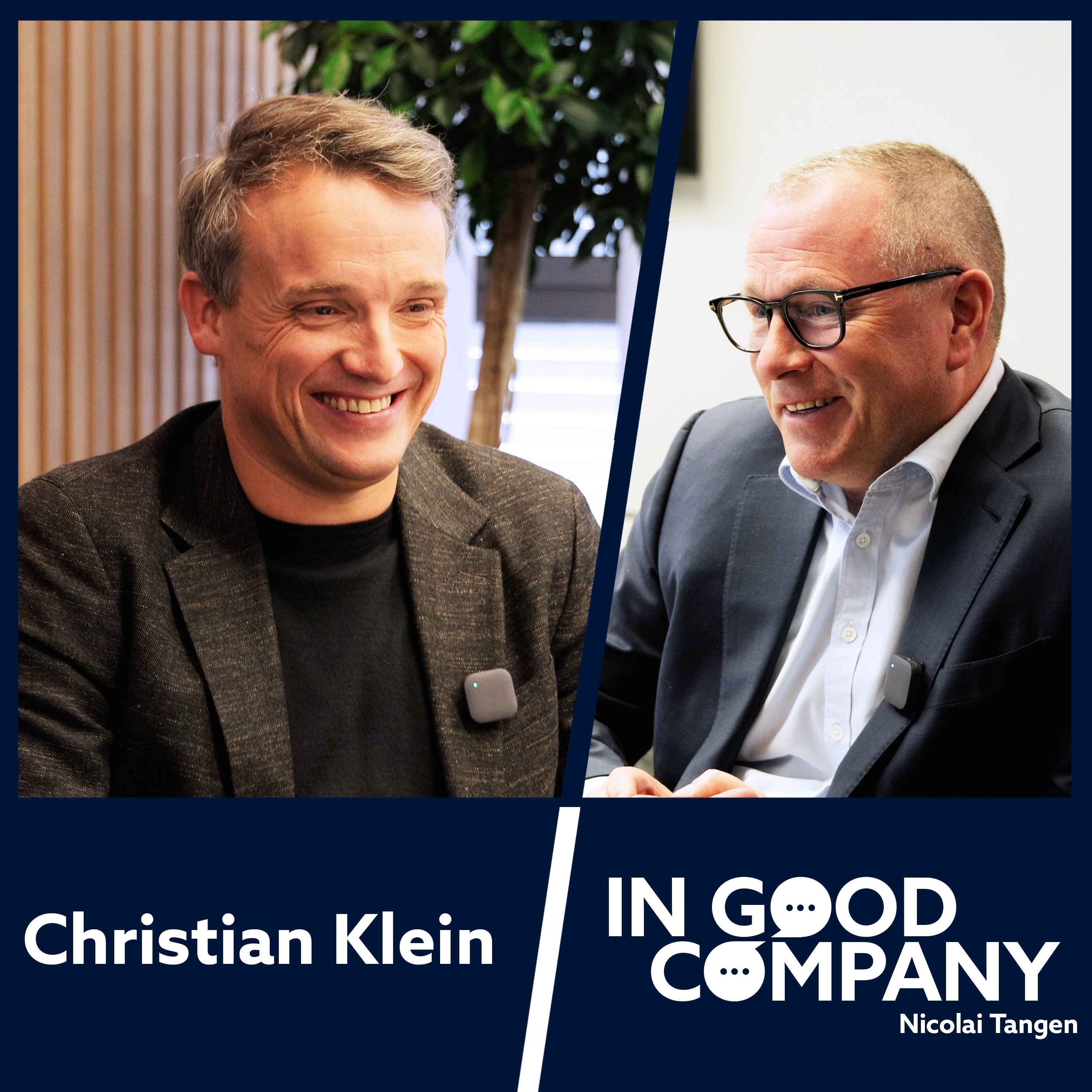
 In Good Company with Nicolai Tangen
30 Apr 2025 · 58m
```markdown
This episode features Nicolai Tangen interviewing Christian Klein, the CEO of SAP, Europe's largest technology company. The discussion revolves around SAP's cloud transformation journey, the implications of artificial intelligence (AI) in business productivity, and the challenges posed by technological nationalism in a fragmented global landscape.
Written by AI. May contain mistakes.

Get the gist, explore an idea or ask about something said.
 Claude
On In Good Company with Nicolai Tangen, what are the key points of this episode?
Searching your listeningAutomatic transcript. May contain errors.
0:01Hi everybody, I'm Nikolaj Tangen, the CEO of the Norwegian sovereign wealth fund and today I'm in really good company with Christian Klein, the CEO of the software giant SAP. Now, SAP is now the largest company in Europe, third largest software company in the world. And we own just under 3 % of the company,$9 billion, equivalent to 100 billion Norwegian kroner, or 20 ,000 kroner per Norwegian. So it's a very big and important position for us. Christian started as a student intern in SAP. Like 20 years ago, he became the CEO. Wow, what a journey, Christian. Yeah, but you see my quay hands.
0:48First of all, now, just to get a feel for the importance of SAP, how much of the world's business touches an SAP system? Yeah, Nikolai, first of all, thanks for the trust into SAP. And indeed, it was a remarkable journey the last four years. But of course, you feel that a lot of the world's transactions are relying on SAP systems. Now, especially with the cloud, I mean, clients are very serious about how do we want their most mission-critical systems. And to your question, 80 % of the world's B2B transactions want and touching an SAP system. Wow. How many of the largest companies in the world use your system?
1:27Actually, 95 % use one or the other SAP system. Many of them finance, supply chain, obviously, but we have HR. I mean, we have probably in the SaaS space the broadest portfolio in our industry. It's unbelievable. Now, for the people who don't know what ERP is, what so stands for Enterprise Resource Planning System, what kind of things are you involved with? I mean, there's a lot of talk about digital transformation these days. And just, you know, to maybe illustrate a bit what is the role of an ERP, because ERP oftentimes sounds like back office, but it's not at all back office. At the end of the day, this morning, I had a big car manufacturer, and they actually want to offer mobility as a service in the future.
2:08So they need to change their license model, their pricing model. They also want to improve delivery times, and that is all connected to their ERP. The way how you grow, the way how you price, the way how you manufacture, deliver, I mean, that is all part of an ERP. And then we even go to the front line with commerce and with our CX portfolio. So it's really covering the value chain, the mission-critical part of each value chain of a company. And here comes also my passion. It's a piece of technology, Nikolai. But at the end, what it does, it connects business. It actually runs business processes.
2:43And that is actually the fascination, what is so special about SAP. We are running the world's most mission-critical business processes. Now, one of the reasons why I love SAP is because you're so integrated in people's businesses. It's not like you can just change your system. Yeah. So how often do you lose a client? Okay. Not very often. And indeed, yeah. I mean, but I don't like it when we talk about a login of customers in SAP. I mean, they want to see the value. I mean, first of all, and when we talk to Apple, when we talk about, you know, their portfolio, I mean, they really also challenge us from time to time.
3:18They say, hey, we also have to, you know, squeeze for further productivity. How can we automate our supply chain? They also then offer new solutions. They want to offer new license modules. So it's very important that we also follow, you know, what our customers, you know, need for their transformation. And of course, when you are running a mission critical business, Nikolai, I mean, you don't change your ERP, you know, every year. So it's indeed a very sticky business, but it's also an earned business. But how much work does it involve to get it installed? Yeah, see, I mean, that is, of course, how many?
3:51Yeah, I mean, depends on the size and what kind of business you're running. I mean, there, of course, you know, when you talk, you know, about 100 warehouses in the world or factories. I mean, this is complex business, you know, to run manufacturing, to run logistics. That takes a bit longer, but just, you know, because you also need to involve the business and then implement, you know, the software all over the world. When we talk about HR, about finance, you can have really fast goal lives. And then it also depends on the size of the customers. I mean, we have also, SAP is known for, you know, large enterprises, ERPs, but we are also having actually 80 % of our customers are mid-market customers.
4:28And there, when you actually adhere to our template, our best practices, you can also have go-live in three to four weeks, absolutely possible. If you adhere to the standard, if you want to apply the best practices, you don't want to configure that much, then actually, you know, SAP is also very agile. Because companies often also change the way they work, right? And the logistical systems when they introduce your software. Yes. How does that work? I mean, that is actually the part why we also said four years ago, we are not only doing a transformation into the cloud. I mean, at the end, we are wanting mission-critical businesses and we want to start with the end users.
5:03And for them, a transformation is a change of the way how they work and the way how the company operates. And that's why we said, let's also focus on not only implementing our technology, but also let's focus on the change management. Start with the end user. They do a piece of work today like that. How will this work look tomorrow? What kind of automation can we bring in so that the end user can focus on more value-adding tasks? I mean, this is what SAP does with our clients so that they also maximize the value, not only IT-wise, but also business-wise. You say you don't look at it as if you are locking in the customer, but I mean, they are quite, what should we say, they are very dependent on you.
5:47How do you think about your ability to increase prices? Just how do you weigh that? I mean, first, you know, the way how we do our pricing. I mean, first of all, we look at the piece of technology. I mean, AI is a great example. We have a consumption-based pricing module. We look into what does this AI use case do? How many transactions can you automate? How faster can you actually quote? How much more intelligent will your pricing be? How much better can you optimize your inventory? Then we define the output, the outcome. And then the customers can actually calculate what does it cost. But they also see then the outcome in terms of more automation, more productivity, more intelligence in the way how they run their business.
6:30And that is the correlation. And then on inflation, obviously, a big other topic, we want to treat our customers very fairly. We said, look, there is a maximum price increase, which is very fair, but it also can be lower in case inflation is lower. So we actually do this, in my eyes, in a very fair manner. And so that customers also see they have also a kind of price protection with SAP. Are there any verticals which you haven't really addressed enough yet? I mean, actually, we run 25 industries and the horizontal layer is actually oftentimes really SAP. And then, of course, in many industries, we also go into deep verticalization.
7:06I mean, just last week, I had a Scottish utilities company here. We talk about the metering, how to better, you know, improve asset management for the quits. So there we have also deep verticalization in our portfolio. Same for retail. When it comes about customer loyalty management, returns claims management, And these are the verticals we provide. And we provide actually a lot of vertical applications. But also customers and partners also can build extensions on our platform. Because you need data oftentimes from the ERP, be it supply chain, finance data, order data, customer data. And then customers say, hey, I also want to build my own IP.
7:43Okay, here we go. You have our platform called BTP. There's our data model, our identity. So you can natively integrate. And then you can also build your own vertical solutions. Also possible. One of the things we've seen more of lately is technological nationalism. What are the issues here for you? Yeah, I mean, these days, it's big. And, you know, tariffs, you know, protection, new sovereignty, you know, laws. And obviously for us, I mean, running businesses in almost over 140 countries, I mean, that is our commitment to our clients. no matter if you do business in China, in the US, in Europe, in Southeast Asia, everywhere, we will adhere to local laws and not only local tax requirements, but also sovereign clouds.
8:32So we're building now a lot of sovereign clouds based, of course, on local laws about data security, who's touching the data, data sovereignty, where does the data will be located. And that's part of the business. I mean, and that becomes, of course, now these days more and more important. Are you seeing more demand now as European companies want to have a European alternative to some of the large U.S. providers? Yeah, I mean, I see signs for that. People, customers asking, hey, when this continues, you know, how safe is my data when it goes to the east, when it goes to the west? So they are asking definitely, hey, SAP, can we also localize our data more and more in Europe, even, you know, in non-regulated industries?
9:19I mean, in the public sector and the regulated industries, sovereign cloud was always a big part of the business. But also now we see more and more non-regulated business. Not that, you know, customers now are suddenly shifting systems already around. But you see, you know, the risk is increasing. So there's also some uncertainty around that topic. Absolutely. Now you sit in the middle of kind of the global supply chain here. is there enough agility and flexibility to cope with all these changes in supply chains, tariffs, inflation, all these things? I mean, yeah, absolutely. I mean, the tech, you know, especially in the cloud, I mean, we deliver, you know, new releases in the cloud, you know, every quarter if the customer wants every year.
9:59But so we can deliver fast innovation. We can also adjust, you know, our software to adhere to any kind of tariffs, you know, which are coming up in every place in the world. The point is, of course, what we would love to see as a tech company, but I'm not only talking about SAP, is, of course, to have a bigger sovereignty across Europe. We are not having sovereignty in each member state, but really having it across Europe because that makes it easier to scale and that makes it also easier to do business with. Will that happen, you think? I'm not so optimistic. I mean, the point is, you know, it's same like, you know, in a private company, you need to give up power for the sake of, you know, for the benefit of the bigger union.
10:44And, you know, it's not always so easy to convince every member state to give up power and say, look, I actually, you know, remove my own sovereignty requirements for the sake of having, you know, one European sovereignty requirement. But I feel this is, of course, key. Not only for SAP, we are doing business everywhere. We have our labs everywhere. But for the startups, I mean, you know, they need scale. They need to fast time to value. And they need to scale fast. And for them, of course, that would be very, very important.
11:21How do you work with data privacy and cybersecurity? I mean, it's totally key. I mean, that would probably be one of the worst things that could happen if you got some malware really integrated into your systems. Yeah. And I mean, it's part of all of our contracts with the customers. They have clear SLAs on, you know, on what happens in case there are vulnerabilities. We, of course, invest billions of R &D money into cyber. I mean, it's actually for us a corporate requirement. And there are clear also SLAs and requirements inside SAP. So we take this very serious. We have even in the board regular checkups so that the organization feels there is no compromise around cybersecurity.
12:03But what I always tell my customers about is, well, when you look at SAP or our hyperscaler partners, I mean, we are putting a big firewall around the whole technical stack. I mean, as a mid-sized company somewhere here in Germany or in Europe or everywhere in the world, I mean, it's hard to deal with this fast developments on cyber. So I would say the cloud is another good reason now to say for cyber, I want to move to the cloud. I give this topic also in the hands of big technology companies to secure my data, to secure my systems. It just seems like the attack surface is getting bigger and bigger as everything is digitalized, right?
12:41And you have new type of enemies. Yeah, you have new bad actors. Actually, the sweats are increasing. I mean, we see it clearly. I mean, you know, and that is, you know, the B2B data, especially in some industries, is very mission critical. So, yes, you have to absolutely make sure that you have a secure landscape up and running. Now, if you look at history, Amazon kind of invented cloud computing. Why wasn't it SAP? Yeah, Nikolai, that's a good question. I mean, look, the good piece is now you see it in our numbers. We are there. We are super successful. I would say we have the fastest growth in the SaaS space.
13:19But the point is, of course, you know, why didn't we see it, you know, 15, 20 years ago? I mean, there's a good book about the invader's dilemma. I said there is a lot of truth into it. You have a well-run traditional business model, delivers good growth, good profits, and you don't realize, hey, how fast can the market change, actually? And then to tell, you know, your customers, to tell your employees, and even, you know, worse sometimes, to tell the capital markets to say, hey, hey, I'm going to disrupt my own business module, and I'm building now a different business model in parallel, which costs probably a lot of money.
13:59It's not that easy for customers. What was the moment where you realized you needed to change? I mean, for me, it was pretty clear already. When we acquired a lot of cloud products, it was clear that the market is changing. And for me, I mean, personally, I always thought, hey, we need to bet even more on the cloud. I mean, you see where the customers is going. And so it was for me very clear in 2019 when I became the co-CEO of the company that we have to double down on our cloud transformation. Absolutely. I mean, look, Nicolai, we have 50 ,000 developers. They are coding great stuff every day.
14:33A lot of AI use cases are really good stuff. But what does it help when you are sitting on an eight-year-old release and you are looking into a screen which is, you know, probably, you know, still touched, you know, by one of our founders? So that is the problem. The innovation gap is too big, and we are coding a lot of new capabilities for business model transformation, resiliency in supply chain. We have a green ledger. You can use a green ledger to not only guessing about carbon emissions, but also having actuals. So you need to reduce this gap between the customers are here, the latest release is there, and the answer and the solution to that is cloud.
15:12Sure. But it's a tough decision to make, right? Because you take a hit when it comes to the share price and all that kind of things, right? Yeah. I mean, look, I mean, SAP had in 2007, 2008, we had a company, you know, 100 % owned SAP hosting. So some people here somewhere, you know, realized there is something coming. Maybe customers want to outsource their IT systems to the cloud. And then we sold it. What I figured out later is, you know, the margin was not that high as in our traditional business. It was actually, you know, not helping quarter by quarter. But then, you know, to have the courage to say, you know what, we go out to the capital markets and say, you know, we have our traditional business.
15:55So to say more our cash cow and then plus, but we invest into a new business model. I mean, that is, of course, never easy. And then look at SAP the last four years when you would ask now the people here. There's a lot of change also in the way how they work day over day, the way how we incentivize them, the way how we measure success. I mean, everything is changing. It's a nice piece of strategy paper. But then to get the strategy executed is oftentimes the biggest challenge. How do you think quantum computing will change the way you work? Quantum, I mean, definitely we're doing research there, for example, take supply chain when it comes about logistics optimization.
16:34It's very, very complex. You need a lot of computing power to simulate logistical chains, how to bring a product A from product B. there are millions of value drivers who influence your logistical supply chain. And that is, of course, one use case where we definitely see it will be a big game changer if we can use quantum in the context of our supply chain portfolio. Finance, blockchain is, of course, one another thing. But these are the early use cases. And when I'm talking to our researchers, they actually would say now in three to four years, I mean, the technology should be that mature that we really can apply it in the context of our portfolio, of our products.
17:21Why haven't companies gotten more productivity out of software in the past? Yeah, that's a good piece. I mean, before I became the CEO, I asked, of course, I was running here at the IT organization. And I got presented a business case, moved to S4 HANA. I said, oh, great idea, but what does it do to our business? What does it do to our transformation? But it was purely planned as a technical migration. Oh, there's a next ERP. Let's just technically migrate. I said, what is now changing for the benefit of our SaaS module? I mean, we run the company still as an on-premise company in many business processes.
18:02So for me, I guess it's very important that the customers understand when you are running an ERP project. or let's take AI, you always have to have the business at the table. When you're coming in here and you talk about ERP and there are only IT people around the table, I would question, will the customer see the maximum value? Of course, IT can benefit of decreasing the cost of running such a system. There is, of course, also a TCO game in that. But it's very, very important that you connect the technology with the business. And this is where companies struggle the most with how to do it, how to integrate a business.
18:41Is the business really open for that kind of change? Is the business open for automation, for standardization? Or is, you know, actually has everyone the freedom to do whatever they want in a commodity business? That is oftentimes the challenges in such software projects.
19:02Let's move to AI. Right. What excites you the most with AI? The possibilities, the opportunities, what you can do with this technology. I mean, I see it always in the context of our customers' business. And I just had, you know, yesterday a big, you know, French retailer here, and they do millions of changes to orders. They change orders every day because consumers, you know, actually, you know, do a change of what they order. They do a lot of order changes in the supply, in the supplier space. And now when you can see how you can automate that with AI, I mean, for them, it's like a big productivity booster.
19:39So if you look at the possibilities here, and so if you were to try to rank them, what are the kind of the most amazing things you're seeing here? Starting from the biggest changes over the next three to five years. The biggest changes is actually in the context of SAP and AI is definitely on the analytics space. I mean, today you're going to figure out, you know, your own planning simulations. You are figuring out how does my supply chain planning work in context with the demand which is coming. And when you see now how AI and all these algorithms will work, and now you can not only bring business data in, but also a lot of other content in.
20:14I mean, that makes, of course, you know, financial planning, supply chain planning, workforce planning, I mean, will be absolutely moved to a completely different level. So in the work of intelligence, the way how these plans are integrated, and of course, how you then at the end can optimize and run your business. Or take another example on the supply chain side. I mean, a lot of our customers spend billions of dollars on asset management. So predictive maintenance for assets is something which will be, of course, hugely impacted by generative AI, but also traditional AI. So that is definitely an area of uptime of machines, uptime of factories.
20:51I mean, it's absolutely a big potential there with AI to actually try further productivity for a company. So these are some of the use cases we are driving on. And then talking about, you know, the stuff which is coming now on Agendic AI. I mean, how often did I sit in front of an SAP system, you know, analyzing, you know, our payments over to you. And then you put the finance data out and over to you. And then what is actually the problem of this customer? Why is the customer not paying? Then you can talk to sales. You can talk to logistics. You can have maybe a commercial issue. And when you look now at Shandik AI, you can actually tell the system, you know what?
21:29Give me all payments overdue, the top 20 or top 100. But then not only give me this report, give me what is the root cause? Why is this customer not paying? Is there a sales issue? Is there a logistical issue? Did we deliver too late? or is it a commercial issue? And then when you think about that, what kind of answer do you get back and the recommendations about what kind of actions you should actually take? I mean, this is remarkable. I mean, actually today, a lot of humans being, not only spend time, but probably not always figuring out a wide call to action. And that is now what Agendic AI will do.
22:05There is a finance agent, there is a logistical agent, there is a supply chain agent, and they will collaborate with each other. And they have so much more data, in their mind, in their module. When will you have a true agentic AI? Actually, the first one we already shipped. That is about the services and the services agents we have. When you're sitting in a call center and you need to give advice to a customer about are the assets actually available? What is the issue of an asset? That is already shipped. And now we will launch at Sapphire. We will launch 10 more agentic AI use cases. And I mean, that is the way to go.
22:43vision. Yes, exactly, which is coming in May. On average, across your client base, how much do you think this can drive productivity? I mean, our promise to our clients this year will be every end user who's working with our AI, so our digital assistant tool with the embedded AI use cases, we can actually drive productivity up to by 30%. 30 %? 30%, yeah. So across the whole company? Yeah, but Nikolai, it's not only a marketing claim. Is that just for this function or is it across the company? It's actually across the company. When you're touching SAP software. What are the big things this year which are going to drive 30 % productivity gain?
23:19I mean, it really depends on, you know, you can take HR. Take HR. You actually, when you're an HR business partner, you need to hire, you need to retain, you need to hire the right skills, you need to retain the right people, you actually need to make sure that the learnings are connected to the skills of the people, what are the learning gaps, and that is, you know, something what an HR agent will do for you. Job postings done based on, you know, a lot of insights. Where is the skill gap in the company? What kind of skills do I need? When you then put trainings together or goal setting that will be taken over by HR agent, obviously an HR business partner will have to say, yes, that is the right learning journey for this kind of job profile.
24:03But at the end, you know, in the past, they had to type, they had to search what is the right learnings for them. Now an HR agent is doing this for them and then they can confirm it if it fits to their expectations. In finance, when you are in FP &A, I mean, you put a lot of data out of BW. You're doing financial simulations, how you're going to end the year. What is the sales pipeline? How can it influence my top line? I mean, there is a finance and a sales agent now doing this for you. When is Identic AI going to be so good that we don't need SAP? Actually, I mean, I would say, you know, at the end, you need business software.
24:43I mean, when you look at, you know, and I know there was a lot of talk about, you know, is SaaS still relevant when AI is broadcasting? I would say SaaS is really relevant because at the end, every AI use case needs data, needs the business context. I mean, sorry to say, I have no imagination, maybe someone out there has, how we could deliver our AI in the context of the business without our apps. I need a business context. I need a context of the business process. I need a semantical data structure of the customer. I mean, it's not like, you know, that you can just implement a large language model from any kind of vendor and then say, okay, I'm now having, you know, AI working for my business.
25:22No large language model on this globe understands business data, has access to business data, understands the business context. And that's why we are saying, yes, we use the LLMs for the unstructured content, for, you know, actually for speech to text. But at the end, what it really is, the differentiator for us is our AI foundation who understands the businesses, the business processes and the business data. So when we have made this new great agentic AI and we are putting this model in charge of running SAP, what part is it that you would be happy to see go and what part would you absolutely keep yourself?
26:04I mean, first, I mean, obviously, I mean, our overarching goal is to deliver more value. If the customer delivers more value, I have a belief they will rely more on SAP software to run their business. And obviously, what we want to shrink and reduce and remove is the time to implement the software. But what part of your job do you think is a bit dull? My job? Yeah. I mean, look, at the end of the day, I mean, I still believe there are human beings who are making decisions, who will, you know, I mean, I'm traveling the world. I'm visiting customers, partners, investors. And I still believe that is something what human beings and the CEO has to do.
26:41But what will be, of course, much less is when I'm getting prepped for my earnings, when I'm getting prepped for a conference, etc. I mean, a lot of that will be highly automated. What is it that you look forward to not doing in this year? Me personally. Yeah. I mean, what I'm not doing is in the past, I still know our products. I still know our solutions. So sometimes I go in and look into goals. I look into learnings. I look into financial numbers. So I'm able to really access our finance solution still. And what I'm not doing anymore is typing in a lot of transactions to get the information I would like to get out of our system.
27:26So I'm an end user of SAP software as well. And that is, of course, I'm using Joule. I'm using a lot of AI. And I see, you know, by myself how I also will get more productive. Just this morning, I looked into our P &L. I cannot talk about our earnings, but I wanted to see where we stand. And when I looked at how I did it in the past and how I'm doing it today, I'm not only getting a P &L report with one mouse click or actually with one, you know, talking to Juul, please give me my Q1 P &L. I can also say, give me a prediction about, you know, what is our current cloud backlog will be based on the bookings we did, etc.
28:01So that is, you know, of course, more intelligent and way more automated. Also for me as a CEO. Now, many private companies are doing well here. What about governments and public sectors across Europe, for instance? Yeah. What's the scope here? Yeah. I mean, you know, when you look at Germany or France, I mean, there is not a question anymore. Should we go cloud? They are all convinced about cloud. They all want to use AI. They see, you know, also for the citizens, all the citizen services. you can actually digitize a lot and you can actually make this also make the citizens more happy with embedded AI.
28:39Now, they, of course, have way more regulations on what does happen with the data. They have very clear sovereign cloud requirements. And so we are investing. We have Delos here in Germany. We have in France. We have together with Capgemini and Microsoft, we have Bleu. So we are building these sovereign clouds to also then say, hey, but now, you know, every government, every public sector agency can also then, you know, do business and run their business with SAP in the cloud. Is there a real willingness amongst public sector to rationalize? Yeah, look, I mean, sometimes I see there's some, you know, of course, they are a bit more risk averse.
29:20And of course, when you want to digitize a certain agency, you are touching usually thousands of end users. And when something goes wrong, you get criticized. The problem here is when everything goes right, usually no one talks about that. And then sometimes I see governments, politicians getting a little bit shy or risk-averse to make those decisions. And just, you know, because when you stay on the status quo, everything stays like it is. And I cannot get criticized. The problem is everything also stays very bureaucratic, very manual. But we see now that it's moving. But clearly, the public sector is definitely not a front runner when it comes to digitization.
30:02No, I mean, the safest way not to make mistakes is not to do anything, right? Yeah. What is work going to look like in 10 years' time? In 10 years' time, look, I really believe that when you look at, no matter in a company, which function you want to take, I would say people can be way more focused on building great strategy, how is my industry transforming, but really not so much into any more going into data, analytics, etc. I mean, there will be a lot, you know, what will be done by AI or software to really supplement, you know, your strategy work way more. And the same is true for, you know, as I said before on finance or HR.
30:44There's still today a lot of, you know, manual transactions documents which you need to screen, a lot of bureaucracy you have to deal with. And I'm totally convinced a lot of that will be taken out and will allow HR business partner to think more about, hey, what is the workforce I need in five years from now? How will my skills change? And a lot will be done, you know, in the back by software and AI. So what about the situation with humanoids and robots? So I met this robotic company earlier in the week. I'm just amazed by how soon they will be all over the place. Yeah. how is this going to impact society?
31:23I mean, the impact is there already today. I mean, I have seen warehouses in China and other places in the world where 95 % of the work in a warehouse is done by robots. And I mean, that is already, you know, today changing. And that will continue. I mean, also the way how you maintain factories, how you maintain machines will be completely automated also by AI, not only robots. And so your workforce will change. I mean, even at SAP, look at SAP. I mean, we actually have today a profile of a developer. So we will still have many developers also in five years from now. But the skill profile of a developer will change a lot.
32:01So the way how we code, the way how we will deliver software will radically change. So it's very important for every company to also think about, okay, this is my workforce here and today. But also how does my workforce need to transform skill-wise? And what kind of jobs do I need? And which kind of jobs do I won't need anymore in the future?
32:27Europe. How is Europe doing? Yeah, I mean, look, I would say still Europe has a lot of strengths. But, you know, these days I would say Europe is not very competitive. I mean, you see, I mean, look at Germany. Our economy is clearly suffering. Other economies are doing still better. But I would say Europe is losing a lot of strength just by being not a union. At the end of the day, you need a market, a common market for banking union, for digitization, for infrastructure. And the point is, when you look at the US, when you look at China, when you bundle your power, you also then have better chances when it comes to competition, not only in IT or tech, it's also about banking, it's about retail, et cetera.
33:19And this is something where I feel the union is just not a union, and that, in my eyes, clearly has to change. And there is too much regulation. Tell me about the Digital Information Act. The Digital Information Act. The point is, I mean, we are not against, for example, the AI Act. I guess AI clearly needs a framework for regulation. The point is only you have the AI Act on Europe, but you still have the Datenschutzgrundverordnung in Germany. So another, you know, clause around where it's defined how data needs to be protected. You know, how do we deal with consumer data? And so, you know, you have a new act on EU level, but you still have, you know, different, you know, acts also then in the member states.
34:04And then you're adding one layer on top of another layer. And that is, of course, not contributing to reduce bureaucracy. You're adding more bureaucracy. And that makes also the ease of doing business is getting harder, not easier. And that is the kind of problem what we have. What are the implications? The implication, when you sign a contract today around with a European company and you embed AI into the solution and then finally into a commercial contract, I mean, you need way more lawyers. You need a lot of lawyers. You need lawyers who understand local law, but then you need lawyers understanding European law.
34:42And that just shows, I guess, very well the difficulty of doing business in Europe. And when you are signing a contract in the U.S., there is, first of all, much less regulation, but there are not different regulations state by state. And, I mean, Nikolai, we here in Europe, in the last two years, we had to double the size, you know, of our legal department. Wow. Just to... How big is your legal department now? Here in Europe, I have to check, but it's probably around, you know, 150 people. Only for commercial, for contract, you know, compliance checks are we compliant. Is everything in the contract right?
35:24And, of course, customers have a lot of questions around how do we... I'm sure AI can help you with that eventually. Actually, you are actually saying something which is also very true. When you see we do all the refract checks, it's done by AI first. There's still a revenue accountant who is then looking at the contract finally. But there's a lot of refract checks, compliance checks, which we are doing with AI. Still, you get every time new regulation. So the bureaucracy is also increasing. Related question. Why are there so few tech companies in Europe? I mean, my big belief is when I... I think the number is, what, three out of the top 50 in the world?
36:00Yeah. And you're the number one. That's right. That's right. I mean, look, it's, of course, about, you know, I mean, you know this better than I do, about, you know, is there enough people funds and are willing to take some risk and, you know, and fund, you know, some early startups. But I would say money is not the main issue we're having here in Europe. I mean, take, for example, SAP. There was actually five people who did a job and they found, hey, I'm doing the same task all over again. And they had, first of all, the courage to say, I'm going out of a well-paid job and I found SAP. Then they had to find people who financed them.
36:41That was by far not easy. They got a lot of no's from many banks here in the region. And then last but not least, they had an idea, but then also they had to execute. So they had the courage, once again, not only to do business in Germany, but they also then risked, you know, to go to the U.S. and in other places in the world. And so when I look at this today and why is this happening so often in the U.S. and not in Germany, when you look at in the Silicon Valley, and I mean, there's often a talk, why are there so many, you know, successful tech companies in the Silicon Valley? I see there is great research, there are great universities, but there are also great companies.
37:21And, you know, when you see this in combination, you have great tech, new tech coming. You see it. You see it very early, especially in the Silicon Valley. There are a lot of smart people figuring out where is the technology going to, what are the technological trends. But then you also have real world problems. And when you then bring this together, business, research and universities, this is, you know, where great ideas, you know, are born. And then you, of course, have to have the money to execute and have to have people who are willing to finance, you know, this new idea to start up and to scale.
37:54And that is, of course, also the ecosystem there, which makes it very, very special. And here in Europe, I mean, look at that. If you build now a startup in Germany, I mean, you have a certain size of a market. But then when you want to do business in France or in Belgium or in Norway, you know, there are different regulations. You actually have to build a different legal entity. And that is time and money what it costs you. And that is not good. That's why I would say there are a lot of good reasons to then to go to the US and found your startup there before you are doing it in Europe. Absolutely.
38:29So against this really difficult backdrop, which you just painted, if you were to distill down, why has SAP been so successful? I would say, first of all, five founders who had a great idea. And second, to always have the courage to transform. I mean, there were many, many situations in SAP's history. When the CEOs or back then the founders wouldn't have the willingness to disrupt their own business model, their own technology, SAP would have been yesterday's company. So it's also about this constant transformation, this willingness to disrupt your own traditional business model and to move on.
39:12Moving on to leadership. So you became the CEO before you turned 40. It's quite extraordinary. How was that? When I look at my career at SAP, and I feel this is the strength of SAP, I mean, I started here as a student. And since then, I always had, first of all, people, mentors, who actually gave me a lot of knowledge, who actually gave me a platform to grow my career. And they gave me a lot of trust and responsibility. I had my first team here at SAP with seven people when I was 26, 27. Others are still at the university. And then, you know, I had the opportunity not to only see one part of SAP.
39:55I mean, we have here a big internal job market. So the ability to rotate and seeing different parts of the business is absolutely there. And that helped me a lot to not only have great mentors, but also then to learn business end to end. And then look at my time at SuccessFactors. I was moving from here to San Mateo in San Francisco, and I was able to help Lars Dahlgaard back in the days to run success factors end to end. I mean, I learned so much from, you know, closing deals, doing marketing into delivering software and also then making sure that customers are adopting the software. That was for me, of course, you know, better than every, you know, learning course at the university.
40:36I saw real life how such a company has to work. And then, of course, with my career, you know, really seeing different parts of the company. When I'm sitting here today as a CEO, I see sometimes green lights, you know, in certain meetings. And I can still judge, is this maybe too green or should this not be more orange? And I don't like orange, so let's go to red. It's green or red. We have a problem or not. And so I have, I guess, the ability to judge, of course, not always to the deepest level, But I have the ability to judge, you know, are we going in the right direction and are the pieces really fitting together so that it works end to end?
41:13How was it to lead people who were a lot older than you when you were so young? Actually, I didn't think so much about it. I always, you know, wanted to convince people about, you know, leadership, about making decisions. Also convince them about, you know, with knowledge and expertise. and also always be there to also help them to do that job better. And I guess when people feel that there is someone who understands the business, who is also helping me in my own career, helping me to move on, I guess then you also create the acceptance you need. And then I guess age doesn't matter so much. And here at SAP, I would say we also have that kind of culture that it's not a matter of age.
42:00It's really about, you know, your own performance, but also the way how you adhere to our values and be able to work in a team. Because here, everything, you know, wants in projects. There are not so many job profiles here at SAP where you are an individual contributor. A lot of is happening in teams, in projects. Who have been your important mentors? I mean, early in the days, I mean, there was, of course, the person who hired me, who gave me, you know, you know a great platform to to learn but then also to said at one day he said hey why don't you go to this executive board member and present your stuff by yourself and not me presenting it you know go there and i give you the platform you know to really show how good you are and what kind of work you're doing and that helped a lot and then i was of course with gert oswald he was a longstanding board member here.
42:54He teach me a lot about, you know, not so much care about so much internal stuff, but really focus on customers. He was responsible for service and support. So I learned it a hard way also how mission critical our software is. And he always told me, Christian, no matter if you're in finance and service and support, always understand our products and our customers business. Then I had Lars Dahlgaard, you know, as a CEO of Success Vector who founded this beautiful company. I had Jim Snaber, completely different personality. He was running development. So I was running dev operations for him. So I learned a lot about, you know, how to connect business with technology was very important.
43:35And then I guess the most important time in my career was when Bill McDermott asked me to become the chief operating officer. And because four CEOs before all failed. And I said to Bill, you know, Bill, I don't want to be the fifth one failing here. I want to still build a great career at SAP. Can you do me a favor? IT is great, but I need businesses. I need business processes and I need data. Otherwise, IT can only be less impactful, but I need the business systems and data. And so he gave me also then this opportunity to become the chief operating officer. And there, I learned how hard it is to transform a company.
44:20It's not only about tech. And that's what I'm also now telling our customers today as a CEO. I said, hey, SAP can be way more for you than only implementing a new tech, a new solution, a new ERP. We need to be part of your business transformation because then the tech can unfold immense value. AI can unfold immense value. You can buy a lot of AI. If you have a big problem now, who do you approach? Who do you ask? Actually, when I have a big problem now, I mean, I have my executive board colleagues, which I trust a lot. And many of them I really ask for an advice, be it Sebastian Steiner, who is head of strategies, now our CEO.
44:59I go to him, and then we have a cup of coffee and think about the strategy, strategy to execution, what does work well, what does not work so well. And then the same is with all other board colleagues. I'm the one who is also… And what about outside the company? Outside of the company, I would still say I have a good relationship still to Lars, a former mentor. I have a lot of coaches who also help me on how to deal with complex topics, how to do problem solving, etc. So I have a few people there. And then, of course, when you talk to Satya Nadella, when you talk to Shantanu from Adobe, etc. I mean, we talk about business.
45:38Just doing a little plug here, we have had them both on the podcast. See, see, see. So the listeners should really check. Especially when I became, you know, I was 38 when I became the CEO. I mean, oftentimes, especially at the beginning, I asked them for advice. They are both Indian. Is there something with the Indian leadership that you admire or try to replicate? Look, I mean, what I see in both of these gentlemen, I see that Satya and Shandanu, first of all, understand the business inside out. Satya also started his career at Microsoft very early. And when I talk to him, I mean, he understands, you know, product, commercials, where's the market going to.
46:17He has a super creative mindset on how to bring all of these pieces together. But they're also quite humble, right? They're also quite humble. Yes, indeed. And I would actually say this is also very important. As I also tell the people here, I mean, it's great about the share price. But at the end, you know, next day you have to deserve, you know, the white to actually, you know, serve your customers better. And that is, you know, at the end is humbleness what you need to not only become successful, but also to stay successful. Is there such a thing as a German leadership style? I would say, you know, the Germans, when I look at the German leadership style, I mean, we have our processes, you know, we have regulations.
46:58Am I now a typical German? I mean, I sometimes try to get bureaucracy out. But I see this as a typical term thing, which is not the one thing as trends. When it comes to organizing supply chain, one supply chain, one manufacturing, you need to have this kind of passion for the details. But you also need to be careful that you are not over-regulating so much. There is somewhere a borderline which you shouldn't cross because then your strengths can also become your biggest weakness. What have you learned from being on the board of Adidas with our fellow Norwegian Björn Gulden? Oh, yes, yes, yes.
47:39He's also a humble guy. And when I look at Björn, I mean, he wants to be close to his retailers. He wants to be close to the people running the supply chain. And I guess that is what a CEO is also about, to not sit at the top in your ivory tower and, you know, see this is my strategy. And so but really coming down and say, hey, what are the needs, you know, of my different stakeholders and then act based on those. And then the second based on Adidas, it's a different industry. But of course, you know, marketing, brand heat, you know, matters a lot. And that is, of course, certain things what I can also take out for SAP, despite we are different industries.
48:19supply chains, COVID. It was very interesting how Adidas built a very resilient supply chain and how tech can help. So out of this mandate, I also take a lot of input for our technology on how to help such companies to run even better with our technology because you are sitting in the board and you see what is working well and where do they need help. Why do some CEOs have execution power? Why do some people get things done? you mentioned that you were number five you know in a particular job yeah you you managed to do it yeah i would say um you know people when you would ask people you know surrounding me they would probably say christian can be sometimes a bit impatient and wants to do decisions sometimes maybe a bit too fast but i'm more acting and managing based on the principle, I rather do, you know, 10 decisions a day and eight are great and two are wrong.
49:17And I'm the last person who says, you know what, this decision was absolutely not great by Christian. Let's revert this decision. It was not good. So I, you know, let's course correct it. But then I get something done. And at the end of the day, when I leave and go to home, the thing what I don't hate, what I really hate is I was sitting in 10 steering committees, spent the whole day here in Waldorf, and I have to feel I got nothing done. Do you micromanage? I micromanage, you know, that is a point, which I got, you know, a lot of blame for in my early years. I have to say, you know, when I micromanage, I micromanage when I feel things are not going well.
49:57Yes, then Christian can really go deep and want to understand the problem. But is this now necessarily a bad thing? But I also have to tell you things which are won in Quaid. I'm actually so happy to also cancel a meeting said you know what today no we don't have to talk about that because it's one and great i see it in the numbers the facts the customers everyone is telling me fantastic so you know you know i give you some time back you want to focus on other stuff you don't have to spend the time with me how do you get feedback are you a straight feedback giver yeah but this is a it's a big big risk in this job i sometimes feel people you know have so much respect yeah They are actually concerned about giving you open feedback.
50:38So sometimes I sit in meetings, I say, hey, hey, hey, you don't have to be so polite and saying only so many polished things to me. Tell me, are you agree with me or not? And if you don't agree, it's absolutely right. But please tell it to me now, because now we are making a very important decision. It's absolutely fair to say, no, the CEO maybe has a different opinion than I. And so I constantly also, first of all, challenge myself to, you know, to come across as, you know, please give me this feedback and not running into a meeting and speak up, you know, first and then dominating the whole meeting because then you can, you know, wonder why you're not getting feedback, but it's not a surprise.
51:19But then also, you know, encouraging others to speak up. And I guess this is very, very important that you facilitate that kind of culture. What's the part of SAP corporate culture which you try to change? There's a lot of talk these days about performance management. And there's a lot of talk about, you know, indeed, this micro-management and giving more freedom to our people. And I guess it got a lot better. But, you know, the thing what I want to actually facilitate, especially, you know, here in Germany, in Europe is, I mean, you know, you can always say around, you know, what is good or bad around, you know, U.S.
52:00labor laws and so on. I don't even want to go there. But I'm actually convinced that in order to stay at the top of an industry and be a market leader, you need a kind of performance culture. And performance culture is not about every year kicking 10 % of the people out. It's about, you know, what I'm as a manager need to be able to sit here together with you and give you constructive feedback about what was great and what was not so great. because in my career, especially the things which were not so great, helped me to get better. I mean, how often did Jim Snobber tell me, you know what, Christian, in this meeting, first, I didn't feel very well prepared.
52:36There was a certain piece missing. And also the way how you argument it, you didn't come straight to the point. I felt the same now, but now that you're saying to me, it's good. Now I can go back and think about it and do it better next time. But this ability got a little bit lost. And that is something what I want to facilitate. So this performance feedback, this connotation to, oh, do we want to get rid of people? No, no, no, no. I'm a big believer that performance culture, first of all, matters for your high performers so that they see when they walk the extra mile and perform that they really feel rewarded.
53:10But it's also for the people who are still new in a job that they have the ability to get better. And of course, it's also then a thing that you also understand, hey, SAP is really looking for performance. It's also not okay for the rest of the team when you're just sitting around and, you know, doing your job, you know, in a way that, you know, you're just, you know, pulling your task activities to others in the team. Do you think the lack of kind of competitive spirit and performance culture, do you think it's a function of where Europe is now? you know, a bit more bureaucratic, more rules, more security, safety.
53:51It's not easy to implement in this part of the world, right? I absolutely do. I mean, look, when I, I mean, I see it, you know, actually also. And when I look at my kids, I mean, do I always tell them, don't climb up here at the cherry tree? No, I mean, climb up. But, you know, I'm, of course, still watching. But I'm not the one who says, hey, when you don't take any risks, You know, how does this further, you know, in your career later, when you take zero risk, I'm convinced you're also limiting yourself. And I mean, there is, of course, a topic like compliance. The compliance is super important.
54:27You always should stay compliant. But there's a big difference of not taking any kind of risk. And I guess here in Europe, I really feel we also need to educate, especially already in school, in the university, that risk taking is absolutely something what you have to do in order to succeed. because, you know, when I look at my competitors around there, I mean, of course, every decision you do, every investment decision, every portfolio decision you do, there is some risk into it. I could sit here the whole day and say, you know what? We don't transform. Actually, it's great. SAP is, you know, here at a certain level.
55:00We stop our transformation and we just stay where we are. That would be probably the way of where I would get, you know, much less resistance here and there, much less criticism. but it would be 100 % the one thing for this company to just stay where we are because tech is moving fast, AI is moving fast. So we have to continue to transform. Christian, how do you relax? Relax? Actually, I love to ski. I really love to ski. I love the mountains, both even more in winter but also in the summer when you don't have always your mobile with you. And that is, for me, great with the family, with friends.
55:41And then, of course, you know, I have my sauna where I can, you know, do, you know, also spend a bit of time for me. I guess it's also very important. I love the family. But sometimes it's also to come down and to digest what happened in the day and to think a little bit broader about the world and everything, what is happening on the geopolitical side. That is also some time which is very, very important for me to come down. So we interviewed 100 leaders. You are the first one who mentioned a sauna. So perhaps you have a fin inside you or something. Yeah, exactly. Because I do sauna, you know, probably five times a week.
56:15I actually can almost compete with you on that one, yeah. So I, you know, oftentimes when I do my US calls in the evening, and it's then around 9, 10 in the evening. You're in the sauna. I turn on the sauna. No, not during the call, but I already turn on the sauna, and then I hop in, you know, before I go to bed or, you know, I'm a big, I really, really love it. and it's a good way for me to calm down and relax. What do you read? What do I read? I read a lot of, you know, of course, you know, business, newspapers. I read a lot of research. I love research. I sometimes tell my CDO, give me the latest research on knowledge graphs, give me the latest research on vector engines, et cetera, because I'm now not the deepest technologist, but what I love about this research is...
57:04What do you like about vector engines? About vector engines? I mean, the point is when you look at, you know, AI and you need to, you know, have now structured and unstructured content, the power of AI is to bring those two together. And the vector engine is actually a very, very important piece in that. Lastly, what is your advice to young people? My advice to young people is stay humble. Never stop learning. Be always curious. Yes, that is for me. I mean, in my career, that was really, really important. And then at the end, you also understand that, you know, when you want to build a great career and you want to come in a position where you have, you know, also high-end ranks, you know, also, you know, hard work.
57:52And I mean, that's also part of the truth. You need to, you know, deliver outcomes, but you also have to also be open and honest to yourself that it also requires that it's not a 9-to-5 job. Well, of course, you clearly work very hard. And I would say you have stayed surprisingly humble given that you're a young person running the biggest company in Europe. Well done. Thanks a lot, Nikolai. Thank you.
How does SAP build and scale the systems that global companies rely on every day? In this episode, Nicolai Tangen speaks with Christian Klein, CEO of SAP, Europe’s largest technology company and one of the world’s leading software providers. They explore SAP's cloud transformation journey, how AI is revolutionizing business productivity, and the challenges of technological nationalism in a fragmented global landscape. Christian shares his leadership philosophy on risk-taking and performance culture, along with insights from his remarkable journey from student intern to CEO before age 40. Tune in for an insightful discussion on the future of enterprise technology!
In Good Company is hosted by Nicolai Tangen, CEO of Norges Bank Investment Management. New full episodes every Wednesday, and don't miss our Highlight episodes every Friday.
The production team for this episode includes Isabelle Karlsson and PLAN-B's Niklas Figenschau Johansen, Sebastian Langvik-Hansen and Pål Huuse. Background research was conducted by Kristian Haga.
Hosted on Acast. See acast.com/privacy for more information.


