
 Ask ChatGPT


 In Good Company with Nicolai Tangen
15 Oct 2025 · 50m
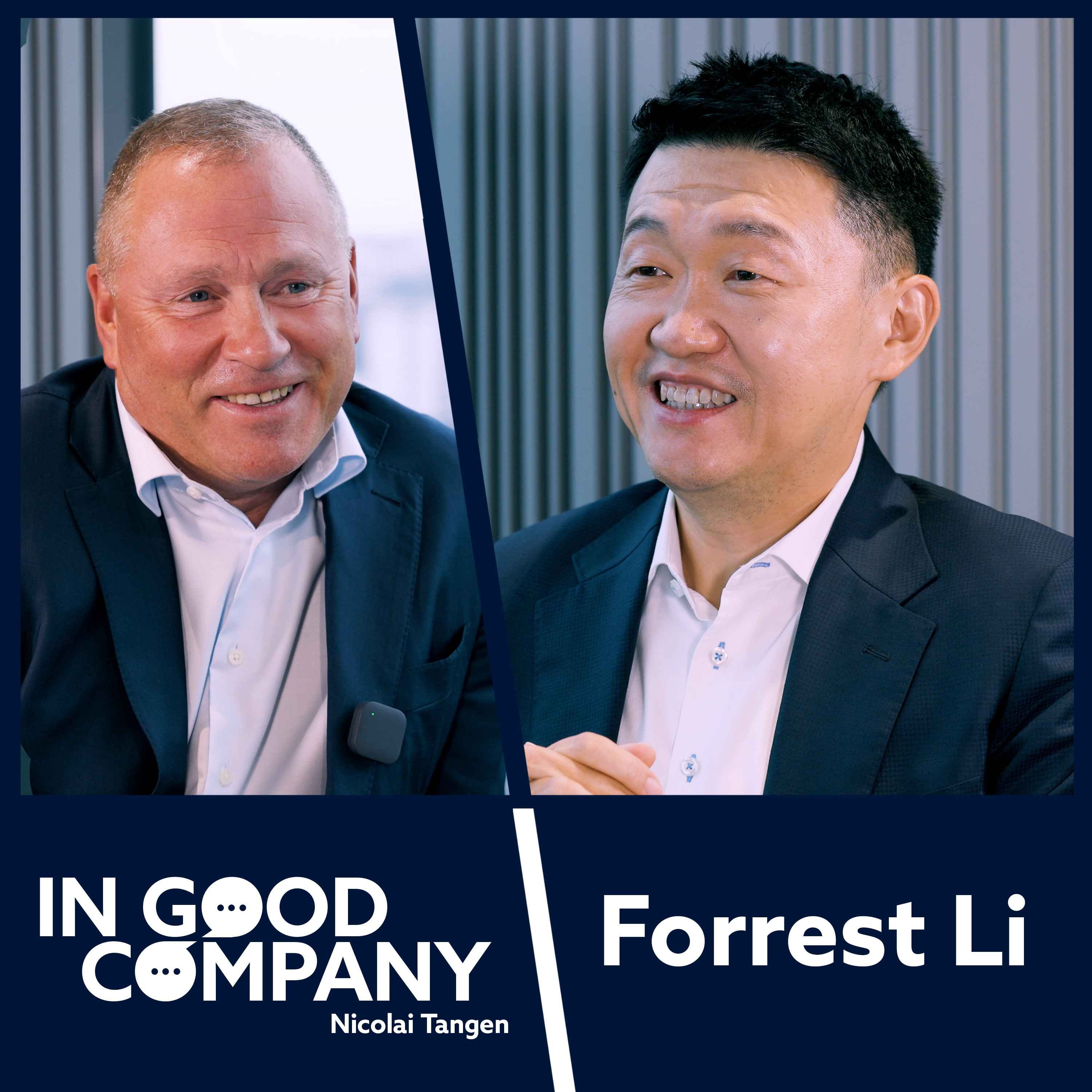
In this episode, Nicolai Tangen, CEO of Norges Bank Investment Management, interviews Forrest Li, the founder and CEO of Sea Group, Southeast Asia's largest tech company. The discussion covers Li's journey in building Sea from a video game distributor to a $100 billion technology empire, which encompasses gaming, e-commerce, and fintech.
Written by AI. May contain mistakes.

Get the gist, explore an idea or ask about something said.
 Claude
On In Good Company with Nicolai Tangen, what are the key points of this episode?
Searching your listeningAutomatic transcript. May contain errors.
0:01Hi, everybody. I'm Nikolaj Tangen, the CEO of the Norwegian Sovereign Wealth Fund. And today we are in really, really good company. We are in Singapore. We're talking to Forrest Lee, the founder and the CEO of Sea, which is the largest tech company in Southeast Asia. A market leader in video game distribution and in fintech and in e-commerce. An incredible journey. And a big thank you for taking the time. Welcome to Singapore, Nikola. Thank you for visiting us.
0:35I also should say that in the fund, we are a big shareholder in C, and so we follow it very, very closely. But first of all, for those in Europe and the US who don't know C, what do you do? Yeah, C is a Singaporean technology company with the mission to better the lives of consumers and small businesses through technology. So we are a technology company by heart, and it has been 16 years when we started the company. And we primarily focus on Southeast Asia market as the first market. And later on, we also enter into some new market like Taiwan, like Brazil. Actually, interestingly, we've chosen the name C as our company name.
1:22It's actually a short form of Southeast Asia. This is kind of a shout out of our home market. We feel very proud of that. And today, we primarily operate three businesses. a video game business named Garena, and an e-commerce business named Shopee, and more recently the fintech business named Money. And for Garena, it started as just a game distributor in Southeast Asia, but later on, we evolved into becoming one of the largest mobile game developer and publisher in the world, and a self-developed game from Garena named Free Fire. And you have something like 100 million people playing this every day, right?
2:05Yeah, Free Fire, like today, is the largest mobile game in the world by daily active users. As you mentioned, more than 100 million people play the game from over 130 countries on a daily basis. Do you play it? Yeah, I play it a lot. Well, I'm very pleased you've taken a break from playing to talk to us. Yeah, yeah. But how to go from like a video game distributor to become, you know, more than a hundred billion dollar market cap company. Just how did it go about? What happened? Yeah, it is an amazing journey. And although we started as a video game company, but our ambition, our mission is always like it's more than that.
2:49Right. And as we deeply in our heart, we believe in technology. And I think there's a lot of other things like in addition to games and it can be done through technology. And I still remember about 10 years ago when we received our Series B funding, we reached a billion dollar valuation. So we officially become a unicorn. I think if I remember correctly, we are probably the first technology unicorn from Southeast Asia. And 10 years later today, as you mentioned, it's a$100 billion market cap public company. And it's over the 10 years we achieved like a hundred times of the value. The biggest contributor for that actually is we ride a wave of the mobile internet revolution.
3:37And the 10 years ago, it's just the very, very beginning of all the smartphone and all the applications on the smartphones. before that and there was the internet there was a there was a pc game actually we started as a pc game publisher and there's the e-commerce but the dressable market is much much smaller because you need have a desktop and to assess the internet and you need a broadband and the broadband penetration a lot of our market is still relatively low but things completely changed when you have the you have the phone right and the you like people can can access the the internet and do all the things anywhere, anytime.
4:14But you were a video game distributor. How did you come up with the idea of going into e-commerce? Just what was the thinking behind that? Yeah, it's down to what is the fundamental value and the technology can bring. And I remember, interestingly, actually 10 years ago, and sometimes I brought my family to China for holidays. And at that time, I have a six-year-old daughter. It's like a, yeah. So we are very, very impressed by how much like e-commerce has developed, especially like the mobile e-commerce that developed in China. So on our trip, and sometimes my daughter want this, want that, like no matter what she wanted.
4:58And he said just a few kind of taps and swaps on her mom's phone. And the box just delivered to the door next day. and whatever he wants, she wants it, it will be in the box. To her, this is magic. And I give a lot of thoughts about it when we came back to Singapore. And I think this is just a great business and it creates so much value and creates so much joy and convenience to consumers. And it's hard for me to swallow the fact such business, such thing doesn't exist in Southeast Asia. So I remember... But how do you go from having the idea to actually executing this? Because now you have what market share in Southeast Asia?
5:41You have close to half the market? Yeah. So you go from nothing to half the market in Southeast Asia. You beat Alibaba, TikTok and so on. How do you go about it? There's a lot of factors, but I think what we really focus on is coming out of the local solutions. And because of we are, before that, we are a video game company, right? And we are a game company and we have a pretty much have a zero e-commerce experience and we never done e-commerce in other market, right? And so when we try to address this, like looking at this business opportunity, we really go down to the fundamentals and we don't have a ready to go playbook from other market and see what is the really matters in any every specific market what is the best solution for that for example i think a key differentiator for us over the years is the logistics capability we have a we have a build and we are only e-commerce a player today have a build of a lot of uh uh capability in terms of the logistics and it's a it's a very very important and because of number one and this is the key things for the customer experience It doesn't matter how good things you buy, how cheap you buy.
6:58And people really care where I can have it. Can I have it on time? And can I have it in the good condition of the puzzle? This is very, very important, but it's a very, very hard problem to solve. And Southeast Asia is a very vast geography with a very complicated situation and the roads. And a lot of places that there is a not complete address system. There's no kind of like a postcode database, right? And you always see that the customer just described the address, the delivery, like a point. It's okay. You drive into the village and you keep driving. You see a mosque and turn right. And then after two big trees, you see a red house on the left.
7:42That is the address. Yeah. So definitely you cannot find such a place on Google Map. And over the time, we have to build up our own address book with address system based on all this information. And that has become very, very, very, very important. How much money have you spent building the infrastructure on the logistics side? Well, it's a sizable investment, but we have been very, very smart and very, very cautious in terms of the capital things. And most of our facilities is on the lease basis. We don't really purchase land. We don't really purchase a building. But I think it's less about the money.
8:21It's about the effort. And it's about the determinations. We are not a logistics company, right? And we don't have an in-house logistics team. Have been very, very good experience to really focus on those things. But we have a lot of very, very smart talent, right? And do you really want your best talent to work on those challenges? Like most of the people, they say they probably don't want to work on those things. But if you want to build a successful e-commerce business, This is the things you have to work on. That's why we assign our best talent and the smartest ones, right? And to focus on those issues.
8:54And it put up a lot of effort to figure out every single point A to point B for the route. And what is the best way? What is optimized way for delivery? Which is the cheapest cost and always the shortest time. So, and this is a very, very much a bottom-up effort. What are the key factors that you have to, what are the key boxes you have to tick in order to beat these competitors? What are the other things than logistics that you think are important? Many, many things. But I think what really matters to us is a very long-term horizon. I think we believe in this business and we do this business.
9:37I mean, we see Southeast Asia It's our home market and we foresee ourselves will be an e-commerce player here forever. So whatever we build is a very, very, very long-term focus. And we care not much about the competitors. I mean, over the time, we have gone through several rounds of competitions and the competitors sometimes come and go and they come by waves and they also live by waves. But we are the one always to stay here and this is our home ground. So, and we're being very, very focused on to build up the customer satisfaction I think we're very obsessed with our customers, right? Is it on every day on a daily basis and our NPS score is getting better?
10:16Is the customer just more happier? Is it happier to buy things on Shopee? Are they buying more? Are they buying more frequently? And are they giving us more trust? So I think that is really kind of the advantage and we want to build and to make a sustainable success here. So what are the numbers you look at on a daily basis from this part of the business? Well, there's quite a lot. And it starts with the daily orders, the GMB, and the active user numbers on our app, right? And the purchase frequency. And for every delivery, we don't look at every single delivery, but we look at a cohort basis.
10:59What is the average delivery time? And does this meet our expectation? It's getting better than last week. And what is the customer service satisfaction rate, right? And how soon we resolve the customer complaints, the issues. So all those small things. And it's not for us. We also track all the merchants, right? And, you know, we have a chatbot for the customer service. It's not only for us, between us and the customers. It's also between every single merchant and the customers. We want to make sure all the merchants on Shopee platform also provide a very good customer service. We also check them, we read them in terms of how quickly they respond to a customer inquiry.
11:39So this is, and we have a certain incentive to encourage them to do it better. What do you think is going to be the future development in this business? What are the next developments? I think like fundamentally, the core of the e-commerce is like, how do you make sure it's number one, it's more affordable and more accessible to more people, to have more people to enjoy the benefit of the e-commerce. And this is related to a lot of work in the supply chain, like optimizations. At this moment, if we are not just matching whatever the merchandise with the customers, we also put a lot of effort to work with a lot of upstream suppliers and how to make their product more attractive, more competitive.
12:27We provide a lot of them the market information, what really customers want and to help them to do better businesses. And again, so delivery is a big thing. It's a very, very important part in the whole e-commerce experience. And there's still a lot of more we can do and you can always make it cheaper and faster. So we're going to keep doing on that. And we also noticed there was a certain like a new trend, right? And about the industry and more recently the live streaming. So that is a new way of selling things and the engagement with the buyers. And also that could be just a way to do e-commerce customer service.
13:11You can just sit there, do the live streaming to answer questions, whatever questions you have on the product. So we embrace that format. We want to make sure whoever wants to selling through live streaming, you can also sell on Shopee. So the industry will continually evolve. But I will say this will be just gradually and the fundamental things will not change and just make things cheaper and faster to customers and for whatever you can do. And so what part of the technology are you working on just now to develop further? Well, there's many, many, many, many, many, many things. But if you have to call out a very, very specific ones, like actually we are very, very excited to see how much AI can help to improve the businesses.
13:57And we have already seen some very visible progress. And for example, considering the transaction volume we are dealing with on a daily basis, it's such a big business. We handle millions of customer inquiries on a daily basis. Behind every purchase, there's a lot of inquiries. The customer always wants to know, like, is it something really good to buy? What is the color do you have? And I already made a purchase. And when can I receive it? Where's my puzzle? If I don't like it, what can I do? What else do you sell? And now like 80 % of such inquiries is handled by AI chatbot. And the satisfaction rate is very, very high.
14:41And we do the A-B test. For some, we ask the chatbot enabled by AI to do the customer service. Some it's by human being. And we compare the satisfaction rate. And actually it's on par. Wow. Yeah. And now even we use AI tools to train our customer service representative. Even like we use the AI tool, a kind of AI, like a customer service trainer to train the customer service human representative. So that's very interesting.
15:19What about the gaming business? What is the latest developments here? The latest development, and actually to us, Free Fire is already a very, very successful game. And increasingly, and we notice, the game is beyond the game. Actually, it's really become a platform. If you think about Free Fire as an app on your phone, right, it's a mobile game. It's a huge aggregator of traffic. And increasingly, we see when you have that traffic, whatever the new game content, the new gameplay, you can just keep adding into this platform, entering into this game. So the game has really become another just a product and the finished product has become a service and it becomes an every grain platform.
16:07I think this is very, very powerful. And now we even can identify a lot of social trend in the game. like people really talk about what is the hot topic in their community, in their society, right? And actually last year, there is a very famous, like a hippo become very, very famous in Thailand, and suddenly become a global phenomenon. Like everybody says, oh, that's a baby hippo, it's so cute and it's so adorable. And within two weeks, we build this hippo into the game. It's become an in-game character, and there's a lot of in-game kind of costume, like a pad related to this hippo. And it's really, really loved by the gamers.
16:50The Thai gamers feel very, very proud to say, oh, this is local. These games are so local, they care what we care here. And globally, everybody says, oh, this is so cute hippo and want to go to Thailand to see it. So it's beyond the game. and we see a lot of social media posts about the in-game character of these people also make the Free Fire more famous and beyond the gamer audience. I think this is some new trend we have been observing and I'm a big believer. I think the game has increasingly become the primary entertainment and social tools for the younger generation. What are some of the other developments that you think we could be seeing here going forward?
17:31Well, again, so I have to mention AI again. And this is the things that really will be the game changer. And we have already seen that. And it's very obvious on the production side, right? And for any game, you know, you need to generate a lot of, keep generating new content. It's generated a lot of code and generated a lot of arts, right? And previously, a lot of things have been done, like for the very, very basic ones, we have to outsource for third party, like studios. I'm talking about the arts. and they came up, we give them the concept, they came up with some very basic drawings. And then our in-house senior designer just look at one by one, pick the good ones and give the final touch before go to production.
18:13And now entirely this process is very much done by AI. And it's like our designer just tell the AI tools, okay, generate things for me. I want this. And imagine this word, imagine this character, tell me. And suddenly a lot of it can be generated. I mean, they are not that consistent yet, the quality, and there could be errors here and there. But it's a good starting point. And again, so our in-house senior designer will just pick the ones. It's really good. And just do the final touch and supervise the entire process. So that saves a lot of time. I think that will largely increase the productivity on the creativity side.
18:54But actually, the more important and the more exciting part is on the gaming experience part. I think it's still at a very, very early stage. But where do you see the result? I can give you an example of certain things we're trying. For example, Free Fire is really a team game. It's kind of like the biggest fan is coming from you go together, play the game with other people. You form a team together and come out with different strategies, different gameplay, and people play different role, try to win as a team together. But we have a lot of very shy gamers. They just don't want to reach out to other gamers and they log into the game.
19:31They just play solo and they always play solo. I think it's great to play solo. It's a great experience, but we feel it's something that's missing. It's a waste because actually it would be much, much more enjoyable if you play as a team game. So what we're doing now is like before we try to match them up with the team up with them with some bots, right? But the boss is very, very predictable. It's very, very stupid in a way. After a while, you know this is a boss. It's not fun to really play together. But because of the new technology, the AI, actually the boss becomes much, much smarter and he can not only play the game with you, give you the guidance, what you do in the game.
20:10They also can chat with you, can make a joke with you. It's really kind of become very much a similar human experience. It's so real that for a lot of the cases, you can't really hard to tell the difference. How many people do you have in game development? We have about 2 ,000. 2 ,000 people developing games. Yeah. What is a good game? What is a good game? Well, it's a fun game to play. And it's fun to play within the first hour. And it's still fun to play after 100 hours. And it's easy to start. It's like we want to build up the game. It's accessible to everyone. We want everybody to become a gamer and enjoy the gameplay.
20:53But you need the practice and you need a lot of effort to become an expert. So I think that is the key element in my view of a good game. Now, the third area you have is fintech. Tell us what are you doing there? Oh, this is amazing and it's a very, very exciting business. and we think we have a full potential there. And I mean, we started this business actually by resolving a lot of issues we have, the challenge we have for our video game business and for our e-commerce businesses, right? And in the early days, like even we published the games and we have the best games from all over the world.
21:34But because of the people, no credit card and for the gamers, they have no way to pay us. And we have to build up a cash card, like a gift card network ourself as a game company. It's a payment network. I remember the days I drive my car with all the bags of a credit card to go around 7-Eleven to distribute and to account how many cards I have in the stock and how much money I receive. And later on, for e-commerce, online transaction has become a big challenge as well. And there's so many transactions and how you want to make sure the transaction is all smooth in such a large scale and in a very, very safe way.
22:18So that's all the challenge we started with. So that's we build up a lot of solution, a product under the money or fintech business umbrella to solve these issues. But actually, increasingly, we see a very, very big opportunity because of our e-commerce businesses. we realize when people want to buy things, they really don't have much access to the consumption credit. And such an issue has been largely resolved in most of the Western market by credit card. But as you know, the credit card penetration is relatively low in most of the market we operated in. So people just do not have access to credit.
22:55And that's why we introduced through our Shopee purchase, and we introduced this credit line for them. They can just buy things now, but paid later. So in some other Western market, this is just a supplementary to the credit card. But here, it's become a major main solution. So even within a very short period of time, money is already the largest digital lender for the consumer consumption in Southeast Asia. And we already have over$7 billion loan book and it's growing very, very rapidly.
23:38So, in a way, these businesses fit together and there is a logical connection between them. Yeah. What would be the next logical extension of your business mix? Well, there is a lot of things, and we can think about it at this moment. And we haven't really, we don't rush into say, okay, this will be a new business we're going to enter into. I think there's still so much we can do in the three verticals we have. And this is indeed a very, very three, very, very big verticals, three very, very big applications at the moment. You mentioned AI several times. Could we see you going into a more pure play AI?
24:27It could be. It could be. And at this moment, and as I mentioned, we have put a lot of effort on each business lines for the specific applications. But on the company level, and we have a lot of new initiatives as well, we look at the entire organization, how the organization is structured, is organized. Is it like a very much AI-centric organization? And I think that will be the future. And also, we encourage a lot of bottom-up initiatives. and back to 10 years ago when we just get into the mobile internet revolution and I remember we in-house developed a lot of pilot and all the different type of apps, right?
25:09And they call all the different names and try to become a big business and eventually Shopee actually is one of the, is the project number six, become a very, very big mobile e-commerce businesses. And today, again, so we have several like agent platforms And so we provide the tools in-house. We allow, we encourage everybody in the company with or without coding experience to build up the agent for their specific need. So I do believe like whatever the new business opportunity we may capture, you have to start with a solve a very, very specific problem. And now we provide the tools and we start with some in-house problems.
25:49and hopefully if something really becomes valuable and it can be applied not only in-house but for more like a broader customer base and we should launch it as a standalone business. That will be the new business enabled by AI. Which companies in the world do you admire the most? Well, there's a lot of great companies and I think it's hard for me to pick any specific one but there's so many great things and we can learn. But I do admire our industry. So Amazon, I think they have the best. They are the pioneer, not only the pioneer of the e-commerce and they're also doing great. And a lot of things we have learned for them, very, very obsession with the customers and always focus on lower, low price for the customers, deliver the value to the customers.
26:46Then we really focus on logistics network, which we also believe that is a key part of the e-commerce businesses. And what we want to learn from them and also follow their path is they incubate their cloud business and additionally a lot of new businesses through their original e-commerce businesses. Hope we can follow that path as well to continually grow. What would it take for you to be a trillion dollar company?
27:16Well, I think it will be AI. Yeah. And again, mobile internet, we ride wave of the mobile internet revolution and make us a hundred billion, it's a hundred billion dollar company. And it's hard for us to imagine without the mobile internet revolution, if we are just a PC game, like a distributor, I think it doesn't matter how good we are, there'll be no way for us to be where we are today. And I think it's a trillion dollar business is always aspiration. But increasingly, I see the path there. I think the answer will be AI. And AI will be just a lot of value creation and the technology will make people's life very, very different today and in a very, very better ways.
28:02I think it will bring a lot of convenience and joy to the customers. and a large, large value will be created. A big pie will be created and hope we just do our best to capture part of it. And a trillion dollar is very achievable. Given the markets you're in, the share price can be very volatile. And the share price was up five times and it's down 70 % and now it's back up sharply. Does that impact the way you think? Well, I think it's a good journey for us. I mean, I appreciate we have gone through that, and we are really proud and we have survived all those ups and downs. And well, I would say there is not much impact and a lot of times the share price just reflect the external perception of the market, of the business, of the company.
29:01But I think But as I say, we stay true with our belief, which we believe in technology. I think technology will keep advancing and the technology across the entire history in the past and also probably in the future, just continually getting better and change people's lives in a better way, create a lot of value. And that is very, very convincing. And we deeply believe in that. And on top of that, I think there is a huge market. Right. And today, there's a lot of still, there's a lot of a part of the world people not really fully enjoy the benefit technology can bring to them. It's because of probably the infrastructure, because of the there's no very much local solution for them.
29:47And there is no right application. I think that is a part probably we can continually play a bigger role. And we start that role from Southeast Asia market, our home market. And in the past five years, we also kind of bring our best practice to Brazil and Brazil become a very, very sensible market for us. And there's a lot of other places for us to continue to do that.
30:14Moving on to corporate culture, how would you define the corporate culture in C? We have five core values. When you walk into the office, you may see the value war. We have that war in every single office. We want to make sure it's very, very visible. It's a reminder to all the employees on a daily basis. The five things we serve, we always want to make sure customer comforts. Whatever we do, we have the customer service mentality and we run. We highly value execution. Speed matters. And if we get things done today, we're not going to wait till tomorrow. And if we can run, we will not walk. So, and we adapt and we know we are in a very, very dynamic environment and it's highly competitive and the technology changes so fast.
31:01As you just mentioned, the share price can go five times and can go down like 70, 80, 90%. So it's a very, very changing environment. So we need to make sure we can always adapt and we commit. So like whatever you want to achieve, right? It doesn't matter. It's a hundred billion dollar market cap or trillion billion dollar, whatever things you do and you want to be committed. That's the only way you can achieve excellence. And actually the last one is we stay humble. And I believe this is the foundation of our core values, the culture. And if you have to pick one word to describe our corporate culture and that will be humility.
31:43I think it's a guide us in the good time. Why is it important to be humble? Well, I mean, I think it's interesting. And that is even before I started the company and I was a Stanford student and I was fortunate enough to see in the audience when Steve Jobs gave this very famous commencement speech, stay foolish and stay hungry. And he shared three amazing personal stories. But my takeaway from that story, all this speech, actually is advice to the young, fresh graduate. And it's a calling for humility, right? Because you have to be humble and to stay humble to stay foolish, right? And you have to acknowledge, okay, you are probably not the smartest ones, and there are a lot of things that can be done better.
32:28You should keep learning. And you have to be humble to stay hungry, right? And to try to achieve more is not enough, and there's more things we can do. And that's a very good reminder to me as a person. And also it's how I want to run my company. So this is very, very important, I think, to keep driving the company, keep moving forward. And it's also so important in the difficult time, as you mentioned, our share price hit a historical high. like I think a few years ago in the 2021 in the middle of the COVID and this success comes so fast and so sudden and suddenly the whole organization feels so good and everybody feels, oh, we are an amazing company.
33:20We are the best. We are the superman. See our share price. See our market cap. And I have a very, very unsettled feeling. I feel really, really worried at the time. and I wrote a company-wide note to everybody. I said, okay, yeah, so it's very important to remind ourselves like we need to stay humble and whatever we achieved or whatever how markets see us and it's still like where we are today compared to our ambition. We're still young, we're still very, very small and we shouldn't feel too good, too proud of ourselves. But where does your personal humbleness come from? I don't know. I think that's just me.
34:03And I always see the greatness of other people. I always see people, I enjoy working with people and has a higher ambition and be smarter than me, be more capable for me. And to me, I always feel like, okay, this is a lot of things I can do better. I think it comes from the self-drive. Yeah. And where does that come from? Actually, I think it reminds me of a great movie called Forrest Gump. And, you know, I picked the name Forrest because of that movie. I just love that character in the movie. What is it? I love Forrest Gump too. But what is it with Forrest that you like? Well, he's clearly, and he's not the smartest person in any room, in any classroom.
34:57And he's not the most savvy. and I feel related to that. And along the journey, I always see there's a lot of people smarter than me and more capable, more savvy than me, right? And I think maybe it's naturally for me to identify the strengths of other people and find a way to admire them and to work with them. But look at what Friskamp does, right? And he has a very kind heart and in a very, very authentic way. And he just keeps trying to be helping and try to be loyal to the friends, to the community, and try to help others. And even just little small things, right? And it doesn't matter if it's a family, it's friends, right?
35:41He's a co-worker, he's a wartime colleague, right? And he's just trying to help other people do good things in a very, very authentic way. How many times have you seen the movie? Well, probably at least 10 times over the years. Do you think life is a box of chocolate? Yeah, it is a box of chocolate. And yeah, it's full of surprise. And it's full of flavors. Yeah. I mean, the things like, I think the aspiration I draw is not only because of what he has done. And actually, in a way, it's such a big impact he makes to the community. Even in the movies, it changed the course of American history. but he also lived in a very rich life and very successful life both financially and also socially he's very successful I think in a way I see him as my role model and he's a very humble person that's maybe where I draw the aspiration from well he bought some shares in the fruit company for instance yes I love this this is fantastic but how do you balance humility with confidence you know and ambition
37:03humility I think is a I don't see it as opposite to confidence and I feel I'm a very humble person and see very very humble organizations but at the same time we are also very very confident and we know what we're doing and there's always things and what we can do better but we also feel very proud for the things we're doing now and how good we can be and how much we have achieved and in a way, I think humility works perfectly with ambition and because you can say it's a big achievement to be the largest, most valuable company in Southeast Asia is like$100 billion. That is a big achievement. But if I go to Silicon Valley, there's many trillion dollar companies.
38:00And if your ambition is one of the days that we become one of them to be in their league, and today we are still very, very early. And that is a way to keep us feel very, very humble. And we are still very early and we are still very small.
38:20What is your leadership philosophy? How do you lead the company? I would say three things. And I really value it doesn't matter when we were just a 10 people startup or like today we have like 50 ,000 employees, very large organizations. First is I do feel leadership should be, it's all about, not about yourself, it's about as a leader, how do you lift up others, how to make other people being successful. I think that is a very, very important. and this is starting when we're a 10 people company. It's like I keep thinking even as a leader how I make sure these 10 people will be successful together with me because a lot of them take the risk.
38:59They quit their job. They can have a very, very good paid job. They have a bright future but they decide to give up all that other things and jump into this startup with me together and how to make sure they have realized their full potential. They can live their full life by working together with me. And today, that is what really kind of like I push myself every day how to make sure all the 50 ,000 employees in the company, and they can realize their full potential. They are doing what they really enjoy doing, and they can fully realize their strengths. And I deeply believe if every single of them being successful, find their success in the company, and this will be a very, very successful company.
39:41So it's like every time I talk to my employees, it's always the first question in my mind is how can I make you better and how can I support you as your CEO? So this is the first thing. And the second thing is like I believe leader should show up in the difficult time and should be pick always the most difficult decisions to make and take the most difficult actions. And we all know sometimes an easy decision, an easy action doesn't mean it's the right one, right? And actually a lot of time it's the other way. And as a leader, you need to take that ultimate responsibility and accountability. And you cannot always try to do the good things, the pleasant things, and the popular things.
40:28You should delegate that to your other team members. Let them do the pleasant things. Let them do the popular things. and you should be counting yourself to do the difficult things. So during the COVID time, and as you mentioned, our share price dropped a lot and it's a very, very difficult time. And we have to quickly change the course of our direction. And we have to operate a company from the capital abundance mentality to the capital scarcity kind of a situation. We have to achieve self-sufficient much, much quicker, right? And then, so we have to make tough decisions. We have to exit market.
41:07We have to close down some new businesses. And we have to let go great people. And even for the people, stay with us. And I remember there was a year and we decided to freeze the salary. We decided to not give out the bonus. And we cut a lot of benefit. And I wouldn't hear to stand up and to sign the company-wide note to inform everybody these decisions. I want them to hear from me and I explain to them why this is my decision. It's not an HR decision. It's not anybody else in the organization's decision. It's my decisions and why I have to make these decisions. And I also show, I understand this means a lot of difficulty for our employees, but we need to go through this together and seek for their understanding and support.
41:57Things like the difficult time, the leader should stand up. And the third thing is about trust. I think among all the leadership qualities, build up the trust is very, very important. And people choose to follow you not because of how smart you are or like how great idea you have. It's simply because people trust you. And a lot of times this trust need to be neutral and need to be earned. And I'm the person really enjoying personal relationships. and I enjoy a time where much smaller companies, I feel very proud. I know everybody's name. I know their birthday. I know how many kids they have. Not anymore.
42:36Not anymore. Yeah, not anymore.
42:41That's why I think that's how I have to change how I build up the trust. And now I have to change it in a much larger scale way. So I do rely on the company-wide note and I take every opportunity to send a company-wide email. How often do you do that? Well, very, very regularly, I do our company birthday and I do our IPO anniversary. I do the year-end Christmas holiday and every quarter we do earnings. And I want to make sure our guys, everybody in the company hear about company result and performance first from me instead of from media, like from anybody else. so and occasionally like when there's a specific things like i want to talk about it and and i also do that and when i travel i want to make sure i regularly i have i have the roadster i want to make sure i cover all our local offices and i travel to meet them when i'm in the local office usually i do the town hall probably with hundreds of employees and they can ask whatever the questions they ask and they can ask real-time life and no kind of no no forbidden questions and they can ask anything and in front of them i will see the questions and i will answer them one by one and i'm not going to skip any questions i think that is a way to to to build up the trust now you're also um well known for building great teams and you hire people sometimes straight from university and they stay with you right what do you think is the key to achieving that?
44:18We have a very, very early days and we have this in-house management associate program and we brought in the young talents and we grew them, give them the opportunity and we develop them. And a lot of them graduate from this program today, after 10 years, already play a very, very critical role in the company. And we benefit a lot from such things. That's why we keep this best practice. We keep these traditions. Every year, the leadership team, not only myself, the entire leadership team, we spend a lot of time for this campus recruiting and we want to make sure we bring in the very bright young talent and we rotate them and we put them on a two-year training program and we spend a lot of time mentoring them, coaching them and hopefully they will find what they really enjoy, what they really love in the company and that they can stay stay long with the company and eventually become a very, very key contributor to our future growth.
45:21We do believe in the young people. And I think it's starting with our early days when we started the video game e-commerce business here, the industry didn't really exist. There's no talent pool for us to directly hire with experience. So we do kind of have to build up everything from the ground zero. The only things we can do just to bring in the very capable, fast learning young people and just train them and grow them and grow them together, grow with them together and develop them. So, and the internal, the in-house talent development and build up a talent pipeline. And I would say it's very, very important to us and become our key capability.
46:06How much do you work? uh every day all the time whenever i'm uh i'm awake i'm i'm working when do you wake up uh six or seven yeah and and then you go to bed uh 11 12 i try to sleep seven eight hours a day yeah and do you how do you relax uh spend a lot of time with uh with uh with my kids and i mean they're still young and i really I get a lot of advice from my friends. Okay, when they were young, try to spend as much as you can and you will miss that time when they grow up and when they leave the family. So I cherish every moment I spend the time with them at home or travel together with them.
46:51And sometimes I learn a lot from them. I think it's like probably because they are the younger generation customers and I get a lot of insight from them as well for games, for e-commerce. You become immensely wealthy. What do you enjoy doing with your money? Not much. I think for me, it's just me. I think there's not much change. Actually, I eat less compared to 10 years ago. And I eat much simpler. I didn't change much in terms of what I dress. and I enjoy dress, the shirts, the pants with the company logo. Most of the time they're free. So, well, I haven't really thought about it. I think it's like probably it's not really about how to spend money.
47:46It's like what is the really luxury I have with that money. I have the freedom to really focus on what I enjoy doing. I probably don't need to just do the work to anything just for make a living for me to end at the end of the month. I think that is probably the biggest luxury I have with all this money. I can really focus on my passion and my ambitions. And then to me at this moment, it's very, very clear. So I want to continually build C to a greater company. Finally, what is your advice to young people?
48:23Well, actually, we talked a little bit about that. And again, I want to mention it's a movie, it's the first game, right? And indeed, I think that's probably the... I watched the movie when I was young, when I was in college, and it's such a lasting impact on me. We are all ordinary people, right? and it's hard for us to identify ourselves being the smartest and the most savvy people in the room. And we always ask ourselves, like, my memory matters and what can I do to make the, can I really make the impact? I think what I learned from that movie is by just, it doesn't matter who you are, like what you do, where you are, just by giving a little bit of effort doing the good things to people around you.
49:11It could be your family, it could be your community, it could be your friends. and you can live a very, very successful life. And sometimes you never know what's coming out from this ripple effect and sometimes can end up in a big impact, right, to the society. I think it's like we all have a very short period of time for we only have at least one life. I just encourage all the young people to rather than only just put a lot of time to think about yourself and also think about people around you and simply think about what you can do to make their life a little bit better. And end up, I feel you could be, by doing that, you could be the biggest most benefit from it.
50:00Well, it's a beautiful place to end. Big thank you. Incredibly impressive. And wow, what an interview. Big thank you. Thank you. Thank you very much. Yeah, thank you for having me.
50:14Thanks!
What does it take to build Southeast Asia's largest tech company from scratch? Forrest Li, founder and CEO of Sea, joins Nicolai Tangen to discuss the journey of building a $100 billion technology empire. They talk about Sea's journey from video game distributor to e-commerce leader, the success of the game Free Fire with over 100 million daily players, and expanding into fintech services. Forrest shares his humble leadership approach inspired by the movie Forrest Gump and explains how solving local challenges like complex delivery routes helped Sea beat major competitors. Sea now operates across gaming, e-commerce, and financial services in multiple countries. Tune in!
In Good Company is hosted by Nicolai Tangen, CEO of Norges Bank Investment Management. New full episodes every Wednesday, and don't miss our Highlight episodes every Friday.
The production team for this episode includes Isabelle Karlsson and PLAN-B's Niklas Figenschau Johansen, Sebastian Langvik-Hansen and Pål Huuse. Background research was conducted by Oscar Hjelde.
Hosted on Acast. See acast.com/privacy for more information.


