
 Ask ChatGPT


 In Good Company with Nicolai Tangen
14 May 2025 · 1h 17m
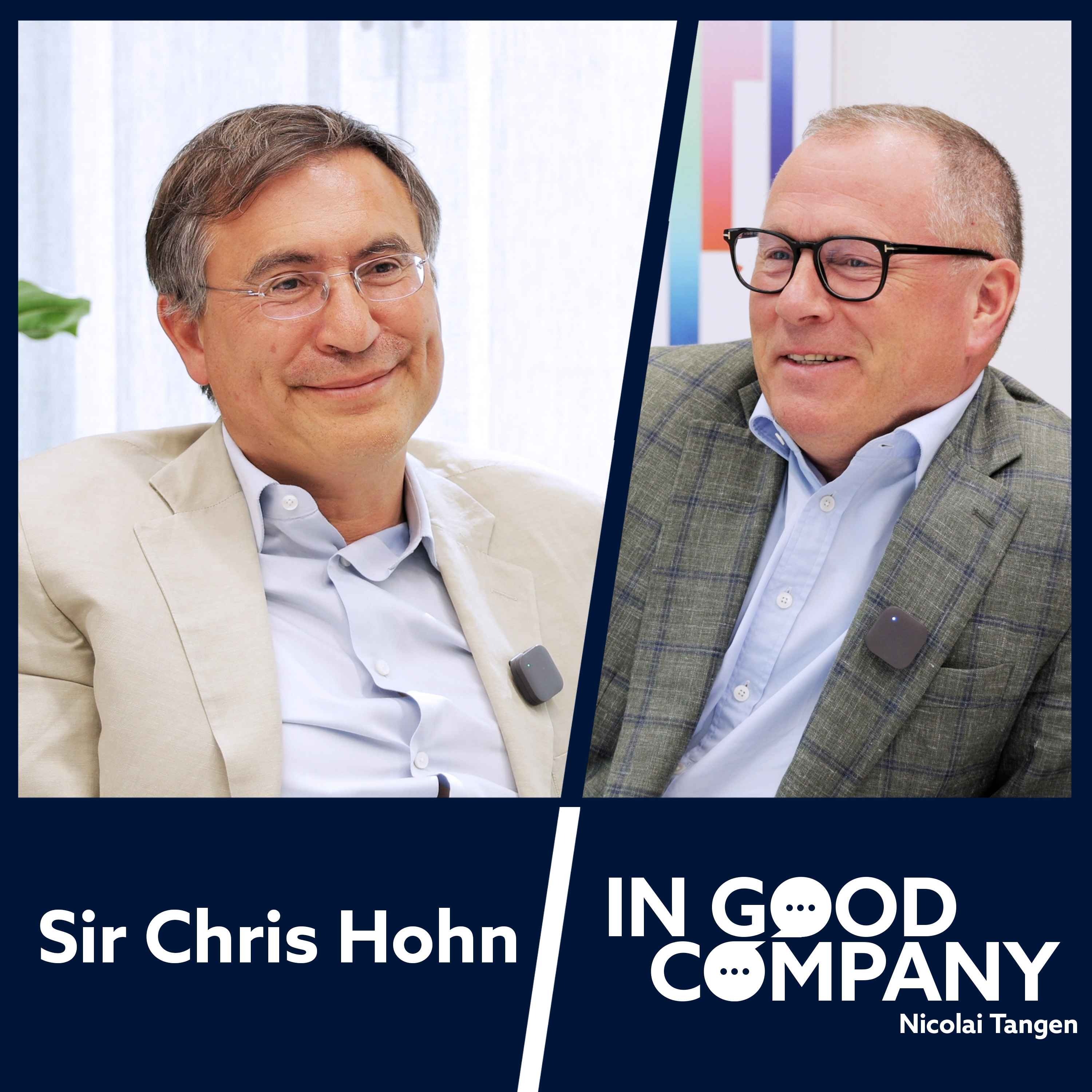
In this episode, Nicolai Tangen, CEO of Norges Bank Investment Management, interviews Sir Chris Hohn, founder of The Children's Investment Fund Management. The discussion spans various topics, including investment strategies, barriers to entry in investing, the importance of long-term thinking, and Hohn's philanthropic efforts.
Written by AI. May contain mistakes.

Get the gist, explore an idea or ask about something said.
 Claude
On In Good Company with Nicolai Tangen, what are the key points of this episode?
Searching your listeningAutomatic transcript. May contain errors.
0:00Hi everyone, I'm Nikolaj Tangen and today we are joined by one of the best investors of all time actually. So, Chris Horn, not only is this fund, TCI, one of the best and most successful funds that Europe has ever seen, but also the charity is now one of the largest in the world. So, Chris, you continue to have an immense positive impact on the world. Thanks for coming. Thank you, Nikolaj.
0:33Let's start with the investment world. What makes a good investment? I think this is something a lot of people get wrong. They think it's about growth often or something new. Neither of those things in themselves to us matter by themselves. The most important thing, and without which it's in, let's say the types of investing that we do is high barriers to entry, the most that Warren Buffett has talked about. Now, before we dig into that, can a distressed asset of a piece of real estate that's selling at half price because of a liquidation also be a good investment? Yes. So can there be a role for cheap average assets?
1:41Yep. Let's call them low quality assets, which are trading at big discounts to replacement cost. Yes, that's the type of investing that can work, that I've done in my time. Cheap average businesses, or cheap bad businesses. But I don't feel that I can have any confidence in that type of investing
2:16because the earnings power of those averages businesses is unpredictable. So what are good moats? The most important answer is ones that are sustainable. Okay, a lot of people. And ideally, you would have multiple moats, multiple pieces of defense. And you're serious, moats is basically something that means that the business is difficult to replace. Difficult to compete with, yes, and replace. Two, substitution risk and competition risk. Those long-term become very difficult because why is it so important? Competition kills profits. That's as simple as that. Substitution eliminates your business.
3:02So we look at, there are many, many boats. One, which most people don't look at, most investors don't really look at, actually, interestingly, is irreplaceable physical assets. Okay? We're in a world where people just look at earnings. They don't look at asset value or physical assets.
3:30And so we like quite a bit of infrastructure. airports for example one of our investments which has been the airport group in Spain where the government privatized it yes AENA and you just can never build a second airport at Madrid or any other places these are natural monopolies and so that also applies to toll roads and railroads and telecom towers. So there are many forms of infrastructure, transmission towers that are hard to compete with because they're natural monopolies where, of course, some of these things can be overbuilt like cable. So there's a form of infrastructure, but it's usually, and you have to look at the details of case by case, very unusual to try to, and usually don't get the planning to build a second airport, no economic case to it.
4:46I can't remember how long they've struggled to get an extra runway at Heathrow. Right, so planning, exactly, planning, and then roads is no economic case to build a second road or you don't have the land.
4:59So infrastructure, physical assets is one. A second is IP. Intellectual property. Intellectual property, that's right, which is so advanced that it's very difficult to replicate. So what kind of intellectual property are you thinking? Well, one space we like is aircraft engines.
5:29and it's a very complicated product because the materials complexity, the engines run at such high temperatures that metals melt, and so many different things have to come together, thousands and thousands of complex parts. So that's a business where there are only two players in narrow-body engines and two in wide-body, and there'd been no new entrants for more than 50 years. The last new entrant was DE, and so that tells you something. Yeah, it's a big industry, but it's so complex, very hard to enter. Another barrier to entry is installed base, which applies to the aircraft engine business.
6:17Once those engines are there, for various reasons, you get the spare parts business on it, And another of the barriers to entry is scale, although that's not a guarantee of competitive moat. Network effects is another important barrier to entry. You can see this in assets like Visa, Meta, two examples of network effects. And brands are another barrier to entry. But I'm not saying every brand is powerful. But you think about a McDonald's, it has a value. There are some brands which are powerful and sustainable, but not all. And I'll mention one more moat, which is customer switching costs. and where you take mission-critical software.
7:29Once it's installed, companies are very reluctant to mess with it and switch because of the complexity. How important are recurring revenue streams for you when you look at businesses?
7:50It is important, but the predictability of when they recur is not. Let me give you an example. So what's most important for us is something slightly different, which is essential product or service. We don't like things which are discretionary. okay so one space we've invested in for a long time is rating agencies and here these are the these are the people who basically give kind of character to different type yeah they say is it good or bad yeah the people who invest in bonds they say is it investment grade non investment grade, give for research, and if you like, bless it. And there, you can actually defer an issuer pays for the rating, but they don't have to refinance their bonds, which is a big part of it, in any given year.
8:53They can delay and defer, but eventually the debt has to be refinanced and rated. And so I think essential need is the bigger point. But usually our companies have recurring and predictable revenue streams of essential products. Do they have to grow? So depending on valuation, not necessarily. Or that's not necessarily at a fast rate. OK? And growth can come from two forms, volume and price. So you have to break it down. Now, why isn't growth as important as people, investors usually assume it to be? Because you can have profitless growth. The airline industry over 100 years has had a lot of growth.
9:52Airline travel has grown at 5 % a year. Yep, continues to grow consistently. But airlines as a business, cumulatively and collectively, have made almost minimal profits. Despite growth, because there are very low barriers to entry. And so I would say growth without barriers to entry is not a combination that you want. Some of these businesses are quite capital intensive. Like it's not cheap to build an airport. Does that matter for you? Well, you have to look everything into the detail. and some airports are well all airports have regulation on landing charges but some the non-landing charges are unregulated the shops the advertising the the vip lounges the parking Yep.
10:56And the so-called dual-till regulation. One till is regulated, one till is unregulated. And those are very low capital in intensity. Yep. It's in effect. Yep. And high returns on capital. They grow because there's more and more demand for travel. And so, and again, capital intensity by itself, it's part of the equation. Okay. But it's still, it tells you how valuable growth is. Okay. But what trumps, if you don't mind that expression, what trumps all of this… It's still a valid expression, don't worry. Yes. What trumps all of this is the Barry century. What about regulation? You've been big in things like red electric…
12:01Yeah, yeah. I'll go into that. But I want to go back to the point about growth can come from two forms, price and volume. Yeah. Okay? and most companies don't have pricing power. They can only price, if they're lucky, at inflation. And that's why people don't focus on it. They don't even look at where growth comes from. They just assume it's volume plus inflation. But there is a special group of super companies that can price above inflation. And that's, as Buffett taught, the test of whether you have the moat. OK, and this real pricing power above inflation can be very valuable because if you can price 1 % above inflation and you have a 20 % profit margin, your profits will grow 5 % faster than revenue.
12:56And people don't go into it or analyze it because there's so few companies that have it. but this is something we have a lot of our investments have this because incremental pricing is pretty much all profits that's right and it's very potent if you have the lower your margin is so this is why you asked about growth and is it how important if you ask about volume growth it's but I and I have low volume growth but I have a lot of pricing growth that's actually more important because of the leveraged effect of there's no cost associated with it.
13:41Regulation. Yes. You have been in a lot of regulated businesses. Yes, that's right. But you've been in Red Electrica, which is like an electricity transmission company. You have done quite a few of these things. Yes, I have. And actually, it's a general risk because if you have barriers too low, competition or substitution eliminates your business and your investment. Barriers too high, regulators may come knocking on your door. And so every case is different. And the ideal case is that there is competition, but a weak competition and apparent competition. okay so tell me what is a parent competition yeah well it's really weak competition and rational competition okay so the um um take some um water examples pratt and whitney competes with GE and Safran.
14:50It has a 25 % share of new orders. It has a product, but it's not nearly as good. It's got 35 % of its engines grounded, multiple technical problems. It's lost a lot of trust, but it's there competing
15:13for new engines. but price isn't the most important thing in this industry reliability is and so you and so and as it struggles it has to raise prices because it's got lots of difficulties and sometimes where there is competition that competition chooses not to compete generally speaking not a specific industry decides to be rational, yeah, and compete on, you know, non-price-based approach, okay? And then the detail matters. So you might have looked at Heathrow Airport and say, oh, that airport is fully regulated. Airports can't be good. But if you look into the detail of Iena, it's a different animal.
16:07It has a piece that's regulated and a much bigger piece, 70 % of the value. maybe more, which is unregulated. And so maybe the unregulated business, the regulated business will give you a bond-like return, 7%, but the unregulated give you a much higher return. Do you see? Another group of businesses you've been very big in has been the stock exchanges. Both Doge Bursa, Ronald Stock Exchange, and so on. In the past, yes. Yes. Why were they so good?
16:40in the case of Deutsche Borsa starting with that they had a derivative business called Eurex which was a natural monopoly it was a network effect this was the barrier to entry that liquidity of a marketplace for trading bond futures European bond futures the network effect of getting best prices in the most liquid market meant it became what is termed a winner-takes-all or natural monopoly. And once you have that liquidity, very hard to move people away. You can never compete on best price. And London Stock Exchange has that for LCH clear net business, a clearing business. And so where an exchange can, CME has it on US futures, establish this natural monopoly by being the first mover, the winner takes all, then these exchanges can be very good.
17:53But of course, they've changed now. Unstocked exchanges in many different businesses sells data and half their earnings are from data. And that's non-proprietary data, reselling non-proprietary data. So it has a vulnerability on that piece. They're no longer just what they used to be. And then there was a lot of growth without capital. As people came and traded more, as capital markets grew, you grew without capital, which was very valuable.
18:29What are the type of companies you would never invest in? Type of industries? Yeah, that's a good question. We have a long list of companies we don't invest in. We're very focused. And we call them the risky and bad industries. And I have invested in some of these in the past, but I've learned. Banks. Sorry for that as a bank. No, we're not the bank. We're in the central bank. Central bank. Central bank is good. Yes, central bank is good. But we don't like banks. We don't like banks. And why not? Why not? They're low quality of earnings because they're very leveraged
19:11and much more than people think because people look at, oh, equity to risk-weighted assets. But equity to total assets, many banks have run it 100 times. And so, two, they're opaque. You can't look into them. You can't. Yeah, you can't. I remember pre-financial crisis, I had a look at Credit Suisse, and I sat down with the then CEO, Brady Dugan, and said, put his balance sheet in front of him from the annual accounts and said, you have a multi-trillion dollar balance sheet. Can we walk through the line items? Because I don't understand it. He said, I don't either. He was a very honest guy. I really liked him.
19:59Very confident. Yeah, very honest. Okay, so banks you don't do. What else do you do? And the other reason for banks is it's very important, you know, that sooner or later you may find someone without a lot of intelligence comes to run them. And then it can be toxic. People going for growth, Anglo-Irish Bank, if you remember that one, Nikolai. And they just can destroy the shareholders
20:32by getting bonuses, bare sterns, and non-alignment of interest with leverage and opacity. So what are the other commodities? And it's a commodity. Oh, the auto industry is obviously a commodity. Retail, insurance, the commodities, commodity manufacturing, tobacco. The truth is, yeah, anything in most things in manufacturing. Okay. Most industries. Most industries are bad industries. So Chris, it doesn't leave a big universe. Correct. We say maybe there's 200 companies that we consider to be high quality and investable. And I mean, I'll list you a couple more. Traditional asset managers, bad businesses.
21:33Yeah. Speaking as one. Fossil fuel utilities, bad businesses. Airlines, bad businesses. Wireless telecom, bad businesses. We think media is bad. Advertising agencies. It's a very long list. Why? Because it's competitive. And with existing players and new technologies. And the one important thing that I've learned in my time in investing is investors underestimate the forces of competition and disruption. because they just look today. Maybe there's a new company which has a first-mover advantage, but then competition comes in, substitution.
22:24Where does it leave the big U.S. tech companies? Yeah, so there's a lot of power of incumbency. This is another important point. So let's take a company, Microsoft, which we've invested in.
22:42and one of their barriers to entry is bundling. Okay? Or maybe because it creates a customer switching cost. What do I mean by this? So the Office franchise, which we're all familiar with, has many products in it. your applications, word processing, Excel, your email, security, different things. And they sell it as a bundle. They don't disaggregate it. And when a new product or a potential competitor enters, they can add it to the bundle. So Zoom came out with video conferencing, and they could have potentially added all the things Microsoft does to that. So Microsoft had to respond, and they launched Teams.
23:46And they were able to distribute it through the bundle, free to everybody. And even though Zoom, some people believe, was a better product, or is a better product, Microsoft won that battle because they had the installed base, the incumbency, which we talked about, and high switching costs because once people are using their office software, they don't want to switch. And so people started using Teams. Okay. Something given to you free. Why? Because it was good enough. Yeah. It didn't have to be the best if it's free. What about the other tech companies? We have a position in Alphabet, which is maybe our most risky investment,
24:44where clearly the company, and it's one of our smallest investments as a result,
24:53and where we have some level of protection because there are businesses like YouTube and their cloud business, which represent half the market cap today and their cash and other things. So it isn't all search, but search is critical. And so can they out-innovate competition? There's a risk of search fragmenting as competitors come in and try to. But it's a question mark. We don't think so. We think they have a lot of advantages of their data to offer higher quality search results.
25:39But competition is increasing.
25:44Talking of which, how do you think AI will change the investment landscape here? it's um it's going to increase uh disruption in in in ways we can't even predict but there are uh things like um um call centers yeah and we'll we'll we'll all go bankrupt and uh Another segment is Indian outsourcing companies who do coding and things like that. Demand for those services could collapse because AI can do coding with half the people. Yeah. Yep. So there are, but AI will increase the productivity and lower the cost base of all companies. And so if you have a company with these barriers to entry, it's going to be worth more.
26:49But I think for generally competitive businesses, if you don't lead, you could become uncompetitive and be disrupted. So now we have identified one of these companies, let's say, I don't know, IA now or Rolls Royce or Microsoft. How do you value these companies? What is your valuation tool? We don't even look at that until we get comfortable that the barriers are so strong it will be around. Okay, so now, big barriers, big ones. We think it will be around. Yeah, we think it will be around. We think there will continue to be an airport in Madrid. We'll do reference checks on relevant people, okay?
27:34And see if we're missing something. So when we were looking at investing in aircraft engines, we spoke to the former CEO of one of the competitive companies, and he confirmed their thesis and actually said the margins should be much, much higher. Okay. And over time they will go there. So that's one of the pieces of diligence. We will assess management where I think it's important, but not critical if you have the right assets, ideally through meeting them. The talk to competitors, get their view.
28:27and look at competitive companies, look at the track record of the company.
28:37And usually you don't understand everything. And usually the things you find out are bad things. And I think we'll discuss it with our team and we want to hear competing views. We have some members of our team who are just inherently bearish and they're good for testing the bear case. We always want to hear how could technology disrupt and just competition. Are you a bearish guy? Not particularly, no. What kind of valuation metrics do you look at? P's, cash flows? Do you do DCFs? Do you have like 50-page spreadsheets? All of those. Right. All of those, but not 50 pages. You know, that's a very...
29:29But really, honestly, one of the things we learned is, there's a really important point, is that we can have an advantage through long-termism. Okay? Which is, the average stock is held by an institutional investor by under a year for the stock market in the US. How long do you hold it? Our average holding period of our current portfolio is eight years. Eight years. Yeah, that's, yeah, eight years. I'm not saying that's the limit. It's just the, we've, on average, some we've held for 13 years. Some new investments like GR Space are two years. For the average, weighted average holding period is eight years.
30:16Yeah. But it could be 10, it could be 20. I love long-term, right? But how do you install that type of thinking into your organization? I mean, you're straight out of business school. You want to, hey, I mean, you know, went to Harvard like you did or whatever. It's just like, hey, let's do some stuff. Come on, let's do some stuff. And it's just like, hey, okay, let's buy something and hold it for eight years. Right? You come home to your partner every day. It's just like they do nothing. We really, you know, if you are in the private equity world, that's normal. Yep. A private equity fund would hold an investment for their 10-year life funds normally, or longer, 12 years, as you know.
31:01And so we, as an overused expression for some, or misused, we take a private equity approach, i.e. that we have to hold the company forever. Because the stock market now may be at very bad prices when you want to sell, if you need to sell. And so I really think you need to have that approach. And so the way we really like our long-term valuations, DCF, the most important things and here's the thing so DCF you take the cash flow and you discount it yeah yeah yeah but here's the thing is the the longer you can look out if you've got a great company the more valuable value there is take a company we own Moody's Moody's a rating agency so it's been around 100 years what do you think the average I can ask you a question, make it fun.
32:09What do you think the average revenue growth over that 100 years has been? I'm going to look like a total fool, but... 100 years is a long time. 7 %? 10. Wow. Yeah, so you know that's a very unusual number over a very long time period. And so investors have always underestimated its value, including myself. Yeah. And I bought the stock during the financial crisis at 10 times earnings and even bought shares. Warren Buffett was selling and reduced his stake from 25 percent to I think he's got 15 percent in Berkshire. And the. Are you kind of secreted, please, having bought something from Warren Buffett?
32:57But then I sold it. I doubled. I doubled my money. I went from 10 times earnings to 20. And I sold it at$100, bought it at$50, sold it at$100. I thought I was clever. But the earnings kept compounding. So you didn't buy back earnings. I bought it back at$150. So now it's recently$500, now$400. So it's – but it's – and because actually the intrinsic value compounding matters more than the stock price. If you have a great company, it will grow intrinsic value. Absolutely. And the multiple – here's the thing about the multiples. They matter less than the growth when you look at it over a longer period.
33:40But most investors are unwilling or unable to invest on a long-term time horizon because either they don't know what they're doing, which interestingly goes back to what Warren – they think it's risky, which goes back to what Warren Buffett was when he was asked what the definition of risk was. You know what he said? Not knowing what you're doing. So really good nugget here is that if you buy something which is really good, it doesn't quite matter what you pay for it because it will grow. It's secondary over a long – well, let's just say it like this. The multiple to a point, whether you buy it at – if it's growing, it's all maths.
34:24You've got to look at the growth rate, the terminal multiple, all the amount of things. But if it's increasing intrinsic value at a good rate, you will undervalue it if you look at it over a short horizon. Yep, I can be saying it like that. And if you're willing to hold it for a long term and extract that intrinsic value growth, it'll be worth more to you than other people.
34:52I've heard you say that there are more good companies in the public market than in the private markets. Yes. Why do you say that? Because the companies that are sold to private equity are the ones that aren't as good. Are you sure? I mean, what do you base? Well, I'll say a couple of things. Not that I doubt that you say. Yeah, yeah, let's dig into it. I know it upsets people who are in private equity. I don't affect me at all. I mean, we actually, I'm pretty pragmatic about this. But where do you get that? I happen to think that large companies are more likely to beat small companies in an industry.
35:34They have more money to compete. And in R &D, yep. And scale, we talked earlier about scale being key and incumbency being key and switching costs. So we think it's a small company that invents something new. We talked about Zoom. It can be crushed by a large company reasonably easily. They can copy. And large companies are usually too big for private equity. Private equity can't buy a visa.
36:15It's too big for them. Yep. So that size excludes private equity from large companies.
36:26And if a public company is selling something to private equity, usually they're not selling their best businesses. Yeah. And I'd say private equity, like all asset management, is prone to the principal agency problem where they are incentivized to gather assets. Let's just say it like this. The very best businesses in the public markets, I believe, are better than the top 100 companies, are better than the top 100 companies in private equity. Okay. Yep. When do you sell a company? When its view of intrinsic value is not as good as other things. What does that mean? Including not just value, but conviction.
37:20So our philosophy, there are two components to it, if you like. Intrinsic value, so the price still has to be at or below intrinsic value. But there's a second point which isn't really focused on by many investors, which is conviction. Okay. So you lose faith in them. No, I'm saying you need to have conviction when you invest in something at all times. And what does that mean? You could call it confidence. What does that word mean? because there's a saying, talk is cheap. You can say this. And you can be wrong. And so one of my first investments when I worked in New York for a hedge fund before starting TCI was in an Italian media company.
38:34And Bain Capital bought control. It was like a billion euro valuation. And it went to a 50 billion euro valuation and then went to zero. It was a Yellow Pages company. Seat. Seat, yeah. You remember it. And when I first invested, the internet didn't exist. And people thought Yellow Pages were a monopoly. And they were. and so the point is you can be wrong and certain industries your risk of being wrong are higher technology is one of those areas absolutely but if i own an airport yep that is or a toll road let's take a toll roads in that are unregulated which there are there are some that we own I'm less likely to be wrong than if I own a retailer.
39:34Yeah, my chances of being wrong are less because I have physical asset backing, substitution risk. So the thesis is much more obvious, yeah? Because so the, and so this concept of conviction is very important. One investor said to me, I have to be able to sleep at night. It has to be sufficiently obvious.
40:08But you always have to, you know, and it sounds contradictory to saying that you can be wrong because what kills you as an investor is permanent loss of capital. Absolutely. I got a bit of a problem with the concept of intrinsic value as if there were some kind of objective truth. Yeah. You're right. You're right. It's, you know, we can't tell the forecast the future. So to a high degree of accuracy, you can just say, which is why you can, and the longer you look out, the harder it is. And so we look at more simpler tests sometimes. Will the business be around? Yeah. Yep. Will we still fly airplanes in 30 years?
40:56And will we want airline travel? Will there be demand for it? And so once, you know, so I agree with you. So I think that valuation is just approximate. We can just say, in truth, with confidence, we have a good or great business. okay and as i'm saying only a small subset of businesses can be predicted yeah which are the most powerful ones but exactly how they grow and you know unexpected events you're right there there's no um there's no certainty
41:44let's move on to from uh companies to investors and in terms of what makes a good investor why are you a good investor well it's your words um it's important to have humility um but um there was uh someone i knew who took me aside once and he said chris you and I, he did reasonably well. He said, we weren't the best investors. We just took the most risk. So I just... Which is not true, actually. Yeah, it was an interesting comment that makes you sometimes, when people say a joke or something, you wonder, is it true? But I was always willing to look at the company fundamentals and not try to guess the stock market, okay, and focus on macro or trading.
42:43Yeah. So I was always fundamental. Most investors are not fundamental. They trade actively. They look at data points. They say, what's the catalyst? They don't really know what the company does. So I think the fundamental approach has been key. Long-termism is key. Okay. Another thing we've done is concentration. We've owned a few things. We may have 10 % type holdings, 10 stocks, 15 stocks. We don't own 100 things. And I think another key point is intuition. We work with intuition, which is something that people find strange. How do you use intuition?
43:33It's been defined as thinking without thinking, which is the Buddhists would call a koan, something that just doesn't make sense. We will come back to your Buddhist thoughts later on. But a lot of people don't understand what intuition is. It's sort of the opposite of… I happen to have written my master's dissertation on this exact topic. Okay, so you're one who does. It's sort of the opposite of intellect. Well, it's pattern recognition in a way. You've seen it before. Yeah, there's a word for it, knowing. It's all the opposite of intellect. So, of course, we'll do analysis, but then it's a higher level of intelligence than just intellect.
44:28But what do you have intuition about? Do you have the intuition about the people, the situation? What is it? All of it. Okay. All of it. Is someone trustworthy or not trustworthy? And the patterns. Patterns are another thing. And so, you know, we don't do, we were rarely short, but we were short wirecard. Yeah, I know. We're coming back to that. Yeah. But the... Is your intuition now better than it was when you were younger? Yeah, I was not in intuition so much before the last five to 10 years. It's been a change. But I think I always operated at an intuitive level. And it's not just stock picking.
45:12when I decided to start my own fund, you know, 21 years ago, I just had this intuition that I was in the wrong place and not doing what I was meant to do. And it wasn't about money or anything, but it's when you know, when I met my wife, Kylie, you know, you just, there's a point where you just know. It isn't an intellectual thing. But Chris, this is called love. This is something else. Well, yeah, love is not of the mind, but love should be intuitive. But it's an example. Do you believe in... So if I'm your colleague, so I work now for you, I'm a junior analyst. I come to you and I say, hey, Chris, I've got this intuition.
46:03I think this looks really good. Will you believe me? No, I'll... Because the thing is that... People have to... We don't work like... Here's the difference. I've been a stock picker. So a lot of portfolio managers aren't portfolio managers. They're managers of managers. And they say... People like that say to me, there's only two truths, which is not the story that I hear, but the P &L and the stop loss. Because they can't analyze the company themselves. So, no, we never take anything from anybody at face value. We work in a team. That's something we didn't mention earlier. But the point is just a story is just a story.
46:50You have to focus on what matters, okay? Because there was a spiritual teacher actually who said something that applies to investing. he said very few things matter and most things matter don't matter at all okay so you could and investing it's actually similar yeah you can you need to get out of the noise and just focus on the handful of things that matter is it is a talent or can you be trained to become a good investor i think it can be trained yeah there's a judgment element of it i think it can be trained for sure. We both have taken inspiration from some of the same people, right? One of them is John Amtich, who I worked with.
47:39Yes, yeah, I love John. I love John. I consider him a friend. Yeah. When I was just starting out, he really, he's a great investor, and he took me under his wing a little bit because I didn't do anything, and we had a couple of same stocks. The Energy Group was one. and i i i i i didn't have the experience to know and say you you would probably say you know that knowing and intuition comes with experience to to to but um yeah and uh so yeah i'm i'm a fan of john's yeah because most of the things i know about investments i learned from him and his partner Bill Bollinger. So we have some of the same teachers here.
48:28Moving on a bit. So you are, or you were, perhaps more considered an activist investor. Yes. So in your view, what is an activist investor doing? It's a spectrum. And from full-blown, hardcore removing boards and CEOs and demanding the sale of a company to call it soft activism, softer activism of trying to have relationship and dialogue with the company.
49:11professional level and where you understand their mindset and their thinking of the business and engage. And that could mean many things. It isn't, you know, I'd say today our relationships are very, generally very constructive with companies. But it wasn't always the way. Yeah, it wasn't. I learned. You've gone kind of from having been an aggressive tiger to becoming a bit more of a big lion. Yeah, although no one thought like that when we started the fund, when we named it. the Children's Investment Fund, I thought, how are we going to compete with Tiger and Viking and more aggressive named funds?
50:05But yeah, it is true. I've learned that actually activism, hardcore activism, is not a great thing. Why not? Yeah. It's very difficult to succeed because the vast preponderance of today's investor base are passive, who don't actually get them to vote for something is very difficult and all the power, you know. And so active management is dying. And so when I started, there was very little indexation and so there was a more engaged active shareholder base and now indexation has limited the power of shareholders. But I mean, you were one of the most fared people in Europe. Yeah. But I realized that I was buying bad businesses long ago, like AB and Amro, putting up for sale through putting on the AGM of OAT to sell the company.
51:17And we made a lot of money. We made a billion dollars forcing the sale of it. But in truth, the company was worthless, but was bought for 100 billion from three companies who all went bankrupt. Royal Bank of Scotland, Fortis, and on Venator. So they didn't know what they were doing. We didn't know what we were doing. And it was all, you know, a madness. But it made money. But for those who sold. but in truth the fundamentals would trump everything so a lot of activists end up being activists in bad businesses but have you stopped being an activist because you are more attracted to good companies or because you can't take the pressure the business always wins so it's pointless being an activist in a B business
52:15and that said, we still engage in it, in hardcore activism. We have an investment where we went on the board and pushed out a chairman and some directors and the company's doing much better now. But that's an exception. And I'd say that was a result of a disastrous case in the company where we were on the board and they couldn't appoint a CEO. The board was divided and it was a real mess. What kind of personal toll does it take on you to be in these fights? Let me give you an example. A few years ago, I don't know, it was six years or so, we owned shares in Safran. We still own them. We've held them for 13 years and it's a great company, aircraft engines and joint venture with G Aerospace.
53:14And they announced they were buying a company called Zodiac. And we thought, French aerospace company, we thought the price was ridiculous, 10 billion euros and they wanted to pay in shares and we thought that we believe the shares were half price. so they were paying four or five times the intrinsic value. And we took a very aggressive campaign and threatened litigation and demanded a vote. And in the end, the target was having multiple profit warnings and it became clear that we were right. And Safran went to Zodiac and said, we have to cut the price in half and pay in cash because TCI are forcing us.
54:03And that's what happened. The stocks doubled.
54:09But we were sued by the seller for 100 million euros, both me and my general counsel separately. She said, Chris, I'm not really sleeping much at night. You can afford it. I can't. And so, yeah, I went into a Paris court. and it's not for the faint-hearted to do this. Do you enjoy a good argument? No, I don't really enjoy fighting people anymore. I never really did. It was something. We began with Deutsche Börse and now really it's, I'd say what people call activism is really an exception to us. So it's like, why did we get involved in that Zodiac? We were already a shareholder and something bad came out of the blue.
55:05It's like you walk home and someone attacks you to try to take your wallet and you fight back. And I say, do you enjoy a fight, Nikolai? No, but I'm not so sure I would fight back. Should you choose to, I would ask you that question. You would say, no, I don't enjoy fighting. It's just I had no choice. I was fighting for my life. So I put it like this. we act as owners. We always act as owners. What does that mean? We're interested. We're engaged. We think we have a right to appoint directors. We have a legal right to it. And so one thing we have learned is governance does matter. Which brings us to kind of the opposite.
55:51Wirecard. Which is a bad company, which you shorted. and shorting just for those people who don't know it's you borrow shares you sell it the goal is that the share price should go down and you buy them back cheaper and hand them back right and make a profit so what's the I mean in a few words Wirecard what's in there not too long because it's a very long and complicated story but high level we learned that shorting isn't a great business because you can be right but not be able to hold it or fund the losses okay Okay, so, but Wirecard was something - Because if you are short and the Shepard goes up, you basically respond every day.
56:32There's an unlimited downside. Yeah. And you have to fund the losses. This is what people don't realize. You're going to be eventually right. So the first guy to short Wirecard 20 years ago was a guy from Bronte Capital. And the stock went up 20, 30 times and it went to zero. But he was, when that happened, he was interviewed by the media and they said, congratulations, you were right. But he said, no, I had to cover 19 years ago. I couldn't afford to fund those losses. And so you have to understand investor psychology. Yeah, it's tough. Very tough. And I had a dinner once with Warren Buffett.
57:07And he said he and Charlie looked at shorting. Yeah, they studied it. And they just said it was too hard because of that point of understanding investor psychology and the asymmetric risk and reward.
57:26So it's an exceptional thing, but we looked at Wirecard and all the accounting games, and then the Financial Times came out with all these articles, and I called the journalist, a good guy, and I said, you're writing all this stuff. and he said, it's all true. I said, no one will listen to you. He said, everything's true. We stand by every word and you could literally read it in the paper.
57:59The whole German establishment went in and supported the company, right? Yeah, that's right. That's right. In fact, the chairman was a former CFO of Deutsche Bolsa.
58:10But there was a bit of pattern recognition where I remember at Harvard Business School, an accounting course I took, and there were red flags. Yeah. When you do this, small auditor. Yeah. No cash flow. Yeah. And things like all their Asian businesses, the office was empty. Yeah. Absolutely. So I think to be a good investor, you need a certain independence of thought. Totally. And probably to be a good journalist as well. And that's why the funny thing is that the fraud was there in plain sight. And I think I learned to be an independent investor. And so we went to see the CEO. Actually, I sent two of my team to meet him and they came back incredulous at this like pathetic demonstrations of technology and that they were shown.
59:14And interestingly, there was a potential catalyst, which was the report about their accounting. And in the end, they just said it's garbage. And then the stock went up a lot. And so actually, I tried to become an activist. In this position, I filed a formal criminal complaint for fraud at the Munich prosecutor's office because they said if I wasn't public about it, it would be viewed as market manipulation. So we're transparent about it. And that created chaos. But it forced some action. You know, when it forced eventually an investigation and so because I didn't want to be like Bronte Capital where it just ran and ran.
1:00:15And so at some point it really became obvious and it became a confidence game. I think that people trust authority too much. Okay, that sounds a strange thing, but they trusted the German establishment. Yeah, that you had a board with the great and the good, and they weren't willing to believe the journalists. So, but it's... We had a very good team at MBIM, you know, which was on the same, who were on the same side of that. So, really good.
1:00:59Talking about trusting authority and so on, and moving on to corporate culture at TCI, what is a corporate culture like in TCI? How many people are you? You know, in the investment team, it's, you know, seven, eight people. We have a large back office. How do you work together? We want to soar. It's small, very small, and it's collegiate. We've known each other a long time, and there's something that we've built, which is an intangible trust. Why don't you have 100 fund managers? Good question. Firstly, my best people, they would never stay. They don't want to, it would be too impersonal. There's a human aspect to work.
1:01:47People don't come to work, the best people, for money. They come because they enjoy the environment. And so it's really important how we treat people, how everyone treats each other. and I'll never hire someone without the blessing of my senior team
1:02:18because we could destroy the culture. I mean, ice hockey teams are five and football teams are 11. Is there something magic with seven? No, but it's small enough. Above 10, it would be too big. What do you look for when you hire? So now I'm applying for a job at DCI. Do you meet everybody? So now I'm applying for a job at TCI. Do you share the philosophy? Do you share the philosophy? What kind of questions do you ask me? Yeah, what makes a good business, all the things you talked about. We ask for a case study or two. And it becomes immediately obvious whether you know what you're doing, whether you share the philosophy.
1:02:58But also, it's not enough just to be a good investor. You have to want to work in a team. Not everybody wants that. And you have to be able to get on with people in a way where you have to be open-minded to being wrong. You can't be too dogmatic because... So the personality does matter a lot. Now, you have a big share of the profit of the firm goes to the charitable foundation. Yes. How... Well, actually, I give it to charities. A lot of philanthropy I do directly. often I give it to the foundation or co-invest with them so yeah one way or another it goes to charity do you think it's important for your colleagues that you guys fund all these charitable I think they make a lot of money too or do you think it's irritating that you give away all the money they also earn you know good money and I think it's probably a positive thing but I can't you'd have to ask them I can't say definitively but I give away everything I earn.
1:04:09I don't really care about money because other than its value in helping people. When did you learn about philanthropy? Who taught you? When I was in York working for a hedge fund, one point after about three or four years, it made, I don't know, two or three million dollars and they had done well, and they said, you're going to get a$10 million bonus. And I just, this is in intuition, said I don't want it. I want to just give it to charity, and I created a U.S. foundation and gave it to it.
1:04:55And I didn't really understand it, what was driving me for 50 years. I would meet with Bill Gates a lot of charitable work with him over the years and he would ask me, I couldn't answer the question and eventually I did understand it and better late than never as a soul urge that there's essence, who we really are what we really are isn't the personality or the physical body but soul or consciousness and And that, some would call it life. Yep. That's something that gives us life. And that, and will. Yep. Gave you, you know, in the same way you, Nikolai, had a desire, a will, a will to do something more with your life, yeah, than just make money.
1:06:00And the fundamental nature of that soul is service, desire to help, to help ultimately humanity. Where did that come from? It's innate within everyone. Do you think? Yeah, for sure. So if it's innate with everyone, why don't more people do it? because they identify with their personality and less with, consider that like a user interface of the soul. And the personality's basic urge is desire, possessions, glamour, like power and money and other things like that.
1:06:57And sooner or later, people realize that that doesn't really give, you know, some would say happiness, but actually there's more important things in life than happiness, purpose and meaning. But you say that sooner or later, people don't. I'm not saying in one life. They may need many lives, and that may be a strange thing for you to hear, to realize, yeah, I don't believe this is the only time we're here. And eventually we'll learn that what we are can be as a result of some crisis in your life, and death, disease, or in my case, the third D, divorce.
1:08:03And it's then that they look inward and ask, well, what is their life about? Is there a purpose? Is there a meaning? And for me, I could never find any purpose or meaning in my life except service. and that is clearly something you could say it comes from within. Yep. And so that's my origins of my philanthropy. Do you think – I mean you came from a working class family, right? And your father was an immigrant. How do you think that shaped you? It made me an independent thinker. You always grew up as an outsider. and you felt different
1:08:53and it gave me a work ethic
1:09:01and a desire to achieve something. And so I think that was an important piece of my history.
1:09:17Tell me about the foundation. What are the main priorities of the foundation now? First, it is now one of the largest foundations in the world, right? We have about$6.5 billion in the foundation. And I also do philanthropy outside of that. So between us, we're giving away over$500 million a year. two main areas, climate change and children's health in Africa and India. On the health side, we focus on foundational issues.
1:09:56Contraception is one. We can't get development or lifting people out of poverty if women are having far more children than they want. You know, in Africa, fertility is nearly seven. And in many cases, it's not affordable. They don't have access and agency. Women don't have access or agency to contraception. And so for$10 cost for a voided pregnancy, You can help a poor woman have one less pregnancy if she wants. That's a remarkably high return on investment. There's almost nothing. Another area is severe acute malnutrition, where I funded the creation of a company and I buy product for$40, a case of therapeutic food.
1:11:06Think of it as a fortified power bar. You can save a child's life. And there's 100 million children with severe or acute malnutrition, nearly half of all child deaths under five, neglected tropical diseases like trachoma. I fund coma surgeries where just it's not for$50 you can fund a surgery which stops someone going blind irreversibly. And there's millions of people with this. So with so little money,$10,$40,$50, you can save a life or stop something going blind. And it's remarkably, you know, when you go out for dinner, you might pay$40 for a bottle of wine. You wouldn't think, oh, I could save someone's life with this.
1:12:14But that's the reality. And so the HIV AIDS, we're very involved in as well. And on the climate side, what are the main areas? We've been trying to create infrastructure for the climate movement and regulation advocacy because nothing's going to be fixed if there isn't regulation. We fund, and that's across the board, and also technical assistance to governments who want to change but don't know how. We're very active in Asia. If you don't operate in India and China, that's where, and Vietnam and all these countries, that's where all the emissions are growing. Tax is another thing because if we're not advantaging through tax new technologies and we're subsidizing fossil fuels, which is what happens, we'll never change.
1:13:21and methane is another one. We're funded with the methane hub and methane satellites and just many things. Litigation, environmental litigation, we fund that. So in a sense, there's activism there. So given all this, how do you read the backlash against ESG in financial markets? Well, I never really got involved in the S and the G, just the E. and so here I think it's a very dark thing that's going on where people are saying some people are saying in effect burn down the planet as long as we can make money today and we don't care about future generations we don't care about poor people in poor countries dying off We only care about our country.
1:14:20And making money, as much money as we can today. To hell with the consequences. And it's really back to what I was talking about, this distinction between soul and personality, that it's a consciousness problem. And actually, we'll never solve any of these problems, whether it's climate or poverty. or war if there isn't a change in the level of consciousness. So given that, and in order to finish off on a slightly more uplifting note,
1:14:58what is your advice to young people on a kind of spiritual... Yeah, go on a spiritual path. go on a study and i would say the spiritual world is real soul is uh when i first mentioned this to my son i think it was uh 20 he said dad the soul is a myth he doesn't think that now is it not he doesn't think that now it's definitely not and there are many paths to connect to it and you can connect consciously to it and um and uh whether you go the long way the short way the easy way the far the hard way through suffering you eventually come to to to learn that it the spiritual world is not just real but it's the whole thing and and so the um and that's the only source of real purpose and meaning and and and joy which the world needs yep and and i think that if you crack that then everything else is easy very good Chris Orn we've talked a lot about purpose meaning and joy and what really matters in life big thank you thank you thank you
In this episode, Nicolai Tangen sits down with Sir Chris Hohn, founder of The Children's Investment Fund Management, one of Europe's most successful hedge funds. The discussion highlights the critical importance of high barriers to entry in investing, the power of long-term thinking, and how intuition shapes investment decisions. Chris also shares his journey into philanthropy and his deep commitment to addressing climate change and improving children's health globally. Through his foundation, which manages over $6.5 billion, Chris gives away more than $500 million annually to create lasting impact. Tune in!
In Good Company is hosted by Nicolai Tangen, CEO of Norges Bank Investment Management. New full episodes every Wednesday, and don't miss our Highlight episodes every Friday.
The production team for this episode includes Isabelle Karlsson and PLAN-B's Niklas Figenschau Johansen, Sebastian Langvik-Hansen and Pål Huuse. Background research was conducted by Kristian Haga.
Hosted on Acast. See acast.com/privacy for more information.


