
 Ask ChatGPT


 In Good Company with Nicolai Tangen
19 Nov 2025 · 43m
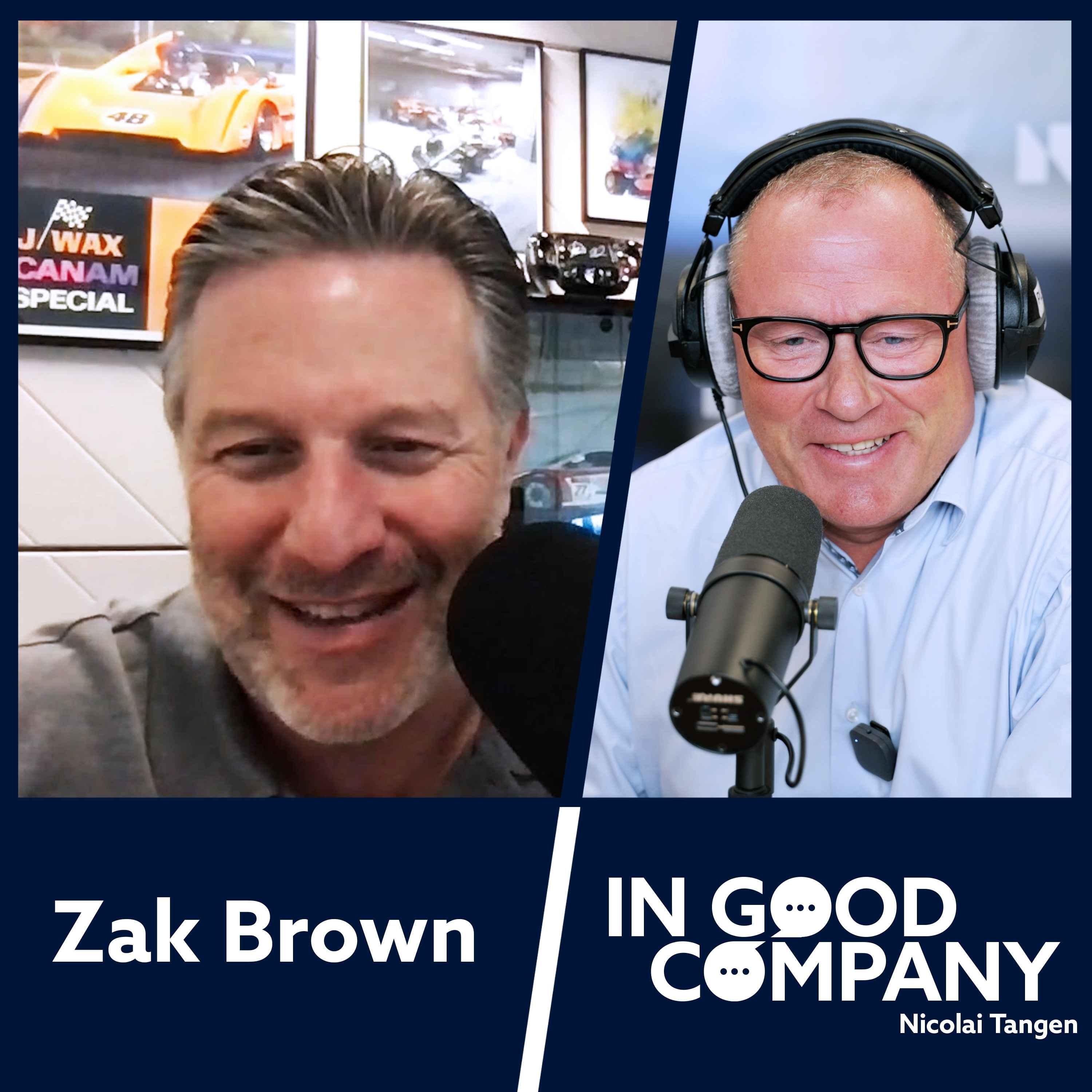
In this episode, Nicolai Tangen interviews Zak Brown, CEO of McLaren Racing, about the remarkable turnaround of McLaren within Formula 1. The conversation focuses on leadership, team culture, and the strategies that have driven McLaren's success in the current season.
Written by AI. May contain mistakes.

Get the gist, explore an idea or ask about something said.
 Claude
On In Good Company with Nicolai Tangen, what are the key points of this episode?
Searching your listeningAutomatic transcript. May contain errors.
0:00Hi everybody and welcome to In Good Company. I'm Nikolaj Tangen, the CEO of the Norwegian Wealth Fund. And today I'm speaking with Zach Brown, the CEO of McLaren Racing, one of the most remarkable turnarounds Formula One has ever seen. Well, I would argue it's one of the most remarkable turnarounds I've ever seen anywhere. Zach has transformed McLaren from a struggling mid-pack team into a champion leader, and you are currently dominating the F1 season. Well done. So let's just dive straight in.
0:37Why are you winning everything this year? People. If I had to give, of course, it's not a simple answer, and it's never quite as simple as one thing, but it's our people and specifically our culture. What we've been able to do here, if I take a step back, we're the second most successful Formula One team of all time, second most historic next to Ferrari, which is good company. And we certainly have won a lot of races and world championships over the years, but really started to struggle 10, 15 years ago and lost our way for a variety of reasons. But probably the biggest impact being we lost our way as a team, teamwork and that culture.
1:26And so of course, we've had great investment. We've got great drivers. We have new wind tunnels, all the things that people are the tools that they need to be able to get back to the front. But the way we've been able to unlock the performance of our people through a great culture of transparency, hard work, incremental improvement, real talks, park your feelings at the doors. All those things have just made everyone rowing the same direction. When you get 1 ,400 people rowing the same direction, it can be pretty powerful. But, I mean, what exactly have you done? If you just take us through some of the steps.
2:07Yeah. So you joined in 16, right? I joined at the very end of 16, December. Following some pretty bad experiences with a Honda. Yeah, we were at a record low in sponsorship, in results on track. Our fans weren't happy. And it was a pretty toxic work environment. And as I say, other than that, everything was great. But what we did have was a great brand in a great sport with great history. And clearly, we had great people because we have people that have been here for 20, 30, 40 years. And you still have a lot of the same people, right? So you haven't really smoked out a lot of people. Yeah. Well, I would say the majority were here during our winning ways.
2:51and also when we were terrible. So what do you do? You come into an organization like that. Where do you start? I started with my leadership team because ultimately it's a big organization, not as big as some of the others out there, but it's not a small organization, 1 ,400 people going racing. And I started with my leadership team. And that wasn't necessarily my intention when I came in. My intention was to figure out why isn't this great racing team working? And at the time, everyone was convinced it was the Honda engine and it was all their fault. And that was the mindset and that was the commentary.
3:29Well, you take the Honda engine in, you put the Renault engine in, and you get a little bit better. But you don't get it. It was like, okay, well, now what are the excuses? And so that was a great wake-up call for us. I think sometimes you need big wake-up calls. And I brought in new leadership and changed leadership of my leadership team. That was the first thing I did was get 10 people rowing the same direction, finance, HR, team principal of Formula One, a commercial department, our HR department, et cetera. Then once I got those people in place, that became a pretty awesome team. Were they mainly new people?
4:11How many new people over 10? They were all new, but one, Laura, our CFO is someone I promoted. Some were people that I brought in that I'd worked with previously, and then others were headhunted. So it was kind of a combination of, and when I came in, I didn't come in with the intention of, I'm going to change my leadership team. I came in with, let me learn. But the first thing I learned was, I need to change my leadership team. And for a variety of reasons, it wasn't they were bad people. We just needed some fresh blood, different team. more, you know, was it was things were kind of stale, I guess, is how I would describe.
4:48We needed some new energy. And, and so went about doing that. Then I jumped into the commercial side of our business because that's something I'm very experienced and very comfortable in. And I knew if I could get people believing in our brand, believing in the team, bringing some new energy, new partners, which would allow us to make new investments and drivers and wind tunnels, I could kind of reverse this downward trajectory or bad momentum we had. And that's what happened. And so once we got the leaders all rowing in the same direction, they got their departments rowing in the same direction.
5:27And then I changed the top three people in the Formula One team. And then that's when you really saw the Formula One team start to blossom. And then letting everybody know how important their role is. There's this kind of, you know, the race car, it must just be the people working on the race car. And I was like, now, if you look at our ecosystem, got to have great fans. That's where you got a great communications department, a great marketing department. You then need to have a great commercial department to monetize that great brand and the huge fans. They then need to pass that money off to a great finance department because we live in a cost cap world.
6:04So we need to really be ROI and ROO focused. We can't just spend money. We got to spend it wisely. Then you give it to your team. That's where HR comes in. And you got to have an unbelievable team that's highly motivated. And then it actually gets the hands. But I mean, Zach, how do you make people feel loved? I mean, you can't just walk around and say, I love you, I love you, I love you. I think, no, and sometimes it's tough love. I think you do it by being transparent, fair, a great communicator. And that is part of communicating is listening. So great communication. And I believe great leaders know when to lead.
6:41They also know when to follow, how to empower people, and then make people understand the importance of their job, the contribution that they're making, and then celebrate and be thankful. But how specifically do you do that? How specifically do you get people to really understand the importance of their part of the team? A lot of communication. How do you communicate in total? Everything from, as you can imagine, company-wide, CEO, town halls, down to I'll do breakfast, 20 people at a time. We'll do our new starters. So we kind of make sure we get the culture set with people that have joined.
7:22I do it with middle managers. I do it around women in motorsports. I do it around people that have just joined us from coming out of school. So I break it down by departments or skill sets or tenure and really get dialed into the organization. We also invest a lot in our facilities and our people. We've got a state-of-the-art, not gym, but a human performance center, canteen. So people know that we care about them. We also, as much as we work seven days a week, we appreciate and want people to recharge their batteries and we have families involved. We just did an awesome family day where 4 ,000 people came.
8:14Our drivers were here signing autographs, holding babies, petting dogs. And, you know, we live on the road and we take for granted when I'm racing in Monaco, I'm having fun. What does your human performance center look like? What do you come in the door? What's in there? It's, you know, beyond a state-of-the-art gym, physios, psychiatrists, wellness room, diet, restrooms. I don't mean as in toilet restrooms, as in areas to meditate. So it kind of covers all aspect of physical and mental and health well-being. And that's because we're a sports organization and people operate at their best when they're in the best physical and mental state of mind.
9:03How important is the car? Very important. Critically important. So you have – I mean it's a stupid question, right? But you said it's about the people. No, it's not a stupid question. It's one I'm asked all the time. And here's how I would say – first of all, you need to have both. But I would say there are six drivers that can win the world championship out of 20. But they have to be in two of the best cars. so two of the 10 cars can win the driver's world championship but only six of the 20 so you you got to have one of the best two cars in the business or it doesn't matter who's driving how do you get how do you get two of the best cars how do you make them what do you do good good question i mean as i tell people in formula one the worst team is really good two percent separate the best from the worst if you think about all the industries out there two percent is our margin of error, which explains why we work so hard for the smallest incremental gain of milliseconds.
10:08It's an aerodynamic game. It's a tire wear game, which also comes from aerodynamics. So it's primarily an aerodynamic game, but that then facilitates your mechanical grip, your tire wear. And then of course you have things like strategy and you got to have the best of everything. You can't have a week. What were the changes last year which really made the big difference for you? This year wasn't a big change. We won the championship last year and this car was a rollover, but we took some big innovation risks. We didn't have to because the rules didn't change too much. 2026 is a clean sheet of paper, biggest regulation change in the history of Formula 1, so that has us biting our nails.
10:54And they do that basically to change the leadership and to create a new company, right? Okay. So how do you make sure that your car will be the fastest next year? Well, all we can keep doing is doing what we're doing. We've got great technical tools, a great team. And my focus as CEO is stability. So take Red Bull, our one of the last four championships, unbelievable team. They hit a bunch of kind of culture turmoil, which has been well documented the last year. And you see the team start to slide backwards. Now they brought in a new team boss that looks like they're very aligned and settled. They're back to winning races, same driver, same budget, same car, culture at risk and a great culture again.
11:42And you're not hearing any noise. Max is happy. You're not hearing people leave and they're winning again. Same as that race car. Okay. That had some developments on it, but I think that's the power of, of, of culture and sports teams. What we need to do for 26 is keep doing what we're doing. And for me, that's stability. Now, uh, F1 is all about making fast decisions, right? What, uh, how do you think about decision making speed? Um, so I kind of put it back to when I raced. If you think as a racing driver, It's all about making split second decisions. So you need to know how to be a quarterback and a leader.
12:23You know, risk versus reward. Am I going to make that pass? If I miss it, am I going to crash? Or am I going to just go off the track? Can I recover from it? So risk versus reward, is it worth it? Am I making a pass for the lead? Or if it's for 15th, why am I taking risk? You need to have great people around you. You need to have immense trust. You need to be a great communicator to your engineers. You need to be a great listener from your engineers. Sometimes you can think and have a long time to make a decision. Other times it's pure instinct. It's like the start of a Grand Prix. And if I think of it as a CEO, sometimes I got to make quick decisions.
13:04Sometimes I'm consulting, I'm listening, I'm trusting my team. I've got the best technology around me. So I think being a Formula One driver is kind of like being a CEO. When do you slow down in your decision-making to make sure you make more kind of deliberate, well-thought-through decisions? So I calibrate when do I need to make a decision. And I think one of the areas that I've seen in sport, specifically in racing, where people get it wrong, is they make decisions when it's an emotional, highly charged environment. And actually, you don't need to make a decision yet. So I'm a, you know, hey, if I got to make a decision now, it's a pit stop.
13:45Got to make a decision. But if it's something that happened on the race on Sunday and I can't fix it, but I do want to talk about it, address it, don't do it on Sunday night. You know, everyone's tired, adrenaline. They're not. Do it on Monday or Tuesday. So I make the decisions when I have to make the decisions. And sometimes those are literally split second. Sometimes they're a week. I like to get as much feedback and data, and whether that data is pure data or data from just people talking to me, I'm a fan of doing that, but in accordance, whatever timeline I need to make a decision on. Zach, you say that passion is good and emotion is bad.
14:27What do you mean? A very fine line between the two. As my chairman says to me, Zach, there's a fine line between bravery and stupidity. And so to me, passion is what obviously propels us. We're passionate. But the minute that trips into emotion that you can't control, you then make emotional decisions and that's a bad place to be. So I think it would be unrealistic to say, don't be emotional because you can't control your emotions, but you can control how you react to your emotions. And, you know, so what do I mean by that? If something happens on a Sunday night in a race and you're massively passionate about winning, but something goes wrong, you're kind of emotional.
15:16If you react to that, maybe you think it was the driver's fault or your pit crew or strategy and you say something, you can't fix it. Sleep on it. Don't say something that you might regret because you can't unsay it. You can do some damage. I did that the other day, to be honest. What happened? We had an accident in turn one in Austin. And it was between my two championship drivers and a driver named Nico Hulkenberg. In the moment, it looked like Nico wiped out my guys. Sky TV comes on to me two seconds after it's happened as part of the interview. Hey, what do you think? And I was like, that was some amateur driving.
16:01When I went and looked at the replay, I don't think Nico was at fault. I think it was a racing incident. So that was one of those where, unfortunately I was doing TV, so I had to say something, but I should have been more measured and said, you know what, until I see the replay, I've only seen it once, but I was angry. It was passion turned into emotion. And I said something And I regret it. I then later apologized to hundreds of millions of people on TV because that's the right thing to do. But that's a good example. And, you know, you say that to the wrong person at the wrong time, you create some damage.
16:36I was in the emotion. My passion had turned to emotion. But debriefs, it's important to do them, to do hot debriefs too, right? Oh, 100%. Straight after the event. So how do you decide on when to do the debrief and when to do what? So we do hot debrief and then a cold debrief and have thick skin. We're all on the same team. We're all just trying to drive forward. We're trying to chase perfection, but we know we're never going to find perfection. So you're constantly kind of almost unhappy because you can always be doing better. So it's about getting people that understand the intent of a hot debrief.
17:17It's not to point fingers. It's in the place blame. It's to having an open and frank conversation so we can all improve. I'm good with mistakes. All I ask is you don't make the same one twice because you'll learn from mistakes, right? You think about R &D companies. That didn't work. Try this. That didn't actually learn by a bunch of failures. But once you failed, don't make that same mistake twice. Why make it twice when there's so many to pick from? Exactly right. Exactly right. What's your relationship with Andrea? How important is the team principle? Very important. And the relationship is fantastic.
17:56How do you work together? We have two different personalities. We have two different skill sets. We have two different areas that we like to work and a common passion for racing and winning. So there's so much work to do in a Formula One team that the CEO and the team principal used to be one and the same. And there aren't a few teams, but that's kind of going by. If you look at the role of today's team principal, it's the performance of the race car. I can't be doing these with you while right now he's in an aerodynamic meeting. But these podcasts, being with sponsors, reporting to boards, getting the rest of the business, that's a full-time job as is running the performance of a racing team.
18:50So our relationship is you take what used to be one role and these teams are so big now, it's two roles. And so I run the business. I mean, ultimately everything's I'm responsible for, but I run the business, the commercial, the brand, the board, and I give Andrea the space, the tools, the direction that he needs to be successful. And then I get out of his way. And I'm, so my view is that racing team doesn't work for me. My view is I work for the racing team. My job, I'm one person out of 1400. My job is to keep them all fed and hungry and motivated. It's not to do their job. I can't. There's some jobs in here.
19:36The commercial department is an area that I'm obviously very comfortable in. But it's all about getting the right people and the right energy in the factory. Now, I have been in many meetings, but I've never been in an aerodynamic meeting. What are you doing in an aerodynamic meeting? Pretend like I have a clue what they're talking about. I was not a math science kid at school. And they speak a different way. You dropped out of school, right? I dropped out of school. So I'm good in the EQ department. The IQ has some room for improvement. So how is it to work with these total whiz kids? It's fascinating.
20:16They're different people. They think differently. They get energized. They're mad scientists. They're absolutely brilliant. Where I think I can contribute is I've got a good sniffer. I can see who's working well together. I can see who's delivering on their promises. I can tell by the second question how confident they are because they haven't backtracked when I put a little pressure on them. So I wouldn't know how to look at an aerodynamic map. I mean, that's a bit untrue. I can look at an aerodynamic, like how it's constructed, the method, forget it. But I can tell who someone said, this is going to happen in two weeks.
20:53and it did or it didn't happen. Or they made this prediction and it didn't. Or wait a minute, that's different from what you said two weeks ago. So I think that's my area of contribution technically is I can sniff who's good at their job or not. I can't do their job for them though.
21:13Let's talk about some of the really good sniffing you've done lately. Why are Lando and Oscar so good? first and foremost they're unbelievably naturally talented right you see this in all sports it's that root that anticipated rookie coming in who's just had a stellar career through high school college they just run faster they throw better they read the game better whatever it is, Lando and Oscar are two of the six best drivers in the world on a grid of 20. Then you get into the qualities of them as a human being, highly intelligent, which you need to be as a Formula One driver. This isn't just get in a car.
22:02You need to technically understand what's going on. So they're high IQ people. They're great in a team environment. They're honest. They don't have an edge to them. A lot of that, we look at families and upbringings. So they're just a complete package of what you see is what you get. And money and fame and success have not gone to their head whatsoever. It's gone to their car collection, but not their head. Can you predict that ahead of time, whether success will go to somebody's head? Yes and no. I think it's something that you're looking for when you're bringing someone in of how grounded is this person.
22:41but sometimes you get it right, sometimes you get it wrong, but it's definitely something that you're looking for in that early day analysis of, do I want this driver in my team? Most teams have a lead driver and then the rest is kind of support, but you have structured differently. They really compete, right? We've gone the hard route. Tell me, what are the advantages of that? The advantages are, one, from a constructor's championship point of view, which we've now won two years on the trot. If you have two great drivers, you're going to increase your odds at the Constructors' Championship. If you've got two great drivers, you're going to increase your odds at having a driver world champion, even though they can take points off each other, which is a downside if you'd like.
23:29Two or three, you're going to have better two drivers because they keep pushing each other. When you get pushed, you just find a little bit more. So when you've got two great drivers, they just keep elevating. Then you've got two sets of great feedback for the teams to develop the car. Then off the track, you've got two drivers that your sponsors and your fans love and want to see. So the downside of having two great drivers is they can take points off each other and the rivalry can get nasty. It hasn't with our two drivers. Is it about to become nasty? No, not at all. Aren't they becoming a bit more kind of aggressive and competitive against each other?
24:15Oh, I think it's always been there. And yeah, I mean, we've got four races to go. They're separated by one point. The last time there was a driver pairing competing for the championship that it didn't end in tears was 1984. It happened to be our two drivers, and Nicky Lauda won the championship by half a point. they were very competitive but friendly every other inner team rivalry is has ended in tears but i think we're that's not who we are as a team and it's not who our two drivers are they want to beat each other but fairly and squarely do they train together um yes from a like a simulator but not from a physical fitness because they'll be on their own routine so they're not best friends and They're not going out on Friday night, Saturday night, but they have a huge amount of respect for each other.
25:07And you know when you can feel two people coming into the room and you can feel the tension? Never once. Not once have I seen these guys BS each other, which drivers can do, feel any tension in the room. Like they just want to race. And of course they want to beat each other, but it's very healthy competition. How do they prepare mentally? What are the main things here? They're different guys. Lando is extroverted. Oscar's more introverted. Lando likes to get out in golf and has done some DJing. I think he likes to release his energy. Oscar's much more inward looking, studies a lot, thinks a lot.
25:53And so, you know, you'll find on a summer break, Oscar kind of a little bit more in his hotel room or go on the beach. And Lando, you'll find a bit more with his friends and going golfing and going karting. So they kind of have different ways of, you know, focusing, recharging their batteries, which again, I think makes them a very complimentary driver pairing, much like Andrea and I. how important is the way they work with fans i mean you you talk about the importance of your fan base a lot right just tell me about how you look at fans without fans there's no mclaren just simple straightforward we're in the sport and entertainment business you had some people in the sport it was like we shouldn't be in the entertainment business and i was just i don't understand like if you buy a ticket to go sit down and watch a fireworks a movie a football match or a motor race, that's entertainment.
26:54Do you think you care more about your fans than the other teams? It'd probably be unfair of me to say that, but I think so. And I only say that because of how much... And as a fan, let's say now I'm like a diehard McLaurin fan. How do I see that you really care? Um, we did a great event in Trafalgar Square, uh, free open to the fans, uh, 40 ,000 people through two days. We just did a huge fan event, all of this on our dime and our partners dimes time and investment in Austin to get us closer to the fans. Only 1 % of our fans will ever go to a race. So the amount of effort we put into bringing Formula One to the 99 % that'll never go to a race.
27:51Our drivers, you'll never see them not stop and sign an autograph and take a photo for a fan. We went back to probably the greatest example, our iconic papaya colors, which you'll kind of see right there. We were a dark team. team. I described us as Darth Vader, which Darth Vader is cool, but dark gray, exclusive. We went to Papaya. All our fans, when I started, were going, bring back the Papaya. All right. We'll bring back the Papaya. I remember one of the old school teammates around here was like, we're only doing that because that's what the fans want. I'm like, is that kind of a trick question?
28:30Our livery today, our iconic Papaya, we brought back to McLaren because we listened to our fans. That's what our fans wanted. So we're doing activations and engagement with our fans all the time, little small things. At the end of a Grand Prix, if we've had a good result, fans come into the pit wall, I'll take a chunk of merchandise and I'll start flinging out to the fans. So I think the fans know how important they are to us because without our fans. There's no McLaren. The kind of social appearance of your drivers, how important is that for your success? Very. So if I were like a total introvert and I didn't want to talk to anybody and I didn't want to sign any autographs, could I become a driver?
29:18You wouldn't be our first choice um yes of course you could you know there are some drivers that don't care about anything other than driving and while i appreciate that from a driving point of view that's not what this job is this job is driving sponsors fans promoting the sport so yes you would get a ride because coming back to do we care then more than all the teams i know we care a lot more than a lot of the teams because there are some drivers that wouldn't drive here at mclaren regardless of talent because they don't fit the mclaren brand and culture and our values which is sponsors our brand the way we carry ourselves our engagement with fans so yeah you'll get a ride, but you wouldn't get a ride with McLaren.
30:18You are owned by a sovereign wealth fund. Could you just tell us about the relationship you have with them? Yep. Awesome relationship. Mumtelikat, which is Bahrain, have owned the team since 07, I think it was, so before my time. And then they, along with Sivan, which is Abu Dhabi, huge investors in motorsports, the two of them, Momtellacat is the majority. So Momtellacat and Sivan, so it's Bahrain and Abu Dhabi, own McLaren, massively passionate about our brand, want us to win first. Obviously, I have a great healthy business, which we do. Things have never been more successful, which is exciting, at McLaren on and off the track.
31:08But we also know in sport, it's not if we take a step back. It's when. How often do you talk to them? Oh, every week. And over a race weekend, every day. Do you think we should buy a team? Yes. Formula One teams are hot. The sport has never been hotter. Sport has never been hotter. I mean, it was five years ago, we were, this is all public, 560 million pounds value. And it's been reported that we are around three and a half billion in value. And while I can't give you the exact number, that's not a million miles off. That value growth in five years is amazing. And now you have an 11th team who's had to pay almost $500 million just to get an entry.
32:02And they'll spend a billion or two until they become profitable. So now the low watermark, I think, for a Formula One team is$2 billion. And a high watermark, five, six, four. And you were close to bankrupt. We were not in good shape before we brought in our investment. But coming back to winning, because our shareholder was spending a lot of money on the automotive group. They had a decision to make, live within our means, which was a slow death because you've got to kind of play to win or play to win. They took the decision, let's bring in some external investment so we can give the racing team all the resources they need to get back to the front.
32:53That's what we did. We got back to the front and then they went, that was a great five-year run. We'd like our team back. And they bought out the minority shareholders. Simon came in and partnered them. And now it's happy days. So how does winning translate into profits and value? Obviously, well, directly, you get prize money from Formula One. So that increases as you are more successful. And then, of course, fans love winners. So you get more fans. That's where you have your great communications department who handed over your commercial department to monetize that excitement in your brand. And then you get more sponsor partners.
33:35So what we need to do is be a team, and we fell out of this, that's always a threat to win, right? We've won 13 races this year. I can't say we are or aren't going to win 13 races next year. We might win none. We might win 15. We might win somewhere in the middle. But we need to be one of those teams that is always in the top four because the top four teams, last year four teams won, this year three teams have won. So we always need to be a threat to win. Where we fell back to, ninth, forget it. We can't go back there. How important has Netflix been to build the value of your brand? They've been fantastic.
34:16I don't think any of us saw that coming. It's brought in North America. So if you look at what Formula One needed when Liberty acquired it, It needed North America from a geographic standpoint. It needed a more diverse and female fan base and a younger fan base. Tick, tick, tick, tick. We went from one race in America to three to a new huge TV deal with Apple. 75 % of our new fans are women and a younger audience, age 18 to 34. So it totally moved the needle in the three areas that when you went and talked to corporate sponsors, yeah, but North America is big for us and Formula One is not big there.
35:02The fan base isn't young enough. It's not diverse enough. Netflix helped us lead the way on ringing the bell on all three of those aspects. And then, of course, we've built on it. You have your Brad Pitt movie. All these things have accelerated our new fan base. what's the key to building female uh fanship um i think engagement you know we went from being an exclusive team to an inclusive team come on in and the sport went from being an exclusive sport to an inclusive sport i think that's what netflix did is it brought brought you into behind the scenes and i think what's happened is people realize how fascinating our sport is not just on the field of play, the politics, the big money, it's global.
35:48It's easy to get to know 10 racing drivers and 10 team bosses, where if you look at other sports, you've got four or 500 people in football. So it's harder to kind of get to know everybody. A lot of drama in our sport. It's a pretty glamorous sport. Racing drivers are pretty cool guys. So you can see why the younger audience. You can see why Lando Norris is the most popular with young female fans, right? You got a 25-year-old racing driver making a ton of money, Grand Prix racing, living in Monaco. Pretty cool. So I think all of that. And then it's a sport where it's not just on the field of play.
36:30It's the whole environment. It's the social gatherings. It's the evenings out. It's the technology. So I also think everybody drives. Maybe not everybody. Most people drive. So I think there's a relatable aspect to it where women, men, boys, girls, all kind of have had a steering wheel in their hand at some point. And I think there's some relevance there. Do you personally celebrate enough? Not enough. Not enough. Because you won last night and you look very sharp. where we want to win in Brazil. So that's something I've had to personally work on over the years. I've had comments from my staff, whether it was my old company or here, of like, is he ever happy?
37:16He's always kind of busting our chops. Are you ever happy? Yeah, yeah, definitely. I'm happy. Just not happy for long periods of time. Doesn't mean I'm unhappy. I just kind of like, I'm happy, that's right. But I'm thrilled we won last night. It was amazing. But we got a job to do with the next race in Brazil. We've got four races to go. In between the races, you also wrote a book, Seven Tenths of a Second. What do you want to convey in that book? Good question. I never thought I was going to be a book guy, but I got approached and I thought, well, this is pretty cool. It's a business leadership book, but it kind of goes back to my childhood and how my childhood shaped me in my business lesson.
38:03So it's got some autobiographical – I don't know if that's a word – aspects to it, but it's not like here's my story. It's kind of here's my story and here's how I applied it to business. I really enjoyed it. I read it last weekend. Good. It was, you know, we read it out of order and all, and I've read it so many times. I'm interested to hear what people who read it start, you know, because when you're editing it, we read chapter 20 and I forgot what 19 was. And so, you know, and so it's kind of hard for me now. I can't see the forest through the trees. So I hope people find it entertaining. There's definitely some funny stories in there.
38:47And I hope people have some takeaway from it and they can go, you know what? That's something I think I saw Zach learn from. I can apply it in my own world. How has your leadership changed with age, you think? It's matured. What does that mean? It's become less emotional. I'm a high passion, high emotion guy, which I think hopefully comes through in my book, Dating with School. And I've learned to mature, be a little bit more thoughtful, a little bit more deliberate. I'm naturally an instinct guy. And that's great. But sometimes you got to slow down a little bit. So, you know, Andrea is ready, ready, aim, aim, aim, aim, aim, fire.
39:37And I can be, you know, definitely fire, ready, aim and pick an order. And it's worked for me pretty good. but if instincts right 90 % of the time, but slowing down takes that 10 % you got wrong and you can cut that in half because you still got to rely on it. Then that's what I've learned over the years. And also I've always had mentors. Who has been your most important mentor? Ooh, I've had a lot of mentors and I still have a lot of mentors. I think my, if I had to pick one, it would be Paul Walsh, my chairman. I've known him for 20 years. So he was a client of mine. He's a friend. He's a mentor.
40:18He's a boss. And that's actually what I've probably learned most from him. He's unflappable. He's the one who said there is a fine line between bravery and stupidity. Correct. Where is that line in Formula One? It's almost kind of hard to answer that because that's kind And in the moment, I think stupidity is doing something that has consequences far worse than the reward. So if you get your risk versus reward balance out of place, then I think that becomes stupidity. What is your personal charging station? What kind of charges me? Yeah. Where do you relax? Um, something I've not perfected at all, but I've gotten better at it with some maturity, you know, golf course, cigar in hand, my high school friends, baseball and ice hockey, getting out and play.
41:21I played some tennis this morning. So getting out and playing sport and driving my historic racing cars. Sounds good. Zach, what is your advice to young people? Get mentors. Get mentors. So I was fortunate at a young age because I was racing cars to hang out with CEOs when I was 21 years old. The gap in experience between being a 21-year-old who's just full of adrenaline and pick an age, 40, 50, 60, 70-year-old. I think about how much – I'm 53 now and I look up to Roger Penske who's 85-ish. And I think, look at how much I've experienced. He's got 30 years more of what I'm experiencing. And I can't even imagine what I'm going to see in the next 30 years.
42:14But if I go talk to Roger Penske, he can share some of that with me. So I think mentors are critical and all along the way, because there's always someone smarter than you. And there's always someone who has more experienced than you. And I'm going to want to have that the entire way. And then when you do get old, which I'm not there yet, but I'm getting old, then you want to be mentored by the youth because the youth are growing up with technology that us old guys are like, what? So I think you can get mentored by people that are more experienced that are older and people that are more experienced and are younger because of how fast this world is moving.
42:54Well, you for sure live in the fast lane. It's been great talking to you. Good luck with the rest of the season and good luck for next year. Thank you for having me on. I've enjoyed it. Thank you.
What's behind McLaren Racing's remarkable rise to the top? Nicolai Tangen speaks with Zak Brown, CEO of McLaren Racing, about the incredible turnaround of one of F1's most historic teams. They explore how culture and transparency drive performance, why people matter more than equipment, and Zak's approach to building cohesion across 1,400 team members. Zak shares candid insights on driver dynamics, fan engagement, and the fine line between passion and emotion in decision-making. With an outstanding season, McLaren currently dominates the F1 standings. Tune in for a conversation on leadership and excellence!
In Good Company is hosted by Nicolai Tangen, CEO of Norges Bank Investment Management. New full episodes every Wednesday, and don't miss our Highlight episodes every Friday.
The production team for this episode includes Isabelle Karlsson and PLAN-B's Niklas Figenschau Johansen, Sebastian Langvik-Hansen and Pål Huuse. Background research was conducted by Tobias Hyldmo.
Hosted on Acast. See acast.com/privacy for more information.


