
 Ask ChatGPT


- Podcasts
- IndieWire: Screen Talk
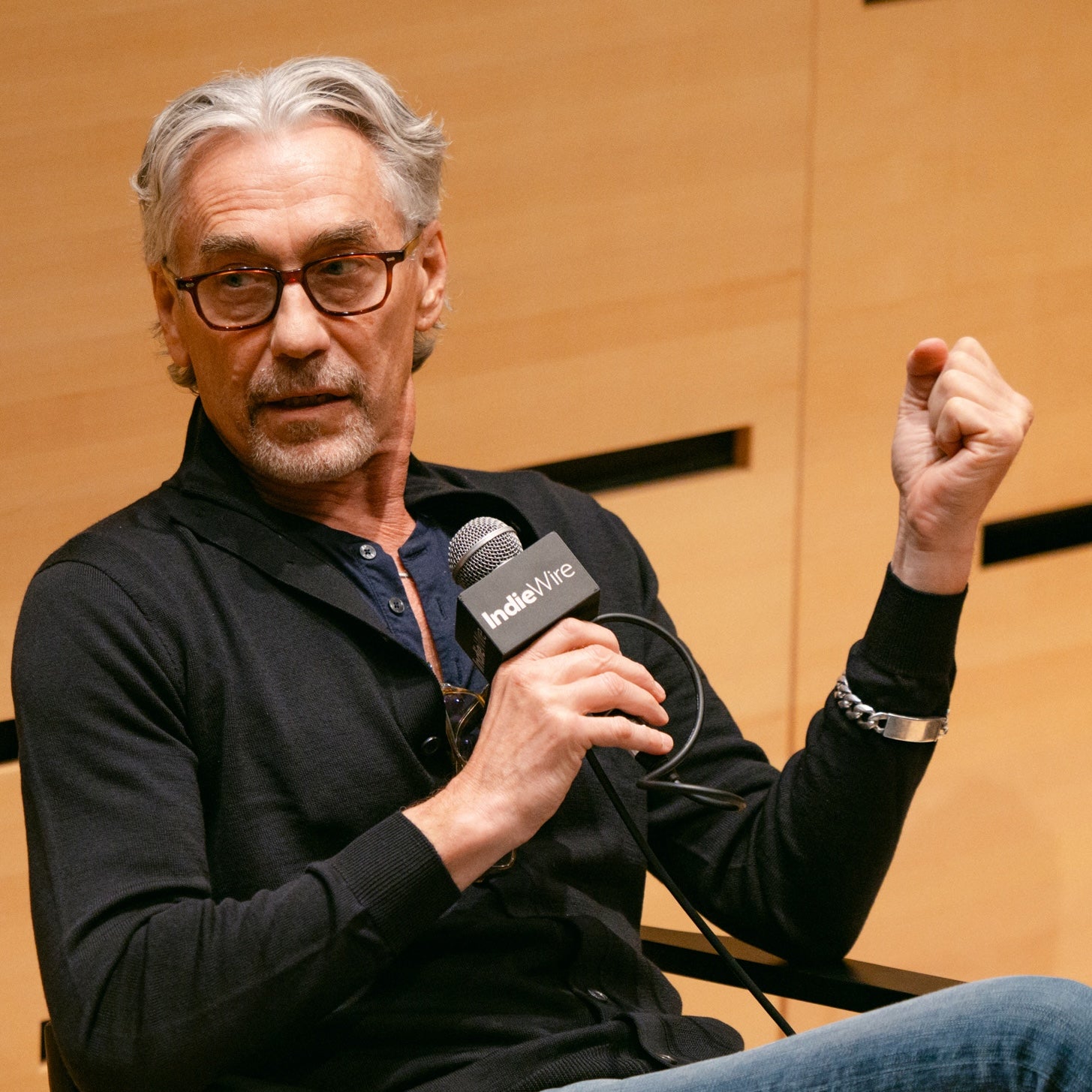
- Live from NYFF with Tony Gilroy!
In short
ScreenTalk IndyWire live from the New York Film Festival. They cover the weekend box office (Verity, Digger, and Tom Cruise’s The Heart of the Beast), Skydance’s studio leadership shakeup and deals (including Clockwork and a new Transformers slate), NYFF premieres (Artificial, A Statement, A Social Reckoning), and then a long interview with Tony Gilroy about his NYFF premiere Behemoth.
Guests/backgrounds
Anne Thompson (IndyWire editor at large) and Ryan Latanzio (IndyWire executive editor). Special guest: Tony Gilroy (writer-director; Michael Clayton; Duplicity; Bourne Legacy; creator of Andor).
Key claims/notable examples
Verity (Anne Hathaway, Dakota Johnson) is criticized as “terrible” with Johnson “visibly bored”; Digger underperformed due to a bad trailer and audience resistance to Tom Cruise in prostheses; Artificial (Luca Guadagnino, Andrew Garfield as Sam Altman, Yura Borisov) is praised as terrifying and current; A Social Reckoning is called soul-depletingly awful/out of date; A Statement (Tom McCarthy) is theatrical, depressing, and smaller than Artificial. Gilroy says Behemoth’s structure is driven by music-memory, Pedro Pascal replaced Oscar Isaac late, and he built a “Behemoth Collective” of nine composers.
Written by AI. May contain mistakes.
Chapters
1:03
Box Office Overview
Discussion on new box office releases and their performance.
“And we have a lot to catch up on this week, including the box office, which this past weekend saw new releases Verity and Digger.”
1:40
Analysis of 'Verity'
Deep dive into the film 'Verity' and its reception.
“So Ryan, did you think that Verity, the Anne Hathaway vehicle, was going to end up being the lead movie at the box office this weekend?”
2:52
Critique of 'Digger'
Hosts critique the film 'Digger' and its marketing issues.
“It's another one of these movies where, we talked about this a little last week, but Dakota Johnson is visibly bored in front of the camera and does not want to be there.”
3:58
Skydance and Industry Changes
Discussion about Skydance's leadership changes and their implications.
“it showed you what it could be which was a bad movie I mean I have many reasons for liking things in that movie.”
6:40
Upcoming Projects at Skydance
Exploration of new projects and partnerships at Skydance.
“I think that probably Greenstein and Goldberg are solid.”
7:42
Film Reviews: 'Social Reckoning' and 'Artificial'
Hosts review and critique two films: 'Social Reckoning' and 'Artificial'.
“They got Noah Baumbach defected from Netflix.”
10:12
Review of 'A Statement'
Analysis of 'A Statement' and its themes regarding climate change.
“And of course, we're talking about chat, GPT, open AI, Anthropic, all of these companies.”
14:00
Weekly Recommendations: Films to Watch
Get insights into two compelling films worth watching this week.
“I don't see it traveling quite as far as artificial will.”
15:54
The Transition Back to Filmmaking
Tony discusses his journey back to directing after years in television.
“Did you think you were never going to come back to feature filmmaking?”
16:49
Complex Narrative Structures in Film
Explore Tony's unique approach to storytelling and narrative challenges.
“it's beyond directing, you know, running the show is it's, it's a much more, I mean, in a, in a creative satisfaction way, it's beyond in every way it's beyond.”
Show all 21 chapters
19:18
Casting Pedro Pascal: A Last-Minute Decision
Discover the story behind casting Pedro Pascal and his significance to the film.
“But for Beemoth, my understanding was that originally Oscar Isaac was in the movie.”
20:32
The Role of Music in Film
Tony explains the role of music and composers in shaping the film's narrative.
“He's just so absolutely nonstop charming.”
24:23
The Behemoth Collective: A Unique Approach
Learn about the collaborative effort behind the film's score and its significance.
“including James Newton Howard, who composed the three previous films that you directed.”
28:00
Eligibility and Equal Billing in Film
Discussing the eligibility criteria and equal billing approach in films.
“always the idea i mean it's standing us in good stead now we're trying to get eligibility for the That's the point, yes.”
29:20
The Cello Academy and Pedro Pascal's Journey
Exploring the training and preparation for Pedro Pascal's role involving cello.
“come to this with some experience with a with a string instrument but i don't think so uh and how How do we feel like by the end of the movie, would he get the seal of approval from a cellist in terms of his ability?”
30:40
Creative Family Dynamics in Filmmaking
Tony Gilroy reflects on his family dynamics and their influence on his work.
“Every single thing that we needed, maybe a very small piece, but those were the pieces he...”
32:26
The State of Mid-Budget Movies in Hollywood
Discussing the challenges and sustainability of mid-budget films today.
“which is the idea that the mid budget movie in Hollywood is endangered.”
34:01
Navigating Creative Freedom in Storytelling
Tony shares insights on maintaining creative freedom amidst industry pressures.
“Maybe I have a movie that's going to die over here because it's part of Lost in the Merger.”
36:10
Interpreting Themes and Messages in 'Andor'
Delving into the themes of 'Andor' and the communication of its messages.
“And that seemed like it was a new thing for you.”
37:58
The Collective Nature of Filmmaking
Exploring the collaborative aspects and challenges of working on a film.
“It was reported the other way, which is wrong.”
42:00
Exploring Memory and Music in Storytelling
Tony Gilroy discusses the role of music in character development and storytelling structure.
“and suddenly he's going over the falls and he's being pushed away out of control.”

Ask about this episode
Get the gist, explore an idea or ask about something said.
 Claude
On IndieWire: Screen Talk, what are the key points of this episode?
Searching your listeningTranscript
Automatic transcript. May contain errors.
0:00Coca-Cola. For the big. For the small. The short. And the tall. Peacemakers. Risk-takers. For the optimists. Pessimists. For long-distance love. For introverts. And extroverts. The thinkers. And the doers. For old friends. And new. Coca-Cola. For everyone. Pick up some Coca-Cola at a store near you.
0:35Ryan Lattanzio: please welcome ann thompson indywire editor at large and ryan latanzio executive editor of indywire
0:45Anne Thompson: thank you sarah we look forward to this every year it's fun and we got a good house today i like it thank you all for being here so welcome to screen talk indywire's weekly podcast bringing you up to speed on the latest goings on in Hollywood. And I'm delighted to be live with my co-host Ryan Latanzio.
1:04Ryan Lattanzio: It's great to see you too, Anne. And we have a lot to catch up on this week, including the box office, which this past weekend saw new releases Verity and Digger. So there's a lot to discuss with these two. We're also going to look at who's coming and who's going at the new Skydance and that deal closed today. We're also going to look at some of the latest New York Film Festival premieres that we've been attending the last, well, it's really it's a week and a half, but when you count the press screenings as Chartered, I've been coming for like a month. And then we also are going to bring on our special guest at the end of the episode, which is the writer-director of Behemoth, which world premiered here the other day, Tony Gilroy.
1:44Anne Thompson: So Ryan, did you think that Verity, the Anne Hathaway vehicle, was going to end up being the lead movie at the box office this weekend?
1:52Ryan Lattanzio: Well, I didn't think it was going to be Digger. So, yes, I actually I mean, yes, I've already cleared the competition. I think it grossed 32, just over 32 million over the weekend. And it is one of those rarest of things that's becoming increasingly less rare in theaters, which is a mid budget women's picture, if you will. And similarly, also authored by Colleen Hoover. It's kind of along the lines of It Ends With Us. This one is directed by Michael Showalter, who did The Idea of You, also with Anne Hathaway, different source material, different author. You have a lot of star wattage in this movie.
2:28Ryan Lattanzio: You have Anne Hathaway and Dakota Johnson, who are very much A-list. And Anne Hathaway is coming off a banner year, obviously, between The Odyssey, less beloved, but by us, Mother Mary as well, a cult movie that bombed that you should seek out. Very good. This movie, though, is terrible, actually, but you didn't see it. Yeah, did you? No. You steered me away, Ryan. No, it's really awful. It's another one of these movies where, we talked about this a little last week, but Dakota Johnson is visibly bored in front of the camera and does not want to be there.
3:03Anne Thompson: This happens a good deal. It does.
3:04Ryan Lattanzio: It happens quite often, and I guess it's her shtick and why she's hired, and the movie sort of pretends to be self-aware about that boredness and is sort of making an inquiry and probing it, but I just don't really know why. There's no charisma there. I'm not sure what you're really looking for. She's playing a ghostwriter of a catatonic author who's played by Anne Hathaway, and she's also wooing said author's husband, who's played by Josh Hartnett, who's very good, actually. I can't see this movie continuing to do well at the box office, but they'll certainly be interested at home.
3:35Anne Thompson: It's interesting that Primetime fell. It fell. And the other one, the Brad Pitt dog movie, it has good word of mouth which is what I was expecting I knew that one was going to do well
3:46Ryan Lattanzio: and I went into that being like I don't want to like this and then I was like actually it was
3:50Anne Thompson: pretty good the heart of the beast so the the reason that people did not show up at Digger is I think a it had a terrible trailer it always did nobody ever liked the trailer it showed you what it could be which was a bad movie I mean I have many reasons for liking things in that movie. It's an art film. It's ambitious. It's got ideas. But the truth of the matter is that audiences, mainstream audiences, really didn't want to see Tom Cruise in this role. And it's not the sort of thing they wanted to see.
4:25Ryan Lattanzio: They don't want to see him in prostheses. I don't know if they wanted to see him semi-shirtless on that GQ cover either. That was a bit odd also. No, with this movie, you're right about the trailer. There's a twist to this movie. There's a conceit to it that is not revealed that you can't reveal in the trailer. It's not that interesting or surprising if you've seen a number of recent Iñárritu movies, but that is certainly not going to get people in the door.
4:50Anne Thompson: But what it does is it's the reason why all of the performances are so heightened and so big and so loud and so noisy. And people don't understand until the end of the movie why they're behaving that way. And it doesn't work. The other issue is that if you have, you know, But this is an art film. Art films are supposed to not cost too much money. And if this cost between$125 and way, way more, like$165 million, that was too expensive for an art movie. You can't do it. You just can't do it. And you can't put Tom Cruise in an art movie. Because Tom Cruise makes the movie more expensive. Unbelievably more expensive.
5:29Anne Thompson: You know, big jets, two jets flying so that they can set up his hotel. You know, that kind of thing.
5:37Ryan Lattanzio: absolutely and you know there wasn't very good buzz early on for the movie even before the all the critics reviews came out there were some very mixed some very divisive reactions online i think a lot of press were being a little kind because they wanted access they want interviews which they didn't get because they didn't they started pulling interviews as soon as the reviews came out so it didn't really matter i actually think if this had gone to venice it might have gotten an interesting international reaction because I think the international press corps, they like laughing at Trumpian kinds of figures and these really grotesque American tropes.
6:11Ryan Lattanzio: I actually think that some international people in Venice might have liked it.
6:15Anne Thompson: All right. So we're going to talk a little bit about Skydance. We're not going to belabor it too much. We have to say a fond farewell to Pamela Abdi and Michael DeLuca, the motion picture chiefs. They're capable, experienced executives who've made a lot of great movies over the years, but their last year was just too many big swings that failed, including Digger. And that was the end of it for them. And Ellison wasn't going to play that game. But the other people are surviving. Paramount's team of Dana Goldberg, who's a producer, and Josh Greenstein, who's an ex-Sony marketing ace, they have less experience running a studio and much less creating 30 movies a year, which they're going to have to do.
6:55Anne Thompson: But the other people are solid. I think that probably Greenstein and Goldberg are solid. I just don't know them well enough to be able to say. I've never heard of them until this was announced. I just don't. So I can't say. But Mark Thompson is going to stay at CNN and Barry Weiss is going to be over in her CBS side of the fiefdom. George Cheeks is still going to run TV media. Casey Bloys is going to run HBO and the streaming service. So that's where it is.
7:26Ryan Lattanzio: Some of the developments in the last couple of days were that clockwork, which former Neon's Christian Park set up under the Warner's umbrella. You wondered maybe if this was some kind of a life raft that DeLuca and Abdi were building. And they were compiling filmmakers from other studios. They got Noah Baumbach defected from Netflix. They also got Sean Baker. But now they are joining forces with Skydance. And I mean, it's inevitable that some of these. Clockwork is. Sorry. Yes, that's what I mean. and I am curious to see they have some other films come in the works not just Sean Baker and No Bombuck but also Park Chan-wook their first movie is going to be The Restoration of the Devils I don't know how well that's going to play I'm hopeful as a fan of that movie and then finally some other news today is that the flagship new Skydance movie will be an eighth Transformers film with Steven Spielberg executive producing and potentially Michael Bay directing and Spielberg look I have never seen a frame of any Transformers movie.
8:24Ryan Lattanzio: I just don't.
8:24Anne Thompson: Some of them are really good.
8:26Ryan Lattanzio: It's just I can't the window shut. I'm like I'm so far behind. It's just like, what's the point?
8:30Anne Thompson: I have to keep up with them. They are what they are. Believe me, they're standalones.
8:35Ryan Lattanzio: It's not it's not on the horizon for me, but it is for Steven Spielberg. So good for him.
8:41Anne Thompson: So we saw a few movies this week. We saw Artificial. We saw A Statement. And you saw A Social Reckoning. Why don't you do Social
8:51Ryan Lattanzio: reckoning first which isn't new york film festival and nor would it ever be uh once you see it you'll understand because the programming team here has respect for the art form uh no the best thing that could have happened to listen we'll get to artificial which is actually fantastic what really worked in its favor is that i saw social reckoning like an hour before i saw artificial and was it just was soul depletingly awful aaron storkin should not be directing his own material because he has too much of a reverence to his text. You have in this movie Mikey Madison, who is an eventual whistleblower out of Facebook, who revealed how all these algorithms were being created as if in a lab to manipulate people in the 2020 election and the lead up to it.
9:35Ryan Lattanzio: And then you have, thank you. Then you have Jeremy Allen. That's how that movie is just like wiped from my brain already. Exactly. You have Jeremy Allen White as a Washington, Wall Street Journal journalist. And you can tell that Storkin desperately wants them to, consummate something like he really wants it to be a screwball romance just in the way that they have this banter with each other and it's just it's very cringe and jeremy strong is a very it's an odd performance as mark zuckerberg it's very robotic and you know that he's like method acting and so he's in this character the whole production and that couldn't have been enjoyable to really spend a lot of time with it's a terrible movie i'm sorry it's really bad but i think they know it's not good either and it's it's just i don't really think it's going to go over well all right
10:20Anne Thompson: so i'm going to see what i heard about it was that that it was actually sort of out of date already
10:25Ryan Lattanzio: it is out of date and also you know it's a celebration of this act of whistleblowing that didn't really do anything and no one cared like unfortunately all right the one that is truly
10:35Anne Thompson: terrifying and totally current is artificial this is luca guadagnino it's andrew garfield as sam Altman. And of course, we're talking about chat, GPT, open AI, Anthropic, all of these companies. AI is running amok. And the movie shows us how this happened. And the other character is played by Yura Borisov, who was so great in Anora. And he is the sweet, pure brain behind the whole thing who watches it derail.
11:11Ryan Lattanzio: Yeah, no, I'm a big fan of this movie and it played really well in the New York Film Festival world premiere last night. I think it's one of Andrew Garfield's best performances. I don't really, I haven't spent a lot of time watching videos of Sam Allman, but my understanding is that it really, he really captured something about his physical comportment. And I believe that to be true. He seems very like, much like he internalized the role. And it's obviously, it's a return to form for Luca Guadagnino after, I don't feel like belaboring it anymore we've talked about it so many times after the hunt just didn't that that one didn't work and i think that most people involved they might have a sense that it didn't just on on the reaction and you can tell that luca was very invigorated by this material it's written by simon rich as what apparently was a more broadly funny screenplay but he
11:59Anne Thompson: luca nino brings a creepy edge to it oh definitely i was i was terrified by it all right so the the third movie is a statement, which is Tom McCarthy, who brought us Spotlight, the Oscar-winning movie. And this is similar in a way, because he's taking us back to 1980, to a moment in time where a group of scientists, 20 scientists, are in a room, and they are trying to come up with a statement about climate change. And the movie shows us how difficult, impossible that was. And it's disheartening. So if you think about AI, I mean, right, how impossible is it going to be for anyone to come together and make some kind of meaningful legislation that would actually make a difference.
12:42Ryan Lattanzio: Well, that's right. And the movie being set in 1980 is so depressing when you think about, well, they couldn't do it and it still hasn't happened and probably won't. And it really is a movie that's about futility and the vain attempt of language to try and create something meaningful that people can agree on that is in pursuit of a better world, because a lot of it is just spent on arguing over how or what are we saying why are we saying it they're trying to create a statement that's going to explain how we are going to tackle climate change and all these
13:11Anne Thompson: people in the room and they can't do it i want to hasten to suggest to you that this these are great actors uh they brought it to life it's sort of like live theater it's really fun to watch it it's it's hard it's it's a little bit depressing in the end but it's fun to watch and so you have a you you know, Amy Ryan and Paul Giamatti and John Turturro, you know, really chewing up the scenery a little bit.
13:33Ryan Lattanzio: Well, it's based on a direct, this direct transcript. And I do feel that sometimes you might find yourself aware that it is based on a transcript. It is theatrical in that sense. And moments where we aren't in the transcript, it felt a little bit strained to try and make this other kind of social commentary. It's a smaller movie than artificial and it's not, it's not coming out until the spring.
13:53Anne Thompson: No, they're not going to try to take it into the fray, the Oscar fray.
13:57Ryan Lattanzio: No, it's not as emotionally charged either. I don't see it traveling quite as far as artificial will.
14:03Anne Thompson: So what's your recommendation for this week? My recommendation
14:06Ryan Lattanzio: for the week, since we do this every week, is going to be a movie that is six hours long and it's opening in theaters. I think it's Film Forum this Friday, which is Julia Loktev's My Undesirable Friends Part 2 Exile, which is the sequel to the Oscar shortlisted film from last year. It really is not as intimidating as it sounds. It's really kind of a vibe movie, which I know sounds a little bit crass when you know that it's about Russian dissident journalists who have been forced to flee their country in 2022 after Russia invades Ukraine. But I really think the filmmaker would co-sign with this message.
14:41Ryan Lattanzio: I mean, she's trying to make it so that it's accessible and that it's not this intimidating slab of historical content. And these journalists who saw an independent news channel that they had collapsed completely are trying to rebuild this ad hoc version of it while spread across all these European countries, one of them in New York City. And they use dark humor to get through their shame about how they're feeling about their country and having fled it. And it's a great sequel to the film from last year.
15:11Anne Thompson: I'm going to recommend the revisiting it, or if you've never seen it, checking out Guillermo del Toro's 20th anniversary 4K restored release of Pan's Labyrinth, arguably his best film. I don't know if you would agree with that, Ryan.
15:27Ryan Lattanzio: I don't know that I would, but we'll do it for another episode.
15:31Anne Thompson: I'm going to go there. It's a Spanish language period fantasy that is exquisitely wrought, and it won three Oscars out of six nominations. So it's well worth seeing. So let's bring on our special guest.
15:45Ryan Lattanzio: this would be Tony Gilroy the writer-director of Searchlight Pictures New York Film Festival premiere welcome welcome Tony is also the hello Tony it's also the Oscar-nominated writer-director of Michael Clayton also movies including Duplicity which I actually think is very underrated I quite like that one and The Bourne Legacy but he's also the Emmy-nominated creator of Disney plus Star Wars series Andor
16:16Anne Thompson: thanks for being on the podcast i love tony gilroy's writing that's all i'm gonna say right now to start so we're done we're done but um and we talked about andor which was a lot of fun that was a that was a really fun interview but it's been a long time since you've directed a movie it's been 14 years you did all the andor stuff and the rogue one and all that and beirut and the Great Wall. Did you think you were never going to come back to feature filmmaking? No, I wanted to. I mean, the show was six years and it's, um, it's, it's beyond, I mean, it's beyond directing, you know, running the show is it's, it's a much more, I mean, in a, in a creative satisfaction way, it's beyond in every way it's beyond.
17:06And there'd be no way that you could I could have done the job that I did and directed it's impossible you're too involved in too many other things but you're so on the show you're just so maximally creatively occupied all the time so it's not like you're losing your chops I was eager for a shorter you know I grew up on the 18 month agrarian schedule make a movie think about it that long get along with people for that long you know so I was eager to get back to that well and you
17:36Ryan Lattanzio: should ask the next one this one came from you it comes from the heart comes from the heart
17:40Anne Thompson: you seem to like to set challenges for yourself and and intricate puzzles that you have to figure out and or was one of them and behemoth is another it's not just a love letter to film composing it uses film composing to create a complex time structure and i i don't think it's ever been done like this and i wondered if there were any comps for it no there was no comp going through doing the movie that could help you out in that sense. But if you look at all the things, I never try to do the same thing again. No, I'm always, at a certain point, if you stay confusing long enough and then you get over long enough, people go, oh, that's a thing.
18:19It didn't seem like a thing for a long time. It just seemed like I was confusing. I have a lot of story to tell. And I want to really curate the moments of the story that I want to use in this person's life for 20 years. and I have this incredible access, this device that I found through the music, you know, to trigger the memories. That's a legit, uncynical engine. And I also, I'm kind of intrigued. I think we all, as we get to a certain age, I think our lives are fragmented. I think I'm telling the story about someone whose life is sort of incomplete in a way and confusing. And I want to have the feeling of, you know, fragmentation.
19:03And it's a puzzle to him. You know, he's on a quest sort of as it goes on, but it's an unexpected quest for him, you know? So the style of it fit with all the things that I wanted to do. And it had a meta, like I said, it felt like the character.
19:20Ryan Lattanzio: I wanted to ask about how and maybe why you came to cast Pedro Pascal, who's really come into his as a leading man of vast eclecticism, because not only is he in Mandalorian, he was earlier this year, he was in Mexico shooting a Todd Haynes next movie, which, you know, we kind of know the story of how that ended up happening. But for Beemoth, my understanding was that originally Oscar Isaac was in the movie. It was, yeah, so that's no secret. Yeah, Oscar was in the movie as we were greenlit and sort of starting. And Oscar's schedule and a whole bunch of various things in Frankenstein and things were confused and I didn't want to push.
19:57I had really looked past Pedro, to be honest with you. And it came up and Zana Wallenberg, who's one of my co-producers on this thing, we went sort of a do or die kind of last minute kind of luncheon with him. Ten minutes in, I was like, oh my God. I mean, not only do I want to make the movie with this guy, but how was I, what kind of suicidal mission was I on before? I mean, he instantly legitimizes all the things that I was going to try to do in the movie that I was afraid I wasn't going to be able to do. You know, the fairy tale element of it, the pixie dust of it, the effervescence of it, the strangeness of it, the weirdness of it, the Marcello Mastriani wandering through what the fuck is happening to me of it.
20:43And the charm. He's just so absolutely nonstop charming. So Zahn and I, we had the meeting with him, and after about a half an hour, it went from a meeting to a prenup. It's like, okay, this is what you'd have to do, and all the things he would have to start doing immediately. Mostly, we've got to get a cello in your life tomorrow afternoon.
21:08Anne Thompson: You have a whole series of women in this, and how did you stitch them together? How did you figure out how to put them into the narrative? I mean, they're people. they're things that I have a character who I don't think he's a cad or a player or anything like that I think he's incomplete I think there's a lot of reasons that you find out along the way that he might not want to put his feet down and stand in one place he's very nomadic and I think he's nomadic by nature actually it's one of the things that was so intriguing about Pedro which is that there's so many things in here that are part of his life that were instantly relatable for him and that was one of them, the nomadic aspect of it and always being, you know, carrying your home with you when you went.
21:55But I don't, I didn't, I didn't try to design them as a, you know, oh, I need a queen of hearts. I need a queen of spades. I didn't, I didn't make them as a -
22:05Anne Thompson: You got Olivia Wilde. Oh, well, that's a whole, yeah, but I mean, yeah, I mean - She's great. Yeah, well, I mean, that's just, you know, the movie gods really, the movie gods are a very powerful thing. and and I mean I don't have any religion but I do believe in the movie gods and they you know there's so many movies that great movies that didn't quite happen because the wrong person was in them or the weather was wrong or the wrong director and and and when you see a movie that works all the way up and down all the way it's and like to have Pedro come in at the last minute and like oh my god this is of course this is the person who has to be this part it's been waiting for them and then olivia and then and then we also you know will arnett was a lit addition to us and sort of fell from the sky for us and that was like oh my god and so i have to say the you know light an extra candle the other thing about pedro is that you have so many shots where he's just silent oh he doesn't say a lot in this movie the camera is just resting on his face which is so expressive and i would say that the i'm sorry if all of you haven't seen the movie yet but there's one scene where he's reacting to a performance from this young woman and the that you held on him for a really long time it's a very big moment and i mean look he's a movie star i mean he's just flat out a movie star who you know hit it really late and like the thing about movie stars is that and I mean it in the you know in the grand in the grand embroidered version of it but they bring an incredible amount of themselves they bring the character but there's some really elemental part of themselves they're never they're not hiding you know and man fatcha you know and when you have an actor that can do that and has the intelligence to do that and understands what you're going for and knows the stakes of it.
24:05And look, he never starred in a movie before. First time he ever starred in a movie. This is everything for him. You said he was in every scene. And this was everything for him. And like I said, it was a prenup. We really bonded up immediately and deeply. And that's just really, that's fine movie acting.
24:22Ryan Lattanzio: This omnibus of nine composers that are on the film, including James Newton Howard, who composed the three previous films that you directed. How did you wrangle all of these people? and writing all original music for the film that we see being live scored in studio and it has to sort of run the gamut of all emotions that you might feel across a spectrum of different. I'm trying to think of the fastest way to answer because it's a very long, they were all in the script. The script was as it was. And so I had nine sources of music in the script. Some of it comes, there's some cues the father wrote, there's the things he's scoring.
25:00And I was kind of like, all right, maybe I'll try to make a booyah bass maybe I'll try to make this kind of crazy thing work but there's one element of it that you can't work there's there's one part of it that there's no amount of effort that can go into it has to like come and that was the Viviana cues that's the piece that she plays in the Requiem her mother's funeral and it's also her pieces that go on later on and it all started with the Requiem and while I was starting the architecture of who I was going to go to. I was out scrambling around trying to find somebody who could help me do that.
25:37And I went outside of this group for a while with some other people and did a couple conversations and a couple mini blind dates. Didn't work. Lucas Frank, who ends up doing the big song in the movie and does a little piece. He was somebody I knew. I've been kibitzing on his music for 10 years. He's got a great band called Storefront Church. And I tried to do it with Lucas. It didn't work. And I went down to James Newton Howard's studio one day because I know him really well. And I was always planning that James would do the one at the end. I thought James will do that big thing at the end, and I'll save that.
26:12That'll be my anchor. But we went down, and I brought a piece. I can't tell you how crazy it was. And it's very hard to think of what a six-year-old plays that makes them not a prodigy, but makes them a genius. You know what I mean? I did not want to write a movie about a prodigy. This character is a genius. This is not Billie Eilish. This is a proto-Mozart character. And freedom from tempo is very adult. Telling a narrative story is very adult. We realized that we couldn't put any real dissonance in because you'd think she was making a mistake. she's so smart about music that she knows that her hands are small and her equipment's well so she's gonna write within her limitations there's a whole bunch of things that I thought about what go into making this piece of music and James and I went down and we got this thing once I had that and then woke up the next day believing that it was good then I went on a hunt to try to you know like gather composers before agents found out what I was doing because we didn't have any money and they were you know no money at all to do this so it's like they're all gonna have to take no money and um i knew that if the agents because there's only a couple music agents and i knew that if i could get a head start to get a couple people in before they found out what i was doing i would and i did i got henry jackman and and henry jackman came on first and he's just this absolutely vibrant excitant enthusiastic human and he started helping me get other people and and uh i knew i had michael giacchino do the cartoon cue and you know you cast them like actors yeah it's really really fun what's interesting though is that
27:56Anne Thompson: searchlight you've created a behemoth collective so the idea is that they're one composer that was always the idea i mean it's standing us in good stead now we're trying to get eligibility for the That's the point, yes. We didn't do it. It was always set up that way from the beginning. We set it up. It was like equal money, no matter what size your queue is, no matter who you are. Equal billing. Everyone's going to be billed equally all the time, and Billing Block has the Behemoth Collective and their alphabetical order. I mean, it's the most utopian. I write everybody all the time. I send newsletters off to all of them, and everybody knows what's going on.
28:32Anne Thompson: So the Academy rules are that you can't have more than three composers for an individual. movie. But they have. They did for Color Purple. They did for Last Emperor. They've done it before. But we didn't... There's a committee that has to weigh in on it. The branch has to judge it. But, I mean, if you asked me eight months ago, I would have said, you know, no chance. No way it's going to happen. But now, it's actually... I think we actually have a pretty strong shot. Everybody signed this letter. We wrote a long brief and what it is. And we meet a lot of the criteria. We only want... It's only one statuette.
29:05You know. Everybody
29:07Ryan Lattanzio: shares it yeah yeah yeah exactly you better figure out now who's gonna actually no it goes to even figured out no it'd be like i think they did it on another picture where like our attitude would be every composer would get to keep it for six months and then it would go into the museum you know uh what about pedro pascal on the cello i'm gathering he didn't maybe he did come to this with some experience with a with a string instrument but i don't think so uh and how How do we feel like by the end of the movie, would he get the seal of approval from a cellist in terms of his ability? We have seriously tested all the cello moments.
29:47I mean, we built a cello academy. There's a guy named Tim Liu, who was a first call cellist in LA, one of the three first call cellists. He also happens to be the number one contractor in LA, and he owns the payroll company and he's this brilliant, energetic guy and he came in and he has a huge credit in the film. He built a cello academy for the day after we had that meeting. We had a house, we had a whole program and look, we run a very, very tight shelf coming off Andor. I mean, in Andor we spent a lot of money but we didn't waste one single penny ever. Every single thing we shot is on the screen.
30:28So we're really into prep. So we had five months to prep this movie. So we couldn't have him learn anything. I asked him the other day, did we ever ask you to learn anything that we didn't use? We never did. Every single thing that we needed, maybe a very small piece, but those were the pieces he... So we had a rolling, you know, Excel chart and physiotherapists and cello teachers around the clock. And it's a thing. It's a real thing.
30:55Ryan Lattanzio: Another element of this movie is you have Will Arnett and Pedro Pascal who are brothers and they come from a lineage of musicians and their relationship is fraught. Both of your brothers are in show business. You have screenwriter director Dan and editor John Gilroy, who has worked on all your all your movies that you've directed, including Behemoth. So is there something about your own creative family that you found that you might be channeling in the brother relationship between these two? um not i mean other than how brothers talk to each other but we're the we're the sickening uh obnoxious opposite of the asarian family my father was just unbelievably generous and giving and wonderful and enthusiastic and my brothers and i have worked together for all these years and we fight but we we're still i mean there's no relation i mean i don't it's a family business I suppose.
31:51I don't know. I mean, you know what? You go out and sell your movie. If you ask me in a month, because I'm just at the beginning of it now, you find out why you made the movie when you go on the junket. Many filmmakers will tell you that. You get to the end of the junket and you're like, oh, now I know why I did the movie. Because you don't really ever think about it that way. I don't know, but it doesn't seem to me like there's much crossover between my brothers and and the movie. People might find it though. Yeah. You know, and yeah, exactly. There's so many things I could say that get me in trouble.
32:23Anne Thompson: we'll earn it again. He's hilarious. All right. So we're moving on to another topic, which is the idea that the mid budget movie in Hollywood is endangered. This is the rare example of one. And I wondered if you think that it's a sustainable business model, are we going to lose it? Is it going to stay alive? and how are we going to survive the the warner mount merger the new skydance well i don't know about the merger man i mean you know who's for the merger i mean who's for it except the people you know the you know the bank i mean that's it i don't know who's for it so let's just leave that there the mid i mean i don't know are people going to start to go back to the movies they certainly seem like they are um is that a thing uh do the robots kill us before before we get a chance.
33:11Let's talk about artificial. No, we saw artificial last night. You saw artificial. I'm just saying every single person in the world must see artificial immediately. But I don't know. I have been, and as you know, I have been here for a very long time. And I'm second generation, so I go back. I have seen empires rise and fall. My first empire was Interscope. That's where I worked with. Interscope and Castle Rock. Oh my God, it's only going to be spec scripts. There's never going to be spec scripts again. Oh my God, the movie business is dead. Oh my God, it's alive. I have seen so many different epitaphs and revivals.
33:48I don't really, my game is I don't take a job in front of the one I'm on. That's been my big success thing. I did that about 20 years ago. I said, I'm not going to book another job in front of the one I'm on. And that changed everything for me. So I pick my head up right now and I can look around. Maybe I have a movie that's going to die over here because it's part of Lost in the Merger. Maybe not, but I can find a spot. Where can I find a spot to do what I want to do within what's happening now? I mean People are addicted to stories They're just I mean that's all we do We you know what episode are you on?
34:21What'd you see? Did you see this? Did you see that? I mean people want it they need it how it comes how it pays for itself I don't know you got to pick the lock every time and if you complain about it you know And we grew up my brother and my cohort my my group of friends in my older generation. You know, we grew up with Bill Goleman and my father and John Gay and all the older writers. And we watched them all get really, at one point they would all sort of jump the shark and go, oh my God, life sucks. Everything sucks. And it's like complaining about the weather. You know, it's like, I'm sorry, but these are the tools we have.
35:02And you gotta stay loose. And I don't know. You know what? If I find the right story and find somebody who's paid for it, and if not, then you find something else. I mean, what else can you do? You got to, you have to be loose. I'm glad I don't have a company. I'm glad I never started a company. I'm glad I never did that, you know, as much momentum and eagerness as there was for that. But I'm really happy I don't have a company. I'm glad I'm nimble and I can move where I want to move and, you know, see what's, you know. I think that's the answer.
35:33Anne Thompson: And movies and TV are equal opportunities. They're interchangeable. I don't care anymore. It's just video entertainment. I don't give a shit. No. I couldn't do Andor anymore. I'm too old. I couldn't do it. But I know how to do it, and I know how to make a limited. I mean, I don't know. I mean, how great is it now? I mean, you make a story. It used to be stuck. It had to be 120 pages. It was always 120 pages. Now, if you come up with a story, it's like, well, I don't know. What is it? What's the perfect size for this story? Should it be five episodes? Should it be six? Is it ongoing? What is it?
36:05I'm trying to look at the upside of so many depressing things that are happening. But I think that is the creative upside.
36:10Ryan Lattanzio: You know, not to dwell on Andor, but looking over recent interviews, it was interesting how you talked about, I think this was in February or something in THR, about not being able to bring up words like fascism when talking about the show, even though that's very much the ideas that they're interrogating. And that seemed like it was a new thing for you. And did you feel that that was compromising to not be able to speak your mind? Or are you more someone who's like, the ideas are in the work and the work should speak for itself? I'll clean up one thing here. I'll clean up one thing, which is that because you watch how these stories clickbait and get reported and the rest of it.
36:45One thing that is absolutely not true is no one ever told me or Diego or Genevieve or anybody who's outside. No one ever said, don't do this or don't do that. Now, there's times where we would tip over to the edge and people go, hey, man, you know, be careful. but no one ever told us what to do. We intuitively could feel what was happening, particularly when Diego and I came out on the second round for the second season, and everything they were doing was what was in the show. I mean, the parallels to the show were becoming undeniably weird to go into an interview and talk about. And we went out early, and we sort of came back, and we're like, holy shit, man, we've got to figure out what to do about this.
37:27So we personally tapered our, we never lied. We were never cynical, but we felt it was legit to tease out what we thought about and why we made the show as it went along. And it didn't seem fair to Disney to, you know, burn a bonfire in the middle of the parking lot. We didn't have to. The show was doing that for us. You know what I mean? The show was saying everything that we wanted to say. But as time went on, you know, we became more liberated than we could be. but no one ever told us what to do. It was reported the other way, which is wrong. Bob J. Peck calling me and saying, don't you do that, don't you do that.
38:04No, it wasn't like that.
38:06Anne Thompson: We might go to audience questions. Yeah.
38:10Ryan Lattanzio: What really inspired you, and what really shaped the format of playing nine composers in one film? It was in the script. There's nine sources of music. They're incredibly varied. I mean, did I want to do Peter Sellers and have one person play all the parts and do that kind of a thing. And oh my God, what a chameleon this composer is. Or did I want to go out and do the other thing? It's either A or B. And B seemed a lot more fun and a lot more doable and probably a lot better for the film. One thing that I really loved about the film was that it felt very collective in a lot of ways, like an orchestra.
38:47Ryan Lattanzio: You have Pedro in the lead, but then he's constantly stepping back and giving space to all of the wonderful sporting cast. and then similarly you know script is wonderful but a lot of times the storytelling is just gliding on the cinematography so i'm just wondering how that plays in i don't know no what you're saying is really true and it became increasingly clear to me and us as we went along that there was a symphonic aspect to the whole film we didn't then we didn't really know how to like should we tune up the cues to each other and then we were like no let's leave let's leave things as they are let's not try to let's not try to do that anymore but you do i i did i felt like a conductor by the time we were getting into shooting and putting the movies together i really did i felt like oh we're we're orchestrating this entire piece and it really does want to feel like a piece of music and it does want to feel like oh this is a i mean look in a movie like this if the fact that the most significant conversation happens in the movie is between two people with a cello and a piano and they're not speaking.
39:49You know, I mean, you're in. I mean, I have no choice but to be writing a piece of music all the way through. So I like thinking about it that way.
40:00Ryan Lattanzio: Would you say this most recent project or movie that you did with the behemoth was probably the most challenging banter that you had with your brother John? Or has there been other works? John Gilroy has, he's cut everything that he, Nightcrawler, all Danny's movies all the Velvet Buzzsaw Roman J. Israel all everything I've done if you look at his credits see how many first time directors he did before that and he's made so many people look so good over the years he's not he's not really editing in a the way people think as an editor it's really it's building a film he's really a it's a it's a it's a holistic whole thing no I mean just doing Clayton first time together ever ever working together is probably the most challenging thing to figure out because we never worked together in that capacity before.
40:49I think, but we've been figuring it out for 20 years and we've been through all kinds of things and we have all kinds of really cool, you know, all the tricks that we've learned over the years and all the things we learned on Andor, how to build all these complicated sequences that cut back and forth and all our crazy videos that we make. I mean, I don't know. We pretty much get along.
41:07Ryan Lattanzio: Yeah, in terms of editing on this movie and I'll let people in the audience experience it when they see it, I really liked how he is playing the music in the present day, the music's being scored, and that is sort of almost directing or conducting his memories of things that actually happened to him that then are sort of refracted through the lens of the music. All right, everybody here, everybody here has a song, multiple songs, take you, you know, oh my God, I remember exactly where I was and exactly how I felt. and I don't know what your catalog is, but this character is in recording sessions prenatally with his mother.
41:46So she's on that stage playing harp when she's pregnant with him. There's no moment in any kind of existence that this character has ever had that isn't completely bathed in music. We always said it's this river that he's on. This movie's like a river and suddenly he's going over the falls and he's being pushed away out of control. But imagine the memory triggers that music has for this character. That's what allowed me to do the structure this way. That's what legitimized it for me. That's what made it feel like it was a real thing. For him, it's just everything is taking him someplace. So, yeah, I mean, it's really great when something you want to do is the right thing to do.
42:30As a writer, I want to do this. and you can't force it. It has to drop. But this was just like natural.
42:38Anne Thompson: I think we are done. You were great. Thank you. I didn't get in trouble either. Thank you, Tony. You tried. Thanks for the questions. Nothing like a try. Thank you, Tony. Coca-Cola. For the big. For the small. The short. And the tall. Peacemakers. Risk takers. For the optimists. Pessimists. for long-distance love, for introverts and extroverts, the thinkers and the doers, for old friends and new. Coca-Cola for everyone. Pick up some Coca-Cola at a store near you.
From the publisher
In this special live episode recorded at the New York Film Festival, Tony Gilroy joins the podcast to discuss his new film "Behemoth!" Gilroy explains why Pedro Pascal was the perfect casting both on and off screen, how they built a score with nine credited composers, and how his time on "Andor" has improved his filmmaking (15:15). But first, Anne and Ryan react to new releases "Verity" and "The Social Reckoning", as well as recent NYFF premieres like "Artificial" and "A Statement."
Can Pedro Pascal and "Behemoth!" break into the Oscars race? - https://www.indiewire.com/awards/predictions/behemoth-oscar-chances-pedro-pascal-1235220080/
and why "The Social Reckoning" likely won't - https://www.indiewire.com/awards/predictions/the-social-reckoning-oscar-chances-1235220507/
Learn more about your ad choices. Visit megaphone.fm/adchoices
More from IndieWire: Screen Talk
All episodesWe use cookies.They keep VO running smoothly and help us improve it. Privacy policy