
- Podcasts
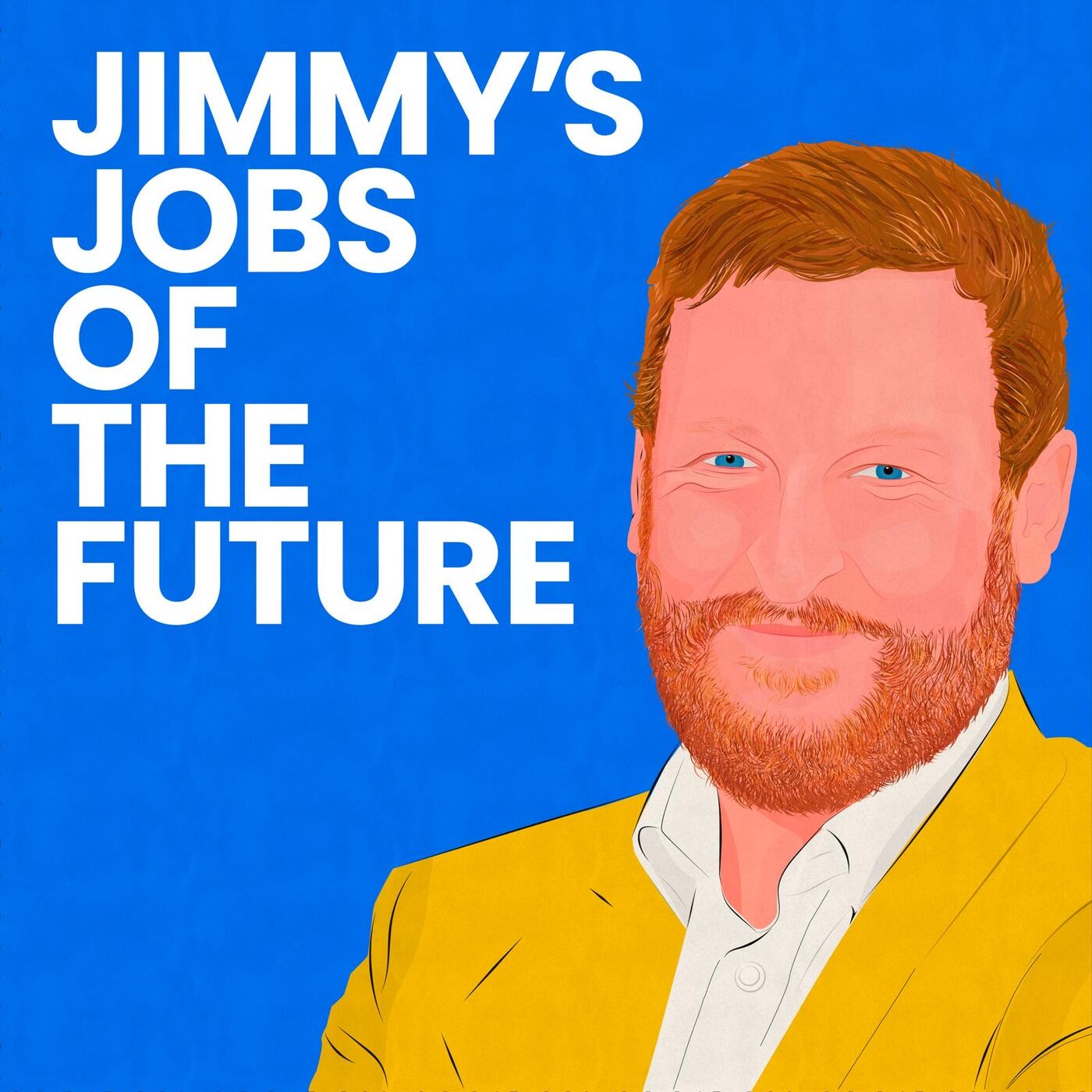
- Jimmy's Jobs of the Future
- From Shop Floor to CEO: The Rise of Pret’s Pano Christou
Jimmy's Jobs of the Future27 Oct 2026 · 50m
From Shop Floor to CEO: The Rise of Pret’s Pano Christou

 Add vo to ChatGPT or Claude to ask about everything you hear
vo listened to this episode to put together the overview and transcript, so there may be the odd mistake.
In short
Pret-a-Manger CEO Pano Christou’s career rise from shop floor to CEO, plus how Pret navigates post-COVID London, inflation-driven “value” concerns, and runs jobs/training and social initiatives (NEET/homeless employment, food surplus).
Guest backgrounds
Pano Christou spent 26 years at Pret (after 30 years in food industry including McDonald’s). He started as assistant manager in Carnaby Street, became store manager at Pret’s first Victoria Street shop, then moved through roles: store manager (incl. Leicester Square), Edinburgh/Leeds openings, area manager (Liverpool Street), regional director (100+ stores west London), UK operations director, UK managing director (2014), COO, and became CEO at 41 (within six months of COO).
Key claims
Pret avoids “shrinkflation” (no portion size cuts, no ingredient downgrades). After 2022–23 double-digit and food inflation, it shifted to value (e.g., 99p filter coffee; “Pick Your Pair” $4.99 deal). Service is trained via “be natural” rather than scripts; weekly mystery-shopper bonuses.
Notable examples
Harvard Business School exec MBA; “Joy of Pret” random acts of kindness; homeless hiring via Pret Foundation (2,000+ into employment); barista training (3 months); store manager pathway (90%+ started on shop floor); Christmas Sandwich as a top-selling cult item.
Transcript
0:00This episode is brought to you by Indeed. You're ready to level up your business, but the pressure to find the right person to make that happen is intense. Indeed Sponsored Jobs can help carry the load. It boosts your job post to help it reach quality talent fast. Cut through the chaos with Indeed Sponsored Jobs. Get a$75 sponsored job credit at indeed.com slash podcast. Terms and conditions apply. Hiring now? Then this is a job for Indeed Sponsored Jobs.
0:31Brussels clean up nicely at Sweetgreen. Maple glazed, roasted and edges perfectly caramelized. Sweetgreen's fall harvest is back on the menu and the season's most overlooked little green vegetable is dressed to be devoured. You know what to do. Order on the Sweetgreen app. Welcome to Jimmy's Jobs of the Future. Today I am delighted to be joined by the chief executive of Pret-a-Manger. Panno Cristo has an amazing story. He's been at Pratt for 25 years. He started out as an assistant store manager and has worked his way right through to become the chief executive at just the age of 41. So it's a fascinating story talking about one of Britain's most loved high street chains.
1:15It's been around for 40 years now. We talk about some of the challenges that Pratt has had, about how it's become a little bit pricey over recent years and the challenges around inflation. But we also talk about how much baristas and area managers can make and how you can almost be on six figures at PrEP, working there for just five years or so. Our post about the episode on LinkedIn got over 1.3 million impressions, which is pretty extraordinary. Whilst you're here, you may have seen from LinkedIn that we have also launched a very exciting initiative for next year. Some of you will remember the Andy Burnham episode from the summer, where he talks about calling out all business leaders to offer work shadowing.
1:58Now here at Jimmy's Jobs of the Future, we're in a pretty small office come studio. We don't have a lot of desk space. But what we are doing is launching a digital work shadowing place. So essentially, you'll be able to join the Jimmy's Jobs of the Future Slack channel if you're a student and be able to get insight as to how we run the show, how we research guests, how we get guests. you'll get input into deciding who comes on the show what we should be looking for etc and we'll also be holding master classes with members of the team from how we get commercial partners to how we make these videos how we edit short reels and so on and at the end of it there'll be a big celebration at the salesforce offices as well who announced it this is going to be something new for next year we're going to be trialing it and building it out with you and so So if you know a student who might be interested in gaining some work shadowing experience, we think this is a really exciting opportunity.
2:54We're limiting the first batch to 30, but it's something we hope in 2027 that we'll be able to have rolling forward. So please do check it out. Links in the show notes below. Thanks very much for listening. And I really hope you enjoy this episode with Pano.
3:22this episode is supported by our long-term partners octopus energy pano welcome to jimmy's jobs of the future you've spent 25 years at pret it's an incredible story talk me through the kind of steps from assistant store manager all the way through to chief executive yeah well it's been an absolute uh journey um just over 30 years in the industry working for mcdonald's before prep uh i say actually 26 years in prep and and the journey uh has uh started as an assistant manager in carnaby street um and then from there moved to to another location in the kensington arcade uh where the kensington tube station was then from there I embarked on my first role as a store manager and my first store was actually the first ever Pret Shop which was a location on Victoria Street 75B Victoria Street which is now a Tony and Guy hairdressing salon so that was back in in the early 2000s and then worked in a number of store locations with my last store as a store manager, quite sizable Pret and Leicester Square on St.
4:46Martin's Lane in Theatreland. Yeah. Then from there, I moved to Edinburgh. So I moved to Edinburgh. Because when you initially joined, it was still just London, right, pretty much? Pretty much, but you had a few out shots in Edinburgh, Manchester, Birmingham. So we started to move into, I guess, second-tier cities across the UK. So today we have, I think, about 30 locations in Scotland. I think then we had four. So I moved up to Edinburgh for just shy of a year, then moved down to Leeds. And were you launching the shop there? Yes. So I was doing a maternity cover, actually, up in Edinburgh. Then I moved to Leeds to open our second and third location in Leeds.
5:36Then I moved back to London after spending two years in the north to become an area manager in the heart of the city, actually, around the Liverpool Street area. And yeah, from there was an area manager in the city. Then I moved to the west of London. then I took on my first role as a regional director overseeing about just over 100 locations in the west of London so the way we have two regions in London one covering the east yeah one covering the west and pretty much sliced down the middle so I took the 100 or so stores on the West. We have about 270 locations today in London. And then from there, I took on my first national role as UK operations director, overseeing all of our stores ahead of becoming the UK managing director back in 2014, I think.
6:39Okay. And so then we did that role for about three and a half years. I actually didn't go to university. So I left Kingston College doing a BTEC national business and finance at 18. But then invested in my development, as we do for many people. And I moved to Boston for just over three months to do an exec MBA at Harvard Business School, which was daunting. Yeah, yeah. But an amazing experience. And then I literally came back from that and became our chief operating officer. And that's really the time when I thought, actually, there could be this opportunity to become Pret CEO. My predecessor was getting close to 60.
7:32He kind of indicated he didn't want to work beyond 60. And it seemed like a natural progression to become the COO, which initially they said, do it for a couple of years. And if it goes well, who knows, you know, that the opportunity could come up in front of you. Within six months, I became the CEO. And you were 41 at this stage, right? I was 41 at that stage. The five years before becoming CEO was when my career progression kind of went from almost linear with a slight curve upwards to a hockey stick. Yeah. So things happened really quickly. And I think when you're thrust into that position as CEO, your life kind of changes forever as well.
8:19Not just from a professional perspective, but how you're seen and perceived externally as well as internally. And what do you put that down to? I mean, yes, timing, look, I'm sure you'll say. But how did you have to develop during that stage? Well, I think from my perspective, I love learning. I love trying new things. I'm quite a restless character. You know, what is good today is not good enough tomorrow. And I've always had that will and want to do more to push myself. I also think I'm generally not someone that takes things personally. And I think that's a good thing when you're taking so much feedback on how to develop.
9:08I'd always take the feedback and try and distill the positives from that and how I could better myself so I think the general mindset of enjoying learning things the restlessness which I still have today and in some ways I say in some ways it's a blessing in some ways it's a curse because you can never rest but I think that's what's positioned me to where I am today. Harvard Executive MBA, I mean, that is a serious investment in someone, right? Because they're like 150 grand or so, right? But what did that kind of teach you? Like, it's something that we don't have much of here, exec education for business leaders.
9:55I know there's Saeed and Cambridge Judge, but it's something that I'm quite passionate about because actually it's something we lack a lot here in the UK is management skills. It's not as sexy as access to finance, et cetera. But yeah, what did the executive MBA at Harvard? I think being fully transparent, I had total imposter syndrome as I went through the ranks because the ascent was so fast. When you have the imposter syndrome, you're kind of thinking, when am I going to get found out? How have I got here? And I think what that executive MBA gave me was a real sense of confidence that I'm here because I've earned it, because I deserve it.
10:38And also the imposter syndrome and the sense of, you know, never going to university and having those theoretical experiences. You have the practical experiences of working within business. but then you know whereas most people have the theory then do the practical in essence i just did it the other way around and it was fascinating when i learned you know read through the case studies worked through um kind of essays that i had to do that how much of my practical experiences i drew on to to the benefit of the theoretical exercise so in essence i saw it really as a as a coming together of everything that I'd learned in the practical sense and almost that verification when I went there um which I think collectively made me a better person interesting what was the biggest difference because I imagine I think James Timpson said this to me that actually one of the hardest jobs transitions that people have to make is kind of from area manager to regional director?
11:51Like it can seem from the outside like, oh, it's just kind of like more of the same and so on, but it's not. How did the role differ for you on that? Well, I agree with James on that point. And I think it's all down to impact and influence. So when you have a tighter remit or you're running a restaurant or a store and you're there 40, 50 hours a day, you're with the teams all the time, you're talking to them, you're coaching them, you're working closely. All of a sudden, when you have 10, 20 or 100 locations, you physically can't do that. So you have to really think about the processes and the influence that you have on those individuals to take that baton on and do that, but do it in a way that inspires them.
12:46So it's all about how you influence to get greater impact when you're not physically there 24-7. Yes. Okay. And how do you find it now in terms of when you're managing people, managing people down the line? There's a kind of old saying in politics, if you don't want the prime minister to have done your job in the cabinet because they know where sort of all the bodies are buried, et cetera. But like how do you find – you've done literally every job in the business. So how do you find that? Do you have to detach yourself a bit from it? So I would say that as I've matured as a CEO, my approaches I think in my latter years are very different to the approaches I would have had when I first became CEO.
13:31I was probably more active and involved in the detail. and not that I'm not involved in the detail today, but it's important you give people the space to do their day job. And I'm very fortunate. I've got a group of people that work for me that are far smarter than me, far, far smarter than me. And I think some leaders can find that intimidating because they may feel they need to be the smartest person in the room. I don't. and I'm much more focused on the collective answers to the big kind of problems and questions that we're trying to answer through the teams that work with me and how you can kind of give them the space to make those decisions and make those mistakes as well because the only way you'll learn is by making mistakes.
14:32so you know I have a very fortunate to have a very talented team around me that feel empowered I think today but you know at the same time I think where I am today it's about asking the right questions it's around and leading them to you know feel they've got the accountability and and really you know something I use quite a lot with my teams and myself as well I feel like even though has shareholders and owners. I have an ownership mindset. I think my teams have a mindset that they own part of this. So if you own something, how are you going to cultivate this and improve this? What, if any, kind of unusual management practices do you have?
15:23So what I'm thinking of for this is Brian Chesky recently said, like, it doesn't have one-to-ones and so on. So is there something like that that you've kind of changed over the eight years of being CEO, which is kind of like conventional management that actually you now do differently? So there's a couple of things, actually. I can't stand long meetings. So most of my time with people are between half an hour and an hour, much more half an hour, quick, short, sharp meetings. I like to work in really small groups as well. I don't like decisions by committee. And also one of the big things, and I think it's really helped me over the years, is I generally don't like going into meetings unless I have a pre-read that somebody sent me before to think through and reflect on.
16:17So, you know, I was watching a podcast of Jeff Bezos in the last year or so. And I think somebody said to him, how do you deal with stress? And his view was, I'm the CEO, so you have the autonomy to call the shots. He said, when I really get stressed, so as if my diary's been oversubscribed. So keeping my diary in check is so important. And actually, that's something that really resonated with me. So I think as CEO, you make fewer decisions than I would have made 10, 15 years ago, but much more impactful decisions. So taking the time to think and reflect is so important. I don't sleep much. I'm generally up for 4.30 in the morning, seven days a week without an alarm.
17:08And that's when I'll spend most of my time thinking and reflecting. And so my team will often wake up in the morning with a flurry of emails and notes of my reflections. And I think that's when I'm most productive as well. What are you seeing in the kind of London economy, right? How has COVID sort of changed it? You think back to those days where, you know, barely anyone was going into central London. What are you seeing now? So, you know, hybrid working was the obvious one that came out of COVID, where people were in the office two or three days a week. and fundamentally the prep business model had been built on people coming into the office five days a week.
17:47So at its core, that was a huge disruption to our business model. Clearly, there are always kind of macro shifts that you can't do much about, that you just have to, you know, and for us and for myself, instead of licking our wounds and feeling sorry for ourselves because that had occurred, we really started to challenge ourselves on what can we do differently. So we launched a subscription business, a coffee subscription. We launched delivery and delivery platforms, which I think many businesses have done. What we have seen, though, is that people are coming back to the office more and more often now.
18:28Mondays and Fridays are generally quieter, Fridays in particular. But every year since COVID, we've seen those days in particular continue to grow much faster than Tuesday, Wednesday, Thursday. I think the other thing more broadly that has been a factor since coming out of COVID is we were operating in a sector, in a market that was growing. The market's not really growing. In some ways, the market's been shrinking over the recent years. So really, you know, there is no longer a wave of growth because the people are coming out more to eat and all of that stuff. It's more around how do you take share from others to continue to grow your business?
19:20So a number of changes. And I think the environment today is definitely more complex than it was five, ten years ago. In some ways, there's excitement that comes out of those complexities as well, because, you know, I'm always amazed with some of the ideas that our teams will come out with to do things differently to improve how we connect with our customers. Like what? So I think the subscription was a great example. There is a very recent example, actually, that we launched in September, which was all about giving our customers even more value. So the cost of living crisis is so prevalent. People have less money to spend today than they did 10 years ago.
20:07Disposable income is diminishing. So we launched an initiative that was actually an initiative launched in our U.S. business a couple of years ago called Pick Your Pear. Yes. And what that is, you can come into a prep and you can buy half a baguette, a small sandwich or a soup or a salad. any combination of two and get them for$4.99. Yeah, it's brilliant. I'm a big fan. No, because the American sandwich and soup thing is fantastic. It's great the way you've chucked salads in it as well. And just talk to us, because when I was doing my research, you know, Googling Pret, et cetera, it was about the third item that came up is, why is Pret so expensive now?
20:54So I just wondered if you wanted to take the opportunity to kind of explain the myriad of costs that have impacted retail, food and hospitality over the last five years? I'd probably go back to the years 22 and 23, which I think were those years that we had double-digit inflation. And what people may not often see is, yes, inflation, I think, went to 10 % or 11 % at its peak, but food inflation jumped to 20 % at its peak. And what were real red lines for PrEP? Things such as we don't shrink portion sizes, we don't downgrade the quality of ingredients, which many do. And obviously you would have heard the term shrinkflation come out from a number of companies as well, which was something we just said we wouldn't be doing.
21:52But what that did mean is as we were managing our cost base, we had passed on price. And at the end of 23, we really started to think about how can we, and I think you'd seen that people have really feeling the pinch there as the years 24 and actually to where we are today. So then said, actually, we're going to make a real concerted effort around value more than ever. Because PrEP, in some ways, people would have said PrEP was never amazing value. But today, I think today, actually in 26 and beyond, we are, I'd say, the best value we have been. And things such as the Pick Your Pair initiative I shared.
22:35You can buy a 99p filter coffee at PrEP. And actually, over the last, will be three years now, we've passed almost no price on to our customers at all. And we've looked at different ways of optimizing our business ahead of passing price over to our customers. So I'm really proud of the approach that we have taken over the last couple of years or so. I think at one point, I think there was maybe a fair sense that prep was too expensive or getting too expensive. I think where we are today is in a far stronger position to where we would have been, say, two, three, four years ago. I still think we have much more to do.
23:20So I think customers will see a continued focus on value. And value for me is not necessarily the cheapest price point. It's great quality food, great service and a great location and everything collectively together, giving you a sense that, OK, this is this is a good deal that I'm getting here. I think that, you know, we don't just pride ourselves on the quality of food, but the quality of service our teams give to our customers every day. Talk to us about how you empower it, because it is something that a lot of people have brought up here in the office, actually, was they often say they really enjoy the service at Pratt.
23:56And partly because they get free stuff from time to time as well. but everyone likes that. So just talk me through those a bit. When you come and work at Pritt, we don't, and I know this at my time at McDonald's, there was a script that I had to kind of read of how I needed to serve a customer, what I needed to say when. We don't do that. We say, be natural, have eye contact. I think small aspects of human communication in the thank you and please and goodbyes, but it's all about being yourself. And we brought in an initiative it's going back about 15 years ago that we called the joy of pret which was all about random acts of kindness and out of that came us saying to our staff give things away to customers once every so often if you see somebody that maybe is a little bit upset or downbeat if you see a customer that comes in often and you want to reward them anything within your own autonomy to brighten someone's day, feel free to give that away.
25:04And it was also at the time an antidote to loyalty programs because everyone was doing loyalty programs. And we said, actually, how can we not do a loyalty program but have a human connection to how we give or reward our customers? Subsequently, as years passed, we did end up putting in a loyalty program, which we do have today. But also we've kept and retained the joy prep. Really interesting to kind of hear that and the development of it. And one of the reasons I was very excited to get you on was because you're creating jobs in this economy, right? You're going to open 100 stores in the UK over the next year, couple of years or so.
25:50It's really exciting. Talk to us about where they're going to be and what the role of kind of like an entry level person is at Prem. So as you say, with opening more stores, that will generate more jobs. And there's a number of things that we're doing to fulfill those opportunities. We have connected with the British Retail Consortium to set ourselves out some big targets around bringing more neats in. and the NEET agenda. I'm sure you've read the Alan Milburn report and the rise of what he puts down to a potentially lost generation of these kind of 16 to 24-year-olds. So we recruit and hire a lot of young people.
26:39And the hospitality sector does that. So I think there is a huge role that we can play within that. I'm passionate about that because I was a young kid that came into hospitality. And I'd go a step further and said fell into hospitality rather than with an intention as a part time job, then loved the experience and then moved on. And we are I think that the percentage of young children coming into PrEP is growing every single year. So we are seeing more people coming in. And we think, you know, I'm a big believer that the hospitality sector is an amazing sector to be part of. It's one of the biggest employers in the country.
27:24It is tough, but the rewards are there if you work hard to grow yourself and to grow your career. We also bring in almost 150 people a year that are homeless or on the verge of homeless. So we have our own foundation, the Pratt Foundation, that I've been a trustee of for over a decade. And we work with local grassroots charities that connect with homeless people. And we brought in over 2 ,000 into employment over the last 20 years or so. We've got some fantastic stories of store managers or even people that work in our technology team that were once upon a time on the streets. And we kind of helped support that.
28:09And it's been a big part of the PrEP brand, how we support homelessness over the years. Our food is made freshly prepared on site. We don't have shelf lives. The sandwiches don't last for days. You know, we have to give the food away or dispose of the food at the end of the day. So we seek out local charities when we open PrEP stores to work with them to take surplus food. And then subsequently, you know, I've been now working since the summer with the Royal Foundation, and His Royal Highness Prince William's charity Homeward, supporting them in their kind of goal to alleviate homelessness. And I now chair NEON, which is called New Employment Opportunities Network across the UK, connecting with more companies to try and bring more companies in to recruit more people that are coming in from the care system or homelessness.
29:01And I think there's a bit of a stigma around bringing people that are homeless into the jobs market. And it does take a little bit more upfront care and investment. But what we've found, once you do that, they are so grateful to you for giving them an opportunity. Our turnover of these people is far lower than anyone else. Exactly what James Simpson says about prison leavers, right? And what is that kind of investment? Because one of the things about Pratt is you are getting a premium experience. And you talk about customer service. You know, it's just a very different experience of engaging with someone there.
29:45So what training do you give a homeless person in that? So when we bring a homeless person on board, the training would be no different to any person we brought in. lots of kind of practical learning, theoretical learning. The support that we do give to these people is we support them with travel for the first three months of employment because these people may not have a disposable income to start with. We support them with counselling as well for the first three months. And we ensure that we have specially trained managers as well in these stores that have experience working with these individuals that can have some challenging recent experiences or life experiences.
30:34So you have to kind of wrap your arms around them a little bit more prevalently than you would to your average member of staff. But that's kind of a mechanism we've developed over the years with them. Daniel Priestley always says about hospitality, which is essentially your learning customer service and problem solving, which are two of the key skills of getting ahead in life. And it's so, so true. That's probably what it is. But take us through the door of Pret before the first customer arrives. So there is a number of hours that people are in a Pret store before we open the doors. From people coming into, you know, because it's a fresh produce supply chain, very hard to scale up and very hard to make profitable as well.
31:23And because it's a fresh produce, you have to have deliveries every day as well. So you generally have your deliveries that will come in during the night. So people will come in at very early doors. Let's say if you're going to open a paretta at six o 'clock in the morning, somebody will be in there from 3.30, 4 in the morning. Put the deliveries away. Freshly bake your croissants. Freshly bake your baguettes. and start to make the food. So when we open the doors, the customers see a selection of food within the fridges that we have there. And you will see if you come into a prick quite early, you won't have all the food available.
32:05And that's because you've got people in probably basements or behind your counter making those sandwiches freshly. To your point on how do you know and understand how many products to make. We have back-of-house IT systems. The teams will be forecasting the sales, and then from there getting an understanding on how much food they'd have to produce and also how much food they'd have to order as well. So we order food a day in advance. So on a Monday, you order all the fresh produce to come in on a Wednesday or a Tuesday for a Thursday. As you say, weekends are very different to during the week.
32:53So as an example, it wouldn't be as busy in the morning on the weekend. Most people take the chance to have a bit of a lie-in. You'll have more kids and families out on the weekend, so the mix of food will be slightly different. But over the years, I think we've got better and better understanding those kind of seasonality trends that we work towards. What can a barista be earning? Talk us through what the pay scales are at Pratt. Firstly, we don't do zero-hour contracts. Secondly, we don't pay people by their age. So as you all know, between the ages of 16 and 21, you can pay people a lower wage than when you're over 21.
33:33It doesn't matter whether you're 17 or 27 at Pratt, you get paid the same wages. And the other thing as well that we do is we pay slightly above the minimum wage, we also have a bonus for our entry level staff as well that is 10 % of their salary that gets paid on a weekly basis because our entry level staff get paid weekly. So all of that package... So why do you do that 10 % bonus then? So it's attached to customer service. So you'd have a mystery shopper visit every week, an external company, and if they get over a certain score, every single person in the store gets that bonus. Oh, God, right.
34:19So what are they being measured on then? So you're getting measured on engagements with your customers, the availability of the food, the speed of service, the cleanliness of the store as well. Wow. And that's every week, Mr. Shopee? Every single week and every single prayer across the world. Wow.
34:42So, yes, I think to your point of the barista, it's a real skill and art to be a barista and the learnings that you take from that. And, you know, coffee has become a bigger and bigger part of our business over the last 10 to 20 years or so. A barista would get paid around£15 an hour all in. You know, I guess you can calculate that if they're doing 40-odd hours a week. So it's a good wage. I think that every year we're looking to increase that. Obviously, you have the living wage that increases. How long did it take to train a barista as well? So if you've been highlighted to become a barista, it's a three-month training program.
35:25Okay. That it starts with practical training to theoretical training. You get taken into our off-site training academy that we have in Cheapside in the city. We have one there. We have one in Manchester in the north of England. Because I think for us it's a blend of online training and in-person training, especially for baristas, in-person training is so important. But I think that from joining PrEP to becoming a barista, that could happen in six months. Okay. Very quickly. you know I think you can you know to become a store manager many people would become a store manager or could become a store manager within the first three years of joining Pratt so from coming in at an entry level to having a I think the average store manager I think all in would make about 60 ,000 pounds a year over 90 percent of all our store managers started on the shop floor and the CEO as well.
36:25And what can an area manager, regional director, what do these salaries go? An area manager would oversee around about 10 to 12 pretz and it would be a business that is around about maybe£25 million a year, a sizable business, and would be earning salary and bonus altogether at£100 ,000 a year. And again, the metric is very similar to our general managers that about 90, 95 % of all of our area managers started off on the shop floor, making sandwiches, serving our customers. What's the best job at Pratt? I would say that the most important job at Pratt, and then I'll get on to what might be the best job.
37:10The most important job at Pratt is the role of the store manager. we spend a lot of time ensuring that we get great managers and we do everything we can to make it as easy as possible for them to be brilliant so they can spend time with their teams and their customers um i think when it comes to to food um we have a fantastic culinary team um that and and it's it's very much in-house a lot of big businesses and brands in our sector would kind of outsource a lot of this to suppliers. And we do connect with our suppliers, but we do a lot of this stuff in-house as well. And it's probably one of my favourite meetings is when I'm going to try the new prep menu before it's launched.
38:01What might be coming down the line? Can you give us a bit of a sneak peek? Or talk us through the Christmas sandwich? It is the season? Yeah, it is almost the season, yeah. So I think it's the 3rd of November. Pret's Christmas Sandwich will be coming out. Every single year since I've been at Pret, it becomes a top-selling sandwich out of the whole range. And from the day we launch it until the day it comes off, it has such a cult following, the Pret's Christmas Sandwich. I think in regards to what's coming, again, I always get told off by my food team if I say too much. What I will say is we're definitely seeing kind of more trends moving in, high protein.
38:49I think customers are now much more interested in what they consume. I think the PrEP brand has quite a good role to play within that in respect to fresh ingredients, provenance. and you can eat for every single day and be able to kind of manage your diet, you know, in a specific way. Well, I definitely still do that today. You've obviously hired a huge amount of people over the years. Like, what are you looking for, particularly those kind of entry-level roles? Yeah, so we don't ask for experience because we can teach those skills. It's very much focused on the character, the person and the individual.
39:31and how they connect confidence levels, which I think one of the things we've had to, as we bring in more younger people that are lower confidence because it's their first role, there's a lot of techniques that we brought in to really try and tease out these individuals. So that's what we do at an entry level. I think once you go up through the careers ladder, it becomes a little bit more skills-based and how you're performing at a store level. And as well, I think to my earlier point, if you find people that have a great work ethic and really push their self, well, give them a chance. And I think that we've taken a lot of bets on people over the years to great success.
40:22It doesn't always go well. But I think at the entry level, if there are some interpersonal skills that we can really see with an individual which I think everyone has deep down then that's what we'll look to build on and take it on ourselves to help to build their confidence levels out Got the budget next week this is hopefully going to go out before then if we can get it all turned around and so on what's your message for the Chancellor and the new government about supporting retail hospitality? Well it's been a a challenging few years with so much being thrown at us, whether it's through business rates to the national insurance increase, that was a huge hit on businesses a couple of years ago.
41:14So I think the first thing I would say is giving us a break to just take a breather. I think at the cold face would be great. But also, I think there's a couple of things that I would ask, I guess, in anticipation for the budget. There was a petition pulled together a number of months ago around VAT. We pay a disproportionate amount of VAT as a hospitality sector compared to our European cousins that generally will pay 10 percent and we're paying 20 percent. So that, I think, could be a real support and game changer. I think also as well, especially for the younger people, we've spoken to some people in government around giving national insurance breaks to some employers to encourage them to bring on more young people as well.
42:13So I think those are the two real asks that I have. I think Andy Burnham, she talked very positively about the hospitality sector ahead of becoming prime minister. I know there's been some recent support to pubs and late night venues. And I'd encourage them to think a little bit more broadly than just those, because I think everyone across the hospitality sector has felt a ton of pain over the recent years. What do you think the biggest thing could be that the Chancellor could do in terms of the young employers? Like, is it a reduction in NICs? I mean, you've already said you pay equal amounts anyway.
42:53So I'm just curious if you had two minutes with him, what would your sort of, what would your one idea be? I think that the points around national insurance support, I think, and I'm more closely affiliated to that than the changes between the 16 to 21 years. Clearly, we pay a consistent wage, as I mentioned earlier, and I'm very committed to that, which I know people within the sector will have different views on. But I find it hard to quantify paying somebody a different amount of money if they're doing exactly the same job as someone else. Okay. Fair enough. Well, it's been brilliant to have you on.
43:36We've got a few quick fires for you, which I don't think will be too strong or take too long. So what was your first job that you ever did? You obviously sort of landed at McDonald's, but did you have a Saturday job or something? I did. I did. So my first ever job was delivering minicab cards. Was it? It was. That's old school. It was, yep. Delivering minicab cards. I would do that. My father was a minicab driver, so I kind of asked him. I think my parents always encouraged me from a very young age to do, you know, to work, to make money. And whether it be, you know, I was always asking them, what can I do to earn money?
44:16Whether it was washing my father's car, helping out around home. So when I could get out to see how I could earn my own keep, that was the first thing I did. Can you remember what you were paid? I think it was rather than an hourly wage, it was I get paid an amount of money based on the amount of cards I delivered. So I think for every thousand cards I delivered, I think I got paid something like£1.50. What's the thing if you walk into a Pratt and did you do this with the one opposite earlier, but you can walk in and be like 30 seconds, this place runs well? I did do that earlier. Did you? I brought you to a friend.
45:01It's probably two or three things. Did you get slightly like, oh my God, is that the CEO walking in? I think at times there is that. Listen, I think one of the benefits of starting on the shop floor, I knew how petrified I was when the CEO came in all those years ago. So I take it upon myself to try and make them feel relaxed. Yeah. Try and kind of connect with them on a human level. and I take so much energy from my time in Pret stores. I enjoy that far more than being sitting in an office in meetings. And the two things that I look at, as soon as I walk in, I look at the team behind the counter.
45:45Are they smiling? Is there eye contact? So I think I can get a really good read on how well are Pret's been running by how engaged the staff are with their customers. and secondly I look at the food in the fridges to see how it's presented you know people eat with their eyes and I often say that prep foods shouldn't just taste amazing it should look amazing so those are two things I look at interview question you like to ask I like to spend a lot of time understanding who they were from a very young age as a child family kind of background how they connect to their siblings um and what really made them who they are um and i actually find that much richer than i went to university i have this work experience and i've got these leadership qualities because i'm a big believer and i think there's a lot of science on this that the the intricacies of our life in our younger years really defines who we are today we talk about relationships with parents quite a lot but the sibling stuff is not covered as well um best thing that ever took off the menu oh that's a good question um i'd say the thing i missed the most is we used to sell a packet of chocolate macaroons that i used to love um and uh unfortunately customers didn't really buy them i love them but um if the customers don't come in then then then it goes what's the job that you'd like to do again in the food chain and one that you wouldn't want to do um so the one i'd love to do again is is a pret store manager so i love that role as the store manager and in particular when i was running our branch on leicester square after i became a store manager and just before i became um a an area manager i I did a role which was they called us a specialist manager.
47:53So I'd go and troubleshoot. And that's when I went to the north of England, to Scotland. And I found that quite difficult. One, because it was a role that hadn't existed before. So you really had to define it from the offset. And secondly, because you kind of go and fix something and then you leave. So you didn't see it all the way through. I guess in some ways it's interesting when we recruit consultants or ex-consultants that do a project and move on to the next thing. And I often, when I speak to them, they often speak to me about, I'd love to work in a company because then you see everything through.
48:28So I think having the opportunity to do something and to see it through and to see the rewards of that, I think is hugely satisfying. Very good. Well, Pana, thank you so much for coming on Jimmy's Job is the Future. Maybe we go do a shift together or something. I'd love to bring you behind the scenes to see what it's all about. Oh, definitely. Great. Brilliant. Thank you. Brussels clean up nicely at Sweetgreen. Maple glazed, roasted, and edges perfectly caramelized. Sweetgreen's fall harvest is back on the menu, and the season's most overlooked little green vegetable is dressed to be devoured.
49:04You know what to do. Order on the Sweetgreen app.
From the publisher
Pret a Manger CEO Pano Christou on why Pret is so expensive, Service Culture, and Creating Jobs
Join our Slack channel, for students only:
https://form.typeform.com/to/CdBAfNrp
You’ll get to shadow the team digitally + learn how we put the show together - how we find guests, do research + come up with up with topics.
-------
Pret CEO Pano Christou recounts his 26-year rise from assistant manager to CEO at 41, including a short Harvard exec MBA that boosted his confidence after rapid promotion.
He explains Pret’s management approach: short meetings, pre-reads, early-morning reflection, empowering smart teams, and a weekly mystery-shopper system that can trigger a 10% weekly bonus for all store staff based on service, speed, availability, and cleanliness.
He discusses COVID’s disruption via hybrid working and Pret’s response through coffee subscriptions, delivery, and value initiatives like “Pick Your Pair” for £4.99 and 99p filter coffee.
Addressing “why Pret is expensive,” he cites 2022–23 inflation (food inflation peaking around 20%), refusing shrinkflation, and then limiting price rises for about three years. He highlights expansion plans to open 100 UK stores, inclusive hiring (NEETs and people facing homelessness), training, pay (around £15/hour for baristas), and policy asks on VAT and national insurance support.
Chapters
00:00 Why Pret Costs More
00:48 Panos Pret Journey
04:05 Fast Track To CEO
05:46 Leadership Mindset Shifts
12:35 Unusual CEO Habits
14:40 Post Covid Business Model
17:05 Value Deals And Pricing
21:05 Service Culture Joy
22:58 Hiring Growth And Homelessness
28:16 Behind The Counter
30:32 Pay Bonuses And Training
34:20 Menu Trends And Hiring
38:00 Government And VAT
40:54 Quickfire And Wrap Up
**********
Got an idea for our next episode? Drop us a line at hello@jobsofthefuture.co
Follow us on socials!
Instagram: https://www.instagram.com/jimmysjobs
Tiktok: https://www.tiktok.com/@jimmysjobsofthefuture
Twitter / X: https://www.twitter.com/JimmyM
Linkedin: https://www.linkedin.com/in/jimmy-mcloughlin-obe/
Sponsor the show or Partner with us:
hello@jobsofthefuture.co
Check out our clips channel here! ⬇️
https://www.youtube.com/@JimmysJobsClips
Credits:
Host / Exec Producer: Jimmy McLoughlin OBE
Producer: Thuy Dong
Editor: Rhodri Beynon
Social Producer: Alex Kularatnam
Learn more about your ad choices. Visit podcastchoices.com/adchoices
More from Jimmy's Jobs of the Future
All episodesWe use cookies.They keep vo running smoothly and help us improve it. Privacy policy
Scan the code with your iPhone camera
Listen in the app.
- Play everything vo finds for you
- vo remembers everything you hear
Go to the App StoreFree on iPhone