
- Podcasts
- Leaders Worth Knowing Podcast
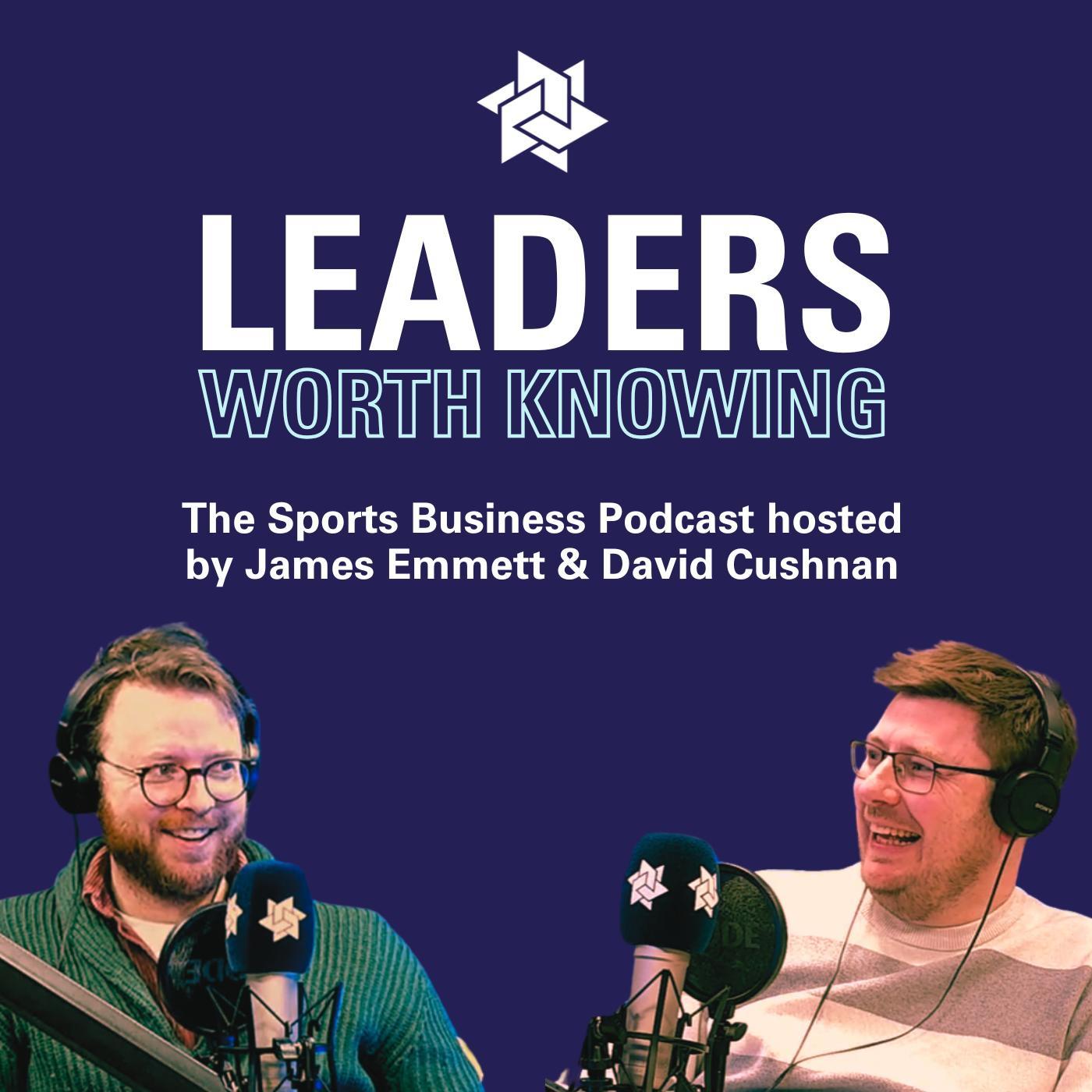
- A tale of two global rugby tournaments; the legend of Toto Wolff
Leaders Worth Knowing Podcast10 Nov 2026 · 34m
A tale of two global rugby tournaments; the legend of Toto Wolff

 Add vo to ChatGPT or Claude to ask about everything you hear
vo listened to this episode to put together the overview and transcript, so there may be the odd mistake.
In short
The episode covers (1) Formula 1’s end-of-season storylines, (2) rugby union’s new Nations Championship branding and format, and (3) rugby league’s World Cup momentum and future plans.
Guests
none. Hosts are James Emmett (Leaders Editorial Director) and David Cushnan (Content Director).
Key claims
Mercedes won the Constructors’ Championship (ninth overall) and Kimi Antonelli became the youngest F1 world champion at 20; Toto Wolff’s nine titles put him level with Frank Williams, and Mercedes ownership is split among Mercedes-Benz (~1/3), Ineos (~1/3), and Wolff (~28%).
Notable examples
Antonelli’s WhatsApp-based Mercedes fan engagement; ITV’s reported £90m+ two-edition Nations Championship deal; crowds for Romania-Tonga, Ireland-Argentina, and France-Fiji; Rugby League World Cup finals Australia vs New Zealand; NRL to run the 2030 men’s and women’s World Cup in a “magic round” city-by-city format.
Transcript
0:03James Emmett: Hello and welcome to the Leaders Worth Knowing podcast, the sports industry show from Leaders where we talk about what's worth knowing in the business of sport this week. I'm Leaders Editorial Director James Emmett.
0:15David Cushnan: And I'm Content Director David Cushnan on the show this week. Mercedes back at the top and world champions again in F1. What's behind International Rugby Union's Nations Championship revamp? And why has the Rugby League World Cup passed us all by? But before all that... When it comes to sports data, are you getting everything you should from your provider? Sport Radar delivers broader coverage, greater flexibility, continuous innovation and better value than the competition.
0:43James Emmett: Opt for more. Go with Sport Radar. This is Leaders Worth Knowing. Sure is. And thank you again to Sport Radar for partnering this podcast and accompanying newsletter. Do you know what? It's a podcast that accompanies the newsletter of the same name. That's what it is, David. It sure is. We don't say it enough, but this is the accompaniment to the weekly newsletter of the same name.
1:05David Cushnan: And if you haven't subscribed to said newsletter, then rectify that immediately by going to leadersinsport.com slash newsletters or contact one of us directly.
1:15James Emmett: We can do it for you. Can we? We can. Well, I regularly do, David. How are you doing? What's going on? Did you watch the Formula One this weekend? Yes, I did. Is Liam Lawson getting kicked out of his seat? That's the word on the street down in Brighton.
1:29David Cushnan: That's what they're all talking about in Brighton. Not sure. He's driven a brilliant season, the young New Zealander. But some speculation that he might be replaced by a younger model for 2027 in the Racing Bulls team, the junior Red Bull team. But interestingly, you pick that out as the story of the weekend in F1.
1:52James Emmett: It's just what other people are saying. It's just the sound of the streets.
1:56David Cushnan: We are in an interesting period for F1, which obviously had a championship decider, a three-way championship decider around about this time last year in 2025. This year, the championships all wrapped up with three races, three scheduled races at least, still to come in Las Vegas, Qatar and Abu Dhabi. But it's all done and dusted in terms of the championships. Kimi Antonelli, youngest ever Formula One world champion at just 20 years old. An amazing story. And Mercedes, his Mercedes team winning, confirming the Constructors World Championship, the ninth Constructors World Championship for Mercedes in F1 at the Brazilian Grand Prix this weekend.
2:42David Cushnan: Do you know what?
2:43James Emmett: I haven't really watched a single minute of Formula One action this year. But Kimi Antonelli, and as a result, when I understand that Kimi Antonelli has won the championship, immediately I think of, what's the first thing you think of when you think of Kimi Antonelli, if you're a person who's not watched a single minute before?
3:03David Cushnan: Are you thinking of Kimi Raikkonen?
3:05James Emmett: No. Okay. I'm thinking of the quite creative WhatsApp campaign that Kimi Antonelli featured in all around, I believe, his signing for Mercedes. Mercedes. Yeah. Yes. It was a little video, a sort of mini-series.
3:23David Cushnan: It was a sort of documentary, almost a full-length documentary, but branded, a branded WhatsApp message included. Yes, a retelling of the story of his signing, which seemed to suggest that... Playing up the role of instant messaging. Yeah. Funnily enough, he was actually... There was a big delay to qualifying on Saturday because of the rain at Interlagos. And he was sat helmet off in the car, just waiting as everybody else was. And obviously the pictures saw him, but he was on his phone and the commentators were sort of saying, oh, there he is. He'd be messaging his mates. Turned out he was apparently engaging in some direct comms with Mercedes fans via the Mercedes official WhatsApp broadcast channel, which is quite fun.
4:09David Cushnan: Apparently so.
4:10James Emmett: He was activating a little bit of content marketing. He was doing his bit. they breed them different these days don't they sports well when you're when you're a 20 year old
4:20David Cushnan: and you've been you've been groomed for this uh f1 stardom for for most of your life literally um i guess you are gonna tick all the boxes when it comes to partners but no it's a remarkable story um for kimmy antonelli and mercedes this is mercedes back on top of f1 first world championship since 2021 the infamous uh 2021 season when they won the constructors championship but did not win the Drivers' Championship. And as I said, ninth Constructors' Championship puts them third on the all-time list alongside Williams, just behind McLaren and Ferrari. And for Toto Wolff, the team principal but CEO, part owner of the team, this puts him equal with Sir Frank Williams on nine world championships, which is a remarkable thing when you consider Frank Williams' legendary status in F1.
5:18David Cushnan: I mean, it's been a long time since Williams won the Formula One World Championship. In fact, it's 30 years next year since they did so. But this is really significant for what is now an absolutely enormous team, organisation and employer. What, Williams? No, Mercedes.
5:38James Emmett: Oh, Mercedes. Okay. What's the ownership structure at Mercedes these days? How does Does Mercedes itself actually have a stake in that?
5:46David Cushnan: Yes, still owns around about a third of the team as Mercedes-Benz. You have Ineos, who also own a third of the team, and Jim Ratcliffe, who has some success in sport in Formula One this year, unlike elsewhere. And Toto Wolff has around about 28 % of the team from a personal perspective. He actually sold a chunk of his stake to George Kurtz, the CEO at CrowdStrike, a good few months ago. So George Kurtz owns around about 5 % of the team. But yeah, it's an ownership structure that has set the team up for a huge amount of success over the last 10, nearly 15 years or so, where you have a corporate car manufacturer in there with a significant stake, but you also have somebody like Toto Wolff who has equity in the team.
6:51David Cushnan: He's got skin in the game over and above mere employee status, which if you listen to Christian Horner, the erstwhile CEO and team principal at Red Bull Racing, he did not have skin in the game, lost his job. and as he promotes his new book he is being pretty clear that he would only really consider coming back into an f1 team role if he did have uh skin in the game where that might be uh who can say but um but yeah total wolf um one of many uh significant figures in that mercedes team around about two and a half thousand employees in total when you include the F1 team and the Mercedes-Benz high performance powertrain unit, which supplies not just Mercedes, but McLaren, Alpine, Williams in F1.
7:45David Cushnan: And Highwell Thomas, the MD there has played a really significant role, particularly this year as Mercedes has come back to the top of the sport with this new big new regulation change that we've talked about after a few fallow years since since 2021. So yeah, well done to Mercedes, back on top. And yeah, a little word of credit for Toto Wolff, who is a man who is incredibly rich, incredibly famous these days, but continues to put in the hard yards.
8:16James Emmett: He's also, it has to be said, got one of the best names in sport, hasn't he? Toto Wolff. It's right up there, isn't it? What a name. um what does the um scheduled finale of the formula one calendar look like this year so the
8:33David Cushnan: next race is in a couple of weeks the las vegas grand prix which will obviously take place with both championships done and dusted but is very as we have talked about previously a very significant
8:45James Emmett: event for f1 itself the teams can focus on what's important which is rolling out a host of new sponsorship deals in Vegas.
8:52David Cushnan: And there's still plenty to play for in terms of the minor placings in both championships. And then we have, as it stands, two more races, both in the Middle East, in Qatar and Abu Dhabi. All the indications are that those races are on. Obviously, everybody is keeping an eye on what is happening, not only in that region, but what's happening in and around the white house at the moment but it is notable that um moto gp which shares now has uh uh shared ownership um what am i trying to say has a the same owner as f1 yeah um held its race in qatar this weekend with a bit of a depleted grid the yamaha team pulled out of the race there was a lot of concern and a lot of advice given to anybody attending that race.
9:46David Cushnan: A lot of broadcasters actually stayed away and covered the race remotely. So we'll see what happens, particularly with the Qatar race, I think. But as it stands, three more races to go in this F1 season, which has provided a bit of or created a bit of history with Kimi Antonelli. But also there's been a Fairly challenging one, not just from an organisational point of view, but also as F1 tries to bring in and bed in these massively complicated new regulations. Yes, indeed.
10:20James Emmett: Also worth saying on the sort of focus on the Middle East as a potential viable hosting territory for major sports events. Abu Dhabi did indeed host the Abu Dhabi Alder Championship on the DP World Tour this past weekend.
10:35David Cushnan: And it looked very well attended as well.
10:36James Emmett: It looked very well attended. And John Rahm and Till Hatton, both doing very well there. Old live golfers, the two of them. And then Rory McIlroy, who I don't believe ever played on live golf. Famously. David, did you want to say something about COP? Yeah, just a little note that it's COP week, COP 31.
10:59David Cushnan: This is the big gathering of the, well, governments and bigwigs and climate experts to discuss the global climate situation and try and find some common ground in all sorts of areas. Turkey is hosting in Antalya, although slightly weirdly, Australia, I read, are in charge of negotiations because they had a bidding race with Turkey to host. And this was the sort of compromise they came up with.
11:31James Emmett: They managed to negotiate themselves a role as the negotiator in someone else's party.
11:35David Cushnan: And I think being the negotiator in this is quite significant. so I'm sure we will see various things come out of the COP 31 this week and as always with these things sport very much on the fringes of the bigger global macro debate on this but I did spot a bit of research here in the UK the other day from the British Association for Sustainable Sport Basis, which has surveyed a load of professional sports organisations in the UK and found that 27 % of professional football and rugby stadiums in England are facing a high flood risk. Only nine professional clubs across the country have explicitly identified climate or extreme weather as a business risk.
12:31David Cushnan: The report is calling for some additional funding to protect grassroots facilities as well. 94 % of those surveyed, those organisations surveyed said sport was underprepared for climate change. And I think this is going to be something, it's one of those, as with all discussions around climate change, it's a creep issue, isn't it? It's not something that necessarily makes the news headlines. But it is one of those things that as the years pass, as things get hotter and wetter, in all sorts of markets, in all sorts of types of sports event, this is going to become more and more of an issue.
13:09James Emmett: Yeah, it's interesting at the same time that we're apparently being told here in the UK by our government that we as individual citizens need to prep for a period of time without power and water and fundamental supplies.
13:25David Cushnan: Without podcasts, James.
13:26James Emmett: No, there'll always be podcasts, David. We'll fire up the generator for that. You know, you're supposed to have a stock of drinking water in the cupboard under the stairs or something. um as insulation becomes a you know a key part of house building and different sources of power it is apparently not at the top of the venue development agenda um here in the uk um but perhaps it will be soon actually talking of which we do have a new podcast series out this week um all about venue development um there are environmental considerations um that we touch on we're producing this series in tandem with hks um specialist sports and entertainment architecture firm the series is called if you build it they will come of course it is um and this first episode that we have out this week is all about financial implications around building a business case for venue development we've got ellis win jones on um who's a very smart But a chap who has most recently his work is on the board at Wrexham at the moment, but he until very recently led the global sports advisory at Goldman Sachs.
14:42James Emmett: So venue development, a small piece of what he has been doing over the last few years, but fascinating insight into how these often multi-billion dollar pound euro development projects get put together and funded. and all the different models available to potential financiers around funding these sports venue developments at the moment.
15:09David Cushnan: Yeah, it's a really good listen and a very in-depth conversation on exactly that. And I think in addition, Ellis is really powerful and persuasive on the purpose of stadiums and how they are changing. And this idea, which is a bit of a stereotype of stadiums as a big sort of community hub, but how that is sort of truer than ever as the geographic footprint of stadium changes, as stadiums become increasingly a catalyst for other infrastructure work around transport, around fan zones, around the area, you know, well beyond the bowl itself. And the importance for, and it was very much a UK-based conversation, but I guess the same is true in lots of places, the importance of stadiums as a way of showing and showcasing to a country's population that progress can be real, that infrastructure development is realistic and achievable and as a sense of I guess pride building it can be a very powerful force to see these things rise up which is an interesting point and an interesting take on on stadiums particularly as we see in the UK as the podcast touches on this this wave of not just new venues but refurbishment of existing venues and expansion of footprints
16:45James Emmett: Yeah, and I think it's a good time for this series because we're entering into an era of venue building, I think, across Europe and maybe in the UK. Certainly these partial redevelopments of a lot of football stadia across the UK. But I think since the World Cup, the football World Cup in the US, Mexico and Canada this summer, I think there's been a wide acceptance, acknowledgement that something that people in the sports industry have known for a long time, obviously, but that US venues are decades ahead of anything else in the world. and why should that necessarily be the case in some sports.
17:37David Cushnan: Yes, it's a good listen. So I'd encourage everybody to check it out. Check it out. What's going on elsewhere in the world of sports? Should we have a look? Yes, let us start with German grocery retailer Kaufland, which has become a new international partner of the NHL and will be presenting sponsor for December's two regular season games in Dusseldorf. Samantha Lux is the new head of media and sports partnerships at Snap. Samantha replacing Emma Wakeley, who has swapped Snap for TikTok. And Ajax are looking for a new CEO as Menno Ghislain has announced he will leave the club in April.
18:15James Emmett: A CEO changed to a championship club, Wrexham, where Michael Williamson has departed. Sean Harvey is coming in as interim CEO. FAS at Aftab is Microsoft's new MD for Search, Gen AI and Gemini partnerships in the EMEA region. And Louise Lawler has left the EBU for a new role at the WTA as SVP of Broadcast and Production.
18:44David Cushnan: Yes, the WTA finals underway as of Sunday. The Fayaes in Indian Wells. Look to be a good crowd on the first night of action there. And lots happening in WTA world as they move in, at least in some respects, to Charlotte, their newly announced corporate HQ. I see they're hiring a VP of technology, one of the first big new roles to be based in Charlotte. and I think this is, we talked about the WTA on the podcast a couple of weeks ago, I think.
19:26James Emmett: They've just brought in Skyscanner as well as another partner for that tournament. Correct. Skyscanner, a growing, it's one to watch as a sponsor of women's sport. They're already in golf, in women's golf and I think more to come from them.
19:42David Cushnan: Yes, and did you see in the practice days for the WTA finals, the little kerfuffle that happened when Jessica Pagula was practicing and there was a live stream of the practice, I think available on YouTube, available for people to watch. But what the players hadn't been informed about was that there was audio on that. And Jess Pagula was caught making a few comments. Was she effing and jeffing? Not really. She just called one of the other players a diva to her coach, which obviously is embarrassing. Which player was it? Mira Andreeva, the French Open champion. Well, who can say? But a swift apology from the WTA.
20:26David Cushnan: But we've had this before in and around tennis, this sort of access all areas, open all mics set up that they like. And, you know, for reasons we have talked about and people listening to this podcast will be very well aware of and familiar with the need for building out content, for showcasing what these players do, to give access to fans, to give them a peek behind the curtain. But there are some limits. And I think just a little bit of confusion, which wasn't ideal in the run-up to the finals kicking off themselves.
21:01James Emmett: Yes. And in tennis news, David, you and I are going to go to Bologna in a couple of weeks to go to the Davis Cup Final Eight, which I'm very much looking forward to. If any of you listeners are going, you can see us there.
21:13David Cushnan: Yeah.
21:14James Emmett: We'll be there. We'll be there on the weekdays.
21:15David Cushnan: We are very much looking forward to that. And I think we're going to be doing a bit of podcasting whilst we're there as well. James, can I talk to you a little bit about the Nations Championship in Rugby Union?
21:28James Emmett: Now, David, talk my language, please. My language is from a few years ago. Are you talking about the Autumn Internationals?
21:35David Cushnan: Well, I was, but I'm not now. It's the Nations Championship now. So this is the new branding, the new format, which binds together summer international rugby tests and autumn internationals, as we have seen over the past few years. It's a new joint approach from Samza and the Six Nations. So you've got South Africa, Australia, New Zealand, Argentina, Fiji, Japan, England, Wales, Ireland, Scotland, France. all involved in this. They are split into two groups, Northern Hemisphere, Southern Hemisphere. But as has become traditional in international rugby, both in the summer and the autumn, the Northern Hemisphere teams play Southern Hemisphere teams.
22:26David Cushnan: But it's a way of creating more of a narrative around these test matches, which whilst I think autumn internationals have always been seen as very important amongst rugby union fans, I think it's difficult for more casual fans to get a hold on why they're important, why it matters. So this is a bit of neat branding, I think, and good for the casuals, all leading towards, in this first year, a weekend of finals where all the teams will play off against their equivalent in the league in the opposite hemisphere at Twickenham, which is in a few weeks' time. And we had the first round of games in the autumn period at the weekend and some amazing, well, some great crowds, which is not unusual for these autumn internationals, pretty much a sellout at Murrayfield for Scotland, New Zealand, big crowds in Cardiff for Wales against Japan, 50 ,000 people at the Aviva Stadium for Ireland against Argentina.
23:38David Cushnan: You had 50 odd thousand watching France v Fiji in Lyon as well. This tournament has got an incredible TV deal in the UK, which I hadn't quite clocked when it was signed back in January, which was a two edition deal for all these games to be broadcast on ITV. Wall to wall coverage from dawn until dusk and beyond on ITV on Saturday and in fact, across the weekend, including, bear in mind, this is Saturday night, primetime, ITV one, uh france against fiji um an incredible deal so well done to uh the team who pulled that off and itv clearly seeing rugby as its sport the home of rugby the home of international rugby incredible
24:31James Emmett: deal on whose behalf on the on the rugby right side of sides i think so i think getting getting
24:37David Cushnan: a game like france and fiji live and prime time on itv one for a uk audience yeah you know a very very good bit of work i would suggest um the deal when it was signed is for the 2026 and 2028 nations championships there won't be one in 2027 because of the rugby world cup um deal said to be worth more than 90 million pounds and very much complements itv's uh existing and long-standing rugby world cup coverage but also it's um over the last what decade or so maybe it's increasing
25:15James Emmett: six nations live coverage totally um and rugby world cup etc um on the six nations side at least navin singh the chief commercial officer chief commercial officer will have had a great deal to do with that and on the ITV side Niall Sloan of course still in position directing sports affairs for the free to air broadcaster there yeah we've got to watch um there's a couple of things on the
25:43David Cushnan: on the rugby union side that we have to watch um with this nation's championship uh first thing is also some really good crowds for the second tier nation's cup and world rugby runs the nation's cup primarily as a way to develop some of the lesser emerging challenger nations. But by all accounts, there was big crowds this weekend in Bucharest for Romania against Tonga. Zimbabwe and Samoa were playing each other in Wakefield. I think Spain and Uruguay were playing as well. And Spain very much in the race to host a Rugby World Cup in the next decade or so. From a nation's championship point of view, one element that we will have to watch closely with regards to the 2028 edition is this news over the past few days that Qatar has pulled out of hosting the 2028 edition.
26:41David Cushnan: They were going to be host of the finals weekend. But that also means that a planned title sponsorship deal with Qatar Airways seems to have fallen by the wayside, which was a very significant financial deal, which now will have to be in some shape or form replaced. And whether that's a sort of like for like hosting slash title sponsorship type of arrangement or slightly more piecemeal remains to be seen. But that is now the work for the Six Nations, those four Sanzar unions, which is South Africa, New Zealand, Australia, Argentina, to be working on in the build up to 2028.
27:21James Emmett: And the Qatari piece was a key building block in the formation or the reworking of these sets of games into this newly branded tournament set of games. This new sort of structure to not have it there is a significant blow and definitely something that will have to be thought about carefully before any replacement is brought in.
27:48David Cushnan: Indeed, indeed. There's another international rugby story that we should just touch on. And this is in... A heated hacker. Did you see the... I didn't. Funnily enough, it's the talk of the office here, but I haven't quite seen it yet.
28:04James Emmett: It's the Rugby League World Cup.
28:06David Cushnan: Yeah, the Rugby League World Cup, which is coming to its conclusion this coming Sunday with Australia against New Zealand in both the men's and women's finals. Those tournaments have been running concurrently over the last few weeks. I must say this one has gone under the radar in, I'm going to say, the Northern Hemisphere, with pretty poor performances from England and France on the field. But also, I think, a challenging TV deal in the UK where Premier Sports has been the broadcaster, which is a channel tucked away, a subscription service tucked away and not a prominent broadcast deal, certainly in the UK.
28:50And this is the continuation of a sort of a period of pretty tricky Rugby League World Cups.
29:02David Cushnan: Do you remember France was due to host and then pulled out? But in the Southern Hemisphere, though, this appears to have broken all sorts of records and TV viewing. And obviously, Australia and New Zealand, which was the opening game of the men's tournament in the sort of slightly convoluted and complicated group stage that they managed to cobble together. It's the dream final from that point of view. So we'll do good numbers in those markets in particular. And it really is those markets in Australia in particular that is now more than ever absolutely dominating the sport of rugby league.
29:34James Emmett: Indeed. And I no longer comment on rugby league after an episode that we did a couple of years ago, maybe a year ago, David, where we talked about rugby league in some detail. And I suggested that the old North South divide in the UK was still in play and was called up for my comments by Peter Hutton. A noted rugby league fan. A noted rugby league fan, I believe the word ignorance was used in this exchange.
30:04David Cushnan: So I don't comment anymore.
30:06James Emmett: But what I will say is it's notable that you haven't necessarily seen any of the footage from the Rugby World Cup.
30:14David Cushnan: That's true. News, though, on the... So there's a couple of things happening in terms of that Australian domination sort of swirling away. And I think starting... It's very hard to get a clear picture. The NRL taking over. investing in Super League here in the UK. That does seem to be closer than ever, although it's very difficult day by day to get a read on exactly what and when, although it looks as though the when will be not before 2028 in terms of any sort of operational involvement. But certainly a mood of expansion. And I remember speaking to Andrew Abdo, the then CEO of NRL, now at Tennis Australia, a year and a bit ago, I think, where he was pretty open about the desire to expand.
31:07David Cushnan: They have had these ambitions to stage games in all sorts of time zones on a single weekend, a single match day all over the world. They have gone and played games in the US, in Las Vegas. And as well as what they are planning to do with Super League and that desire to, if not take over, then certainly have more of a say in how Super League operates. It now appears that the NRL will effectively be organising the 2030 Men's and Women's World Cup. So through the Australian Rugby League Commission, which is the organisation that runs and operates NRL, and you've got Peter Vlondis, who is the top man there.
31:50David Cushnan: And since Andrew Abdo left, the organization has, I think, assumed even more executive control and authority than he previously had. The International Rugby League has now confirmed the 2030 Men's and Women's Rugby League World Cup will take place with a new format, a new sort of city. The magic round. The magic round, a city by city format in cities across the Pacific and the USA, which is quite a large area of the world if you think it through. Well, it's coast to coast on the Pacific. Yeah. Sounds as though Hawaii is one of the places that has been mentioned in dispatches as a potential host for one of these rounds of a World Cup.
32:32David Cushnan: But I think fascinating that you've got the NRL through the Australian Rugby League Commission who will be operating this tournament, leaning in on international rugby league, but also its experience of hosting NRL games in places like Las Vegas over the last couple of years.
32:51James Emmett: another development going on in international rugby league is the recommendation that samoa and tonga pacific nations be promoted to tier one status elevating them to the same level as australia england and new zealand the top three and they they were both semi-finalists in the men's
33:10David Cushnan: tournament and really dispatching france and england who i think had been tipped so yeah lots lots happening there a sport in its own way in its sort of pockets you know with pockets of interest in different markets around the world is is one to keep an eye on i think over the next few weeks and months um and if you can if you can find it if you can find it
33:33James Emmett: indeed right david um shall we draw a line under it there and see each other same time same place next let's reconvene then bye-bye goodbye Thank you.
From the publisher
Rugby union's Nations Championship got back underway this week, as the Rugby League World Cup draws to a conclusion in Australia, and James Emmett and David Cushnan are in the studio to consider both.
The Nations Championship, organised by SANZAAR and the Six Nations, has added a new narrative to summer and autumn internationals but, as the inaugural tournament moves towards its finals weekend at Twickenham later this month, Qatar's withdrawal from hosting and sponsoring the 2028 edition means a return to the commercial drawing board.
Meanwhile in Australia, the men's and women's Rugby League World Cup comes to a conclusion this weekend, without making much of a dent in the northern hemisphere. As the NRL takes greater control of the sport, at club and international level, what next for the 13-a-side code?
Elsewhere, there's a tribute to Toto Wolff and his Mercedes team, F1 world champions again; and in the week of the COP31 climate change conference, how prepared for extreme weather are the UK's stadiums and venues?
-----
Leaders Club is the fastest-growing membership for mid-career sports professionals – designed to help you step up, stand out and accelerate your career. To find out more about the membership visit: leadersclub.com
More from Leaders Worth Knowing Podcast
All episodesWe use cookies.They keep vo running smoothly and help us improve it. Privacy policy
Scan the code with your iPhone camera
Listen in the app.
- Play everything vo finds for you
- vo remembers everything you hear
Go to the App StoreFree on iPhone