In short
Leaders Worth Knowing Podcast - Episode Summary
Episode Title
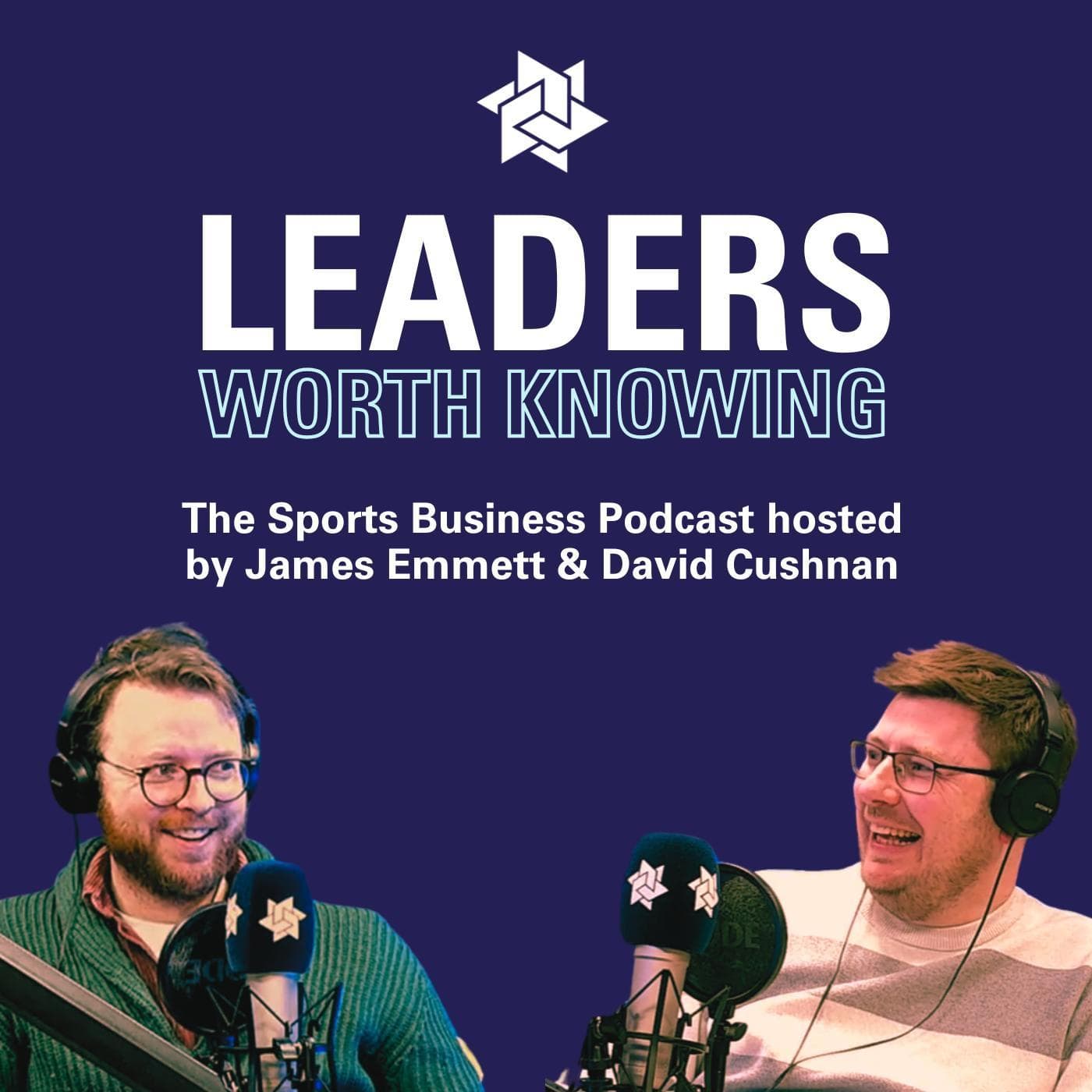
Are we at peak F1? Is the Super Bowl a gig with a sporting support act? Is the IOC's TOP model fit for purpose?
Hosts
- James Emmett - Editorial Director
- David Cushnan - Content Director
Episode Highlights
- The episode explores the state of Formula 1 (F1) with a focus on the upcoming season and significant changes within the sport.
- Discussion includes the Super Bowl's cultural impact and the International Olympic Committee's (IOC) sponsorship model.
---
Key Discussions
- State of Formula 1
- Audience and Commercial Growth:
- F1 has seen significant growth in both audience numbers and commercial revenue.
- Teams are benefiting from this growth, experiencing increased sponsorship and improved financial health.
- Rule Changes:
- A major set of rule changes is set to take effect, creating a level playing field theoretically, which allows for broader championship contention.
- Aston Martin, represented by Jeff Slack (Commercial MD), is highlighted as a team with potential for significant improvement.
- Aston Martin's Strategic Changes:
- Adrian Newey, a prominent figure in F1 design, has joined Aston Martin as a technical partner, tasked with designing the 2026 car.
- The episode notes the ambitious plans under Lawrence Stroll to build Aston Martin into a competitive team, leveraging both technical expertise and a new partnership with Honda.
- Super Bowl Overview
- Cultural Significance:
- The Super Bowl has transformed into a global cultural event, increasingly seen as a gig with significant entertainment value overshadowing the actual game.
- Notable halftime performances drive viewership, with a stark contrast in viewership numbers between the halftime shows and game highlights.
- Viewership Statistics:
- Halftime show performances (e.g., Bad Bunny) garner millions of views, far outpacing interest in the game's mechanics and outcomes.
- This raises questions about the future direction of sporting events and their entertainment value.
- IOC's TOP Model
- Financial Performance:
- The IOC's TOP sponsorship revenue has seen a significant drop-off, raising concerns about the effectiveness of its current model.
- Comparisons between years indicate a need for re-evaluation of sponsorship strategies and potential shifts towards localized models.
- Future Challenges:
- As new manufacturers enter F1, maintaining competitiveness and interest could pose challenges, particularly if teams fail to secure winning positions.
- Discussions also touch on the importance of adapting to new market conditions and audience expectations.
- The Future of Sport Events
- Crossover of Sports and Entertainment:
- The episode concludes with reflections on how sports organizations might need to further integrate entertainment elements to engage audiences effectively.
- The need for sports to innovate and respond to changing audience dynamics is emphasized.
---
Key Takeaways
- Growth in Formula 1: The sport's commercial and audience growth is promising, with potential for new championship competitors.
- Super Bowl as Entertainment: The Super Bowl has evolved into a major entertainment fixture, highlighting a need for sports to balance traditional gameplay with entertainment value.
- IOC's Financial Concerns: The IOC's difficulty in maintaining sponsorship revenues suggests a need for a strategic reappraisal of their sponsorship model.
- Future of Sports Events: The integration of entertainment into sports events may be essential for maintaining audience engagement in a shifting cultural landscape.
---
Conclusion This episode provides an insightful examination of the intersection of sports, business, and culture, particularly within the realms of Formula 1, the Super Bowl, and the Olympic movement, emphasizing the evolving landscape of global sports entertainment.
Written by AI. May contain mistakes. Listen to the episode to check what was said.
Chapters
Tap a time to open that second in VOConversations on Personal Updates and Industry Insights
0:36 to 3:16
Casual conversation between hosts about their recent experiences and industry engagements.
“I'm all right, thanks, content director David Cushman.”
Deep Dive into Aston Martin F1 Team
3:16 to 4:50
Discussion on the Aston Martin F1 team's developments and key figures like Adrian Newey.
“They're testing at the moment, aren't they?”
The Future of Formula One and Team Dynamics
4:50 to 8:00
Exploration of the evolving landscape of Formula One and Aston Martin's ambitions.
“slash lower order team could find themselves now?”
Sponsorship Growth and Team Expansion in F1
8:00 to 11:15
Analysis of the growth in sponsorships and team expansions in Formula One.
“Just a few years ago, there was a sort of fragility about having a Formula One racing license.”
The Changing Landscape of Hospitality in F1
11:15 to 12:58
Discussion on the hospitality offerings and their impact on the exclusivity of the experience.
“And we've seen over the last few weeks, Standard Chartered, the latest sponsor of F1 centrally coming in.”
Urban Integration of Formula One Events
12:58 to 14:00
Insights into how Formula One is integrating more urban elements into its events.
“But what it gains, aside from revenue through the tiller, is probably more people being exposed to a positive offering who can feed back and support sponsorship propositions.”
The Growth and Challenges of Formula One
14:00 to 17:40
Explore the current momentum of Formula One and its potential future challenges.
“And that's where a lot of teams are doing at least some of their activating and their guest relations as well.”
Industry News Roundup
18:19 to 20:09
Get the latest updates on partnerships and leadership changes in sports.
“Shall we start with Real Madrid, James, who have signed a partnership with X as the latest rights holder to sign on for an original series.”
Super Bowl as a Cultural Event
20:10 to 27:36
Discuss the Super Bowl's evolution into a major entertainment spectacle beyond sports.
“Well, Lewis Hamilton just mentioned there, he was at one of the big events alongside the Cadillac Formula One car reveal ad.”
IOC's Top Sponsorship Model and Future
27:37 to 28:00
Analyze the effectiveness of the IOC's sponsorship model and its future financial outlook.
“but sponsors were in the fabric of the storytelling and the Olympics in a way that they don't seem to be here.”
Show all 12 chapters
Commercial Viability of the Olympics
28:00 to 30:14
Explore the challenges and changes in Olympic sponsorship revenue.
“to be a commercial Games, I think, unlike any we've seen probably since the Atlanta Games in 1996.”
Shifting Models in Olympic Sponsorship
30:14 to 33:17
Discuss the evolving partnership models and their implications for the IOC.
“Perhaps the model is shifting and the value in Olympic partnership isn't necessarily in the top programme in the way that it once was.”
Transcript
Automatic transcript. May contain errors.0:04James Emmett:Hello and welcome to Worth Knowing, the sports industry podcast from Leaders, where we talk about what's worth knowing in the business of sport this week. I'm James Emmett, the editorial director here at Leaders.
0:16David Cushnan:And I'm content director David Cushnan. On the show this week, we go inside the Aston Martin F1 team on the eve of a new season. We reflect on the Super Bowl and run the rule over some revealing numbers. And we take a quick skate around Milan Cortina and IOC world as the Winter Olympics get underway in Italy. This is Leaders Worth Knowing. Indeed it is. James, how are you? I'm all right, thanks, content director David Cushman. Well, you drifted off script by throwing your own job title into the intro.
0:47James Emmett:Imagine if that's how you've just introduced yourself in general day-to-day circs. Content director david cushman here well it has been known to be honest um i think you've got to get ahead of that do you know what you do sign yourself dc on emails on your sort of friendliest internal emails yeah intimate internal emails occasionally external but that is an accident you know what you could start throwing in if you went with the content director cddc exactly that's what's known in the literary game as chiasmus um how are you david it's nice to be back in person isn't it Have we seen each other?
1:24James Emmett:No, we haven't.
1:25David Cushnan:We haven't seen each other since you got back from Australia. That's right. Flight back okay? Jet lag okay?
1:31James Emmett:All fine. Great. I watched a lot of films.
1:33David Cushnan:And you were chilling out with Shetmates in Brisbane, the content creators, influencers.
1:39James Emmett:Archie and Miles. Lip Sync Kings. Yeah. What a smart pair of lads. 23, 24 years old. and they spoke at our performance event out there in Brisbane and I was sort of chatting with them on stage and off and the coherence with which they were able to talk about and eloquence with which they were able to talk about. Put you to shame. Completely. I was a stuttering, inarticulate mess compared with these relative children but very impressive people and nice to meet them. Very good. Very good. You, David, you've been hanging out with the great and the good in the paddock, it seems. You've been putting content out on this stream, Jeff Slack.
2:24David Cushnan:Yeah. Don't make it sound like I've been putting content out without your permission.
2:27James Emmett:Yeah.
2:27David Cushnan:You didn't ask. I sort of didn't ask. You're in the air. No, Jeff Slack rang up and wanted a chat. So,
2:33James Emmett:I'm always up for a chat with Jeff, who is Managing Director of Commercial and Marketing
2:39David Cushnan:at the Aston Martin F1 team. But -
2:41James Emmett:Jefferson Slack is actually its full name. Correct. There aren't many Jeffersons out there.
2:45David Cushnan:There aren't. Also, I think well known to lots of people in the sports industry through a long career, stint at IMG, ran into Milan for a long time. So he's been around the industry for some time, but for the last five or six years has been working in Formula One as part of this intriguing Aston Martin project as it builds up.
3:06James Emmett:Yes, really interesting interview and really good to get some commercial insight from within the paddock on the eve, pretty much the eve of a new Formula One season. They're testing at the moment, aren't they? A couple of things struck me about this, David. First of all, I do love the way that business and performance in Formula One sort of blend and clearly the sort of outsized importance given by both you, a Formula One fan and commentator, and Jefferson Slack, an insider and employee. and also all the people online who are watching the video of this particular clip, the outsized importance of Adrian Newey to the success of any given Formula One team.
3:46James Emmett:So he is, Adrian Newey, is he now a team principal? Is that right? But he's an aerodynamicist. He's an engineer.
3:52David Cushnan:He is. He's responsible for the design and the concept of the car.
3:58James Emmett:And he's the winningest designer in Formula One, is that right?
4:01David Cushnan:He has, more than any other designer, technical person in F1 history, the most championships, the best track record. Left Red Bull just over a year ago, joined Aston Martin as an equity partner in the team alongside Lawrence Stroll. Initially as a sort of technical partner and has been tasked with designing the concept for the 2026 car, which is this new set of regulations and is a date that everybody in Formula One has marked in their calendars for some years as the moment when there may be an opportunity to reset, to reshuffle the order of the competitive pack.
4:39James Emmett:So having Adrian Neary design your car at the most pivotal point in Formula One's sort of rule-changing history for many years is potentially a game changer in terms of where Aston Martin, a mid-ranking slash lower order team could find themselves now?
4:57David Cushnan:Definitely. And this has been part of the Lawrence Stroll plan. And this has been coming for a number of years, both the rule changes, but this sense that Aston Martin under Lawrence Stroll, billionaire owner, is the building of a super team, essentially. So various component parts in play there. Certainly one, a better, stronger technical team helmed by somebody like Adrian Newey, who is somewhat old school in that He still hand draws a lot of what he designs, but corralling, energising, challenging the technical team, the big technical team that are working at Aston Martin. And Adrian Newey was somewhat surprisingly promoted to team principal role towards the end of last season, I suppose in recognition of the importance of having a technical person at the top of the organisation.
5:46David Cushnan:Although it must be said that he's probably not doing all the jobs that team principals are doing in other teams because they very much want him and need him to concentrate on doing what he's best at, which is design the car, get the performance out of the vehicle. But yes, this has been a project that has also included the construction of this amazing new, enormous facility at Silverstone that now houses the team, having a driver of Fernando Alonso's capability on board and still going and past the team. And Alonso is, what, 44 years old, I think now. He is hanging on and continuing, driven by the prospect of this 2026 rule change and the opportunity that it perhaps opens up.
6:34David Cushnan:Big new technical partnership with Honda, which moves the team from a customer supplier of Mercedes engines to effectively running a works team with Honda, where Honda's sole focus is on Aston Martin. Now, pros and cons to that, because the suspicion is that the Mercedes engine this year will be the one to have. But over the next few years, with that sole focus, the idea at least is for Honda and Aston Martin to build up together as one absolutely aligned unit. So this is all part of the vision, all part of the master plan to try and make the jump between, as you say, finished seventh last year, a midfield team to a team that is competing alongside the teams who will be disappointed if they're not challenging for the championship this year.
7:23David Cushnan:And that's McLaren, Mercedes, Red Bull, Ferrari, and that's through history, status, resources, expectation, recent performance. It's a big leap to get to that. I think there's two teams in Formula One who have the current potential to do that. One is absolutely Aston Martin. The other is in the longer term, potentially Audi, who are now in the sport for the first time, have taken over the Sauber team and have the resources and ambition to probably attempt to make that significant jump into title challengers soon but for aston martin they're a bit further along the journey so this may not be the year he was very clear when i asked him at the end can you win the world championship no we can't but uh they will be looking for a significant uptick in performance and adrian newey has designed the most innovative and very different looking car yeah that we'll see on the grid this does it look fast looks quick so far does look quick testing's underway great um another thing
8:18James Emmett:that struck me um sort of taking a step back and not getting involved in the adrian newy will they won't they win sort of minutiae of it the rising tide of formula one and we've discussed many times on this podcast how well liberty and the team at formula one central formula one office are doing at commercializing and growing the popularity of the sport and the series that rising tide is floating all boats if the boats are the teams. Just a few years ago, there was a sort of fragility about having a Formula One racing license. You know, the teams at the back of the pack would be hanging on, or it seemed like they'd be hanging on from season to season.
9:03James Emmett:Team sponsorship income was hard to come by. Now it seems that they're, I'm sure it's not, you know, a cakewalk to sort of get sponsorship for a Formula One team. And people like Jeff Slack absolutely are worth the money that I'm sure they get paid. But there does seem to be a healthy bounty of team sponsorship available at the moment in Formula One. And likewise, the uptick in the size and scale of these teams as kind of organizations has really gone alongside that.
9:35David Cushnan:Definitely. I mean, Jeff was talking about the ramp up in terms of number of employees over last few years at Aston Martin. I think they're up to around about 1 ,100. And that is now getting onto a par with some of the biggest teams, the Mercedes, the Ferraris. Some of these teams, it's quite hard to understand exactly how many employees are working on the F1 project because all the teams are structured slightly differently. But that's pretty comparable to if you think about a Manchester United, who have obviously been through a process of change within their organization over the last couple of years, but they were up at around about the same number and probably, you know, maybe dipping under a thousand people at this point.
10:17David Cushnan:There's also been this interesting guideline put in, well, regulation put in around the salary cap, the budget cap in Formula One, which has created a situation where teams like Mercedes have actually had to slightly downsize a little bit. And you saw a period where there was some diversification happening over the last few years, Mercedes and Red Bull Racing, deploying resources essentially into other projects and other sports like the America's Cup. Those things not happening so much now as they've sort of righted the ship, no pun intended, to get their employee numbers to a level that works.
10:52David Cushnan:At the same time, and Aston Martin has been in a position where it's been able to increase headcount to get to a point where they're just about on a par. There are smaller teams who have fewer employees, of course, further down the grid. But I think Jeff was also really interesting in terms of how his commercial team has grown at the same time. And you're right, there's huge corporate interests in Formula One at the moment, both at a central level. And we've seen over the last few weeks, Standard Chartered, the latest sponsor of F1 centrally coming in. And there've been some really big deals over the winter across nearly all of the F1 teams.
11:29David Cushnan:New brands coming in. We've seen Google and Mercedes. We've seen Revolut come in as title sponsor of the Audi team. Lots more at slightly lower levels as well. New brands, new categories. Corporate appetite, US corporate appetite for F1 has definitely never been higher. And that creates some competition. And that creates, we sort of touched on, and Jeff doesn't see it as an issue at the moment. But I think it's potentially one to look at on the horizon. There's a challenge in terms of how you service all those partners on site at races. and within your current team structures. So actually, as commercial teams grow, yes, the salespeople will, I'm sure, grow.
12:09David Cushnan:But I think we're going to see account management, client servicing, guest hospitality, guest relations as roles that all increase within these F1 teams.
12:19James Emmett:That was an enjoyable strand of the conversation that you had with him, where you were plugging away at the idea of the paddock club, the hospitality offering in and around Formula One, while it's now doing really well and there's a sort of global standard bearer, there's a risk that it loses its cachet, its exclusivity. And I wonder, and all the teams, it seems, get an allocation, which they, for the Paddock Club, for every race, no doubt Formula One Central also has its own allocation. It seems like tens of thousands of people go through this hospitality offering every race weekend. You're right, it probably is losing its sense of exclusivity.
13:00James Emmett:But what it gains, aside from revenue through the tiller, is probably more people being exposed to a positive offering who can feed back and support sponsorship propositions. So whereas in the past, you might have had your top two or three people from Rolex coming along to this, signed off by Bernie Eccleston, now Rolex, as well as, well, Rolex aren't a sponsor anymore, but, you know, all the sponsors will have much larger allocations for their hospitality offering. They can get all sorts of mid-rankers through who can then support internally on any kind of sponsorship decision and, you know, feeding it back up the chain.
13:44David Cushnan:Definitely. And I think it's a little bit sort of a build on what we were talking about last week in terms of what you're seeing, even at enormous Grand Prix venues, there is actually much more activity happening on the fringe in the cities where races are being held. And that's where a lot of teams are doing at least some of their activating and their guest relations as well. And that might be at hotels or other venues within cities. And it sort of feeds into F1's overall vision for having races that are more centrally located, essentially going where the people already are, i.e. cities. Now, you will always have races that are, particularly in Europe, at traditional circuits like a Silverstone, for example, that are in more rural parts of the country and those have their own characters.
14:34David Cushnan:But you see with the Madrid race coming, certainly Miami, obviously Las Vegas, races in cities do open up opportunities to provide a different kind experience for people over and above popping into the paddock, which is maybe part of the experience, but you're maybe not there for three full days as you might have been in the past. So there's just energy and momentum around Formula One that I've certainly not seen before. And I did ask him what he feels F1 as it goes through this sort of explosion in growth, but I think also transcends traditional F1 fans and becomes, you know, quote, cool, trendy, certainly more mainstream than it has been previously and hits that sort of North American audience.
15:20David Cushnan:What you have to be wary of or what the sport needs to be wary of. And he did talk, I think, quite well about never, ever losing sight for a moment of what fans want and what fans are looking for. And we will see, you know, hear reports about there's potentially a sequel to the movie coming. There's definitely sort of more accessibility in general, access to drivers whose time is very much at a premium, teams, I think, pushing the boundaries and challenging F1 a little bit in terms of what they can do creatively and how they can work within what need to be protected sort of, you know, areas and protected rights.
15:58David Cushnan:So it's an interesting, I had an interesting thought afterwards, which is where's the peak for F1? Are we at peak F1 or is there sort of a higher ceiling? And I'm not sure what the answer is to that.
16:09James Emmett:I think that's probably a higher ceiling where your most prestigious blue ribboned brands are at the top of your sport. And by that, I mean, the ceiling is only when Ferrari are winning again.
16:21David Cushnan:Yeah, perhaps. I mean, one of the challenges, you've got Audi coming in. You've got Cadillac who launched their - Oh, by the way, Cadillac paid for a Super Bowl out there. Correct. And they launched their car livery in a Super Bowl in the fourth quarter. So yeah, they're going at it big. Audi, Cadillac. You have Honda coming back in. You have Ford coming in with Red Bull as a technical partner this year. You have all the existing manufacturers like Ferrari and that's great. And manufacturer interest sort of drives F1 and long term, they've been attracted by the regulations, but obviously the popularity of F1.
Read the full transcript
16:53The challenge always comes after this sort of boom period when individually they each
17:00David Cushnan:sort of realize in their own time that not all of them can win. and that's when you start to get question marks over participation and actually strategic reviews and so we might be in the boom period now and the 2026 regulations have certainly enticed several big big manufacturers into the sport over and above the corporate support but what happens over the next two or three years when it emerges that an aston martin would be one of these brands. When you can't win or you find you're not at the front, at what point does being involved in F1 clash with not winning in F1?
17:37James Emmett:Yeah. A quick break. If you're a future leader in sport, this is for you. Leaders Club is a year-round membership built to accelerate your growth through exclusive workshops, expert-led sessions, and a powerful network of ambitious peers. It's designed to help you build the network and skills modern sport demands, all in a private community where you can learn, test ideas and level up fast. You'll get access to a curated calendar of experiences that sharpen your thinking and expand your network. If you're ready to invest in your career and become part of a community shaping the future of sport, head to leadersclub.com forward slash membership to find out more.
18:18James Emmett:Should we do a little roundup of what's been happening in the industry?
18:22David Cushnan:Let's do that. Shall we start with Real Madrid, James, who have signed a partnership with X as the latest rights holder to sign on for an original series. It's going to be called Real Talk, which is clever, featuring insider access to players.
18:37James Emmett:Tim O'Mahony, they're doing great work at X and following up on a series they've done with Burnley and a few bits and bits. I think they did something with Serena Williams as well. And of course, Ari Emanuel. Indeed, indeed.
18:49David Cushnan:Chinese electric car manufacturer BYD has expanded its European sponsorship footprint. It's become the official car of Manchester City and the Glasgow 2026 Commonwealth Games. You've been a bear on BYD for a while.
19:06James Emmett:Well, yeah, I think it's a good electric car manufacturer. Is it so good as a sponsor, though? I think you'd probably have to ask Peter Silverstone, now at Juventus, who signed them for Arsenal a few years ago. I'm sure times have changed since that deal, though.
19:21David Cushnan:Andrea Gaudenzi has been re-elected as the chair of the ATP until at least 2028, so he will be serving a new term.
19:29James Emmett:Liv Golf has hired Martin Kim as regional managing director for Korea and East Asia and general manager of the newly rebranded Korean Golf Club. Liv had its season opener in Riyadh just this last weekend. AFL team Essendon has appointed Tim Roberts as its new CEO. Dan Chirabrier is Formula E's new CTO. And Lewis Hamilton's former manager, Mark Hines, has joined Cadillac F1, the previously mentioned Cadillac F1, as chief racing officer.
20:04David Cushnan:Yes, a few interesting moves from across the industry. James, we should probably just spend a few minutes reflecting on a couple of big events happening that you might have heard about.
20:13James Emmett:Well, Lewis Hamilton just mentioned there, he was at one of the big events alongside the Cadillac Formula One car reveal ad. Well, alongside Kim Kardashian as well. Yeah, it turns out, yeah.
20:24David Cushnan:It was a Super Bowl, wasn't it? Super Bowl. Now, what number Super Bowl was it? It's quite hard with the Roman numerals, isn't it? I don't know. Anyway, the game was, I think by all accounts, not a classic. 60? 60. The event itself continues to be a remarkable sort of genuine sort of week-long combination of sports event, yes, party, social scene, business forum, high-level get-together, sponsor activation, various fan events, NFL showcase, crucible for NFL announcements of various types, Roger Goodell's state of the NFL press conference. and it turns out a big old halftime show.
21:11James Emmett:Yeah. I mean, it's an NFL sort of, they've become specialists at the flood the zone strategy for the week leading up to the Super Bowl. It's obviously an absolute treasure trove of activity, of industry activity. Everyone competes to have the best parties around the Super Bowl. I think probably, not that I was there, but snooping from the sidelines, I think probably the Fanatics party or Michael Rubin's party seem to be certainly the most glitzy, the best attended in terms of star power and influence. Although authentic brands seem to do something pretty star studded as well. I think we all know that the halftime show is absolutely integral to the Super Bowl now.
21:57James Emmett:But it did strike me this year, both from a personal level and also looking at some of the figures, that this game, the Super Bowl, is really it's a gig and not a game. And the way that it has become globally resonant is through interest in the halftime show, not in the game itself, nor not in the mechanics, the detail, the passes, the touchdowns on the pitch, nor who wins and what it means. but really the impact of the event of the halftime show. Personally, in the lead up to the Super Bowl, all of my social media feeds absolutely flooded with bad bunny stuff. And I like sport, David. I follow a lot of sports stuff.
22:42James Emmett:They weren't flooded with Seattle Seahawks and New England Patriots content. They were flooded with bad bunny content. We are now talking on the Wednesday following the Super Bowl on the Sunday, at the time of recording, the Bad Bunny halftime show video on YouTube, the official video, has 67 million views. The highlights of the game on the same NFL official YouTube, 5.7 million. And I would say that is roughly proportionate to how, to the importance of those two things. And actually, in digging around for these numbers, And of course, those numbers will be absolutely amplified, multiplied by many, many, many across other social platforms with clips, etc.
23:29James Emmett:You just dug around on YouTube. I just dug around on YouTube. That's it. I went to the original official source. Right. So arranging the NFL's top videos on YouTube by number of views. Do you want to guess what's number one?
23:43David Cushnan:It's probably the Snoop Dogg halftime show, isn't it? It is. From LA.
23:47James Emmett:It is the Snoop Dogg halftime show. Yeah, 384 million views. The second, Shakira and JLo's halftime show, 336 million views. The third, Rihanna's halftime show, 298 million views. And it goes on like this. Bad Bunny is the 10th most watched video on the NFL's YouTube channel. All of those above him are halftime shows. And it continues. And it is not until you get down until like 15th or 16th where you're getting any actual football. And yeah, that is just completely illustrative of where the popular global impact comes from here.
24:33David Cushnan:Well, I saw you were doing that, James, and I decided to do the same, but looking at the Olympics official YouTube channel, the IOC's channel. So 16 million subscribers to this one. And I looked up the all time video views on there and it's slightly less pronounced in that there's definite sports action in the top 10. Most watched videos on that channel, Usain Bolt winning the 100 metres gold at London 2012, for example, a couple of figure skating and gymnastics performances. But the top four most viewed videos on the Olympics channel are number one. Can you guess what number one would be? It's London 2012 opening ceremony.
25:16David Cushnan:142 million views. Mr. Bean performing live.
25:19James Emmett:The Mr. Bean moment. The Mr. Bean and London Symphony Orchestra moment might turn out.
25:23David Cushnan:Number two, 101 million views from eight years ago, which I presume some sort of early AI, if cute babies competed in the Olympic Games. Nice little video there. Then number three, James Bond and the Queen, also London 2012. And then video number four from eight years ago, if cute babies competed in the Winter Olympics. So that's the top four, which again, tells a little bit of a story in terms of the entertainment, a little bit of the pageantry, a little bit of, well, you know, opening ceremonies, pack a punch in a way that highlights of Olympic, great Olympic action doesn't necessarily do. So, yeah, I'm not sure what conclusions we draw there other than we should expect other sports organizers to really lean into this type of content and to actually from a sort of a live point of view, lean into the show, whether that's music or some sort of opening ceremony or fashion or whatever.
26:23To be able to punch on the global
26:27James Emmett:stage, you need to come with a full cultural offering, I would suggest, not just your game. Anyway, you mentioned the Olympics there, David, and to round this episode out, because I really must go for an appointment at the ATP. You've made that sound like it's the sort of dentist. It's a nice thing. It's a nice thing. You're going for a lovely meeting. Winter Olympics, obviously, on. I've been watching a little bit. You've been watching a lot of it. Yeah. I think it looks great. It's great to have a Winter Olympics happening in a, the ski slopes going into a buzzing town. Yes. It looks fantastic.
26:58James Emmett:And the camera shots, I know a lot of them aren't new if you follow winter sports, but they are new in Olympic terms. They're new to a wider non-core audience. And they, again, look great. A lot of the drone stuff. But I was struck by, it doesn't seem so in your face from a sponsorship point of view, as maybe the Paris games came across. Maybe it's just industry chit chat. But I recall in Paris, we were talking a lot about how Louis Vuitton was everywhere, how Samsung had managed to get itself into kind of selfie moments. There was clear, not necessarily overreach, but sponsors were in the fabric of the storytelling and the Olympics in a way that they don't seem to be here.
27:43David Cushnan:Yeah, I think that's true. It's a much smaller event, the Winter Olympics. So we're maybe not seeing as much commercial activity in general around it or as much activation around it. And that could be part of it. Buckle up because we're about to move into LA 2028, which is going to be a commercial Games, I think, unlike any we've seen probably since the Atlanta Games in 1996. But there are just on that commercial sponsorship front, there's a sort of few headwinds brewing, I think, within the IOC. We've obviously had Kirsty Coventry take over as president of the organisation. I thought her speech at the opening ceremony was really impressive, actually, in terms of just continuing to reset the IOC and the Olympic movement as a sports organisation and a sports event organiser, first and foremost, rather than, you know, any sort of wider political body.
28:34David Cushnan:But from a commercial point of view, some fairly striking numbers have come out in the reporting of the IOC's finances at the IOC session, which happened last week in the immediate build-up to the Games.
28:45James Emmett:Yeah. So Alan Abrahamson and his terrific Three Wire Sports blog, is it? He's a veteran Olympic reporter, highlighted the quite severe drop-off in revenue coming from the IOC's much lauded top sponsorship program. So in 2025, this year, the IOC brought in$560 million in top revenues. That is compared with$871.5 million in 2024. That is a$311.5 million drop-off, not insignificant. Now, if you think, well, that's obvious, 2024 was an Olympic year, 2025 was not. Fine. Compare 2025 with 2023. So 2025, again, 560 million. 2023, 739.5 million. So there has been a significant drop off in top sponsorship revenue and that despite the work that Anne-Sophie Vumar in the IOC's commercial marketing department has been doing to try to integrate sponsors into the fabric of the Olympic storytelling process, the live event, without infringing, impinging on the sanctity of the kind of logo-free environment.
30:10James Emmett:to try to eke out a bit of extra value. Perhaps the model is shifting and the value in Olympic partnership isn't necessarily in the top programme in the way that it once was. Perhaps it's just a down moment. Perhaps we'll see more partners come on board or perhaps the sort of local model is the way to go. There's other areas to get value out of the Olympics.
30:35David Cushnan:Yeah, the local model, I think, is going to come into, It's already come into sort of sharp focus as it relates to Los Angeles in a couple of years time in the next Summer Olympics, which will be a gigantified Olympic Games. And already we've seen a very novel move in terms of the local organizing committee proposing and the IOC granting the right for existing naming partners of venues in LA that will be used for the Olympic Games to effectively rebuy the sponsorship for the period of the Olympics. Traditionally, of course, the Olympics would have clean venues and come up with very generic names for venues like SoFi Stadium, for example.
31:19James Emmett:They are great value maximizers, the Americans, aren't they?
31:22David Cushnan:They are. And it's definitely going to be, I imagine if you are a major company who already has naming rights for a particular venue that will host Olympic sports, you are both quite frustrated at having to pay again, but probably quite happy that you have the opportunity to do so and take a bit of ownership. And we're definitely going to see the most outwardly commercial games, I think, for some time as a result of that. Now, whether that's a model that can then be replicated in other host cities, if you think about Brisbane in 2032, not sure. Certainly think Salt Lake City organisers there will be looking at that kind of model, again, back in America for the Winter Olympics in 2034 that are going to be taking place in Utah.
32:13David Cushnan:I think you're right. I think there's a couple of things that probably are happening behind the scenes. And I think for some time, there has been this gentle evolution of the top partnership model, the global model. There's a lot of people who have been involved in the creation of that model who are, I think, still very vocal about its merits and are very, I would say, protective of it as a concept and as a sort of, you know, a pioneering concept in the world of sponsorship and corporate partnerships. But we're many decades on from it being created now. And there is maybe a sense that there is a new and different way to, as you say, both go about that business at that global level, but also give a little bit more freedom and leeway to local organizers.
33:01David Cushnan:I think the thing that the IOC will be incredibly keen to continue to protect, because there's a straightforward answer here in many ways, which is, okay, let's do more branding inside the venues and this sort of clean venue policy that the Olympics has had forever. That to me feels like a step that the IOC would be very reluctant to take unless we get to a situation where the finances are such that it's or and the the lack of potential global partners is such that they're really left with with no option but the numbers are fairly stark and I think we'll have to sort of watch that over the next couple of editions of the games to see what moves are made
33:41James Emmett:there yeah work to be done and i'm sure work being done um let's knock it on the head there david and um say goodbye to all the listeners do you have an extra message for them before we go i just
33:54David Cushnan:say keep well keep doing what you're doing and we'll chat next week stay positive yeah keep us updated yeah okay goodbye bye
From the publisher
James Emmett and David Cushnan look ahead to a new Formula 1 season and another potentially seismic shift in the sport.
With significant gains in audience and commercial growth for the motorsport series in recent years, teams have felt the trickle down benefit, logging their own commercial gains.
With the biggest set of rule changes for over a decade coming into force this season, the playing field - theoretically - has been levelled. At this stage, championship contention is a realistic goal for almost all the teams. One that stands a particularly realistic chance of improvement is Aston Martin, whose commercial MD Jeff Slack is the featured guest on the interview show this week.
James and David reflect on Slack's comments, and take some time to look back on the Super Bowl as well as ahead to the future of the IOC's TOP sponsorship model.
- -- -- -- --
Leaders Week London is moving to Stamford Bridge, home of Chelsea FC. We’ll see you on Wednesday 7th and Thursday 8th October. For more details visit leadersinsport.com/leadersweek