In short
Leaders Worth Knowing Podcast - Episode Summary
Podcast Title
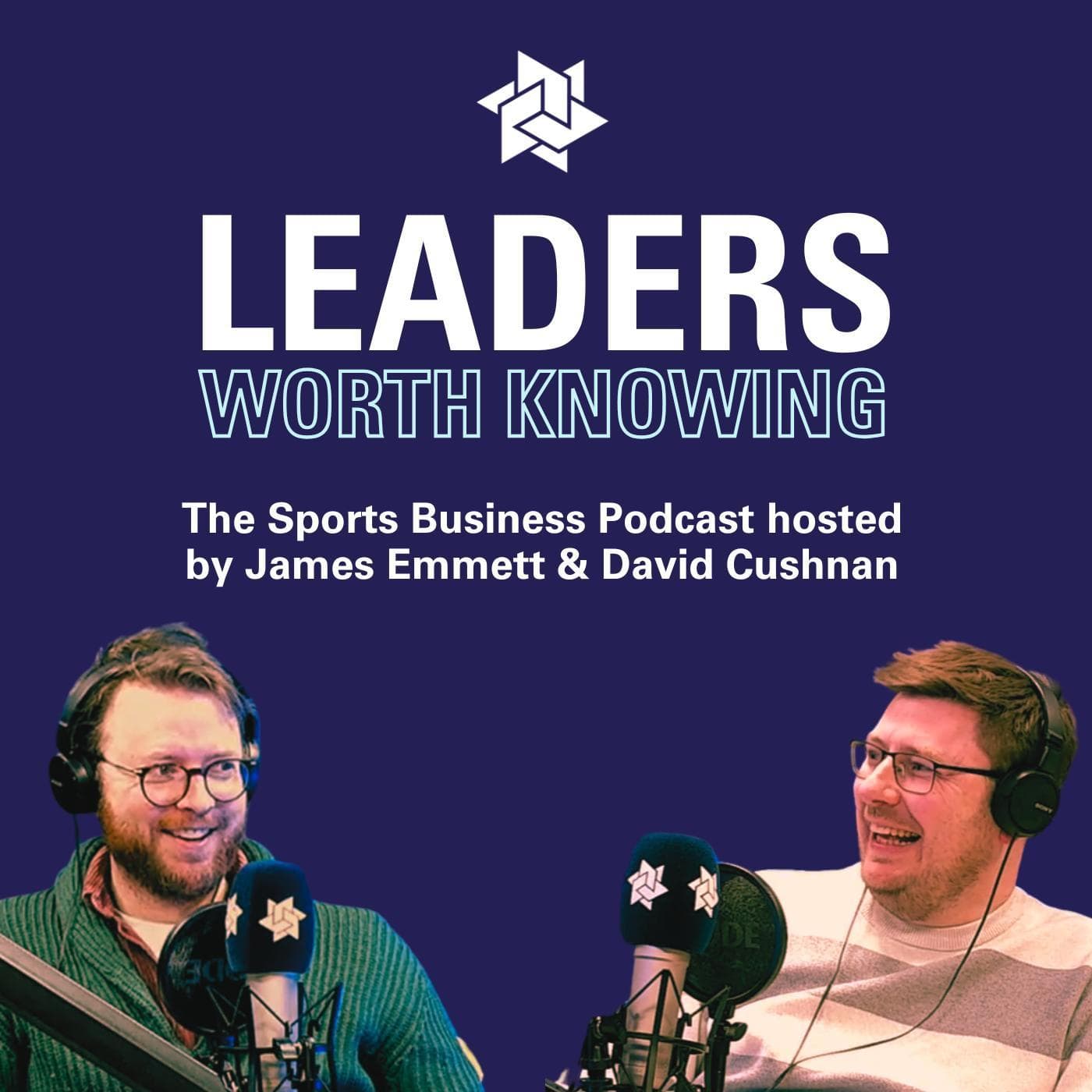
Leaders Worth Knowing Podcast
Podcast Description
The biggest names in the global business of sport sit down with Leaders Editorial Director, James Emmett, and Content Director, David Cushnan.
Episode Title
Behind the Scenes at Leaders
Episode Description
Premier League CEO Richard Masters, NFL Commissioner Roger Goodell, the FA's Director of Women's and Para Football Sue Day, and CBS Creative Producer Pete Radovich are featured guests as David Cushnan and James Emmett, along with Karthi Gnanasegaram, review the final day of the Summit at the 2025 edition of Leaders Week.
---
Introduction
- Hosts: James Emmett and David Cushnan, with guest Karthi Gnanasegaram.
- Setting: Allianz Stadium at Twickenham.
- Context: Recap of the final day of Leaders Week.
Key Highlights and Discussions
Emotional Experiences
- The atmosphere at Leaders Week elicited strong emotions from the attendees.
- James Emmett shares an emotional moment triggered by a storytelling session led by Pete Radovich, a CBS producer.
Day Two Overview
- Notable Speakers:
- Simon Mantle from EY and Richard Masters, CEO of the Premier League.
- Roger Goodell, Commissioner of the NFL.
- The session featured discussions on the business of sports and emotional storytelling.
Richard Masters' Insights
- Premier League Topics:
- Broadcast arrangements and the significance of the new multi-view option on Sky.
- Discussion on ticket prices and the balance between season ticket sales and match-by-match selling.
- Insights into the dynamics of club owners' meetings, highlighting the competitive yet collaborative nature of the Premier League.
- Praised cricket for successfully integrating technology into officiating.
Roger Goodell's Perspective
- Reflected on the evolution of the NFL over the past decade, emphasizing the league's transformation into a significant asset class.
- Discussed the increasing role of private equity and how it has altered perceptions of sports as investments.
- Highlighted the media landscape changes that impact how sports are presented and consumed.
Sue Day on Women in Sports
- Role: Director of Women's and Para Football at the FA.
- Reflected on the success of the recent Women’s Rugby World Cup, noted the significant attendance and growing interest in women's sports.
- Emphasized the importance of visibility for young female athletes and changing societal perceptions.
Pete Radovich's Storytelling
- Explored impactful storytelling in sports broadcasting.
- Discussed his innovative approach to CBS’s Champions League coverage, focusing on creating engaging and viral content.
- Shared insights on the challenge of attracting viewership during non-peak hours and the creative strategies employed to overcome this.
Additional Highlights
- Conversations on food trends at sporting events, with unexpected popularity of Greek dishes.
- Acknowledgment of the broader experience at events, from arrival to departure, and how this influences attendee satisfaction.
Closing Remarks
- The session wrapped up with a look back at the successful partnerships that made Leaders Week possible.
- Emphasis on the need for continued innovation in sports experiences for fans, with a light-hearted nod to the idea of drone-delivered food at stadiums.
- A thank you to partners and attendees, highlighting the community built around Leaders Week.
Key Takeaways
- The significant emotional impact of storytelling in sports.
- The evolving landscape of sports business and investments, particularly in the context of media and technology.
- The importance of representation and growth in women's sports.
- A focus on enhancing the fan experience through innovative strategies and partnerships.
---
This summary encapsulates the engaging discussions and insights shared during a pivotal day at Leaders Week, featuring key figures in the sports industry and their reflections on current trends and future directions.
Written by AI. May contain mistakes. Listen to the episode to check what was said.
Transcript
Automatic transcript. May contain errors.0:03Hello and welcome to another episode of the Leaders Worth Knowing podcast. the podcast from Leaders in Sport about Leaders in Sport. It's just from us at Leaders in Sport. My name is James Emmett. I'm the editorial director here at Leaders and I'm sitting in a spinny chair on a stage that's being deconstructed here at the Allianz Stadium at Twickenham. We've reached the conclusion of the summit at Leaders Week and with me to talk us through what went down today as ever. It's my great good colleague, David Cushman. David, how are you? A bit tired, James, as I think you are. Bring some energy, please.
0:42No, no, no. It's been a hectic, wonderful, emotional two days. And we're here to wrap it all up, aren't we? As you say, things really wind down here and they're poised to take the chairs away. When you said that just now. Stick in that spinny chair. When you said wind down there, I did think about a nice glass of wine. Oh, lovely. Yes. Lovely. And we have another guest with us. It is one of our hosts for the last couple of days, Carthy Njana Seagram. How are you doing, Carthy? Same as David, I think. A little bit tired and emotional after a couple of days. And just some of the videos and things that I've seen and heard makes me quite emotional.
1:21I have actually cried today. I'm glad you did. I very nearly did. I had to hold it together. I have makeup on. Why did you cry, James? Finally, the Iceman cracks. well I came into this room actually this is the creative stage and we had a session on in here and we'll um we'll hear from uh the chap who was doing a little bit later Pete Radovich who is a super producer I would say with CBS um and he runs the Champions League coverage but his he was doing a presentation on impactful storytelling I came in for 10 minutes and I left weeping because I watched one of the he showed a few videos some of the work that he'd done and there was a particular video about the Super Bowl coverage during COVID he did a trailer for it and it was just an amazing piece of work it was absolutely brilliant and again it goes back to exactly what he was talking about which we'll go into later but the concept and the storytelling of that video was spot on and so many people in the room so many men in the room cried.
2:25Do you think it's the atmosphere in here and it's a bit like being on a plane and when you're watching a film, we've talked about this before, that sort of heightened sense of emotion and you find yourself welling up at stuff that you really wouldn't at ground level. Have we created exactly that environment in this, you know, creative stage? It's recycled air, isn't it? I think it is. Lacrimosity syndrome or something. Lacrimosity, what a word. That's really nice. We're all in need of a little bit of fresh air, I think at the end of a busy, busy couple of days. Now, for anybody who hasn't listened to our day one podcast, listen to that for everything that happened on Wednesday.
3:04We are talking, what time is it? It's half past five, Thursday, end of day two. Leaders week is, I think, pretty much officially over after this. This is certainly our last commitment, I believe. But what a day we've had today james and my goodness it started with a bang yeah because we had well it was powerhouse thursday morning wasn't it uh big time um uh before yeah powerhouse uh thursday my favorite speaker today simon mantel from ey how why so uh i just thought he was a stage presence uh content uh And, you know, what a nice man. EY always bring really dynamic people to the stage. I don't know if there's maybe a training module in the EY.
3:52Well, you're not supposed to say EY anymore, don't you? You're supposed to say E, what's the reason? You know, that's the facilitation. I'm not sure I follow. I'm tired and emotional. I thought that as well. I did wonder who did their training because I thought they were exceptional speakers. And they both stood. They owned the stage really well. Yes, there's something in that EY training manual, I think. Anyway. We kicked off the day with a double header, really, on the main stage. The ultimate boss, the top bosses from the Premier League here in the UK, followed by the commissioner of the NFL in the US.
4:33So we had Richard Masters in conversation with Cathy, followed by Roger Goodell in conversation with Neil Reynolds. Quite the way to guarantee that people come back for the second day of a conference. I was pleased that worked. I didn't watch much of those sessions because of the logistics involved in them, but I have some insight from behind the scenes. Well, give us the stuff. Why don't we get what happened on the stage? Well, let's start with Richard Masters, Cathy. And I managed to watch in our overflow area, with some silent headphones. No, that doesn't work, does it? With some headphones.
5:14A silent disco environment. Anyway, I was listening to the audio, watching the screen, and I thought Richard Masters was really quite interesting on a number of things. How was it up on stage? Yeah, it's interesting to know what he sounded like with just the voice, as opposed to seeing his body movements, body language during the conversation. Because he's quite a quiet character. he doesn't give away too much with his facial expressions but again I as you say I think some of what he was saying he's trying not to say this is quite a big thing whereas actually it might be quite a big thing and it was it was very interesting I only really looked at him I didn't look out at the audience just because of the way the chairs were set up so I couldn't see much of the audience reaction normally I quite like being able to look at the crowd a bit but is that something for our ops team Carthy should I put that in the debrief notes I think it was more that I I didn't want to move my eyesight, you know, the eye contact away.
6:08You're playing chicken with him. And if I'd looked at the audience, then I would have taken my eye contact away. I didn't want to do that. I was in the trust zone of the conversation. And it was very interesting because it's a longer chat. Half an hour still flew by. I absolutely disappeared very quickly. But I found it quite amusing the number of people, mostly men, who came up to me since Monday or messaged me to say what they think I should have asked him. But actually... What didn't you ask him, according to the men who came up to you? There were two things that had been mentioned to me that I didn't ask.
6:46One was ticket prices, not the away ticket prices, but home ticket prices and season tickets and the fact that... I didn't really ask him because it's not really his domain and he probably would have just said that's part of something the clubs are in charge of. But is he concerned about the fact that season tickets are getting fewer at most clubs because match-by-match selling is something that's more profitable at the moment. And the other thing was, which I thought was, again, something he could bat away quite easily, was to do with the bigger clubs coming into the League Cup at a later stage.
7:18But a couple of other people had sort of mentioned various things, most of which I was going to ask anyway. And I think it was just a case of, it's a great coup to get him here, to get him talking on stage in front of a live audience. And I think a lot of people thought he was going to announce something very big. And actually, it was just a very nice conversation. Yeah, and it really was. And he had some good lines on some of the big topics that you asked him about, predictably very positive and very bullish about the overall health of the Premier League and why not. But I thought he had some nice lines.
7:50So talked about the new broadcast arrangements in the UK this season and then the multi-view option on Sky and broadcasting multiple matches in the same time slot for the first time in the UK, really. He talked about the clubs investing in transfers and talked about the Premier League quite proudly as having a bigger share of the world's top players than anybody else and talked about the new commercial cycle. I thought he was really interesting on where you talked to him about the, you asked him to take us inside an owners meeting. I think they had one last week and this idea of 20 self-interested parties and he sort of said well look the perception is it's very tense and everybody's arguing and everybody's got their point of view and of course there is a little bit of that but actually it's very convivial he talked about well-intentioned very high quality debates around that table and there's a move obviously it's his job to sort of align the clubs on a common strategy but he said that Ultimately, the Premier League is set up to be competitive and self-interest is a byproduct of that.
9:00So don't worry about that. Just sort of make it work for you. Work with it. I thought that was really interesting. We'll come on to maybe Roger and Richard and their interactions off stage when you bring us the colour from behind the scenes, James. But he did say it was sort of incumbent on somebody in his role to be thinking about and talking to top people in other sports. And he's just come back from the Ryder Cup, where I think he was a guest of NBC. The other thing I thought was really interesting that he said was, and it was just a sort of almost a mention in passing. But I thought it was notable that he called out cricket as the sport that has done the best job of integrating technology into particularly into officiating, but I think generally into the sport.
9:54And he did say sort of football is behind in that area. So he was good on a lot of topics, kicked the boot into FIFA a little bit as well in his sort of dual role as chair of the World Leagues Association and made a point of saying the consultation with UEFA is really good and positive and you can feel that they are listening. But he was equally strong that he's absolutely not feeling that with FIFA. it's interesting what you said carthy and your observation of his body language and how he was as a um you know portraying himself as a leader in an interview in a public interview like that because my impression of him is that he he's definitely evolved as a leader i mean i think he's been um ceo of the premier league for six years now six or seven years six yeah it's nuts really it feels like only yesterday um but i do feel like he is allowing a bit more of his personality to come through in public forums and actually i think i think he's he's quietly a very funny guy uh and and does have quite a large um personality um and i feel like there is a confidence about him now that there maybe wasn't earlier on in the job as CEO.
11:10And that confidence comes from probably having delivered results, right? He is no longer in the shadow of previous Richards. He's got his own results to back it up. And actually, those results come from commercial success. You talked about a few of the talking points, David, we're going to hear a clip now of Richard Masters talking about the oft-referred-to idea of a Premier League D2C offering, a so-called PremFlix. So here is Richard Masters. I'm very much of the view that premium live sport is very valuable to established media entities. and when I became chief executive I was sort of asked the Premflix question and once again for the next three years I think I'm media right sales team are put led by Paul Monner somewhere somewhere in the audience out there and did a fantastic job of securing another three and in some cases six years of deals with media entities and media companies and that is our primary strategy that's not to say that we're not developing our own optionality so you mentioned Premier League Studios so you're right we've been with IMG done a fantastic job for us down at Stockley Park for 20 years Premier League Studios is opening up at Olympia next summer so we're putting ourselves in the supply chain the content supply chain principally to serve our international broadcast partners and so that we have a stronger control over content addressing new audiences but it also gives us the optionality going forward we also have relaunched our digital platforms this summer with the objective of getting close to fans building a bigger relationship with the hundreds of millions of fans Premier League fans that exist around the world so we're stepping towards that optionality but the only thing will ever be and this moment is not on the horizon where there'll be a switch on switch off moment for the Premier League it'll be a mixed economy over time and who knows when that moment will come Richard Masters the CEO of the Premier League who kicked things off on the headline stage this morning Thursday morning at Leaders Week London, swiftly followed onto stage by the Commissioner of the NFL, Roger Goodell.
13:29And James, you were, as I think you hinted out on last night's podcast, deeply involved in the logistics and security around Roger Goodell's arrival and presence with us this morning. I don't want to make it sound like I was, you know, a bodyguard. I heard you were on the security suite. I did do the walkthrough with them, yes. You, unbelievably, were deployed to walk through, to play Roger Goodell. They're walking through his arrivals. But you were there when he, from the moment he got out of his car to the moment he got back in it to... From the moment he woke up this morning. To make his experience a good one, which is what we're all about.
14:14How was he? He was great. He was on good form. He was relaxed, confident, the very model of a top-tier sporting leader, I would suggest. And there was actually a nice moment backstage when Richard Masters had finished his session in the Little Gap as we changed the stage. Before Roger Goodell got on it, they exchanged a few words. And when we'd been in the speaker room beforehand, Richard Masters had warned me, watch out for Roger. And I was like, what do you mean, Richard? He's like, watch out for the tummy tap. It's one of Roger's, well, Richard didn't say this, but it's one of Roger's power moves.
15:00He does a little tummy tap. Did you get a tummy tap? Some people grab a shoulder. Some people, you know, grab an arm. physical contact is an important sort of leadership quality but anyway Roger Goodell apparently does a tummy tap and I was watching for this moment when they met backstage and there was a tummy tap but it was Masters on Goodell not the other way around pre-empting he did that for you I think he probably did do that for me and I enjoyed it very much i enjoyed it very much indeed he's easily pleased yeah easily pleased but it was a nice moment and they i think they know each other very well and um you know share the old moan and groan about the jobs they've got to do which are actually very different when you look at their comparative salaries uh for example indeed and when he was on stage uh yes let's get to the real stuff was um in conversation with uh neil reynolds who's somebody i think he's done a number of these type of conversations with whenever he pops over to the UK or Europe for one of the ever-growing roster of international games.
16:15And in recent weeks, we've heard, as he said again today, I think that the NFL is looking to end up at 16 international games, and that's the vision. And obviously, they've got games in London, including one this weekend. They were in Dublin for the first time last weekend. They've been in Brazil earlier this year. They've just done a deal with Rio to build on that Brazilian presence as well. Madrid is coming up. There's Germany that's now pretty well established. So moving in several markets. Australia as well is happening next season. So clearly a big international focus. And I think that was really the thrust of a large part of the conversation.
16:59what that looks like now, what that could look like, but also how the NFL as this powerhouse organization has evolved over the last 10 years. Yes, absolutely. And we're going to hear a little clip from that session now. Roger Goodell did an event at Leaders 10 years ago, which was part of the storytelling approach to getting him here in the first place. But it was referred to on stage, and it was a nice way for him to reflect back on 10 years of change at the league and 10 years of change in his job and we're going to hear a clip now from the stage where Roger Goodell is identifying what the number one change he thinks has happened is in sport in the last 10 years here's Roger Goodell you spoke at Leeds 10 years ago now I think you were here at this event I think it was This is a very broad ranging question, but how much has the business of sport changed in your opinion in the last decade?
18:01Well, I think it's become more of a, you mentioned the business side, but I think it's become more of an asset class. I mean, I think people look at it differently than they did 10 years ago. We were the last of the leagues to bring private equity into our ownership policies. I think we're just a little bit more than a year now, and I think it's been incredibly successful for us. It's really there to try to give our teams an opportunity for liquidity. But it's brought a different perspective of the business of sport, how your potential for growth. And it's evaluated from that standpoint, from an investment standpoint and an asset class.
18:48And I think that's been a big change ultimately for all of us. Because we look at doing the fundamentals right. Have a great product, market it properly, make sure you give your fans the best experience, have the right media. And those types of things will take care of itself. I still think that's true ultimately. But I also think media has changed dramatically. That's probably the number one thing on my list. The media landscape is changing, not just quickly but dramatically and it's provided opportunities for sports and I think sports have risen now where it is the most valuable content out there and I know that's true in the states and I believe it will be globally if it's not today and streaming has developed a new platform which I think has been great for the NFL I think it will be great for other sports to have that kind of interest and to have that technology We had our game in Brazil was the first game on a global basis on YouTube.
19:50And they bring so many different features to the game, not just the technology and the platform, but the way they present it with influencers and allowing people to experience our game differently than they do on traditional networks. And some of it is a result of the technology. And that's all good for us. So technology is our friend in this case. Roger Goodell, the commissioner of the NFL, one of our big headliners here at Leaders Week London this year. Great to have him with us. Carthy, you were spending most of your time here on the creative stage today, speaking to people, making it all happen up here on stage.
20:31Maybe pick out a highlight or two for us. Were there any particular people, topics that struck a chord? There were lots today. I loved the fact that this is a stage where fashion and music and other areas of sport really collided. And on that note, Cathy, for the listeners, you are wearing a spectacular yellow number. Thank you. In the fashion stakes. I thought you were going to mention my flip flops. Oh, no, no. I mean, David did this podcast shoeless yesterday. We don't mind about that. I have gone from the high heels to flip flops. But you've brought a very colourful splash to proceedings. Well, I do think in, this is going slightly off topic, but when there's a room full of suits and you are both wearing very colourful, very good suits, but usually they are blue and brown and grey.
21:21And so I therefore quite like to add a splash of colour to events. But in terms of this stage, yeah, fantastic conversations. One of them that really stuck out for me was the food area, Freeman's Events Partners, talking about what is the most popular food currently at sports events. Okay. Go. Narrow it down. Sports events generally. I think it was just sports events. It wasn't a specific, might have been Freeman's sports events. Okay. The ones that they work in. And they work in a variety of different sports, right? Nobody got the answer. Is it surprising? Yes. Is it guacamole? No. I used to get emails from the guacamole board.
22:02I mean, you're not even on the right continent, so no. Okay. Is it sushi? No, not the right continent either. Is it a nice cup of bovril? Absolutely not. Burgers and pies were the most common answers in the room at the time. No, you don't want to fall into the... That's the QI, aren't? That's the alarm question, the alarm one. Gobstopper? It's Greek. Oh, Geras? Yeah. Is it really? Yeah. Pitta and Geras? Yep. Nah, really. That's what was said in this, which I thought was fascinating. I can see the logic of it. You can eat it with one hand. Well, you should bring them in next year. It's delicious.
22:40Yeah. It's a sponsorship opportunity. And feels slightly more healthy. So I think that was part of the conversation, moving towards these different trends for food and the whole experience. The Halo experience was discussed. in a pit. That wasn't part of the conversation but the Halo experience of what people are going to want in the future from literally leaving the front door, the experience on the way to an event what happens at the event and on the way back from an event and drones delivering food to your seats. I love that idea personally because then you won't have 15 people walking past you constantly during a match.
23:14Yeah but 30 ,000 drones circling around. I can imagine a tennis match that might not work. Logistically, it feels quite complicated. No, I think it was just the sort of the high-end experience that will be brought into some areas. But I quite liked the idea. Yeah, I absolutely love the idea of who's going to be the first sports team with a stadium. But this all goes back to the Ryder Cup, which has obviously just happened, where tickets included food and drink. And I think that is something that clearly everybody is going to start doing. Who's going to be the first sports team, not to do the drones, but to hire an air traffic controller?
23:53one for next year perhaps what if there's drones I get it I get it if you stop listening James sorry I was thinking about something else do a little spin in your chair I was thinking about sandwiches these do 360 don't they having sat in these chairs and being on this creative stage sorry we had you mentioned the Ryder Cup it has been a it's actually been quite an enjoyable topic of conversation across the well I guess because I'm European Ian. It's been an enjoyable topic of conversation across the few days of Leaders Week. Another topic of conversation that has come up a lot is the Women's Rugby World Cup.
24:33A lot of people are proud of the success of that. And obviously, we are here in the home of rugby. We had another prominent organizer and someone embedded in the initial concept of bringing it over here to the delivery of it. Did we not, David? Yes, we did. Sude was on stage as part of a really fascinating panel session over on the headline stage. Currently, the director of women's and para football at the Football Association and I believe very heavily involved in the England 2035 Women's World Cup bid. There is only one bidder. So, you know, the work is being done to produce the bid that will win.
25:24Imagine losing a one horse race. Well, yes, chickens should not be counted, I guess. But Sue Day replaced, actually replaced Baroness Sue Campbell in that role. And Sue Campbell was here today and well you sues you lose in a job like that don't you I'm gonna ignore that okay um Sue Campbell was here uh recording a podcast that you'll hear the Game Changers podcast with Sue Anstis um at a future date but Sue Day as you say uh previously at the uh RFU and was very much involved in the uh the concept of the Women's World Cup that we've just seen and I think rightly very proud of how it has turned out although she has now moved away but still very connected to the the world of rugby and I think we're going to hear from her.
26:14I don't think we could start Sue without talking about last weekend at Twickenham. You were hugely instrumental in getting the Rugby World Cup to England and a former Red Rose. How special was Saturday? Yeah it's it's it's very very hard to put into words for for for those people who don't know I I am director of women's football at the FA now. I previously had a similar role at the RFU, England Rugby, and used to play quite a long time ago now as a Red Rose. So it's really hard to put into words how special Saturday felt. As a former player, it was just mind-blowing. So there's an old Red Roses WhatsApp group, so nearly all 267 women who played for the Red Roses are on this WhatsApp group, and it lost its collective mind.
27:02for six weeks but then culminating in the fact everyone's ill now, because everyone's been socialising and celebrating. When I started playing, there were about 200, 300 people came to matches. A few years later, gradually growing and growing, and then for there to be 82 ,000 was genuinely mind-blowing. And as a former leader in rugby, it was one of the proudest moments of my entire life, actually. And I mean proud in terms of proud of the sport, proud of World Rugby, proud of England Rugby, proud of the team behind the teams behind the teams who put so much work in to get there. We set a target back in 2020 when an average attendance for an England women's match was about 5 ,000.
27:51We set a target to Phil Twickenham and everybody said, you're absolutely crazy what you're talking about. but the work that so many people have put in to build to that moment is phenomenal. So I felt very, very proud and it really matters, right? Moments like that where stadiums are full and seeing women run around, be powerful and strong, it really matters because it changes the way, generally changes the way people think about what women and girls can be and it changes how everybody perceives women and girls. little boys running around with Sarah Byrne tops and Meg Jones tops. And by the way, Chloe Kelly tops and Leslie Russo tops.
28:31It really matters because those kids grow up just seeing sports people and just seeing sport and believing in women's sport. It was amazing. Sue Day there reflecting on one of the big talking points and topics. And it has been, I think, for the last two or three years across the industry and certainly across Leaders Weeks past. but the continuing development and promotion and commercialization of women's sport. And I think it continues to be a big topic of conversation. I think there are more, and the Women's World Cup is clearly one of them, more real proof points and case studies that real progress is being made.
29:13Now, back to crying, if we may, if that's all right. We started with lacrimosity. There's a link to the World Cup there, I think. Always. um and it's the pete radovich session the cbs uh producer uh who came to talk about impactful storytelling in sport um genuinely i did cry and i did and i looked around the room and there were several crying people did you you noticed some right yes yes there was a there's quite a big bloke here and in the front who was uh okay absolutely streaming i think some of there There were some league managers, not league managers, but international sort of people over here.
29:53There was definitely a gentleman sitting near me who was shedding tears. So Pete Radovich has won 45 Emmys and is absolutely the definitive sports trailer maker. And his defining work is probably a piece that he did with John Malkovich a few years ago. for a divisional playoff game in the NFL. It wasn't even the Super Bowl. Did he show that video? Yes, he did. He did. And again, for people who hadn't seen it, you could see the sort of beginning of it and people just being a bit, okay, okay, whatever. And then it builds into the most fantastic teaser. Yeah, absolutely spine tingling. But he is also the man who is responsible for the breathtakingly successful coverage that CBS produces of the Champions League, where they are the rights holder in the US.
30:52They produce that coverage over here in the UK from Stockley Park and IMG. But Pete is, well, I guess Pete and a little bit Barney Francis at IMG, but it's Pete's vision to do something different with that. And he was explaining in the session, because of the time slot that they have to go into in the US, it's around about two in the afternoon. that these Champions League games tend to happen. There aren't really that many people who are going to watch it live if it's a traditional broadcast. So the fundamental driver behind the idea for that show, and we will have all seen clips from that show, they go viral every week.
31:33It's the Jamie Carragher, Micah Richards, Thierry Henry, Kate Abdo show, basically. The driving idea behind it It was to do something different and to, I think he said, let's make some noise. You know, let's, and it's not everyone's cup of tea, but clearly it is the cup of tea of millions and millions of people on social media worldwide. And we're going to hear from Pete Radovich now on a little bit of the thinking behind that Champions League show. Here is Pete Radovich. So in the last couple of minutes that I have, what I'm going to tell you guys is we had a challenge here. We have a product, the Champions League in America is on on Tuesday afternoon, Wednesday afternoon.
32:15Two o 'clock on Tuesday, two o 'clock on Wednesday. What are people doing on Tuesday, Wednesday at two o 'clock? Not watching sports. And we have it behind a paywall. Now it's Paramount Plus. Back then it was all access. So now, before us, Fox had it for three years. They had it for one cycle, then they got rid of it. Then ESPN had it. They had it for one cycle. And then Turner, then we got it. And the decision was, are we going to do a traditional sports program around this competition? Or are we going to make noise? Or at least attempt to make noise. We got lucky. We got the right crew together.
Read the full transcript
32:50We got the right chemistry. We just did some things that were good at the beginning. And people started paying attention. We started going viral. People started talking about our show. Next thing you know, people are more aware of the games. Next thing you know, UEFA loves us. In the beginning, we were breaking rules with Serie A. we were breaking rules with UEFA, but we had to make some noise. You beg for forgiveness, which I've done a few times with Luigi, but we'll talk about that later. But basically, for the content side of things, like I said, for me, we got to make everyone put their phone down.
33:25That's what we're competing with. So if you're going to come up with an idea, if you're going to come up with something, for me, the whole thing about how to win 45 Emmys, for me, it's never been enough about just like check the boxes. It's always been about how are we going to break through what's going to make people like it, share it, put their phones down, talk about it. The Emmy stuff, whatever, great. If it happens, happens. We haven't won, by the way, a single Emmy for our Champions League coverage. It's the number one thing I'm most proud of in my career. It's not even close. Number one, even though it's not even been nominated for anything for an Emmy.
33:58don't care but the fact that we were able to take an a european sport think about i'm going to give you the flip a european sport an american program and become the biggest hit in the world it would be like having an nfl show in england that everyone in america is envious of it's impossible but we did it because like i said we took chances we cut through and you know we we we did it our way and And that's basically you. CBS Sports, Pete Radovich there, who gave an incredibly dynamic presentation today. I'm looking forward to watching that one back. Cool dude as well. He got denim shirt untucked.
34:36Yeah. I literally had two people message me from the audience saying, this is great. I must get a denim shirt. Oh, yeah. They're back. That was their takeaway from the Pete Radovich section. I've got shallow friends. It is worth saying for anybody who has been here at the summit, We've had multiple things going on at once. It's impossible to watch everything. And in fact, James, in our cases, we've actually seen very little. So we'll be catching up as well. But anybody who was here who has access to the official Leaders app, the hottest app on the internet, can watch every session back in its entirety for, I think, the next couple of weeks.
35:12So there's plenty in there. And we haven't even got to. It's a red hot plug, Dave, that. Yeah, thank you. Get the app if you were a delegate. No, no, if you're a delegate, you'll already have the app, but you can watch everything back. Did I not make that clear? And there's some great stuff. There's some great stuff today. We had Andrei Shevchenko, the Syria ambassador now, but the Ukrainian Football Association president on stage. Darren Cahill, Yannick Sinner's coach, gave a really fantastic insight into how tennis data for both players and coaches is being revolutionized with the help of PIF, who are a sponsor of the ATP now.
35:52and they are making this data bank and data platform available, not just to the elite players, the annexinners of the world and his coaches, but throughout the, I was going to say tennis pyramid, Cathy. You're somebody who works in the world of tennis and pyramid is not the right word, is it? I don't think it is the right word, but. The tennis rankings, down the rankings, yes. I think down to Challenger Level and various others he was saying, wasn't he? Yeah, and it's a really powerful bit of kit and he is palpably excited about the possibilities for it. But there was loads of stuff going on. James Madison showed me what's on his TikTok for you page.
36:31And? Yeah, there has to be more. He took me inside the algorithm. All I'm going to say is we had to restart the podcast. That's coming out soon. You're here next week. Yeah, an edited version. Can I give you an insight as well? I think we're reaching the end here. Very much so. They're literally packing up, Joe. And it's worth saying thank you to everybody here. The lights are still on. Yes, just about. Thank you to everybody who has been around and who said nice things about both the podcast and the last few days. And thank you to everybody for being here. James and I are both part of a leaders staff WhatsApp, which is, you know, in most cases, best worth muting throughout the two days for a lot of minor problems.
37:14And it's just made me chuckle as the derig begins here that we are looking, says one staff member, one colleague of ours, we are also looking for one large tree and three small plants quite urgently. So a lot of chaos happening outside as things get packed away. Can I just thank you for not having a WhatsApp group for everybody else that was part of Leaders Week? Are you not in one of our WhatsApp groups? I'm not in one of your WhatsApp groups. Thank you very much, can I say. Yeah. Here's a parting thought. What should we programme more of next year, Carthy? You've been about experiencing this.
37:50What were you missing? Sounds like we should have a gear off station. Yes, I agree with that. Potential ideas for what people want next year would be good on the app, because I think people come here, they suddenly have an idea of what would be good to hear about this next year. And the quickest place to do that would probably be on your Amazing Leaders app. that's a good idea because we send everyone an email directly afterwards asking for feedback I think you think about it while you're sitting watching something I've really enjoyed and I just think it's getting bigger and bigger and I'm involved outside of sport with classical music areas where I'm talking to them all the time about the it's the experience of the day it's not just the opera or the concert you're going to or the sports event it is about the experience now and I think that that was one of the takeaways from something particularly on the creative stage of just how much is being pushed in that direction.
38:38The upside down pints of pouring your own pints. People absolutely love doing stuff like that. And it makes it quicker, makes the bars quicker. You get more revenue from it. You know, all of those kinds of behind the scenes little things that just make what used to be a 90 minute football game or whatever now an all day experience. And clearly people are going to make more money out of that. And bring on the drones by the sound of it. And the drones. Basically all about food and drink. Yeah, yeah. Now, here's a moment. James, you've done sterling work this week. Congratulations and well done. But you're a bit frazzled.
39:10You're a bit tired. Can you remember, because we're at the point where we've got to thank our five main partners. Can you remember those five main partners at the end of all this? I'll go one and you go one. How's that? Okay. Deloitte. IMG. Genius. Sony. Now I've got the last one. Legends. Legends. Legends. Great. We both had a small moment of panic there. I can see the panic on both of your faces. Thank you to them all. And actually a host of other partners as well who've been a big part of this through the last, well, the last couple of days, but also the last few weeks as well. Yeah, it's been brilliant.
39:50And do you know what? It's six o 'clock, which my mother refers to as wine o 'clock. Six? God, she's good. Yeah, well, I had an interesting... I won't tell you about it. another story where 11 o 'clock was the time that you should start drinking but um let's knock it on the head uh thank you car thank you thank you thank you thank you thank you
From the publisher
Premier League CEO Richard Masters, NFL Commissioner Roger Goodell, the FA's Director of Women's and Para Football Sue Day, and CBS Creative Producer Pete Radovich are the featured guests as Leaders duo David Cushnan and James Emmett are joined by Karthi Gnanasegaram to review the final day of the Summit at the 2025 edition of Leaders Week.