In short
Three US brand executives outline how Walmart, The Home Depot, and Mondelez plan World Cup summer activations in the US, focusing on scale, local engagement, and measuring ROI amid attention-economy and creator-led culture.
Guests and backgrounds
- Alison Kolber, VP Integrated Marketing at The Home Depot; oversees integrated marketing. Home Depot: 2,400+ stores, founded by Ken Langone, Arthur Blank, Bernie Marcus; long soccer ties since 2003 (Mexico) and 2008 (MLS).
- Lauren Flanagan, Head of Global Brands (refreshment categories) at Mondelez; leads Hall’s and Trident. Background includes partnerships and roles on Oreos and Sour Patch Kids.
- Kim Tunick, Head of Brand Experiences and Partnerships at Walmart; builds brand promise “save money and live better” via new experiences. Walmart: 2.2 million associates; 90% of US within 10 miles.
Key claims + examples
- Home Depot: World Cup supporter; sweepstakes trip to the final + $10k gift cards; gift-with-purchase, kids workshops, FanFest/stadium presence; localization by host city; KPIs per activation.
- Mondelez: market-by-market activations (on-pack in Mexico; talent/influencers elsewhere); plan for “spontaneous” culture with guardrails; community management for creator-led moments.
- Walmart: no FIFA rights; uses MLS and La Liga partnerships; watch parties stocked by Walmart; in-store experiences and localized merch; associate pride and feedback-driven learning; focus on capturing attention and building post-World Cup fan legacy.
Written by AI. May contain mistakes. Listen to the episode to check what was said.
Chapters
Tap a time to open that second in VOInsights from the Business of Soccer Event
0:45 to 3:00
David shares his experience and key takeaways from the Business of Soccer event in Atlanta.
“geographically, but also as a revenue generating opportunity.”
Introducing Home Depot and Its World Cup Plans
3:00 to 5:30
Overview of Home Depot's involvement in the World Cup and brand history.
“Could you just give us a sense of the size and scale of Home Depot?”
Home Depot's Sponsorship Strategy
5:30 to 8:00
Discussion on Home Depot's sponsorship approach and community engagement.
“So just, you know, very deep soccer legacy for us.”
Activation Plans for the World Cup
8:00 to 10:10
Alison Kolber outlines Home Depot's detailed activation plans for the World Cup.
“and also get your workforce to be the advocates for not just the sponsorship itself, but sport and soccer and everything that's going to happen in this country over the next few weeks.”
Localization in Sponsorship
10:10 to 12:20
Discussion on how Home Depot is localizing their sponsorship for different markets.
“You talked about the geographical spread of this tournament.”
Collaborating with Other Brands
12:20 to 14:04
Insights on how Home Depot collaborates with other brands for mutual benefits.
“But what I will say is because we have the supporter agreement, we are able to, you know, use the marks and pull that through into everything we've done.”
Enhancing Fan Experience at the World Cup
14:04 to 15:21
Learn how brands plan to optimize the fan experience during the World Cup.
“together and figure out really at the end of the day, how do you make the fan experience as best as possible?”
Debriefing and Learning from the Tournament
15:22 to 17:08
Discover how brands plan to debrief and adapt strategies during the World Cup.
“But at the end of this, typically what kind of debrief process does Home Depot do on what's worked, what's not?”
Color Branding and National Identity
17:09 to 17:59
Explore the significance of color branding in relation to national teams.
“Wish you all the best with the tournament, Alison.”
Understanding Gen Z and Brand Engagement
18:00 to 20:08
Gain insights into how brands are targeting Gen Z and adapting their marketing.
“Tell us a little bit about how Mondelēz looks at Gen Z audiences.”
Show all 19 chapters
Activation Strategies for the World Cup
20:09 to 23:09
Learn about different brand activation strategies during the World Cup.
“And talk a little bit about how Mondelez is approaching the World Cup from an activation standpoint, from a being involved in the conversation standpoint.”
Community Management and Spontaneity
23:10 to 24:23
Understand the importance of community management and spontaneity in marketing.
“We're just a few weeks out now from the start of the tournament.”
Walmart's Approach to World Cup Engagement
24:24 to 25:59
Explore how Walmart engages customers during the World Cup through various strategies.
“Thanks very much for joining me in a dark corner of the Mercedes-Benz Stadium while a session goes on behind us.”
In-Store Activations and Customer Experience
26:00 to 28:01
Learn about Walmart's physical activations and their impact on customer experience.
“And in the US, we exist in nearly every community across the country.”
In-Store Activations for World Cup Excitement
28:01 to 29:11
Explore how Walmart plans to create in-store experiences for the World Cup.
“called good old fashioned in-store physical activations, physical installations, and presumably no company better placed than Walmart to be able to do that at, as you say, some scale.”
Engaging Associates in Sports Partnerships
29:11 to 30:28
Discuss the importance of internal staff engagement during major sports events.
“Not all of them can get tickets, but at the same time, it is opportunities like this, partnerships like your MLS and La Liga partnerships that can be inspiring.”
Building Customer Loyalty Through Sports
30:28 to 32:54
Learn how retailers like Walmart leverage sports partnerships to enhance customer loyalty.
“And you've got Walmart Plus and all the great things that you're doing in that respect to keep nurturing your consumer audience.”
Understanding New Customer Dynamics
32:54 to 34:15
Insights into how Walmart aims to learn from sports partnerships and tap into new fan interests.
“that actually creates new value and isn't just another brand talking to them.”
Looking Beyond the World Cup
34:15 to 35:03
What Walmart plans to do after the World Cup to retain new fans and enhance engagement.
“You know, obviously, everyone here is super excited about World Cup as we are.”
Transcript
Automatic transcript. May contain errors.0:04David Cushnan:Welcome along to another episode of Leaders Worth Knowing, the podcast where we speak to people worth knowing in the global business of sport. I'm David Cushnan, content director round here at Leaders. Just me today. I am just back from Atlanta, where I was at the Business of Soccer last week. our event with Sports Business Journal, Major League Soccer, CONCACAF and US Soccer, examining all aspects of football soccer in the US before, during and after this summer's World Cup. A great few days, amazing guest list. And one thing that really hit me listening in to the conversations on stage, talking to people across the event is just the size and scale of this tournament, geographically, but also as a revenue generating opportunity.
0:52David Cushnan:It is frankly massive. And although a costly and complex exercise, the World Cup is clearly going to be a golden opportunity for US brands of all shapes and sizes from all sorts of sectors to activate during the tournament. They might be directly involved as tournament partners or more tangentially associated to soccer in America. On the show today, you're going to hear three conversations I had with three US-based brand side executives from storied US brands recorded on the sidelines of the event in Atlanta at Mercedes-Benz Stadium last week. We're going to hear about their plans for the summer ahead and beyond as they look at the opportunities for soccer in the United States.
1:39David Cushnan:First up will be Alison Kolber, VP of Integrated Marketing at The Home Depot. Home Depot are an official tournament supporter of the World Cup, but also sponsor the US and Mexican national teams. They've also called on David Beckham to help activate their World Cup sweepstakes initiative. After that, you will hear from Lauren Flanagan, head of global brands in the refreshment categories division at Mondelez International. She looks after brands like Halls and Trident. And then we will hear my chat with Kim Tunick, Head of Brand Experiences and Partnerships at Walmart, retail giant, of course, and a more recent entrance to soccer sponsorship with deals signed in the last year or so to partner Major League Soccer and La Liga.
2:25David Cushnan:Three interesting conversations, three big brands, three great executives. Let's start with Alison Colbert, VP of Integrated Marketing at The Home Depot. Alison Kolber, Vice President of Integrated Marketing at Home Depot. Well, I suppose I should thank you for welcoming me to Atlanta. How are you doing? Welcome. We're so glad you're here. Thrilled to have you. It's great to be here. And this is very much Home Depot country, isn't it? It is. It is. Tell us a little bit about, for those who don't know, we've got an international audience, but probably primarily a UK European audience. I think everybody will be familiar with the name.
3:00David Cushnan:Could you just give us a sense of the size and scale of Home Depot? Absolutely. Absolutely. Home Depot is the largest home improvement brand in the world. Here we have over 2 ,400 stores, the 25th most valuable brand in the world. We were founded by three gentlemen, Ken Langone, Arthur Blank, and Bernie Marcus, who have just been incredible contributors in the Atlanta area as well as nationally. And Arthur Blank, and particularly in the world of sport here in Atlanta, where he's engaged with the Falcons, Atlanta United, and many other teams that we're really proud to call home. But Atlanta is our home since the late 70s.
3:41And we're really proud to be part of this market.
3:43David Cushnan:Arthur Blank has just come off stage. Did you watch him? Of course. Absolutely. He's an outstanding speaker. He is. Some of the advice that he was dishing out about leadership and listening more than talking and his approach to meetings and sitting in meetings. An absolute playbook for anybody in the audience who has got any sort of notions of leadership in almost any sector. Yep, that's for sure. When you look at who Home Depot is as a brand, we have a values wheel that tells us to put our customers first and deliver excellent customer service and that will ensure long-term business success. And he talked a lot about that it is as much about behavior as it is thinking and how you lead.
4:25And he has showcased that over the life of his career. So we looked at him with a lot of admiration still, even since he's left the company. Yes.
4:33David Cushnan:Right. There's a World Cup coming up. There is. We're thrilled. And that will be occupying, I imagine, lots of your time. Just tell us a little bit about Home Depot's actually long history in terms of supporting, partnering with various soccer properties and who you're sponsoring at the moment. Yeah. So Home Depot is very deeply invested in sport and it is soccer, but also college football, also NCAA or collegiate athletics here in the United States. And, you know, that's really about the breakthrough moments that sports offer and that connection to fandom. From a soccer perspective, we have been with the Mexican national team here in the United States since 2003.
5:10We have been with the MLS since 2008. So we had a very long history of soccer allegiance and partnership. And we were really thrilled to be able to bring on our World Cup supporter partnership over a year ago, as well as the national teams for both men's and women's here in the United States with the growth that they've been seeing. So just, you know, very deep soccer legacy for us.
5:33David Cushnan:Now, everybody in this country knows Home Depot. So I suppose it begs the question, why sponsorship at all? Sponsorship for us is more than just the brand recognition, because you're right, everyone knows they know the orange, they know the logo. This is about how do you become relevant and really part of customers' lives. I mean, we know what our customers and our associates, frankly, care about is sports. And there's a lot of diversity and preferences. And it's why we have a broad and diverse sporting portfolio, because we want to be there in the moments that matter and that they feel emotionally connected to.
6:04And that gives us a chance to engage them in that environment, either through their TV or physically, you know, in the stadiums and at FanFest and those types of opportunities.
6:13David Cushnan:So World Cup coming up, tournament supporter, which gives you a bunch of rights that I imagine you're thinking and already sort of rolling out. We are. In all sorts of different ways. Give us the headlines of the activation plan as it is at the moment. When we took the sponsorship on, it was really important to us that we were thinking about how to activate it across the entire company. It needed to be with associates, with our biggest B2B pro customers. It needed to be in the store online and then physically in FanFest and stadiums. So this is the part I could go on for hours about. I'm really excited.
6:45We actually have already begun to roll out some of our in-store activations. We had our big sweepstakes that launched last week. We're giving away a trip to the final, you know, whole luxury experience as well as a$10 ,000 Home Depot gift card to get their backyard ready. So that's already in the hands of our customers. And we're seeing amazing engagement so far. We also are rolling out gift with purchase programs. We've got kids workshops coming to the stores physically. And then, of course, FanFest and activations in every market where there's going to be matches, as well as even some programming and more B2B customer hosting, even for markets where there aren't matches, where we know our customers are still excited and they want to be engaged.
7:27So our plans are big and broad and they're already starting to come to market now.
7:31David Cushnan:We had on stage here at Business of Soccer earlier today, American Airlines. And yesterday we had Hilton. And in both cases, similarly recognizable brands, you know, global in nature, but visibility, not an issue. And actually, in both cases, this idea of internal staff engagement, associate engagement has come to the fore. And I just wonder from a Home Depot point of view, because you've got a lot of people, how you're using this to inspire. and also get your workforce to be the advocates for not just the sponsorship itself, but sport and soccer and everything that's going to happen in this country over the next few weeks.
8:11Yeah, it's been a critical component and actually ties back to when we originally sponsored the Olympics in 96. There is so much associate passion from that sponsorship and partnership. And we still have associates that wear their 96 Olympics pins, if you can believe it, like 30 years later. So it was a big piece of, as we were looking at the World Cup and the ability to unite Mexico, Canada, and the United States. We are the, you know, only large home improvement brand that has all three countries. So even that cross-country unification I thought was super interesting. We actually had our store manager meeting last week where all of our store managers are out and they're really there to learn about the newest products that are coming this year.
8:48What are they, you know, bringing to their customers and just hear from our leadership. And we use the World Cup even as a unifying moment in that. We were able to give a lucky store manager a trip to a match, we were able to explain to them all the things that are coming to their stores. You'll see them all wearing their World Cup branded aprons. If you go in a store, they've all got that World Cup branding. They've got some pins, Atlanta pins that are coming. But it's just been that moment of how do you take it from beyond we're all, you know, people in our stores to unifying something we can all get excited about and rally behind for us as associates and for our customer base.
9:22David Cushnan:What's the plan in terms of measurement? It's the obvious question for anybody who works in this field. And I imagine you're going to have a lot of metrics that are coming at you. Yeah, we've been really purposeful about measurement because we didn't want to get past the tournament and then have to read, hey, was this a success or a failure? Because we have so many components of our plan where we do have our sweepstakes and our gift with purchase and our kids workshops in the FanFest. We've set really clear KPIs around each of those elements. This is how many entries we would like to see. This is how many kids we'd love to attend our workshops, as well as are we moving the brand long term?
9:58Are people seeing us as young, modern and incredibly helpful brand that can help them get what they need to do done inside their homes? So we've already actually started measuring success. And good news is seeing a lot of positive traction already. And we're just excited to keep pushing.
10:13David Cushnan:You talked about the geographical spread of this tournament. And I think everybody, whatever role they have in the tournament is sort of trying to work that out because it's huge in every respect. And I wonder from a brand point of view, as you talked about all your activation plans, I imagine you've got stores in all the host cities. We do. Multiple stores perhaps. Indeed, yeah. How you sort of square up, and if we take just the US component of the tournament, the national moment that this World Cup could be, but also make sure that it's localized enough and you're really working in those host cities in particular, but also the cities where teams have training camps, for example, to make sure that local feel, local culture, local engagement is at its highest.
10:54Yeah, it's interesting because when we were working on our activation, one, we have 23 years we've been activating with College Game Day, which is kind of, you know, in the United States, a really iconic partnership that we're really proud of. So we had this high degree of confidence going in that we could put on an excellent activation. The complexity is in the three countries and in the diversity of cities. And, you know, the United States is such a broad and different country, depending on where you are. There was a lot of debate initially around the activation of do we make it feel like the market that we're in or do we make it feel like something that that market isn't used to?
11:31And what you will see is a really unique geographical bent. I mean, we're a company of live goods and patio and making homes feel like home. And so you will see the localization actually pulled through into the FanFest in those markets where Miami's activation looks and feels like Miami. The home feels like Miami. The plants and live goods fit in Miami. And we wanted to make it really pull through the store into that experience. So we're really happy with where that is going and how that's going to pan out.
12:05David Cushnan:How are you finding working within very defined parameters? And actually, how different are you finding it from any other sponsorship partnership engagement that you might be involved in? I mean, this has been bigger and broader, you know, obviously than some of the past engagements and more regimented and what the approvals process looks like and how we go back and get things done. But what I will say is because we have the supporter agreement, we are able to, you know, use the marks and pull that through into everything we've done. It's not a matter of like how big can you dream it? It's like how much can we actually get done with the time that we have and then how do we prioritize what we're going to go and do?
12:43And we haven't really seen a lot of limitations if we've come up with a good idea. I mean, some things are getting traded back and forth a little bit. But when we have a great idea and at the level of caliber that we like to execute, we have been able to, you know, get that approved and push it forward. So we're feeling really good about that.
12:58David Cushnan:And to what extent have you had the headspace, I suppose, to look at what other partners are doing and maybe exchange ideas? I mean, because that's obviously, if not for this tournament, then for future inspiration, innovation. There's quite a valuable opportunity here if you have time for it, I suppose. No, we have taken a lot of inspiration from some of our partner brands. For example, we have a great relationship with Coca-Cola here in Atlanta. They have been our World Cup partner for a very long time. And so we've been they've been very gracious with like helping us learn and understand what we can do to enhance what we're offering.
13:32Even as we've looked at some of our in-store programming in certain local markets, we will actually have Coca-Cola activations in the parking lots of the Home Depot. And how do we create that broader connection from the customer, from the other partners? But to your point, there's a lot of can we make the time and headspace to actually be together? And then how do we learn from each other? I think we've actually heard from some of our partners that they're excited about the way that we're bringing our sweepstakes to life. and learning from us on, you know, what they could do differently next time.
13:59So the great thing is there's a great community of marketers and partners that want to work together and figure out really at the end of the day, how do you make the fan experience as best as possible? How do you make the customer experience as best as possible and really be additive there? And so everybody wants to trade ideas and like trade shop, which is great.
14:17David Cushnan:And for you personally, what does your World Cup itinerary look like? Are you, I presume you're out and about meeting, greeting, what's going to make it most useful and how are you thinking about how you spend your time across what is a lengthy tournament? And as we've talked about, geographically spread tournament, how are you going to prioritize? Yep, that's right. I mean, we're trying to get out early on and make sure we're physically in those fan fests and that the experience that we're delivering to customers and fans is what we expect and make sure we don't need to make any adjustments or modifications early on.
14:45Same for some of our hospitality and hosting programs. Early on, we'll be visiting multiple of those and just making sure, again, that it is really top tier, top notch, which is what Home Depot expects to deliver. Of course, we'll be meeting with other partners while we're there, but we're going to be fast and furious at the beginning of getting our feet under us and just making sure that we're managing through any complications and hiccups. And so that's going to be my early priority that we're hopefully by the end starting to run like a, you know, well oil machine and that the customers who haven't been there yet are and are seeing this for the first time are just as delighted as, you know, they can be.
15:20David Cushnan:And this is getting ahead of ourselves because there's a long summer ahead. But at the end of this, typically what kind of debrief process does Home Depot do on what's worked, what's not? And what's the sort of timing of that? Do you want to wait until you've got all the data, all the information sometime after the tournament? Or are you a more of a sort of snap debrief person? No, I mean, right now we will be making adjustments in tournament as we go and documenting those. And I think that will be really helpful, even with our programming that we already have in stores. hey, this, you know, online experience isn't looking the way that we want it to document it so that we can move on and do it better the next time.
15:56There's, of course, like, how did we impact the, you know, brain preference and brain intent, especially with our core customer base, there will be a little bit of a lag on that. But we'll be taking kind of the learnings as we go and keeping track of those. And then as we get to the end and understanding how we did with our biggest metrics, and we'll be saying, well, what is the next best opportunity? And how do we really modify apply for the future. But some of these programs we've never run before. And so we are hoping to be able to apply even something like our sweepstakes or our gift with purchase as soon as into our college game day program, which starts in the fall.
16:28So we want to be able to take those learnings after action them and then really bring that into our other sponsorships right away.
16:34David Cushnan:And I was just thinking, orange, is orange the official color or is it a more specific name than that? Or would you just say orange? It's our orange, but yes, there is a color on the color wheel. Okay. I'm just thinking the Dutch national team. I know. We're very aware. There is a golden opportunity for some sort of alignment or, you know, working together to create something quite memorable because the Dutch army come in force. You know that we have talked about that and we haven't actioned on it yet, but maybe that's going to be the fire that lights me to go and solve that problem because it is, it's not a problem, but also an exciting opportunity that we don't want to miss.
17:08David Cushnan:Absolutely. They are fun. They are fun fans. Wish you all the best with the tournament, Alison. Thank you. Thanks for speaking to us. Thank you so much for the time. I appreciate it. Lauren Flanagan is with me. And Lauren, we've just stepped off stage after a session. I'm going to say I very much enjoyed. You can give me your verdict on it in a moment. But great to have you with us at Business of Soccer. How did you find it up there? It was amazing. Thank you so much, David, for having me. I think fellow panelists, awesome, great insights were shared across the board. So great. I really enjoyed myself.
17:38David Cushnan:The challenge was quite large in that we were there to discuss Gen Z and the attention economy, which is an enormous topic and can go off in all sorts of directions. Tell us a little bit about, first of all, your role and then a little bit about how you doing what you do at Mondelez. Now, have I been saying Mondelez wrong for years? No, you've got it perfectly. I mean, actually, that is the way to say it, but I feel like everyone just says colloquially now Mondelez. Okay. All right. Tell us a little bit about how Mondelēz looks at Gen Z audiences. Yes. So the way that we think about Gen Z, and maybe I can tell you a little bit about myself, my role, my relationship to the company, and then a little bit about how we think about Gen Z and specifically how I'm thinking about it for my brands.
18:21So as I mentioned on stage, I'm leading global brand marketing across what we call refreshment categories, which is essentially our gum and refreshing candy portfolio. So for the Americans, we know Hall's is a cough drop, but globally, it is really known as a refreshing candy. So I've been with the organization about 11 years, variety of different roles. Between this role, it's been about two years. And then prior to that was leading all of our partnerships business across Biscuit, got to lead our direct to consumer business, and then many other traditional brand roles before that, mostly on Oreos, Sour Patch Kids, and the like.
18:52So across all of those roles, Gen Z has been super important. And in thinking about the gum category, for example, that category really lost a lot of penetration among young consumers during the pandemic. It was the time when they were really in high school and where that behavior of gum as social currency really would have been established. But because they didn't have that in-person social moment, we actually have basically a generation of folks who didn't develop the habit of chew. So Gen Z and then ultimately Gen Alpha, really important target groups for me and my particular brands and just generally across the snacking landscape.
19:25So when I think about Gen Z, as we talked about a little bit on stage, I think about that as a demographic that's important, but also the fact that it is one of the most diverse generations that we've had in history. So how do we think about reaching them more directly? And it's starting with the psychographics. So finding passion points, finding interests of that group that really resonate, that we can speak to and that we can platform, and then finding the right way for my brand to engage in that most authentically for the purpose of my brand, the fit of my brand, and ultimately the product that I'm selling.
19:53So I like to think about who specifically am I reaching within that? What are they interested in? And what's the role my brand can play within that narrative?
Read the full transcript
20:01David Cushnan:And we were obviously on stage to talk about all of this in relation to the World Cup in particular. Soccer in general, but the World Cup in particular. And talk a little bit about how Mondelez is approaching the World Cup from an activation standpoint, from a being involved in the conversation standpoint. Because from a rights perspective, tell us what you have and you don't have. Again, give us a sense of the approach. Right. Now, it's a great question and super excited about the World Cup. Definitely expecting tons of conversation across all platforms, whether it's social. We're speaking a bit on stage about the conversations in the group chat as well.
20:35So definitely expect there to be a lot of buzz. What works well for brands is, again, finding that right moment for your brand specifically. Like, what is the piece of your brand narrative that fits into what moment? And so for World Cup and thinking about soccer, we are having each market activate their own plans locally. And it really varies across markets. So in Mexico, for example, we have on-pack activation with soccer. We have a couple of markets that are doing talent-led property partnerships as well. So really across the spectrum. And I think the way that each activation has thought about it is really what's the ecosystem and what part of that are we leveraging which piece of the partnership, whether that be league partnerships, whether that be talent deals.
21:15whether that be looking at influencers. So for us, it's really looking across the full landscape, the full ecosystem and thinking about what role the brand can play in those moments, activated at each local level.
21:26David Cushnan:You talked about the need for a plan, which is obvious as you go into something like this and tackling this particular audience group who are complicated, who are nuanced, and there's some distinction around them that you have to be very mindful of as a brand. But you also talked about the spontaneous moments, the memes, the silly things that just take on a life of their own for this audience group across a variety of platforms. What would your advice be for organizations who are looking at their own planning around the World Cup, again, with this younger audience in mind? Because there's probably a danger, isn't there, of trying to do everything.
22:00Yes.
22:01David Cushnan:That is possibly a bad thing. Fully agree with you. And I think it's the point that not every brand has to speak to every moment. And your brand doesn't need to speak to every moment that happens either. That is the great thing about soccer and about everything that we're anticipating with the World's Cup is that there will be a lot of moments that come up in culture. But I think the best thing to do is to plan for the spontaneous. And that sounds a little bit oxymoronic, but it is true. It's going into it with saying, I'll give you an example. For Halls, our brand purpose is helping the world to breathe better.
22:32So for Halls, what are the breathing moments? What's a deep breath moment that happened in culture? And those are the ones that I want to jump into. So I think it's knowing ahead of time what verticals or what moments make the most sense for you to speak to and then choosing those to react to and having a team that's ready. So going into it with a plan, going into it with a set of guardrails for your brand and a set of like pre-approved moments so that you're not waiting for the right like brand level of approval, but you're able to really engage in that moment. So for me, it's all about having that community management plan in place, thinking really strategically about what moments your brand should be speaking to and going after those and maximizing them instead of needing to speak to every moment all the time.
23:10David Cushnan:We're just a few weeks out now from the start of the tournament. Within Mondelez and within the various brands in your purview, how do you feel about the planning process? What's keeping you up at night? It's a great question. I guess what's keeping me up at night is a little bit of what are those unexpected moments. One of the things we talked about on stage was the fact that this is one of the first World Cups where it will really be creator-led and all of those moments happening across screens, the commentary of creators, like being okay with the fact that some of the conversation is going to be led by folks who aren't the brand strategists or aren't the person, you know, designing the creative, but it's the community around it.
23:46So it's, again, thinking how can we be proactive about that and making sure that the moments that we're really getting amplified in culture are the ones that we want to and having the right plan in place from a community management standpoint to ensure that.
23:57David Cushnan:As you look ahead, what's the most exciting aspect of all this for you? Definitely the buzz. I'm looking forward to those moments where, you know, you're in a bar and your team has scored and just that electric kind of sense of feeling and feeling everybody coming together, rooting for their teams, that sense of community and just the electricity that comes from that is something I'm looking forward to. Good stuff. Lauren, great to spend time with you on stage and thanks for joining us on the FogPass. Amazing. Thanks, David. Kim Tunick, Head of Brand Experiences and Partnerships at Walmart. Thanks very much for joining me in a dark corner of the Mercedes-Benz Stadium while a session goes on behind us.
24:35David Cushnan:here at the Business of Soccer. It's great to have you with us. Great to be here. We're actually about to go on stage together in a few minutes' time, but I wanted to get you on the podcast to talk a little bit about Walmart and your various soccer sponsorships. But first of all, just take us through that job title of yours, Head of Brand Experiences and Partnerships. Tell us what that means in practice. Yeah, sure. So my team is responsible for dimensionalizing our brand promise, which is save money and live better for our customers in completely new and different ways. We focus on meeting our customers where they are, but we're also focused on where they're going.
25:11So for us, that's the growth customer. This is the diverse, younger customer who's super digitally savvy. And we want to be where they are, not just to be there, but to actually engage them and add value to their lives and actually help solve friction points for them.
25:29David Cushnan:I absolutely love dimensionalizing as a way of explaining what a brand marketer does. So yes, big plus for that. And tell us a little bit about, I mean, everybody I think listening to this will be aware of Walmart. I don't think brand visibility is necessarily a challenge, even internationally. But for those who are maybe a little bit less familiar, just give us a sense of the size and scale of this business because it is enormous. Yeah, yeah, it is enormous. Well, to start, we have 2.2 million associates. That's a lot to fill in on a sort of all-on-board email, isn't it? Goodness me. Yeah, we have a giant workforce.
26:06And in the US, we exist in nearly every community across the country. So 90 % of the country actually lives within 10 miles of a Walmart. So our scale is quite large.
26:19David Cushnan:Yeah. And from a World Cup perspective, you're approaching this World Cup mainly through this partnership with Major League Soccer, which I think was launched last year. Is that right? That's right. Yeah. Tell us a little bit about how that's going so far and then planning and activating during this World Cup, because like everybody here at this event, everybody is looking to maximize in their own way. Yeah. So what's a constraint, but I think sometimes a constraint really breeds more creativity, of course, is that we don't have FIFA rights. We have a partnership with La Liga and we have a partnership with Major League Soccer.
26:54So the way that we're thinking about how we can actually show up and add value during the World Cup is solving potential pain point for our customers, which is how do you feel like part of it? there's only so many people that can be live watching a wonderful match. So how do we enable those people who are potentially watching at home to feel the energy and to become these major future soccer fans? So we're thinking about, of course, watch parties. And, you know, we're the only retailer who can get you all the things that you need to have a watch party from the TV to the paper towels, to the food, to the beer, all the things.
27:31And how we can actually, again, add value in that moment. And then leveraging our partnerships to, of course, add content scale. And then, of course, we'll be thinking about what this means for stores, because in the host cities, we, of course, have many stores.
27:49David Cushnan:Yes. Let's talk a little bit about I think it's very easy to talk only about what are you doing on social and digital? And that, of course, is critical. And I know that's a big component of what you will be doing as well. But let's talk about what you might called good old fashioned in-store physical activations, physical installations, and presumably no company better placed than Walmart to be able to do that at, as you say, some scale. So in-store is going to be incredibly important for us, again, to give people that feeling of connectivity to all the great energy that's going to be happening around World Cup, especially in those host cities.
28:23So of course, we'll have experiences at stores to make that energy really tangible in those host cities. But outside of that, we will also have a localized approach where we're going to have local merch. You can be sure that the store managers are going to be decked out and super excited to engage customers there too. And then of course, through our partnerships with our suppliers, we're going to have merchandise that is going to be relevant for the moment as well. And the store will feel very energetic and exciting.
28:53David Cushnan:Talked a little bit with Alison from Home Depot about this, but this idea of internal staff, internal associates engagement, I think is one that we as an industry maybe don't talk about enough openly at events like this because, I mean, you talked about 2.2 million associates. Not all of them can get tickets, but at the same time, it is opportunities like this, partnerships like your MLS and La Liga partnerships that can be inspiring. And actually, you're really relying on them to be in store, to be the advocates for this and to bring the energy, transmit the energy to the consumer, presumably.
29:29David Cushnan:So how do you think about the internal piece as you're building, planning, and then rolling out these kind of sponsorships? Yeah. So the thing that is important to remember is we are so new to this sports partnerships. I mean, we just started. Yeah. So we are determining still how to operationalize it really well internally. But what I can say is from our initial engaging of our 2.2 million associates, the response has been so overwhelming. The pride that our associates have because it feels like something they can connect to and something that they can get behind. Those associates that are in the stores are really excited to talk about it.
30:09Even the associates overseas have been reaching out to us, which marketing, the marketing organization that I'm in is U.S. only. We don't have a global marketing org. So it's been incredibly interesting, a huge learning curve for us to learn about all these other teams that have been reaching out nonstop so that we could also collaborate on future opportunities.
30:28David Cushnan:I do think there's something really interesting about major retailers and the way that, and Walmart would be a fantastic example, probably the example of this, about how you engender loyalty in customers and you work really hard to build that loyalty and incentivize. And you've got Walmart Plus and all the great things that you're doing in that respect to keep nurturing your consumer audience. audience. And I think that's something that sports organizations are also striving for when it comes to fans and trying to understand more and more. And we hear a lot in the sports industry about sports organizations, sports teams, the industry in general, being a little bit behind other sectors when it comes to collecting data, interpreting data, and using that data to understand more and customize the fan experience.
31:15David Cushnan:I just wonder, and again, appreciating its early stages in your relationship with MLS and with LaLiga. Do you see opportunities? Do you see synergies in the way that you can talk with those organizations and think about ways to collectively enhance loyalty, incentivize customers? Yeah, absolutely. So as a retailer, we are incredibly data focused, which frankly was difficult when we were drafting up these partnerships. How are we going to prove out the value? How do you prove out the ROI? Because that's something that we can do across everything. Now, I think our partners have felt that from us and we've needed to find innovative ways to measure the partnership.
31:57But really what we're doing is we're creating net new experiences with these partners that gives customers something new and of value that we do know how to measure. So it's not for us just about logos and impressions. And because we are building new experiences, we're able to measure those experiences. But I think what's even more important to hit on is this like attention economy that we live in today, right? Like we're experiencing it as a retailer. Sports industry is experiencing it too. You are losing people's attention. The way that they are ingesting and consuming media and content is wildly changing.
32:34And what we're very focused on as a retailer, and we're bringing this into our partnerships and how we bring them to life is that complete flattening of the funnel and capturing attention and giving people, getting them closer to the thing that they want in that moment is incredibly important. So we always like to say we meet our customers where they are and we engage them in new ways that actually creates new value and isn't just another brand talking to them.
33:00David Cushnan:You're obviously going to be measuring all aspects of these partnerships, well, already measuring all aspects of these partnerships, but through the summer. And it's obviously ongoing engagements. I just wonder, you talked about being new to the sports partnership space. Beyond the numbers, beyond proving out the ROI of these partnerships, what are you hoping to learn over the next few months in particular about the way in which sport works, the way these properties work, the way they operate? And what are you already picking up? We're learning tons. We're learning a lot about our customers. We're, as I mentioned before, always collecting data.
33:36So every event that we've done. We are asking for feedback. We are actively actioning on that feedback because this is a different customer. And it's one thing to try to talk to a customer in a certain way. It's a completely different thing to build net new things for them that actually solves a pain point or removes friction. So in order to do that, we need to understand them deeply. When we first started these partnerships, we did ethnographies. We sat in people's homes. We sat with them while They watched matches. And we're going to continue to do that type of work because for us, again, it's not just about showing up.
34:10And we can't pretend that we understand this evolving customer because they're changing rapidly. Big summer ahead.
34:16David Cushnan:What are you most excited about? You know, obviously, everyone here is super excited about World Cup as we are. But we're really excited for what comes after World Cup. OK. The legacy. The famous legacy that everybody's talking about. That's right. That's right. There's going to be such a new peaked interest in soccer. And how are we, I feel a responsibility as Walmart in this space now to make sure that we're giving this new fan base a way to engage seamlessly with the sport and get them closer, give them more access to the things that they love. So we've got a lot of exciting things that we're planning post World Cup to hopefully bring in and retain all of these new fans.
34:59David Cushnan:The story continues. Kim, thank you ever so much. Thank you.
From the publisher
With the World Cup just a few weeks away, tournament and team sponsors are rolling out activation plans across the United States, Canada and Mexico.
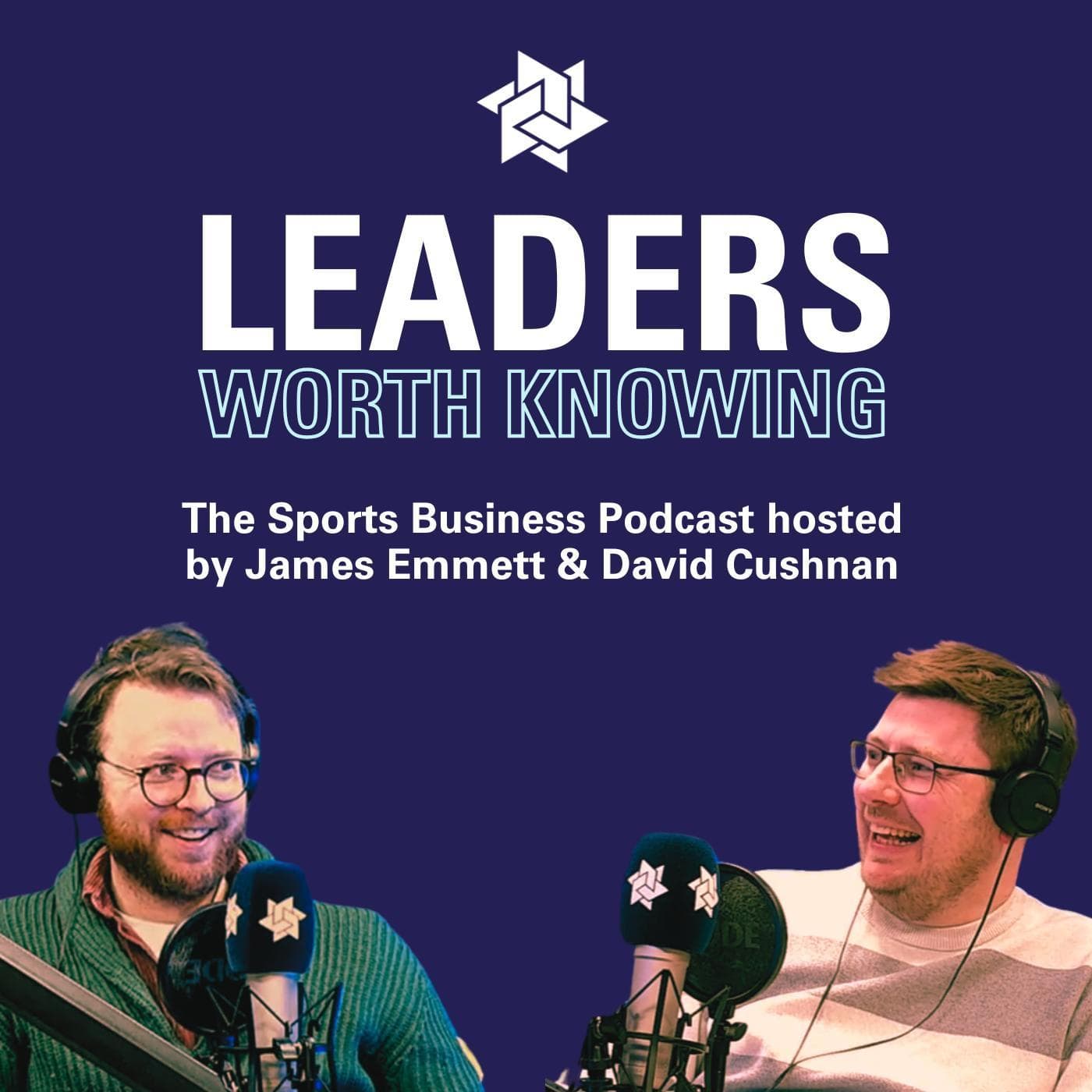
A trio of senior brand executives sat down with David Cushnan, on the sidelines of Sports Business Journal and Leaders’ Business of Soccer event in Atlanta last week, to run through their activation plans, hopes and targets for the upcoming tournament, and consider what happens afterwards.
Allison Kolber is VP Integrated Marketing at The Home Depot, which is an official tournament supporter amongst several soccer sponsorships, and is engaging David Beckham to help promote its World Cup sweepstakes.
Lauren Flanigan, Head of Global Brands, Refreshment Categories at Mondelēz International, looking after brands like Halls and Trident, discusses how she's planning to engage Gen Z consumers during the World Cup.
And Kim Tunick, Head of Brand Experiences and Partnerships at Walmart - a more recent entrant to soccer sponsorship, with deals signed last year to partner Major League Soccer and LaLiga - explains how the retail giant will celebrate the tournament in its stores throughout the country.