In short
Leaders Worth Knowing episode covers: (1) the sports building boom driven by hospitality expansion, (2) Adam Silver’s latest comments on NBA Europe, and (3) major sports events and business updates.
Guests
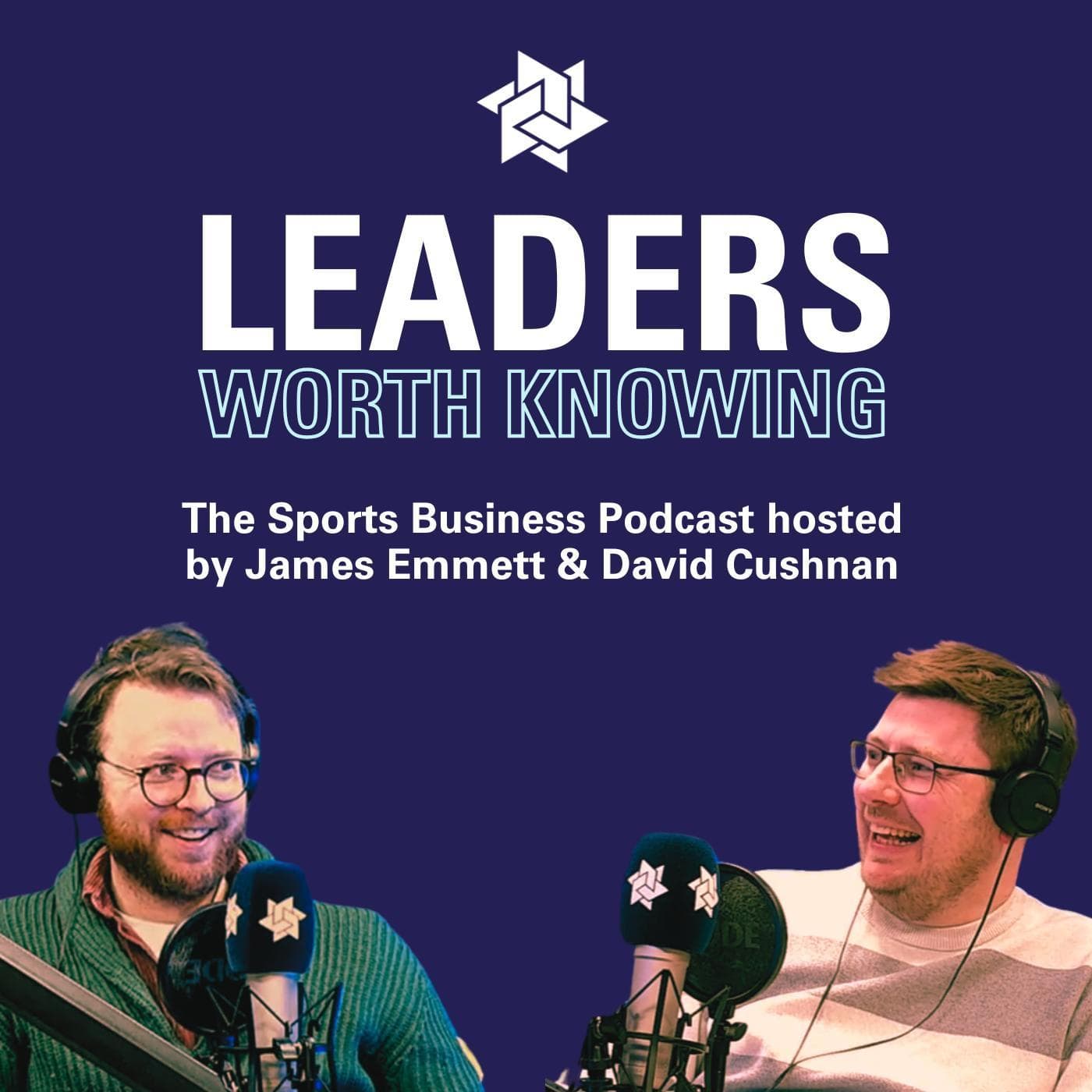
none; it’s hosted by James Emmett and David Cushman.
Key claims
Hospitality is increasingly “premiumized,” with new stadium/arena builds and renovations (e.g., Premier League clubs, US Open’s Arthur Ashe renovation) adding premium clubs and packaging experiences. However, general admission must remain valuable to preserve atmosphere and TV appeal. Adam Silver says NBA Europe progress continues, with EuroLeague talks ongoing and “competition” targeted for next summer, but the initial product may differ from the eventual fully unified league—suggesting complexity may delay the full launch.
Notable examples
Madrid F1 Grand Prix as a hospitality/celebrity test case; Nairobi awarded 2029 World Athletics Championships; Leaders Week London (Oct 7-8).
Written by AI. May contain mistakes. Listen to the episode to check what was said.
Chapters
Tap a time to open that second in VOHosts Dive into Recent Sports Events
0:44 to 1:12
Hosts share experiences from recent sports events they watched.
“where we talk about what's worth knowing in the business of sport this week.”
NFL Down Under: A Successful Event
1:12 to 3:19
Discussion on the NFL game in Australia and its reception.
“I've just done my, this is behind the curtain.”
The Solheim Cup: A Unique Event
3:19 to 4:54
Exploring the Solheim Cup and its media presence.
“Looks just at first glance like the equivalent international game numbers up at least a million viewers on Netflix from last year.”
Match Play in Golf: A Mixed Bag
4:54 to 6:28
Debating the merits and challenges of match play in golf tournaments.
“And I also think match play should be how golf is competed for at the Olympics.”
Madrid Grand Prix: Initial Impressions
6:28 to 8:52
Hosts discuss the new Madrid Grand Prix and its hospitality potential.
“It's just him and Gillian Anderson at the moment.”
Insights from Richard Thompson on Sports Hospitality
8:52 to 11:19
Discussion on trends in sports hospitality with Richard Thompson.
“you know, the size of it was very spread out and it had to be, and there were all sorts of different parts to it.”
Macro Trends Affecting Sports Hospitality
11:19 to 14:00
Exploring broader trends impacting the sports hospitality industry.
“Did you enjoy talking to, do they call him Tomo?”
Macro Trends in Sports Hospitality
14:00 to 17:00
Explore the macroeconomic trends affecting sports hospitality and experiences.
“That's an area that he's really seeing, you know, traction in.”
Premium vs. General Admission Experiences
17:00 to 19:30
Discuss the divide between premium sports experiences and general admission.
“There is building across the US, across the UK.”
The Future of College Sports Venues
19:30 to 22:49
Analyze the upcoming renovations and developments in college sports venues.
“Honestly, it does feel like sports experiences and what is available to you in sports and entertainment is sort of moving towards how airlines carve up their offerings.”
Show all 17 chapters
NBA Europe and Arena Developments
22:49 to 24:08
Discuss the expected developments in NBA Europe and associated arenas.
“I can see a spate of renovations happening where premium seating, premium clubs are built into these historic, amazing venues that don't have a problem selling out across the US college space sometime soon.”
Global Sports Events and Venue Upgrades
24:08 to 25:18
Cover recent news on major sports events and necessary venue upgrades.
“These are going to be modern high-spec arenas fit for modern high-spec revenue targets.”
Innovations in Athletic Event Presentation
25:18 to 28:00
Examine recent innovations and criticisms in the presentation of athletic events.
“effectively replacing Juliet Slott, who left the Chief Commercial Officer role a few weeks ago.”
Concerns Over Predictive Metrics in Sports
28:00 to 29:50
The discussion revolves around the impact of AI-generated predictive metrics in sports and personal preferences for unpredictability in games.
“reality of you know anybody who's got any sort of passing interest in uh athletics and and knew a bit of context about some of the athletes competing.”
Drones and Content Capture in Sports
29:50 to 31:28
Exploration of the growing role of drone pilots in sports content capture and the competitive landscape among organizations.
“I went to the Two Circles Partner Summit last week.”
NBA Europe Plans and Developments
31:28 to 36:25
Insight into NBA Commissioner Adam Silver's recent comments on NBA Europe, including expansion plans and negotiations with EuroLeague.
“And there's an expansion plan for Las Vegas and Seattle, a process that's underway.”
Future of EuroLeague in Relation to NBA
36:25 to 39:48
Discussion on the potential collaboration or competition between EuroLeague and NBA Europe, including its implications for the sports landscape.
“Or does it sit where it is in opposition to this new league?”
Transcript
Automatic transcript. May contain errors.0:01David Cushnan:Before getting into the conversation, here's a quick reminder that Leaders Week London is almost here. On the 7th and 8th of October, the global sports industry will gather at Stamford Bridge for the biggest and most senior gathering in sports business. More than 2 ,000 leaders from over 50 countries and every major league from every major market. Leaders Week London, where global sport does business. And to find out more and to snap up your pass, head to leadersinsport.com forward slash leadersweek. We hope to see you on the 7th and 8th of October.
0:43James Emmett:Hello and welcome to the Leaders Worth Knowing podcast, the sports industry show from Leaders, where we talk about what's worth knowing in the business of sport this week. I'm Leaders Editorial Director James Emmett.
0:53David Cushnan:And I'm David Cushman, the content director on the show this week. Sports great building boom and who it's being built for. Dissecting Adam Silver's latest words on NBA Europe. And Nairobi beats London to the World Athletics Championships. This is Leaders Worth Knowing. Hello, David. Hello, James.
1:11James Emmett:How are you? Really well, thank you. Really well. I've just done my, this is behind the curtain. Your cyber training? No, I've just done my secondhand book swap in the kitchen here at Leaders HQ. Yes, we're literary folk. Do you know what? I've submitted a book about a Sri Lankan cricket writer. Have you? I think you should have a look. Okay, I might head in there after this recording. Yeah. What's going on? Well. You watched the Madrid Grand Prix on the weekend, didn't you?
1:40David Cushnan:Do you know what? I actually had the opportunity to watch quite a bit of sport this weekend. Did you? And I'm going to say I enjoyed most of it because it was a hefty weekend. NFL down under. A little bit of the NFL down under, which looked spectacular, by the way. There is a certain, you've been to Australia. I sure have. There is. The air quality. There's a certain richness to the sunshine as it permeates the screen. I don't know if it's just Netflix's resolution, but it looked great. And I wonder if there is something about the air quality. But famously. Well, there's bio, there's very strict on biodiversity and keeping everything just so.
2:16David Cushnan:So, well, the teams were told, instructed to remove any US-based soil from cleats and equipment as they brought stuff into the country. Don't want US termites. That's why they spray the plains, I guess.
2:33James Emmett:Well, it's also Australia is famously under the hole in the ozone layer. So it's very easy to get sunburned there. But I wonder if that also does something to the quality of the light.
2:44David Cushnan:Don't know, but it looks sensational. Maybe it also helps That it's quite unusual To see an NFL game Happening at 10.30 in the morning So a different A different type of sunshine
2:52James Emmett:It's odd to watch sport When you're not already Half drunk, David Is that what you're saying?
2:58David Cushnan:I'm just saying There was a colour There was a richness To the occasion
3:03James Emmett:There was just a vividness About the whole experience
3:06David Cushnan:Yeah But well done Very good And seemed like Some great TV numbers as well On Netflix And I think the NFL will be Very, very pleased with their first Australian adventure.
3:19James Emmett:Yeah. Looks just at first glance like the equivalent international game numbers up at least a million viewers on Netflix from last year.
3:30David Cushnan:Which was a YouTube game.
3:32James Emmett:Which was on YouTube. Yeah. In the sort of equivalent week. From somewhere else in the world. I think Brazil. That's right. Yes. So, yeah, congrats one and all. Particularly well done to Charlotte Offord and her team out there in Australia and New Zealand, Brett Gosper and the folks running NFL International. And of course, Big Rog, who continues to get it right as commissioner of the NFL.
3:59David Cushnan:Also watched a fair bit of the Solheim Cup. What a tremendous event the Solheim Cup is. And I genuinely think it needs to be given greater media profile. And there's a job to be done for the L.E.T. and the LPGA. IMG are involved as well in developing future editions of the tournament in Europe. Needs some promotion, you say? It needs some greater promotion. Sidney Sweeney on the case. Well, well, well. No, it was terrific entertainment. And it's, you know, it's the same format, the winning format of the Ryder Cup. Is it as leery as the Ryder Cup in terms of the fan involvement? No, it's a different type of fan, I think, on site, but it's no less interesting and compelling for that.
4:54And, you know, that match play format, and it's striking, I think, that at the PGA Tour, Brian Rowlap has sort of, you know, managed to maneuver and get the players who I think in general don't like playing too much match play,
5:09David Cushnan:but get them to a point where the end of seed from 2028, the end of season PGA Tour, the big finale will be a match play competition. I think that's great TV. And I also think match play should be how golf is competed for at the Olympics.
5:26James Emmett:Yeah, doesn't it work? It works as a team format. But don't people say match play, if there's too much of it, runs the risk of your big players. So if you're on the PGA Tour, you really need your big household names to be doing well regularly. they can get catapulted out quite early basically they're out of contention quite early that is
5:49David Cushnan:true and actually with those pga tour changes which we should probably dig into at another time because i think they're quite smart they do seem to have come up with the best of both worlds a bit of the compelling match play magic but also in such a way where i think there'll be a group stage effectively in a sort of you know an initial tournament that will whittle down the the you know I think it's 32 to 16 or something like that. Yeah. So you are getting players not dropping out, never to be seen again in the tournament.
6:23James Emmett:Well, Brian Rolup is actually on my hot list, David, of my target list of people to speak to for this podcast. It's just him and Gillian Anderson at the moment.
6:32David Cushnan:It's a short list, but it's a good list.
6:35James Emmett:Yeah.
6:35David Cushnan:I also watched the first Madrid or the first Grand Prix at the Madring. the new circuit in Madrid. I mean, spectacular event, very boring race. Espectacular. But they looked as though from the TV, they did a super job with putting the thing on. I think Madrid was a hit as a city for F1 and there's obviously a long-term contract there. A bit of work to do on the track itself to encourage a little bit more overtaking, but they had a spectacular crowd. I think it was something like 350 ,000 people over the course of the race weekend. So a very good start on what, as we have talked about, is I think a very strategically important race for F1 in a major European capital.
7:21James Emmett:Now, this should hopefully segue us nicely into the first real item that we have for the podcast today, which is a discussion on sports building boom and how hospitality facilities are central to that building boom. Now, you talked about the Madrid Formula One Grand Prix as a potential new hotspot for high-level entertaining, really, in sports and entertainment circles in European heartland. I haven't seen, maybe I've just got the wrong algorithm, Stoddard, But I haven't yet seen the type of celeb high roller volume of stuff from the Madrid Grand Prix, as you would ordinarily from the Miami Grand Prix, Las Vegas, etc.
8:15James Emmett:All of these American or Monaco or Singapore, where there is a high concentration of people who are quite clearly in hospitality. Have you got a sniff of whether it was a super smart big volume entertainment event?
8:31David Cushnan:Yeah, there were certainly plenty of celebrities there. Obviously, the business folk tend to keep themselves to themselves, maybe a little bit less recognizable. I think it will build. It was a big rush to get the thing built and done. And it's an incredibly complex paddock, the way they've had to set things up, sort of working in between the convention centers. And, you know, one of the observations from the weekend was that the actual scale of the paddock, you know, the size of it was very spread out and it had to be, and there were all sorts of different parts to it. So I think there'll be some tightening up of that.
9:05David Cushnan:From a hospitality standpoint, I think it was clear that Real Madrid in particular really lent in. So Jose Mourinho was present, Jude Bellingham. I think Vinicius Jr. was on the grid as well. So plenty of sort of, you know, celebrities, athletes from other sports in the house. And yeah, I just think it is going to give, I mean, we talked about it last week. It's going to give F1 the opportunity and more freedom and more license to create these kind of high-end bespoke business hospitality guest experiences blend in lots of celebrities in a way that Monaco doesn't allow them to do because there's just physical space restrictions and Monaco works in another way for F1 and you're still going to get loads of high rollers there um this this I think should build I think it was a from that point of view a solid start there's some work to do maybe on the sporting side and the actual track but uh no i think a a useful and valuable addition to the ever expanding f1 calendar and that is a useful um segue into
10:19James Emmett:um a little discussion that we want to have about sports hospitality now you have been busy on the feed david you've just published um a conversation with richard thompson who is the chair of the ECB, but also the chair of Levy UK and Ireland, big sports and entertainment hospitality F &B provider. And he's got a great view of how the sports and entertainment hospitality industry has been developing of late, partly because of his position at Levy. and at the ECB and, you know, cricket execs, no strangers to hospitality because of the length of the time that they have to spend at their sporting events.
11:11James Emmett:But also because he's very tall, David, arguably the tallest person that we've had in the studio. So always got a good view of pretty much everything. Yeah. Did you enjoy talking to, do they call him Tomo?
11:23David Cushnan:I called him Richard. Yes. I didn't want to be too familiar. I really enjoyed talking to Richard. I really like talking to people who have got that kind of depth of experience and they have been there, seen it, done it. And he is an agency man, really, at heart, you know, sold his own talent agency to M &C Saatchi back in 2013, continues to chair M &C Saatchi Sport and Entertainment, has the ECB role. So he's well versed in what makes a great hospitality experience. And it is bringing that experience and also, frankly, that black book of contacts to an organization like Levy and its Liveira offshoot subsidiary.
12:13David Cushnan:That is, I think, the real draw for him in this relatively recent role as chair of that organization. and he was very and this of course is you know part of a series that we've been doing just examining latest trends in sports hospitality and he really returned to some of the themes that that Charlie Buck who we had on a few weeks ago and again a little bit further down the feed was talking about in terms of the the focus areas at the moment and there is you know extraordinarily high-end, ever more bespoke, ever more personalized, ever more crafted and thoughtful hospitality, you know, elite, extreme premium level that is clearly a focus and there's really appetite for.
13:03David Cushnan:Yeah, if you want. And then this idea of general admission plus and giving that sort of entry-level premium packaging to an experience, to a sports event, which they are seeing big traction in and he was really interesting on sort of who is who is buying that sort of stuff at the moment and he is seeing real appetite amongst brands and these sorts of levels of access and experience being uh packaged up baked into activation deals more so than he has seen in a long time. But he also talks about the internal teams, hospitality being used as a team building experience and seeing that in a world of hybrid work where perhaps workforces don't necessarily meet face to face as often as they once did.
14:00David Cushnan:That's an area that he's really seeing, you know, traction in. And I think what is really, always really interesting when you're talking to a chair versus a chief executive is they come in and they are there, you know, it's experience and expertise, but it is the helicopter view. It's being able to sort of take the proverbial step back, be able to look at a sector, look at an, you know, look at an organization, think about the longer term trends, the macro trends that might impact the space. And in sports hospitality, there's clearly macro economic trends that he is absolutely keeping an eye on thinking about.
14:42David Cushnan:It is understanding how agencies are thinking and working and how they're viewing hospitality. He even talked about things like keeping a real eye in terms of the actual offering on GLP medication, weight loss medication and the impact that as a much broader trend might have on what you serve, the amount you serve, the level of alcohol you build into your packaging, which did make me think actually of the spate of news stories about a year ago when it emerged that both Roger Goodell and Adam Silver, and I think they were asked about it independently said that they were very much keeping their eye or the organizations were keeping their eye on supersonic travel and supersonic jets and how that technology was developing with a view to decades down the line, how that might have an impact ultimately on the NFL having a team in London or what the NBA does internationally.
15:43David Cushnan:And it's that kind of macro thinking which i always think is fascinating and richard provided a a good a good dollop of that
15:50James Emmett:in the conversation i think teleportation is really the technology that they need to be keeping an eye on david i don't believe the nfl will have a team uh full time in europe until teleportation you're going on the record to state that yeah but this this um this trend which really is um is an international trend you know it's it's sweeping across the US the UK and Europe and sort of the the higher GDP nations around the world for I mean it's a societal trend isn't it for experiences we're living in a in an experience economy where people value experiences over stuff, we're told, and sport and entertainment cottoning onto that and realizing that what they offer is an experience and they can package and primp and plump that experience so that it can be purchased at lots of different levels.
16:53James Emmett:That is a trend that has, as I say, swept across all of these territories in sports and entertainment. We're seeing that trend now being backed up by a spate of building. There is building across the US, across the UK. You wrote in the Leaders Worth Knowing newsletter not too long ago about all of these different Premier League. I think it's about half the Premier League clubs. just under half are either in the process of or about to go through renovation or new building projects and an increase in hospitality inventory is absolutely at the core of almost all of these projects i just got back from the us open where they are in the middle of an 800 million renovation of Arthur Ashe.
17:47James Emmett:Guess what? Most of that is being focused on building up the hospitality areas, introducing nine new premium clubs into that environment. And actually, our colleague at SBJ, Abe Madcore, wrote in his fantastic Sunday newsletter not too long ago, the Sunday Forum, he was talking about a recent trip of his to New York where he'd been asking folks in the sports industry um is is this is has sport become too premium is it too premiumized are we pricing the general public out and focusing on um high-end customers at the expense of the experience of the run-of-the-mill general admission fam the answer across the industry that he received was no there is room for more um but i do think this is going to become the the thing in sport over the next few years the division between the haves and the have-nots in sport um or the focus that is spent on the haves versus the have-nots i do believe that as more and more premium experiences come online as more focus is put on extracting more cash from the richer fans providing more experiences for those fans there will need to be another focus a clear focus on general admission experience how do you keep retain this important backbone of your fan base to provide atmosphere to provide you know uh good tv backdrop for your sporting experience you cannot ignore that as you're focusing on sort of uh the higher end yeah this is going to be the challenge and
19:36David Cushnan:it's also perception it's also perception amongst you know as you put it the have not you know general admission holders that they are um they're getting a raw deal versus versus everybody else And you want to feel like your ticket, however much it costs, is providing value for money, however you sort of personally define that. Do you know what?
Read the full transcript
20:00James Emmett:Honestly, it does feel like sports experiences and what is available to you in sports and entertainment is sort of moving towards how airlines carve up their offerings. Increasingly, it feels like, and we've been told for many years that the front of the plane, you know, the small segment of the front of the plane pays for the back of the plane. and increasingly it feels like when you travel at the back, David, your experience is being diminished deliberately to make you feel like this is not a place that you want to be. As a, partly as a sales technique. Exactly. And maybe we've seen, you know, it's all sort of behavioral psychology, but maybe going super cheap is the option.
20:48James Emmett:You know, low cost airlines, Ryanair, EasyJet, etc. are popular because people believe they are paying a super cheap rate for a super cheap experience. Because as you say, the have-nots, the super cheap tickets, the general admission pass holders, largely speaking, they are your atmosphere.
21:08David Cushnan:That is what, to some extent at least, the hospitality crowd are buying into attending and being part of. But you do need that. You need that core of fans. And, you know, again, you have to be careful that it doesn't just feel like nostalgia and pining for, quote, the good old days. But, you know, people talk about atmospheres in the Premier League at stadiums. People talk about, you know, we talked about, we touched on it in a slightly different way with the tennis last week. You know, if you remove the, you know, the A section of general admission fans and bring in a hospitality crowd, there is just a reality.
21:49David Cushnan:you are not going to get the same atmosphere. And it's that atmosphere to some extent that the hospitality crowd are paying for, but also that your broadcasters are looking for, as you say, to be the backdrop, to be part of the fabric of the event, because it comes back to what I said, I think last week, which is personally speaking, I'm sure the same is for you. I'm less inclined to watch something on TV if it's being played out in front of empty seats or it just looks as
22:13James Emmett:though the atmosphere is dead absolutely um another area of um building boom to come prediction here uh is in the college venue space in the u.s with the um adoption of nil um the fact that college players are now paid the colleges themselves are seeking out revenue generation opportunities and And that is one area of the American sports business, college venues that hasn't been developed at quite the same rate as professional venues. I can see a spate of renovations happening where premium seating, premium clubs are built into these historic, amazing venues that don't have a problem selling out across the US college space sometime soon.
23:06David Cushnan:And similarly, a league to watch here is probably the Indian Premier League as a series of very historic, in some cases, sort of venues lacking in, you know, sometimes basic facilities, but certainly not up to sort of standards of elsewhere in the world are renovated or rebuilt, particularly as foreign money maybe starts to come into the IPL. You know, David Blitzer buying into the RCB, Royal Challengers, Bangalore, is to some extent at least a bet on stadium facilities, ultimately hospitality.
23:54James Emmett:Yeah, the next wave of growth in the IPL for sure. Another place to watch this nascent NBA Europe and the wave of arena development that will no doubt happen around that. These are going to be modern high-spec arenas fit for modern high-spec revenue targets.
24:15David Cushnan:More on that in a moment.
24:17James Emmett:Yeah. Shall we see what else is happening around the grounds?
24:20David Cushnan:Yes. Can I bring you news, James, that the capital of Kenya, Nairobi, has been awarded the 2029 World Athletics Championships with Munich awarded the 2031 edition. So this will be the first time the championships have been held in Africa. And it meant that London, who bid for the 2029 championships, have missed out on this occasion. So a significant moment there. And there's going to be another big stadium that's going to require some upgrades for that event. Generale is the new presenting partner of the Davis Cup, having signed a multi-year deal with World Tennis. And Munich and Barcelona will host the UEFA Champions League finals in 2028 and 2029, respectively.
25:08David Cushnan:Good week for Munich, with Lyon's OL Stadium and Cardiff hosting the 2028 and 2029 Women's Champions League finals.
25:17James Emmett:Omar Shaikh has been promoted by Arsenal to the newly created role of Chief Revenue Officer, effectively replacing Juliet Slott, who left the Chief Commercial Officer role a few weeks ago. Juliet Slott hired Omar Shaikh a few years ago. Ahead of joining us at Leaders Week London in October, of course, second week of October, DAZN CEO Shai Segev has shuffled his C-suite pack, appointing Patrick Delaney as Chief Operating Officer. Alex Gersh as Chief Financial Officer and previous CFO. And Danny Waterman to a new role of Chief Business Officer, responsible for global partnerships, distribution and corporate transactions.
25:59David Cushnan:Former Hilton CMO Mark Weinstein has joined Target as Chief Marketing and Guest Experience Officer. Leah Poulton is the new Managing Director of Women's Cricket at the ECB. And Zach Cleonsis has been named President and Vice-Chairman at Monumental Sports and Entertainment, a newly created position by his dad in which he will oversee financial operations, infrastructure, technology, venues and media businesses. James, did you see any of the Ultimate Athletics at the weekend? I didn't see it, no.
26:33James Emmett:No, it's a shame. I wanted to have a look at that.
26:37David Cushnan:Yeah. How was it? Again, watching snippets of it as a TV viewer. And they promised, of course, a lot of innovation in the way that the events were presented. And it was presented very snazzily indeed, a whole new broadcast package. They clearly thought a lot about the way the stadium was lit, the way the athletes were introduced. Did HBS do that? HPS were involved in the broadcast production. They were. Pink sand for the long jump. Yes. I'm not quite sure what material it was, but a sort of black infield for the field events, which certainly looked different.
27:19James Emmett:I saw, was it a drone following the javelin?
27:22David Cushnan:Yeah, there was a bit of drone. Oh, yes.
27:24James Emmett:There was something following a javelin. It was spectacular.
27:27David Cushnan:Yeah. um so you know innovations changes in presentation depends sort of depends on your definition of innovation i suppose but um a few things to to work on definitely as they as they try and establish this as a as a season ending moment for athletics every other year every year there isn't a world championships um they uh some some i would say uh quite basic uh predicted finish um graphics you know had been word up by ai or whatever um which uh didn't often seem to match the the reality of you know anybody who's got any sort of passing interest in uh athletics and and knew a bit of context about some of the athletes competing.
28:15David Cushnan:So not quite sure where they pulled those numbers from, but something to work on. I personally dislike this sort of trend, this AI generated trend of predicting, you know, graphics that predict for me where somebody's going to finish, you know, what's going to happen next. And, you know, it's definitely permeating all sports and there seems to be a sort of assumption amongst broadcasters and tech providers that this is what the people want and perhaps they do but I'm not sure I do yeah no I'm with you it feels
28:48James Emmett:well first of all it feels like a bleed out from how football is covered but in a slightly different way where I think something like expected goals which has become a sort of blanket metric is quite useful as a shorthand for momentum in the game. You know, if it's nil-nil, but you can see that one team has got a significantly higher expected goals score, you know which way the game is going at a quick glance. But yes, I do worry that the more reductive measurements on expected finish or whatever is a sort of a come-and-get-me plea from the promoter or the rights holder for some kind of betting partnership.
29:34David Cushnan:I think I want to be surprised and thrilled and, you know, I want unpredictable things to happen or I want to be, you know, you know, find something out for myself. I think that's my, I think that's my view.
29:47James Emmett:Yeah, I'm with you. I'm just mentioning drones earlier on the old javelin. I went to the Two Circles Partner Summit last week. Yeah. And from my mind, to my mind, the most intriguing number of many numbers thrown around at that summit was the number 25, David, which is the number of licensed drone pilots that Two Circles has now within its number.
30:15David Cushnan:I love this. And of course, this is a reflection of, you know, content capture. It's where content's going. Yeah. What I feel like I need, and perhaps we send a call out to representatives from rival organizations. I want to know where Two Circles ranks in a league table. So I want to know where Whisper, you know, how many drone operators does Whisper have on its books, etc, etc. Yeah. Yeah. Let's make a league table.
30:42James Emmett:Who, yeah, who can pilot the most drones?
30:44David Cushnan:I just would like to know.
30:45James Emmett:I wonder if it's a company benefit at Two Circles. You know, you get your swag every year. You're forced to go on the mad away days. And also you have the opportunity to do a drone. Oh, to get your license.
31:01David Cushnan:To get your license. I don't think they're allowing people to take drones home like your laptop at the weekend. Well, who knows? Anyway. Who knows? Did you see what Adam Silver said yesterday? Yes, I did. So this is Adam Silver, NBA commissioner, who was fresh out of the latest owners meeting in New York. And he met the press. And there's lots going on in the NBA. And I think it's important for us in Europe to remember that there is stuff going on in the NBA that is absolutely nothing to do with NBA Europe. And there's an expansion plan for Las Vegas and Seattle, a process that's underway. There's the Steve Ballmer, LA Clippers drama as well.
31:43David Cushnan:So lots for Adam Silver to get into, lots for the press to get into with him. But of course, NBA Europe was raised. And essentially, you know, the plan continues. You know, planning, conversations are ongoing. Negotiations are happening with EuroLeague. Adam Silver saying, and I quote, we are making progress there. We believe the league would be strengthened by joining forces with the Euroleague. It doesn't have to happen, but I think we would all be better off as a unified front in Europe. And he went on to talk about the investors and saying that maybe if it were up to some of them, they would wait a little bit longer to launch.
32:30David Cushnan:But he doubled down really on this previous announcement that the NBA made that they would like to launch something in October, 2027 in Europe. He did say, and again, quoting him, I do think it's important we introduce competition into the market next summer. And I think this is the key line from the whole thing though. The initial product you'd likely see in a year from now will be different to when we ultimately have brought all the teams together and are formally operating the league. And that to me reads like the first hint that we are just seeing a slight drawback from the very, very bullish October 2027 date to launch this thing in its entirety, a recognition of how complex it is to pull it all together.
33:16David Cushnan:And he talked about working with investors. They're obviously trying to sell the teams, work out who the teams are, the cities, the arenas in which the teams will play, how salaries work, how the player movement works before you even get to relationship with the EuroLeague and how this FIBA-backed NBA Europe project might come to life in a crowded basketball market in Europe already. But I do think that's the most significant line. Sounds like there's a move towards doing something, but not necessarily doing the entire thing. Do you know what?
33:53James Emmett:Activity at the NBA must be feverish right now, because not only are they in this process of negotiating with the EuroLeague side-by-side with FIBA, negotiating with all of the interested parties in these potential franchises for this NBA Europe competition. They are also ahead of this launch of competition next year, setting up a unit, an administrative unit that can deal with this league. And our understanding is that that would be based here in London. There is a process underway to find a leader of that organisation and all the different functions that you would need to staff up a new top level elite league over here in Europe, all being done behind the scenes and without any public utterance.
34:50James Emmett:What I would say, reading the tea leaves a little bit and sort of interpreting what Adam Silver said yesterday in his press conference, those words came after the latest NBA governor's meeting. and that was the target the 14th and 15th of September was the target for the NBA where they wanted to move these bids for the franchises across Europe they wanted to move these negotiations to contract phase I'm not sure that that has happened certainly in a blanket way I know for a fact that there are that that some are definitely at that point um but it seems to me that what has happened is in the course of these negotiations with potential franchise um holders many of the potential franchise holders are also euro league um clubs and that that negotiation with the euro league is the euro league part of nba europe is it euro league nba europe or is it two separate entities is absolutely critical as the next phase.
36:02James Emmett:The point at which we will know more at this stage is the 5th of October. And really, it is a crucial three weeks leading up to that for Tchuss Bueno, who's the chief executive of the EuroLeague and everyone involved in this entity. Really historic decision pending. Does the EuroLeague get on board the NBA train and join the party? Or does it sit where it is in opposition to this new league? Either way, it will be a historic decision.
36:36David Cushnan:Totally. It's a bit more than that, though, for Euroleague. It's do they go with the NBA in some shape or form? And what that looks like, is it collaboration? Is it acquisition? Is it investment? Is it some sort of joint approach? Or is it Euroleague actually not sitting and doing the same as it has been, but move forward with its own quite dramatic expansion plan, which is to ultimately aim, I think, for 24 teams and a process already underway and in the works to add eight new franchises. So as you say, this is the A fork in the road moment approaching for EuroLeague and its owners, 5th of October in Milan, handily just before Leaders Week London.
37:24David Cushnan:A quote from Adam Silver. Yeah. Adam Silver is a very considered and thoughtful operator and he knows what he wants to say and what he doesn't want to say. But again, I think in the context of just having been in with the owners, everything takes longer than people outside the league would like it to take. But these things are very involved. For us in terms of NBA Europe, we truly see it as a once and forever opportunity. Historic from our standpoint in terms of what this could mean, not just for basketball, but the European sports landscape. And we want to get it right. And I think that's key.
38:01David Cushnan:Our team owners were pleased with the progress, but this will take some more time before we're ready for everything to happen yeah um it is
38:09James Emmett:worth saying so there's in the absence of um clear information from the nba because they're in this
38:16David Cushnan:process this negotiation process it has left a bit of a void it's left a bit of a vacuum which
38:20James Emmett:has naturally been filled by um certainly briefing behind the scenes parties that are not necessarily on board with the idea of there being an NBA Europe. So the information that is being drip fed to interested parties, journalists, et cetera, is not necessarily wholly positive around that. And certainly we've had information from people who've been involved in some aspects of weighing up this proposition that the stated NBA valuation for all these franchises is nowhere near what the real value is um some suggestions that these franchises were were worth um no more than 100 million dollars uh of course that's you know that that's that's all subjective for like nothing is worth uh any more or any less than someone is prepared to pay for it and how people value something is entirely their prerogative which is what i would say to that david
39:24David Cushnan:okay we uh we await developments as i say 5th of october uh for the euro league uh meeting and uh leaders week london could be could be quite newsy this year i think um if we uh maybe uh if we get the timing right or the timing is uh correct um and by the way do secure your pass to leaders week london um 7th 8th of october i think you saw your name on the list james your name popped up on one of the internal chats. I bought my ticket the other day, yeah.
39:51James Emmett:Great. I got a little discount as well. Did you really? Excellent. No, I paid full whack as everyone else does.
39:58David Cushnan:Very good. Very good. Shall we call it a day and return to our preparations for Leaders Week London? Yes, why not? Goodbye.
From the publisher
Adam Silver met the press in New York on Tuesday, delivering a much-anticipated, but brief, status report on NBA Europe. James Emmett and David Cushnan, back in London, examine his comments, as the NBA's ambitious project - the talk of the industry on this side of the Atlantic at least - inches forward, and assess where it might leave Euroleague, which for the moment is moving forward with its own franchise expansion plan.
Elsewhere, they reflect on a series of recent conversations and experiences in the sports hospitality space, and consider how sports organisations should be seeking to balance ultra-premium, high-end offerings with a renewed focus on general admission ticket packaging.
And there's just time to remark on the other big topics of the week: Nairobi nabbing the World Athletics Championships in 2029 from London; Madrid's first F1 event at the Madring; and the innovations brought to life by World Athletics at the first Ultimate Championships in Budapest.
----
Leaders Week London is three weeks away. It’s where global sport does business, so you’ll be in great company. To secure your pass for Stamford Bridge, on Wednesday 7th and Thursday 8th October, visit leadersinsport.com/leadersweek