In short
Leaders Worth Knowing Podcast - Episode Summary
Episode Title
DJ Skee: Sport's Least Likely Entrepreneur on Discovering Kendrick Lamar, Then Selling Snow to a Viking
Guest
- DJ Skee (Scott Keeney) – American artist, television host, radio personality, and entrepreneur known for discovering artists like Kendrick Lamar and pioneering the role of DJs in sports entertainment.
Podcast Hosts
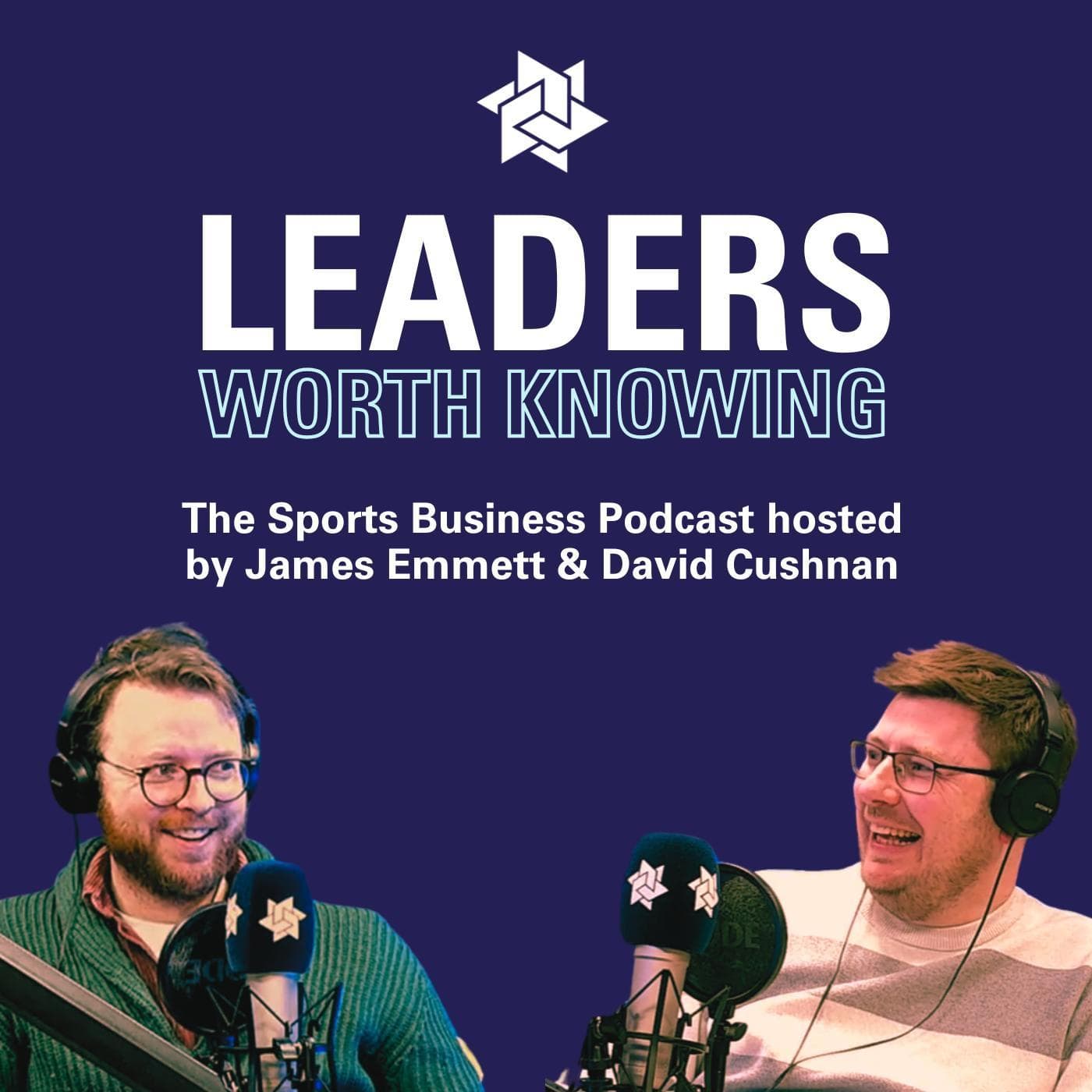
- James Emmett - Editorial Director
- David Cushnan - Content Director
---
Episode Overview In this episode, DJ Skee discusses his unconventional career at the intersection of music, media, and sports. He reflects on his journey from discovering emerging musical talent to leading a booming memorabilia company, The Realist, which specializes in authenticated collectibles from major sports leagues and entertainment brands.
Key Concepts and Discussions
- DJ Skee's Background
- Early Career: Started in music, utilizing entrepreneurial spirit from a young age.
- Discovery of Talent: Notably discovered Kendrick Lamar and worked with major artists like The Game, Lady Gaga, and Travis Scott.
- Role in Music: Pioneered mixtapes as a way to introduce new artists, connecting them with audiences.
- The Evolution of Sports DJing
- First DJ at Major Sports Events: Became the first DJ to perform live at NFL and NASCAR events.
- Creating In-Venue Experiences:
- Importance of music in enhancing the fan experience.
- Balancing audience demographics and player preferences.
- Using music to influence player performance and crowd energy.
- The Realist: A New Era in Memorabilia
- Company Mission: To modernize the sports memorabilia market by providing authenticated, story-driven collectibles.
- Market Challenges: Addressing issues like fraud and inefficiencies in the memorabilia industry.
- Innovative Products:
- Examples of unique collectibles like match-worn jerseys and even snow from significant games.
- Highlighting the emotional connection and storytelling behind each item.
- Trends and Future of Memorabilia
- Market Growth: Anticipation of global growth in the memorabilia market, particularly in the sports sector.
- Engagement with Fans: Emphasizing the importance of connecting memorabilia with fan experiences and community engagement.
- Collecting Culture: The idea that everyone is, in some way, a collector, and how that impacts marketing and product development.
- Cultural Perspectives on Memorabilia
- Comparisons Between U.S. and Europe: Noting that memorabilia has a rich history in American sports, while European markets are beginning to explore and expand in this area.
- Local Community Engagement: Creating products that resonate with local fans and their unique stories.
Key Takeaways
- Storytelling is Crucial: Both in music and memorabilia, the narrative behind an item significantly enhances its value.
- DJs and Sports: The evolution of DJs into sports venues has transformed the fan experience and created new avenues for engagement.
- Memorabilia as a Revenue Stream: With the right approach, memorabilia can serve as a lucrative revenue stream for sports organizations while building deeper connections with fans.
- Emotional Connection: Sports items serve not just as collectibles but as tangible memories that resonate with fans.
Final Thoughts DJ Skee's journey illustrates the blending of creativity, entrepreneurship, and passion across multiple domains. He redefines the memorabilia space by focusing on authenticity and storytelling, paving the way for new opportunities in sports engagement.
---
This summary outlines the pivotal moments and themes discussed in the podcast episode, providing a comprehensive overview of DJ Skee's contributions to music and sports.
Written by AI. May contain mistakes. Listen to the episode to check what was said.
Chapters
Tap a time to open that second in VOSki's Identity and Career Overview
2:02 to 3:08
DJ Ski discusses his identity and diverse career in music and sports.
“Either way, whatever you want to call me is fine.”
The Evolution of DJ Ski
3:09 to 5:36
Ski shares his journey from DJing to discovering artists like Kendrick Lamar.
“It's kind of a bit like Forrest Gump, right?”
The Art of Talent Spotting
5:37 to 7:43
Ski explains how he identifies musical talent and the importance of risk.
“a number of different talent kind of come through the reins first.”
DJing in Sports: A New Era
7:44 to 11:50
Ski discusses his pioneering role in live DJ performances at sports events.
“There's things that you can't control for that.”
Connecting with Players Through Music
11:51 to 13:17
The importance of understanding players' music preferences in sports DJing.
“Risk of playing it there is that you played it too early, right?”
Transition to Sports Memorabilia
13:18 to 14:00
Ski explains the shift from music to establishing The Realist in sports memorabilia.
“Coming over to Europe to meet sports entities with The Realist, which is your sports memorabilia company.”
Modernizing Memorabilia: The Realist's Approach
14:00 to 17:34
Explore how The Realist aims to revolutionize the collectibles market.
“You know, what The Realist is high level is we've kind of built the operating system end to end for the next generation of memorabilia and collectibles, right?”
The Snow Game: A Unique Marketing Story
17:35 to 20:31
Learn about the creative marketing behind selling snow from a pivotal game.
“And it's that emotion that nostalgia triggers in your heart.”
Strange Memorabilia: Snoop Dogg's Smoked Item
20:32 to 22:29
Discover the fascinating story of selling Snoop Dogg's smoked item.
“I mean, the reason that, I mean, one reason that you're here, right, is like the business of sport.”
Cultural Differences in Memorabilia Markets
22:30 to 27:31
Examine how memorabilia markets differ between America and Europe.
“So that's where Snoop is on the pop culture radar between Winston Churchill and Ulysses Grant.”
Show all 16 chapters
Collaborating with Rights Holders
27:32 to 28:00
Understand how The Realist collaborates with sports leagues and entertainers.
“But what gets us going and what I think the biggest learning we've had is the way we engage and speak to fans from a marketing perspective and a fan engagement perspective.”
Exploring Authenticity in Memorabilia
28:00 to 28:38
Learn about the importance of creating authentic memorabilia for fans.
“And there's just so much shadiness and question.”
Collaborations with Major Sports and Entertainment
28:38 to 29:36
Discover the teams and entertainers involved in memorabilia collaborations.
“We took his entire halftime show, his entire tour, you know, artists from Andrea Bocelli to Jay Balvin, even film properties like Wicked 2, Gladiator 2.”
Revenue Potential of Sports Memorabilia
29:36 to 30:34
Understand the revenue opportunities in creating sports memorabilia.
“Like we built this from if we were a team, what would we want?”
The Evolution of Radio in Sports
30:34 to 31:25
Examine how radio has transformed in the sports industry.
“And, you know, again, that's the foundation of what we do.”
Podcasts vs. Traditional Sports Talk
31:25 to 32:26
Discuss the impact of podcasts on sports talk and radio formats.
“And you know, what the internet has done is democratize that is it's done so much mouse, including music, right?”
Transcript
Automatic transcript. May contain errors.0:03DJ Skee:Hello and welcome to Worth Knowing, the sports business podcast from us here at Leaders. This is the first episode of the week this week, and it is the episode in which we talk to leaders in sport. Our guest this week is a bit of a left field one. It's DJ Ski, also known as Scott Keeley, the American artist, television host, radio personality and entrepreneur. Now, Ski made his name in the music business back in the early 2000s, discovering all sorts of artists, predominantly in hip hop. But he is most famous for having discovered Kendrick Lamar. And he now works in the weird and wonderful world of sports memorabilia.
0:59DJ Skee:And he was over in Europe recently talking to sports rights holders about the work that his company, The Realist, does to build lines of authenticated memorabilia. Ski is no stranger to this line of work. He has sold all sorts of things to all sorts of people in the past. He once sold snow for the Philadelphia Eagles. He has also made use of his musical connections by selling a, I believe it's called a blunt, one of Snoop Dogg's blunts. And he's sold all sorts of weird and wonderful things to all sorts of weird and wonderful people. Ski came into the studio with our mutual friend Steve Gera, the erstwhile leader of Grand Slam Track, to talk about the work that The Realist is doing and to talk about the memorabilia market in general.
1:59Scott Keeney:Anyway, enjoy the show.
2:01DJ Skee:Ski, thank you very much for joining us here in the leader's studio. Do I call you Ski? Do I call you Scott? Either way, whatever you want to call me is fine. I respond to both. I'm going to call you Ski. Ski, on your Wikipedia page, it refers to you as an American artist, television host, radio personality, and entrepreneur. We're going to talk about a lot of the stuff that you have done in the past and are doing right now. But my first question to you is, deep within your soul, how do you identify? What do you consider yourself to be?
2:36Scott Keeney:It's a great question. And it's tough because, you know, I've had, you know, multiple careers and there's a lot of overlap. But at the end of the day, I think I'm a creator and storyteller. And I think that's stayed consistent with everything that I've done from from DJing and introducing the world to new artists, working with brands on products, even in sport. And now with what we're doing at The Realist, right, we're storytelling through just a different means. It's changed from me talking or filming to now leveraging these physical products that resonate with fans.
3:08DJ Skee:Give us a, we'll go into the realist and your work in sport in a little bit, but give us an overview of your previous work. How did you start out?
3:21Scott Keeney:I mean, my story is insane. It's kind of a bit like Forrest Gump, right? Like, you know, I grew up in, born in New York, really grew up in Minneapolis, was always entrepreneurial by nature. uh in high school i found i thought i was going to be a pro athlete until i found djing and music and just knew that was going to be what i was going to do what sport were you baseball baseball basketball were my sports but um you know i was really good at baseball yeah but once i found music i just knew that was my foundation i got connected uh to the ceo of loud records sony at the time steve rifkin by you know the time i was flipping playstations and xboxes and sneakers and things and grew up on the internet and knew that really well.
4:02Scott Keeney:Stayed in contact with him, ended up giving him a bunch of ideas on the marketing side. One day I just put together a whole proposal. I thought if I was lucky, he'd send me a Wu-Tang Clan shirt. He said, come meet with me. So I ditched high school, flew to New York, met with him and he offered me a job and was not expecting that. Then ended up packing a U-Haul at 17, driving across the country to Los Angeles where I'd never really been. And he sat me down and said, here you go. And from that, was able to really learn the business side of the industry first, was always DJing, but it gave me a unique perspective.
4:39Scott Keeney:DJ career took off a little later on producing for a lot of the artists and I kind of got known as the person starting in mixtapes where it was the, especially in hip hop, that's how artists were introduced. That was the foundation and was fortunate to come across incredible talent you know i got known for working with game early on um you know first mixtape booked the first ever show with a young artist named k dot became kendrick lamar and through my journeys on radio tv i was fortunate where i got you know tasked with the position of powering all the new music across iheart radio and kiss fm and sirius um some of the big broadcasters in the u.s so i was really having the only music show on cable uh ski tv that started as a youtube show and just took off from there that speaking of sports, Mark Cuban actually gave me from another cold email and was like, ah, do you want to do a TV show?
5:26Scott Keeney:So just found myself fortunate to be in all these positions and take advantage of those opportunities when they came. And, you know, we were the first to have Post Malone and Lady Gaga and, you know, Travis Scott and, you know, a number of different talent kind of come through the reins first. And I kind of made my name as just being the first, like, I wasn't the one breaking, like making these artists or breaking them, I think my skill set has always been seeing where, you know, the ball is going and using the megaphone that I had to amplify and accelerate. And these things are going to happen.
5:58Scott Keeney:Like it's not because I'm not going to never take credit for any of those artists. They're all wildly talented. I did have a unique position and was able to see kind of the trends and what happened next. And I think I've, you know, kind of carried that over through everything I've done from products to even now in the collectible spaces. We're very early, but it's without a doubt happening in my mind.
6:18DJ Skee:Sticking with music for a little bit, I think you've been very modest there to reel off those names, which is great, but then say you didn't make them, you didn't break them, you just were there in the right place at the right time. But I feel like if you didn't make them or you didn't break them, you definitely played a pivotal role in massively accelerating the careers of a lot of very well-known artists. How do you talent spot in music? Like, how do you know when something or someone is going to absolutely smash? You know, did you have a lot of misses as well as a lot of hits? Of course.
6:52Scott Keeney:Of course. I mean, I think it's kind of similar to sports scouting. Like, there is some barometer. You just have a skill. And it comes from, like, if you look at the best scouts, they're real fans of the game. They grew it. They played it. They did it for me with music. I truly loved, like, especially at that time, like I love nothing more than finding what was next and listening to so much music. And, you know, I think where a lot of people in any category are scared to do is take a risk, right? For me, I always have embraced risk. And absolutely, there's been, there's actually a lot of artists where I've like, this is a no brainer, they're going to be a superstar and they're not, right?
7:30Scott Keeney:And I obviously get the credit for the ones that are big. Equally ones for a number of reasons. I still stand by some of the artists that I said are equally, if not more talented than some of the names we just mentioned. Opportunity wasn't right. And I think you could say the same for sport. They got injured. They got in the wrong situation, right? Different things happen in their lives. There's things that you can't control for that. And I think for me, it was just that passion. But I also understood, I was at the foresight to see kind of what was happening in the market and identify patterns at the end of the day, right?
8:01Scott Keeney:Like, hey, these things are happening. Like, this typically happens. And once you see it once and twice, three times, you just get better and better at it. So it becomes very clear as to like, all right, this one has a real shot. You were, if the internet is correct,
8:16DJ Skee:the first person to DJ live at an NFL game.
8:19Scott Keeney:I think that is right.
8:21DJ Skee:At a NASCAR race.
8:22Scott Keeney:That's right, because I said that.
8:24DJ Skee:At a University of Michigan sports event. 100 % right there. I know that one. It feels like that's just do or go now, right? There are DJs at major sports events. It just happens. It must have felt quite weird to go and DJ in a sports environment. And I wonder, what does a great music experience at a sports event look like?
8:44Scott Keeney:It's a great question. Yeah, it's been interesting to see. I mean, when I started doing that, it was a natural evolution for me. I never wanted to be the same. I started off in mixtapes, went to clubs, and I've been fortunate to have great experiences on every level, opening up success in Vegas, being in the biggest radio stations in the U.S., having a TV show. So and then sports was kind of the next chapter and a passion of mine. And, you know, I kind of made it to the big leagues, not the way that I thought I was, but it was my way of kind of kind of making it there. And, you know, I remember when I first talked about sports DJing, it's really funny.
9:15Scott Keeney:My first conversation about sports DJing was with a person working at Dodgers, Jerry Manuel, Jerry Lorenzo, and his father was a major league baseball manager. And he's like, man, it's so old school, like nobody will ever have a DJ in sport. Like, I get it and I want it. He went on to launch an incredible brand called Essentials and, you know, do a lot of other things. And, you know, now it's so common. But like 15, 20 years ago, it was this will never happen, which just shows how quickly things evolve in terms of operating that it's it's wildly different than than any of those other experiences.
9:50Scott Keeney:It's it's not radio. It's not a club show. You are not the star act. And you have to appeal to such a broad demographic of fans. And there's the balance of like respecting what is pure and what is known. Well, again, every franchise wants to, you know, engage new demographics and younger demographics. And then there's also the players. Like players have an entirely different request list than probably what, you know, the season ticket member that has been there for 40 years wants to hear. So how do you play that balance? And it's more prominent in American sport because there's so many like football.
10:26Scott Keeney:It's, I think, 14 minutes of gameplay. versus at least football here. There's halftime. The game goes on, so it's a different thing. So in football, the music you can make the sense, especially with broadcast being so good, it's a far better experience at home. You go for the energy and the atmosphere. The entertainment becomes a defining factor of what gets fans to the game. And also it's those nuances. I mean, one of my favorite moments was, I think it was this season or last season, maybe with the Rams. Fourth quarter, kickers going up, Coach McVay, the Rams calls a timeout. I just know the music right that's going to get rocking and intense and destroy the kicker and kicker misses it not I don't want to take credit right it's not that it's those things but in sport it's that one percent these athletes are so elite that can sometimes make the difference and it can sometimes be there so it really is important could it make the fan a little louder it could have motivated a player to make their adrenaline move that makes them jump that extra inch so it can be in those margins of defining that so keeping that in mind across all of that and And it's just, you know, taking it's different than a regular traditional DJ role.
11:31Scott Keeney:You have to take all those things into consideration. And the funnest thing, too, is like I have my dramatic folder that you're saving for the end of the game. Like it's going to get the fans pumped and energy running. And you have to know, and it's a risk. Do we play this now? Like this is the number one one. I know what this is going to do. Is now the right time? Do I hold it? Risk of holding it is that you missed the moment. Risk of playing it there is that you played it too early, right? Right. So there's all these nuances and understanding like all these layers of what's going on. So it's actually really complex and intense.
12:00DJ Skee:I was speaking to an established sort of sports DJ over here. He does a lot of the soccer events. And he was saying his secret, well, it's not a secret anymore. His top tip was to do research beforehand on what the players are listening to. Absolutely. So like go on their Instagram, go on their TikTok, just fight, get a really strong impression of the sort of palette of music that individual players are after because your holy grail as a DJ is to get the talent to respond to the music and then the crowd go after that.
12:32Scott Keeney:I agree. And a lot of teams and entertainment people don't realize that. I always say like, if the players are reacting and then you show them on the Jumbotron, and we started doing things early on because I wanted to identify like, hey, the reason we're playing this song is because of the player and then the fans appreciate it. So there's nothing better than like for in the like I'm doing that did the Rams this season. So I'll use a recent reference like Puka Nakua, incredible wide receiver in the NFL. I know what he likes and there's nothing better than when he scores or when they're in a key moment.
13:00Scott Keeney:I'm playing that song that he likes. Cut to him. Like it's all strategic. We know what's there. I'm like, hey, Puka's like, let's do this. Now is the time. Get him roaring and the crowd gets roaring behind him. So yes, playing for the players is important even though the crowd may not know that song they will jump to what the players is and victory is what's most important because that's what's going to make fans happy at the end of the day so yeah great advice and great nuance that you know it's not just hey let's play the same 10 stadium songs we've heard for the last 30 years sure you are over here in europe on a
13:31DJ Skee:whistle stop tour of um sort of sports entities uh with our good mutual friend steve gira yes Yes. Coming over to Europe to meet sports entities with The Realist, which is your sports memorabilia company. Tell us what The Realist is and how do you go from DJing, breaking sort of music, musicians, careers, DJing in stadiums to the niche world of sports memorabilia?
14:00Scott Keeney:Yeah, it's interesting. You know, what The Realist is high level is we've kind of built the operating system end to end for the next generation of memorabilia and collectibles, right? This sector is exploding. It's already quietly massive. We realized there were a lot of inefficiencies, a lot of issues with fraud, and that there was an opportunity to modernize this kind of antiquated industry. It's kind of been like dirty and uncool. And the way that I got here, because you're right, it sounds crazy, is, you know, I was very fortunate through my career in TV, like sneakers were always a big part of who I was.
14:32Scott Keeney:The reason I met and got my job was I was selling sneakers and I was actually importing like exclusive trainer colorways from the UK from retailers here that, again, people didn't realize that Europe and the US had different colors at the time.
14:44DJ Skee:That's the secret move.
14:46Scott Keeney:It was like that simple. So like I always was established in sneakers, was very fortunate to be the first investors in StockX, big sneaker, sneaker resale site and do a lot in sneaker community. When I saw like trading cards actually starting to come back and explode in America 2017, 2018, 2019, it reminded me a lot of what had happened in sneakers and streetwear. and I actually took a different approach. I launched a fund called MIT 10 with Carter and Courtney Ream in Los Angeles and we you know wanted to create a vehicle to invest in this emerging category that we we all saw was was exploding and we structured it where we made 25 venture investments including whatnot that was just you know I think valued at 11 billion dollars which is you know wild and great return for the fund to buying million dollar sports cards And it was through doing that that I saw most of the attention going into the trading card market.
15:41Scott Keeney:And we've seen like, again, kind of what fanatics did was modernize this antiquated industry that was quietly massive and just do the obvious and like go out and execute, which nobody had done. And it was really impressive. And when we saw memorabilia, she thought it was like this space that was, you know, the FBI estimates up to 90 % of memorabilia is fraudulent. But running auctions is not easy for a number of technical and operational reasons, and the technology there is dated. We realize most of these sales, when you look at a Michael Jordan jersey or, you know, a jersey selling for$10 million, it's not Michael, it's not the Bulls, it's not the NBA monetizing this.
16:20Scott Keeney:We thought there was an opportunity for rights holders to come in and, one, protect their brand, two, monetize these assets and engage their fans. And we thought there was a way to modernize the industry by not only focusing on the high end, but creating really innovative pieces that spoke to every fan, onboarding new. In order for this market to grow, we need to onboard young, diverse, you know, captive fan bases at every price point. It can't be just exclusive. Can't be shady. we've taken the hard route of, you know, by only working with the source, by creating and, you know, developing the most, you know, I guess, secure and intensive authentication system where we deploy, in essence, people to collect evidence on site at matches, and then productizing it in really elevated ways.
17:06Scott Keeney:And then for me, the natural through line is storytelling, right? Creating content. And as every sports organization is looking for new ways to engage fans and build this long-term loyalty, which collectibles are the perfect thing for, keep comes down to storytelling. And I think, again, going back to my background, that's where I really have a unique advantage. And what we're selling is things that aren't, it's not like gold or anything else. It's a dirty jersey or a piece of like, we're selling snow. But the story behind that is what's there. And it's that emotion that nostalgia triggers in your heart.
17:40Scott Keeney:And that's what we really do at
17:42DJ Skee:the realist and that's what excites me the most you mentioned snow there and having sold snow yeah i mean i'm sure there is a thing about you know selling selling what's this thing in a jay-z song
17:54Scott Keeney:isn't there about like oh yeah yeah yeah what's a big debate right does he say water to a well or water to a whale it's always like the hip-hop debate right we don't know which one it is but
18:02DJ Skee:either way like yes yeah he is a hustler yeah it seems to me selling snow you sell snow it's going to melt, you know, that's a, that, that, that, that asset is not going to exist for very long. You did actually sell some snow to who from what?
Read the full transcript
18:18Scott Keeney:It was from the Philadelphia Eagles playoff game. And it, you know, it was an idea we, we, we'd had for actually another property. And we saw the forecast was a game who knows what's going to happen. So we are authenticators before they, they had to do the stadium. We sent them to home Depot to get some coolers. Yeah. The game ends up being this incredible game. Snow covers the field. It defines the game. It's really one of the reasons the Eagles win, right? People can't see anything. They're running the ball with Saquon and takes them to the Super Bowl season. And that was the toughest game they faced.
18:49Scott Keeney:The Super Bowl, they dominated the Chiefs, the NFC Championship game, they dominated. This was the most difficult last test, ironically, against the Rams. And it was something that became this defining moment. And what we saw was the opportunity to, yes, the snow was there and that's, it's known forever in Philadelphia lore as like this snow game. Like that's a moment that every person will remember. We now, for the first time, created a product that captures that literally physically that people could do. And we bottled it like ice cream, right? It was not easy to do. We packaged it in an elevated way.
19:25Scott Keeney:We modeled it after a local Philadelphia famous ice cream shop, right? And packaging. So we really spoke to the community. We knew Philadelphia fans are insane and amongst the craziest in the world, and they would appreciate it. And the best comment and the way that I knew we did our job was not only the press that we got over$3.3 million in press media and earned media coverage, was the comments were like, this is the stupidest thing I've ever seen. I can't believe I just bought it. And irrelevant to, like, I didn't grow up an Eagles fan. You didn't, you know, Steve didn't.
19:58DJ Skee:But to those people in Philadelphia that watch the game, that moment is something they will remember forever.
20:03Scott Keeney:And now they have a tangible asset that reflects that. And it's not about just the money. It's a good story, right?
20:10DJ Skee:You talk about storytelling and like someone's going to go around to someone's house who's bought a bit of snow. They're going to open their freezer and they're going to show them an innocuous looking bottle or whatever. And then they're going to say, that is the snow from the snow game.
20:24Scott Keeney:And they're going to be like, wow, that's incredible. And it's going to bring back - And what a nuts thing that you bought it.
20:28DJ Skee:Of course. It's a memory. It's a talking piece.
20:30Scott Keeney:And in this era, like sport define who we are. I mean, the reason that, I mean, one reason that you're here, right, is like the business of sport. And it is so massive because in an area that's getting increasingly synthetic, increasingly artificial, like we know where the world is going. Like it is one area that sports can play in. It's the only really live broadcast that matters, right, from a commercial perspective. And these memories, like when, when sport happens, um, it's the only time you'll see people across worlds, whether you're a billionaire or living paycheck to paycheck coming together, whatever you believe politics, whatever you believe anything else coming together for a couple hours to, to watch a match.
21:07Scott Keeney:And you're all on the side of that and you throw all your inhibitions out and that represents so much. And these items say that and tell who you are and bring back those, those memories. Sold any other weird stuff? Oh, we've sold some of the craziest things ever. we sold um uh snoop thought this was crazy he was one of the first clients that we launched with what do you think of when you think of snoop smoke weed every day there you go exactly like very obvious who wouldn't like what would like a snoop blunt that he smoked is incredible it represents him and does that and especially like look we all pass away at some point one that he
21:42DJ Skee:smoked it's sort of illegally at the rat at the super bowl in la where the camera panned away from him oh yeah do you remember that one very much i was i was there that one is probably worth something
21:55Scott Keeney:right well problem we didn't have an authenticator there yeah no right so we went there we were we're going through and doing a whole like snoop archive sale and you know storytelling through his his legacy but i was like let's take it that and like let's elevate it we put it in like this incredible packaging we were there we put our covert marking on the item um preserved it it's like you're crazy nobody's gonna buy this what are you talking about two months later becomes the second highest sold smoked item of all time behind Winston Churchill's cigar post-World War II, ahead of the former president in the 1800s of the U.S., Ulysses S.
22:29Scott Keeney:Grant's cigar after the Civil War. So that's where Snoop is on the pop culture radar between Winston Churchill and Ulysses Grant. And it sounds insane 20 years, 30 years, like for, let's say, actually a lot longer. Whenever Snoop is no longer here, as we all have an ability to do, that will be, could be a million dollar item, right?
22:47DJ Skee:You talked about the memorabilia market earlier as being quietly massive. And I feel like maybe it's so quiet that I just haven't noticed it over here. But it feels to me like it's a big American thing. Like definitely it feels like there's much more of a market for the more weird and wonderful items, at least in America, where the concept is partly the idea of a story, conversation starting piece like the snow. But also partly, I think more culturally, America is much more likely to adopt the concept of trying to make a buck, you know, like if you, this could be worse. Absolutely. Where I think other cultures are sort of not so far down that route.
23:29DJ Skee:You're over here in Europe now. Oh, yeah. What can you say about the memorabilia markets over here and the way that they're going?
23:36Scott Keeney:It's interesting. You're absolutely right. And when you look at America, it's interesting because baseball is, you know, number three sport in essence. I mean, if you call it college football and things, it's a different sport even further behind that. But by far, because memorabilia and baseball, I mean, we still call it baseball cards, not trading cards necessarily, right? Like baseball has done an incredible job through nostalgia. It's a sport based on history and that has, again, I believe the longest legacy of any of the big four pro sports in America. And yes, Americans are always looking for what's next.
24:09Scott Keeney:there's that entrepreneurial spirit there's two types of collectors there's those that you know want a product that like snow that like that snow is not going to be a million dollar no it shouldn't be it's it's going to represent a memory but the jersey from saquon barclays jersey from that super bowl will you know inevitably only go up over time especially as the market expands what's really interesting about europe is that there are things quietly going on almost every club now has experimented selling kits and game-worn jerseys and now like dip their toe in so the market has been slowly ripe we're seeing massive sales and football memorabilia in the last world cup there was a famous auction of messies and you know jerseys sold for for you know six seven million dollars um seeing the maradona hand up got like it's happening and and i believe again um everybody's a fan of something it might not even be sport it might be music.
25:02Scott Keeney:We saw what Taylor Swift did. Those Swifties, there are, again, doesn't need to be all 60 ,000 people in the arena. There's only a limited inventory. Fans want to be closer than ever to the game. They want something that represents who they are as a talking piece. Fandom is such a part of their life. It's why they buy the shirt. It's why they support the team and show up at these events. It really defines who they are. And when packaged, presented, and elevated the right way, we believe everybody is ultimately a collector. I mean, looking around here, right? Like there's a ton of items and, you know, they all represent something in this leader's NBA jersey, right?
25:39Scott Keeney:Like that's a piece of memorabilia that represents a moment and something that happened. It's important. That's why it's framed and setting up, right? And that
25:47DJ Skee:exists and - Thin line between a collector and a hoarder though, I'd say. Absolutely.
25:52Scott Keeney:Yeah, exactly. Like, and that's, that's a different category, right? Like it's a much smaller one. But I think when you look at the reason I'm so bullish on Europe is, yes, it has been historically behind it in a memorabilia thing that's caught up as the world has gotten more global and people see the values. But I think the fandom over here, what I'm so envious of about is a lot purer than America in a way, transparently, right? Like you are born into a community. You were born into a club for better or worse for a lot of others, right? Like a lot of times it's not a fun journey and a fun life.
26:23Scott Keeney:And I know that being a Minnesota sports fan in America, we have not, you know, won a championship in any major men's sports since 91. The thing that drew me into sports, right? So I know all too well that, unfortunately, but those moments in that team represent so much more. And again, like when I look back, referencing the 91 Minnesota Twins, which got me into sports. Yes, it represents when last time my team was good. That represents my childhood, though. My looking back, it brings me back that nostalgia instantly. It brings me back to my mom who's no longer with us, like taking me to the games and the photos.
27:00Scott Keeney:And like, it's not even the fact that there's a championship. It's and it's irrelevant to most people, even in America. But to me, it's there. So when I look at that experience for myself and I look at the, you know, the level of fandom here and the love of the game and the purity of it, people caring so much about these teams and the clubs, which I think is, you know, more commercialized in America. I think that there's just such a significant opportunity. Not only like, yes, the money is there. We're a business. We have to make money. We set records in every category. So we do that. We'll do that for organizations.
27:32Scott Keeney:But what gets us going and what I think the biggest learning we've had is the way we engage and speak to fans from a marketing perspective and a fan engagement perspective. Because when somebody has an item and they look at it every day and it's another tentpole, but it's also building that loyalty and reflecting it. So it's not like what we're doing is not a cash grab that, of course, like, yes, there's a business there has to be. But that's not like why I'm here. And that's not my passion. Like, I want to to build and bring these items that people just historically haven't had access to that if they knew and if presented right, not as like, again, I think the memorabilia has been done the wrong way for such a long time.
28:10Scott Keeney:And there's just so much shadiness and question. And it can absolutely feel dirty and like a cash grab for us. It's how we create something cool that reflects a moment and is done in a tasteful way to that local community. It gets me so excited.
28:23DJ Skee:Two very quick questions to finish with. Just a little bit more on the realist. So you work with leagues, teams, rights holders, etc. to build out authenticated lines of memorabilia together. Yep. Can you give us a quick view on who you have worked with, who you're working with now?
28:42Scott Keeney:Absolutely. I mean, in the United States, we started off, obviously, we've worked with the biggest organizations and teams from the NFL and NBA to, you know, all of MLS to even all of FIFA with the Club World Cup this summer to entertainers like Kendrick Lamar. We took his entire halftime show, his entire tour, you know, artists from Andrea Bocelli to Jay Balvin, even film properties like Wicked 2, Gladiator 2. We did a huge thing for really anything that has fandom we connect with. And our value preposition is this is our area of specialty and expertise. We've not only built the best tech operating system, we understand better than anybody the nuances of on-site operations, of kit managers, of being the least important thing transparently happening.
29:27Scott Keeney:It is about the game, but being able to capture this and turn it into not only a newfound revenue opportunity, but really a deeper way to engage with fans. And we do all the work, give the teams the branding. They get the data. Like we built this from if we were a team, what would we want? And that's the operating system that we've built and are now powering.
29:45DJ Skee:Can you give a quick idea as to what it might be worth? And I appreciate it's worth different things for different, but for like a one-off hit, if a team is playing in a massive final as a revenue stream, if they were going to do a line of memorabilia off that.
29:59Scott Keeney:I mean, when we look at EPL teams, right, like we're looking millions annually from that. And when you have a great season or a defining season, I mean, we bottled great example, confetti from the Super Bowl, Philadelphia Eagles, sell those for 40, 40 bucks in a bottle, packaged and elevated really well.
30:15DJ Skee:They're insane.
30:15Scott Keeney:But I think any team that wins the Super Bowl, like I believe there's a path for us to sell a million of those items and you do the math. This is literally from confetti and it's the perfect gift for somebody, whether they're again, a billionaire or, you know, paycheck to paycheck off the street, they all come together and respect it the same way because it bottles that moment authentically. And, you know, again, that's the foundation of what we do.
30:36DJ Skee:Yeah. And I want to finish on just something about radio. Obviously, your background in radio, I presume, do you listen to radio? Oh, yeah, of course. Like, so there's a thing going on at the moment in sport, in sports, there's no doubt you'd be aware, you know, the podcasts are taking over. Oh, yeah. And certainly in America, there is huge value in these sort of talent led sports talk shows that were podcasts that sort of being bought up by the ringer by Spotify, Netflix, et cetera. And I wondered what's your hot take on hot takes? You know, what's, what, yeah.
31:13Scott Keeney:Sports radio. It's interesting, right? Like radios evolved drastically. Hence one reason for me it was about evolving. Like it's just not the same way. Like radio had this exclusive moat, especially in America, because people listened on cars or like you couldn't buy spectrum. And you know, what the internet has done is democratize that is it's done so much mouse, including music, right? Anybody can set up a podcast, upload it, and they're there. There's no more gatekeepers from that. Said, there's more people than ever vying for attention. And I think we have hit a boom. Like, I think some of it is a little crazy.
31:43Scott Keeney:And, you know, it's great. We love hearing that. But how much can there be? There's only so many hours in the day. That's the biggest limitation that we have, which is a challenge, I think, even across all these new sports leagues and different things, right? Like, how do you break through? So I think while it's incredible and there will be massive winners and there already are, as we've seen from that. I think it's something that now, again, everybody follows and again, you're limited with what you can do. I think it's great, but I think that there's going to be new formats that evolve. And I think encouraging people to get creative and not just do the loud voice, loudest person in the room, which tends to be the market that we're in and the world that we're in right now, that whoever screams the loudest sometimes wins.
32:22Scott Keeney:I think finding what's next, there is a tremendous opportunity.
32:26DJ Skee:Ski, thank you very much for stopping by. I really appreciate your time.
32:30Scott Keeney:Thank you so much for hosting us.
From the publisher
DJ Skee - also known as Scott Keeney - has carved out one of the most unconventional careers in modern entertainment. From discovering future stars like Kendrick Lamar to becoming the first DJ to perform live at NFL and NASCAR events, he has spent two decades operating at the crossroads of music, media and sport.
Today, he leads The Realist, a fast‑growing memorabilia company partnering with major leagues, teams and entertainment brands to build authenticated, story‑driven collectible lines.
What began with mixtapes and trend‑spotting in the early 2000s has evolved into a new form of storytelling - preserving iconic sporting moments in physical form, whether it’s match‑worn jerseys or even snow from an NFL playoff game.
In this conversation with James Emmett, Skee discusses how he identifies emerging talent, how DJs became part of the stadium experience, what defines great in‑venue music, and why the memorabilia market is primed for global growth. He also explains how The Realist helps rights holders protect authenticity, engage fans and unlock new revenue through items that capture the emotion behind sport.