
 Ask ChatGPT

- Podcasts
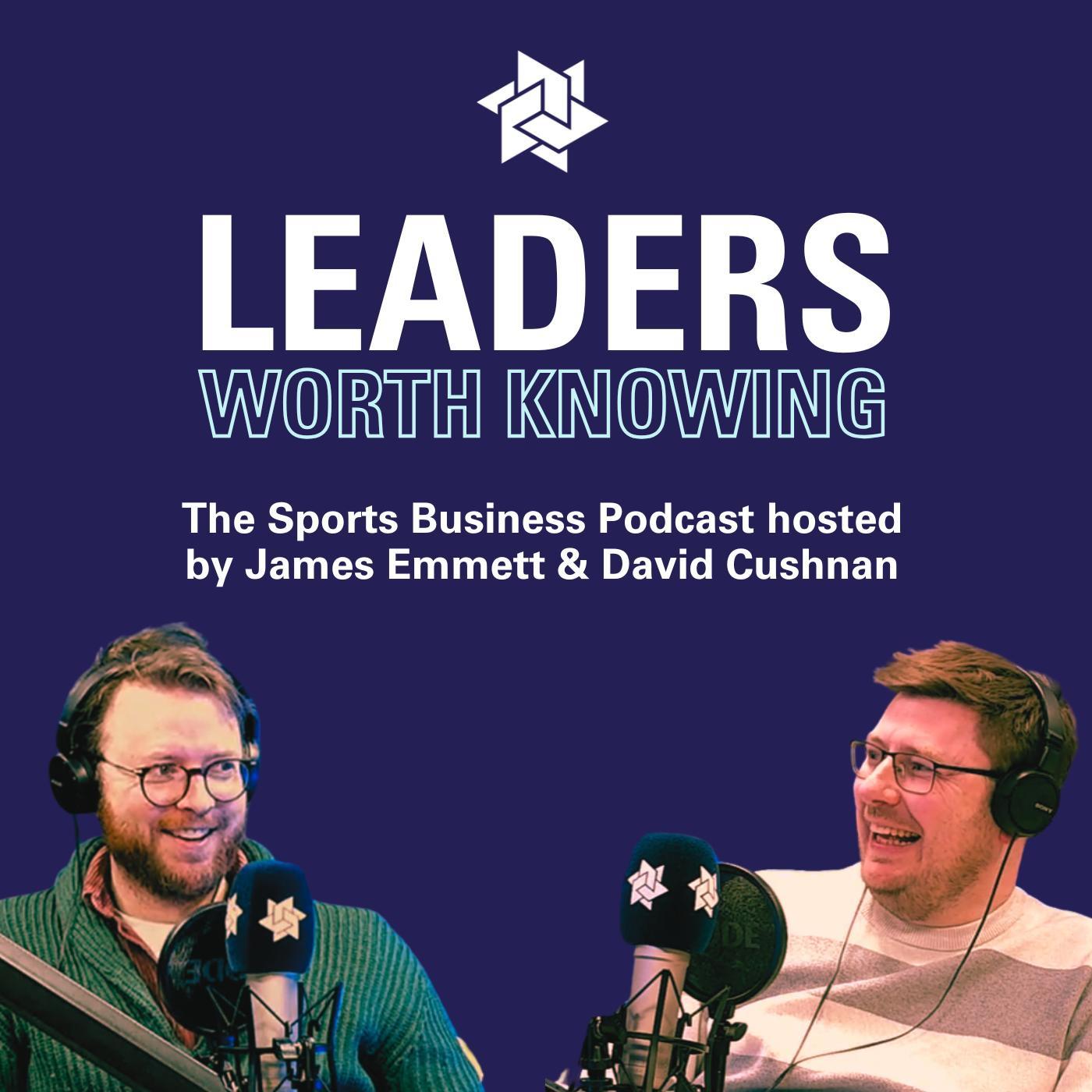
- Leaders Worth Knowing Podcast
- Leaders Week London - day 1 as it happened: Scott O'Neil, Kevin Demoff, Francesca Bodie and a cast of thousands
Leaders Worth Knowing Podcast7 Oct 2026 · 48m · 19 chapters
Leaders Week London - day 1 as it happened: Scott O'Neil, Kevin Demoff, Francesca Bodie and a cast of thousands
In short
Day 1 “as it happened” from Leaders Week London at Stamford Bridge, focusing on how sports is evolving through venues/destination marketing, international expansion, leadership through disruption, and fan-centric experiences (with a notable absence of AI discussion).
Guests (backgrounds)
- Francois Westcombe, Ticketmaster Sport MD for EMEA (joined Ticketmaster Sport after 10–11 years in rights/market expansion).
- Shiv Stara, Milwaukee Bucks (team member; working on Europe/APAC brand strategy).
- Steve Gera, The Realist (former CEO/president of Grand Slam Track; builds memorabilia programs).
- Also referenced: Scott O’Neill (CEO, Live Golf) and Ted Goldthorpe (BC Partners lead investor); plus session speakers Tim Lywicky, Francesca Bodie, Declan Sharky, Louise Young (F1), Keith Wattell (NHL business), Rob Zett (NHLPA), Kevin Demoff (KSE), Richard Garlick (Arsenal).
Key claims
- Venues are becoming multi-use city attractions with 365-day economics.
- International strategy is increasingly nuanced (e.g., NHL targeting Germany; Bucks focusing on Germany/UK).
- Leadership means rebuilding through stakeholder coalitions (Live Golf “Live 2.0” after PIF funding exit).
Notable examples
Venezia’s new 18,000-seat stadium with concerts and tourism tie-ins; F1 treating each Grand Prix as its own “Super Bowl”; NHL Germany push with Bayern Munich and “Christmas market” partnerships; Bucks/Haslam cross-club data sharing; KSE hiring young coaches (Sean McVay/Mikel Arteta parallels).
Written by AI. May contain mistakes.
Chapters
0:46
Recap of Day One at Leaders Week London
Hosts discuss the events of the first day at Leaders Week London.
“We've got a poor turnout for this session.”
3:18
Introducing Guests from the Sports Industry
Hosts introduce guests and briefly discuss their backgrounds.
“The founding executive chairman of Authentic Brands.”
4:55
Personal Reflections on Day One Experiences
Guests share their experiences and highlights from the day.
“what have you been talking about on the floor?”
8:14
Emerging Trends in Sports Venues
Discussion on the evolving role of sports venues and destination marketing.
“So yeah, I'm going destination marketing.”
10:49
Francesca Bodie on Venezia's Vision
Francesca Bodie discusses the transformation of Venezia's stadium experience.
“And people are expecting different experiences, whether it's fashion, food, culinary, culture.”
14:02
Exploring the Formula One Experience
Learn about the unique aspects of attending Formula One races and their growing global appeal.
“And by the way, brilliant to see a panel that was wholly female on stage.”
18:38
Insights from Louise Young on F1 Destinations
Discover what makes a city appealing for hosting Formula One races according to Chief Race Promotion Officer Louise Young.
“weekend, but a different style for different parts of the world and different types of Grand Prix.”
21:20
Leadership Challenges in Sports
Discuss the complex leadership scenarios faced by sports executives like Scott O'Neill in challenging times.
“I think leadership, as ever, was another theme that we had here across today at the Leaders Sport Business Summit.”
27:44
The Future of Live Golf
Examine the strategic outlook for Live Golf as discussed by its CEO Scott O'Neill amid restructuring efforts.
28:01
Live Golf's Bold Moves Amid Challenges
Learn about the challenges and strategies facing Live Golf's leadership.
“And I think it's bold for them to be getting out on the front foot at this point, despite the chapter 11, despite the fact that there are creditors lining up.”
Show all 19 chapters
28:53
Scott O'Neill on Live 2.0 and Future Plans
Scott O'Neill discusses Live Golf's vision and plans for growth and investment.
“golf on what live 2.0 could look like sure so uh many you may have read it's it was it's been a bit of an adventure.”
31:09
NHL's International Strategy and European Markets
Explore the NHL's approach to international markets, focusing on Germany.
“at Leaders Week London today, Wednesday.”
33:35
The NFL's Commitment to International Games
Discussion on the NFL's international strategy and its implications for fans.
“Monday night football is what they're calling it.”
35:47
Multi-Club Ownership and Cross-Sport Collaboration
Insights on multi-club ownership dynamics and collaboration strategies.
“What is the Bucks sort of international strategy?”
38:49
Developing Young Talent in Sports Management
Understanding the shift towards hiring younger leadership in sports organizations.
“Who'd have thought this would be a theme of the podcast?”
42:00
Long-Term Thinking in Leadership
Discover how long-term thinking influences sports leadership and operations.
“And I think that knowing you have a very long runway with young coaches has been great for us to be long-term thinkers.”
42:55
The Abundance of Sport
Explore the various ways people consume sports and the industry's rich opportunities.
“I think there's such an abundance of sport out there.”
43:34
The Role of AI in Sports
Examine the industry's challenges with AI and the importance of maintaining human connection.
“So what isn't the industry talking about that we need to be talking about?”
46:11
Engaging Young Fans
Understand the necessity of inviting young fans to ensure future engagement in sports.
“but we can really run away with the fairies when it comes to it.”

Ask about this episode
Get the gist, explore an idea or ask about something said.
 Claude
On Leaders Worth Knowing Podcast, what are the key points of this episode?
Searching your listeningTranscript
Automatic transcript. May contain errors.
0:03James Emmett: Hello and welcome to the Leaders Worth Knowing podcast, the sports industry show from Leaders where we talk to the people worth knowing in sport today. I'm Leaders Editorial Director James Emmett.
0:17David Cushnan: And I'm David Cushnan, the content director, I think. Yeah. It's been that sort of day. We're here at the end of day one of Leaders Week London, the summit at Stamford Bridge. What a day, James. What a day. Do you know what?
0:32James Emmett: It's quite, we're here on the tech and innovation stage, one of four fantastic stages of content that we've been running here at Stamford Bridge. And it's eerie. It's echoey. We're talking to an empty room.
0:43David Cushnan: And we should make clear that's deliberate. Is it? We've got a poor turnout for this session. Absolutely deliberate. We're utilising the space to give our snap reaction, I suppose, to what we've seen, what we've heard, what we've done today. The distant hum downstairs of about 2 ,500 sports industry professionals enjoying some light refreshments at the end of a busy day. And my goodness, it has been busy, hasn't it?
1:12James Emmett: It's been very busy, David. It's been, for me, certainly, non-stop. We're not alone, though. Can we introduce who we've got with us? Oh, yes, please do. So to help us reflect on some of the themes and very important sports industry messages from across the day, we have, in geographical order from you, David, Francois Westcombe, Francois at Ticketmaster. Brand new role for you, Francois. Absolutely, yeah. Day one. Day one. Starting with a bang. No better place to start. Fantastic. Shiv Stara from the Milwaukee Bucks. That's right. Hello. You're not day one, are you? No. Year and a half in. Okay, great.
1:51James Emmett: But what day is that? Yeah. I can't do math. I'm really sorry. Yeah, 470 days on the clock. And Steve Gera representing The Realist today. Yes. Very good. The former CEO of Grand Slam Track with us as well. Steve, how are you? Great. Good. Fantastic. Should we do Best Dressed at Early Doors?
2:11David Cushnan: You've usually got somebody in this category. I've got somebody in this category. from our guests. We're not rating what you're wearing. We're having a think about who we saw who really stood out on the floor today. Any nominations?
2:24James Emmett: I think Catherine Bonne-Mur was wearing something quite interesting earlier today. Yeah. Let me think about it. I'll reflect on that across the course of the day. All right. David, did you actually manage to watch anything today?
2:35David Cushnan: I didn't manage to watch much, but I was on stage a fair bit moderating various sessions, some really good sessions, actually. We had, it's worth saying, we had a, and we're going to pat ourselves on the back here. We had a star-studded day on stage and off. But on stage, I did a really fun session with the CEO of DAZN, Shai Segev, who was on very good form talking about his recent spate or DAZN's recent spate of acquisitions, including Everpass and ViewLift and what that means for the DAZN product, what people think DAZN is and um he was laying out a strong case for um a real global approach to rights selling which i thought was interesting even in the same conversation as he was extolling the virtues of the uh the regional local sports model which is something that view lift are very much bringing to the party or helping to bring to the party um in their new relationship with the zone so that That was fun.
3:37James Emmett: Did you see Jamie Salter, by the way? I didn't. The founding executive chairman of Authentic Brands.
3:42David Cushnan: I didn't.
3:43James Emmett: I'd say he rivals Shai Segev for pocket rocket status.
3:48David Cushnan: Yes. I just thought, best dressed, Shai Segev was wearing... Mink? No, it was... I hesitate to say whether it was a diamond-encrusted DAZN sort of baseball jacket is how I would describe it. Get that on the realist. That's pretty dope. In a lining, just a load of DAZN logos. Absolutely fantastic. Right, I thought you were going to say watches. He's always selling. He was wearing a sensational watch as well. But he, yeah.
4:16James Emmett: Sounds like you're very much struck by Scheissegut today. Yeah, it does, doesn't it?
4:20David Cushnan: Yeah. And I was. So he was great. I also did a session with Serie A, which was really fun. Did a really good session at the end with Keith Wattell, the president of business at the NHL. and his, well, the Chief International Officer at the NHLPA, Rob Zett, who were talking about their international strategy. And they are doing some fun stuff, which we can come on to talk about.
4:47James Emmett: Yeah, we'll reflect on some themes shortly. But first of all, we've got our guests here. I think it's only right that we ask them what's new for them, what have you been talking about on the floor? How are you pitching yourselves here at the temple of sports commercialisation that is leaders? Steve, what's new for you? Well, you know what? This is actually the first time I've been back in like five years. Welcome back. So, yeah. So it's actually just been going around and like running into people who are like, what are you doing here? So honestly, like the entire day for me, I was trying to get into sessions.
5:18And then I just kept getting caught in conversations. So it was a really fun day being able to like reconnect with a ton of different people. Great sessions across the board. How am I pitching myself right now? You know, I build things, right?
5:32James Emmett: Oh, you're going with, I'm addicted to building or my love language is building. It is, sadly. And so, yeah, so we're building out a new company called The Realist, which is in growth stage right now. Over here having some conversations about ways that we can help properties build out their memorabilia programs. Shiv's just realized that Milwaukee Bucks, we actually just signed them as a partner. We'll be announcing that one here shortly, although I guess technically we just did. And so, yeah, a lot of great things in the future. Very good. Shivs, what's new with you? I come to leaders every year, and so you can't really get rid of me.
6:10This year, I've got my team again out here with me from Milwaukee. So we've been going around meeting some brands, talking to agencies, figuring out how to get ourselves, get people talking about our brand again out here in Europe and APAC and everything outside of the US, basically.
6:28James Emmett: And the brand is out there. I've seen Bucks stuff. You have? It's great. Are you wearing any Bucks merch? Let's fix that. Not visibly. What does that mean? Francois, what's new with you? What's new? Well, I've joined Ticketmaster Sport. Congratulations. Thanks very much. What do you do for them now? So I'm now MD of the Ticketmaster Sport business across EMEA, so needing the charge. thankfully inheriting a really successful business that's built great success over the last few years, phenomenal portfolio of clients, great team, brilliant product. And yeah, just excited to see who else we can talk to and have some great conversations today.
7:13And today was like your first day, right? It was. Yeah. So I've been flying a different flag for the last 10, 11 years at this event.
7:21James Emmett: it's great to be stepping forward with a different flag very good um themes david yeah do you
7:30David Cushnan: identify anything yeah there are a few things i do think um one of the big overall topics of discussion today and you know reflected a bit in the programming but i've heard it talked about offstage a lot as well is uh is venues what actually the word venue means now in a in a sports context as stadiums expand out into cities and become much more intertwined with cities this whole concept of destination marketing i did a session earlier today with um tim lywicky and francesca bodie who are the uh daughter father father daughter um combo who have bought into venezia syria club venezia are building a new 18 000 uh seater stadium 18 000 seats for football but very much being built as a multi-use uh venue for all sorts of things uh doing so in a city of course that you know very much embraces tourism um and i think there is a big uh theme around destination marketing that we can pull from a variety of sessions today.
8:41David Cushnan: We'll hear something from Francesca in a moment, I think, because we've heard the, I think the relationship between sports and cities and venues and cities is becoming ever more important and a real, genuine economic driver that sort of impacts every aspect of, every aspect of a team's business, frankly, and increasingly a city's business as well, given how sport has become or continues to become a huge driver of inward investment and people, et cetera, et cetera. So yeah, I'm going destination marketing.
9:23James Emmett: Yeah. I mean, that does resonate. I did a session earlier today with the PIF with several representatives of significant organizations that are building out the sporting ecosystem in Saudi Arabia. We focused on Qadir, which is one of these giga projects that they've got going on. I do love the way that people talk about giga projects in Saudi Arabia, because in order to contextualize what that means, they always then follow up with some sort of large country that is the same size as whatever this project is doing and during a video on stage uh about kadir i lent to mark archer who's the the chap from kadir who's talking about it saying like is this the one that's the size of belgium and he was like no this one's the size of orlando but it is extraordinary they're building a new city and sport and entertainment is absolutely
10:16David Cushnan: at the core of how it's going to work and francois this is the world you're moving into to some extent in terms of, you know, all these stadiums need tickets to be sold. But increasingly, it's how those are sort of packaged up and built into what everybody seems to term now experiences. Absolutely, yeah. And I've spent the last decade helping sports rights holders also reach audiences in new markets and take them to new areas, new cities, new countries. And for sure, the venue sector has changed markedly over the last five, ten years. And people are expecting different experiences, whether it's fashion, food, culinary, culture.
11:04It's all part of it. And it was interesting listening to Declan earlier talk about Fulham Football Club and how they've built a vertical village there. So it's more than just the matchday experience that fans are expecting. now it's it's about the 365 day a year experience is that what he's referring to a five-story
11:26James Emmett: building he's calling that a vertical village his words great love it
11:34David Cushnan: yeah um so uh declan sharky from populace who was on stage earlier with francesca bodie um the president of venezia who was talking about precisely that venice as a destination that goes way beyond uh way beyond sport but where the football club where there exists a huge opportunity and let's hear now a little snippet from that session with francesca bodi the president of venezia it was able for us to diversify i think that similar mentality is going to the stadium which is the stadium is going to be a very, very, probably the most beautiful stadium in all of Italy because we have seven nightclubs, even though we might not be the biggest.
12:21I think what we've really done is listen to the fans that are coming. So when someone comes in and stays at the Four Seasons or goes to the Amon or goes to St. Regis, being able to come and access our stadium and feel that connection point is a big part of our fan journey that we're talking about. The most important, though, is obviously the Unone, our ultras. And so when we've talked about what they need, we've listened quite a bit. We want them to be celebrated. We want them to grow. We're the merger of two teams that have come together. So we're celebrating that kind of authentic part of being a true fan of Venencia.
12:50But then also I think what you're going to see is an opportunity with what Declan was talking about, where food and beverage is a much better offering for a GA. So although almost a third of the building is premium, and we've stacked at all different kinds of levels with suites and clubs and access points, I think for the way that we're approaching the tourism, it's really going to be, one, how does this building work on non-event days? So whether it's conferences, Benali, Carnival, all the things that happen. I mean, the city itself has so many iconic marquee international events, and we're going to tap into that.
13:21And then the second piece is that we're going to be a venue for concerts. And what we've realized very quickly is that the stadiums, especially in the summer months, as you've seen so successfully with Wembley and Tottenham Stadium here, concerts are a big part of the economics. And so for us, and that's one of the reasons why Populous is so good at really understanding what is the program, what is the configuration. So we talk a lot about what does the 270 look like? What does the 360 manifest look like? How many people can we put on the floor? How many more bar stools can we put upstairs? We want to push all of those non-sporting economics and events.
13:52But if the building's not ready for it, then it's a mute point. And so that's been a big part of our discussion, too, is just how do we become, when we think about who's coming to the city,
14:02James Emmett: how does the building become relevant that was francesco bodhi the president of venezia on stage earlier at the leaders sport business summit francois we're going to stick with you if that's okay um i think you were at that session um you also i believe went to the formula one session all about uh hosting new races and what formula one looks for in new destinations am i right yes Yeah, it was a great session. And by the way, brilliant to see a panel that was wholly female on stage. And I think this event has done a great job over the years to diversify the thought and perspective from the industry.
14:43It was fascinating. And Formula One has done a phenomenal job of driving interest from lots of different countries, lots of different cities. It is more than just a sporting experience as well. if you look at the the way that silverstone puts on festivals uh obviously ticket master is a is a business that is also tied to live nation which is around entertainment and i think sport has a
15:07James Emmett: lot to learn from wider entertainment um shivs steve have you ever been to a formula one race couple i have yeah in singapore was it good amazing is it the gold standard do you think in terms of sports experiences? Depends on what you're looking for as a fan. As a casual fan, I'd say absolutely. As a super fan, I'd say you have a lot more to pick from as well. Yeah, I mean, the thing about like, you know, a lot of F1 races too are like on a, Silverstone's a lot different than Singapore. Singapore is different than Austin, which is a heck of a lot different than Vegas, right? They all have like their own personality.
15:47Miami's like its own little beast too. I think like for casual fans and for people who love spectacle and love, you know, cultural relevant, like entertainment, F1's really exciting. Right. You can relate to it because everyone drives cars. Right. It's really fast, but you don't actually really watch it. You know, because they go flying past you and then maybe it's more of a party. It really is. You know, but Silverstone, like people are actually watching. like they are watching and like that's hard it's a totally different fan base who goes there so i you know it i don't i don't know if it's like the the top you know but it's it's pretty damn close tuscaloosa go down to alabama and watch a tuscal and watch an alabama football game in tuscaloosa now that is a i'm sorry an experience there's a religious experience there's a religious experience but people will travel so far for f1 i'll give you a little anecdote i went to the austrian grand prix a couple of years ago uh a phenomenal experience and if you ever get the chance go to the austrian grand prix uh met two ladies there who had uh who were really written into their f1 and and i asked how long they'd been associated with the sport how long they'd had their fandom whether they followed the teams uh they said only a year and it was because of drive to survive and they spent about 15 grand each on their paddock passes to travel to the austrian grand prix from the states so if you've there's evidence of of the the impact that storytelling can have and also just the cultural attraction of attending a race in austria in the
17:18James Emmett: hills um david and i had a colleague he's a former colleague who went to the austrian grand prix once were you on this trip david i wasn't and he had such a nice time in hospitality and walked back to his hotel through the woods he said and um happened upon extraterrestrial activity uh in the woods in austria which really made his experience he he swears to this day that he has seen an alien at the austrian i have long suspected it was probably just a formula three
17:48David Cushnan: race going on you know he was he was none the wiser um the f1 session to your point steve the different types of races i mean i think formula one has got a calendar of very different types of races and you know some city races uh some race on permanent circuits night races uh new races and more established races and we had representatives of um both types really on stage earlier today from the hungarian grand prix a much more established race um and the brand new uh madrid spanish grand prix in madrid which happened just a few weeks ago um louise young was helming this session, really bringing together the conversation about how F1 has turned each of these races into their own.
18:37David Cushnan: And the North Star is to have a, you know, a Super Bowl every race weekend, but a different style for different parts of the world and different types of Grand Prix. And Louise Young, the chief race promotion officer at F1, shortly to depart for a new role at MotoGP, was on stage today and here's a little bit of what she had to say. Louise, coming to you, the concepts of the sports industry, getting your foot in the door, we've all had that moment in our careers, you know, first jobs. And I'm curious to explore that when it comes to a destination for you. What does a destination have to do to get its foot in the door with Formula One?
19:20I mean, there's no shortage of cities and destinations probably sending you proposals but what really catches your eye when those proposals come in and and i guess at least um kind of encourages a conversation yeah so we are in the fortunate position that we will maintain our 24 race number and anytime we want to make a change that means we would have to let go of a relationship that we've had perhaps for 30 or 40 years so the bar to make us interested as you say, is really high. It's no longer just about does someone have a track and would those facilities be suitable to race. It's also, you know, sort of as Ariane says, it's no longer just about having the newest facility.
20:04It has to be a complete package. So destinations who can talk to us about support from the government, destinations that can showcase culture as Madrid have, destinations that have a ready-made operation centre so that you can easily move between airport hotels and city and we want something that's going to grow our fan base so we want to know that this is a venue not just for the sake of holding 125 ,000 people on Sunday but because they're going to entertain them from the start of the day on Thursday till the end of on Sunday and can cope with those volumes. Somewhere that is going to attract a new audience, keep our audiences engaged and continue to build and tell the story of what Formula One is, writing new history where there isn't tradition necessarily.
20:58And that's something certainly me and the team are looking at as to how we build the calendar of the future. And much like Ariane's story of back in the late 80s of Hungary being a new frontier, we need to look harder and further to see where is the next frontier of our fandom and where will we take the sport.
21:16James Emmett: That was Louise Young, the Chief Race Promotion Officer at Formula One for a little while at least. I think leadership, as ever, was another theme that we had here across today at the Leaders Sport Business Summit. Leadership in all its forms. but what I found particularly interesting from the sessions that I was either in or watching was this idea of leading through challenge and change and I think we've had a number of different leaders up on stage today sort of different shapes and sizes different types of leaders you know there's definitely not a one-size-fits-all approach Scott O 'Neill was on opening up the well, one of the stages this morning, the beleaguered CEO of Live Golf, trying to make the best of quite a challenging situation.
22:11James Emmett: They lost their major funder in the PIF earlier this year. He seems to be on the verge of a quite remarkable turnaround. Scott O 'Neill does humble very well, I think, which is absolutely the right tone. I think for that property right now. Steve, you were, I believe you were watching that session. Yeah. How did you find it? You know, having gone through, you know, what we've gone through at Grand Slam Track, you know, and by the way, I was president, not CEO, Michaels. Do you know what? I apologize. No, it's okay. I just know titles are important to you. UL Presidente. Yeah, yeah, it was. And, you know, very relatable, obviously, because I've literally been in this seat and still am to a certain degree that, you know, Scott is in.
23:03And, you know, I think, you know, the thing that I love about Scott is he's like, you ever seen the movie Glenclary Ross? Always Be Closing, right? He is always closing, right? And he's humble in the way that he brings about it. And sometimes in order to get out of a problem, you have to actually work your way through it, right? And it's honestly something that I wish we had, you know, frankly been able to do publicly at Grand Slam Track was actually to work our way out of the problem publicly because like if you actually go look at it as a property, it's a great property, right? We have athletes who want it back.
23:36I have sponsors who want it back. I have all these things. When you're building something for the very first time, especially like a brand new sports league, it's like, I think it's a five-way market problem, right? Where you have to figure out the athletes, then you have to figure out the fans, then you have to figure out the sponsors, you have to figure out the media rights holders. And then you also have to figure out, you know, your investors. Right. And so, you know, what Scott's working through right now, he's he has to be aware of that five way market. Right. But he's also got to get a coalition of the willing with his new capital partner and with the fans to go along with them in order to take those those those five, like, you know, absolute deathly important, you know, stakeholders and roll them back up into something that you can take forward.
24:23Right. And that is, it's very, very difficult thing to do because I literally still going through it and I've gone through it. So to see him do it publicly in the humble nature that he's doing, I think is actually remarkable.
24:35James Emmett: He had his new lead investor, Ted Goldthorpe from BC Partners alongside him. They look at a little bromance going on towards the end of that session, which was quite entertaining to watch. As ever, with a live situation like this, there's plenty of stuff that isn't said in a sort of public session like this. And I wonder, with your perspective, Steve, what was Scott not saying up there? What's immediately in front of him that he'll have to be tackling right now with the threat of it not continuing, absolutely real and present even now, what wasn't he saying? You know, I don't know for sure because every single restructure is different, right?
25:21I mean, we went through a chapter 11, just like they're going through, right? And the way that we approached it, right, was because when you're going through that, you literally have a fiduciary responsibility to get everyone paid as much as they can possibly get paid and to do it as fairly. It's a court process, right? So what he's not saying is like behind the scenes, there are things going on that are literally determined by a U.S. court, all right? And so you just can't talk about those things publicly. You know, it's part of the reason why, you know, Michael, unfortunately, you know, just got completely killed over this.
25:57But the main reason why, you know, we had to approach it the way we had to approach it was because you have a duty to get everyone paid to the maximum extent possible because per the law, right? And so there's some things there that he's probably not talking about. Restructuring companies is something that I now know like very, very well how to do. And I've gone through that process. It is complicated and it's not something that the general public, and it's not something that I think sports business journalists or anyone else really understand. So there are a lot of like technicalities and a lot of nuance that just can't necessarily be discussed in the open.
26:33Again, because what you're trying to do is actually just make sure that everyone gets treated fairly.
26:37David Cushnan: James, you were moderating the session with Scott and Ted up on stage today. And it's a different perspective, because you're obviously sort of thinking about how the conversation runs. What was your sort of takeaway, your snap takeaway from it?
26:57James Emmett: As I said, I thought Scott does humble really well. And I think that will have come across well to various stakeholders who will become, who will notice that. I think they're in a really critical phase of whatever this rebuild is going to look like. and I know that the work to galvanize new funding and to galvanize the most important stakeholder in all of it, the players, to sign on again, this is not a going concern until players sign on the dotted line again. And they're not there yet with that process. As much as they're saying offstage, they're very confident, you know, all the pieces will be in place.
27:42James Emmett: The deadline's been pushed back, so they're still talking. and I think it's very bold and a statement of intent to be out in public with your new lead funder who's promised you 300 million dollars to get this thing going again it's it's a bold statement of intent and I've sort of applied there's a lot of there's a lot of heat around Live Golf I think particularly in the US there's a media environment which is naturally against the sort of change agent for one reason or the other. And I think it's bold for them to be getting out on the front foot at this point, despite the chapter 11, despite the fact that there are creditors lining up.
28:24It's very bold. It is very, very bold. Honestly, it's like, you know, my chief restructuring officer, like going through the process, there were times where, you know, honestly, like Michael wanted to talk and wanted to tell the world what was actually going on. and you know we zipped our lips and and again it comes back to we have a in every single circumstances is different like every single restructure is different right um yeah it is
28:52James Emmett: very very bold yeah anyway we should hear from scott now here's scott o 'neill the ceo of live golf on what live 2.0 could look like sure so uh many you may have read it's it was it's been a bit of an adventure. In April, we learned that our dear partners, investors, and friends at the PIF, due to some geopolitical situations in the region, were not going to fund anymore. And boy, it's times, when times get a bit uncertain or difficult, you know, you count on a few things. And one of the things I've been really fortunate enough at Live to count on is an extraordinary leadership team. And we kind of pulled together and figured out, okay, how are we going to reset?
29:41What's the plan? Where are we heading? And we rewrote the business plan in 10 days, settled the troops, got the players on board to get through the season, and then we're on the hunt for an investor. And fortunately, my good friend, Ted Goldthorpe, is who you hear from, and he can articulate it a lot better than I can, is coming on as our lead investor. So, you know, from a time, you know, oftentimes, particularly in this business, sometimes it gets cloudy and foggy and rainy and windy and a bit dark and you can't see a step forward. And one thing I've learned over time is just take that first step and then you take another step and all of a sudden you have momentum.
30:22And coming off the year we had in 25 where you saw, you know, triple digit growth and then coming off the 26, we're up another 100 million just going into the first quarter. I feel like we had the wind at our back. We had momentum. You saw a couple clips there. We had 100 ,000 people in South Africa. They were singing the national anthem on 18, which was amazing. We had 115 ,000 in Australia. We had HSBC and Rolex and Salesforce and all these sponsors. We had taken our TV distribution to a billion homes. There's so much momentum here. To have the rug pulled at that time, I was just grateful that one Ted and his leadership and vision were able to come on board.
31:03And secondly, that we have this team that just pulls together and gets it done.
31:08David Cushnan: Scott O 'Neill, the CEO of Live Golf on stage at Leaders Week London today, Wednesday. A few other bits and pieces that we should touch on. I mentioned my conversation with the NHL and the NHLPA, which I really enjoyed digging into their international strategy, which I think certainly in the UK, we hear about a lot less than we do the NFL, who are obviously in town again this week for their London games. The NBA as well coming out.
31:41James Emmett: Shiv's lot on stage tomorrow. Absolutely.
31:44David Cushnan: NBA hitting Europe hard. The NHL have taken a slightly different tack. They have played international games for a number of seasons pretty successfully in a selection of markets across Europe. They have, rather than try and have a blanket approach at this stage, in lockstep with the NHL and the NHLPA, which again is quite an interesting dynamic, the fact that those two are really working as one on this. They've identified a single market, Germany, as the market that they will attack with gusto, investing in all areas, going in. They've struck up a partnership with Bayern Munich. They are thinking about content.
32:31David Cushnan: They're thinking about storytelling. They're thinking about using their international players, very much putting them front and centre of this. And they have a game in Dusseldorf coming in December. They've got two more that will be in Germany next year. Germany is the lead European market that they are going at. The other strand that they've got going on is the World Cup of Hockey in 2028, which again is a joint venture between the NHL and the NHLPA and will be co-hosted slightly bizarrely by Canada and Czechia for the tournament. And they're just ramping up their commercial and marketing and broadcast strategies for that.
33:13David Cushnan: The Germany thing is quite interesting, I think, in that they are, as I said, going in with Bayern Munich and a number of other clubs. They also said they're really going to attack the Christmas market category quite hard. The Weihnachtmarkt. Yeah, partner up with all the Christmas markets across Germany. The Christmas market category. Well, they're going in with the Christmas markets. Chips, do you do a Christmas market? In Dortmund, actually. Oh, you do? Yeah, it's amazing. Do you really? Yeah. Oh, you do? I personally do Oh, sorry I mean, I'm sure we will You should We've got an amazing German partner Vilo, who's out there So we probably should do a Christmas market with them You probably should So I thought Christmas markets were fun The other thing the NHL are doing Which plays to this wider conversation About what internationalisation actually looks like They have a number of games I think it's 11 this season That they have convinced the teams back home in the US to play at Monday lunchtime or early afternoon in the home market to be beamed prime time into Europe.
34:21David Cushnan: Monday night football is what they're calling it. It's obviously something that has happened quite a lot in baseball because there's hundreds and hundreds of games in baseball, less so in the other sports in the US. But it's a real sign of commitment, I think, to how they want to cater for the European market and try and be as convenient and as accessible as possible. So we'll see how that develops. Certainly poses an interesting challenge to the teams back at home in terms of how they fill the arenas, but an opportunity as well to get a different type of crowd in.
34:53James Emmett: It's quite interesting, I think, this new era. I think we're in another era now of American major leagues internationalising. I think there's a lot more nuance to all the various leagues' strategies right now. The NFL obviously going hell for leather on international games. And we've seen maybe a first challenge really in this market in the UK with this run of games. Yeah.
35:19David Cushnan: The NFL also building a flag football league, which we shouldn't forget, which is very much internationally focused.
35:25James Emmett: NFL building a flag football league, the new NHL strategy, as you've discussed. Major League Baseball may be sort of rolling back a little bit from their sort of European ambitions, at least. As we trailed, big discussion coming tomorrow at Leaders on NBA Europe and the latest there. there. Shiv, so you've been in market here with the Bucks for, as we discussed, 474 days at this point. What is the Bucks sort of international strategy? Where are the Bucks hot markets outside of the US? I'd say predominantly Germany, just in terms of like having our partner out there and them being sort of our biggest fans out here in Europe.
36:10We've been doing a lot of work out in in europe in general i'd say with the uk being english speaking mimicking the american market um and just a lot of the european countries that have a very natural basketball fandom and affinity as well that's where we're we're looking at the moment yeah um one of the
36:29James Emmett: nfl teams that has uh one of these more nuanced approaches i think to uh international strategies the rams the la rams they've been doing a lot and i can't remember which which are their designated markets. That's your home team, isn't it? The Rams, Steve? You're a Rams guy? Yes. Well, whoever my buddies are coaching for. Well, there we go. And this idea of multi-club ownership or ownership across different sports around the world is one that the Rams is absolutely part of. It's part of the Cronky Sports and Entertainment Empire. We had Kevin Demoff, the president, I guess I could just call him El Presidente of KSE up on stage.
37:12James Emmett: I think he prefers that. Yeah, he likes that. With Richard Garlick, the CEO of Arsenal, one of the KSE properties. You were at this one, weren't you, Shivs? I was. I was very lucky to have a seat, actually. Was it rammed? It was rammed. Stuffed to the gunnels in there. How was it? It was amazing. I love hearing about ownership groups and how they operate just because we are part of a ownership group called the Haslam Sports Group that owns multiple properties. And it was really nice because we resonate with a lot of things that they've been saying across perseverance and loyalty and sort of cross-cultural collaboration.
37:56There was chat about, you know, the recent game in Melbourne that the Rams played and how they had like Australian partners specific to the game and how, you know, Richard came on board and said But just because they played out there, it means now Arsenal has this opening of we've had our fans out in Australia and partners out there. Is there any way to introduce them to Arsenal when they're playing out there over the next summer, if that's the opportunity for them? And we sort of operate that way as well at the Bucks and across Haslam Sports Group. There's a lot of data sharing. There's a lot of cross-collaborative work.
38:27We're not each of those competitors. Like, obviously, we're all rights holders. We're all competing for the same slice of the pie when it comes to sponsorships especially. But it is definitely the mentality of together we can take a bigger bite.
38:42James Emmett: Well, the pie could be bigger if you included the Christmas market, the hot new Christmas market category in that pie. I should genuinely recommend these Christmas markets. They're fantastic. You should.
38:51David Cushnan: Who'd have thought this would be a theme of the podcast? I'm thinking, Francois, you're just starting a new job, Ticketmaster. I mean, I wonder if you could go big internally. I've got a great new opportunity for you. It's Christmas markets.
39:02James Emmett: Just to come back to the KSE Arsenal session, another interesting strand of this sort of multi-club, multi-sport strategy is the opportunity that you have for sort of performance strategy crossover. It's an area that you've been involved in in the past, Steve. And Kevin Demoff spoke quite openly, actually, about the deliberate move that all of the KSE properties have made to move away from these kind of legacy coaches, I suppose, the grandfather-type figures who've been running performance at all of their clubs and moving to a fresh generation of young Sean McVeigh, Mikel Arteta-type talent. And here is Kevin Demoff, the president of KSE.
39:57You know, while he has been there now a relatively long time, both he and Sean McKay are instances of people who were hired before they had long track records. How did that happen? How do you guys think about the willingness to hire people, unproven, and how do you think about talent more generally? Well, I think that was one of the benefits. You talk about things throughout ownership that do translate. You know, Stan and Josh had always had very kind of more older, wiser, I would say, coaches, whether it was Arsene Wenger, George Carl, Jeff Fisher. When you kind of looked at the KSC model, it was the older, more CEO head coach.
40:35And when we pivoted in 2017 and hired Sean, who at the time was the youngest head coach ever hired in sports, at least U.S. sports, you know, that opened up a new model that Mikel followed. Jared Bednar at the Avalanche followed David Adelman. And it's interesting, right? Because when you say Mikel is now the longest tenured coach in the Premier League, Sean is now the second longest tenured coach in the NFL at 40, which is crazy. Jared Bednar is the second longest tenured head coach at the Avalanche. And so when you look at these, that pivot to young, unproven, but we believe in them, that has led to stability, right?
41:07And it's weird when you think about it, but those models, once you do it, and it led to us hiring David Adelman at the Rapids, we hired Matt Wells, who was here at Tottenham as a very young, first-time head coach. coach, you know, for the Rapids, those are the, you get confidence in those decisions because you see them work time and again throughout the system. And because our owners are patient, I think that's the most important thing when you have really long-term thinkers who see the value of these coaches. And I remember when we hired Sean, you know, we hadn't had a winning season in 11 years.
41:35And so we're like, what do we have to lose? We're not going to win the Super Bowl in 2017 anyways. If he's a year away, so be it. Turns out we go to the playoffs, we have the best offense in the NFL. Two years later, we're in the Super Bowl. Mikel, you know, and I remember that 20, that stretch with Mikel, you know, on all or nothing fighting through that, you know, these coaches have become resilient, but I think they become the hallmark of our system and we can grow and build around them. And I think that knowing you have a very long runway with young coaches has been great for us to be long-term thinkers.
42:06Yeah, 100%. Yeah. And I think it extends outside of the sporting side as well. You know, I say I joined Arsenal five years ago as director of football operations and I've been elevated up and down to MD and then to CEO and I think the thing that Josh and Stan have given it that they they see the right people in the
42:27James Emmett: right places and they give them the backing and it gives you the confidence to go forward from that and I think that works certainly as Kevin said on the sporting side but I think it also translates into the non-sporting side of the business as well.
42:40David Cushnan: Kevin Demoff the president of KSC on stage at Leaders Week London. London. London. It's been a long day. Leaders Week London today, Wednesday. What else? Any other business? Anybody else see anything that they wanted to mention that was great or not great? We accept all feedback. I think there's such an abundance of sport out there. Is there too much sport, Francois? I don't think so. No. It depends in which way you want to consume it, whether you want to consume it on your phone, whether you want to consume it by your ears, whether you want to watch it as a live experience. I think there's sport that caters to everyone and at every price point, whether you want it free or whether you want to pay for a premium hospitality seat.
43:27And that richness of opportunity, I think, is great for the industry. Any other observations? you know for me um it's like a little disconcerting to actually like not hear anyone really talk about ai oh and that like anthrop and you have like don't you worry steve it's great that's the one thing that i actually took away from it with honestly there's another day i know there's another day but like after having this industry was like discombobulated and dislocated so much by Google and Meta, you would think that we would have learned our lesson and gotten ahead of it a little bit. And it doesn't feel like we have.
44:09It feels like we're just chilling out. So what isn't the industry talking about that we need to be talking about? I mean, I think honestly, like rights holder. So what we learned from Google Meta and everything else is that they now have the direct relationship with the consumer and rights holders have basically become B2B2C businesses where the actual product are the fans that a rights holder is able to bundle together and then the athletes and the games that they play, right? And like we went through like what, a decade of talking about brands and rights holders trying to go direct to consumer and that clearly has not worked out very well.
44:47And now we have these enormous companies that are literally going to make what Google and Meta did look like child's play in the way that people get information, use information to make decisions on what they're going to go see, how they're going to go see it. You talk about destination travel, right? Like there's an AI company that I've been working with that does that for like sports. And they're completely in stealth and they're probably going to just go wreck a bunch of destination AI companies or like legacy companies, like in a very short order if they get the scale and actually bring it out.
45:20the fact that like i just today you didn't hear i didn't hear anyone talking about it i've said it
45:27James Emmett: before and i'll say it again i think it's important to maintain your cognitive sovereignty don't let ai yeah make decisions for you i mean i am a self-proclaimed like technologically impaired person and i'm very happy to be that person um and i live my own little bubble and to me the end of the day like sport is sport and you're selling the entertainment and the culture and the atmosphere and the fandom, like you want to acquire a new fan. I love the phrase, like, take me there and make me care about it. Like me watching a bot do something is probably not going to make me care as much as watching a fan create a new chant about a new player because that's something I remember a lot more than AI.
46:08And I'm not saying anything bad about AI. I'm sure it's amazing when it does good, but we can really run away with the fairies when it comes to it. I think that's really refreshing. as well because let's not underestimate the the amount that fans care about sport and in a way today was was representative of that the the number of times i heard about being fan-centric at the heart of everything that everyone's doing across the industry that's really healthy i i completely agree like i think what's what's disconcerting for me is that like we're just not talking about it at all right like i did i just i didn't get it from anyone today even even i mean I hear a lot of people still talking about like we need to like, you know, increase our revenues, ROI, all the different things.
46:53I was talking with someone earlier and I was like, you know, one of the things that I think sports teams can do a much better job of is inviting young fans at a cost, you know, inviting. Everything costs too much in sports right now. It just does. Right. And I think that one of the things that we're missing is that if you don't actually control, if you don't get young fans in the door at a very early age, you will lose them because these systems that are now coming up are going to scoop them up at some point. And they will, at least that's like, you know, obviously the AI dooms are thing. I think that's just, and no one's like talking about that.
47:31And like sports is like perfectly, it is like literally the antidote to these AI companies. It is literally the antidote. It is a thing that actually can wake people up and make sure that you don't have cognitive offboarding and dislocation, which is going to happen.
47:47David Cushnan: Cognitive offboarding sounds even worse, I think. It's way worse. Anyway, let's see what tomorrow brings, Steve. I think there's a bit more AI on the program tomorrow.
47:55James Emmett: I think you're in for a pleasant surprise. Yeah. If what you'd like is AI discussion. I've just received a message to tell me that the Bonetti suite is being shut down by security and everybody needs to get out. Now.
48:07David Cushnan: that's the staff room that's where all our stuff is that's the sirens
48:10James Emmett: that's the sirens song that needs to draw us away from here yes and draw a line on the podcast thank you very much to all of you to Francois Westcombe to Ships Therrer and to Steve Gera see you all tomorrow see you tomorrow see you tomorrow see you then
From the publisher
As the dust settles on the first day of the Summit at Stamford Bridge, James Emmett and David Cushnan gather their thoughts - and those of guests Shivs Thevarr, VP of Global Partnerships at the Milwaukee Bucks; Francois Westcombe, MD of Ticketmaster Sport EMEA; and Steve Gera, Former President, Grand Slam Track.
They reflect on some of the big themes to emerge across the stages and on the floor, including the leadership lessons coming out of LIV Golf CEO Scott O'Neil's morning session; Louise Young, F1's Chief Race Promotion Officer, on turning races into cultural and entertainment events; Kroenke Sports & Entertainment President Kevin Demoff on the shared performance cultures that can develop through multi-club ownership; and Francesca Bodie, President of Venezia FC, on the power of destination marketing, as she oversees a shiny new stadium for Venice.
More from Leaders Worth Knowing Podcast
All episodesWe use cookies.They keep VO running smoothly and help us improve it. Privacy policy