In short
Leaders Worth Knowing Podcast Episode Notes
Episode Overview
- Title: On the Scene (but Off the Record) at Leaders Meet: Innovation
- Description: Reflections on the Leaders Meet: Innovation event held in London with insights from Craig Hepburn (Chief Digital Officer, Art Basel) and Claire Cronin (former CMO, Chelsea FC).
Hosts
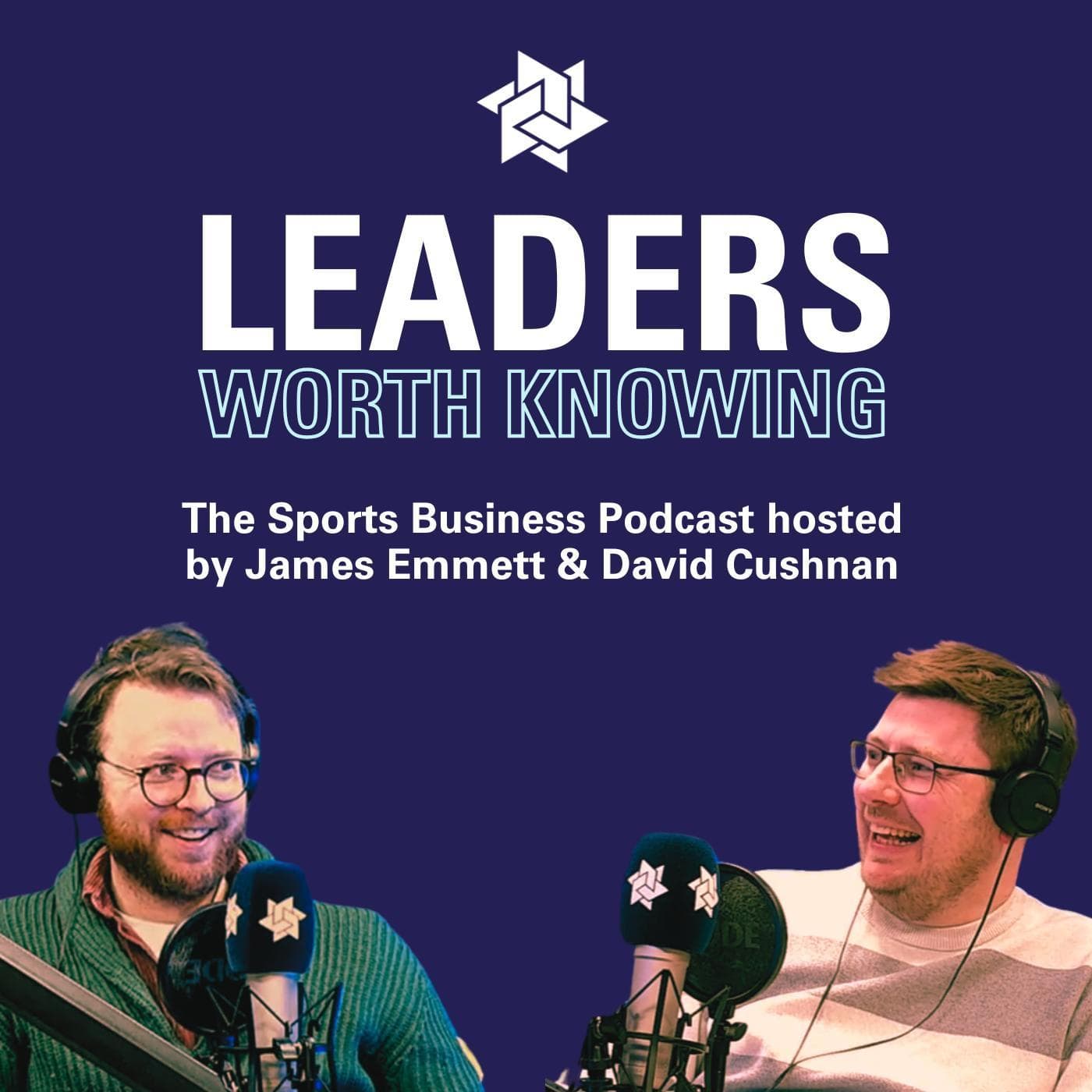
- James Emmett - Editorial Director at Leaders
- David Cushnan - Content Director at Leaders
Event Context
- The episode was recorded live at 180 Studios in Central London during the Leaders Meet: Innovation event, which gathered C-suite leaders from the sports industry to discuss global trends affecting sports.
- Key Focus Areas:
- Artificial Intelligence (AI)
- Global Economy
- Climate Change
- The event emphasized bringing in perspectives from outside of sports, including music, retail, media, and technology.
Key Themes and Discussions
- Global Economic Picture
- Tariffs and Economic Chaos:
- Discussion on the implications of recent tariff changes and their impact on sports.
- Sir Michael Moritz, legendary investor from Sequoia, provided insights on tariffs, cautioning against economic chaos while drawing analogies to political figures.
- Climate Change
- Emma Pinchbeck's Presentation:
- Pinchbeck, CEO of the Climate Change Committee, discussed the stark reality of climate change and how it impacts sports.
- Urged sports organizations to collaborate and provide data to tackle climate issues.
- Artificial Intelligence
- AI's Role in Sports:
- AI emerged as a universal theme throughout the event.
- Craig Hepburn and Professor Kirsteen Dale discussed practical AI applications within sports and beyond.
- Hepburn's interactive session included a concierge AI project at Art Basel, prompting discussions about AI's potential in both industries.
Additional Discussions
- Cross-Industry Insights:
- The podcast featured several segments highlighting cross-industry learnings, particularly from the music and retail sectors.
- Claire Cronin and James Bailey discussed how sports can learn from supermarkets' customer loyalty practices, emphasizing the importance of data-driven decision-making.
Notable Quotes
- "Show don't tell" - Hepburn emphasized the importance of demonstrating AI projects rather than just discussing them to gain buy-in from stakeholders.
Expert Insights Craig Hepburn (Chief Digital Officer, Art Basel)
- Advocated for looking outside the sports industry to gain fresh perspectives and innovations.
- Discussed the importance of integrating AI into core business models rather than treating it as an adjunct.
Claire Cronin (Former CMO, Chelsea FC)
- Highlighted the gap between sports organizations and FMCG companies in data sophistication.
- Suggested that sports must adopt more data-driven approaches to attract sponsors and understand fan behavior better.
James Bailey (Executive Director, Waitrose)
- Provided insights into how supermarkets analyze customer data and loyalty, suggesting that sports organizations can learn from this model to enhance fan engagement.
Key Takeaways
- Data Utilization: Sports organizations need to embrace data analytics to understand and engage their fans better.
- Collaboration Across Sectors: By learning from industries like retail and music, sports can innovate and enhance their offerings.
- AI Integration: Emphasizing AI as an essential tool for future growth and development within sports organizations is crucial.
Conclusion The episode encapsulates a rich dialogue among leaders in sport, highlighting the importance of collaboration, innovation, and adaptability in addressing contemporary challenges in the industry, particularly through the lens of AI and cross-industry insights.
Future Episodes Listeners can expect more discussions on innovations in sports and insights from industry leaders as the podcast continues.
Written by AI. May contain mistakes. Listen to the episode to check what was said.
Transcript
Automatic transcript. May contain errors.0:03Hello and welcome to another episode of the Leaders Sport Business Podcast. the podcast about leaders in sport from leaders in sport, recorded live. Well, they're always recorded live, aren't they? But recorded on location at 180 Studios right here in central London town. My name is James Emmett. I'm the editorial director here at Leaders and with me as ever is my great good colleague, David Cushnan, content director, leaders. David, hyphen, how are you? I'm well, thank you, James. We have had quite a couple of days, haven't we here in central london right smack bang in the heart of central so we are still in the we've been running this event leaders meet innovation for the last couple of days we're coming towards the close of it now it's been a busy couple of days particularly for us up on stage throughout most of it and we have found a small sort of cubby uh in this really beautiful venue in central london but we've found the one place that smells of sewage i have to say yes it does yeah yeah so at the moment and i'm sure there will be a technology for this soon some sort of AI, no doubt.
1:08It's not possible to project smell through podcasts. And that's lucky in this instance. It is. But we shouldn't let that dominate events, should we? Nor should we have it at the very top of the agenda for the podcast. Indeed, because there's actually plenty to talk about. Loads to talk about. Leaders Meet Innovation has been, and you will have heard us talk about this on previous editions of the podcast. We've been planning this for some time. closed door, no media gathering. Door can open. Invitation only, Chatham House rules. Very much that. A private opportunity for some peer-to-peer discussion amongst a really great group of C-suite and director level executives from across the sports industry.
1:55They've been gathered here over the last couple of days. A real focus from us on bringing in some outside of sport expertise to come and talk, be part of the discussions, to talk on stage, to mingle with people as well, to bring a bit of a fresh perspective. The general idea being to take people, if we can, out of the day-to-day just temporarily and to be thinking about some of the bigger, longer-term challenges around sport and sports leadership. The idea is we've been herding up sports leaders and sort of smushing them onto a helicopter and propelling that 35 ,000 feet in the air and getting them to tell us what they see quite right and what have they seen well um coming up on this podcast david i think we should reflect uh on a few of the big themes try and identify and what they have seen from that big old helicopter view um but also play in a couple of behind the scenes interviews um that we've captured as well um namely with craig hetburn the chief digital officer or the outgoing chief digital officer at Art Basel and Claire Cronin who was until very recently the CMO at Chelsea just two of the esoteric cast of characters that we've had here but shall we tackle the big themes first yes we sort of unashamedly took some of the biggest global issues and tried to create a discussion around them because we think they're important.
3:22And actually, a lot of the people who have been here participating have told us that it's important to them. And perhaps we should start with the global economic picture, which we wanted to cover. And obviously, very recent news events have put that firmly in the focus, tariffs very much on the agenda on many people's lips on and off stage here. And I think it's fair to say that sport is still trying to figure out what the implications might be from everything that's going on. And frankly, things will have changed in between us recording this and people listening to it. It just occurred to me, David, you listen to the Sport Unlocked podcast.
4:01Yes, I do. It's a very good podcast with Martin Ziegler, Rob Harris and Tarek Pandur. It's just occurred to me to stay sort of relevant, fresh and youthful. Maybe Tarek should change his name to tariff pancha well perhaps it's a thought it's just a thought yes but we sort of preempted the uh some of the conversation around the global economy by um having uh sir michael moritz with us early doors uh yesterday morning uh tuesday morning to kick things off uh here at leaders meet innovation um uh something of a legendary investor absolutely legendary investor and through sequoia um he has and remains invested into some of the biggest um tech firms on the planet he still has a big stake in google he um he does have a link to sport he is invested into pto and it did give us a little bit of a rationale um for why he's invested into this um triathlon um the new sort of triathlon challenger um but he spoke on stage and and bear in mind this is all chatham house rules and off the record so we can only give a sort of patchy um view of what was said but needless to say um sir michael was really direct in what he had to say about tariffs and the person putting them forward.
5:29And before he got into venture capital, Michael Moritz was actually a journalist. And I have never heard in all my many years of conferencing and consuming content, someone deploy so skillfully the kind of iron fist of insight with the velvet glove of eloquence as Sir Michael did. The way that he can talk about big picture and small picture finance and economics and cloak it in this beautiful and often poetic language. Just to give you a couple of examples, he was talking about tariffs and Trump, etc. And he opened off the cuff with the king of chaos gets out his wrecking ball and declares war on the world.
6:19He then went on to say that he has no particular insight into the mind of this depraved dissolute. He called what Trump is calling Liberation Day or whatever, whatever stupid thing he's calling it. Morris called it Imprisonment Day, a horribly improvised brutality infusing the world with uncertainty, stunningly incoherent in its approach. Really hard hitting, impactful stuff. and I couldn't say whether he actually said that or not because it's important that it remains off the record. It was great to have him with as a rare treat I think for anybody who was lucky enough to be in the room to hear him not just talk about that but actually give a much broader sweep of what's going on and what he thinks is going on in the global economy.
7:07Another of the big global issues that we were keen to tackle was the fight against climate change. Well, do you know what? Just on tariffs, and this is my own personal view, but I just think it is so insane and repugnant, really, that this sort of man-made economic chaos can be inflicted upon the world and upon the world's headlines and thinking space when there are so many more, much more pressing issues, I would suggest. including climate change that are necessarily being sort of jammed down the agenda as a result of this yes uh we had we put them right back up on top of the agenda didn't we we did we tried our best emma pinchbeck the ceo of the climate change committee which is this group that this uk body that was established under the climate change act of 2008 in the uk and it advises the uk government on reducing emissions and how to adapt to the impacts of climate change reports to parliament on the UK's progress every couple of years.
8:18Emma Pinchbeck, the CEO, an absolutely fantastic speaker, so dynamic, again, very eloquent. She absolutely knows her stuff and was able to paint quite a stark picture of some of the, you know, some of the facts and data points around climate change. and, you know, we've got a bit of a problem. But she also married that up with some clear action points for the sports industry audience and with some hope as well in terms of certainly what the UK is trying to do in terms of tackling some of the impacts of climate change and adapting to it. There goes Gawain Davis from EuroLeague and a lovely man has just left.
9:10We're looking out of the window here. We're seeing live departures. Live departures at the end of the event here. And I'm going to say something that's not necessarily... He looks like Ben Morrell, basically, the former CEO of LFP. You've had a busy couple of days. Yeah, sports industry lookalikes. Sports industry lookalikes. Emma Pinchbeck was fantastic. And she ended the conversation in a really pointed and punchy and passionate Q &A session with the audience with a bit of a call to arms for the sports industry or a call to action for the sports industry to provide organisations like the Climate Change Committee with data, with input, as they think about the role that sports can play, some of the challenges that sport faces.
9:57There was one moment, and again, I won't say who this is as it was a behind-closed-doors session, but there was one moment where the CEO of a sports organisation at a rights holder put their hand up to point out that for all the talk, and we've had a lot of it here, all the important talk of the future of fan engagement and commercial growth and investment in sport, the reality for them and their team is that their home stadium sits in a flood zone, regularly gets flooded. And that is, above anything else that they are thinking about, is the existential threat. And it was quite a moment, pretty stark moment.
10:39And I think sometimes we do get a little bit hung up on, on, you know, day to day issues when there is this, these kind of bigger things that will really have an impact. So we're going to connect, we're going to connect them up with, with Emma and see if there's some opportunity for some further conversation on that topic in particular. But she was, she was a bit of a hidden gem on the program, Emma. And yeah, on, on maybe the biggest topic of all. And another of these big issues that was covered in some detail here in various sessions was of course AI, artificial intelligence. And we had a number of sessions that focused on A, how to think about AI and how to talk about AI in a very practical way.
11:26And B, how to do AI, basically, how the practical use cases for it outside and inside of sport. Can I just say, I think AI was mentioned and came up in every single session we did, whatever the topic. So it is becoming one of those absolutely universal themes. And I would also add, on the flip side, I think, and I wasn't in all the sessions that you were in, so put me right on this. I think we might have just done an entire two-day conference for the sports industry without one mention of drive to survive on stage i think you're right but we unfortunately we went early with authenticity in terms of we did in terms of buzzword bingo ai yeah ai um so in fact you're mentioning um floodplains and kind of natural disaster and uh the increasingly unpredictable weather that we're getting as a result of climate change.
12:24And actually, one of the AI speakers that we had was Professor Kirsteen Dale, who is the Chief AI Officer at the Met Office, which is actually very difficult to say that. Yes. Chief AI Officer at the Met Office. UK Weather Service. Exactly. And she was talking about a project that they have undertaken at the Met Office to essentially integrate AI into the core of what they do. So not just sort of using AI to tackle little bits of process and elements of a service actually integrating into the core of the product to the extent that AI is used alongside physical physics-based forecasting in what the Met Office do now and they can narrow down to they can essentially give you a forecast for your garden if you have the budget to get a personalized forecast.
13:21But another AI speaker that we had was Craig Hepburn, who will be familiar to many sports industry listeners, because he spent five years at UEFA running digital there. He left UEFA a few years ago to move an intra-Switzerland move to Art Basel, which is the world's largest art fair. And he has the same title at Art Basel. But Craig was on hand to run a session on AI, one of these interactive sessions that we put on where we heard from as much from the audience as we did from on stage. But Craig used the example of a project that he had recently undertaken at Art Basel to create a concierge application as a kind of a little bit of stimulus for a discussion around the room.
14:14But I got Craig to essentially detail some of his top tips in a little behind-the-scenes interview after his session. So let's hear that now. Okay, Mr. Craig Hepburn, Chief Digital Officer at Art Basel. Do you say Basel or do you say Barl? I'm never sure what to... Basel. Basel. Basel. Basel. You're asking a Glaswegian to... I'm asking Glaswegian for pronunciation tips, yeah. Although you said that in quite a Bostonian way. Oh, interesting. Basel. Thanks for being with us. We are here towards the end of Leaders Meet Innovation. You've been here for both days. You were in a couple of sessions yesterday looking at your specialist field now, which is AI.
15:00And you were up on stage talking about a project that you have recently rolled out at Basel, a sort of concierge AI. give us your sort of overall reflections as they are at the moment Craig yeah absolutely yeah I've thoroughly enjoyed it's great to be back in the sports arena because worth saying that you left you were in sport for many years at UEFA exactly gave them the heave-ho yeah exactly you know five years I was there thoroughly enjoying my time there great organization actually where I started the journey into kind of really towards the end was actually where I started getting into the journey of sort of discovering what ai could do uh which we'll touch on uh but yeah so it's good to be back it's great to see some old faces um and some old uh even some colleagues and people i've worked with over the years um i think when you when you guys approached me originally and it was like how do you kind of like bring together a kind of like senior executive team um in a kind of format where it was more like um it was more like problem solving it's really digging into the actual challenges and trying to kind of bring people from outside of the sport itself.
16:08It gave me a, it actually kind of inspired me to think about you're right because I think when I was even in sport for five years, you get very insular about everyone's got the same challenges, everyone's got the same problems. You're always trying to like look at other sports, but actually the truth be told, you want to be looking outside of sport to actually what other organisations are doing. It seems obvious, but it's actually one of the things that we don't do because I suppose we're in our sort of tribes and our groups. We end up going to the same events together. So I think actually coming from outside of the sport is super valuable.
16:39So I think as an event, as a format, I think it's been great. I've enjoyed it as well. And it was interesting, the reason I went to Art Basel was because they were looking for people outside of the art industry, actually. So they were looking for people from sport and other. So most of the executive team that came to Art Basel over the last few years have came from outside of the art world because it's trying to bring new ideas about products and services and technology into a world that was maybe, you know, sort of quite traditional and quite specific about how it had done things in the past.
17:11So I think similar, sport can look outside to other businesses, even to the art world and to other industries and bring that into the field. And yeah, so I think it's a great format. Give us your thoughts on the sort of key differences between sports organisations as you know them. I'm sure, you know, not all sports organisations are the same. And the art world as you know it, and again not all arts organizations are the same and particularly when it comes to your field kind of digital and tech adoption um do you feel like now i get the impression that sport is a little bit behind is that is that an impression that you share yes um and and there's a strange paradox in that as well in the sense that i think sport you'd imagine and again being there there's so much opportunity and potential with the amount of data innovation technology everything that's happening especially around the production of the game as well if you look at the production of how most of these sports are now it's incredibly advanced technically i think where they've i think where they're struggling and you know i think a lot of people struggle not just in sport but in other industries is how are we able to come up and adapt to new commercial models and new products and services at a much faster rate than they're used to.
18:28So I think that any business model, it's a secure business model, it works, but it needs to evolve and change. And I think it's the innovator's kind of dilemma, right? You've got a great business model, but you see that it's changing. You see the world's moving around you. How do you either protect that and evolve it and try and disrupt your own business a little bit? But I think similar to other industries, even in the art world, they're looking at their traditional business and then they're starting to see younger audiences come in who are much more into NFTs, digital art, using technology, web three, crypto.
19:04You've got this whole new world who were kind of sitting outside of the art world or sitting outside of, but they wanted to come in. So how do you build the bridges to the next kind of customer base? Also, how do you build bridges into other industries? So just because you're a sports fan, how can you not think about other industries where you can build and bridges into that? So that's really about creating products, talking to them about the thing that they care about and then bringing them into your world. And I think that really, it's not just a lesson for sport and the art world. It's a lesson for how to think about building new products and services and commercial models and innovate and reverse engineer those ideas into new spaces.
19:44And I think we're moving into a world and we'll sort of touch on in AI. it's creating a world which is changing at a speed that's pretty much impossible to keep up with so there's a complete and you know business leaders are going to have to face the challenges of how do we rethink our whole operating model to keep up with that or at least try and adapt to what's going on in the future yeah um so yesterday you ran a session as i mentioned on um a project that you've undertaken at Art Basel, the creation of a new concierge application powered by AI. And within that session, I thought you gave some fantastic sort of practical tips, both in terms of how an organization might approach thinking about AI in the first instance, and then moving through the process of thought to action and sort of undertaking a project in AI.
20:40I wonder, this is a challenge for you now, Craig, can you remember and recount some of those practical tips that you gave? Yeah, absolutely. Or do you need your own AI to help you here? I always need my own AI because my brain's firing. But I think it's really hard, as I said a second ago, to kind of try and get your head around something that, mostly I think it's a new technology, but it's actually a completely new way of, it's a new framework. As I said yesterday, It's got capabilities more like human capabilities. It can read, write, it can speak, it can hear. It can do things that most traditional pre-generative AI was unable to do at that level, at that quality for the price point.
21:21So you've now got access and it's sort of democratized this kind of incredible technology that can do these human capabilities. So you now just have to think about it in a different way. And what does that mean practically? I mean, the first thing is really everybody really needs to kind of play with the tools, the products themselves, not only writing and chatting to GPT as text, but actually having a conversation with it or asking it to generate images or videos or seeing what capabilities it can do to write code or applications. These are things that people haven't even thought about asking.
21:55And so now if you think about it, it's got all of these capabilities. Actually try and spend time asking it things, playing with it. The challenge is also asking the right questions. So one tip that I noticed many people said was fantastic was I don't really know what to ask or I don't know how to prompt. You can just ask the GPT or a model to help you write a better prompt and then putting that back into itself. So I think on a practical level, I think just understanding the core usage of it. Then at a sort of more business level, it really is creating an internal environment where you can play with these tools and technologies.
22:31I think the immediate thing most people are saying is they're nervous about data, they're nervous about hallucinations, they said it doesn't always do what it says, they're unsure about where their data, what that training and IP information is going. So I think it's really bringing someone in to help you understand that and then setting up an area where people can play with the tools and the technologies. even having open source models that are downloaded that you can use that are completely not connected to the frontier models so there's a lot of kind of practical technical things you can do to give you that safety that you know your ip and your data is protected and then essentially just you know get a team of and i would say less about technical people and it people playing with it but bring more of your creative your marketing people your writers i mean we had this conversation with yourself yesterday as a writer how do you think about you don't want it to replace you but actually you can help be a co-pilot or a co-creator with you and you'll start to realize that it does add a lot of value and actually brings a lot more it gives you a sort of augmentation of your own capabilities so so those are just some very practical tips um yeah so i think yeah what about so in terms of being the person within an organization driving a project forward um not necessarily always in an environment of full support yeah i'm not saying that you necessarily have that but i think with a technology this new um you you're always going to have people who don't understand it and are inherently suspicious of it yes and i wonder what you're obviously trying to get people familiar with it using it um working out its capability but beyond that what other tips do you have for um getting things done in ai in an environment which isn't all 100 ai advocates or yeah even just ai literate yeah literate and i think you know that's a problem with general technology i would say the difference now is um whereas before in traditional technology you had to let's just say create wireframes presentations strategy documents you had to do huge amount of work to try and get buy-in you had to kind of tell what i think now is ai gives you a word you don't you can show yeah show don't tell yeah so in other words like i did with i think your team yesterday they've said well i i hear what you're saying but i don't understand it so i showed them how to build an app for this event yeah in about five minutes at that moment they went wow now i get it yeah i could tell them all day long but when i showed them what it did that changed their whole it gave them it opened their eyes up to now what can we do so i think every single example i've ever had was i speak about ai and tech and they go yeah i heard it yeah i've heard all this stuff um i had a meeting actually a few months a few weeks ago um with a friend and he was very let's just say he wasn't that open to it he was like i've heard all these things i've seen all his presentation on youtube um and he works on a legal profession so we literally took a legal document and we essentially analyzed a legal document and it did it and when he seen how good the quality of output was he couldn't believe it yeah he said that takes our lawyers hours yeah show don't tell so when you show somebody something that's capabilities it then basically breaks down that initial kind of i don't trust it i don't think it can do what it says it can do so i think that's the number one thing and in order for you to get to that point every individual has to know what things they can do to show people yeah not tell them yeah and so i had a lot of consultants um i'm seeing a lot of people come and try and sell ai and technology and strategy and the biggest red flag is they want to they want to show people powerpoint presentations and strategy documents no you have to show them something immediately yeah and actually get the ai to come up with the ideas that's going to help that organization do it live yeah it's a It's a reverse engineering model that I think actually changes the business models.
26:27And it goes back to, I think, your point about industries and strategy. And every industry is going to have to look at where they stand in the world of kind of where their value chain lies. When you've got a technology that's this powerful, this general purpose technology can cut across every industry in every way. Finally, are you able to sort of pinpoint a few different models or applications that people should consider for different types of functionality? What are your favorite tools to use, Wes? Yeah, great question. I think, look, GPT is my kind of go-to, as most people probably have. I love using the 4.0 model, which is one of their models within GPT.
27:08It's very good as a general purpose. I use it to have conversations with. And by the way, I should add, if you tap the little button that allows you to have an actual audio conversation, that changes the framework. I normally am in my car and if I've got an idea, I'll literally hit GPT and chat to it when I'm driving. And it captures all my thoughts and ideas and actually brainstorms with me. So that's a great tip. I think when people do it, they realize how good it is. They're like, why was I not doing that before? The second, so I think GPT and it's really good now at image generation. So if you can ask it to create an image, a logo, you can upload images and ask it to change it.
27:46You can build wireframes, presentations. it's got those capabilities now which is truly brilliant it can also write code but if you want to play around with building code and just playing around with little prototypes and demos Claude if you go to c-l-a-u-d-e dot a-i from Anthropic is a great tool for coding so it's got what's called Sonic 3.7 it's the world's best coder so you can ask it to write you applications and code and what's beautiful about Claude is it will actually write the code and show you the output in the application so I've shown a few people over the last few days and that's something they've taken away that allows them to kind of learn a little bit more.
28:26Gemini is really good for just large context so if I've got a huge bit of research I've got a big strategy document or I've got and I want to get a really good executive summary. Gemini is amazing because it's got this really large context window and what that means is it can ingest a large volumes of information and it can just have bigger memory. The other one that I didn't mention yesterday and I just thought about it today was there's a product called Notebook LM. If you just type in Notebook LM Google, it's a product that allows you to upload any document, any URL, any website. You can even upload your CV or a product, whatever you want, you upload it and it will generate you an AI podcast.
29:09So it's two humans having a conversation about the information that you've uploaded it's brilliant people love it it's a new way to engage with information I use it in the car a lot if I want to hear a presentation have you used it? it's really weird yeah I've used it for so my wife is a singer in a band right okay and one of the her band actually got it to generate a podcast about the band yep based on that's amazing and it ingested all their songs from Spotify that's a great idea and they had these two sort of it's the classic American podcast I know it is yeah because it's been trained the podcast and it's the classic yeah yeah it was incredible it was totally incredible did you hit the button where you could join no so there's a button where you can be a guest you can be a guest in the podcast like that is this is the technology they didn't know it could do it they figured out it's easy and you hit a button and you can join and now you can have a conversation in the podcast so I would highly recommend everyone goes and plays with that that's the one thing that I think most people that are kind of learning this has got the most out the most from or the most that they've enjoyed those are the two um other things if you want to kind of get more into it i think there's a there's a great product called replit r-e-p-l-i-t um and it's a really cool it's what's called no code low code um and there's this new thing that i was saying my son is now getting into and a lot of the young kids are doing it's called vibe coding um it's you can literally talk to these applications like replit and ask it to build your applications literally just by talking to it and it will code you the application in minutes you know and so these are kids that are building apps and cool things for their friends they're just building vibe coding so it's became a really big kind of thing sort of space at the moment now these are not big enterprise applications or you know big products that you would sell or ship to customers but these are fun ways to prototype and concept ideas that allows you to then look at well maybe we could take this to the next level so we're yeah so there's kind of there's a load of kind of tools like that um but the other thing i would just recommend is people go onto youtube just type ai and literally watch some of the the just spend a few hours just watching what people are doing with it um and then grab some podcasts and just listen uh but learn and embrace it and when you're here of a tool download it and give it five minutes yeah yeah um all good advice um craig hepburn thank you very much for today and thank you very much for yesterday as well fantastic thanks army that was craig hepburn uh outgoing chief digital officer at Art Basel talking about AI, where he was very much, well, we positioned him as an expert.
31:45And I think with good reason, I noticed he was... Is he a bull or a bear on AI? He's a bull. He's a bull. And he was also very much the center of attention. A lot of people flocking towards him after his session and also during one of our speaker huddles towards the end of the day. A lot of people signing up for a huddle with him, a real, a veritable Craigslist of people there. Lovely, lovely stuff. We, as we said, put outside of sport perspectives really at the heart of the program and at the heart of the discussions on stage. I think probably inevitably one of those outside of sport sectors where we know there's a lot of crossover and a lot of intersection is the music industry.
32:27And just this morning, Wednesday morning, we had a power conversation on stage between Sally Bolton, the CEO of Wimbledon, and Dr. Joe Twist, who is the CEO of the British Phonographic Institute. Yes, another very difficult one to say. Yes, which is the UK music industry trade body, essentially, looks after, I think, or it represents, I think it's something like 85 % of all recorded music in the UK, including the very big labels. The big labels, Universal, Warner, Sony, etc. Indeed. And you were in this session, you were listening in, and the idea was to bring them together as two, and it's also worth saying that the BPI also looks after the Brit Awards.
33:09And the idea was to bring together two CEOs at organisations, institutions that have a rich heritage, a rich tradition, but are in their own ways continually looking and pushing to innovate. Yeah. And it was a fascinating conversation between two titans of their own sort of spaces and two very established leaders in music and sport. And it was a wide ranging and freewheeling sometimes conversation that ranged from performance marketing all the way to the perimenopause stove and everything in between. and in terms of those crossovers and those lessons that our predominantly sports industry audience could draw from what Jo had to say about her experience in the music industry, music is sort of always on the frontier of disruption.
34:07So if there's any sort of tech-based, society-based disruption coming for entertainment, media, music tends to bear the brunt of it first. We saw that obviously with Napster and streaming and different business models that have come out of that. But we are now seeing it in a big way in, surprise, surprise, it's those letters again, AI. so the world of generative AI is causing much consternation for music and copyright issues and legal frameworks at the moment and part of Jo's role at this kind of trade body is in lobbying government for well tighter restrictions and policy and policy but she also was talking about the the delicate balance as a leader that she has to strike and the BPI has to strike between being a proponent of innovation in general and helping people to usher in new processes, new technologies, new ways of thinking, but also to be a bastion of protection against some of these innovations and some of the ways that these innovations disrupt.
35:22She was talking about having to become comfortable with being uncomfortable, etc., that disruption often brings. She's a doctor as well. Did you know that, David? Yes, I did. Do you know what she's a doctor of? Oh, is she a doctor of psychology? No, she's a doctor of online communities. Oh, interesting. And she's been... Doctor of Reddit. Basically, although she got her doctorate in the late 90s. So a lot of online communities didn't... Doctor of my space. A lot of online communities didn't exist then. It's very early, isn't it? Yeah. And she's got this fascinating background. So she's only relatively recently into music.
36:06She spent some time in a very similar position leading the trade body for the games industry, video games, where her doctorate might have come in handy, I guess. and did you know that she is married to Miles Jacobson who is the founder of Football Manager who's spoken at our performance events before yes it's a small world David it's it's um have we talked about this on the podcast before it was just an off-air conversation where we have talked about getting husband and wife husband and wife husband and wife oh no I did it with your i did it with your replacement uh the week uh when i spoke to nick coward about our event in india right um because we had a husband and wife on stage we had the dhanies the dhanies were on stage as a husband and wife well i was supposed to have at the same time as that i was supposed to have a husband and wife duo join me for an attention seekers workshop out in la joe kelly until very recently of twitter and x running content partnerships there um and her husband, Matt, who is a senior marketer at Activision Blizzard.
37:14Well, I had Glenn Hugill on stage in my room. Well, he's married to the job, Dave. No, he's married to the job. He was absolutely fantastic. I mean, talk about, I used the phrase freewheeling conversations. I threw out my prepared questions as he held forth and, you know, incredibly charismatic guy. he's um the president of international wheelhouse entertainment the production company that's just starting to move into sport jimmy kimmel's production company uh but they are pretty they've got lots of hits it's not jimmy kimmel it is he was a co-founder yeah co-founder of it um with brent montgomery i thought they parted ways uh no i don't believe so um the um but he he was fantastic on a range of topics including new content formats discoverability uh but he also did an impression of his wife he was telling her he was telling a story in my experience it's always a dangerous move yeah he was telling a story about a new project that he's got coming up um that he did only talk about because he was off the record in a closed door environment but it's on itv and will in uh will include some prominent former footballers um why don't you do an impression of him doing an impression of his wife i'd rather not um but yes he did i would bold impression of his wife.
38:32But that's by the by. Also up in the theatre today, off theatre stage, we had James Bailey, executive director at Waitrose, the high-end supermarket chain here in the UK. I think over 300 stores in the UK. And he runs it, basically. And again, And you sat in on this one. I did. Yeah, this was fascinating, this discussion. So James Bailey was in conversation with Claire Cronin, the former CMO of Chelsea and McLaren and indeed Virgin Atlantic. And the discussion was really focused on merchandise, e-commerce and customer loyalty. and the aim was to sort of draw out some of the lessons that sport can take from the world of supermarkets, the sheer scale of the data processed by the big supermarkets is unreal.
Read the full transcript
39:35So, sure, they've all got loyalty schemes now and they've got however many millions of customers regularly using their loyalty schemes. Just so you know, Waitrose has around 8 million active customers a year, but total yearly customers of 16 to 17 million. And the aim of the game for them is to simply move as many of the 16 to 17 into the 8 bracket as they can. And they do that through a number of ways. You made it sound so simple. It's very simple. It's just funnel progression. um but it's not just um sort of loyalty schemes and all the transaction data um that comes with that it's also the actual transaction data right the uh the your bank card whatever you pay for your supermarket on they have records of all of that and they're it's it's a fairly straightforward process for them to match customer profile with um bank card transaction um and you know how many um customer transactions waitrose processes oh tell me 20 per second wow so 20 so a customer transaction for them i think you said it was like about 15 it has to be about 15 items right um for it to register as a transaction um yeah and they're only five percent of the uk supermarket market um so you can imagine how many transactions are happening per second across the whole lot Well, you can extrapolate quite easily with maths.
41:08But yeah, a completely fascinating discussion. It's sort of the central plank of which was that supermarkets are laser focused on retention, basically constantly reacquiring customers because they think of their customers as customers, not as fans and they know that you have to buy food and um you can very easily do that in lots of other places whereas in sport there's an element of complacency that comes with the idea of the fan fan has less choice um in in what they do and where they go and where their allegiances are anyway the conversation was expertly steered by um claire cronin and um actually i caught up with her afterwards to get a few of her takeaways, reflections, etc.
42:04So let's hear from Claire Cronin now. Okay, Claire Cronin, until quite recently, the CMO at Chelsea, CMO all over the place as well. You've been at McLaren, you've been at Virgin, you've been at any number of major brands as well. Thank you very much for being with us. Claire, you were running a session today with James Bailey, the Managing Director at Waitrose, talking about the sort of crossover between or what sport can learn from the retail space. And I'm sort of putting you in the bracket or you are the sports representative here. What do you think were the main takeaways from that session?
42:46I think the main takeaway for me is that although sport's been late to the journey on recognising the importance of data, unless we start now, we'll be forever behind the curve on it. And one of the biggest takeaways was that actually the sophistication of FMCG companies in particular in understanding their market and their buyer behavior far outranks anything that sports companies understand about their audiences. So in order for us to be able to attract those brands as sponsors, we have to become much more data-led and much more forensic in how we're proving the ROI business case for them. So I hadn't quite realized that in partnering with all of the retailers and becoming partner of their loyalty propositions, just how precise their data had become and how precise it was.
43:33Yeah, it was insane, wasn't it? He gave the example, basically up on stage there, he sort of said, right, the sports industry's sponsors are the supermarket industry's supplier organizations, basically. And he said that they are laser focused on ROI. And he seemed to suggest that they actually don't care about the properties that they sponsor, but that can't be true. um yeah it was interesting to hear about the the the real sort of laser focus precision with which they're able to measure little tweaks sort of in in spending and um discounting and messaging to audiences through supermarket loyalty apps and the the simulacrum for that would be sort of customer databases for a sports team and it's just not happening the same way at all in not at all And we spoke about the fact Club Card started in 1995.
44:27And we've seen Tesco were the first retailer to introduce personalised pricing for their members. And that feels like a really obvious next step for football clubs to be able to offer a personalised price on everything they sell in their merchandise stores to their own fans. So it's 90 quid. If you don't have a membership, it's 80 quid if you do. Exactly right. And we know from all of the work we've done with fans historically, they're very willing to give us information about themselves in order to win signed shirts or whatever it might be. So the idea that they could then get a discount by supplying more information about themselves then ultimately enhances our understanding of them and the value of that fan to a prospective sponsor is like a win-win for everyone.
45:03Yeah. I thought it was a really interesting session in terms of the different mindsets that people involved in membership schemes, I guess the marketing folks in supermarkets and retail and in sport have in that, you know, sport has fans. You think about your customers as fans and supermarkets have customers and they're very aware that they do not have fans. And that leads to completely different approaches in how you deal with membership schemes and loyalty. Membership schemes, I suppose. And I wondered the difference between fans and customers. It was like the complacency that you have when you have fans.
45:42Totally. That complacency. And you actually made the point in there that what the supermarkets are doing, which is amazing, which sport could really learn from, is essentially constantly be reselling to their customers, knowing that just because they're with you now, it doesn't mean they're going to be with you tomorrow. This model of re-recruitment is something that is embedded into every retailer because they understand, particularly with supermarkets, that your preference for where you shop is largely guided by the location of the shop and the price. And so those two things far outrank everything else.
46:17And sports for a long time, your loyalty to a sport has been governed by your parents introducing you to a football club that was near to your house. Ultimately, what we're seeing now with Gen Z and Gen Alpha is that they're forming allegiances to individual players who might be nowhere near the local club to them. And that that loyalty becomes that much more fragile because when that player leaves the club, they port their loyalty and follow the player. And that's creating a really interesting dynamic for football clubs who are trying to build these future loyal fan bases. And there are many, many more things now competing for the attention of the fan over the course of their lifetime.
46:50So, you know, they might start out liking football, liking Cole Palmer. But then when they hit their teenage years, they might start to have their head turned more by Formula One and starting to follow the drivers there. And so how do we as a football club take some of the principles of the retailers and re-recruit constantly so that we don't lose that focus and that attention? Because ultimately, whoever has the attention will monetize it. I quite liked the bit about personalized pricing that you identified in that. And also, I think you can extend that to another point that you made in that the way that pricing is set in sport certainly has to be different in different geographies.
47:31I mean, you were talking about being absolutely astounded in Formula One by the prices that you can get away with in the US. And there's something in that sort of flexibility and understanding, like having a precise understanding of what price points are in different markets and for different people, right, that sport really should be on top of. Yeah. And I mean, I saw that coming to Chelsea also, whereby we didn't dynamically price things like stadium tours. So you would price for the same stadium tour on a Monday versus being in school holidays in an Easter. Or the sunset tour. Exactly. Just doing some of those kind of tried and tested techniques that already apply across hospitality, hotels, airlines, etc.
48:12And porting some of those innovations into your own industry can create much more kind of revenue upside. And I think that's where sport can often become locked in an echo chamber, looking at what other sports clubs are doing, instead of looking more broadly at the wider ecosystem. because most innovations aren't genuinely brand new innovations. They tend to be an imitation of something that's been seen elsewhere. And I think that's been the great thing about this conference is that it's opened people's eyes to different brands and different entities that are facing the same challenges, like for example, how to unlock the value of AI, but applying it to a different use case is making people rethink how they take it into their organization.
48:50Yeah. When you moved to McLaren, was that your first sort of... My first foray into sport, yeah. That was your first foray into sport. Right. And what can you, and then obviously you went from McLaren to Chelsea. So you've seen two different types of sports and two different working environments, I would guess. Can you remember what struck you moving out of, what would you call sort of virgin, like traditional brand marketing or sort of airline brand marketing? Yeah, very much. B2C. B2C brand marketing. B2C and B2B brand marketing. When you jumped into sport, can you remember what surprised you, disappointed you, challenged you, you know, in terms of suddenly realising, oh, my God, sport is so far ahead slash behind in this area?
49:36I remember the thing that surprised me most was that McLaren's economic engine, if you like, was primarily driven by sponsorship. And I hadn't really thought through that if you're going to 23 races around the world, that all of the ticket revenue isn't going to the race team itself. So their primary mechanism to earn revenue was through sponsorship. And so that kind of really struck me. I would have thought more of it would have come from their direct fan base. but they're actually sort of disintermediated from that fan base by rule of the fact that their e-commerce website is outsourced to somebody else so that was a real surprise to me yeah I think one of the challenges into sport was that despite the fact they had these huge kind of numbers of fans who followed them on social there was a bit of a drop-off when it came to actually registered names in a database that you could then directly market to so that was a bit of a surprise And that was my first understanding of actually all of these big consumer businesses where I've worked previously that have been spending a lot of time trying to get names into databases, enrich those profiles.
50:41The sports teams have been quite complacent around doing that challenge because, you know, they've been focused on the B2B sponsorship sales. But now they're kind of sat on this massive latent opportunity where they have huge fandom, huge love for their brand and fans who are very willing to exchange their data in exchange for getting something back from the sports team. whether that's you can win an opportunity to go around the McLaren HQ and see all the cars, or if you're at Chelsea, you can win a signed shirt from Cole Palmer or Lauren James. And so I think they're in an absolutely perfect position now to take advantage of the popularity they've got and underpin that with data infrastructure so that they can actually give real value back to the fans and then ultimately also to the B2B sponsors.
51:21And finally, Claire, what's on your agenda at the moment, obviously, between roles? um yeah what's next for you i think um really trying to ride that ai curve in particular because all of the all of the sports teams i've spoken to here today all of the brands coming here everyone is talking about ai but not necessarily being able to translate that into an action for their business that's actually giving them a bit of a competitive advantage and giving them just some learning opportunities so i think it was fantastic fantastic to have the session earlier today with uh the chief ai officer at the met office and to see how they're applying ai in a way that augments their actual core business proposition instead of using it as a way to kind of cut roles or cut costs.
52:03And I think that's always the challenge in whether you're currently in role or you're looking for your next role is always learning those new skills and staying curious so that you can best deliver value to the new business you join or the one you're working in. So you're boning up on AI then, watching tutorials on YouTube. Absolutely, yeah. Okay. All right, Claire Cronin, thank you very much indeed. Thank you very much, James. That was Claire Cronin talking about some of her reflections on a couple of days here at Leaders Meet Innovation and her conversation on stage with James Bailey, the executive director at Waitrose.
52:37We're watching live departures here. The sun is just setting on this first edition of Leaders Meet Innovation. Just a little bit of additional colour from the room. um we had uh lots of great partners with us uh for this one we had teamworks as our main partner and then we had um our uh event partners um all of whom were involved in some shape or form in bits and pieces of the uh program at ey ivy street uh porter's consulting uh freeman's and uh also populous michael williamson the ceo of wrexham was on stage superbly bearded and a lovely man and obviously in a really exciting role. And he was on stage talking with the Populous team.
53:29As Ryan Reynolds' executive mate. Yes, as talking with Christopher Lee, the EMEA managing director at Populous. And I was moderating the session sitting next to Michael. And if you're listening and you're in the sports industry and you encounter Michael, I'm starting to think But it's either coincidence or he is picking up the mannerisms and voice of Ryan Reynolds as he goes. So just something to watch out for if you're out and about with Michael Williamson. Any final reflections from you, James? Do you know what, Dave? Pooped and actually starting to lose my voice yet again. Yes, we don't need that.
54:06So, yeah, no more reflections from me. All right. Let's call it a day there. Thank you to everybody who came to Leaders Meet Innovation. And thank you all for listening. And we will be back soon.
From the publisher
Snap reflections on our Leaders Meet: Innovation event this week in London, with Craig Hepburn, Art Basel's Chief Digital Officer, and former Virgin Atlantic, McLaren and Chelsea FC Chief Marketing Officer, Claire Cronin.
Leaders Editorial Director James Emmett and Content Director David Cushnan are on location at 180 Studios on The Strand to reflect on two days spent with C-suite leaders from across sport, discussing the biggest global trends - artificial intelligence, the global economy and climate change - with the help of outside of sport perspectives, from the worlds of music, retail, media and technology.
They're joined by a couple of experts fresh off the stage - Craig Hepburn assesses how the sports industry is tackling artificial intelligence, while Claire Cronin offers her reflections on the two days and her conversation with Waitrose Executive Director, James Bailey.