
- Podcasts
- Leaders Worth Knowing Podcast
- Rwanda's Grand Prix, Manchester City's punishment, and Netflix's next big football play
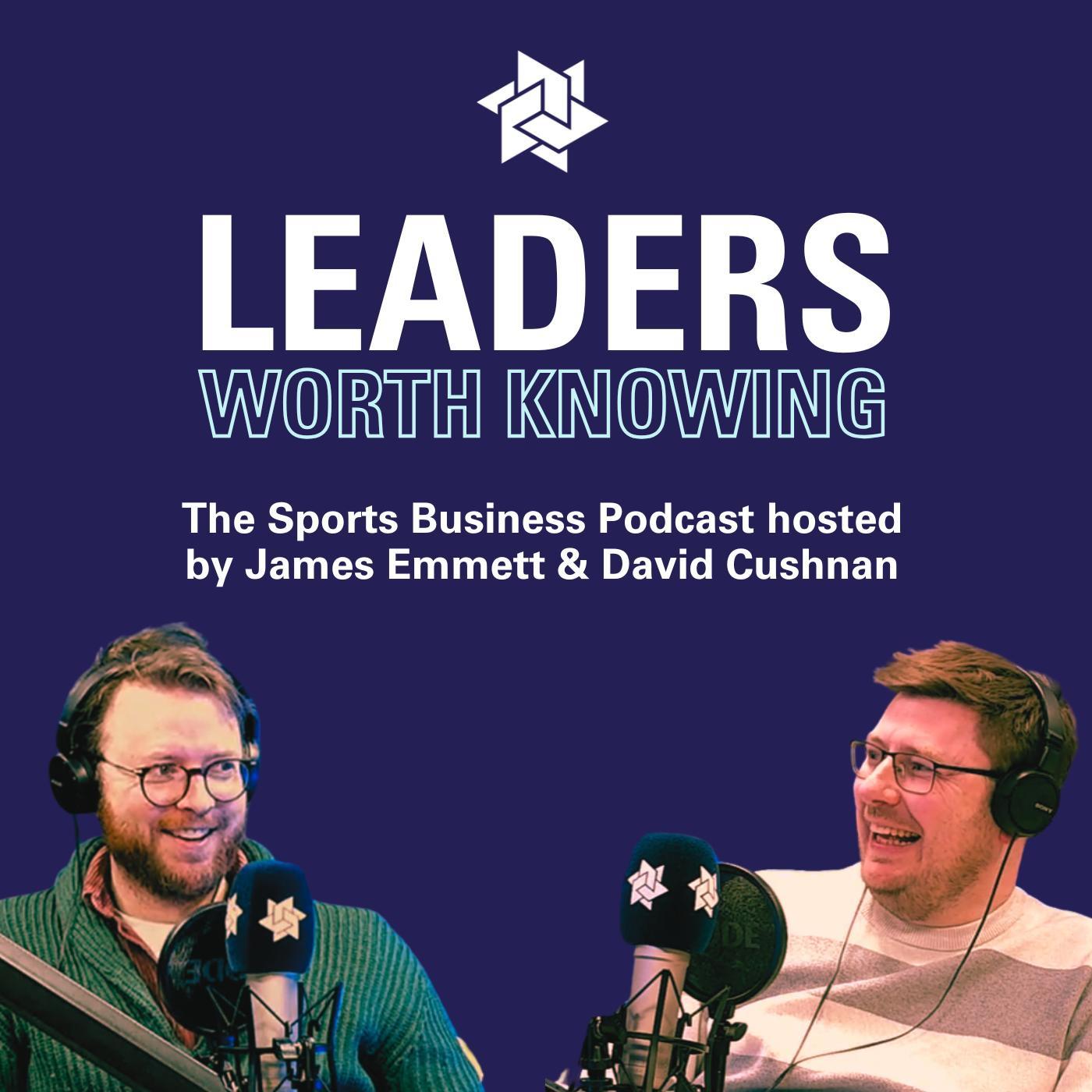
Leaders Worth Knowing Podcast16 Oct 2026 · 42m
Rwanda's Grand Prix, Manchester City's punishment, and Netflix's next big football play

 Add vo to ChatGPT or Claude to ask about everything you hear
vo listened to this episode to put together the overview and transcript, so there may be the odd mistake.
In short
Leaders Worth Knowing covers (1) Simon Crownshaw at Microsoft on using sport as a tech proving ground and how sponsorship opportunities are matched, (2) major sports media business moves: Netflix’s Men’s World Cup rights in Spain/Andorra, Netflix layoffs, and IMG’s production role for the Women’s World Cup, (3) Rwanda hosting an F1 race from the early 2030s, and (4) proposed “punishments” for Manchester City amid the Premier League/ownership sanctions controversy.
Guests/backgrounds
The episode features discussion with Simon Crownshaw, worldwide director for media and entertainment at Microsoft and an AI evangelist/CTO-level figure; he played youth football with Steven Gerrard and advises on sports sponsorship. Other named figures: Brandon Riege (Netflix sports exec), Adam Kelly (IMG president), Stefano Domenicali, Mohamed Ben Suleyem, Paul Kagame.
Key claims
Netflix is “eventizing” sports to drive customer acquisition; Rwanda’s F1 bid is tied to tourism/economic goals amid controversy; City punishment should be structured to avoid geopolitical/ownership complications.
Notable examples
Microsoft’s Premier League tech partnership/app, NFL sideline headset insights, F1 race-day tech using GitHub; Netflix’s global Fury vs Joshua and Alex Honnold content; Rwanda’s Visit Rwanda/Arsenal sponsorship controversies; proposed City relegation to League Two with points deductions or ownership divestment.
Transcript
0:04James Emmett: Hello and welcome to the Leaders Worth Knowing podcast, the sports industry show from Leaders, where we talk about what's worth knowing in the business of sport this week. I'm James Emmett, the editorial director. And I'm David Cushnan, content director. On the show this week, Netflix takes another step towards becoming a sports broadcasting big boy. Rwanda and Africa gets an F1 race. And how to solve a problem like Manchester City. This is Leaders Worth Knowing. This is Leaders Worth. We're back, David. We're back. Leaders Worth Knowing, back in the studio. We were never really away. On the feed.
0:38It felt, no, not on the feed, but it felt physically like we were away slash at Chelsea for many, many two nights. Many, many, many hours. Yeah. Yeah.
0:50David Cushnan: We should say up front, thanks to everybody who came along and participated in whatever shape or form at Leaders Week London last week. Hope you had a good one. We certainly did. And wow, what a busy few days. Indeed, yeah. No, really lovely to speak to so many of you.
1:06James Emmett: And thanks for all the lovely comments about the podcast from those people who did make comments about the podcast. It's always nice to hear someone say, oh, I was just listening to your voice on my commute slash gym slash whatever. So do keep that coming. And in fact, if you want to get in touch with either me or David, you are always welcome to. We both have email addresses, don't we, David? You can find without not too much searching. No, indeed. Yeah. Do you want to say it? James.Emmett at leadersinsupport.com. Correct. And then the equivalent for David.Kushnan. Correct. Yes. And if you haven't heard the various podcasts that we produced from Leaders Week last week, It is worth going back.
1:49James Emmett: Sort of live reaction to what went on at stage with a smorgasbord. At stage? Is that why I said at stage? On stage? On stage at the event with a smorgasbord of guests, including Steve Gera, Shibs Thera, Dave Nugent, the one and only Abe Madcore, Tom Scott, and one more. Francois Wescombe. Francois Wescombe, the new Ticketmaster honcho. What a man.
2:17David Cushnan: what a lineup yes it was good fun good fun all around so you can scroll down on the feed also just below this on the feed james is a very what i'm going to call an incredibly fascinating conversation actually that you had with um a man from microsoft simon crownshaw do you know what i
2:36James Emmett: thought i would solve ai david i thought i would take some time to have a conversation with someone who knows what they're talking about to get to the bottom of the AI issue. Yeah, a fascinating discussion with a man who I'm still not sure how to categorise in terms of what he does and what he's expert in. Almost certainly the smartest person I've ever talked to, Simon. Really? It's not you, Dave. Okay. um yeah simon crownshaw is the worldwide director for media and entertainment at microsoft um essentially although he is not part of the marketing team at microsoft he is the man who controls the sports sponsorship marketing decision making at least uh at microsoft he's also the cto or a cto at microsoft an ai evangelist and one of just a handful of people who is licensed to speak publicly at Microsoft.
3:39David Cushnan: And on the CTO point, you very nearly stumped him when you asked the question, what does a CTO do at a big tech firm? And which is a good question, because it's, you know, potentially everything. And he does seem to have a huge mandate. Yeah, absolutely gigantic mandate. I don't know how he does what he does.
4:01James Emmett: He's got a really rich background in sport as well he played youth football with steven gerrard um and remains a big liverpool supporter he's deeply involved in the sports properties that microsoft sponsors not just from a a kind of yeah you're the you're the top account person uh for this sponsorship but he sits on multiple boards advising on technology matters it seems he's on some kind of premier League advisory board and has the ear of CEO Richard Masters. Genuinely, a really fascinating discussion and spot the points at which I don't know what the hell is going on in that discussion. Oh, I did.
4:50James Emmett: He's really good on something that we're seeing more and more of, which is sport as a proving ground for technological innovation and in lots of cases that is just talk that's a storytelling opportunity that lots of sports properties commercial departments at sports properties have seen you can bring in a technology focused or innovation focused sponsor if you give them a clear strip of turf on which to tell a story they don't actually have to be using their technology within the fabric of your operation. Microsoft, they say, or Simon says, absolutely do want to be using their properties to either demonstrate capability or to kind of work up particular capability.
5:42James Emmett: They replaced Oracle as the Premier League. I don't know what the designation is, but a Premier League technology partner. and worked on and brought out the new Premier League app within the space of four months, which is pretty rapid, pretty good going for an app that is used by millions of people around the world. They worked on the NFL sideline system, the old Motorola branded, I think at one stage, headset technology um they're making sure that co-pilots we love co-pilot don't we dave they're making sure that that uh is being used um to deliver insights in real time to nfl performance teams um they are one of a number of technology partners who have carved out genuine space to innovate within formula one they use something called github uh there um to um execute race day technology uh yeah fascinating conversation he did also um talk about this is fascinating that i can't remember whether this was on or off air whether we were recording or not recording um but he was talking about the process by which opportunities are brought to microsoft sponsorship opportunities are brought to Microsoft.
7:09James Emmett: And honestly, I didn't think that these people existed. There are so many consultant types in the sports industry who believe that there is work out there for them playing matchmaker between brands and rights holders. They somehow nurture a suite of relationships with brands, and then they're able to introduce rights holders to brands and they make money from that introduction if sponsorship comes out of it so many people who believe that they can do this i just don't
7:42David Cushnan: see it in action but it happens it doesn't happen in the public in the public agency wants to do
7:48James Emmett: this as well for me it's not something that i would ever endeavor to do um but so many people seem to want to try to make money out of this simon crownshaw openly taught i think actually after we'd stopped recording, talking about how useful he finds that service. Someone, a trusted advisor to him, matchmaking him with a potential rights holder opportunity. He was talking about one in particular, which is coming up quite soon. Yeah.
8:22David Cushnan: A couple of observations. The conversation, and it's a really, I really do recommend you listen to it because it's that rare conversation where you are talking to somebody who is so deeply embedded in an organization that goes way beyond sport, but where sport is certainly a small part, but a small but significant part of its, certainly its marketing activities. It really reminded me actually of the conversation you had maybe a year or so ago with Dan Reed, who was at that point, I think, just about to leave Meta, it was sort of his exit interview, where he was able to take us inside the workings of a huge corporate entity like that, where, you know, in a somewhat similar way, sport is a part, but by no means the be all and end all.
9:17David Cushnan: So I thought that was really striking. I also thought Simon was really fascinating on the distinction that a Microsoft is making between leagues and teams at the moment. And it sounded like there's going to be a bit more of a sustained effort to work with teams as opposed to leagues. I'm sure they won't stop working with certain leagues because those are very, very good and high profile deals. But he seemed to be suggesting that actually the opportunity, the opportunity is growing working with teams as teams become larger than a sporting entity and become true brands and media entities. And they're able to communicate directly to fans and all the things we talk about.
10:07David Cushnan: They are able to, and it is a requirement really, to be producing their own content and to be the sort of globally recognized, always on organizations. And I think that that has a lot of logic to it, I think, if you think it through. But it's interesting to hear somebody in his position talk about that so openly.
10:33James Emmett: Now, David, we want to talk a little bit about some major deals that have been announced this week in the sports industry. Netflix, getting into Men's World Cup broadcasting, Rwanda, finding a place on the Formula One calendar. And we also want to talk a little bit about Manchester City as well. But before we do all of that, shall we see what else has been going on across sport over the last six to seven days?
11:00David Cushnan: Let's do that. And let's start with Relevant, which has completed its sweep of European football, replacing CAA11 as exclusive sales agency for UEFA's national team competitions for the 2028 to 2036 cycle. Molis and company has been retained by the Freaking Group to explore new investment options for Everton, including, quote, the potential sale of a controlling interest. And the Football Association has signed a licensing agreement with Hasbro for the launch of a range of Peppa Pig England football team content and products. Sunderland AFC owner Kirill Louis-Dreyfus
11:39James Emmett: has assumed the role of executive chairman at the team following the departure of interim CEO Tom Burwell. Burwell and a number of his colleagues at Beer Sports Group let go last Monday as Louis-Dreyfus wielded the axe. Alexander Devaney is Brisbane 2032's new head of international affairs. But CEO Cindy Hook is stepping down from her role at the end of this year. And Gerald Heng is the new MD of Asia at Formula E. Three more new appointments.
12:16David Cushnan: Simon Braken is the NBA's new director of global partnerships. He'll be working out of Abu Dhabi. Charlotte Thompson has been named head of women's football and culture at football media platform Football Co. And Joe Setley has joined Most Valuable Promotions MVP as SVP of Products and Digital Media. That's as MVP continues to be integrated with PFL, the Professional Fighters League. Lots going on, eh? Yes, bits and pieces.
12:45James Emmett: Now, Netflix, David. Yes. Ta-dum. So fresh from Brandon Riege, the top sports executive at Netflix, appearing at Leaders Week last week, they, well, two rather large issues coming out of Netflix. One of them, a significant deal taking the Spanish and Andorran exclusive broadcast rights to the next FIFA World Cup, which is a very significant development, and also the announcement that it is to cut 1 ,000 jobs or 6 % of its workforce, the largest set of layoffs at Netflix since 2022. Brandon kept Sturm on both of those developments last week.
13:42David Cushnan: Yeah, ostensibly he was on stage to talk about, well, Netflix's growing emerging sports strategy in general, but also the burgeoning relationship Netflix has with IMG. He was on stage with Adam Kelly, the president of IMG, just a matter of hours after Netflix appointed IMG as the production partner for its coverage of next year's Women's World Cup in Brazil, which in the production world is obviously a sizable undertaking. Netflix has rights in the US and Canada to the tournament. And IMG will sort of take up its role almost immediately, supporting Netflix's coverage of the draw for the tournament, which takes place in December.
14:29David Cushnan: But yeah, these two news stories following swiftly after Leaders Week. Maybe let's start with the World Cup, the Men's World Cup rights deal. As you say, this is a significant moment, I think, as Netflix really makes its move into European football. And you could really choose, there are very few more high profile ways to do it by taking exclusive broadcast rights to the World Cup that Spain will be hosting a large portion of. Spain, obviously, of course, the world champions as well. It's worth saying that a portion of the games, particularly towards the latter stages of the tournament, not actually sure about Spain's games, but at least some of the games will will be made available free to air in some shape or form as per Spanish law.
15:19David Cushnan: But this is significant. Netflix coming into a market where there has been for a number of years across the major properties, a split between pay TV, subscription TV and free to air coverage. It's a market where you have the likes of DAZN, who have been very active as well. And you have to wonder whether as the FIFA-Netflix relationship grows, and remember FIFA also has a relationship with Netflix on the games front as well, whether we might see Netflix take rights in other markets, other selected
16:04James Emmett: markets in the build-up to that uh tournament yeah i think it's interesting as a um uh an example of a streamer's rights buying rationale essentially uh and it is all about acquisition customer acquisition and it raises questions about the sustainability of Netflix and its ilk as a media rights buying entity. For context, Netflix has an estimated eight to nine million subscribers in Spain. That is compared to the estimated 15 million subscribers they have in neighboring France. So I think there are sort of similar-ish populations in those two countries. So clearly, Netflix sees that there is some work to do in terms of customer acquisition across Spain.
17:12James Emmett: This will no doubt be a way for them to do that. There's a wider point around investment into Spain as a media market for Netflix. Its platform is obviously global. If, you know, it's got a foothold in the Spanish market, it's investing in original content production in Spain as well. I think a year ago, they earmarked a billion euros worth of investment into as broad as the word investment is, but into Spain and their Spanish service. Spanish language content travels very well internationally because of Hispanic speaking nations around the world. An important market for Netflix, but in the long term, you know, how important?
18:06David Cushnan: Well, exactly. But what it does is rubber stamps, underlines, reinforces that, as always with broadcast rights and broadcast rights sales cycles, regardless almost of the reality, it really reinforces that Netflix are going to be in the mix, or at least there will be a perception that Netflix will be in the mix for any of the major, at least tournament rights that are up for sale across Europe in the coming years. Brandon Riege on stage at Leaders Week, reinforcing the Netflix view, which is widely known, and they have been very eager to share that when they look to acquire sports rights, they are looking primarily to eventize productions.
19:01David Cushnan: And we are seeing that across a number of sports. And we're going to see it in December with the Fury Joshua fight, which Netflix is broadcasting globally. And they've done it in a variety of things. Everything from the guy who was climbing the building in Taipei. Alex Honnold. Alex Honnold. Legend. Oh, yeah, you've met Alex, haven't you i've interviewed him yeah and uh friend of the show and uh probably the uh the women's world cup in the u.s is the you know is is yeah you can categorize that as as the ultimate event but it's a huge undertaking you know this is a huge number of games over a month-long period what we haven't seen apart from and again this is probably a bit more sport adjacent in netflix's world, apart from the regular weekly WWE content that they carry.
19:55David Cushnan: What we haven't seen is them go in for season long competitions yet. But this is an organization that five or six years ago insisted that it would not be engaging in live sport. So things can change. Yeah. Lots of confidence that they will go in for season long traditional sports content,
20:16James Emmett: not least from Adam Kelly who was with Brendan Reegh on stage another interesting tidbit from last week Gary Lineker um the who runs Goalhanger and the rest is stable um and has his own deal with Netflix used to play a bit as well I think he was he's a former footballer yeah um I think he mentioned I'm not sure whether this was a serious point or or sort of sarcastic um but he was suggesting that Netflix had told him that the big benefit of his show being on the Netflix platform throughout the World Cup was that it gave them the morning for the first time. Netflix obviously has an advertising tier as well.
21:00James Emmett: And I suppose it's quite rare for, you know, relatively for people to be engaging with Netflix throughout the morning in the US.
21:09David Cushnan: Yeah. And as mentioned, they have moved into podcasts and games and obviously sport. One area of programming that might ultimately give them a bit more of the morning share is news. We haven't seen, I haven't seen any real sort of suggestion that Netflix are looking to get into the news game. But you certainly think of election coverage and, again, eventized news as a possible area that they might be looking at at some point in the future. As you say, not coupled with the announcement about the Spanish World Cup rights, but a separate announcement this week that Netflix is laying off 6 % of its workforce, around about 1 ,000 employees.
22:00David Cushnan: This is its biggest cut since 2022. An internal memo viewed by Reuters. And this is in the face of, of course, lots of competition in the market, particularly the sort of Netflix YouTube competition. And it looks as though it's going to be in the product, tech, legal and human resources teams where the cuts are going to be made. Again, it's probably not necessarily our area, this sort of, you know, core media world and how these media entities um upsize downsize um but it's definitely worth noting
22:38James Emmett: yeah well it's in the midst of the streaming wars isn't it it's another move in the streaming wars and um some industry commentary suggesting that these latest cuts sizable cuts um coming in the wake of Netflix's failed attempt to buy Warner Brothers Discovery. They're obviously in a battle with Paramount to do that. Paramount won out ultimately. Suggestion is that Netflix had staffed up in anticipation of bringing in this gigantic new business to form a larger business. That didn't happen. They're now downsizing and rightsizing. But the growing investment into sports rights is a potential area that Netflix has to build out a new revenue stream, a new kind of line of its business.
23:32Well, also with its ad sales division and tier that it has been pushing hard.
23:38David Cushnan: Should we go to Rwanda? Let's go to Rwanda, who have been in the news this week with confirmation, formal confirmation, that the African country will be hosting a Formula One race from the early 2030s. 30s. This was announced at a press conference this week in Kigali, the capital of Rwanda, attended by Stefano Domenicali, the CEO of Formula One, Mohamed Ben Suleyem, the FIA president, and Paul Kagami, the president of Rwanda. A really significant moment, this both for F1 and Rwanda. It has been a long time coming. It's been well trailed that Rwanda, as part of its wider economic tourism growth plans.
24:31David Cushnan: Some might refer to the word sport washing. Has been looking to attract more major global events. It has landed on F1. Paul Kagame, the president, has really led from the front here. He was, I think, first spotted at a Grand Prix back at the 2022 Singapore Grand Prix, where he had various meetings with the top brass at F1. F1 have been looking to return to Africa for some time. It's really been a gap in the geographical schedule. The last time Formula One raced in Africa was in 1993, the South African Grand Prix at Kailami. South Africa has also been hoping to revive its Grand Prix as well. And Gayton McKenzie, the sports minister there, has been doing the rounds to try and do that.
25:24David Cushnan: But it looks as, well, Rwanda seems to have won that particular battle to be first at least. And this is a big project. This is a purpose-built circuit next to a new airport development that's underway, international airport development, some 40 kilometres outside the capital Kigali. Qatar Airways a global partner of F1 are um large investors in that international airport project and the circuit will sit just next to that um and yeah a a big effort a sizable moment and I suppose raises a few talking points I think it's notable that the race will be the African Grand Prix as opposed to the Rwanda Grand Prix.
26:11That idea, it appears, has come from Rwanda rather
26:15David Cushnan: than F1 to make this a, you know, a continent-wide thing as much as possible.
26:24David Cushnan: There are clearly some question marks, I think, about Rwanda as a host for major sports events, which we can maybe touch on. Visit Rwanda and the Rwanda Development Board are the two key organizations involved here. Visit Rwanda have been a pretty prominent sponsor across a number of sports, but mostly football, various football teams, most notably Arsenal over recent years. Aston Villa as well more recently. And the Rwanda Development Board is a government entity that really has as its mission to stimulate the Rwandan economy across all sorts of sectors.
27:06James Emmett: Yeah, it's probably worth a small explainer on why sports relationship with Rwanda veers towards the controversial from time to time. And you mentioned sports washing earlier. I don't think I've got any truck with the word sports washing, to be honest. But there is no doubting the fact that Rwanda and Rwandan endeavour in Africa isn't clear-cut and is a nuanced situation. So you talked about Arsenal, Aston Villa have Visit Rwanda on the front of their shirts this year. Bayern Munich had a high-profile sponsorship deal with Visit Rwanda. PSG had a high-profile sponsorship deal with Visit Rwanda.
27:58James Emmett: Bayern especially came under fire from fans for having this promotional relationship with Rwanda there was disquiet amongst Arsenal fans as well towards the end of the second term of the Visit Rwanda sponsorship and the situation is this essentially President Kagame has been incredibly effective as a ruler in Rwanda. He's reduced poverty, he's raised GDP and living standards, and he's put Rwanda on the map. And crucially, it's worth remembering a little bit of historical context. Rwanda suffered an awful period in its history in 1994. There was a genocide in Rwanda and the direction of the country since then has been shaped by that point in its history.
29:01And that was what put, and this isn't a flipping mark, put Rwanda on the map.
29:06James Emmett: Yeah. And everything that Kagame has been doing in his tenure in power is sort of shaped by that moment in its history to ensure that something like that never happens again. So Kagame and his government are held up around Africa as a model. They have incredibly effective military. They have a mercenary military as well, which goes into conflicts around Africa and has a very professional way of dealing with situations. But there is strong evidence of extrajudicial executions and disappearances of political opponents by state security apparatus, both within and outside Rwanda, even though some justify these actions as necessary to prevent a repeat of genocide.
30:08James Emmett: And more recently, Rwanda sponsors the M23 rebels in the Democratic Republic of Congo, effectively engaging in proxy conflict and violating Democratic Republic of Congo's sovereignty. So a complicated, nuanced situation. Yeah.
30:31David Cushnan: And I mean, you referenced the phrase sport washing, which to some extent is an old phrase now and certainly a very established phrase and perhaps even an out of date phrase in some respects. But I think your view on this very much depends on whether you see major sports events as some kind of reward for nations that play by international rules, that treat their civilians well and are generally considered to be, quote, performing well, or whether, you know, they should be ruled out from hosting major global sports events that shine a spotlight. light that allow a country to be seen positively if they're not.
31:18David Cushnan: And I think everybody is entitled to their own view on that.
31:23James Emmett: Do you know what? Debate format at a leaders event in the future. Honestly, I think every single bit of sponsorship or hosting in sport is sports washing. And it's only ever used negatively by in a sort of colonial type way, I think, as a word.
31:41David Cushnan: Yeah. From F1's point of view, it will not surprise you to hear there was no talk of any of what you just described in the announcement. They are very much, as is Paul Kagame's government and the Rwanda Development Board, looking upon the F1 race as a real driver of tourism, of business, as a way of galvanizing not just Rwanda, but I think wider African corporate interest and involvement. and there was a lot of talk about this new purpose-built circuit not just being a home for a Formula One race, it will be part of a sports and entertainment development next to the airport that's being created and there was a lot of talk about how various sort of talent pathways can be created to make entry into participating in motorsports from karting as accessible as possible.
32:43David Cushnan: um rwanda is a very small country um in an african context uh 14 million uh people uh only and i think that but but i do think that this will generate a lot of uh a lot of wider interest and a lot of corporate interest and there is a real there is something in formula one uh as it has talked about this week, being in the position, as it will be, of staging races on every continent where people reside. And that sort of, it ticks off the map for F1. By all accounts, the circuit itself, the circuit project looks pretty spectacular. When did Alex Wurtz become a circuit designer? So Alex Wurtz, a Formula One driver in the late 1990s and early 2000s.
33:42David Cushnan: A back marker of the late 90s. Largely a back marker. Had a good view of the track, I suppose. Yeah, he's been able to analyse the track, analyse what works. Yeah, he's gone into the circuit design business. And yeah, he will be leading on, this one is already leading on this one in terms of putting the designs together. Lots of work to do, though, and it is unusual for F1 to announce a new race without having a defined start date. This is quite vague, early 2030s, which does give them some wriggle room in terms of circuit development and completion, but also making sure that the airport project is completed, and that's due to open in 2028.
34:21David Cushnan: I think there have been a number of delays and redesigns of that airport project. so i think announcing the deal now gives everybody is a bit of a catalyst to to let's get going let's move forward with this and i think f1's making something of a bet but probably a calculated bet
34:38James Emmett: right we're now nine minutes into um my current meeting david so uh as a let's do this as an addendum to this podcast so much has been um written and spoken about the manchester city situation we haven't really gone into it on this podcast there is no need for us to contextualize david i think everybody knows the situation with manchester city just very quickly though you mentioned a few weeks ago um in the newsletter that perhaps this presented an opportunity to um to give a fun punishment to manchester city uh what is your solution to this current problem
35:24David Cushnan: i think the way that not just for manchester city and they're probably the least of you know you know the the least of the the issue here um i think for english football this is obviously you know has ramifications right throughout english football i think the most entertaining thing from a narrative storyline even from a commercial point of view to to spark interest and provide, yes, it would be a novelty, is to say to Manchester City, you are relegated from the Premier League and for the EFL, which runs the Championship League One and League Two, Tier Two, Three and Four in English football, to say, yeah, OK, we'll accept you, but you have to come in at Level Four at League Two, which would give, assuming they get promoted each time would give Manchester City three seasons outside the Premier League to come back through the leagues.
36:22David Cushnan: From an EFL point of view, you can see the commercial advantages of that, and that would probably straddle the next broadcast rights negotiation for the EFL. So it would possibly have a positive commercial impact there. And then I think when Manchester City get back into the Premier League, there has to be a period of time where they start each season with a a significant points deduction and i'm going to pull the number 30 out of the air 30 point deduction which makes it tricky for them to win the league challenge for european places
37:01James Emmett: yeah i think this is a i think this is just an incredibly challenging political situation um having sovereign states or, you know, one removed from a sovereign state, have an ownership position in the league, makes, it elevates any kind of situation like this above and beyond the rules and regulations of a game. Yeah. And it becomes a geopolitical situation. A geopolitical hot potato. Exactly. And Abu Dhabi has invested, has completely transformed the city of Manchester since it came in as an owner of Manchester City. And all political figures involved in Manchester and probably involved in the United Kingdom will be very wary of looking that gift horse in the mouth or turning off those taps.
37:56James Emmett: And I wonder whether a potential solution here is to... fans won't like it but i would suggest that clubs wouldn't mind if there was some kind of extraordinary fine financial fine delivered around about the same level that they've been a billion around about a billion uh to be distributed amongst the pyramid uh the football pyramid um i think clubs would be satisfied with that even if their fans would not it does the job of not inflicting punishment on the current set of players etc etc a ruling that forces the city owners to divest their ownership so city itself continues as an entity but them Abu Dhabi has to divest its ownership even further they already have done to some extent with Egon Durbin, who has come in with an ownership position there.
39:00James Emmett: And then a gentle nudge politically towards focusing on growing a new sports assets in Manchester, particularly potentially the NBA Europe franchise there, which could well be under the aegis of Abu Dhabi as well.
39:16David Cushnan: So force them into buying a franchise?
39:18James Emmett: No, no, just say, look, you can focus your energy. You no longer are the majority owner here, but you've still got an ownership position. but here's where you can focus you know intriguing i do think i do it struck me watching
39:30David Cushnan: your session with scott o 'neill on stage at leaders week uh last week the um ceo at live golf how in the next era of live golf whatever that might look like one of the let's face it very few sort of plus points as things stand uh that scott o 'neill has is that with pif and the saudi money no longer involved in or funding Live Golf, there is a layer of geopolitical complexity that's just removed from Scott O 'Neill's plate, which must be very helpful. It's very unlikely that Donald Trump is going to be asked about Live Golf too often in the BC Partners era. And the Premier League now is sort of engulfed in this, not only this uncertainty as we wait to see what the sanctions are, but also this wider diplomatic crisis.
40:28David Cushnan: And the Premier League is no stranger, of course, to working with government and dealing and operating at that high level. And they've got some very skilled people who are very tuned into how to do that. And they have all the relationships. But this is an incredibly tricky moment, a uniquely tricky moment, I think, for the Premier League in general, because over 30 plus years, the league really has traded on, with the exception of moving from, I think, four relegation places to three early on. It's been the same format. It's been the same competition. Even if you're just a casual fan of the Premier League, it's been reassuringly consistent and just sort of there.
41:12David Cushnan: And it rolls on and everybody knows how it works. The uncertainty now, I think one of the knock-on effects here, one of the potential implications that we need to be looking out for at a league level is however long this goes on, sanctions, appeal process, how and where this bleeds through into the next round of broadcast deals domestically, the US deal, which should be coming up relatively soon. At the very least, going back to the sort of media market, this feels like a bit of leverage for broadcasters to be saying to the Premier League, yes, what have we been watching? What have we been selling?
41:49David Cushnan: What have we been broadcasting for the last 10 years? How are you going to make it good? How are you going to make it good and right? And that is a question that doesn't necessarily have an obvious answer at the moment.
42:01As aforementioned, David, I've got to go.
42:05James Emmett: Thanks, everyone, for listening. See you soon. Goodbye. Cheerio.
42:11Alright.
From the publisher
Netflix has acquired the exclusive broadcast rights in Spain to the 2030 men's Fifa World Cup, a move which underlines its live sports ambition and marks a first foray into football in Europe.
James Emmett and David Cushnan are back in the studio after a frantic Leaders Week London to examine the streaming giant's latest move, and reflect on Netflix's VP of Non-fiction Series & Sports Brando Riegg's appearance on stage at Stamford Bridge.
Elsewhere, Rwanda has signed a 10-year agreement with F1 to host a Grand Prix from the "early 2030s". It's a return to Africa for the sport, and a major move in the country's economic and tourism vision - but it's controversial, too.
And as the world continues to debate Manchester City's historic misdemeanors and the various geopolitical and diplomatic ramifications, is there an appropriate punishment that can also provide an entertaining - and possibly commercially helpful - new storyline for English football?
-----
Leaders Club is the fastest-growing membership for mid-career sports professionals – designed to help you step up, stand out and accelerate your career. To find out more about the membership visit: leadersclub.com
More from Leaders Worth Knowing Podcast
All episodesWe use cookies.They keep vo running smoothly and help us improve it. Privacy policy
Scan the code with your iPhone camera
Listen in the app.
- Play everything vo finds for you
- vo remembers everything you hear
Go to the App StoreFree on iPhone