In short
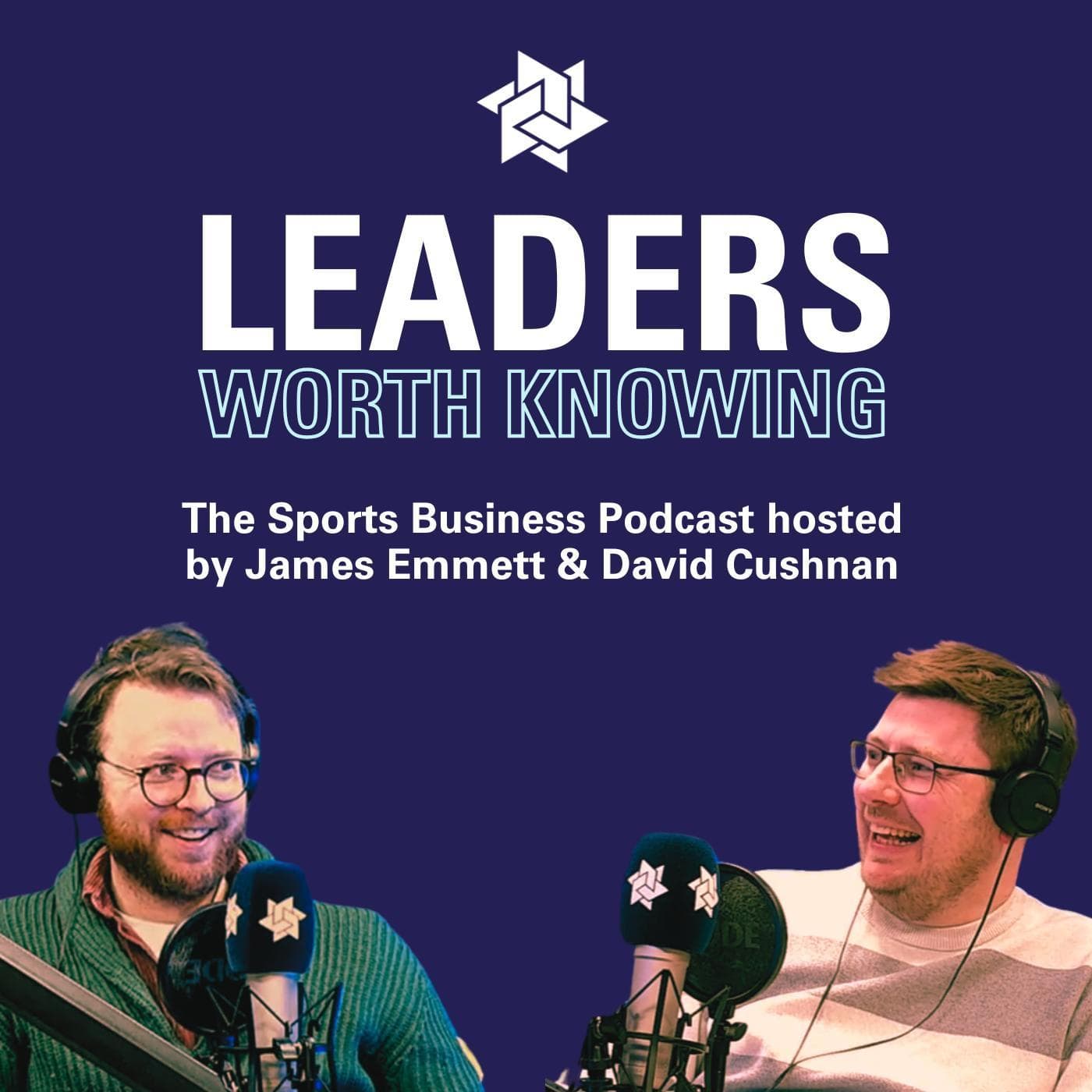
Leaders Worth Knowing Podcast
Episode Title
The Aussie Plan for Global Domination Episode Description In this episode, Andrew Abdo, CEO of the National Rugby League (NRL), discusses the league’s global ambitions, its growth under his leadership, and the strategic approach to international markets. The conversation also covers challenges such as media rights, private equity investments, and implications of future events like the 2032 Olympics.
Key Topics Discussed
- Introduction
- Host: James Emmett and David Cushnan
- Guest: Andrew Abdo (CEO, NRL)
- Context: Discussion during the England-Australia Ashes Test series in London.
- NRL's Global Ambitions
- Growth: Under Abdo's leadership over the past five years, the NRL has seen significant revenue growth and international expansion efforts, particularly in the Pacific and Las Vegas.
- International Vision:
- Interest in developing a relationship with the Super League in the UK.
- Potential international match weeks slated for various cities worldwide.
- Market Dynamics
- Competitive Landscape: Australia’s sports market is highly competitive with numerous professional sports teams, providing both challenges and opportunities for the NRL.
- Viewership Stats:
- The NRL is the most-watched sport in Australia.
- The current season anticipates 170 million cumulative views for men’s competitions and 12.5 million for women's competitions.
- Governance and Structure
- Independent Commission: The NRL operates under a governance model that separates regulatory functions from membership interests, allowing for independent decision-making.
- Long-Term Strategy: Emphasis on investing in both grassroots and professional levels of the sport to ensure sustainable growth.
- SWOT Analysis of NRL
- Strengths: Strong governance model, ability to adapt quickly, and a focus on customer experience.
- Weaknesses: The need to remain relevant amid changing consumption habits, especially for younger audiences.
- Opportunities: Expansion into new markets, particularly with growing international interest and events.
- Threats: Intense competition for talent and attention in the crowded Australian sports market.
- Media Landscape
- Upcoming Media Rights Cycle: As the NRL prepares for its next broadcast rights cycle in 2027, there is growing interest from various media companies.
- Streaming Dynamics:
- The NRL is considering partnerships with streaming services to engage younger audiences.
- Challenges with maintaining accessibility while ensuring revenue.
- Financial Considerations
- Private Equity: Abdo expresses caution regarding private equity investment in sports leagues, advocating for a balance that prioritizes reinvestment into the sport.
- Real Estate Investments: The NRL has ventured into real estate, acquiring hotels to diversify revenue sources and enhance fan experiences.
- Women's Rugby League
- Growth of Women's Sport: The NRL is committed to expanding women's competitions, which have seen increasing participation and viewership, fostering overall growth in the league.
- International Relations
- Collaboration with Super League: Discussions around potential partnerships to enhance international rugby league visibility and performance.
- Advice for International Organizations: Emphasis on the attractiveness of the Australian sports market, especially with upcoming events like the Olympics and opportunities in various cities across the country.
- Leadership Approach
- Humility and Humor: Abdo highlights the importance of being humble, hungry, and maintaining a sense of humor in leadership roles within sports.
Conclusion
- The NRL's focus on global expansion, youth engagement, and the integration of new technologies positions it favorably in the fast-evolving sports landscape. The upcoming events in Australia present additional opportunities for the NRL to solidify its place in international rugby league.
Key Takeaways
- Globalization: The NRL is proactively expanding its presence internationally, leveraging global markets for fan acquisition.
- Media and Streaming: Future media rights strategies will be pivotal in connecting with younger audiences and adapting to changing consumption patterns.
- Diversity and Inclusion: Growth in women's rugby presents a significant opportunity for engagement and development within the sport.
---
For more information on future events and initiatives, visit [Leaders in Sport](https://leadersinsport.com/sport-business/leaders-events/leaders-meet-australia/).
Written by AI. May contain mistakes. Listen to the episode to check what was said.
Transcript
Automatic transcript. May contain errors.0:03Hello and welcome to another episode of Worth Knowing, the sports business podcast from us here at Leaders in Sport for you folks out there. Leaders in Sport, all of you. My name is James Emmett. I'm the editorial director here at Leaders and with me as ever in the Leaders studio in Wimbledon, South West 19. It's my great good colleague, David Cushon. And David, how are you? I'm very well. Thank you, James. How are you doing? Do you know what? Physically, the winter's coming, David. So my hands are shredded, cold, shredded hands. I've got plasters here and I'm getting old. But metaphysically, on top of the world.
0:46Good to hear. Very good to hear. And you? No, keep it light. Yeah, I'm also well. Okay, great. Good to hear. Actually, what we tried to do last time we recorded a podcast to break from the mould of what had been happening is to explain what's coming up on the podcast before we waffle about other topical bits. So what's coming up on the podcast, David? Well, we've got an interview that I did last week with Andrew Abdo. Interview format, is it? It's an interview format today. Andrew Abdo, the CEO of the NRL, Australia's NRL, top level rugby league. Australia, by most measures, Australia's biggest sports league.
1:29And I had an extended chat with Andrew when he was in town last week to take in the first two tests of the three test series, which is about to come to its conclusion between England and Australia. The first series for a couple of decades between the two countries here in the UK. They call out the ashes of rugby league, don't they? The ashes of rugby league. And Australia have won the series, the third test coming up in Leeds this coming weekend. But the conversation about much more than international rugby league really an opportunity to have a chat and get a sense of what the Australian market is like at the moment.
2:14And it's by all accounts, a pretty dynamic market from a media standpoint, from a fan engagement standpoint. So there's lots of things happening there. So it was good to get a health check from him on all things Australia with an Olympics on the way, on the horizon at least as well in 2032 but also illuminating to get a feel for some of the nrl's more global ambitions they have played a couple of games over the last couple of years in las vegas and have been on a bit of a mission to expand the brand and expand the league's fan base beyond the shores of australia they've also got a lot of interest and you might have seen this reported um elsewhere over the last week or so as the top folk have been in town from the nrl they've also got an interest in uh super league here in the uk and there have been on and off talks i think it's fair to say over the past few months about um a potential potentially more formalized involvement by the nrl in super league certainly there's an appetite i think to get more involved as part of this global push we've also seen some reports in the last few days that the nrl is thinking about a a week a match week um being staged entirely internationally potentially in as many as nine different cities which would certainly be bold and the kind of thing that would be i think envied by several other sports leagues in different spheres who are looking to move beyond international borders, but struggling to do so at the moment.
3:53So yeah, there's a lot in this conversation. I've got a tip and an apology for the listeners, if that's okay. A tip. First, if you like the sound of going inside the sports business landscape in Australia, and you listen to the rest of this podcast, and you like what you hear, and you're intrigued, we do have a series coming up it's a region by region guide to doing business in sport which we're doing alongside the folks at IMG I think the first episode is due out this week but Australia and the region that Australia sits in is absolutely an area of focus for one of the episodes and particularly fascinating discussion with Josh Humbler who focuses on that area for IMG coming up in the next few weeks and apology yes now this is for any crossover listeners uh of this podcast and the podcast that we do with richard gillis the unofficial partner podcast where we do a series with him on sporadic fridays um we talked about rugby league uh not too long ago on that podcast david in fact brought a particular story to that and richard made us all talk about that story And I don't delight in informing you, David, that I was pulled up on my contribution to that podcast for a clear lack of research and knowledge, which, I mean, hands up, guilty as charged, very much not my area.
5:33So apologies to you, listener, and one particular listener who definitely was offended by my contribution to that podcast. But do have a look in the archive on the Unofficial Partner podcast archive because it's an entertaining listen, if nothing else. Well, apology noted. Accepted? Noted. And yeah, I think on the Australia point, it's of course worth reminding everybody that in terms of international sports coming into Australia, of course, there's the Olympics in a few years. And naturally, there's going to be more of an interest from all sorts of international sports businesses on the market on what can be done in and around Brisbane, but also the NFL coming to Melbourne next year.
6:23next season, which will be another, you know, another sort of international foray for the NFL and Melbourne Cricket Ground will be hosting the game. Yeah. And of course, we continue to wait to see whether Serie A will get its wish and indeed move forward with its plan to host a competitive game in Perth in February next year, the Milan Como fixture, which can't be played in Milan because of the Winter Olympics and the San Ciro Stadium being occupied by the IOC. But as we've seen in Spain with the cancellation of the proposed La Liga regular season match between Barcelona and Villarreal, fan protest has basically caused that to be, and player protest actually has seen that, cancelled for December, which is when that game was due to be played in Miami.
7:21So we'll wait to see on that one. But Australia is, I think, going to naturally become a focus beyond even those things over the next few weeks as the cricket ashes take place, of course, beginning in not too many weeks' time. And now I'm going to say something which typifies the type of comment that I did say on Richard's podcast, which is when you could talk about the cricket ashes, David, of course, you're talking about the real ashes. Yeah, I think that's fair. The original OG ashes. Yeah, exactly. Yeah. Yeah. Should we do a couple of rounds of congratulations? Birthdays, anniversaries, et cetera.
7:55Wins. Aha, yes. People, teams, organizations that have won stuff. Okay. LA Dodgers. Yes. Won the World Series. What a series. World Series for the ages is what they all said. A Game 7 decider and a series that really seemed to capture the imagination of both the US and Canada. And Japan, I'd imagine. And Japan. But yes, congratulations to the Dodgers who've gone back to back. Mark Walter et al. Running the show over there in Los Angeles. Who else has won something, David? It's only India. India winning. And I watched some of this actually returning to cricket. The final of the ICC Women's World Cup, which took place on Sunday in Mumbai.
8:38and probably no more significant sports result this year in terms of what it might unlock for for the sport of cricket but for India as a as a nation as well and for women's sport in general almost remarkably India has never won the women's world cup but they have now after beating South Africa and potential to be a real game-changing moment, not least in that it will potentially unlock more funding for women's cricket at all levels in India via the BCCI, who have already invested heavily at the top end in terms of the Women's Premier League. But also, we know that the BCCI in India are very much the economic driver of cricket globally.
9:28So I think probably the perfect result for the ICC and its new leadership. Totally. Congratulations again to the Indian women's team. Get the sense that there are too many World Cups happening in cricket. There's at least one a year. Well, lots of formats in cricket. A lot of formats. But this is the one, isn't it? The 50 over? I don't know. I don't know whether it is anymore. I don't know whether it is, David. A little bit inside baseball this, but congratulations to relevant football partners who have gone to market. This is their big sort of debut behind the scenes in the sports business ecosystem.
10:08They've gone to market with the packages for the next cycle of UEFA club competitions. This is the new agency taking over from team to commercialize the whole job lot. They also are reportedly on the verge of their first major sponsorship success for that new package or those new packages of rights. And it looks like Heineken, the longstanding beer partner of UEFA's club competitions, is to be replaced by Anheuser-Busch, America-based Anheuser-Busch, signing on with America-based relevant football partners. So, yes, pre-congratulations on what is being reported as close to a deal. And part of that new package or those new packages that are being sold is a slight tweak to the Champions League format to split out the opening game of the competition each season.
11:13The defending champions playing, I think, a home game to kick things off as a standalone game at the start of the first match week, which you can sense, you know, you can guess the reasons why that's being split out. And this idea of creating an event and potentially an event that streaming services might like to build more of a show around could well be part of the thinking there. One thing that I have found interesting over the last few days, just observing the sports industry, quite a lot of backlash at the end of the NASCAR season over in the US. they have had for many years the um the series of races at the end of the season that are known as the playoffs all building to this one race championship finale where the four drivers remaining in contention for the championship all compete and you know the highest finisher in the race in the final race wins the entire championship and it seems that we've just had the last race of this season um at the weekend that's a full field right but only it's a full of them but only four of them are actually worth watching so that for the rest of them they're just competing in a dead rubber they're competing to win a race which you know has its own kudos but gets absolutely overshadowed by whoever the champion right is but there's been a sort of feeling over the last few weeks but particularly after the uh latest edition of the uh the championship finale uh that single race decider which was created many years ago as a way of um really building the season finale into something spectacular, something that would have real mainstream appeal across the US, certainly, could actually be a thing of the past now.
12:57They are looking, it seems, to revert to some kind of new format that better rewards season-long performance, which is an interesting move and I think goes against the grain a little bit of what we're seeing in a lot of sports, which is where elements of a season, either individual games or sections of games we've got the nba cup going on at the moment are being carved out for specific showcase purposes so be really i think it's one to watch what nascar decides to do well there must be other ways obviously the the reason that they moved this playoff format was to um was to keep each race compelling there must be something at stake in each race you can't have the championship done and dusted decided with five races to go which of course it easily could be in a straightforward points accumulation basis.
13:48So I wonder if they will be looking at some other form of jiggery-pokery to keep that jeopardy in place right to the end. Yeah, I think that is tricky to achieve in a climate where what fans want, I think, is more difficult than ever to sort of properly discern and analyse and maybe the data doesn't necessarily tell the full story because fan sentiment certainly is now seems to be against this kind of building to a finale where there's actually too much of a random element and a luck element in who actually becomes the champion at the end of the final race. Any other congratulations in order or have you rattled through your parish notices?
14:32I think that's it. I'm sure some other people won some stuff but But, you know, it's sport, isn't it? There are winners and losers almost every single day. That's right. Yes. Such a philosophical way of putting it, David. Right. Shall we bring on Andrew Abdo? Let's do that. All right. I'm here now with Andrew Abdo, who is the CEO of the NRL. And what does the CEO of the NRL do on a trip to London, Andrew? It's great to see you. Great to see you. Thanks for having me. Well, it's exciting to be here. You know, one of the key themes that's driving rugby league in Australia is how we globalise and grow the game.
15:11And to be able to be playing historic Ashes games, a three-match series, it's been over 23 years since that's happened and goes back to 1908. You know, like we've been playing test matches, rugby league test matches between England and Australia since 1908. It's a long time and long overdue. So it's exciting to be here and it's an opportunity to meet with people that invest in sport or work in sport and for us to have a conversation with and have a look at what's happening in the UK, in Europe, in the Northern Hemisphere more broadly and what opportunities there might be for us. And I presume part of that is taking a look at some of the other sports facilities and meeting some of the other sports organizations in and around London?
15:53Absolutely. Some, you know, experiencing all aspects of the sports value chain from stadiums to the technology that's driving some of the changes that's happening in the industry. I mean, it's fascinating. Sport is, you know, different to the other industries I've worked in, in that really here you have something that is the X factor and that's the passion that everyone has. Whether it's owners of clubs, whether it's fans, pretty much everyone in sport, you know, there's so much going on in the world. You need something to look forward to. And sport brings people together in a really positive way.
16:26And so it's fascinating to see how different leagues, different sports, different teams are approaching the opportunities that are unfolding. For those who might be not so familiar and perhaps not quite on the right time zone to sort of experience the full magic of NRL, just give us a sense of the league and I guess maybe some of the numbers that you use to illustrate the strength, the size, the scale of the league. Yeah, so National Rugby League of the NRL now exists in Australia, New Zealand and the Pacific, the broader Pacific. And Australia is a very competitive marketplace for sport. It is incredibly competitive.
17:13If you look at GDP and you look at population size, I mean, we're smaller than the state of California, but we'll have three times the number of professional sports teams and particularly around winter code. So it's a war for talent, for athletes. It's also a wall for fans and it's highly competitive in relation to sponsorship and investment. And I think in those types of environments where there's a high level of competitiveness, it drives innovation and it drives effectiveness and efficiency. And if I take it, I've been the CEO now since 2020. So I became CEO during COVID and we weren't playing.
17:48And we had about three months cash flow to support an entire industry. and we've managed to really rebuild that under really strong leadership of our independent commission and working with the clubs and the players and really now we are the number one sport in Australia by viewership. So to give you a sense in terms of numbers and scale and size, we would have about, our premiership consists of 17 men's teams and 12 women's teams and we play really from February all the way through to now, you know, the end of October, November. It's 39 weeks. And we have teams based all over Australia and New Zealand, and we're about to expand to West Australia and to Papua New Guinea.
18:32And our premiership, the flagship sort of domestic competition this season, we've grown audiences quite significantly. So we'll have about 170 million cumulative views for our premiership this year, and we'll have about 12.5 million cumulative views in the women's competition. but importantly we've established quite important 10 pole moments where we have you know a lot of fragmentation and how people are consuming sport we've used 10 pole moments to really aggregate audiences back in um so our grand final uh would reach 4.65 million australians um that's a half percentage of our population around 24 million people so um we it's highly competitive we are growing really well we're focused on a younger demographic and we're focused on ways in which we can really engage and win over casual views and um it's uh something that is also evolving is the opportunity to grow both the men's and women's competitions which we really are pretty pleased about talk a little bit if you would about the the structure you mentioned the commission there and i i it'd be i think again really illustrative for for people listening just understand about where you sit in that structure as CEO and the commission's, I suppose, approach and the way that it runs the sport?
19:52I think governance is really important in professional sport. The ability to think long-term and to make decisions in the best interest of the game overall is something that you can't take for granted in the complex world of stakeholders, particularly in professional sports. So the way the structure is in rugby league in Australia is really set up for that. There's an independent board of directors called the commission or the commissioners, there's eight. They're not appointed by the members. The members of the clubs and the state leagues, which is really New South Wales and Queensland, and then the 17 clubs.
20:31So the members or shareholders effectively, but the commission is separate and independent. And those commissioners are appointed based on various skills and background and they elect then a chairman. But importantly, we are both regulators and effectively accountable to the members to drive the value of the game. But you have a commission that can make independent decisions around expansion, around allocation of investment. and that has really been instrumental in our ability to invest for the long term and make sure that we have a very clear roadmap to grow for the benefit of everyone. But the other interesting thing is the commission is responsible for the sport, unlike some of the structures here in the UK.
21:19For example, the EPL is really about the professional league. The commission is responsible for grassroots and the professional game. The NRL competition, our state of origin, which is our representative program, international program, but then also grassroots footy. So getting juniors to play the game, whether it's touch, tag or tackle, schools, clubs, really, you know, we're a not-for-profit. So we run as a very lean and efficient professional organization, but we are not-for-profit. So everything we make is reinvested back with that balance between professional sport and then grassroots and investing in fans for the long term.
21:56So give me your, I imagine you have this pinned on your wall in your office somewhere, but your sort of current SWOT analysis of NRL strengths, weaknesses, opportunities, threats, just paint me a picture of how you as the CEO are looking at things at the moment, end of the season, and I guess already thinking about the new one. Well, start before I go into SWOT, sort of like a way to think about value creation and And like our share price is really driven by, ultimately it's two things. We want more people playing rugby league and more people watching rugby league. And underneath that, you know, your core metrics around how many people are watching, how many people are engaging on broadcast.
22:36And that's changing a lot. So, you know, traditional linear broadcast versus streaming. How many people are watching live at, you know, week-in, week-out sub-games, sort of in your major events. And then how many people are playing, but not just one format of the game. And we've diversified into a non-contact format. Touch football is really important for us. Tag football, which is another non-contact hybrid and tackle football. Males and females across different parts of the world, not just Australia. So that all ladders up to getting more people playing and more people watching. And the watching too, younger people are following individual athletes more than they do.
23:13The old sort of focus on tribalism or clubs. So finding a way to connect with younger people, younger audiences is really important for us. So social media, short form content has been really important. Coming back to your question around SWOT, really briefly, I think our strengths are the ability to have an independent commission that can move quickly and act in the best interest of the long-term game. The governance is definitely a strength. The fact that we are not some codes that exist and that are more globalized and more mature than us perhaps aren't able to move as quickly as we are. we're able to focus on the customer so a real strength for us is um customer experience changing the rules of the game to make sure that it is an entertaining and a fast game balling play these types of metrics we've been very fortunate enough the last few years to really focus on that and that's given the actual underlying product a lot of strength and that's led to us winning lots of new fans which has been terrific i think um one of the areas uh that this sort of like linked to that the opportunity for us, the opportunity for us is to take what has been really successful in our core markets and showcase that into new markets.
24:25So we now start our season every year in Las Vegas and we have that as our season opener doubleheader with the Super League. So three matches. Great opportunity for us to get real prominence, not just in our home markets, but in our traditional markets, but in new markets as well. So continuing to globalize the game is another big opportunity for us. I think a weakness for us would probably be making sure that we are able to withstand some of the challenges that all sports are facing now around people's attention and younger people's attention. So there are so many options, whether it's playing or watching, there are so many different ways in which people are consuming and entertaining, consuming sport, consuming entertainment and their choices of and their commitments to for example a traditional long form or long competition you know we need to stay relevant so I think that that you know so our weakness is probably I don't know if it's a threat or a weakness is making sure that we stay relevant for how younger people are choosing to consume sport and participate in sport and a thread would be linked to that would be um at the professional level is i mentioned earlier how competitive australia is but you know the wall for talent making sure that we are maintaining an attractive place where athletes want to want to be long term yeah um and of course as a contact sport we need to think about that really carefully how much footy the players play um and making sure the player safety is at the forefront of what we do how much i mean australia such a dynamic market.
26:07We'll maybe come on to talk about the media side in a minute, but in terms of the leagues and the number of professional teams and just the appetite for sport, I guess, you know, both an opportunity and a challenge, I would imagine. How much are you looking in reality at what the AFL is doing and how much are they looking at what you're doing? And actually, is the, you know, beyond the hype, actually a pretty good working relationship between the two of you in terms of raising the sports bar in that market? I mean, it's really very different sports, different athletes. There's not a lot of crossover.
26:45And different strengths in terms of positions in the different geographies of Australia and beyond. Our focus is really making sure that we continue to grow the game in new markets. So for us, expansion into Western Australia, expansion into Papua New Guinea, Papua New Guinea is a wonderful opportunity for us. A country of somewhere between 15, 19 million people where rugby league is the unifying language. Like there's 800 different languages literally in PNG and there's one language that everyone speaks and that's rugby league. So for us, a franchise or a club in Papua New Guinea is a great opportunity for us.
27:22New Zealand is another incredible opportunity for us. We have one team there called the New Zealand Warriors, both the men's and women's franchise. But the popularity of rugby league, it's such an engaging sport to watch. And we are connecting with younger audiences and viewers. That means that we're having real traction and growth in New Zealand. So to answer your question, which I probably haven't done, David, in such an effective way, is I'm not really too focused on what is happening in other sports. I'm really focused on where the opportunities are for us. and making sure that we are thinking about the positioning of rugby league globally, not just in Australia.
28:05Let's talk about Vegas because I know you were heavily involved in that and continue to be heavily involved in that. And it was one of those headlines that you see and you sort of give it a double take when it was first announced. But actually, when you think it through, there is a real logic to it. There is obviously the US and expanding and I guess planting the seed of rugby league in the US is at the heart of what this is all about. What else is it doing for you? And I mean, maybe reflect a little bit on what you said at the start around those tentpole moments, because you've created another one, essentially.
28:39Yes, it's a good summary. So the strategy is West and East. East is about Australians in the Pacific, bottom up. And it's about making rugby league the number one sport in that region in terms of playing and watching. The move west to the US is top down. It's about acquiring fans in a large market. And the original intent was for us to showcase our sport on the west coast of America to start with because of the time difference. It means we can play a game in the evening. It comes back primetime Sunday afternoon in Australia. And it was about really planting a foothold in a very large market where we can grow and attract and continue to find a way to be a niche sport in a very, very big market and everything that comes with that in different ways in which you can monetize fans now in the off season for the NFL.
29:31I mean, rugby league has a lot of similarities to NFL. NFL is huge in America. It's the number one sport by miles. If you look at the key metrics around audience and engagement, sports wagering is being deregulated and sorry it was being regulated but essentially it's becoming online a really a great way to engage with sports fans and so America presented a huge opportunity for us ironically though one of the biggest benefits we've got from it is the benefit it has brought to have our opening round we moved the fixture to be a week earlier so we extended the season we have this double header opening match that just absolutely saturates, captures the imagination of Australians in our core market, saturates the marketplace.
30:18Everyone knows that the season is on and we actually got a halo impact where we were getting a lot more casual viewers, a lot more casual fans leaning in for the start of the season. And that halo effect actually sort of extrapolated across the season. So it wasn't the reason we went there, but it was an unintentional beneficial benefit for us. We knew playing it a week earlier before any of the other codes, when the code started, was going to be an advantage, but we didn't realise just how much of an advantage it was for us. Tell us a little bit about state of origin and how that's developed and how important that is.
30:53And we talk, I guess, about cultural cut through and sort of really making an impact and, you know, moving into sort of absolute mainstream appeal. And And I mean, sum it up for us, for those of us who haven't seen it, haven't seen it live, do maybe, you know, are maybe in the wrong time zone to sort of fully experience what it means for Australia. I'd love to bring us that Origin game to England one day. And I'd love, you know, all sports fans here and around the world to experience Origin. It is literally, you know, indescribable. It's something that transcends sport and it's captured the imagination of the country, regardless of what sport you follow.
31:33So really simply put, there's two, the two sort of, if you go back to 1908 and the origins of the game, the origins of the game were, the game started in Sydney and in New South Wales and in Queensland. That is where the real sort of heritage and the history of the game is. And a lot of the, so state of origin is a representative fixture where the best players who grew up learning their footy in either New South Wales or Queensland get selected from the clubs and playing in a three-game series, men's and women's, it's the best of the best. And it's about a rivalry that really showcases unbelievably talented athletes, but playing for something where they are representing the state.
32:19And it's become so successful that when we talk, just to give you a sense, so grand final, we got 4.65 million viewers in Australia. that that's number one rated tv show of the year not sports show just number one and then in the top five state of origin one state of origin two state of origin three so it gets four million people sort of leaning in and watching and the quality of the football is amazing that you know the gps on the players will tell you that they are running higher top speeds the level of intensity is just phenomenal so it's a great spectacle but really the buzz and the atmosphere in the stadium is indescribable.
32:57We take one game in that series to a neutral market and we'll go and play at the MCG in Victoria, in Melbourne, and we'll get 90 ,000 people watch it. We'll sell it out in Perth. We're thinking about taking that game to New Zealand, potentially elsewhere around the world. So it is an intense rivalry. It's a spectacle that is worth traveling for and experiencing. And it's something that gets the whole nation really engaged. Continuing the theme around shop window for the sport, you're obviously over here in part to take in a couple of the test matches between England and Australia at the moment.
Read the full transcript
33:38international rugby league has been through a bit of a tough time I would suggest over the past few years do you sense that there's a sort of mood and an appetite there's a world cup coming up for a bit more focus on on the international aspect of the game because again that's an entry point for a lot of people absolutely it is it is a it's in the opportunity box you know if you if you had to do the SWAT go back to the SWAT this is absolutely in the opportunity box and if you talk about Tenpo and talk about the calendar. So you've got Las Vegas season opener, and then you've got, we have Magic Round, which is not a novel concept, but all teams playing in one.
34:16And then we have State of Origin right in the middle. In the middle of winter, on a Wednesday night, three Wednesdays, you get to see the best of the best playing. And then we have the grand final. And then you've got, in October and November each year, the international window, which we fought quite hard for in terms of negotiations with both broadcasters and the Players Association to make sure we could really reinvest back into the international game, which hasn't been the case, as you rightly say, over the past decade and in recent history. But we see it as a wonderful opportunity. We're seeing now, it is, the players are, rugby league is an incredibly inclusive game.
34:54And Australia is really a country that is multicultural. So we're seeing players now choosing to play countries of their heritage. And we're running the Pacific Championships right now, concurrently with the Ashes over here. We had 45 ,000 people attend Tonga Samoa in Brisbane. We'll get massive crowds in New Zealand. We have the cup and the bowl, the men's and women's international competition. We've really invested in it, and we believe it's another way for us to connect with new fans that aren't necessarily rugby league fans but are leaning in because it's an international. It's the ultimate stage.
35:30We know the players love representing their country and their country of heritage. We also know that international football brings that X factor that's probably been lacking from a rugby league perspective. But we see the upside in that. And so, as you say, 2026, a World Cup, a 10-team men's competition, an A-team women's and an A-team wheelchair competition. We think this is an opportunity to really showcase that you've got five, six teams that could win the men's World Cup and it'll be highly competitive. I want to come on and talk to you about some of the maybe more medium long-term items on your presumably quite extensive to-do list.
36:08But at first, I mean, maybe just a thought on Super League here in the UK and be really interested to know the dynamics between NRL and Super League, how you work together. There were suggestions that maybe there might be an investment at one point from NRL. I mean, how realistic was that and what is the working relationship like? To be honest, we've not actually spent that enough time collaborating and working together in the best interest of helping both leagues grow. We obviously want Super League to do well. We want the game to succeed and grow and continue to grow here in the UK and in France.
36:48And having a strong Super League is good for us. It's good for international football. It's also good for the health of the game from a domestic level. So I think what you'll see going forward is a lot more collaboration and a lot more working together around how we can really focus on the globalization of the sport. And part of this trip is to connect with the various stakeholders, the RFL and Rugby League Commercial and the Super League Clubs themselves and listen and understand what the challenges are and see if there's an opportunity for us to work closer together. it. How would you describe your own approach to leadership?
37:27You're dealing in a very, you know, in a high profile role in a high profile sports, a lot of robust stakeholders, I would imagine. How do you approach it? I think probably, you know, with a touch of humility, with hunger, and you have to have a sense of humor. So the three H's. And in that order, I think in sport, And it's important to understand everyone's – I spoke earlier about passion and understand everyone is really passionate about their views, whether it's any stakeholder. And there's a wide range of stakeholders. They've all got an opinion. Everyone's got an opinion. And feedback is a gift, particularly if you're the internal CEO.
38:12I'm really fortunate because I have a very good and strong board, a very good chairman that I have a great relationship with. And as a result of that governance structure that I spoke about earlier, there's been an element of trust that's been built up in the game over the last few years, which has meant we're able to present business cases for the long term, not just the short term. Sometimes in sport, people look to the short term. So I come from corporate finance background and a financial background. And the analogies were all like, everyone wants dividends in the future as opposed to having the patience for the long-term capital gain.
38:53And I think with the independent commission and the strength of people that we have involved in the game and the trust we've got now, it's freed up the management team, which I lead, to think and operate for the long term and to drive some of the changes that we've seen that are really focused on the customer. And you don't always get that luxury. But you've got to have humility. You've got to listen. You've got to really respect everyone's views. You've got to be hungry because it's relentless. It's 24 season. and it's not linked to seasons. We're thinking about the game and we're doing more of our work in the off season than during the season.
39:30And then you have to have a sense of humor and be able to laugh at yourself because at the end of the day, this is sport. And you can't take that for granted. You can't take for granted that we are bringing people together and we are giving people something to look forward to. That's quite a motivating factor. But to answer your question more succinctly, I think in my job, you can never keep anyone happy. You want to keep everyone equally unhappy. Then you know you've done a good job, whether it's the draw or whether it's some other aspect of the game. Yeah, job done at the end of the week. I wrote down a list of four maybe longer term items that I would imagine are somewhere in your thinking.
40:09And I would just be fascinated to understand how you're thinking about each of these. So first one was streaming and streamers. And you touched on the media picture. and Australia, you've got a very dynamic media market that seems to be ever changing. 2027, you're building up to a new round of media rights sales. Tell us a little bit about the work that's going on in terms of preparing the ground for that. And also from a streamer's point of view, specifically, I saw that you referred to them as the apex predators a while back in a piece I saw you were quoted in a positive way, hopefully accurately quoted in a positive way.
40:53And of course, it's almost the story across the sports industry at the moment about what they're doing and how they're doing it. It's a great question. And it is the right question to ask, I think, professional sport, because connecting with fans through the media is changing. It's like consumers are consuming things in different ways. And the traditional model of monetizing sport through broadcast is obviously changing. And it's becoming more competitive. So it's like you'd put this in both the opportunity and the threat box. The opportunity is more and more companies that are effectively streaming companies that have a direct relationship with customers and are investing in high-quality content are now looking at sport as a great way to – because it's appointment viewing.
41:39It's not on demand, right? The game is happening at a certain time. It's quite unique in that way. The opportunity of being able to partner with a global streamer that can help take your sport globally and connect with a broader audience is definitely an opportunity. Having more people interested in investing in sports rights and sports rights is definitely an opportunity. The threat is the economics are changing, and the economic model is changing. What I mean by that is, for a sport of our sort of scale and size, it's important that we don't have too many partners, media partners for our customers because you don't, you know, unlike in America where they are used to, you know, going Thursday night football on Amazon and Friday night is on CBS and Saturdays on so and so forth.
42:35You don't want your product split over too many media partners and you also got to be conscious of the price point for the consumer. but equally you need to think about production. At the moment, production for our sport is done by our media partners. And if you are wanting to partner with streamers, you need to think about where the scale is going to come from aggregating the production. And the final piece in Australia, this unique government regulation around sports rights, they're called anti-siphoning, which means a certain number of games and events need to be on traditional free-to-air television.
43:13So that all plays into it. So you need to have a free strategy. You need to have a pay subscription strategy. You need to think about making sure that it's always going to be accessible and affordable, like revenue and reach. Yeah. And we've seen some sports choose one or the other. And getting that balance right, I think, is incredibly important. But it's an exciting time. We have more media companies interested in rugby league than we've ever had before. That's good for our sport. And so as you say, as we build up now to our next rights deal, It's about getting that balance right between revenue and reach and who is going to help us and partner with us to globalize the game.
43:46Item two on your, well, on my list of medium, longer term priorities, private equity, third party investment. And you mentioned your background as being in corporate finance. I wonder as you assess what you're seeing around the world, actually, in terms of investment in teams, leagues, events, what's your feeling on the financial literacy of the sports world? That's a broad question. In terms of financial literacy of the sports world, I mean, I have views on this, which I'll share with you. I mean, successful businesses need good idea, capital, and ability to execute. And the ability to execute is really governance.
44:32These days, capital can come from different shapes. There's a lot of opportunities in sport, and there are a lot of different institutional investors now having a look at sport. and I don't think at a league level privatizing or providing for private equity sport is good or healthy. I don't think it aligns to the long-term values associated with a not-for-profit which is really thinking about making sure that you get that balance right between what you take out of the game as a return and what you put back into the game and we're all about putting everything back into the game. So every dollar we make is going to either go to the elite athletes, the clubs, or grassroots football.
45:16I think that you have misalignment when you have private equity who are clearly investing for an exit or for a stable return that is, not stable, but necessarily, but above a risk return that is appropriate for the investment type. Investing at a club level, that's a different story. And I think private investment or private equity, and I think you've seen around the world, really successful institutions invest at a club level to extract value because they can bring a network, they can bring technology, they can bring the urgency and the focus on the management team to really create value. So I think it's about, you know, whether it's a league or whether it's a club is very different.
46:01The differences in my personal view is that I don't believe that we should ever look at raising capital through equity. And luckily, we've got a much stronger balance sheet than we have now, than we've ever had before, which means that we can really invest to grow ourselves. But at a club level, I think private investors bring heaps of that. It's a really interesting take on that whole topic, because I suspect that a lot of your peers who run other sports, run other events, take a different view of that. Absolutely. And that's, you know, good luck to them. And we've seen, you know, some examples of where perhaps they are finding ways where they can reverse out of that.
46:49So, I mean, you know, like it's what's right for your sport at the right point in time. If you need access to capital, that is one avenue to it. If you need access to a network, that is another avenue to it. But, But, you know, I always try and for me, the equity is sacred and the governance of your sport is sacred. And so that should be protected. Long term thinking point three, artificial intelligence. How on your radar is that? And as a CEO of a very high profile league with international ambitions and such a such a heritage, such a cultural such cultural currency, particularly in Australia.
47:31how incumbent is it on you in your role to have a plan well it's it's uh it's become a necessity it's a it's a it's an absolute um base um skill set and uh to be honest that you need to embrace and embrace quickly and learn how to learn quickly and learn how to ask the right questions quickly and make sure that you are using it in a way in which you can actually take actionable insights and execute and implement. I mean, what's going to happen is the technology is going to keep growing at exponential levels. It's really do you have the right people who can interpret and use that information to still do what humans have to do, and that is make decisions and execute and implement and have that intangible relationship that comes.
48:14And the combination of the two, the combination of harnessing great data and AI insights at different layers in the game, but being able to then connect that with relationships and execute deals, that's the X factor. Now, if you're running a club, you're using AR to help you moneyball, find players that the data is saying are undervalued. You're using it at a commercial level. You're thinking about insights around your fans, their behaviors, what they like, what they dislike from the data points that you have. And you're using that hopefully in a really meaningful, informed way. And then you can just become a lot more efficient.
48:52We manage things like the salary cap. We manage things like the football cap. And any time we can use technology to automate that, and a great example would be the draw. Now, the draw for us is a hugely complicated thing, like it is for any league, but for us it's particularly complicated because we have 17 teams. We play 24 regular season rounds, and we have stadium limitations. We have five-day turnaround as a contact sport limitations. We've got all of these sort of nuances, the commercial versus, you know, making sure there's an even balance of Thursday night fixtures for clubs and the like.
49:25Harnessing AI to optimize that experience for fans is one of the many examples. So it's absolute necessity, but it's not just about having AI and saying, oh, we use AI. It's really, for me, it's about having smart people who can take advantage of those data points and insights and then effectively execute. The final one was real estate, which often when you talk to people who run leagues, means stadiums, venues, of course. But NRL has done something I think really interesting over the past few years in terms of investing in bars and resorts and hotels. Tell us a little bit about why and how that's helping.
50:09So why was really simple. When COVID hit, I spoke about, we had no balance sheet and we had pre-payments from the broadcasters and we supported an entire industry, right, from the top down. So the professional and the grassroots. And our chairman said, you know, we can't ever be in this position ever again, where we effectively might have seen the collapse of the sport. So when we rebuilt, we got back on the field, that was really important. And then we started to think about what we could do differently to make the sport great for our customers from an experience perspective, but then also really strong financially.
50:44And we needed to build a balance sheet. So we were looking at which assets, sorry, the first thing we had to do was convince the clubs and the players that they needed to forego some of the allocation of revenues into having a central strength in the balance sheet. So retained earnings effectively. Now that is quite a hard thing to do in professional sport, but credit to the clubs and our members and the players association for allowing us to do that. We've gone from having almost no balance sheet to now effectively$400 million net asset value. Part of that was investing in assets that were adjacent to the core business of sport, but equally diversified away from selling tickets and the traditional levers of revenue in professional sports.
51:36We went about buying a set of hotels, and we've got a group of hotels now. Those hotels are quite strategically located near stadiums and they offer unique experiences. So we segment our customer database and we provide experiences for 18 to 25-year-olds, for 30 to 35-year-olds, for 40 to 50-year-olds, for small businesses. You can go to a game. For example, at Suncorp Stadium, you can stay at one of our hotels called the Beetson. You can stay there. You can go to a pre-match function depending on what type of function you want to go to. and then you can walk down literally to Suncorp Stadium and get a unique experience there in terms of corporate hospitality and then go back to a post-match function at a cool sports bar.
52:17So there's a customer angle, but there's also a diversification angle. I've got one more question for you, but first of all, is there anything that wasn't on my list that would fit into your medium long-term planning? No, I think you nailed it. I mean, it's really a subset of the broad conversation I am. I mean, the fragmentation of media is really important to understand and to grasp using data and AI. And I'd say like first body data, the personalization is really important. Now with younger people getting to understand what it is they like and they dislike and personalizing it is really important.
52:51So I think you covered it. Final question. There's a lot happening on Australia over the next - Sorry, there's one. Sorry, there's one. You have thought of one. I knew it. There's one that I wouldn't mind just spending a bit of time on. And that is, we've seen a huge growth and explosion of the success of women's sport across the world in multiple codes. But for us, it is an absolute opportunity that is going to create significant returns for the game. It already is, but it will become really important for us long term. And we've seen, you know, a real, since we started with a four-team women's competition premiership.
53:31And then we started with a one state of origin match and then two-match series and now it's a three-match series. We've got a million people watching that. We see it as a great way to not only have a successful professional women's league, but also for us to, again, diversify and attract and welcome even more fans into the game. Since we had our professional league grow, we've seen registrations of grassroots footy for female athletes, referees, coaches, volunteers just go exponentially up. We're up to like 50 ,000 now registered female participants in the game. So the growth of women's sport is not a new phenomenon and it's not unique to rugby league.
54:11But for us, it really has changed the culture of the game for the positive. It's really created, I believe, a whole new dynamic to rugby league. Here's a sport that's been played by males and sort of led by males for decades. and in the last decade, we've just seen such positive influence of females at all levels, from the boardroom to the field. I think it was worth saying that the ability to harness that going forwards in the long term is definitely something that's on our map and on our radar. Last one, there's a lot happening in Australia over the next few years from a sports point of view.
54:50You've got the NFL coming, you've got Serie A trying to stage a competitive league game there. The Olympics, of course, are coming in in 2032. A lot of international attention on Australia as a market. And I wonder, as somebody who is right at the center of the sports ecosystem there, what your advice would be for international organizations, whether they're leagues, teams, or other types of sports organization, agencies, whatever they might be, who are looking at Australia, what should they be doing more of? What should they be looking to avoid? They should look somewhere else. No, I'm just kidding.
55:27No, I mean, Australians love sport and they love all sports. And, you know, and globalization is now meaning that, you know, we have, you know, just look at our fans and the crossover, you know, with NFL, for example, EPL, whatever the case might be. So for sports, looking at Australia, it is an incredibly attractive place to go to major events and great facilities, great people, great climate, great weather, and lots of different markets and different subcultures across Australia. So it's incredibly competitive, but equally what we see is Aussies enjoy live events and enjoy seeing global sports and experiences there.
56:18And whether it's Sydney, Melbourne, Brisbane, or Perth, or Adelaide, you've seen these cities attract big, major events across Formula One, tennis, live golf. so certainly it's a dynamic place I think where major events and major sports should go but obviously for us we've got to make sure that we're competitive and we're retaining our core fans as well as you know welcoming those new fans in at the same time. Good stuff Andrew Abdo really appreciate you making some time for us during a busy London trip thank you. No problem great to talk to you.
From the publisher
Andrew Abdo, National Rugby League (NRL) CEO, joins the show for a wide-ranging conversation, as its global ambitions solidify.
In London for the England-Australia Ashes Test series, he reflects on five years at the helm of Australia's biggest sports league by viewership, a stint which has seen major revenue growth and international expansion, in the Pacific and to Las Vegas.
He sets out the NRL's approach to international markets, reflects on the league's global vision - including its relationship with the Super League in the UK - and, as the NRL's next domestic broadcast rights cycle approaches, Australia's dynamic media market.
Abdo also shares his approach to longer-term challenges, including artificial intelligence, private equity investment and real estate development, and gives his advice to international organisations coming into Australia as the 2032 Olympics loom on the horizon.
- - --
Join 200 influential sports leaders at Leaders Meet: Australia in Brisbane on 4th and 5th February 2026 - for more information head to https://leadersinsport.com/sport-business/leaders-events/leaders-meet-australia/