In short
Leaders Worth Knowing Podcast: Episode Summary
Episode Information
- Podcast Title: Leaders Worth Knowing Podcast
- Episode Title: The Sports Venues Looking Every Which Way to Expand; Will a Dispersed Winter Olympics Work?
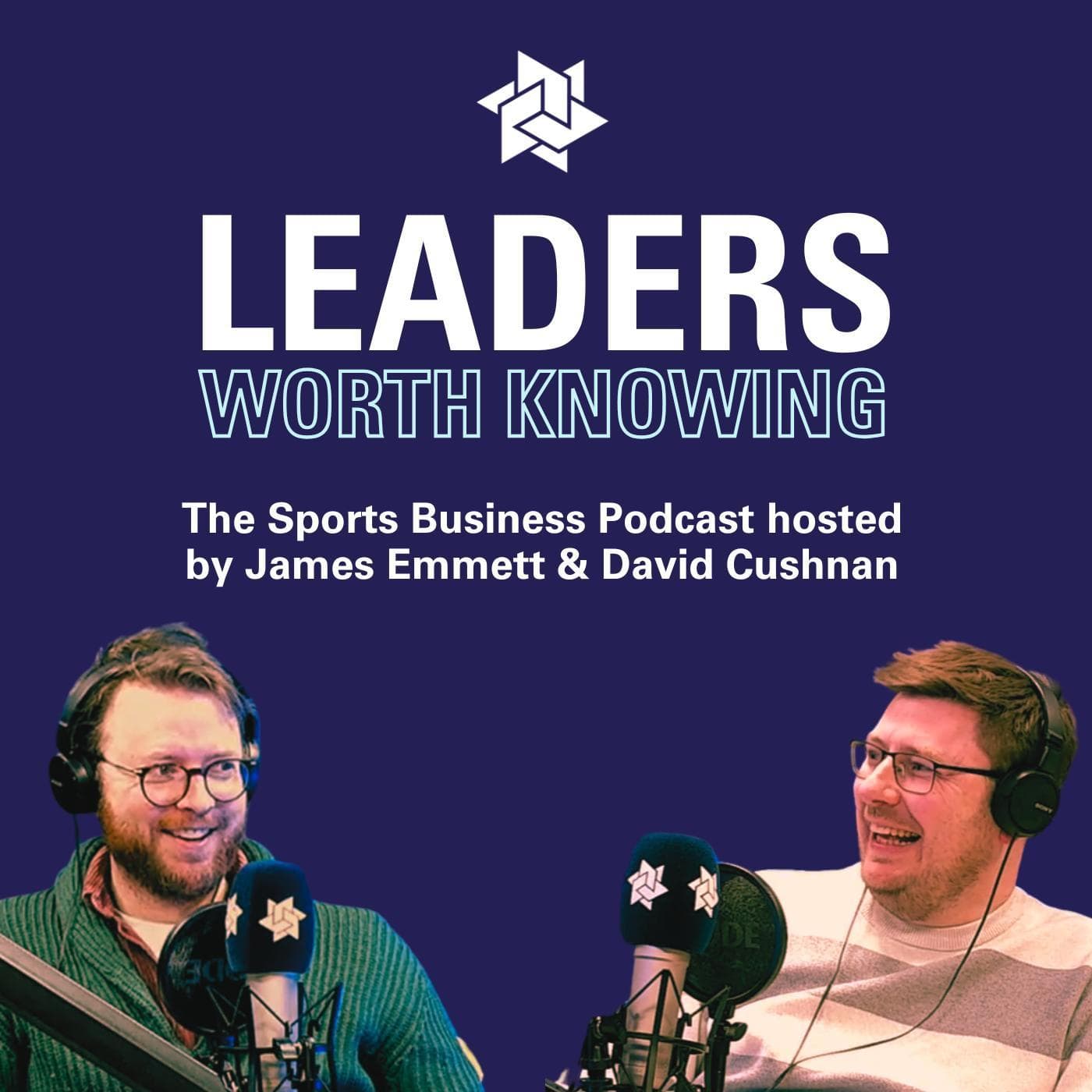
- Hosts: James Emmett (Brisbane) & David Cushnan (London)
- Guest Conversations: Craig Tiley (Australian Open CEO) and his leadership team
Episode Overview In this episode, James Emmett and David Cushnan discuss their insights from the Australian Open, including an in-depth look at its organizational strategies, fan engagement, and sponsorship opportunities. The conversation also delves into the upcoming Winter Olympics in Milan-Cortina, focusing on the unique operational challenges that come with a dispersed venue model.
Key Topics Discussed
- Australian Open Insights
- Event Overview:
- James attended the Australian Open and showcases its significance in setting industry standards for fan experience and hospitality.
- Attendance was impressive, nearing 1.4 million visitors.
- Organizational Strategies:
- Craig Tiley emphasized the goal of making 50% of the fan experience different each year.
- The team prioritizes innovation and quick decision-making, which has been pivotal for the event's success.
- Fan and Player Experience:
- The tournament is recognized for its excellent guest experience and flexibility in commercial avenues.
- Tiley fosters a culture of creativity and responsive feedback from both fans and players.
- Sponsorship Dynamics:
- New sponsorship opportunities are being explored, particularly through experiential spaces and activations.
- Collaborations with popular brands resulted in unique hospitality experiences, such as the creation of a new courtside bar.
- Winter Olympics Discussion
- Event Structure:
- The Milan-Cortina Olympics will be the first to adopt a dispersed venue model across Northern Italy.
- This model poses several operational challenges, particularly regarding transportation and sustainability.
- Future of Olympic Games:
- The dispersed model is seen as a potential solution for future Olympic Games, addressing concerns about climate change and infrastructure costs.
- The discussion included upcoming Olympic events in the French Alps (2030), Utah (2034), and Switzerland (2038).
- Broadcast Innovations:
- The episode highlights new technologies and innovations being implemented by Olympic Broadcast Services, including first-person drones and real-time dynamic displays for curling.
Key Takeaways
- Innovation as a Priority:
- The importance of continual innovation and adaptability is underscored, especially in major sporting events.
- Balancing Act:
- The Australian Open exemplifies how to successfully balance fan experience with player needs, creating a win-win situation.
- Future Trends:
- The dispersed venue model for the Olympics may shape how future games are organized, potentially reducing the environmental footprint and infrastructure demands.
- Sponsorship Evolution:
- As sporting events become more crowded, there is a shift towards enhancing sponsor experiences and integrating them into the fabric of the event.
Conclusion The episode provides valuable insights into the evolving landscape of major sporting events, highlighting innovative practices at the Australian Open while contemplating the implications of a new Olympic format. The discussions emphasize the need for adaptability and the pursuit of excellence in fan and sponsor engagement.
Written by AI. May contain mistakes. Listen to the episode to check what was said.
Chapters
Tap a time to open that second in VOBrisbane and Olympic Insights
0:40 to 3:22
Discussion on Brisbane hosting the Olympics and the significance of multiple Olympic cities.
“Back on terra firma after my little trip to Manchester.”
Leaders Meet Australia Event
3:22 to 4:43
Overview of the Leaders Meet Australia event and its focus on high-performance sports leaders.
“But yes, Australia, Brisbane will join the US as a country that has hosted the games in three separate cities.”
The Australian Open Experience
4:43 to 6:10
James shares his experience and insights from the Australian Open finals weekend.
“And I would say the industry hype around it is justified.”
Dramatic Matches at the Open
6:10 to 7:48
Recap of intense semifinal matches and their impact on the tournament's narrative.
“We had instances where Coco Gough kind of threw a bit of a wobbly because she smashed a racket or she was looking for somewhere private to smash a racket and couldn't find that private place.”
Craig Tiley's Leadership and Innovation
7:48 to 9:59
A look at Craig Tiley's leadership style and innovative strategies at the Australian Open.
“To beat Zverev and a bit of drama in that as well with the injury break that he was able to have.”
Balancing Fan and Player Experience
9:59 to 15:11
Exploration of how the Australian Open balances fan engagement and player satisfaction.
“And then sort of that filtering down into sort of how that's measured up for individual performance of his key leadership team.”
Player Trust and the Australian Open
15:11 to 17:09
Learn how strong relationships with players enhance the tournament experience.
“They have a lot of time with their commercial partners.”
Innovations in Event Experience
17:09 to 19:42
Explore innovative strategies for enhancing the Australian Open's event experience.
“The players have a four-story lounge within the Rod Laver arena.”
Spatial Challenges at Major Sports Events
19:42 to 23:07
Understand the spatial management challenges faced by large sporting events.
“I was looking at, you know, the Australian Open has the River Terrace, which is, you know, a big area for entertainment.”
Temporary Infrastructure and Event Evolution
23:07 to 24:24
Examine how temporary infrastructure allows for rapid evolution of the Australian Open.
“Yeah, it's funny, the building up thing and the space at the Australian Open.”
Show all 16 chapters
Adapting Hospitality for Modern Events
24:24 to 28:00
Learn how hospitality offerings at the Australian Open adapt to changing demands.
“unlike in Europe or the US, where there are lots of sports events over a big geographical space and the temporary infrastructure that's available is sort of hired out and moved around.”
Innovative Hospitality Strategies
28:00 to 28:38
Learn about how hospitality spaces are transforming into revenue centers.
“So the cost of associating with an external provider is gone.”
Sports Partnerships and Acquisitions
28:38 to 31:00
Explore the latest partnerships and acquisitions in the sports industry.
“Well worth a listen and glad you had a great time at the AO this year.”
Analyzing the Dispersed Winter Olympics
31:01 to 33:59
Discuss the unique operational challenges and opportunities of the upcoming Winter Olympics.
“James, can we talk about the Winter Olympics, please?”
Broadcast Innovations for the Winter Olympics
34:00 to 37:59
Discover the broadcasting innovations that will enhance coverage of the Winter Olympics.
“some significant measurement that needs to be done in terms of the, for those lucky enough to be on the ground.”
Anticipating the Winter Olympics Coverage
38:00 to 40:39
Understand the expectations and potential creativity from brands during the Winter Olympics.
“use at sort of sports broadcasting events until very recently when, did you know this?”
Transcript
Automatic transcript. May contain errors.0:04Hello and welcome to Worth Knowing, the sports industry podcast from Leaders, where we talk about what's worth knowing in the business of sport this week. I'm James Emmett and I'm in Brisbane in Australia. And I'm David Cushman back in London on the show this week. The inner workings of the Australian Open as James reflects on his time at the first Grand Slam of the year. Why and how sports events are looking every which way to expand. And all the most important business lines as the Winter Olympics start in Milan Cortina. This is Leaders Worth Knowing. This is Leaders Worth Knowing. How are you doing, David?
0:41You're back on dry land in London. Back on terra firma after my little trip to Manchester. And you've changed locations as well, James. We found you in Melbourne, but now you have rocked up in Brisbane. Gold Coast, would that be right? It's not quite gold. So Gold Coast is a, I think Gold Coast is a, is it a city? Is it a suburb? Brisbane is the Sunshine Coast, maybe? Sunshine Coast. Let's go with that. I think so. But it's Olympic City, of course, Brisbane. And I was thinking, David, you'll know this. You're Olympic Kushner, of course, something of an expert on the rings. Is there a nation in the world, aside from Australia, that will have hosted three Olympic Games in three separate cities?
1:27Because by the time Brisbane 2032 happens, it will join Sydney and Melbourne, of course, as Olympic, Summer Olympic hosts. Yep. It's a good question, James. The only one I can think of off the top of my head would be the US, but let me just reel through my Rolodex of... Atlanta, LA. I can't think of another Summer Olympic coast in... And early St. Louis, surely. Was that the Winter Olympics? We've gone down a tangent here, haven't we, already? Yeah. Well, it wasn't knowledge on the tip of your tongue, was it? No, sorry about that. But you are in Brisbane. I imagine a little bit early to feel the Olympic buzz in Brisbane.
2:09But nonetheless, you are there for a big event that we're running over the next couple of days, which sort of brings together the high performance world of sport with a sprinkling of top -notch business leaders. Yeah, that's right. We're hosting something that we're calling Leaders Meet Australia out here in Brisbane. The performance leaders in Australia is probably the best stocked nation in the world for high performance thinkers, basically people in sport who take eking performance gains out of their athletes and their systems the most seriously. so we are getting a load of those folks along tomorrow as it happens as we record on tuesday and yeah a few folks from the business i'll be looking after the folks from the business world david and we've got my uh my new mate roddy campbell director of global partnerships from tennis australia who'll be coming along to share some red hot fresh from the kitchen insight on how the australian open went and yeah it should be good put a pin in that australian open chat and we'll come back to it in just a moment.
3:23Small podcast footnote, 1904, St. Louis hosted the Summer Olympic Games. So LA, St. Louis and Atlanta. But yes, Australia, Brisbane will join the US as a country that has hosted the games in three separate cities. More Olympic stuff later. Let's take that pin out that I popped in a moment ago and let's hear about your big weekend, James, at the Australian Open at the AO finals weekend in Melbourne. Really recommend everybody, if they haven't already, listens in to the special podcast that you recorded in and around the grounds, mostly in Podlaver Studios, talking to Craig Tiley and a trio of his key leadership team who run the AO.
4:12Really fascinating glimpse into to how they do what they do and how the tournament has really become, as everybody has been talking about over the last couple of weeks or the last three weeks, indeed, a real sort of standard for best in class experience, fan experience, hospitality, with a few challenges along the way as well, which are touched on in your various conversations. But how was it? How were the vibes? How was the action? And how was your experience? It's absolutely an amazing event. And I would say the industry hype around it is justified. And I've tried in various formats and in various forums to put my finger on exactly how they do it.
5:01So if you haven't subscribed to the Leaders Worth Knowing newsletter, do do that. Leadersinsport.com forward slash newsletters. Because I have tried to write down the recipe for the secret sauce that goes into the Australian Open there. Yeah, incredible, really. They were aiming for 1.4 million people through the gates. They came just short of that, but not by very much. so I think they ended up on just over 1.35 million 1.368 was what Craig Tiley tweeted I think yesterday yeah yeah so when when we spoke last week David I can't I can't remember what day or night that was but the tournament had been sort of just rumbling along gently and there hadn't been much drama from a playing perspective at least.
5:57There'd been a few bits and pieces of drama off the court. I remember that we talked in the podcast last week about the Whoop wearables sort of mini scandal that erupted when players were told that they couldn't wear their wearables on court. We had instances where Coco Gough kind of threw a bit of a wobbly because she smashed a racket or she was looking for somewhere private to smash a racket and couldn't find that private place. And, you know, spectacles like Naomi Osaka's mad fashion moment, but nothing really, no drama. And that changed entirely on the Friday. Well, it changed specifically when you arrived.
6:41Yeah, exactly. The weather turned, David. I brought the storm clouds and the drama to the Australian Open. Yeah, an absolute spectacular day of tennis on the Friday to start with. So back-to-back men's semifinals, the longest ever men's semifinal, well, longest ever semifinal to be played at the Australian Open between Al Karaz and Zverev. The remarkable situation where the world number one and the number one seed for the tournament, two sets to nothing up, is acknowledged across the stadium and I presume by the television audience as the underdog suddenly and sort of galvanizing a crowd in no other circumstance other than this sort of strange cramping injury that he had would that an atmosphere be created quite like that where the overwhelming favorite harnesses the spirit and power of the underdog so it's an amazing feeling inside that arena to watch Al Karaz's comeback from two sets to love up.
7:48Yeah. To beat Zverev and a bit of drama in that as well with the injury break that he was able to have. It was amazing watching that with the folks from the Australian Open because when Zverev won the third set, meaning that it would obviously go beyond three sets, they weren't best pleased just because on the surface what that meant is the sweet changeovers between the first semi-final and the second semi-final would be pushed back which is a little bit awkward operationally as a whole you know the the Australian Open like all the other grand slams apart from Wimbledon sells two separate sessions in tickets so afternoon session and an evening session but when a match goes beyond and three sets is sort of tight for it to be you know the timing allocated but when the match goes beyond three sets obviously the times get put back they have to have a holding area for hospitality guests expecting to come into the suites in the rodlover arena and yeah it's just quite a tricky situation but for them to manage more than made up for i would suggest by the drama that unfolded afterwards and the media value associated with that drama played out on on screens around the world and then of course djokovic beating sinner finishing just before 2 a.m.
9:08in the morning to create the most narratively rich final that you're ever going to come across. It's a win-win situation for the Australian Open organizers. You've either got Djokovic becoming the greatest ever or Al Karaz becoming the youngest ever great. And of course, we know what happened in the end, Al Karaz, the triumph thing. But yeah, exploded into life on that day. And that was also the day that I was able to go behind the scenes and yeah, work out how they do what they do and really understand why this tournament has become arguably the best fan experience in world sport and certainly the most commercially flexible.
9:52And yeah, it's probably the most powerful sports marketing proposition I would suggest in, yeah, maybe in world sport. Yeah. There's loads of really good stuff and again cannot recommend highly enough that people um pop down the feed and uh listen to to james's various interviews craig tiley's always fantastic uh value and he you can see even on the tv pictures the way that he interacts with players during the ceremonies and you know before and after um matches he's he's he's built up over time this almost sort of legendary status i think even within tournament directors of of major tennis events uh being really close, really listening to the players, taking on board their feedback, challenging back a little bit and challenging them to do more, to give more to the tournament and to the sport.
10:39And I thought he was really, really fascinating on the way that he operates his own team and leads this extraordinary number of this sort of annual target that he sets for everybody, this challenge that he sets for everybody, which is let's make 50 % of what we do, of the experience different year over year. And then sort of that filtering down into sort of how that's measured up for individual performance of his key leadership team. He talked about having a really quick debrief process and a sort of on the go debrief process as well. Hot debrief, which I've got a horrible feeling you're going to start bringing up in internal meetings quite soon.
11:26But I think that's that sort of evidence of an innovative, creative approach in action, right? That, you know, he talked about essentially sounded like they sort of dug out a completely new access road or access, you know, point at a, you know, got the diggers in literally make it happen. So quick decisions, not being afraid, the classic, not being afraid to fail, but really coming to life in a real world example through the course of the tournament. I'm sure there are hundreds of decisions and examples of stuff like that that he didn't talk about or wouldn't talk about that happen under the surface.
12:02But it seems like he has perhaps more than anybody built up this sort of mentality of creativity, this genuine culture of creativity, which is interesting as of course, Craig Tiley is, I think it's fair to say, widely expected to move on from the Australian Open at some point relatively soon. He's been publicly linked to the opening, the big job at the USTA as CEO, which we see him effectively sort of oversee the US Open, another event that in its own way thinks really hard, does lots of stuff around fan engagement and entertainment and experience. So, but whatever happens, it feels like he is leaving a real legacy there.
12:47And that legacy, James, also might turn out to be a physical legacy as well, because he's got plans to expand the footprint of the Open of Melbourne Park as far as he possibly can and potentially taking in some other sports facilities nearby. Yeah, people talk about the sort of secret ingredients to what makes the Australian Open so special, really fundamentally the main rig, Tylee. And probably actually the axis between Craig Tylee and his closest confidant on the executive team, Darren Pearce, who's the chief content officer. And the pair of them have worked together at the top of Tennis Australia at the Australian Open for years and years.
13:33And they're both really driven to innovate, to pioneer, to disrupt. It's very strange, the Australian Open, because it is an establishment event. You know, it's a Grand Slam tennis tournament, and it has been a fixture on the calendar of a globally popular sport for years. But it has the spirit of a disruptor, genuine spirit of a disruptor. and Tylee is able to essentially have two North Stars at once, which is a really, you know, it's impossible skill really. But he puts both the fan experience and the player experience at the very sort of pinnacle of what they're doing. And those two things seem to be able to coexist.
14:17Sometimes it's a delicate balance. But what that means, and combining that with obviously the spirit of innovation And the way that they do that, the word innovation gets bandied around all the time in sport. How it happens at the Australian Open is simple. The executives are incentivized to innovate. So rather than sort of have simple bonuses on commercial success or whatever your KPIs usually are, one of their incentivized KPIs is buying new things. So that combined with, you know, no one kicking up a fuss if things fail, really gets them places. But this idea that the fan and the constant feedback loop and iterating for fan experience, turning the whole thing into a festival, but also the player is central, is this sort of balancing act that's brought it all to this point together.
15:10The players do love it. They're looked after really well. They have amazing accommodation. They have fun. There's lots put on for them. Melbourne is a nice place to come. All the sponsors are here. They have a lot of time with their commercial partners. There's plenty of entertainment for them. With this amazing relationship that Craig and Darren have managed to build up with the players, comes the players' trust, and then the players give a bit more with that trust. So you're seen with the development of the first opening week and all the programming and that. The players are having a great time.
15:48They are happy to come along early, be present for all this sort of engineered, organized fun, like the, you know, the$1.1 million Grand Slam opening ceremonies, concerts, etc. So they have a lot of fun. There's music, entertainment. They're looked after. They're treated really well. And with that trust, the relationship's really important because they do push it a bit, the Australian Open. And we saw with the Coco Gauff incident and her reaction to apparently not being able to find a private place. It's like an invasion of privacy. In reality, the Australian Open, which controls its broadcast feed, it does all of its host production, it has been operating under Darren Pearce's aegis, a behind the scenes unit for the last six years.
16:33And what that means is they vision mix in footage into their world feed from cameras and content crews dispersed around the precinct and in some player areas. Darren's really good talking about this as a way to show how comprehensive and professional these athletes really are. It's a great sort of thing for this. But what it means is the players might think that they're warming up in private, but they are not. It is worth saying that there are plenty of private areas. The players have a four-story lounge within the Rod Laver arena. There's no cameras in there. They have plenty of space. But yeah, it's a delicate balance.
17:20And Craig Tyle and Darren Pearce sort of bring it all together. I also thought your chat with Roddy Campbell, who is the director of international partnerships, was really useful, I think, for anybody who is managing sponsors, sponsor activations. And Craig Tiley, I think, on Sunday or Monday, spoke about this sort of next 20 or 30 year vision for the Australian Open, what it could look like. And that seems to involve creating a sort of larger precinct, a larger space that they have to operate. Yes, the tournament. But as you've sort of suggested, you know, in some instances for a lot of people, the tennis is almost incidental to the social experience, the entertainment experience, the having a good time on site and being part of it.
18:15and um i thought roddy was really good uh explaining how uh he and his team have been working with partners this year and actually have been really encouraging them i think um mecca the makeup brand has inspired everybody to think a bit differently about how activation can be done on site because they have certainly built up and ended up with a sort of three-story pavilion, I guess. And that is literally the direction of travel that Roddy is for the moment, at least, pointing the sponsor partners towards. And it got me thinking actually about maybe the beginning of a trend that we really need to keep an eye on and probably excluding the very biggest events.
19:01I think the sort of next tier of international major sports events, Grand Slam tennis tournaments, F1 races, for example. I think there is a sense, and this seems to be some of the feedback from the Australian Open, that it's almost bursting at the seams in terms of being too busy. And there's a limit on the amount of space, hence build up, hence find all these new avenues and ways to effectively manage traffic flow and put people in different spaces doing different things. And I do think there's maybe the beginnings of a trend here at a level below the Super Bowl, which we've got coming up this week, and perhaps an Olympic Games, where you have rights holders really working hard on trying to own more, of course, physical space, but where that's not possible, more of the fringe events, more of the hospitality, the entertainment, the activity that's happening in the city or nearby.
20:02I was looking at, you know, the Australian Open has the River Terrace, which is, you know, a big area for entertainment. And it, you know, Roddy was talking about, there are 45 brands that he was effectively looking after managing who were partnering in some shape or form with the AO this year. And you think about all the guests and requirements that they have, there is literally more entertaining to be done and more top of the range VIP experiences to provide before you even think about the range of other offerings available to the regular fan. And we see this, I was reading an interesting piece by a guy called Darren Cox, who runs, is part of the team that runs an organization called The Race, which is a specialist media company covering motorsport and Formula One.
20:52And he was talking about, he was promoting his own event essentially, but he was talking about the big change in F1 over the last couple of years as Liberty Media has made the sport more accessible, which everybody is very positive about. Actually, the concept of exclusivity is changing almost, in real time, because suddenly you have 3 ,000 people with access to F1's paddock club and the pits and the paddock areas at F1 races. So what do you do for the VVIPs? What do you do for an increasing number of sponsor guests that teams want to bring in that F1 centrally has? And it sounds like there's a similar challenge here.
21:35And I think one thing to watch is what the Australian Open does as a sort of best in class example of this. The other Grand Slams as well, there's a big refurbishment project going on at the US Open at Flushing Meadows, which may be Craig Tiley's next challenge. I think one thing to keep an eye on this year with F1's new race in Madrid is how F1 intends to utilize Atletico Madrid Stadium and assigned a partnership there to run entertainment and events, fan experiences, but presumably utilising all the hospitality space there as much as they can. Off-site in terms of the venue itself, but close enough that you can give different tiers of experience that are still different and premium in their own ways.
22:23I guess we see it with the Olympics, which we'll come on to talk about in a little bit, and the Champions Club concept, which launched in Paris with On Location and is going to be rolled out. And I think there's plans for a Champions Club to be in all the various different clusters that Milan-Cortina will include over the coming weeks. And Roddy also, James, talking geographically as well in terms of the spread of the Australian Open. And we've seen Wimbledon over the last couple of years run a fan event, a screening essentially with entertainment in Brooklyn, under the Brooklyn Bridge on finals weekend.
22:59And Roddy, definitely talking about Singapore, but definitely talking about other markets where the Australian Open can make a physical impact during tournament time over the next few years. Yeah, it's funny, the building up thing and the space at the Australian Open. So combined with this sort of mandate and incentivisation structure that Craig Tiley puts in to try, you know, have 50 % new experience the next year. The Australian Open organisers also working with some pretty strong restrictions, which breed creativity as well. So the precinct, the site within Melbourne Park, where the Australian Open is, apart from the main arenas, every bit of infrastructure is temporary.
23:41So it comes down now, you know, in the days after the tournament and is put up again in whatever new format the organizers decide in kind of November time ahead of the tournament. Now, what this means is that every year the organizers have a blank canvas to change things. Of course, they know what works and, you know, ingress, exit and where the main areas for fans are. They know all of that, but it's definitely an iterative process. And I think it means that they can evolve and change quicker than other major sports events that have more permanent infrastructure. There's also a wonderfully Australian thing in that, unlike in Europe or the US, where there are lots of sports events over a big geographical space and the temporary infrastructure that's available is sort of hired out and moved around.
24:40So in Europe, all the hospitality space, temporary infrastructure that might go along with Formula One Grand Prix in Europe, that would be shipped around, that same physical infrastructure would be shipped around following the championship around it's too far to come to australia so they have their own temporary infrastructure here and it's largely in melbourne because that's where the big events are and it's a bloke called harry the hirer who's got all who's got all the best kit and pretty much works to a brief from from the folks at the australian open so they actually do have the physical kit available to them here.
25:19And yeah, they are able to, like, they don't have the restrictions of history and culture that the concept of doing certain types of hospitality at other Grand Slams, you know, might have that would hold them back. So they've actually got seven different tiers of hospitality at the Australian Open. And I would say they've probably got an eighth because the general admission experience is a type of hospitality experience, really. They've got the courtside bar, which they've been operating for a couple of years. And this is actually a really smart sort of sponsorship, strategic bit of sponsorship development.
25:56So they will often build and program a new space because of the 50 % new mandate, because of the attention to detail on patrons' behavior and what their audience are telling them that they want. So they'll come up with a new space for next year. Let's say it's the courtside bar because people are telling them they want to sit at a bar drinking, watching tennis all day. Why not? Let's build it. We've got a close relationship with the players. So we'll be able to get this through as a positive atmosphere. And they've got three beer deals. Yeah, they've got three beer deals. They've got one beer deal on site and two virtual signage overlaid into the broadcast.
26:37So they built this space. It's called the Courtside Bar. They developed a signature cocktail like the honey juice, you know, at the US Open to go in that bar. It's a success. The next year, they expand the bar and they build a highline walkway that winds from the bar to another bar over the way past some courts. So you can move through the sort of outside courts above them to get to your next bar where you can see four different courts. In the second year, they bring a sponsor in. So it's now the Grey Goose Courtside Bar. It's an established space. It's brand safe. And they move in like that. What they're doing across all of their seven tiers of hospitality is something similar.
27:24So the Australian Open has been lauded for working with renowned Melbourne restaurants and restaurateurs, bringing in pop-ups of recognizable names, recognizable chefs. They're doing that less, although they still have 40 different restaurants around the grounds. They're doing it less this year because they have established several hospitality areas with good reviews, with people who are willing to pay money in advance. They've removed the pop-up names and they're doing them in-house. It's an in-house service now. So the cost of associating with an external provider is gone. Next year, Roddy and his team aim to take that one step further.
28:08And where you might have had Hospitality Space X in association with Restaurant Y last year, now you've just got Hospitality Space X. Next year, you've got Hospitality Space X in association with MasterCard. And it's just turning, constantly finding ways to do something new and then turn the cost into a revenue center, which is, again, a really smart way of doing things. Indeed. Very good. Well worth a listen and glad you had a great time at the AO this year. Should we do some signings? And actually, let's start with tennis, where Yannick Sinner defeated in the semifinals, as you mentioned, the Australian Open.
28:58But good news on the commercial front. He signed a major new global partnership this week with Allianz. WSC Sports is in the market again, has acquired digital sponsorship activation platform Partner Bright. And a really interesting note from MotoGP where David Blitzer's Bolt Ventures is among the new owners of the Red Bull KTM Tech 3 MotoGP team alongside Icon Capital. This is apparently a$50 million investment to take over one of MotoGP's teams, one of its satellite teams. F1 driver Pierre Gasly also involved through the Slam Trail Group. And MotoGP, I think this is one we need to keep an eye on from a team point of view, has the feel of a bit of a hot investment category waiting to really burst into flames under Liberty Media's new ownership as it tries to apply some of what it has achieved in building up the values of the F1 teams.
30:02Hot wheels, indeed. Chas Bueno has been appointed as the new CEO of EuroLeague Basketball, replacing Paulius Mottia Jonas. Bueno is going to be tasked with improving communication with the NBA and with FIBA, and he received unanimous support in a vote of shareholders on Friday. Sandra Eden is the new and first commissioner of, now people pronounce this as love, but I'm going to say LOVB Pro Volleyball. And Rachel Woodward has been named by Howden as the director of sponsorships. Former Professional Fighters League CEO Peter Murray has landed a new role. He is the CEO now of the Professional Bowlers Association, that's 10-pin bowling.
30:50And Hannah Brown has joined Brentford Football Club in the Premier League as growth strategy director. So congratulations to one and all. James, can we talk about the Winter Olympics, please? Yes, please. Now, David, here I am in Brisbane. We've talked about it being a future Olympic city. I think we have sort of come here. We've taken our event here because of the growing demand for stuff like this in this Olympic city. But it is peculiar timing, I have to say, because all the Olympics folks in Brisbane aren't in Brisbane. They're in Milan because the Winter Olympics is kicking off. Now, it's funny being in a, you know, a hot summer place and seeing on big screens everywhere in traditional Aussie media style.
31:38There's some scandal brewing about it's called like Operation Slippery Fish or something like that. Have you seen this? I haven't, but say more. They're going mad for it here. So it's some, I don't know, some sort of ice skating marginal gain. Yeah, there is a bit of a fuss down at the ice skating because there is a figure skater, I think from Spain, who was due and has been allowed throughout the whole season by the International Skating Union to skate to a song from the Minions film, who has now been told at the last minute that for copyright reasons, he will not be allowed to, or that that song will not be allowed to be played and he will not be able to perform that.
Read the full transcript
32:22So yeah, copyright challenges as I think figure skating tries to bring in more contemporary music. But certainly an unusual and potentially new challenge to face for the IOC there and certainly the International Skating Union. I'm very excited about the Winter Olympics, James. You know, I love the Olympic Games, winter or summer. And I think from a business point of view, this is a really fascinating couple of weeks ahead because I think if it all goes to plan, we are going to see the first application of this new regional model for how to host an Olympic Games, in particular a Winter Olympic Games, which we're going to see in some shape or form over the next three or four editions as the number of potential host cities diminish, as climate change continues to be a factor, and as there's this move towards not having to place cities in a position where they're having to build entirely new infrastructure and some very complicated facilities are required to host the Winter Olympics, not least the bobsleigh luge sliding track, which is a very bespoke bit of kit that can't be used for much else during the rest of the year.
33:46Across Northern Italy, we're going to see events effectively sort of a dispersed venue model, five different clusters across Milan, over to Cortina and various places in between. So there's going to be some significant measurement that needs to be done in terms of the, for those lucky enough to be on the ground. What are the operational challenges? Big onus and probably a lot of pressure on Italy's public transport system to make that all happen, because there's obviously a sustainability issue and potential challenge. And I think there's going to be in the background, and we will see the results of this months after the Games, I'm sure, but the IOC is going to be very carefully monitoring how this works, what works and what doesn't, frankly, in Northern Italy, as they then think about in four years' time having to do essentially the same thing as the French Alps host the 2030 Games.
34:45Then we have Salt Lake City in 2034, although that's been rebranded as Utah 2034, which again indicates there's going to be this spread of venues, City and Mountains. And then you've got the looming prospect of what is effectively the first national Olympic Games in Switzerland in 2038, which is currently under discussion. They've got some sort of preferred, exclusive negotiating status with the IOC to get it over the line. But the idea is that will be an extremely dispersed event over various cities and parts of Switzerland. So lots for the IOC under Kirsty Coventry, the new president who's overseeing her first games as president, but also some of the key operational people, not least Pierre Ducre, the sport director, and Christophe Duby, who runs the whole shebang from Milan and has, by all accounts, been stationed in Milan for the last few weeks, making sure all the I's are dotted and the T's are crossed.
35:49This is absolutely the perfect games for Christoph Doobie, isn't it? Arguably the suavest man in, well, certainly in Olympic sport. Milan Cortina is tailor-made for Doobie. Yes. What are you most looking forward to, David? Sport-wise, production-wise? Yeah. What are you looking out for? Well, sport-wise, it is, I think, genuinely the Winter Olympics, if the weather plays ball is often much more aesthetically pleasing as a sports event than almost any other, I would suggest. So, you know, the Blue Ribbon events will clearly be the Alpine skiing, the figure skating. But, you know, James, I just love it all.
36:31I'll be watching it all. The opening ceremony is the San Siro on Friday, but actually to an extent building on the opening ceremony in Paris, which was, of course, down the River Seine and all across the city because of the dispersed nature of the event, actually, the opening ceremony itself will, actually, they're talking about it taking place across five or six different locations, primarily to allow all the athletes, wherever they're stationed across northern Italy, to be able to be part of various athletes' parades. From a broadcast point of view, I watched a media briefing that Janis Exarchos, the chief of Olympic broadcast services, gave a few days ago where he was outlining some of the innovations that we will see or maybe not see, but will be really important as part of the broadcast operation.
37:20Obviously, the Olympics are very often a sort of crucible for new ideas and innovations and a huge showcase. And there's lots of partner involvement, if you think about the way that an Alibaba has been getting involved over recent years. Some things to look out for. we're going to see a lot more use of first person drones in live coverage so we've seen it in skiing brilliantly for the last few years they're going to start using those drones at the sliding that the sliding event so you will be able to follow the bob down the chute did you know this dave about drones so someone told i think i think it might have been maybe it was giancarlo benini Can't remember.
37:59So drones in lots of territories, especially city locations, have been banned from use at sort of sports broadcasting events until very recently when, did you know this? So someone has put a parachute on a drone. They literally just invented the drone parachute and that has completely circumvented these police regulations. So they don't drop out of the sky at 200 miles an hour, they will gently float to earth. Totally. Which is just such a simple solution that has completely changed how sports events can be broadcast. Two other broadcast innovations to look out for. There's going to be a lot more of the real-time 360 replay tech interspersed into live broadcasts.
38:47Yanis was talking about Alibaba heavily involved in that, but he was talking about how that was really a hugely popular and clippable type of content in Paris a couple of years ago for broadcasters. And you can imagine, you know, the snowboarding, for example, you know, all the sort of tricks as they're done, figure skating, it's going to work really well for that. And there's going to be a revolution, James, in the way that we all watch curling, apparently, which is a live a live system that shows real-time rotation, the dynamics of the stone as it's moving down the ice and also how hard the athletes are brushing.
39:30So yeah, look out for that in the coverage. And the curling actually gets underway Wednesday, a couple of days before the opening ceremony itself. Not noting a huge amount of brand buzz, I must say, in the UK. Not sure how it's landing in Australia over with you from a global top partnership point of view. First games for TCL, the Chinese electronics brand. But perhaps that will change when the games actually burst into life and we will see a little bit of creativity from some of the many partners involved, either at global IOC level, obviously the strand of partners at local organizing committee level, primarily Italian brands, but then also, of course, the many brands who are involved with the National Olympic Committees.
40:24Yes. Fascinating stuff. And I, do you know what, Dave, I'm going to try and watch some. Yeah. Why not? We've been going a long time now. Shall we say goodbye to this recording? Yes, indeed. Thanks for being with us, James, over there in Brisbane. Good luck with the event. Safe travels and we'll see you back here at some point next week. All right. Cheers. Goodbye.
From the publisher
James Emmett in Brisbane and David Cushnan in London reflect on conversations with Australian Open CEO Craig Tiley and his top team, and explain how the expansion - outwards and upwards - of Melbourne Park hints at a new trend across sport's major events - and opens up the opportunity to create new sponsorship, entertainment and fan-friendly spaces.
There's also time to look ahead to the Winter Olympics in Milan-Cortina, which begins on Friday, and will be spread across Northern Italy - bringing with it the potential for operational and sustainability challenges, that will help determine the future of the winter Games ahead of regional editions in the French Alps (2030), Utah (2034) and, most likely, Switzerland (2038). Plus, there's a run-through of the broadcast innovations Olympic Broadcast Services are rolling out for the Games.
- -- -- -- -- -- -- -- -- -- -- -- -- -- -- -- -- -- -- -- -- -- -- -- -- -- -- -- -- -- -- -- -- -- -- -- -- -- -- -- -- -- -- -- -
Leaders Week London is moving to Stamford Bridge, home of Chelsea FC. We’ll see you on Wednesday 7th and Thursday 8th October. For more details visit leadersinsport.com/leadersweek