In short
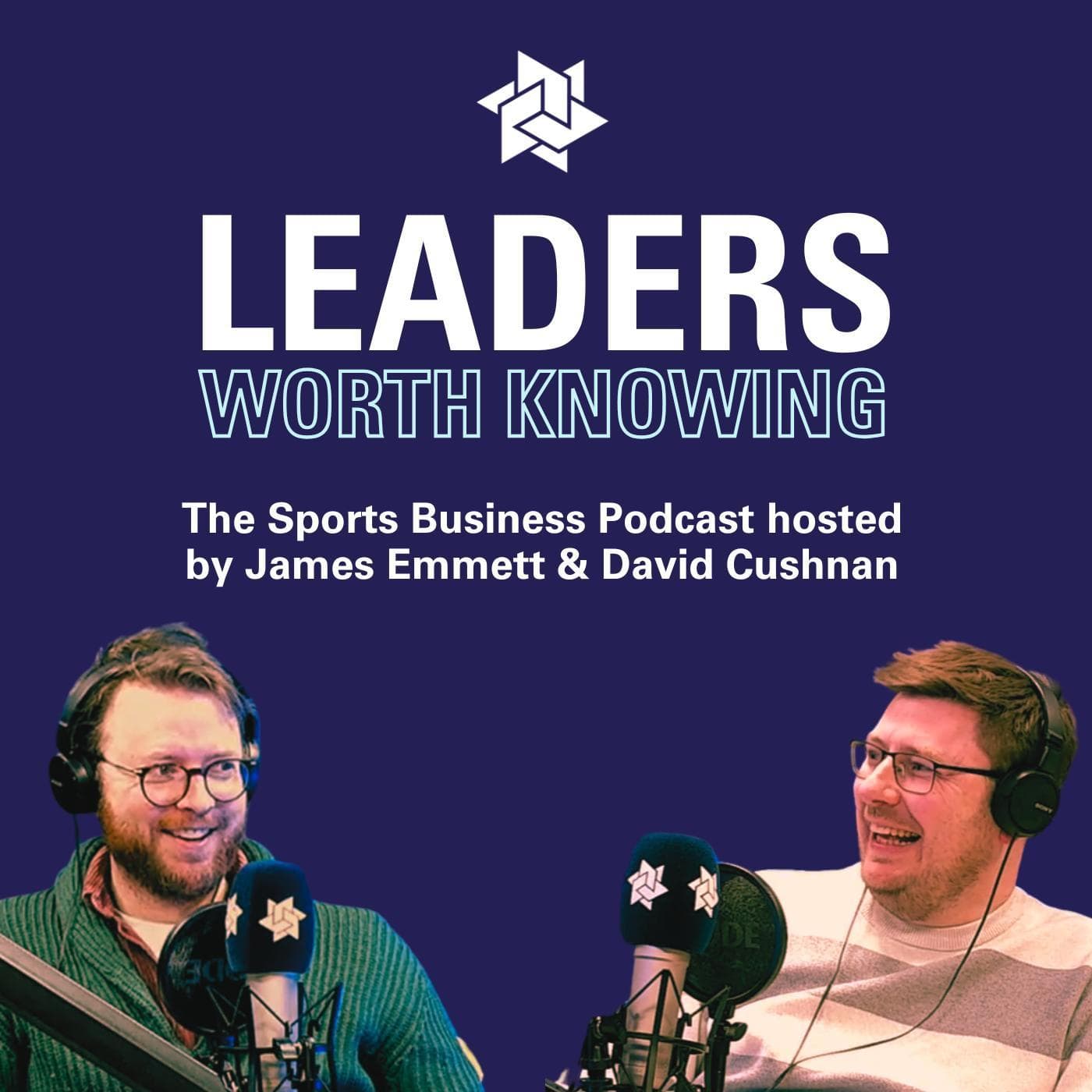
Leaders Worth Knowing Podcast - Episode Summary
Episode Title
What will keep Sunderland in the Premier League?
Host
James Emmett & David Cushnan
Guest
David Bruce, Chief Business Officer at Sunderland AFC
---
Episode Overview In this episode, David Bruce, the Chief Business Officer at Sunderland AFC, discusses the club's return to the Premier League and the strategies being implemented to ensure their survival. The conversation delves into commercial operations, fan engagement, and the lessons learned from Bruce's experience in Major League Soccer.
Key Points Discussed
- Sunderland's Return to the Premier League
- Sunderland is back in the Premier League after an eight-year absence.
- The club aims to establish itself in the league, with Bruce playing a pivotal role in driving commercial operations.
- David Bruce's Background
- Formerly CMO of Major League Soccer, Bruce returned to his home club two years ago.
- His focus is on fan growth, brand management, commercial opportunities, and operational efficiency.
- Recent Achievements
- Record shirt sales due to partnerships with Fanatics and Hummel.
- The introduction of a season-ticket waiting list for the 49,000-capacity Stadium of Light.
- New premium offerings to enhance matchday experiences.
- Fan Engagement and Brand Strategy
- Emphasis on reconnecting the club with the city and its people.
- Bruce’s approach involves instilling a sense of purpose and creating a strong brand identity.
- The concept of "relentless obsession" in serving the fan base.
- Commercial Operations
- Introduction of new premium experiences, including a high-end restaurant led by Michelin-starred chef Tommy Banks.
- Focus on enhancing the matchday experience to increase revenue.
- Sponsorship Landscape
- Challenges and opportunities related to the ban on betting sponsorships in the Premier League.
- Importance of diversifying sponsorship deals and attracting non-gambling brands.
- Finding New Fans
- Targeting regional, national, and international audiences to expand the fan base.
- Utilizing the popularity from the Netflix documentary, *Sunderland Till I Die*, to attract new supporters.
- Engaging with potential fans through creative marketing, including a recent social media campaign in Mexico.
- Reflections on Modern Football
- Bruce shares insights from his American experience and how it informs his strategies at Sunderland.
- Discussion on the evolution of fandom and how to engage younger audiences.
- Looking Ahead
- Preparing for the challenges of staying in the Premier League, including budget planning and commercial growth.
- The importance of building a competitive team and enhancing the overall matchday experience.
Conclusion David Bruce emphasizes the importance of understanding and serving the fan base as Sunderland aims to solidify its status in the Premier League. Through innovative strategies and a focus on community engagement, the club is working towards a successful future.
---
Key Takeaways
- The significance of fan engagement in modern sports.
- Strategies for commercial growth in the context of changing sponsorship landscapes.
- The role of branding and operational efficiency in sports management.
- Insights into the evolving nature of fandom among younger audiences.
Quotes
- "We have to be completely and utterly obsessed by delivering to that fan base."
- "To hook a young heart and mind and then to keep working at that to create a lifetime of fandom is the ultimate goal."
---
This episode provides valuable insights into the intersection of business strategy and sports management, particularly in the context of a football club's efforts to thrive in a competitive environment.
Written by AI. May contain mistakes. Listen to the episode to check what was said.
Transcript
Automatic transcript. May contain errors.0:00Hello and welcome to another episode of Leaders Worth Knowing, the podcast about leaders in sport from leaders in sport. My name is James Emmett. I'm the editorial director here at Leaders. And with me for the first time in a long time, it's my great good colleague, David Cushman. David, how are you? Very well, thank you, James. I think it's only a couple of weeks, isn't it? I think it feels longer. We're so rarely away from each other. Yes. How are you? Yeah, all right. And I've decided now that we've switched it to Worth Knowing, the name of the podcast, to match the newsletter. I was going to say award-winning, but then I remembered we haven't won any awards.
0:37Potentially award-winning. Could be. Stay tuned. We should just get the tagline slightly different every time. Yeah, I completely glazed over when you started. What did you say today? For leaders in sport, from leaders in sport? About leaders in sport, from leaders in sport? You did something completely wild when you had a go a couple of weeks ago. I re-listened to it and I thought, I have messed that up. How's it going, David? Yes, it's all going very well. You've been on holiday? I've been on holiday. We've put out an agenda for Leaders Week London. Did you know that Commissioner Roger Goodell is coming to speak at Leaders?
1:12I was aware of that. It's good news, isn't it? Looking forward to welcoming the Commissioner and his team to Twickenham to the Allianz Stadium. Do you know what? It's not very many weeks away. I was just flicking through my calendar. Yeah. It's about six full weeks away. Six business weeks. It's go time in terms of us getting it sorted and you listening, getting your pass to a world of sports industry, chit chat, insight, business intelligence. It's going to happen at Allianz Stadium. Did you just yawn? No, I opened my mouth wider than usual. It's going to happen at Allianz Stadium, Twickenham in London, as it has done for the last few years at least.
1:57and it's going to be an absolute cracker. Miss it, miss out, Mimo. On today's show, we're going to be talking to David Bruce, who is the Chief Business Officer at Sunderland, Premier League Team Sunderland. They're back in the Prem, Dave, after an eight-year absence. And back with a bang. Back with a bang. They won their opening game of the season 3-0 at home against a torrid West Ham team. But all is rosy on Wearside right now. And so a great moment to speak to David, who's effectively the business leader at Sunderland, working hand-in-hand with the rest of the C-suite there and Kirill Louis-Dreyfus, who is the owner slash chairman of Sunderland and an interesting character, a in that he is 28 years old um and a relative child uh certainly was in the scheme of things we were 28 once i can't remember being 28 um but also in that he is building this interesting group to house his portfolio of sports assets it's called beer sports group i i did ask whether it was bia sports group or beer because it did strike me that saying beer is quite a sunderland word to say.
3:22They've got the accents. But it is beer. Sunderland sits within it. It's got a motocross within it. It's got a Rugby Sevens entity within it as well. And I think they are on the investment run at the moment. And it's one of these sort of shared resources models. Yeah. All the properties can tap into a central bank of experts. finance um a bit of sales as well so david talks about this being a critical period of sponsorship um sales at the moment and they're tapping sunderland are tapping into um beer sports group resources for that um so yeah we'll be bringing him on shortly an interesting time in the premier league right now right well it's the start it's the start of the season and uh i don't It seemed like there was quite a lot of hype over the last few days, certainly here in the UK around the start of the Premier League.
4:20It seems to come around quickly. I think everybody is hoping for perhaps a more dramatic season with a bit more to talk about this season. There was sort of runaway champions in Liverpool last season. The relegation battle was sorted relatively early. But I think hopes are high in terms of on-field competition. and there's obviously lots of storylines and every club has its own narrative stories, things to watch, whether that's Everton's new stadium, whether it's managerial changes, whether it's ownership changes. Sunderland, one of these three relegated, sorry, promoted clubs who are hot favourites to be relegated.
5:02The three promoted clubs have been relegated in each of the last two seasons. So does that, is that a trend or is that just a coincidence? This season may help provide a bit more of an answer for that, but there's certainly this financial gulf between the Premier League and the lower reaches of English football, which continues to be a big challenge and occupying a lot of the thoughts and presumably the conversations at all sorts of meetings. No doubt, but if you take a step back and that issue of the promoted clubs really finding it hard to make it stick and coming back down again um what that is also creating is this swell of teams of the the traditional yo-yo teams swell of teams who might get promoted to the premier league might just be in the upper reaches of the championship the second tier who are in the grand scheme of things incredibly well resourced and actually well run properly structured sports outfits and i would class sunderland now finally sunderland burnley and leeds and leeds as prime examples of this in any other top tier football league those would be shining examples of um wealthy well-backed well-run properly owned clubs obviously Sunderland we'll get into with David Bruce got the um Dreyfus family uh money backing that uh interesting structure Burnley owned by Alan Pace um American financier um who is into the multi-club ownership model now he's got a club in the spanish league he's in bed with and in a financial sense uh jj watt he's got the celeb ownership um stuff going on there um and then of course leeds uh which is part owned by the san francisco 49ers part owned by red bull got a stake and also significant sponsorship assets there.
7:15Leeds, one of the giants of English football, really, historically. And I think Red Bull coming in as an owner and also a sponsor is part of a wider trend that we see emerging in sports sponsorship in the Premier League at the moment. Yeah, and it's a pretty critical season in terms of sponsorship and commercial teams at the Premier League and at Premier League teams. Because at the end of this season, you will have the ban on betting sponsors, which is effectively a self-imposed ban. The Premier League teams, the Premier League voted to ban betting sponsorship. From the front of shirts. From the front of shirts.
7:59Not ban it altogether. From the front of shirts. Ban them from the front of shirts before they get banned by someone else. Yeah, from next season. And that decision was taken back in 2023. So there's been a ramp towards this. It is interesting, as you see these lists come through at the start of every season, to just take a look at the front of shirt sponsorship situation at the 20 Premier League teams. You have 11 betting, gaming, gambling partners on fronts of shirt this year. So there's a lot of work to be done at commercial teams within Premier League clubs this season to figure out what their strategy is.
8:42And I think that what we have seen over the summer is a number of, quote, smaller deals being signed with a lot of new brands coming into the league. And there's lots of examples of this. I was just having a look and would pick out, for example, a deal last week between Crystal Palace and the airline Sun Express, which is a joint venture between Turkish Airlines, I think, and Lufthansa. And you can start to see what the thinking might be here as you bring in a new brand at a slightly lower level and you use the opportunity of the showcase of Premier League football. great you know presumably great hospitality great partnership um management and use that as the basis for an upsell into uh potentially a front of shirt deal and that is the kind of thing that is going to need to happen so i think we're in the season of the upsell as far as it commercial teams at uh premier league clubs are concerned also potentially the season and it's it's no surprise to me that there still are 11 teams with uh betting brands on the front of shirts because the way they'll structure those deals is absolutely get bang for buck once they can and then you know down sell I suppose going into the future and it will be fascinating to see the types of industries that are represented on front of shirt from next season and lots of clubs will have to take lower amounts for that front of shirt position interesting actually to see what happens with chelsea's uh front of shirt spot which is still um vacant they are holding out for the 60 million pound a year um fee or the reported 60 million pound a year fee um still not sold it won't be a betting brand i would hazard yeah lots of interesting things going on and it seems to be a climate where these consumer brands are coming back into football we talked about red bull guinness Well, Red Bull, obviously part owner of Leeds, front of shirt, sponsor of Leeds, but they've signed deals with a number of clubs and of course in a different sport.
10:49But in the UK, they've just taken ownership of Newcastle rugby, premiership rugby club as well. And Coca-Cola also coming in with a number of different clubs over the last few weeks. So we are definitely, that is definitely a deliberate move. And there's a real battle being fought in that sort of non-alcoholic category. And alcoholic. And alcoholic. Yeah, it's all there. Anyway, fascinating season, upcoming. And yeah, always very interesting to see what's going on in the commercial department of football clubs. An interesting thought, actually, that I was chatting to someone the other day who mentioned that it's not the most outlandish thing in the world to suggest that the Premier League should take more of more central control over how clubs can market internationally in the way that the NBA and particularly the NFL has done, if only to give Premier League teams focus, commercial focus.
11:51At present, most commercial teams in the Premier League, not the big six, but underneath that, it is too tempting to get a betting partner that is just aimed at Asia, basically, at appealing to consumers in the Asian market, just generally and vaguely. if each team had an international focus three countries in south america for example and that's the only place that they could go to for international marketing but likewise for that country this particular team would be the only way that they could get in on the premier league that might give a really clear narrow focus that results in a more creative approach to what types of organisations are sponsoring and marketing in the Premier League.
12:46Obviously, there'd be a lot of gnashing of teeth and frailing to begin with. It might, but it would be a hard set to persuade that. And we often see it. There are little pockets that sort of naturally emerge. It tends to be around players, doesn't it? And I think Brighton and Japan has, over the last few years, been one. Certainly, the club has taken on Japan as a bit of a particular area of focus. Again, some of it is linked to ownership. You've seen Newcastle or you've seen Manchester City in the Middle East region. Wolves, there was a time a little bit in China through their ownership, they were looking to really sort of nail that market.
13:21But yeah, perhaps there is something in a more formal sweep of target markets. Should we stop waffling away and actually turn it over to an expert who works inside the football industry? Yes, and not just a man who now works deep inside the Premier League, but David Bruce, somebody who has a lot of experience in the US and in US soccer as well. Yes, he came back to the UK, to Sunderland a couple of years ago. He is from Sunderland. After spending some 18 years in the US, principally in various marketing positions at Major League Soccer, and he actually ended up as CMO of Major League Soccer. He was there at the outset of Major League Soccer's Apple TV Lionel Messi era.
14:17But David, always a very progressive, very creative voice within the marketing and strategic teams at Major League Soccer, as you will hear from this interview. So let's bring in Sunderland's Chief Business Officer, David Bruce. Delighted to have with us now Beamed in from the north of England In his Sunderland office Is the Chief Business Officer of Sunderland David Bruce David, how are you doing And has the afterglow of that fantastic opening weekend Worn off yet? Hey James, good to be here Thanks for having me A fantastic way to reintroduce the football club Back to the Premier League I don't think we were expecting to win It's such a rate, 3-0 at home to West Ham.
15:05I think there's a few sore heads on Wearside on Sunday and probably on Monday, to be honest with you. Yes, I bet. Fantastic way to come back to the Premier League after an eight-year absence and look like a cracking atmosphere up there. David, explain your role and responsibilities up there at Sunderland, if you will. It always strikes me that, you know, no two Premier League clubs are the same in terms of how they run, how they're structured. And I think Sunderland is certainly one of the more interesting ones in terms of how it all works. So what does the chief business officer at Sunderland do?
15:42Yeah, so we have a football side and we have a business side. So football takes care of everything that happens inside the white lines and I essentially take care of everything that happens outside the white lines. So my role as chief business officer essentially covers four areas. one is fan, fan growth, fan engagement, fan experiences, everything around the fan second thing is around our brand, ensuring we've got a brand that's fit for purpose that's able to take advantage of our opportunity that's viewed in a certain way by a range of stakeholders three is commercially, how do we take advantage of our fan base the type of brand that we are so that we're able to commercialise this football club to the rate in the level that we think is appropriate.
16:25And the fourth is being operationally sound and effective and efficient in how we have a great business operation that wraps around that. Because I think it's easy in the world of football to look at and think about the revenue, but if you just focus on that, then the operational side can kind of get away with itself. So the focusing on the operation to make sure that's as sound as it possibly can be while we're trying to grow the revenue on the top side as well. So it's really those four areas that's in my world. and give us a sense of how the decision making structures at the club work you obviously sit in the c-suite who's alongside you in that strata of the club um how does the um the ownership work with kyrill louis drafus and the new do we say beer or do we say bia sports group bs sports group bsg is a handy acronym okay yeah okay so how does it all fit together how much autonomy do you guys in the c-suite have as opposed to the bsg group yeah how does it all work yeah so in terms of on the ground here in sunderland so myself flo and christian on the football side are really the three key decision makers both on the football business and the business side of the business of the football club so where the three of us are free to run the football club.
17:47We are and have a very close working relationship with our owner, Kirill Louis-Dreffus, as you've already mentioned. I have an executive team that sits around me on the football side. And then we, the owner rather, has recently put together a sports group called BS Sports Group BSG, which he is rolling up his sports properties and his sports investments into. Across BSG, he has an executive team that ends up operating some of the non-Sunderland sports properties that sit within BSG. And from time to time, depending on what's going on in our world at Sunderland, we will lean into those executives from time to time.
18:26So for example, this heavier period of selling, we will work with the commercial lead at BSG to help support our team on the ground here at Sunderland. But we're going through the budget period, which is obviously a very intensive period of time as we're preparing budgets for the coming year. We'll work with the finance lead over at BSG. So it's really helpful in many regards because we can get on, do our thing, set the strategy, set the plan, which we do locally in Sunderland. And then we can lean into subject matter experts from time to time, depending on what's going on in our world. And what else is in the beer sports group portfolio?
19:05It's not necessarily, it's not the classic multi-club model, is it? It's an interesting patchwork of properties. yeah so at the moment investing investing in events uh predominantly so um um world motocross so wsx uh which is going to be six events this year uh when keral took over it was two global events it's now going to be six this year so that's a world motocross event uh and then uh recently started to invest into rugby sevens as well so these areas where we think there is a huge opportunity around fandom how fans connect into events that are largely untapped that have huge potential upsides with better operators thinking about the whole business a little bit differently putting different commercial structures fan experience structures around we believe there's huge upside and potential to operate these things differently than maybe they have been in the past and to grow those grow those properties over time and how closely do you work with the owner Kirill Louis Dreyfus I think I'm right in saying he's the uh still the youngest chairman in uh well he's 28 isn't he um yeah and certainly the youngest in the premier league maybe in the whole uh football pyramid how would you characterize his way of working yeah he is a very I say he's very thorough he's very across the detail um a couple of things really strike me with Kirill and I think part of this is because he is a young man and he is a progressive character in that regard.
20:47So a couple of things I think that would best sum up Kerala. He's very good at seeing the signal and the noise. In football, I think that's really important because there's a lot being spoken about your football club all of the time, especially at a football club like Sunderland. Forums, social media after the game before at all times 24 7 he's very good at kind of just looking and hearing and seeing all that and finding what is actually important i think connected to that is his ability to stay steady as well to stay steadfast to the plan um he has belief in the operators on the ground so he believes in the plans and strategies and the structures we've put in place he doesn't move and waver from those based on the whims of certain voices or if certain games have gone a certain way and I think honestly part of that James is because he's come up in the world by consuming sports on social media and on mobile phones a lot of owners that I've worked with in the past have come up through other mediums right they've come up by consuming sports through the printed press or through radio or through tv and and Kirill Kirill come has come to it very differently mobile phones social media so inherently he's looking at the business a little bit differently and I actually think that's really healthy and helpful for us and the the journey that he's been well the journey that you've all been on over the last few years but really since Kirill and Kirill's family took over in 2021 complete resurgence and turnaround in Sunderland's fortunes.
22:26Obviously, some ups and downs along the way, as there always are in football. But I think when he took over, the club was in League One, which is the third tier in English professional football. You're now back at the summit. It seems to me, just as an outside observer, that the atmosphere around the club and its fans has completely shifted, as you'd imagine it will have done. But last year, even, you know, when you were still in the second tier, the momentum around Sunderland chasing promotion was clear on the pitch and off the pitch, I think. And I wonder, yeah, how you would describe the element of the journey that you've been part of, those kind of ups and downs, but mainly up, and how you would, I've seen it described as relentless obsession, this sort of quest for Sunderland to return to where they should be.
23:31How would you describe all of that? It's a rambling question, David, I'm sorry, but how would you describe all of that? Let me unpack that. Yeah, it's a hell of a journey we've been on. It really is. You know, five years into Kirill's ownership to go from the third tier to the top tier of English football. I've been at the football club for almost two years and I've been at the helm of the business side for about 15 months. And the first thing that I wanted to work on as I immediately came in was working on two things, really. One was purpose and one was people. And the purpose piece was really what you just described.
24:10We have such a special football club, but you don't really know it. and I think people on the outside, those who've consumed the football club, maybe watch Sunland Till I Die or you ask someone to categorize or talk about Sunland, they will always talk about the fan base. They'll always talk about the passion of the fan base. They'll always talk about the connection that this area has to its football club and what it means. And for us, we needed to go through that body of work to reinstill what the football club meant. And in business speak, that's purpose. So in business speak, that's brand strategy.
24:40but we deliberately didn't want to talk in that way. We wanted to remove all the business speak. You know, my old office in where I am now, Blackout House, it had three sets of values on the wall from three different sets of owners. How can any group of staff members buy into that and understand what it is they're trying to do every day when they come to the football club? So we wanted to reinvigorate the football club around what we ended up calling our heart and soul, which put quite simply was this quest to find what makes us special. And that's where the relentless obsession comes from, because you've got a fan base out there that is completely and utterly obsessed by this football club.
25:16They will give their last dying penny to this football club over their family, most of them. And we almost made it impossible for them to connect with us, to spend money with us. And it was like, how do we stop that? And how do we go above and beyond? If they're completely and utterly obsessed by us, we have to be completely and utterly obsessed by delivering to that fan base. So when people say, what's the most important audience for your business? I'd say my people because without them buying into and believing in this principle of the relentless obsession and what our heart and soul is all about how will anyone on the outside world ever feel that because whether it's a phone call or an email or a piece of content or an experience or a product that we're trying to sell how will any of that actually reflect what this football club football club's trying to be if we can't ultimately distill that heart and soul and bring that to life and that's ultimately the journey we've been on to deliver to over deliver to super serve against that relentless obsession and i think that's where the reconnection has um been born with the fan base and with the community at large has been because we've been able to deliver that in all the things that we do we've done whether that's reinventing and rethinking the stadium experience our content and storytelling strategy whether that's around retail and product and product mix and everything in between how we speak to partners how we sell ourselves how we pitch ourselves it all ultimately comes back to this and that goes to the second part i mentioned which is people and that's been that's enabled us to change the culture in this football club because it was it was a damaged place you know the football club had been through so much and there was a lot of people who'd been at the club for a long period of time and they'd seen so many downs seen some ups but they've seen so many downs they've been through such a lot but for us we believed in the people here but it was about giving them the tools and giving them the principles to be successful so they could only unlock the opportunity that is that is but that is our great football club yeah um return to the premier league this year of course and you've had um uh the summer months to prepare for that i'm sure you're still in the process of um of really preparing for that even though you're back in the swing of things now in the sort of wider ecosystem of football media discourse um the discussion around promoted teams and and what their objectives should be in the premier league is always around this idea that you know invest in a team that can keep you in the premier league that ultimately has to be the most important objective and clearly that is you know there are there are decisions to be made on how much investment and how etc on the playing side but from a business perspective your purview David what preparations have you needed to make going into this new Premier League season?
28:06Yeah well it's it's it's it's difficult for any team coming into the Premier League I think it's it's doubly difficult for a team that's coming out the playoffs because you're already three you've got to look who you're trying to who you're trying to beat who you're trying to get after and immediately think who have I gone up with but the teams you go up with have already got a three-week head start on you because you've come through the playoffs yeah they've actually got a five-week head start on you because they knew they were going up two weeks before the end of the season so we're already five weeks behind Leeds and Burnley and immediately you start to think okay well what what do I need to do to take advantage of this because clearly we're stepping into a completely different world the platform of the Premier League um is is such that you are playing in the most important sports league in the world, the eyeballs, the scale, the reach, it all looks different.
28:50The business economics around it look completely different as we all know. From that point on, it's about how do you make yourself a Premier League club? How do you become Premier League ready? And you're already doing a certain amount of planning in the background, which you don't fully execute and turn on until you actually know you're going to be in the Premier League. So things like you look at your assets, you look at your building immediately. Is your building ready to go? you know am I able to maximize the revenue opportunity at the stadium alike there's certain things we had to do because we've been out the league and there's been three different tv deals since we were last in the premier league so with the broadcast regulations and some of the mandatory requirements that sit around the premier league the building had to improve and change in order to be able to deliver against the broadcast requirements so we did a lot of work in the stadium around that topic we've spent a lot of time on our premium space because we know we've got to get the matchday revenue mix fit for purpose so what we've done there is we've introduced three new premium experiences both entry level mid-tier because we need to beef out the mid-tier premium offer and also on the really high end as well and we've brought Tommy Banks in who's a double Michelin starred chef to create a really high-end experience in the stadium we think it's one of the most ambitious premium experiences in English football at the moment we certainly think It's one of the best, if not the best restaurants in the region.
30:09And Tommy's a big Sunderland fan. So it's created a really authentic story for us to tell as well. And I think like an airline that might advertise its first class product and really celebrate that, the trickle down effect into the rest of premium is evident by having someone like Tommy and having a space like that. So spending a lot of time on the assets, spending a lot of time on the general admission customer as well. We spent a lot of money on the concourse this year really to drive up the spend per head on the concourse, getting our fans to want to come sooner, to stay longer, to spend more, to feel like this is really their home again.
30:44Again, go back to that heart and soul world, injecting the heart and soul back into the stadium. And then on the commercial side of things, it's like, how do you step into being a Premier League club? How do you build a Premier League ready commercial program so that you are able to get to a point where you do feel like you can compete and you do look at the overall revenue mix when you're going through the budget process and say actually football, here's what we think we can afford this year on player salaries and transfer fees. So we work really, really closely with the football side on that throughout.
31:14Really starts in the strategy process to the budget planning process to understand we think we can bring revenue in at this level and as a result of that, this is what we can probably do as it relates to the spend around the squad in order to enable us to be competitive. Because I think you kind of said it in your question. If you stay in this league, it all becomes, it becomes a different thing entirely again. Once you stay up that first year, I think we've seen it with Aston Villa. You know, I think we've seen it with Bournemouth. We've seen it with Brentford. We've seen it with Nottingham Forest.
31:45Once you stay in the league and you make it to year two, everyone looks at you very differently. So for us, how can we get the revenue in every day I'm leaving the office with this deep feeling in the pit in my stomach? Have we done enough today to take advantage of the opportunity to bring in the money that we can to make sure this football club feels like a Premier League football club. You've talked about some fundamental building blocks that you've had to put in place there to be able to maximise the opportunity that Premier League football has put in front of you now or you've been able to put in front of you.
32:16And I guess it's a moment, right? The sort of preseason leading into the Premier League is a moment of excitement in your fan base that you really need to capitalize on. And there are some clear wins that you can be going after. Shirt sales, ticket sales, all the different tiers of premium, but also season tickets. And I guess, you know, separate from the fans, there's also the commercial sponsorship inventory that you really need to sell while excitement is high. What can you say about those three areas in terms of how you feel you've done thus far? Yeah, they're the building blocks, right, of our commercial program.
32:58So on the retail side, we brought Fanatics in last year and Hummel as well. Hummel, who were with the football club about 30 years prior. And they hold just a great resonance with the fan base. We brought them both in and we've launched. So it's our second collection ultimately with Hummel this summer, HomeAway and Third. And it has been, they've broken all records. Now, we had a sense that they would because, as you said, sentiment is very high. The city's ready to pop. There's such excitement in the air around the Premier League returning here. But when you open the store for the first time and then you relaunch your home away in a third kit and you've got 500 people consistently queuing outside the shop before it's even opened, you know you're on to a winner.
33:41So the shirts speak really well of the football club. They speak really well of the city. The job that Hummel and Fanatics have done to retail them has been spectacular. We're doing really well regionally, but we're also doing really, really well internationally. you know we get some feedback from fanatics on how we're comparing to other clubs and i think we have a fan base here that is desperate to buy the minute it's available and i think they've they've told us and they've seen that in the data that what we're seeing in sunderland in these first minutes and hours of going on sale is unlike anything they see in any club around the world and such as the appetite to own it quickly and early and that's a brilliant thing so broken all records home away in third on season tickets it's the first time we've sold out season tickets since the football club expanded the stadium of light so about 20 years ago um 21 years ago we expanded the stadium of light to almost 49 000 so we've completely sold out season tickets and they were gone within a day and a half coming back on sale once we knew we were going to be in this league we now have a wait list we now have scarcity around our tickets which i think is a really good problem for anyone to have in sports business because it enables customers to do different things around tickets like forwarding and reselling and you can create things around scarcity like membership programs and things of that nature premium wise we've also sold out as well we're looking at things like off-site hospitality as well as I mentioned we brought in three new spaces and they've largely gone out almost immediately as well we have a little bit of match-to-match available so from a ticketing point of view um really good that match day revenue mix i mentioned earlier that's starting to swing a little bit which is ultimately going to make us more competitive and on the commercial program we think about the big assets you think about front shirt you think about you think about sleeve you think about the value of the led minutes in the premier league and how they can be important anchors in any commercial packages that you put together and i think we've we've done really well there so we're we're almost about budget now and running running above budget So we're really pleased about where that's starting to net out.
35:42And it's a lot of inbound people coming to us. Sunderland is, I would say, a hot property. And I think, you know, what we have is we have notoriety around our brand because we were in the Premier League, of course, before. But in that meantime, we had a brilliant documentary on Netflix, Sunderland Till I Die, which has created, you know, that sense of who we are. Many people who might not have known Sunderland. And I think many people have connected to the people in the area and what the football clubs mean to those people, what the football club means to those people. And I think they've come to us with a request to have a conversation.
36:15And that's led to some of the commercial deals that we've been able to convert. Yeah. And congratulations on all of those achievements. Sounds like you're in a really good place with lots of good problems to have, as you say. um david you've obviously got a marketing background and you've always already mentioned a couple of times um the idea of uh understanding who your audiences are understanding who your fans are and i wonder how you are viewing the prospect of finding new fans for sunderland who are your new customers and where are you finding them yeah so we firstly i think we got we look at the opportunity across three phases or three areas.
37:03One is regionally, you know, how we, excuse me, how we caption the regional opportunity, both within Sunderland and within the broader northeast area. I think, you know, we're a one club city like Newcastle are up the road, but around us in the northeast, you've got areas, you know, North Tyneside, South Tyneside, Durham, almost half a million plus people where those areas ebb and flow between Sunderland and Newcastle. so because we're in the Premier League because we've got a young exciting team because we're a platform for young people to express themselves because of the way that we got promoted with the relative young age of our squad we've got more and more young people turning on to Sunderland now where they may be in a family where there's choice or they may be in an area where you know what way do I go?
37:49Do I go black and white or do I go red and white? So for us there's the regional opportunity which we're looking to convert capturing young hearts and minds there's the national opportunity because you know we have as many league titles as Chelsea Sunderland's a football club with a tremendous history tremendous tradition there is this sense that we talk about internally how do we how do we become everyone's second favorite club you know I think there's a lot to be said for that modern fans these days they don't just pick one club they'll choose a second a third or fourth club there's no shame in us being the second club they follow or the third club they follow or they may from time to time buy a shirt and check us out on social media and on our website and come to a game there's no shame in that the fact that we do have a young exciting team I think we're doing things in in in a in a proper fashion so you think about how we execute game day how we talk about our football club more and more people are finding us again or refinding us and giving us a follow I think that's really important and then there's the international opportunity as well with with some of that notoriety that comes with the Netflix show, you know, you've got big pockets of the world that watch that show who have a predisposition to Sunderland and some sense of what Sunderland is, but they haven't been able to do anything with that feeling because it's been very, very hard to find our product.
Read the full transcript
39:03Now, America is a good example of that market where, you know, not as easy to find where we've been in the championship and League One. And they've got some sense of knowing what our club's all about. Now they can feed that because we're on NBC, you know, and their affiliates were very much front and center in that marketplace so the international opportunity affords us a little bit of that as well we've got great partners like fanatics as well who can help us deliver on the back of that um over the weekend there was there was a brilliant conversation on social media where the country of mexico decided to adopt sundown and it's as its team for the year so we've suddenly over these last 48 hours been communicating to the mexican market we don't have many spanish speakers in the office i have to be honest but we've been converting a lot of our social commentary why did that why did that happen then I don't know.
39:48It's just one of those random things that suddenly happens on social media. And all of a sudden it was announced through a couple of leading kind of football media outlets on social media over the weekend. That's suddenly Sunderland is Mexico's team. Great. So I supported Fanatics last night. I said, listen, let's direct some marketing spent in Mexico and let's label it. You can buy Mexico's favorite team's shirts here and just see what happens. so the world you operate in you have to be incredibly nimble and I think that's a good example of being reacted to something that popped up over the weekend and that's not a bad pre-season tour to be going on at some stage David either it's not bad um if I hypothetical situation if I was a Sunderland fan in the era of um Kevin Phillips and Niall Quinn etc the last sort of uh glory years in the pro glory years ish in the Premier League for Sunderland and then I'd completely switched off in the interim and hadn't come back to Sunderland until this year.
40:48How would my experience as a Sunderland fan be different now to how it was in the sort of late 90s, early 2000s? Well, I think partly that question is to do with just how modern football is. You know, those days you didn't have social media. So that idea of, and we talk a lot in the office here and it's something that I truly believe in I think the most important period for this business to come alive is when the final whistle blows and the whistle starts the next game how do you remain relevant how do you remain top of mind what are you doing to connect and engage your community back then there was no social media there was just you go to games you read the printed press you listen on radio of course you have sky but the world look the world look very different than it does today.
41:36You think about how a fan experiences a game, both in the stadium and outside the stadium. So coming to a game at the stadium I like, the concourse looks different, the beer tastes better, the beer tastes fresher, the premium experiences are outstanding, as good as you get, I think, in any stadium in the country. I think you have a base of players, like we did in the Quinn Phillips era, to be fair, who want to be here, who look at the crowd, who see the crowd, who recognise how important this football club is. We spend a lot of time with the football group helping to position the football club the right way to agents and to players so that they know what they're coming into.
42:13They understand the area. They understand the expectations. That really hasn't changed at all. But I think what the team does to enable this football club to have a conversation in between game days is really special. How we capture and celebrate what makes Sunderland, I think, different and distinct is a big part of what we do here as well. So, yeah, I think that's how I'd describe that unfortunate 20, 25 years of falling asleep, James, and then coming back to the football club. Yeah. Well, it is a period of time, David, that at least partly coincided with your own move away from Sunderland, not necessarily as a fan.
42:52You're obviously a wearside lad. But I think I'm right in saying that you've spent, before you came back to Sunderland, you spent about 14 years in the US. Is that right? On and off? It was about 18. About 18 overall, right. Yeah, yeah. Including a long period of time at Major League Soccer where you actually ended up as CMO of MLS and sort of kick-started the Apple Lionel Messi years towards the end of your time there. How have you found the move back home personally? yeah it's been it's it's been it's been a bit of an eye-opener listen i'm a proud proud englishman i met my wife in new york who uh just so happened to be from england as well at fact middlesbrough so not too far down the road um that helped but very proud you know about where i was from and for us it was always about trying to to get back to a club in england at some point just didn't think it was going to be our football club you know england's changed a lot in the 80 19 years that I've been aware.
43:58The football club's obviously changed a lot as well. We have a little boy who was born in America. He's American first. We were pregnant with our second when we came home, so we've got a very, very young family. Relatively easy for us to settle in because my parents are still around in town. A lot of my friends are still around in town. Not that I get to see them much because the job is just all-consuming. My wife's family's not too far away, so that's been really helpful. but I view myself as probably more American than I do English in terms of my business outlook and my business sensibility because for most of my adult life I've worked in America and spent time in American businesses and in American business environments so for me some of the things that I've seen as I reflected on you know the football club and the operation of the football club and the business at large and what I've felt in America that Americans do really really well is clearly America is a service culture.
44:52You know, they're incentivized to deliver and to deliver at a good level. You know, the world might be seen sometimes in this either red or white manner, but there is some gray in the middle and the Americans seem to find that gray and they find that ability to service and they're just very, very good at that. And that's something that I think we've, I've tried to instill at this football club because at Major League Soccer, you had to be on top of you You game all the time. You had to super serve the fans. You had to go above and beyond because there's so much, there was so much choice and there is so much choice in the world.
45:26So that's something that, you know, we've looked to deliver on here and try and, you know, steal a march on some of our rivals. I think the other thing that Americans do really, really well is the belief. There's a sense of belief that something can happen and something can be done to create, you know, an end result that maybe you weren't expecting. And it's connected to this sense of journey. Americans are really good at setting off journey and vision and creating hype in a way that I don't think many nations are. And again, something that we've tried to do here, create that sense of something is changing here.
46:05There is a journey that we're on. Sunderland had a journey a long, long time ago. And I reflected on it as someone who's come up through, you know, marketing and brand lens as much as anything, that back in the day, Sunderland had that journey. and it was Niall Quinn's magic carpet ride. And it was amazing. You were on it. You didn't know what was happening, but you were on it and you were bought into it. And Americans do that so well. That sense of we're going to go somewhere. In England, I think we want to get to the end result or see the end result before we talk about it. But if you believe in your plans and the conviction of your plans and you believe in your strategy and where you're going, why not talk about it now?
46:39Create that sense of you can be part of it. It's intoxicating. So at this football club, we've tried to tell the story of the vision and the journey. And in football, you're always on it. You never get off. You're always trying to get better. You've never perfected it. But I think for us, it probably came to the fore the back end of last season with the Till the End campaign, which was about a moment. Join this moment. Believe. It really had its roots in believing. And I remember saying around the office, let me be Ted Lasso. And they were like, you've been far too American. You need to stop that.
47:11But the sense was, if we all come together and believe, we will win. we will get through and we will make it to the Premier League. But we needed a hook that people could get their teeth into, that they could truly believe. And I think their bits of American kind of, I guess, the business environment and the culture of America that I love so much that I haven't seen a lot of in this country and around this football club that I've wanted to instill. And I think as a result of that, we've definitely started to see some improvements and some changes. You're right. Americans tell business stories better than anyone else in the world, I think.
47:46There's something completely unique about how they do it, and everyone buys into them. Just before I let you go, David, I did want to get your view on something that I suspect you will have a view on. I remember speaking to you, honestly, it was probably about 10 years ago now when you were at Major League Soccer. you'd just overseen what was at the time quite a bold and brave rebranding effort from Major League Soccer. Do you remember when, this was a couple of rebrands ago, but this was the modular logo. So you took the Major League Soccer logo and you essentially farmed it out to every team.
48:23They could have their own version of it. Which I think seems to be the going standard now in sports, right exactly yeah there's all sorts uh all sorts of organized not just sports right you see brands doing that as well and sort of fitting their brand to um to rights holders who they support um but yeah pioneering work then and i think it probably did divide opinion um but uh definitely bold and definitely trying something different and in that spirit i wonder what you make of the current crop of uh sort of marketing moments that football teams have so and i'm particularly thinking about kit launches because we've been through a spate of kit launches recently clearly the sunderland one has done very well for you um and hummel uh traditionally um very nimble creative partners i would say but personally speaking i'm pretty bored of the venezia um rip-offs that seem to abound at the moment yeah what's your view of how football does the um the the big marketing moment around a rebrand or a kit launch yeah i think your instincts i think your instincts are right i feel i feel very similar they don't they do all kind of blend in the background don't they now a lot of them anyway um i think they're too too polished i think they're too over um overproduced i think they're trying to be too highbrow i think they're trying to be too high fashion.
49:48I mean, I look across at what a lot of football clubs have done and I think many of them fall into those buckets for me. And as a result, they just fall into the background. I think for me, the honesty you see in certain launches where they are very grounded and very normal and a bit more DIY and a little bit more from the street, I feel like they're the ones that really stand out where the moment the club in question can maybe have a little bit of fun. And I think we need a bit more fun in the world. And I think we need the ability to understand the role of humour and character and, you know, really what makes an area unique and distinct.
50:34And I think every football club has it. They're just not able to put a label on it and then understand how you take that into things like a kit launch. So for me, you're right. I mean, a lot of them just disappear from the social kind of stream of consciousness because they're all trying to do the same stuff. So I think getting back to good, honest, you know, fun, humour and take away this highly kind of polished and produced kind of world that we're in because you just don't need that. No, no. It doesn't land the right way. I'm with you. It works for some, but not for everyone. And finally, David, before we say goodbye, what are you most proud of having achieved thus far on your Sunderland journey?
51:21I think for me, given, you know, this business is about fighting for hearts and minds and, you know, the young people coming into the world, you know, the way they support and follow football clubs is not like it was when we were younger, right, where your dad or your mother or family members said, this is the team you have to support. But, you know, fandom, fandom just, and the way fandom's created is so different now. For me, seeing young boys and girls in the northeast of England wearing Sunderland kits is such a special feeling because I inherited a retail business that was, it was very hard to get kids gear.
51:54It was either sold out, not available. It wasn't appropriate. It wasn't fit for purpose. So for me, when I'm driving around, walking around town, in town with my family, and I see kids in the Sunderland gear, there's no better feeling because to hook a young heart and mind and then to keep working at that to create a lifetime of fandom and that journey that that kid will go through through their whole life supporting my club, there's nothing more rewarding than that. Yeah, great. Well, you must see a lot out there at the moment. David, thank you so much for your time. Really appreciate it. And good luck with everything this season.
52:28Thanks for having me, James. Cheers.
From the publisher
David Bruce is the Chief Business Officer at Sunderland, the North East club that's back in the Premier League after an eight year absence.
Under owner Kyril Louis-Dreyfus, who, at 28, is the youngest Chairman in the Premier League, Bruce is responsible for steering the commercial operations at Sunderland. Staying in the Premier League is the aim this year, and, quite simply, much of the resource required for putting together a team capable of doing that is being driven by Bruce and his team.
Bruce, who left his role as CMO of Major League Soccer to take up a position at his home club of Sunderland two years ago, joined the Leaders Worth Knowing podcast fresh from an opening day win against West Ham. On the agenda:
- The record shirt sales achieved through partnerships with Fanatics and Hummel;
- The new need for a season-ticket waiting list for the team's 49,000-capacity Stadium of Light;
- The new premium offerings rolled out this season;
- Finding new fans, and reconnecting the club to the city and its people;
- The business and marketing lessons he learned in the US that he's trying to implement in Sunderland.