In short
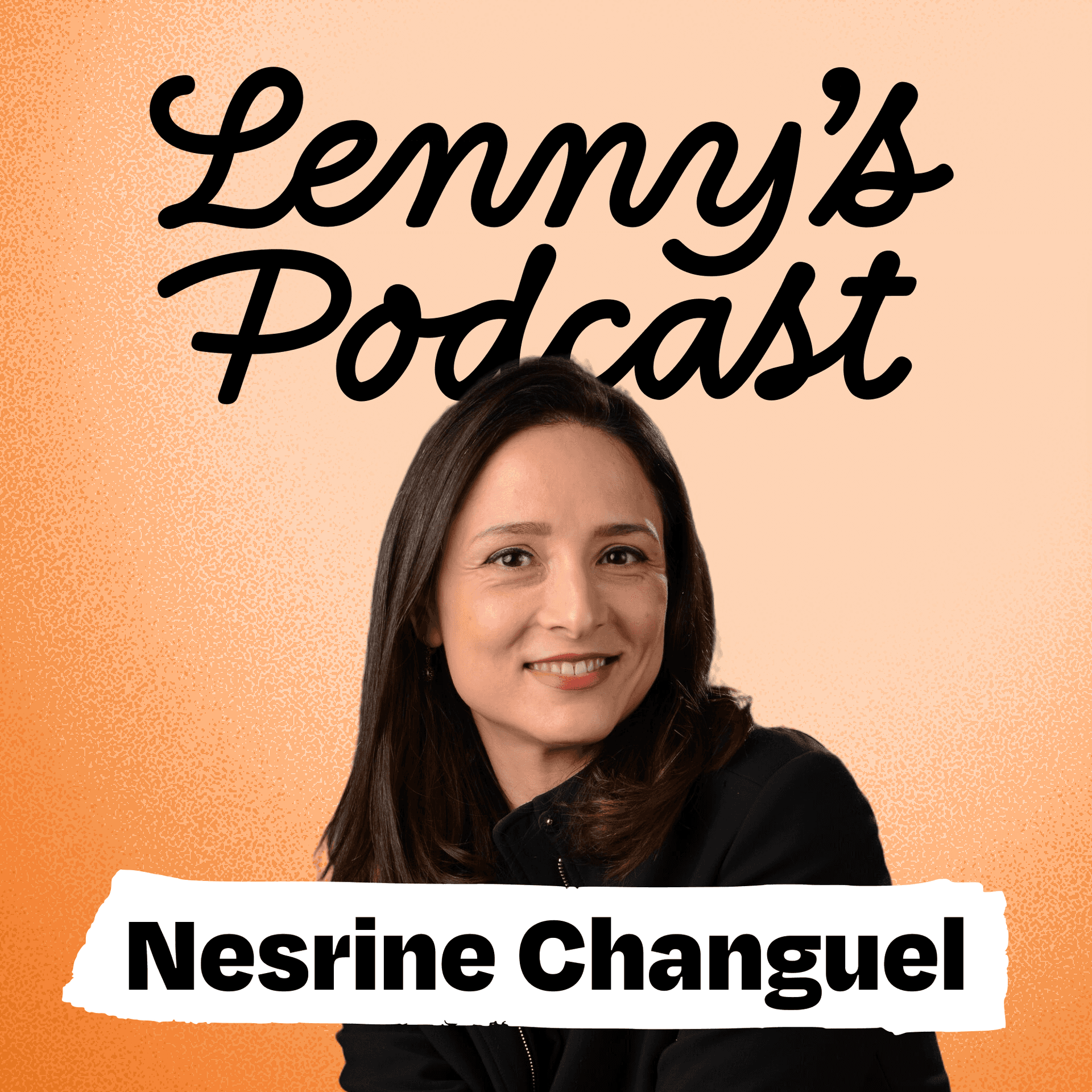
Podcast Notes: Lenny's Podcast - A 4-step framework for building delightful products with Nesrine Changuel
Episode Overview In this episode of Lenny's Podcast, host Lenny Rachitsky interviews Nesrine Changuel, a product leader with experience at Spotify, Google, and Skype. They discuss Nesrine's newly published book, *Product Delight*, which introduces a framework for creating products that cater to both functional and emotional needs. The conversation emphasizes the importance of delight as a strategic approach, rather than mere embellishment.
Key Takeaways
Importance of Delight
- Delight as a Business Strategy: Delight should not be viewed as a luxury; it is essential for differentiating products in a crowded market.
- Emotional Connection: Products that succeed do so by fostering an emotional connection with users, ensuring both functional and emotional needs are met.
The 4-Step Delight Model
- Identify User Motivators:
- Segment users based on their functional (e.g., finding a song) and emotional needs (e.g., feeling less lonely).
- Convert Motivators into Opportunities:
- Use identified motivators to find product opportunities that cater to user needs.
- Identify Solutions with the Delight Grid:
- Categorize solutions into three types:
- Surface Delight: Emotional motivators only (e.g., fun animations).
- Low Delight: Functional motivators only (e.g., basic features).
- Deep Delight: Solutions addressing both functional and emotional needs (e.g., Spotify's Discover Weekly).
- Validate Ideas with the Delight Checklist:
- Ensure solutions create user impact and are aligned with business goals while considering factors like feasibility and inclusion.
The 50-40-10 Rule
- Feature Allocation:
- 50% Focus on Low Delight (Functionality)
- 40% Focus on Deep Delight (Combining functionality and emotion)
- 10% Focus on Surface Delight (Fun, aesthetic features)
B2B vs B2C
- Emotional Connection in Both Markets: Emotional connections are vital in B2B products just as much as in B2C. The concept of “Business to Human” (B2H) emphasizes that emotional needs should be honored regardless of the target market.
Real-World Examples
- Spotify Discover Weekly: A feature that blends user familiarity with surprise, resulting in a deep emotional connection.
- Uber’s Refund Process: Quick resolution of issues removes user friction, leading to a delightful experience.
- Google Meet: Introduced features to minimize Zoom fatigue and foster interaction through reactions during meetings.
Getting Buy-in for Delight Initiatives
- Understanding Leadership Perspective: Align delight initiatives with what leaders value to gain buy-in instead of trying to convince them outright.
Building a Culture of Delight
- Incorporate Delight into Company Culture: Regularly include delight in strategic discussions, rituals, and innovation days to foster a culture that values user experience.
Final Thoughts
- Delight as a Movement: Nesrine emphasizes the significance of delight as a movement aimed at creating emotionally resonant products, which can lead to greater user loyalty and satisfaction.
Where to Find Nesrine Changuel
- Website: [nesrine-changuel.com](https://nesrine-changuel.com/)
- Newsletter: [Delight Tips](https://nesrinechanguel.substack.com/)
- Book: [Product Delight](https://www.amazon.com/Product-Delight-Stand-Emotional-Connection-ebook/dp/B0FGZ93D9Y/)
Recommended Resources
- Books:
- *Factfulness* by Hans Rosling
- *Strong Product Communities* by Petra Wille
Episode Link For more details, visit the [full transcript here](https://www.lennysnewsletter.com/p/a-4-step-framework-for-building-delightful-products).
---
This markdown file summarizes the podcast episode while detailing key concepts, discussions, and practical frameworks presented by Nesrine Changuel for creating delightful products.
Written by AI. May contain mistakes. Listen to the episode to check what was said.
Transcript
Automatic transcript. May contain errors.0:28I feel like there's two buckets of teams. it. The feeling of the product makes me not use it anymore. How can we build products where we can achieve the light goal? Recently, I booked an Uber. I was waiting for the driver and suddenly the driver canceled for no specific reason. But what happened is that when I get to the app, there have been only two clicks to get refunded. Bingo, your money is back. The emotion was supposed to be low and suddenly the solution completely removed the stress and the friction. Let's talk about how to actually approach this systematically. We need to satisfy three main pillars.
1:00The very first one is a big elephant in the room. When is this not worth your time? Companies like Workday, SAP and Salesforce that did really well, very undelightful. The hard truth is that Today, my guest is Nasreen Shingel. Nasreen was a longtime product leader at Skype, Spotify, Google Chrome and Google Meet. And through her experience building some of the most widely used consumer products in the world. She developed a really pragmatic framework for how to build delightful and retentive product experiences. A lot of product leaders talk about building great user experiences and making their products delightful, but I've never seen a concrete and repeatable approach to actually doing this, especially one that helps you separate low-impact confetti features, as Nesreen calls them, and ones that actually drive your KPIs and keep people coming back.
1:48In our conversation, we talk about why product teams with limited resources, lots of fires and priorities should actually spend time on making their products more delightful. I found this part super interesting and surprising. We talk about what sorts of product teams and companies should invest in delight, particularly B2B versus B2C. And then we dive into her specific four-step framework for discovering the highest ROI opportunities and prioritizing across them. Nasreen shares a bunch of really cool real-world examples from her time at Google Meet and Spotify and Chrome, and also examples from Apple and a bunch of other companies she's looked at.
2:19A huge thank you to Matt LeMay for suggesting topics for this conversation. If you enjoy this podcast, don't forget to subscribe and follow it in your favorite podcasting app or YouTube. That helps tremendously. And if you become an annual subscriber of my newsletter, you get a year free of 15 incredible products, including a year free of lovable Replit Bolt, N8M, Linear, Superhuman, Descript, Whisperflow, Gamma, Perplexity, Warp, Granola, Magic Patterns, Raycast, Chepier, D, and Mobbin. Head on over to Lenny's Newsletter.com and click Product Pass. With that, I bring you Nasreen Shankal. Today's episode is brought to you by DX, the developer intelligence platform designed by leading researchers.
2:59To thrive in the AI era, organizations need to adapt quickly. But many organization leaders struggle to answer pressing questions like, which tools are working? How are they being used? What's actually driving value? DX provides the data and insights that leaders need to navigate this shift. With DX, companies like Dropbox, Booking.com, Adyen, and Intercom get a deep understanding of how AI is providing value to their developers and what impact AI is having on engineering productivity. To learn more, visit DX's website at getdx.com slash Lenny. That's getdx.com slash Lenny. This episode is brought to you by Jira Product Discovery.
3:40The hardest part of building products isn't actually building products. It's everything else. It's proving that the work matters, managing stakeholders, trying to plan ahead. Most teams spend more time reacting than learning, chasing updates, justifying roadmaps, and constantly unblocking work to keep things moving. Jira Product Discovery puts you back in control. With Jira Product Discovery, you can capture insights and prioritize high-impact ideas. It's flexible so it adapts to the way your team works and helps you build a roadmap that drives alignment, not questions. And because it's built on Jira, you can track ideas from strategy to delivery, all in one place.
4:16Less chasing, more time to think, learn, and build the right thing. Get Jira product discovery for free at Atlassian.com slash Lenny. That's Atlassian.com slash Lenny.
4:31Nasreen, thank you so much for being here and welcome to the podcast. Hi, Lenny. Thanks for having me. It's my pleasure. So you just published a book that is coming out or just came out a couple of days ago from the time this podcast is coming out. It's on a very polarizing topic. It's called Product Delight. And the reason I think it's polarizing is I feel like there's two buckets of teams. There's like the teams, the product teams that are just like, of course, we need to make our product delightful. And that's how we win. That's how we differentiate. It's so important. And then there's just a bunch of product teams that are like, what are you even talking about?
5:05We have features to ship. We got to close some deals. We don't have time for this. We have fires constantly. We got to rebuild our infrastructure. We have no time for delightful stuff. So my goal for this conversation is basically two parts. One is help people understand why this is worth investing in very practically, not just the warm and fuzzies of it. And then two, give them an actual framework and model for how to do this successfully and not waste time on stuff that's not useful. How does that sound? Sounds like a great goal. And let's share this goal together today. Okay. This is our mutual goal.
5:36We have aligned KPIs. Okay, so let me start with just this broad question and let's just see where this goes. What is your best pitch for why a product team with limited resources, constant fires, lots of parodies should spend time on delight and delightful features? Every time I talk about delight, whether in a conference or a workshop, I always start with this very simple question. What is your favorite product? I mean, what I love about it is the range and the variety of answer I usually get. Like some people would choose products for the productivity you get, and others might choose product because they feel joy or comfort with it without even knowing how to explain that.
6:17And that's even more exciting because we connect with products at different levels. We might connect with products for the functionality part, or we might connect with product because it fulfill a certain emotional lead that we were not even aware of. And so the best product deeply emotionally connect with users. And that's the essence of the light. So the light is actually this ability to create products that serve for both emotional lead and functional lead. And the hard truth is that even functioning product, very well functioning product may tend or still experience some trouble or issue getting tractions and growth and the success that is hoped for if they do not allow users to feel certain emotions.
7:05So let's take Spotify, for example. Like, users do have plenty of options to stream music, but features like RAPT or mood-based recommendation or like Discover Weekly allow users to be seen and heard and even connected. So that's why like the light is not about sprinkling joy on top of utility. It's about creating an experience where emotion is completely on the heart of the experience. So let's be clear. The light is not a luxury nowadays and more nowadays because the market is so crowded. It's even a differentiator. It's a strategy that we can adopt in order to grow our business, gain in loyalty, in word of mouth, in growth, and even in revenue.
7:52I think about, as you talk, I've had some feelings recently like this, actually. I never check Instagram anymore. And my wife, I was talking to my wife about it because she checks it often. I was just like, I just don't feel good when I open it. It doesn't feel nice. And so I just don't ever go there. And so she sends me all these DMs and things in there. I'm just like, I didn't never, nothing you send me in Instagram, I will even see. And that actually is a recent example of just like, yeah, the feeling of the product makes me not use it anymore. So I know exactly what you mean. I also think about linear, which is like their whole thing initially was we're just going to make the most amazing, basically task management system.
8:31And on the surface, you'd be like, that is not going to work. There's like Jira and Asana and Monday and all these guys. You're not going to win just making it awesome. And they are winning. They're doing super well because they are so thoughtful about every part of the experience. And you could say it's very delightful. So I totally hear what you're saying. When you talk about delightful features, adding a delightful feature, just like what is, what's a good way to understand what's a delightful feature, making it delightful? So when we create products, it's really important that the solution that we're building is solving for both needs.
9:07And I really highlight the fact that there are functional needs. Like, for example, you want to book a flight, you want to listen to music. And it should also solve for the emotional needs, which could be, I want to feel less lonely. I want to feel comfort. I want to feel secure. And the best product are those that create and craft solutions that blend the two. So if you can blend the two dimensions, like the functional side and the emotional side within the same solutions, then you are creating what we call emotional connection. And by the way, emotional connection is not a new topic. I mean, you probably heard that very much in the design area and the marketing area as well.
9:45I mean, you agree with me, the best design is the emotional design. The best marketing is the marketing, like emotional marketing. I mean, we see the best ads coming from those emotional ads. But the reality is that, and even before I start writing the book, I realized that it's not that much spoken about in business and in products. I mean, that by itself creates a gap because you have designers talking about emotion, marketers talking about emotion. And then in the middle, business are like, what are you talking about? We need to shift features. We need to shift functionality. So we cannot achieve that.
10:18So much need to go. So in product, I call it delight. You might ask, why delight? Because every time I talk to a founder or a CPO or any product leader, they all start by saying we need to delight our users. I mean, this sentence by itself is very much repeated. The truth is that they don't know how to delight. I mean, we agree that we should delight, but we don't necessarily know how to delight. So I started from this concept and I tried to come up with a concrete, of course, framework, but also an actionable way to put that into practice. And in order to get even deeper into the definition, I want to highlight that there are two definitions for delight.
11:00I promise I'm not going to spend too much time on the theory, but the first definition is the theoretic definition. So the light is an emotion. And there's a professor called Professor Plutchik who actually created what we call the wheel of emotion. And he actually conceptualized the light as a combination of two emotions. Could you guess what are these two emotions? The combination? Well, I've seen your stuff, so I think I know what you're going to say. there's going to be exceeding expectations is a part of it. And then I forget the other piece, but I think that's an important element. So the light is an emotion and it's a combination of two emotions.
11:40So these two emotions are joy and surprise. Okay, there we go. I started right. I started right at that second. I'll take it. Okay, joy and surprise. Just try to feel it now. Imagine yourself in a moment or a situation where you are experiencing at the same time joy and surprise. In that case, you are delighted. So that's the theory behind delight. Now, let's go to the practical side. The practical side, how can we put delight into practice? How can we build products where we can achieve this delight goal? And in order to do that, we need to satisfy three main pillars. The very first one is like removing friction.
12:22The second one is anticipating need. And the third one is exceeding expectation. I'm going to explain these one by one, maybe through examples so that people can get exactly what I talk about. The first one I said by removing friction. It's really important when you're building product to identify what we call this valet moment, these moments where the emotion is at the bottom. And maybe the user is experiencing some anxiety, some stress. and how can we leverage the experience so we can reduce this valley moment. The best example I could share with you is actually something that did happen to me recently.
12:59I was actually about to take a train from Paris to London. So I booked an Uber and Uber assigned me a driver. I was waiting for the driver and suddenly the driver canceled for no specific reason. And I was so stressed. I really had to catch my train. I was like late already. So I jumped into the first taxi that just passed in front of my building and I forgot about my Uber application. What happened is that actually when your driver canceled, Uber did their best in order to assign you a new driver, of course. And I didn't pay attention to that. So the driver came to my place. He waited for me.
13:37And then I ended up being charged for the waiting time, charged for the trip that I didn't take. And I was so angry when I realized that on my app. So I was psychologically prepared that I need to write an entire essay about what happened and how I want and I need to be refunded. But what happened is that when I get to the app, there have been only two clicks to get refunded. Like select the trip you want to be refunded and bingo, your money is back. Wow. Now, like, you know, I mean, I've been into these moments where the emotion was supposed to be low and suddenly the like the solution that they provided is something that completely removed the stress and the friction.
14:19And of course, now I can take more trips without the stress that may come out of that. So that's removing friction. That's a really good example. Just to double down on how awesome this is, like just making it easy to do something that you expect to be really hard is delightful. like canceling a subscription, unsubscribing from something. Awesome example. Okay, keep going. So the second pillar is about anticipating needs, meaning that remember in the light you have surprise. And if you have to wait for your users to tell you exactly what they need from you, then you are just honoring their need.
14:52You're not exceeding or you're not even anticipating what you want to offer them. So another example probably is actually I, my husband for many, many years, he's trying to convince me to move to Revolut, you know, Revolut app, that banking app. And honestly, I was comfortable enough with my traditional banking app and I didn't want to add more check and et cetera. So I did resist not getting into the temptation of trying. But that was until one specific moment. Actually, a couple of months ago, we went on a family trip to Singapore. And when we landed there, we actually realized that our French operator or like do not allow us to have like international calls for free, meaning that we had to pay extreme high fees for roaming and for data.
15:47So what are the choices? Like either you have to buy a local ECM or you need to accept these fees, which are very high. And that was the moment where I looked at my husband. He opened his Revolut app. He went to a tab called eSIM. Buy eSIM, seven euro, it's done. It's like, how the hell did Revolut thought about putting an eSIM for a bank app? I mean, it's really insane. But then when you think about it, like most of Revolut users are international or expats. So they travel a lot. And in that case, they anticipated the need that people will travel and they will probably need at certain destination that kind of feature.
16:28So that's the anticipating need part, creating surprise by giving them something before even people ask you for. And by the way, Rahul Wara, I mean, the CEO of Superhuman, who's been on the show, by the way, and I loved his show, he said something very similar. But he said, like, in order for a product to be loved, you need to set the bar higher than your users themselves. Like, that's about exceeding expectations. And now we're getting to the third pillar, which is exceeding expectations. So once you anticipate their need, it's really important to exceed expectations. It means that, okay, how can I surprise them by giving them more than they ask?
17:07And here again, I have an example maybe that everyone is familiar with. I mean, I use Chrome. I love Chrome. But my husband is a Microsoft corporate user, like heavy Microsoft user. And he uses like Edge all the time. I mean, the other day I've seen him doing something that really surprised me. Like he was about to buy a coffee machine and he went through the entire journey. He put the coffee machine on like for payment he was about to pay. And suddenly, actually, Edge suggested him for a complete auto-fill feature, a coupon. Like he was about to pay something like 120 euro and suddenly you get 15 % discount because Edge found out that there is a coupon you can apply and you just get 15 % discount.
17:54That's for me exceeding expectation because I was not even asking for a coupon. I was about to pay the 120 euro anyway. So that also by itself creates a kind of surprise. So these are the three pillars. We need to play with them. We don't have to do them all at the same time. But every time we bring the product, we need to think about how can we reduce friction? How can we anticipate our user's need? And how can we create that exceed expectation part of the products? And I really wanted to make this clear because sometimes people think about the light as the confetti. I mean, the other day I was giving a workshop and someone showed me like, hey, if you shake the phone, you have snowflake falling.
18:38yes yeah I mean why not but that's not the light I talk about it has to come with the value it has to come with with a concrete reason and I call this like the confetti effect like people think about confetti as a way of delighting their users but if it doesn't bring any value then don't do it and by the way I'm not here to say don't do confetti I mean why not confetti could come with value and could bring some joy and the best example is on Airbnb maybe the one that you're most familiar with like I'm an Airbnb user both as a host but also as a guest and as a host I have a goal which is to make sure that I always keep my super host back like I love that and of course it allows me to provide the best experience for my guests and you know how it works like every three months Airbnb reassess whether you wanna you can remain a super host or not but you know what happens like every three months if you're renewed as a superhost and when you open the app, the app turns into confetti, like just to celebrate that moment with you.
19:42And that kind of moment is like, why not? Because I feel like Airbnb is recognizing my effort and celebrating that small moment with me. So it's about making sure you understand the value of your users and making sure that you're providing a solution that just brings them joy and surprise. The superhost example is actually really interesting because I built the Superhost program. That was one of my projects at Airbnb, me and my team. And interestingly, it came from, not from like, here's a metric we need to move. Let's build Superhost. It instead came from this guy, Chip Connelly, who was just on the podcast, who was a long-time hotelier.
20:21And he's just like, you need a way to differentiate status and levels of quality. And this is one way to do it. And there's a lot of actually fear on the product team that this was going to tank search conversion. People would be distracted by this thing. Interestingly, it made hosts really happy like you, just like, I want to be super host. I don't know why, but I want to be a super host. It didn't actually move any metrics, which is interesting. It might have changed over the years, but it was an interesting, interesting contrarian project that feels like, how could you not have it? But it didn't really move any metrics, which always surprised us, but maybe it did later.
20:56Anyway, I really love this very simple way of thinking about delight. And I think you're almost underselling what this framework is helping people with, which is just how to build great product experiences. So there's this joy plus surprise piece, which is just the emotional component. You'll feel delighted if there's joy and surprise. And then this three-piece, more, I don't know, even practical way of thinking about it, removing friction, anticipating needs, exceeding expectations. Like this is how to build great experiences. And part of that is being delighted by it. Part of it is just, this is a great experience.
21:34I think a big elephant in the room with this question is B2B versus B2C. And just like, when is this not worth your time? I imagine companies like Workday and SAP and ServiceNow and all these Salesforce that did really well, very undelightful. The way I think about this is when it's like a greenfield market, and there's nothing amazing yet, you don't need to make it as great of an experience as long as it's solving a real big pain point. But as the market gets more competitive, linear is a good example here, the way you can stand out is make it a much better experience, make it much more delightful.
22:12Thoughts? Yeah, thanks for bringing this B2B versus B2C thing because it comes a lot and every time I talk about the light, people might connect that to the B2C world. And honestly, for me, Like as long as there are human using the product at the end of the day, then they need their emotion to be honored. So, for example, when I actually started this project of the light, I realized that most of my career has been mostly close to the B2C work. Yes, like I've been working on Skype, Spotify, Google Meet, Google Chrome. So I quickly realized that I needed to interview people from the B2B space so that I get the sense of what's the light in their space.
22:55So I interviewed people from like GitHub or Atlassian or Snowflake. I mean, I really wanted to get a variety of industry and type of industries. And what I realized, which is probably not a surprise, is that they do value emotional connection in a way or another. I mean, it's not something new. They just do it in a different way. So, for example, for Dropbox, they do have a product principle called Cupcake. For Snowflake, they have something called Superhero. I mean, the names could vary, but the meaning is exactly the same. I mean, it's all about bringing joy to the customers. So I came up with this concept of B2H, which is business to human.
23:36For me, it's really important to take into consideration human emotion while building the product, whether in a B2B space or a B2C space. And by the way, exactly as you said, like since people are so much exposed to B2C examples, I mean, the expectations are getting higher. We are expecting also from B2B products to become more human and to feel more human. So actually, when I wrote this book, I defined what I call humanization as a type of delighter. I mean, I listed a couple of delighters and humanization is one of them. And I even said it's my favorite. It's about asking the following question.
24:13If my product was a human, how would the experience would be better? Just think about it that way. So, for example, when I work for Google Meet, and I actually joined Google Meet right when pandemic happened, like 2020. And we had, of course, to work on those challenges of like how people are taking these new ways of working from home. So instead of comparing Google Meet to Zoom or Teams or whatever other video conferencing tool, do you know what did we compare Google Meet to? That's the best, do you think? maybe just like an actual conversation? Exactly. I mean, that's the bar that we're setting ourselves, like comparing Google Meet to how this experience of meeting could be better if we were all having this conversation in a row.
25:01Because if you get this as a goal, you set a higher bar of expectation and you start to think in a human way. And by the way, there is another example that really stick to me, which when I was preparing for this project, I spoke with a head of product from Dyson. And he said a very similar thing. Actually, when I spoke with Andy, he said, we don't compare our diesel vacuum cleaner to other vacuum cleaner. We compare them to what if I hire a real person and how would that real person would be better than the robot that we are building? Actually, if you hire a certain person to clean your house, you probably tell that person to start with a certain room or to clean in a certain way, which the robot was not ready at that time.
25:46So they added recommendation into their robot to get closer to what a real human-like space could happen. So that's the concept of humanization. It's all about making sure that your product, or it's actually about reminding users that there are real human behind the product, and we want to achieve that. If you want to see a really delightful human-like vacuum cleaner, the Matic. I don't know if you've seen the Matic. I just got one. And yeah, that is a pure delight. They nailed it. They didn't need to read your book. They nailed it. So coming back to this B2B piece, I think it's an important piece to just make sure we help people see.
26:26Do you feel like what I said is true, that if it's like a new market without a ton of competition and you're solving a big pain point, they're like, this is a hair on fire problem. I just need, I need a CRM that works. I need a customer service thing for service now. There's less need to get this right, to exceed expectations, to anticipate needs. If you're just like solving the problem they have and there's nothing else, that's probably going to be okay. Honestly, maybe the product will work. And of course it has to work. But the problem is that if you do not integrate that part into the way how you're building the solution, you're probably just building a product, but not the product that will stand out.
Read the full transcript
27:08I mean, if there is another competitor who's addressing the emotional needs, then the other product will win. I mean, that's how the market is today. So, of course, you will make a product that works, but do you want it to just work or do you want it to stand out? And by the way, since we're talking about this B2B and B2C space just a couple of days ago, I was pinged in a post, LinkedIn post that I really loved. So I'm sharing it here. Actually, it was from a product leader from Buffer. And actually, he said something really interesting. He actually said that we realized that about 2 % of our users who are not using Buffer.
27:49They are clearly inactive. They are not using our product for many months. So we decided to send them an email and say, hey, we noticed that you're not using our product. Are we going to refund you? Meaning that we're going to lose money. Yes. But it's about trust and integrity. So this is a B2B space. This is about creating trust. This is about creating this connection. And the reaction is really funny because you might remind people to resign or close your contract with a certain product but the that even create a deeper connection that might even add like drive you to not cancel at all like okay you're inviting me to cancel but thanks so much for your honesty so i'm gonna rename i mean this kind of thing build trust over time and build emotional connection over time so it might not as you said like create like a big impact on metrics but over time as you're building personality or building a brand for your product it will definitely have impact over time.
28:50Slack, I think, is a good example of that. I remember using Slack for the first time, the little delightful animations and these little funny quotes, and they ended up being a$30 billion company. It feels like what I'm hearing is just like, the more competition there is, the more you need to stand out, the more this is something you need to get right. Because if there's a problem you're solving, no one else is. The experience doesn't have to be incredible. Like Revolut, another example, there's a lot of banking products, but the way they stood out, incredible experience, a lot of delight. Okay, let's get to how to actually do this.
29:21We've been so far with just like, here's why it's worth thinking about and doing. Now let's talk about how to actually approach this. You have a really simple and clear way of approaching this so you're not spending time in the wrong stuff and not just investing in confetti. It's called the delight model. Talk about that. Yes. So the thing that we did not really spoke about is the fact that over my product career, I've been like a regular PM, but during my time at Google, I've been the delight PM. So there is even an entire product team who actually work on making sure that the product is delightful.
29:55I mean, we do have such a thing for Chrome. We have that for Google Meet. I mean, that's a real thing. And of course, I understand that not every company could allow themselves having the luxury of having a delight PM. So that's why I came with this concept of how can I make this actionable and I created the delight model. It's very simple and by the way what I want to really highlight here is that you do not have to change any ways of working or any strategic steps that you're already taking in your company. So what is the delight model? It happens in four steps so we're going to work them one by one and the very first step is about identifying users' motivators.
30:36What I mean is that actually users are using products for complete different reasons. And that's the very first thing that you need to get aware of. I mean, we do segmentation. That's usually something that most of product people do. But we usually segment based on demographic or behavioral, meaning that who they are, or what do they really do with the product. And the third type of segmentation that I believe is very powerful is the motivational segmentation, which means that you need to segment your users based on why do they use the products. Like, for example, like when I worked at Spotify, we know that there are people who use Spotify to search for a specific track.
31:15Or there are people who use Spotify because they want to get inspired. And others will listen to Spotify because they want to feel less lonely or they want to feel productive or they want to feel connected. I mean, these are motivators. And the very first step of the model is to make sure that we have a list of what we call functional motivators and the emotional motivators. I'm pretty sure like most of the listeners are familiar with the functional motivators, but the emotional motivators is an extremely important part of the process because we're going to use it later. That's the first step.
31:51So just to be clear, so functional motivators are like, I need to find a song. I need to get inspired. I need to find something for my kid to listen to. What are some examples of emotional motivators? So emotional motivator for the Spotify example could be I want to feel less lonely or I want to change my mood. That's something that sometimes you go to Spotify without specific thing in your head to listen to. But the need is to change your mood or to feel nostalgic or something like that. I mean, these could be examples. For example, in the case of Uber, I know that they have been working heavily on allowing users to feel secure, and they build a lot of features for security reasons.
32:33That's interesting. It's like a nuanced version of jobs to be done. There's the functional jobs to be done, and then there's the how you want to feel. Yeah. Super interesting. Okay, great. And even when we talk about emotional motivators, we have the personal emotional motivators and the social emotional motivators. The personal emotional motivators is how users want to feel while using the product. That's exactly it. The social emotional motivators is how users want others to feel about them while using the product. I mean, think about wrapped, for example. A lot of people share their wrapped because they want to share how cool they are and in order to be perceived cool and to feel connected.
33:15I mean, these are different areas of emotional connection. So this is the first step. identifying emotional motivators also as well as functional motivators. Now, the second step is to convert those motivators. I mean, as soon as you have this list, how can I convert this into an opportunity or product opportunity? So you have the basis. I mean, the hardest job is to identify these motivators and then you can identify product opportunities related to that. And by the way, we see the shift that we are not too much talking about product space, but rather opportunity space because solutions are not only about solving problems, but also about honoring needs and making sure that we are solving for those needs.
33:59So we can use things like how might we or whatever. By the way, I'm not very religious or strict about whatever framework could be used here. It's all about starting from these motivators and define them and put them in the strategy as opportunities to be solved. So this is second step. The third step where we get to more concrete things here is to try to identify solutions, but that's all for those motivators. So remember, we actually identified functional motivators and emotional motivators, and I defined what I call the delight grade. So the delight grade is a matrix where we place functional motivators and emotional motivators, and then you will select among all the identified solutions, and you place them in the grade based on what motivators is this solution solving for.
34:49I mean, is it solving for one particular functional motivator? Is it solving for one particular emotional motivator or both? Why are we doing this? Because we are categorizing features into three types. There's the surface delight when a feature is only solving for an emotional motivator. I mean, think about wrapped. We used wrapped a couple of times here, but wrapped has nothing functional into it. It's all about allowing people to feel cool and share that with their friends. That's surface delight. Another example of surface delight, the other day I was using my Apple Watch and it was my birthday.
35:26So on my birthday, I had this balloon, I don't know if you experienced that, like it's saying happy birthday in the screen. I mean, why not? This is all about creating this emotional connection on the emotional level only. The second type of delight is what I call low delight. It's when the feature is only solving for one of those functional motivators. And of course, the third type, which is the most powerful for me, is the deep delight. Actually, this happens when you have a feature where you are at the same time solving for a functional need and also solving for an emotional need. For example, in the case of Spotify, Discover Weekly or Spotify Jam could be a good example of deep delight where we actually can, of course, learn or get inspired with a new music, but in a personalized way.
36:14So it allows us to feel heard and seen and understood by the app. And that's the third step, which is about identifying solutions and make sure that they are delightful and categorize them here. The fourth step, which is the last step of the model, is validating. Because how can we make sure that we are not just creating only surface delight or we are just doing it in the wrong way? So I created something that I call the delight checklist. It's actually just a checklist that anyone can go through to make sure that the feature that we're building is making user impact, is making business impact.
36:52Because like the light is not an excuse to just add like an aesthetic and fun part in the product. It really has to be aligned with the business. But also there are other couple of things like feasibility, familiarity. A very important part for me is inclusion. like inclusion really has to be taken into consideration here because when we talk about emotion what makes me happy is not necessarily what make you happy right I mean even myself I might be happy with something that is not necessarily what's going to make me happy tomorrow so inclusion is really important when we talk about the light because we've seen a lot of example where it's done wrong and I can share some example here as well so the example that come to my mind is actually something that happened last year here in Paris or in France in general.
37:43It was Deliveroo, you know, this company that delivers. And actually it was Mother's Day. And on Mother's Day, they came up with the idea of sending notification to Deliveroo users. And the notification looked exactly as a missed call from your mom. I mean, if you look at it from the screen. It says like missed call from your mom. You click on it. You get like, hey, it's Mother's Day. Think about your mother. That's clever. That's clever. It was supposed to be delightful. The problem is that this feature had the worst press ever in France. Like people really started to complain about it because yes, the intention was positive.
38:23Yes, it was joyful for some people, but not everyone has the luxury of enjoying such notification. For some, it means joy. For others, it means grief or sorrow or whatever. So it was not inclusive enough. So that's why I'm highlighting the inclusion part for the light, because it might be undertaken sometime. Okay, incredible. And that was a really good example of why you have this checklist at the end of making sure this is actually not going to upset people, well, accidentally. This episode is brought to you by LucidLink, the storage collaboration platform. You've built a great product, but how you show it through video, design, and storytelling is what brings it to life.
39:02If your team works with large media files, videos, design assets, layered project files, you know how painful it can be to stay organized across locations. Files live in different places. You're constantly asking, is this the latest version? CreativeWorks slows down while people wait for files to transfer. LucidLink fixes this. It gives your team a shared space in the cloud that works like a local drive. Files are instantly accessible from anywhere. No downloading, no syncing, and always up to date. That means producers, editors, designers, and marketers can open massive files in their native apps, work directly from the cloud, and stay aligned wherever they are.
39:37Teams at Adobe, Shopify, and top creative agencies use LucidLink to keep their content engine running fast and smooth. Try it for free at lucidlink.com slash Lenny. That's L-U-C-I-D-L-I-N-K dot com slash Lenny. So let me just mirror back these four steps. And then I'm curious if there's another example of something you built that followed this model that had a really good impact. But let me share. So basically, what this is is to help you figure out what is worth investing in under this umbrella of delight, which hopefully now you're convinced is worth your time, especially if you're trying to stand out amongst a bunch of competitors.
40:18So step one is identify user motivators. Like what are people, what are the jobs to be done? Both very tangentially, practically, functionally, you call them functional needs, and then also emotional needs. Are people trying to feel happy, sad? Within that bucket, actually, I'm going to take a quick tangent. When you think about emotional needs, what's like the taxonomy of them? I know there's a lot of emotion, anger, sad. What are the most common emotional needs in your experience to think about when you're like, okay, here's how to think about what the options might be? It depends on the area, but for some product, it could be security.
40:57For others, it might be like, I want to feel a better version of myself. Like, for example, when I spoke with some leaders from Miro, they might consider this as an emotional need. Like, they are using the product, of course, for the functionality that is allowing them to achieve, but also to showcase that they are a better facilitator, or they are a better leader or just feel a better version of themselves, this could be a potential emotional motivator. So it can range depending on the type of the product or the industry, but actually emotions could be like, we can use, for example, the wheel of emotion as a basis where we can select from it, but not all emotion could apply to all type of products.
41:39It has to be specific. Cool. That's a really good example of feeling security. It feels like that's something that more and more people want. All these AI companions, they're going to have all kinds of emotional needs. So identify user motivators, functional and emotional. Turn those motivators into delightful product opportunities. Figure out where you have opportunities to achieve that sort of delight. Identify potential solutions, like actually ideate on solutions. And then validate the ideas through this checklist, which you have in your book. There are a few you want to share Are there just like your checklist of stuff you want to think through?
42:16Yeah. So we spoke about inclusion as a really important one in the light checklist. Another area could be familiarity as well, because of course we love innovation, but we want to make sure that we are not surprising too much. I mean, we think that we love surprise, but we don't want to be very much surprised. And I have a maybe interesting story to share here, which is something that actually created the success of Discover Weekly. So I'm not sure if you know about that, but I'm going to go ahead and share it. Yeah, let's do it. I use Discover Weekly all the time. So when Discover Weekly was first thought of, and it's in Spotify, by the way.
42:56Yes, so Discover Weekly, how it was created was the fact that it was supposed to be a complete discovery, meaning that it was supposed to be complete new for the users. So that's the idea behind it. It was like, we're not, the user is not supposed to find or listen tracks that has been listened to or liked before. So it was shipped. And when it was shipped, like, of course, we started to see big success in the metrics. But you know what? Two weeks later, people, like the engineers, realized that there's been a bug in the feature. Actually, the bug was that sometimes the algorithm was injecting some of the like it song.
43:37So the playlist was not completely new to the users. It had some familiar feature, I would say. So, of course, the engineers fixed the bug. And you know what happened? Metrics checked. All the metrics, exactly. Like all the metrics, all the success metrics of the feature was going down. So they quickly realized that actually what users really liked in the Discover Weekly was not the fact that it was completely new, but this familiarity that has been injected randomly in the app just made it even more better and even more appreciated by the users. So they fix it the bug. And now with Discover Wiki that you're enjoying is a buggy version, if we can say.
44:19So, I mean, that's why I added familiarity as an element that needs to be checked because we don't want to just inject complete new surprising feature to the user that might be shocking. That's an amazing story. That was your team that worked on that? Yeah, I've been very close working with them because I've been working on the transcoding part and we had to transcode these tracks for them. That's so funny. How many other products are we missing out on by not making these mistakes by accident? That makes so much sense. Just like people want a little bit of like, oh yeah, I love that song. Oh, let's go.
44:50And then, okay, there's something new. That is so funny. Okay, so these are the four steps. And again, what you're trying to do here, I'll just go back to what makes something delightful is you remove friction, make something that you expect to be hard, really easy, like canceling an Uber, getting a refund on Uber, anticipating needs, which I think was the eSIM example you gave in the Revolut app. And Revolut, by the way, very delightful experience from what I hear. I've never used it myself being in the US. And then exceeding expectations, giving someone and then, yeah, giving something you never expected and like, wow, what was the example there again, just to make that really concrete of anticipating, of exceeding expectations?
45:32So for exceeding expectation, we spoke about, for example, the shopping, it's called like cashback feature. Oh yeah, the coupon code. There are plenty of them, yeah. Yeah, that's amazing. Is that something, is that something Microsoft does or that's like an extension that your has been installed? No, it's completely a part of the product. What? And it's even autofill, like it's autofill. You don't even, I mean, same like a password autofill. And I know Chrome is working on it. So it's coming if you're a Chrome user. Wow. What a weird thing. Like, I love it. But it's funny that that happens. Like, all these poor businesses are going to lose out on all this revenue.
46:04Anyway, we don't have to get into that. Okay. Is there an example, like a broader example of something you worked on following this model that was really successful, really impactful? When I worked at Google, particularly for Google Meet, I told you, like, I've been a PM for Delight. So we had that mission that we really needed to delight our users. And that's how I actually learned that it's actually a discipline. It's not the buzzword. It's something that we can really put in place. So I do have two examples I can share with you. One is from Google Meet and one from Google Chrome. Which one do you want to listen to?
46:37Let's go with Chrome since we've chatted about me, but I want to hear them both. Let's start with Chrome. I love Chrome. Let's start with Chrome. So when I worked for Chrome, I had to work on the most challenging issue. What do you think is? Most challenging issue of Chrome. Memory management? No. There is even worse. It's tab management. Tab management. How people... Okay. Okay. No, it is the hardest one. Because actually when I worked at tab management, I realized that people are working with tabs for a complete different way. It's like people are leaving tabs open as reminders or as to-do or just because they forget about it.
47:18Very guilty of that. Yes. And I had to work on the iOS part, like the mobile part. And believe me, like if you look at data, you see so many people having so many tabs open. I mean, the numbers is just amazing. 99 plus is all I ever see. Yeah, because we do not put three digits. Anyway, the real number could be really high. Oh, man. And so we had to address this problem. I mean, from a functional perspective, this is a problem. I mean, from a memory, from a performance, from a space. I mean, we don't want users to have like 500 open tabs without even realizing, by the way, that they have 500 open tabs.
47:59So we had to work on that. And how did we do that? The way we did that is actually we interviewed a lot of users, trying to ask them, hey, what if you navigate through your open tabs and let me know how you can find an open tab. That was, for me, a very important phase because that's how you realize that there is a relationship between people and their tabs. And I really say relationship because for some people, their tabs are really, really important things. I mean, for them, there's absolutely no choice for Chrome to close tabs on their behalf. Like it's a really important thing. So we had to understand that relationship first.
48:40And then we asked some people to navigate us through how they can find a specific tab in their tab grids. and a lot of people got like a bit frustrated or like they found that a bit hard or some of them had like they found that there is a need to apologize not for the content of course of the tab they had but said something like hey i'm i mean sorry i usually don't have that many tabs open and that's not the point the point is to see if you get frustrated from the experience itself or not. So that phase by itself, trying to understand not only the functional part, but also that emotional part, like the frustration part, the shame part sometimes, was really key in order to build a feature that can align with these values and these motivators or these emotional parts.
49:28So what we built actually was a feature that exists today on iOS, which is called inactive tabs. So inactive tabs is that ability where you can... Actually, this happened automatically where all tabs longer than 21 days that was not touched actually or opened for more than 21 days are placed in this folder called inactive tabs. So the result is that you're getting like a cleaner tab grid and people are feeling less stressed about the amount of tabs they have, but also they keep that trust of Chrome because they know that we did not close their tabs. Their tabs are actually there in that inactive tab group.
50:06So that was one of the features we built. It was supposed to be functional only. I mean, we could just maybe compress the thumbnail or just do a performance way. But also, that's an example of deep delight, where at the same time, you're solving for a functional need and at the same time, including the emotional dimension into it. That's a super cool example. That's actually the reason I switched. I started using Arc. I don't know if you've used Arc before, which is built on Chromium. It's its own startup, the browser company. Josh Miller was on the podcast. They actually delete your tabs after some number of hours, like days.
50:42And once you get used to that, it's actually great. I'm like, okay, please go away. And then you can save them if you want. You can pin them. I haven't used Chrome in probably long enough where I remember just the tabs deactivate. Like they just have to reload when you go back to their old. It's cool that now they move to a different folder to kind of get them out of the way and clean up your whole thing. Very cool. Okay. What's the Google Meet story? So I told you when I joined Google Meet, it was maybe one month before COVID hit Europe, like the worst period you can join Google Meet because, I mean, the usage just gets skyrocketed.
51:19Like we all found ourselves moving from having meetings in rooms and clinics to 100 % remote. So the very first couple of months, and it was about three to four months, I had to understand the impact or the emotional impact of this new behavior. The fact that people are staying home and having these back to back. What's the emotional impact of this new experience? And of course, what we did was to interview a lot of people. And with the help of user researcher, we collected a lot of information. And when we try to synthesize these informations, we actually realize that there are three main patterns.
51:57Like people are saying, I'm feeling bored. People are saying there is a low interaction. And there was even a new term that was born during COVID time, which is called the Zoom fatigue. You've probably heard about that. It's funny that it was Zoom fatigue and not Google Meet fatigue. I was really happy it was called Zoom fatigue. That's a good point. It's always better to put it on the competitor when it's negative. It's bittersweet, bittersweet. So we had to work. I mean, in that case, if you can see, we did not really identify motivators. We did identify demotivators because sometimes it's even easier.
52:30Actually, sometimes it's easier to let you know what frustrates me or stress me than tell you what makes me happy. So if identifying emotional motivators turns out to be complicated, so you can try to identify those emotional demotivators. motivators. And in that case, we had to work on these three demotivators and come up with solutions that could help leverage that or at least reduce in a way or another. So when we worked on Zoom fatigue, we actually realized and we get help from a study that was published from Stanford, by the way, that one of the causes for Zoom fatigue was the fact of seeing your self-view.
53:09It's not about seeing others. It's the fact that you see yourself. Why? I mean, Just imagine yourself walking on the street and someone is holding a mirror next to you. I mean, even if you avoid, your brain will try always to check how you look. So the fact that it was self-view was a big risk and it was even listed as among the most significant risk of Zoom fatigue or causes of Zoom fatigue. So we worked on minimizing self-view. It's as simple as you can minimize your self-view, meaning that you can still broadcast or share your video, but you don't have to see yourself. That's one example that we worked on.
53:45The second one, which was related to low interaction and boredom, we tried to understand how can we bring in a little bit more of joy, but at the same time, allow people to feel heard and seen and active. And that's how we actually brought reaction, emoji reaction, you know, that waving hand or thumb up, because sometimes it feels invasive to unmute yourself and say, I agree, or cut the speaker for saying, yes, I don't agree or something. I mean, these emojis can help you stay alive, stay connected and present, and somehow improve the interactivity part. So these are the two features that we introduced back then.
54:23That is such a cool example. I find myself using Google Meet all the time now instead of Zoom. So great job, Google Meet team. I know Zoom was winning for a long time, and I feel like Google Meet's really turned that around. Good job. Let me ask a couple of questions to keep digging into this question. it feels like some CEOs, founders, leaders are like, yes, this is worth investing in. Let's definitely do it. There's a lot that's just like, no, stop. We got other stuff to do. What's your best advice for trying to get buy-in from SEO or just some kind of leader that's shutting this kind of stuff down?
54:58The very first advice is to try not to convince. I mean, honestly, if you try to convince, it's a lost bottle. I feel like we live in a world where there is a true, there is a false. If you come to your CEO and leader say, like, I heard Nesrine talking about the light, we should absolutely do that. It might seem like a threat for the organization, for the ways of working, because it's something new. Instead, have you heard about this concept of perception versus perspective? No, I don't think so. perception is our way of seeing things this is exactly how we understand things this is how we are convinced for example you listen to a podcast talking about the light then you are you have your own view about what this is about perspective though is the other view is the world view how other perceive the light so there is very likely it's very likely that others like leaders and CEO The reason why they're saying no is because their view is that the line is about this nice to have or the cherry on the top.
56:02So instead of trying to convince, and that's why I said don't even try to convince, is to try to align and put yourself into the leaders and the CEO's shoe and try what do they value most. Once you understand that, try to see how can the line align or help achieve that goal. And let me share an example with you, because when I left Google and I started coaching founders and CPO, I had one founder actually who has been running a startup for helping musicians and artists to fund curators. I mean, that's the core value and mission of the startup. And when we initiated the coaching side, we actually started talking about strategy, OKR.
56:45I mean, that's exactly what he had in mind. He wanted to get help into creating product strategies and OKRs. And over time, as we started coaching, we ended up talking about the life. The reason is I actually asked him this very simple question. I asked him, do you think your users are proud to use your product? Are they proud enough to tell others, artists and musicians to use your product? And I think that was a really hard question for him. Because after reflection, he said, no. They are not proud because they feel like they are little. I mean, they are getting our help. So they are not able to get to curator by themselves.
57:27So who's going to tell others that they are little like artists and they are having help from us? That was the beginning of the conversation. And I think after two weeks, he kept coming back saying, hey, Nusreen, I think we need to shift our entire strategy discussion into how can we make our users, proud of using the product. We need to find ways to turn our product into, like our users, into proud users. And so they can tell others, tell other musicians, they will play the word of mouth game and they will allow our product to succeed. And that's exactly what we did, by the way. So in the beginning, the founder was completely opposite to the fact that we introduced the lighting to the product.
58:11But as soon as he realized that the fact that he invests into allowing their users to feel proud is so important for the growth and the word of mouth and the success of the business. That became the number one strategy. And by the way, they've been growing. They are now available in the US. So things are going super well for them. But just to show that the fact that you're saying no does not necessarily mean that it's the wrong thing. It's just it's not aligned enough. You need to find a way to align them with what they value. That's awesome advice. It's good advice for just anything you're trying to get buy-in from is understand their goals, connect what you're proposing to what they want to achieve.
58:50And it's almost like, don't even use the word delight. Just like think about, okay, here's what they believe we need to do. How might removing friction and anticipating needs and exceeding expectations get us there? And then later be like, haha, it's delight. I'm just kidding. Okay. That was an awesome example. So along those lines, just when you have all these ideas, We talked about this a bit, but you have a bunch of ideas, a bunch of ways to do it, add to light, make it a better experience. What's your advice for prioritizing amongst all of the ways that you can remove friction, anticipate needs, exceed expectations?
59:27How do you pick the things that are actually worth investing in? The very first thing that I really want to highlight here is that we need to shift from the mindset that tells us balancing or like how can I balance between the light and functionality? because we need to move away from the light versus functionality into the light in functionality. So that's the biggest move that I really want to share here because we should really get away from the idea that should I prioritize the light or should I prioritize functionality? And remember, deep delight is that concept of trying to solve problems and create solutions in a way that emotion is taken into consideration into that.
1:00:12And by the way, I created this model called 50-40-10. And 50-40-10 is actually a guidance or a recommendation so that if you have done your delight grade and you categorized your solutions or your roadmap or your backlog into low delight, surface delight, and deep delight, 50, 40, 10 will tell you that 50 % of your features should be for low delight. Yes, 50 % should be for functionality only because like a product has to function. I'm not saying that you should only work on delight. 40 % for deep delight where actually functionality is there. It's just that we are building it a little bit different so that people will feel valued.
1:00:55And only 10 % for surface delight. I mean, you can bring a little bit of surface delight throughout the year, maybe two features a year. That will just bring that joy that people will create, of course, the brand and the personality that we are working on. And when I worked at Spotify, for example, we had some times where we, of course, blended all that into the same roadmap. Like, for example, we had a time where we were working on improving search because at some time, maybe you don't remember that, But at some point of time, like a search was not functioning that well. So that wasn't improved.
1:01:30And that's, of course, functionality only. And also we work on introducing video podcast on Spotify. And we worked on Canvas. So Canvas are this small video, looping video, you know, the small clip when you open Spotify and you have like a small clip. My son is addicted to that. He's like, he likes to play music. And then he found this thing that is like TikTok for Spotify. I was just listening to the music in these little clips. I'm like, how do I feel? I don't want to have to be watching that. It's like a little iPad almost, but it is delightful for my adults. So for me, the success comes from the blending or the balancing.
1:02:06How can you create a roadmap where you have the bouquet of deep delight, surface delight, and low delight all together? These are awesome examples. Say someone listening is super bought in. How do we do this at our company? And then say they're a manager. Say they're like a manager of PMs or even just a PM. Is there something more they can do to create kind of this culture of delight being important? To start, it's a mindset. And I call this the delight culture. I mean, of course, it's really important to talk about it so that we understand what it is. But it has to be part of the culture of the organization.
1:02:44I mean, that's how I see it. So, for example, at Google, I've seen that for during a long time, we had a product pillar called delight. And the fact that it was a permanent place in the strategy, I always see it all the time. That's actually a kind of reminder that we need to build features and create opportunities that map and align with that pillars. I mean, just the fact as a director having this as a pillar is a first step. And the second thing is to make it part of the routine. I mean, the routine and the rituals of your company. So here, an example. When I worked at Spotify, we used to have something called squad health check.
1:03:25Maybe you heard about that at some point. I mean, something about checking how good the team is functioning. And it was happening every quarter. And actually, the leaders used to be extremely religious about making sure that the team is actually doing it. And the fact that they show that they care made it happen every quarter. So the leaders, actually, if they are bought in, as you said, and they are convinced, they have a big role to play into putting that in place by giving it a chance. And again, when I worked at Spotify, we had something amazing called Hack Days. I mean, I've seen it as a company, but it's never as good as at Spotify.
1:04:05So we used to have hack days every month, and we used to have hack week toward the end of the year. And again, the fact that this is happening on a regular basis makes the thinking and the mindset completely adopted, like the mindset of innovation and going completely out of the box, etc. So now I'm advocating for the light days. And I actually help organizations setting up the light days. And I recently did this with a company called Migros. It's actually the largest supermarket chain in Switzerland. And we had hack days or like delight days in that case, where we actually, of course, spoke about delight.
1:04:46And then we allowed all the teams to go crazy and innovate and think about delightful features. It was very playful. The team loves it. And we ended the day by giving them the chance to demo. and we select the best or the winning delight feature that the company will end up implementing. So it's about putting it as a routine in a continuous way so that it becomes like part of the culture, not just a topic that is brought in once in a while. That sounds so fun, a delight day. And again, when people hear this word, it could sound like the confetti example, but you keep coming back to this point.
1:05:23Delight is not just that surface level low type of delight. There's deep delight that solves anticipated needs, exceed expectations, or roofs friction. So deep delight is still a type of delight, but it's actually one that also happens to solve a functional need. Okay. It's interesting. So as you talk, I've been thinking about like, what are the fastest growing companies in the world, the top product teams? And it's interesting how delight, they're so delightful. And I don't think it's a coincidence. So I think about Cursor, maybe the second fastest growing company behind ChatGPT. Like speaking of exceeding expectations, you just like click tab and it codes for you.
1:06:05Anticipating needs, that's like the ultimate example of anticipating your need. It's writing your code for you. Okay, delight, amazing. Lovable, like it's called lovable. Amazing example, ChatGPT, if you can imagine exceeding expectations and blowing your mind. incredible example of delight. I think about Linear as we're talking, just like they are winning in a very crowded space because they invested in making it much more delightful. I think about Suno, if you know the music AI app, where it just like creates magical music for you, just telling it what you want to hear. So there's so much here of just like, yes, there's a lot of power to making, especially in a crowded market, in AI especially, just make, it's almost like cable sticks now.
1:06:48It needs to blow your mind for anyone to pay attention. We just need to be careful because the surprise has an effect that vanished over time. So there's this thing that is called habituation effect. How can you make sure that you're not just surprising your user once when they use it the first time and then they become like the only use case? So you mentioned a couple of examples. Of course, I do agree they are all delightful. But one of the elements that is part of the delight checklist is are you or do you at least have a plan to maintain that delight or that surprise over time? For example, when we introduced background replacing Google Meet, we first introduced like a blur.
1:07:26Then we added static image. Then we allowed for video background. Then we added like an immersive background where it's like moving slowly as if it's very real. And now they even have like AI generated background. So it's about creating that surprise over time in a completely continuous way to avoid that happy creation effect. Such a good point. It makes me think about Snapchat, who their only strategy was just keep out innovating everybody else with new lenses and maps. That was their whole thing, just do the newest thing. Keep doing it. Keep doing new stuff to keep people excited. Such a good example.
1:08:04Hard to do. Okay. I know you also have a story about Apple Reactions as an example of good or bad delight. Can you share that? It's actually a feature that's very much known nowadays, but maybe people don't know exactly what's wrong or what's good or what's bad about it. So it actually happened a couple of years ago now that actually Apple introduced updates into their operating systems. And that update, of course, enabled the fact that if you gesture, you initiate like fireworks or whatever, any type of reaction. I hate that shit. Yes, it's just a reaction. And it happens actually during the time where I worked at Google Meet.
1:08:44And the reason why I remember it very well is because we had a lot of complaint from our Meet users saying, hey, what this feature is about. I want to disable it. And we're like, you need to disable it on your operating system if you're using a Mac. And why it's not inclusive, by the way? I mean, this is one of the examples I use for the non-inclusiveness of a delightful feature because it did happen. And that's a real story, by the way. I've been in a person having a call with a therapist, having a hurt finger, and he was trying to show his finger to the therapist. And what happened is like fireworks happening.
1:09:21I mean, what an appropriate time for fireworks. And of course, bad press. I mean, you want to avoid this bad press. And that's why like the light is great, but do it in a conscious way and make sure that it's adapted for all situations and all cases. Wow. Such a good example of the light gone wrong. I had so many podcast episodes where the guest was like thumbs up and then just this thing shows up. And I did stuff like, what is going on here? What is it? Like, no one told you it was turned on. How do you even turn this thing off? Oh, my God. That's such a good example. Okay. I've covered everything I was wanting to cover.
1:09:56Is there anything that we haven't covered? Anything else you wanted to share that you want to share before we get to our very exciting lightning round? We spoke about some of the benefits of Delight at driving loyalties and retentions and word of mouth. And that's very much clear. But there is one overlooked benefit that even myself I was not aware of. And I want to share that with you because it's an interesting conversation I had a couple of months ago. I was actually giving a delight workshop in one of the largest health tech companies here in France. It's called Doctolib. And we had an amazing day.
1:10:30We spoke about a lot of ideas of delight. But then toward the end of the day, I was approached by the product director called Suzanne. and she actually told me something that's thick I think it's worth mentioning here she actually said uh Nisreen you spoke about a lot of benefits of the light but there's one benefit that did not mention at all and I was curious like what is it and she said like I've seen all the PMs today super motivated excited like crazy the fact that PMs are working on the light brings them very high level of motivation we're not talking about user motivation here but like the employee motivation.
1:11:08And it's so real. I mean, of course, we have some time to work on upgrades and migrations and non-fun stuff. But when you work on the Light for Features, PMs are super excited because they see a reaction of users, they see the love of the users, and they get even more happy and more productive. And for me, that's actually a real benefit that, of course, I was not mentioning during the day. But I think it's something that all leaders can take into consideration because we want to make work life more exciting and more energizing. That's a really good point. Like ideally you find a thing that you're very excited to build because it's so fun and drives functional needs and is just delightful, makes people joyous and surprised.
1:11:53That's the Venn diagram we're shooting for. Amazing. Okay. Well, with that, we've reached our very exciting lightning round. I've got five questions for you. Are you ready? Oh, I'm ready. What are two or three books that you find yourself recommending most to other people? The first book is called Factfulness. Maybe you heard about it. It comes from Ulla Rosling and Hans Rosling and Anna Rosling. The three are Swedish. It's been a bestseller for years. It's still a bestseller, by the way, New York Times. And here's the story. Actually, I have a story about this book. I was living in Sweden back then.
1:12:32I've been living in Sweden for about seven years, by the way. And it was 2019. And I had two kids, three and two at the time. And as every Scandinavian, we've been dreaming about having a cargo bike. So we started looking for a cargo bike. And it happens that we found a cargo bike parked exactly on our building yard. And so it had a for sale sign. So we contacted the owner. It ended up to be the bike belongs to Ula Rosling, which is actually the author of Factfulness. And so, by the way, Ula used to be the data PM at Google because he sold his statistic software to Google at that time. And the interesting part is that actually it's a book that is about how can we drive our thinking more using facts than using bias.
1:13:29And this book was recommended by Barack Obama and Bill Gates and everyone. So the fun story is that I get to read this book before anyone else because it was released that day and I met that guy who's awesome. So that's my first book. Wow, great story. And the second book is actually very close to my heart. It's called Strong Product Community by Petra Villa, who's been on the show, by the way. And the reason why I recommend this book is because actually I started my career in research. I've been a researcher after having my PhD for a long time. And when I moved from research to product, I noticed that there is a huge difference in the fact how researchers contribute to community versus product contributing to community.
1:14:15And I quickly, really quickly felt lonely when I became a PM. Because as a researcher, you go to conferences, you review each other's work. And when you become a PM, you have nobody really to review work or to collaborate closely with. So for me, it was really essential from day one to become a speaker or to contribute to some community, whether inside the company or outside the company. For example, like Google, I was initiating something like PM Speaker Siri, where we invited people from the outside to share their insights and perspective. So with that, I actually get, we invited Petra at that time.
1:14:53And then she interviewed me and the interview was featured in the book. So if someone wants to stay sane and contribute and learn in a product community, that's a great book I recommend. Awesome. Okay. Is there a favorite movie or TV show you recently watched that you really enjoyed? I have a TV show and a movie. Which one do you want to listen to? Let's do TV show first. TV show. Okay. So the TV show has nothing to do with business or product. It's the equivalent of the American greatest baking, by the way. It's called Le Meilleur Patissier. And here is why I love it. I mean, of course, I love baking.
1:15:33We did not talk about that. But the reason why I love it is because the candidates are not professionals. Of course, they are good bakers, but they are not professional, meaning that they make good cakes, but they fail a lot of cakes as well. And this failure is the most exciting part of the show. It makes it relatable. I mean, I succeed as many as I fail. And the fact that I can see these failures allow the show to be relatable. And that's why, for example, I don't like shows like Top Chef or whatever, where the candidates are super, super professionals. And by the way, I mean, I also participate a lot into cooking classes and I love doing that.
1:16:10And I realized that most of the chefs during those classes talk about emotion. and they talk about we need to feel when we taste and when we eat. And maybe, or just maybe, that's why I'm talking about the light and emotional today with you. Okay. You said there's a movie too. Let's share that. The movie I have in mind is called Entouchable. Again, it's a French movie, but it was so successful that there's been a remake. The remake is called The Upside. Maybe you've watched this movie. So this is based on a real story. and the reason why I love this movie I mean it's my favorite by far is because you go through all emotions throughout the entire movie I mean you go through joy to sorrow sadness all in the same period and you even last for complete and appropriate situations and there is one moment one particular element that made this movie very unforgettable and very special it's actually the soundtrack.
1:17:10The soundtrack is something that is so special in the movie and goes so well with the movie that makes it completely unforgettable. And so when I watched the remake, I was completely disappointed because that soundtrack was not part of the movie. So I was completely disappointed, as I said, and that's exactly what I call the anti-delight. So I was anti-delighted at that time. Under exceeded expectations. Yes. Okay. Is there a favorite product you recently discovered that you really love? So we spoke about Revolut. It turns out to be one of my favorite products these days because it's actually surprising me almost every time.
1:17:50I mean, this is one of these rare products that every time I use it, there is a new surprise. And they are really applying this concept of continuous surprise. It's not just like one off and then they move to something else. So I really like the fact that they are continuously surprising users. But there is another one, actually, that I might probably share here, where when I was interviewed for Google, they asked me this question, what's your favorite product? And that was back like six or seven years ago. And I actually answered with a complete non-tech products. I actually said at that time, the Yo-Yo Stroller.
1:18:29so the UU stroller it was a surprise yes for the interview at the time but it turns out to be the most successful interview I had because the UU stroller has something special that really served one of my very much need at the time it's a stroller that is completely foldable there was no one at that time that you can travel with it in a plane and at that time one of my biggest stress and fear was taking plane with small kids and how am I going to manage those in lines and in queues and that stroller served exactly my emotional needs by allowing me to travel and take the stroller with me on the plane so just sharing this story because that was my answer for my google interview it's a really good example of an emotional need of just like confidence this can work on a plane when I'm all stressed out with my baby.
1:19:20I went with up a baby stroller, for whatever it's worth. It doesn't fold as well. Okay, two more questions. Is there a life motto that you find yourself coming back to sharing with friends and family and worker in life? It might sound cliche, but my life motto would be shoot for the star or even higher if you can. And I've been really following this almost for my entire career. I told you that I started my career in research. And during my PhD, I realized that most of my degree are coming from France. So I really had to introduce some international element into it. So I wanted to apply for an exchange program.
1:20:04And when I applied, do you know who did I apply first? Like, who did I went straight with? Stanford. work. Like I applied for Stanford. Let's see how it goes. I mean, the guy answered and he said, yes, but you have to pay a lot of fees. I mean, that's the policy. Okay. I didn't really manage to get that sponsored. So I didn't also want to reduce the prestige of the university. So I applied for UCLA and it did work. I mean, for me, that was something that I really wanted from the beginning, have something extra or not. And I kept doing that throughout my career. Like I wanted to work for the best tech company and I work for Google.
1:20:43I want it to be featured in the best podcast and I'm with you. Nailed it. I just have one goal to go, which is to be on one of the best stage and I'm working on being on a TEDx, why not? There we go. No, you need TED, not TEDx. That's the goal. Let's go for TED. The original, okay. I love this. Okay, final question. Say someone's coming to Paris where you're based, where do they get the best croissant? Actually, the best croissants are not necessarily in the very fancy bakeries. They are in those small bakeries that you find on the corners and you have to smell the butter. Smell the butter? Yes, from the outside.
1:21:23If you don't get it, it's not a good sign. Wow. So, okay. So if you can smell butter standing outside of this bakery, it's not where you want to get your croissant. Wow. I've never heard that tip. Okay. I need to know what butter smells like, but I think I can, I think I get it. It smells like caramel with hazelnut. I mean, it smells really good. You need to train your ability to taste that. I love this answer. Isn't like, this is like teach a person to fish kind of answer. Like you can find them if you just go smell. Nisreen, this was awesome. It's everything I hoped it would be. We covered a ton of ground.
1:21:59Let's tell people where to find your book called Product Delight. The how to make your products stand out with emotional connection. Where do they find it? Where do people find you? And how can listeners be useful to you? Yes. So people can reach out on my website, nesrim-hangel.com. They can, of course, reach out. There is a contact form. I'm happy to get their inquiry or question or whatever. They can also learn more about the book. There is a website for it, like productdelightbook.com. I also started recently a newsletter where it's called Delight Tips, where I actually share stories. delightful stories that I find useful for people to get inspired with.
1:22:42And something actually very recently started happening. Like as soon as I started talking about the light, people started spontaneously to share their delightful stories, like either personal or professional. And I love those. So if anyone listening want to share a delightful story, I would love to listen to those. And just want to end with the fact that the light is a movement. I mean, when I started writing this book, a friend author told me the following. He actually said, when we're writing about something, it's either writing about a known problem, we're giving a solution for a known problem, or we are giving a solution for an unknown problem.
1:23:19And the second is harder. And I chose the second. I mean, I'm going with evangelizing, but the light is an important thing. That's what's going to allow your product to win and stand out. I know it's harder, but I'm pretty sure that that's what will help us create a more delightful world. So if they want to have and implement the light culture into their organization, they can reach out. And that's exactly what I love doing with organizations. What a cool place to be. Just people sharing all these delightful examples with you all today. What a cool job. Nasserine, thank you so much for being here.
1:23:54Thank you, Lenny. Bye, everyone. Thank you so much for listening. If you found this valuable, you can subscribe to the show on Apple Podcasts, Spotify, or your favorite podcast app. Also, please consider giving us a rating or leaving a review, as that really helps other listeners find the podcast. You can find all past episodes or learn more about the show at Lenny's Podcast dot com. See you in the next episode.
From the publisher
Nesrine Changuel helped build Spotify, Google Chrome, and Google Meet. Her work has helped her discover the importance of emotional connection in building successful products. At Google, she served as a dedicated “delight PM,” a role specifically focused on making products more delightful. She recently published Product Delight, a book that provides a practical framework for creating products that serve both functional and emotional needs. Based in Paris, she now coaches founders and CPOs on implementing delight strategies in their organizations.
What you’ll learn:
1. Why delight is a business strategy, not just “sprinkling confetti” on top of functionality
2. How to identify emotional motivators that drive product retention
3. The 50-40-10 rule for balancing delight in your roadmap
4. The 4-step delight model
5. The origin story of Spotify’s Discover Weekly
6. Why B2B products need delight just as much as B2C products
7. How to get buy-in from skeptical leaders who think delight is a luxury
—
Brought to you by:
DX—The developer intelligence platform designed by leading researchers: https://getdx.com/lenny
Jira Product Discovery—Confidence to build the right thing: https://atlassian.com/lenny
LucidLink—Real-time cloud storage for teams: https://www.lucidlink.com/lenny
—
Transcript: https://www.lennysnewsletter.com/p/a-4-step-framework-for-building-delightful-products
—
My biggest takeaways (for paid newsletter subscribers): https://www.lennysnewsletter.com/i/174199489/my-biggest-takeaways-from-this-conversation
—
Where to find Nesrine Changuel:
• LinkedIn: https://www.linkedin.com/in/nesrinechanguel/
• Newsletter: https://nesrinechanguel.substack.com/
• Website: https://nesrine-changuel.com/
—
Where to find Lenny:
• Newsletter: https://www.lennysnewsletter.com
• X: https://twitter.com/lennysan
• LinkedIn: https://www.linkedin.com/in/lennyrachitsky/
—
In this episode, we cover:
(00:00) Introduction to Nesrine and product delight
(04:56) Why delight matters
(09:17) What makes a feature “delightful”
(12:29) The three pillars of delight
(13:03) Pillar 1: Removing friction (Uber refund example)
(15:07) Pillar 2: Anticipating needs (Revolut eSIM example)
(17:21) Pillar 3: Exceeding expectations (Edge coupon example)
(18:35) The “confetti effect” and when it actually works
(22:02) B2B vs. B2C: Why all products need emotional connection
(29:52) The Delight Model: A 4-step framework
(30:57) Step 1: Identifying user motivators (functional and emotional)
(33:55) Step 2: Converting motivators into product opportunities
(34:46) Step 3: Identifying solutions with the delight grid
(36:46) Step 4: Validating ideas with the delight checklist
(40:22) The Delight Model summarized
(42:18) The importance of familiarity (Spotify Discover Weekly story)
(45:21) Real examples: Chrome’s tab management solution
(51:32) Google Meet’s solution for “Zoom fatigue”
(55:02) Getting buy-in from skeptical leaders
(59:39) Prioritizing delight: The 50-40-10 rule
(1:02:41) Creating a culture of delight in your organization
(1:06:45) The habituation effect
(1:08:15) When delight goes wrong: Apple reactions example
(1:10:21) How delight motivates product teams
(1:12:24) Lightning round and final thoughts
—
Referenced:
• Spotify: https://open.spotify.com/
• Linear: https://linear.app/
• How Linear builds product: https://www.lennysnewsletter.com/p/how-linear-builds-product
• Jira: https://www.atlassian.com/software/jira
• Asana: https://asana.com/
• Monday: https://monday.com/
• The Product Delight Model: https://nesrinechanguel.substack.com/p/the-product-delight-model
• Revolut: https://www.revolut.com/
• How Revolut trains world-class product managers: The “local CEO” model, raw intellect over experience, and a cultural obsession with building wow products | Dmitry Zlokazov (Head of Product): https://www.lennysnewsletter.com/p/how-revolut-trains-world-class-product-managers
• Microsoft Cashback: https://www.microsoft.com/en-us/edge/features/shopping-cashback
• Superhuman’s secret to success: Ignoring most customer feedback, manually onboarding every new user, obsessing over every detail, and positioning around a single attribute: speed | Rahul Vohra (CEO): https://www.lennysnewsletter.com/p/superhumans-secret-to-success-rahul-vohra
• Brian Chesky’s secret mentor who died 9 times, started the Burning Man board, and built the world’s first midlife wisdom school | Chip Conley (founder of MEA): https://www.lennysnewsletter.com/p/chip-conley
• Workday: https://www.workday.com/
• SAP: https://www.sap.com/
• ServiceNow: https://www.servicenow.com/
• Salesforce: https://www.salesforce.com/
• GitHub: https://github.com/
• Atlassian: https://www.atlassian.com/
• Snowflake: https://www.snowflake.com/
• Data Superheroes: https://www.snowflake.com/en/data-superheroes/
• Google Meet: https://meet.google.com/
• Andy Nesling on LinkedIn: https://www.linkedin.com/in/andynesling/
• Matic: https://maticrobots.com/
• Diego Sanchez’s (Senior Product Manager at Buffer) post on LinkedIn: https://www.linkedin.com/feed/update/urn:li:activity:7365014292091346945/
• Miro: https://miro.com/
• Arc browser: https://arc.net/
• Competing with giants: An inside look at how The Browser Company builds product | Josh Miller (CEO): https://www.lennysnewsletter.com/p/competing-with-giants-an-inside-look
• Migros Supermarket: https://www.migros.ch/
• The rise of Cursor: The $300M ARR AI tool that engineers can’t stop using | Michael Truell (co-founder and CEO): https://www.lennysnewsletter.com/p/the-rise-of-cursor-michael-truell
• Building Lovable: $10M ARR in 60 days with 15 people | Anton Osika (CEO and co-founder): https://www.lennysnewsletter.com/p/building-lovable-anton-osika
• Linear’s secret to building beloved B2B products | Nan Yu (Head of Product): https://www.lennysnewsletter.com/p/linears-secret-to-building-beloved-b2b-products-nan-yu
• Suno: https://suno.com
• Snapchat: https://www.snapchat.com/
• Use Reactions, Presenter Overlay, and other effects when videoconferencing on Mac: https://support.apple.com/en-us/105117
• Dr. Lipp: https://drlipp.com/
• How to be the best coach to product people | Petra Wille (Strong Product People): https://www.lennysnewsletter.com/p/how-to-be-the-best-coach-to-product
• The Great American Baking Show: https://www.imdb.com/title/tt21822674/
• Le Meilleur Pâtissier: https://en.wikipedia.org/wiki/Le_Meilleur_P%C3%A2tissier
• The Upside on Amazon Prime: https://www.amazon.com/gp/video/detail/amzn1.dv.gti.3cb8500f-31af-9f4f-5dec-701e086d58e8
• The Intouchables: https://www.imdb.com/title/tt1675434/
• Yoyo stroller: https://www.stokke.com/USA/en-us/category/strollers/yoyo-strollers
• UppaBaby strollers: https://uppababy.com/strollers/
—
Recommended books:
• Product Delight: How to Make Your Product Stand Out with Emotional Connection: https://www.amazon.com/Product-Delight-Stand-Emotional-Connection-ebook/dp/B0FGZ93D9Y/
• Factfulness: Ten Reasons We’re Wrong About the World—and Why Things Are Better Than You Think: https://www.amazon.com/Factfulness-Reasons-World-Things-Better/dp/1250107814
• STRONG Product Communities: The Essential Guide to Product Communities of Practice: https://www.amazon.com/STRONG-Product-Communities-Essential-Practice/dp/3982235189/r
—
Production and marketing by https://penname.co/. For inquiries about sponsoring the podcast, email podcast@lennyrachitsky.com.
Lenny may be an investor in the companies discussed.
To hear more, visit www.lennysnewsletter.com