In short
Adam Mosseri (Instagram head) discusses how AI will change product development at Meta/Instagram, how Instagram’s recommender systems work (including “your algorithm” agency), and why AI content is likely a tailwind for Instagram if it’s labeled and ranked by relevance rather than tool.
Guest backgrounds
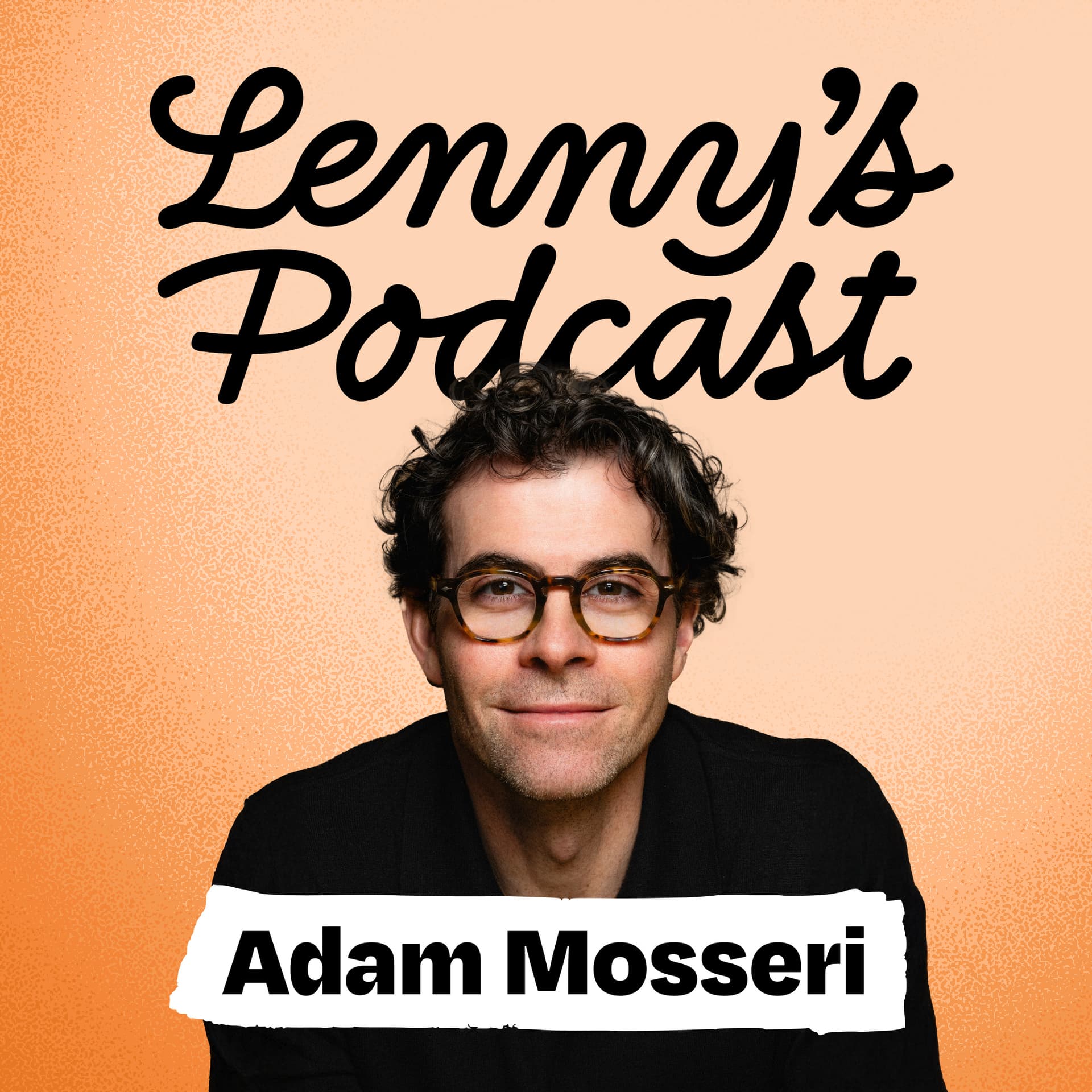
Adam Mosseri is head of Instagram at Meta. He previously designed and led early Facebook News Feed, ran the Facebook ranking algorithm team, and took over Instagram from founders Kevin Systrom and Mike Krieger about eight years ago. He’s known as the public face of major Instagram product controversies and changes.
Key claims
AI will blur functional roles into smaller “pods” with generalist “product staff,” but taste and judgment remain crucial. Instagram’s algorithm is less “semantic” than people assume, though LLMs now help describe embedding-based interests. AI content will increase volume (a challenge) but should boost demand for authenticity and individual creators; Instagram should not filter AI content, but should label it and help users judge who posted it.
Notable examples
“Plastic Dream Sequence” (clearly AI doll music videos); “your algorithm” concept using embeddings to show topics; discussion of chronological vs algorithmic feed incentives (professional/publisher dominance).
Written by AI. May contain mistakes. Listen to the episode to check what was said.
Chapters
Tap a time to open that second in VOAI's Impact on Instagram
0:00 to 5:31
Explore how AI influences content creation and user behavior on Instagram.
“In a world where it's easier to build things, it's more important to make sure that your time is spent figuring out what you should be building in the first place.”
The Evolution of Product Teams
5:48 to 10:52
Understand the changing dynamics and structures of product teams at Instagram.
“So on this team of six to seven, what's the makeup again?”
Hiring Trends and Desired Traits
10:52 to 13:36
Discuss the traits and skills that are becoming more or less important in hiring.
“They probably will be the majority, but I can imagine a bunch of really strong ones, you know, moving roles.”
Traits for Future Success in Hiring
14:00 to 16:40
Learn about the key traits that are becoming increasingly important in hiring.
“Like, you know, you're kind of like, you're really gonna, you've got some drive, some fire in your belly.”
AI's Impact on Job Dynamics
16:40 to 18:40
Discover how AI is reshaping job roles and performance metrics in various fields.
“And so that's not that that job will go away, but that will be less of what I'm looking for in hires because I'm going to have less roles like that.”
AI's Role in Programming and Development
18:40 to 22:30
Understand how AI is changing the landscape of software development and coding.
“You know, designers who are programming, engineers who are pulling data and doing strong analyses, data scientists who are putting together proposals for designs.”
Strategy and Human Insight in the Age of AI
22:30 to 27:20
Explore the evolving role of human judgment and strategy in AI-driven environments.
“least in a year or two coming that the burn rate of a strong engineer might be the same as their salary or their cost of employment.”
The Centaur Concept in AI Control
27:20 to 28:00
Delve into the concept of centaurs in AI and the relationship between humans and machines.
“And it needs to be a conversation and a back and forth.”
The Centaur Concept in AI
28:00 to 29:23
Explore the centaur concept relating to AI and human control.
“Yeah, no, I think there's a lot of things to be careful about right now.”
Product Leadership Insights
30:37 to 33:59
Discover key lessons about effective product leadership and team dynamics.
“We were chatting ahead of this about just things you've learned.”
Show all 23 chapters
Understanding Instagram's Algorithm
34:01 to 38:06
Learn about the misconceptions surrounding Instagram's algorithm and its behavior.
“Well, the flip flip is also true, right?”
The Impact of AI Content on Instagram
38:08 to 42:00
Discuss whether AI-generated content is a tailwind or headwind for Instagram.
“One that comes to mind is kind of this transition everyone eventually goes through to this like algorithmic, broad global feed.”
The Role of Authenticity on Instagram
42:00 to 42:43
Learn how Instagram is focusing on authenticity amid synthetic content.
“invest in specifically for Instagram and creators.”
AI Content and User Trust
42:43 to 44:44
Discover the implications of AI content on user trust and engagement.
“are going to seek out creativity and authenticity and people more, not less.”
Creative AI: New Mediums and Perspectives
44:44 to 46:09
Explore how creators use AI as a tool for artistic expression.
“or how many times they've changed their profile, or if their profile is three days old or three years old.”
Learning from TikTok's Algorithm
46:09 to 49:50
Understand how TikTok's recommendation system influences content discovery.
“You can think of him as a painter, but like this is his tool.”
The Challenges of Leadership in Social Media
49:50 to 52:18
Examine the complexity of leading a social media platform amidst controversy.
“So that's, I think, and they get a lot of credit for inspiring a lot of that work.”
Navigating Criticism and Redesigns
52:18 to 56:00
Learn how feedback and protests shape product redesigns in social media.
“Or is it like Zuck being like, Adam, you got to be the front face of all the stuff and get in there.”
Navigating Feedback and Design Changes
56:00 to 56:48
Learn how to approach redesigns and feedback in a social media context.
Lessons from Instagram's Video Focus
56:48 to 58:56
Understand the complexities and lessons learned from focusing on video content.
“We were also leaning into recommendations.”
Risk and Communication in Product Testing
58:56 to 1:00:12
Explore how large companies manage risks and public perception during product tests.
“Because you can't launch something to 3 billion people and not test it first, but you can't test something at our scale and not expect people to cover it.”
Learning from Failures in Product Management
1:00:12 to 1:02:16
Discover key failures in product management and the valuable lessons they teach.
“how to avoid the internet hating you for the day yeah i'm happy to talk to that growth in a throubbing.”
Screen Time Policies for Kids
1:02:16 to 1:06:24
Examine effective strategies for managing children's screen time and digital literacy.
“And so if you look at the numbers, the 2020 is when they exploded and we were out of position.”
Transcript
Automatic transcript. May contain errors.0:00No, I think taste matters a ton. In a world where it's easier to build things, it's more important to make sure that your time is spent figuring out what you should be building in the first place. The people who I think are going to make the most of it are the ones who are clear-eyed about what AI is good at and what it's not good at and also have an instinct or a nose for what it will be good at and not good at.
0:23Lenny Rachitsky:What's something that the Instagram algorithm knows about human behavior that people may not realize? I think people assume that there's a much more detailed semantic understanding of everybody's interests and preferences in the algorithm than there is. Is the rise of AI content a headwind or a tailwind for Instagram versus other platforms? I think it's going to be a tailwind, but I think it's going to be a challenge. In a world where there's an abundance of synthetic content, I actually think people are going to seek out creativity and authenticity and people. I don't think we should filter out AI content.
1:01I think we should let you know if content is AI content or not.
1:03Lenny Rachitsky:That's hard, by the way. Where do you think human brains will continue to be most valuable as AI continues to eat more and more of that product development lifecycle? That's a great question. So today, my guest is Adam Masseri. head of Instagram. Over 3 billion people use Instagram monthly. That's one in every three people alive. It boggles the mind. Prior to Instagram, Adam designed and led the early Facebook newsfeed. He also ran the team that built the Facebook ranking algorithm. And eight years ago, he took over Instagram from its founders, Kevin Systrom and Mike Krieger. He's a designer turned product manager, turned leader of Instagram.
1:43Lenny Rachitsky:Adam is also famous for being the face of all of the controversy and changes that come with evolving Instagram as a product, which we talk about. Before we get into it, don't forget to check out Lenny'sProductPass.com for a free year of the most interesting and well-crafted AI products in the world, available exclusively to Lenny's newsletter subscribers. With that, I bring you Adam Masseri.
2:09Lenny Rachitsky:Adam, thank you so much for being here. Welcome to the podcast. Thank you for having me. Excited to be here. You've been doing product for a long time. You get to see how a lot of teams operate across meta within Instagram. What is just kind of like the canonical product team look like in 2026? What's kind of most different today in how teams operate slash should operate versus, say, a couple years ago? It's changed a lot this year. So for the longest time at a big company like ours, the canonical team was something like two or three Android engineers, two or three iOS engineers, two or three server engineers.
2:45maybe a generalist, a PM, a designer, a data scientist, a researcher if you're lucky. And maybe that's about it. So, you know, on the order of a baker's dozen. And that is a function of, you know, you want to have for anybody who's writing code, someone who can review their code and that's who's familiar with that code base and having these different functions that are more specialized. You know, I think it's very different not a startup. But this year it's changing. We've adopted what we call pods, which are just mini teams where it's call it four to six engineers who are a bit more generalists.
3:29One we call product staff, which is sort of an evolution of the PM. So a PM who can do some of what a designer does and some of what a data scientist does and some of what a research does, leveraging the latest tools that we have for them. And then whatever specialist they need. If they're doing something that requires a pricing strategy, you need a senior data scientist. If you're doing something that is really novel from an experience standpoint, you need a very senior product designer. So we try to build a team based on the needs of the work a bit, but then end up with a much smaller core, which is more on the order of six or seven usually.
4:06and that is a very big shift that's just happening to us this year but they just by virtue of having less people to coordinate they can often move faster and make better decisions a little bit less designed by committee so we talk a lot about you know ai adjusting and improving productivity and that's part of it but i think another part of it is just the small teams, I think, often are just more effective.
5:02Lenny Rachitsky:companies. WorkOS turns those deal blockers into drop-in APIs with a modern developer platform built specifically for B2B SaaS. Literally every startup that I'm an investor in that starts to expand upmarket ends up working with WorkOS. And that's because they are the best. Whether you are a seed-stage startup trying to land your first enterprise customer, or a unicorn expanding globally, WorkOS is the fastest path to becoming enterprise-ready and unblocking growth. It's essentially Stripe for enterprise features. Visit WorkOS.com to get started or just hit up their Slack where they have actual engineers waiting to answer your questions.
5:37Lenny Rachitsky:WorkOS allows you to build faster with delightful APIs, comprehensive docs, and a smooth developer experience. Go to WorkOS.com to make your app enterprise ready today. I love this. So on this team of six to seven, what's the makeup again? And which role are you finding you have less of if you're going from the kind of 50 % size? You just have less specialists, right? So you might not have any. You might be four engineers and a product staff. And there's no data scientist. There's no designer. There's no researcher. There's no content designer. The product staff is the generalist that sort of supports all of those things.
6:14I mean, what's clearly happening is all the functions are starting to bleed into each other. And the whole industry is wrestling with what that means. You know, a lot of what a data scientist does at a big company, for instance, is relatively mechanical. And so, you know, there's stuff that they do that is really more like, you know, art and science and the stuff that's really more like just pulling data, data management. You know, so some of the tools that we're building internally to understand, for instance, a traditional data science question would be a waterfall. So if you wanted to look at people creating reels, you would look at all the steps and then how people fall off on each step and try to figure out where there might be opportunities to improve things.
6:54that kind of basic waterfall analysis is like much easier now to use some of our internal tools to just pull automatically as opposed to having to have a data scientist too much of bespoke work for that so a product staff might be able to do that now and they couldn't do that a year ago so you just end up with this general these people have more generalist shapes and then and then when you need it when you really need it you have a more senior ideally or just more creative specialist. So, you know, a phenomenal product designer or just a genius data scientist or researcher.
7:32Lenny Rachitsky:This is so interesting. It's exactly what I just heard. I had Fiona Fong, the head of engineering for Cloud Code and co-work on the podcast. She's Forrest Journey's manager. And she described the people she hires now are one, builders with great taste that can take an idea from end to end and people deep expertise in a very specific domain the tasting matters a lot i really agree with that boris used to work at instagram um oh that's right yeah he was a senior ic at instagram for a while i love seeing him he's all over threads now it's like he's sort of like the face of clark he's killing it he's he's a he's a celebrity now he really is he's his own yeah for sure in a world that is like on fire right now um no i think taste matters a ton uh So in a world where it's easier to build things, it's more important to make sure that your time is spent figuring out what you should be building in the first place.
8:28Actually, so a lot of designers right now are very anxious about their roles. You know, I've got these other generalists doing design. You've got engineers doing design, product staff doing design. But I'm actually pretty long on design or designers because they tend to have taste. And I think that is something that is much more difficult to imagine being automated away. And so there's other challenges with design sometimes, but I'm pretty long right now on designers.
8:58Lenny Rachitsky:I've always felt that too, as it is so easy to build and all the work that AI produces is so, like you can tell this was Claude Design. I know what you did here. This is Codex. Well, they all have their vibe, right? You vibe code your apps. We call it vibe code. And you're like, oh, that's a Codex app. Oh, that's a Cloud app. Right. And that's replete. That's lovable. You can predict these things. I've always thought that, too, that design should be thriving. For some reason, it hasn't yet. If you look at jobs for designers, they're kind of flatlining. I feel like the missing piece is the PME piece of deeply understanding the business and what will grow it and what success will.
9:36Lenny Rachitsky:You know, like all that stuff, the business side of it versus the taste side of it. Yeah. I think you're going to see, like, you know, we have a senior designer at Instagram called Nate who just transferred into product stuff. So I think some of what you'll see is, you know, it will be harder to talk about design roles and who's a good designer because they're not going to just stay in traditional design roles. You know, if you're an amazing designer, you might, you probably have strong opinions outside of just the interaction and visual design. And you probably have strong opinions on product strategy, even on the business, on the go-to-market.
10:13And so I actually think some of our strongest product staff are going to be converts from design and from data science who are just looking to expand their reach. And they were influential across functional boundaries before, but this world where those functional boundaries are just wildly blurred, just allow them just to jump in. And so sure, they'll be technically a generalist on paper, but they're clearly have a uniquely, you know, strong ability in one type of craft. But they've got the ability and strong opinions to make informed decisions across other parts or other crafts. And so, you know, I don't know that all the strongest designers I have will all be in design.
10:52They probably will be the majority, but I can imagine a bunch of really strong ones, you know, moving roles. But I mean, I should also check my own bias here, though, because I started as a designer at Facebook way back when. And I switched roles.
11:05Lenny Rachitsky:No, designers are great. I'm a big fan. So this is really interesting. There's always been this like GM model where different types of functions can become GMs. It's like this product staff role feels like a similar situation where different functions can become product staff. Yeah, yeah. And that was true of PM before, but it's just so much more true now. And I mean, in some ways, it's probably the age of the generalist. But I still think there's going to be a real important role for these really amazing specialists who are just, they're all about going. I wish I was like that. I always had this, like, I romanticized the, like, phenomenal machine learning engineer or AI researcher or shoemaker.
11:43Like, I think that's the coolest thing in the world. But it's never been my shape. I've always been, I've never been great at anything. I've always just had range. That's always been my strength.
11:55Lenny Rachitsky:Same. Okay. Okay, so this idea of product staff. So the idea is on these new pods. So this is like a new thing you guys are doing. So there's these pod teams, product staff, engineers, and maybe one specialist that's going deep on say pricing algorithm or something like that. So what this tells me is there's these adjacent roles that are maybe more in trouble over the years. Data science, for example, user research, for example. You talked about designers being anxious. Is there anything there of just like, oh, maybe folks in these groups should think about shifting to other roles? I mean, there's anxiety everywhere.
12:29I mean, I've talked to a lot of people at a lot of other companies, and it just seems like this is a lot of concern right now about competition, about job displacement, about unintended or unforeseen consequences of all this technology and all this moving so quickly. So that's definitely happening. I think that you will see the functional lines continue to blur, but I still think there will be room for functions. They'll just be shaped differently. They'll be more, they won't all be senior ICs necessarily, but they'll all be either senior or on their way to being senior. You can't just have a bunch of super senior data scientists and like no new ones because then who's going to be the new super senior data scientists in the future?
13:10So you need to basically hire and mentor and grow talent. You know, maybe the team is smaller overall. And then those who aren't on their way to being super senior move into more of a generalist role. I think that's like a reasonable soft landing. But I do think you're going to want to make sure you're investing not only in today's senior talent for each specific function, but in tomorrow's. Otherwise, I think you're going to regret it in a couple years, is my take. That said, who knows what the world looks like in a couple years. So my big thing is generally like don't be overly confident in whatever your predictions are because there's just too much flux right now.
13:51Lenny Rachitsky:the benedict evidence was on was on the podcast recently said the same thing we don't know anything about what's going on yeah i like i like i like him a lot i um i'll make sure i'll listen to the pod yeah so you talked about taste this makes me think about so you're interviewing a lot of people hiring a lot of people what are some traits that you're that are like trending up in things that you look for more and more now in this world and what are some traits that are trending down and maybe less important to you i mean there are some things that are the same right so for the longest time, almost no matter what the function, I always look for three things.
14:23Do you have sort of grit? Like, you know, you're kind of like, you're really gonna, you've got some drive, some fire in your belly. Are you a quick learner? And are you, you know, are you reasonably, ideally very self-aware so that you can actually take feedback and know what you're good at and know what you're good? Because if you're those three things, if you've got fire in your belly, you learn quickly and you're self-aware, you can kind of get good at anything eventually. um and but if any of those things are missing it's usually an issue so that's sort of like the baseline right now for hiring but just for i think people who are going to be more successful over these next five or ten years as things change so significantly i think two things that i i'm continuing to encourage myself to do are to stay curious and to put yourself out there i just think you got to try things, right?
15:16This is like, you know, to that point before that no one really knows what's going on. You just have to be willing to try things. It's almost, I don't know, do you speak another language? Russian, yeah. Yeah. So when you learn another language, I think one of the most important things, one of the best predictors, this is my guess, I don't have any research on this, about, you know, are you going to get good at speaking? Is, are you willing to sound like an idiot? Are you willing just to say it and be corrected and not be offended and then and just get better and better. You just have to put yourself out there.
15:44And with all of these new tools and models and technologies, I think you just have to be willing to try stuff. So if you're curious and you try stuff, I think that'll, you know, you'll learn, you'll adapt. But if you're not curious, or you're not willing to make mistakes or try things, I think you're in a ton of trouble, or these are things that can be a really difficult time. So those I think are premiums, not just for hiring at a company like Meta or a team like Instagram, but I just think across the industry and multiple industries over the next 10 to 20 years. Is there something that maybe we're looking for less of?
16:15For some of these functions, I think that there's some that are still going to be very large teams. And so you need people who are really good at managing large organizations. Large organizational leadership is its own craft and skill. It's actually different than management. But I do think there'll be less of those roles. I think we'll have more smaller teams And there'll be less people who manage thousands of people. And so that's not that that job will go away, but that will be less of what I'm looking for in hires because I'm going to have less roles like that.
16:48Lenny Rachitsky:Something I'm hearing from a few folks is AI is almost kind of resetting people's impact and success in terms of some people that were maybe low performers pre-AI can now do like things they were bad at or AI now allows them to do. and now they're thriving, building all these things, helping other people. Do you see that at all? Just like AI is just like lifting other people up, maybe lowering some people down. Yeah, I mean, the job is just different. I mean, take engineering. Engineering used to be, maybe not majority, but a large percentage, 40, 50, 60 % writing code. You know, it's not now, especially if you talk to anybody in these labs, they're spending most of their time planning and reviewing code.
17:31That is a very different job. You might hate that and you might have loved just writing code or you might have, you might love that and you might not have been that fast at writing code. So, you know, who, who succeeds is a function of whose strengths are aligned with the tools needs and the businesses needs. And so this is definitely happening. Another thing is you've had people who had good ideas about how to contribute it to other functions but didn't have the mechanical or technical skills to do so and ai reduces the boundary to do that and then all of a sudden they can like you know i it's for me it's kind of funny because when i got hired at facebook we all the designers had to be able to program that was like our i had i went through a technical loop we gave up on that because it was too hard to hire people um but i now get to program again for the first time in maybe 10 years And, you know, I am not a good engineer.
18:30I'm a mediocre engineer on a good day. But now I can write code responsibly, which is just an amazing thing. You're seeing this across all sorts of levels in seniority and functions. You know, designers who are programming, engineers who are pulling data and doing strong analyses, data scientists who are putting together proposals for designs. you know the tools aren't all great by the way i think too often we have this really polarized binary outlook on the state of ai like are you ai pilled or are you anti-ai it's like people aren't binary i said that to the team yesterday and the state of the tools isn't binary either you know they're amazing at some things and remarkably bad at others and the people who I think are going to make the most of it are the ones who are clear-eyed about what AI is good at and what it's not good at and also have an instinct or a nose for what it will be good at and not good at, you know, next month or in a couple months from now.
19:37Lenny Rachitsky:You mentioned that AI writes all our code now. Someone tweeted this, this idea that stuck with me for like months now of just like, remember we used to be able to just write code for free?
19:52I think you'll still be able to write code for free. Just be with a smaller model. But yes. I guess that's true.
19:58Lenny Rachitsky:Like there's a model that are close to free, but it's like, yeah, that's crazy. Now it's just like. But just think about, think about the cost. Think about what you pay for a model now and how, and what the level of intelligence you're getting from that model is. And then at that same price point a year ago, what were you getting? at some point they will just the incremental value is will be won't matter like you know you know we're getting there i think with small projects and programming like i think the models will matter even beyond you know this week you've got fable and obviously mythos from anthropic but i spent a lot of time with that this week i'm it's for the first time i'm like oh i'm just talking to a much more technical much smarter engineer than i am you know the next version a year out of that model, do I need to pay for Frontier tokens for whatever Anthropic Model 6.0 is?
20:58Or is Fable just fine for all of my side projects? Probably just fine. Probably pretty cheap by then too.
21:05Lenny Rachitsky:Yeah, when Kevin Will was on the podcast when he was CPO at OpenAI, he famously said, this is the worst the model will ever be. Yeah. It's still hard to comprehend that. Wow, that's only going to get better. So on this point of token spend, ROI, and things like that, Meadow was famous for this leaderboard of token spend. It's a terrible idea. No leaderboards for token spend. Okay. Talk about that. And just how do you think about just like budgets for engineers and product teams at this point? Do you just like spend as much as you want? Is it like there's a cap we have? Is there any sort of thing you've kind of figured out that works well?
21:38Right now, we've managed to get the costs reined in a little bit by shutting down the silly things that we were doing. And so it's not that hard to build a token incinerator, and that doesn't create a lot of value. And as soon as you actually look at the dollars in and value out, you might just be like, oh, that's just a bad idea. And so right now, we don't have token limits for our engineers. Actually, I think for anybody, really.
22:02Lenny Rachitsky:I think that'll eventually have to happen, particularly if costs go up before they go down I think they'll eventually go down because for the reasons that we just talked about but I think of it like as any other resource right like I have to decide how to deploy capacity to my different teams because I have a limited number of GPUs and CPUs and storage and RAM etc I have to decide how to deploy OPEX for labeling budgets across my teams I have to decide how to deploy payroll for headcount across my teams I think that you can imagine at least in a year or two coming that the burn rate of a strong engineer might be the same as their salary or their cost of employment.
22:46And if in that world, like you're going to probably need to put in some caps, the caps should probably be like a portional to your sort of, you know, the company's sort of trust in your ability to use them in an ROI positive way. But I can imagine caps being healthy. Right now we're not there. I think costs will go up because we'll just be using more tokens, not because prices will necessarily go up. But then I think prices will come down because all of these frontier models are going to be in a bit of a pricing war. So we'll see. I think it'll be a bit of a roller coaster. So coming back to this idea that, as you said,
Read the full transcript
23:27Lenny Rachitsky:we've evolved from we used to write all our code to now we're approaching all code will be written by ai and it feels like now the transition is it's not just written by ai but it's like one-shotted by ai like coding now is steering ai and it's like how often you have to correct it is is coding now and then there's uh so it's like the software development life cycle slowly being eaten by ai uh it'll start helping us come up with ideas i imagine more and more the question i like to ask people is where do you think human brains will continue to be most valuable as AI continues to eat more and more of that product development lifecycle.
24:04Taste, like we talked about, judgment, particularly around strategy, right? Like you're not, you might get feedback from an AI on the strategy, but you're not asking an AI to come up with a strategy anytime soon. Or if you are, then it's within the context of bounds you set. So here's my goal, here's my vision, here are my constraints, here's my job, here's my budget. I think that, you know, it looks more like management, right? Like you are trying to define what success looks like, decide how prescriptive you want to be about the path to success and then giving feedback along the way. And that is its own craft.
24:42You know, when you, it'll be interesting to see how Matt, you know, you know, some of the same dynamics come up like i believe that if you are too prescriptive as a leader with a team you end up stifling good ideas but if you're too open-ended sometimes teams just waste time um going in the wrong direction and so that level of autonomy you give a team like maybe that applies to agents in the future particularly when we're talking not just about building something but deciding what you built in the first place. But I think of vision as an articulation of the world or the state of the product you want to get to.
25:24And I think of strategy as an opinionated path to achieve that vision. Strategy can't be like, be the best or be amazing. It has to be controversial. A reasonable person should be able to disagree with it because otherwise you're probably just trying to compete on raw execution. and I think both vision and strategy, I think, are going to be where our brains are spreading a lot more and more of our cycles, and I think less on execution.
25:56Lenny Rachitsky:Something I have always thought is AI should be incredibly good at strategy because you would think, here's the market, here's all the information on the market, our competitors, our metrics, our numbers, our growth, all these things, help me figure out how to win. You'd think AI, knowing all that, would be really good at this. I think it could be. I have found it's not unless you steer it pretty aggressively. And I don't mean towards an answer. I mean based on the constraints. It turns out when you're trying to come up with a strategy, there's a lot of things to consider, right? You need to consider the state of the technology, the personnel on the team and what's motivating them and what you can get.
26:33Sometimes coming up with an idea that is on the bubble, you know it's going to actually attract some of the best talent. And so that kind of the push then goes to the idea. obviously the competitive landscape the regulatory landscape for companies as large as ours and the compliance landscape the identity and reason to exist for the brand um you know you have to consider all of these things i think if you ask an ai just for a strategy lazily you're not going to get something right you're going to get something pretty predictable that pop up with
27:06Lenny Rachitsky:the competition would expect you to do i think if you want a really more effective one you need to think long and hard about what are all of the different inputs that need to be considered. Make sure you steer the AI in a way that it's considering those as well. And it needs to be a conversation and a back and forth. But I think if you're willing to put in the work and the time, it can definitely be helpful and definitely be clarifying, particularly if you tell it to be critical. Different models have very different vibes though on how willing they are to be pushed back so i i recommend picking one that likes pushing back yeah mythos has gotten really good at being like i can't do this let's let's move on like uh there's all these lot has always been a little bit of a jerk in a way that i actually appreciate i true i appreciate it i really do because i don't want one that's just like oh you're so right i'm so sorry i said that it's like no hold on i want i want you know i want the real real sort of intelligence i don't want a pleaser this point you made about people being excited about the strategy such an interesting one there's this idea that i read i think cory cory doctor wrote this there's this kind of concept of a centaur centaur and a reverse centaur so centaur is a human body horse this is going somewhere i promise uh human body uh horse sorry human upper part horse lower part horse body yeah yeah horse body where the human is in charge and that's kind of we prefer that we want to be in charge reverse end chart which is what we want to avoid with ai is where the ai is controlling us and we're just doing its bidding it's a horse head on a human body yeah exactly it's terrifying so like in a sense like uber drivers and doordash people kind of this is their life which is not great and this is the danger thing for a lot of people is like like if it's giving us the strategy and telling us here's what we're like no one's going to want to do that so that's a really interesting counterpoint to we don't want ai to be telling us the strategy almost.
29:02Yeah, no, I think there's a lot of things to be careful about right now. And I would certainly not just assume that because you might be able to outsource some workflow to AI that you should. There are certain ones where I think it's really just a win-win. There are certain ones where I think is the risk that outweighs the benefits.
29:23Lenny Rachitsky:This episode is brought to you by Mercury, radically different banking loved by over 300 ,000 entrepreneurs and now with command. I've been a customer of Mercury's for over six years. I have never once thought about leaving. Mercury is basically what happens when banking is built by product people, not by bankers. They make it so easy, dare I say fun, to send invoices, move money around, set up virtual cards for folks on my team. Does your bank have an API, a terminal native CLI, or an AI-ready MCP server? I don't think so. and just recently they launched command a conversational interface built directly into mercury which acts as your financial operator i've been using command to transfer money around to figure out what categories i've been spending the most money in analyze my cash flows and just today i used it to find out how much i've made from a specific sponsor over the past year i just asked how much have i made from x over the past year 10 seconds later i have an answer it is so freaking cool.
30:24Lenny Rachitsky:Visit mercury.com to learn more and apply online in minutes. Mercury is a fintech company, not an FDIC insured bank. Banking services provided through Choice Financial Group and Column NA members FDIC. Okay, going back to product leadership, things you've learned along your journey. We were chatting ahead of this about just things you've learned. And one thing that you said about some of the product, the best product leaders you've worked with is that they're less visionary and more curators. I'd love to hear more along these lines. Yeah. I mean, you do sometimes find amazing product leaders who are just like idea machines, just prolific idea machines.
31:02But I do think a lot of the best have taste, have something about them that really makes really strong talent want to work with them, but end up sort of being curators, curators of people, curators of ideas, curators of technologies, curators of strategies. Because I don't really care if I'm hiring a strong lead for an area. If the strategy comes from them or comes from somebody else, I just care that there is an amazing strategy and everyone has bought into it and that we're executing against that strategy well. And so I think that some of the best product leaders, yes, have ideas. It's hard to be a great curator if you don't have some of your own ideas, but embrace the reality that they can't come up with everything themselves.
31:57And so they need to create an environment in which great ideas bubble up and are chosen or decided upon. And so, you know, I think it's not just about curating ideas, but it's sometimes about curating teams and people.
32:13Lenny Rachitsky:I love that. I so agree. I feel like everyone's always joining a team and they just want to do vision strategy, just like not actually hands-on work. And now AI is coming in. Here, let me do the strategy. Yeah, exactly. And I love this point that there's so much power and value and people underestimate just the need for just like a really good curator of the team's ideas. Yeah. Sometimes it's also, So sometimes it's not just who's good or what idea is good. It's also what is going to work given the broader context. So for instance, on team building, a huge thing that I'm always considering is not just like, is this person a really strong candidate for this role?
32:52It is how does this person fit into their leadership team? You know, so if I, you know, first an area like trust and safety, you know, I have an engineering lead. I have a product staff lead. I have a data science lead. I have a design lead. I have a research lead. I need to make sure that those five complement each other. I need to make, and that's about what skills each one has, what weaknesses each one might have. I also need to make sure that they, this is more art than science, have a good vibe, right? You need trust and rapport. A leadership team with strong trust and rapport can work through most anything.
33:30A leadership team without trust or rapport, like anything can become an issue. And so that chemistry bit is, like I said, much more art than science, but that also matters. And so I think some of the best leaders and product leaders specifically also either do that instinctively or consciously. But, you know, they have a nose for building teams that are going to have good energy and good collaboration.
33:59Lenny Rachitsky:Warm and fuzzy stuff. Yeah. Yeah. Well, the flip flip is also true, right? Like I've had many times in my career where I've had two people who I think are amazing and I even adore them and love them and they just can't get along. You're like, this isn't a competency issue. This is just a personality issue. And you just have to sometimes call it and split them. I want to transition to talk about Instagram, the product, the platform, things you guys have learned there. Let me start with this question. What's something that the Instagram algorithm knows about human behavior that people may not realize?
34:37One of the most common misconceptions is actually in the opposite direction. I think people assume that there's a much more detailed semantic understanding of everybody's interests and preferences in the algorithm than there is. most of what's really driven the progress in the world of recommenders over the last five ten years have been you know these large embedding models and these other techniques that basically produce artifacts that cannot be read by people they're not legible they're like giant vectors it's like sure i can show you the vector but it's just going to be a bunch of numbers in like a seven-dimensional space it's like and so when when we talk about does the algorithm know something usually we think in these more semantic terms it knows i like surfing and it's like
35:24Lenny Rachitsky:it doesn't it just has this big ass number that happens to correlate with surfing um that said i think that is starting to change right i think that what one of the things that LLMs are enabling is they can describe in, you know, words, you know, English for, or whatever language you prefer, what some of those previously illegible artifacts are at least proximate to, if not mean directly, right? So this is like the thing I've been really, I posted about this this week, this thing called your algorithm. Basically the idea is we take a look at all of the stuff that you've interacted with. And then all of that is in an embedding space.
36:09You can think of an embedding space as a map. You can map a bunch of videos into the same map. And so videos that are close are similar. And now we can just have an LLM just be like, describe that part of the map. And it can be like, oh, that is like deep pour over coffee snobbery. And that's kind of amazing.
36:29Lenny Rachitsky:That is so cool. You can ask the LLM to look at these numbers and extrapolate here's like the topic that you're interested in yeah or look at the videos and so the way you're um both and so you can also embed concepts into that same space and so i mean embeddings are really the underlying technology underneath llms right that's how the whole thing works and so you know so what what we what we what we do now is we let you you know quote unquote see your algorithm. You can see what topics we think you're interested in. And you can adjust it. You can add and remove things. But the idea here of giving people some agency back in a world where these social media apps are getting taken over by recommendations.
37:13But we can't do a lot of other things yet, which we will be able to do. There's things that aren't topical that you might ask for. I want more fun content. I want to see my friends more. I don't want to see my high school's kids friends kids photos you know i don't know we can come up with it i don't want to see seven photos in a row but i'm happy to see six photos or whatever your hearts can you know whatever your mind can come up with so we have a lot of work to do and so i'm excited about that but um i think a misconception historically is until recently we don't really know as much about you as you think we're just like oh like you liked these photos this these people also like those same photos and they like these other photos.
37:55So you might like those other photos. Like that's kind of how I'm oversimplifying. That's like kind of how it worked. Now, only now are we actually getting as sophisticated as I think people have assumed we've been for many years.
38:06Lenny Rachitsky:That is really interesting. One that comes to mind is kind of this transition everyone eventually goes through to this like algorithmic, broad global feed. Everyone, it always feels like people think, I just want to see chronologically everyone I know and follow. and that's going to be my favorite feed and it continues to be proven wrong. No, you actually engage a lot more, a lot more when it's this algorithmic feed of things we think you will love. Yeah, it's tough because, I mean, I posted this week this thing about agency and I just got destroyed in the comments, which is just part of the job.
38:39I get it, right? But there are a couple issues with the chronological feed. So one is, and some of this is the tension between an individual's interests and what works when you scale it up, right? So if you do a pure chronological feed, the incentive for everybody is to just post as much as possible because it will always be at the top of everyone who follows you's feed as soon as you post. So what ends up happening is that the feed gets overwhelmed with professional content, with usually large company content and publishers because they get you know the new york times can pump out 50 things a day your your best friend won't you know you might get one thing a week from them and so your feed just gets taken over so part of it is the incentives that emerge because when you design these systems it's almost like designing a city you need to think about okay here's the here the here's how the mechanics work what are the incentives that arise how are people going to act within those incentives and then what happens and the other thing is sometimes the most interesting thing was just not the most recent thing recency is an important input into relevance but it's not the only one my sister got engaged last night and you know she's in germany but she
39:58Lenny Rachitsky:didn't if she did she's married she got married last year that's why it was top of my mind but if she got engaged you know and i missed it because she lives in europe and you know with different time differences like do i really want to see a picture of like my brother's pobo sandwich you know po-poi sandwich or do i want to like see my sister's things first so i i it's tough it's tough i'd love to figure out a way to find the right balance i want to give people agency over the experience but i think it needs to be in a way that creates a system that makes sense not just for us as a business which matters i'm not pretending that's not an issue but also for the overall community because we've done chronological by default and where you can make at default and you see not only does usage go down, overall sentiment goes down.
40:43The individual who made that choice might be happy at the moment, but when you just get pummeled with stuff you're less interested in over the course of months, we ask, we run surveys at massive scales. We just see people start to become less and less satisfied with Instagram.
40:57Lenny Rachitsky:Kind of along these lines, everybody asks you about this these days, AI and content and how that all impacts everything that's going on. I want to ask you something I haven't seen someone ask you. Is the rise of AI content a headwind or a tailwind for Instagram versus other platforms? Do you think this helps or hurts you guys? I think it's going to be a tailwind, but I think it's going to be a challenge. And not just because it's more content. Obviously, we're an attention business, driven business. We're an advertising business. More content means potentially more attention. That's not for free, though.
41:31I don't think we're very good at ranking AI content yet. There's great AI content, this crap AI content, you should just see the stuff you're interested in and not any of the stuff you're not interested in. But I do think that in a world where, or for years now, and I've said this many times, power is shifting from institutions to individuals across industries. The easiest example of sports where players are more relevant than teams now, and that was not the case when I was a kid. In that world, I think it behooves us to invest in individuals and to invest in specifically for Instagram and creators.
42:05And I mean, creators broadly, I don't just mean influencers who are promoting branded content and making, you know, native only videos. I mean, anybody who's using platforms like Instagram to help do what they do, right? It could be, you could be a journalist, you could be an artist, you could be selling scarves you sew, but like you're out there as yourself creating and sharing content that helps you achieve whatever it is you're trying to do. So we've been leaning in that direction for many years now. That's been one of our two or three most important audiences for as long as I've been on Instagram.
42:39In a world where there's an abundance of synthetic content, I actually think people are going to seek out creativity and authenticity and people more, not less. And I think that will help us. That doesn't mean that we won't have AI content on our platform. There's going to be bad and good AI content. And we're going to try and handle that, you know, the way we normally handle content. So unsafe goes away. Interesting versus not interesting is based on ranking and personalization. But I think people are going to really seek out other points of view because Instagram was never just about the content.
43:13It was always about, to a certain degree, the person behind the content, the point of view, the reason they're sharing it, their perspective. And I think that's going to become more important, not less. And I think given that we are not the best at a lot of things, but we are the largest creator platform, if you look at how we define creators and how many creators use us versus other platforms, I think it'll be a tailwind for us because I think people are going to seek out people.
43:42Lenny Rachitsky:And this connects to your earlier point that companies like, say, New York Times can pump out a bunch of AI content versus a creator. And And so you're saying you kind of want to protect against that to allow individuals to continue to perform well in spite of just all this AI content. If you just love AI content, great. Like you should be able to have a feed that's just like AI town. And if you don't, then you shouldn't have it in your feed. To me, it's like, I don't think we should. I mean, I understand why people are. I'm not oblivious to the overall paradigm shift and sort of revolution that we're sitting in.
44:19But I don't think we should judge content based on the tool that made it. I think we should judge it based on the content, the point of view, the person behind the content. I don't think we should filter out AI content. I think we should let you know if content is AI content or not. I think we should let you know more about the person who posted anything so that you can make informed decisions about whether or not to believe or trust them based on knowing who they are or where they are. or how many times they've changed their profile, or if their profile is three days old or three years old. But I don't think we should be making value judgments based on what tool you used.
44:59Lenny Rachitsky:Is there an AI content creator you love that you're just like is so good about watching these AI videos? Yeah, what is she called? Plastic Dream Sequence, is that what it is? I think - Check it out. Yeah, Plastic Dream Sequence. I have it on my phone, I'll double check. It's these dolls, Barbies, but they're singing songs in these little tiny silhouettes and snippets. And it's just amazing. It's a little weird, but also kind of amazing. And it's very clearly AI. It's not pretending not to be. But it has a very clear creative and aesthetic point of view. And every time I come by one, I'm like, yep, we're doing this now.
45:45I'm going to watch this for 30 seconds.
45:47Lenny Rachitsky:i have it pulled up here and i don't i want to watch it but i'm not going to that's awesome if only that ai that's another one he's out of he's in france i think he's in paris he uses multiple different tools and models but he kind of tries to create these dreamscapes and animate them so he uses one model to create the image another one to create the video music etc uh he's like very clearly got his own aesthetic um uh and he's just like you could you You can think of him as a painter, but like this is his tool. Is there kind of a vision of AI versus human in the feed? Do you think it'll, like you said, you maybe want to market?
46:24Lenny Rachitsky:Like, how do you think about people? Are they going to be like AI account, non-AI account? How do you think about it? Or is that still kind of a work in progress? Maybe we'll end up in the same place, but there's a difference between marking content and marking accounts, and they're both useful and interesting. So if content was created with AI, I think you should be able to know that. that's hard by the way because we can detect that right now but as these models get better we might lose the ability to detect that so we should also be very careful to be honest with you about how confident we are in our own sort of assessment but i think you should be able to just ask be like hey is this ai and we should be able to tell you we think it probably is or we're not sure or it's definitely not or definitely is i actually think we might be more practical to label camera captured content like basically non-ai content as opposed to labeling ai content long term for a couple reasons but then at the account level i think it also matters there is definitely an a new spam vector which is these fake accounts which by the way an ai creator that's fine there's nothing wrong with that necessarily but there is there are these spam vectors which are trying to abuse that and you know they're selling like you know bogus supplements and it's like an ai monk and it doesn't present it and it's not obvious that it's an AI and it's just trying to take advantage of a certain aesthetic or a certain sort of stereotype.
47:47We need to figure out how to crack down on that. And so I do think we should be making sure that you know. Basically, you just need to know, and then you can make your own informed decision. Is the account a real person or not? Is the content a real piece of content or not?
48:00Lenny Rachitsky:When you think about other platforms in the space, social content platforms, are there any um features or just or like ways of of approaching stuff that they do well that you're kind of jealous of or really impressed by yeah there's a bunch everybody so many people do so much because i mean for me like one of the things that we are finally catching up with but i've been always very impressed with is tiktok and their recommenders ability to break small talent in the world of ranking recommenders and rank you can talk about exploitation based ranking that sounds terrible but it just means like using the data you have and then you can talk about exploration based ranking going and trying to figure out you know what someone might be interested in that they might even not know they're interested in yet and it is much easier to move engagement by showing people stuff that you know they'll probably like because lots of people like it it's much harder to go and figure out how to essentially test content so that we can see like hey maybe you sure you like Bieber but you might also like Afropunk and so we're just going to like show you some Afropunk and see what happens if you do the latter this exploration based ranking you can I think it's really good for niche creators and small creators because you give them a chance to find an audience that either wasn't going to see them before or didn't even know that they were interested before.
49:27So we've invested a lot over the last couple of years in ranking, not just increasing engagement, but increasing originality, increasing the number of pieces of content that break out, increasing recency to stay culturally relevant. And so a lot of that has been inspired by TikTok and ByteDance. I think we're catching up. There's actually a couple of those areas where we, I think, by the best we can tell, we're ahead of them. There's a couple where we're still behind. But we have line of sight to, I think, being the best in class at recommendations for the first time during my tenure. So that's, I think, and they get a lot of credit for inspiring a lot of that work.
50:05Lenny Rachitsky:Nice job. Well, we'll see. Not there yet. They call me disappointed dad. My team is always like, can you ease up on the disappointed dad vibe? So I'm trying to be a little bit more generous about giving people their flowers. Like you say that, but that's an interesting common thread across really successful leaders is just never being satisfied. Yeah, it's a blessing and a curse. Here's all the problem. It is. On this creator piece, I think that's also, you know, people complain about this global algorithm, not showing them all their friends. But I feel like this is a benefit of what happens when you do this.
50:46Lenny Rachitsky:Now that you can break new creators into a wide audience if you have this kind of global algorithmic feed, which is really great for a lot of people. I mean, I'm out there talking about a lot of these contentious issues and I get beat up a lot in the comments, which is fine. My main thing here is just to try to communicate that there's almost always tradeoffs, right? You know, you can't just have all of the things, unfortunately. You want to never see something you're not interested in, then you're also just going to see the most basic, general, lowest common denominator stuff all the time. You want to discover new and interesting things, you're occasionally going to see stuff that was just a mess.
51:32But this isn't just true about ranking. All these major debates have trade-offs. Privacy and safety, those two things are intention. Do you want a company scanning your messages or not? There's some really significant trade-offs on both sides of that debate. And so generally speaking, when I argue and engage in debate with people who feel really strongly about things, I'm not usually trying to convince them. Their mind is usually made up. I'm just trying to enumerate all of the different puts and takes for the rest of the people watching the conversation.
52:05Lenny Rachitsky:Speaking of getting torn apart in the comments, It's like you're so in the middle and think of all of these really hairy situations, changing the feed. You're like in the Cambridge Analytica lawsuit, all this. You're in the center of so much controversy. Is that something? Yep. Oh, man. Is that just like you? I will lean into this. This is the thing I need to do. Or is it like Zuck being like, Adam, you got to be the front face of all the stuff and get in there. Like, where does that come from? It started on Newsfeet. So I used to run Newsfeet at Facebook. And my take was that the debate was going to happen with or without us, so we might as well participate.
52:48And so I started being really active on Twitter specifically, because that's where journalists really lived at the time. And I thought it would show some humility to show up on their turf, so to speak. My Twitter ended up being the darkest place in my life, because I just followed all of our biggest critics. That's not a dig on Twitter. that was just like what I did um and that's where it started and it kind of slowly built from there for better for worse we've become a really important part of daily life for a lot of people we touch a lot of people we have a lot of responsibility and there's a lot of change and there's with change means there's going to be anxiety and stress and scrutiny we've made great decisions we've made mistakes we've been criticized for things that I think we've been criticized unfairly we've been criticized fairly and so we just need to accept that this debate is going to happen broadly so I just think it's better for us to talk about it and just be clear about what we're doing why we're doing it what the trade-offs are if people disagree that's okay we're not necessarily you know winning over friends when we talk about what we do but I think over the long run people are fundamentally more afraid of things that they don't understand um and about things where people are more secretive and less accessible and so i've been tried i've tried to show up in an accessible and authentic way um and i've made mistakes and i have enjoyed it at times and hated it at other times um that's kind of how it started there was also kind of a fun debate in on Mark's sort of senior leadership team a long time ago where we were just talking about how we're a social media company where we had like a very sort of conventional approach to communication and like press releases and say, why don't we just use our platform?
54:36So I was not in that debate, but I stuck myself into that debate, tried to mediate it. And I think, but that was also a reason why I ended up getting sucked in because Mark was like, all right, well, let's see. Like, why don't you try and see how it goes?
54:48Lenny Rachitsky:What's something that helps you deal with the hate that flows at you every time you say something that people disagree with you try to put it in perspective right you know like so it started with i did the redesign of newsfeed in 2009 we launched it march of 2009 for facebook i was a designer i was a front like an ic designer front you know entry-level designer and the first comment that came in was something pretty derogatory i think it was like it was like homophobic and antisemitic it was just like literally we're all sitting there we launched this thing and we're just looking at the stream of comments and it's like the first one and it was specifically about they don't know me but it was like what expletive expletive um sensor sensor uh designed this shit and i was like oh it was me um and i was like devastated i was like 25 year old kid and I don't know I thought about it and I came I came to this idea that if you spent 30 40 50 minutes a day at a at your desk and you organize your photos there and you wrote letters to your friends there and you read there and then I just came and I rearranged your desk and I didn't tell you I didn't warn you I didn't even explain why like you would be pissed and that would be reasonable and that was what was happening just you know with millions of people so I try to put things in perspective and then I try to step away from it get time with my kids get time outside there there are months where it's really not hard at all and there are months where it's really really grinds on me along those lines there's a famous kind of reversal when you redesign the feed into this kind of video scrolly experience there's this whole protest the world protested yeah that was pretty rough uh what was kind of like okay wow we're actually not right and we should go back what was kind of what helped you decide again let's change course so actually that one got that one three or four things got conflated we had a redesign a feed that went to the video viewer that was a test to four percent of users on ios it was a not it was not going to roll out it was just like an early test to get some sense and feedback on the idea.
57:07We were also leaning into reels a lot. We were also leaning into recommendations. So posts from accounts you don't follow a lot. And there were also creators who were upset about the fact that their reach was going down and they were blaming ranking changes on that. Those four things got all conflated. We had some pretty big name creators publicly like slap us. Then the press covered that creator sort of backlash, which then got more creators doing it. So we ended up with this little bit of like a multiplier effect or echo between the creator community and the press back and forth. But we were never going to launch that.
57:45That was an early test. We knew it was going to need to work. We actually have continued to grow video and invest in creative tools and invest in ranking and invest in recommendations. And that's driven most of our growth in the years since. But I think we were pushing.
58:04Lenny Rachitsky:Well, I don't know what does it feel like but like it i think we were i think my real takeaway wasn't that we should have not tested that design necessarily i think we could have been we could have done a bunch of things better to explain and maybe move a little fast move a little slower i think we were just pushing things a little bit too fast and when you are responsible for a platform like instagram you need to be reasonable and realistic about how much you can evolve it now i would much rather have backlashes like that every couple of years, but continue to evolve and continue to stay relevant than the alternative, which would have been like, we didn't have video.
58:41We didn't have DMs. We didn't have stories. We didn't have ranking. And we wouldn't be on having this
58:45Lenny Rachitsky:podcast right now. But the cost of leaning in is that you're going to occasionally make a mistake and you're going to definitely pay for it. It's interesting how running experiments now is very risky for companies at your scale one person spots it and i go shit you kind of need to have a press you don't need to be proactive about communicating it but you need to have a calm strategy like we can't for any for any design change or any test that could be controversial we we talk about it beforehand and be like okay not if it leaks when it leaks what are we saying you know are we you know should we talk about proactively should we talk about reactivity Either way, what's the message?
59:26Because you can't launch something to 3 billion people and not test it first, but you can't test something at our scale and not expect people to cover it. And so you have to be ready to talk about it before you even know you want to launch it. So it makes the development cycle more complicated than it used to be.
59:53Lenny Rachitsky:yeah uh the uh head of growth at anthropic launched an experiment with pricing and it just went crazy on twitter he's like it's all about the one percent of people were just trying stuff like no pricing particularly that one is a real you got to be real careful with that one i've i've learned we've all learned these lessons we should all share notes more how to avoid the internet hating you for the day yeah i'm happy to talk to that growth in a throubbing. I think he's all right. He's all right. Okay. I'm going to take us to two recurring corners on the podcast, fail corner and hot seat corner.
1:00:26Lenny Rachitsky:Fail corner. What's something that you worked on that was just a huge failure that helped you become better? Oh, a bunch. So I'll give you two maybe. So before Instagram, my first project as a PM was on a project called Facebook Home, which was a sort of fork of Android at the operating system level and a piece of hardware with HTC. It was a spectacular failure. I learned way more in that year, year and a half, and I did it any year, I think probably in my career because I was just a design manager before that. I declared myself a PM because the PM on the project quit and I just threw myself head first and understanding carriers and OEMs and certification as well as Android and operating systems and just lend a ton.
1:01:17So, and I'm happy I brought that project to an end because it had been going on for a long time and sometimes you, the best thing you can do is execute an idea that doesn't have market fit well just to decide whether or not the idea was a good idea in the first place. another big mistake i made um during my instagram tenure was the first version of reels was built on top of stories stories had a ton of momentum this was i think 2019 and we were trying to build reels into stories because we were trying to build on the thing that was growing the fastest but it was not a strong foundation most you know the read-through rate on stories is relatively low there's way more stories than most people have time to consume so most of the reels were never seen and then they disappeared um and if we had the version of reels that we launched in like mid just maybe we think it's like the summer of 2020 in the summer of 2019 i think i don't think tiktok isn't i think tiktok is still big and important but i don't think it's as big as it is now because when they really took off was when the pandemic hit and a bunch of people I had a lot of time at home and we're looking for a little bit of joy and we're totally fine with our phone having sound on.
1:02:31And so if you look at the numbers, the 2020 is when they exploded and we were out of position. And on one hand, you know, I'm a designer. I'm trying to not add new things to the product. I'm trying to extend existing primitives. And that was the idea. On the other hand, I was wrong. And it's a pretty big fork in the road if you just look at the overall business over the last eight years.
1:02:55Lenny Rachitsky:We create a lot of economic opportunity in the world, allowing TikTok to grow. I'm glad they exist. Okay, final question. I'm curious just about your screen time policy with your kids. I know you have three kids. There's a lot of concern these days about Instagram not being great for people, not for kids. A lot of tech executives don't let their kids use devices while they're building the product. As head of Instagram, how do you think about screen time with your kids? The key thing for me is boundaries. It's also about education and having conversations with them. But my kids are too young to use social media.
1:03:35They're 10, 8, and 6. But they each have an iPad. They have to earn their time. So they have different ways they earn their time. It's usually about sitting down to do your homework three times for half an hour each gets you the total of 90 minutes on the weekend and then they can use that time on the weekend but you kind of have to set that boundary where it's like you can't just like you know we can't just be they ask for it and you give it to them I think that matters a lot and then I'm pretty opinionated about what they do on it like I approve what apps that they have I think parents should be approving what apps to kids specifically are downloading onto their devices we've been advocating for this at a policy level for a long time at meta i think those things help a lot um there are some exceptions um one is planes it's just like about surviving i don't know if you've ever for those of your parents i'm going to be yeah yeah it's like you just like that's just like all right you know we're flying you know it's a 10-hour flight or eight-hour flight it's like yeah just just you just need to get through it um the other one that i'm starting to experiment with my 10 year old with is so schools are interesting because I think I'm pretty supportive of a no phone in classrooms that's happening more and more I think that's just probably good for education and I do also know in the world of AI that there's concern about kids using AI and not learning critical thinking skills I think that's a valid concern but I also am worried about kids not learning how to leverage AI and then being sort of at a disadvantage so that's a balance I think need both so with with my eldest we started um vibe coding recently together um he's just loves video games so i was like all right let's make a video game and so he's made this 19 level platformer game that kind of looks like an 8-bit version of super mario from when i was a kid but like each level has its own theme its own types of monsters there's a store where you can buy different skins or weapons and there's like uh like it's unbelievable what a 10 year old who still types with three fingers can do um with just you know a couple hours of sitting together but that is more of like a i want you to learn how to um make things i want you to be thinking not just playing games and i'm going to sit with you and we're going to do this together So to me, these are the things that matter.
1:06:06Boundaries, scoping it down to the activities you think are healthy for your kid. Every kid is different. But I do think you want your kids to be digitally literate, AI literate, because I think if they're not, they're going to be at a disadvantage. But you also don't want it to be a free-for-all.
1:06:22Lenny Rachitsky:This is selfishly useful for me as a three-year-old, and I'm trying to figure all this stuff out. So this is useful for me to figure out a strategy. It's a thing. and you're not that far off. You're really just not that far off. It's going to happen in a couple years. Type coding next year. Let's do it. I couldn't believe it. I tried to do it six months ago and it just totally didn't work. And then now with the new remodels, it's been amazing. What's their platform of choice? Are they a cloud coding person? Yeah, my 10-year-old is using cloud code right now. Amazing. But we will see. We'll see how that goes.
1:06:56Lenny Rachitsky:Adam, I'm going to let you go. Thank you so much for being here. You're just like such a gem of a person. It's just so obvious how clear, like how authentic you are and just like how deeply you think about everything. So I really appreciate you being here. I appreciate you bringing me on. I've been a fan for a long time. It's nice to finally get to have a conversation. I really appreciate that. I really appreciate that. Let me just ask you this final question. I ask everyone, what's a way that listeners can be useful to you? I just think, you don't even have to tell this to other people, but just remember that this world and technology is complicated and there are almost always trade-offs and you can totally disagree with the decisions I or we make but just remember that we are people here trying to make these decisions just trying to do the best we can and I actually do invite the criticism and the critique and the feedback but um but know that none of these contentious debates are nearly as simple as most people pretend to make them out to be.
1:07:59Lenny Rachitsky:Wise words. Adam, thank you so much for being here. Pleasure. Thank you, Lenny. Bye, everyone. Thank you so much for listening. If you found this valuable, you can subscribe to the show on Apple Podcasts, Spotify, or your favorite podcast app. Also, please consider giving us a rating or leaving a review, as that really helps other listeners find the podcast. You can find all past episodes or learn more about the show at Lenny's podcast.com. See you in the next episode.
From the publisher
Adam Mosseri is the Head of Instagram, where he oversees an app used by over 3 billion people. He also leads the team building Threads. Adam has run Instagram for longer than its founders did, after taking over from Kevin Systrom and Mike Krieger in 2018. A designer by training, he spent over 15 years at Meta, starting as a designer on Facebook’s mobile app, rising to lead Facebook’s News Feed, and eventually chosen to lead Instagram. During his tenure, Instagram’s user base has more than tripled.
In our in-depth conversation, we discuss:
1. How the canonical product team structure is changing in 2026, from baker’s-dozen specialist teams to lean pods of four to six generalists
2. The rise of the “product staff” role—a blending of PM, design, data science, and research into one generalist operator
3. Why Adam is bullish on designers even as functional boundaries dissolve, and which roles are most at risk
4. What the Instagram algorithm knows about you, and why it’s only now catching up to what people assumed it knew years ago
5. Why the rise of AI-generated content is a tailwind for Instagram, and how the company is thinking about creator identity in a synthetic-content world
6. The two biggest product failures of Adam’s career—Facebook Home and the first version of Reels
—
Brought to you by:
WorkOS—Make your app enterprise-ready, with SSO, SCIM, RBAC, and more: https://workos.com/lenny
Mercury—Radically different banking, now with Command: https://mercury.com/command?utm_source=lennys&utm_medium=sponsored_newsletter&utm_campaign=26q3_brand_campaign
—
Episode transcript: https://www.lennysnewsletter.com/p/adam-mosseri-ai-is-a-tailwind-for
—
Archive of all Lenny's Podcast transcripts: https://www.dropbox.com/scl/fo/yxi4s2w998p1gvtpu4193/AMdNPR8AOw0lMklwtnC0TrQ?rlkey=j06x0nipoti519e0xgm23zsn9&st=ahz0fj11&dl=0
—
Where to find Adam Mosseri:
• LinkedIn: linkedin.com/in/mosseri
• Instagram: https://www.instagram.com/mosseri
—
Where to find Lenny:
• Newsletter: https://www.lennysnewsletter.com
• X: https://twitter.com/lennysan
• LinkedIn: https://www.linkedin.com/in/lennyrachitsky/
—
In this episode, we cover:
(00:00) Introduction to Adam Mosseri
(02:09) How product teams are changing inside Meta
(05:48) Blurring roles and career anxiety
(14:01) Hiring traits that matter now
(16:48) How AI is resetting who succeeds at work
(19:38) How Meta thinks about token spend and AI costs
(23:23) Where human judgment still matters
(25:56) Why AI is not automatically great at strategy
(30:36) Why great product leaders are curators
(34:23) What Instagram’s algorithm actually knows about you
(38:08) Why chronological feeds often disappoint users
(40:56) Why AI content may be a tailwind for Instagram
(43:42) The future of AI and human content in the feed
(48:00) What Adam admires about other social platforms
(52:05) How he handles public criticism
(56:31) Lessons from the Instagram feed redesign backlash
(01:00:21) Adam’s biggest failure: Instagram on iPad
(01:03:03) His approach to kids, screens, and social media
(01:06:56) What Adam wants listeners to remember
—
Referenced:
• What happens after coding is solved? | Fiona Fung (Manager of the Claude Code and Cowork Teams): https://www.lennysnewsletter.com/p/building-the-most-ai-pilled-engineering
• Claude Code: https://www.anthropic.com/product/claude-code
• Claude Cowork: https://www.anthropic.com/product/claude-cowork
• Head of Claude Code: What happens after coding is solved | Boris Cherny: https://www.lennysnewsletter.com/p/head-of-claude-code-what-happens
• A rational conversation on where AI is actually going | Benedict Evans: https://www.lennysnewsletter.com/p/a-rational-conversation-on-where
• OpenAI’s CPO on how AI changes must-have skills, moats, coding, startup playbooks, more | Kevin Weil (CPO at OpenAI, ex-Instagram, Twitter): https://www.lennysnewsletter.com/p/kevin-weil-open-ai
• Mythos: https://www.anthropic.com/claude/mythos
• Fable: https://www.anthropic.com/claude/fable
• Pluralistic: The Reverse-Centaur’s Guide to Criticizing AI: https://pluralistic.net/2025/12/05/pop-that-bubble
• Plastic Dream Sequence on Instagram: https://www.instagram.com/plasticdreamsequence
• TikTok: https://www.tiktok.com
• Facebook–Cambridge Analytica data scandal: https://en.wikipedia.org/wiki/Facebook%E2%80%93Cambridge_Analytica_data_scandal
• Facebook Home: https://en.wikipedia.org/wiki/Facebook_Home
—
Production and marketing by https://penname.co/. For inquiries about sponsoring the podcast, email podcast@lennyrachitsky.com.
—
Lenny may be an investor in the companies discussed.
To hear more, visit www.lennysnewsletter.com